
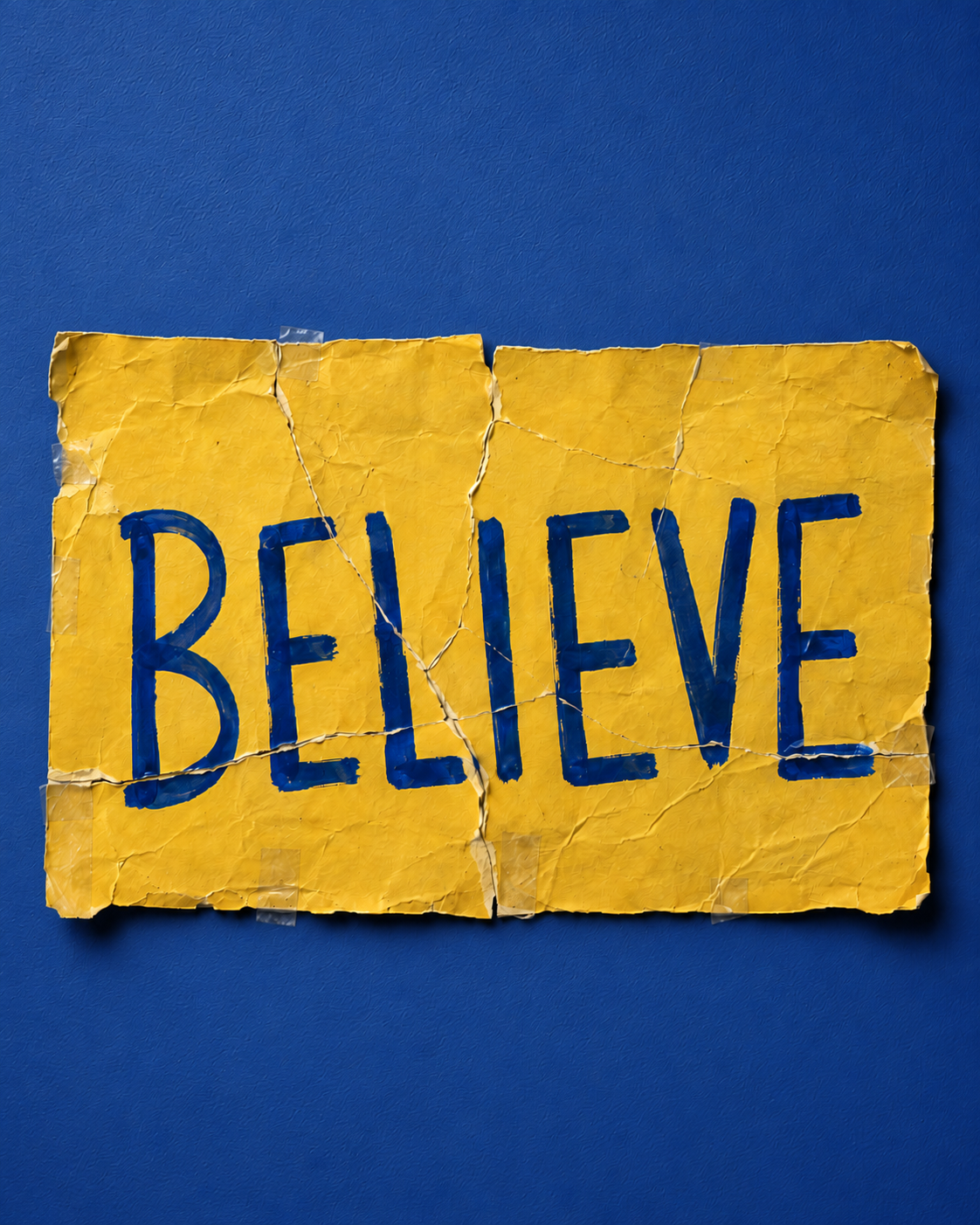
August 2020 was a particularly dark time in my life.
The world I thought I knew had completely disappeared. Like the rest of the world, I had been in lockdown for the past five months. The fear of catching COVID was central to almost every part of my life.
The simple things were no longer simple. You couldn’t just head to the store for groceries. You ordered ahead, or masked up, swallowed your anxiety, and braved the aisles of what, in the world before, had been one of the most benign places in your life. Seeing people on the street still generated a wave, but from a thoughtful distance. Seeing friends and family required appointments, planning, and a safe environment.
My isolation was a little different than most. When the pandemic lockdown hit on March 13, 2020, I was in Brazil celebrating a birthday with my wife. A two-week trip turned into four months of being marooned in a country where people were dying by the thousands and being buried in mass graves.
When I finally found a flight home, I faced one of the hardest decisions of my life. Stay in Brazil with the woman I loved, knowing that if I got sick I would be in a country where I didn’t speak the language and could find myself frightened, hospitalized, and alone. Or leave her behind and return home to Rosie, to a health-care system I knew, and to a country that—at least at that moment—seemed to be coping somewhat better.
I left.
But not without a lot of tears, a promise from my wife that she would soon join me, and a load of guilt that did not abate until she finally arrived in the United States.
And then my best friend of nearly forty years died during COVID. His son, unable to cope with the isolation of the pandemic, his father’s death, and his own demons, died shortly thereafter.
I am, by choice, an optimist. Yes. I am the person who looks at a glass half full of water and says, “It’s full. Just not all with water.” But by August 2020, it was getting harder every day to remain positive and upbeat—to retain the capacity to imagine the end of this thing.
Then came Ted Lasso.
It was a very unlikely story: an American football coach hired to lead a British football team. How was that going to resonate with audiences? Turns out, excuse the phrase, it was just what the doctor ordered.
Because Ted Lasso was never really a story about football, no matter which way you spell it. It was a story about a coach who preached positivity, decency, and belief—in yourself and in your teammates.
Ted’s optimism isn’t based on believing bad things won’t happen. Bad things happen constantly. His optimism is the refusal to allow what has happened to dictate what happens next.
“Be a goldfish”: forget your disappointments as quickly as you can. “Be curious, not judgmental”: remember that we all wallow in our own stew and that a little grace for people who see the world differently goes a long way. And my favorite: “I believe in hope. I believe in believe.” A reminder that without hope we are lost, and belief is one pathway back.
The message resonated, and Ted Lasso became a beacon of hope and positivity in a world where both were in very short supply.
I have been thinking about that a lot this week.
How could I not? After a three-year hiatus, Ted Lasso has returned to Apple TV, and the airwaves, streams, podcasts, and social media have been full of Jason Sudeikis and his castmates promoting the new season.
It is also the sixth anniversary of Elaine joining me in the United States. Words are inadequate to describe the joy, relief, and love I felt when I saw her emerge from customs. It was, and will forever be, one of the best moments of my life.
And then there was the attempted political lynching of Anthony Fauci by Rand Paul and his Senate committee.
The same Rand Paul who spent much of the pandemic fighting mask mandates and arguing that herd immunity was taking hold even as tens of thousands of Americans were dying each month, hundreds of thousands more were getting sick, hospitals were overflowing, and refrigerated trailers were being used as temporary morgues. The same Rand Paul who pressed federal health officials to give greater consideration to unproven early COVID treatments, including ivermectin and hydroxychloroquine—neither of which proved to be the cure their most enthusiastic advocates hoped for.
Fauci, meanwhile, was already one of the most prominent infectious-disease scientists in the world decades before 2020. He led NIAID for 38 years, from 1984 to 2022, overseeing research on HIV/AIDS, tuberculosis, malaria, influenza, Ebola, Zika, and eventually COVID-19. He helped shape the federal response to HIV/AIDS as it went from an almost invariably fatal disease to a manageable chronic illness. He advised seven presidents and received both the National Medal of Science and the Presidential Medal of Freedom. And during the pandemic, he was willing to contradict the president publicly when the president wandered into medical fantasyland—whether musing about disinfectant or promoting treatments before the evidence was there.
In other words, he was one of the people who gave us reason to believe that science would eventually get us out of the mess.
Why did Rand Paul decide to pillory Fauci? Some of it seems personal. Paul has a long history of hitting back hard at people who insult or challenge him. Ask John McCain, Chris Christie, Markwayne Mullin—or Fauci himself, who famously told Paul, “You do not know what you are talking about.”
But mostly, this looked like political theater: a chance for Republicans to score points and energize their base before the midterms. They wanted Fauci as a symbol. When he invoked the Fifth Amendment rather than answer questions in a hearing chaired by a senator who had spent years calling for his prosecution, the committee moved to hold him in contempt and send the matter to the Justice Department.
So why did all of this remind me of Ted Lasso?
When Ted Lasso first entered the zeitgeist, we were in a very dark place as a country. We were desperate for someone—or something—to latch on to. Something that could give us hope. Something that could help us believe there was a better way ahead.
The Fauci hearing reinforced something I already knew: our country is in another dark place, one where political ideology too often outweighs common sense and fact, and where greed, selfishness, ego, and grievance get celebrated more loudly than kindness, selflessness, and understanding.
That August, Elaine walked out of customs and Ted Lasso walked onto my television. One was the person I loved coming home. The other was a fictional football coach reminding me why hope matters. I needed both.
Six years later, Congress is once again serving grievance with a side of theater. Ted is back too. Good timing.
Because optimism isn’t pretending the ugliness isn’t there. It is refusing to let the ugliness have the last word.
Sam Obisanya’s father put it better: “Don’t fight back. Fight forward.”
And that may be the lesson we need most right now. Hope is not passive. Belief is not surrender. If we want a different country, we have to fight for it — in our communities, in our conversations, and at the ballot box. And if we want to change the direction of this country, we need to fight forward and win the midterms.
So be curious. Be decent. Remember what matters. Fight forward.
And when Washington becomes impossible to watch, be a goldfish.
But not until after you vote.


