The Pizza vs Rio Conundrum

The Admiral’s Club lounge at Rio’s Galeão–Antonio Carlos Jobim International Airport is, oddly enough, one of my favorite places to kill time.

Tucked in the middle of a long, wide, unnervingly white and deserted hallway—straight out of a horror or dystopian sci-fi film—it offers sweet sanctuary from the chaos and drama of airport life. By Admirals Club standards, it’s not huge (just 6,500 square feet), but it punches above its weight. Multiple seating zones, a kids’ room full of toys to keep tiny terrorists occupied, two food buffets, a bar with free booze, and a fridge full of cold drinks. You’ve seen worse.

I usually head for the TV room, which features three massive screens and deliciously cushy mid-century modern chairs—plus strategically placed charging hubs. That last bit is key. It’s also quiet in there: the TVs are muted, and the crowd is glued to their screens, not looking to make friends. I love that. Silence is a rare and underrated luxury. It gives me space to wrangle the emotional clutter that inevitably builds when I’m about to leave.

For the past thirteen years, I’ve sat in this lounge three or four times a year, each time getting ready to leave my beautiful wife behind. And it never gets easier. She’s the center of my universe, and picturing thirty, sixty, even ninety days without her is like standing at the base of Everest with a paper bag and sneakers. The view is bleak.

But over the years, we’ve developed rituals. We email each other daily—sometimes quick notes, sometimes long, meandering novels. We use WhatsApp, FaceTime, and all the other modern crutches. We might be apart, but we’re not disconnected. Technology’s good for that, even if it also enables people to tweet like maniacs.

As hard as leaving Elaine always is, I’ve usually looked forward to going home. I love my sister, Rosie, and her family. I like the rhythm of my life back in the States. I speak the language. I get the systems. I know how to get decent pizza. And don’t even get me started on the superiority of American Chinese food.

So why, last Wednesday, did I sit in the Admirals Club and feel absolutely no desire to come home?

I had been in Brazil for a month. I was ready for a slice. But for the first time in thirteen years—pizza be damned—I didn’t want to return to the United States.

It took a bit of reflection (and a generous pour of cachaça) to figure it out: I don’t recognize the country anymore. The United States I grew up loving is gone. Compassion, kindness, the idea that difference is something to appreciate, not fear—all seem to have been traded in for paranoia and power grabs. I no longer feel safe there, and when “home” stops feeling safe, that’s a problem.

And this past week didn’t help. It was like watching a Constitution-burning circus.

  • National Guard troops were deployed in Los Angeles over a mostly peaceful protest, despite the Governor and Mayor explicitly saying, “Please don’t.” Apparently, “states’ rights” only matter when it’s convenient.
  • Active-duty Marines—literal warfighters trained for foreign combat—sent to patrol American streets. Not only legally dubious, but also a stellar way to snuff out free speech with a Kevlar boot.
  • Trump’s pardon spree continued: white-collar crooks, violent January 6th rioters, Oath Keeper leaders, and apparently anyone whose mom wrote a big enough campaign check. Meanwhile, he sends troops to silence actual peaceful protesters. Rule of law? That’s adorable.
  • Then there was the $150 million military parade—because nothing says “secure in your masculinity” like rolling tanks down D.C. for emotional Viagra.
  • Confederate base renamings are back on the table too—because why not re-celebrate treason and alienate Black Americans all over again?
  • Defense Secretary Pete Hegseth is out here acting like the Constitution is a loose suggestion.
  • Senator Padilla got detained by the FBI for daring to speak out during a press conference. Yes, a sitting senator. That’s how banana republics do it.

I could keep going, but I’m trying to keep my blood pressure in the low triple digits.

The bottom line: I still love my country. I just don’t like what it’s becoming. I’ll keep calling it out when we lose our way, but I have limits. If we can’t find our moral compass again soon, I may choose sanity over pepperoni.

I still have hope. But for now? I’m doubling down on my Portuguese lessons.

Posted in Uncategorized | Leave a comment

The Seven (or Eight) Habits of Highly Effective Presidents

Many years ago, I found myself at a companywide all-hands meeting. The goal? To meet our new president—a guy brought in to stop the corporate bleeding. Revenues were down, morale was lower, and most of us were already fantasizing about greener pastures. Résumés had been quietly dusted off. People were halfway out the door. This meeting felt like our Hail Mary—a final shot at getting inspired before jumping ship.

(Sound familiar?)

The president walked in, looked us dead in the eye, and said, “I am only going to make one promise to you: the first thought I have every morning and the last thought I have at night will be how I can make this company better. And if you’re not ready to make the same commitment, this is not the place for you.” No vision boards. No jargon. Just commitment. He was all in. And he challenged us to be, too.

Shockingly, it worked. The dead weight quit, retired, or was shown the door. Those of us who stayed dug in, got it done, and turned the company around. We rebounded so hard we got bought out—for a premium.

That moment taught me something: the first thing any real leader needs is to be all in. Not for their ego. Not for their poll numbers. But for the people they lead. JFK understood this when he said, “Ask not what your country can do for you—ask what you can do for your country.”

These can’t just be slogans printed on mugs or shouted from a rally stage. A president has to show up—every day—with a clear purpose: make things better. The best guide I’ve found for that is Stephen Covey’s 7 Habits of Highly Effective People. So let’s walk through them, and maybe we’ll get a clearer picture of what presidential leadership should look like—and why the former Reality Showman-in-Chief is crashing and burning.


1. Be Proactive

Take ownership. Don’t whine about circumstances. Harry Truman had a sign on his desk: “The buck stops here.” That meant something. He didn’t spend his presidency playing hot potato with blame. Contrast that with a certain someone who thinks every current problem is somehow still Obama’s fault. Pro tip: if you’re still blaming your predecessor four years in, maybe the problem is you.


2. Begin with the End in Mind

Define your goals. Theodore Roosevelt’s “Square Deal” was about fairness—for people, land, and consumers. Clear. Measurable. Impactful. Now compare that to “Make America Great Again,” which is less a plan and more a red hat slogan with nostalgia for a time that never really existed. It’s like saying your goal is “good vibes”—great on a bumper sticker, useless in a crisis.


3. Put First Things First

Prioritize what matters. FDR walked into office during the Great Depression and said, “Let’s get people fed, housed, and working.” He focused on relief, recovery, and reform. Today, we’ve got leaders laser-focused on crypto scams, private jets, and pardoning white-collar crooks. Meanwhile, the climate is collapsing, women’s rights are on the chopping block, and millions remain uninsured. But sure—let’s spend another week debating Hunter Biden’s laptop.


4. Think Win-Win

Create outcomes where everyone benefits. Ronald Reagan, of all people, nailed this with the 1986 Immigration Reform Act. He gave millions a path to legal status while tightening enforcement—a deal both sides could live with. Meanwhile, Trump killed a bipartisan border bill he actually agreed with—because God forbid Biden get a win before election season. That’s not strategy. That’s sabotage.


5. Seek First to Understand, Then to Be Understood

Jimmy Carter pulled off the Camp David Accords by listening—actually listening—to two bitter enemies. Trump, by contrast, doesn’t listen to anyone who didn’t pay for dinner at Mar-a-Lago. His idea of diplomacy is threatening world leaders on Twitter at 2 a.m. after watching cable news. Understanding? Not his love language.


6. Synergize

Leverage people’s strengths to build better outcomes. Joe Biden’s CHIPS Act is synergy in action—business leaders, unions, Republicans, and Democrats coming together to bring semiconductor manufacturing home. Trump’s version of collaboration is bringing in yes-men, then firing them on social media the minute they disagree. It’s not synergy when you’re the only one talking.


7. Sharpen the Saw

Renew yourself—physically, mentally, emotionally, spiritually. Teddy Roosevelt read a book a day, built the Panama Canal, busted monopolies, and still found time to hike mountains. Trump reads memes. Carter taught Sunday school. Obama worked out daily. Reagan chopped wood. Trump rides in a golf cart and lives off Big Macs like a teenager whose mom’s out of town. He doesn’t sharpen the saw—he breaks it and blames the forest.


We need a president who leads from the front. Who listens. Who learns. Who gets results without turning every decision into a loyalty test. Trump scores zero on that front. The real question is: what are we doing—every day—to find a leader who scores at least an eight?

Because honestly, we deserve better than a guy who thinks running the country is just another season of The Apprentice.

Posted in Trump Opposition | Leave a comment

TACOs Everyday, Musk’s Shiner, and the Perils of a Target-Rich Environment

This past week was a goldmine for those of us convinced that Delta Tango (DT) is not just unfit for office, but a genuine threat—to the country, global stability, and even our retirement plans. For those keeping score at home, let’s break it down:

Steel & Aluminum Tariffs, Redux
Doubling these tariffs isn’t about revitalizing U.S. steel. We can’t scale that fast. This is performative power—intended to juice the egos and portfolios of MAGA’s inner circle. (See Autopilot, which tracks Congressional stock moves.)

TPS Revoked for Over 500,000 Refugees
Hundreds of thousands—350,000 Venezuelans, 9,000 Afghans among them—now face deportation to nations plagued by chaos and violence. We welcomed them. Now we betray them. It’s cruel, and a disgrace to our national ideals.

Student Visa Interviews Suspended
All new student visa interviews are on hold, pending Orwellian social media screenings. Instead of welcoming the best and brightest, we’re ghosting them. The hypocrisy is rich—and shortsighted.

Habeas Corpus, On the Chopping Block
Stephen Miller floated suspending habeas corpus to accelerate deportations. This isn’t just fringe talk—it’s a direct attack on due process. The idea that critics of the regime could be detained without recourse is no longer the stuff of dystopian fiction.

Pardons for Donors and Drug Offenders
Trump handed out pardons like party favors—to dozens of wealthy donors and more than 20 major drug offenders, many of whom funneled millions into his PACs. So much for law and order.

Watchdogs Fired
At least 17 Inspectors General have been ousted. These are the people tasked with oversight. You don’t fire the referees unless you’re planning to cheat.

Targeting Lawyers
An executive order stripped federal contracts and clearances from firms seen as politically hostile. Undermining the adversarial legal system? That’s straight-up authoritarianism.

Historical Erasure by Executive Order
Denali is back to “Mount McKinley.” The Gulf of Mexico is now the “Gulf of America.” It’s petty, jingoistic, and an insult to history—and indigenous peoples.

Trade War, Unplugged
Trump has reignited global trade tensions, alienating allies, raising prices, and crippling small businesses. For those who slept through history: Pearl Harbor was preceded by a trade war.


The Chaos Strategy

Military strategists warn that in a target-rich environment, it’s easy to lose focus. Too many threats, no clear priority—and you either freeze or strike the wrong target.

That’s the game plan.

Trump and his team generate chaos not just to distract, but to overwhelm—to keep critics disoriented, reactive, and ultimately ineffective.

And disturbingly, it’s working.

We’ve Got the Wrong Strategy

One thing I learned at Xerox: negative selling doesn’t close deals. You don’t win customers by trashing the competition—you win by offering a better solution.

We’ve become addicted to doom-scrolling the latest outrage. We’re preaching to the choir while undecideds hear only static.

“Trump Derangement Syndrome”? That’s projection. But while we fight the villain, we’re not selling the alternative. And that’s the real failure.

Lead with Vision

It’s time for a reset.

We need to lead with values, articulate what we stand for, and show how our vision benefits real people. Then, and only then, should we contrast it with Trump’s chaos.

We can’t be the anti-Trump movement. We need to be the pro-democracy, pro-future, pro-human movement.

That’s where I’m headed—less reaction, more direction. Less fire alarm, more blueprint.

But hey, it’s still this week.

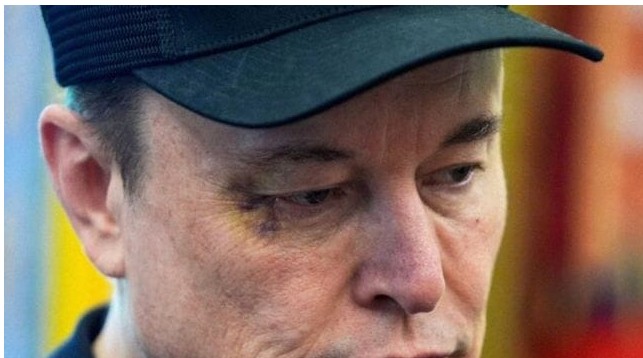
So… about Elon’s black eye—should we take comfort in the fact that a kindergartener can knock him out? Or just note that, once again, X marks the spot.

Posted in Uncategorized | Leave a comment

RP and An Epic Hangover

At around 11 p.m. on November 4, 1980, I found myself drunk and stoned, sprawled across the hood of a red Ford Mustang in the parking lot of a two-star motel in Key West, Florida. No, I wasn’t trying to pay tribute to Hunter S. Thompson. My condition was a direct response to Ronald Reagan winning the presidency earlier that evening. His landslide victory had precipitated the consumption of four Hurricanes (2 oz light rum, 2 oz dark rum, 1 oz lime juice, 1 oz orange juice, ½ oz passion fruit juice, simple syrup, grenadine) and the smoking of a rasta-style blunt filled with prime Afghani weed.

I was upset.

Jimmy Carter was a good man. As president, he always tried to do what was best for the country. He signed the Camp David Accords, created a more efficient government through civil service reform, and championed human rights and the environment. He had his failings, for sure—he handled the Iran hostage crisis poorly and failed to get stagflation under control, just to name two. But you always knew he was a man of substance—someone who used his brain and tried to do the right thing.

Ronald Reagan wasn’t a bad man, but he lacked substance. He was 98.6% sound bite and packaged charm. He made people feel good, but I had grave doubts about those he invited into his party tent: evangelicals like Jerry Falwell and Pat Robertson, who believed the U.S. should be a “Christian” nation; Phyllis Schlafly, who didn’t believe women deserved equal rights; and the National Right to Life Movement, which wanted to restrict women’s reproductive healthcare rights. Worse, he was selling a lie—trickle-down economics. The core of the idea was: feed the rich and they’ll feed the rest of us. I didn’t believe it then, and time has proven that feeding the rich mostly benefits the rich.

The reason I bring this all up now is because the person who tried to talk me off the hood of that Mustang was my ride-or-die, Richard Magrath. May 19 marked the fifth anniversary of his death, and May 21 would have been his 69th birthday which would have amused to him to no end and the source of too many bad jokes. So ou can understand why I’ve been thinking about him a lot this week, especially what he said to me that night to calm me down: “Paul, it’s going to be a helluva party, but the hangover is going to be a bitch.”

He was, of course, right. The hangover from Ronald Reagan is Donald J. Trump. And Rich knew it. In the years leading up to Trump’s presidency, and during its first few years, we talked a lot about “Delta Tango” and what kind of greedy con man scammer he was—and still is. At one point, Rich even tried to convince me to start a website called ohthatdonald.com, a place to post all the stupid things #47 had said and done. (I demurred. I shouldn’t have.)

My hangover on November 5 was epic. Even lying under a blanket in a shaded room, wearing dark glasses, was too much light. A mouse fart was too loud. Two IV bags and a tank of oxygen couldn’t have revived me. It was so bad, I never got that drunk again. (Okay, that’s a lie—but never that drunk, and the number of times since could be counted on one hand.)

But the political hangover we’re still living with—from Reagan to Trump and this current version of the Republican Party—is far worse. They want everyone, regardless of religion, to adhere to Christian principles despite what the Constitution says about separation of church and state. They believe LGBTQ folks belong in the closet, are broken, or are somehow less than. They believe the burden of taxation should fall on the middle class and poor, while clinging to the myth of the benevolent rich. And they believe our borders should be open only to wealthy white people, because apparently we already have “too many” poor and brown people.

I could go on. But you all know the symptoms of this hangover. The worst part, though, is that I don’t have Rich to bitch about this with anymore. We talked every day. We didn’t always agree, but he always made me laugh when I started taking this stuff too seriously. Still, there’s a part of me that’s glad he’s off exploring a different level of existence. At least he doesn’t have to suffer through the hangover the rest of us are still trying to

Posted in Uncategorized | Leave a comment

32 Flavors, “86,” and Buying a New Hat

When I was 15, I landed a job at Baskin-Robbins on Beechwood Road in Summit, New Jersey. Honestly, I don’t remember how I got it. Maybe I walked in off the street. Maybe I found it on the high school job board—back when that meant actual bulletin boards with 3×5 index cards thumbtacked to cork.

The owner, Sy Nankin, was a trained engineer who’d traded his slide rule for an ice cream scoop, trying to build a better life for his family. He took a liking to me. Maybe it was because we shared a religion in a town where that was rare, or maybe it was because I wasn’t afraid to hustle. Sy taught me how to scoop a perfect 2.5 ounces, how to make a milkshake (tip: use semi-frozen milk), how to portion tubs, and how to count change—because back then, cash registers didn’t do the math for you.

For me, it was the perfect job. I got to work around my favorite food, ice cream, and talk to people all day—ideal for an extrovert. The pay was $1.50 an hour. A single cone? Just 25 cents, tax included. That meant you had to sell six cones to earn an hour’s wage. Today, cones go for $4.60 and minimum wage is $15.49. That’s only 3.3 cones per hour. If you’re wondering why the math doesn’t feel right, welcome to the broken reality of wage stagnation. But that’s a rabbit hole for another post.

We had fun, too—especially when Sy wasn’t around. We made Jack Daniels milkshakes and rum-infused Daiquiri Freezes. High school acquaintances became close friends. (Shoutout to Judy, Kevin, Larry, Craig.)

We also spoke our own language. A black-and-white shake? Vanilla ice cream with chocolate syrup. A brown cow? Root beer with chocolate ice cream. A dusty road? Sundae with chocolate syrup and malt powder.

But the phrase that stuck with me was “86 that.”

One day, we got our usual delivery of ice cream, syrups, cones, and paper goods. I—yes, it was me—dropped a tub of ice cream onto a sleeve of cones, crushing them. Sy was not amused. He called me a klutz and said, “86 the cones.” I blinked. “What?” He sighed and said, “Don’t you know what ‘86’ means? It means get rid of. Throw them away.”

Which brings me to today.

Recently, former FBI Director James Comey posted a photo on Instagram of seashells arranged to read “8647.” The caption? “Cool shell formation on my beach walk.” That’s it.

But MAGA-world exploded. Fox News howled. Comey’s being accused of calling for the assassination of Donald Trump. The Secret Service—presumably at Trump’s prompting—opened a criminal investigation.

For context: “86” is diner slang for “get rid of,” and “47” refers to Trump as the 47th president. So “8647” translates loosely to “get rid of 47.” Not a threat. Not a call for violence. Just a political opinion.

The irony should hit you like a melting scoop on a hot summer day. This is the same man who encouraged chants of “Hang Mike Pence,” who regularly suggests his political enemies are traitors, and who traffics in violent rhetoric as part of his brand. Yet here he is, weaponizing the federal government to chase down someone for posting a photo of seashells.

And Comey, disappointing as it is, took the post down.

He should’ve read my last blog. The only way to deal with a bully is to confront him. Punch him in the nose—metaphorically speaking.

Luckily, Trump’s reaction gave us the perfect response. Buy a baseball cap embroidered with “8647.” You can find them on Etsy. Not only does it send a message to your fellow resistors that they are not alone, it also subtly trolls the very people who tried to turn a beach walk into a felony.

I’ve been wearing mine for weeks. So far? Plenty of smiles, a few compliments, and zero confrontations. I even chatted with a guy in a MAGA hat at the airport—he had no clue what “8647” meant.

So go ahead. Buy the hat. Wear it. Be visible. Stand up for free speech, for reason, and against bullies.

Sometimes, the most patriotic thing you can do is “86” the fascism—and look good doing it.

Posted in Uncategorized | Leave a comment

On Playground Politics, Bullies, and the Immigrant Experience

When I was ten years old, I immigrated to Summit, New Jersey from Berkeley Heights. It wasn’t far—just over five miles—but for me, it felt like crossing an ocean. I was leaving behind a pack of kids (a “gang” before the word became pejorative) who knew me, liked me, and with whom I never had to prove anything. My teachers and principal knew me too—and seemed to think I was something special.

My parents insisted the move would be good for us: a bigger house, a neighborhood full of kids, and great schools. I had my doubts. I’d still be sharing a room with my brother, there were no woods or brooks to play in, and I didn’t know a soul. But I didn’t get a vote, and we moved anyway.

To my relief, the kids weren’t terrible. Danny Sylvester and Todd Ranke rolled up on their Sting-Ray bikes to see if there were any new kids around. They introduced me to Jay Speco, Peter Laughlin, and a whole new crew. We played football, basketball, and kick the can until dark or until our parents called us home. Having that gang made the transition to Franklin Elementary easier—at least socially.

Academically and emotionally, not everything went smoothly. Mrs. Ellison, my teacher that year (a woman my mother cursed until the day she died), decided I was behind and made it her mission to erode my self-esteem. And some kids—those who had known each other since preschool—weren’t eager to welcome an outsider.

Then there was Smirk (not his real name). He was tall, connected—his dad held a town office—and had been marinating in the local social stew since birth. He also didn’t like that a Jewish kid had joined the class. Out of 400 students, I was one of two non-Christians. Smirk took it upon himself to “correct” this. He called me a dirty Jew, a Christ-killer, and, with great hilarity among his friends, pretended to check my head for horns.

He had size, status, and a posse. I had no idea how to handle him. My mom wanted to go straight to the principal. My dad vetoed that. He believed I needed to learn to deal with bullies—because life would never be short on assholes. In front of my mom, he said to stand tall and not back down. Alone, he was more blunt: “Punch him in the nose. You might lose the fight, but I guarantee you’ll win the war.”

Soon after, Smirk made his move again—taunts, slurs, and a mock inspection for horns. I pushed him and said if he wanted to fight, I was ready. With too many teachers nearby, we relocated—with a crowd of bloodthirsty classmates—to a nearby baseball field. He threw a punch. I ducked, locked his head, and squeezed until he cried. Then again. And again. Finally, I walked away—only for him to throw a baseball at my head, giving me a black eye and a gash that needed stitches.

He got suspended. He had to apologize in front of the class. His parents called mine to apologize and promised consequences. No one ever called me names again. Smirk and I even played on the same teams later—without incident.

Here’s the thing: bullies only stop when they’re punched in the nose.

And that’s why I bring up this story now—because Donald Trump is a bully. He won’t stop because of stern tweets, clever cartoons, or Chuck Schumer’s “deep concerns.” He won’t be shamed by rallies or op-eds. You don’t reason with bullies. You confront them. You call them out, relentlessly. You land blows—political, legal, rhetorical—until they stop swinging.

The only way to stop Trump is the same way I stopped Smirk: head-on, with guts and grit. Here are a few more suggestions:

  • Don’t take the bait. Donal Trump throws out more distractions shiny objects that any politician in history. Don’t attach them all. Find the ones with meaning e.g. the suspension of habeas corpus and attack it.
  • Call out his behavior not his personality. Everyone knows Trump is a self-aggrandizing small, brained narcissist. Call out his increasing erratic behavior that is clearly the beginnings of dementia.
  • Make people laugh at him. Humor will destroy DT because he has none. Cannot laugh at himself and it drives him wild when people laugh at him.
  • Be factual. And when the MAGAtives respond with personality remind them that facts are stick and stones.
  • Stay resilient. Don’t let him and his supporters get you down. Take every advantage they give you and land a blow when you can, but never forget this is a marathon.

One final note, we are all immigrants at one time or another in our lives. Remember the kindness that was shown to you when you were new and try to extend it to others when they are beginning their new journey. It will never be forgotten and with any luck played forward.

Posted in Uncategorized | Tagged , , , , , , | Leave a comment

Victory Day? Seriously? Well, F*.**

This week, Donald Trump proposed changing the name of Veterans Day to “Victory Day for World War I” and designating May 8 as “Victory Day for World War II.” His rationale? The United States, in his words, “did more than any other country, by far, in producing a victorious result” in both conflicts.

Well, f***.

It’s not surprising Trump got the facts wrong. That’s his norm. According to PolitiFact, 76% of his statements are rated “Mostly False,” “False,” or “Pants on Fire.” Nor is it shocking that no one in his current administration had the guts to say, “Yo, your orange excellency, maybe think before you post.” After all, most of his appointees seem chosen solely for their ability to kowtow. (Example: Kristi Noem as Secretary of Homeland Security? Lee Zeldin running the EPA? Come on.)

And sure, Trump loves renaming things and making them about himself. Gold-plated narcissism is his signature aesthetic. But this one’s particularly offensive.

Well Fuck, The World Didn’t Wait for Us

The U.S. entered World War I late — nearly three years after it began, and didn’t engage in major combat until early 1918. By then, our future allies had been bleeding for years. Here’s what that sacrifice looked like:

  • Russia: ~1.8 million dead, ~4.9 million wounded/missing
  • France: ~1.4 million dead, ~4.2 million wounded/missing
  • British Empire: ~900,000 dead, ~2.1 million wounded/missing
  • Italy: ~650,000 dead
  • Serbia: ~275,000 dead
  • Others (Romania, Belgium, Greece, etc.): ~300,000–400,000

The United States?

  • ~116,000 dead
  • ~204,000 wounded

That’s less than 2% of total Allied casualties. Did we make a difference? Absolutely. But did we do “more than any other country”? Not even close.

Well Fuck, Veterans Day Isn’t About Victory

Originally named Armistice Day, the holiday was created to mark the end of World War I — specifically, the 11th hour of the 11th day of the 11th month in 1918. In 1954, Americans renamed it Veterans Day to honor all who served in the military — not just those from one war, or one country.

Changing the name now not only diminishes the profound sacrifices of our Allied partners, but also disrespects every American veteran who served in Korea, Vietnam, Iraq, Afghanistan, and beyond. It’s historical erasure in service of orange tinted ego.

Well Fuck, World War II Was Also a Team Effort

Look, I’ve teased my British brother-in-law for years that America bailed out the U.K. — and if we hadn’t, they’d be eating bratwurst and sipping pilsner in pubs. But the truth? If the Brits hadn’t held the line during the Blitz, in North Africa, and across the globe, America might never have joined the war. Nazi Germany could’ve sealed victory in Europe before Pearl Harbor even happened.

And once we did join, it wasn’t a solo act. General Eisenhower, as Supreme Allied Commander, worked to forge a unified front — with British, French, Canadian, Australian, Chinese, South African, Russian, and Brazilian troops — into a cohesive, global force that beat fascism.

Here’s the WWII casualty scorecard:

  • Soviet Union: ~10.7 million
  • China: ~3–4 million
  • United States: ~416,800
  • United Kingdom: ~383,700
  • France: ~217,600
  • Poland, Yugoslavia, India, Canada, Australia: hundreds of thousands more

The UK lost nearly as many soldiers as we did — with just one-third our population. Should their sacrifice be forgotten so Trump can rename a holiday at the alter of his own ego?

No. F*** no.

Well, fuck. A Parade for Himself

And if you’re still not convinced this is all about ego, consider this: Trump is throwing himself a military parade for his birthday. Tanks, troops, helicopters — the works.

Let’s ignore, for a moment, that draft-dodging Trump once called Americans who died in war “losers” and “suckers.” Let’s just look at precedent:

  • George Washington: Hero of the Revolution
  • Andrew Jackson: Defeated the British at New Orleans
  • Dwight D. Eisenhower: Led the Allies to victory in WWII

All honored with parades — after their service, not during their presidencies. All real military leaders. None needed a procession to feel big.

Trump, meanwhile, thinks he deserves one. Because nothing says “Commander-in-Chief” like bone spurs and self-worship.

Final Thought

Well, fuck.

Posted in Uncategorized | Tagged , , , , | Leave a comment

The MS St. Louis, Yom HaShoah, and Lessons Not Learned

In May 1939, as Nazi persecution escalated in Germany, a German ocean liner named the MS St. Louis quietly left the Port of Hamburg. Aboard were 937 passengers, most of them Jewish refugees desperate to escape the tightening grip of Hitler’s regime. The ship’s destination was Havana, Cuba, and for many, it seemed like the first step toward a new life—safe, far away, and full of hope.

The man in charge, Captain Gustav Schröder, wasn’t your typical officer. He was German, yes—but he was also fiercely human. Knowing full well the trauma his passengers had already endured, he did everything he could to restore a sense of dignity and calm aboard his ship. Meals on board included items no longer available to many Germans due to rationing. There were dances, concerts, religious services, even swimming lessons for the kids. Lothar Molton, a young boy on the ship, later recalled thinking it felt like a “vacation cruise to freedom.”

That feeling was short-lived.

The ship arrived in Havana’s harbor early on May 2. They were not welcomed. Instead of being they were blocked from docking. The Cuban government, under President Federico Laredo Brú, had just changed its immigration rules—quietly and drastically. A new decree required a $500 bond for each refugee and explicit authorization from government officials. The passengers had no way of knowing when they left that their once-valid entry permits were now worthless.

Only 28 people were allowed off the ship. That left more than 900 refugees stranded on the ship, just outside the coast of a country that didn’t want them.

Desperate for help, U.S. Jewish organizations and senior U.S. officials, including Secretary of State Cordell Hull and Treasury Secretary Henry Morgenthau, tried to convince Cuba to reconsider. That failed. Captain Schröder decided to turn the ship toward the United States, hoping that surely America—the land of immigrants and freedom—would offer refuge.

He steered the ship near Miami, just off the Florida coast, and waited. Pleas were made to allow the passengers to disembark. But the Roosevelt administration, caught between internal politics and rising anti-immigrant sentiment, did not act. The U.S. Coast Guard followed the ship closely, making it clear no unauthorized landings would be tolerated. At one point, Schröder even considered running the ship aground so the passengers could escape, but he was boxed in.

Next, a small group of clergy and professors in Canada tried their hand. They appealed to Prime Minister William Lyon Mackenzie King to grant sanctuary. The ship could have reached Halifax, Nova Scotia in two days. But Canada’s top immigration official, Frederick Blair, was openly hostile to Jewish immigration. Canada rebuffed the immigrants

It left Captain Schröder with only one choice sailing back across the Atlantic, with over 900 lives in limbo. Conditions on the ship worsened. Fuel and food were running low. And still, Schröder refused to take the passengers back to Germany. He negotiated tirelessly with European governments, trying to find any country willing to accept the refugees. He even considered scuttling the ship near the British coast to force a response.

Eventually, he succeeded—partially. The United Kingdom agreed to take 288 passengers. The rest were divided among France (224), Belgium (214), and the Netherlands (181). With every passenger offloaded, the St. Louis returned to Hamburg—empty.

At the time, it seemed like a partial victory. But less than a year later, Germany invaded France, Belgium, and the Netherlands. Many of the passengers who thought they had found safety were once again under Nazi control.

Of the 620 passengers who returned to continental Europe, 87 managed to emigrate before the Nazi invasion. The rest were trapped. It’s estimated that 254 were murdered in the Holocaust—most in Auschwitz and Sobibór. 365 survived, often through extraordinary efforts, hiding, or luck.

Today, the voyage of the MS St. Louis is known as the “Voyage of the Damned.” It’s one of the most tragic illustrations of what happens when the world looks the other way in a humanitarian crisis.

However the legacy of Captain Schröder endures. After the war, he was awarded the Order of Merit by West Germany. In 1993, he was posthumously named Righteous Among the Nations by Yad Vashem, Israel’s Holocaust memorial—an honor reserved for non-Jews who risked their lives to save Jews during the Holocaust.

The ship’s story is now featured at the U.S. Holocaust Memorial Museum in Washington, D.C. In Halifax, where the ship never docked, the Maritime Museum of the Atlantic hosted an exhibit called Ship of Fate. Canada also created a striking monument in 2011: The Wheel of Conscience. Designed by architect Daniel Libeskind, it features four interlocking gears etched with the words “antisemitism,” “xenophobia,” “racism,” and “hatred.” The back bears the names of the passengers denied entry.

Governments eventually acknowledged their mistakes—too late, but with humility. In 2012, the U.S. Department of State formally apologized, and in 2018, Canadian Prime Minister Justin Trudeau issued a heartfelt apology in Parliament, calling it a failure of leadership and compassion.

The story of the St. Louis isn’t about a single ship or a failed voyage. It’s a cautionary tale of what happens when bureaucracy trumps humanity, when doors are closed, and when the world says “not our problem.” It should be an abject lesson. But sadly, it is one that the Trump Administration has failed to learn from.

Note: Much of this piece was culled from Wikipedia’s account of the St.Louis

Posted in Uncategorized | Leave a comment

Big Lies, The DOGE Dodge, and Unfunny Punchlines.

When I was in high school, there was a joke that asked, “What are the three great lies of man?” The joke was both racist and sexist, so I’m only going to share one of the “lies”: “I love you.” More on that later.

I bring it up because I think there’s another great lie being told today—that business leaders make great government officials. This belief holds that because someone has successfully managed a business and made money, they automatically have the skills to make the government run more efficiently.

That’s complete cow excrement.

The mission statement of the U.S. government is stated in the preamble of the Constitution:

“We the People of the United States, in order to form a more perfect union, establish justice, insure domestic tranquility, provide for the common defense, promote the general welfare, and secure the blessings of liberty to ourselves and our posterity, do ordain and establish this Constitution…”

Boiled down, the purpose of our union is to create a society that is safe, healthy, and decent for all its citizens.

Business mission plans are fundamentally different. While they may include lofty goals—like Tesla’s “To accelerate the world’s transition to sustainable energy”—they all share one core requirement: revenue generation and profitability. Without those, leaders are replaced, or companies go out of business. Many businesses incentivize short-term financial performance through bonuses and perks tied to quarterly targets which means long term consequences have far less weight in decision making that do short term profiteering.

It’s Tom Cruise and Cuba Gooding Jr jumping up and down screaming “Show me the money!”

Successfully achieving a government’s mission requires different skill sets and vastly different perspectives than those of business leaders.

In 1906, President Theodore Roosevelt laid the foundation for what would become the Food and Drug Administration. He did so after journalists like Upton Sinclair and reformers such as Harvey Wiley exposed the widespread use of dangerous chemicals (formaldehyde, borax, arsenic), fillers (chalk, plaster, brick dust), and drugs (cocaine, heroin, morphine) in the U.S. food supply.

Roosevelt said at the time:

“The adulteration of food and drugs deprives the purchaser of money, but may entail injury to health and even death.”

By creating the FDA, Roosevelt affirmed the government’s role in protecting the public’s general welfare. He also tacitly acknowledged that no industry can truly self-regulate. Business leaders, focused on profitability, often overlook—or accept—the human cost of their decisions.

Look no further than Massey Energy, which calculated that paying out settlements after fatal mining accidents was cheaper than improving safety protocols. Or Facebook, which prioritized engagement—driven by inflammatory and false content—over social cohesion. Or Tesla, which pushed forward with self-driving technology and battery systems despite reports that battery fires could trap passengers inside locked vehicles.

All the companies share the same playbook with DOGE.

As of this morning, the DOGE website proudly exclaims:

“$150 Billion Saved, $931.68 per taxpayer.”

It also featured a “Top 10” list of departments with the biggest savings:

  • Health and Human Services: 10,000 layoffs
  • Department of Education: 2,000 layoffs
  • General Services Administration: 3,500 layoffs
  • Housing and Urban Development (HUD): 4,000 layoffs
  • Environmental Protection Agency (EPA): 2,000 layoffs
  • USDA: 15,000 layoffs

(Note: These figures are derived from public sources, as DOGE.gov does not list totals directly because transparency is not in their playbook.)

What the site doesn’t mention is how these cuts impact the government’s mission.

How will laying off 10,000 people help ensure the safety of new and existing drugs, prevent disease outbreaks, or protect public health?

How will eliminating 2,000 jobs in education improve STEM scores or address the fact that we rank 14th in literacy among industrialized nations and 23rd in math skills?

How does cutting 4,000 HUD employees reduce homelessness or support community revitalization?

Will 2,000 fewer EPA workers result in cleaner air, safer watersheds, or more sustainable energy?

Can the USDA support farmers, safeguard our food supply, or conserve resources with 15,000 fewer employees?

These questions go unasked because Trump and Musk are focused on one thing: cutting spending. That’s a business goal—not a governance goal. They’re chasing short-term wins and flashy statistics, knowing they won’t be around to deal with the long-term consequences. CEOs can get away with this kind of thinking because their scorecard is simple: profit.

But that playbook fails when there’s no FEMA response after a tornado or when people die because the food they ate was contaminated or when we lose jobs to other nations because our workers can’t read, write or do simple math.  

Let me reframe the question: If you could donate $1,000 to charity, and that money would…

  • Ensure the air and water are safe.
  • Protect the food supply.
  • Provide citizens with the skills they need to succeed in a global economy.
  • Provide homes for those in need.

Would you? Sounds like a bargain to me.

Our government may be inefficient. It probably has wasteful spending but how do you know if you don’t ask the right questions and only measure success by how much money you are saving or jobs you are cutting? Efficiency in government needs to be measured by how effectively and efficiently it is executing it’s mission. How much money you saved may be a great scorecard for a business, but it’s the wrong one for a government. Government should be measured by how well it helps us form a more perfect union—not by how many people it fires.

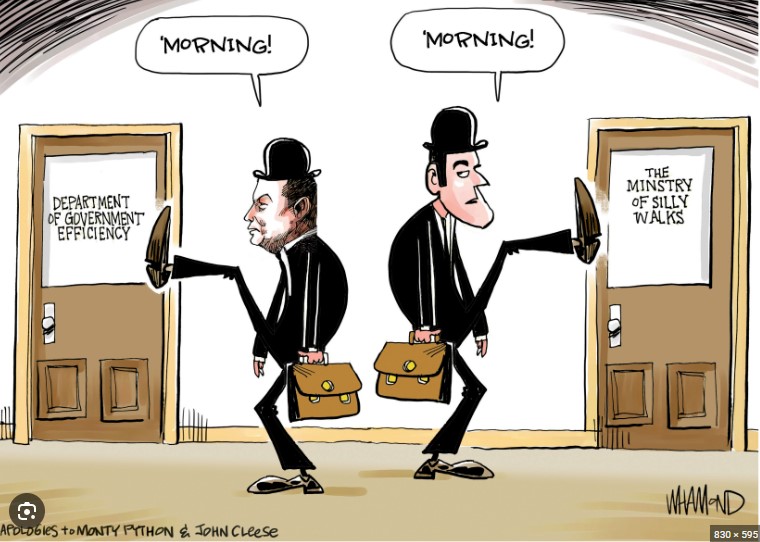
In other words, like so much of what this administration chooses to invest in DOGE is a dodge—a feel-good metric that lets Trump and Musk claim success while failing on the mission of our constitution.

One last thing. Remember that great lie I told you I would bring up again. If the Trump’s administration’s goal with DOGE’s goal was really about saving the taxpayer money, then why are they imposing tariffs that will cost the average family four times more than what DOGE is purported to save? Sadly, this is not a punch line, and I am not laughing.

Posted in Uncategorized | Tagged , , , , , , | Leave a comment

Being Unc-Adjacent, Hard Truths and The Myth of Elon Musk.

Your last text to me ended with the question: “Why all the hate for Elon Musk?”

I’m tempted to respond with a question of my own: “Why all the love for Elon Musk?” But that would be a snarky way to start, so I’ll get to that later.

My dislike for him begins with his antisemitism. I’m not talking about his awkward arm salute, which is open to some interpretation. I’m referring to some of his tweets and actions.

When he bought Twitter, he immediately allowed antisemitic, white nationalist, and other extremist groups to promote their views under the guise of “free speech.” This was condemned by the Anti-Defamation League, which stated that it is “indisputably dangerous to use one’s influence to validate and promote such theories.” He, with a touch of irony, decided to sue them for expressing their opinion.

In November 2023, he propagated an antisemitic conspiracy theory suggesting that Jewish communities promote hatred against white people. His comment in response: “You have said the actual truth.”

In January, he told the far-right German political party AfD to “get over their generational guilt” about the Holocaust and to embrace their German culture. On the surface, that might seem innocuous—but it came on the eve of Holocaust Remembrance Day, and in context, it’s telling.

He made a series of Nazi puns directed at the same political party: “Don’t say Hess to Nazi accusations,” “Some people will Goebbels anything down,” and “His pronouns would be he/Himmler.”

On the Joe Rogan Experience, when asked about his salute at a Trump rally, he said, “I did not see it coming,” emphasizing “not” and “see” to sound like “Nazi.”

If that doesn’t convince you of his antisemitism, I say this with love: it does not matter. Your life experience doesn’t allow you to fully understand what it’s like to be part of a reviled minority. But I hope you love me enough to try—to understand how his words and actions make me, a child of a Holocaust survivor, feel.

Accepting him in any government role, excuse the pun, whitewashes these beliefs and normalizes ideas that are contrary to the cornerstones of our democracy.

Also, if he truly is the genius, you think he is, then he knew exactly what he was saying and why.

As a businessperson, I don’t hold him in the same high regard you do.

Let’s start with Twitter, which is in an industry I’ve worked in for over 30 years. Here’s what I know: U.S. user numbers have nearly halved since he bought it. Advertisers have fled, and though some have returned, the volume remains low. The average advertising rate (CPM) has dropped from nearly $6.00 to just over $0.50. A smaller audience, fewer advertisers, and lower rates equal less revenue. That’s why he sold it to himself at a 20% discount.

Here’s a question: if you’re selling something to yourself, why discount it? Wouldn’t it look better to inflate the price to show growth? He didn’t—because he was forced to sell by investors looking for an out. And he sold it to his AI company likely to hide Twitter’s losses within a business that will show explosive growth.

He didn’t buy Twitter because it was a great business. He bought it for power. He wanted a seat at the table—and that stroked his oversized ego more than a profit ever could.

Now PayPal.

He gets credit for recognizing that electronic banking would revolutionize commerce when he founded X.com. But after merging with Confinity, he served as chairman for just a few months before being ousted by Peter Thiel. He had little operational control, and the company’s success was driven far more by Thiel than by Musk.

As for Tesla—yes, he made it what it is. He led the charge (pun intended) for electric vehicles and pushed the industry forward. But like Ford with the Pinto in the 1970s, Tesla has prioritized profit over safety. Ford chose not to fix a $11 flaw that caused cars to burst into flames. The result: 27–100 people died.

As of October 2024, Tesla’s autopilot system has been involved in at least 51 fatalities. Battery fires have claimed 83 lives. It’s hard to believe Musk was unaware of these flaws. Like Ford, he likely ignored them because fixing them would cost money. That’s not ethical business—and it’s unacceptable in government.

Also, the brand is dead—and he killed it. Tesla’s core audience was wealthy, environmentally conscious, liberal-leaning buyers. Affordable models made it even more urban and coastal. But Musk’s politics alienated that base. Many owners are selling or even donating their cars. Add in competition from sleeker EVs, and I don’t see Tesla recovering.

To put it another way: the brilliant businessman shit in his bowl of cornflakes.

Now, a confession—you may not know this about me, but I’m a space nut. I grew up in the “space age.” Every Mercury, Gemini, and Apollo launch was must-see TV. The moon landing was one of the most awe-inspiring moments of my life.

I support funding NASA and space exploration because I deeply believe that government-backed science pays off. The space program gave us memory foam, satellite tech, scratch-resistant lenses, insulin pumps, crash-avoidance systems, robotic surgery, and more.

And yes, I’m a fan of SpaceX. Many of its accomplishments are remarkable and deserve celebration. But they don’t prove Musk is a great businessman or a decent human being.

SpaceX is not profitable. While The Wall Street Journal reports some profitable quarters, one good quarter does not a successful business make.

SpaceX has received over $10 billion in government funding. Some of that paid for services rendered—but much of it came in the form of grants and public support. So, if Musk’s success rests on government funding, how is that different from the institutions his companies often criticize?

The brightest star in SpaceX’s orbit is Starlink. Bringing high-speed internet to remote areas is a solid idea—and with 4.6 million users and $8 billion in revenue, it’s clearly working. But there’s a catch.

Astronomers complain that Starlink’s satellites interfere with space observations. That’s a private company using a shared public resource for profit. When a limited public good is used that way, there must be oversight to protect public interest.

Even more troubling: Musk’s refusal to allow Ukraine to use Starlink for military operations, allegedly to avoid escalating conflict. Maybe it was a nod to Putin—maybe not. But what if a hostile country (say, Iran) paid Starlink to shut down service in Israel? That would let one man dictate public policy—a dangerous, possibly illegal, situation.

Also: if Starlink is part of modern warfare, is its CEO a legitimate military target?

There’s no doubt Musk is wealthy. But does that mean he knows how to run a successful business? The evidence says no. X (Twitter) is tanking. SpaceX is not profitable. Tesla is losing its brand and market share—and it’s all largely due to him. The company’s best bet for survival might be pivoting to batteries… or replacing Musk.

This note has gone on too long. Blame the Brazilian coffee. But there’s more to say. Like why startup expertise doesn’t translate into leading a government. So yes—you’ll be getting another rant. Lucky you.

Posted in Uncategorized | Leave a comment