That morning, twenty-four years ago, began like so many others for me. I rose early, completed my morning ablutions, walked the dog, and was in a cab heading to my office at The Sporting News before 7 a.m.
You could not help but notice it was an extraordinarily beautiful day. The heat and humidity of summer had given way to clear blue skies and crisp, fall-like weather. The kind of day my mother used to describe as “positively Swiss.” It was so beautiful that I hesitated before entering my building, wanting to savor it before putting my nose to the grindstone.
At 8:15, I was convinced the most exceptional thing that would happen that day was that my assistant had actually arrived on time and kindly brought me my second cup of coffee. I thought it was going to be a good day—even when I heard an airplane flying low and fast over our heads. I casually remarked to her that the FAA didn’t take kindly to aircraft flying so low over the city.
That plane turned out to be the first, lined up with the neighboring Empire State Building, flying down Fifth Avenue at five hundred miles per hour. We learned the truth when someone came running into my office shouting that the Towers were on fire. We ran to the southern windows of our 27th-floor office. From there, we watched in horror the moments that changed us forever.
We saw the second plane hit, erupting in a burst of orange flame. We watched the first tower crumble and fall. And then the second. We had no way of knowing, or comprehending, what had just happened:
246 people who had boarded their flights minutes before had cruelly died when their planes were turned into missiles.
2,606 people innocently working at their desks lost their lives in clouds of flame and dust.
343 firefighters ran into the Towers and never emerged.
60 police officers disappeared into the buildings, never to be seen again.
8 paramedics went to save lives and lost theirs instead.
I had no way of knowing that my childhood friend and neighbor, Todd Rancke—the first boy I met when I moved to Summit—was among the victims.
After making sure my staff had a plan to get home, and my address in case they couldn’t, I began my walk back. I remember seeing dust-covered people, heads down, no doubt in shock, mechanically moving uptown.
On Madison Avenue, cars were lined up bumper to bumper, yet there were no horns, no impatience—just the tramp of feet as pedestrians made their way home.
Crossing the park, I saw groups of people huddled around boom boxes listening to grim news broadcasts. Overhead, unbelievably, fighter jets patrolled the skies. Warplanes. Over my city. At the Imagine mosaic, someone had already laid flowers. I thought of Lennon’s lyrics:
Imagine there’s no countries It isn’t hard to do Nothing to kill or die for And no religion too Imagine all the people Living life in peace…
Never had those words felt so far away.
I withdrew money from an ATM, knowing cash could come in handy in a disaster. I shopped at an empty Fairway, worried food supplies might run out. Then I went home, turned on CNN, and waited for the displaced and the dispossessed to arrive. They came. They went. Together, we watched endless loops of the Towers crumbling.
I remember the frustration of trying to reach my parents. The collapse of the towers had destroyed a major AT&T switching station, and cell lines were jammed. Only my BlackBerry worked. Hours later, when I finally got through, I will never forget the relief of being able to tell them I loved them.
The next morning, I rose early and went for a long run as I was training for the Chicago Marathon, just weeks away. Running south along the West Side Greenway, I could see smoke rising from the pile and the nearly mile-long line of ambulances waiting to help those who would never need help again. I felt I had to do something.
After finishing my run, I went to the American Red Cross HQ near my home and waited sixteen hours to give blood we hoped would be needed. When I emerged, the wind had shifted. The smell from Ground Zero now engulfed the city. It was unlike anything I had ever encountered—the smell of death, fire, and concrete dust. I wondered if this was the smell of hell.
That night, I didn’t lie awake thinking about lessons. I was simply grateful that most of those I loved were safe. But in the twenty-four years since, I have thought a lot about that day and what it taught me.
Some lessons were immediate:
Be grateful for everything. Every day is precious. Savor it.
Open your heart wider. Love more. Accept others for their gifts.
Prepare for the worst, hope for the best. And if the worst comes, still look for the best in people—even if they haven’t earned that trust.
My family—my wife, sister, brother, brother-in-law, nieces, and nephews—are my most precious gifts. I do what I can every day to make sure they know they are cherished.
But the most important lessons of that day seem to have faded. This is especially true in these MAGA days.
I think about how together we felt as a country in the days that followed 9/11, and how good it felt when everyone had each other’s back. Donald Trump did not bring us together; he divided us. He and his political allies chose to fracture rather than include. And to be blunt, I have grown intolerant of their nonsense.
To them I say: September 11 should have taught you that we are all in this together.
That you need to look out for your family, friends, and neighbors. And that means being woke when woke simply means treating people as they wish to be treated. Pronouns, sexual orientation, religion—these are personal and private choices that do not affect you, and no one should feel “less than” for being who they are.
When someone is homeless or mentally ill—or both—they should not be arrested or vilified. We have an obligation to help them up. Capitalism is as broken as communism if it creates a permanent underclass that cannot afford housing or food because wages have not kept up with costs.
Facts are facts. Cut the crap. Vaccines save lives. Get vaccinated. If you choose not to be vaccinated, you are choosing to separate yourself from the group—the society—that depends on one another to protect the vulnerable: the elderly, the immunocompromised. Being part of society comes with obligations as well as benefits. If you refuse the obligations, you are not entitled to the benefits.
If that day taught us anything, it is this: we do not get to choose the moments that define us, but we do get to choose how we show up for each other. Honor the dead by choosing well.
That uncle, aunt, cousin, or distant relation who shows up at family gatherings and immediately creates a scene by expressing an opinion that alienates almost everyone else. You know the type. The person who walks into the kitchen and, if they see a male relative cooking, asks to see his estrogen patch. Or who insists the moon landing was faked, the earth is flat, cranberry sauce is a government tracking device, and pumpkin spice lattes are a communist conspiracy designed to decimate American agriculture.
They have an opinion about everything, backed only by “facts” picked up from Fox News, Joe Rogan’s podcast, and however Alex Jones is pushing out conspiracies these days. Every encounter leaves you wondering what meds they’re on and hoping they won’t be invited to the next reunion. But somehow, they always are.
I am ashamed to admit that I have one too. We call him Uncle Trump. And I wouldn’t bring him up, except I was guilted into visiting him last week. My cousin called and said, “None of the siblings will go, and you know how cranky he gets if people don’t visit and tell him how wonderful he is. Please.” So I took one for the team. I needed the mitzvah points.
I found him sitting on the porch of his “home.” He was wearing a bright red hat that read in capital white letters: I AM RIGHT ABOUT EVERYTHING, and a t-shirt stretched to its structural limits: Most Honest Man Alive. In front of him were the remains of his lunch—two Big Macs, two Filet-O-Fish sandwiches, and a Diet Coke.
“Uncle Trump,” I said, “that’s quite the lunch. I thought you had started a new health regime?”
“This is healthy! I didn’t have a shake or fries.”
“But didn’t Dr. Kennedy tell you to eat more organic food and less fast food?”
He gave me a look. “First of all, he’s not a doctor. Doctors only tell you things you don’t want to hear because they have”—he raised his fingers in air quotes—“‘the facts.’ I like advice from people who think outside the box and give me explanations that make sense to me. Plus, he has the same tanning coach I do. Second, fast food is good for you. It’s always prepared the same way, tastes the same everywhere, and no one can slip poison into it. Just think how many lives fast food has saved from poisoning.”
“And who am I to argue with the man who is right about everything,” I said.
“Exactly.”
“But doesn’t that diet make you gain weight? That’s a couple thousand calories, and you don’t exercise.”
“Don’t be ridiculous. I weigh the same as I did in college. Two hundred and ten pounds. Kennedy told me so yesterday.”
I could have told him I also weigh 210 but with a waist eight inches smaller and six inches shorter. But since he’s “right about everything,” I tried a different tack.
“And what do you do for exercise?”
“I golf every day.”
“But you drive a cart.”
“Yes, and you have no idea how hard that is…”
I did. It isn’t. But why argue with the man who never lies?
So I switched subjects. “When are you going to get the new COVID vaccine?”
“You know I invented it.”
“I do. You remind us all the time. So are you going to get it?”
“No.”
“Why not?”
“Kennedy says it doesn’t work.”
“But didn’t it save millions of lives during the pandemic?”
“Kennedy says that’s a hoax by researchers who only care about facts, not conjecture. And I believe that.”
“I’m confused. Didn’t you just take credit for inventing it?”
“Yes. I should get a prize.”
“Then why not get the vaccine?”
“Because we get too many shots.”
“But haven’t they saved hundreds of millions of lives, trillions in medical costs, and prevented countless illnesses?”
Uncle Trump looked at me as if I were being difficult. “What’s your point?”
I took a breath. “Don’t you think getting advice from Kennedy is a bad idea? Wouldn’t it be better to listen to someone who actually went to medical school or is at least a trained scientist?”
He shrugged. “I like contrary opinions.”
“Yeah, but Kennedy used heroin as a study aid, had a worm in his brain, and lets his grandchildren swim in polluted creeks. Don’t you think there are more qualified, less compromised people for contrary opinions?”
“But he laughs at my jokes. And when I offer an opinion, he always agrees with me.”
“Oh.” Since this was going nowhere, I asked, “How’s your friend Jeffrey?”
“You didn’t hear? They threw him out of the home! Said he was diddling the candy stripers.”
“Didn’t you hang out with him all the time? Whenever I visited, you two were thick as thieves. You didn’t know?”
He winked. “Of course not.”
“How could you not?”
“Well, I mean, I knew he liked young girls. Who doesn’t? But not that young.”
“What’s ‘that young’?”
“You know… young young.”
At this point, I’d had enough of Uncle Trump. “I have to go. I left Rosie the Wonderdog in the car, and she gets antsy if I’m away too long.”
He shot me a horrified look and whispered urgently, “You shouldn’t have done that. Don’t you know this place is crawling with Haitian immigrants? They steal pets and eat them. Kennedy told me.”
“Oy,” I thought. Out loud, I just said, “Guess I’d better run then.”
One of the most amazing discoveries while packing up our mother’s home was a stash of letters I had sent her from Camp Skoglund when I was ten. My favorite find was a letter I wrote on the one day I didn’t receive one from her. In it, I accused her of breaking her promise to write me every day. Reading it now laid me out. Why, for God’s sake, had my mother kept that ungrateful little missive for fifty years?
Ironically, finding it made me want to write her a letter to tell her what I had uncovered in her attic. You see, my mother taught all of us the art of the note. She never insisted that we put pen to paper (remember when people used pens?), but instead led by example. When she went on vacation, she sent us postcards that were clever and witty. When we were away at college or gone for any length of time, she sent us letters.
I remember when I was living in England with my buddy Rich. A note arrived from her describing an August day in New Jersey, which she called “positively Swiss” because the summer heat had finally broken. Rich and I were so charmed by that phrase that we talked about it even decades later.
Writing was imprinted onto our DNA. My brother David has published nine books and was the editor of Foreign Policy for years. My sister, whose cookbook The Secret Life of Chocolate Chip Cookies is now available for preorder and will be released on September 16 (our mother’s 96th birthday), teaches journalism to college students. Then there’s me—the black sheep—with just one novel and a blog to my name.
Still, I did follow her example. I wrote to her whenever I traveled (and with nearly 3.5 million American Airlines miles under my belt, that was often). Sometimes I sent postcards, though I never managed to make them as witty as hers. Occasionally I wrote longer letters, as when I was in Paris, alone at the Café de Flore, imagining what it must have been like for the Lost Generation she so admired. Later in her life, I sent her a daily email to let her know what I was up to or to share something that had caught my fancy.
I miss her. She has been gone nearly five and a half years, and I still sometimes pick up the phone to call her (she’s still on my favorites list) or start an email to her. Especially these days. She hated Donald Trump the way evangelical Christians hate Satan—and for the very same reason. She was convinced he was the devil incarnate. In her later years, she would sit watching MSNBC and curse at him with words that seemed to defy her Ferragamo loafers, “never leave the house without lipstick,” grandmother-of-four image.
This morning, as I walked through our neighborhood in Barra da Tijuca, admiring the newly bloomed orchids (Mom loved gardening), I began to wonder what note I might send her now, along with pictures of those opulent flowers:
—
Dear Mom,
It is a positively Swiss day here in Rio. The sun is shining, the temperatures are in the low 70s, and purple, white, and pink orchids are emerging from their long winter’s nap. Outside our home, a tree is giving birth to jackfruit. I’m not sure I’ll ever get used to watermelon-sized fruit growing on a tree. It feels as though we’ve landed on another planet.
Last night we went to a reception for Elaine’s grandniece, celebrating her graduation from medical school. The ceremony was a curious blend of pep rally (students had cheering sections with balloons, banners, and chants), religious ritual (each graduate was blessed as they received their diplomas), and academia—complete with long-winded speeches about the future. To be fair, perhaps the speeches were less boring for those who understood Portuguese.
My favorite part of the evening was talking with the grandfather of the new doctor. He’s a Harvard-educated, reformed lawyer who spent his career in banking. You’d appreciate this: the first words I said to him were, “I’m so sorry for our President.” He laughed and immediately accepted me as a kindred spirit.
I told him I admired Brazil’s judicial system, especially the foresight of creating a separate court solely dedicated to electoral matters. Elections are the bedrock of democracy, and making sure they don’t get bogged down in an overburdened legal system allows for swift resolutions. If the U.S. had such a system—and had convicted Trump for interfering with the election, as Brazil may soon do with Bolsonaro for insurrection—we might not be in our current pickle.
He agreed, though sadly, saying it pained him to see the world’s greatest democracy sink so low, led by a man who makes policy decisions based on personal slights and greed. I told him I admired how Lula has handled Trump’s bullying, especially when he said: “No gringo is going to give me orders… Trump is not the emperor of the world.”
I asked him, as a former banker, how the tariffs might affect Brazil’s economy. He assured me Brazil would weather them easily. The government has already pledged to buy up excess honey and distribute it to schoolchildren. Beef producers have shifted focus domestically, lowering prices for citizens in this land of enthusiastic carnivores. And China is buying all the soy that once went to the U.S. (“Soy what?” I quipped, and he laughed.)
“What about coffee?” I asked. He smiled proudly: “The world loves Brazilian coffee. If we don’t sell it to the U.S., someone else will. The only thing a tariff on coffee will do is make Americans’ trips to Starbucks a wallet-breaker.”
Mom, that conversation reminded me why I love Brazil. Brazilians love the United States. They love us gringos. They want to be friends and they want to be friendly. But if we refuse to treat them with respect, they will be sad—then they’ll move on and find others who will.
The Starbucks Revolution: Coffee Cargo Dumped in Santos Harbor in Protest of Global Tariffs and Corporate Overreach
SANTOS, BRAZIL – [Today’s Date] – In a stunt equal parts historic homage and caffeinated mischief, a group of Brazilian citizens staged what they are calling the “Starbucks Revolution” by sneaking onto a cargo vessel docked in Santos harbor late last night. The activists, dressed in costumes meant to resemble Indigenous Brazilians, tossed dozens of sacks of premium Arabica coffee beans—destined for Starbucks stores across the United States—directly into the waters of the Atlantic.
The group’s action, which they described as “performance protest with a splash of saltwater,” was deliberately modeled after the infamous Boston Tea Party of 1773, where American colonists protested high tea tariffs by dumping East India Company cargo into Boston Harbor.
“This is our Boston moment—only stronger, hotter, and with better crema,” said one masked participant, his face partially obscured by feathers and faded carnival paint. “If the American patriots could stand up to King George over tea, Brazilians can certainly stand up to exploitative coffee tariffs and Starbucks’ empire-building.”
History Repeats Itself (With a Dark Roast)
The activists, numbering roughly two dozen, claimed that their protest is aimed at drawing attention to tariff structures, trade inequalities, and the stranglehold multinational corporations hold over Brazilian coffee growers. The protestors issued a collective statement that read:
“For centuries, Brazil’s farmers have supplied the world with coffee, yet global profits funnel to boardrooms in Seattle, not the fields of Minas Gerais or Espírito Santo. We throw these beans into the sea not out of disrespect to our labor, but to honor it. Let the U.S. taste a harbor brew for once.”
Observers on the docks reported the scene as “half carnival, half chaos.” One dockworker noted that the costumes resembled “a mix between school pageant, Carnival rejects, and something from a bad tourism poster,” but conceded that the group’s energy was undeniable.
Starbucks Responds (Sort of)
While Starbucks headquarters in Seattle has not yet issued a formal comment, an anonymous regional executive suggested off the record: “Frankly, we’ve dealt with oat milk shortages, pumpkin spice hysteria, and frappuccino blenders on strike. A little maritime cosplay protest isn’t going to derail our Q3.”
Still, analysts noted that the cost of lost cargo could amount to hundreds of thousands of dollars, given that the vessel was reportedly carrying premium-grade coffee earmarked for U.S. holiday promotions. “That’s a lot of Gingerbread Lattes floating around the Atlantic right now,” one industry insider quipped.
Echoes of Lula and Trump
The group also tied their protest to broader political themes, quoting Brazilian President Luiz Inácio Lula da Silva, who earlier this year criticized former U.S. President Donald Trump for attempting to meddle in Brazilian legal affairs.
“President Lula reminded the world that Trump once tried to stick his orange fingers into Brazil’s judiciary and political system,” said another protester, adjusting a papier-mâché jaguar mask. “If Americans once dumped tea to resist an English king, Brazilians can dump coffee to resist political interference and economic domination from across the equator.”
Their statement drew laughs from onlookers but also sparked serious commentary among local journalists, who pointed out the irony of invoking American revolutionary imagery against American corporations.
A Brewing Movement?
Whether this “Starbucks Revolution” is a one-off prank or the start of a broader movement remains unclear. The group hinted at future actions, suggesting they may stage “latte blockades” in front of shopping malls or “macchiato marches” through São Paulo’s Avenida Paulista.
Local police, meanwhile, expressed mild exasperation. “It’s technically theft and destruction of cargo,” said one officer. “But on the other hand, it’s the most educational reenactment of U.S. history we’ve seen in Santos.” Authorities confirmed that while a few activists were detained, no serious charges have yet been filed.
The Snark Factor
Critics of the protest were quick to point out the contradictions. “Dressing up as Indigenous Brazilians to make a point about coffee tariffs? That’s cultural cosplay at best, appropriation at worst,” said a São Paulo academic. “But then again, Americans in Boston dressed as Mohawk Indians while protesting British tea. If anything, the Brazilians are just following the script.”
Meanwhile, Twitter (or X, depending on one’s loyalty to Elon Musk) lit up with hashtags like #StarbucksRevolution, #BostonBrew2.0, and #HarborLatte. One user posted: “Finally, a protest I can support AND make into an Instagram Reel. Dunk the beans!”
Closing Thoughts
Though it remains to be seen whether the Starbucks Revolution will alter trade policies, rattle Starbucks’ balance sheets, or simply amuse bored grad students writing theses on protest symbolism, the event has already carved its place in the annals of quirky political theater.
As one protester shouted while tossing the final burlap sack into the ocean:
“In 1773, they had tea. In 2025, we have coffee. The revolution will be roasted, not televised.”
“Don’t believe everything you read, and only half of what you see.”
Contact: The Starbucks Revolution Collective (unofficial, unverified, and currently offline due to poor Wi-Fi in harbor warehouses) Email: 8647@protonmail.com; forobolsonaro@protonmail.com Instagram: @StarbucksRevolution
There is something to be said for spending a sunny summer Friday morning in Montclair with your sister.
First, per a long-standing and ironclad agreement with said sister, I must note that she is much, much younger than me. Exactly ten years, eleven days, and four hours younger, to be precise. Hardly worth mentioning—except she insists I do. And, yes, it means we’re from different planets, otherwise known as generations. I am a Boomer; she is Gen X. I had Captain Kangaroo. She had Sesame Street and Mr. Rogers. Naturally, this means we share DNA, but not always a worldview. Which is often refreshing—though occasionally like running your head into a brick wall.
We weren’t alone. Our furry companions joined: Rosie, my ten-year-old labradoodle (basically a Gund plush toy come to life), and Norman, my sister’s very handsome eleven-month-old pup. (And yes, with her married name being Bates, the Norman reference is not lost on anyone—cue ominous violins.) Their cuteness guaranteed constant interruptions from passersby eager to gush, coo, or witness a canine bark-fest when another dog dared to invade their orbit.
Our chosen corner: Watchung Avenue and Park Street, right in Montclair’s Watchung Plaza. A sweet spot of shops, eateries, and world-class people-watching. No seat beats the bench outside Local Coffee—especially when donuts are involved. Their red velvet donut, stuffed with cream cheese icing, practically forces Homer Simpson noises from anyone who bites in.
This sibling summit wasn’t just about donuts and dogs, though. In a few days, I’m off to Brazil for nearly a month. Having once been stranded there for five, I no longer take departures—or returns—for granted. So, carpe sister. Grab hugs while you can. They’re grounding, comforting, and in the Magaverse we’re currently trapped in, they’re borderline medicinal.
Naturally, politics entered the chat. One of the first topics? Trump’s joyfully antagonistic approach to Brazil. Not just the 50% tariffs slapped on them (despite the U.S. enjoying a trade surplus), or the absurd lectures about Brazilian democracy (which, frankly, seems to be working better than ours—Brazil’s Trump, Jair Bolsonaro, is banned from office for ten years and facing trial for insurrection). No, we ended up discussing my wife’s fear of returning with me to the U.S. After all, Washington has recently revoked visas for Brazilian Supreme Court justices, health officials, and their families as pressure tactics. Combine that with the steady drip of ICE horror stories in Brazilian media, and my wife’s concern that MAGA’s crusade might spill into her own travel plans doesn’t seem far-fetched.
In the past, I would have reassured her with: “This is America. We don’t persecute people for no reason. Our justice system is fair.” But that ship has sailed, sunk, and rusted at the bottom of the ocean. Today, the Justice Department feels like Trump’s personal vendetta machine, churning through Adam Schiff, Letitia James, entire law firms, TV networks, prosecutors, and even FBI agents from January 6 cases. Instead of pride in our democracy, I now feel the secondhand shame of a parent watching their kid throw a tantrum in the cereal aisle.
Stuck as we were in despair, my sister pulled out a video of a woman ranting about the “Triple MAGAs”—those who proudly voted Trump three times. Her take: if they were truly consistent, they’d boycott every restaurant with flavors beyond boiled potatoes and sauerkraut. The woman had a point. America is a country of immigrants. Every culture adds to the feast. MAGA’s worldview? If you’re not white and European, kindly exit stage left.
That sparked my own rant. Polls show only 3% of Democrats and 29% of independents think Trump is doing a good job—while 88% of Republicans are still drinking the Kool-Aid. Which makes today’s GOP look less like the party of Lincoln, Teddy Roosevelt, and Eisenhower and more like a movement Adolf Hitler would have RSVP’d “Yes” to.
Of course, our musings were interrupted by a gaggle of young girls and their parent, who—like everyone else that morning—wanted to pet our dogs. Once the requisite cooing ended, I launched into my “other than” theory.
Growing up, my sister and I didn’t look, pray, or act like most of our neighbors. We were Jews; they were Christian. Their hair was straight; ours curly. They were slender; we got labeled (and I still hate the word) “husky.” We made friends, yes, but we always felt different. That’s where empathy comes from. When we meet others who are marginalized, we get it.
But here’s the rub: in every group, someone will make it their mission to cast others as “other than.” It props up their fragile egos, masks their insecurities, and builds a world where Jews need not apply, gays stay hidden, and Black people ride in the back of the bus. A world that embraces “others” terrifies them. (Donald, are you listening?)
The tragedy? Everyone, at some point, feels “other than.” The difference is empathy. Those who have it lean in. Those who don’t build walls and demonize.
By then, the donuts were demolished, the iced coffee drained, and the dogs were sniffing out hydrants. My much younger sister and I hadn’t solved the world’s problems. But we’d laughed, ranted, hugged, and eaten donuts together. Which, for now, feels like victory.
It is 3:14 in the morning. I know this because I just broke one of my cardinal rules for getting a good night’s sleep and looked at my phone. My excuse is that I haven’t been able to fall back asleep for a while, and I needed to know just how long. Which, of course, was probably a mistake in and of itself.
I don’t want to be up at this hour. I’d much prefer to be sleeping as soundly as Rosie, who—having commandeered three-quarters of my queen mattress—is gently snoring and snuffling beside me. But despite using all the tricks in my arsenal to fall back asleep—including but not limited to taking two Advil, drinking a glass of warm milk, and listening to an audiobook I’ve already heard to block my inner voice—I’ve been unable to re-enter the land of nod.
As you can probably guess, being up at this hour, unable to fall back asleep, is not unfamiliar territory for me. The gods of circadian rhythm have blessed me with the gift of waking in the middle of the night to solve all of the world’s problems and ponder the imponderable. And in this day and age, it’s a target-rich environment.
Kennedy just canceled over $500 million in mRNA vaccine research, citing the claim that it has been ineffective in fighting mutating respiratory viruses. This is patently untrue. Without the mRNA vaccine, 3.2 million more people would have died, and 18.5 million would have been hospitalized. This is not only junk science based on anti-vaccine falderal—it’s economic idiocy (do the math: the average hospital stay for a COVID patient was $30,000)—and it leaves us vastly underprepared for whatever pandemic comes next.
The Justice Department, whose charter is to act independently and follow the law—not the direction of the chief executive (see Saturday Night Massacre)—has begun criminal investigations against Letitia James and Adam Schiff, whose only “crime” is pursuing Donald Trump for his criminal behavior. Think about it: the Justice Department is being run by a convicted felon.
Speaking of the Justice Department, Pam Bondi’s office just dropped charges against Carolina Amesty, who had been accused of embezzling $122,000 in COVID relief funds. She just “happens” to be a Republican represented by Pam Bondi’s brother. Clearly, nothing to see here.
The Trump administration continues to glorify white supremacy and Christian nationalism. This week alone, they ordered two Confederate monuments reinstalled in Washington, D.C., one of which depicts enslaved people in subordinate roles. Trump went on air live and said of immigrants, “These people do it naturally. They don’t get a bad back, because if they did get a back, they die.” And we learned that the supremely unqualified Secretary of Defense, Pete Hegseth, belongs to a Christian nationalist church that—along with calling for the formation of a “Christian Nation”—is advocating for the repeal of the 19th Amendment because women are not “smart enough” to make decisions in government.
ICE continues to raid, arrest, incarcerate, and in some cases cause the deaths of innocent people—often while covering up identities and operating without body cams—so that their abuses can be swept under the rug. In other words, a government agency acting lawlessly without consequence.
This is only part of my sleep-denying death spiral of thoughts, keeping me from the rest I so desperately need—the rest that might help me cope with the ongoing shitshow Trump and his MAGA followers have unleashed on our country.
Lying here in the dark, with Rosie gently snoring next to me, what I really wish is that my dad was still around to talk to about all this. It may seem ridiculous for a man my age to wish he could talk to his dad, but Pops and I had traveled the world together. I had cared for him when he could no longer care for himself, and in the end, we were more than father and son—we were friends.
He was also a teacher whose life experiences had given him a unique perspective on the world. He had spent his childhood in Vienna amidst the rise of Nazism and endured the humiliation of that evil regime. He and his family managed to escape to the USA just after the war began. Eventually, he became an officer in the U.S. Army that liberated Europe and went on to a distinguished career in science and academia. Throughout it all, despite being a realist, he was an optimist.
I finally fall asleep thinking about how I could use a dose of his optimism now.
I dream that I am in Fahrafeld, the town in Lower Austria where my grandparents sent my father to spend summers with his grandmother to keep him out of mischief in Vienna. It is a place my father and I visited on one of our trips together—where many of his dreams were formed, and where he felt loved and safe. I am standing on a bridge over the river Triesting, gazing out over a field in full bloom with yellow dandelions. A concrete walking path runs along the river, and I know that if I take that path, it will eventually lead me to why I am here.
I find my father sitting on a wooden bench under a small copse of trees at the edge of the river. This is the dad of my youth: crew-cut crowned, tall, and wearing Ray-Ban aviator sunglasses. He seems content watching the narrow, fast-moving, stone-littered river flow. This is what I wished for. But I know, as dreams go, my time here is limited, so I try to think of what I want to ask him in the short time we have together.
When I eventually sit down next to him, he looks over at me and smiles. It makes me feel seen and loved in a way few things do. “Hi, Pops,” I say. He nods in acknowledgement.
“Did you ever forgive them?” I ask. “Whom?” “Those people who turned Austria into a fascist dictatorship. The ones who tormented you because you were Jewish. The ones who stood idly by as your parents were forced into humiliating tasks. The ones who didn’t lift a hand when they sent our relatives to the camps and their deaths.”
Taking off his sunglasses, he gives me his most professorial look and asks, “Why do you ask?”
“Because I see the country we love—the country you fought for—being turned into a fascist state. Where justice takes a back seat to retribution and cronyism. Where facts are replaced with whatever lies sell a policy. Where scientific research is being run by snake-oil salesmen. Where the truth is plain to see, but 88% of Republicans still think that Donald Trump is doing a good job.”
He smiles in that way I know so well—the one he uses when he’s about to share a truth that’s difficult to accept. “Why do you think you should forgive them?” he asks.
“Because I’m so angry. They let this happen, and they can’t even see the truth despite it slapping them in the face. If I don’t find a way past their deliberate blindness—their endorsement of everything we were taught America was not—I’ll lose my ability to be civil.”
He laughs. “Civility is often overrated.” Seeing I’m unsatisfied, he adds, “The country will either course-correct or not. People will either see why what they’re doing is wrong or they won’t. You can do your best to convince them, but they need to get there on their own.”
“And?” I press. “It does no good to forgive people who haven’t asked to be forgiven.”
I know he’s right, but I don’t like the answer. “So what should I do instead?” I challenge. He shares a wry smile. “Never forget.”
I wake to Rosie giving me a facial—she needs to go out, and I need to get up. Perhaps today I’ll make it through one news cycle without being upset. Perhaps today something will happen to make the 88% of Republicans who still support the poser in the White House wake up.
But regardless, I know one thing: I will not forget.
Excerpt from the Diary of an NIH Staff Member September 26, 2025
I should’ve known from how my day started that it was going to be one of those “grit your teeth, keep your head down, and hope you survive without going postal” kind of days.
As usual, I began with a stop at Starbucks in our building for a Venti coffee of the day and a large orange juice. Say what you will about coffee’s health benefits—or vitamin C’s—but for me, nothing beats that combined rush of caffeine and citrus to kick-start the morning. Elaine, my favorite barista, hands me my order and says, “That’ll be $10.56.”
“Pardon me, Elaine, but wasn’t it just $6.50 yesterday?” I ask.
“Yeah, sorry. Starbucks had to raise prices on coffee and OJ. Something to do with those Brazil tariffs. Apparently, we get a lot from Brazil. Who knew?”
I’m thinking, I guess it’s office coffee for me for a while, but I half-smile and say, “Oh, that Don.” Elaine glances around, smirks, and replies, “Oh, that Don.”
Back in my office, I’m deep in numbers, trying to estimate how many people will get sick and die this flu season thanks to the new vaccine restrictions Secretary Kennedy and his board have imposed. A knock on my door interrupts me. Barbara from accounting steps in.
“Got a minute?” she asks.
“Sure, come in. What’s up?”
She sits, smooths her modest skirt, makes deliberate eye contact, and says earnestly, “Daniel, can I share with you my deep and personal relationship with Jesus Christ?”
Even a few months ago, the idea of a coworker evangelizing at the office would’ve been unthinkable. But ever since our fearless leader’s Office of Personnel Management issued the “Protecting Religious Expression in the Federal Workplace” memo, it’s become all too common.
As Barbara drones on about how she’s not pressuring me (sure…), and wondering whether I’m curious about why so many are drawn to His message, I’m tallying how many “conversion knocks” I’ve had since the memo dropped. Last week alone, I heard from Mormons, Seventh-day Adventists, Baptists—and on Thursday, while walking past the Laura Loomer Conference Room, a group of Chabad-Lubavitch Jews asked if I was Jewish. When I said yes, they pulled me into their makeshift “Mitzvah Tank” and started wrapping Tefillin before I could escape.
For those of us with little or no religious affiliation, these last weeks have been torture. I’ve always believed that the framers of the Constitution wisely kept religion and government apart because mixing the two marginalizes, divides, and creates animosity—none of which belong in an office, let alone a government one.
When Barbara finally pauses for breath, I politely tell her I appreciate her stopping by and will think about what she’s said—but I need to get back to work. As I usher her out, I mutter involuntarily, “Oh, that Don.” Barbara, not quite out of earshot, says, “Excuse me?” “Nothing,” I reply. “Thanks for stopping by.”
I’ve barely sat down when my phone rings—it’s my boss. I hesitate. Generously speaking, we don’t communicate well. I’ve got a biology degree from Harvard, an MD, and a Master of Public Health from Duke. He’s a political appointee with an undergrad from Liberty University in Christian rhetoric who rose to fame selling “Bible-based” health supplements. We rarely see eye-to-eye. But he’s still my boss, so I answer.
“All department heads,” he says, “need to be in the Alfred E. Neuman Auditorium at 3 p.m. for a major announcement from Secretary Kennedy.” I cringe. This can’t be good. Still, like a dutiful civil servant, I promise to attend.
When the Secretary takes the stage, he’s met with thunderous applause from his appointees and tepid claps from those of us who do the actual work. He announces the creation of a new committee, “HOLY” (Healing Outcomes & Long-Term Yields), to study the effectiveness of faith-based healing and recommend which practices should be covered by insurance and Medicare. Wild applause erupts from political hires; stunned silence from us lifers.
He introduces Joel Osteen as chair. Osteen strides onstage, oozing unction, and declares he’s confident “Jesus will show us the way to heal America.” To prove it, he brings out Pastor Fangels—a committee member—who demonstrates the healing power of the Lord using live rattlesnakes.
When the meeting finally ends, I skip the office and head straight to my car. In the parking lot, my friend and med school classmate, Izzy Sharp, is climbing into his green Prius. We exchange looks, shake our heads. “Oh, that Don,” I say. Izzy laughs the kind of laugh people do to avoid crying.
Driving home, I automatically tune my satellite radio to NPR (Channel 122), hoping All Things Considered will soothe the scream building inside me. It doesn’t. I’d forgotten that the President canceled NPR funding by executive order. Silence fills the car.
At home, my Bohemian Shepherd, Czechers, greets me with his helicopter tail, big brown eyes, and a grin splitting his face, tongue flopping raspberry pink. “Oh, that Don,” I tell him. He barks in agreement.
Friday used to be burger night, comfort food to end the week. But with Brazilian beef tariffs at 76%, ground beef costs have exploded. Comfort’s too pricey. Instead, I make pasta with cherry tomato sauce—cheap and simple—while watching the news. Bad strategy.
The headline: Ghislaine Maxwell has been moved to a special lockup at Trump National Golf Course outside D.C. in preparation for her immunized testimony before the House Oversight Committee. Sources say Trump has already signed the pardon.
Today’s jobs report shows the economy lost 25,000 jobs, unemployment rose above 5% for the first time since 2015, and the President fired the Commissioner of Labor Statistics—declaring he’ll handle the numbers himself.
I switch off the TV when Pam Bondi announces she’s seeking indictments against Barack and Michelle Obama for being responsible.
Dinners ruined.
It’s been a bad day, a bad year, and the future’s no bed of roses. I wonder if Doctors Without Borders is hiring.
Imagine, if you will, that the citizens of the United States suffer a collective psychosis and manage to elect as President a well-known con man and real estate developer from New York City. I know that’s hard to imagine—but work with me.
Anyway, one afternoon he’s flying over New York Harbor, past the Statue of Liberty—because Stephen Miller thought it would make a great photo op—when inspiration strikes. When he gets back to the Oval Office, he demands that Russ Vought, his Director of the Office of Management and Budget, come see him.
When Vought arrives, the President asks, “How much does the Statue of Liberty cost the American taxpayer every year?”
Vought replies, “I don’t know, sir. Give me a moment to consult my staff.” After a flurry of phone calls and a series of ‘uh-huhs,’ he responds: “Supreme Leader—I mean, Mr. President—the cost of maintaining and staffing Lady Liberty is modest, only about $11 million a year. But that doesn’t tell the whole story. There’s a backlog of repairs and infrastructure upgrades that will cost us $289 million.”
The Supreme Leader—I mean, the President—pauses as if deep in thought and inquires, “Russ, what do you think we’d get if we decided to sell the island? I mean, that’s prime New York City real estate. We could—well, the people who bought the island could—call it Trump’s Golden Torch Towers. It would be magnificent. Everyone would love it.”
Vought, inspired by the Leader’s brilliant business mind, whips out his calculator and says, “Oh sir, how brilliant! Let’s see—average luxury towers go for about $1,600 per square foot, and we could probably build around 700,000 square feet of apartment space. And for shits and giggles, throw on a 20% premium because of the iconic location… Wowzer, sir—we could sell it for $1.5 billion easily and save taxpayers $11 million a year. Not to mention the additional $289 million in deferred maintenance we’d avoid. Sir, this is literally gold. The American people would be delighted to get rid of this burden and make money to boot. I’m sure Elon Musk and Jeff Bezos would be the first to place orders.”
The Supreme Leader—I mean, the President—smiled a self-satisfied grin, confident in his own brilliance, and immediately began typing a Truth Social post:
**“Folks, from today onward, Liberty Island will now be known as Trump’s Golden Towers. A gated high-rise condo community. It’s going to be gorgeous. Absolutely beautiful. People used to come there for the Statue of Liberty, but it’s outdated… now they’ll come for the views from the penthouse. And let me tell you—the views? Tremendous. The best in the world. You’re looking at Manhattan, you’re looking at freedom, you’re looking at success.
People will call it the Miracle on the Harbor. Some will say it’s the 8th Wonder of the World. I’m not saying that—but people are. Very smart people.
Bottom line? Perfect project. Perfect location. Perfect everything. We brought jobs, we brought beauty, and we brought class. And most importantly—we made Liberty great again.”**
And just like that, Lady Liberty was homeless.
I know. Unimaginable. (But so much is these days.)
The truth is, the U.S. is facing a historic surge in homelessness. Roughly 0.23% of our population is unhoused. The primary causes? Affordability and economic pressures. A person working a minimum wage job can no longer afford an apartment. Using New York City as an example, the average apartment outside Manhattan is roughly $3,000 a month, while a full-time minimum wage job pays $2,970 a month. In other words, they’re underwater—and that’s before food, transportation, or healthcare.
I could spend a great deal of time analyzing why housing has become so expensive. But the list is long: corporate collusion in rental markets, Airbnb squeezing out long-term housing, minimum wages not keeping up with inflation. It’s more productive to simply state: we have a problem, and we need to solve it.
The Supreme Leader—I mean, the President—could have included provisions to relieve this crisis in the Big Beautiful Bill, but he didn’t. Instead, he guaranteed it would get worse. The bill codifies opportunity zones, which are a boon to wealthy developers—not low-income renters. It calls for deep cuts to Medicaid and SNAP, meaning people will have even less money to pay rent.
What the Big Beautiful Bill did do was provide huge tax breaks for the rich, including allowing full deductions on the purchase price of new and used jets—eliminating approximately $6 billion in annual taxes from the federal coffers. Those savings could have purchased 120,000 single-wide trailers, virtually eliminating unsheltered families across the U.S.
The Congressional Joint Committee on Taxation estimated that the bill eliminated $94 billion in taxes for those earning over $1 million annually. That sum would have housed every homeless person in America—with money left over to fund mental health and addiction treatment.
But that’s not what the Supreme Leader—I mean, the President—did. Instead, he signed an executive order titled Ending Crime and Disorder on American Streets, which, in essence, criminalizes homelessness and mental illness.
Instead of embracing Lady Liberty’s credo:
Give me your tired, your poor, Your huddled masses yearning to breathe free, The wretched refuse of your teeming shore. Send these, the homeless, tempest-tost to me, I lift my lamp beside the golden door!”
Trump, the Republican Party, and the MAGA base have turned off the lamp by the golden door. They’ve said, in no uncertain terms: “Fuck the poor. To hell with the mentally ill. We celebrate the wealth and their golden jets.”
And so, the con man got his photo op, the billionaire class got their tax breaks, and Lady Liberty got evicted. The golden door was replaced with golden penthouses, the lamp swapped for luxury lighting, and the only huddled masses left were the valet staff. America, once the beacon of refuge, now sells naming rights to its ideals.
Liberty didn’t just get priced out—she got listed on Zillow.
What I love about the ESPYs—and sports in general—is that they allow you to throw your passion behind something that, in the grand scheme of things, matters very little. I mean, it matters to you. Your team is your team. Those fleeting minutes of joy or despair we feel when our team either captures our heart all over again or breaks it in a way that leaves permanent scarring on your psyche (F*** you, Keith Smart).
But we’re not deciding the fate of the free world, the future of democracy in America, or what outrageous lie, deception, or lack of empathy Donald Trump is peddling at this particular moment. The arguments we have about sports rarely fracture friendships or blow up family dinners. I mean, sure—when the Red Sox play the Yankees, you want to keep fans on opposite sides of the room and be ready for some creative swearing (“Every time Boone pulls a starter early, somewhere in Boston a bartender pours a free shot”).
The ESPYs allow us to celebrate the dedication, sacrifice, and performance required to be an elite athlete—someone who can leave you breathless and in awe. My favorite moment from this year’s show was Ilona Maher’s acceptance speech for “Best Breakthrough Athlete.” Here was someone the world hadn’t heard of a year ago. Her Olympic performance not only raised awareness for her sport, rugby, but also helped us redefine what a beautiful woman looks like. Her speech was as inspiring as she is. She said:
“My message stays the same: Strong is beautiful. Strong is powerful. Sexy is whatever you want it to be—and I hope all girls can feel like I feel… Sports does amazing things for a girl who didn’t understand why her body looked the way it did….Take up space. Pitch it faster. Run harder. Put another plate on the bar. And never tone it down.”
Her speech should be required viewing for every girl and young woman on the planet. Boys and men, you should pay attention too.
But something else caught my attention during this year’s ESPYs. Shane Gillis—hardly a paragon of “woke”—opened the evening with a few Donald Trump jokes. He quipped:
“Donald Trump wants to stage a UFC fight on the White House lawn. The last time he staged a fight in DC Mike Pence almost died.”
“There was supposed to be an Epstein joke here, but I guess it got deleted. Probably deleted itself, right? Probably never existed, actually. Let’s move as a country and ignore that.”
The first thing that struck me was that a comedian hired to entertain at one of the most politically neutral awards shows in America was openly mocking Donald Trump. Noted. The second was that he made a joke about one of the most notorious pedophiles in American history—and his association with the current President of the United States.
Humor is a fickle beast. What strikes one person as funny might land as offensive to someone else with different life experiences. That’s not a reason to avoid the joke. I don’t believe comedians should be canceled for telling jokes that don’t land. If I don’t find it funny, I can choose not to listen.
But it did make me question whether Donald Trump’s relationship with Jeffrey Epstein should be treated as a punchline.
Perhaps it’s my life experience that makes me particularly sensitive to this kind of humor. I was a victim of a pedophile when I was eight years old. A teenage boy in our neighborhood offered me the chance to join a “special club” and lured me to an abandoned farm building not far from our home. I won’t go into the details, but I like to think that with time, therapy, and conversation, I’ve moved beyond it.
What I discovered much later was that this person—who went on to become a Catholic priest—had dozens of victims, and his proclivities were known by others in our neighborhood and his own family. The fact that no one reported him or tried to stop him is the deepest scar I carry from it.
It led me to conclude that those who do nothing to stop a pedophile are as guilty as those who commit the crimes.
Which brings me back to Donald Trump and his relationship with Jeffrey Epstein.
Let’s start with what we know.
We know that Donald Trump is a sexual predator. This is not opinion—it’s legal fact. A jury of nine men and women, drawn not from liberal Manhattan but from upstate New York, found him liable. He had the best legal representation money could buy. The verdict was upheld by two appellate courts.
We know Trump had a close relationship with Epstein. Epstein said Trump was his best friend for over ten years. There are dozens of photographs of them together.
We know Trump knew Epstein liked underage girls. He acknowledged this when he said:
“I’ve known Jeff [Epstein] for fifteen years. Terrific guy. He’s a lot of fun to be with. It is even said that he likes beautiful women as much as I do, and many of them are on the younger side.”
We also know—courtesy of the Wall Street Journal, which is owned by Trump’s friend Rupert Murdoch—that Trump and Epstein shared many secrets. What those secrets were, and whether they involved underage girls, hasn’t been revealed. But the implication is clear: Trump knew the score and didn’t care.
We also have substantial circumstantial evidence suggesting Trump doesn’t want the truth about his relationship with Epstein to come out. Consider:
– He has consistently blamed Democrats for being at Epstein’s parties, accusing them of complicity in Epstein’s crimes. This is textbook Trump—accuse others of exactly what he’s guilty of. – He ran on a promise to make Epstein’s client list public. His handpicked attorney general said she had the list on her desk. Then suddenly, the list no longer exists, and the files are too confidential to release? Something smells worse than a landfill on a hot August day. – He’s thrown out more distractions than usual this week—health scares, Wall Street Journal lawsuits, Brazil tariffs, attacks on the Fed, and bizarre stories about Ted Kaczynski.
Here’s my point: There is no doubt Donald Trump knew what Epstein was doing with young girls. If he didn’t, he was willfully blind. If he truly didn’t know, why is he fighting so hard to keep the files sealed and launching frivolous lawsuits to keep the truth buried?
And if he did know—and did nothing to stop it—what does that say about Donald Trump as a person?
In my clearly biased eyes, it makes him just as guilty as the pedophile he enabled: Jeffrey Epstein.
So here’s my question. Whether you’re liberal, conservative, MAGA, or politically unaffiliated—do you really want a man who enabled pedophilia as President of the United States?
Talk amongst yourselves. But whatever conclusion you reach remember its no joke to the 42 million Americans who have been victims of child sexual abuse.
It is 11:45 and we are in hotel room in Baden, Austria.
It is an unremarkable room in that it resembles most mid priced hotel rooms in : It has very simple modern wood furniture, two twin beds that are placed directly adjacent to each other, a small table with chairs for writing postcards, a euro styled television and a mini-fridge. There are no pieces of art on the wall. The door is open to a small balcony that overlooks a typically beautiful Austrian park with its well manicured lawns that you can not walk on and immaculately planted flower beds that seem always to be in season. This afternoon an ompah band entertained us with an hour and a half concert of Austrian classics and Broadway tunes and this evening we had dinner at the Grand Casino that directly abuts the park.
It is quiet. The only sound coming through the open door is the sound of a passing car its tires crackling against the wet pavement. The smell of hydrangea’s and lilacs are wafting in through the open door. My father is restless in his bed. Instead of the steady stream of snoring that I normally would hear I hear nothing except the occasional rustle of his duvet as he tries to find a comfortable position. Sleep is eluding me as well. My stomach is still shaky, my mind still buzzing with the events of the day.
I was very happy to leave Sopron this morning. It was a perfect morning for drive with soft sunlight, a faint breeze and mild temperatures and I knew the Austrian countryside would be beautiful. But it is more than that. My father has been very sick in this hotel. Whatever the gastrointestinal illness that first manifested itself in really took root here. He spent most of his time here asleep or in the toilet. The room despite its open windows has taken on the smell of a sick room and the bathroom lacking any ventilation whatsoever has a fetid evil smell somewhere between third world slit trench and an unclean litter box. I am convinced that the nausea and uncomfortable feeling that I have in my gut are from this place and that as soon as this place is in my rear view mirror the sooner that I will begin to feel better.
After I load our Opel Astra with our luggage I go in search of my father. I find him in the most unlikely of places doing the most unlikely of things. He is in the dining room eating breakfast. I am not eager for breakfast this morning and for some reason I decide to watch him for a little while as he makes his way through the breakfast buffet. He is wearing a decidedly dad clothes, a light blue shirt of which he has so many and that he has worn for so many years that I secretly call it Ernie blue, twill pants that he has in a variety of khaki colors including the brown that he is wearing today, and dark brown half boots that he has had in some variety for as long as I can remember. It is an outfit that is neither in style nor out of style, practical and I decide that is as good a metaphor for my father as I can think of.
He is also not moving well this morning. His shoulders are stooped and he is bending forward at the hips. Instead of lifting his feet he is shuffling them a little bit more than normal. He is walking old today and I don’t like it. My pops shouldn’t be walking old. He should be standing straight up and walking tall like he is in my memories. These are things that we can fix through better exercise and stretching that he finds boring but will give him a better quality of life and I vow silently when we get back to the states that I will work with him on stomach exercises, and back exercises that should help him to regain his posture. I know that the likelihood of my father doing these exercises in the way that they are supposed to be done and in the numbers required to really help straighten him out are slim but I also know that I have to try. I don’t want my Pops looking or feeling old. It implies too many things that I would prefer not to think about.
When I finally make it to the table I find my father fully engaged in breakfast. Not only has he picked up some picked some yogurt, cheese and breads from the buffet but he has ordered some scrambled eggs from the waiter. I am impressed but not surprised. Impressed that my father’s recovery from this bug that had laid him low just a couple of days ago had progressed to the point where he would eat a substantial breakfast before getting into a car with no assurances on when the next rest stop would be. Not surprised because my father has always been a big eater. In fact, the thing that made him seek out medical help when he developed lymphoma was that he could not eat an entire sausage so I am happy that he is eating.
The waiter comes and asks me in Hungarian what I would like for breakfast. At least that is what I think that he has said as I don’t understand a word he is saying. I reply in the only words in Hungarian that I can speak with any sort of confidence “Coca Cola.” My father looks at me and asks “Don’t you feel well?” knowing that drinking soda, let alone Coke is not something that I regularly engage in.
I respond “No, no I am fine. I am just not that hungry and my stomach is a little queasy so I don’t want to push it. I don’t want to tell him that this morning that I was forced to take two Immodium and had nearly thrown up for the first time in nearly 20 years. I don’t want to tell him given my druthers I would be in bed asleep. I don’t want our trip together to be about me being sick. I don’t want my father to feel like he has to take care of me. This is our chance to explore together and I don’t want to be the one who, excuse the expression, craps it up.
We leave on a route that takes us directly past the house my grandmother was born in. As we pass it I am filled with memories of her. How she always made me feel loved and complete. I thought about her hugs and how they made me feel safe. I think about how she smelled. I could picture her smiling at me and shaking her head in the way that she did sometimes. I think about that this is where it began for her and as a consequence for both my Dad and me. So as I drive by I wave and say “Good-bye Grandma.” I looked over and see my father staring at the red house as we drive by and I wonder what he is thinking. My memories of her are when she was older and life had taken its toll… From when she was a stranger in a strange land. His memories of her are from this place and from a time where life had not extracted so much. And even though my grandmother has been dead almost 30 years I miss her and I wonder what it must be like for him to be without his mother for so long. Her funeral is the only time in my life I have ever heard him sob.
I know better than to ask him about his thoughts. He will only crack wise or make a joke. So instead I concentrate on my driving and leave him to his thoughts and for a while we drive on in silence.
We cross the Hungarian/Austrian border with barely an acknowledgement from the Guards of either country. Apparently, we do not look worthy of them wasting their time on and just like I do when I clear customs or enter a country anywhere, I feel like I have gotten away with something. It is a nice feeling and soon the car is speeding down A2 at 140km hours.
As on the trip to , my father is the navigator. He is blessed with a great sense of direction and the map reading skills the army teaches its officers. He has also been to this part of the world many times. So I have faith that he will get us to our destination of Fahrafeld. Still I think that our decision to take B and C roads instead of just the A’s has more to do with happenstance than planning just as I have no doubts that more than a couple of times we made decisions that took us farther away from our destination rather than closer.
It is sunny and warm and our windows are open and the smell of flowers and freshly cultivated fields fill the compartment of the car. Whether it is because of our stomach problems or the fact that my father and I have spoken more in the last three days than we have in years we are not talking very much. Instead we pass the time looking beyond our windows. We pass through vineyards with their meticulously kept vines greening and in bloom. .There are small farms that look dainty by American standards, with freshly cultivated tracks and farmers atop green tractors often wearing brightly covered overalls. There are fields densly packed with yellow bright yellow flowers. We pass through small towns that look like they belong more in n gauge train set than in real life.
At one point I comment to my father that everything looks familiar enough to be comforting but just different enough that we could be in an episode of the Outer Limits. But he is lost in some thoughts beyond the reaches of the car and does not respond so I drive on.
We are in the hills now and the scenery has changed from farms and fields to meadows and trees. Not too far from Pottenstein which is the nearest town of any size close to Fahrafeld my father yells at me “Turn right, turn right here” in the same tone he used to use when he was teaching me to drive. I do my best not to let his tone of voice get the better of me but for a few minutes I am one pissed off 17 year old whose father is doing him no favor by teaching him how to drive. I slam on the brakes and still manage to make the turn a little faster than I probably should have.
My father realizes that the tone of voice that he used is not appropriate and as he has done so often in the past when this is the case, changes the subject. He says “ I know where we are now. You see that building up there on the hill, that is horticultural research station for the . I remember it from the last time we were here.”
He says this with satisfaction and there is also an element of excitement that I have not heard in his voice on this trip. So I ask him “Are you excited about going to Fahrafeld and he replies in a manner that is typical of him “I don’t know if you would exactly call it excited….”
I can tell that what is to follow is a discourse on the appropriate word for how he feels and I turn down the volume. I realize that this discussion is just a way for my father to mask his feelings. For whatever reason traveling to this place has brought more emotion to the surface than all of the other things we have done on this trip. More than seeing his best friend in the hospital; more than visiting the graveyards of his relatives; more than visiting the house his mother was born in. As he talks in the background I wonder why he feels so emotionally connected to this place. All I can remember him telling me about Fahrafeld is that he used to go there to visit his Aunt in summer and it is the place he learned to love buttermilk a beverage that to this day he claims is the best drink in the world to relieve the heat of a summer day.
So after he has finished talking I say in my best smart ass way “You know I didn’t listen a lot to you as a kid, tell me about you and this place.”
So he reminds me that when my grandmother was very young her mother died. That her father who already had 12 children had a hard time running a household with that many kids and no wife so that some of the kids were parceled out to other relatives as was the custom at the time. Little Jeni, age 4, was sent to Fahrafeld to live with her Aunt Pepi her mothers sister. She lived their until she was 14 when she sent away to a technical school so that she could learn how to be a seamstress. My grandmother always thought of her Aunt as her mother so it was natural that when my father got too old to spend summer’s in the city that she would take him to her to spend the summer. He said that he would arrive by train in the early summer and not leave again until school was about to begin. . He tells me that his Aunt Pepi was the only grandmother he ever knew and says this is in such a wistful voice and I know that I can not press further so once again we drive in silence for a while.
We come to a T-intersection and my father tells me to take a right. I look at the sign and it says Rt 212. When I suggest the irony of the Rt, 212 being the NYC area code, to my father and he just nods his full attention on the road ahead and trying to find Pepi’s house. The road is of the type that German performance cars were made for. It is narrow, winding, and well maintained. It is also quite picturesque. Along the drivers side of the road is a fast moving stream about 5 meters wide that you can see the occasional fly fisherman and fields full of wildflowers and what appear to be Dandelions. On the right side are small cottages, the Austrian version of a cape, in brightly colored hues and a mountain dense with trees.
After about 5 minutes we pass a white rectangular sign with the word Fahrafeld written on it. Almost immediately upon passing into the town the road becomes canopied by trees on either side. The houses become more frequent and my father, who is normally calm to the point of stoic, is visibly agigtated and keeps telling me to slow down. I look in my rear view mirror and see that a long line of traffic has built up behind us and tell my father that I really can’t slow down much more. This news is greeted with a harrumph and visible annoyance. The town itself is beautiful with small cottages and what can only be described as chalet’s in various bright colors densely populating the right hand side of the road. On the stream side it appears that they have created a small park with paved paths and flower beds. The town does not last long. A couple of minutes at most and before too long we see the same white rectangular sign with Fahrafeld written on it only this time there is a red slash going through it.
My father who was agitated before is now quite upset and I can tell by the way he tells me to “turn the car around” that he is royally pissed off. I see a picnic area on the right hand side of the road and I pull into it hoping to use it as a jug handle to turn around. I don’t want to drive with my father this annoyed. I don’t want to have an argument with him and I know that in his current state the 17 year old in me could come out at any moment so I pull the car over and park. He barks “What are you doing?” and I respond that the scene in front of us….a grassy meadow dotted with dandelions, a farmhouse with a red roof surrounded by trees, framed by a mountain in the background…is lovely and I want to take a photograph. I take my time and probably more photographs than I should but the result is what I had hoped for as my father is visibly calmer when I re-enter the car.
I try to go slower as we go back through town but the road is a very busy one and before too long there is once again a long line of traffic behind us. When I see in the middle of this village a place to pull over I seize the opportunity. My father is looking around and tells me in a very disappointed tone that he thinks that we may have come all this way for nothing as he can’t spot his Aunts house and that he is afraid that it might have been torn down. I can tell that he’s upset and wish that I could find the words to comfort him but I can’t so I remain silent.
He says you see that over there. I nod. He says that is a war memorial and lists the names of the dead from this town. One of the kids I use to play with as a kids name is listed there. As I pull back onto the road, I think about how bizarre a world we live in. How two childhood friends could end up on either side of a war and one makes it and the other does not. It reminds me of how random life is and as always I am disturbed by this.
I am broken out of my thoughts by my father yelling at me to pull over. Luckily, just beyond a small bridge passing over the stream, I spot a place to pull the car off the road and park.. My father points at a light blue house with a red tile roof and only windows facing the street and says “That is your Aunt Pepi’s house….they have clearly renovated it but that is clearly her house.” His tone of voice which just minutes earlier had been harsh and upset is now that of relief and delight and I can tell that seeing this house has transformed him in a way that I can’t imagine.
We both get out of the car and study the house from the distance. My father is wearing his signature Ray Ban Aviator sunglasses so it is hard to figure out what is going on inside of him but there is a whisper of a smile on his face so whatever is going on I suspect is a good thing. As I pull my camera from the backseat so that I can take photographs of the house my father turns and walks towards the bridge. My fathers steps are small and deliberate, probably the result of the long drive, and it upsets me to realize that he is walking just like the octogenarian he is. I snap a few photos and when I finish my father is turning the corner onto the bridge and disappears from sight.
I hurry to catch up with him but when I turn the corner my father is nowhere to be found. Instead I see a 10 year old boy standing in the middle of the bridge, surveying the scenery, as if he were a Prince and this was his own private kingdom.
The boy finished with surveying his property walked over to the rail and scoops up a hand full of small rocks that lay near by and begins to toss them one by one into the rushing stream below. I stare at the boy not quite sure of what to make of this transformation. He is wearing a dark blue polo shirt with khaki shorts and brown ankle height shoes that laced all the way up. Not too different from what my father was wearing this morning but dated as if you would see the clothes in a black and white photographs with edges curled and worn.
I walk up to him and lean across the rail. Below the water is running rapidly over smooth rocks and the babble of the water is loud but soothing. For some reason I am nervous to speak, as if by saying something aloud will make this apparition disappear. So for a while the boy and I just stand, our faces warm in the spring sun, and watch the water disappear under the bridge. Finally, the desire to talk to this boy who will be my father is greater than my fear of his disappearance and I ask “What is the name of this river.”
He replies “It called the Triesting” and then points and says “Look over there by the rock in the center of the stream. Do you see the trout?” I look to where he is pointing and I see what appear to be two golden trout, nearly camouflaged by their background and the glint of the sun off the water. We watch as they make their way upstream and out of sight. Eventually I ask him “Do you ever go fishing here?”
He replies, in the gushing way that 10 years old speak when they are particularly excited about something, “I don’t have a fishing pole and neither do my friends so we can’t really fish here but” he says pointing to place just beyond a field of tall grass and dandelions “over there is another smaller stream. My buddies and I sometimes go over there where the water doesn’t move so fast and you can straddle the brook, and we make a noose out of wire. We wait until we see a fish and then we dip the lasso in the water and just at the right moment we pull on the noose and we catch ourselves a fish.” He looks up at me his chin sticking in the air and proudly adds “You don’t think it can be done, but it can.”
I have no doubt that it can be done because if this little boy says it can, it can. Instead I think about how tempting those fish must have have been to him and his friends. I imagine the serious conversations and the plotting he and his buddies must have had to devise a plan to catch the fish and the arguments and eureka moments that must have occurred while they perfected their device and how to use it. I can only imagine how proud they must have been when they caught their first fish and I wonder who they showed first and what they said to them.
And then I too am struck by a memory. I am very young and my father, brother and I are going for a walk through the woods together. It is very green and the forest so lush that it blocks out most of the sunlight but the path is clear and we eventually make our way to a wide but very narrow stream. My father helps my brother and I take our shoes and socks off and we wade into the cold water. Picking up some stones my father begins to make a small U shaped structure with the open end in the direction of the oncoming water. He tells my brother and I that these are minnow traps and says that the fish come with the flow of water and can’t make it back out due to the current.
I am broken out of my reverie by the ten year old asking “Do you want to go for a walk?” I nod and we begin down to walk a dirt path that I would have sworn was paved just a few minutes ago. He points ahead of us and says “That’s the canal.” And sure enough just a head of is a slow moving span of water that I don’t recall seeing on our drive into town. Nonetheless we walk along it for a short while until we reach a wooden dock. The boy takes off his shoes and then unwraps a piece of cloth that is wrapped around his foot like a bandage, and dips his feet into the water.
I ask, pointing to what was wrapped around his feet, “What are those?” He replies unabashedly that his Aunt Pepi made them for him. That he didn’t have any socks so this is what he put around his feet to protect them from rubbing against the leather of his shoes. I nod not quite comprehending what it must have been like to grow up without socks. When I was a kid they always seem to be disappearing into my shoes.
I take my off my sneakers and we both dangle our feet in the cold water of the canal, and we bask in the sun like two turtles on a log. across the canal the breeze slowly moves the grass in the meadow. I ask him “What do you all day?”
He tells me that sometimes he helps the local shepherd take the animals from the village up to the meadow. I must have looked confused because he explains that “His Aunt Pepi had an arrangement with the local shepherd to take him along when he would take the animals of the town up to the pasture . In the morning the shepherd, who was some young guy from the village, would pick up the local livestock and take them up to a place where they could graze. Then sometime in the late afternoon they would walk back into town with the animals and drop them off one by one at people’s houses.
I think about what a practical solution this was for everyone. How folks around there were not farmers but they had livestock to supply the with basics like milk, meat and fabric but none of them had enough to warrant having a shepherd of their own so theirs was communal. How practical too for my father’s aunt. She must have have been in her 70’s back then and having a 10 year old running around and underfoot must have been quite a challenge so she invented a day camp for him…very different from my day camp experience…but camp none the less.
Thinking about my own favorite experiences at camp I asked him “What did you do for lunch.” He tells me that his Aunt would put together what ever she had in her larder for him. Perhaps a hunk of cheese, maybe a piece of salami and some bread and if was really lucky a piece of hard candy and she would wrap it all in a handkerchief for him to carry. The idea of lunch wrapped in a handkerchief seems so foreign to me but this was time and a place before lunch boxes or paper bags and I think about the mountain of little conveniences that separate the past from the present.
I ask him what he does when they get to the pasture and the little boy tells me proudly that a lot of the time he helps the shepherd take care of the animals. I imagine this little boy herding cows, sheep, and goats….running after them, keeping them from wandering off and from harm, watching for predators, making friends with the animals. I think about how different that this must have been from his life in a fourth floor walk up in , where he slept in the kitchen, and the bathroom was not in the apartment but down the hall. How different it must have been walking the peaceful paths of Fahrafeld from the streets of ever more dangerous with burgeoning anti-Semitism. I know longer wondered why my father, the city kid, ever considered becoming a Zoologist, or is so kind to animals or when he is a jovial mood says in his retirement he would to raise goats.
I remark that even with all the things that he helps the shepherd with that there must be a lot time that there is nothing for him to do and I ask him what he does then. He tells me that he goes off exploring in the woods. That he goes and finds new paths and new places to see in the forest. That he goes looking for birds and animals and that sometimes if his friends have come with them they play the cowboys and Indians that he has no doubt read about in books he loves. I smile at him and ask “Do you ever get lost?” He replies with the confidence of every ten year old “Never!”
And I think about the countless hours I have spent with my father in the woods. The hikes we have taken…the animals, birds and plants that he has pointed out for me. I remembered when I was ten and my father, brother and I were hiking in Humboldt National Forest and we had gone far from camp and I told my Dad that I thought we were lost and he had told me in absolute confidence not to worry. I believed him then but now know where that confidence has come from.
I also remember the father’s day five years previous at when I left my father behind to climb a trail. I wonder what the ten year old I am now sitting with now thought then. I realize how painful it must have been for him not to be able to take that walk and the funk I felt in the Alaskan woods return for a moment.
The boy says “You want to walk over to the train station.” I nod in agreement and walk down the dusty path our shoes dangling from our hands. I ask “ Do you come here by train.”
“Yes. When it gets warm in the city my mother brings me out. We sit in the back of the train, in third class and it is not so bad unless its really hot and gets really stuffy back there.”
“Can’t you open a window?”
“No, Mutti won’t let me. She is frightened that the sparks from coal fire in the engine will light her hair on fire.”
I smile at him and say “Does she stay here all summer with you?”
He shakes his head and says “No. She has to work so she just comes sometimes for a few days. And you want to know a secret? I think I may have some psychic abilities! Sometimes when I hear the train whistle blowing in the distance I try to concentrate really hard on whether or not she is on the train and if I think that she is I will run down to the station to greet her and I almost never wrong!”
I think about the first summer I spent at camp and how I missed my mother and have no trouble imagining how tender and sweet those reunions must have been. How it must have been pretty lonely for both mother and child to be without each other without phone or perhaps even mail to comfort them. I also wonder about this boy’s talk of psychic ability. My father, the scientist, has never talked this way yet I find it very believable.
It is February 1979 and I am in . I have just awoken from a dream and that has disturbed me. My grandmother has visited me in my sleep and she has told me that the art deco garnet ring that was my grandfather’s and was given to me my dad which I had lost months, before is underneath the front seat of my car. In a stupor and still in my pajamas I walk through the snow drifts to where my orange VW bug is parked and proceed to look where my grandmother has told me to. And, despite the fact that I have looked there before, the ring is exactly where she said it would be. I put it on and walk back into the house. As I am stare at it in amazement, the phone rings. It is my brother. He tells me that sometime during the night my grandmother has passed away.
We stop just shy of the train station. It is a simple structure of dark hewn wood with a small home next to it. I have no troubles imagining a steam engine pulling into the station nor the warm embraces of a mother and son.
We turn around and walk back the way we came and I ask the little boy what he does at night. He tells me that because of the mountains in the west it gets dark pretty early around here so that he usually just goes home and has a simple meal with Aunt Pepi and goes to sleep on a horsehair mattress that she has set up for him. Knowing the curiosity of the boy and of his love of books, I ask him if he reads before he goes to sleep. He says he sometimes does but it is hard becomes his Aunt’s house is without electricity and is only lit by oil lamps.
In the distance I hear the sound of bicycle bell ringing. “Tring Tring Tring Tring”. The ten year old looks up at me and says “It is the ice cream man! Aunt Pepi gave me a some money in case he came today. Would you hold these for me” and with that he hands me his shoes and goes tearing down the path and over the bridge to main road. I watch as a man riding a rickety bicycle with a brown wood case hanging in front of the handle bars comes to stop in front of the boy. They talk for a little bit and then the man opens up the case and after a few seconds his hand emerges with an ice cream cone that he hands to the boy. The boy walks slowly back constantly licking at the cone so by the time he reaches me it is almost gone. He offers me a bite and when I decline he pops the rest of the cone into his mouth and I hand him back his shoes.
We walk slowly towards the bridge. Along the way I stop and turn around. I want to take a photograph of the train station, as the light is hitting it well. I begin to frame the picture in my lens when I hear from behind me “Bastards!” I spin and look and the ten year old is nowhere to be found. Instead my father has returned. He points to a telephone pole and shuffles away. I approach where Dad was pointing, and see scrawled on the side of the pole a freshly drawn swastika.
We are back in the car on the outskits of . We have not talked much in the 45 minutes since we left Fahrafeld, both of us lost in our thoughts and reflections. Finally my father says “I hope you don’t mind but I don’t feel like visiting cemeteries today.” I reply that I don’t much feel like visiting cemeteries either but that I can’t remember who is buried here. He tells me that Pepi’s husband is interred here. I pause before I ask him the next question not knowing if this is a question too far, and then I say quietly “What happened to Pepi?
He replies “By the time we left in 1939 Pepi was too old to take care of herself anymore so she moved to an old age home in Vienna”his voice trails off a little bit and finishes with “We had to leave her there.” I say nothing more. I know what the Nazis did to old and infirm jews. They were the first to go into the ovens.
Outside our hotel windows we can hear the sounds of a group of people walking along the street. They are a little drunk and speaking too loudly and although I can not understand a word they are saying I can tell that they have had a good time this evening. I roll over and turn off the light and for a while just lay on back and hear the partygoers recede into the distance.
I hear my father roll over and he says ““You know Paul, it really got to me today at Fahrafeld. It is gone for good….never to come back.” I can think of nothing to say to comfort him or the ten year old boy I had met early that day so I just rub his back until we both fall asleep.

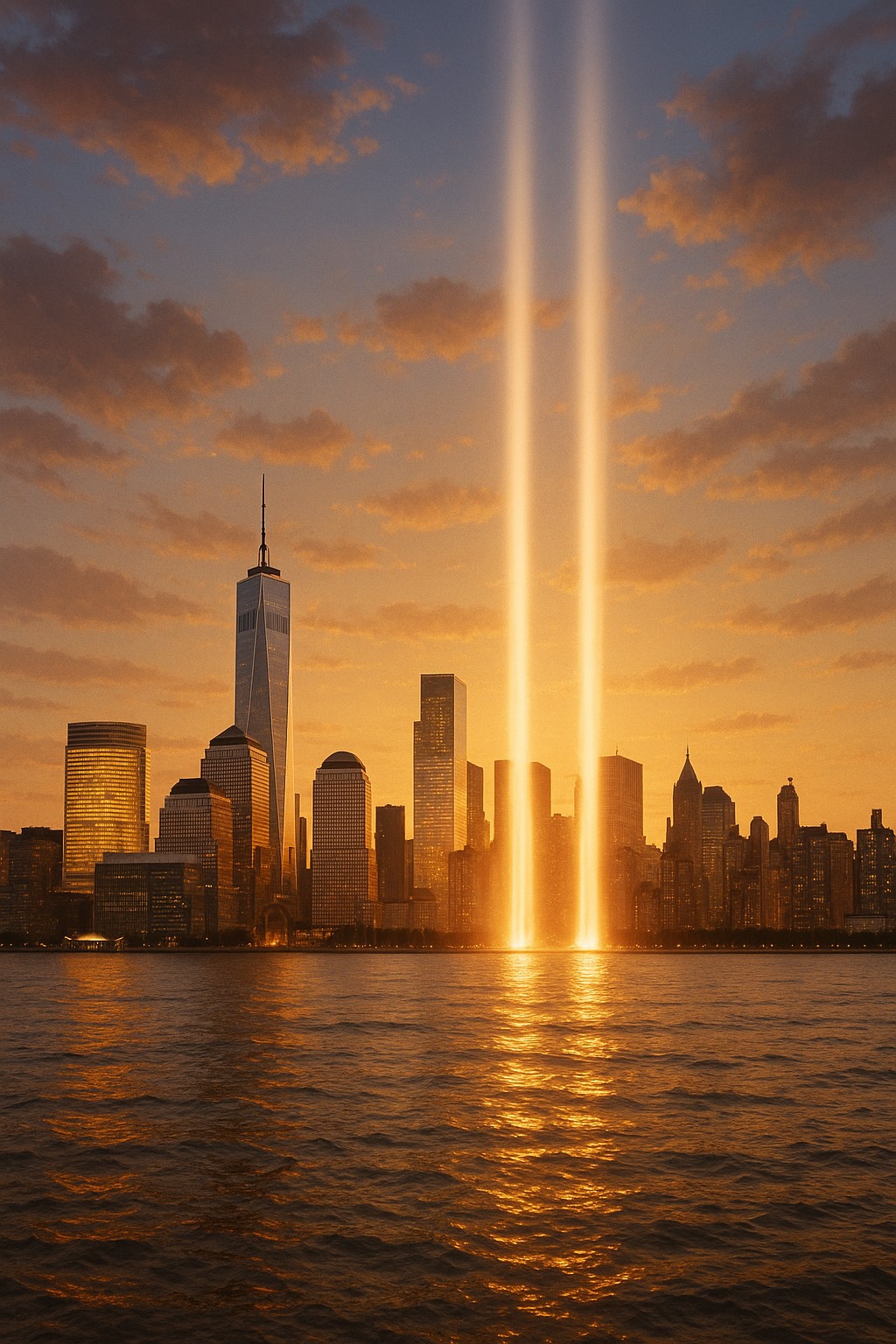
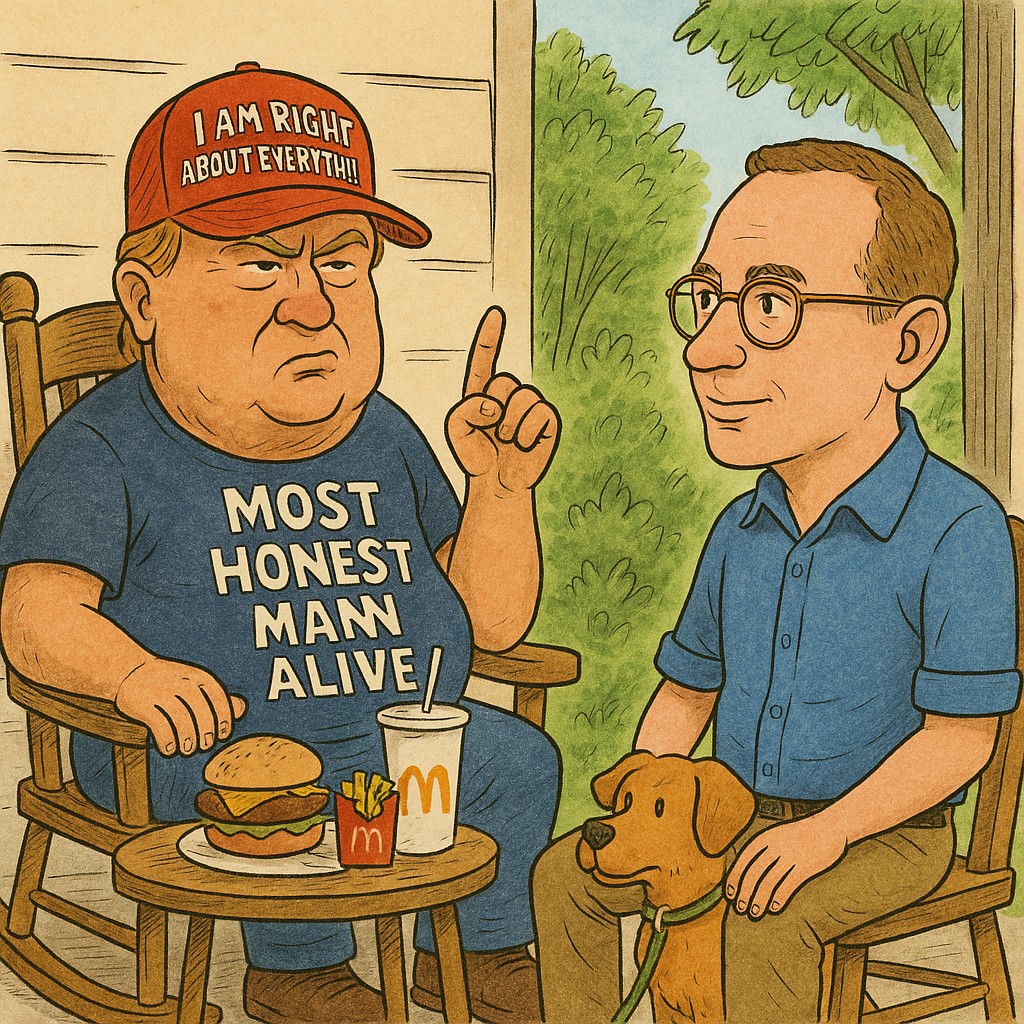
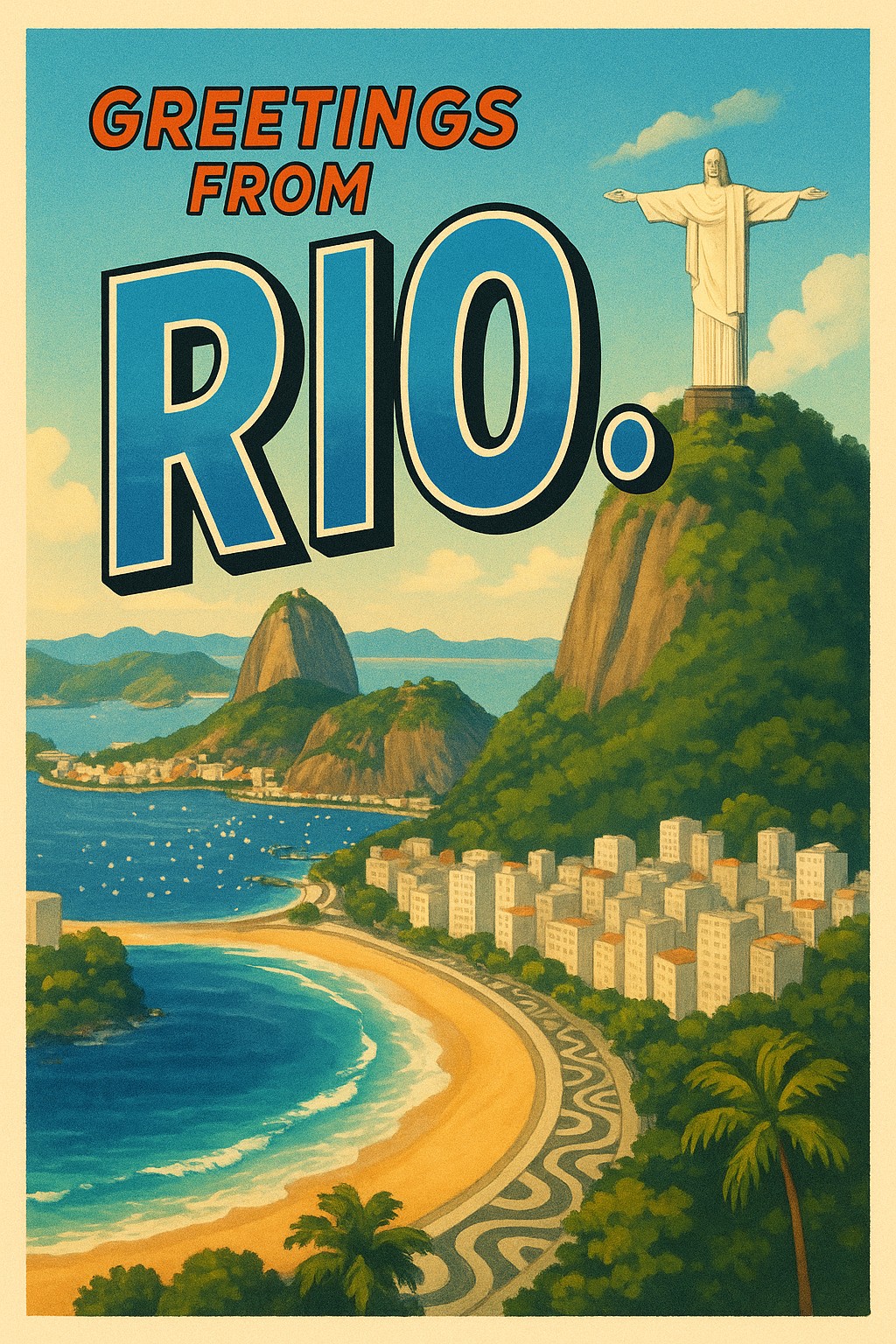

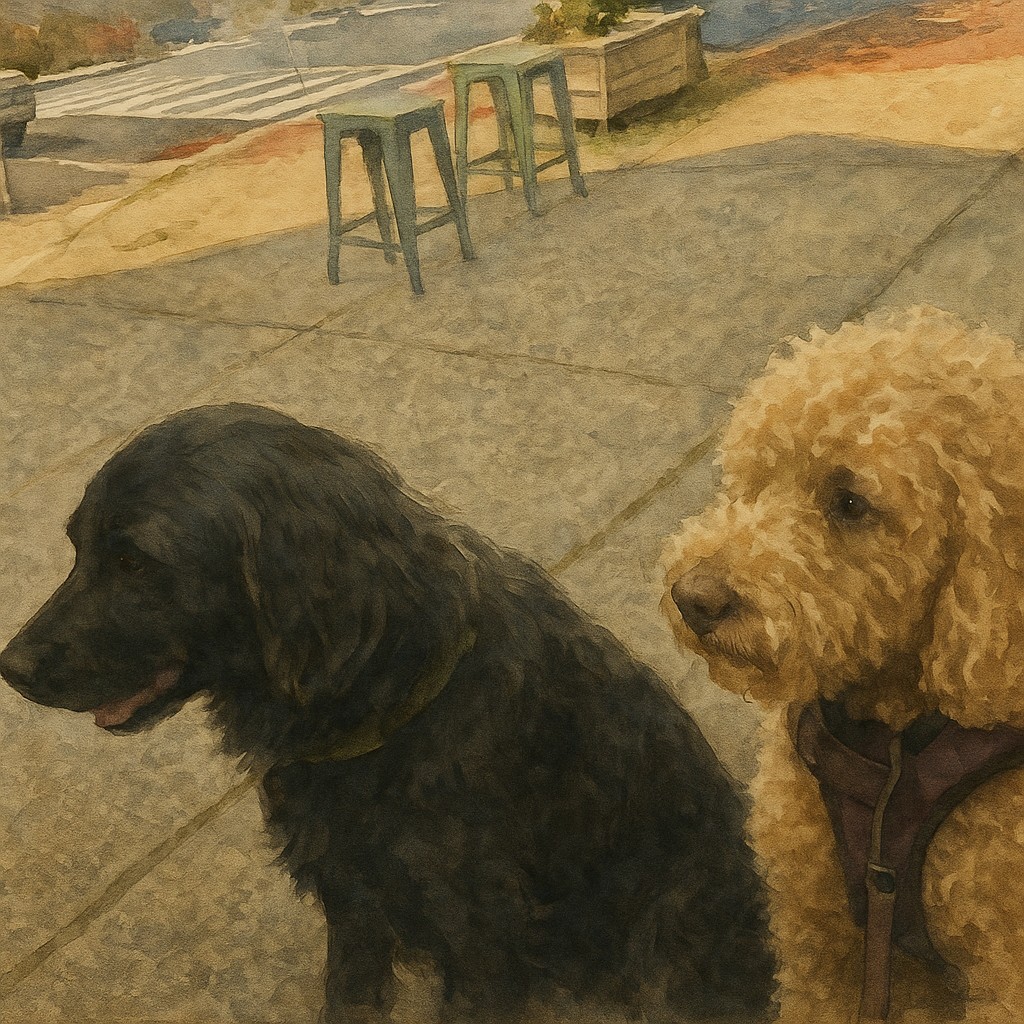
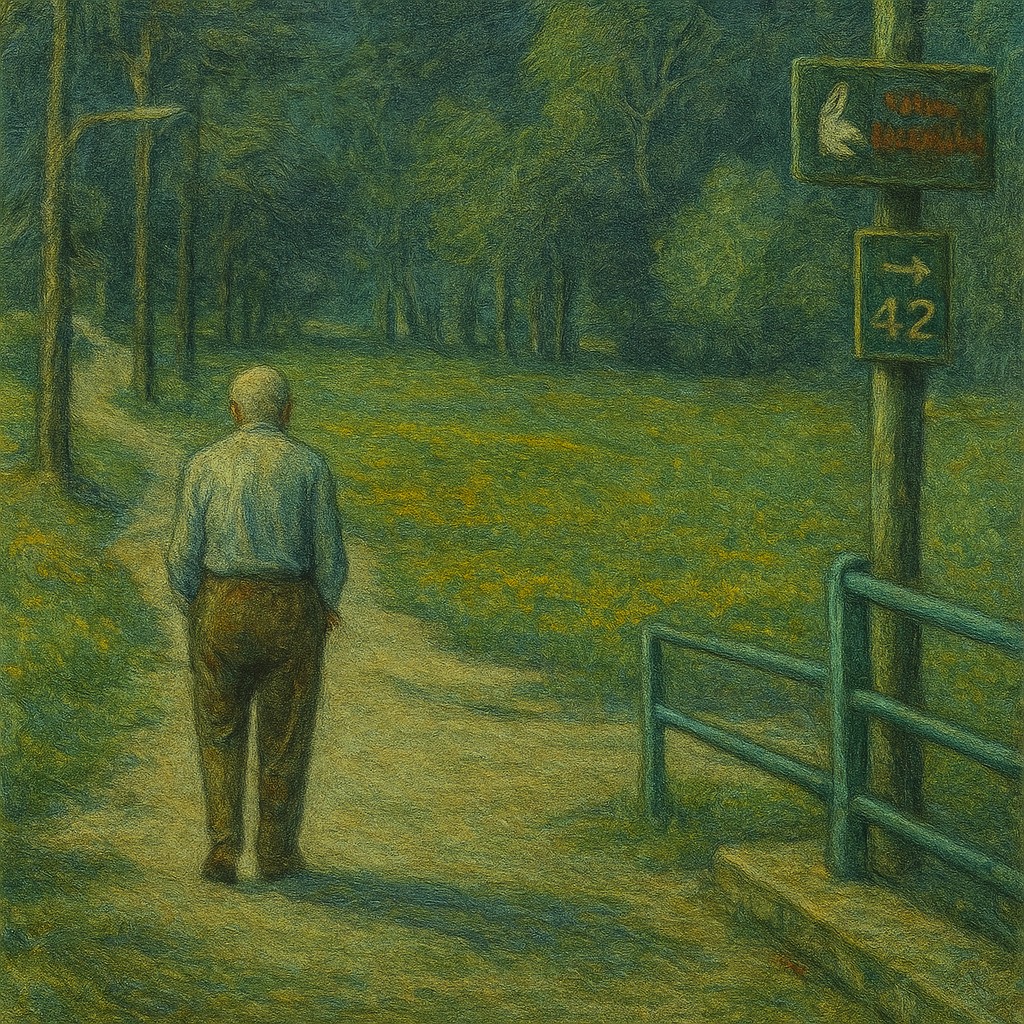


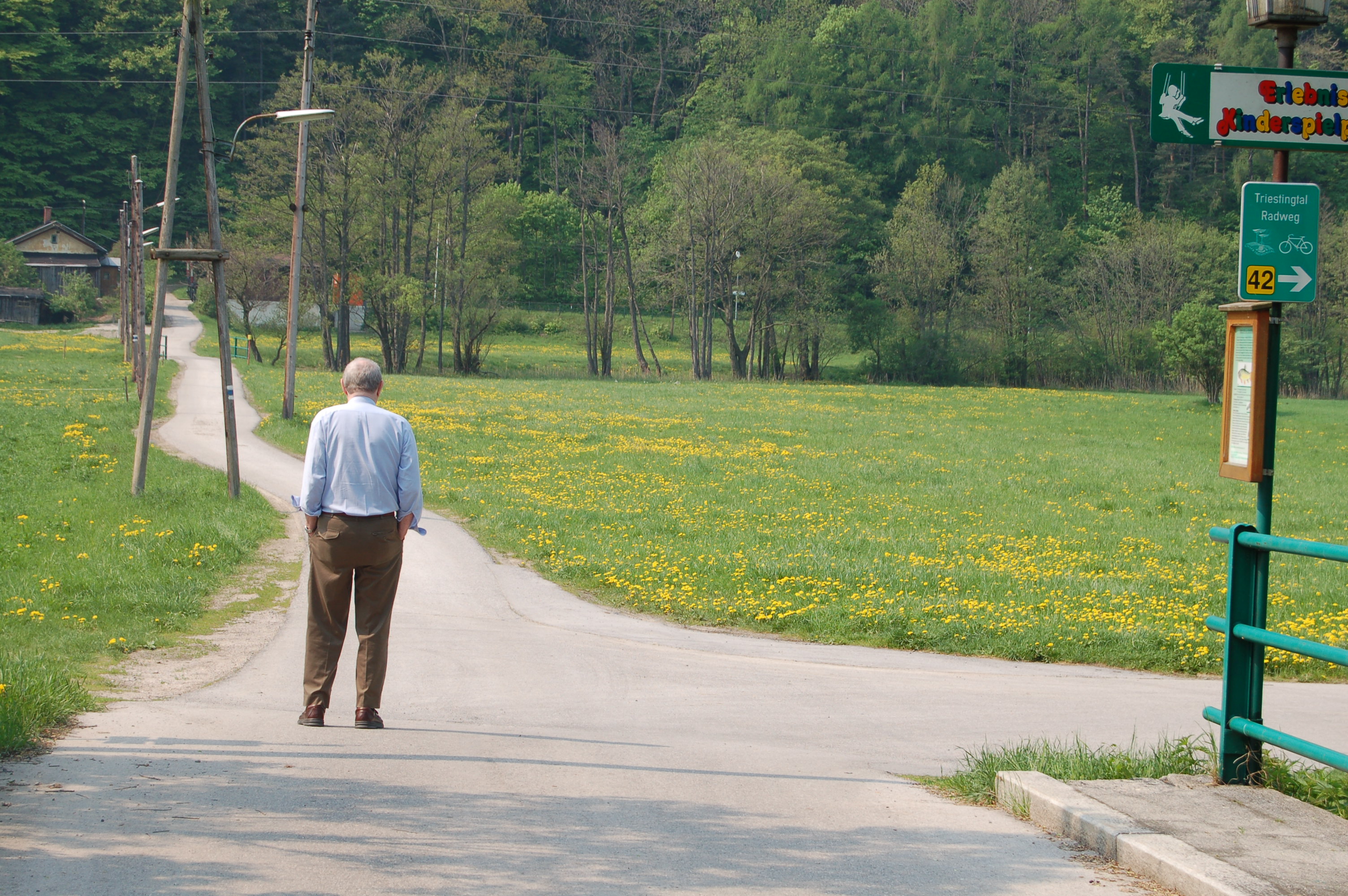


 Blame it on Rio