Lilacs

Auschwitz Flowers


The sign above the gate read “Arbeit Mach Frei.”

It was May 12, 2011 and I found myself literally staring at the gates of hell. The entrance to the most notorious of all the Nazi Death Camps: Auschwitz-Birkenau.

Being here was completely unexpected. A week previously I had been in my office on 5th Avenue, directly adjacent to Madison Square Park, when my boss, Kobe, had phoned from Israel. He and another associate from our Israel office had committed to making a presentation to IBM in Warsaw on May 11th. Now, for family reasons, he could not attend. He asked in the way bosses often make requests that are really directives, whether or not I would like to take his place. I did not need a lot of persuading. With over 3 million air miles flown and a permanently packed dop kit I was the definition of a wandering Jew. I had made a living for years getting on planes and doing business elsewhere. I loved everything about that lifestyle and Poland, while never on my bucket list, was a place that not only interested me, but I had never been.

Kobe reviewed the details with me. I would leave on May 8th for Warsaw where I would meet with my associate Ehud. We would spend two days in Warsaw preparing for our Meeting on the 11th with IBM. After that, I could spend a few days in Poland or wherever I liked as long as I was back in New York by the 16th.

I told him I would go but “My mother is not going to like you very much.” Kobe, like all good Jewish boys, had a healthy respect for Jewish mothers and asked in a mocking tone “Why, what have I done.”

“You have asked her favorite son to leave her on Mother’s Day so he can travel ¼ way around the globe…”

“And…”

“You have done it on Mother’s Day.”

“Oy.” He chuckled and in a smart-ass fashion typical of him responded “When then you are just going to have to buy her a nicer present.” But he knew that there was more to what I said beyond the words I had uttered. He knew that a year ago my father, a very vibrant 85-year-old man, who commuted to NY and his office at Columbia University twice a week and, and regularly worked out at a gym, had fallen. Since the accident he had been unable to walk without assistance. After several attempts at rehab it had been decided to bring him home. This, in turn, had placed a tremendous burden on my 81-year-old mother.  Even with aid from home health care workers it had proved too much for her. As a consequence, for the better part of the past year, I had spent the weekend at my parents’ home in suburban New Jersey to spell my mother in her efforts as caretaker in chief.

Other than sleeping on a fold out couch in the television room, this was not a burden on me. I had just left a long-term relationship and was still in the process of figuring out where it had all gone wrong. As a consequence, I had few weekend commitments. Moreover, I liked my parents. They were funny, interesting, and wise. Spending time with them was mostly effortless.

We quickly fell into a pattern. I would drive out after rush hour on Friday nights and scrounge whatever dinner was left over. On Saturday and Sunday morning, my first job would be to get my father ready for the day which included emptying his cath bag, bringing him a bed pan and the consequent cleaning up afterward, dressing him for the day and then easing him from his bed into a wheel chair. After I gave him his New York Times, to read the ink off of, I would make Pops his breakfast: usually eggs, toast, yogurt, and green tea. While he ate, we would sit and kibitz, often for an hour or more. There was no set subject we talk about. It could by anything   from his time in the service to his years at Syracuse, from politics to computers, from old jokes to bad puns (usually made by me and greeted stoically by him. These moments were my favorite part of the week and a close relationship had grown closer. So close, we could often have a conversation without saying a word.

When he was settled for the morning, I would take my mother out to do her weekly shopping and whatever other errands she had to run.  Pharmacy, bank, post office, and supermarket were all part of the repertoire. After lunch I would take some time for myself but then either make dinner or order dinner for all of us. Clean up followed. And, then the morning process was reversed as I got Dad ready for bed and tucked him in.

Kobi knew all this. On his occasional trips to New York City we had discussed this at length over significant portions of Bourbon. He knew by asking me to leave over the weekend it placed additional burdens on my mother. But I think he also knew how much I needed to get away.

I called my parents right away to let them know about the trip. Thankfully, the old man picked up the phone as I feared the guilt my mother might place on me if it were, she to whom I broke the news. Letting Pops in on it first would allow him to break a trail for me. I let him know about the trip and that I would be leaving a little early on Sunday to catch a late afternoon flight to Warsaw. He was thrilled for me. The old man knew of my wanderlust and actively encouraged it. He took pains to try to convince me that I did not need to come out that weekend telling me “Don’t break your ass on account of us. “To which I had given my standard reply when he said this “Don’t worry about Pops. It is cracked already.” This never ceased to get a groan from him.  I then added “While I have you on the phone, what town did Grandpa from. I am going to have a day off and thought if I could, make a day trip, and visit.

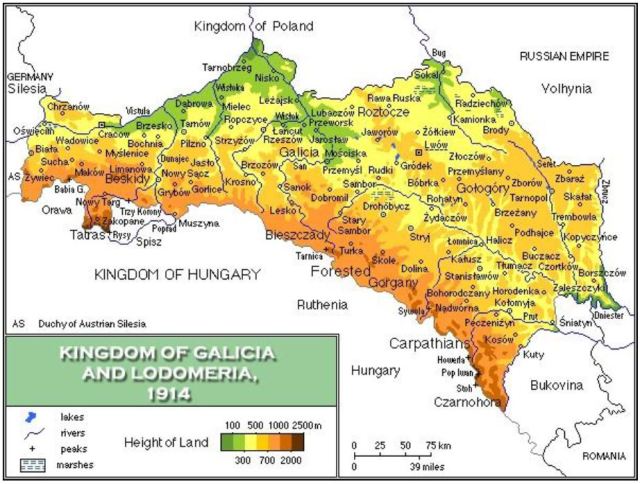
“Your grandfather was a small town called Grodzisko. It is near Lvov. Too far for a day trip.”

“Hmmm. Okay. Well think about it. I have a couple of days and you have been there so any thoughts that you have would be very much appreciated. Let’s talk more this weekend about where I can go.”

The rest of the workday was putting together travel arrangements. I am a mileage whore; you need to be when you travel as much as I do on business. You learn very quickly status is everything and as I was the highest level possible in the One World Alliance, I knew that my chances for upgrade with them were good. The challenge is that they did not fly directly to Warsaw. I had to route myself through London on American and then on to Warsaw via British Airways. It would add a few hours to my trip, Heathrow is always a bit of a nightmare, but it would likely add to my comfort.

After consulting with Ehud in Israel we agreed to stay at the Intercontinental Hotel in Warsaw. It was rated high enough, was centrally located and more importantly had conference rooms available in which we could practice and refine our presentation.

When I got home that evening, I immediately began to pack two bags. One for the weekend and another for the trip to Poland. My apartment, at that time, was a basic cookie cutter NYC one-bedroom high rise apartment. You entered on a long rectangular living room/dining area with a small galley kitchen on the left and a bathroom and a modest bedroom on the right. The living space was dominated by my bookshelves. I have been collecting books since college and it would not feel like home unless they were on display as they represented more happy hours than I could possibly count.

As I skittered through the apartment collecting this and that to pack, my eyes kept falling on one volume in my library: Martin Gilbert’s chronological history “The Holocaust.” I first learned of the book in the New York Times Book review in the Summer of 1986. I thought it would be of interest to my father and mentioned it to him. After talking to him about it he had asked that I not buy they book as he would like to give it me as a present. I thought his intention was to buy me the book as soon as possible. That did not happen. When a few months had passed, and I had not received the book I asked him about it. His answer to me was abrupt, as if he wanted to change the subject “Don’t worry I have ordered it.” Several months later I still did not have the book, so I reminded him again of his promise. Again, he told me not to worry as the book had been ordered and I would get the book soon enough.

By the time the Holidays had rolled around I still had not received the book and was beginning to wonder if I ever would. On the first night of Hanukkah, I had dinner at my parents’ home. Gifts were exchanged and the proper and ooohs and ahhs registered. Literally on my way out the door, Dad handed me a gift-wrapped package that was clearly a large book. I enquired “Is this what I think it is?”

He looked at me, without meeting my eye or acknowledging my questions and responded in a choked voice “Don’t open it until you get home.” Baffled by his request, as I knew what the present was, I hugged him goodbye. When I embraced my mother in a good night hug, she whispered “He has had the book for months. It has just taken him that long to write the inscription.”

I did not open the present immediately when I arrived home, my mother’s message making me leary.  Instead, I put it on the coffee table in the living room and left it there. I knew whatever the inscription, it was likely to be highly emotional and I needed time to screw up my courage.

After a medicinal bong hit to steady my nerves, I unwrapped the gift. It was what I thought. The Hardcover edition of “The Holocaust.” No surprise there.  But the inscription. That was a shock. My father who rarely opened up about the War and the loss he felt had written:

Murdered 1939-1945

              Your Grandmother’s brothers:

                             Vienna: Heinrich Hess and Risa

                             Hungary: Alfred Hess, his wife, and children

                                           Rudolf Hess his wife and children

                                           Helene Hess

                             Slovakia: Hans Hess and his wife

              Your Grandfather’s sisters:

                             Poland: The three Rothkopf sisters, their husbands children, grandchildren one (it was actually two) of whom had the unspeakable misfortune of living in the village of Auschwitz.

              Your Great Grandmother’s Sisters

                             Belgium: Minna Hader and her daughters Maluina, and Grete and her grandchildren Bertie, and Jackie.

                             Vienna: Josephine (Pepi) Tuchler, who raised your grandmother.

              Your Great Grandmother brother:

                             Vienna: Jakob Tuchler and Gisella

Scores of cousins and friends

I remember them with love and sorrow.

Do Not Forget Them!

          Chanukah, 1986

Every time I have read those words since, I weep but, that night, I wailed.

The book became a catalyst in my life. It inspired me to go with my father to Israel, a place neither of us had never been, and where both had long desired to visit. That trip had, created a closeness an intimacy with my father I had not known while growing up. It was on that trip I began to call him by his Hebrew name and he mine. It became our way, in the years to come, for us to recognize our special bond.

That evening, on the brink of my trip to Poland, I stopped my packing and pulled the volume from the shelves and reread the inscription once again. As always, it struck a deep resonant chord. It also clarified for me what I should do while in Poland and spent the next few hours researching.

I knew there had been a number of camps in Poland. Chelmo, Sobibor, Treblinka, Majdankek and Auschwitz-Birkenau. After re-reading the Gilbert book inscription  I knew I  was going to visit one of them . My hope was that using the Shoah database from Yad Vashem, the Israeli Holocaust memorial, I could discover where my relatives had been murdered. Sadly, while many of them were in the database there was no indication in which camp they had perished.

My next thought was that I should make my decision based on distance from Warsaw. Treblinka was the closest. Only 1.5 hours from Warsaw but the more I thought about it the idea of visiting a place just because it was closer did not seem to be the best way to decide. I went back to my father’s description and it all became clear. I needed to visit Auschwitz. Not only was it the largest of the camps and the likely murder site of most of our relatives but it is where the Rothkopf sisters, my great aunts, had lived and likely died.

Before I went to bed that evening, I emailed the concierge at the Intercontinental Hotel in Warsaw asking how I could arrange for a driver and tour guide at Auschwitz Birkenau. When I awoke the next morning, the hotel had written, saying they could arrange everything but needed to make decisions about what type of car I wanted to use and the length of the tour at the camp. By the end of day, choices made, credit card provided, I had a confirmed reservation for May 12.

I couldn’t wait to tell my father about my plans but,  unfortunately, I got a very late start leaving the city that evening and did not arrive at my parents home until after my father had gone to bed.

The next morning, when brought Dad his breakfast, he asked about my trip. I told him that I would leave for Poland the following afternoon and arrive late Monday morning in Warsaw. On Monday Udi and I would likely site see as we would be jet lagged. Tuesday, we planned to spend most of the day in a conference room prepping for our meeting on Wednesday. After our meeting Wednesday Udi would head back to Israel but I was going to stay and extra and go to Auschwitz on Thursday.

I honestly thought this would make the old man proud. That his son was taking the initiative to drive 4 hours to pay his respect to his relatives who had been murdered. I had even thought he might ask me to say a prayer for the dead for him. I was not expecting it when he inquired “Why the fuck do you want to do that?”

Surprised and caught on my back foot I stammered “Because I can. Because I want to pay respect to our relatives who were murdered. Because I may never get to Poland again and honestly because I thought it would make you proud that I would take the initiative to do this.”

I guess he could see the hurt and confused expression on my face because his tone became more conciliatory. “It isn’t that I don’t think the idea of going to that place is admirable. I do. I really do. But why would you want to expose yourself to that kind of pain and heartache. It will rip you up.”

I thought I understood. A father wants to protect his children from undue pain and suffering. It is part of the job description. I replied as gently as I could “Pops…remember the inscription you wrote in the Martin Gilbert …You told me never to forget.  I promised you I never would. I thought that as long as I was near, I could pay my respect. So, they are not forgotten. To say the Kaddish for them. “

“This is not something that you need to do to remember them. I know you will not forget them. And we said our prayers for them at Yad Vashem. There is no need to add to the pain we already feel. They would not want it. I do not want it.”

I was taken back by his response. I thought he would understand completely. And perhaps he understood the tsores I would experience at Auschwitz better than I did. No doubt he was trying to protect me. It gave me pause and I hung my head in thought for a moment and said, “This is something that I feel I have to do….”

“I cannot talk you out of it?”

“No.”

The next morning was Mother’s Day I rose early and went out into our back yard to harvest a few sprigs of Lilacs. This was a long-standing tradition that had originated in the first home I remember, 34 Orion Road in Berkley Heights. My grandfather had given my parents a housewarming present of several lilac bushes. They always seemed to bloom around Mother’s Day and Dad would always pick a few stems, place them in a small vase on the breakfast tray we would bring to Mom so she could enjoy breakfast in bed. When we moved to Summit, one of the first things my father purchased was a new lilac bush and it, like the one at the old house, had bloomed like clockwork around Mother’s Day. To me, the delicate purple and lavender petals, and their heady, sweet scent became synonymous with the day and with the spring. Lilacs were renewal and a warm embrace encased in a floral wrapper.

Mom did not like to have her rest disturbed so before I left, I prepared her breakfast of Enterman’s coffee cake and coffee and left it on a tray on the kitchen counter along with the lilac blooms and a card from me.

Just before my flight departed, I executed another long-standing tradition. I called my father from the Admirals Club to let him know I was on my way. He would always ask “Where are you?” and when I would tell him I was at “The Admirals Club” he would laugh and say, “of course you are…”  That day, after our normal exchange and a few other pleasantries he added “I don’t think you should go to Auschwitz. It is pain you do not need. It will just bring you tears and heartache. Please. I am begging you not to go.”

There is an immutable law of psychology. Whenever a parent begs a child not to do something their resolve to do that thing is increased logarithmically. My response was pre-ordained. “Pops, I have to go.”

4 days later I found myself in a Mercedes C200 speeding through the Polish countryside on my way to Auschwitz-Birkenau.

The trip, up to that point, had been a joy. Warsaw, which was largely destroyed during the war, and rebuilt by the Soviets afterward was vibrant and modern. However, they also showed respect for the past by maintaining the warehouses and bunkers of the Jewish Ghetto Uprising even projecting the faces at night of those who perished in that fight. The food was amazing and just to my taste (go figure considering my heritage,) the people friendly and with a large percentage of English speakers which made getting around far easier. Our meetings had been successful, and we felt the expense and time required was money well spent. However, jet lag, time change, hard work and perhaps a little too much Polish vodka the night before combined with an early wakeup call had left me exhausted. I found that it was difficult to keep my eyes open despite the gorgeous spring enhanced farmland and forests of Western Poland in which we were driving.

In the back seat, I found myself in the twilight between wakefulness and sleep. That place where thoughts flow effortlessly one after another and until one circles and sticks. I found myself thinking about the email that I received from my father the night before. It read.

Daniel Ben Zacharai:

I know you think you are doing a mitzvah going to the camp. It is admirable and I love you for it. But it is unnecessary. No one needs that pain. The dead do require it for them to be remembered.

With Love

Poppa

 (Zacharai Ben Mordecai)

I was still having trouble processing why he was so adamantly opposed to me visiting the Camp. It was not like he had not visited a camp before. I knew that my mother and he had visited Dachau on a long-ago trip to Germany. Had Dachau been that bad? Was Auschwitz that different to him? And what about the day we had spent at Yad Vashem together? There, in the Hall of Remembrance, where the ashes of the murdered had been brought and interred, we had prayed and wept together separately. Why was going to Auschwitz any different?

On the flight from London to Warsaw I had re-read Night by Elie Weisel and a quote had stood out to me. “To forget the dead would be akin to killing them a second time.” Didn’t Pops know I was going so that our kin’s sacrifice would not be forgotten? That they, the murdered, would not be forgotten?

As often as I went to put my arms around what made my trip to the Camp so off putting to my father, was as many times as I could not grasp it. And it hurt. Hurt, because not only did I not understand it but like most sons, I sought the approval of my father. His understanding of why I had undertaken this trip, was important to me. It gave me no pleasure to defy him, but it was something that I had to do. And perhaps he knew that. Perhaps because he knew me as well as he did, he knew the toll it would take on me? But a 54-year-old man knows how to protect himself emotionally. Doesn’t he. But perhaps, he did understand. Perhaps he saw himself in me and knowing us he was just trying too spare me a difficult day.

Unable to sleep, and lost in my thoughts, I gazed out the window of the car at the beautiful Polish farmland seeing nothing and registering little. We drove on.

The parking lot of the Auschwitz Birkenau Memorial and State Museum looks remarkably similar to a medium sized national monument in the United States. A moderate sized area for cars with bus parking closest to the entrance to the facility. The visitor center, located at the far end of the parking lot, looked like it was designed by the same people who designed visitor centers on highways as State visitor centers on Interstates. It rattled me that a place where the most heinous crime of the 20th century took place would look so familiar to me.

At the center, I went to the information window and inquired about the private guide that I had arranged with the help of the concierge at the Intercontinental Hotel. I have never been a person who liked group tours. I had found that too often people lingered in the places I want to speed through or sped through the places I wanted to linger. Often there were people in the group who insisted on asking questions when, at least in my opinion, none were necessary. More importantly, I knew that this was likely to be a very emotional journey for me. One where the tears would come easily, and I did not want to be shamed by or share my sorrows with anyone. They checked a list on the computer and finding my name told me to wait in the lobby for my guide.

Her name was Anna. Petite with dark hair cut in a pageboy style she spoke English with only the barest hint of an accent. After exchanging introductions and pleasantries she asked me what had brought me here today. I managed to explain our family history including how two of my great Aunts had the misfortune of living in the nearby town without choking up completely. She nodded her head with understanding. This was not her first tour with children of survivors. She shared with me that if, during the tour, I needed a moment by myself that she would back away. That was completely normal for this place and not to be shy asking for it. She explained the tour. We would begin in the Museum because at this time of day it was not too crowded. Then we would go through the original camp, Auschwitz 1, then to Auschwitz 2/Birkenau and finally end with the crematoria and memorial.

The first thing I noticed as we approached the entrance of the Memorial were the colors. Everything is sepia toned, shades of brown on brown. This struck me as right. My images of the camp were not in color. It was a black and white place where the heinous acts committed here bled all color from the landscape, never to return.

The second thing I noticed was the sign “Arbeit Mach Frei.” The horrifically awful cynical words “Work Sets You Free” where for the majority who saw this sign it meant “We will work you and starve you until all hope is driven from you and you die.” As I  contemplated the mentality and evilness of the people who could create such a cynically evil sign, and my relatives who may have interpreted the sign with hope, as opposed to their epitaph, I broke down and cried for the first of many sobs that day. Anna, noticing, stepped away and gave me time to gather myself.

A museum, in my past experience, was a place you go to revel in the glory of man. The Louvre celebrates the glory that is the art of man. The Museum of Natural History celebrates the evolution of the world and of man. The Chicago Museum of Science and Industry celebrates man’s quest for knowledge and desire to improve the world. The Auschwitz Museum was not about the glory of man. Instead, it documented his descent into the evil and the vile.

One of the first things you see when you enter the museum is a map that shows how diabolical the Nazi’s were in the creation of the camp. Oswiecim, the Polish town that was to become known by its German name, Auschwitz , was a market town with multiple rail heads that allowed the Nazi’s to easily transport Jews from virtually everywhere in Europe quickly and efficiently, much like a manufacturer would import parts from multiple locations for final assembly. Its efficiency was horrifying enough but it made me think of my Aunt’s, who had grown up in a shtetl a few kilometers from here but moved to Oswiecim when they married. How they must have thought they had improved their lot when they moved here only to be living in a town that was going to become synonymous with Nazi extermination of Jews. A place where they would ultimately be murdered.

There was an exhibit of luggage confiscated by the SS. Each bag had the surname and address from whom it was seized. I struggled to scan them to see if I could find a familiar name: Tuchler, Hess, Hacker. I could not but I took a photo to show my Dad. Perhaps he could see a name of someone he knew.

Another display was of collected personal items that had been seized. Hair, shaving and toothbrushes that left me wondering whether my grandfather had made any of them.

There was a room full of collected shoes. Another of glasses and yet another of prosthesis. I found it beyond disturbing that the Nazi’s would give someone something as intimate as another’s artificial limb.

There were photographs of Jews entering the camp, being separated at the trail head and at work. There were photographs of individual inmates. I paused at each one. Looking for a tell-tale sign that we were kin and to take a photograph, that if I could ever muster the courage, show my father.

The last place we visited in the museum were the original crematoria built for the camp. They were small and if you had not been told of their past would have mistaken them for bread or pizza ovens. Their ordinariness was horrifying. As was the fact, that they were too inefficient for the Nazi’s final solution.

The museum exited onto a group of two-story brick buildings that Anna explained where the first transportees were housed and later were dormitories for the SS guard. But I heard little of what she said. I was still reeling from the exhibits and photographs in the museum and could not focus on her words. I asked her for moment and walked away so that I could have space to be alone with my emotions. There were people milling and as I had no desire to be around anyone, I walked down a small path adjacent to one of the barracks until I reached its end.

I had been looking down, staring at my feet for most of my walk, but when I reached the end of the path I looked up and saw something that shocked me. A hedge of blossoming, pale violet, lilacs. I was stunned to see color in an environment that I had always thought of in black and white and sepia tones. It was more than that. Here was a bloom that to me was synonymous with motherhood and all it engendered in a place that was the embodiment of evil.

How could something like that grow here? I stood, mesmerized by the lilacs. How long had they been here? Were they here when the camp was operating. Would the inmates have seen this dash of beauty and if they did would it give them hope or be a depressing taunt to their painful black and white lives. Would seeing the lilacs given them hope at a time when all you had left was hope.

Or was the hedge new. Had it been planted as a symbol of renewal and rebirth?

I knew I was overthinking this. I knew that I was just trying to distract myself from all that I had just seen. I also knew the distraction was working. Looking at and smelling the lilacs, had taken me away from the dark place the museum had left me to a place of beauty, warmth, and hope. They allowed me to go on.

The entrance of Auschwitz 2/ Birkenau is famous. It has appeared in countless movies including Schindler’s List. It has a large gate in which a train could pass and ends on a long wide earthen road that for all intents and purposes is a railway siding. At the end of the road you can see a thicket of woods with the remains of several structures, the crematoriums. Anna explains to me that this is where the trains carrying the condemned from all over Europe unloaded the human cargo. The SS would then separate the shipment, husband from wives, parents from children, friends from friends. She tells me that the lucky are told to go for processing. Women on the left, men on the right. The others are told to proceed to down the road to delousing, where they would receive showers.

It is impossible to imagine the human suffering that this small piece of land has seen. Anna provides context. She tells me that approx. 1.3 million people, or the population of Dallas had passed through these gates. Of these, 1.1 million, or the population of San Jose CA, would perish. When I think about the magnitude of suffering, I find myself being overwhelmed but I think of the lilacs. The hope amongst the despair, and it makes it easier to place one foot in front of the other.

As we move into the men’s camp, I see a group of teenagers, several of them shrouded in the Israeli Flag. They are singing the Hatikvah, the national anthem of Israel. Their tone is defiant, almost provocative as if to say, “don’t’ ever try to fuck with us again or we will bring the wrath of god down on you. I look an Anna inquiringly and she responds “Israel sends teen groups here all the time. They don’t want them to forget what it is that was lost and what it is they will be fighting for.” I nod in understanding. They are the lilacs. The flowers born of destruction.

We come upon a hut. One of only a few remaining in what used to be a sea of barracks. Anna tells me that the vast majority of the structures were destroyed shortly after the Russians liberated the camp in January 1945. It was a cold winter and they were living off the land. The huts were sacrificed for their wood and the warmth the fires they produced would provide. As we walk into one of these huts, she informs me that the German’s had modified the design of prefabricated horse stalls so they quickly could erect these structures. We step in. There is a long center aisle, on either of side are three rows of shelves, one stacked on top of another. Every 6 feet or so there is a vertical support that serves to separate the “bunks” from one another. Anna tells me that on each “shelf” 3 or 4 prisoners would sleep. But I know. I have seen the images. But now it is no longer a photograph.

We walk to the building directly adjacent to the prisoner hut. Anna tells me it is the latrine. We walk in. It is lined on one side with concrete slabs with 6’ circular staggered holes cut into them: 4 holes per meter of shelf. She explains that the prisoners were only given a few minutes time each morning to do their business and I find the idea of dozens of men squatting over the holes defecating unimaginable. But what she says next brings me up completely short. She tells me that one of the most coveted jobs in the camp, despite the risk of disease, especially in the winter, was cleaning out the latrine. It kept the prisoner from the brutal work outside the camp. Working, hip deep in the waste kept them warm when outside it was bitterly cold.

The thought of this, the baseness of it, makes me feel sick.

We leave the camp and begin the long walk from the rail head to the crematorium. Anna explains that the unfortunate who were selected for the gas chamber would have walked this walk hustled along by a phalanx of SS guards. They would have been told that they were going to be deloused and showered, which no doubt they would have welcomed after weeks confined to an overcrowded cattle car. I wonder how many knew they were walking to their death but went anyway. Could they smell the bodies burning?

There is not much left of the crematorium. Only piles of rubble and twisted reinforced concrete. Anna explains that the Soviet troops who liberated the camp upon learning of the purpose of the ovens, blew them up. That now they have been left to nature, to fade away with time. To prevent, man aiding in this disintegration it has been cordoned off by a yellow rope that surrounds its perimeter. I tell Anna that I need a moment. When she turns her back and I see that no one is looking I step over the rope and into the rubble. I look for and find a rock and a small piece of concrete that was once part of the building. When I step back over the rope, I tell Anna that I am ready to move on. If she suspects anything about my illegal excursion, she says nothing for which I am grateful.

Located between the sites of the two crematoriums, sits the Auschwitz Monument on a wide cobbled platform. At its base, encased in stone, are train tracks that are symbols of how the prisoners were brought to their slaughter. Up a few stairs, in the center of the monument is a modern sculpture that is supposed to resemble the faces of those who perished at the camp but to me looks like a mash up of Easter Island sculptures surrounded by geometric shapes. Evenly distributed in front of the statue are 20 granite slabs with a bronze top that has an inscription in each of the major languages of Europe. The inscription in English reads:

FOR EVER LET THIS PLACE BE A CRY OF DESPAIR AND A WARNING TO HUMANITY, WHERE THE NAZIS MURDERED ABOUT ONE AND A HALF MILLION MEN, WOMEN AND CHILDREN MAINLY JEWS FROM VARIOUS COUNTRIES OF EUROPE. AUSCHWITZ-BIRKENAU 1940-1945


It is in front of the English slab that I pause, and I ask Anna for a few moments for myself. When she has drifted away, I pull from my pocket a sheath of papers. I had thought long and hard about how I wanted to memorialize and honor my relatives. To let them know, they are not forgotten.

I place the stone I had collected from the Crematorium site, on top of the plaque honoring the Jewish tradition of letting the dead know they are remembered.

I recite a poem by Elie Wisel, from his book Night.

Never shall I forget that night, the first night in camp, that turned my life into one long night seven times sealed.
Never shall I forget that smoke.
Never shall I forget the small faces of the children whose bodies I saw transformed into smoke under a silent sky.
Never shall I forget those flames that consumed my faith forever.
Never shall I forget the nocturnal silence that deprived me for all eternity of the desire to live.
Never shall I forget those moments that murdered my God and my soul and turned my dreams to ashes.
Never shall I forget those things, even were I condemned to live as long as God Himself.
Never.”

I had told Dad that one of the reasons that I felt like I needed to come to Auschwitz was because someone needed to say the Kaddish for our relatives who were murdered. They deserved, at the very least a prayer said by their family. As my Hebrew skills are at best minimal, I recite a transliteration of the Kaddish.

Yitgaddal veyitqaddash shmeh rabba. Beʻalma di vra khir’uteh. Veyamlikh malkhuteh, beḥayekhon uvyomekhon uvḥaye dekhol bet Yisrael, beʻagala uvizman qariv. Veʼimru: Amen.
Yehe shmeh rabba mevarakh leʻalam ulʻalme ʻalmaya.
Yitbarakh veyishtabbaḥ veyitpaar veyitromam veyitnasse veyithaddar veyitʻalleh veyithallal shmeh dequdsha berikh hu.
Leʻella min kol birkhata veshirata tushbeḥata veneḥemata daamiran beʻalma. Veʼimru: Amen.
Titqabbal tzelotehon uvaʻutehon d’khol bet Yisrael qodam avuhon di bishmayya. Veʼimru: Amen.
Yehe shelama rabba min shemayya, vehayyim ʻalainu v’al kol Yisrael. Veʼimru: Amen.
O’seh shalom bimromav, hu yaʻase shalom ʻalenu, v’ʻal kol Yisra’el. Veʼimru: Amen

It seemed wrong to me to say a single Kaddish for so many. They were individuals. The essence of the meaning of the Jewish tradition “Save a life, Save the world” is that each individual is a world onto themselves and each needs to be celebrated and mourned.  I have created a list of those of our family who have died:

 Heinrich Hess

 Risa Hess

Alfred Hess, his wife, and children

Rudolf Hess, his wife, and children

Helene Hess

Hans Hess

Rivka Rothkopf and her sisters, husbands, and children

Minna Hader,

Maulina Hader

Grete Hader and her grandchildren

Josephine Tuchler

Jackob Tuchler

Gisella Tuchler.


For each one them, individually, I say the Kaddish in English, because I want to say words for them I understand and feel.

May His great name be exalted and sanctified. In the world which He created according to His will! May He establish His kingdom during your lifetime and during your days and during the lifetimes of all the House of Israel, speedily and very soon! And say, Amen.
May His great name be blessed forever, and to all eternity!
Blessed and praised, glorified and exalted, extolled and honored, adored and lauded be the name of the Holy One, blessed be He, above and beyond all the blessings, hymns, praises and consolations that are uttered in the world! And say, Amen.
May the prayers and supplications of all Israel be accepted by their Father who is in Heaven; And say, Amen.
May there be abundant peace from heaven, and life upon us and upon all Israel; And say, Amen.
May He who makes peace in His high places grant peace upon us and upon all Israel; And say, Amen


Then I say one more. For those we had forgotten to remember and those we will never know because sadly, time, and faded memories have erased them.

By the time, I have finished, I am hoarse, and emotionally spent. I tell Anna that I am done, and she walks me back to the parking lot. I thank her and tell her how much I have appreciated her guidance and consideration. As we drive away, I catch one final glimpse of the lilacs.

Three days later I am back at my parent’s home. I find my father in his room, sitting in his wheelchair at the card table reading he uses for a desk, reading the New York Times. He does not see me, as his back is turned, so I give him a hug from behind. Hugging me back, he says “Your back. How was your trip.”

Instead of telling of the horrors I have seen and the overwhelming emotions that I have felt as I fear recounting those things would only upset us both, I say “There were lilacs.”

He looks puzzled for a moment and then because we have played this game many times before, he nods his head in understanding. He knows without me saying what I have found there. It was, after all the reason he did not want me to go. He knows I have no desire to upset him or myself, so it is better to fixate on something immaterial and a little odd. A distraction. He replies with understanding.  “Really?”

“Beautiful ones Dad. Light lavender almost white blossoms. They smelled beautiful.”

It is then I reach into my pocket and pull out the small piece of concrete that I have illegally liberated from Auschwitz and place it on the table telling him “I brought you a present.”

He looks down on this unremarkable object and instantly understands what it is and what it represents. He looks up at me with understanding and emotion in his eyes. We look at each other. Neither of us wishing to speak as it would unleash the underlying emotions that we both wish to keep buried. I know he is grateful for what I have done, and he knows how grateful I am that he managed to survive.

After a moment, he reaches across the table and takes it into his hand and then places it into his pocket and says, “Thank you.”
Posted in Uncategorized | Leave a comment

12 Postcards: Part 4 (Final)


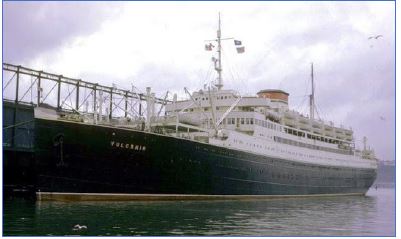
After processing at Ellis Island, they were greeted at the New York City docks by Marcus’s brother Max in his new 1939 Cadillac Fleetwood. I am sure there was a lot of back slapping and hugging involved in that reunion. They had, after all, pulled off by the skin of their teeth a great escape. Just months before the MS St. Louis with 900 Jewish immigrants were denied entry into Cuba, United States and Canada. While some were accepted into England most had to return to Europe. Most perished in the Holocaust.max and marcus as gangsters


What your grandfather remembered about that evening is butter. He claimed that they had not been able to afford or to buy it in Vienna for months and that he was so overcome by seeing it in copious amount it that he ate nearly a pound of it much to the delight of his Uncle.

The New World was literally a completely new world. They had come from a country that was at war to a country that was at peace. A place where at any moment they could be forced into menial and demeaning labor, or insulted spit upon or even beaten with impunity to a place where they could walk freely and without fear. From a country where food was scarce and expensive to where green grocers often gave away fruit when it was past its prime. They had gone from living in a two room apartment, a main room and a kitchen, with a common toilet and bathroom down the hall to living in a two family home at 8 Delay Street that not only had integral plumbing but a large eat in kitchen, a living room, two bedrooms and small yard with grape vines. They had a refrigerator where before they just had a windowsill to keep their perishables cold.

It was such a contrast to the life they had been living that when Ernst described his new life to a friend who been transported to England, the friend responded by saying he was in “fairyland.”

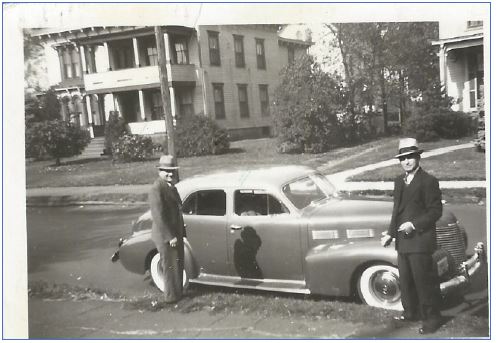
Danbury, about 70 miles NE of NYC, the town in which they settled, was well suited for them. Part of that had to do with the fact that their sponsors in this country, Max, and his wife Sarah, were well established in town.  In the 26 years Max had been in this country he had managed to carve out a prosperous life for himself. How he did so is not entirely clear, but no doubt brains, hard work, and luck played a role as did helping boot leggers during prohibition. At the time Max had owned a dry goods store, similar to a general store, and family lore has it that he supplied sugar to those interested in distilling liquor illegally. Whatever his role in prohibition, it must have been significant enough that he eventually received liquor license number 1 in the State of Connecticut when prohibition was repealed. The name of that store, Italian Importing Company, suggests that Max probably had ties to the Italian gangsters who were prevalent at the time and he certainly dressed the part with dark suits, fedora, pinky ring and flashy car. His businesses and personality, engaging and friendly, gave him a wealth of contacts in the town.

Sara, Max’s wife, was a good partner to him because she was much more calculating and transactional. She expected total loyalty and gratitude from people Max, and she helped. She was also opinionated and not to be trifled with which is what made her a politician. She founded the Danbury Taxpayers Association, an organization dedicated to limiting taxes and the role of government, and ran for Mayor many times, never winning. She was in many ways the Donald Trump of Danbury.

The other factor that benefitted them was the town of Danbury itself. The town had been established in the mid 1800’s as a center of the fur trade, especially beaver, that lived in the area. Beaver, and other animals were wildly prized for their fiber which could be made into elegant felt hats and the city eventually became known as “hat city” with many manufactures locating there to make use of the skilled trades. During the 20’s Danbury’s hat trade became famous for another reason. Mad Hatter’s disease. This was not really a disease but the environmental poisoning of workers with mercury that was used to remove the fur from animals. Symptoms included diminished mental acuity, irritability and tremors and shakes that eventually made it impossible to work. Labor unions fought for years for companies to use safer chemicals and eventually, in 1941, mercury was banned.

But Marcus’s work experience in the abattoir and being a brush maker made him a perfect candidate for a job in the hat industry as felt is made by the amalgamation of animal fiber through a chemical process. Through Max’s and Sarah’s connection he eventually found work at the Bieber-Goodman Felt Body Corporation a manufacturer of fine hats. Jenny too put her skills as a seamstress to work taking in “piece work” and joining the International Women’s Garment Union.

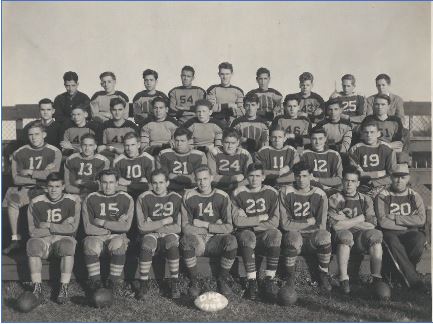
Ernst primary responsibility was to go to school which was not easy as English was not a language he knew well. At first, they put him into 2nd grade but with each passing day and every Ronald Coleman film (he claimed the movies taught him English) and each reading of the dictionary got better and before long he was back with his age group in High School. Apparently, he was extremely popular there and even tried out for American football as opposed the football he loved playing in Vienna.

ezr football

Ernie too had to contribute to the finances of the household. Primarily he worked for Max in his stores as a stock boy in the liquor store and in his grocery business. The later he loved because he could eat all the fruit he wanted as a sharp contrast to the lack of produce he had seen in Vienna.

Life settled into a pattern for them at 8 Delay St.  Everyone worked. Ernie studied hard in the hope of attaining the “Fairydust” dream of going to University to become an anthropologist or physician. Marcus would grumble about his studying and occasionally after a beer too many would rage about his studying and throw all his books off the kitchen table. This emotional and physical abuse would create a distance between father in son. In fact, after Ernie graduated from Danbury High School in June 1943, he immediately left for Syracuse University never to return home again except for brief visits.

With Ernie off at college, life on Delay St must have been exceedingly difficult. Jenny was a sweet soul, but Marcus was a man who liked to flirt with woman and drink. Generally speaking, that does not make for a stable marriage or quiet home life and what we can gather that was a fact here. There were rumors of bursts of tempers and beatings.

By August 1944 Ernie had completed his sophomore year in College and being 18 was drafted into the Army.  On the last day of the month Max, Jenny and Marcus drove him to Hartford where he was inducted into the army and sent off to Ft. Wolters, Texas for basic training. I am sure that he corresponded with his parents, but no letters were kept but knowing Pops sense of humor, he probably wrote them frequently about all the dangerous things that he was doing to make his mother worry. (Note: For the rest of her life Jenny would keep a piece of shrapnel that Pops had sent her having explained that it almost killed him.)

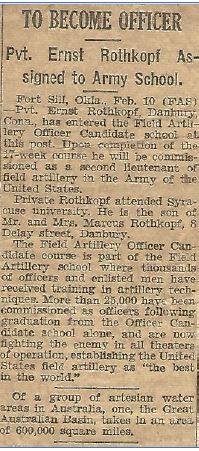
In January of 1945 Ernie was sworn in as a citizen and then immediately transferred to Ft. Sill Okahoma for Artillery Officer Candidate School. I have no doubt that it made Marcus and Jenny immensely proud as they saved the announcement of his appointment for over 75 years.

officer clip


On the day that barely 19-year-old Ernie was assigned to OCS, January 27, 1945, Soviet troops liberated the German death camp known as Auschwitz-Birkenau. Rumors of the horrors of the death camps and the cruelty of the Nazi’s of the Jews had been circulating for years but the liberation of the first death camp must have come as quite a shock to the entire Rothkopf clan. Poles had called the town the camp was in Osweicim. It is within walking distance of the shtetl of Grodzisko where the Rothkopf brothers and sisters were born. Two of the three Rothkopf’s sisters lived in that market town. Max had visited them there in 1936 and it was there that he took the train to Vienna to visit with his brother and his family.

Auschwitz was followed by Buchenwald April 11; Bergen-Belsen on April 15; Dachau and Ravensbruck on April 29; Mauthausen by the Americans on May 5; and Theresienstadt on May 8. Each revelation of new death camps must have fueled anxiety, pain, fear and perhaps even some survivor’s remorse. Did their family and friends survive? Where do I go, whom to go to find out what happened to those I loved? Today, we expect instantaneous answers measured at worse in hours. Then information dribbled in single drops over long periods of time. Each day visit to the mail box must have been filled with hope and dread. Hope of good news and dread should there be none or worse the news that the one they loved had been consumed by the conflagration.

I never spoke to Marcus or Jenny about what those days were like. I was too young. But I know that loss never left your grandfather nor the hope of finding one of his lost relatives and friends alive.  I realized this one afternoon in kibbutz Lohamei HaGetatot in the Western Galilee region of Israel. The kibbutz was founded by those who survived the Warson Ghetto uprising and they had a small museum to remember that uprising and of the Shoah. It was our custom when traveling together and visiting museums to go off separately and see the exhibits at our own pace. When I had completed my tour of the museum, I went to look for Pops and found him staring at a large 2 meter by 2-meter photograph of Jewish slave laborers in Hungary doing roadwork. He was quite silent, and I could tell by his demeanor how upset he was, so I asked him what was wrong. He pointed to one of the people in the photograph and said “I think that is one of my Uncles. We never knew what happened to him.”

I am sure that the post war years were full of that sense of loss and survivor’s remorse for Jenny and Marcus.

What I did not know during our trip to Israel, nor for many years later, that as the camps were being liberated it is highly possible that Ernie was in Europe. There is a lot of mystery surrounding those months of his service. He admitted to being part of the recovery of the Crown of St. Stephen on his death bed but would not share what that role was. Further research suggests that sometime during his time at OCS, an unusual 6 months for a 4 month course,  he flew to Europe via Brazil, Dakar to help recover the crown and that he spent at least a few days in Vienna shortly after VE day. This is confirmed in his official Columbia biography and several fiction pieces where he mentions being in Vienna during that time period despite the fact that the incomplete army records show that he was Oklahoma at the time.

On a trip to Vienna together in 2007 we talked extensively what it was like to return to Vienna just 6 years after his departure. I wondered what it was like to leave as a 5’2 adolescent and return as a 6’2 adult to the city of his persecution. A city he had been forced to flee and was now returning as an officer in the conquering army. He, like most members of the greatest generation, was very understated about it. Sitting in a café beneath his boyhood apartment I asked him what happened when he had come across the landlady who had tormented him as a child now that he returned a foot taller and as officer in the conquering army. He told me that she was scared. When I asked how that made him feel he told me after a pause with a wry smile and said, “pretty good” and then changed the subject.

The reason for the change in topics was no doubt to mask the pain he also felt when looking for friends and family that had disappeared into the crematoria. He told me of the heartbreak of being unable to find those he loved such as his Aunt Pepi, in everything but biology his grandmother, and of lost Tuechlers, Hackers, and Hess’s. And of hearing the horror stories of the survivors including Uboaters, those who like Aunt Leni and Paul Grosz who had spent much of the war in a clandestine settlement in Vienna’s sewers.

I have no doubt that Ernie communicated to Marcus and Jenny what he found and did not find in Vienna. I am just unsure when he did it. Ostensibly the reason he was in Vienna was classified. He was not supposed to be out of the country. I am also sure that Jenny and Marcus were doing all they could to find lost and displaced relatives and that every trip to the mailbox was filled with equal parts dread and hope. Every return trip a mixed bag of disappointment, sorrow, or joy.

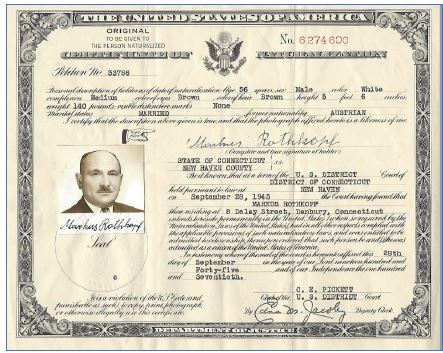
On September 28, 1945, while their son, a newly minted 2nd Lt and home from his secret mission and while awaiting deployment to Europe at Fort Bragg, NC, Jenny, and Marcus stood before a judge, raised their right hands and repeated these words:

“I hereby declare, on oath, that I absolutely and entirely renounce and abjure all allegiance and fidelity to any foreign prince, potentate, state, or sovereignty, of whom or which I have heretofore been a subject or citizen; that I will support and defend the Constitution and laws of the United States of America against all enemies, foreign and domestic; that I will bear true faith and allegiance to the same; that I will bear arms on behalf of the United States when required by the law; that I will perform noncombatant service in the Armed Forces of the United States when required by the law; that I will perform work of national importance under civilian direction when required by the law; and that I take this obligation freely, without any mental reservation or purpose of evasion; so help me God.”

And became US citizens. There is no doubt that both were dressed in their finest clothes and were escorted to the ceremony by Max and his wife. I am also sure that considering the post war mayhem, a new world that vastly differed from that of their birth and that this was Marcus’s fifth country of residence, becoming a citizen of the US must have been quite a comfort for them. They also must have paused to reflect their journey.  In just 7 years they had gone from marginalized, reviled sub-humans to citizens of the greatest country in the world entitled to all the privileges and obligations there off.

marcus citizen

The Rothkopf’s life took on the air of normalcy. Marcus continued his work at Bieber Goodman. Jenny continued to do piece work for the ILGWU and Ernst, after his return from Europe and discharge from active duty in the Army,  returned to Syracuse University where he graduated with the class with whom he had matriculated .( No easy task considering the 2.5 years spent in the Army.)  He spent a year at Columbia thinking about being a writer and then enrolled at University of Connecticut, Storrs to get a Doctorate in Experimental Psychology.

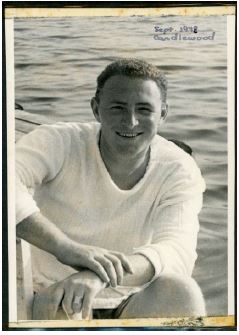
That summer of 1948 he also met an 18-year woman, Carol Louise Zeman, who had been weekending at Candlewood Lake in Danbury. Mom’s recollection of that day always included a reference to how Dad had spent much of his time teasing her for being a Park Avenue dilettante. (Today it would be called negging and no doubt your grandfather would have claimed he invented it.) This was followed up by a dozen roses the next day. For her part, I think Carol was smitten from the beginning as this photograph taken that day shows.

ezr studdly

Their relationship would result in marriage 4 years later and a marriage that lasted just a few months shy of 60 years

By all indications Marcus genuinely like Carol. She spoke fluent German so they could communicate with each other. And, apparently Marcus was a flirt. He had always liked pretty women and your grandmother was pretty and well put together. The combination made for a good relationship. It also did not hurt that she was the daughter of Park Avenue Physician and your grandfather was boxing above his weight class.

When Carol and Ernie got married on a very hot August 28, 1952 (there was no air conditioning in the apartment in which they were married and your grandfather perspired so much that the dye from his suit tattooed his skin) there was no one happier than Marcus Rothkopf

marcus jenny ezr czr wedding

I can only imagine what must have been running through his thoughts that day. Surely, he remembered the shtetl he was born in and the difficulty he had in school and with his father. He must have contemplated his search for a life and the war, wounding, capture and captivity in Siberia that robbed him of his young adulthood. The struggle for a life in Vienna and how he managed to keep his family safe and eventually arrange their escape and passage here. Now just 12.5 years later his son, now a PHD, was marrying the daughter of a Park Avenue Physician. It is the stuff of “Fairyland” and I have no doubt that Marcus realized it and reveled in it.

The young couple soon moved to Chamapagne-Urbana Illinois. Ernst was working for the Air Force researching how to instruct young airman and had been assigned to Chanute Air Force Base, the home of Air Force field training command. While no correspondence remains, I have no doubt your grandmother wrote Jenny and Marcus frequently about their new life in the heartland of the US. I am sure that phone calls, which were awfully expensive for a couple living on Spam Casserole, were infrequent and probably holiday and life events.

No doubt one of those life events occurred in early Summer of 1955 when they called Jenny and Marcus to let them know their first grandchild would be born later that year.

First grandchildren are often celebrated as they symbolize the renewal of the family. The continuance of legacy. For Marcus, Jenny, Carol, and Ernie this must have been highly amplified. They had lost the country of their birth, most of their family and friends and now there would be a child born who could help rebuild the legacy that been lost in the Nazi ovens. If I listen hard enough I can still here your Great Grandmother Jenny kvelling about it.

And when a baby boy was born on December 24, 1955 it was no less a miracle to the Rothkopfs than the miracle that was celebrated on the following day. Even his name was chosen with great care. David, in Hebrew means “beloved.” David was the poet and warrior of the Jewish people. It was also to honor your Grandfather’s mentor David Zeman and your Grandmothers father, Fredrick David Zeman,  but the middle name Jochanon was chosen so his Hebrew name would be Jochanon Ben Zakkai, an important Jewish sage and the most famous scholar at the time of the second temple…a name that also paid tribute to your grandfather’s failed Zionist dreams.

ezr marcus djr


Everyone was proud of their accomplishment. In the late spring of 1956 Marcus and Jenny took the train Champaign Urbana to visit with their first grandchild. Marcus was particularly proud, and he would take the baby for long walks in his stroller. What family secrets that were disclosed between grandfather and grandson is not known but what is remembered  is that Marcus returned from each of these trips with baked goods from the local bakery shop. Apparently, Marcus had been using David as bait in a flirtation he had been having with a bakery clerk.

Shortly after their return they that their son, daughter in law and grandson were moving even farther away, to Denver Co where Ernie had been transferred. It was not long after the transfer that Carol became pregnant with their second child who was born March 14, 1957. While not quite the event of the first his name was chosen to have significance to both sides of family. Paul was chosen to honor Paul Gross. As boys they had roamed the streets together. At wars end Ernie had looked for him desperately knowing that he not managed to leave the city and finding him at his mothers apartment having escaped the war by being a uboater and living with the city sewers. Herr Gross would eventually become the leader of the Jewish Community of Vienna.

In 1958 the last of the hat companies of Hat City closed. Bieber Goodman was no more and with that Marcus, now 70 years old, retired officially. But Marcus was not a man who could easily sit around and watch his garden grow. He needed to do something to feel valuable and alive. So he started working for the city of Danbury doing custodial work on the parking lots adjacent to his home on Delay Street. Every day he would take a wooden stick with a nail protruding from one end and use it to spear trash and place it in a large burlap sack he had slung over his shoulders.

This image of a shabby man, wearing shabby clothes, and smelling of beer and cigarettes is how I first remember Marcus.

In June of 1966 Marcus developed pneumonia and was taken to the hospital. This did not please him. He did not think he was sick enough to be in the hospital. Compounding it he could not smoke nor have his beer. Communication with the staff at the hospital difficult as he spoke English badly and there were many misunderstandings that caused him to be restrained at the wrist and ankles and to be sedated. When David and I had  visited him at the hospital I remember how black and blue he was and while I could not understand the German I remember how animated he was about leaving. It was a scary experience for a 9 year old.

Several days after our trip Marcus died. Not of pneumonia but of brotherly love. Max, compassionate soul that he was, had managed to sneak him a beer. No doubt Marcus enjoyed the beer. However, as kind an act as it was for Max to give his brother a beer. It was also a fatal mistake as the alcohol in the beer combined with his medications in an extremely negative way that resulted in his death.

Marcus’s loss to the family went far greater than the mourning to a loved one lost. It inspired Carol and Ernie’s creative nature. On March 25, 1967, just about 40 weeks after his death, Carol gave birth to a baby girl. She was given the name Marissa to honor Marcus’s memory.

————–

[A note to my nieces and nephews] 

When your Grandfather Rothkopf died I decided that I began to investigate his service during the war. I wanted to see if it would be possible to document what his involvement with the capture of The Crown of St. Stephen. Then, as now it fascinated me to think, that a man could keep a secret this big from his wife and family for so long over an artifact that nearly no one had ever heard about. One of the first thing I did was ask your Grandmother for any papers he may have accumulated years to see if there were clues contained within them that I could track. Mom, as you well know, was the opposite of a pack rat. She, the product of growing up in the NY City apartment, always felt the need to shed and was only to happy to provide me with a large collection of your grandfather’s ephemera.

Sadly there were no clues within that box regarding the Crown of St. Stephens. That quest continues.

However, one of the items in that collection caught my imagination. The accordion of postcards Marcus had bought in Port Said in 1921. They made me wonder why it is that these postcards had preserved for almost century. What had they meant to Marcus? What had they meant to Dad that they were still here. They made me think about Marcus, more than in just passing,for the first time in my life. It made me reconsider him with adult eyes and for the first time appreciate him for the man he was.

He had accomplished something that many people can claim. He had, largely on his own, saved his family. If it were not for him and his timeliness in applying for a Visa none of us would have existed. Instead, Marcus, Jenny and Dad would all have become some of the forgotten names of the Shoah.

Marcus managed this because he had a single trait that allowed this to happen. He was a survivor in every sense of the world. He survived a war. He survived a Gulag. He survived the Nazis. Realizing this made me here Pop’s voice when I was small and wanted to give up on a hike or whatever task was at hand. He would tell me “Rothkopf’, never give up.” Perhaps this is something Marcus drilled into to him as well. I do not know. What I realize now is that, like Marcus, it is a phrase I have lived my life by. Never give up…ever because where there is life, there is hope.

The deep dive into Marcus’s life also made me realize another truth. That our impression of people is often surface deep. We should not form a concrete opinion of someone until we have known there whole journey. What they have gone through and endured; what they are enduring now will help us understand them and appreciate them for who they are. In the case of Marcus, I had thought of him for years as the nasty old man with a stick in the park lot who had been cruel to his wife and to his child. Knowing his story as I do now I understand how a life faced with unimaginable adversities may have shaped him and allowed me to appreciate for what he really was: A man who saved his family which is feat few men can claim.

Looking at those postcards today, I no longer have any question as to why Marcus held onto those cards. They symbolize his journey, his passage between worlds and lives. It is a journey that is constant in life and I hope as you look them now you remember his journey and how he saved a family but also think about yours and the course you will chart.

Posted in Uncategorized | 1 Comment

12 Postcards: Part 3

1929 Marcus Jenny EZR


The new family settled into a small apartment at 48 Ottokringerstrasse. The apartment had only two rooms. A kitchen that had no refrigerator except for the ledge outside the window and also doubled as a bedroom for Ernst and a living room that also doubled as a bedroom for Marcus and Jenny. Their bathrooms were communal and down the hall from the apartment.

marcus and todler ernie

The living quarters might have been tight, but they were surrounded by family. Jenny’s family. Jenny’s cousins, her mother’s sisters’ children, the Tuechlers and Hackers lived on surrounding streets as did her brother Robert and Alfred.

For the next few years, the family created a life for themselves in Vienna. Jenny worked with other women in her building sewing ties that they would sell to Winter’s, a large department store in Vienna. They would sew and chat and often socialize together with Grandpa often being the center of attention as he was one of the few children in this group of friends.

48 Oakstringerstrasse


Marcus continued his work at the abattoir and was at least good enough friends with them that he preserved this photo of him with his co-workers.

marcus abatoir

Your grandfather went to school at a nearby elementary school.

ezr school

He played at a nearby park and they all went to a Synagogue just a few blocks from their home.

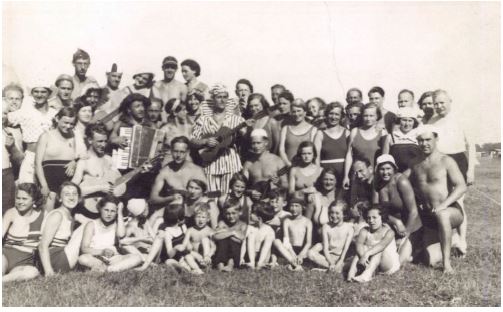
On warm days, they would go to the Danube where they belonged to a beach club of sorts where people who were poor or of modest means could go and spend their time cooling off in the river and playing volleyball, soccer or other outdoor activities. According to your grandfather, the beach was not his mother’s favorite place. He thought that this was due  in part to his father’s flirtatious behavior with a number of women on the beach especially one who was the daughter or granddaughter of the Austrian coffee magnate Julius Meinl.

danube beach

One of your grandfather’s favorite memories of this time was clothes shopping with Marcus. He was a sharp dresser and wanted his son to be outfitted properly. He especially wanted his son to have good shoes and he would spend a lot of time picking out the exact right pair for Dad to own. I have come to imagine that this had a lot to do with his time in Siberia where good shoes were necessary for survival and were likely in noticeably short supply. I have also wondered, from time to time, whether this is a genetic trait of Rothkopfs as I spend an undo amount of time picking out shoes.

There was also a darker side to Marcus. He liked to drink and often would return from work after a few beers with his co-workers in a very dark mood. Your grandfather who was at the kitchen table would often be the victim of his anger.  He would tell Grandpa that studying got you know where that only hard work got you anything and that he should prepare for a life of labor, not of books, often while sweeping your grandfather’s books onto the floor. Sometimes during these dark moods, he would hit Jenny. I know that these dark moods and temper tantrums scared and traumatized Ernst. But in talking about its years later he seemed to understand these dark times. That a man, like Marcus, who had been through such a difficult time was never going to be a saint or without scars from those awful times, but underneath it all, there was a man who loved and wanted the best for him.

If grandpa would not judge his father for the dark places his father went, I will not either.

By 1936 the Rothkopf’s life had stabilized.  The had an apartment that while not spacious met their needs. Marcus had a steady job that considering the state of the worldwide depression was remarkable. Jenny helped make end meet with her sewing and Dad was having a reasonably normal childhood centered around school, play with his friends, and religious training so he could become a bar mitzvah.

On June 19, 1936, a telegram arrived at Ottokringer Strasse 48 from Osweicim announcing that Max, who had started his European trip visiting his sisters and no doubt visiting his parent’s graves, would be arriving that day.

maxogram

The brothers had not seen each other in over 20 years. One had become an American citizen and built a successful life in the United States and the other had suffered internment and the torments of a destroyed economy. I cannot imagine what their reunion must have been like, but it must have been emotional. Nor do I know what they spoke about as your Grandfather only recalls that Max bought him a suit. Their visit was short. Max’s ship, the MS Pilsudski departed from Gydnia, Poland on June 26. I am confident that one of the subjects that was broached Vienna Rothkopf’s immigration to the United States. The rise of the Nazi party and anti-Semitism, the impoverished nature of his brother’s life would suggest that Max would have certainly raised the topic.

[Authors Note: One of the questions that occurred to me while writing this piece was what did Max do for his sisters? Did he try to help them escape Poland or was it not a priority as during his visit Poland was a free and independent country from Germany.]

When Marcus decided to immigrate to the United States with his family is unknown. What is known is that the process of getting a visa to the United States was lengthy, complicated, long on hope and ripe with disappointment. In the early 1920’s believers in Eugenics, a pseudo-science that theorized you could improve the human population by controlled breeding to increase the occurrence of desirable heritable characteristics, had managed to convince Congress to severely limit immigration to the United States. Due to immigration laws in the US he could not apply for a Visa as a “German” which had the most amount of visa’s available but as a Pole because that was his country of birth. Poland had ¼ the Visa allotment of Germany.

As a consequence, the process took years. Once you applied for the Visa, you then had to gather documents needed to satisfy the visa requirements of the United States. They included:

  • Birth certificates for all members of the family. (As birth certificates were not common at the time, especially in small towns in Poland and Hungary, this must have been quite a chore.)
  • Medical clearance.
  • Tax documents
  • Police certificates to prove you were not a criminal.
  • Military discharge to prove you were not AWOL or avoiding conscription.
  • An Inventory List of all the items you were taking with you, down to the pillowcase, that was given to the Nazi Government to prove you were not looting the country.

Once the paperwork was done you needed to prove that you had an American Financial Sponsor. This included getting a recommendation letter for that person along with a bank letter proving financial viability, tax returns and affidavit promising that you were be responsible for those whom you are sponsoring.

This must have been a tremendously time consuming and difficult process and while Jenny may have helped the burden of this work must have fallen on Marcus. Not only was it his brother who was his sponsor, but it was difficult enough for a man to get around Vienna at the time let alone a woman. I can only imagine the type of stress the collection of the documents, the waiting of letters from the United States, and all the other things that had to be accomplished would have been placed on Marcus.

Once all the paperwork was completed you needed to prove to the US consulate that you had a ship ticket and transit visas from the Nazi’s. Only then would the US Consul interview and determine whether or not you would be allowed to immigrate to the United States.

Time passed.

At the dawn of 1938, Austria was in rough shape.  Hyperinflation, the Depression, the burden of the Treaty of Versailles, the loss of stature by the dissolution of the old empire created a stew of political instability that resulted in wide spread scapegoating of Jews and the inevitability of the annexation of Austria into Greater Germany.
On the morning of March 12, 1938, the German Army crossed the border with Austria. Adolph Hitler, an Austrian by birth, entered the country later that day and spent the next several days holding cheering rallies across the country concluding with a triumphant rally in Vienna

The campaign against the Jews began immediately after the Anschluss. They were driven through the streets of Vienna; their homes and shops were plundered. In Marcus’s case it meant being forced to clean the sidewalk with a toothbrush and other acts of deference including the licking of the bottom of storm troopers’ boots. It meant listening to their anti-Semitic landlady say vile things to him, his wife and child and others. There was violence. Jews were beaten without consequence. Your grandfather once had a spear thrown at him that managed to hit him in the head. It was terrible for your grandfather but for Marcus it must have been exceedingly difficult as well. How do you respond when your child is hurt by a mob of anti-Semitic boys or your wife insulted by the landlady and others?  How do you deal with the daily personal insults? If you reacted with anger you would likely be beaten and arrested or worse killed. If you want to survive, to protect your family and have hope for leaving this all behind you you’re your mouth shut and your fists silent, which takes a kind of courage and will power I don’t know if I possess.

Aryanisation began, and Jews were driven out of public life within months. This included Jews not being able to ride public transportation including the trolley’s that Marcus took each day to and from his work. This meant he had to walk 5 miles each way, every day, just to earn a living.

Events reached a crescendo in the Kristallnacht pogrom of 9–10 November 1938. That night they burned down your Grandfather’s synagogue just a few weeks shy of the bar mitzvah he would never have. It was the night they arrested Marcus, while your grandfather hid under his covers, and was sent off to prison along with 6,000 other Jews. Marcus was lucky, as a war veteran he was released after a few days, but most were sent to concentration camps, and most of those did not survive the war.  Your grandfather was no longer allowed to go to school. Marcus lost his job and Jenny’s sewing and the few odd jobs Marcus could scrounge were their only steady source of income.

The Nazi’s made it clear. Get out of Greater Germany (Germany, Czechoslovakia, and Austria) or your fate would no longer be in your hands. For many Jews in Austria it became a part of daily life to find out what countries were offering up visa’s and go and stand in line to see if you could win the lottery and receive permission to enter that country. But as today, countries were reluctant to admit so many immigrants especially if they were Jewish. Anti-Semitism was rampant everywhere including the US

Your grandfather and his friends scrounged everywhere for a way out of Austria. Several of his friends went to Shanghai which accepted a vast number of Jews from Europe. His friend Edouard managed to become part of the Kindertransport program which took Jewish children and brought them to England while leaving their parents and all they knew behind. Others, like Dad’s cousin’s Lizzi, were sent to stay with family and friends in neighboring countries hoping being out of Greater Germany would save them. [ We have correspondence from Edouard that describes his life in England and how difficult it was for him to be separated from him family. Sadly, he died on the last day of the war as an airman in the RAF. Lizzi’s journey was also troubled the Aunt who was supposed to take in died while she was in transit and eventually, she was “adopted” by a Belgian family who at the outbreak of the war was trekked across Europe by foot to find safety first in Spain and eventually Portugal]

Young Ernie was nothing if not enterprising. He managed to get himself a visa to Palestine where he hoped to become a kibbutznik and call himself Zakki Ben Mordecai. It never happened because Marcus forbade it much to the frustration of his son. (It was a painful enough memory for him that it took me traveling with him to Israel to admit his Zionist passion. From then on whenever I wanted to be especially intimate with him I would call him abba and sign my name Daniel Ben Zacharias) Marcus insisted that the family stay together whatever the consequences. The gamble he was taking was immense and the stakes could not have been any higher.

On September 1st, 1939, the stakes of his gamble were raised immeasurably when the German Army invaded Poland. The 2nd World War had begun. For Marcus, the urgency to gain a visa must have been intense. He had bet his life and the lives of his wife and child on receiving that visa.  Every day the war news must have brought additional stress. Did he make the right decision not to allow his son the chance for a life in Palestine? What of his sisters and their families who lived so near the front lines in Poland? What was going to happen to his family if the Visa did not get through, Jewish men and their families were being arrested daily.

Finally, on November 8, 1939 the United States Consulate in Vienna issued visas to Marcus, Jenny, and Ernie. The same day an assassination attempt was made on Hitler’s life and somehow the Rothkopf’s manage to cross the Austrian frontier into Italy just before the border is shut. I have often wondered what it must have felt like to finally escape a country where you have been under the boot of oppression, with arrest just a knock on the door away, and the near constant fear of physical violence and verbal abuse to suddenly be beyond their reach. Joy, exaltation, relief, sorrow for those left behind, anticipation, fear of the unknown…so many emotions the mind would have spun as if on spindle.

Their train trip, with all of their belongings in just a few bags went from Vienna to Trieste. From Trieste on to Milan.

Somewhere on the outskirts of Milan Jenny’s first cousin (son of her mother’s sister) Benno jumped on the train to say hello to them before jumping off the train just as it pulled into Milan station. He had been arrested on Krystalnacht and forced to flee Austria under of threat of imprisonment or death and had been living a subsistence existence in Italy as he was an illegal immigrant.  One of the enduring mysteries to your grandfather was how Benno knew they were to be on their train (texting had not been invented as of yet) but he thought it could be that Benno * jumped on many trains in hopes of finding them or someone he knew.

travel docs

From Milan they traveled to Genoa, which young Ernie no doubt noted was the home of the man who discovered America, Christopher Columbus, and likely shared with his parents as there is large statue of him directly adjacent to the main train station. There they were treated a luxury of a hotel, no doubt a rare if not first-time experience for them, while awaiting their ship. There, they also had a visit with one of Jenny’s relative, her Uncle David’s son, Hans. He had been trying to cross the Green line into France, no doubt to join the war effort, but had been unable to find a way to cross the border. He had not eaten in days, so they bought him a meal before their departure.

On November 25, 1939, just two days past Thanksgiving, the SS Vulcania sailed for New York with the Rothkopfs safely ensconced in their third-class cabin.

vulcania

This was a ship of immigrants who had managed, by the grace of god, and doubtless hard work, to escape Europe as global war engulfed the continent. Friendships were made and conversations had about the circumstances of their current journey.

SS Vulcania ENAHANCED

No doubt much of the conversation was said over meals at table 44 in the 2nd seating in the third-class dining room. For many including the Rothkopfs this was likely some of the best food that they had in some time and certainly for the women making the journey a blessing not to have to prepare the three meals a day that they had to fit into their lives. I am sure time was taken at these meals to savor their escape and the freedom to be at leisure they had never known in their hard knock lives.  There must have been conversations about the world they had escaped from, the relatives and friends that were left behind and what would happen to them even as they made their escape. They probably compared notes on how they came to be on this ship and where their ultimate destination was and the life they would lead when they got there.

.


On December 6, 1939, after nearly a month of traveling and 12 days at sea the SS Vulcania, cruised  by the Statue of Liberty and the Rothkopf’s were welcomed into this country at Ellis Island.  It is unknown what Marcus and Jennie thought of seeing that majestic lady with her up raised hand. I doubt that they knew of the poem written in her honor, The New Colossus by Emma Lazarus.

The New Colossus

Not like the brazen giant of Greek fame,
With conquering limbs astride from land to land;
Here at our sea-washed, sunset gates shall stand
A mighty woman with a torch, whose flame
Is the imprisoned lightning, and her name
Mother of Exiles. From her beacon-hand
Glows world-wide welcome; her mild eyes command
The air-bridged harbor that twin cities frame.
“Keep, ancient lands, your storied pomp!” cries she
With silent lips. “Give me your tired, your poor,
Your huddled masses yearning to breathe free,
The wretched refuse of your teeming shore.
Send these, the homeless, tempest-tost to me,
I lift my lamp beside the golden door!”

Your grandfather from that point forward would call her Ladily and in happy tones recall that first trip into New York Harbor and his first sighting of land, A neon “Wrigley” sign.

Ellis Island Log


(Part 4 Will be Published 5-8-20)

Posted in Uncategorized | Leave a comment

12 Postcards: Part 2

soldier Marcus


As the European powers, interlocked through a series of secret and not so secret alliances, blundered towards war, Marcus’s reserve status was cancelled and he was recalled, along with millions of others to active duty. It is highly likely that he was a member of the Austrian Hungarian 1st Army which was billeted in Krakow not far from his family’s home in Grodzisko.

This is supported in part by family legend. According to the stories we were told Marcus was engaged in one of the very first battles of the war and was bayonetted in the rear end and taken prisoner by the Russians. The 1st Army was engaged in one of the first actions of the war, “The Battle of Galicia” which took place from the 23rd of August to September 11, 1914.  Early wins by the Austrio Hungarians quickly turned to a humiliating and devastating loss. In a little less than 3 weeks the Austrian’s suffered 100,000 dead, 220,000 wounded and 130,000 captured. The losses reduced the Armies effective fighting force by 1/3.

As they did with their political prisoners, the Russian’s sent their prisoners of war to Siberia in the far east of the country. This served a number of purposes. First, it took men who would be capable of fighting again if they escaped or were rescued and placed them over 3,000 miles from the battle. Escape would be nearly impossible not only because of the distance but because of the harsh climate where the average annual  temperature is -5C and where the lowest recorded temperature Is -62C. Its remoteness was another reason the Russian’s used Siberia as a dumping ground for prisoners. Even today the population density of Siberia is 7 people per square mile, half of that if you remove the cities from the equation. Looked at a different way, if Montclair NJ had the same population density as Siberia 18 people would live there. There were virtually no roads in and its main access to the west was a railroad.

The trip to Siberia was long and awful taking upwards of 3 months. Prisoners were placed in what were called “warm wagons”, a train car fitted with two to three rows of bunks, a stove and a bucket in the corner served as a latrine. At train stops they were supplied with hot water and were supposed to receive an “allowance” to buy their own food. Often they did not and were reduced to begging. During the entire journey they were never told where they were going or when they would arrive so the days and nights must have seemed endless and perhaps hopeless. I find it difficult to imagine the deprivation let alone the smell of a trip like this. What kind of social skills would you need to live with 100 men locked in a cattle car for months?

The camps varied in Siberia varied in  type. Some were the traditional camps surrounded by barbed wire fencing and others were more open where the prisoners lived in barracks within the town or city they were confined within. In the latter type of camps, prisoners had to report in daily but aside from that requirement they were free to do as they pleased. Others lived within work camps. The camp that Marcus likely went to, as it was opened up shortly after the Battle of Galicia and created for the prisoners from the Austrio Hungarian Empire was called Sretensk

Siberia

It was an open camp. Prisoners were allowed to mingle with the local population and organize activities such as soccer, tennis, volleyball, and weightlifting, among others. They were allowed to practice their faith including the Jews who held services with the local rabbi.  To survive prisoners needed to work at jobs that included telegraph–post service, railroad maintenance, leather work, logging, photo ateliers, mills, construction work, production of building materials and soap. It may be here that Marcus learned a trade in leather work and brush making.

Despite not having to live behind walls and barb wires and, having the freedom to work and play, life was extremely hard for people in the camp. There was often a lack of food resulting in prisoners eating food stuffs such as onions for weeks and months on end (Marcus onionophobia.) There was also disease with several outbreaks of Typhus, which in the days before antibiotics killed many, and many other diseases. Contact with the outside world was extremely limited. Postal service was spotty and took months as did messages sent through the Red Cross. We do not know if Marcus communicated with anyone outside of the camp. He certainly could not have known where his brother Max was as he had fled to America in 1913,  but perhaps he could have communicated with his family in Grodzisko or Oswiecim. What is clear is the International Red Cross or the Joint Distribution Committee for Jewish War Sufferers have no record of Marcus Rothkopf.

jdc marcus

The camps operation was interrupted by some seismic changes in Russia. First, in early 1917 the February Revolution overthrew the Czars. After a period of provisional government, the October revolution took place where Bolshevik and Soviet forces overthrew the government and promptly pulled Russia out of the war. A civil war erupted with the Reds (communist/socialists/revolutionaries) versus the Whites (anti communists/counter revolutionaries). The civil war lasted until 1923.

This put all prisoners kept by Russia in a precarious position. Not only did the life in the camp become much tougher as money to run the camps dried up and the prisoners left to fend for themselves but when WW1 ended on November 11, 1918 they were left in limbo. Not only had the country they been fighting for disappeared into the annals of history but there was no single entity to negotiate any release within Russia. So Marcus languished in Siberia for three years after the war ended until Spring of 1921 when he was finally released.

I cannot imagine his emotions as he set foot upon the ship in Vladivostok to return home. I am sure he was full of joy at finally being released and returned to a civilized world. I am sure that there was trepidation as well. Not only about his personal life. What was he going to do next but how had the world changed while he had been locked away? Old Europe was gone. The Austrio-Hungarian Empire, Czarist Russia, among other countries no longer existed and new countries such as Czechoslovakia Poland, Hungary and Austria had emerged.

The trip also must have been a great adventure. It covered 1/3 the globe, took well over a month and likely included stops throughout Asia, India, the Middle East.

siberia trieste


The only record we have of this journey is an accordion fold of postcards of the Suez Canal that were bought in Port Said, at the mouth of the canal while the shipped waited its turn to pass through to the Mediterranean. Postcards, then as now, were not expensive items but I am sure he had extremely limited funds at that time so the decision to buy the cards must have been relatively important to him. They must have symbolized something especially important because he kept these cards with him for the rest of his life. Through two marriages, many apartments, fleeing Nazis and a new life in America he kept the post cards in pristine shape. The cards have value in their own right now as they are now nearly a century old but for me the real value of the postcards is knowing how cherished they were by Marcus and the imaginings of what he must of thought of when he looked at them.

Where Marcus went after he left the ship in Trieste is unknown. A new unexplored world awaited him at the same time he had just spent 7 years, nearly half his adult life, in a Siberian work camp deprived of family, friends, and female companionship. It was a greatly changed world.  The Austrian-Hungarian Empire was dissolved into a half dozen states. Vienna, once a premier world capital,  was now a backwater of international diplomacy and a thriving economy had turned to dust. Hyperinflation had settled in and and where 16.1 crowns used to be able to buy a US dollar it now required 70,800. People would go to bakery’s with suitcases to buy loaves of bread.

Perhaps he felt the need to visit family in Grodzisko or Oswiecim. Perhaps he went straight to Vienna to search for work and a new life. We will never know because your Grandfather never told me, and I do not know if his father ever had told him.

What we do know is that he eventually made his way to Vienna and found work as a brush maker, a trade he may have developed while he was in the camp. It was dirty work as much of took place in an abattoir where the animals were slaughtered, their hides treated with caustic chemicals and the end product of hides and bristles created.

Somewhere along the way he also met a woman by the name of Ernestine whom he married. Sadly, she died before they could have any children. Sometime in 1924 he met a 30-year-old seamstress by the name of Jenny Hess, the 10th of 13 children from Sopron, Hungary. They married in June of 1925 and Dad came along in late December of that year which either means that Dad was the fastest developing fetus of all time or that he was conceived long before they married.

baby ernie

Part 3 May 7, 2020

Posted in Uncategorized | Leave a comment

12 Postcards: Part 1

marcus young man

There are moments in your life where your perception about an event, situation, or person changes so quickly it like glass shattering. Your perception of those things irreconcilably different and forever changed. Often it is the moment where you move beyond the surface, beyond your own fears and prejudices and for the first time can seem more of the entirety of that person, place, or event.  A moment that gives you a better understanding of those things and allows you to love them in a way that you had never thought possible.

So it was with me and my perception of my grandfather, Marcus Rothkopf.

My first recollection of him is walking through a parking lot with a burlap bag slung over his shoulder jabbing at pieces of litter with a stick that had a nail in it at one end. He was a street cleaner and even at a tender age I knew that was a very menial job.  It is hard to understand a child’s brain especially when the adult brain exists within the same cranium but seeing him do this job made me fear him a little. It was as if he had a virus or bacterium that I could catch and would condemn me to a life of cleaning streets for the rest of my life.

It did not help that I could not understand what he said to me.  He only spoke a few words in English and the conversation with all the adults was in German. While on occasion he would try to engage us and say something to us it had to be translated which for kid made it feel like he was not saying anything at all as translations do not convert emotions and sentimentality very well. It made him foreign and not of our world.

Another issue for me was his mustache. It looked like the toothbrush mustache of Adolph Hitler and even at that young age Hitler’s name was enough to scare the bejesus out of me.

There was a hardness to him. Almost an anger. It manifested itself in a number of ways. I do not remember ever getting a hug from him. And back then hugs were my jam. Come to think of it the only affection that I can remember ever being displayed with him is when my father would say goodbye to him and his balding head. Even the presents we would receive from him and Grandmother Jenny were given by her, not him. She is the one who took us to the Buster Brown shoe store and “yoyed” as we tried on our shoes. I am not saying there were no hugs or kisses given. There probably were but I do not remember them.

He also preferred his own company. While we would all sit in the kitchen and watch my grandmother prepare Wiener Schnitzel for us all. He would sit in the living room, often in silence, but occasionally listening to the radio. I am not sure we were warned to be away from him while he was sitting in silence but I do know we avoided him our kiddie radar picking up on something that made us keep our distance.

The last time I saw my grandfather alive was when I was 9 years old. He was in the hospital being treated for pneumonia and my father and mother had decided we should visit him. I can remember being very intimidated and scared of being in the hospital. I had never been in one before and it seemed to me very scary to be in a place where they took sick people and where occasionally people would die. I hid behind my father when we entered Grandpa’s hospital room. What I saw did not comfort me. Marcus was bound to the bed with restraints to keep him from getting up and leaving. He wanted no part of the hospital and had tried to escape enough times that they finally had to tie him to the bed. His arms had huge purple marks on them where he had been bruised fighting his restraints and where no doubt, he had pulled out his IV’s. Needless to say I found the whole scene horrifying and did my best to merge with my parents legs in the hope that I would be protected.

As we were leaving the hospital room my grandfather said something to my father in German. My father nodded and turned to my brother David and said “He says, he thinks you look like a little soldier.” My brother positively beamed, and I felt cheated. Why didn’t he say anything nice to me?

Grandfather Marcus died about a week later. Family lore and an autopsy report I found it one of my father’s desk drawers stated he had not died because of disease but because he had begged his brother Max to bring him a beer while he was in the hospital. Uncle Max did not realize that the medication’s grandpa was taking would not mix well with alcohol and the combination killed him.

My last memory of Marcus is not of his funeral. Neither David nor I were invited as my parents thought us too young to deal with the grief of funerals. No doubt they were right as the fact that someone could die bewildered and scared me long after his passing. My last memory of him is actually of Grandmother Jenny. Where Marcus had been scary and aloof Jenny was warm and open. To this day I do not have to think too hard to remember her hugs, how loved they made me feel, and her smell which was as welcoming as that of baking bread. After my grandfather’s funeral she came to live with us for awhile. My enduring memory of her at that time is my father sitting with her in the backyard, with Dad trying to comfort her and her being all but inconsolable. I was not capable at the time of understanding the full emotion of grief, but I do remember thinking I must find a way to make my grandmother happy because I had never seen anyone that sad.

As time went on, and the more stories I heard about Marcus, the scene of Jenny weeping in the backyard puzzled me. The stories that I heard about him painted a portrait of an angry man who would often drink to excess and heap verbal and physical abuse on his only child. That as a husband he was a philanderer and abusive especially if Jenny had not cooked for him.  It made me think of him one dimensionally. As a bad father, a bad husband. A person whom my father had to overcome to become the man he was. The person whose disrespect had made Grandmother that much sweeter as when you add salt to caramel.

Only rarely was this monochromatic image of Marcus challenged. Such was the case when going through some old photographs with my father. We came across a picture that had been taken of my grandparents on their wedding day in June 1925.

marcus and Jenny Wedding

It shows a nicely dressed couple smiling smugly into the camera. The bride is holding a bouquet of roses and wears a cloche hat with a veil attached. The groom is in a suit and white bow tie. They both look self-contentedly happy.  What it did not show was that Jeni was already pregnant with Dad. That this was a marriage dictated by circumstance. Marcus, though, had wanted this marriage and this child and for the rest of her life Jenny would talk about his kindness that day. That because he wanted her to have a proper wedding, he had purchased her entire wedding ensemble

But even this memory, and hearing the story of kindness that day could not break down my image of him as a bully of a father that Dad overcame and succeeded despite him as opposed to because of him. He was a beast who deserved little consideration in my pantheon of family heroes.

Years went by and I did not think about him. That changed in the spring of 2005. I began reading a book called “The First World War” by John Keegan. While a lover of history and more well-read than most on American History I had never ventured into learning more than the basics on the “War to End All Wars” despite a sister and a mother who were bonified experts on the subject. The book captured my attention from the outset. The politics that caused the war started fascinated me but what captivated me was the sheer carnage the war created. In a single day or a single battle an equivalent of entire city would die. The battle of the Somme 1,219,000 casualties. Verdun 976,000 casualties. Gallipoli 473,000 casualties. Put another way, casualties during those battles would be the combined population of Dallas, TX, Jacksonville, Florida, and Kansas City, MO. I felt the need to discuss my emotions about this with someone who would know what it was that I was talking about. And as I often did in those days,  I picked up the phone and called home. That is to say, my parents home.

I think the thing that I miss the most about Mom and Dad, but especially Pop, was our conversations. They were both highly educated and highly interested. They could converse on most subjects not only because of their education but both were lifelong learners who read the ink off the New York Times daily. They listened.  They loved talking to their children and their children loved talking to them.

That morning my father must have felt a little ambushed because I am sure for the first part of our conversation he did not get a word in edgewise because I was so full of new knowledge of WW1 that it must have come out of my mouth like water from a tap. We talked about how the spark that lit the war candle had begun with the assassination of Archduke Ferdinand in June of 1914. How alliances cobbled together over time made the nations of Europe fall into a war like a line of dominoes. How modern weapons such as tanks, automatic rifles and machine guns and tactics better suited for horse based calvary and static line offenses had caused casualties that were unimaginable. That the cruelness of the war was compounded by the fact that it was being fought by petulant cousins when family ties could have easily aborted the war.

When I paused to catch my breath, Dad asked if I knew what his father had done during the war. And with that question the perception I had held about Grandfather Rothkopf for over 40 years crumbled and a more colorful and nuanced portrait emerged.

He told me that Grandpa Rothkopf like all young men in the Austria-Hungarian Empire had been conscripted into the army in 1906 when he turned 18 years of age. He had served the mandatory two years and then for a while had bummed around Europe looking for work. Dad seemed to think that he had spent time in Paris and even London but had eventually made his way to Vienna. It was there in the early summer of 1914, after the assassination of Archduke Ferdinand, he, like so many others of his generation were recalled to the Army. He was 26 years old and sent to the Eastern Front in Galicia the same province where he had grown up. It was there, in one of the earliest battles of the war, where he was wounded, “bayonetted in the ass”, and captured. Eventually, he and many of his countrymen, were sent to Siberia in far eastern Russia, and placed in a Gulag, or work camp. There he stayed, eating onions (a food he would never consume again) until 1921.

Here I paused my father’s narrative. I asked “1921? Didn’t the war end in 1918.”

“Yes.”

“So why did it take so long to repatriate him and the other prisoners.” Dad said he did not know. But that he suspected that while hostilities had ended in 1918 what reparations the vanquished needed to pay the victors would have taken far longer to be worked out to mutual satisfaction. That this was likely complicated by the fact that Russia was in the midst of a revolution.”

I rhetorically wondered “What must that have been like?. 6000 miles away from home. Locked up in a camp in the middle of a frozen wasteland. Eating nothing but onions. Knowing that the war was over yet still waking up every morning behind barbed wire. Waking up every morning with the hope that today may be the day we will get word on our release.  And going to bed every night for three long years with your hopes dashed among snoring stinking men. “

My father replied that his father had not talked much of those days except he refused to eat onions for the rest of his life. He supposed that the memories were too unpleasant to recount and that perhaps he did not want to share those memories because they were so nasty and represented a time in his life he chose not to remember.

I went for a long run after my call with Pop. I was in training for the NYC marathon and needed to get my miles in. Runs are good for thinking because as you get lost in your thoughts the exertion seems less and the time seems to pass more quickly.  This particular run seemed to disappear in a blink of the eye as for the first time I considered the full arc of my grandfather’s life. He lived a life that was as difficult as any that I had ever heard of. That I had viewed him for so long with only the eyes of child and never really considered him as a human being with all the nuance of understanding that life experience brings you. It made me want to learn more about him. To humanize and cherish him as the father of my father.

My father always spoke of central Europe that he came from the standpoint of a native. Similar to that of New Yorker assuming that you knew the difference between Soho and Tribeca. This was compounded by the fact that the part of the world he was born into was transmogrified by two world wars;  countries had been created and other eliminated. Gone was  the Austria-Hungarian empire and its hegemony in the region replaced by Austria, Hungary, Poland, Czechoslovakia, Kingdom of Serbia, Western Ukrainian Republic. Semi-autonomous regions were gobbled up by foreign states such as Bukovia, Transylvania, and Banat and Ganat being joined to Romania and Galicia. It must have been difficult for those who lived in the region at the time to understand all the changes let alone a person such as myself born continent away in the latter half of the 20th century.

So when Pops talked about his father being from Galicia I had absolutely no idea  what he was talking about but I knew enough to know it was a part of Poland even though I could not fully appreciate the seismic change that had happened in Europe at the end of World War 1. This lack of understanding was compounded by an additional problem. There are two Galicia’s. One exists in the NW corner of Spain and was considered the end of the world by the Romans and the other which lay on the border of central and eastern Europe.

Maps help. Below is a map of the Galicia Marcus was from at the beginning of WW1. It stretches from what is now the Ukraine all the way to Silesia in the Czech Republic. The sheer size of the region is one of the challenges when looking for Marcus’s birthplace. The second is the name of the town, Grodzisko. In Polish the word means fortified settlement. In other words, it is like finding a town called Washington or Springfield in the United States without knowing the state. There is Grodzisko Gorne, Grodzisko Dolne, Grodzisko Owidz to name just a few. The Grodzisko of our ancestors( Wikipedia refers to it as Grodzisko, Lesser Poland Voivodeship) lays in the far west of Galicia almost due south of Cracow and just 15 miles South East of the market village of Oswiecin. The Germans when they invaded in 1939 renamed this town Auschwitz.

Kingdom of Galicia

I can tell you from personal experience that this part of the world is absolutely lovely. In the spring it is lush with wildflowers and deep purple lilacs.  Rich forests, verdant crop lands, crystal lakes. Its beauty makes it easy to understand why the first Rothkopfs settled here. In the late 1990 your Grandfather Rothkopf was in Poland giving a lecture and decided that he wanted to visit the place where his father was born.  I believe this adventure was more out of curiosity that of any great love he had for his grandparents as he never met them. What he knew of the place came from two men, his father, and his Uncle Max, both of whom fled the town as soon as they could. But they must have had told Pops enough about the place to pique his curiosity.

What he found was a wonderfully bucolic village with many homes that looked as if they had existed during his grandparents lives as they were made from logs directly from the forest as opposed to any construction material.

Grodzsko

However, as the pastoral look on the outside something much darker lurked. Dad was searching for any sign that his relatives had lived there. Perhaps a synagogue that would have family records or at worst a Jewish cemetery where perhaps he could find some trace of our family.

Modecai and Saydie Rothkopf

Marcus Rothkopf’s parents: Saydl & Zacharias Rothkopf

Even though Dad had a translator the folks lived in the village seemed very reluctant to talk about the time before the war. Some claimed they had not lived here long enough. Other’s claimed ignorance of a Jewish Community ever being there. This, of course, contradicted common sense and  records he had received from the Museum of the Diaspora.  He knew from his father and uncle the town had their own Jewish schools and shul and had been a vital part of the community for centuries. Finally, just as Dad was getting ready to leave,  one resident took pity on him and told him the awful truth. That after the German occupation of Poland all of the Jewish residents had been rounded up and sent to ghettos in Cracow and Warsaw and eventually to Auschwitz.  There, most had  perished only a few miles away from their homes. Those that survived never returned. After their departure, their lands had been seized, their synagogue torched.  They had taken the gravestones from the cemetery and used them to line their sewers. Needless to say the destruction of the Jewish community in this town bothered Dad horribly as did the fact that he come all this way to fine some trace of his heritage and found none. But would stay with him the most was the fact that the people of Grodzisko Lesser Poland Voivodeship had erased all trace of them. People tend to forget things when remembering their behavior makes them feel bad about themselves and even more forgetful if recalling past events might make them liable for the theft of property and life.

We do not know much about Marcus’s early life except the basics.  He was born on November 18, 1888 and according to a variety of papers he had no middle name. (Official paperwork gives him a middle name of Israel but they gave that to all Jews who had no middle name. His lack of middle name probably had a lot to do with his religious upbringing when Jews names are commonly your first name followed ben or son of and your father’s name. In this he would have been Mordecai ben Zacharai.)  We believe he was the first of five children. Max was the youngest born, March 16, 1896. In between them were three sisters. Their names have sadly been lost to time. Dad could not remember their names and by the time I thought to ask there was no one else alive who would know. Pops memory was not faulty. He never met his aunts and they were abstract concepts as opposed to the Aunts, Uncles, and cousins he grew up with in Vienna.

Marcus’s daily life in the shtetl was not a subject that he liked to discuss very much. We know that his father was a reasonably successful cattle broker and that his education was primarily religious. He spoke and wrote in Hebrew and Yiddish but while speaking German, he was illiterate in that language.  He clearly did not value education and stopped his schooling as soon as he could. For the rest of his life he believed education was a hoax, that it never put money on the table, and as a consequence was actively hostile to Grandpa’s educational dreams.

When Marcus turned 18 years of age in 1906 he, like all other males at that age, were conscripted into the army. Their length of service was 10 years but typically they served only 2 years and were taken from active service to that of reserve. It seems likely that he was released from active service in 1908.

soldier Marcus

We know after he finished his 2 years of service in the army he did not return to Grodzisko. Instead according to Dad, he bummed around Europe for a while looking for a place to plant his roots. According to the stories I heard he spent time in Paris and in London but decided not to stay in either place due to language issues and the inability to find a good job. Eventually he made his way to Vienna, a world capitol, and crossroads of Europe, where he not only spoke the language but where Jews were allowed liberties not granted in many other parts of Europe.

It was in Vienna he heard the news on June 28, 1914 that the heir to the throne of Austrio-Hungarian empire was assassinated in Sarajevo along with his wife Duchess Sophie of Hohenberg. This event, which happened more by happenstance than design, not only dramatically changed the world forever but the path of Marcus’s life.

End of Part 1

Posted in Uncategorized | Leave a comment

Marathoning

Rothkopf-96Rothkopf-109

My father did not understand.

We had traveled 4,500 miles to the Kenai Peninsula in Alaska from our home in New York City and I was preparing to go out on a long run. He wondered “Why, with all the miles of trails here which we can hike, would you want to go out for a run?”

I lied to him, “For the sights.” And left for an hour-long jog along Alaska’s route 1.

I had lied to him because I could not tell him the truth. The truth was that I was not really a runner at all. My friend Fran likes to describe me as a “weightlifter “as my endomorph body type was far better suited for the weight room than long lonely stretches of highway. And frankly, at the time, I would have rather exercised indoors than out. But I had made a commitment.

A few months previous, I had gone to Boston for business on the day that their marathon was being held. On the plane ride up from New York I had been given a complimentary copy of Runner’s World Magazine. In it had been an advertisement for the Leukemia and Lymphoma Society, Team in Training program, stating that they could “train anyone” to run a marathon to raise money to defeat those awful blood diseases. Just two days previously, Dad had been told that his 8-month struggle with Lymphoma was over. He was in full remission and everyone in the family breathed a long sigh of relief.

The advertisement got me thinking. Despite having neither the body type or the aptitude for running I had harbored a secret desire to run a marathon. I think it had to do with the metaphor of the race…life is not a sprint it is a marathon. When I finally made it to my hotel room, I went to Team in Training’s website and signed up to run the Chicago Marathon. I promised that in exchange for their training program that I would raise $5,000 for their cause.

That commitment turned to buyer’s remorse the next day as I watched the less than elite cross the finish line of the Boston Marathon. They looked like hell. Pain was etched on their faces and their feet were barely clearing the pavement. Some of them even collapsed on reaching the finish line on Boylston Street. But a commitment is a commitment and, a week after the marathon, I began my training regimen of ever-increasing mileage six days a week.

What my father did not understand, and what I could not tell him on that morning in Alaska, is that I had to run to maintain my training. I had to lie to him because I did not want him to know that I was running the marathon. Not the physical fact that I was running a marathon (he always supported his children in their physical endeavors)  but that I was running the race in his name in order to raise money for the charity that had helped save his life. There is a Jewish tradition that charity should be performed anonymously so not to place a burden on those for whom the charity is given. It is tradition he taught us and it was one I had hoped to follow.

My resolution was even more emphatic considering the purpose of this trip. We had hatched the concept of our Alaskan adventure when he had been diagnosed with Lymphoma. I had wanted to give him something to look forward to and work towards at the end of his treatment. I had asked “Where have you never been, and always wanted to go?” He had tossed out a few places, but we had decided on the 49th state as it was on both of our bucket lists.

I could not tell him on this life celebrating trip that I was running a marathon on his behalf. The burden on him and me would have been too great. It was far better to just enjoy all the Alaskan wilderness had to offer and marvel at its beauty.

For the rest of the trip, where and when I could, I would go out for a run. My father never asked again why I ran but would shoot me one of his famous “your misshoganah “looks and shake his head. Occasionally, because a Dad has to be a Dad, he would warn me to be on the look out for the bears that roamed the woods.  This admonition always managed to put a little giddy up in my get up and go.

That trip gave me a true appreciation of outdoor running. It continued all summer long on ever increasing runs through out NYC. Around the loop in Central Park. Laps around the reservoir. In Riverside Park, running along the Hudson to the small Lighthouse underneath the George Washington Bridge and back. South along the Hudson River Greenway all the way to the World Trade Towers and occasionally the Battery.

I loved these runs because they made me feel more fit than I ever had in my life and allowed me to explore, unabated, my serious passion for ice cream without gaining any weight. They provided me with an opportunity to slow down and see the world around me in ways I never had before. To see the details that provide so much of the beauty in the city. The gardens in Riverside Park where they meet at the end of “You’ve Got Mail.” Belvedere Castle, Strawberry Fields and the Imagine mosaic, and so much in Central Park. The Hudson with its ever-changing hues, moods and ships passing.

Even more I relished these runs because of the time it allowed me to think unencumbered by cell phone, Blackberry, or other distractions. I had the time to think about issues that were nagging at me both personal and professional. I had time to think about why the Red Sox were doing horribly. I could solve the worlds problems while I ran instead of having to litigate them in the middle of the night.

And, while some runs were tougher than others, I cannot recall a single time where I returned from a run where I did not feel unburdened and freer than when I had started.

That is not entirely true. On the morning of September 12, 2001, the day after the attacks, I ran south along the West Side Highway, past an endless line of ambulances and first responder vehicles to what was now being called “The Pile.” When I got as far as the police would let me go, I paused to mumble a few words of prayers and vow revenge and then ran home with anger and tears for the innocence of the world that had died the day before.

On October 7, 2001, a bright sunny day that started out cold and ended mild, I ran the Chicago Marathon finishing in 22,291st place with a time a 4:53:08. I had raised nearly $10,00 for Leukemia and Research and in the process managed to develop a passion for long outdoor runs. At a time when the nation and I had needed healing from the events of only a month before, I had been healed by the crowds cheering for NYC (our shirts designated us as the NY chapter of TNT) and by the fact that I had given my father a gift that he would never know about  but that I would always cherish.

Or so I thought.  When I eventually found my way back to the hotel room and into an icy bath, to cool my aching body, my cell phone had rung. It was my mother, calling from Vienna where my parents had gone for a visit. She wanted to congratulate me on my finish, they had been watching the results via the internet. But mostly she wanted me to talk to my Dad, who, it appeared, she had blabbed my secret. When he got on the phone, he said “I really don’t understand why anyone would want to run that far…but congratulations.” He knew why I had run. That was self-evident. But he did not want to place a burden on me to say anything. And he did not have to because I knew how he felt so I responded, “For the sights.”

Over the next 10 years or so I ran three more marathons and four triathlons. All for TNT. All but one raising money for Pops. I did it for him for sure, but I did it for me too. I did it because it made me feel fit emotionally and physically.

Physically, the miles burned calories and kept the weight off. Emotionally, the long runs with their sightseeing provided ample time to think and a way to provide balance to a life easily unbalanced.

Eventually, age and logged miles paid their toll. On a visit to an orthopedist about a persistent back problem, he advised me to stop running and biking as they were exacerbating bulging discs and arthritis that I managed to collect over the years. He told me that if I did not stop, that the problems would only compound themselves and that I could eventually lose the ability to walk or even stand without assistance.

I stopped and changed my running and biking gear for gym togs. Instead logging long hours on the road, trails and paths I spent my time on ellipticals and Stairmasters, lifting weights and stretching. Instead of watching the world go by I watched CNN, Fox and other gym goers. This helped with the physical part of the equation a lot. I got fatter less quickly than I would have otherwise. But from a psychic perspective it was never the same. Gyms are just more rushed. Instead of the “I will be done when done feeling” when you bike and run for distance you put yourself on the clock. I will do 45 minutes of Stairmaster, 20 minutes of stretching and 30 minutes of weights. Moreover, the joy of being out and about seeing something new, even familiar things, you are left with the stress of watching the news or the same sweaty people you see every day.

I was thinking about this recently on one of my daily walks around our neighborhood in Jardim Itanhanga. They have been one of the unexpected gifts of the Covid 19 pandemic. Each day, I go for a 60 minute or so walk around our gated community. They are never timed instead I let my nose (even when it is covered with a mask) guide me around the tangle of streets that surround us. While I have my iPhone with me, I mostly do not listen to it and never check for messages or emails. Instead, I let my mind wander wherever it happens to want to go and let it stay there for as long as it needs. I try reliving those long rides and runs from my marathon and triathlon days and seek to see something new every day. Thankfully, this neighborhood is a forest that is ever evolving. There are literally new flowers to see every day and I make a point of stopping and examining new blooms when I see them.

Yesterday, I stopped in our garden to examine a new red rose that had emerged on one of the bushes I had given Elaine years ago. It was so beautiful and fragrant, and I was taking my iPhone out of my pocket when it hit me.

Perhaps one of the true lessons of the pandemic is that life is a marathon, but you should take the time to stop and smell the roses.

Posted in Uncategorized | Leave a comment

Last Morning (Part 2)

0300536737816919904837165914852


The procedure was done the next day. I held her hand as we escorted her to the Laparoscopic Lab, deep in the bowels of the hospital, where the surgery was to take place.  A nurse showed me to an empty waiting room and let me know that the surgery should only take about 45 minutes and that someone would be along after the procedure to let me know how it went.

Surgical waiting rooms do not exist in the same space time continuum as the rest of the world. Time seems to move far more slowly. And one of the most perverse laws of physics is that fewer people who are with you the slower time passes. The waiting room was devoid of people as most scheduled laparoscopic procedures take place in the morning.  Being by myself, and with no one to have idle conversation and with time creeping by slower than ever recorded on this planet I retreated into my own thoughts.

Dr.Kole had not held out much hope for this procedure. She had seen how messed up Mom’s lungs were.  Years of smoking, cancer and radiation therapy had wreaked havoc on her left lung.  But I am by nature and training an optimist. I try always to devote myself to positive side of the equation and wait for the shoe to drop before I begin to consider the negative consequences. Worrying about the future without enough data points only served to wind me up like a rubber band while focusing on the positive allowed to press forward without fear. I devoted my thoughts  about what was going to happen when the operation was a success. Would Mom need to go to rehab? Likely as she had been in a drug induced fog for the last ten days. She would need patience, time, and monitoring to get her beyond the physiological effects of the drugs. She would need to see a physical therapist and others to coax her back to walking with a walker let alone with a cane or unassisted. This was not something my sister or I could do nor was her home. But she hated the recovery centers. Even the nice ones felt like dormitories of death and she had enough of them the past that I knew she would be resistant to going to one of them. But she was also a keen observer of her own condition. She would agree with rehab and then immediately push to get out. There would be conferences, and squabbles and complaints. However, as she usually did in the end, she would prevail. We would bring her home. If previous times were guides to the future, I would be the one who would have to arrange for the home health care aides, coordinate their schedules, get the equipment needed to sustain her, and be on call 24/7 when things went off the rails.

As daunting as these thoughts were, I found them comforting. Bring Mom home. Mom is home. The base of all emotions when you thought about it.

I looked at my watch 10 minutes had passed. This was going to be a long afternoon.

I tried to distract myself with cleaning up my emails but  I soon abandoned it. Facebook proved no better a diversion. It’s incipiency of what I had for lunch, look how smart my dog/cat/kids/spouse or the latest political outrage by the President did not have much relevancy to me at that moment and the idea of sharing with the world my angst over Mom’s procedure seemed contrary to the family code of privacy and stiff upper lip forbearance to life’s trauma. I tried reading but when I found myself reading the same paragraph over and over again I realized that even my greatest weapon against awful thoughts was defeated.

I waited by myself in that lonely waiting room with only NJ1 on the small television in the corner as company furtively looking up anytime anyone walked by in the hallway. The world proceeded at a slow march for nearly 3 hours with each minute lasting at least 10. Finally, Mom’s Dr. came into the waiting room. He had the manner of a fighter who had just lost a decision after battling for 15 rounds. He told me that this procedure normally takes less than an hour, but they had been with Mom for nearly 3. They had tried everything they could to get to the source of the bleeding but her arteriosclerosis and altered lung structure had continually blocked them. They could have pressed harder, but they felt that if they did it would have ruptured a major blood vessel or injured the lung so severely she would have died on the table. They had done their best but they could not help her. Mom would be returned to the ICU and we could discuss next steps with Mom’s attending physician.

But I knew it was over. The ending of the story written except for the details. Mom would be removed from all of the equipment that supporting her life. No more breathing tube. No medications other than those designed to ease her pain and dull her sense of passing. No monitors. She would be moved from the ICU to a single room where she could slip quietly into the good night.

The next morning, they moved mom from the ICU and brought her here to this room overlooking the town in which she had lived for 52 years. I lived the closest, had the least amount of outside demands-my consulting business was home based and my clients paid on results-and it had been my role to be her primary care giver the last seven years, I was left to supervise the move. My sister and brother both promising to show up sometime that afternoon to relieve me and to take some of the burden of the death watch on them.

The move went smoothly. Mom seemed to be relieved that she was free of the paraphernalia of the ICU.  Only the canula of 02 remained. However, she was unable to speak. Only croaks and guttural sounds utter from her when she tried. I did my best to understand. Did she want water.”  A nod of the head so I left the room to find the pantry where past experience told me they would have an ice machine, water pitchers, cups and straws. I held the cup as she drank a few sips from the cup. When she had her fill, she pushed my hand away. I asked her if she wanted something to eat. Despite the water Unable to speak so she just shook her head. She was trying to ask me something so I took a notebook and a pen and a piece of paper and pen from my backpack and gave them to her in the hopes she could write what she wanted. She could not hold the pen firmly enough to produce anything more than just scribbles. You could see her frustration and mine was bubbling up to mixed with a fair heaping of fear and sadness. It made me feel helpless, ineffectual and stupid that I could not figure out what to do for my mother.

I was saved by the duty nurse who came in as bold as a drill Sargent and started asking Mom a series of questions. As it turned out Mom was uncomfortable. She wanted to be propped up in bed. That she did want something to eat but could not communicate what she wanted. The nurse solved that problem by telling her she could have jello and a little weak tea. Grateful for the nurse I took a chair off the wall and sat opposite Mom’s bed and settled in for my “watch.” As siblings we had agreed that in these closing hours of Mom’s life we would try to leave her alone as little as possible. I knew that meant the burden would fall on me but that was okay. I had promised years before she would never be alone.

The afternoon sun was warm and the combination of sleep deprivation, jet lag, and stress hit me like a mile long freight train and I fell asleep without knowing it sitting in that chair. I woke with the confusion that often comes from falling asleep inadvertently. I didn’t know where I was, the day or the time. And there was this old woman with a familiar face in a dressing gown staring at me. She gawked at me as if it were a miracle that I was there. Her gaze was penetrating and directly at me but at the same time unfocused as though she was both looking at me and through me the same time. It was profoundly creepy especially as this staring was unabated by blinking.

I said “Mom whats up?” And for the first time since we moved her from the ICU she said “Ernie?” Ernie was my father who died in 2012 and whom I resemble strongly despite being 4 inches shorter and lacking an Austrian accent.

“No Mom. It is Paul. Can I get you something?” Instead of responding she continued to stare but I realized after a few moments of this that she was not staring at me. Her eyes were fixed at something beyond me.

My first thought was that she was hallucinating as her medications included among other things Fentanyl and morphine. While I grew up in home where science and the rationally explained was the bible there was a bit of the mystical and the paranormal that creeped in around the edges. I once confided to my father that the night that his mother had died I had dreamt that she had told me where to find a ring that was owned by husband that I had lost months earlier. It was only after retrieving the ring from where it had been lost that I had received the phone call that Grandma had passed. My father told me that he was not surprised. That he always believed that there was something mystical about her. He told me about how when he was a boy spending the summers with his grandmother in Farafeld, a tiny town in the foothills of the alps, far from the mean streets of Vienna where he lived, he could always tell what train she was arriving on by the sound of the whistle. He told me he was never wrong.

Perhaps Dad had come to visit with Mom. Although I thought it unlikely. Not because of the lack of scientific evidence about the paranormal but because I was convinced that in whatever adventure one has after this life, if there was an adventure, that my father would be off exploring that Universe full of the sense of wonder of the new and the interesting that had been his hallmark in life. He would not be burden by the anchors of family. He would assume we would do fine without him and despite the reality that his death had caused a gaping hole in all our lives.

But this was his wife. A woman he was married to for just a few weeks shy of 60 years. A woman whom he enjoyed fighting with but loved fiercely. A woman he once told me “was tougher than you think” but always protected ferociously. A woman he could always be gentle with and with whom he held hands with up until the last. Perhaps he had taken a sabbatical from his adventures to help her make her final journey.

Mom continued to stare at me or beyond me and say nothing. I found it profoundly unsettling and uncomfortable. Made more so by her lack of verbal response. I thought that a distraction might help so I crossed over to her bed and used the control attached to her hospital bed to turn on the television to MSNBC which since the election of Donald Trump had been her go to station. The two shared a common viewpoint on 45 and yelling in agreement with Laurence O’Donnell and Rachel Maddow seemed to help her vent her rage and frustration over the idiocracy of the Trump presidency.

Sadly, the television only broke the silence that hung in the air. My mother continued her staring at me unabated. Despite entreaties, pleas, and exasperated statements she continued to stare at me like I was a revelation. It made me profoundly uncomfortable. It made me want to leave but I stayed because of my promise and the absence of my siblings who were now hours over due to relieve me.  I stayed, and buried myself in my computer busy work and then with the endless black hole that is social media. However, despite the distraction I could still feel my mother’s gaze. It along with the stress and anxiety of watching your first and constant fan die made me wish that the dials on my watch would move more quickly and that brother and sister would be there to relieve.

Unfortunately, neither the clock or my siblings schedule were my friends that afternoon. Time seemed to progress at 1/3 speed and the text updates that I received from my sister and brother were those of excuses and explanations on why there were not arriving at the hospital to relieve me. A midafternoon arrival turned into a late afternoon arrival. A late afternoon arrival turned to a stay tuned. A stay tuned turning to early evening.. And Mom’s staring eventually abated when she mercifully fell asleep late in somewhere after the light had faded from the sky.

Despite the relief my mother’s sleep brought me my frustration and my anger grew. Every moment they were overdue I felt additional anger at them both for leaving me with this awful task. I felt abandoned and alone. As time went on without their presence the hurt of the abandonment and their lack of compassion towards me or our mother boiled inside me creating a steam of anger waiting to be vented.

The anger was compounded by the antipathy I felt for my brother from years of his lack of interest in in caring fortwo aging parents. It was active disinterest. Even when begged by both Marissa and myself to do more to help relieve the strain on both she and I his response had ranged from defensive “I call them every day” (he did not) to providing opinions on their care despite his absence.  This lack of engagement, apparent caring, this outward appearance had produced long hours coping with my anger and frustration and trying to understand how a brother whom I loved could be seemingly so callous and unfeeling towards siblings and parents. I thought that I had made peace it. Every family it seemed that one person could not deal with the sick and the dying and they left the task to others believing that benign neglect would allow them to avoid the thoughts and the questions these tasks generate.

I have learned over time that ascribing reasons for others behavior is a fool’s errand. All you can hope to do is catalog their behavior and accept it for whatever it happens to be. In this case David had, over a long period of time established that he did not want to deal with illness, death and dying.  I knew from my own experience how tough this can be. Seeing someone you love suffer and not be able to do anything about it is one of the most frustrating things you can experience in life. Watching someone you know slowly slide into death is horrifying as you contemplate a world without them and your own mortality. Changing a parent’s diaper is embarrassing and humbling. Visiting a hospital or a nursing home and seeing the countless ways in which the human body is insulted by injury and illnesses and the consequences of them is suitable for a film by Wes Craven.

In my more compassionate moments this had provided me with some peace. Who really wants to deal with those things? That compassion never lasted. Every time I found myself at exhaustions door burned out from caregiving I could not help but resent the fact that my brother had done less than a minimum amount to help. Worse it made me search for a pattern in his behavior that I could chronicle so I knew how to predict his behavior moving forward. Much to my dismay it appeared to me and others who knew him that he lived a life in a narcissistic bubble. It seemed almost everything in his life boiled down to the equation “How will this help David.” If the math did not add up, he did not participate with little apparent thought on how it effected others.

The paramount example of this was the day before my father died. He had chosen to end his life at home after refusing dialysis. Death from kidney failure is as gentle a death as one can hope for in life. The toxins in your body build slowly first causing an alternate consciousness and then coma followed by death. When the hospice nurse had told me that day that is was unlikely that Dad would survive the night. I called my brother and sister and let them know the time was at hand to say goodbye. My sister and brother in law came late in the afternoon and had there goodbyes. My brother, who was vacationing on Block Island, which is 5-hour drive from Summit, chose not to come at all claiming a tennis match and issues with packing. Choosing tennis and packing over saying good bye to a parent who would not know you are there seemed to me a very practical decision when emotion should have won the argument.

In a strange way I actually admired his lack of engagement. I thought it gave him the ability to strive for success in a competitive environment.  However, the empathy gene he apparently lacked appeared overly stimulated in me. I could not say no when my parents had asked for help or when I thought they needed it. As a consequence, I had been the primary care giver to my parents during their declining years taking them to the Dr, running errands, listening as they complained, even cleaning my father’s ass when in his final months he became incontinent.

The last was a supremely humbling moment for both father and son. Dad was an exceptionally proud man. He had by sheer effort of will and determination survived the Viennese ghetto of his youth, the 2nd World War to become one of the most renowned men in his field of educational psychology. This man of will was now having to have his ass cleaned by his son. He kept apologizing to me for having to put me through this as he knew how unpleasant a task it was. And it was unpleasant, the image of my father’s ass is easily conjured, but at the time I felt so badly for him having to go through the humiliation of having his diaper changed by his son, that the task itself became mechanical with not a tinge of revulsion. When he told me for the umpteenth time how sorry was for this, I had told him, punning on purpose “it was no big shit, he had changed my diaper” and now “it was my turn.”

It was a bonding moment for us. The act stripping any façade so that the only thing exposed were the two humans underneath which allowed us to love each other all the more. It was an experience I wish I could have shared with my brother. Made him understand what those moments meant to me and to our Dad but he was not present and he never asked. It was an opportunity he missed yet one he will never miss. To me this defined the tragedy of my brother’s absence in our parents final years. He would never know what he missed.

However, this moment the intellectual understanding of what he had lost and what I had gained were today lost in a miasma of anger. I was exhausted. I had gone directly from a 17-hour flight to directly dealing with Mom’s illness and end of life decisions. The contemplation of her demise and all that it entailed had produced far more tossing and turning than sleep. My overtiredness was all the medium needed for the virus of anger and upset to grow. It blossomed into “why had my sibs abandoned me to this death watch alone.”  It had budded the feeling sorry flower of “Why am I shouldering this last moments alone?” And the contemplative fear bloom of “What will happen to our family when she is gone? Will we break apart. David taking his part of the family and split away into its own little fiefdom. Will my wife and I be set adrift with no children, no greater family.”

My brain was processing more questions than answers. The pace of those hyperactive fears, trepidations and resentments kept increasing as both brother and sister kept pushing the time for their arrival later and later in the day. 3 became 4. 4 became 5. 5 became 6:30. 6:30 became we will get there when we get there. Meanwhile my mother continued to stare and try to verbalize things that I could not understand. And I kept asking myself, why just one of them could not arrive to spell me. I needed to flee. To forget this awful scene. To be alone with my grief and confusion and get away from my mother’s glare.

When brother and sister arrived together around 7:30 the last inch of fuse had disappeared into the powder keg. The explosion of hurt and dismay on the edge of ignition.  I barely said a word to them as I packed my bag but not smart enough to leave well enough alone I tossed out “Nice of you two to arrive together” as I slung my bag over my shoulder and headed for the door. As I had asked for, but had hoped to avoid, my sister took offense to the comment and said aggressively “What is that supposed to mean?”

“It means that I was here all afternoon by myself while you and David were doing who knows what and then you arrive together like you arranged it. I have been here all afternoon by my fucking self and now you walk in like you arranged it.”

“You think that we did this together?”

“If it walks like a duck, quacks like a duck. But honestly, I am too tired and not the right frame of mind to talk about it right now. I just want to get the fuck out of here so I can eat something and get some rest before I come back here tonight.”

In truth, my instinctual self, my id, wanted to have a fight. I was hurt and tired and all the autonomic parts of my body were itching for a knock down screaming fight. It would be cathartic and syphon off some of the resentment from that afternoon. But I had learned over time and through many a session with a psychologist that this was almost never a good idea. To say things, do things, in the heat of the moment did not work for me. I said and did things that I would regret long afterword. So I took a beat and said “ Look I am tired and angry. I do not want to get into this now. Let us put a pin it and deal this with later.”

Sadly, my sister has the same temper that I do. Like me, like my brother and father when  temper flares it is hard if not impossible to put it out. She said “No I want to deal with this now. By this point we were in the hallway speaking in whispered shouts. My sister accused me of always thinking the worst of people. And I responded with that it was not thinking the worst of anybody it was accepting the facts. That all afternoon they had kept postponing their relief of me almost in unison and that then they showed up together. While that might be just coincidence it does not seem like it to me. It seems arranged and at my expense.”

I guess our conversation was louder than whispers because my brother tried to intervene. He made the mistake of physically trying to push me out of the way and get Marissa back in the room.  The animosity I felt for him considering his lack of participation in Mom’s care and his last minute entrance to demonstrate to those who were watching what a good son he was almost pushed me to the boiling point. I wanted to shove him back into the narcissistic bubble in which he lived but managed to keep my shit together enough to just push him back into Mom’s hospital room telling him to “leave us alone” and that he was not needed.

But his presence made me realize how close I was to completely losing my shit. I told Marissa that I was done. There was a reason I did not want to have this conversation now. I was far too emotional and the best thing for me to do was to go home, cool off, and have something to eat before coming back for the overnight shift. When she asked why I was coming back I snapped back “Are you going to stay? Do you really want Mom to die alone?”  The rhetorical question unanswered and the heat of my anger losing steam I added  in a quieter tone “I promised Mom a long time ago I would never let her be alone and I am not going to break that promise.”

I turned on my heel and left exiting the hospital in the dark of the winter’s night. I spent the short car ride home in a self-righteous anger. Re litigiating all the reasons that I was on the side of the angels with this argument. It was no coincidence they showed up together. It was typical of David to come in the last moment to “save the day.” That I had not wanted to argue with Marissa. That she had picked a fight when it would have been far better for her to have left it alone. I spent no time realizing that all that all these emotions floating around. All this kerfuffle had little to do with anything but the grief we were all feeling in our own way at the time.

After calling my wife, who was at our home in Brazil and reliving the events of the past 8 hours, and hearing her healing words of support and love, I poured myself a stiff Woodland Reserve bourbon, made myself a comforting Centano’s frozen Eggplant Parmesan dinner and made camp on the couch in front of the television. I hoped that the combination of comfort food, mindless television, and Kentucky’s greatest product would allow me the peace to be able to return to the hospital in a far better spirit than I had left it.

But that did not happen. My brother in law Mark texted me in the role of peacemaker in chief. He wrote that they had spoken to the nurses. That the likelihood of Mom passing during the night was extremely small. That perhaps it would be best if I stayed at home and tried to get as much rest as I could as the upcoming days were likely to be even more demanding the preceding days.   I appreciated the common sense in what he was saying and frankly I had no real desire to spend a night trying to sleep while my first fan lay dying a few feet from me. I allowed myself to be persuaded to spend the night in my own bed.

My phone buzzed. The journey of the last few days faded and the reality of today returned. It was a text from Marissa. She and Mark would be at the hospital early in the afternoon. I texted her back that there was no hurry. Mom was sleeping and that after an uncomfortable night, where she had tried to escape her bed and the confines of the hospital,  she was peaceful. I did not tell her of my cowardice of removing the drip of snot that was still hanging from her nose nor re examine the lingering anger and shame from our argument from the night before.

I had been at the hospital for three hours. All of that time sitting in an uncomfortable lightly padded hospital chair. My body was screaming to get up and walk around a little bit and my bladder was expressing its need to be relieved of its burden. I got up and stretched and on my way to the bathroom I decided to be a little brave, and touch my mother’s arm, and let her know that I would be right back. But the words never came out. Her arm was cold and when I spent a moment really looking at her I could not see her breathe.  I decided that when I finished with my bathroom obligations that I would find a nurse and see if my worst suspicions were realized. There was no hurry.

When I returned from my bio break the charge nurse was there taking Mom’s pulse. She looked at me, shook her head and said “She’s gone.” I nodded my head, returned to my chair and cried like the child I always was to Mom. I cried because I knew how much I would miss her. I cried for the final death of my childhood. I cried from relief knowing that the final shoe had dropped. I cried because I did not know what to do. The nurse, came over to me and put a comforting hand on my shoulder and told me Mom as at rest and that she had gone easily and that was a blessing.

Through snout bubbles and tears and with a strained voice I asked her what happened next. I knew that the hospital had procedures but as my father had died at home, I had no idea what they were. She explained, that before anything could be done that Mom had to be pronounced dead by a Dr. Once that was done the hospital would send a few attendants to take her body to the morgue where it would be our responsibility to have a funeral home come and take care of her body. When I asked how long it would be before the Dr. arrived she told me it depended on his duties but should not be too long. She told me how sorry she was for my loss and with a squeeze on my shoulder she left.

With her departure the tears of self-pity and loss returned with a few gulping sobs for good measure. Eventually I was able to gain control enough to text my siblings. “Mom is gone.”

I called my wife in Brazil. Although my wife and I had only been married 5.5 years Elaine had thought of her as a 2nd mother. She admired the fact that my mother had managed to have a successful career and marriage while she had raised three children without damage. She had also accepted with grace my role as Mom’s primary care giver and embraced the burden it placed on her. She would never leave for Brazil without insisting that we go to my mother’s home for one last beijos and abraco. My wife wears her emotions on her sleeve. When I managed to choke out the reason for my call she burst into sobs and for a while we cried together 5000 miles apart.

I became my mothers shomer. It is the Jewish tradition of watching over the body from the time of death until burial. As most things in the Jewish faith this rite had its origin in the practical. Dead bodies needed to be protected from animals and those who would steal from it but had evolved into the spiritual. Jewish tradition suggests that the soul after death is restless and confused after death and the shomer is there to comfort that soul. It is a role that I had played for my father but that had been at home with the body covered. Here in the hospital it was different. There was no comfort in the familiar surrounding of my parents home of 50 years. Worse my mother’s face lay uncovered. The same single drop of snot hanging from her nose and her mouth agape as if catching one final breath. I knew it was an image that would never leave me and as such I did everything I could to avoid it.

To distract myself I made a mental list of what needed to be done. Which funeral home would take care of Mom’s body? Who was going to call Woodlawn to prepare the gravesite? Who needed to be called to be told of Mom’s death? The million details that need to be untangled upon someone is passing.

My thoughts were interrupted by the arrival of the Dr. who came to pronounce Mom. He was young and harried and it became apparent that the role of pronouncing someone dead was as much bureaucratic as it was medical. He was followed a checklist. He used his stethoscope to measure breath sounds and then heart beats in several places. He took her pulse and examined her pupils. And then he went through the whole process again.

Finally he looked at me and said. “She has stopped breathing but her heart is still beating. I can’t pronounce her until the heart stops.” Up until that moment I had forgotten that Mom had a pacemaker. That it would keep the heart beating until such time as the lack of oxygen rendered the heart muscle useless. I asked how long that would take. He told me it could take hours but he would check back in an hour or so and left.

I had no desire to extend my lonely service as shomer. What I wanted most to run screaming from the building yelling “My mom is dead. What happens now” then drive to the airport and take the first flight I could to Rio De Janiero so that I could be held and loved  by my wife. But I could not leave Mom. I had promised to never leave her alone. The marathon was almost over and I couldn’t quit so close to the finish line.

I texted my sister and brother. I did not tell them about Mom not being officially dead as I thought it would serve no purpose. Instead I told them we needed to decide about what to do with Mom’s body. I suggested that I call the nephew of my former wife (the joy of living in the town you grew up in) who was a funeral director at a local home which, while awkward,  was at least dealing with someone I knew. My sister approved, he had been a classmate of hers, and I spent the next little while talking to him, arranging to pick up Mom is remains and all of the endless details that were involved in that outwardly simple task.

When I looked up at the end of my call, I saw that the nurse had come in and had taken the hospital bed down flat so Mom was at rest. The visage of her runny nose and of her staring at me only a memory. Looking at my watch only 15 minutes had passed I needed a distraction to help pass the time until the Dr. returned. I could have started to make calls to those whom I needed to let know about her passing but I emotionally was not ready for those calls and in the light of the Dr’s inability to pronounce her dead perhaps a bit premature. Mom would have been pleased that it reminded me of the Mark Twain quote “The rumors of my death are greatly exaggerated.”

I decided to distract myself with writing what I would post on social media about Mom. One of the gifts of social media is the ability to express to your community, those who you love and like and love and like you, the milestones of your life easily. Instead of having to deal with them individually and the painful conversations that would ensue you could put it out collectively and receive comfort from peoples notes instantly. I see the downside too. The lack of person to person individualized contact is a net loss. Hugs and personal reminiscent towers above the sanitized world of social media but in the then and the now all I wanted to do was to let as many people know about Mom as I could as quickly as I could.

The challenge was how do you express to a group of people the complicated person that my mother was? How do I explain how important having an individual identity was to her? How, while she cherished creating the collective that is our family, she needed the identity of being a contributor, a creator and manipulator of words through writing and editing. That she was a flawed person and Mom but perfect in her imperfection…at least in the eyes of a son.

That while she had a difficult time expressing it, she cherished her family and friends. This train of thought took me to Mom’s study where invariably you found her at her large desk organizing her life or at her computer writing or at correspondence. It made me think of the lithograph that sat above her desk. An image that I knew she had carefully chosen as her view of the world. So I wrote:

My mother has a black and white lithograph above her desk. It depicts a war zone with an active battle going on but in the middle is a home on a hill surrounded by a fence with a happy family living a secure life without a care for the war raging around them. That was how my Mom viewed her role as a mother, grandmother and friend. To provide sanctuary, love and enough room to be yourself free of the war raging outside.

Mom died peacefully yesterday. She was an author, editor, bibliographer, and distinguished scholar. But her great joy was her family that she along with my father built. She leaves a hole that can never be filled but a legacy that will never die


When I finished writing this I was pleased with my words but decided to delay posting it. I wanted to give my siblings the opportunity to tell their children and friends of Mom’s passing before finding it out in the collective.

The Dr. returned a few minutes after I had finished writing. Once again, he went through the medical ritual of examining Mom for signs of life. I said a silent prayer hoping for my owns sake that Mom restless spirit had gone to wherever one’s consciousness goes when it departs this earth I had done my duty as son for as long as she lived. I was doing my duty as shomer and settling her restless spirit. But I was spent. I had nothing left to give. I needed to find the space to recover and to understand what had happened and to contemplate what came next for me. The Dr. spoke into his recorder “Time of death 12:37 “and after that a whole lot of words that he needed for the death certificate that I heard without hearing. He told me that he would let the morgue know and they would send someone up to attend to “the body.” I wondered to myself when Mom had become the body and then thanked him for his kindness.

Thankfully, the wait for the morgue attendants was not long. Minutes after the Dr. had left two African American women appeared in my room and told me that they were here to take care of “Mom.” They told me that they would first clean her body as often “the body leaks after death.” Then they would transfer it to a gurney and then take her to the morgue where our funeral director would claim the body. They suggested that I leave during this process as it might be unpleasant for me. I did not need a lot of convincing to do as they said but remembering my promise to Mom and my shomer duties I stood in the hall outside her room and watched with one eye closed through a crack in the door to make sure that they treated what remained of Mom with sensitivity and respect. They did.

When the body had been cleaned and placed on the gurney, they wrapped it entirely in a white plastic film. I was not expecting this but understood. Taking a gurney down the hall with a body under a sheet or in a body bag would not be good publicity for any hospital let alone one with the name overlook. Wrapping a gurney with opaque film made it so most people would not even notice the passing of a dead body. They would likely think it something else.

I followed them as they wheeled Mom out of her room and down the hall. When they came to a bank of elevators they pressed a button and we both waited for the lift to arrive. When it did they wheeled Mom on board. I watched as the doors closed.

This marathon was over.  I had crossed the finished line and done what I had promised.  And while I knew that the next marathon, dealing with Mom’s legacy and estate would begin almost immediately, I let those worries of future days for tomorrow…or perhaps the day after that.  For now. I wanted to think about Mom her love and her legacy.

I was gratified and pleased that as an adult I had come to know her as a friend and a confident.

I was grateful for every childhood memory that I could conjure of her.

I thought I knew her well and was the better for it.

Little did I know in the days and months to follow I would discover that I had only scratched the surface.


Posted in Uncategorized | Leave a comment

Last Morning (Part 1)

Rothkopf-1116


All hospitals rooms are pretty much the same.

The same neutral colored walls with linoleum floors that match. The hospital style bed with its plastic side rails and controls to guide the beds shaping to the patient’s needs. There is the light fixture mounted behind the bed with oxygen outputs and suction inputs and opposite the bed a flat wall mounted television and white board giving the patient the name of the Dr, Nurse, Technician, date and the phone number of the patient’s bed.  There are heavy wood chairs with vinyl seats and rail mounted curtains that gave the patient the tiny modicum of privacy allowed in a hospital.

The room I was in this morning was sun filled. The large east facing windows allowed the morning light to flood the room with a soft yellow glow. The cold winter’s morning outside was forgotten, the room was warm, almost hot, from the sun and overactive radiators.

Had this been any other day my attention might have been drawn to the view from the windows: a panorama of the small NJ town in which I had grown up and returned to when my parents had become elderly and unable to care for themselves without assistance. The town, Summit, as the name implies is located on the first ridge of the Watchung Mountains and the vista allowed me to travel back in time as I could truly see where a lifetime of memories had been created and burnished by time.

Today, my attention was not drawn outside and to the past but instead it was focused inward and on the immediate, to the woman lying in the hospital bed in the center of this sun-drenched room. Like the view outside, she evoked a lifetime of memories but unlike the memories that were created on the outside these recollections went to the core of who and what I am. This was my creator whom was a part of every memory from the first moment of awareness to the present and every step in between.

This was my mother. I had come for a final goodbye and to sit with her on her last day. It was a fulfillment of a promise I had made to her nearly 20 years before and had assiduously maintained ever since.

That promise had been made while driving my mother home after a visit to my hospitalized father. He had just been diagnosed with Lymphoma and the implications of that diagnosis had hung over our car ride like smoke in the rain.  The car ride silent except for the sounds of tires on pavement and the traffic alongside us. My father had always been the bedrock of our family. To us he was invulnerable.  A member of the greatest generation, an immigrant who had barely managed to escape Austria before the war, he had gone on to serve as 2nd Lt. in the 88th infantry division during the war. On his return to this country he had completed his college education, masters and doctorate in record time. Along the way he met and married Mom and had gone on to a very distinguished career at Bell Laboratories and as distinguished professor at Columbia University. He was our superhero and we had just discovered his mortality.

We lived in our own thoughts as the world rolled by.

At a traffic light, where we had paused, she broke the silence. She had choked out her innermost fear.  “I have never been alone. I went from my father’s house to your father’s house” and burst into tears. She rocked from sobbing. Her sadness buffeted me and broke my heart. How does a son console his mother when the role had always been the opposite way? How do you tell a mother it will be all right when that is what she always told you? Do you tell her that even though you have no idea what the future had in stored for our family? Is that the quandary she had always lept over the million times she told you that everything would be all right?  She had always held true. She had always been there. No matter the circumstance. No matter the trouble. She had kept the faith and so would I.

So, I had promised her. She would never be alone. That no matter what I would be there for her. It seemed to give her strength and me a mission. It had sustained us while my father had gone through chemo and radiation and eventually beat his disease. Crisis over I returned to my normal life and was able to put my promise in storage for a while.

However, age is a persistent predator and 10 years later Dad fell and fractured a vertebra in his neck. Confined to a wheelchair, a two-year decline unfolded.  Most weekends found me leaving my city digs and heading to my parent’s home to relieve my mother from her caretaker in chief role.  There were weekday excursions spent taking them to various Dr.’s appointment all while trying to balance a work and diminishing social life. Inactivity, additional health problems including kidney failure eroded my father’s quality of life and with it a desire to carry on. What the Nazi’s could not steal from him disease and age had and he eventually made the decision to end his treatment and slowly slip into the good night.

After he had died, I was once again confronted with the promise that I had made to her and how to best manage it. I could try to help her live her newly solitary life remotely from my apartment on the UWS of Manhattan or I could try to live closer to be a little more responsive to her needs. Eventually, I made the decision to move to Summit. This was not entirely altruistic. After 30 years of city life I was ready for a change.  Also, when my soon to be wife was asked where she preferred to live, she had voted for tall trees and green as opposed to the urban jungle.   Summit seemed an ideal place to start our married life. Direct trains whisked you into Penn Station in 40 minutes. A familiarity of an old shoe meant that I could not miss a beat looking for the best deli or bakery.  But mostly it meant that when she needed me to take her to the Dr. or the market or the call the printer had broken or a light bulb needed changing or dozens of other household chores I could help her with the minimum intrusion into my life. .

As I entered Mom’s room her nurse had stopped me. The night shift had had their hands full with her the night before. She had repeatedly tried to get out of bed and leave the room. Nurses and aides eventually managed to get her back to bed but it had been a fight. That was typical of Mom. She had a stubborn streak and managed to get what she wanted most of the time. It had served her well as a mother, scholar and author. I had no doubts what her efforts to escape her bed were all about. It was her stubborn refusal to leave us and if no one was going to help her escape the grim reaper she would do it on her own.

The nurse told me that they had upped her medication and now she was resting comfortably. When asked about what she thought the prognosis was she just shook her head and said “You never know. This could take a couple of hours. It could take a week.” This was not a surprise. When I had walked into the hospital that morning, I knew that the end to her time here with us was extremely near. That today or at the outside tomorrow she would pass.

I thanked the nurse and took a folding chair off the wall, opened it facing Mom’s bed and set up shop for the day.  The coffee I had bought at the snack bar was placed on one of those C shaped tables that allow patients to eat in their beds along with a couple of Cliff bars, a notebook and a pen. The latter two in a hope that I could outline thoughts as they came to me as I waited the inevitable. I placed my coat over the back of the chair and rolled up my sleeves. It was warm and this was an uncomfortable enough experience without sweating.

I looked at my mom. They had inclined her hospital bed, so she was sitting at a 45-degree angle.  She was slumped over.  Her chin resting on her chest as if she were napping. Her pallor was awful. Grey and clay like even in the warm sunlight of the room. And my elegant mother, who would not even consider leaving the house without lipstick, had a drip of clear snot hanging from her nose. I knew I should go over and wipe her nose with a tissue but out of a fear of disturbing her rest I chose not to. This was more of a rationalization than the truth. It was actually an act of cowardice. I was more concerned with myself than her. It was as if I thought would catch what was sapping life from her, that should I touch her that death might take me along with her into the next life.

Not wanting to stare at her I peered out the window. The view from where I was sitting was only of the bare branches of the trees on the distant hills scratching at the crystal blue sky. They looked like gnarled old hands raised in praise.

Mom’s illness had been a whirlwind. Two weeks before she had been the hostess for a family holiday celebration. Surrounded by her three children and their spouses, 4 grandchildren, the older two with their significant others. It was clear to all who saw her that day that she was reveling in the warmth of having the family she created with my father around her. A picture taken that day shows her glowing and surrounded by the family she treasured above all else.  The moment met so much to her; my notoriously camera-shy mother had surprised me when she asked if I could make prints of that image for her. She wanted to bask in that photograph, and I knew it was destined for a place on her desk

No one who was at that party would have guessed that her ending lay so near in the future, but I had come to believe that she knew or suspected that death was near. That the party we held that day was her farewell party…a celebration of the family she had created.

Perhaps I too had a premonition. I had almost not attended the party. When Mom told me about the party, she had described it as a birthday party for my older brother David who had the misfortune of being born the day before Christmas. It did not sit well with me. While I love my brother, I often do not like him very much. He had done little, verging on nothing on caring for our aging parents. While he called, he could never seem to find the time to visit or to help his siblings in caring for our parents. I had once confronted him on it when my mother had needed care after a bout with pneumonia. I had asked him to pitch in and relieve Marissa and myself of some of the burdens of caring for Mom. He had responded that “I needed to say “no” more.” Needless to say, his response had infuriated me. But it was consistent with his view of the world. Happy to give advice but reluctant to do anything of substance. This behavior had saddened Dad in the closing days of his life. When we would discuss his lack of visits and help, he would say, often in exasperated tones, “What did you expect?” It was a tacit acknowledgement of David’s shortcomings.

Mom’s reaction to David’s lack of visitation and care during my father’s long illness had been that of anger. Not only at him but at herself. There were angry phone calls with him excoriating him to do more to help, to do something to help but these were always balanced with tears blaming herself, like many mom’s, for their child’s shortcoming.

David’s lack of care, engagement and support had often blinded me with anger. Not only could I see the suffering that it produced in both parents, but it placed a far heavier burden on Marissa and me. A fact he almost never acknowledged. This lack of involvement and acknowledgement left embers of anger and resentment that smoldered deep inside me. As a consequence, when she had told me of her plans to have a birthday party it was like adding oxygen to a smoldering fire.  Embers burst into flames.  Angrily, I had said “So let me get this straight. You are having a birthday party for your son who could not find the time to visit you when you were in the hospital having a valve replaced in your heart  and nearly died, despite despite living 15 minutes away. A celebration for the guy who drove by your hospital when you were sick with broken ribs and bruised lungs and could not take the time to hold your hand for a few moments.  You are having a birthday celebration for this guy when I had to buy my own birthday cake this year? That is bullshit.”

Hurt and offended I had stormed out of the house letting her know in no uncertain terms that neither my wife nor I would be attending the party.

Time, a series of brutal workouts, and lengthy conversations with my wife and bouts of conscience had mellowed my anger. But what convinced me to go was more of a feeling than anything else. Malcolm Gladwell writes about in his book “Blink”  how sometimes our brain process information in ways that sometimes help us make decision that seem to be intuitive but are actually based on a collection of data points that are uncorrelated at the time. It is only after time that you can see the decision was fact based as opposed to intuitive. It was that way with my eventual decision to attend the party. At the time I had concluded instinctively that this party might be the last time for all to gather around Mom. At the time there was no diagnosis, no illness or overt behavior that had suggested Mom was in decline, but I had been discussing for months with my wife and sister that something seemed off with Mom. That she was not fully sharing how she felt or what her Dr.’s was telling her.

Thinking about it in this warm, stuffy, hospital room some of the little things, barely thought of at the time, had given me clues to her health.  I visited with Mom almost every day. It was reassuring to both of us.. Often, I would bring her a sandwich and several times a week I would bring her food from a local restaurant and we would have dinner together. My mother loved to eat but in recent months she had just picked at her food and to cover up her lack of appetite would move the food around on her plate as children do when told no dessert without one more bite. The lack of appetite despite having chosen the restaurant and the food should have been a clear clue to me at the time instead it was just a data point. Stored, for future retrieval but signaling no alarms.

Mom was a writer. The author of 13 books, an editor of countless others including Cat’s Cradle by Kurt Vonnegut and her opus magnus, The Letter of Edmund Blunden, published in her mid-eighties.  She was constantly at her desk working.  Her work was a constant source of conversation for us. “What are you working on Mom?” She would detail a piece should be editing for a friend or the Grolier Club or tell me about the writing she had done editing her Great Aunts recollection of her shop “The House of Books Ltd” s. Or her own work on her recollection of the 1939 World’s Fair.

However, after a fall in early October when she had broken her ribs and ended up hospitalized for over a week, her answers had changed from what she was working on to what she had done. Her typical response when asked what she was up to was to let us know that she was organizing. This had drawn yellow flags at the time. Not only was my mother the most meticulously organized, bordering on OCD, person I knew but the fact she was organizing herself after a hospitalization made me think of the final days of her mother. Family legend had it that my grandmother had been admitted to the hospital after suffering a massive heart attack. She allowed the Dr’s to treat her for a week or so then demanded to be released. When she had arrived home, she had organized her things, including tying ribbons around her underwear, and then called her physician and asked to be readmitted to the hospital where she died a few days later. It had occurred to me at the time that Mom was doing the same thing but had been dissuaded by both my wife and sister as manifestations of my own fears as opposed to the reality of the situation.

Perhaps the biggest clue to Mom’s impending illness had been the fall she had taken in October. She had called me exceedingly early in the morning to ask me to come over and help her as she had fallen on her way out of the bathroom sometime in the night. She told me she had tripped over some clothes that had been on the floor near the entrance to the toilet.  She waited hours to call me which she put off as embarrassment, but the pain had finally convinced her to give a call for help. Needless to say, I had rushed over to find her lying in her bed, stoic, but grimacing in pain. I also noted that my mother’s clothes were not on the floor but where she fastidiously placed them every night on a chair adjacent to her bed. It was clear to me at the time, that the clothes were just an explanation for her fall that she had made up. It was only when we got to the hospital and we discovered how low her blood 02 levels were that I came to suspect she may have feinted rather than tripped. However, her physicians were more inclined to believe that the problem with her oxygenation was due to the broken ribs, and the shallow breathing that resulted from that painful injury, rather than another explanation. As a consequence, they treated the symptom and had not searched for additional causes. While I still had my suspicions about Mom’s fall, I put them aside to focus on more urgent problems. She was desperate to get out of the hospital. Far more so than she had been in the past where while not exactly patient with her Dr’s ministrations she tolerated them because she saw them leading to better long-term health. This time she was insistent of being sprung from the hospital even if that meant hiring 24 hour a day care giver.

I had gone to work to arrange for care, Oxygen and the other details of getting her home and lost track of my concerns about her temporarily. It was not until she was safely ensconced at home with all details settled that I had remembered the family legend about Mom’s mom.

These thoughts brought me back to the present and looking up I could see that Mom had not really moved since I had been there. She still sat propped up in the hospital bed, gown and legs akimbo, grey faced and chin resting on her chest, the single drop of snot still dangling from her nose. I returned to my thoughts, and staring at my feet, unwilling or unable to watch as my mother left us.

My wife is a Brazilian, a Carioca or native of Rio De Janeiro, and it was our tradition to spend New Year’s in her hometown. We went for the weather and the wonderful tradition of bringing in the New Year with a beach party with fireworks from Copacabana to Recreio. We had left for Rio shortly after Christmas. Thanks to Skype and the ease of VoIP I would talk to Mom every day often more than once. These conversations were never long, mostly consisting on recounting the events in our lives (Who she talked to where we ate), the weather ( it was too cold where she was and too many mosquitos where I was), the family (David had not called, the Bates were having a dinner party)  and her favorite subject, Donald Trump . She hated him with a passion. He represented everything in the world she was not. He was a vulgarian, where she was a lady. He eschewed knowledge where she embraced it. He was a loudmouth where she listened as often as she spoke. He led by creating chaos, she inspired by creating order where chaos reigned.

You did not need to look far to see the difference in how Mom viewed the world and the way Trump did.  For as far back as I can remember Mom had a black and white lithograph above her desk. It depicts the chaos of a war zone with an active battle going on, the battlefield pock marked and full of the wreckage of war. However, in the middle of the print there is a small mesa, carved out of the battlefield and surrounded by fence there is a home. Inside the wall’s peace reigns. A garden grows. Children frolic. Everyone is safe. The creator of that sanctuary is how my mother saw her role in life. The carnage outside was is how she perceived the world Donald Trump sought.

My phone calls to Mom were always in the morning for no particular reason except that was the time of day where my other activities had not taken its toll as of yet and I most felt like talking. And so, it was on the morning of January 5. I had called to check in to tell her about some inconsequential things that had been going on in Rio or the size of the status of my mosquito bites. Nothing urgent. Nothing alarming. However, from the minute she answered the phone I was alarmed. She was not herself. She seemed distracted and confused, not her normal quick-witted self.  She was not fully present and when I pressed her with questions, she did not answer them.  Something was clearly wrong with her and she didn’t want to tell me about it, and she didn’t want to talk either so the call quickly ended.

I was concerned but instead of pressing her as I normally would have, I called Marissa instead. I explained my unease as best I could which was difficult as there was nothing in particular that I could point at. No slurred words. No confusion. Her breathing had been normal. It was a feeling, an intuition, that there was something really wrong. I think my sister thought I was crazy but would indulge me and check with Mom later to see if all was all right.

A few hours later I received a text from M. She had taken Mom to the emergency room. She was coughing up blood and they both thought it a good idea to get it checked out. She made it seem like it was not a big deal and I pretended that it was just like the nosebleed she had a few months back that necessitated a trip to urgent care because she was on blood thinners and the bleeding could not be stopped. A few hours later came word that she had been admitted and sent straight to ICU as they could not stop the bleeding.

According to my sister, Mom was not happy about this situation. She thought it ridiculous that for a little bleeding that she should have to stay in the hospital. She wanted to go home and be treated there. This was typical for my mother and her lack of concern did not ease mine at all. So, I called the airlines and tried to move my flight forward to the next day. Unfortunately, American Airlines and the gods of travel were not very accommodating.  Flights from Rio back to the states were overbooked for the next few days and even if I could manage a seat it would cost more than $2,000 to change my tickets.

For the next few days, Marissa kept my brother and I updated to Mom’s status via texts and emails. We could not speak to her as they had put her on a ventilator. The gist of the message was always the same. She is doing okay. They are running tests. They are trying to get her O2 levels up. Needless to say, the lack of progress, the nature of her symptoms kept me on tender hooks. I tried to enjoy the remaining days with my wife, but a pall lay over the trip. Never a good sleeper I spent large portions of the night awake relitigating the events of the past few months. How she must have sensed that something was really wrong. All the little things that I noticed but did not press her on. How she organized constantly and did nothing. How, during our meals together, she would push food around her plate as opposed to eating any. Her coughing that on occasion would have her leave the room, something that had been going on since her bout with cancer but had worsened as of late. The constant organization. Her ever increasing ever demanding need for company. The persistent niggle of intuition that something was wrong that was like a scratch that I could not itch.

My wife, who had adopted my mother as her own, was calming to me. When I told her of all the telltale signs that I missed and of my intuitions, she reminded me how stubborn my mother could be and that there would have been no change in the outcome even if I had pushed my concerns about her. When I told her that I feared that this would be Mom’s last trip to the hospital she reminded me how strong my mother was and the fine care she was receiving. I was comforted by her words, but I had no illusions about the reality of the situation.

Over the next few days little was done to calm my sense of foreboding. As my mother was in the ICU unit there were no private phones so I could not talk to her even via my sister’s cell phone as using it was forbidden in the ICU. Moreover, the tests they were running on Mom’s bleeding were inconclusive. However, more and more it was pointing towards a bleed in the lower lobe of her lung. A place where a bit of cancer had been found ten years previous and had undergone both radiation and chemotherapy. Eventually, they intubated her to minimize the bleeding and sedated her heavily to keep her from pulling at her various tubes, wires and outputs. All this duly reported by sister via text, email, and phone.

I was scared, sad and apprehensive as I said goodbye to my wife the day, I left Brazil. We had spent a good part of the last few days discussing my mother and the likely outcomes. We both sensed that Mom would not leave the hospital which for me was like a sharp punch to a pressure point on your arm or your leg: sharp pain followed by numbness. My wife’s reaction was the opening of a vault of sorrow. She considered my mother her own as her own mother had died many years before. My mother’s struggle with eternity opened up all those pent-up emotions and let them out in a torrent of tears and sobs. She told me that she loved me and that she was by my side. But urged me to be calm and not let my anger and frustration get the better of me.

We had also discussed, at length, my concerns over what the future would bring. I knew that it was likely that my brother would frustrate and anger me. He would be long on advice and short on action. Then, at some point, he who had spent so little of his time taking care of would swoop in at the last moment as the savior of the hour, as the star of this show. Elaine knew it would take a supreme effort for me not to let loose of ten years of anger and resentment when that happened. I vowed to try.

The ten-hour flight home from Brazil, sitting in coach, provides little chance for rest and plenty of opportunity for overthinking. I got off the airplane with a check list of things to do but most importantly. I needed to see Mom. I needed to see what I could do. Thankfully, the flights home from Brazil land very early in the morning and with no luggage, save a carry on,  and Global Entry I was home before most people left for work in the morning and at the hospital after only taking time to shower, shave and caffeinate myself.

The hospital where my mother was being treated is called Overlook (yes, a terrible name for a place where we hope the practitioners are conscientious but is forgiven for this name as it sits atop a hill). Its ICU is buried on a floor below the main entrance. And you cannot enter it directly. First, you must go to a waiting room and on intercom ask permission to visit the patient. Depending on the situation, whether a procedure is being done or the patient is having issues, you are granted or denied entry. When I had asked permission to enter, I was told to wait that Mom had been coughing up blood and needed to be cleaned up a bit.

I looked around. This was not my first time in the ICU waiting room. I had been there on a number of occasions when Pop had been in decline. I had found the place cold and lonely at the time, not at all enlivened by the easy chairs, living room couches and a television broadcasting quietly in the corner. Nothing could hide that this was a place for anxious people waiting for news that one way or another was going to impact their lives. This morning I had it all to myself and the silence was deafening.

When they finally called to let me know that I could now come back to visit with Mom I was only my anxiety was peaking from both the trip and the waiting. The ICU has little bays with sliding glass doors reminded me of motel rooms. Dim lighting along, whispered tones and a plethora of electronics provided an atmosphere of quiet urgency that permeated the place. Despite previous experience and the steeling, myself for what I was going to see over the last few days I was not prepared for was seeing Mom intubated, wired, Lived, and restrained. There was blood caked around her lips and in her intubation tube. My elegant, never leave the house without lipstick, Ferragamo shoe wearing mother, looked as if she was in some B grade science fiction film where technology had won the war with humanity. It staggered me.

The only good thing about being in ICU is that the nurses are absolutely the cream of the crop. While seeing the ugliest parts of the human condition they manage not only to be professionally competent but to be compassionate and caring not only for the patient but for the families. The nurses know that it is not just the patients who are suffering and struggling. Their families are on this voyage with them confronting issues and making decisions that religions were created to solve but rarely do. My mother’s nurse, whose name I cannot remember but whom I will never forget, saw me stagger from what I was encountering. She, in a kind but matter of fact way, told me about Mom’s condition. She was in a medically induced coma in the hopes that keeping her quiet would help the lung bleeds heal. While the jury was still out of the long-term effectiveness of the strategy as of now, they had not been able to get the bleeds under control as I could see from the dried blood that ringed her lips. Her ventilator was keeping her 02 levels up and her other vitals were under control. She encouraged me to speak to Mom; while she knocked out part of her brain would be able to hear me.

I sat in chair next to Mom and told her all the things I would have had been able to talk.  the. I told Mom about my trip. How flying through Sao Paulo had saved me oodles of money but had added an additional 6 hours to my travels. I told her about Donald Trump’s latest inanity and about a Phillip Kerr novel I had finished recently.  That I was here. We would figure out her medical issues and get her home sooner than soon. I told her that I loved her. Eventually, I ran out of things to say and told the nurse I would be back soon. I returned to the ICU waiting room and managed to fill a small wastepaper basked full of tissue.

Marissa arrived not long after my breakdown. She was jovial, upbeat and even humorous. I knew that this was not out of insensitivity. Quite the contrary. She used humor and jolliness in the same way a person covers their ears and whistles a tune when they do not want to hear something. It is a distraction from the pain that she was feeling. I understood this despite the fact I wished I could talk to her more seriously about what it was that I, we, were going through. Not only did she have a unique relationship with my mother, a daughter’s relationship, but she had been in the trenches with me in caretaking both or our parents. Despite having two young children, a job, and a husband when she was needed, she showed up. She had taken Mom to the hospital at the beginning of this latest adventure and as someone who had been through that process with both parents, I understood the trauma and psychic carnage that it produced.

In other words, she had earned the right to deal with this current crisis in any way she so chose.

She had come to the hospital not just to sit with Mom. We had arranged a meeting with Mom’s pulmonologist and primary care giver at this juncture, Dr. Allison Kole. I knew her fairly well. She was my pulmonologist having diagnosed and treated my sleep apnea.  She had become Mom’s pulmonologist shortly her heart valve replacement surgery 15 months previous. Mom had  developed serious congestion of the lungs while in recovery. Dr. Kole had been the pulmonologist on call. She had determined Mom needed to go back to the OR. Her lungs needed lavage and removal of the “junk” that was affecting her breathing. Mom had protested. She did not need the surgery.

Dr. Kole had been very patient (irony noted) with her. But after a short round of arguments back and forth Dr. Kole had said enough. Mom was going to surgery.  When she briefed me after the surgery she told me  Mom’s lungs had been full of mucus and other crap. That the structures of the “lung” were somewhat altered and that if she had not done the lavage she most certainly had died. I had not thought much of what she had said at the time. Instead, I focused on the positive news. Mom’s was going to be okay. Her ability to breathe restored to acceptable levels. I also remembered thinking how impressed I was her pulmonologist.

Dr. Kole arrived in the waiting area shortly after my sister. For privacy we retreated to a conference adjacent to the waiting area. After conferencing my brother via cell she got right to the point. They had tested the hell out of Mom. They had determined that the lower lobe of Mom’s left lung was the issue likely because of a bout with lung cancer and the radiation treatment that had followed. They had done what they could do without surgery, but the bleeding persisted. There was a procedure that they could do, a hail Mary effort, where they would laparoscopically enter Mom’s lung through a vein in her leg and attempt to reach the site of the bleeding so it could be cauterized. Mom would die without the surgery, but the surgery could kill her as well.

My mind looping on the fact my mother was dying. I remember my brother ask a few questions that I considered superfluous and designed only to make him sound smart. But we all agreed that our short term goal was to make sure Mom was as pain free as possible and not quite aware of what was happening around her.

We seesawed on what to do next. The surgery may not solve the problem and could kill her. Why put her though that with such a small chance of success. Then again some chance is better than no chance and she likely would not be aware of what was happening anyway. Eventually, we all agreed that we needed to give Mom this one last shot at recovery and agreed to have the procedure.

Posted in Uncategorized | Leave a comment

Shlof

HTB1KpRnGFXXXXarXVXXq6xXFXXXN


The room was dark except a single red LED.

I had been having the most wonderful quarantine dream that seamed to be going on forever and the memory of which did not last a nano second after I had awakened. Normally, I have an exceptionally good sense of time. I know the time without checking but it had failed me.  As a consequence, I opened my iPad as I had fallen asleep with it on my chest. The screen remained dark, the battery having expired as I dreamt. I lifted my arm above my face. The luminescent dial of my watch read “3:31.”

I had been asleep for nearly 4 hours but it felt like I had slept 10. I was not the least bit sleepy and knew that trying to fall asleep again would be a fool’s errand. Normally, in situations like these, where it was too early to get up and where sleep was impossible, I read. Usually, mystery novels from my iPad. They distracted my psyche from the death spirals of negative thoughts that I was prone to in the middle of the night. Especially now with Covid 19 consuming our days and haunting our dreams. But sadly, I had made a rookie insomniac mistake and failed to charge my iPad . It would useless in my fight against sleeplessness.

It was just me and the single red LED.

Well, me and my wife. She, as usual, was cuddled up next me making the gentle purring sounds that she often made when deeply asleep. She like me, is not an easy sleeper. While my challenge was the middle of the night awakenings hers was falling asleep. I had learned early on that she valued uninterrupted sleep when it came because making her go through the challenges of falling asleep again was likely to make her less than ecstatic.  This was compounded by our desire to spoon (her in the back, me in the front) as it meant any movement could disturb her sleep.

This ruled out making a midnight raid on the kitchen in the hopes that my friends Ben & Jerry could help me with my dreams of sleep. I could not read a book as it would require not only movement but the turning on lights which would undoubtedly disturb my photophobic wife’s sleep not once, but twice. Even rolling over and finding a more comfortable position was ruled out for the moment as my wife was cuddled tightly behind me and in front of me was the precipice of the beds edge. I was, for all intents and purposes, trapped where I was.

Just me and that single red LED.

Well me and my mind. But I would not really wish that on anyone. I have, for better or worse, a very vivid imagination born of far too much reading and likely to little intellect.  It meant that it was very easy for me to take an event or horror and personalize it. In the current crisis, for example it was far too easy for me to imagine myself with Covid 19, coughing and ill in a hospital where no one spoke English and I little Portuguese. Uncontrolled my mind, could take me to places that not only I did not want to go but where, after visiting, sleep would become impossible or be racked with nightmares.

That single red LED stared at me.

I closed my eyes to get out of its unceasing glare. I knew that I didn’t have it bad. I was in a relatively safe spot even though Brazil had recently become a hot spot for the pandemic. We had room to move around. Places to escape from each other when being alone was needed. Food was on the table and could be, at least for now, easily had. We had internet access and streaming video. While money is always a worry, for right now and, for the next little while, we would be okay.  And in just 5 weeks, god and American Airlines willing, we would be on a plane home.

I had it so much better than so many. Probably most. For me to feel sorry for myself seem to be a “shanda.” A disgrace. Especially, considering that my best friend for the better part of 5 decades was currently in hospice care after an 18-month fight with brain cancer. How much happier would he be to have my problems?

I realized that one of the things that was adding to my agitation was our inability to talk to each other. We used to talk to each other almost every day, much to the chagrin of various of his girlfriends and ex-wife. They did not understand the need to talk to each other. They did not think it normal for two grown men to speak as often as we did. When his last girlfriend had started down this same path we had a conversation about how to the handle the issue with her.

I had asked “Doesn’t she understand we are mishpoocha?”

He had laughed, a deep booming chuckle and replied, “I don’t think she speak Yiddish.”

“Then explain it to her. That it means that even though we are not related we are family. Members of the same tribe. Besides what is she worried about. We are not talking about her. We are just kibitzing.”

“What does that mean again?”

“Kibitz can mean a couple of things but most it means just chat.”

“I could tell her that.”

“Or you could say that we just kvetch to other.”

“And that means …”

“It means to bitch or complain but maybe you shouldn’t mention that she will think you are kvetch about her.”

“Okay.”

“You tell her that you like to schmooze with me.”

“Is this turning into a Yiddish lesson for my Mexican girlfriend….how would you define schmooze to her.”

“Gossiping or reminiscing but with heart not hate.”

“Okay”

“Anything else. “

There was a long pause and then I added. “You could say to her that occasionally I get schmaltzy and like to plotz and kvell about my mishpooka and that not only it would be a shande if this mishegas led to it being difficult to talk to each other, you be verklempt.”

A deep chuckle “You are wicked.”

“Thanks. I do my best.”

Thinking about that conversation produced a rueful smile and after a time, sleep. The single red light, forgotten.

Posted in Uncategorized | Leave a comment

Summer Dreams

project 009 (3)


Dear Pops:

My dreams are always more vivid during the summer. Somehow the heat bakes more intensity to the thoughts that pass through my psyche. In a normal world, there is a slow build up to these vivid dreams. As the days become longer and warmer, your dreams gradually turn from the hibernated hyphenated dreams of winter to the Technicolor feature length dreams of the fully heated season.

That transition is not so gradual when you leave NY on a cold winters evening and wake up the next morning in the tropical summer of Rio De Janiero. It is not jumping from the frying pan into the fire. It is jumping from the freezer directly into the fire. It is nerve jangling abrupt…enough to make you pant.

When I left NY on Christmas evening, I was both exhausted and well rested. I had been sick. Somewhere along my travels from Admirals Club to Admirals Club I had managed to swallow a flu bug. The symptoms were mild with upper respiratory congestion, moderate temperature, irritability, and no appetite and I had chosen to beat it in submission using the time honored Rothkopf methodology of sleep, and more sleep and the less traditional, and I am sure frowned on by you, over the counter flu medication in the guise of Tylenol Flu and Cold. To be sure I don’t know what the later did except clear my nasal passages a little, and keep my temperature from getting out of control. But I do know that I slept a lot 12 or 13 hours a day and was just beginning to feel human again when I got on the plane to Rio.

Normally, when I get on any airplane, after I have stowed my gear and waited for the passenger sitting next to me arrive, is fall asleep. This is partially because of something that you told me long ago. I think you called it the infantryman’s credo. When you do not have to run, walk; When you do not have to walk sit; When you don’t have to sit, laydown; And whenever possible sleep. But it is also because by the time I make it on to airplane I am bone tired and need to sleep. But this Christmas eve, as I sat in my comfortable business class seat I had no desire to sleep. It was as if someone had turned on a switch and suddenly I was wide awake. I am sure part of it was because I had been sleeping so much. But it was also a case of nerves over what I would be doing the next day. The situation was made worse because my fallback position, reading, had been compromised. I had spent much of the last two weeks reading. I read so many books in the previous week that the thought of reading held zero appeal.

So as we taxied to the runway, a long process at Kennedy, I lost myself in thoughts of conversations that you and I have had in the past. The conversation I kept coming back to was the first talk you and I had when I returned from my Brazilian cruise. I don’t know if I ever told you this but one of the big reasons that I had decided on that long journey was because of you. You had always been an adventurer; I think since those days that you spent fantasizing about being an American Indian in the hills of Farafeld, and you world had shrunk so, that I wanted to go somewhere that would allow your imagination to flow. It is why I began all my notes to you with my longitude and latitude, course, and speed. And I had so many adventures that I wanted to share with you. I had also brought you presents from my journey so that I could physically give you a reminder of the journey your son had been on.

There was so much to say, literally so much ground to cover, and that I was not telling the story very well. I was, dare I say, all over the map. But you were patient with me and you asked me many questions of the trip and as you always did, you helped me find my way. Then there came a point in the conversation where I wanted to tell you about Elaine. In my whole life, I can’t remember ever wanting to tell you about a girl before. It is not that they didn’t matter in my life. They did but the thought of having a conversation with you about one just never occurred to me. I always had so many more important things to tell you about. But I wanted to tell you about Elaine. I can remember telling you how we met, how through luck and by design I had come to sit at her table after a few miserable days of eating by myself on the ship. I told you how beautiful she was and what a good listener she had been and how we spent our days talking and how she had etched herself on my heart no one else ever had. I told you about how after days of being with her that it physically hurt to say good bye to her and to continue on my journey by myself. I shared with you my fear, that the experience of being on a cruise together somehow changed my perception of reality so that what felt like real and true love was just the heart’s desire and how my plan was to fly to Rio in just a few weeks so that I could spend more time with Elaine to see if what I thought to be real was solid ground.

I will never forget the smile you gave me. And how you thought that me going to Rio was a smart thing. Not just because it would ease my worries about whether love really existed between love Elaine and myself but because you told me that love was too valuable to let slip away. But I also think your smile you knew already what I would find in Rio. You had been listening to me for too long not to know.

Normally, when I am on an overnight flight and I can’t sleep I have Stolichnaya Therapy. That is I have a double shot of vodka and it puts me right to sleep. But the medication I had prevented that therapy. I am not sure that there were any alcohol prohibitions with the anti-biotic I was taking but I did know it is not terribly wise to mix Tylenol and booze. Having my liver shut down at 40,000 feet did not appeal to me. American Airlines, in its wisdom, knows that there are many passengers who cannot sleep. So the supply an inflight entertainment system that consists of a Samsung Galaxy Tablet and set of Bose Noise Reduction headsets for which I am sure that both manufacturers pay royally or supply the products for free. In principal the idea is great a pre-loaded tablet with games, television shows and movies all of which can entertain a traveler on even the longest journey. The problem is when you are a frequent flyer like I am that limited number of movies that you want to see on the tablet rapidly diminishes. I had been on so many flights in the past months there was absolutely nothing I wanted to see.

Not being able to sleep, not being able to drink and with no other distractions, I was forced to dive into my own thoughts. I reclined my seat as far as it would go, rolled over on my side to face the aisle and turned my ipod on began listening to Aarron Copeland’s “Fanfare for the common Man.” It is such a majestic piece and always makes me think of decency and dignity of being an everyman, something that you always reminded me of as well. As the trumpets soared, I thought of the glories that are a part of a common man’s life…love, family, children….as the kettle drums pounded I thought of the dramatic moments of my life and how they have punctuated my otherwise happy life. I thought of the Elaine and the heights she had taken me too and before the fanfare was over I was asleep.

I hate to say that clearing through Rio’s immigration has become routine but it has. I know the steps so well and they have been so ingrained in me over the past year, that I barely notice the steps. Clear the planes gate walk to immigration and find the line for foreigners. Walk through the serpentine of velvet ropes that is supposed to organized travelers into a steady cue and is much longer than it needs to be. Clear immigration and walk downstairs to your luggage which is remarkably always there waiting for you and then be tempted by the large duty free shop beckoning you with neat things that you can have from less but you by pass that. I am on a higher mission.  I go through the green line at Customs where I have never even seen an agent, walk pass the taxi stands make a sharp right and walk into the terminal.

Elaine is always waiting for me right there. She has a 50,000 megawatt smile that seems to light up the room, her eyes always luminous seem to glow with pleasure. From the way she is standing I can see that she wants to run and throw herself into my arms but she demonstrates restraint and stands waiting for me. I want to run to her but I try to show a little dignity and just walk a little faster. And then I am in her arms and she is kissing me and whispering “Querida” in my ear. This is the part of the customs that never grows old.

The airport was warm and muggy, the air conditioning failing to keep up with the relentless heat out of door. Walking outside reminded me of our trip to Eliat. Do you remember opening the door to our car and feeling like you had been just opened the door of an over. This wasn’t an oven, more like a steam bath, but the principal was the same you felt completely overwhelmed by the heat and humidity and I was very happy to make it to Elaine’s car and its excellent air conditioning.

The drive from the airport to Barra is very direct. In essence, you get on the “Yellow Line”, one of a number of private highways in Rio, and follow that to Barra. Normally, at this hour, the highways are crowded, with busy Carioca making their way here and there but on this boxing day the traffic was very light either because of the heat, or the holiday, or some combination of both. Elaine is a very deliberate driver, rarely speeding and always very careful so despite the lack of traffic our progress to Barra at an unhurried pace. But it gave us time to hold each other’s hand and chat and revel in each other’s company with the entire world consisting only of the contents of this car.

At the end of the Yellow Line there is a toll. It is a private road so this is where the owners make their money. As we wait in line to pay, I see something that you see the Brazilian Flag drifting lazily in the light breeze of the early afternoon. You see flags displayed far less in Brazil than you do in the United States as their pride in their country does not come from the government which most Brazilian view with distrust. Looking at the flag now I think of how Elaine once explained the flag to me. The green is for the vast forest which is Brazil. The yellow is for the sun.  The stars are for each state. Looking at the heat waves raising off the concrete, and the once verdant hills in the distance now yellow from the summer heat, I wonder if the Brazilians should have a summer flag that is solid yellow with stars.

When we finally got off the highway in Barra traffic had begun to get jammed up mostly because of the shopping malls in this area. I have learned that Brazilian’s love their malls almost as much as Californians. Like their neighbors to the north they love to stroll the mall as if it is a large town square and window shop. Going by the mall now Elaine comments with a smile “What recession.” Just opposite the Barra mall I see a sign that tells me that the temperature outside the car is 45 degrees. I do the math in my head and involuntary say “Holy shit, its hot.” Elaine, turns to me and in all seriousness says to me “Yes my love it is the hottest summer on record.”

Elaine’s home is in a gated community in Barra very close to the lagoon and the golf course. It is a neighborhood built onto the side of the Galveston Mountain and much of the forest has been preserved. In many ways it reminds me of our neighborhood in Summit in the sense that the houses are built on hills and the forest preserved. The differences are that the majority of the homes here are built in a modern style with crisp lines, and lots of glass and all of them exist behind walls within the walls of the community. Many of the walls are lined with electrified wires. Brazil is a country that is looking for its economic soul and the walls of this community are just one symbol of the conflict and tensions that this growth has caused.

Oddly, I have only felt unsafe in Brazil once and at the time I didn’t even know Elaine. I had come to Rio on the Costa Pacifica and I had signed up for a “jeep tour” of the city. Remember when I was getting ready for the trip, we had talked about various excursions for me to go on and this one we both agreed would be interesting. Turns out it was not exactly a jeep tour. It was a tour on the back of a pick-up truck with wood benches and jury rigged seat belts in the back. The driver, I am convinced, had multiple tours to conduct that day, and as such was very interested in driving his pick-up truck through the streets of Rio as if he were trying out for a Grand Prix team. Thankfully even he had to stop for traffic signals. And during one of these stops, I saw a very slender young man without a shirt glaring at me in the back of the truck. He was over 25 meters away but I could clearly see the dislike and contempt he felt for me and probably any other gringo. At the time I felt had he a gun he would have opened fire. Thankfully the light was not red for long and we were soon away from him but his stare has lingered with me ever since.

Elaine’s house is, in essence, three cubes stacked on top of each other at a 45 degree angle. The bottom floor consists of a large L shaped kitchen with an adjacent dining area, a large living room  surrounded by floor to ceiling glass doors including a sunken sitting area, and her study.  The second floor, which you reach via an elegant and wide staircase, has another living room, a game room, two small bed rooms with a shared bath, and a master bedroom suite consisting of bedroom, master bath and walk in closet. The third floor has a small bedroom, a hiding area for kids that has door that belongs on ship and access to the roof top utilities such as the water tank. You would love the elegant, modern design of the home. You would especially love the glass that allows the outodoors in and the airshafts that are planted with tropical plants and orchids that bring another element of the natural environment into the home.

After we arrive, I carry my bag upstairs. There are no clothes in my bag. Over the last six months I have left enough clothes behind so I never need to pack to come here. Elaine has encouraged me to think of this place as our home so I keep my carioca wardrobe here. What is in my bag, are the Christmas presents that I have collected for her over the past few months. Mostly, it is stocking stuffer items erasures, candy, paper goods because she claims never to have had a stocking…..wool stockings not being a common item in a rain forest… and a couple of special items. When we get to the bedroom Elaine wants to give me my gifts right away and she has them all over our bed, but I tell her I need a few moments to get her presents ready.

When she leaves, I open my bag and pull out a stocking with Elaine’s name on it that I have had specially made for her. Then I reach into my brief case and pull out a small black box and put that in the toe of the stocking. I then begin stuffing the stocking with all the small presents that I have spent the better part of the past week wrapping. I place the stocking on her pillow and then lay down on my side of the bed and await for Elaine’s return. I am not sure if it was the lack of sleep from the night before, or whether my body was recovering from my illness, or the heat of the Rio sun had sapped my energy or whether it was lying on our bed in an air conditioned room but I fell asleep almost as soon as my head hit the pillow.

I was standing on a small bridge made of stone arched like a turtle’s back. The air was cool without being cold, the sun warm on my face, and I could smell a wood fire burning in the distance mixed with the smell of blossoming wild flowers. Beneath the bridge a small river burbled over a rocky bottom, it shore, dotted with trees, sharply angled from the constant erosion.   To my left a small country road and a single story country home painted light blue with a sharply angled orange roof.  To my right an open field, bright with brilliant yellow flowers and a serpentine path that split with one branch following the river and the other leading to what appeared to be a railway station.

I know this place very well although I have been there only once. I am in Farafeld.

For some reason, this revelation did not surprise me at all. In fact, I was rather nonplussed by this realization. Instead, I gripped the tubular metal post of the bridges and stared down at the water burbling down below and remembered the time you had brought me here. We had a difficult time finding the place and actually drove straight through the town and had to turn around. You kept telling me to slow down and finally yelled at me to stop right by this bridge as your Grandmother’s house was directly opposite it. You were almost out of the car before I had parked. By the time I had gotten out of the car you were standing on the far side of the bridge looking at the field beyond. I snapped a picture of you at that moment, a photograph I still keep in my house, and we spent the next couple of hours walking through the fields with you telling me stories of your summer spent here. I even wrote a story about that day in which I imagined that instead of talking to you I was talking to the ten you old version of yourself. You didn’t much like the story, I think you thought it too fanciful, but I have never forgotten that day and how I had the opportunity to see your world as a child.

I decide to walk down the path to the train station. I don’t know why I chose this route. I could have easily followed the path by the stream but it somehow seemed the right way to go. As I walked along my steps kicked up small clouds of dust that are quickly carried away in the light morning breeze. The fields around me, bright with flowers, were alive with activity. Butterflies and bumble bees dashed in and out of the blooms in their search for nectar. Dragon flies danced over the brooks that fed the Triesting and I thought of you and your fish trap as a large perch held its self-steady in the current hiding behind a large rock.

The train station is not as I remembered it. It is not decrepit and in disrepair. It had been modernized. Paint is fresh and unpeeling. Windows are no longer jagged with broken glass but are freshly glazed, the lintels clear of dust. The roof no longer sagged. The debris that had accumulated around the building had been cleared and the platform rebuilt, replete with a digital clock that also provided the temperature and a large green and white sign that announced the station “Farafeld.” In front of the terminal facing the train track were two identical benches in the same green and white of the sign. Sitting on one of them is a young man. He is slender, with short curly red/brown hair, and from the way his legs are crossed he appears taller than average.  His glasses are round and look to be made of steel and his wearing a French blue shirt, with twill pants, and brown ankle boots and he looks to be patiently waiting for a train.

I stare at him for a while as emotions ripple through me. I want to run up to him and hug him and ask him questions but something holds me back. Some inner voice is telling me that it will not produce the results I want. So I continue to stare, just happy to be near him and to see him again until my thoughts coalesce into plan.

I walk over to the benches and, pointing to one he is not sitting on, ask “Is anyone sitting here?” It is a lame question and I know it but I hope that will serve my purpose of being a conversation starter with this young man.  He looks over at me, and I think I can see a glint of recognition in his eyes but like me he is reluctant to acknowledge the obvious and merely looks at me and smiles a little and says “no.”

I make a bit of a show of clearing the dust off the bench before I sit down. I ask him “What brings you to this neck of the woods“in my best overly friendly American tone.  He shoots me a glance that is neither friendly nor unfriendly but one that clearly signals that he is not thrilled to be answering my questions. He replies in a soft voice with a very slight Viennese accent “I used to spend my summers around here.”

I look away briefly at this acknowledgement. I don’t want him to see the emotions that are painted across my face. I pretend to sneeze to cover my red face and say “I am here for much the same reason. My great grandmother used to live opposite the bridge back there.”

He looks at me and I think I can see a glimmer of recognition in his eyes but he says nothing and I am left scrambling for a question so that we continue to speak. After an awkward minute or so I ask “Have you been traveling?”

He looks at me as I often look at airline seat partners who want to speak when I would prefer to sleep or read but he answers in a way that I know too well. It is his response when he is keeping a secret. Just enough to answer the question but not giving away too much he says “Here and there.”

I am, like I always am when he answers like this, frustrated by the lack of detail. I try not to let this show when I follow up with “Are you waiting for a train now?” He turns his head to look at me, his expression that of incredulity and just replies “Yes.”

For a moment or two silence hangs between us like a curtain. When I can bear it no longer and in an effort to continue our conversation I say “I am going on a trip as well. I am on my way to Brazil.”

This seems more interesting to him and he says “I have been to Brazil. It is a beautiful country with so many things to see. In fact, my aunt lives there.”

I stifle a “ I know” and respond instead respond by saying “A few months ago I went to Brazil for the first time. I went for an adventure and ended meeting a woman from Rio. I have been visiting her ever since.”  This gets his attention and he looks at me with a renewed interest. So I add. “I was not looking to fall in love. I was just looking to have a little fun and forget my troubles for bit. But I have fallen in love with her. And, against all odds, she has fallen in love with me. I am thinking of asking her to marry me. “

He nods so I continue. “She is smart and kind, warm and beautiful.  She has a wicked sense of humor and a luminous smile. She is just the type of woman my father would have chosen for me.” As this sentence drifts in the air, the sound of trains whistle blows in the distance punctuating the morning with a sense of urgency.

Instead of commenting on my statements he says “When I was a boy, every time I heard that whistle blow I would try to figure out whether my mother was on the train.”

“And” I ask. He smiles at me and says “I think she is on the train.”

I look down the single track and see an ancient steam engine plugging its way towards, us steam and coal ash being ejected into the cloudless sky. He stands up, and looks down the track, a smile brightening his face.  As the train pulls into the stations its breaks screech and eject steam. He and I both look into the train’s window and we both see her at the same time. A beautiful woman, with long dark hair pulled into a bun, soft kind eyes, and a mouth that is full and you can tell smiles easily. She looks at the man with love so I ask “Your mother.” He nods his response and then the woman looks at me and a look of surprise and then delight pass her face and she blows me a kiss. A gesture I return.

The train has stopped and the man with his long stride is heading for its stairs. I run to catch up with him. There is still much I want to say to him. I place my hand on his shoulder and he turns to look at me. His smile makes me forget the questions I want to ask and instead just say “EZ travels.” He looks at me as he often did when I pun with a look of mild distaste and joy and then he hugs me and climbs the stairs to the train. But he turns around before he gets to the top and yells to me above the clamor of train noises “You will be very happy. I know.” And with that climbs the last stairs to the train and disappears into the coach.

As the train pulls out of the station I see mother and son sitting next to each other waiving good bye to me.

When I awake, Elaine is staring down at me. “My darling, you fell asleep.” I nod, still trying to process the dream and say “I have been flying all night and boy are my arms tired.” She smiles at the lame joke and tells me that it is time for me to open my presents. I tell her no it is time to open her stocking. She readily agrees.

My plan was for her to open the presents as we normally did. Pull out one at a time, cooo about it and then move onto to the next one. That is why I have placed the small black box at the toe end of the stocking so that she will open it last. But I have forgotten that Elaine has never opened a stocking before so she does the logical thing. She dumps the entire contents of the specially made stocking on the bed and begins to open the present willy nilly. When she reaches for the black box, I tell her no that is for last and she gives me a “look” and then quickly gets back to the task at hand. She loves the little presents I have gotten heard especially a book on love and a sticky pad that says “WTF” (she is a woman who knows how to swear and I appreciate her skills.”) Finally she gets to the black box and she says “My Darling can I open this now.” I am too nervous to say anything. She opens the box and sees that inside that there is yet another box inside. This one has a catch and a latch. When she opens it those beautiful eyes grow ever larger and I say “Elaine Vierra Fierra, I love you. I cannot imagine another day without you in my life. Would you please marry me.” I manage to say this all without crying but not without choking up and she is in my arms before I can even finish kissing me and say “Querido” over and over again in my ear.

I push her away and look into her eyes and ask “So you are saying yes.”

“Yes, I am saying yes. “ and she holds out her hand so I can place the finger on it. After she admires the sapphire and diamond ring I have bought for her she kisses me again and says “My love, I know we will be very happy together.”

I think of my dream, and what you said to me as you were boarding the train, and say “I know.”

EZ travels Pops.

[Authors Note: This was written a while back when I wanted to share with my father that the girl he had met just a few weeks before his passing was now going to be my wife.]

Posted in Uncategorized | Leave a comment