The Voyage: Chapter 2


The  cabin’s steward had left on my bed a small piece of paper on which was printed my dinner assignment. It told me that I was at the first dinner which began at 6:30 PM and that my table was 183. I was excited. I had gone on this trip alone and one of the things that I had hoped for was meeting new people at dinner. I had watched a lot of Love Boat in my time and understood that this was the way of meeting people. Combine this with my gregarious nature and thought by the end of the cruise I would have a fleet of new friends.

It was these high hopes that I headed off to dinner that night. The first blow to my fantasy was the table was for two instead of the 8 or 10 top I had imagined. But I still held out hope. Perhaps my dinner party would be exotic woman with an even more exotic backstory. Is not that how meet cutes work. That fantasy was soon dashed with the arrival of Diego, the recently graduated law student from Buenos Aires.

He was friendly and could not have been any nicer. At least I think he was genuinely nice as I spoke no Spanish and only enough English to tell me his name and let the waiter know he had an American Express Card.  We tried to speak to each other through hand signs, Spanglish and pantomime but it was a failure. We spent most of the evening staring off into space wishing that dinner and embarrassed by our silence. I left dinner thinking that I had made a grievous error in taking this trip. But I am an optimist so I went to the bar and had a few drinks in the hopes that I would be able to meet new friends while commiserating with my old friend Jack Daniels. Jack was sympathetic but the bar scene was dominated by loud music and couples that ruled out meeting anyone new.

That night I lay in bed with sleep always just beyond my grasp wondering whether I should cut my losses and just fly home.

I awoke the next morning as the ship pulled into Guanabara Bay in Rio Di Janiero. It was a picture postcard day with picture postcard scenery.  Tall mountains, the tallest on the Atlantic, with plush green forests, ringed the harbor.  Sugarloaf, with its famous cable car, made famous in film and posters lay to port. I was excited. Rio, at least in my imagination was a mystical place of Carnival and what I later learned to call Carioca spirit was on my bucket list of places to visit. Moreover, I knew Dad had never been there and was looking forward to telling him about my adventures here.

Our time in port was only eight hours. Not nearly enough time to fully appreciate the city but I was determined to make the most of the time I had. As a consequence, I had booked through the ship a “Jeep Tour” of the city. The brochure showed happy tourists complete with cameras and sunglasses, touring the city while riding in the open back of Land Rover Discovery’s. I had chosen it because it sounded a little more adventuresome that some of the other tours which were largely conducted on air conditioned buses and seem to be mainly designed to give people a chance to sight see a little and shop a lot.

It was apparent that the jeep tour was not exactly what was envisioned in the brochure. There was not Land Rover Discovery. It had been replaced by a pick-up truck fitted with wooden benches and makeshift seat belts. The tour was really more an audition for the driver entrance into Formula 1 racing.  It turned out that it was really more of a grand prix race on the back of a pick-up truck. My compatriots on this expedition were two sixty something year olds from Lucarno, Switzerland. They, of course, spoke no English and my Italian is limited to a couple of dozen words most of which could not be shared in polite company and one for toothpick (stuzzicadenti) which baring a dental emergency would do us much good on this trip. Thankfully our guide spoke both Italian and English and promised to do dual translations for us.

The trip began on a mad dash through the city streets up to the Statue of Christ the Redeemer that sits on top of a mountain overlooking the city. The great news about being on the back of a pickup is that you notice a lot of things you would notice on a bus like how close Brazilians like to avoid accidents by millimeters or the drunk not yet home from the night before giving you the evil eye when you were paused at a traffic light.

The roads to the Redeemer have more curves than a geometry textbook and steep. Some are the roads are lined with beautiful homes. Other with slums or favellas where having a roof was a big luxury. But the forest and the trees are pervasive. To avoid being consumed by fear of dying in a fiery crash at any moment I focused on the forest and the crystal blue sky that had blessed us that day. That and being impressed with the legions of bicyclists who were making their way up the steep grade seemingly undaunted. My quadriceps ached just looking at their efforts.

Our timing was perfect. We reached the statue just as the sun climbed about the head of the statue giving Christ a beautiful halo. Our guide lectured us many facts about this penultimate symbol of Rio but I was overwhelmed by the panoramic view of the city and retained little of what she said except that the architect of the monument was Jewish. She explained that he had been chosen not only for his talent but to make the symbol more than the obvious religious one. That Rio, and Brazil, were embracing of all religions and people. Normally I would have cracked wise and said something about Christ’s architect being jewish but I didn’t think my fellow travelers would appreciate my sense of humor so I just smiled to myself.

As impressive as the statue was the view was more impressive. The crystalline day allowed us to the whole city from lagoon to Ipanema to Copacabana to Bahia Dicuca from sea to forest.  It was awesome. I thought how fortunate I was to be here and how lucky Rio De Jennerians were to live in this beautiful spot.  At one point while I was enjoying the view an iridescent blue butterfly landed on the railing where I was standing. I have a thing about butterflies. I think they are lucky. So I made a wish to return to Rio one day when I had more time.

The next stop was the Ipanema which is a beautiful beach side section of the city. It is of course the section of the city that Jobim made famous and as we drove through its busy streets I tried to get a sense of the inspiration for that beautiful jazz melody. The crowded outdoor cafes,the beautiful women headed to the beach, and the bustle of people doing their everyday life allowed you to easily imagine sambas and bossanovas. Inspired by the sights, I sought and found a version of The Girl from Ipanema sung  by Frank Sinatra and Tom Jobim and played it on speaker for my and other passengers enjoyment.

The Tijuca forest our next stop. It completely surrounds the city and is densely populated with trees of every sort from Palm to Oak to species I have never seen before. There were hanging vines that would have made Tarzan happy and beautiful flowers in red, yellow and purple that would have made an impressionist reconsider his palate. But it is the story of the forest that I found the most amazing. In the 1700’s it was completely deforested to make room for coffee plantations. But the deforestation had a horrible effect on the city. The tropical climate turned dry and with it the city lost much of its ability to survive. The city fathers, came up with a remarkably ambitious plan that was far ahead of its time. They decided to reforest the mountains surrounding Rio. They accomplished this through the use of 2 slaves who labored away for 10 years planting every single plant in the 50 square kilometer forest.

Deep in the forest, the tour paused long enough to take a hike to a nearby waterfall. At one point along the trail our driver became very animated and kept calling “Cobra” and pointing towards the ground. Alarmed, thinking that a venomous snake was nearby we all shied away until the guide explained that “cobra” in Portuguese means snake.   Regardless,  I was glad I didn’t wear flip flops. The waterfall was gorgeous as waterfalls tend to be. On the way back to the “Jeep” we passed  a statue of a slave bent at the waist,  his arms reaching out his hand cupped around a live flower someone had placed there. It was a memorial honoring the slaves that saved Rio.  We are told that Brazil’s history with slavery is not as onerous as the United States. The slaves were treated far better and were not considered inferior simply because of the color of the skin. While I know that this is not entirely true, Brazil imported three times the number of slaves than did the US, I am not aware any statues to slaves in the south where they helped King Cotton become an economic power.

On the way out of the forest the driver abruptly stopped in the middle of the road. He pointed to the tree limbs above us where a pack of monkey’s were leaping from tree limb to tree limb trying to cross the road without touching the pavement. I had never seen a monkey in the wild before and I am mesmerized by their graceful movement in the trees and how camouflaged they were from their environment. Then it occurred to me what was happening and it made me laugh. I now knew how the monkey crosses the road. I was going to share this hilarity with my other passengers but realized that they would never get the joke so I just smiled to self.

Eventually we made our way to the Copacabana. I could tell that it was a totally different type of beach than Ipanema. There seemed to be more athletic things going on. There were lots of volleyball nets set up on the beach and there were many mini soccer fields. I was not tempted to play “The Copacabana” by Barry Manilow but I would not have had the time anyhow. Our truck driver must have looked at his watch and realized the tour was running long so he was doing his best to show us the city at 120 kilometers per hour. I was not unhappy with his decision because I had realized that despite my best American sunblock I had managed to get pretty crisp from the tropical sun that had been beating down on us all day.

I bid good bye to the guide and the Swiss and made my way through the port building to the dock. Trying to take a short cut to the boat I cut around the path through a seating area where I saw a short woman with long blonde hair taking pictures. I realized that I was lost and reversed course and eventually made my way to the docks where I saw a very attractive brunette standing near the gangway scanning the dock as if she were waiting for someone. I wistfully thought to myself that I wished she were waiting for me.

Posted in Uncategorized | Leave a comment

The Voyage: Chapter 1

Gaugin

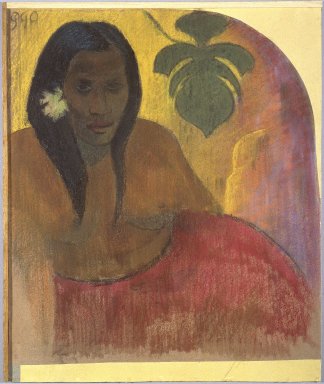
She looked as if she belonged in a Paul Gaugin painting.

Long thick black hair, brown skin and curves where a woman should have curves. She moved with the grace of a lioness.  She smelled of the beach and she tasted like the tropics. She was as soft as an evening breeze and was as sweet as honey from lavender fields. She was all that I had ever dreamed of yet could never begin to hope for myself.

I had not intended to go on a cruise. In fact, I never thought I would go on any cruise but timing and circumstance conspired against me. Here,  I was on a dock in Santos Brazil 6,000 miles away from home, by myself, wilting in the tropical heat, waiting to go on board a luxury liner that was to be my home for the next 18 days. 4 weeks previous my most ambitious travel thoughts had been whether or not to take the Lincoln Tunnel or GW Bridge. How the hell had I gotten here?

This journey of 6000 miles began with the step when my company laid me off.. There was no animosity involved. Their core business, a division I had not worked for, had suffered a major loss, a customer who represented 90% of their revenue had pulled their business and the company was forced to regroup. This included laying off most of their staff in the United States including me. They had treated me fairly and I had no gripes, but it allowed me the time to take a vacation that spanned beyond the standard 7 days or even the nearly unheard fortnight…

I had seen the trouble coming at the company. Their offerings to customers did not add up at all. They were coming to market late with products and were making promises that they could not keep. As a consequence, I had been looking for the next step in my career when the ax fell. Within days of me being laid off I had a new job offer and could go away without the fear and worry of finding employment hanging over my head.

I needed a holiday. I was also hopelessly tired and in desperate need of time from my normal life. For the previous 2 years I had been working a full time job while also taking care of both of my parents. My father was ill. A combination of a bad fall, prostate issues, and extended stays in hospital had confined my father to a wheel chair and dialysis three times a week. I commuted back and forth to New Jersey 3 or 4 times a week to make sure that he was well taken care of and to spell my mother from her duties as primary care giver.

My mother is the type of woman who needs to create order from chaos. And, if there is order to create better order.  Part of my job was to keep her from going to crazy from her inability to make this situation any neater or any better. She is also a cancer survivor whose bout with lung cancer leaves her wheezing at the smallest exertion. She needed my help and I was happy to give it but the commuting, the caregiving, the stress of aging parents all contributed to a fatigue that could only be cured by getting  away from it all for a little while.

I needed to go far enough away so I could not be drawn back into the day the day of my parents so I could focus, for a time,  on me. To provide the space needed, to rediscover who I was and hopefully lay a path for the future.

The final puzzle piece of how I found myself here was a tragedy. The Italian cruise ship Costa Concordia ran into a reef off the Italian coast and sank. It had been the lead story on every modern conveyance of information. Why not? From a news perspective in our day and age it had everything. There were the great visuals of a ship lying on its side a gigantic rock stuck in its hull. The salaciousness of a Captain who seemed to like entertain women on the bridge while he should have been minding the helm and was such a coward he abandoned the ship before most of passengers. There was the human interest of people dying and the breathless stories of those who had survived.

I am almost ashamed of the fact that I realized almost instantly that this was going to drastically reduce their ability to sell berths on their ships and that I could probably get a cruise for a very affordable price. But not so ashamed that I didn’t visit their site.

In fact when I went to their site they were indeed having, pardon the phrase, a fire sale. Reviewing their offerings one cruise immediately stood out to me. An 18 day cruise that would take me up the coast of Brazil stopping in Rio Di Janiero, Ilheus, Salvador di Bahia, Maceio, and then Recife. And while I hardly knew where any of these places were or why they were important, they sounded exotic and ripe with adventure. But the trip got better.  After leaving Brazil the ship would then cross the Atlantic stopping in Fuchal, Maderia, Casablanca and then ending up in Savona, Italy.  The fare was less than $100 a day including all food and beverages.  That was almost as much as I spent every day at home in NYC. I had never been to South America. I had never been at sea on a ship. I had never crossed the Atlantic or even the equator. I had never been to Africa. It checked all the boxes. I booked the trip.

The next several weeks were even more hectic than my normal life. The winding down of the job took time. The company I worked for was an Israeli company and getting anything legal out of them was a challenge and they work on a scorched earth basis.  Negotiating with them and “leaving the camp site better than I found it” was both stressful and time consuming. On top of which I was in negotiations with my new company which required a great deal of attention as well. On top of that I had been offered a number of consulting contracts and  was working on developing a business plan and meeting people on that as well. Ironically, considering I just lost my job, I had never been busier from a business perspective.

Then there was prepping for an extended stay away from home. I was single but I had a dog.  Trying to figure out where he was to go and how he was to be cared for took some time. Eventually I asked a woman whom I worked with and who was “in between” apartments to come and stay in the apartment and babysit it and the dog.. Of course that made things easier but I still had to make sure Yankee had enough food for a month and write out instructions for Ramona on the proper care and feeding of my best friend.

Then there were my parents. Both father and my mother now relied on my help. While strictly speaking I didn’t need to get their permission to go on their trip. I did want their blessing. My father was easy. Confined as he was to a wheelchair I knew that my trip would be like an adventure for him. He would live vicariously through the emails and the photographs I sent. His only request of me is that I spend a few days in Sao Paolo with the grandchildren of his mother’s sister. I was reluctant because I did not know them but I also knew how much this would mean to him. As a consequence, despite my own personal reservations, I agreed.

My mother was another story. I knew that it was she that would be the one who noticed my absence the most. Over the course of the past two years I had become her sounding board. I was the one she went to when she was frustrated. I was the one she went to when she was angry with my father or she was frustrated with his care.  She placed her burdens on my shoulders and expected me to carry that load. And while I had accepted this as my responsibility, I also knew that my knees were beginning to buckle with the weight of those burden. I was shorter with her than I had been in the past. I was less willing to listen to her problems. I knew that I had to get away or I would not be able to accept any new burdens she gave me. So I pretended to ignore the pained look on her face as I told her of my plans and instead concentrated on her words which were of acceptance.

The only issue that really got my stymied is to what to bring on this trip. I was traveling to four continents, going from a tropical climate to early spring, I was going on a ship that had occasions from ultra casual flip flops and shorts to black tie.  How do you prepare for a cruise when you have never been on one? I knew I needed new clothes and a variety of odds and ends to make sure I had what I needed even if I was in the middle of the Atlantic but I hated to shop. I don’t like trying on clothes. But they were necessary evils now so I sucked up and eventually got all that I needed.

When I boarded the American Airlines flight to Sao Paulo on March 10th 2012  I was wound as tight as I have ever been and frayed like a rope that had been used too often.

The trip had not started smoothly

The cab ride from Sao Paolo to Santos where the ship was departing from while beautiful proved a little too adventuresome for me. Not only do Brazilian drivers make Boston drivers look good but they also insisted on going the speed of a small jet. I had gritted my teeth and clenched my butt cheeks on the entire ride down to the port. Then the cab driver got lost. Mind you he had a GPS but he insisted on not using it. Instead he kept on asking locals where to go. And of course I understood nothing of what they said and we kept on going in circles. Eventually I was forced to break out the GPS function on my iPhone and guide the driver to the docks myself.

My challenges only began there. It turns out getting on a cruise ship is a rather lengthy undertaking. First, you have to drop off your heavy luggage in one place. Then you have to drag yourself and other cases, briefcase smart suitcase, through tropical heat to the customs shed, where 3 boats are trying to load passengers. You then need to figure out where your line is and  wait in a building that only dreamt of air conditioning with thousands of other people attempting to board the ship. In my case the wait was well over an hour and by the time I made it to my stateroom on Deck 8 I was a sack of sweat and a bigger emotional wreck than when I had left New York.

As I unpacked and prepared the cabin for my extended stay my mantra was that it had to get better. That the cruise was going to be great. I had not made a mistake coming on this trip by myself. That I was going to have a great adventure. That I would be able to write to my heart’s content and that I would meet new people and the world would be generally kind to me.

As we left Santos a thunderstorm broke. Red forked lightening tore at the sky. Deep throated booms rolled across the sea.  Watching the storm from my balcony I wondered if my wishful thinking had been just that or whether this was the true portent of things to come.

Posted in Uncategorized | Leave a comment

The Crown: Chapter Next

IMG_1470

When my father died 8 years ago today, he left behind a legacy that could have been written by Horatio Alger.

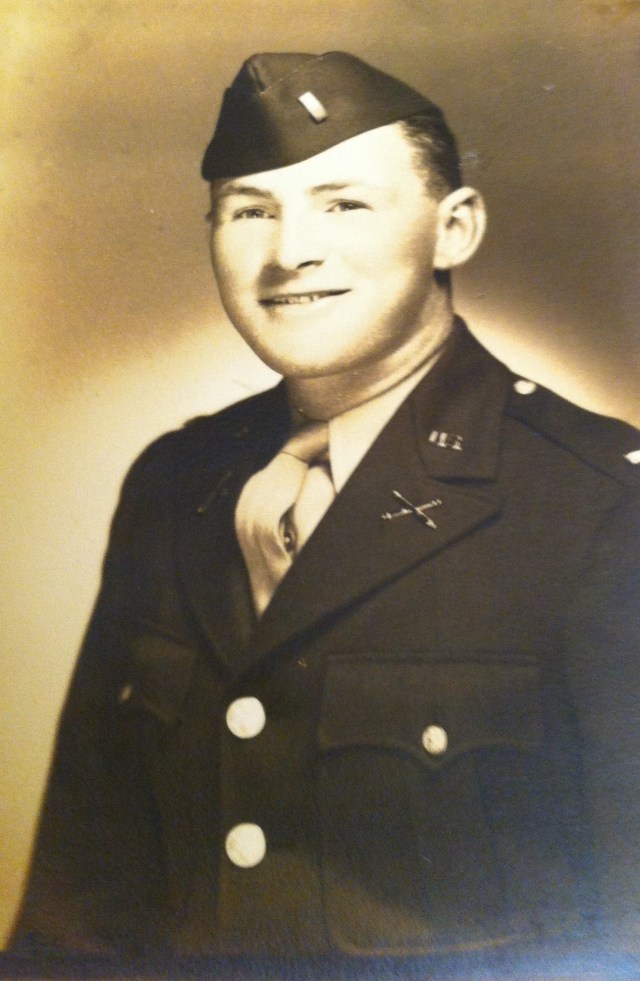
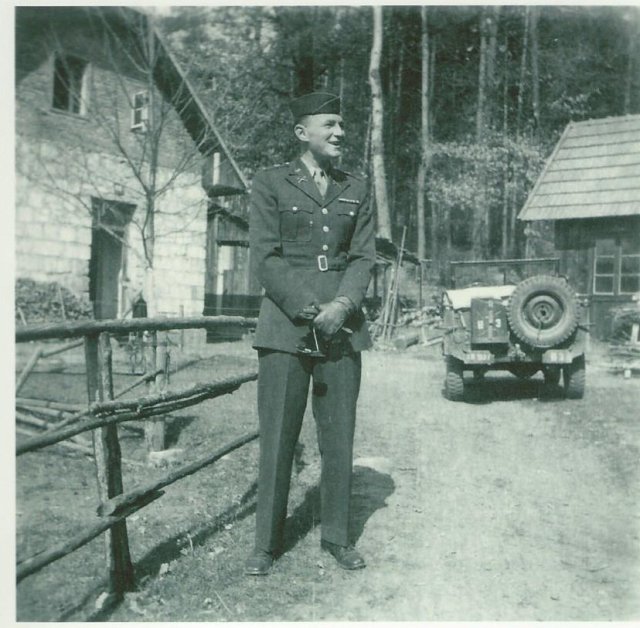
He had survived a brutal boyhood of poverty and prejudice in Vienna. Along with his family, he managed to escape war torn Europe 3 months after hostilities were declared. Upon arriving in this country at age 14 he was placed in the third grade because of his poor English skills. Just three and half years later in June of 1943, after digesting a dictionary and endless movie matinees, his English had so improved that he matriculated at Syracuse University. By September of 1944, when he was inducted into the US Army, he had completed his sophomore year in college. He became the youngest 2nd Lieutenant in his division and along with his comrades in the 88th Infantry Division, 913th Field Artillery fought his way up the boot of Italy until wars end.  Remarkably, after 2.5 years of active duty and rising to the rank of 1st Lieutenant, he managed to graduate on time with his class. Within a few years he managed to get a PhD in experimental psychology and meet and marry my mother. He built a storied career in his field first at Bell Telephone Laboratories running Learning and Instructional Research Department and then at Columbia University Teachers College where he was the Cleveland E. Dodge professor of Education and Technology.

Along the way, he managed to raise three children, David, Marissa and myself, all of whom adored and respected him and with whom he managed to forge unique relationships.

His mythos was so strong and our love for him so deep that his story of survival and success became our own. It was a mantle we gladly wore. One that always made us stand up a little taller and puff our chests out a little more. I, a lover of stories, loved his personal saga so much, that I badgered him into taking trips to Israel, Alaska, and Vienna with me so I could get to know him and his story better. When he got sick and was hospitalized, I would spend hours with him talking about his life and unlocking stories that I never heard. By the time, he decided that he had enough, and chose to leave this world I felt as if I knew the man as well as any son can know a father. I felt like he had told me all the stories from his life worth telling and that if I chose to write a biography of him, I could.

Then, I found out, he left a chapter out of his story. Not only from me, but from everyone in his life including his wife. His army records did not match the stories he had shared with us. He was forced to confess that the reason for the discrepancy had been because of his involvement with the recovery of the Holy Crown of St. Stephen. Maddingly, he would tell us almost nothing else about his involvement except to say he had heard something about the Crown during his final days in Vienna, shared it with his draft board so he could finish his sophomore year of college. Eventually he had been coopted into going to Europe, via the Southern Route, to help with the Crown.

And then he died leaving a gap in our lives that could never be fully filled and a story unfinished.

In part, to fill the hole in my life that Pops’s absence created, and in part to finish a story that had been started and not finished I began researching the Crown’s recovery and Dad’s involvement. At the time I began this quest, I thought it would be easy. After all, who really cares about an old European crown enough to keep information classified and Army records should be fairly easy to access. Needless to say, I was wrong on both counts.

The Crown turned out to be the single most important crown in Europe. An item that was highly coveted and sought after by the US, German and Russian forces in the closing hours of the 2nd World War. The Hungarians were hell bent on secreting it away to maintain possession of this, religious and symbol of their country. The Germans wanted as a negotiating chip. The Americans and Russians sought it because of its symbolism and how it could be used to shape Europe in the post war years.  All of the parties wanted to keep secret their involvement to avoid embarrassment, missteps, and to protect the reputations of those involved.

The Army was not an easy resource to crack. Not because of government bureaucracy, although that didn’t help. But because of design choice made by the Army in the late ‘60s. Back then the Army had a problem. Nearly 12 million men had served during the 2nd World War. Each one of them had an army record that was inches thick. These files were located all over the US and needed to be consolidated. To that end, the Army commissioned the building of a new National Personnel Records Center in St. Louis.  In due course, all files were transferred to the state-of-the-art building. Then, shortly after midnight, on July 12, 1973 the building caught fire. It burned for 22 hours and took firefighters two days to enter the building. 85% of all the records in the building were damaged or destroyed. All of which could have been prevented if a fire suppression system had been included in the design of the building but at the time it was considered too risky as water is a destroyer of paper.

Even though there has been a 47 year effort to recover these files, Pop’s “burn file” is irretrievable which meant to find out his record we have had to trace his path through “morning reports” and other available document  from induction in Hartford Connecticut to his discharge at Fort Dix in January of 1947. This required the efforts of two certified NARA researchers, countless letters to archives and involved persons, FOIA requests to CIA, Department of State, and Carter and Eisenhauer Archives and  the purchase and review of a library wing of books and other documents.  The end result of eight years of research has been less than satisfying.

We have managed to track my father through most of his journey. However, maddeningly, there is a six week gap where we have not managed to account for his whereabouts. This directly coincides with the period of time where the US was actively looking for the crown.  While I believe I know the role Dad played in this minor melodrama at the end of WW2 and beginning of the cold war, I can prove none of it.

Without giving away any of the story what I can say, is that I believe in early May of 1945 Dad was transported via the Southern Route https://military.wikia.org/wiki/South_Atlantic_air_ferry_route_in_World_War_II to Central Europe. Once in Europe he made his way to Vienna, where along with Army CIC and OSS agents they began looking for specific people who could help unlock the Crown mystery.

My research focus is here. Trying to a find a record of my father’s trip through existing American and Russian records which is complicated further by Coivd’s closing of most archive facilities.

That being said, I have begun writing the second half of The Crown with what information I do have available and will publish when it is polished enough for readers.

Also, if you have any suggestions on research that I have not done on the crown and my father’s involvement I would love to hear your suggestions.

.

Posted in Uncategorized | Leave a comment

The Crown: Chapter 11

danubia

I realize that this humor is born from nervousness. I have spent an inordinate amount of time in the past few years trying to understand The Crown, its journey, and my father’s role in its recovery. When I first decided to take on this task, I thought this would be a relatively simple easy. A few forays in Google. Perhaps a letter or two and if worse came to worse a visit to an actual library. Little did I know that I was encountering a Churchillian proverb: “a riddle, wrapped in a mystery, inside an enigma. That the secrets of the Crown’s journey, its recovery and eventual return would be denser than a neutron star and more convoluted than a paranoids fear.

While I believed my father had told me the truth about the Crown, that he was involved in its recovery in some way, I knew I could not take what he said at face value. It needed to be proved. I was also convinced that he was mistaken about the “mission” to recover the Crown was still classified. I found it hard to believe then that an incident as minor as the recovery of a 2nd tier monarchy’s royal retinue would still be classified 67 years after the act. It was an arrogant and ignorant thought. What I did not know then is St. Stephen’s Crown is the most important crown jewel in the world but one of the Catholic church’s most important relics.

It is with the obliviousness of the ignorant that I wrote the National Archives, Department of State, The Army and even the CIA requesting information on the Crown and its recovery. The response to my enquiries were uniform if not enlightening. Each organization had told me that information regarding the Crown was still classified and what information that was public was available could be found on Wikipedia.

I was gob smacked. 67 years had elapsed. Hungary had undergone massive changes including eliminating the monarchy, rejecting communism, become part of the European Union and joined NATO. Three generations had been born since the Crown’s recovery. Why was information regarding the recovery of the crown still classified. Could it be as my father mentioned that the families of those who participated needed to be protected. The importance of the crown cut such a wide swatch in the Hungarian zeitgeist that knowledge of how the Crown came to be in US hands would ruin peoples lives even seven decades later?  It was an idea that was hard for my fully Americanized brain to wrap its head around.

I had come to Budapest not because I thought that I could find the answers to my most important questions.  What did my father have to do with the recovery of the Crown that was so important that he could not discuss it, even on his death bed? What was so important that he lied to my mother and his children for as long as we had known him about his service in the Army? Why had thought the Crown so important in his life that his last gift to the family was a medallion that bore its image?

I had come to Budapest to see the Crown. I wanted to get a sense of what the Crown meant to the Hungarian people beyond words on a page. To see if it could inspire me in some way to find a further truth.  Perhaps seeing it in person I might be able to see what my father had seen as a 19 year old boy. An event he believed had charged his life with luck. And, as a consequence, changed my life as well.

And now I was going to see it. And I was nervous and making jokes to cover it up.

The first thing I noticed as I entered the room were the four hussars standing guard over the Crown. They looked as if they had walked directly out of the 19th century or out of the box of toy soldiers my brother and I were so fond of as children.  Grey trifoil hats with silver piping, a grey tunic with silver brocade across the chest from left to right and top to bottom. They are full dress attention with their highly polished sabers at salute against their right shoulders. We are told that if we approach to closely to glass enclosure in the center of the room that holds the Crown and the regalia of orb, scepter and sword that the guards will not hesitate to lop off whatever body part that is most convenient. As a consequence, I keep my distance despite an overwhelming desire to get as close as possible.

Our guide goes through a prepared and highly sanitized statement about the Crown. If I had any hope that she would provide new insight to my understanding of the Crown they aredashed. Her presentation was short on facts and long on the hyperbole of what the Crown meant to Hungary and the only comment about the Crown and 2nd World War was that “The crown was returned to Hungary in 1978 by Jimmy Carter after being held is safe keeping by the US since the 2nd World War.

When the guide asks for questions I raise my hand and ask “How did the Crown get into US hands at the end of the War.” I think it a rather simple question and I have asked only because I want to hear the official answer and I am rather surprised that her response is akin to a deer in the headlights. After a moment’s pause she replies “I don’t have any of the details” and then adds much to my surprise “Why do you ask?”

I am embarrassed. I don’t really want to say why I am asking but I reply “Well, my father was a part of the recovery of the Holy Crown and was just wondering if you could provide any additional information because I never heard the full story.”

She responded by saying “Well, it is likely you know more than me because I am new. Perhaps you can share with us what you know…
I think about what to say. Over the course of the past few years I have gained a decent understanding of the recovery despite some of the information still being classified.

In November of 1945 the siege of Budapest by the Soviets had begun and it had become clear to the Wardens of the Crown that the crown and its retinue consisting of the orb, scepter, crown, sword, coronation robe, and Holy Hand (the hermetically sealed and preserved hand of the first Hungarian king and saint) needed to be moved to avoid capture by the Red Army. Under the protection of Crown Guard and command of a Col. Pajtas  The Crown, orb, scepter, and sword were placed in a special iron box with three locks and along with the rest of the retinue moved to the town of Veszeprem about 120 km to the SW of Budapest. There, the precious goods were placed in a Bank Vault for safe keeping. In early December, a decision was made to move further west to the town of Korzeg where the guard and their cargo sought and were granted refuge in a monastery. On the day after Christmas a further move was ordered to an air raid shelter in the town Velem on the Austrian frontier.

By the middle of February Budapest had fallen to the Red Army and by March they had begun their march west towards Vienna. It was no longer tenable to keep the crown in Hungary and March 17th it was moved across the border to Austria and by the 26th they arrive at the small town of Mattsee on the Austria/Germany border. There too had gathered the Hungarian Cabinet,  in exile, who on April 25th gathered for the last cabinet meeting. How to keep the Crown safe was certainly discussed at that meeting with the result being the Col Pajtas and two of his most trusted men buried the Crown, scepter and orb in an old barrel near a rock wall.

On May 2nd, the colonel and his guard moved the now mostly empty chest to Zeldorf 100 km or so north east of Mattsee. One reason was likely to gain distance between them and their secret cache but the other was to turn over the Holy Hand of St. Stephen to Father Superior of the mission there. The following day, an American Army unit entered the village and on May 6, Col Pajtas communicated to those troops and asked for a patrol to call. Late that afternoon a Lt. Greenwald, an officer who spoke fluent Hungarian, called on him and took the Colonel and his troops into custody. When Greenwald was informed by Pajtas that Holy Crown was in his custody, Greenwald informed his commander and the entire entourage was led under strong armed guard to the 7th Army Interrogation Center in Augsburg Germany 300 kilometers away. The officer in charge, Major Paul Kubala, provided a receipt for the chest to Pajtas and then telegrammed General Eisenhower and President Truman that the Crown had been secured.

However, the surrender of the Crown and its retinue to the American’s was more likely a surrender to the inevitable. No doubt the Hungarians hoped to buy time with the hope that some way would be found to get the Crown into the hands of those who were sworn to protect it. This became obvious when Major Kubala went to open the trunk and seeing the case that held the crown had three locks asked Colonel Pajtas for the keys. Pajtas told them he did not have the keys and he did not know where those keys were. As the Americans did not want to break the trunk an all-out investigation into the whereabouts of the key was launched. They were eventually recovered in late July. However during the 10 weeks between finding the trunk and the recovery of the keys Pajtas did not tell his captors that the Crown was not in their possession but buried near a stone wall in Matsee Austria. He did, communicate secretly with the Regent of Hungary, Horothy to let him know what he had done with the Crown and was relieved to find out that it met with his approval.

While the 7th Army was looking for the keys to the royal trunk  a Lt. James W. Shea of the 242 Infantry Regiment, 42 Division, a part of Army counterintelligence, was conducting a search in Salzburg is told be two cooks to Hungarian Officials that a large stash of valuables was being held by a Roman Catholic priest by the name of Stasser. A search of his church turned up nothing but in his private residence they discovered that his couch was actually an elaborately constructed hiding place with separate areas for the Holy Dexter and the coronation gown.

On July 24, Major Kubala called senior officer, war correspondents, and photographers to the 7th Army Interrogation to witness the opening of the chest.  Much to his embarrassment, consternation, and no doubt anger, the case only contained St. Stephens sword. Lt. Greenwald was sent to retrieve Pajtas. Pajtas later claimed that the interrogation that followed was rough and it was only after extreme threats that he told the Americans where the Crown was buried.

This presented yet another problem for Major Kubala. The Crown’s burial site was located within an area that was controlled by the American 3rd Army. Kubala was a part of the 7th Army and according to Army regulations would have to seek permission to enter 3rd Army territory. Lt Worth B. Andrews solved this problem by volunteering to recover the Crown. Kubala refused to authorize such an expedition, no doubt with a wink, because later that day, under the cover of darkness Andrews, accompanied by Pajtas, led a team to the rock wall in Matsee and recovered the Crown, Orb and Septer.

All of this flashes through my mind as I consider the guide’s question but ultimately decide that what I know is probably too much for this group and for some reason I am a little embarrassed about how much that I know. So I respond to the guides question by saying “It’s a long story and if anyone really wants more detail that can come and ask me at the end of the tour.”

No one sought me out at the end of our tour for which I was grateful. For reasons that were somewhat confusing to me I felt that the information I had gathered on the crown were mine. That sharing them with people I didn’t know were seemed too intimate. I tried to explain this to my wife a short time later as we recovered from the stress of the tour by having a snack at patisserie conveniently close to the Parliament. We were both eating palatschinken, the crepe dish my father so love, mine stuffed with apricot jama and hers with chocolate and nuts. She said, in her delightful Brazilian lilt “My darling, why did you feel it was too personal?”

I didn’t answer immediately because at that moment my mouth was full of whipped cream and apricot jam. After I swallowed I said “I don’t know. I think part of the reason is that this is about something that my father might have been involved with. We don’t know he was involved. I mean after 2 years of digging we have not been able to figure out if he was involved or not. All we have is his nebulous statements about his involvement. And if I shared this with people they would almost certainly ask what his involvement was and all I can say is I don’t know…”

“And, that would embarrass you? My darling you have whipped cream on your chin.”

I wipe away the offending dairy product and reply “Embarrass is probably the wrong word. Maybe I feel it would lead to having to tell the story of how I found out about my Dad and the Crown. Deathbed confession and all. And just seems a little bit too intimate. And maybe a little crazy. I have been searching for answers for two years to no effect. At times, I feel like Don Quixote pitching at windmills.”

“You will figure it out.”

“I wish I had your optimism. ”

She smiles and squeezes my hand and at least in that instant I feel that I will be able to crack the code on my father’s role, if any, in the recovery of the Crown. I see that she has finished her espresso and her palatschinken and say “Are you ready for phase two?”

“Yes, my love.”

We set off on foot through the narrow streets that line that part of Budapest. The streets are lined with buildings that look as if they were built in the latter part of the 19th century but it is hard to tell because much of this city was destroyed by allied bombing. Regardless, the low slung architecture, the narrow streets, the quaint shops  provides a feeling of prolonged human habituation that so many European capitals possess. This feeling of profound age somehow makes an understanding of how a people venerate a crown easier to understand. Every day they walk through a city that is a living history and the crown is the bow that ties that package together. It is, in the truest sense, the jewel of Hungarian History.

As I am about to share this epiphany with my wife we come across a small park. This is by design so instead of telling me my wife about latest brainstorm about the crown I explain about why I wanted to visit this park. I tell her that when I was preparing for this trip I had read about how a controversy had erupted when the current government had erected, under the cover of darkness, “The German Occupation Memorial” that was at the far end of this park.  The hullabaloo over its creation had come from many quarters not the least of which was the Jewish community. They felt that the whole concept of a memorial to German occupation was a farce. The government of Hungry during the war, led by the Regent Miklos Horothy, had played footsies with the Nazi’s until the Nazi’s occupied the country in March of 1944. Then in just 56 days, the Nazi’s deported over 400,000 Jews to Auschwitz-Birkenau. All in all over 550,00 Hungarian Jews were murdered (only the Ukraine and Poland had more victims.) This happened with the aid and help of the Hungarian government and people. They chose to ally with the Nazi’s and in the end capitulated control of their government to them. To claim now that they were victims now is the ultimate false narrative.

The controversy about the memorial only grew worse when it was discovered that the monument’s Hebrew inscription had mistranslated the word “victim” for “sacrificial animal.”

I explain to Elaine that the reason I wanted to come this way only indirectly had to with the monument. I had no real desire to spend any time in front of an edifice designed to white wash history. What I wanted to see was across the street. After the monument had been erected, a spontaneous outpouring of outrage had ensued and the Jewish community had created a “counter-memorial” across the street. I tell Elaine that this is what I want to see.

It is more gesture than monument. What appears to be barbed wire has been strung over several steel stanchions that were originally placed there to block traffic from entering the walkway. The wire has clipped to it a mélange of images of victims of the holocaust, testimony to the events that lead to the death of over 500,000 Hungarian Jews. One piece of paper, wrapped in plastic, says “ Say no the falsification of history, the national memory poisoning, the state-level Hungarian Holocaust Denial.” Under the wire are stones, some written upon, others unadorned, the traditional offering of Jews when they visit a grave,  Intermingled with the stones are pots of flowers, and bouquets along with more written testimonies and photographs.

Despite, and perhaps because of, the simplicity of this memorial I am very moved. I am inspired by those who are protesting this “shanda” across the street whose only goal is to  contort history into something that is more comfortable for them. It pleases me to see that the citizens of Budapest have decided to honor the “peoples” monument and treat it with respect as it gives me hope that the vow “never forget” still resonates here.

But I am also ashamed of myself. I have brought no stone to place among the others lying beneath the barbed wire. I have no picture or testimony to place on the barbed wire. And while I know I have in a computer file somewhere the names of my father’s uncles and aunts who lived in Hungary I cannot recall them at this moment…I have vowed never to forget yet I can’t remember their names. And beyond knowing the first couple of words to the mourners Kaddish, I don’t even know how to say a decent prayer for them.

My wife has the uncanny ability to sense what I am thinking. It goes far beyond sensing what I feel. Her mind reading often delves so deep that she says exactly what my inner voice is whispering. She’s says “Those of son of bitch bastards.” I smile not only because she is saying what I feel but because I know how she delights in swearing in English. I kiss her and holding hands we begin to walk out of the park when I see in one of the flower beds a small rock barely bigger than a pebble laying in one of the barren flower beds. I ask my wife to hold on and pick up the stone and walk to memorial and add to collection of rocks at the base of memorial.

I feel better for my tribute and my memorial and we resume our walk to St. Stephens Basilica the home of St. Stephen’s holy right hand.

When Stephen died in 1038 he was entombed in the Basilica of Székesfehérvár. His death was followed by a long period of civil unrest, pagan uprisings and foreign invasions and no consideration was given to his canonization until the reign of King Ladislaus. As a part of that process his tomb was opened and it was discovered that the body of the king had completed disintegrated with the exception of his right hand which was miraculously perfectly preserved. Along with the miracle of preservation concurrent with the Kings disinterment was a spate of healing miracles that were explained by the discovery of the soon to be Saint’s right hand. Eventually, the hand was placed in a hermetically sealed glass container to preserve it for the eons.

Since that time, the hand was to the religious, what the crown was to the social and civil. It was emblematic of the Hungarian Catholic church and the Holy Dexter, as it was now known, was integral to the spiritual psyche of the Hungarian people. Which is no doubt why, as the Crown and the Hungarian government fled west to avoid capture by the advancing Red Army, St. Stephen’s Hand was included in the entourage. However, the hand was not buried with the Crown. Instead it was secreted away in the home of a Roman Catholic priest in Salzburg by the name of Strasser. There it was uncovered, in a cleverly designed couch, along with St. Stephen’s coronation robe by Lt. James Shea and his unit.

My interest in seeing the hand was that while my father had told me that the discrepancy between his service record and what his oral history of his time in the Army had to do with the Crown of St. Stephens, I couldn’t rule out that he was also involved in the uncovering of the hand. And to be completely honest I had never seen anything this gruesome…the perfectly preserved hand of a man who lived a millennium ago… and was morbidly curious about it.

I let my wife lead us into the church as she is the Roman Catholic in the family and as a Jew I always feel as if I will be immediately identified and denied entry or something worse. I know that this is completely irrational and probably dates to some childhood experiences that I am not willing to investigate but it is what it is. When I am not seized at the door and pilloried for murdering the Christ child, Elaine and I walk slowly through the church. It is impressive not only in its neo classical design and ornate fittings….the tiled floors, gilded marble pilasters but it is also spotlessly clean with marble and bright work literally gleaming. Part of that gleam comes from the lighting of the church. Unlike many of the cathedrals that I have braved throughout Europe it has wonderful naturally light owing in no small part to the large windows set in the dome. Another impressive feature are the beautiful stained glass windows of St. Margit and Elizabeth seem to stare at you no matter where you stand. I would have been paranoid about it except I overhear one of the guides tell their tour that this is a distinguishing feature of the art.

We make our way to the reliquary in the back of the church where we have been told that we can find the “incorruptible” hand of St. Stephen. In isn’t what I expected. First, the hermetically sealed box is kept in what looks to be a large armoire without doors that would have been right at home in an Ikea store. I had imagined the “hermetically sealed box” for the hand  being a simple affair with crystal all around for easy viewing. Instead, the container built for the hand resembles a gothic church made of silver and gold with large crystal view ports where stained glass would be on the sides and in the back. This makes it very hard to see the hand. In fact, it takes me more than a minute before I can make out an outline of the dexter out and frankly then it is a little disturbing as the hand has a greenish hue.

I think about making a Hulk joke but for once make the decision not to make the joke. I look at my wife and nod my head towards the door. She nods back and we are heading towards an exit when I see a plaque of a wall. It read “The Holy Right Hand/ History of the Relic, Hand of Saint Stephen Founder Of State/ King Stephen died on 15th August, 1038. On 15th August 1083 he was canonized in Szekesfehervar. His right found intact has been highly esteemed by the nation ever since. It has had an adventurous fate: It had been kept in Bihar (Transylvania), Ragusa (Dalmatia, now Dubrovnik), then Vienna, from where it was brought to Buda in 1771. In 1944 it was carried away to the west, it was returned to Hungary on the 19th of August 1945.”

I understand that a plaque in a church cannot tell the whole story of the “The Holy Right Hand.” It would be too long and people would not read it. But the last two lines I find profoundly lacking. They even piss me off a little.  “It was carried away to the West” doesn’t mention that it had to flee the onslaught of the Red Army due in no small part to genocide committed by Hungarians in the name of the Hand and of the Crown. Nor does it mention that the US Army had returned the relic to Hungary as an act of goodwill. This white washing of history, the cleansing of the lessons we should have learned from the WW2 I find horrifying and maddening. But I know that something else is bothering me about the sign because my reaction to it is far greater than what it deserves.

That night, I sit in the darkened hotel room. My wife is sleeping gently under a fluffy down comforter but I have remained awake to answer some emails with the lights off so as not to disturb her. Through the window, the Buda Castle, sitting on the hill above the Danube is illuminated and majestic. Below us the Danube, an inky serpent flows to the south as freighter moves north past the Chain Bridge. It is hard to write business emails with such a view and eventually I just give up and enjoy the view I am so lucky to see.

I have enjoyed our time in Budapest. It is a magical city in so many ways. The people are friendly. Every meal we have had has been good and the pastries almost as good as Vienna. And, as someone who loves history, it is hard not to love a city that has existed at the cross roads of the world for more than millennia.

I have seen the Crown. An object that I have been thinking about almost daily for the last 2.5 year. And while I had an intellectual understanding of the importance of the Crown, seeing it in person has provided me with something that no book can give…those cues and clues that you can only get from being there that allow you to understand its meaning to the people of Hungary. It is Hungary.

Which is why I was surprised that so little was mentioned during our tour of the Parliament. Why would they say so little about how it was captured and held by the Americans for so long. And then it hits me. The Crowns flight from Budapest and Hungary is the shameful family secret of Hungary.  The one no one wants to discuss. They want to cover it up and sugar coat it so that we just move on without thinking too much. It reminds me of something that Pops had said to me when I was pressing him on why he thought that what he had done with the Crown was still classified. He told me that it was to protect people and their families. That if information was released that implicated them it could destroy them. Being here. Understanding how this is a shameful family secret has helped me understand that.

It also raises the question about who told who what. So many secrets that I don’t know and don’t know if I will ever know. I am frustrated that in this day of instant information and data I can’t find out what I want to know about the Crown.

All these thoughts of brushing painful and damaging facts under the rug makes me realize what had made me so angry at the Plaque at the Basilica of St. Stephen. It was the same thing that had angered Budapestians at the construction of “The Memorial To German Occupation.” What was it that the sign said, “Say, no the falsification of history.” The plaque was falsifying history by omitting facts. The tour guide was falsifying history by barely acknowledging American possession of the Crown for 31 years and then by saying that it was given back after it was held for “safe keeping.” The Crown was not held for safekeeping. It was held because the American’s thought it would control the world after the war and it was held so long because the USA and Hungarian expats had no desire for it to be in the hands of Communists.

I have no desire to uncover shameful family secrets. I have no desire to put anyone’s family in harm’s way.  I am not on a noble mission to uncover the secrets of the Crown. This is personal. My father had created a myth about himself. A poor immigrant boy who went from eating butter by the bar to an officer in a conquering army. But as true as that story was it also omitted facts, altered dates, and changed the narrative.  I felt cheated by his falsehoods. It was important to me, that we, his family know the truth and create the myth about the man from that.

My father used to get my brother and I to fall asleep by telling us stories about Hugi and Thad. Two friends who upon discovering an old rowboat and undertake creating a submarine to drift down the Danube and refuge from the war. 5 decades later, a new story of intrigue on the Danube had emerged. The only difference was that instead of Pops telling me the story I had to write it myself.

Where to begin?

Posted in Uncategorized | Leave a comment

Chapter 10: The Crown

buda

It is March of 2015 and my wife and I are in Budapest.

It is a cloudy, windy day and there is a distinct chill in the air. I am used to this weather as I have spent my whole life in the northeastern part of the United States including a four-year sentence in Syracuse, New York where they measure snow fall in feet. However, my wife is Brazilian, which in addition to providing her with inner and outer beauty and a sensational accent has also given her no tolerance for the cold. So we hurry down Szenchyi Street which borders the Danube and turn right just after the Four Seasons Hotel to get away from the steady breeze that seems to be funneling its way down the Danube that morning.

Had it been a milder day, I would have walked along the Danube to our destination: the Hungarian Parliament. Not even Johann Strauss was more enraptured of the river than I am at that point. This is partially due to the fact that I have been hearing about this river all of my life from my father, both in stories and in memories, and have never seen it except from an airplane or from a great distance. And, considering that I had now been in Vienna four times (soon to be 5) it seemed long overdue.

Another reason for my enchantment was my introduction to the river two days previously. I had been on a business trip to Berlin and had decided that since I was in the general neighborhood I would go to Budapest to see what I could see about the Crown of St. Stephens, which since my father’s death in July of 2012 and the mystery surrounding his involvement in its recovery, had been a constant companion in thought. My wife agreed to join me on this adventure, as a kindness to me. At this time of year she would have preferred sitting on a warm beach somewhere. As a reward for her tolerance of my obsession I had tried to make the trip as romantic as humanely possible.

The first part of my master plan of romanticizing this trip had been an overnight train ride from Berlin to Budapest.  In my head, clearly of little functional use except for as a hat rack, I had envisioned a modern-day version of the Orient Express. I thought the sleeper compartment I had booked would be roomy enough for our beds and have a seating area suitable for casual sloth, and that a porter would be at our beck and call to handle all of our personal needs.

Needless to say, we should have flown.

Our romantic trip had begun with a full scale anti-immigration protest with massive amounts of police in full riot gear, in the Berlin Train station which had scared the living crap out of both us. When the train did arrive and we were directed to our compartment it turned out to be the size of a small walk in closet with barely enough room between the bunks and the wall for an adult to walk through. The bathroom was more of a toilet with a sprayer similar to what we have on our sinks in the United States. The beds were thin pads over metal which helped you feel every bump in the track and help awaken us when the train was halted for several hours in the middle of the night. The porter’s only attention to us was to show us our cabin and bring us a cold muffin and undrinkable coffee for breakfast.

The delay caused by our unscheduled stop meant that our train would not be going on to its ultimate destination the Munich Hauptbanhhof but stopping at another station and we would have to cab it from there.  This was made more problematic as it had snowed overnight and we had to schlog our luggage through it to get the hack stand. We,  of course missed our Munich connection, and had to wait for a slower train in a cold terminal with a pay bathroom.


Thankfully the train ride to Budapest from Munich, even though quite slow, was pleasant and modern. It  allowed us to gaze out at beautiful vistas when we were not trying to make up from our lack of sleep the night before.

Needless to say I was not impressing my wife with my ability to plan a romantic getaway in Europe. We arrived in Budapest just as the sun was setting and the city alight in the gloaming.

This is where phase two of my “romantic plan” was to take place. I had realized, proving that the neurons in brain worked occasionally, that at the end of a long trip a 5 star hotel would be a balm to any bumps and bruises caused by our train journey. As a consequence, I had booked a room at the Intercontinental Hotel (specifying a river view)  which was directly adjacent to the Danube and according to the reviews I read,  had wonderful service.

The hotel did not disappoint me. It had a modern interior with a large central core with rooms surrounding it on each floor. The service was impeccable and after a painless check-in we were led to our room by the bellman who had taken the burden of our luggage away from us. The room was dark as we entered, the only light coming from the large wall to wall, ceiling to floor window at the far end of the room.  It was the view that allowed me to crawl out from the doghouse of our trip and wipe away all of the frustrations and annoyances of our train trip.

Directly in front of us, on the far side of the Danube, in the last light of the day, illuminated by flood lights, was the Buda Castle. Home to the Hungarian Royalty since the 13th century it was not only breathtakingly beautiful but I thought that its visage boded well for a visit that was predicated by a search for information about the Hungarian Crowd.

In the foreground, the Chain Bridge, its towers flood lit and its suspension cables strung with lights making them resemble a string of pearls than chain. I did not learn until later that the bridge is an UNESCO world heritage site.  Built in 1849 it was the first permanent bridge to span the Danube in Hungary. But that evening it didn’t matter as it seemed placed there only for our viewing pleasure.

And between the two, the Danube, black and serpentine, seemingly alive and sentient, flowed. On the river two freighters were passing each other. One heading north towards Vienna and beyond, the other following the current and heading south towards the Black Sea. Their wakes catching the light from the bridge and the Castle creating golden butterflies dancing across the surface.

It was an awesome view. It felt as if I was looking into the annals of history. Yet it was timeless… as if it was always going to be here. An oddly, despite that dichotomy, and being a stranger in a strange land,  I felt completely at home.

Our dodge down side streets to avoid the wind coming off the river was largely successful. While there was still a bite to the late winter wind at least it was not exacerbated by funneled gusts. That changed when we emerged from Akademia Street onto to the broad plaza where the Hungarian Parliament is located. With nothing to block the breeze you actually had to lean into it to make any progress at all while walking. Needless to say we made our way quickly across the square to the south side of the huge Gothic Revival parliament building where the visitor center was located. This is a shame because the building is worth looking at.


At the visitor center, we sign up for an English language tour of the Parliament. I usually have very little patience for this type of tour. I know that tours of this type provide you with nothing but cotton candy information.  Material that looks attractive but has no substance. Sound bites as opposed to full thoughts. But while additional information about the Crown and its recovery would be an added bonus the only reason I am here is to see the Crown I have been obsessing over for close to three years.

We buried my father on a sunny and hot July morning several days after his death. The cemetery, Woodlawn, was created during the gilded age, at a time when cemeteries were more than just repositories for the dead but parks where they living could spend time with their departed and is the final resting place for Herman Melville, Nellie Bly, Irving Berlin and Duke Ellington to name just the few. The plot had been purchased by mother’s mother and her sister shortly after the death of their parent. Located in a small knoll surrounded by trees, it defined the word pastoral. There, my father would be joining my grandparents, Fred and Madeline Zeman, my great aunt Marguerite Cohen and her husband Louis, Great Aunt Dorothy Zeman and the original occupants Siegfried and Marie Arnold and was as pleasant a place as any to say our final good bye to Dad.

We had not hired a rabbi to run a religious service for my father’s burial. While he may not have minded it, it would have been an anathema to mother. Instead I was the de facto master of ceremonies. It was strictly a family affair. No friends or colleagues had been notified. Surrounding the small grave in which we were to place my father’s cremated remains were my mother, my brother David and his two adult daughters Joanna and Laura, my sister Marissa and her husband Mark. I had written out some remarks and  printed copies of the mourners Kaddish for everyone. To be honest, I don’t remember much of what I said that morning. I know it was heartfelt because I recall crying  throughout my remarks, unable to finish a sentence without some type of blubbering

I behaved terribly on the limousine ride back to my parents’ home. My brother had lashed out at me regarding the Facebook post I had written the morning of Pop’s death. He was upset because my nieces had found out through social media about Dad’s passing as opposed from learning it from him as would have been appropriate. He was correct in his criticism except that he had left out when informed that Dad’s departure was imminent and that he should make his way to Summit for a final good bye, he had chosen not to alter his schedule and promise to arrive the following day.   He had said some terrible things to me and I had not left to imagination of what I thought of his invisibility during Dad’s illness and his death. He, as his nature, had tried to dictate the terms of what and how we should be doing things during the funeral and my grief and anger at him proved to be a bad combination and I spent a good part of the ride home exploding form that toxic mix.  It embarrassed me and after apologizing to my mother I told herI needed a few minutes alone and retreated to my father’s study.

His office was on the second floor of their split level home. It wasn’t his original office in this house. While the kids were still in the home it was a smaller place on the first floor. But when the kids had left the home my father had moved to a room that had originally been my mother’s study and my mother had moved to what had been my sisters bedroom. This office was bigger with lots of room for bookshelves and a Stressless recliner and far better suited for his office. But it had his desk, the same one that I used to search surreptitiously as a kid, and familiar books on the shelves, and pictures on the wall. Most importantly it still smelled of him.

I thought I had come to my father’s office to be alone and perhaps distract myself from the pain I was feeling by distracting myself by doing my emails. But on subliminal level I had gravitated to this room to be with my Dad. Be surrounded by his things and perhaps, if I was very lucky, his presence.

I sat at the desk and opened my laptop and let it go through its warm up routine. While I waited I stared out the window into the sunny July afternoon and the deck my father had spent his last great day on and thought he would have urged me to go outside and enjoy the day. But I wasn’t in the mood to enjoy anything just then.

I tried to write a few emails but  realized that I didn’t have any patience for them. They didn’t seem important and when I tried to read them, the words fell in a jumble and didn’t make any sense. I tried Facebook but everything seemed so very trivial. I considered posting something about my father’s burial and then decided against it. Not only did it seem to trivialize my father’s death but after the things my brother had said to me I was more than a little gun shy about posting anything about my father’s death on social media.

For a long time I just sat there at my father’s desk, computer open and doing nothing but staring out the window. I saw the Colorado Blue Spruce we had bought him one father’s day that had been small enough to fit into a shower and now stood 30 feet tall. I saw where he used to place his hammock between two trees so he could nap outside on sunny afternoons. I thought more about that final afternoon we had spent in that yard  and how joyful he had been about spending time with his grandchildren. I can remember how pleased I had been for his joy but how I was also a little  frustrated because I had wanted to ask him more questions about the Crown of St. Stephens and why it was so important that he felt it would help him get a delay in his draft date and eventually cause him to go to Europe on some mission I assumed to find it.

Ego can be a terrible enemy to understanding. In this case, since I didn’t know anything about the Crown of St. Stephens, I couldn’t imagine why it would be so important in the world. I was after all a fairly well educated person who enjoyed reading history books especially about the 2nd World War.   But death, especially a death of a parent, has the ability to wear away at your ego and make you feel small and inconsequential…that you know no little if not nothing about how the universe works. So I humbled myself and turned to my computer to see if I could understand why this hunk of gold was seemed to be so important.

My first click of the mouse took me to the same Wikipedia entry I had viewed when my old man had first told me about The Crown of St. Stephens. It read

The Holy Crown of Hungary (HungarianSzent Korona,[1] also known as the Crown of Saint Stephen) was the coronation crown used by the Kingdom of Hungary for most of its existence; kings have been crowned with it since the twelfth century. The Crown was bound to the Lands of the Hungarian Crown (sometimes the Sacra Corona meant the Land, the Carpathian Basin, but it also meant the coronation body, too). No king of Hungary was regarded as having been truly legitimate without being crowned with it. In the history of Hungary, more than fifty kings were crowned with it, up to the last, Charles IV, in 1916 (the two kings who were not so crowned were John II Sigismund and Joseph II).

Similar to most encyclopedia entries, this was long fact and short on understanding. I grasped that it had been the crown had been used to crown Kings in Hungary for the past 50 generations and that a King was not considered legitimate unless so coronated. But why should the United States Army care enough to send someone after it. After all, Hungary was not a very large or important country and the crown had been without an owner, as Hungary had had not King, since 1916.

My curiosity unabated I decided that I needed to dive a little deeper and did a google search for “The Crown of St. Stephens.” It was an impressive enough result, over 2,500,000, that it made me wonder how it compared to other royal crowns and discovered, much to my surprise the Crown of St. Edward, the crown used to coronate British Kings, had 500,000 hits or fully 1/5 of the number of Hungarian Crown. Clearly, I was far more ignorant than I thought.

My toe clearly in the water, I stepped in a little deeper and read the first listing on the Google search which was an entry on the US’s Hungarian Embassy website. It recounted that the US Army had taken the crown into “protective custody” at the end of the war to prevent it from falling into the hands of Nazi’s or Russians. That President Jimmy Carter had controversially returned it to the Hungarian people in 1978 as a symbol of warming relations between the two countries. Clearly it was a press release version of the truth, few facts and a lot of spin, but even that sanitized view of provided a bit of insight. That is the Crown was important enough to the people of Hungary that people were still fighting over whether it should be returned to Hungary 30 years after the US had taken possession. In another words, the Crown had become a symbol of the cold war.

One entry would lead to another. Some would provide information that helped me understand a little more about the Holy Crown others would merely re-count what I had already uncovered and some were, as is the norm in Google searches, completely worthless. I got so lost in the research that what had started out as a whimsy to distract me had evolved into a full blown curiosity.

There was a knock at the door and my mother walked into the study and asked in a subdued voice  “You okay? You have been up here for a while. “

“Fine. Best under the circumstances I guess.”

“Come on down and have some lunch.”

“I will be done in a second. Let me shut down my computer.”

As I shut down the computer I realized that I been in my father’s office for nearly two hours. The time had slipped away while trying to find out about a part of my father’s life he had tried to keep secret for nearly 70 years. I also realized that until I uncovered the story of my father and The Crown of St. Stephen’s that it would be like a pebble in my shoe.

What I didn’t realize at the time was that finding out about my father’s secret life in the army would be a way for me to mourn him. That discovering these secrets would keep my way of keeping my father alive help me understand him in ways that I hadn’t before his death.

We had a 20 minutes to wait for the tour and since the Hungarian government had graciously supplied us with a gift shop to wait in, we felt it our responsibility as good guests to peruse the merchandise. It didn’t take us long to realize that while there have been other there may have been other supporting characters in this nationalist emporium of all things Hungarian the clear star was the Crown. You could buy calendars, spoons, playing cards, towels, sweaters, t-shirts, refrigerator magnets, special coins, paperweights, you name it with the Holy Crown imprinted on it. I wanted to buy much of it as research material but my wife being far more sensible than me, kept my purchases to just a few calendars and commemorative coins.

It didn’t surprise me at all when I paid for all of the objects in Hungarian Forints notes that had images of the Crown on it and that some of the coins returned to me also had images of it as well. The first book I read on the Crown “The Holy Crown of Hungary” by Anthony Endrey introduction read “The story of the Holy Crown is inseparable from the history of Hungary itself. Proper understanding of its importance of the Holy Crown to Hungarians and its focal position in the historic Hungarian constitution therefore requires that the reader be familiar with the general course of Hungarian history over the last 1000 years.”

Or as a 1934 article in the New York Times  titled “A Crown Rules The Kingdom of Hungary” stated “The fact is that Hungary has never been ruled by a king, but by a crown. The crown is not merely a symbol of power—it is the synthesis of constitutional rule…(It) “living power figuring in everyday life” so much so that instead of verdicts in courts being in the name of the state they announced “in the name of the Holy Crown.”

I had struggled for a long time to find an analog in the United States. Something that a fleeing government might want to keep out of the hands of the enemy at all cost. An object that would help whomever the new government might be rule the people of our own country with unquestioned legitimacy.

I couldn’t find one for many reasons for a number of reasons.

Foremost among them is that we are a democracy. I know that as someone who has never known anything but a democracy it is hard to understand how a king or a crown can represent the state. To us, our Presidents come and go. The  legitimacy of our government is based on elections and adherence to our core documents such as the constitution. We believe in ideas not objects. Even if our enemies captured our Constitution or any other of the symbols of our Union they could not rule because they had them because ideas cannot be captured.

But the Crown could be. Power could be obtained its capture and as I had learned, the Hungarian Government was well aware of its power and willing to go through great lengths to keep it out of the wrong hands.

Our tour guide is a tall, conservatively dressed woman in her early twenties. She speaks English with very little accent and seems delighted to be our host. After we have secured our belongings in the check in area, as we aren’t allowed to carry bags into the building, our tour begins by going up a labyrinth of back stair cases. Eventually, we make it into a grand hallway of marble, gilt and high vaulted ceilings. Here we pause and our tour guide begins he learned by rote speech about the Parliament almost verbatim from the Wikipedia entry about the building.

“ The Parliament Building is in the Gothic Revival style; it has a symmetrical façade and a central dome. The dome is Renaissance Revival architecture.[4] Also from inside the parliament is symmetrical and thus has two absolutely identical parliament halls out of which one is used for the politics, the other one is used for guided tours. It is 268 m (879 ft) long and 123 m (404 ft) wide. Its interior includes 10 courtyards, 13 passenger and freight elevators, 27 gates, 29 staircases and 691 rooms (including more than 200 offices). With its height of 96 m (315 ft), it is one of the two tallest buildings in Budapest, along with Saint Stephen’s Basilica. The number 96 refers to the nation’s millennium, 1896, and the conquest of the later Kingdom of Hungary in 896.”

As we are led through the building, up elegant and broad  staircases and into beautiful halls lined with statuary you can’t help but be impressed with the building. Its finishes, the stained glass, the plush rugs, and the immaculate upkeep remind me more a church than it does a parliament. We are told of how the building survived the war. Our guide goes into great detail about everything that she shows us. It seems to me that she is going into great detail about things that don’t matter to most. (E.g the rugs are all made from the wool of sheep that whose ancestors once gave wool to the Hapsburg ) But then again I am not big on tours and more importantly I am anxious to see the crown.

From my research I knew that by the fall of 1944, Hungary was in serious trouble. From the east, the Soviet army was advancing across the Hungarian plain. In the west, The US 5th and 7th Armys  were advancing from the south. The 1st and 3rd Armies were steadily advancing across France and the low lands. Allied bombers were inflicting heavy damage on Budapest, other major cities and industrial centers. Through diplomatic channels the Allies were asking the Hungarians to lay down their arms and accept an armistice that would spare their country.

The Hungarians were ripe for this type of peace offer. They had never been incorporated into the Reich and had maintained their own government under the Regent Mikal Horothy. Despite pressure on them to commit troops to the Eastern Front they had been successful in maintaining their troops in support roles. On the final solution and the genocide of the Jews they had maintained an independent course despite the Regent’s and anti semitic sentiments. They had claimed that the Jews were necessary for the country but when German troops entered the country in early 1944,  they capitulated and in the end 450,000 Jews, 70% of the total Jewish population had been murdered. Only two countries, the Ukraine and Poland massacred more Jews.

By October 1944, The Hungarian government was faced with a Siberian dilemma. Declare an armistice with the allies, hoping that the declaration would spare the country and its people the wrath of the Red Army, which had developed a reputation for pillaging and rape,  and also perhaps more favorable terms at the wars conclusion.. But  it would also certainly mean the hostile takeover of the government by the Arrow Cross Party (facist)  as a puppet for the Nazis.

The other option was to commit to fighting an all-out war against the allies. While this would satisfy the Nazi’s and allow the Horothy  government to maintain nominal control of the country, it would also mean a huge loss of life by Hungarian civilians and troops by the Red Army, and total destruction of the nation’s infrastructure by Allied Bombing. There would be no mercy at the peace table.

On October 15 the Hungarian government made its decision. It declared an armistice. Immediately, the German’s took action. Their troops captured Regent Horothy, blackmailed him into resigning his post and then spirited him away to Bavaria where he would be imprisoned for the rest of the war. The government was turned over to the Arrow Cross under the direction of Ferenc Szalasi and the war continued for Hungary.

The tour had now stopped in elegantly decorated hallway. Our guide tells us that we are about to enter the central hall of the Parliament where the Crown is kept. We are informed that taking pictures is prohibited.  We are warned not to get to close to the regalia. That it is protected by soldiers armed with sabres whose only mission is to protect the Crown of St. Stephens and that they will not ask any questions if you get too close.

I smile to myself. Had my father been with me, I likely would have told him that this was to be the Crown Jewel of my trip to Hungary. I know he would have laughed or more likely groaned but for my sense of humor the two are on equivalent reaction. Instead I lean over and whisper the same witticism to my wife. She has no reaction which could be because English is not her native language or because she doesn’t want to encourage this type of behavior.

Posted in Uncategorized | Leave a comment

Chapter 9: The Crown

Gorizia


I was still in a fog of confusion when my mother emerged from the cell in which she was emptying my father’s lock box. When I saw her standing next to me I sputtered “Are you ready to go?” She told me she was so I gathered the papers I was looking at and placed them back in the manila envelope and escorted my mother from the bank.


The minute we were buckled into the car, I asked my mother “Was your impression that Dad was a lieutenant for most of his career in the Army?”


She replied simply “Yes.”


“So your understanding was basic training, OCS, deployed to Italy to the Blue Devils. Right.”


She cocked her head as if what I said was a little curious a bit and said “Yes.”


I said “Well, that is not what is not what his army papers say. It says that he was an enlisted man for almost a  year.”


“Can’t be. Has to be a mistake.”


“It’s there in black and white.”


“That doesn’t make any sense. I am sure that your father can explain it. Why don’t you ask him when we get home.”


By the time I got home, the feeling of betrayal and confusion that I first felt at the bank had grown exponentially. I was beyond indignant no doubt fueled by not only the surprise I found in my fathers lock box but all of the emotions I was feeling about my father’s decision to end his treatment. So when we arrived home I bounded out of the car and took the three flights of stairs two steps at a time to my to my Dad’s room and found him sitting exactly where I had left him only now he was pecking away at his computer as opposed to devouring the newspaper. A little breathless from exertion and emotion I announce to him “Mission accomplished!”


“Great”


“Dad.”


“Yeah” he said half paying attention and half his focus remaining on the email he was writing.


“I may done something that will piss you off.”


Now I had his full attention he looked at me and said “What’s that.”


“I looked at your Army papers.”


“What the fuck did you do that for?” he growled at me, clearly angry.


“Mom, asked me” I said sounding a little like I was 10 “to review the documents in the box and I did.” I paused and added. “They say you were an enlisted man for 11 months. I always thought you went directly from basic to OCS. What is that all about?”


“The Army made a mistake.”

“Come on Pops. The Army does not make mistakes like that.”


“Sure they do all the time. “ he replied looking at me like I was the most naïve person ever.


“You are right they do. But if they had made this big a mistake. Why didn’t you have them correct it.” I countered.  He doesn’t have an answer for that so he remains silent. “So?”


“It’s hard to explain.” He paused “Sometimes you can belong to two organizations at once. You can be one thing in one and another thing in another.”


I am now confused so I respond “I am not sure I understand what that means. Do you mean like being in the Navy and the Army at the same time?”


“No like being in two units of the same branch of the service at the same time.”


“I still don’t get it.”


He looks down and for a moment he says nothing as if contemplating what he wants to say and replies. “It has to do with the Crown of St. Stephens.”


I interrupt “You mean like the religious medal you gave us all Christmas?” He nods his assent. That past Holiday he given all of us…my brother, sister and mother a gold religious medal with the Crown of St. Stephens engraved on it. I was baffled at the time not only because we are Jewish but my father is not a religious person. At the time I had asked why he given it to us. His response at the time was simply “For luck” and would say nothing more. Through the magic of the holidays the conversation was soon forgotten and I had not thought of it since although the small medal was still in my wallet. “What about it?”


Again a pause with a sigh added. He was clearly reluctant to discuss the subject and was weighing what to say. Eventually he said “When I turned 18 (December 1943)  I was required to appear before the draft board in Danbury. I really wanted to finish my sophomore year so I told them a story that I had heard about the Crown of St. Stephens in the hopes that it might grease the skids a little bit.”


“What was the story you told them?”


“I can’t tell you. ”


“Why?”


“Because it is classified.”


I lost my cool at this point and said, in what was certainly a too loud and too strident voice,  “What the fuck do you mean you can’t tell me because its classified. It has been” doing the math in my head” 69 years since you told that story to your draft board. How can it still be classified?”


“Because it is.”


“I can’t believe that. I don’t even know what the fucking Crown of St. Stephens is and a story about it still classified.”


My father said nothing instead gave me a look that made  me feel ignorant for not knowing anything about what this stupid crown thing was all about. Being a college professor and my father he was good at it so I took a deep breath to calm myself and said “What can you tell me about the story?”


He paused again, as if weighing carefully what he could say to me and replied “Your grandmother used to make ties for Winters department store and I would deliver them for her since I could no longer go to school.  One night a man who worked at the store by the name of Skoda gave me a ride home. Maybe he felt compassion for me because I was wearing shorts (my father didn’t own long pants until he came to this country shortly before his 14th birthday) and it was cold out or perhaps he just felt protective of me because he knew I had money on me from the ties and Jews were getting beat up a lot back then. Whatever the reason he did give me a lift and on the ride home we were listening Radio Salzburg and something came on and he told me something about the Crown and that is what I told the draft board.”


I love stories. I love mysteries.  I really wanted to know more about the story but I also knew my father was not going to budge in telling me. At least not yet. So I asked “What happened when you told the draft board.”


He replied “I got a deferment until the end of my Sophomore year.”


“So until June of 1944?”


“No in December of 1943 I had just finished my freshman year.”


“Huh”


“My first semester of Syracuse was summer of 1943. I finished my freshman year in December. I didn’t finish my sophomore year until the end of summer 1944.”


Well at least that explained some of the mystery of my father’s service record. I said “Did anything else happen with the Crown.”


Again a long pause to weigh the correct response. “ Well eventually some folks from Army counterintelligence came to speak to me about the story.”


“And”


“And then they went away.”


“Nothing else?”


“Well eventually I had to do some work with them.”


“What kind of work?”


“I can’t tell you.”


I hadn’t felt this frustrated since I was a teenager so I said somewhat bitterly “You mean you won’t tell me.”


“Okay.”


Knowing I wasn’t going to get anything out of him this way I made him a proposition. I said “Listen, if I can guess at some of this will you tell me if I am on the correct track.”


“Maybe.”


I sighed out of utter frustration and said “You’re a pain in the ass.”


He just smiled and I went down stairs to see if I could dig up some information using my mother’s computer.  The first thing I did was a Google search on the Crown of St. Stephens. I clicked on the Wikipedia and much to my surprise found a very lengthy entry. I would learn much more about it later but what caught my eye that day was this part of the entry.


“At the end of the Second World War the crown jewels were recovered in Mattsee, Austria, on 4 May 1945 by the U.S. 86th Infantry Division.[12] The crown jewels were transported to Western Europe and eventually given to the United States Army by the Hungarian Crown Guard for safekeeping from the Soviet Union.[13] For much of the Cold War the crown was held at the United States Bullion Depository (Fort KnoxKentucky) alongside the bulk of America’s gold reserves and other priceless historical items. After undergoing extensive historical research to verify the crown as genuine, it was returned to the people of Hungary by order of U.S. President Jimmy Carter on 6 January 1978. Most current academic knowledge about Hungarian royal garments originates from this modern research. Following substantial U.S. political debate, the agreement to return the jewels contained many conditions to ensure the people of Hungary, rather than its Communist government, took possession of the jewels.[14]


I didn’t know where Matsee Austria was so I clicked on the hyperlink in the story and it revealed that it was in the Salzburg district of Austria. That fit the story so I ran back up the stairs and sat in the same chair I had been sitting moments before and asked “Did this have to do with the recovery of the Crown of St. Stephens?”


“Of course…”


“Okay stupid question. But were in Europe or did you have to get to Europe.”


“I had to go. “


“How did you go”


“We flew the Southern Route.”


“What is this that”


“Planes flew south from Florida through the Caribbean to Brazil to that island I was talking about with your girlfriend.”


“Fernando De Naronha?”


“Yes. That one. We stopped there. And then on to Dakar and North Africa.”


“And from there on to Europe.” He just nodded his head.


I should have asked him a lot of questions at that point. Things like was this trip the first time on airplane or more to the point why did you go the Southern Route as opposed to the Northern route. But I was so caught up in the moment and the emotion of finding out a secret part of my father’s life that asking those questions didn’t even occur to me to much later. And besides at that point we were interrupted by the nurse aid,  who was helping take care of my Dad,  bringing him his lunch.


Leaving him to eat in peace I returned to my mother’s computer and began to ask it questions about the name Skoda. Despite throwing in variables like Hungary and WW2 along with Skoda all I was getting  were listing having to do with Skoda automobile and their manufacturing of armaments for the Nazi’s during the war. So I went back up the stairs, where my father was in the middle of his lunch, and said “What do the Skoda works have to do with your story?”


He finished chewing the bite that he had just taken from his Headcheese on Pumpernickel sandwich and said “Nothing.”


I replied “Come on you got to give me something. A hint. Anything that helps.”


He considered it for a moment, clearly weighing how much he could say without breaking the bogus, in my eyes, classified protocol. Finally, after two more bites of his sandwich he said “The driver’s first name was Paul” clearly thinking that wouldn’t help me much. I thanked him and dashed down the stairs the computer and entered “Paul Skoda.” The number one search result was for a Wikipedia biography for a man by the name of Paul Badura-Skoda. A gleaning of the entry showed that this Skoda had been born in  Vienna in 1928 which at that time I thought was a pretty big finding so back up the stairs I went.


My father at this point had finished his lunch and his nurse was helping him get ready for a nap. I said “Have you ever heard of a man by the name of Paul Badura-Skoda?” He shook his head and replied “No.”


“Are you sure?”


“He grew up in Vienna. He was just about your age. Perhaps you went to school with him.”


“No. It doesn’t ring a bell.”


Now I shook my head. A possible lead dead ended. But I couldn’t ask my father anymore questions. He was going to take a nap and I needed to return to the city and my job. So I gave him a shoulder hug and a kiss on the head and said “Have a great nap Pops. I will see you tomorrow.”


On my drive back to the city I thought about the mystery that had been presented to me today. How my view of my father had been altered. I knew that I wanted answers to my questions. Why had he told us one story for so long that was not even close to being true? Why was he so reluctant to talk about whatever his involvement was with this Crown of St. Stephens. I mean for Christ sakes the man was in the process of ending his life. Didn’t that give him a break from the fucking official secrets act. And why had he not told me about any of this…we had spent 10 days in Europe trying to put together his service history and talking about these things and never once did the Holy Fucking Crown of Hungary come up. That hurt. It felt like a betrayal.


I calmed myself by saying I would have some more time with my Dad. That he had not called me the nudgiator for nothing.  I figured if I pestered him enough I could get the answers I now so desperately wanted. That he would tell me the secrets of his involvement with the crown.


The next day was another glorious June day. The temperature was more mild than the day before but the sun no less brilliant. When I arrived at my parents’ home my mother told me that my sister, her husband, and their two children, Cate and Oliver, were coming over to cheer up my Dad and to give the kids perhaps a last chance they had to spend time with their “Opa.” It turned out to be a glorious day for my Dad. We got him down from his third floor digs and had him sit in the sun on his beloved deck soaking in the outdoors he so loved. My sister pampered him with food that she had made and by massaging his hands with cream that smelled of lilacs. Oliver and Cate drew pictures for him and he told them stories. Late in the day we all watched British Premier League soccer a sport he loved.


The next day he went into coma from uremic poisoning.


Three weeks later died having never fully recovering consciousness having never revealed the secrets of the Crown nor his involvement with it.

Posted in Uncategorized | Leave a comment

The Crown: Chapter 8

Lt. Rothkopf mit Jeep

It was one of those days in June that remind you of the summer that is just around the corner: glaring sun, humidity and temperature in the 90’s. The type of day best remembered in Kodachrome and not in person.  I don’t relish summer weather as my northern European stock prefers a more alpine climate and, as a result, hot and humid weather often leave me cranky. But that was not the major contributor to my unhappiness that morning.


Nor was it my mother who was sitting next to me in my Jeep as we drove down Springfield Avenue to New Providence from Summit. My mother is among other things, a scholar, an accomplished author and editor. She is also thoughtful and the type of woman who would never leave the house without looking ready to meet the Queen.  To be sure, she was tense,  and had been particular in the way to that of a nearly 83-year-old woman who is challenged by late onset OCD. Or perhaps it was not late onset, just exacerbated with age, but I figured her niggling that morning…the garbage cans needed to be precisely in the right spot, the toaster was centimeters off its preferred mark, etc had more to do with the chore we were conducting that morning than any underlying neurosis.


That chore was not the source of my anger. It was merely a symptom. My anger lay in the decision my bull headed, I know what is best for me,  father  had made in his Dr’s office several days before. He had told his Dr. that his diagnosis of kidney failure was premature. That the prescribed course of 3x a week dialysis was, as a result of the faulty diagnosis, not necessary,  and that he was stopping the treatments immediately. Dr. Gelber has patiently explained that there was no misdiagnosis. That the blood work, done before and after his treatments, confirmed that dialysis was the correct treatment. . That if he did not continue the treatments the toxins in his blood would build up causing disorientation followed by coma, followed by death.


Dad did not listen, his mind was made up long before he walked into that office.  He insisted that his point of view was the correct one and it was the course he was planning on following. I had been down this path with Pops many times before in  which  he had taken an intransient position and would not budge even when he knew he was incorrect. To be fair, my father was a brilliant man and as many times that I knew he was wrong, he was right. It also meant that when I was correct the bragging rights were that much sweeter.  The rub in this situation was if I was right and he wrong, I wouldn’t get an opportunity to gloat because he would be dead.


What I didn’t understand at the time,  was that only part of my crankiness came from my father’s perceived stubbornness. The other part of my anger, the sub conscious part, came from the fact that I knew that my father knew exactly what he was doing. He was just telling us that he didn’t believe the Dr’s even though he knew it to be true. He had had enough. He was tired of living the life that he was living…unable to walk, confined to a third floor bedroom, diapered, catharized, carried out three times a week for dialysis, and all the other indignities not being able to take care of yourself entails. He, like the courageous man I knew him to be, chose a way to end his life with dignity without getting a lot of argument from those he loved and who loved him. An Irish exit for Jewish man.  A brilliant plan. Except it would leave me without my Dad,  the thought of which left every one of Kubler Ross stages of grief (Denial, Anger, Bargaining, Depression, and Acceptance) subconsciously competing to be number one in my emotional hit parade. It was really no wonder that I was cranky.


My mother’s and my chore that morning put my father’s decision not to continue with his treatment into sharp focus. We were going to the bank he kept a safety deposit box, to remove its contents, so when Dad died, would have access to its contents. A prudent action for sure but one that left no doubt in either one of our minds that Pop’s time left with us was measured in days. Knowing that the end is coming is no solace to those who are left behind.


The bank we were visiting had been my father’s bank since we had moved to New Jersey in 1959.  He had chosen it because it was close to his work at Bell Telephone Laboratories back in the time when there was no such thing as direct deposit and being close to your bank meant you could deposit your check in person easily. The building itself was a non-descript mid-century brick building that was tucked between two strip malls which made parking there quite difficult. We got lucky, and there was a metered space directly in front of the building which made our walk through the sun and the heat blessedly short.


Inside, the bank they had done what they could to modernize the interior with modern fabric partitioning, track lighting and computer monitors at every desk top but it looked like they had maintained the same furniture since the bank opened in the 1950’s. It was bulky and brown and made of oak. It looked as if  had been designed to survive a near hit of a nuclear bomb. It was clearly capable of surviving a half century. One of the modern conveniences this bank offered, personalized service, greeted us at the door and inquired how they could be of help. When told of our need to visit the safety deposit boxes she directed us to a very nice bank officer that for the sake of this recounting I will call Ms. Clue Less. She was pretty in a pinched banker sort of way and when we explained our mission she seemed quite eager help us accomplish our task. We provided her with the requisite information…my father’s name and the number of his safety deposit box.


She smiled at us and then began tickling her keyboard as if she were debuting at Carnegie Hall. She leaned forward and stared into monitor as if the secrets of the Kabala were going to be revealed momentarily. Then she leaned back and resumed her attack on her keyboard and then leaned forward into what I was now calling downward facing banker. This went on for about 5 minutes before she excused herself saying that she needed to consult with her superior.


While we waited for her return, I busied myself with answering emails on my iPhone and my mother did her best imitation of a tea kettle set on simmer. There was little steam but you could sense that if the banker did not allow us access to my father’s safety deposit box soon that the pot would soon boil over. Her frustration had less to do with the banks’ service than the situation. Her husband of nearly 60 years, the only man she had ever known, was pulling the plug and she was here to collect a lifetime of important documents and objects.  As for me, I was doing my best not to think about things too much. My task of the day was much simpler than hers, I was here to take care of her.


Our banker returned. She apologized for the delay. The problem was that my father had acquired his safety deposit box in a time when computers were room sized and required their own air conditioning systems and bankers conducted business using personal recognition, ledgers, and index cards. This bank had not fully converted their “old” files to a digital format and so while they knew my father had a lock box they did not have his signature on file nor who else was allowed to open it. Additionally, the only person who could unlock the old file card system was out of the branch at the moment and wouldn’t return until later that morning but if we wanted to expedite things we could always have my father fill out one of their power attorney forms. After delivering this wonderful news she smiled as if seeing the sunrise for the first time.


My mother was not smiling and the simmer setting on the tea pot went to full boil. We’ve been doing business with this band for over 50 years. This is a dreadful way to treat customers and so on.  I don’t think the banker had ever been spoken to that way by an eighty some odd old person. She was clearly upset at the invective and I could also sense there was nothing she could do about the situation so I thanked the banker and told her that we would come back later when the banker who could help us would be present and with their signed power of attorney. And then led my mother sputtering out of the Bank.


We drove home to my parents’ house. And while my mother cooled off in the kitchen I went upstairs to the third floor master bedroom suite my father now lived in to let him know what was going. He was seated in his wheel chair dressed in the grey and red LuLemon warm up suit my mother had given him for his birthday that year and was seated at his desk. Or what he called his desk. It was actually a cork topped foldable card table that he kept his computer, papers and personal items on. It is also where he ate his meals.


He was, as usual, reading the ink off the New York Times and despite his yoga wear attire looking very professorial with his glasses low on his nose and his closely cropped beard. If you didn’t know how sick he was it would be very difficult to spot his illness.


I kissed him on the top of his head, a habit of mine since I first noticed his hair thinning on top of his head many years before. It had started out as a tease but had turned into a gesture of tenderness and love. “Hey Pops. Hows it going.”


He looked over his newspaper at me and gave me his standard response “Paul, growing old is not for the faint of heart.” I gave him a hug and sat down in the chair opposite him and told him of our adventures in banking and ask him if he would mind signing the power of attorney that the bank had asked us to have him sign. His hand shook as it took it to read. This was a new symptom and for the millionth time I was reminded how frail he was. It was a concept hard for me to grasp because this man had always been so strong, a protector, a person with whom I always felt safe and even though those roles had been reversed now,  whenever I looked at him it was hard to see the frail elderly gentleman he was and far easier to see the superhero he always was to me.


How does that  expression go? “You can take the superhero out of the Dad but you can’t take the Dad out of the superhero for the son.” Okay I made that up but it is how I felt that morning.


My father looked over the document and finally asked me for a pen to sign it. When I gave him the pen he signed in a unsteady hand, not the flourish of his youth. I told him we would see him later and headed downstairs to collect my mother and return to the bank.


When we returned to the bank we were greeted Ms. Less. She again apologized for having to make us come back to the bank for the second time. She told us that the bank manager had returned, a Ms. Condi Scending (not her real name) , and that if we could just wait a few minutes more she would be with us. True to her word, the manager came to meet and ushered us in to her office/cubicle and explained that her associate had only been doing her job and that we of course nodded our head if only for the sake of politeness. She then asked to see the document that my father had signed and after reviewing led us to the corner of the bank in which the card files (in 2012? Really not kidding.) were kept. She opened up a drawer and after a minute of sorting pulled an ancient artifact of a card and examined the signature it held. She looked down our glasses at us and said “ The signatures do not match.”


My mother, with equal amounts of saccharine and condescension, replied to her “My husband signed that document over 50 years ago. He is old. He is ill. His signature has changed. And if you don’t allow us access to his safety deposit box right now my first step will be to close my account of over 50 years, my second  call my will be to my attorney and initiate a lawsuit against this bank. Are we clear?”


Whether it was the threats or the fact that our voices were quite loud in a quiet bank and her hope to avoid a scene, Ms. Scending, backtracked, said she hadn’t meant to imply that we could not access the safe deposit box and of course signatures change of overtime and please to follow her. So we did and she led us to the vault and after she inserted her key and my mother mine and the box removed and placed on a small shelf adjacent to the box. My mother looked in the box and pulled out a manila envelope and said “Take a look at these” and then asked Condi is she could have a private room to review the other contents. I knew what my mother was doing. She needed a private place to take some valuable items out of the lockbox and place them in her bags and was leaving the paperwork to me.


The contents of the envelope turned out to be the types of things any average person might have placed in a bank for safe keeping. There was the deed to my parents’ home, birth certificates and various other important papers. However, what drew my attention were several documents that related to my father’s service in the army.


The first to catch my eye was my father’s petition for Naturalization which was issued by US District Court for Northern Texas in Fort Worth Texas. This made me smile because one of our fathers “jokes” had been that he was Texan as that was where he was naturalized. I didn’t learn until our trip to his Grandmother’s village of Farafheld how much playing cowboys and Indians had played in his life and how this joke must have pleased the child who been sent up the mountain with the goatherder to live out his wild west boyhood fantasies. . In reviewing the documents there were some things that did seem a little odd to me. First, it listed his middle name as Israel. My father’s middle name was Zacharias. The second was the date of the petition, the 20th of January 1945. By the timeline of my father’s service that I had created for myself, with his guidance while we were in Vienna,  he should have been in Italy suffering through a very cold winter.


At that moment, the anomalies in what I thought of as facts and what his naturalization papers said didn’t bother me too much. Perhaps my father screwed up on the dates he told me. Maybe he arrived in Italy February. Not a big deal but I would have to ask him about this and perhaps his middle name.


The next document I looked at was “Army of the United States” certificate of service. It stated that Ernst Rothkopf has served as a first lieutenant in the 913th Field Artillery Battalion 88th Infantry Division. All of which I knew from the time I began reading as a child “The Blue Devil in Italy.” However, what was odd there was a term of service listed on the documents. It said he served from the 4 August 1945 to 23 January 1947. If this was true my father did not begin his service in Europe until well after the war had ended there and almost the end of the war itself. While unsettling in that it did not follow the timeline of my father’s service that I knew I rationalized at the moment by seizing onto the word 1st Lieutenant as you enter service as an officer as a 2nd, so perhaps this only referred his time at the higher pay grade.


However my trip down the river in Egypt came to an abrupt close when I saw a reverse ink (black background/white type) certificate titled Enlisted Record Of Rothkopf, Ernst. While it was no surprise that my father was an enlisted man,  this document said he had served that way for 11 months and 3 days. This shocked me out of denial for two reasons. First, in my discussions about with my father about his service it was always assumed that he went directly from basic to OCS. No delay was ever mentioned by him and I never thought to ask because I knew the Army’s policy during WW2 was officers were not promoted from the ranks excepts as battlefield commissions. Second, it confirmed what the previous document had referred to before. My father hadn’t been in Italy during the War. In fact, he had served only 4 weeks as officer while the US was officially at war and then only with Japan as Germany had capitulated in early May.


All that had been reading was confirmed by the last document in the stack. In addition to everything else, it said my father had not left for Europe until December 11, 1945 and had returned one year later December 10, 1946.


Whiskey Tango Foxtrot.


I was stunned. I had a lifetime of family myth invested in his service record. His service, his story were a part of my identity. So much so we had spent 10 days in Europe exploring it so I could understand deeply what it meant to him. I guess I could have been angry at what clearly was deception on my father’s part. I guess I could have felt hurt that he did not share his “real” story with me but I really was neither of those things or maybe there were just minor element in what I felt.  The overwhelming feeling I had was confusion. I had total faith that my father would not have deceived us without a good reason but I couldn’t understand why 65 years after his service had ended it still mattered and the deception continued.


I was still in a fog of confusion when my mother emerged from the cell in which she was emptying my father’s lock box. When I saw her standing next to me I sputtered “Are you ready to go?” She told me she was so I gathered the papers I was looking at and placed them back in the manila envelope and escorted my mother from the bank.


The minute we were buckled into the car, I asked my mother “Was your impression that Dad was a lieutenant for most of his career in the Army?”


She replied simply “Yes.”


“So your understanding was basic training, OCS, deployed to Italy to the Blue Devils. Right.”


She cocked her head as if what I said was a little curious a bit and said “Yes.”


I said “Well, that is not what is not what his army papers say. It says that he was an enlisted man for almost a  year.”


“Can’t be. Has to be a mistake.”


“It’s there in black and white.”


“That doesn’t make any sense. I am sure that your father can explain it. Why don’t you ask him when we get home.”

Posted in Uncategorized | Leave a comment

The Crown: Chapter 7

project 009 (3)

Vienna has two monuments to the Holocaust and unsurprisingly they are both controversial.

The memorial that was built first was erected in 1991 on a plaza behind the opera house.  It is called
“The Memorial Against War and Fascism” and was created by Alfred Hrdlicka. It consist of four pieces spaced around the square. There are the split white pillars called “The Gates of Violence” which depicts contorted figures emerging from the rock who are supposed to represent all the victims of war especially those who were suffered during the Nazi’s regime.  Directly in front of the pillars is a prostrate bearded jew who supposedly represents the degrading treatment that Jews suffered under the Nazis but when neo Nazi’s began vandalizing the statue an overlay of faux barbed wire was added. Behind it is a statue made from the stone from The Mauthausen concentration camps that depicts a man with his head the sand portraying the consequences of what happens when people fail to keep their government on track.

I first saw this statue on the day we left for Sopron. My father had been trying to sleep with the hope that the added rest would make the symptoms of his illness abate. I had decided to do a walk about while he slept. I had come across the memorial in the course of my wanderings and quite by accident. It was only after I had looked it up in my DK Guide that I knew it was supposed to be some type of Holocaust memorial. I knew nothing about the statue. I am not an art scholar.  Butt I knew that I did not like this memorial at all. I found imagery both grotesque and offensive especially the image of the Jew on the ground wrapped in barbed wire. I thought of the dignified, and simple memorials I had seen in places like Yad Vashem, Boston, Budapest, Washington and even one I hated in Berlin were better memorials than this one. I thought this was insulting to my relatives who had lived and were murdered here.

In fact the statue had pissed me off.

When I returned to the hotel I found my father in the breakfast room sipping tea, eating some dry toast and reading the International Herald Tribune. I told him about my walkabout and my chance encounter with the memorial and how angry the imagery of the monument had made me.

He had, of course, known all about it. He explained that the Jews of Vienna under the leadership of his friend and my namesake Paul Grosz had pressed the Austrian government for a permanent memorial to the victims of the Holocaust. The government had resisted for decades primarily because the Austrians were prime deniers that they had any responsibility for the rise of Nazism despite the fact that greeted the Anschluss with parades and cheering; despite the fact that Krystalnacht had been a neighborhood sport in Vienna; despite the fact that Hitler was Austrian. That is why, my father explained, that it had taken nearly 50 years to build a memorial at all and even then, refuse to call it a Holocaust Memorial but a monument against war and fascism. While there were references to the Holocaust the imagery of the Jew was degrading and for many including me offensive. Even the site, my father added, was controversial. Instead of placing the memorial at a site of a burned temple or incarceration they chose to place over a basement where 100s had died during an Allied bombing of the city.

He reminded me that the Germans were amateurs  when it came to anti-Semitism and the real pros were Austrians.

He told me the Jewish community was so outraged over the non-memorial memorial to the Holocaust that they had decided to build their own and he would take me to see it when we returned to Vienna. Which is why we were here at the “Nameless Library” at the Judenplatz early in the afternoon of our last full day of our trip.

It is not surprising that this memorial is everything that the Memorial Against War and Fascism is not.

The monument is a concrete cube which is decorated a representation book shelves,  their spines turned to the inside. The only access to the structure is permanently locked door. The imagery represents all the culture and learning that was lost forever due to the murder of the Jews of Austria. The empty space within the structure represents the 65,000 Austrian Jews who were killed and the names of the concentration camps where they were murdered is etched at the base of cube so we don’t forget those factories of death.

As my father is explaining this to me and why the site was chosen, it was an ancient Jewish ghetto where 300 jews committed suicide during a pogrom in 1421, I find myself focusing on my 81 year old pops. Not because I enjoy him when he is in full professorial mode, although I do. Not because, despite his age, he is still a very handsome man —the women I dated flirted with him to annoyance. Not because the information he is providing  is new to me because it isn’t; I have read about the memorial the night before during a Google session. I am looking at him because I am wondering what it must be like to see this memorial and not have it be an abstract concept. To have voices, scents, hugs, kisses, laughter and clasps of friendships from some of the people this memorial is supposed to honor.

Someone once said that the death of millions is a statistic, the death of one is a tragedy. I am wondering how many tragedies my father is suffering today. I also wonder not for the first time what it must have been  like to be a baby faced 21 year 2nd Lt returning to this city trying to find those you had loved only to discover that most were dead, murdered, and to suffer the knowledge of that loss by yourself, alone. It was a question that I didn’t have the courage to ask him as I was afraid of the emotional pain it would cause him to answer. It wasn’t until years that I would even get a glimpse of the depth of those emotions.

In 2011 I was on my way to Poland for a business meeting in conference. Yad Vashem had just “Googled” the data base of Shoah victims and my father had sent us all a note telling us where many of our relatives had been murdered. The number one factory of death for my family had been Auschwitz with eight family members murdered there  and I had told my father of my intent to go to the camp to say Kaddish. His response, was not what I expected.  He said “Why would you want to do that?”  Eventually, he wrote me an email:


 Paul: 


You are a beautiful person and I am proud to have you as a  son. I am very touched by your gesture because I understand you are doing this to pay tribute to the memory of Tante Pepi, and Tante  Minna, and all the others of the family who were murdered there as  well as the thousands of others.  It is a kind of symbolic Kaddish.   It will break your heart.

In my thinking, however, I would advise against going.  It does not seem to have the same air as a consecrated place (such as Yad  Vashem) despite its material monuments. Its function is more to  remind Jews and the rest of the world about what happened there.  Neither you nor I need such a reminder. We carry it in our heart  and we carry the grim material details of the holocaust in our  heads. Thats the tribute we are obliged to pay (and thats why I  wont go to the Holocaust museum in DC although I’ve donated to them  from the beginning.) We can testify to our sorrow and grief by  doing the best we can with our lives.

Of couse, as the old saw has it, you are the captain of your soul,  and you will do as you will. You could spend the $1000 it will cost  you on something that would please you and bring a little giggle  into your day.

 Love, abba


He could have just let me go. He could have said nothing. But he thought the trip would be painful, not only because he knew how it would affect me, but because he knew how it would affect him. And in those words, he told me how he suffered looking at that memorial back in Vienna 5 years before.


We spent a few minutes in silence circling the cube, neither one of us talking, both of us content to leave each other to our thoughts. Eventually, my father says to me “Have you had enough,” which I interpret to mean that he has finished with his remembrances and to say much longer will hurt more than it will heal and say “Yeah, I am done.”


As we walk away from the Nameless Library my father asks me what I want to do next. He reminds me this is our last day of our trip I requested so the decisions on what to do next are up to me. I reply “Why don’t we walk around a little bit, take me on the Ernst Z. Rothkopf tour of central Vienna.”

“That’s it?”

“Yep, as long as I can ask you questions along the way.”


He groans a little bit in a way that while he doesn’t particularly like to answer question he is pleased that I am asking them. He is after all a professor who never wants to stop teaching. When we get to the end of Judenplatz we make a left and I ask him “When you were in the states, after you left here, did you know what was going on here. Did you know that they were murdering people?”


“We had pretty good idea.” He smiles and wry smile and says “We were here. We knew what they were capable of….and for a while we got letters” and he paused a few seconds and says “And there were rumors and some newspaper reports but we didn’t have any idea on the scope of the Holocaust.”


I think for a few seconds if I should ask the next question but eventually my curiosity out wills my reluctance and I say “Didn’t it make you want to join the Army when you graduated High School. To avenge what was being done.”


He smiles at me in the way a professor might smile at a favored student who has asked a profoundly stupid question and says. “You have been watching to many movies…. You have to remember Paul that when I graduated High School I was only 17 years old and I couldn’t have joined the Army even if I wanted to. And when I turned 18 and was going to be drafted I didn’t ask for a student deferment I just ask to finish the year.”


I reflect on this for a few moments thinking about my Dad’s improbable journey. At almost 14 years of age arriving in this country speaking very little English, if any, and 3 years later being accepted at University. My father’s boyhood friend who had been Kindertransported to England once described my father’s musings about America as Fairyland. And it indeed it had been for my father and why should he have been in hurry to scurry off to the army perhaps to get his ass shot off.”


By this point we had reached a place called Judengasse. It is an old part of the city, where the Jews of Vienna had shopped from the 17th century until the beginning of 2nd World War. My father has walked me here to share some of the history of Vienesse Jewry but as he is describing the area something catches my eye and I can’t contain my laughter. Confused, and likely a little annoyed, he asks “What so funny.”


Instead of saying anything I point to a pub behind him and when he sees the object of my humor he laughs too. It is a pub called the Vulcania, the same name as the ship that transported him to the United States.  I ask him if wants to get a beer but he declines and we continue our walk.


Not far from there, past Ruprechtskirche we come to come to a broad plaza that overlooks the Ringstrasse and the Danube Canal. My father points off to the left and says “That is where the Hotel Metropole used to be…Gestapo Hq. “  I look and don’t see anything but some relatively modern buildings and ask “Did it get flattened by the Allied Bombing Raids?” He just nod’s his head no doubt lost in thoughts viewing a feared place, now destroyed, must bring.


There are so many questions I could ask him now about the Gestapo and how he must have feared them or what it was like having to dodge storm troopers but I decide to go another way and ask “What was this place like when you returned after the war?”


“What?”


“What was this place like when you returned after the war?”


He paused before answering, searching for the correct description and asked me “Have you ever seen a movie called “The Third Man” with Orson Wells.”


“Sure.”


“Well it was like that.”


“You mean it was in black and white?”


“You think your are being a smart ass but the truth is it kind of was in black and white. The city was in ruins and there wasn’t a lot of color. Civilians had no food and had to scramble to just get by…people would do anything for a few cigarettes and a Hershey bar. And then of course there was the fact that Vienna was on the front lines of the cold war. The Russians and US constantly playing games with each other.”


And then he stopped talking, almost as if he had said too much and is silent for a while. I sense that I have pressed into unpleasant memories a little too hard and say “Is that the Danube down there.”


“No, that is the Danube canal. The Danube is some way beyond that.”


“Didn’t your family go to some sort of club down there.”


“It wasn’t really a club. It was just a place where poor people would gather on the mud flats and swim and enjoy whatever leisure time they had. The club name was really more an irony….but your Grandfather liked it.”


“Not Grandma”


“She went sometimes but your grandfather had a girlfriend there.”


Finding out that my Grandfather had girlfriends was not exactly a surprise to me. He was a complicated man and I had realized how complicated until I was much older because as I child I was actually frightened of him. My earliest recollection of him was walking around a parking lot in Danbury CT with a stick with nail stuck in its end picking up the trash people had left behind. He spoke very little English and always talked to us kids in German which was a bit terrifying and he had furtive nature to him that made you feel unsafe. My last memory of him was in a hospital tied to the bed because of his many attempts to leave the hospital on his own. He was a scary childhood memory only compounded when I found out that he used to terrify my father and rail at him for studying and trying to make a better life for himself.


This had all changed just a few years before. I had been reading John Keegan’s “The First World War.” The book had horrified me. I knew the basic story of the war; I knew about the carnage but until I had read that book I had not known the extent of the horror. One day at the battle of the Somme had caused nearly 60,000 British casualties. It wiped out nearly 25% all men in France. One afternoon had found me discussing the book with my father, and repeating an old saw about my Grandfather that he had been bayonetted in the ass early and then I asked “Did he get captured.”


“Yes. By the Russian’s and then he was sent to Siberia and was in a camp there for nearly 7 years until the Austrian Government could negotiate a release from the new Soviet government.”


“What year was Grandpa born?


“1888”


“So he was 26 when the war broke out and 33 when he was released….Did he ever talk about the camps to you?”


“No not really. The only thing is that he ever mentioned was his hatred of onions. He couldn’t stand them in anything that he ate because that was they lived on mostly. “


That one conversation changed my perception of my Grandfather completely. Instead of the strange old man cleaning up garbage in the parking lot he became the ultimate survivor. He had after all survived the war to end all wars, 7 years in a Siberian Gulag, Krystalnacht and the Nazi’s, worked shit jobs all his life to put food on the table only to have to start it all over again coming to America at the age of 51.”


So, there overlooking the Danube Canal I say to my father “He was a survivor.”


He looked at me with a faraway look in his eye and a quarter smile and said “Yes, he was.”


We go silent again. Him no doubt thinking about his complicated father and me thinking of mine. Us both thinking about survivors.


A little while later we find ourselves seated at L. Heiner Wollzeile, not as famous as Café Sacher of Demels, it is nonetheless  a Viennese Patisserie of particular deliciousness with the added convenience of being just around the corner of our hotel. I am staring at 5 perfectly created petite fors, (white, pink, mocha, chocolate and yellow) that seem a shame to eat because they are so pretty. My father is about to dig into palatschinken, a crepe stuffed with warm apricot jam sprinkled with sugar and a dab of whipped cream. We are both drinking espressos.


I say “So you leave Ft. Sill and you get on a boat in Hoboken. What happens next.”


“You don’t give up.”


I shoot him a look that suggests he should no better, I am the nudgigator after all and say “And…”


Sighing he replies “ I get off the ship at Leghorn and go to the repo depot.”


“Repo Depot?”


“A sort of clearing house for incoming personnel. You reported in and depending on what the in theatre needs were they assign you to a unit and you report to it.”


“So that is where the assigned you to the 913th Field Artillery.”


“Uh -huh.”


“Do you remember when that was. What time of year?”


“I don’t really remember. I think it was cold.”


“So you likely arrived late winter early spring of 1945.”


“I guess so.”


“And eventually you ended up in Gorizia on the Yugoslav/Italian border?”


“Yes…”


“What was going on there.”


“The Italians wanted Trieste and the surrounding areas and so did the Yugoslavs. The allies came in and separated the two parties and occasionally had to split the two up. It was a real horror show not only because the region was split between Italians, Slovenes and Croats but because it was the beginning of the cold war. The Yugoslavs were communists and lines were being drawn across Europe.”


“Okay. There you are a few hundred miles from Vienna in a port that used to be part of the empire yet it takes you more than a year to get there. Why the fuck did it take so long. I mean I know I have asked the question before but I just don’t get the why?”


“It was not as simple as just in a car and going. I had to get leave to do it and my commander was a real pain the ass. I am not sure that he liked Jews too much and maybe he couldn’t understand why I wanted to go back there. In any case I was not getting anywhere with him and one day I was HQ and ran into the general and I made my case to him. And he approved on the spot.”


“I am sure that didn’t make your commander too happy.”


“No it didn’t but he couldn’t do anything about it. But even with the general’s endorsement it took time to get all the approvals. I was passing to the European theatre from the Mediterranean. From one Armys’ command to another. This took time. No emails back then.”


“And how long did you spend in Vienna?”


“Two weeks I think?”


“And were you tempted to stay? To become an intelligence agent?”


“At the time, I was flattered but I wanted to get back and finish my education. I had no desire to stay in the Army. I wanted a normal life. I guess I had too much excitement in my life so far and was looking forward to quieter times.”


“Okay. What happened next?”

“When I earned enough points to come home, I was sent back to Leghorn and to the Repot Depot and got roped into taking some prisoner home.”


“Why did they choose you.”


“Couldn’t tell you but perhaps it was because I had little experience with these things.”


“What does that mean.”


“I had done some of this before.”


I stared at my father wordlessly asking for more information. He just shrugged is shoulders communicating it was all the information he was willing to provide and to move on so I asked. “When was this….”


“Probably December ’46.”


“7 years after arriving in America you were arriving back home a citizen and officer in her Army. Pretty wild.”


My father said nothing and  Isaid “And then what did you do?”


“I went to Fort Dix. They put me on terminal leave and I went back to Syracuse.”


“You didn’t even take time to visit your parents?”


“Maybe for a day or two…but not long. I wanted to go back to school.”


“I guess.”


“Are you finished?”


I begin to think about the other questions I have for my Dad and realize that he doesn’t mean whether have more questions for him, he is referring to whether or not I have finished my pastries. When I look down I amazed to find that they have disappeared and I have no recollection of eating them. I tempted to order more but say instead “Lets go.”


The next morning finds us at the Airport. There are no lounges here so my father and I are sitting in a bar drinking coffee and munching on Paprika flavored Pringles that we both found too amusing to pass up. We are both lost in our own thoughts having managed to temporarily talked ourselves out.


I am thinking about the original mission of this adventure. I wanted to understand what if had been like for a young second lieutenant to return to the city he was born and lived until he and his family had been chased out at age 14 as a member of the conquering army. I had wanted to connect to the powerful emotions that story held. I wanted to understand how that story helped create the Pops that I loved.  And if I was only evaluating the trip on the basis of those goals I would have to say the trip was not a  huge success. I learned that he had been recruited to be a spy and turned it down. I learned about his experience with his land lady. But I learned very little about the soldier as my father seemed to hide that part of his life behind a veil.


But one of my favorite expressions is “Man plans and god laughs.” My brother likes to call it the law of unintended consequences. I had set out to find out my father the soldier but had instead found out about my father,  the man. From our experience with Paul Grosz and the salute of old comrades to his illness to the remarkable transformation in the fields of Frarahfeld to our last walk in Vienna I saw glimpses of the man I called Pops I had never seen before. I knew him better now and that knowledge added, like salt on a steak, a different dimension to the love I felt for him.


I think about sharing these thoughts with my father, but no doubt sensing my imminent fade to goo, he asks “Pringle?” and shakes the can for me to make understand he has not eaten them all.


I smile at him and say “Sure” and I leave it at that because I know I don’t have to tell him a thing. He knows.

Posted in Uncategorized | Leave a comment

The Crown: Chapter 6

swastika

The boy, finished with surveying his realm,  walks over to the rail and scoops up a handful of small rocks that lay nearby and begins to toss them one by one into the rushing stream below. I stare at the boy not quite sure of what to make of this transformation. He is wearing a dark blue polo shirt with khaki shorts and brown ankle height shoes that laced all the way up. It is similar to what Dad was wearing this morning but dated, similar to what you would see in a black and white photograph whose edges were curled and worn.

I walk up to him and lean across the rail. Below the water is running rapidly over smooth rocks and the babble of the water is loud but soothing. I am hesitant to speak, as if by saying something aloud will make this apparition disappear. For a while the boy and I just stand, our faces warm in the spring sun, and watch the water disappear under the bridge. Finally, the desire to talk to this boy who will be my father is greater than my fear of his disappearance and I ask “What is the name of this river.”

He replies “It called the Triesting” and then points and says “Look over there by the rock in the center of the stream. Do you see the trout?” I look to where he is pointing and I see what appear to be two golden trout, nearly camouflaged by their background and the glint of the sun off the water. We watch as they make their way upstream and out of sight. Eventually I ask him “Do you ever go fishing here?”

He replies, in the torrent of words that 10 years old speak when they are particularly excited about something, “I don’t have a fishing pole and neither do my friends so we can’t really fish here but” he says pointing to place just beyond a field of tall grass and dandelions “over there is another smaller stream. My buddies and I sometimes go over there where the water doesn’t move so fast and you can straddle the brook, and we make a noose out of wire. We wait until we see a fish and then we dip the lasso in the water and just at the right moment we pull on the noose and we catch ourselves a fish.” He looks up at me his chin sticking in the air and proudly adds “You don’t think it can be done, but it can.”

I have no doubt that it can be done because if this little boy says it can, it can. Instead I think about how tempting those fish must of have been to him and his friends. I imagine the serious conversations and the plotting he and his buddies must have had to devise a plan to catch the fish and the arguments and eureka moments that must of occurred while they perfected their device and how to use it. I can only imagine how proud they must have been when they caught their first fish and I wonder who they showed first and what they said to them.

And then I too am struck by a memory. I am very young and my father, brother and I are going for a walk through the woods together. It is very green and the forest so lush that it blocks out most of the sunlight but the path is clear and we eventually make our way to a wide but very narrow stream. My father helps my brother and I take our shoes and socks off and we wade into the cold water. Picking up some stones my father begins to make a small U shaped structure with the open end in the direction of the oncoming water. He tells my brother and I that these are minnow traps. He tells us that the fish come with the flow of water and can’t make it back out due to the current.

I am broken out of my reverie by the ten year old asking “Do you want to go for a walk?” I nod and we begin down to walk a dirt path that I would have sworn was paved just a few minutes ago. He points ahead of us and says “That’s the canal.” And sure enough just a head of is a slow moving span of water that I don’t recall seeing on our drive into town. Nonetheless we walk along it for a short while until we reach a wooden dock. The boy takes off his shoes and unwraps a piece of cloth that is wrapped around his foot like a bandage and dips his feet into the water.

I ask, pointing to what was wrapped around his feet, “What are those?” He replies unabashedly that his Aunt Pepi made them for him. He didn’t have any socks, so this is what he put around his feet to protect them from rubbing against the leather of his shoes. I nod not quite comprehending what it must have been like to grow up without socks. When I was a kid they always seem to dissapear into my shoes.

I take my off my sneakers and we both dangle our feet in the cold water of the canal, and we bask in the sun like two turtles on a log. Accoss the canal the breeze slowly moves the grass in the meadow. I ask him “What do you all day?”

He tells me that sometimes he helps the local shepherd take the animals from the village up to the meadow. I must of looked confused because he explains that “Aunt Pepi has an arrangement with the  shepherd to take him along when he would take the animals of the town up to the high pasture  . In the morning the shepherd,  picks him up along with each the livestock from other famileis  and takes them up to a place where the cows and goats could graze and he could play. Then sometime in the late afternoon they would walk back into town with the animals and drop them off one by one at people’s houses.

What a practical solution this was for everyone. How folks around here are not farmers but they had livestock to supply the with basic necessities such as milk, meat and fabric but none of them had enough to warrant having a shepherd of they pooled their resources and hired one for the village. How practical too for my father’s aunt. She must of have been in her 60’s back then and having a 10 year old running around and underfoot must have been quite a challenge. Being resourceful she invented a day camp for him…very different from my day camp experience…but camp none the less.

Thinking about my own favorite experiences at camp I ask “What did you do for lunch.” He tells me that his Aunt would put together whatever she had in her larder for him. Perhaps a hunk of cheese, maybe a piece of salami and some bread and if he was really lucky a piece of hard candy. She would wrap it all in a handkerchief for him to carry. The idea of lunch wrapped in a handkerchief seems so foreign to me, back in my day it had brown paper bags. It makes me think about the mountain of little conveniences that separate the past from the present.

I ask him what he does when they get to the pasture and the little boy tells me proudly that a lot of the time he helps the shepherd take care of the animals. I imagine this little boy herding cows, sheep, and goats….running after them, keeping them from wandering off  and from harm, watching for predators, making friends with the animals. I think about how different that this must have been from his life in a fourth floor walk up in Vienna, where he slept in the kitchen, and the bathroom was down the hall. How different it must have been walking the peaceful paths of Fahrafeld from the streets of Vienna ever more dangerous with burgeoning anti-Semitism. I  know longer wondered why my father, the city kid, ever considered becoming a Zoologist, or is so kind to animals or when he is a jovial mood says in his retirement he would to raise goats.

I remark that even with all the things that he  helps the shepherd with that there must be a lot time that there is nothing for him to do. What does he do then?  He tells me that he goes off exploring in the woods. That he goes and finds new paths and new places to see in the forest. He goes looking for birds and animals and that sometimes if his friends had come with them, they play the cowboys and Indian, that he has read about in Karl May’s books about Winnetou and Old Shatterhand. I smile at him and ask “Do you ever get lost?” He replies with the confidence of every ten year old “Never!”

I think about the countless hours I have spent with my father in the woods. The hikes we have taken…the animals, birds and plants that he has pointed out for me. I remembered when I was ten and my father, brother and I were hiking in Humboldt National Forest. We had gone far from camp and I told my Dad that I thought we were lost and he had told me in absolute confidence not to worry. I believed him then but now know where that confidence has come from.

The boy says “You want to walk over to the train station.” I nod in agreement and walk down the dusty path our shoes dangling from our hands. I ask “ Do you come here by train.”

“Yes. When it gets warm in the city my mother brings me out. We sit in the back of the train, in third class and it is not so bad unless its really hot and gets really stuffy back there.”

“Can’t you open a window?”

“Muti won’t let me. She is frightened that the sparks from coal fire in the engine will light her hair on fire.”

I smile at him and say “Does she stay here all summer with you?”

He shakes his head and says “No. She has to work so she just comes sometimes for a few days. And you want to know a secret?” He pauses and his voice moves to a whisper and leaning forward says “ I think I may have some psychic abilities! Sometimes when I hear the train whistle blowing in the distance I try to concentrate really hard on whether or not she is on the train and if I think that she is I will run down to the station to greet her and I almost never wrong!”

I think about the first summer I spent at sleep away camp and how I missed my mother and have no trouble imagining how tender and sweet those reunions must have been. How it must have been pretty lonely for both mother and child to be without each other without phone or perhaps even mail to comfort them. I also wonder about this boy’s talk of psychic ability. My father, the scientist, has never talked this way yet I find it very believable.

It is February 1979 and I am in Syracuse, New York.  I have just awoken from a dream and that has disturbed me. My grandmother has visited me in my sleep and has told me that the art deco garnet ring that was my grandfather’s and was given to me my dad  and subsequently lost, is underneath the front seat of my car. In a stupor, still in my pajamas, I walk through the snow drifts to where my orange VW bug is parked and proceed to look where my grandmother has told me to. And, despite the fact that I have looked there before, the ring is exactly where she said it would be. I put it on and walk back into the house. As I enter the apartment, my phone is ringing. It is my brother. He tells me that sometime during the night my grandmother has passed away.

We stop just shy of the train station. It is a simple structure consisting of a platform of dark hewn wood with a small home next to it. I have no troubles imagining a steam engine pulling into the station nor the warm embraces of a mother and son.

We turn around and walk back the way we came and I ask the little boy what he does at night. He tells me that because of the mountains in the west it gets dark pretty early around here so that he usually just goes home and has a simple meal with Aunt Pepi and goes to sleep on a horsehair mattress that she has set up for him. Knowing the curiosity of the boy and of his love of books, I ask him if he reads before he goes to sleep. He says he sometimes does but it is hard because his Aunt’s house is without electricity and is lit by oil lamps.

In the distance, I hear the sound of bicycle bell ringing. “Tring Tring Tring Tring”. The ten year old looks up at me and says “It is the ice cream man! Aunt Pepi gave me a some money in case he came today. Would you hold these for me” and with that he hands me his shoes and goes tearing down the path and over the bridge to main road. I watch as a man riding a rickety bicycle with a brown wood case hanging in front of the handle bars comes to stop in front of the boy. They talk for a little bit and then the man opens up the case and after a few seconds his hand emerges with an ice cream cone that he hands to the boy. The boy walks slowly back constantly licking at the cone so by the time he reaches me it is almost gone. He offers me a bite and when I decline he pops the rest of the cone into his mouth and I hand him back his shoes.

We walk slowly towards the bridge. Along the way I stop and turn around. I want to take a photograph of the train station, as the light is hitting it well. I frame the picture in my lens when I hear from behind me “Bastards!” I spin and look and the ten-year-old is nowhere to be found. Instead my 81 year old  father has returned. He points to a telephone poll and shuffles away. I approach where Dad was pointing, and see scrawled on the side of the pole a freshly drawn swastika.

We are back in the car and our way to Baden. We have not talked much in the 45 minutes since we left Fahrafeld, both of us lost in our thoughts and reflections. There are questions that I want to ask but when I go to vocalize them no words come out because I am pretty sure I know the answers but  I want to know for sure.  I finally manage to stammer out “What happened to Pepi?

He replies “By the time we left in 1939, Pepi was too old to take care of herself anymore so she moved to an old age home in Vienna” his voice trails off a little bit and finishes with “We had to leave her there. We went to see her before we left. Saying good bye to her was very hard.” His voice trails off and I can see from the corner of my eye he has turned his head away from me.  I say nothing more. I know what the Nazi’s did to old and infirm Jews. I They were the first to go into the ovens.  I know that has search countless databases trying to find out what happened to her to no avail.

As the car speeds to Baden, I imagine what it would have been like for him to say goodbye to his grandmother at age 13. He knew he would never see her again. He could probably imagine at the time what her ultimate fate would be as the Nazi’s had already begun their elimination of the Jews. I cannot even imagine what it meant for him to come back at the end of the war and understand the horror his beloved Grandmother must have experienced and still have the courage and hope to look for her.

At that moment I wish that I could ask him about those feelings…the frustration, anger and horror he must have felt but I can’t bring myself to ask those questions. I fear they will open wounds that are better left sutured. Instead I hide behind my sunglasses hoping he does not see the tears streaming down my face. .

The Oompah band has taken a break and the park is quiet except for the occasional peel of laughter from children playing along the paths. The fountains and flowers are backlit by the setting sun and seem to glow in the early dusk. I am about to go and search for my father when he appears as if psychically called. He looks relaxed and at peace after his massage and says lets go to dinner. We agree to go to the Baden Casino which is just across the park from our hotel and from the outside looks like European buildings that have undergone a modern renovation. In this case the main body of the hotel looks like it was designed for a Hapsburg Prince and the dining area, a semi-circle jutting out from the casino, with floor to ceiling glass as a façade.

The restaurant itself is strictly white table cloth, elegant stem ware and place settings. The service is formal and the food a “modern take” on classic Austrian dishes. When our waiter comes I ask him for a Vodka Martini and my father for a scotch. When our drinks arrive I make a conscious decision to move away from the conversations we were having earlier in the day about dead relatives and ask him more about his Army service. It is, after all, the inspiration for this trip. I say to him “Can I ask you more about your military service.”

He looks at me in way that suggests that this is not the most exciting topic for him but graciously replies “Sure.”

“So you turned 18 in December of 1943. Is that when you were drafted.”

“No, I ask them for a deferment so I could finish my year at Syracuse.”

“Was that hard. Getting the deferment I mean.”

Pause. “Not that hard. It was for only a few month.”

“Okay. So that means that you entered the Army in like June of 1944.”

“I guess. I know it was sometime in the summer.”

“Okay. So where did you go to basic….”

“Ft. Wolter’s, Texas. Just outside of Ft. Worth. “

“And basic lasted 8 weeks?’

“Something like that.”

“So by the end of summer 1944 you had finished basic training. How did you get to OCS.”

“What do you mean?”

“Well, did they select you because you were a college kid? Or did they have other criteria or did you have to apply.”

“You had to apply.” He replied and my father said something that surprised me “I was pretty content being an enlisted guy. I wasn’t going to apply.”

“Then why did you?”

“A couple of guys from my unit convinced me. They thought it would be a good way for me to go.” Not earth shattering news but a bit of shock to me as in my naïve view of the army I always considered being an officer better than and enlisted man. Wasn’t one of the reasons that my maternal grandfather had considered my father suitable for my mother was because he was an officer. And wasn’t my mother inordinately proud that my father had been the youngest 2nd Lt. in his division.

The waiter came and took our order and I continued my interrogation of my dad. I asked “Is Fort Sill where you went to OCS?”

“Uh huh.”

I took a sip of my drink, paused and then said “You know trying to get information out of you is like pulling teeth.”

“Well I don’t know what you want to know.”

“Yeah but it would be a lot easier if perhaps you expanded on what I asked.”

“How about we change the subject?”

“At least get me to Italy.”

“Okay.”

“So after Ft. Sill you went…”

“Ft. Bragg”

“You know you are real pain the ass. How long were you there.”

He was smiling now. Clearly enjoying torturing me “I can’t remember. Maybe a couple of months.”

“And what do you think of it.”

“Muddy and hot.”

“Great. Thanks for the detail. And after Bragg”

“We went to Italy.”

“Oy. Where did you sail from?”

“Hoboken…where you used to live…Now can we change the subject.”

So we did.

Later, I am in bed trying to read myself to sleep. Pops is in the twin bed next to me, the light above his bed already out He is on his side not yet snoring. Outside our hotel windows we hear the sounds of a group of people walking along the street. They are a little drunk and speaking too loudly and although I cannot understand a word they are saying I can tell that they have had a good time this evening. I roll over and turn off the light and for a while just lay back and listen to revelers recede into the distance and stillness.

I turn out my light and try to fall asleep. It is difficult. Farafeld has left a mark. But it is also Dad’s reluctance to talk about his military service. Why is it so hard to pull facts from him. I am just about sleep when the silence is broken.  I hear tossing and turning from the other bed and Pops says as much to the darkness as to me ““You know, it really got to me today at Fahrafeld. It is gone for good….never to come back.” I can think of nothing to say to comfort him or the ten year old boy I had met early that day so I just rub his back until we both fall asleep.

Posted in Uncategorized | Leave a comment

The Crown: Chapter 5

project 010 (2)

Late that night, I was awakened to the sounds of my father being ill in the bathroom. I walked to the door and asked him if there was anything that I could do to help. He told me no, and then asked that I leave him be. There are few things that make you feel more inadequate than hearing someone you love being sick and not being able to help them.  Listening to your elderly father be sick is even worse.  In addition to feeling helpless, you feel the world has gone bottom up. You are now the caretaker when the reverse has always been true.  I retreated to my bed and slunk under my goose down comforter. When he returned to his bed quite a while later I asked him if there was anything that I could do for him.  A disembodied voice from the dark replied “ no.” Thankfully it was not too long before the sounds of his snores vibrated through the room.

Once awakened from a sleep I find it difficult to find my way back to the land of nod.  Add to that the worry of sick father and sleep was out of the question. The memories Pops had shared with me, our visit with Paul, being in Vienna, the scene of the crime if you will,  and all t that had been shared with me that day became a whirlpool of thoughts and emotions that kept pulling me down to the dark place of what ifs and how comes.

Staring into the dark I was particularly struck by the story of my father and the confrontation he had with his former land lady. After being terrorized and frightened by her for years had terrified her. My father had not sought revenge but karma had prevailed and the joy he felt from it was a feeling that anyone who has ever watched a movie or read a story where the hero prevails can understand. The fact that he was embarrassed by those feeling was an insight into my father as a person. Like all of us he was capable of moments of joy for moments of personal triumph and schadenfreude. However, my father’s embarrassment over his emotion reminded me of the depth of his heart and his true kindness.  It reminded me of the values he tried to teach me and how he was the model of the man  I always will aspire to me but so often fail at.

Even at the grand old age 50 my father continued to be my hero

As happens when you are searching for sleep my mind drifted. Why had my father chosen not to be a spy? It seemed so romantic to me. Would I have made the same choice he had? Put University on hold and become a spy? I likely would have lived in the moment, not thought of the long term ramifications. Pops and I not only look like but what ever DNA that makes people think in similar ways we share and I was trained, by the master, to think like him. It made his reasoning, or at least what he claimed to be his reasoning to simple for me to believe. It was similar to the explanation he provided me when I had asked him why he had chosen Psychology as a major at Syracuse and his response was “The line was shorter than Zoology.” While there may have been an element of truth in his statements there was something he was not saying and probably something he did not want to or was incapable of sharing.  His explanation lacked the depth of the truth. It made me wonder what parts he was leaving out What was he not telling me? What was I missing? It would take another 6 years and a death bed confession before I would begin to understand what he had left out.

As moments of our day continued to swirl into my awareness the image of Paul Grosz’s standing at attention to greet my father paused. It remained there much the way colors drifted across your vision after an old-time camera flash. As much as I had heard of my father’s childhood, as much as I thought I had known about it,  I knew not nearly enough. Had he been reluctant to tell those stories or had I not been listening? Had I taken his childhood for granted and been satisfied with the stories I had heard. For example,  I had had no idea until that afternoon what an operative my father had been. How running the streets in Vienna after Anschluss had been no game for my father and his friends. It had been a battle of survival with a timer constantly ticking in the background not knowing when it would go off and your piece cleared off the board. It provided Dad with an instinct to survive and belief that he could out think and survive any situation presented.  itself there was no doubt. It had infused  him with a  sense of optimism that never ceased to amaze me.

My last thoughts before drifting off were of the feelings of gratefulness I felt on having been able to spend the day with Pops and learning things about him that I had always wanted to know but never knew I needed to know. I wondered what questions I had failed to ask because the biggest learning I had that day was that my father, whether by training or life experience, my father did not give up the secrets of his past easily. I had to learn to ask better questions.


Three days later I found myself in Baden, Austria sitting outdoors at Café in the Hotel Herzoghof. It was a beautiful sunny late spring afternoon with the park directly adjacent to where I was sitting  vibrant with color, sound, and life. The color came from an amazing array of plantings in the park. Yellow, red, and white tulips surrounded flourished in flower beds surrounding the central fountains and paths. Carpets of purple white, yellow and red pansies lay in many of the lawns as if placed there by Persephone preparing for a nap. Hydrangea’s and Lilacs abounded and filled the air with the scent of spring.

The sounds come from children at play enjoying the warm afternoon and sudden freedom from their parent’s hands. The soundtrack of their fun was provided by an Oompah Band playing in a bandstand. 100 meters from where I sat.

I was alone. My father had arranged a massage. It was after all a spa town and after his illness for last several days well needed. For me, it was a good time in a  peaceful place to reflect on the last few days.

We had left Sopron, my grandmothers, this morning. It was a perfect day for a drive with soft sunlight, a feint breeze and mild temperatures. I knew the Austrian countryside would be beautiful alive with the beauty of late spring. But it was more than that.  My father has been very sick in Sopron. Whatever the gastrointestinal illness that first manifested itself in Vienna really took root here. He spent most of his time there asleep or in the bathroom. Our  room despites its open windows has taken on the smell of a sick room and the bathroom lacking any ventilation whatsoever has a fetid evil smell somewhere between third world slit trench and an unclean litter box. I am convinced that the nausea and uncomfortable feeling that I had are from these conditions. For that reason I was happy to have this place in my rear view mirror.


After I loaded our Opel Astra with our luggage I go in search of my father. I find him in the most unlikely of places doing the most unlikely of things. He is in the dining room of our hotel eating breakfast.  I am not eager to eat this morning and for some reason I decide to watch him, as opposed to joining him.  He makes his way through the breakfast buffet. He is wearing his typical uniform wearing of a light blue shirt of which he has so many and that he has worn for so many years that I secretly call it Ernie blue, twill pants that he has in a variety of khaki colors including the brown that he is wearing today, and dark brown half boots that he has had in some variety for as long as I can remember. It is an outfit that is neither in style nor out of style, practical and I decide that is as good a metaphor for my father as I can think of.


He is not moving well this morning. His shoulders are stooped and he is bending forward at the hips. Instead of lifting his feet he is shuffling them a little bit more than normal. He is walking old today and I don’t like it. My pops shouldn’t be walking old. He should be standing straight up and walking tall like he is in my memories. These are things that we can fix through better exercise and stretching that he finds boring. I vow silently when we get back to the states that I will work with him on core exercises that should help him to regain his posture.  I know that the likelihood of my father doing these exercises is slim.  I also know that I have to try. I don’t want my Pops looking or feeling old. It implies too many things that I would prefer not to think about.


When I finally make it to the table I find my father fully engaged in breakfast. Not only has he picked up some picked some yogurt, cheese and breads from the buffet but he has ordered some scrambled eggs from the waiter. I am impressed but not surprised.  Impressed that my father’s recovery from this bug that had laid him low just a couple of days ago had progressed to the point where he would eat a substantial breakfast before getting into a car. Surprised because my father has always been a big eater. In fact, the thing that made him seek out medical help when he developed lymphoma was that he could not eat an entire sausage so I am happy that he is eating.


The waiter comes and asks Hungarian what I would like for breakfast. At least that is what I think that he said as I don’t understand a word he is saying. I reply in the only words in Hungarian that I can speak with any sort of confidence “Coca Cola.” My father looks at me and asks “Don’t you feel well?” knowing that drinking soda, let alone Coke,  is not something that I regularly engage in.


“No, no I am fine. I am just not that hungry and my stomach is a little queasy so I don’t want to push it. I don’t want to tell him that this morning that I was forced to take two Immodium and had nearly thrown up for the first time in nearly 20 years. I don’t want to tell him, given my druthers,  I would be in bed asleep.  I don’t want our trip together to be about me being sick. I don’t want my father to feel like he has to take care of me. This is our chance to explore together and I don’t want to be the one who, excuse the expression, shits the bed.


We leave Sopron on a route that takes us directly past the house in which my grandmother was born.  As we pass it I am filled with memories of her. She always made me feel loved and complete. Her hugs a comfort and provided safe haven.  I think about how she smelled. I picture her smiling at me and shaking her head in the way that she did sometimes. This is where it began for her and as a consequence for both my Dad and me. So as I drive by I wave and say “Good-bye Grandma.” I looked over and see my father staring at the red house as we drive by and I wonder what he is thinking. My memories of her are and when she was older and life had taken its toll. When she was a stranger in a strange land.  His memories of her are from this place and from a time where life had not extracted so much. And even though my grandmother has been dead almost 30 years I miss her and I wonder what it must be like for him to be without his mother for so long. Her funeral is the only time in my life I have ever heard him sob.


Our mission before we leave town is to find the cemetery where my father’s Uncle Ede is buried. Until this trip I was not aware of my father having an Uncle who survived the war. My understanding had been of the 13 children by three wives of my great grandfather, only my grandmother and her sister, Sidi in Brazil, had survived the war. But that is how this trip had been so far. Uncovering the veil of the past. Part of that process had been visits to many graveyards in the “five town” region in Hungary looking for my father’s long-lost relatives, the Hacklers, Hess’s and Tischlers. In many cases, these graveyards are locked and I needed to jump the fences to see if there is anything worth seeing. At some point I ask my father what he hopes to accomplish by visiting these places and after a pause, and in moment of transparent emotions replies “So they are not forgotten.”


After many wrong turns, several stops to ask passerby’s for directions, a few false sitings and almost having given up hope we finally find the cemetery we are seeking. It is clear that the Jewish Community in Sopron has diminished to the point that they no longer take good care of their burial places. It is overgrown with weeds and wildflowers. Trees are not trimmed, tombstones akimbo and walkways between graves have become barely discernable paths. We are trying to figure out how to find my father’s Uncle’s grave when a man with a purple wife beater t shirt, shaved head and bad teeth along with a woman dressed in goth sheik approach us. Somehow, they were able to communicate they were squatters in the cemetery’s only building and that they are also took care of the place. When we told them whom we were looking for, they helped us search and within a short period of time the young man shouts out  that he has  found Ede’s grave..


His grave was one of the few that have the appearance of being well maintained. We stand there for a few minutes and silence and then I ask “What do you remember about Ede?”


He smiled and in a bit of a far away voice said “He was your grandmother’s baby brother and the ultimate survivor….He escaped from Russian POW camp in World War 1. I am not sure how he survived the Nazis…perhaps he had protected job or was hidden by the Communist underground. His wife Helene, I remember as being very kind to me and a very good cook, was not as lucky. She was caught and transported to Poland where she was murdered by the Nazi’s.” His voice trailed off and he was quiet for a few seconds.


“Did they have any kids?”


“My father smiled at the thought. “Yes, two boys. Karl and Bela. When I would visit Sopron we sometimes would go off into the woods with the local Zionist organization who were trying to teach us how to avoid being captured and escaping.”


“What happened to them?”


“I am not really sure. I know at some time, (my guess is that was during the early days of the war when Hungary was not yet full of German troops), in some unknown manner, made their way to Israel.  They may still live there.  Bela wrote to my parents during the fifties.  He was married then and had one daughter.  We lost track of them.”


“Those are the ones you ask me to look up every time I go to Israel business?”


“Yes.”


“So what happened to Ede after the War.”


“He came back to Sopron. Got a job as a bus driver. Remarried and was eventually pensioned and died of natural causes.”

Mission accomplished, we place stones on Ede’s tombstone and make our way through the overgrowth, weeds, and akimbo gravestones to our car. I know better than to ask him about his thoughts. He will only crack wise or make a joke. Instead I concentrate on driving and leave him to his thoughts. For a long while we drive  in silence.


We cross the Hungarian/Austrian border with barely an acknowledgement from the Guards of either country. Apparently, we do not look worthy of them wasting their time on and just like I do when I clear customs or enter a country anywhere, I feel like I have gotten away with something. It is a nice feeling and soon the car is speeding down A2 at 140km hours.


As on the trip to Sopron, my father is the navigator. He is blessed with a great sense of direction and the map reading skills the army teaches its officers. He has also been to this part of the world many times. So I have faith that he will get us to our destination of Fahrafeld. I believe that our passage on B and C roads has more to do with happenstance than design


It is sunny and warm and our windows are open and the smell of flowers and freshly cultivated fields fill the compartment of the car. Whether it is because of our stomach problems or the fact that my father and I have spoken more in the last three days than we have in years we are not talking very much. We pass the time looking beyond our windows. We pass through vineyards with their meticulously kept vines greening and in bloom. . There are small farms that look dainty by American standards, with freshly cultivated tracks and farmers atop green tractors often wearing brightly covered overalls.  There are fields densely packed with yellow bright yellow flowers.  We pass through small towns that look like they belong more in n gauge train set than in real life.


At one point I comment to my father that everything looks familiar enough to be comforting but just different enough that we could be in an episode of the Outer Limits. But he is lost in some thoughts beyond the reaches of the car and does not respond. I drive on.


We are in the hills now and the scenery has changed from farms and fields to meadows and trees. Not to far from Pottenstein which is the nearest town of any size close to Fahrafeld my father yells at  me “Turn right, turn right here” in the same tone he used to use when he was teaching me to drive. I do my best not to let his tone of  voice get the better of me but for a few minutes I am one pissed off 17 year old whose father is doing him no favor by teaching him how to drive. I slam on the breaks and still manage to make the turn a little faster than I probably should have.


Dad realizes that the tone of voice that he used is not appropriate and as he has done so often in the past when this is the case, changes the subject. He says “ I know where we are now. You see that building up there on the hill, that is horticultural research station for the University of Vienna. I remember it from the last time we were here.”


He says this with satisfaction and there is also an element of excitement that I have not heard in his voice on this trip. So I ask him “Are you excited about going to Fahrafeld and he replies in a manner that is typical of him “I don’t know if you would exactly call it excited….”


I can tell that what is to follow is a discourse on the appropriate word for how he feels and I turn down the volume. I realize that this discussion is just a way for my father to mask his feelings. For whatever reason traveling to this place has brought more emotion to the surface than all of the other things we have done on this trip. More than seeing his best friend in the hospital; more than visiting the graveyards of his relatives; more than visiting the house his mother was born in. As he talks in the background I wonder why he feels so emotionally connected to this place. All I can remember him telling me about Fahrafeld  is that he used to go there to visit his Aunt in summer and it is the place he learned to love buttermilk a beverage that to this day he claims is the best drink in the world to relieve the heat of a summer day.


So after he has finished talking I say in my best smart ass way “You know I didn’t listen a lot to you as a kid, tell me about you and this place.”


He reminds me that when my grandmother was very young her father died.  Her mother had to figure out a way to manage a household with 13 children with no husband.  Some of the younger kids who could not contribute to the livelihood of the family were parceled out to other relatives. Little Jeni, age 4, was sent to Fahrafeld to live with her Aunt Pepi her mother’s sister. She lived there until she was 14 when she sent away to a technical school to be a seamstress. My grandmother always thought of her Aunt as her mother. It was natural for her to farm her only son to her during the summer season. Dad tell me that he would arrive by train in the early summer and not leave again until school was about to begin. He tells me that his Aunt Pepi was the only grandmother he ever knew and says so in  such a wistful voice and I know that I cannot press further.


We come to a T-intersection and my father tells me to take a right. I look at the sign and it says Rt 212. When I suggest the irony of the Rt, 212 being the NYC area code, to my father and he just nods his full attention on the road ahead and trying to find Pepi’s house. The road is of the type that German performance cars were made for. It is narrow, winding, and well maintained. It is also quite picturesque. Along the driver’s side of the road is a fast-moving stream about 5 meters wide that you can see the occasional fly fisherman and fields full of wildflowers and what appear to be Dandelions. On the right side are small cottages, the Austrian version of a cape, in brightly colored hues and a mountain dense with trees.


After about 5 minutes we pass a white rectangular sign with the word Fahrafeld written on it.  Almost immediately upon passing into the town the road becomes canopied by trees on either side. The houses become more frequent and my father, who is normally calm to the point of stoic, is visibly agitated and keeps telling me to slow down. I look in my rear-view mirror and see that a long line of traffic has built up behind us and tell my father that I really can’t slow down much more. This news is greeted with a harrumph and visible annoyance. The town itself is beautiful with small cottages and what can only be described as chalet’s in various bright colors densely populating the right hand side of the road. On the stream side, it appears that they have created a small park with paved paths and flower beds. The town does not last long. A couple of minutes at most and before too long we see the same white rectangular sign with Fahrafeld written on it only this time there is a red slash going through it.


My father who was agitated before is now quite upset and I can tell by the way he tells me to “turn the car around” that he is royally pissed off. I see a picnic area on the right-hand side of the road and I pull into it hoping to use it as a jug handle to turn around. I don’t want to drive with my father this annoyed. I don’t want to have an argument with him and I know that in his current state the 17 year old in me could come out at any moment so I pull the car over and park. He barks “What are you doing?” and I respond that the scene in front of us…. a grassy meadow dotted with dandelions, a farmhouse with a red roof surrounded by trees, framed by a mountain in the background…is lovely and I want to take a photograph. I take my time and probably more photographs than I should but the result is what I had hoped for as my father is visibly calmer when I re-enter the car.


I try to go slower as we go back through town but the road is a very busy one and before too long there is once again a long line of traffic behind us. When I see in the middle of this village a place to pull over I seize the opportunity.  My father is looking around and tells me in a very disappointed tone that he thinks that we may have come all this way for nothing as he can’t spot his Grandmother/Great Aunt’s house and that he is afraid that it might have been torn down. I can tell that he’s upset and wish that I could find the words to comfort him but I can’t so I remain silent.


He says you see that over there. I nod. He says that is a war memorial and lists the names of the dead from this town. One of the kids I use to play with as a kids name is listed there. As I pull back onto the road, I think about how bizarre a world we live in. How two childhood friends could end up on either side of a war and one makes it and the other does not. It reminds me of how random life is and as always I am disturbed by this.


I am broken out of my thoughts by my father yelling at me to pull over. Luckily, just beyond a small bridge passing over the stream,  I spot a place to pull the car off the road and park.. My father points at a light blue house with a red tile roof and only windows facing the street and says “That is your Aunt Pepi’s house….they have clearly renovated it but that is clearly her house.” His tone of voice which just minutes earlier had been harsh and upset is now that of relief and delight and I can tell that seeing this house has transformed him in a way that I can’t imagine.


We both get out of the car and study the house from the distance. My father is wearing his signature Ray Ban Aviator sunglasses so it is hard to figure out what is going on inside of him but there is a whisper of a smile on his face so whatever is going on I suspect is a good thing.  As I pull my camera from the backseat so that I can take photographs of the house my father turns and walks towards the bridge. My fathers steps are small and deliberate, probably  the result of the long drive, and it upsets me to realize that he is walking just like the octogenarian he is.  I snap a few photos and when I finish my father  is turning the corner onto the bridge and disappears from sight.


I hurry to catch up with him but when I turn the corner my father is nowhere to be found. Instead I see a 10 year old boy standing in the middle of the bridge, surveying the scenery, as if he were a Prince and this was his own private kingdom.

Posted in Uncategorized | Leave a comment