Tomahawk: Chapter 4: The Vessel

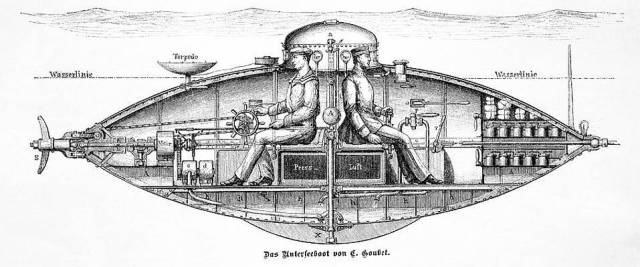
goubet-submarine-bildagentur-onlinetschanz


The path that led to the fisherman’s hut was a maze of high brown grass, reeds, and small dunes.  It was damp and cold, a hard, blustery wind was blowing from the north, from the Czechoslovak Reichs Protectorate. I tried to walk close to the sheltering fringe of reeds, but I was still freezing. My knees were purple. I wished I had. a pair of long pants but Papa says it is not proper for a boy to wear long pants until he becomes a bar mitzvah.

The hut was just around the next bend in the path. This is where I usually worry the most. Everything down here hangs on a thin string. Someone might have found ·the hut and discovered Tomahawk. One tramp looking for a place to sleep could wipe out everything.

At last ! Beyond the sheltering bare tangles of the willows, stood our wooden hut, quiet and serene in the thin light of the December morning. Tad’s alarm signal, the net pole leaning against the porch door, was undisturbed. Everything was alright!

I untied the hinged panel in the reed screen below the pore on the riverside, and stopped to adjust my eyes to the darkness. Good old Tad! He had camouflaged Tomahawk nicely last night. A jumble of planks was piled in a heap in the center of the chamber. A casual intruder would never guess what these planks hid and disguised.

Satisfied that everything was in order, I went back outside and climbed one of the stilts to the narrow porch. I was really eager now. The fever had grabbed me. I quickly opened the padlock to enter the hut, put on a pair of dirty mechanics overalls that Tad had stolen somehow, and then lowered myself through the trap door into the space below the floor. I had to wait to get used to the dim light . Then I began to remove the planks, one by one, from Tad’s artfully confused pile, and stacked them neatly on one side next to the reed mat screen.

Someone stumbling in here would think that our silent raider of the deep was a pretty strange boat. Imagine a flat-bottomed, box-nosed punt lying upside-down on a large deep-keeled rowboat. The two boats fitted together like the two halves of a walnut shell except that the rowboat was longer then the punt by about three meters. The front section of the rowboat that stuck forward had been planked by us to form a deck. A barrel-shaped conning tower fitted with four small glass-covered port holes, my pride and joy, stuck up from the middle of the punt’s hull. The two boats, joined together, were almost completely covered by tightly fitting layers of dark gray canvas. In the weak light, the canvas made Tomahawk appear like looked like a young whale, wrinkled skin and all. Fastened to each side of our strange whale were narrow metal cylinders, the kind used in gas hot water heaters. How we got those is another story that I will tell you later.

I didn’t waste too much time admiring Tomahawk, but it was impossible for me to look at it without feeling impressed with Tad’s and my accomplishment. After all it is not every day that schoolboys build a submarine. .Under one of the water tanks stood cousin Walter’s brown briefcase. I unpacked the blowtorch and the soldering supplies and got to work soldering copper tubing to the metal cylinder. Mr.Wintermann, , who runs the locksmith shop at the agency school, would have been surprised to find out just how careful and diligent I could be if I really wanted to be.

I cannot explain this. Whenever, I do something that requires me to focus on something physical my mind tends to drift. It is as if the monotony of doing a single act is hypnotic allowing my body to do one thing while mind wanders off in another direction. As the blue white flame of the torch melted the flux onto the copper tubing I began to think of when Tad and I first fantasized of building a submarine to travel down the Danube to the delta?

It probably all started in the Saegerer apartment behind their small grocery store. Tad’s father had been fond of books and their front room was lined with shelves crammed with them. Tad’s mother, whose favorite topic of conversation was the faulty character and other flaws of her absent husband, often made cracks about these books. She was a stout red-faced woman, who wore wire-rimmed grandmama glasses, but who was as tough as nails and liked to rule over her coffee and cheese empire. When she spoke about Tad’s fugitive father, her face became pinched and white. “He always had his mind on books, and on politics!” she said. “Instead of caring about his family. If he had listened to me and spent less time with these heathen books, he wouldn’t have gotten into so much trouble.” The trouble, Tad explained, was that his father had been an organizer for the Social Democratic party and had to flee to Czechoslovakia in 1934 just one step ahead of the Dolfuss police. I mean that’s what Tad says but I heard some different stories about Alfred Saegerer’s disappearance trick. My Aunt Tina, who is a walking newspaper,  told Mama, that a hat shop assistant, a girl named Inge, also disappeared with Mr. Saegerer. “She was a girl of  easy virtue,” Aunt Tina said, but I couldn’t figure out what she meant by that.

Maria Saegerer had thrown out every book that had anything to do with politics, “Even Red Riding Hoood” Tad had said. But there was lots of good stuff left. Not Kary May, or Max Brand or even Edgar Wallace Brand, or Edgar Wallace, but stories about Greek gods and heroes, Nordic mythology, regular history books, the Travels of Sven  Hedin, and, very important for this story, Huckleberry Finn. That story about a boys trip down the Mississippi to escape injustice and persecution made opened our imagination to a trip down the Danube. Tad had even exclaimed after he had read the book at my urging “Lets make a raft and drift down the Danube.  other, read the Mark Twain book.

But   when I think back about it now, the Mark Twain book didn’t really give us the idea. It gave us encouragement. We had been looking for a way out. Vienna was a dull stone jail and we wanted to leave.  Tad had his reasons and I had mine. Mine  were mostly in brown shirts and liked invoking the name of their leader constantly. Tad’s reasons he kept close to his chest and had not even shared with me his best pal so I knew there was a secret he was afraid anyone.  Drifting down the river  to the delta in a raft was the way to go.

The idea caught fire instantly.  A raft would be easy  to make and we spent many afternoons in Tad’s front room talking about our raft trip and planning  the fishing, and the hunting, and the stealing. At night, in the dark close room, listening to my father snore, I lulled myself to sleep by outfitting the raft  in for the long journey to the Black Sea. I thought of everything: candles, needles, fishing hooks, blankets, and tinned corned beef, a shot gun, even a jar of pickles and, of course, the collected works of Karl May.

I don’t really know how we changed our mind.  Maybe something whispered to us about the power of invisibility as we sat in the dark below the fishing hut and spied on the green river through the slits in the reed screen.  A raft would leave us exposed to hostile eyes along the banks and to the wind-driven waves that would wash over the deck. Tad called many “palavers” in which he did most of the talking. We would sit on the floor in his apartment and he’d recite in beautifully complicated campfire language the dangers of rafting down a long, hostile river. Most of the dangers were just awful-police, gypsies, Serbian irredgulars, and Bulgarian smugglers with connections to the Arabian slave trade. He would always add “we wouldn’t be so bad off because of his uncanny instincts.” Undoubtedly he had inherited these from his Bohemian grandmother.

We never seriously attempted to build a raft for travel. Once we fastened a few planks together with cast iron staples stolen from a construction site. But we never moved more than a few meters out into the river abandoning the trip as soon as it became clear that the raft would not stay afloat. Soon after we abandoned the idea of the raft trip altogether.

A colossal piece of luck aided the birth of Tomahawk. A flood in the early fall washed some lumber on the bank just downstream from the hut. I remember the day vividly. It had been raining hard for a week. Then the sun reappeared,  bright and warm, and summer seed floated in, like the white hair of the fall Old Women waters. Splintered planks with strips of grass wrapped around them floated by. Tad called them anacondas and pythons. Once , he swore he saw the bloated corpse of a murdered man. I marveled at what Tad was able to see (or imagine)  but spent most of the morning  fishing for posts andplanks. I thought they might be useful, but I wasn’t sure for what.

We must have gotten tired of watching the flooded river by early afternoon, because we started playing Winnetou and Old Shatterhand. We were sneaking along the muddy banks, tracking the dread Shoshone, when Tad spotted them. About a hundred meters downstream, were two half submerged boats in a small backwater. He instantly recognized them as the hidden war canoes of a Shoshone raiding party.

“Approach with maximum stealth,” whispered Tad. “No noise at all. Silent as the long night of the panther ! ” I did not know what that meant, but the moment we reached the backwater, we both knew instantly that the river had granted us a real coup. The Shoshone war canoes were a punt and a rowboat stranded side by side. They were half-filled with brown water and mud, but otherwise in very good shape.


” Let us spread the buffalo robe and pallaver,” said Tad Shatterhand. As the wise Wnnetou I advised that we better cut the crap this time because if we did not get the two boats to the hut before night fall, someone else would claim them and take them away.

“Long will they sing at the campfires of the Sioux,” panted Tad, as we ran back to the hut to get some cans for bailing.  “They shall sing of our river conquests in the summer of the Old Wives of 1939.” He doesn’t give up easily and  he went  on babbling about war canoes even after we, stripped down to our undershorts and shirts, stood chest-deep in the mud-greasy river trying to bail. Even in the backwater, the current was strong and we had to hold onto the grounded boats to keep from being swept away. I was particularly impressed by the rowboat  because  it had a deep bellied, lapstrake hull, that could easily hold eight men and lots of gear. We managed to get enough water out of the boats so that they were just afloat and then pushed them to the shore. There, squatting in the dank-smelling boats, we finished bailing them dry. Dragging the boats, against the hard current, upstream to the hut, was the next chore. It was ridiculously hard work.  I pulled from shore with a rope, while Tad in the boat, used a pole to keep it from slamming into the sharp stones of the bank. We finally managed to tie them to the porch stilts and then we collapsed, exhausted, on the floor of the hut, gasping  for breath. Wrapped with every rag we could find for warmth, we flopped onto the mattress and sprawled there without moving.

I remember that the sun was just beginning to set and as we lay there in the fading light, we began to argue whether we should try to drag the boats under the hut that evening or wait until the next day. Clearly we had to get our prizes out of  sight as soon as possible. Tad was for finishing the job that evening although I noticed that he didn’t even sit up to tell me that.  But I managed to argue him out of it by telling him that it would take us hours and hours to drag these monsters ten meters uphill. I think that convinced Tad. What had me worried was that we would miss the last streetcar and would have to spend the night down at the Danube.

We had made a sound, practical decision that evening. We anchored and hid the boats as best we could and made our way to the Tram stop. This decision, to hide the boats before we got to the hut was was partly fear and partly tenderness. Mama and Papa would go wild with worry, but they would be afraid to contact the police although that would have been their first inclination in normal times. Tad’s mother, tough as she was, would probably have felt the same way. I thought she knew enough about her adventure-hungry son to realize that contacting the police might have made things worse for him. It came to me while I was soldering, that the decision to go home that night was the last decision of this kind that Tad and I ever made. Our work on Tomahawk changed everything afterward. Neither fear nor tender heartedness about my parents or about Tad’s mother ever got into our way again.

Another chance event helped to create Tomahawk. The day after we found the two boats, we returned to the hut early in the morning. Luckily, Tad had raided his Aunt Hertha’s purse on the previous week. While she was helping his mother make apple strudel in the kitchen, he managed to snatch twenty marks from her bag. She had been a frequent victim of his stealth and she never seemed to notice that anything was  missing.

“A young brave”, said Tad, “knows how to raid his enemies  camp and steal to stay alive.”Who could disagree with that, or fail to admire Tad’s skill as a brave, because if we did not have money for the tram ride, we would have to walk to the Danube at 7 A.M. that morning.   Tad also told me that morning, and I am not sure I know why, that he was a great admirer of the young Spartan who died when a stolen fox, hidden under his tunic, ate the boys intestines. Maybe it was because live foxes were not allowed on Viennese trolleys. The conductor would have a fit.

When we reached the hut, we collected enough round posts to roll the rowboat out of the water. I saw that being done in a movie once with a Viking ship. The Vikings had a crew to help them with their efforts. We had only each other and realized that we would likely need some help. Tad proposed  that we ask Fritz Diller to help, a surly, simple boy who lived in the  same  apartment house as he did. The thought of that idiot blabbing his head off about a Jew boy in a secret hut at the river, made my hair stand  on end. We abandoned the idea of getting others to help us and found ourselves heaving and hoeing on our own. Tad bitterly complained about my decision not to enlist help and in turn I reminded Tad of the  Spartan boys’ silence. It took us two exceedingly long, very hard hours to cradle the boat on its rollers under the hut.

The great inspiration for Tomahawk came after we carried the punt up from the river. It was much shallower and lighter than the row boat and  it only took a few minutes to bring it under the hut. To save space, I proposed that we stack the punt upside down on the upright rowboat. When we dropped it  in position, the punt was exactly as wide as the row boat at the gunwales. The punt resting upside-down  on top of  the  boat formed a cabin-like space which could be entered from the front  of the row boat. Tad saw the shape of the submarine first. He stepped back dramatically, wiped his unruly brown hair from his forehead a few times until he was sure he had my attention, then he spread  his arms wide apart, and trumpeted,  “Hugi, I  have found the way. My uncanny instincts have come to the rescue again. We can get out of Vienna and I can get you away from the Nazis!’

He lowered his voice to a hoarse conspiratorial whisper, “The simple answer has come to me in a flash. We will build a submarine. Look,” he pointed at the two boats joined together like a walnut shell, “we have all it takes to make a perfect river submarine.”

I was sitting on the floor, still panting from moving the boats. Tad’s inspiration did not grab me right away. “Sure,” I said, “of course we will! And before we leave, we’ll torpedo the side wheel steamer that brings all the Strength-through-Joy tourists through here.”

Perhaps Commander Prien inspired Tad. Only a few days before, Commander Prien had slipped through the antisubmarine nets into Scapa Flow and torpedoed the Ark Royal. The recent stories in the newspapers about the successes of German submarines may have started Tad’s visions about the silent journey through the Danube’s deep. But I think Tad’s real inspiration was blue and green, the lurid cover illustrations of a cheap thriller series, The Adventures of Joern Farrow. Joern Farrow was the young son of a German submarine captain, who refused to surrender his boat at the end of World War I and roamed the seas, an outlaw sailor fighting evil wherever it was found near a coast line, despite the nasty Englishers who were still trying to collect hisdad’s boat. My first nasty and sceptical torpedo was fired at Commander Prien. But it was really Joern Farrow who, together with two water-logged wooden boats· that were nearly the same width, begot Tomahawk in the Old Wives’ Summer of 1939.

It would be years before I learned that in the United States the term of Old Wives Summer was Indian Summer.  The perfect time for a Tomahawk.
Posted in Uncategorized | Leave a comment

Tomahawk: Rubber Boots

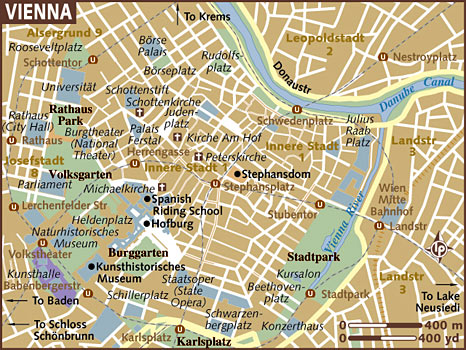
vienna map


In the evening, Cousin Walter came to our apartment pick up his briefcase. He is Aunt Tina’s youngest so twenty-two years old and fat. His mother, Mama’s sister, is held in high regard in our family because she married a court clerk. Being the wife of a government official is pretty important as you can imagine. Of course, Uncle Sigi doesn’t have his job now because they dismissed all Jews from government service right after the Anschluss.


Walter had been a university student until the Nazis came along and banned all Jews from University and because he was “educated” he was sort of stuck-up in a harmless way. He was not very fond of visiting his poor relations,- of tramping up the smelly stairs of our proletarian apartment house. Aunt Tina made him do it. He probably thought of it as one of the miseries brought on by Hitler. Walter sat upright and awkwardly amidst the clutter of our room, primly holding a large parcel on his lap as if he were trying to avoid touching it and himself against our furniture. He probably was afraid of  catching the disease of poverty hanging around us or maybe he was just embarrassed by the family argument that was now brewing.

Papa scowled at me, and then said apologetically to Walter, “How could someone in his right mind forget an expensive item like a good briefcase in a school locker room? Something borrowed, that didn’t even belong to him! ” I began fingering a small hexagonal washer that I just discovered in my trouser pocket. It was time to maneuver myself into a safe sofa corner that would protect my rear. Too bad that washer in my pocket wasn’t my lucky Turkish coin.

Fortunately, Mama saw that the first thunderclap was only a few heartbeats away. She put down the socks she was darning and left her chair to put a restraining hand on Papa’s elbow.

“Please, Uncle Benno, there is no harm done,” said Walter. His German was deliberately free of every trace of Viennese dialect. I bet he was pained by Papa’s outburst, so very lower-class Jewish accent.

“Uncle Benno, he can get the bag tomorrow. I don’t want anything to spoil my good mood. I’ve got fine news that you should know about. My mother asked me to tell you”  Walter paused. He liked to be dramatic and be center of attention and then went on. “Basically the news is that there are now possibilities for Jewish resettlement in Poland. They need us to build the country up again. I was fortunate to be among the first to be selected for the Polish reconstruction project. Mother thought that you would like to know about it because you might find it advantageous to apply. They surely will need workers of all kind as well as administrators…like me.”

“That brat has to learn to take care of other peoples’ property. I can’t afford to buy you another briefcase if it got lost through his sloppiness.”

“Benno, please!” pleaded Mama. “Let’s sit down. Let’s have peace so that Walter can tell us about the reconstruction project. With his education he will undoubtedly have an important job in one of the  offices. Let him tell us about his good fortune!

Papa was searching through his pocket for the small can in which he kept half-smoked cigarettes. That was usually  a sign that  he was calming  down. I thought I better make the most of it and move the conversation along. So I asked Walter about  the  parcel the was carrying.

Walter was obviously glad I asked. With a conspiratorial smile, he reached into the large paper bag and pulled out a pair of high black rubber boots. They were brand new.

“What do you think of these, Hugi?” he asked. “You have no idea how muddy it gets in Poland in the spring.” He handed me the boots. They smelled of new rubber. Shiny as black Japanese armor! Magnificent! All the way to the knees.  I  stroked their smooth sides and I  held them to my cheek.

Then Walter told us about the Polish  reconstruction projects. The Germans had at last shown some good will toward the Jews and arranged for their participation in the reconstruction of Poland. There was even talk of a possible Jewish autonomous region. Several transports were scheduled to leave Vienna in the near future. Walter had managed to get himself assigned as transport secretary for the first train to the Polish project. He expected to leave in two or three weeks. Someone that he knew in the Jewish Community Organization had managed to place him in the first group.

The boots were beautiful!  Walter was a lucky dog.  I wanted the boots so badly that I was afraid to say anything for fear of showing my envy. The boots had a thin red stripe around the tops. Marvelous!

Boots of any kind were hard to get. Shoes were rationed. Hitlter had traded his grandfather’s gold watch for the boots. He thought it a fine bargain and I agreed completely. Even Papa seemed impressed, although it was not clear whether it was by the boots or because of Walter’s luck in getting on a transport to Poland.

“Of course you are an educated person, and those are needed to get a project started. But I wish they would give me a break. Querbaum, my neighbor had told me about Poland. These fine gentlemen at the Jewish Center don’t care that I know Poland from the Galician campaigns during the last war. To them a working man always comes last” said Papa through clenched teeth. “It makes me terribly angry. But what can one do?”

Everyone agreed, but I said nothing.

Before falling asleep that night, I imagined myself going to Poland, warm in an immense turtleneck sweater and wearing a pair of new, black boots with a red stripe on top. It was great to be so well equipped when embarking on an adventure.

When I opened my eyes in the morning, I felt like a traitor. How could I have been tempted by Poland! Tad and I had other plans. Tomahawk was down in the fisherman’s hut waiting for me. No school this morning. I’d be able to get down there today. There was a lot of work to do, a lot of work before Tomahawk was ready to carry us down the river to the delta.

Still half-sleep,  I thought  of the delta. Gulls screamed and I heard the wind rustle in a sea of reeds. Tad always talks about the delta as if it were a warm, tropical place. Wouldn’t a shaggy turtleneck sweater be completely useless there? Or should I take one along just in case? If I only had one!

Papa was in the kitchen dressed in his good suit. “Where are you going, Papa?”

“I am going down to the Jewish Community Center in the First District. Your mother thought it was a good thing to do!” The First District was the inner city of Vienna, the remnant of the wailed medieval town that stood by the side of the Danube but now touches only the Danube canal. I had to go in the same direction to reach the inundation area but I didn’t want to say anything. I had to think of a believable excuse that did not involve Tomahawk.

“Papa, I’ll ride along with you. We’ll take the same tram! I’m going to Dita’s house. She lives in the Leopoldstadt. She promised me some of the books that they have to leave behind. The one they are not taking to Shanghai with them.” I could not resist repeating, “Did you hear they are going to Shanghai!” Papa would take it as an accusation. And I was right. The expected frown passed over Papa’s face.

” It would be nice to have you come along, Hugi.  But we cannot take a street car. It is not allowed. We will have a nice walk together. In forty minutes, we’ll be down there.”

Naturally I tried to argue with him about the streetcar. Told him that I rode the tram a lot and that no one has ever bothered me. But I knew it was hopeless. He had no sense of adventure at all. No doubt beaten out of him as a prisoner of War in Siberia. “They’d recognize me as a Jew right away!” he said, and that was that.

We walked  the  first  few minutes  in silence. I remember it was just in front of the General Hopsital that Papa turned to  me  and  said,  “I’m going to the Community Center to check on my application.”

“What application?”

Papa was always clumsy at explaining details whether they were about things or whether they were about how he felt. His tongue worked best for him when he was angry. But I knew this, and I listened as patiently as I was able. And you can imagine that this is not very easy for me. It came down to this. Papa wanted  me to know that he, Benno Flossel, father of Hugi Flossel,  was capable of gaining some control over our fate, that he saw some possibility of tranquility and comfort for us, and that he was capable of pursuing it. Papa thought he recognized  a small hope for improvement and he was going for it. I mean he· didn’t exactly say that but that’s what he meant. As we talked on the way to the inner city, I could tell that Papa hated his slow, awkward tongue and I felt sorry for him.

We stopped outside a park to rest.  There was a large black and yellow sign that announced that the use of the benches by Jews and by whores was forbidden. I said that it didn’t say “strictly” forbidden but he brushed away my little joke as if were a pesky fly.

In his  tired, smoke-hoarse voice, he told me that he and Ignaz Querbaum had also applied at the Community Center for work in Poland. What Walter had told us last night had not been new to him. But he did not want to say anything about it before because he was not certain that there was much chance for success. This morning, a postcard had arrived in  the  mail, saying  that  his  application was classified IK. He was not sure what that meant but it seemed a hopeful sign. Papa fished out of his overcoat pocket a creased postcard and handed it to me. The small piece of cardboard stirred up a confusing nest of conflicting feelings in me.

“If they  accept you when would you . when would you have to go?” I finally asked.

“Perhaps in three weeks. Perhaps in three months. Who knows? I am hoping to see Herr Dr. Lowenstein today. He may be able to tell me. He is a bigwig in the organization. Ignaz Querbaum’s brother-in-law knows him. Maybe he will tell me about dates for the transport.”

Papa paused for a long time. “Perhaps he is also able to tell me when I would be able to send for you and your mother.”

We crossed the broad tree-lined roadway of theRingstrasse where the walls of the fortified old city once stood. From the right stared the long row of windows of a former Austrian ministry building. A dead stone chameleon. First Habsburg yellow and black, then Republican red, white and red, now the black, white and red swastika flags snapped in the morning breeze over the building. A small column of armored cars in camouflage paint stood in front of the ministry building. German soldiers leaned idly against their machines,smoking.

The sight of the soldier-minded me of my first contact with them during the week after the Anschluss. One of these armored scout cars and a motorcycle with a side car had passed me on the street and then stopped suddenly with a screech of brakes. A young lieutenant had leaned out of the side car and had asked me in clipped Berliner speech  where the Ottakringer police station was.

Surprised, I told him. I think I even clicked my heels before I gave them the directions. As soon as the vehicles had rolled on, I regretted it. Why did I give the German officer the right direction? What a schmuck  I was. Why didn’t I send them the other way? Send them to the city dump or the Wagner-Jauregg Institute, the psychiatric clinic. Even now as I was walking with Papa through the inner city, the memory made me twinge and brought a warm flush to my face. Damn!

I looked at Papa. A sweet small man in a shabby overcoat! Graying at the temples with an unkempt toothbrush moustache. What would living in Poland be like ? Probably alright. It was far away and strange and smelled of adventure. The thought of Papa working for the German soldiers bothered me. I felt strangely confused about those steel helmets and gray uniforms. Revulsion and fear mixed with fascination! The kind of fascination that I knew standing at the windows of a gunsmith’s shop, looking at the efficient hardness of automatic pistols and revolvers behind the glass. The soldiers had such fine boots and I was their enemy. I wonder whether in Poland, the German soldiers would think me as one of theirs. After all I spoke their language and I speak it in the dialect of common working folks. Looking over my shoulder, back up the Ringstrasse, towards the columns of armored turrets, I felt strongly attracted to the sleek steel and the guns and then was immediately ashamed of my feelings.

I touched my father’s arm softly to draw his attention. On the right was the street Papa had to take to go to the Jewish Community  Center. As soon as he was out of sight, I would hop a tram. My destination was much further–beyond the Inner City, beyond the canal, and beyond the bridge. It was on the other bank of the great river and it cheered me immensely to think about it. I was going to work on Tomahawk today. To work on what Tad likes to call the swift and silent scourge of the Danube.

Posted in Uncategorized | Leave a comment

Tomahawk: Chapter Two: Operation Blow Torch

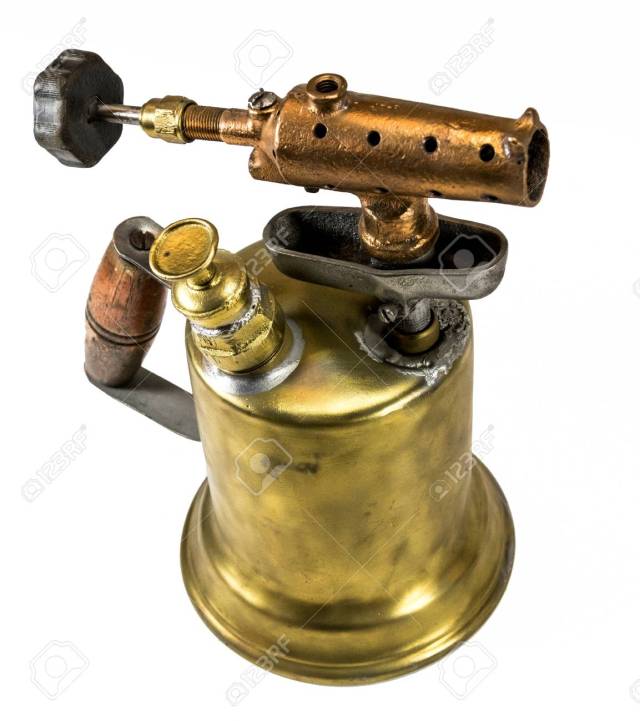
Old fashioned brass blow torch

I like the smell of locksmith shops. That is how I  picked my course at the Jewish Apprentice Institute. That may seem crazy to most people. But that’s another story. Now at seven in the morning, I wasn’t so excited about locksmith school myself. It was dark and freezing cold at the tram stop. I seem to spend a lot of time suffering at tram stops. But today is Wednesday, I had to get across town to go to school. I’m supposed to be learning how to make keys and how to open locks.

You see I’m not at the Realgymnasium any more. Us Jews are not allowed to go school beyond the compulsory age. Instead I am in the Jewish Relief Agencies’ vocational school, at the old Riegelhaupt warehouse in Simmering, three days of the week. Tad is jealous as can be. Because he is a gentile, a pure Aryan, he still has to struggle with Latin declensions under the pure Aryan gaze of Professor Braunschweig, the arch Nazi. Brown Braunschweig Not me! I am learning to make keys and to open locks. Papa thinks this is a skill that will get me a job once we emigrate but with father, the chance of that ever leaving this place is pretty damn small. So perhaps I can make my fortune being a world class cat burglar.


What I can’t tell Tad, because he would tease me too much, and won’t tell Papa because he thinks education is worthless and the only work worth doing is with your hands, is I wish I was back in school. To me, the  world is a great puzzle and school helped me unlock that puzzle. Which may be the other reason I picked locksmith school. At least with the skills I learn here I can unlock things.


Takin the Tram to school is always a little dicey. You see Jews are not supposed to ride the trolley. The secret is to get on the rear platform of the last car.  That way if someone you know gets on the trolley, you can get off right away. Jews aren’t supposed to ride the trolleys either and I could get into a lot of  trouble  if somebody reported me. They thought all this up in Nuremberg or maybe it was Berlin. I mean the trolley stuff is shit.  The same as how they decided that Jewish children were not fit to learn in the same schools as gentile children.

The car was crowded. laborers and store clerks with gray pinched faces. They look crabby and mean. Are they all looking at me for my handsome Jewish features or at me because the  elegant brown briefcase my cousin Walter lent to me that is clearly out of place in my hands? They carry their lunches mostly in rumpled paper packages. My cheese sandwich lay in the huge leather bag secured by buckled straps. I am carrying the briefcase because I need it for the caper Tad and I have planned. We need a blow torch to solder the tube connections on the Tomahawk. Walter’s briefcase was the place to stash the blow torch. We had  drawn the plan up yesterday.  No one would ever look for a stolen blow torch in a briefcase, Tad had said. In Vienna, only Students and “wheels” carry a briefcase. That is how Tad convinced me to borrow Walter’s briefcase. A student carrying a briefcase would not be noticed and it was  big enough to hold the blow torch. Now I just needed the courage to execute the plan.


I wish that Mama had given me more for breakfast. My stomach feels decidedly funny. The same worms were in my stomach the day they reopened school the German took over Austria. That day, it felt like every worm that ever lived in the Vienna Woods had taken up residence in my gut.  In the weeks leading up to the reopening of the school I became convinced that as the only Jewish kid in my class someone was sure to mock, or spit on me, or may be try to beat me up. But nothing much happened!  I mean the Latin teacher did give a sleazy speech. Dr. Braunschweig showed up that day with the Nazi party button in his lapel and proudly revealed that he had been an underground Nazi all along. Illegal though it may have been but he had been loyal to the German ideal. He gave a long pompous lecture about the coming glories of the national socialist state, dedication, duty, German hearts, and the strength of the brown battalions. Soon the school would cleanse itself of those “who wander through the world engaged in sleazy trade.” Who? Me? I felt every eye in the classroom focused on me. I had wanted to shrink into a crack in the floor but I had managed to sit straight and keep my head pointed straight ahead. But, I had a better breakfast on that day.  I remember it clearly now. Mama had given me hot cocoa and  a fresh, crunchy roll.

The tram rumbled down a hill and screeched to a halt. The little church square. School stop! The clock hands in the tower stood at ten minutes before eight. Only a short walk. Narrow, cobbled streets. Overcrowded apartment houses with mouse-gray facades and peeling window frames. Just like the streets around my old school, the Realgymnasium on the Kalvarienberggasse.


I remember the street in which it finally happened. The moment I worried about during that whole first week before schools reopened. Walking home from school on that first Nazi school day, two guys blocked the sidewalk. I did not know who they were. Probably from the secondary school down the block. They both had pieces of black rubber hose in their fists. One waved it under my nose and asked for my money. Which was pretty funny considering that I never had any. Which is how I tried to fast talk my way out of t.  It embarrasses me to remember how I turned my pockets inside out so that they could see how empty they were, all the while calculating my chance for breaking away to the park across the street where they could not hem me in.


Then Tad appeared. He was in top form that day. He stood toe to toe with him but that was not a big deal. In a tough workers’ district in Vienna, like where I live, we do that all the time or get run off the street. But he was very cool. Growled at them that he was a Christian like they were. Funny! We didn’t know the word Aryan  in those  early days. “Go,”  he said.   “Go pick  on one of the rich kids in one of the fancy districts ! If you want to pick on him, you’11 have  to take me too!”.


The two thugs with their rubber hoses backed off, real quick. That surprised me. Tad isn’t that big or that tough looking. But they went with just a few goddamns. I was lucky most bully’s those days, especially around Jews didn’t back down so quickly. Further down the street, one of them had turned, and hollered that they’d get us later. Tad did his victorious turkey war dance and then walked home with me. It made me smile even now when I remember Tad, raising his right hand like a wooden Indian chief, saying, “I am Christian. You are Jewish.  The color of our mother’s wigwams does not matter. You and me, we are war trail companions.” Then he did another thing with his hand as if he were giving a midget a hair cut. I dont know what book he got that wigwmam speech from but he and I were both big fans of Karl May a German who wrote wonderful stories about the old West in the United States featuring two unlikely friends a cowboy, Old Shatterhand, and an Indian named Winnetou.

So even though the speech was a little annoying his act of bravery and kindness in stepping up to those bullies cemented our friendship. .We were friends before but that afternoon made it more special.

Not a soul in sight when I walked through the old warehouse gate. The class bell must have rung already. I hurried to the locker room and put the briefcase away. I don’t want to drag that monster into class and draw attention to it.

Herr Birnbaum had already taken attendance and was lecturing on the properties of soft iron as a key-making material when I got to my seat. Poor stodgy Birnbaum! He had been a physics professorat a fancy garden suburb Realgymnasium. Now he teaching apprentice plumbers and locksmiths like me.

Birnbaum was droning on about measures of hardness. I mean I’m supposed to be learning to open locks, not to be a physicist. As usual , I flashed him my “Everyone of your words  is like a pearl to me” devotional stare. The trick  is to try to bore a  hole in the middle of their forehead with your eyes. That keeps them happy  and that usually brought on with Birnbaum’s lectures  a nice drowsiness that covered you like a tent. It didn’t come today, no matter how hard I tried. Hansl Lichtblau whispered something about hardness and his neighbors began to titter. Somewhere out on the street a car horn honked and a dog began to yelp. The church bell rang twice. And I kept worrying about whether that blow torch would make a big bulge in that stupid brown briefcase when I carried it down the hall. That probably didn’t matter anyhow. This adventure — Tad called it Operation Blowtorch, — could go wrong in so many ways. I touched the Turkish coin that Mr. Novotny had given me before the Latin test a couple of years ago for luck.  Maybe it still worked if I rubbed it real hard. This caper was important. Tomahawk  was beginning to assume the shape that we had wanted it to be.  For three months it had grown, hidden under the skirts of the fisherman’s hut in the inundation area. Now we needed a blowtorch to get on with our work down there.

Birnbaum was fading out. The oil-smeared benches of the warehouse were receding a little. I could afford the luxury of thinking about warmer, happier days: about the day when we first found the hut. Tad and I had been roaming through the Ueberschwemmungsgebiet, the inundation area. In case you don’t know what that is, it is a largish flat field where the Danube water is supposed to go when there is to much water in the Danube. Any encyclopedia will tell you that its a broad flood plain, on the left bank of the Danube that had been   established in the 19th century to regulate the river. This is the place where Viennese who don’t have much money go during the summer to enjoy themselves. They go down there by the thousands on weekends — workers and small shopkeepers, packed in the street cars like Norwegian sardines. The smell of garlic sausage and cucumber salad is heavenly. My stomach ached as I think back about it. What a scene it was down there. By the side of the broad glistening river, everyone peeled off their clothes and stretched every which way on the sparse summer grass or on the gravelly stream bank, to expose their pale bodies to the sun. I think that this is the way they tried to forget the stale air of their small, overcrowded apartments.  Some  had  wooden club houses that were built on stilts and those pitched small tents in clusters around them. On a July or August evening, the laughter and the singing in the flood plain carried all the way across the broad whispering river to the hot cobblestoned streets of the city. They say that in the good old days before Austria lost the war and turned from a big empire into a puny little country-­ before the Central Bank crashed and everybody lost their job-­ that the inundation area wasn’t so popular then. But now it was the paradise of the Viennese poor. Smelling the river on a  summer night filled everyone’s heart with yearnings.


Tad and I roamed around the flood plain even during the school year. That’s how we discovered the fisherman’s  hut two years ago. We were playing Wild West. Tad has always been very strong on Indians. Usually his inspiration came from Karl May.  Roaming around  in our riverside prairie, we could imagine we were anything we wanted and that we could do anything. If you live in a musty room without even a corner that was really all yours, if you had to climb four stories of sooty tenement  brick to get to it, it was great to feel the prairie wind in your face. When you were kind of hungry, playing that you were roasting bear paws over a campfire filled our mouths with saliva.

I think the day we found the hut, I was Winnetou, the noble and cunning Indian chief. Tad was Old Shatterhand, his clean- cut, invincible Teutonic friend. At least that’s how I remember it now. We would always argue who was going to be Winnetou. It was two years ago on a late October Sunday. I Winnetou, was tracking a rogue party of Sioux along the sloping stone bank of the river. Old Shatterhand spotted a half-submerged log and instantly recognized it as a skillfully hidden war canoe of the Sioux. There  were no German soldiers then. In the fall of 1937 we thought up enemies out of the debris the summer had left behind.

Stalking the raiders who had hidden the canoe, we found the hut. It stood on stilts almost completely hidden between a weedy knoll and a clump of barren willows. Rush mats had been hung around the stilts, completely enclosing the space beneath the hut and forming a kind of room. This dark space, which you could  enter by pushing a mat aside, was a perfect hiding place from which to spy on the fierce Sioux. It protected us from the brisk October winds, and we could watch the river through the narrow slits between the mats.

Birnbaum was talking about clogged files or may be it was about filing soft metal. I was thinking about how during our  first visit to the hut, we discovered the trapdoor that opened into the hut from the space underneath. Tad stood on a wooden soda box and boosted me through the hinged door. I got a snootful of dust. The shack had not been used  for  a long time.  Dead flies littered the floor. Thick dust and cobwebs everywhere. The small room had a window on all four sides and a door towards the river. Outside the door was a narrow porch.  An A-frame, rigged  to hold a net pole, was mounted  on the railing.  The pole was gone and the ladder that once led from the steep river bank  to the porch had lost most of its rungs.  The only furnishings were  a tiny cast iron stove with a broken leg and a kitchen table covered with a peeling piece of blue oil cloth. Tad said to me that it was perfect!

It took us a while before I really began to think of the shack as our own. True, we played at the shack often and Tad had said that a gypsy woman who visited his mother at the shop had told him that a secret place would be given to him — a nexus to stength, she had called it. Each time we rode the trolley to the inundation area, I sweated that someone had come during our absence and had reclaimed our secret hidaway. After a while I began to believe Tad. I mean not really  but I was encouraged. Each time we went down we found the hidden hut just as we had  left it.

Tad said that the nexus to strength was going to be our Danube outpost. That meant we had to clean the hut. We also dragged in an old mattress and a chair that we found along the river. Tad stole some candles from his mother’s grocery store

and we stocked some bottles of drinking water. Our outpost was useful in our battles with the unruly Sioux and with other sworn enemies and a fine place to play.

Just a few weeks ago, I had argued with Tad about how things had changed during the two years since we had found our hut. We were still doing Old Shatterhand and  Winnetou  roaming the Sioux-infested plains. But there seemed  to be new enemies now. The policemen changed their uniforms from Austrian  pine green to the pale green of the German Schutzpolizei. Wehrmacht troops were practicing infantry tactics on the Danube bank. I  told Tad that the posters on the city walls, the newspapers, the crowds laughing at Jews scrubbing the sidewalks were telling me that I was not of the same tribe as he was. For me, fantasies about enemies were getting fleshed out. Dangers were getting pretty close to  real.  Tad, stubborn as ever, kept pretending that nothing had really changed at all. He never seemed to pay attention when I talked to him about stormtroopers or about some of the trouble my father had with them. It was all another big Wild West show to him and it kindled his imagination as a wild west scene. The Indians or, depending on what we were doing that day, the cowboys, had just changed into brown uniforms. What really got our argument going that day was when he said: “Me Old Shatterhand, You Winnetou, Me Aryan and you Jew. We make many coups! ” Idiot!

There are so many wonderful  things going on in Tad’s mind. But he never listens when his imagination gets into high gear.His headis full of ringing bells.

It woke  me up. Real bellswere ringing outside the classroom window. The tower clock  at the little church down the street chimed eleven times. One more hour. “We will strike at noon” Tad had said, “Exactly at noon! Agreed?”


Most of the students at the Jewish Relief Agency school ate lunch in the downstairs hall. It served as a commons room where we could talk, play chess, or swap rumors about emigration. The caretaker’s wife sold rolls and soup and, if available, cheap candy. The muffled chatter of the lunch eaters drifted up the corridor that led to the plumbing  shop. Not a sound from the other side of the closed door. No shadows moving behind the flashed glass windows. The shop must be empty.  Just  as we calculated. Cool and swift, Tad had said. Four quick steps to the first long shop table and the shiniest, most effective looking blow torch was out of sight under my  smock. Stop! Listen! Still no one! Big coup for Winnetou in the greasy apprentice’s coat. Two rolls of soldering wire and a can of flux followed the blow torch swiftly and then I was back on my way to the door.  Count steps, Tad  had said.   It will keep you calm.  It was 86 steps downstairs to the locker room. All clear! At my locker, I quickly wrapped the loot in a dirty towel and stuck it in the briefcase. At the last moment I remembered the cheese sandwich and fumbled to get it out. Now came the critical part. Another 61 steps down the hall to the landing where the window was, the bulging briefcase in my left hand. The Turkish coin.

must have worked. No one was in the hall. I reached up to open the window and, without looking, dropped the briefcase to the ground two flights below. A soft thud! I hope Tad is there, waiting and ready.

My heart was beating fast when I entered the common room clutching my cheese sandwich. I mean stealing wasn’t exactly new for me. I had been slipping small tools in my pockets for weeks. But this was important. We needed that blowtorch badly. I hope  Tad was on the way to the hut with it right now.

The cheese sandwich tasted dry. I leaned back against the cold wall and chewed  very slowly.  It was  a good thing it had not snowed this morning. The danger of leaving tracks behind on the path to the hut was clear to any old Indian fighter. Snow would have killed our plan for getting the blow torch today. The work on Tomahawk had to proceed at full speed. Then it hit me like a small locomotive. It wouldn’t work for me to skip out right after lunch. I couldn’t get down to the hut today. I was stuck. Swiping those other tools must surely have been noticed.  Tools for Jews in war time were in short supply. A serious matter. No doubt they were alert and in wait, ready to pounce if there was another theft. There could be personal searches if the blow torch were missed right away. Trapped! I had to listen  to Birnbaum the rest of the day.

The school closed at three and I left with the quickly dispersing crowd. Students did not hang around the gates of the Jew school.   It tempted fate to linger too long. Knobby-kneed would-be  plumbers,  locksmiths, and carpenters disappeared into the gray city streets like water cast on hot stones.

It was annoying. If I had used my head, I would not be in this stampede but down at the Danube working on Tomahawk.  Stupid! The most obvious blunder. I should have seen it right away. Tad had arranged the blowtorch caper along the lines of a Cagney-Raft prison plot. Bust out of the big house. Smuggle the shiv out of the prison shop! And I listened like a damn fool and that left me high and dry. A Viennese worker’s child should have figured this out right away.  Tad said, skip out of school at one o’clock. Meet me at our nexus to strength. But they had noticed right after lunch that a blow torch was missing

The plumbing teacher and the principal, with serious expressions, on their faces had gone from room to room. It was obvious that they were looking for the torch. I had been right. This was no afternoon for leaving school early. They would have become suspicious of me right away.  So, I had to stay until the bitter end of the school day, first listening some more to Birnbaum and then filing keys. Of course, this never would have occurred to Tad. His father may have been a socialist but then his father  had been gone for a long time. His mother owned a grocery store, he was a shopkeeper’s child, and lived in the more genteel world where shopkeepers lived. Tad just didn’t have the instincts that one developed in a workers’ district like Hernals.  And so, like an ass, I was stuck at school till the last bell. Now, it was too late to join Tad at the fisherman’s hut.  Soon it would be dark.

I wondered if Tad really got the torch?

I bet young Dita Rosenman is still puzzled why I told  her to get lost. I was walking away from the school and in no mood to hear about her forthcoming trip on the Trans-Siberian Railroad to Shanghai. I mean she just wanted to walk with me. And I always sort of liked her because she was growing a cute and had quite the figure for a 14 year old.

Posted in Uncategorized | Leave a comment

Tomahawk: By Ernst Rothkopf with Paul Rothkopf

marcus young man

Editor’s note: My story “The Journey” will return in a few days. In the meantime, I am sharing with you a story that was written by my father that I am currently adding to. Some may consider this presumptuous but as the story was originally told to my brother and I to get us to sleep I am just adding my imaginations that he inspired.” 

We learned in school that millions of years ago, the Vienna Woods, now stand was the shore of a vast ocean. The scene must have been fantastic, with monster waves crashing into the hills, and huge fish cruising the depths where I am standing now. On the shore, dinosaurs, hunting and grazing in jungles of gigantic conifers, ferns and palms. But a new ice age made the Ocean levels drop and the shores moved towards the East, leaving only fossils from all the weird animals that had been swimming in it. The Danube, a byproduct of the glacial age, ate a hole in the hills that used to be the shore and started flowing eastward, as if searching  for  the ancient mother sea that had given it life . Eventually came the time of the great wanderings and the place where the river spilled out into the great plain    became  a crossroads of cultures and civilization.  Celtic salt  traders stopped  here. The Tenth Roman  Legion and  the Gemini, marched   through. The  Emperor Marcus Aurelius    died in   Vindobona of Malaria. The Amber Road passed through the plain with long blonde haired Germanic Theones  peddling the fossilized remnant of the ancient jungle to the Romans. The hight cheek boned, fur clad, Asiatic warriors came next. Bow legged and reeking from a diet rich in mare’s milk the Alans, Penchenegs, and Hun camped in the delta their ponies drinking from the Danube. s. Dr. Braunschweiger said they were bow-legged and constantly stank of fermented mare’s milk. Norman knights came through here on the way to the Holy Land, pillaging, and killing, and maybe raping. My history teacher in the Realgymnasium didn’t say much about that, but he was a very devout Catholic. You probably know about all this anyway, and of course you know about the centuries when Christian and Turkish armies were chasing each other around here, killing and bleeding.

It must have been terrific, the silk tents, the horse hair standards, the battle trumpets. Then I guess the Habsburgs must have run out of steam. They started building a lot of palaces. The Viennese got fat, and although they listened to operas a lot ,and told jokes, and were crazy for waltzing, they were also getting nastier to each other. They built those long concrete walls below here to tame the old river. But the river doesn’t care. It keeps right on going past those filthy stone tenements, leaves them far behind. and rushes out, free and happy, into the great, open plain. Mrs. Leitameck, the coal woman, said that the Danube hums at night about the fate of all the people who ever lived along the river, and that the waves carry the songs of all those lives with them to the dark waters of the Black Sea.


I tell you this because now that the war has started, there is very little music in Vienna. A new Army has come to ravage the Danube although this one came by invitation and since then there is little Music left in this city of music. Really! On the first of December, less than a week ago, they closed up all the ball rooms. They said it was mainly to conserve coal and promised to reopen them in the spring. I could not care less. First    , because dancing doesn’t interest me very much. Second even if I were old enough  to dance they don’t let Jews into ball rooms. Most importantly, with any luck at all, I will be leaving Vienna before very long.


And, anyhow, who cares about ballrooms when your toes are freezing. My friend Tad Saegerer and I were standing at the end of the bridge that crossed the Danube in trolley stand waiting for the next tram.  It was not doing a great job protecting us from the wind and to keep warm we kept stamping our feet and burying our hands under our arms. But the cold was the least of my worries at that moment. I was worrying about how to explain being so late. What am I going to say to Papa? I wished desperately that the trolley would come.


The blackout was still on but a big, pale moon was racing through the sludgy clouds. It revealed a deserted bridge. Not another human figure was in sight from where Tad and I were standing, This was not unusual for this time of year. The inundation plain behind us was a very popular bathing place in the summer but the wintry cold had emptied it of all 1ife. Outlined in the moonlight, way in the distance across the bridge, were the bulky dark masses of crowded workers’ tenements. But, except for Tad and me, no one was crazy enough to be on this side of the river at night at this season of the year. Nothing  moved, except  maybe the  icy gray waters of the river way below the gray steel of the bridge. The water was moving. It was flowing to Slovakia, to the new Tiso Slovak state.


“Holy Crap” Tad exclaimed and pointed towards the sky. I had heard a faint drone in the distance, but now, outlined by the moon we could see a bomber formation cutting across the moonlit sky. “Luftwaffe” he said, bending his tall, skinny frame backward for a better look, “Heinkels! Must be coming home from Poland. Come home to get their laurels. Make the Austrian girls happy!” Tad followed the planes with his eyes as the dark wedge floated away from us toward the south.”Setzen sie sich and fich it.” whispered Tad. He knew the expression amused me ever since he first used it in a Latin class last year when he was having trouble with conjugations.. “Suppose those had been British planes. That would wake this town up. Can you just imagine it? Sirens wailing, big lights searching the sky, flak, everything! What a circus? Agreed? Hugi? Agreed? ”


Tad had a way of being persistent when he got enthusiastic about something which was pretty often. This me thinking about the British bombers and perhaps they could help us out of this mess and that cheered me up a bit but it didn’t last long. My immediate problem was not how to end the war it was what to say to Papa when I got home. It  was nearly 8:30 p.m. now. By the time the tram got us across Vienna, and I got home it would be nearly 10 o’clock. What could I say about being so late? I obviously could not tell him about Tomahawk. That would only make more trouble. It would be dangerous to my hide specifically my back hide and it would surely wreck Tad’s and my fabulous plan.


I  could imagine my old man pacing through the small apartment.. Like a tiger pacing in a cage., Not like one of those well cared for and fancy circus cats but a pale worn out local carnival beast in a small cage worn out by  too many shows. He’d mutter something about a worthless son, then he’d say, “My God, thirteen years old and a bum already”. Then the  questions will come at me hurled like spears. “Where have you been?” “What trouble have you stirred up now?” And  after every third sentence we will say, just to twist the blade a little, ,  he  will add sting to the burning wounds by adding: “And in times likes these !”


He would not understand about the Tomahawk. . Papa does not have the stomach for real adventure. He’d panic. That’s what he would do. , For sure, he would panic and do something stupid that would wreck all of  our work.  I  needed an exceptionally good story! The ones I had thought of so far were much too complicated, Papa would never believe them. If only Tad Saegerer would stop sounding off   about  those  damn  airplanes and think up something for me to say. Tad when he would focuse, had an outrageous imagination.  Better than anyones He had a reputation for the best source for lies, fabrications and excuses in the third form of Realgymnasium XVII, but he    gets very wild sometimes. Most of the time! I must be more desperate about this than I thought.


“Leave it to me,” said Tad, as we were settling back on  the    wooden  seats  in  the  dimly  lit,blacked-out  trolley. He ran  his  hands, one  after  the     other , through  his    lanky  black  hair. He  always  did this to let  people  know  he was  about to think very hard. Before he could say a word, I said .”No  lame    fairy stories,   Tad”


He replied, primly, as a professor would an ill prepared student ” We must recognize that Tomahawk is at stake. Only my best will do.” He looked confidently down at me. I am nearly a head shorter than him but I’m catching up. ” I know! You were grabbed by some Nazi storm troopers. They made you polish their boots, That’s why your hands are so dirty.”


Then before I had time to even consider the storm trooper story he said “No. No. We were walking to  Klosterneuburg  to  visit my mother’s cousin, you know,  the baker at the monastery.              That’s a long, long hike! Crazy in December! Why? To get some extra flour. What did we do with it? “I took it home. No that won’t do….I have it.. We  were force to use it to bribe a policeman  who recognized you were Jewish and hassled you. Agreed, Hugi?”


“Are you crazy! No never! My parents will go beserk. They will never let me out of the apartment again for fear that I will do some crazy stunt and not even end with the flour. Come on. Think we have to have a good story before I get home or that is the end of the Tomahawk.  Tad was not in go

The soft ping of the dripping communal faucet was the only sound in the hall. I stood in the narrow landing outside the apartment and stared at the cracked tile floor, trying to build up my courage to open the door. How this place had begun to depress me lately. Age and neglect gaped at me from every tile. The dim yellow light of the hallway made me feel sick and poor. And the constant fear that the caretaker’s wife would emerge from her apartment and yell things like “Jewish swine. I can’t wait until they come and take you all away…filthy beasts.” Standing outside the door I take a deep breath and finally make up my mind. . I’ll tell them that I had heard they were giving out visa numbers at the Liberian consulate. Waiting numbers for visa applications that they were issuing next week. And that just before they got to me they gave out the last one and I had to walk home as I didn’t have any money for the tram.


As I unlocked the hall door, I had just about convinced myself that they might believe that story. But I knew enough from past experiences to enter cautiously. I was entering the tigers cage. Slowly I turned the knob  and entered our apartment.  A miserable worker’s district, stained greasy flat. And, there was Papa’s hobbled feline face staring at me from the circle of light around the table. The sight was enough to make my empty stomach twist and turn.  I have had a lot of experience with old Papa. I realized in an instant that I ought to hold onto my Liberia story until the last possible moment. It wasn’t that good a story and Papa’s face was dark red. I walked into the room carefully, keeping my back towards the wall. Then I stopped, my behind close against the wardrobe door, and looked down at the floor, waiting for the inevitable.  My knees stuck  out from under my short pants. They were blue with the cold of the street.

Sound precautions. There was a moment of silence and then Papa’s chair clattered over backward, and he charged across the room at me.  In a second,  he stood  speechless with rage over me. His face was now chalky white. When Papa worried about me or about anyone else  he loved, he grew angry easily.  Knowing the loving didn’t help much now as I knew that his anger often meant that violence was not far bar and I tensed myself for his callused hand whizzing down at me.

Mama rose to my rescue just in time.

“Look how tired the boy looks,” she said quickly and pushed herself between Papa and me.

“Please Benno!” she pleaded, “it’s ten o’clock and  he hasn’t eaten.” She waited for Papa to retreat a little, and then pulled me to the table, keeping herself in front of me like


shield until I was able to sit down.


Saved for the moment! Mama brought a small pot of stew from the stove and ladled it unto my plate. She fluttered around me nervously like a hen, cutting a thin slice from the small remnant of a loaf of bread, bringing me salt, discovering that my hands were dirty and wiping them with a washrag. It was reassuring to have her large shapeless warmth near me. I kept my face over the magically secure bright disk of the plate. Papa paced in the shadows beyond the table and waited. I think Mama had intimidated him a little. He did not speak until I had finished chewing on my last bite and had swallowed my last drop of water. You can bet I took my time about it. Finally it came.


“I suppose that you have been chasing around the streets with your unclean crony. Hugi, you are thirteen years old. Thirteen years old, and you play Indians until ten o’clock at night in a blacked-out city. Your mother and I are dying of worry. A  Jewish  boy, running around the    streets, playing stupid games  and in times like these. You you idiot, you bum! ” Papa  was not  good with words. When  he  ran out of things the frustration of not being able to say what he want brought on the only way he knew how to be articulate. With his muscles. I managed to duck just in time. . His  hard, work-worn  hand    swept over the top of my head.


“Benno Flossel” said Mama, “I beg of you. please calm yourself. What are the Roelichs going to think about you shouting again at this time of night?”The Roelichs occupied the apartment on one side of us. The walls were thin. Bad news. Frau Roelich was a crabby woman who was an anti-Semite to ·boot. Gentiles of the right! Herr Roelich had  been  one  of  the  few  workers  at  the   Municpal Gasworks who was not a Social Democrat. He had never been very cordial, even before Hitler’s arrival. Mama did not worry about the Querbaum’s who live in the adjacent apartment on the other side because Rosa Querbaum knew all about Mama’s troubles. They often talked to each other about them. As a matter of fact, I don’t think they talked about anything else. Papa lost his temper easily with his only child, me. Fortunately, he calmed down quickly. I once heard Hrs. Querbaum say to Mama, “You will have your hands full,  Hannah, the worse things will get, the less patience Benno will have with his son.” She had been right. The worse the Nazi troubles got for the Jews, the more often Papa would lose his temper with me. The afternoon the storm troopers forced Papa to scrub the sidewalk in front of a tavern with lye, he beat me so hard with a carpet beater that my thighs and arms were covered with deep blue welts. And just because I had left my shoes on the floor in the middle of the room


When I had entered the apartment I had been ravenous. After all we had been down in the inundation area all day with no chance to eat.  Now that I had some food in my stomach I felt a little more secure. My father’s swing at me had also riled me up. “Listen Papa, I try my best to do something that will get us out of this rotten country. My words rose like hot phlegm in my throat. “And what do I get? You slap me around.”I was beginning to feel very self-righteous and I noted with some satisfaction that tears were welling up in my eyes. Just indignation!   “I spent  the  whole  day standing  in line at the Liberian consulate  ”

“What the hell did you do that for?”

“They were passing out waiting numbers,” I said almost as primly as if it had been true. ” Next week they are going to  hand out 200 visa applications. With a visa to Liberia we could get out of here.”Although it suddenly occurred to me that I had nothing to show for my visit to the consulate, I stared at my father without blinking.


Papa raised his huge calloused paw again. Then he changed his mind, and turned to Mama. “Hannah, have we raised a complete idiot?” he asked bitterly. “I am a poor worker. I tear my fingers to shreds to make brushes that are too expensive for me to buy. He stared at his hand as if it were suddenly turning gangrenous. That hard hand, much to large for Papa’s slight  body, stared back at Papa. “They want 10,000 in American dollars for a visa to Liberia. I don’t know how we are going to eat next week, and my demented son is already packing his bags. Hannah, what have we done to deserve this?”

My father walked over to the small coal stove and lit a cigarette, while I followed his movements wearily with my eyes. For some reason, his little speech about the money made me angry enough to shout. “Every time I give you an idea about how to get


out of this place, you call me an idiot. I’m only thirteen years old but I know better. I am not so dumb that I can’t see we have to leave. You just don’t have the gumption it takes to get us out of here.”

As soon as I said it, I wish I hadn’t. Now I wouldn’t be able to keep from crying.

Papa looked at me silently for a long moment. He never was one that would try to impress us with stories about how clever he had been and how he had neatly done this or that. Instead he was proud of being honest, of being a man of his word. Tad had once said contemptuously that the poor  think  that clean conscience and dignity is the same thing.  The silence worried  me, and I drew closer to Mama for protection, just in case he came at me again • Bu t looking up , I was surprise to see a glimmer  of moisture in my father’s eyes.


Papa spoke softly, turning to mother and me.”You know I tried every way I could think of but I had no luck. We have Uncle Max in the United States but with so few slots we cannot count him….One hardly knows where  to  turn next. Other people have many close  relatives  who live abroad.We  have  no one else. I always made my living with my hands. Who wants a simple worker?   One needs money or relatives to get out. Shanghai wants money. Liberia wants money. Bolivia wants money. All I’ve got is these!”


He lowered his hands to his knees and stared at them as if he were ashamed of their nakedness.

A small brightness suddenly passed over Papa’s face”Listen, there may be something for us yet. I talked to Ignaz Querbaum today. He says they are making jobs for Jews so they can support themselves with honest work”.


Mother looked up quickly. “What kind of work is this, Benno?”


“Reconstruction! Poland is all in ruins, as you  can imagine, and they need to clean up the mess. From what Querbaum says, they are giving the work to Jews because the Germans are all in the army. They need the help. The pay is fair and people will be allowed to send for their families just as soon as living accommodations become available. They owe me for the years I suffered for them in Siberia”


Mama’s face softened. She got up from the sagging sofa, walked to Papa and put her hand on his shoulder.” You take good care of us. We know how hard you are trying. Perhaps Poland will work out…I hope this is good news at last, Benno” she whispered. My father slowly looked up at her. It moved me. Mama’s worn face glowed with gentle love.


“Hannah, I would not be honest if I told you it was clean, easy work. But from what Ignaz has heard, the pay will be decent, they will leave us alone, and we will be able to get along. take

Some of those coffee house cavaliers may not be able to it. But I have been used to hard work all my life. .Cleaning up rubble in Poland isn’t going to bother me.”

As I lay in bed, waiting to fall asleep, I began to have visions of Poland. Endless steppes, dark forest, the tall reeds of marshes combed by a silver wind. Packs of wolves howling in the night. Horses. I always felt powerfully attracted to strange and new places. May be that  was because  we had alwaysbeen so poor and we could never go any place. Stuck in these bedbug-infested, crowded apartment houses that always smelled of stale cooking. I have hardly been out of Vienna, except for a few excursions into the Vienna woods and, once, four and one half weeks at that sissy place that the Jewish Childcare Agency ran  in lower Austria. Oh yes, there was also the ten days visiting Uncle Heinrich in the Burgenland near the Hungarian border. But that was five years ago and I had been pretty young then.


Poland is not a place where tropical winds are whispering in the Banyan trees. Equatorial winds would be very nice. But even Poland whispered of romance. Poland! Horses’ hoofs pounding over vast steppes that stretched from Poland to Samarkand and the high Himalayas. I definitely felt a small tug of temptation.Then I saw Tomahawk before me. I was half-asleep but the thought woke me completely. Tomahawk was the real door to adventure, to the world that my friend Tad and I were dreaming about. Tomahawk would take Tad and me away from the Nazis, and out of this grubby grayness. It would carry us, the boy adventurer, Hugi Flossel, and his faithful friend, Tad Saegerer, down the green waters of the Danube to the high reed jungles of the delta, and beyond it, to the glistening waves of the Black Sea. I fell asleep dreaming of glistening waves.


Posted in Uncategorized | Leave a comment

The Journey: Pt 2: Chapter 5

engaged


The room was suddenly crowded. Richard and his two sons were joined by my brother in law Mark and his 8-year-old son Oliver who quickly launched himself into my arms. He is the spitting image of my Dad. Like the rest of us he is uniformed in khakis, white shirt and blazer. Unlike the rest of us, instead of wearing a tie he is sporting a bow tie. I ask him “Are you wearing that because Grandpa did?” He nods. I point to a lapel pin I am wearing and ask “Do you know what this is? He looks at the small burgundy and gold shield on my left lapel with  the motto “Haec Manus Ob Patrium”, these hands for your country.”

“No”

“That is a pin from Grandpa’s Army Uniform. It is for his unit. The 913th Field Artillery. We are both honoring Poppa today. Perhaps it is because we both look like him.”

He gives me one of his patented gigantic hugs that one day will crush me but today only delights and runs off to join his father who is deep in conversation with Rich. I look out the window. On the deck, which my parents built to overlook the backyard of stately oaks, flower beds and lawn and was one of Pops favorite places to contemplate the world, guests are gathering. Some communities you move into. Others you adopt, like those collections of people a spouse or friend have gathered around them. This was my community. A group of friends whom I had embraced in the first half century of my life. All of them knew parts of my journey. All had tales to tell of my life separately but today they would be joined in a single tale in this place of countless memories. I turned my face to the window so that this group of men gathered in the room with me would not see the tears running down my cheeks.

It was a cold, grey morning in November as I fought a north wind that was funneling down 6th Avenue. The decision to be on this journey might have been pre-ordained. At the very least, I had known that I would take this particular trip for several months although I had not known exactly when and where it would take me.  That it would take me here, to the diamond district was highly likely although my particular destination was somewhat improbable.

When Dad had died in July Elaine had not been physically with me, but she had been there in spirit. It was a difficult time for me. Not only had I lost a father, hero and friend but I had lost a part of my life that provided meaning for me. Taking care of my dad was more than just his physical care but giving back to him who had given me all in life. It provided value and a sense of purpose. With his passing that sense of purpose had evaporated leaving me feeling hollow and alone.

There was also another feeling at play. Anger. Long ago I had read Dr. Kubler-Ross’s on Death and Dying and knew intellectually that it was one of the phases of grief. The difference between reading a book and going through something is that what you feel seems perfectly rational and reasonable. With my Dad’s death I had a tremendous amount of anger with my brother who had participated rarely and lightly to my Dads care, had not visited him on his death bed and with Pop’s passing thought he should be the leader of the family. To be fair to me, some of these feelings of resentment and rage were perfectly reasonable for me to feel. But the depth of emotion I felt, the chest thumping, object throwing, color my world red fury I felt was not justified by David’s narcissism and selfish behavior.

Elaine was my balm, my comfort and solace.  We talked by Skype or phone multiple times a day. We summarized our days in long, thoughtful and often introspective emails. She managed the difficult if not impossible. While always having my back and supporting me, she held a mirror up to my emotions and behavior. If I had been unreasonable, unjust or rude she would let me know but gently and in such a way where, instead of resisting her suggestions I embraced them.  Her sage words, kindness and sagacity provided safe passage and snug harbor during the most difficult time of my life. I had been in love with Elaine since our third date on the Costa Pacifica. Now I wanted to spend the rest of my life with her.

I had every reason to believe that Elaine felt the same way. While we had never directly discussed the subject of getting married, we had danced around it a number of times. Elaine had suggested, but had not outright said, that should I ask her to marry me she would say yes. We had even discussed, theoretically, if I were to ask the question what type of ring she would like. She was extremely specific with her response. So I was reasonably confident that the mission that I was on this morning was not a fool’s errand.

The building I was looking for turned out to be the same one that housed the set and offices of the Today Show. As a consequence, I was all but x-rayed and asked to give a blood sample before being allowed into the building. When I proved not to be a threat to Matt Lauer, Meredith Vieira or Al Roker I was allowed in the building and proceeded to the office of Jay Laird, Jewelers. The reception area for this private jeweler was not large. Just a few chairs along the periphery, with pictures of gems on the wall and a plexiglass window at one end where a receptionist served as a gate keeper to the inner sanctum. I let her know that I was here to see Mr. Laird and she asked me to have a seat.

While waiting, I amused myself with the irony of the situation. There are a host of tropes, jokes, and apocryphal stories about Jewish men in search of jewelry at a reasonable price being told by their friends that they have an uncle, a cousin, a friend of a friend who is in the business and can help them find a well-priced piece. When I had asked my Jewish friends, none had any relatives in the business or even knew any jewelers or for that matter knew of someone who knew someone in the business. I completely struck out until I had asked my friend Francis Xavier Farrell whether he knew of anyone who could help me find the perfect engagement ring for Elaine. He recommended Jay Laird. He told me he was a mensch. Which made me laugh in the same way as I laugh when Elaine curses in English. The juxtaposition of 6’4’’ inch man of Irish descent from Pittsford, MA using Yiddish to describe a non-Jewish person…comedy gold.

It turned out that Fran was right.  Jay Laird was a mensch. He treated me as if I were a member of his family. After asking what I was looking for ( a diamond and sapphire ring…not to big because as Elaine had told me, she had small fingers and a big ring would not fit well on her hand) and my budget (like I would tell you) he brought me a selection of absolutely gorgeous rings. And I didn’t love any of them. Some were too much diamond and not enough sapphire. Others had enough sapphire, but the diamonds could have been used as a stylus on a turntable. Still others looked too clunky. And there were a couple that would have cost more than a new SUV. Jay listened to my thoughts and asked me to give him a second so he could fetch from his safe a ring that he thought would be ideal for me. When he returned, he placed on a slate colored velvet pillow a platinum ring with a nicely sized oval sapphire at its center with two hexagonal diamonds on either side. It was exactly what I was looking for and when I asked Jay the price, he told me that he would give me a “mishpokah” discount. I laughed at this very waspy man using Yiddish but suddenly stopped laughing when I realized the discount, he was giving me. I really was a member of the family.

Over the course of the last several months I had spent a lot of time with my mother. She had, as she put it, gone from her father’s house to my father’s house and was not used to being alone. To help her through this transition my sister and I had spent whatever spare time we could with her not only socializing but helping her wade through Dad’s belongings. Finding items that were memories to her and news to Marissa and I had drawn us closer than we had ever been. Then came Super Storm Sandy. Marissa and I had been adamant about evacuating her from her house in Summit. While she had a generator and would be fine from an electricity point of view there was no telling what the wind, falling tree limbs and flying objects would do. She, being stubborn, refused to leave until I showed up hours before the storm and told her to get into the car she was coming with me. We spent the next three days in my 650 sq ft apartment on the UWS watching the metropolitan area be devastated by the storm while our lights did not even blink once.

During that time together we had talked a lot. She told me how different I seemed since I met Elaine. Happier. Lighter. I shared with her that Elaine made me feel complete. That the love I had for her was entirely different than any other love I had felt before. I told her that my intention was to ask her to marry me and she had heartily endorsed that idea. Naturally, after I had purchased the ring I wanted to show off my purchase and gain reassurance that I had, in fact, purchased a ring worthy of Elaine’s finger. When I visited her that weekend, I brought Jay Laird’s masterpiece and showed it to her asking “What do you think.”

Her response was instantaneous “I love it. It is simply perfect.” And then followed up with when are you going to give it to her. I explained that the plan was on the day after Christmas I would fly to Rio so that Elaine and I could have our own Christmas together and celebrate the New Year on the beach in Rio.

Despite our Jewish faith,  Christmas had always been an important holiday for our family. Mom, who grew up in the most reform of Reform Judaism had always celebrated the holiday as a universal time of good will towards man. In fact, her parents Christmas open house party had been an Upper East Side Tradition for years. My father whose relationship with Judaism was complicated always bah humbugged the holiday while secretly enjoying the pleasure of giving and receiving gifts. Every year on Christmas eve we would gather in the living room and in front of an open hearth open up our gifts. On Christmas morning, over Stollen and coffee (cocoa when we were younger) we would open up enormous woolen stockings stuffed with all the useful items that would populate your desk drawers for years to come along with other bits that Mom thought fit your personality and the occasional special gift hidden added for special delight. All gifts were wrapped in tissue paper which no doubt took my mother days if not weeks.

Stockings were and still are my favorite part of the Christmas gift giving ritual. Which was one of the reasons I was so surprised when Elaine told me that “stockings” had never been a part of the Brazilian Christmas experience even though they had copied so many other northern hemisphere holiday icon’s like Christmas trees and a Papa Noel that wore fur. But it made sense in a Brazilian sort of way. Why have stockings when everyone wears Havianna’s ?

Which is why when Mom asked when me how I planned on proposing to Elaine there was no hesitation. I planned on giving her, her first Christmas stocking. I would seek out and buy all of the silly, impractical, vaguely amusing and marginally useful items that I could find and then after wrapping them I would place them with care within a custom made exceptionally large stocking. The ring, in a box and wrapped, would be placed in the toe as I wanted it to be the last gift opened. This was only marginally to torment her. She knew I was going to propose. She just did not know when. Mostly, it was about making sure that the last gift given was the best gift of the day which I had high hopes the ring would be.

In the weeks that followed, I shopped every paper store, curiosity shop and obscure listing on Amazon finding fun items in which to stuff the stockings. I took this very seriously. I wanted Elaine to have the full stocking experience before getting to the ring. Then I carefully wrapped each one of these tiny presents which considering my fingers resemble Vienna sausages was no easy task. Finally, I stuffed the stocking carefully making sure that there was a proper “build” to the ring in the toe.

On the evening of December 26th I flew to Rio with a very well prepared stocking carefully packaged within my rollaboard. It was a nerve-wracking flight. Not because I was worried about the outcome of the proposal, I was pretty sure that was a layup. My nerves were frayed because it suddenly occurred to me that if the customs officers asked to inspect my bag, not only would they ask me to unwrap each of the two dozen or so presents crammed within the stocking but it would be likely that I would have to pay duty on Elaine’s soon to be engagement ring. Fortunately for me the guardians of Brazils borders were far more interested in the Brazilians returning from the United States with suitcases larger than my first apartment in NYC.

It was full on summer in Rio with humidity that bordered on liquid and temperatures in the high 90’s.  Not at all Christmasy for a gringo. But it was because of the heat and the fact that Elaine’s home, like most Brazilian domiciles, had no central air conditioning we retired to the bedroom to exchanged gifts. I am embarrassed to say that I have no clue what presents Elaine gave me that year. I was far to focused on giving her her first stocking.

Finally, the time had come, and I pulled this one-meter long stocking from my suitcase and placed it on the bed in front of Elaine like a burnt offering in front of a goddess. Which is when the axiom “Man plans, and god laughs” came into play. I was so excited that I was giving Elaine her first stocking, that incidentally contained a marriage proposal at the end, that I completely forgot that Elaine had never opened a stocking before. She did not realize that protocol was  to take each individual gift out of the stocking, open it, and then move on to the next.  Instead, she relied on common sense. Turning the stocking upside down, she dumped its contents on the bed. This meant that the present I wanted her to open up last was now on top of the pile of gifts laying before her.

Before Elaine could reach for the small, well wrapped gift that now crowned a pile of gifts laying  before her I snatched it away saying “No. No. We are going to save that for last.”

Have I mentioned that no one enjoys gifts quite as much as Elaine. She unwraps each gift as if tearing a piece of paper or not removing each piece of scotch tape carefully is a mortal sin. Then each gift needs to be admired, examined from every angle and cooed about until no adjectives were left in describing what the gift meant to her. On most days this is endearing. It is rewarding to know how appreciated your gifts are but, on this day,, it was maddening and there was no way in which to speed her along without ruining the surprise.

At long last she reached the bottom of the pile. I handed her the last gift and watched as she gently removed the ribbon. I gazed at her as she removed the four pieces of tape that held the wrapping paper in place. I looked on as she removed the cardboard sleeve that protected the velveteen box. Finally, she flipped open the hinged box to reveal the beautiful ring I had purchased in the hopes that it would overwhelm her in joy and accept my heartfelt desire to marry her.

Her reaction was not what I expected. Instead of tears of joy and screams of happiness she said “Oh my darling, it is beautiful.”

Incredulous, stunned and gob smacked it took me a moment or two before I could utter “Do you know what that is.”

She looked at me as if I had lost my mind “Of course I do. It is an engagement ring.”

“And?”

“Well of course my love. I will marry you.”

There was a knock at the door. My sister popped her head into the room and said “Its time.”

Posted in Uncategorized | Leave a comment

The Journey: Pt 2: Chapter 4

Yankee and Girl

The door to the office opened a crack and a head popped through.  “Kopfka. Can we come in/”

Before I could answer, the door flung open and my oldest and best friend Richard Magrath walked in followed in short order by his two adult sons Patrick and Sean. They were dressed identically in what is best described as preppy chic: Blue Blazer with perquisite brass buttons, khaki slacks, white shirt with a subdued tie. I had learned preppy from Richard back when being a preppy meant owning two pair of Docksiders but it was a style that never seemed to change much which was why I had chosen if for this day and was dressed identically to them.

Getting up from the desk we exchanged hugs. Not the bro hugs of two casual male acquaintances but that of family, where you hold each other tight and pound on each other’s back like Vikings. It was only right. RP was, in many ways, more a brother to me than my brother.  His sons called me Uncle Paul and were here out of love despite the fact each had traveled thousands of miles to be here on the budget of college students.

I was grateful for their presence. The events of the day required community. Not the community in the broader sense of the word, but the community that is the fingerprint of our lives. Those individuals whom you have met along your journey who have been incorporated into your life to your betterment. Those people whom you turn to for laughter, guidance, love, succor and support. Rich, Patrick and Sean were at the center of that group. Their presence would help sanctify the day but more importantly they understood my journey and could appreciate what it meant me.

After our hugging and back pounding were over Rich held me out at should length and said with serious “Kopfka, how are you doing?”

I smiled and provided him with my standard response to questions like this “It is a beautiful day in the neighborhood.”

Eyebrows raised, as if to say, “Don’t give me that shit”, he said “No, really.”

“Seriously, I am doing fine. Even great. It is a beautiful day. I am surrounded by friends. You, Patrick and Sean are here.  Everything downstairs and outside are done to perfection. What else could I ask for…”

“But…”

We exchanged glances. Mine saying “Really, you want to go into this now.” And his response equally silent was “Yeah, you have to.”

“Look around you. I wish he were here.”

On June 10, 2012 Elaine arrived in NYC.

We had agreed when I was in Brazil that we would try to do the impossible. That is, trying to maintain a relationship across two continents and thousands of miles. We felt that what we had found in each other was enough to warrant the effort and the loneliness that is bound to happen when one lives in a long-distance relationship. We also felt that we had some advantages. Both of us were old enough and wise enough to realize that the love we felt for each other was rare and irreplaceable. We also had a technological advantage. Between Skype, emails, and chats we could maintain almost constant contact.

But we also were old enough and wise enough to realize that technology does not replace the face to face, the belly to belly. And, as a consequence, we had agreed that we would try to be with each other as often as possible. Ironically, this was aided by technology. Elaine and I spent a good deal of our time working remotely. As long as we had our computer and a Wi-Fi signal we could work anywhere.

Her trip’s timing though was not only a result of new loves needing to be together. Dad was failing and I wanted them to meet before that opportunity expired.

That first day though I needed to introduce her to someone else. When we returned from the airport to my apartment in The Archstone, on NY’s UWS, we had a make or break moment for our relationship: an introduction to my best friend, closest confident, and occasional bed mate. It could have gone either way. My buddy I knew how the ability to charm anyone, but Elaine had some prejudices that would be hard to overcome. As a result, when I introduced the two of them I did so with a bit of trepidation.  I should not have worried. Yankee, my 11 year old Australian Labradoodle, was at his most charming and Elaine, despite being a true cat person, felt instant victim to his charm.

The next day we drove out to Summit. I was excited to show Elaine the town in which I had spent most of my childhood and in where my parents still lived.  I had not always had such fond thoughts of this tory dormitory town. As a teenager, I had thought the town boring, a bastion of white privilege (although we did not call it that, then.), and a place I could not leave soon enough. However, both the town and I had changed over time. The superb public-school system had attracted more Jews, Indians, Chinese and other groups who prized education. The nearby Short Hills Mall had stolen retail businesses away from the town which were replaced by coffee shops, day spas and restaurants. The quiet nature of the town, which I had thought boring in my teens, in my middle age seemed pleasant and relaxing.  In those ways, it more resembled a town that I would not mind living in.

There were also the truck loads of memories. As soon as we exited the highway and entered the canopy of trees that define Summit to me I begin to share with Elaine various events, incidents and disasters that in which I had participated. See that rock over there, kids used to challenge other kids to fight there. That store used to be Baskin Robbins where I worked in high school and where, after hours, we would make liquored up milk shakes. That is where I kissed a girl for the first time.. That is where Rich lived, and I would “hitchhike” here all the time. The result of which was by the time we had reached my parents home on Rotary Lane,  we had a full tour of memory Lane.

My mother greeted Elaine as if a long-lost daughter saying to her “I don’t know what you have done to my son, but I have never seen him so happy.” Elaine, giving her the double cheek Brazilian beijos, replied demurely that I made her incredibly happy as well and presented her with a beautiful serving plate we had purchased for her. My mother, knowing her part well in this particular dance, made all the right cooing sounds about loving the plate which we never saw again. She told us Dad was waiting for us upstairs so up we went.

My father was in his wheelchair, at the card table he had turned into a desk, reading the ink off the New York Times as he done since the world was young and still had dew on it. He, despite the ravages that time can play on a person, was still a very handsome man. He was also unbelievably charming with a soft Austrian accent that had caused most of the women I had been involved with to develop crushes on him. He was no less charming with her and they instantly lapsed into a conversation that all but excluded me.

Pop’s fascination with Brazil was not news to me. I had always thought that a good deal of that fascination had been sparked by his Aunt Sidi’s immigration to Santos, Brazil in 1924 Over the years he kept in contact with Sidi’s children and grand children and in 1995 he and my sister had gone for a two-week trip where they had visited Sao Paulo, The Pantanal, and the Amazon. As a consequence, when he decided to speak to Elaine about various places he had been to Brazil.  I was not at all surprised. What did surprise me was his reaction when Elaine began talking about Fernando de Norohna, a small archipelago with a protected marine environment 200 miles off the northeast coast of Brazil. Elaine was telling him about her visit to the island and how beautiful the fish were there when she mentioned during WW2 her uncle had been stationed there to help maintain a US Army Air base there. Dad became instantly attentive and asked a lot of questions about the island and even about what her uncle had done on the island. It was strange, even for an information sponge like Pops, to become so interested in an obscure place like this.

I would find out why he had been so curious a few weeks later and only then in context to a much larger mystery.

After a very Summit lunch of sandwiches from Towne Deli with Ente man’s coffee cake for dessert, Elaine and I got ready to head back into the city. As my beautiful Brazilian Princess said her goodbyes to Mom, I dashed up the stairs to let Dad know we were leaving. He was sitting at his makeshift deck, pecking away at the keyboard, no doubt writing a story or writing to one of his doctoral candidates. He always inspired me but no more so than in the last few months. He was so sick and feeble but he persisted. I knew at that moment he was unintentionally teaching me about life. Keep moving forward. I sat adjacent to him and with a signal he told me to wait. After tapping a few keys and looking at his screen he looked up at me and said “Are you leaving?”

“Yes, we are getting reading to go. I thought it would be nice if I said goodbye to you.”

“Goodbye to you.”

“Smart ass. Before I leave, I wanted to ask you what you think?”

“Of what.”

“Stop it. Come on. You know what I am asking.”

“You mean Elaine.”

“Of course, I mean Elaine.”

“She is very nice.”

“That’s it? “

“She is delightful and smart and surprisingly she even laughs at your jokes.”

“Not 102.”

He laughed. Over the course of Pop’s illness we had spent a lot of time together. To cheer ourselves we would often tell each other jokes. Some of these jokes were so old that they were collecting social security. One of those bits of humor told the story about a young man going to prison for the first time. He is incredibly nervous especially when they lock him in his cell and all they turn off the lights for now. Laying in his bunk he begins people yelling out numbers followed by uproarious laughter from the cell blank. “35” would be yelled and peels of laugher. 42 would be called out and shouts of hilarity would ensue. The new inmate is astounded. He can’t figure out what is going on so he asks his cellmate what is going on. His celli explains that most of the inmates have been in prison for so long and know all the jokes so well that they instead of telling the full joke they just refer to by number. The new inmate says “Let me try it” and shouts out 51. Nothing just silence. He thinks well maybe there is no 51 so he shouts out 102. Again, he is greeted with silence. He asks his cellmate “How come no one is laughing?” And the celli replies “Its all about the  delivery…”

It became a running joke with us, that whenever either one of us would tell an old joke we would refer to it by a made-up number. And, if the other did not laugh, we would “It is all about the delivery.”

So it was no surprise when Dad responded “It is all about the delivery.”

“Thanks Pop. I will work on that. But you still have not told me what you think.”

He smiled but in his serious professorial way and said “She will make you incredibly happy. I like her.”
“Thanks Dad.” And I hugged him a couple seconds longer than normal and kissing him on top of the head I choke out “See you in a few days.”

When I arrived back at the kitchen Elaine and my mother are still deep in conversation. It is late and I want to head back into the city and make attempts to hurry them along, but they ignore me and continue to chat until they are ready to finish.  Hugs and kisses are exchanged, and Elaine and I finally make to the car. As I start the engine, I tell Elaine I have forgotten something and dash upstairs and finding my mother in the kitchen ask, “So what do you think?”

With none of the teasing of my father she says “She is a keeper.”

The next few days Elaine and I explored New York City and our new love. We had romantic meals at places like Barney Greengrass, Shake Shack and Hill Country BBQ . Elaine said she loved as much as I did despite the absence of white table cloths and napkins. We went for long walks by the river in Riverside Park with Yankee serving as a ubiquitous third wheel. It was simple. And it was love. And when she left after 10 days I felt as alone as I have ever felt.

5 days later my father told his physician that he thought that the decision to go on dialysis had been precipitous. He didn’t require it and he wanted to stop. Despite the Dr’s warnings that ceasing the treatment would ultimately result in his death, he made the decision to stop. A week later he lapsed in coma. It was a difficult time for me and even thought Elaine was in Brazil I leaned on her for succor and support.

My love:

Today, I had an early morning appointment in the city. It is a meeting that I have been trying to arrange for a long time so I did not want to cancel it. I also did not want to leave my father but I had been assured by his Dr’s that nothing dramatic was going to happen today and that since he was comatose I wouldn’t be missing out on conversation.

So around 5AM I headed into the city to beat the traffic. It was good to be there as I have not been in the apartment in about a week. The only thing missing was you. But I loved being there and it was nice being away from the sturm and drang that has been going here. Sometimes I think it is good just to hear the sound of your own thoughts.

As you know, there are a lot of things running through my mind right now.

There is fear from losing a person who is not only my father and my hero but my friend. How will I fill that void and that gap that he will leave.

There is doubt. My mother has made the decision to end my father’s dialysis as he was incapable of making that decision. Is this the decision that Dad would make if he were competent…is this what he had planned when he ended his dialysis treatment. Has his life been a death by a thousand cuts of late and is this the only way to end his suffering? Or should we institute dialysis until his competent to make his own decision knowing there is a 50/50 chance that he won’t recover even with the dialysis.

There are memories.  So many and they drift to me like leaves drift to the ground in the fall. Some make me smile and some make me cry because they touch my heart so.

There is frustration. My sister has been a rock and very good to me but to get her comfortable with the decisions that have been made I have had to be gentle, kind and persuasive. I have had to filter my mothers comments as she has a tendency to think this is always about her and translate so that my sister understands the real thoughts and real emotions behind her actions. And then there is my brother who when we talked about the situation yesterday afternoon called my mother a murderer. Mind you he was not making plans on coming up here to say good by to my father nor has he been a lick of help in my Dads care but he is part of the family and for all of our long term happiness he needs to feel comfortable in the decisions we make. It took enormous effort and restraint to be honest with him and yet get him to the point where he could accept my mother’s decision.

There is fear. Fear of the unknown. Fear of the inevitable. Fear of my own mortality and seeing myself in my father.

All of these emotions and thought flitted through my mind as I drove into the city…to my appointment and back out to Summit again.

Back in Summit I immediately went to the hospital to look in on my father. There is an open lobby there in which someone has long ago donated a baby grand piano that is sometimes played by a volunteer and sometimes played by a visitor who feels they need to express themselves musically. Today as I entered it was being played by a guest who had decided to play “Time To Say Good By.” I wondered as I heard the familiar notes whether this was a message from god or just some musician expressing himself.

My father was still comatose when I entered the room. His breathing was shallow  but he looked like he wanted to wake up but could not. My sister and mother were sitting with them both lost in their own thoughts and they brought me up to speed. He hadn’t awakened. The Dr’s try to get him to wake up but that they could not and that things were looking grim. During the telling of the story both my mother and sister tried to correct each other which made my ears buzz as conflict was what I wanted the least of today.

I left an hour later to head to meet Richard for lunch. He was in town on business and when he heard about my Dad he volunteered to come to Summit and have lunch. We got sandwiches and sat on the back porch and talked about my father, the mystery surrounding his military service, his son’s Patrick travails with bipolar disorder and alcoholism, his job….but mostly it was just nice being with a friend.

All to soon he had to leave and I had to go back to the hospital. When I arrived at my Dad’s room I had quite a surprise. My father was awake. He was not making a lot of sense but he was asking questions. He wondered how long he had been there. He thought his last memory was being downtown and did he fall and was my mother still in NY. That sort of thing. At one point I could see that he was having trouble speaking because his mouth was so dry. So I went to get him a glass of water and my mother yelled at me “What are you doing he shouldn’t have any water. You need to ask the Dr” It made me very cross because I had talked to the Dr. and he had said Dad could have anything that he wants. It took some discipline not to be angry with her and calmly explain that to her because she was being very vile. But I managed and managed to get him to drink some water which helped his lucidity some.

I pulled my mother outside while my sister was trying to have a conversation with my Dad and I said we have to ask him about his treatment. She was very resistant to this idea. I explained as well as I could that both Marissa and I needed to know what he wanted and if we could get him to understand the situation it would be best for all of us moving forward. She reluctantly agreed and then sent sister and I away to scavenge him some food. By the time we got back she mouthed the words “I talked to him….he is fine with what we are doing.” Now I need to say something not nice about my mother. She lies all the time. All of her children know this and have discussed it. She tells them often to manipulate people into doing what she wants or cover up something she doesn’t want you to know. But since we all know that she lies we can’t trust her when she said what she said.

So somehow we convinced her to leave the hospital and go home and rest so we could talk to our father and try to get him to answer our questions about his treatment. We both succeeded and failed in this. We were successful in informing him of his condition and what his options were. He told us that he thought the prudent course of action would be to have dialysis. We failed in the sense that my father was not fully competent to make any decision. Half of him was here and the other half in la la land.

This of course produced a lot conflict in Marissa’s and my hearts. What should we do. Should we follow the course we are on now. Should we get him started on dialysis again and let him make a decision when he is fully aware. In the end I told Marissa that nothing could happen unless Mom gave the order to start dialysis again or Dad, in a competent state of mind, told the nephrologist what he wanted. I ended up calling his nephrologist who was very gentle with me. First he told me that he would try to talk to Dad. Then he told me that he thought that from the conversations he had with my father that while Dad had never explicitly said he wanted to die his actions implied that it is exactly what he wanted to accomplish. That he thought the right thing to do was to let him go. And if there was conflict in the family that there were trained professionals on staff who could help us all come to a decision we are comfortable with.

It was left to me to have a conversation with Mom about Dad’s care. Needless to say this was not easy. She was angry and defensive and wondered why we had to have this conversation with Dad and why didn’t we do as were told….I had to be very gentle and very patient with her which I was and explained that all I was trying to accomplish is to make sure we are all on the same page about Dad’s treatment because if we weren’t and the inevitable happen it could rip us up as a family. I eventually got her calmed down. I told her we were almost there. That no one wants to see Dad suffer anymore but we just need to be at ease with letting him go and that takes a little time and reassurance from the Dr.’s and to some extent Dad. 

Needless to say I am exhausted. Too long a day. Too many emotions. But I need to tell you that you were with me all day. I had you in my heart. I knew you were thinking of me. I knew you were sending me powerful love. I knew you had Dad, my family and me in your prayers. You help make me strong. You helped me be patient with my mother and my sister and myself. You helped soothe my fears because whenever I needed to I could feel your hand in mine. Thank you for being there for me.

Now I need to go to sleep. I am exhausted. Will you meet me in my dreams. Will you hold me in my arms and whisper you love me in ear?

I love you more than Brazilians love sambas.

Truly


Your Paul

When my father regained consciousness, and was able to make decisions on his own, he made it clear he did not want to receive any more treatments. He had decided he had enough. That life being tethered to dialysis and the travails associated with it such as three times a week being carried up and down stairs on a stretcher and then a 45 minute drive to and from dialysis had degraded his quality of life to the point that he was ready for his journey to end.

The decision was made for Dad to come home. A hospital bed would be set up in the sunroom and there he would receive hospice care until he took the final step into the “good night.”

I had a dilemma. Before Elaine had left we had agreed that I would fly to Brazil for the July 4th holiday. Now, with my father in his final days I felt that leaving would be at best inappropriate. But my sister and mother convinced me otherwise. Dad, they explained, would not be with it as one of the side effects of renal failure is slow drift into a world of imaginings and hallucinations followed by coma and eventually death. Dad would not miss me. And if the end was near it would not be so imminent that I could not fly home for final goodbyes. That after Dad was gone, I would be far more needed than right now.

I went despite my misgivings about spending Dad’s final days with him. I rationalized that this is what Dad would have wanted me to do. Whether it was the right thing to do or not it is what I needed to do. We spent much of that trip talking about my Dad. How the world would be altered without him. How I would miss him. How much I loved him. Elaine listened to me. She cried with me. She comforted me. She loved me.  When I left 8 days later, I was stronger for love and felt capable of facing when came next.

The flight from Rio lands at JFK at 6:30 and I was at my parents’ home by 9:00. After kissing my mother hello, I went to see the patient. Throughout my time in Brazil my sister and mother had reported that Dad was happy although mostly he made no sense.  She told me that he was mostly out of it, thoroughly enjoying a world of his own creation that was only interrupted from time to time by random burst of classic poetry like Tennyson’s “Charge of the Light Brigade.”  It was this version of my father I expected when I went to see him. Instead, the Dad I saw was bright and alert whose first words to me were “Oh good your back.”

Two days later he died.

I turned to Rich. “Tomorrow, it will be a year…”

Posted in Uncategorized | Leave a comment

The Journey: Pt 2: Chapter 3

elaine (2)


Through the window I could see my sister’s children, Cate age 12 and Oliver age 8, racing through the back yard laughing and giggling. Their laughter unleashing shades of summers past… my father napping in a macramé hammock strung between two trees on lazy summer afternoons…my sister having a race with her cat Broccoli being more like sisters than pet and person…my mother, a city girl, engaged in her suburban passion of gardening…my brother and I running through sprinklers…It was a perfect place for what we needed to do today.

When you think of Rio De Janiero, you think of Copacabana, Ipanema, and perhaps if you are very sophisticated Leblon. Elaine’s home was in neighborhood called Barra de Tijuca, about 20 km west of those famous beaches. Unlike the high rises and urban atmosphere made famous by Jobim and Sergio Mendez, Barra sits on the edge of the Tijuca forest and is suburban with private homes and low-rise apartment complexes nestled between the beach and Pedra Da Gavea, a 2,970 ft mountain.

As we drove through the gates of Elaine’s community, Jardim do Itanhanga, I could not help recalling my thoughts on my Jeep tour through Rio two months ago. Passing through the forest, into this area, I had pondered what it would be like to live here. Now I was going to find out. It was easy to see why Elaine had fallen in love with this area. It was, ironically, for the same reason my parents had fallen in love with Summit: The trees. Instead of clearcutting the lots the builders had taken great care to preserve the ancient trees including several examples of the Pau-Brazil tree, which as Elaine explained, is not only the national tree of the country but how the country got its name.

Elaine’s home was at the end of a cobblestone road in the far corner of the community. Like all of the houses within the community it resided behind 2-meter-high gates topped with barbed wire. This provided a stark contrast from home. Even within our gated community, in our most tory communities, rarely do people live behind walls.  Certainly not in middle class countries. I wondered as we drove onto the property whether this was because we were more egalitarian, or they had more crime here.

Elaine’s house was beautiful. Sitting on ¾ of an acre it is of modern design. Made of poured concrete it is three rectangular solids, stacked slightly askew on top of each other. The house was designed to allow the outdoors in. The entire ground floor living room had floor to ceiling glass doors, all the bedrooms had panoramic doors, and there were two airshafts with glass doors that were, in essence, terrariums planted with indigenous flora including. For a man who is used to living in 700 sq ft (65 sq meters) apartment it is a little overwhelming and impressive.

However, before I can be too overwhelmed, I am introduced to Jocelino. He is a slight, dark haired young man, wearing a faded t-shirt, shorts and the ubiquitous Brazilian flip flop. Elaine tells me that he is her “gardener” which I learn later really means he is responsible for the outside of the house and the property. I go to shake his hand but before contact is made, I catch and eye signal from Elaine, telling me this would be inappropriate, so I hold back. She tells Jocelino to take my bags upstairs for me.

Walking into the kitchen I am introduced to Regina whom I am told is the cook/maid. She is African decent, short and extremely obese. She nods at the introduction and gives me exactly the same look a mother might share with her daughter’s suitor when they first meet. In other words, withering, with malice should I hurt the lady of the house. I will learn later that she is also a practitioner of Candomble, an African Brazilian religion, and the chance of real curse is very possible.  Elaine tells me that Regina has worked for her for 13 years and considers herself a part of the family. This becomes obvious over the next few days in many ways including muttering under her breath at requests, uneven housecleaning and lunches that were often so late that would have qualified for dinner in Florida. I

Eventually, Elaine leads me upstairs, ostensibly so that I can get cleaned up after spending the better of a day traveling. When we reach the entrance of the bedroom suite, she kisses me and the rest of the world greys out. All I care about is in my arms and nothing else matters.

The next week disappears in blur a lovemaking, sightseeing, shopping and long conversations about everything and nothing. By the time, I leave I know the affair begun on the Costa Pacifica was not a mere shipboard fling. It is the real thing.  It is love.

Shakespeare got it right. Parting is such sweet sorrow. And I wrote Elaine (whom I had nicknamed Lupita because she told me in NY many people had mistaken her for Mexican.)

My Darling Lupita

The definition of a long day is any day that I leave you behind.

Add to that a 10 hour flight, changing planes in the purgatory known as Miami Airport, three appointments, finalizing my lease and unpacking and you have an exceptionally long day….

Saying good bye to you last night was one of the hardest things I have had to do. My last glimpse of you, you peering out from beyond the barrier, you smile shining like a summer sun, and it was all I could to do to keep placing one foot in front of another. I wanted to run back to you and feel your arms around me. To bury my face into your hair and your neck, to smell your scent, and your body against mine. When I cleared immigration I turned to see if you were still there but you had gone so I found a seat in a departure lounge far away from other people and put on my sunglasses so people would not notice my tears.

I got to the lounge way to early. There was over an hour and half to wait. And I didn’t feel like being distracted by a book. Or by playing a game. I just wanted to think about you.

One of the first thoughts I had was that I had made a mistake. I should have walked you to your car. I felt badly that you had to walk through the building and to the parking lot by yourself. It was very ungentlemanly of me. It made me feel horrible. So I am sorry. When I come back in July, you will be walked to your car.

Then I wanted to call you on the phone and hear your voice but I realized that you were in the car and my calling would be a distraction. And then I realized night was falling and it made me feel badly that you were driving home alone.

Then I realized that I was just feeling sorry for myself because I missed you so much already. So I decided that what I needed to do was think of all the time we had just spent together and the happy times that we had together.

I thought about your smile. Your beautiful radiant smile that warms every part of me. It is truly incandescent my love and it means so much to me when I see it. When I am telling you stupid jokes…a ham sandwich walks into a bar. Or when I tease you a little and you realize it and it flashes on your face all the dimples glowing. Or after we make love and your happy in our intimacy and your whole face is aglow. Or that first smile, when I came out of immigration and I saw you standing there and the happiness written all of your face that made all the missing I had done seem like a very small price to pay.

I thought of our trip to the war memorial. How proud you were of your city and your country. How you were happy to walk through the museum with me and share the moment of joy, and wonder, and sadness that I felt while walking though it.

I recalled our movie nights. How nice it was just to be able to share these stories we loved with each other ….Love Actually, Slumdog Millionaire, Closer,  It’s a Wonderful Life.  I loved holding you near and naked talking about the movies what we liked. How wonderful your hand always feels in mine.

When they called my plane. I went but not without looking back and wondering where you were and hoping that you were home safe and perhaps even missing me a little. When I got to my seat I opened my cell phone to see if you, hope against hope, had written to me. And of course you did. Your note was so beautiful. I was sad that you had to fight the tears home but happy that my shoes and clothes were a comfort to you. I understood the beer and the sadness and the message that we would be seeing each other soon….but I knew the 30 days until I see you would pass with all the speed of a glacier. Sigh.

The woman next to me was a chatter. And she was fat. And had too much perfume. But she was sweet, so I nodded a lot and paid attention to my book when the chatter got too much. Eventually they brought me dinner. The steward made the trip easier by giving me a triple vodka for free with my dinner. So sleep came very quickly.

It was quite a shock when I woke up a few hours later. For the past ten days I had awoke to the woman I love. Her warm body intertwined with mine. Her beautiful smile waking me with sunshine whether it was raining or not…every morning was a beautiful morning. This morning I woke to a fat woman with a blanket over her head who was stealing my arm rest and forcing me to contort just to be a little comfortable.

Worse, I had figured out how American Airlines had decided to save money. They have removed all of the padding from the seats on their airplanes. Really they were so uncomfortable I had no choice but to think of happy things so that I could at least find a little bit of comfort.

I thought of our trip to Sugarloaf. I thought about the joy you had in sharing with me your beautiful city. The memories of your father and your trips. Pointing out all the landmarks. Telling me the history of your city and how glorious you looked in the glow of Rio Di Janiero.  I thought of how I remembered thinking that day how deeply and gloriously I was in love with you.

I mused about our shopping trips and our raids on the kitchen late at night. About cooking for you and wanting to take care of you and make you feel cherished and well loved.

I thought about our midnight talks and how can always tell you how I feel. How one night I told you of my hopes for our love. How I wanted to have my last first kiss with you. How I want you in my life always and how making you feel safe and loved was going to be my true north. How one night I woke and was unable to sleep because of worries and sadness and when I shared them with  you they disappeared and I could fall back to sleep again.

The plane landed early in Miami. As I have written to you Miami airport was a purgatory of long walks, disinterested staff, and endless waits. But I did go outside at one point and saw the nearly full moon high overhead. I thought of the moon on Saturday night. How it glowed over your house and our home and how we had danced to it and delighted in it and how I could probably never look at a moon again without thinking of you.

The only thing that made the trip bearable at all is the knowledge you will join me in New York in just a few weeks.

I love you more than planes love wings more than the moon loves beams.

You are, and always have been, my great love.

I remain forever yours.

Posted in Uncategorized | Leave a comment

The Journey: Pt 2: Chapter 2

Elaine


There is a knock at the door. I say “Come in” and my brother in law Mark walks into the room. He is a Brit and one of the best men I know. Cool and calm, as you might imagine from that Island, he is also very funny in a completely British way. When he first arrived in this country, I appointed myself his guide to all things American. I would ask him things like “Have you ever had an Oreo?” He would look puzzled and then inquire a little about it and say “no.” Several days later I would drop off a box of Oreos. This went on for years. I introduced him to Ring Dings, Yodels, Drakes Cakes and dozens of other treats children in America take for granted. It was not until much later that I discovered that he had tried most of the things I asked him about. He just thought it was funny stringing me along. That and the free goodies he was getting from me.

“How you doing, Bro?”

“All things considered; I am doing just fine. At least it is a pretty day.”

“Are you going to be able to bear up?”

“You know me.” And he did. After 17 years of being a part of our family he knew that I was the member of the clan who wore his emotions on his sleeve. Given the slightest provocation emotion would gush out of me like Old Faithful.

“I do. That is why I have devised a plan to get you through this day.”

“Do tell.”

“Any time I see you getting emotional. Weepy. I am going to do my imitation of Sean Connery playing James Bond in Goldfinger and say “Pussy.” His imitation was perfect, and I laughed.

“Good. Just what I hoped for. I have to go help M but I will be back in a little while to check in on you.”

The door clicked shut and I returned to my thoughts.

Elaine and I had “connected” for many reasons. One of them was the circumstance of our trip. We were both on a break from caring for our fathers. Pops was suffering from, among other things, kidney failure and her father had kidney cancer. The trip, for both of us, had been a chance to recoup. To build our emotional and physical reserves so that when we returned home we would have the fortitude required for our parent’s care and the end that was drawing near for both of them.

Elaine had told me quite a bit about her Dad. For many years, due to a bitter and contentious divorce, they had been estranged. He was also a retired 3-star General in the Brazilian Army which tended to make him rigid in his point of view.  This had not always allowed for easy communication. However, in the last few years, especially since the death of Elaine’s beloved mother, their relationship had gained depth. Similar to me, Elaine’s first act on arriving home was to rush to see her father.

I wanted to meet the general. Not only because he sounded like a fascinating man but because I wanted him to know how much I loved his daughter. I wanted him to know she would be well taken care of and he need not worry about her. For weeks leading up to my departure for Rio I had imagined what meeting her father would be like.  I mentally rehearsed what I would say to him and what questions I would ask him. Sadly, I never got that chance. Elaine’s Dad passed away 10 days previous to my departure.

I did not find out about his demise until late on the day of his death and after increasing concern over several unanswered phone calls to Elaine. When I finally spoke with her, she was bereft and without consolation.  She explained that her Dad had died in the morning and as per the custom in Rio, due to the tropical climate he was buried in the afternoon. I tried to say the right things to her. To let her know that I cared but her sadness and the distance made consoling her by phone all but impossible.

After we hung up the phone, I felt as if I had not done enough to console the woman I loved. It also pained me that I had not had the opportunity to talk to the General before his death. I had wanted to tell him in person, man to man, that Elaine would be cherished and safe with me. To help me cope with my feelings of inadequacy in consoling Elaine and my inability to say what I wanted to her father I wrote him a letter that I then shared with her.

Dear General

Late this afternoon, your daughter wrote to me to tell me of your passing. My hope sir is that your body which has been so tormented of late has freed your soul and that it has found a better place. A place where the vigors of your youth are close at hand…a place where you are at ease and in no pain…a place where you can soak in all the love the universe has to offer.

I am only sorry sir that we did not have a chance to meet. I know we would have much to say to each other.

I think that I would have started our conversation sharing with you the love and admiration that I have for your daughter Elaine. I would have told you that she is a bright star in a dark universe and that her intelligence, charm and beauty make her worthy of her name. That the love I have for her is real and that I will do whatever I can to take special care of her heart, to make sure she never feels alone, and that her happiness is always put before my own.

I would also have wanted to share with you something that I know you already knew; how much your daughter loves you. From the moment I met her she shared with me her joys about the times you spent together. She told me stories of your trip to the World Cup, of sharing a cabin and adventures and of your trip to America with its circuitous path. But it wasn’t the stories that mattered, it was the glow in her eyes as she told the stories that told me all I needed to know of the very special love shared between father and daughter.

I would have complimented you sir on the daughter you raised. I know that one of your regrets in life was that you did not get to spend as much time with your daughter as you would have liked but I think that you more than made up for that with the gifts that you have given her. She is a good soul and possesses a kind heart and that was not created in a vacuum. Those are values you helped give to her. She has the love of the truth and is honest. Those are gifts you shared with her. She is thoughtful and intelligent and those are things you imparted on her. She is beautiful both inside and out and I know those are qualities you fostered in her.

Finally, I would have thanked you sir. Your daughter has been a blessing to me. She has helped me rediscover my heart and my voice. Her love supports me and sustains me. Finding her has been like finding a part of me that I never knew that I had lost. So thank you sir for giving me the greatest gift of all…love.

Sir, I hope your soul has found its peace and its reward.  You are and will be in my thoughts and my prayers. 

You are of blessed memory,

I salute you.


Paul Rothkopf


In my over three million air miles, I have developed several immutable laws of airports. The first law states that the distance from your gate to passport and border protection is inversely proportional to your desire to reach your destination. The second law is actually a corollary to the first law. It states that lines at customs and border control are inversely proportional to your desire to move through the lines quickly.

Both laws were in effect when I landed at Jobim International airport in late April of 2012. The plane’s gate was the furthest possible from passport control. (A later measurement would show it to be almost 1km) I had been bumped to business class and as such was one of the first off the airplane and I set out as fast as I could with a rollaboard and brief case. My goal was to try to be the first in line at passport control. It was a fast-enough pace for me to pass a number of fellow passengers and I do not think anyone passed me. My speed walking did not provide any help when I reached the checkpoint. It seemed like every international flight due in Rio that day had landed and disgorged their passengers at exactly the same time. The line was massive.

Waiting made me anxious. It had been a little bit longer than one month since I had last seen Elaine. Every one of those days I had missed her little bit more. Every one of those days I worried whether or not when I saw her again the flame of love which had burned so bright on board the Costa Pacifica would be as blinding now that we were back in the real world. I wanted nothing more than to see her and feel her in my arms. I knew that the minute I saw her I would know whether I would be broken hearted or over the moon. The longer I stood in line the greater the desire to see her and the greater my anxiety grew. I fidgeted. Counted people being processed by minute. I tapped my foot when agents held passengers in line too long.

The wait was interminable when I finally stood at the head of the line. Why had all the passport control officer decided to take forever processing the people in front of them.   When I was finally called to an agent it felt like he was moving in slow motion scanning my passport and declarations. He asked whether I was here for business and pleasures. When I replied pleasure with a smile it seemed to take him minutes to find a suitable page within passport worthy of his entry stamp.

Cleared to enter the country, I dashed past the carousels of luggage and promptly got lost in duty free looking for the exit. Not really my fault. Dutyfree is a big deal in Brazil as taxes on consumer goods are so high and as a consequence the area is huge. And like end of aisle displays at supermarkets they want you to see something along the way that you cannot do without so exit signs are  hidden to increase that possibility. Finally out of the shopping maze I had to pass through customs. Like most country they have a simple green line red line system. If you have something to declare you entered the red line, which no one in Brazil does voluntarily. As a result, there are two beefy, armed, federal police officers who give everyone passing through the green line the stink eye, including me. I am fairly sure the only reason they let me through was because I was carrying so little, I could hardly do much harm to Brazil. Or perhaps it was the winning smile I forced on them.

Just beyond customs there was one last obstacle to clear. The taxi kiosks where aggressive hawkers offered to drive you any where in the world for a price far lower than their competition. They were not shy about offering their services, all but grabbing me by the arm and pulling me to their booths. I ignored them and after a couple of jukes and a stutter step or two I was walking through sliding glass doors and into the main terminal.

The entrance resembled that of a red carpet at the premiere of a movie with a central aisle roped off from they paparazzi.  Instead of holding microphones and cameras, many in the crowd held up placards with people’s names written on them. As opposed to yelling out the celebrities names and “over here” people yelled out “What flight are you on?”, “First time in Rio?”, “Need a Taxi.” And like many a paparazzo upon seeing a B or C list celebrity I was simply ignored while their eyes strained to look around me for someone more important.

I was blind to all of it. To me the crowd was a single blur and the shouting no more than a dull buzz. I only had eyes for one person, and I scanned the ropes looking for her and nearly panicked when I did not see her. Had I really come all this way for nothing. Had I been that big a fool. Then, as if scripted in a movie, I saw her push through the crowd and come to the rope.

It was if a spotlight shined on her and similar to a tight shot in a movie everything around her faded away. Her smile was incandescent and blinding and somehow, she looked even more beautiful than she had aboard the Costa Pacifica. In that moment I knew without any doubt that if I had anything to do with it this woman would always be a part of my life. What I didn’t realize at the time, that this moment would be the one I recalled when I ever needed to focus on a happy place to chase away any blues I might be experiencing.

Posted in Uncategorized | Leave a comment

The Journey: Part 2: Chapter 1

djellaba

I am in my father’s study, sitting at his desk staring out the window into our backyard, a place of countless memories that will soon add one more. I have fled to this room, Dad’s sancto santorum, not only to flee the chaos that is taking place in other parts of the house but because it is a place I can still sense his presence, even a year after his death. Perhaps one reason for this is the room is unchanged since he sat behind the desk here. The Oxford English Dictionary is still on its stand spread open revealing its inner meanings. His bookshelf lined with the photographs of his children, grandchildren and the adventures he had during his life.

I have loved his desk since he and my mother bought a matched set 50 years ago. It is of Scandinavian design, made of teak and has crisp clean lines with nooks and spaces that belied its simplicity. It suited his personality perfectly. It was a serious desk for a serious man with a touch of style and places to hide things that you did not want others to see. It is a desk, where I uncovered truths about my old man.  When he was not home, I’d rifle its drawers for hidden secrets. Treasures such as the autopsy report on his father that showed he had died of a combination of alcohol and the medications he was taking. The two guns my father had taken as war booty. A secret stash of pornography.

After my father’s passing , Mom had promised this desk to me. But sitting behind on this day I knew that while it may be in my possession one day, it would be always be his desk. And the thought of that comforted me. Because on this day, more than anything, I wish he were here. As an only child, whose extended family had been murdered by the Nazis, he had a deep love of family events. They made him feel like he had done his part in rebuilding the world; that the lonely boy who was sent off with the goat herder had his own flock and would never be alone. And he would have been delighted with today’s affair. After all he had been there for the beginning of the story.

When I had returned from the cruise 16 months ago, I had barely stopped at my apartment to drop my luggage off and pick up my dog Yankee, before heading to my parents’ home.  I wanted, needed, to tell Dad about my adventures. Don’t misunderstand me. It isn’t that I didn’t want to see Mom and share some of my stories with her, but Pops was my adventure buddy. He was always thrilled to hear the adventures of his children and would press to hear of the places we had been and even the food we had consumed. But it was more that. He was also desperately sick with kidney disease.

For the past two years he had been confined to a wheelchair, his world shrunk to his home and even there he rarely went anywhere besides the master bedroom suite and the kitchen.  During that time, I had spent most weekend and the occasional week days sharing primary care giver duties with my mother. While this ate much of my free time, I did not think of it as a burden. Even when it was overwhelming.  I was grateful I had the ability and the where with all to take care of him. And, to be honest, I was getting something out of it as well. Time with the old man.

It was typical on weekends for me to be take care of my Dad in the mornings. There were the unpleasant parts of that job which included dealing with his biological needs including emptying cath bags and changing diapers. This would embarrass him some but as I explained to him, he used to do it for me, so why should he be embarrassed for me doing it for him. But the pleasant far outweighed the negative. I would cook him breakfast and bring it to him on a tray and as he ate, we would talk about everything from current events to selected stories from the volumes of his personal library of memories. Often these conversations would last long past breakfast and encroach on lunch. These discussions changed our relationship from father/son to something higher. The place where father and son become friends and confidants.

It was during one of these morning conversations months earlier he had voiced a concern that I was spending too much time with him and not enough time taking care of myself. When I told him that I was doing fine and there was nothing for him to worry about he called bullshit on me. He said I was alone, without a partner, and that was no way to navigate life. He worried about me being alone and that spending time with him gave me less opportunity to find someone with whom to spend my life or would not allow time for a relationship to develop. I had, as one does, downplayed his concern. I am fine. I have a robust dating life. Yankee was a chick magnet. But he was right. I was lonely. Spending time taking care of him and assisting my Mom cut huge swaths of time out of my life. Time that could have been spent pursuing love.

The reason I was rushing to my parents’ home after my journey of 20 days, 12,000 miles and 6 countries was I wanted to tell Pops about Elaine.

The car ride from my apartment on the Upper West Side of Manhattan to Summit NJ where my parents live is barely 20 miles and on good days doesn’t take much longer that 40 minutes door to door. I spent most of that trip trying to figure out how to tell Dad the story of my trip. As excited as I was about falling in love with Elaine I did not want to lead with that story.  While meeting her was far and away the most important thing that had happened on my journey distance and time had made me circumspect. Shipboard romances often have a truly short shelf life. The artificial setting of vacation and adventure is a hot house environment for romance and the transplanting of it to the real world is fraught with peril. In the case of Elaine and I, the challenges we face were even greater as we were also negotiating a relationship and love that would have to survive a 6,000-mile separation.

Those doubts had not blunted my ardor. On the flight home from Rome I had written Elaine a love letter.

My dear love.

 Dawn was blue in Rome this morning.

When I stepped out of my hotel this morning, the ink black had turned a blue usually only found in lapus lazullli. At that hour, the streets of Rome are empty and my cab driver decided to exercise his inner grand prix driver. I don’t think that you have really lived until you have bombed down the narrow cobbled streets strewn with antiquities

But my eye kept turning to the sky and its deep color of blue. It made the perfect backlighting for the forum and coliseum as if pictures of those ancient marvels had been mounted on dark blue construction paper  they were so perfectly silhouetted against the early day.

As we moved from the center of Rome towards the perimeter the sceneary changes, baroque buildings, sculptures and were replaced by Umbrella Pines and more modern apartments. The sky changed from indigo to the medeterrean blue we saw that last day of the cruise.

I was so tired that it was hard for my mind to hold a single thought beyond a few sentences. They came at fast and quick like the kilometer markers on the side of the autostrada.

The reason for my fatigue was that I had awakened at 3:30 AM and could not fall back sleep. My first thought as you might imagine was of you. I wondered if the hotel room at the airport was nice. I thought about how badly I wanted to see you, hold you, kiss you and how I would be so close that maybe I should direct my cab there instead of the terminal. I wondered whether seeing you just for a moment would hurt more than relieve the ache I feel.

I thought about cancelling my flight home and just spending a few more days in Rome with you. I contemplated what it would be like to walk the via Veneto with you, to stare at fresco’s on church walls, even to shop the city with you. What it would be like to hear your laugh and call my “my love’ in that soft wonderful accent I adore. I thought about how it might be to have you in bed and I tried to imagine your body spooned with mine.

I knew that this what I wanted more than anything and I began to plan what it would take to make it happen. I would have to arrange for someone to take care of Yankee for a few days as my sitter was off to LA in the morning. That could be arranged but it would require some time on the phone and probably a bribe or two. Then there was my father and his health and my responsibility to him. While I didn’t think that a few days would make that much of a difference I do know that I have a growing sense of unease about his health over the last couple of weeks. The part of me that is a son, wants to be near him and care for him, because I know the time is going to come all to soon that I will not be able to. Then I thought about the new job that I am supposed to start tomorrow. The people who have asked me to work with them have been pretty tolerant of my extended holiday and I know I would push it a little further…

But then I thought of you. Would you really want to spend the next few days in Rome with me. While I have faith in how you feel about me I don’t know what the current situation is with Christian and Yarra. Would adding me to the mix make things worse or a little better. I don’t know. For that matter I didn’t even really know where you were? How would we meet? What if I got there and you were not there. What if I arrived and you had left for the city….

But I did ache for you at that hour. I so badly wanted to be with you. And you were so close.

So I wrestled with my thoughts there in hotel room for two long hours before I gave up. The only consolation I had was that the hotel had a wonderful tub shoulder deep that I remember being the standard in Europe when I was a child…I thought they were mini swimming pools…so at 5:30 or so I took a hot bath. And while it was lovely it didn’t help untangle my thoughts or even make that sleepy.

I was deep in thought about my thoughts as the first signs for the airport appeared in the brightening sky. I was employing wishful thinking.  I was hoping that as we got near to the airport your hotel would be apparent and I could tap my driver on the shoulder and say “Pull over in there and hold the cab while I run inside for a second.” It was a lovely fantasy to have and good for my sleep addled brain but alas it turned out to be just a fantasy as your hotel didn’t appear out of the mist of the early day and far too soon the driver had dropped me in front of the terminal.

Getting checked in was quick and efficient and before too long I was sitting in the shopping mall they call a terminal. I thought of Yarra and Christina making one more round of shopping before heading home. The good news there is that they will not find much to buy….perhaps some booze, or cosmetics but the stores by and large are very upscale and fashion focused.

The folks at United Airlines were kind enough to give me a pass to their first class lounge so I went there to wait for my flight. It was a big open area with lots of seating down in an Italian modern style. Along the far wall was a panorama of Italian scenes but it really much of a place. Not much food.  Nespresso machines instead of the real coffee.  So I made myself a terrible expresso and sat down far from other people so I can find a little piece and quiet and close my eyes for just a little bit.

I never found sleep but I did get to that transcendental place between consciousness and sleep. I thought of your hand in mine. I thought of how your hair smells. I thought of the moment you saw in the Round the Clock Lounge waiting for passports and the fierce hug and kiss you gave me. I thought of your laugh and smile and how each gave me joy.

And then they called my plane and before I knew it we were leaving the ground. And I stared out the window I hope that luck would allow me to see your hotel but I was not that lucky as we headed east and over the sea that had been our birthplace and our home for so many days.

I am tired now and must rest. I must find a pillow to put my head on but know that I love for you is bigger than the United States including Alaska.  I will find you in my dreams. Love pdr.

Yankee made up the three flights of stairs to my father’s bedroom far quicker than I did. Not only did he have four legs to my two, he was one of the most intuitive dogs I have ever known. In a crowded room, he could pick out the person whom needed the most love in nano seconds. And he loved my Dad.  He would spend hours sitting or laying on the floor next to him keeping him company and leaning in for the occasional pet. When I entered Dad’s room, Yankee was sitting next to him, his head in Pop’s lap, while my father whispered sweet dog nothings to him.

I walked over and while simultaneously giving him a hug around his shoulders and kissing him on top of his heads, said “Hey Pops.”

“Your home! Welcome back. How was your trip.”

For the next hour I told him of my adventures. How wonderful it was to spend time with my cousins in Sao Paulo. How they greeted me as if the prodigal son returned and how Lia had shown me a picture of our grandmothers, sisters, that was taken shortly before they had said goodbye to each other forever. How it inspired me to write a story about them. I told him the story of my first few nights on the cruise. How lonely I had been and begging the Maitre Di to please find someone whom who I could have dinner that spoke English. I described my meeting of Elaine. How over a series of adventures in Salvador, Fuchal, Teneriffe, Gilbralter and Casablanca and long dinners we had fallen in love.

When I had finished my monologue, I reached into my backpack and pulled out a tissue wrapped package and said “I almost forgot, I brought you a present in Casablanca.” In the pre-history of my life, my Dad had found himself in Cairo and had purchased a brown and white djellaba, a type of hooded robe worn by North African Arabs. He loved it and would often wear at night while working at his desk. Memories of late night talks with him while wearing the Djellaba are some of the warmest of my childhood and while we were in Casablanca I was determined to find him a lightweight version. One he could wear now. Elaine and had navigated a crowded Casablanca souk to find it.

When he held it up I said “It is a light version of your djellaba. Elaine and I picked it out for you. Do you like it?  I bought a matching one for Ollie. I thought it would be fun for you two to dress alike as you look so much like each other.”

“I love it.”

“Try it on.”

“Okay.”

“I’ll help.”

As I helped put the robe on, not an easy task for someone in wheelchair, I said “Can I ask your advice about something?”

“Sure.”

“Dad, I have no doubt that I am in love with Elaine. She is everything I have ever hoped for in a woman. She is beautiful. She is smart. She is funny. She laughs at my jokes…”

“Considering your sense of humor that is remarkable…

“Nice..But I am worried. How do I know that this is not just some shipboard romance that last only as long as the cruise and then fades into the library of pleasant memories?”

Pops thought about it for a second and then opined “The only way you will ever know is when you see her again. If that spark that existed while you were on the cruise still builds a flame.”

Three weeks later I found myself hustling through customs at Tom Jobim International Airport in Rio De Janiero hoping for fire.

Posted in Uncategorized | Leave a comment

Why I call them IDiots

freud

My father was a psychologist from Vienna.

Not the type of psychologist that the most famous practitioner of psychology from Vienna practiced.  Dad was an experimental psychologist. Not a clinician. He spent a very distinguished career trying to find out what mechanisms our brain uses in learning.

I always found it vaguely poetic that he was trying to learn how people learn.

I also found it inspiring. Which is one of the reasons I chose psychology as a major in college. Like my father, I was fascinated by how our minds worked.  As it turned out my father and I had viewed the psychological world through the same lenses. He was a great believer in operant conditioning, BF Skinners belief that we develop behaviorally based on positive and negative rewards. It made sense to me intellectually. And, more importantly, at least to me, it was not theoretical, it could be proven empirically.

But he and my mother shaped me that way. It was odd, or perhaps to be expected,  whenever I returned from school and began to discuss whatever had stimulated me in developmental or educational psychology he would nod his head and more often than not respond “Yes, your mother and I decided to raised you using that theory.” It was a little unnerving at the time that my parents had chosen specific psychological theories in which to raise me, but it was probably better than them just winging it.

One of the things that my father did not like was constantly being compared to Sigmund Freund. This was inevitable considering his field and place of birth. But what Freud represented was in many ways the antithesis of who he was. My father was a scientist. You postulate a theory. Devise a test for that theory. Gather evidence based on that test and reach a conclusion on your theory based on the empirical data. He was a staunch believer in healing psychological wounds yourself. As a child who managed to survive the Nazis and the murder of the majority of his family, he had a low self-pity quotient and high reliance on self-reflection and improvement.

While later in life, during difficult times and moments I embraced therapy, and believe in it as a tool to solid mental health, I never embraced Freudian theory. I found it too reliant on the sexual and largely impossible to test and quantify, so I rejected it. Not that it was not worth learning. Certain constructs within his theories are extraordinarily useful in understanding how the mind operates. For example, I think his theory on ego, superego, and ID valuable. The theory is that the ID develops first and is the part of our mind that directly responds to our basic urges, needs and desires without any modification by consequence. The ego develops to moderate the unrealistic ID and the external real world. Ego works to satisfies the IDs needs by compromising or postponing satisfaction to avoid negative consequences of society. The Superego develops lasts and incorporates the values and morals of society. It has the function of persuading the ego to turn to moralistic goals rather than simply falling pray to the ID’s whims.

I was thinking about this the other day.

I was having pleasant, if not somewhat upsetting conversations, with a number of my friends who are great fans of the current occupant of the Oval office.  They believed that the steps that Dr. Fauci and other rational Covid 19 thinkers are too much. Social distancing does not appeal to them. Masks are a ruse. Hygiene is useful but how many times can you wash your hands a day. They want to “free” our economy by letting stores, restaurants, and bars open and letting the public fill the stands at sporting events.   I did not understand this at all. I was, remember, raised by a scientist. The empirical evidence clearly shows that when a population wears masks, embraces social distancing and practices good hygiene the incidence of disease is reduced to manageable levels. Why, then, did my friends reject the science and embrace theories that would only make the Covid crisis worse?

So I asked them, perhaps undiplomatically, why they thought it was okay to violate these simple, easy to implement rules.

A few gave me constitutional arguments.  Wearing masks and keeping folks from assembling the way they wanted to, violated their first amendment right of assembly. In a rare show of tact, I just listened instead of telling them that they seemed very interested in their constitutional rights and not so much when it came to people protesting systematic racism in places like Portland, Chicago and New York.

Quite a number mentioned that they thought that Covid 19 was a fancy flu that was overblown by the liberal media and that if we had not “over reacted” at the beginning this “thing” would be over by now. I guess I could have mentioned that factually they were wrong with Covid having 10x mortality rate of the flu and that the empirical evidence suggests we reacted far to slowly and then without any cogent plan. That was what was prolonging our suffering.  But I suspected facts had nothing to do with their arguments, so I just let them talk.

There were those who espoused personal sacrifice. The Covid crisis had caused them to give up some of their favorite things. They could not go to the gym or to play golf or go to sporting events. They did not feel like sacrificing anymore.  They were willing to take the risk of eating in restaurants or meeting friends at cocktail hour because enough was enough. When I pressed them a little and reminded them it was not just about their personal wellbeing, that eating indoors at a crowded restaurant or having a drink at a bar could infect dozens of people they came in contact with and dozens more who those folks came in contact with, they had no response. They had sacrificed enough, and they were going to do what they wanted to do.

I am very fond of the people I talked with whom I spoke. Most of them I have known for years and in few cases decades. I thought that I knew them well. Without exception they are smart talented people whom, under normal circumstances, I would enjoy spending time with. Which is why I found these conversations exceptionally confounding. How could people I know and like choose paths that would lead to the spreading of the disease and without regard of the consequences? How could smart people not accept the basic science that the disease is real, deadly and do the right thing by implementing the simple acts of social distancing, mask wearing and limiting your exposure to other people?

I wanted to be kind to them. I wanted to be understanding. They were after all folk whom I considered friends. But my anger at their blatant and ignorant disregard for others in pursuit of their own personal gratification made me want to label them. Call them names. And, I thought of quite a few epithets, many of which would still be bleeped on network television. However, while I was going through this litany of invectives, I hit upon a word that described them perfectly.

They are IDiots.

Not in the traditional sense of the word: an utterly foolish or senseless person. Or even in the archaic psychological meaning that defines a person of the lowest order of intelligence with a mental age of less than three years old and an IQ less than 25%. But in a Freudian sense where a person is ruled by their ID.

Remember the ID is the baby part of the brain. It responds to basic urges and needs without modification by consequence. We develop ego and superego to moderate the ID’s urges to avoid negative consequences in society. Folks, who think only of themselves, deny there is a pandemic, feel the need to congregate in indoor places like restaurants without masks, don’t wear masks or social distance are only using their IDs and are by definition “IDiots.”

Please do not get me wrong. I am not trying to insult these disease propagators. That would be unfair. I am merely trying to define their behavior and to remind people not to be an idiot…socially distance, practice good hygiene, and wear a mask.

Posted in Uncategorized | Leave a comment