
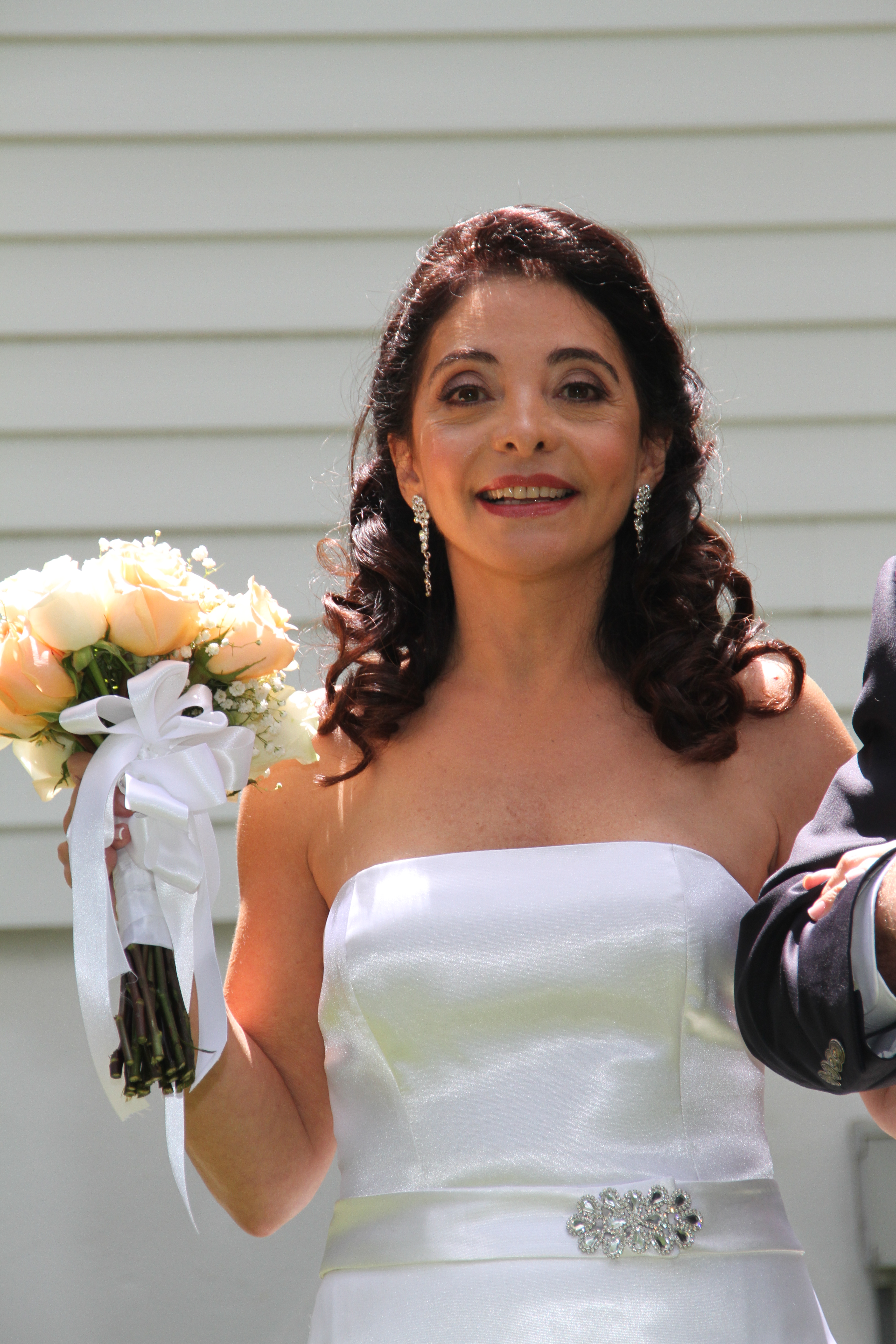
She looked as if she belonged in a Paul Gaugin painting.
Long thick black hair, brown skin and curves where a woman should have curves. She moved with the grace of a lioness. She smelled of the beach and she tasted like the tropics. She was as soft as an evening breeze and was as sweet as honey from lavender fields. She was all that I had ever dreamed of yet could never begin to hope for myself.
I had not intended to go on a cruise. In fact, I never thought I would go on any cruise but timing and circumstance conspired against me. Here, I was on a dock in Santos Brazil 6,000 miles away from home, by myself, wilting in the tropical heat, waiting to go on board a luxury liner that was to be my home for the next 18 days. 4 weeks previous my most ambitious travel thoughts had been whether or not to take the Lincoln Tunnel or GW Bridge. How the hell had I gotten here?
This journey of 6000 miles began with the step when my company laid me off.. There was no animosity involved. Their core business, a division I had not worked for, had suffered a major loss, a customer who represented 90% of their revenue had pulled their business and the company was forced to regroup. This included laying off most of their staff in the United States including me. They had treated me fairly and I had no gripes, but it allowed me the time to take a vacation that spanned beyond the standard 7 days or even the nearly unheard fortnight…
I had seen the trouble coming at the company. Their offerings to customers did not add up at all. They were coming to market late with products and were making promises that they could not keep. As a consequence I had been looking for the next step in my career when the ax fell. Within days of me being laid off I had a new job offer and could go away without the fear and worry of finding employment hanging over my head.
I needed a holiday. I was also hopelessly tired and in desperate need of time from my normal life. For the previous 2 years I had been working a full time job while also taking care of both of my parents. My father was ill. A combination of a bad fall, prostate issues, and extended stays in hospital had confined my father to a wheel chair and dialysis three times a week. I commuted back and forth to New Jersey 3 or 4 times a week to make sure that he was well taken care of and to spell my mother from her duties as primary care giver.
My mother is the type of woman who needs to create order from chaos. And, if there is order to create better order. Part of my job was to keep her from going to crazy from her inability to make this situation any neater or any better. She is also a cancer survivor whose bout with lung cancer leaves her wheezing at the smallest exertion. She needed my help and I was happy to give it but the commuting, the caregiving, the stress of aging parents all told me that I needed to get away from it all for a little while.
I needed to go far enough away so I could focus for a time on me. Rediscover who I was and hopefully lay a path for the future.
The final puzzle piece was actually a disaster or better said a tragedy. It was the Italian cruise ship Costa Concordia running into a reef off the Italian coast and sinking. It had been the lead story on every modern conveyance of information. Why not from a news perspective in our day and age it had everything. There were the great visuals of a ship lying on its side a gigantic rock stuck in its hull. The salaciousness of a Captain who seemed to like entertain women on the bridge while he should have been minding the helm and the scandal of a man who was such a coward he abandoned the ship before most of passengers. There was the human interest of people dying and the breathless stories of those who had survived. People died.
I am almost ashamed of the fact that I realized almost instantly that this was going to drastically reduce their ability to sell berths on their ship and that I could probably get a cruise for a very affordable price. But not so ashamed that I didn’t visit their site.
In fact when I went to their site they were indeed having, pardon the phrase, a fire sale. Reviewing their offerings one cruise immediately stood out to me. An 18 day cruise that would take me up the coast of Brazil stopping in Rio Di Janiero, Ilheus, Salvador di Bahia, Maceio, and then Recife. And while I hardly knew where any of these places were or why they were important, they sounded exotic and ripe with adventure. But the trip got better after leaving Brazil the ship would then cross the Atlantic stopping in Fuchal, Maderia, Casablanca and then ending up in Savona, Italy. And they were charging less than $100 a day for it, almost as much as I spent every day at home in NYC. I had never been to South America. I had never been at sea on a ship. I had never crossed the Atlantic or even the equator. I had never been to Africa. So almost without thinking I booked the trip.
The next several weeks were even more hectic than my normal life. The winding down of the job took time. The company I worked for was an Israeli company and getting anything legal out of them was a challenge plus they work on a scorched earth basis so negotiating with them and “leaving the camp site better than I found it” was both stressful and time consuming. On top of which I was in negotiations with my new company and that required a great deal of attention as well. And I had the idea of starting a consulting business as well so I was working on developing a business plan and meeting people on that as well. From a business point of view I had never been busier.
Then there was prepping for an extended stay away from home. I am single but I do have a dog and trying to figure out where he was to go and how he was to be cared for took some time. Eventually I asked a woman whom I worked with and who was “in between” apartments to come and stay in the apartment. Of course that made things easier but I still had to make sure Yankee had enough food for a month and write out instructions for Ramona on the proper care and feeding of my best friend.
And then there were my parents. Both my father and my mother now relied on my help. While strictly speaking I didn’t need to get their permission to go on their trip. I did want their blessing. My father was easy. Confined as he was to a wheelchair I knew that my trip would be like an adventure for him. He would live vicariously through the emails I sent and the photographs I sent. His only request of me is that I spend a few days in Sao Paolo with the grandchildren of his mother’s sister. I was reluctant because I did not know them but I also knew how much this would mean to my father so despite my own personal reservations I agreed.
My mother was another story. I knew that it was she that would be the one who noticed my absence the most. Over the course of the past two years I had become her sounding board. I was the one she went to when she was frustrated. I was the one she went to when she was angry with my father or she was frustrated with his care. She placed her burdens on my shoulders and expected me to carry that load. And while I had accepted this as my responsibility I also knew that my knees were beginning to buckle with the stress. I was shorter with her than I had been in the past. I was less willing to listen to her problems. I knew that I had to get away or I would not be able to accept any new burdens she gave me. So I pretended to ignore the pained look on her face as I told her of my plans and instead concentrated on her words which were of acceptance.
The only issue that really got my stymied is to what to bring on this trip. I was traveling to four continents, going from a tropical climate to early spring, I was going on a ship that had occasions from ultra casual flip flops and shorts to black tie. How do you prepare for a cruise when you have never been on one…but I knew I needed new clothes and a variety of odds and ends to make sure I had what I needed even if I was in the middle of the Atlantic. To compound things I don’t like to shop. I don’t like trying on clothes but they were necessary evils now so I sucked up and eventually got all that I needed.
So when I boarded the American Airlines jet to Sao Paolo Brazil I was wound as tight as I have ever been and frayed like a rope that had been used too often.
The trip had not started smoothly
The cab ride from Sao Paolo while beautiful proved a little too adventuresome for me. Not only do Brazilian drivers make Boston drivers look good but they also insisted on going the speed of a small jet. So I had gritted my teeth and butt cheeks on the entire ride down to the port. Then the cab driver got lost. Mind you he had a GPS but he insisted on not using it. Instead he kept on asking locals where to go. And of course I understood nothing of what they said and we kept on going in circles. Eventually I was forced to break out the GPS function on my iPhone and guide him to the docks myself.
My challenges only began there. It turns out getting on a cruise ship is a rather lengthy undertaking. First, you have to drop off your heavy luggage in one place. Then you have to drag yourself and other cases, briefcase smart suitcase, through tropical heat to the customs shed, where 3 boats are trying to load passengers. You then need to figure out where your line is and then you have to wait in a building that had barely any air conditioning with thousands of other people to get processed so you can board the ship. In my case the wait was well over an hour and by the time I made it to my stateroom on Deck 8 I was a sack of sweat and even bigger emotional wreck then when I had left New York.
As I unpacked and prepared the cabin for my extended stay my mantra was that it had to get better. That the cruise was going to be great. I had not made a mistake coming on this trip by myself. That I was going to have a great adventure. That I would be able to write to my heart’s content and that I would meet new people and the world would be generally kind to me.
As we left Santos a thunderstorm broke. Red forked lightening tore at the sky. Rolling booms came down from the sea. Watching the storm from my balcony I wondered if my wishful thinking had been just that and whether this was the true portent of things to come.
One of the things my cabin’s steward had left on my bed was a small piece of paper that had my dinner assignment on it. It told me that I was at the first dinner which began at 6:30 PM and that my table was 183. I had gone on this trip alone and one of the things that I had hoped for was this foolhardiness of going on this long trip alone would be somewhat mitigated by the people I met at dinner. I am gregarious by nature and thought that at least at dinner I would be able to meet new people, perhaps engage them in conversation and make a new friend or two.
So it was these high hopes that I headed off to dinner that night. I was shown to my table and noticed that it was a four top. I don’t why but I thought it would be more like a charity event with ten or so people sharing a round table. Perhaps I had seen to many “Love Boats” on television. Regardless I settled in and waited for the rest of the guests to arrive.
An in time they did arrive or should I say he arrived. There was only one other guest at dinner that night. He was a 20 something year old from Buenos Aires named Diego. He was friendly and very nice but he spoke no English. And I spoke no Spanish. So we tried to speak to each other through hand signs, pidgin Spanglish but it was a failure and we spent most of the evening staring off into space wishing that dinner would be over a lot sooner that it was. I can remember thinking to myself as I left dinner “this trip was a bad idea” and immediately went to the bar and had a few drinks. That night I lay in bed with sleep always just beyond my grasp wondering whether I should cut my losses and just fly home.
The next morning, I awoke as we pulled into the harbor in Rio Di Janiero. The water was placid and black and a mountain the shape of a dragons hump sprang from it. I was excited. Rio is a place that I have been meaning to get for years but for one reason or another I had never made it. I had heard of the spirit of Rio and wondered to myself whether I would be able to get a sense of it on the Jeep Tour of the city. I had chosen it because it sounded a little more adventuresome that some of the other tours which were largely conducted on air conditioned buses and seem to be mainly designed to give people a chance to sight see a little and shop a lot.
It turned out that the jeep tour was not exactly what it was billed. It turned out that it was really more of a grand prix race on the back of a pick-up truck. My compatriots on this expedition were two sixty something year olds from Lucarno, Switzerland. They, of course, spoke no English and my Italian is limited to a couple of dozen words including one for toothpick which I didn’t think would do us much good in communicating on this trip. Thankfully our guide spoke both Italian and English and promised to do dual translations for us.
The trip began on a mad dash through the city streets up to the Statue of Christ that sits on top of a mountain overlooking the city. The great news about being on the back of a pickup is that you notice a lot of things you would notice on a bus like how close Brazilians like to get to each other while driver or the drunk not yet home from the night before giving you the evil eye when you were paused at a traffic light.
The roads to the Christ are windy and very very steep. Some are the roads are lined with beautiful homes. Other with slums where having a roof was a big luxury. But mostly they are lined with a beautiful forest and for most of the trip up the mountain I just enjoyed the trees and the crystal blue sky that had blessed us that day. That and being impressed with the legions of bicyclists who were making their way up the steep grade seemingly undaunted. My quadriceps hurt just looking at their efforts.
Our timing was perfect. We reached the statue just as the sun climbed about the head of the statue giving Christ a beautiful halo. Our guide gave us many facts about the statue but to my honest the only one I remember is that the architect for the monument was jewish. Normally I would have cracked wise and said something like that was appropriate as Christ’s architect was jewish but I didn’t think my fellow travelers would appreciate my sense of humor, so I just kept to myself.
As impressive as the statue was the view was more impressive. The crystalline day allowed us to the whole city from lagoon to Ipanema to Copacabana to Bahia Dicuca from sea to forest it was awesome. I thought how lucky it is the people get to live in such a beautiful spot. At one point while I was enjoying the view an iradescent blue butterfly landed on the railing where I was standing. I have a thing about butterflies. I think they are lucky. So I made a wish to return to Rio one day when I had more time.
The next stop was the Ipanema which is a beautiful beach side section of the city. It is of course the section of the city that Jobim made famous and as we drove through its busy streets I tried to get a sense of the inspiration for that beautiful jazz melody. Looking at the cafes, the beautiful women headed to the beach, and the bustle of people doing their everyday life I thought I could but I reinforced by turning on my iPod and listening to Frank and Jobim play the song together.
The Tijuca forest our next stop. It completely surrounds the city and is densely populated with trees of every sort from Palm to Oak to species I have never seen before. There were hanging vines that would have made Tarzan happy and beautiful flowers in red, yellow and purple that would have made an impressionist reconsider his palate. But it is the story of the forest that I find the most amazing. It seems that in the 1700’s it was completely deforested to make room for coffee plants. But the deforestation and plantings had a horrible effect on the city. The tropical climate turned dry and with it the city lost much of its ability to survive. So the city fathers, came up with a remarkably ambitious plan that was far ahead of its time. They decided to reforest the mountains surrounding Rio. They accomplished through the use of 2 slaves who literally slaved away for 10 years planting every single plant in the 50 square kilometer forest.
Near a waterfall, we took a walk along a trail. Along the trail we came across what our guide called a baby cobra. It made me glad I didn’t wear flip flops. Nearby there was also a statue of a slave bent at the waist, his arms reaching out his hand cupped around a live flower someone had placed there. Brazil’s history with slavery is not as onerous as the United States. I am told that the slaves were treated far better and were not considered inferior simply because of the color of the skin. I don’t know if this true or not but I don’t know of any statues to slaves in the south where they helped King Cotton become an economic power.
On the way out of the forest the driver abruptly stopped in the middle of the road. He pointed to the tree limbs above us where a pack of monkey’s were leaping from tree limb to tree limb trying to cross the road without touching the pavement. I had never seen a monkey in the wild before and I was mesmerized by their graceful movement in the trees and how camouflaged they were for their environment. Then it occurred to me what was happening and it made me laugh as I now knew how the monkey crosses the row. I was going to share this with my other passengers but realized that they would never get the joke so I just smiled to self.
Eventually we made our way to the Copacabana. I could tell that it was a totally different type of beach than Ipanema. There seemed to be more athletic things going on. There were lots of volleyball nets set up on the beach and there were many soccer fields. I was not tempted to play “The Copacabana” by Barry Manilow but I would not have had the time anyhow. Our truck driver must have looked at his watch and realized the tour was running long so he was doing his best to show us the city at 120 kilometers per hour. I was not unhappy with his decision because I had realized that despite my best American sunblock I had managed to get pretty crisp from the tropical sun that had been beating down on us all day.
I bid good bye to the guide and the Swiss and made my way through the port building to the dock. Trying to take a short cut to the boat I cut around the path through a seating area where I saw a short woman with long blonde hair taking pictures. I realized that I was lost and reversed course and eventually made my way to the docks where I saw a very attractive brunette standing near the gangway scanning the dock as if she were waiting for someone. I wistfully thought to myself that I wished she were waiting for me.
The hot tropical sun, a long day of touring with people whom I could not communicate with, and the welcome air-conditioning on-board ship conspired against me so that when I flopped onto the bed in my stateroom I fell asleep immediately. When I woke an hour later, I realized two things. My sunscreen had not been effective as I could begin to feel the heat and tightening of skin that a sun burn brings and that I did not have the emotional energy required to sit through another dinner with Diego. There were options including eating at one of the cruise’s two fancier restaurants where you were charged a supplemental fee; several snack bars on the ship offered menus in which you could construct a meal, room; a pizza bar that was open 24 hours a day or room service.
I decided to go up to the Pizza Buffet on deck 9 as it was the easiest and at least there I could read the book on my iPad, eat at my own speed and I knew the conversation would not be any worse than it had been the night before.
It turns out the Pizza was pretty good, not NY Pizza good, but good enough. I probably ate a couple slices more than were good for my waist line but I was feeling a little sorry for myself. It had been another solitary day for me. While I am used to being alone as I live alone and I am often on the road for business being alone here felt different. It seemed that everyone on board were couples or part of a large group. As a consequence, it was more than being alone. It was not being part of a group. A lone wolf following a pack. I had hoped for more from trip. I had imagined At least someone to share a conversation with but as it turned out I was one of the few English speakers on this trip. Most of my fellow passengers were Brazilians, Italians, Germans and Dutch with a smattering of French thrown in for flavor and a dash of style. As a consequence I could not even sit near a person at a bar and overhearing their conversation jump in with a pithy remark or witticism.
I am nothing though if not an optimist so I decided that after dinner I would go down to the main lounge on deck 3 and have a drink and listen to a live band play soft Brazilian music. One caiparaina later I was gone. The lounge was dead and the music was too loud for me to even make a conversation with the bartender.
So I walked up the central stairway to deck five where there were a number of bars. The first one I came to was the Grand Bar Rhapsody. It had a large seating area of plush seats surrounding an wood dance floor and adjacent stage. There was an oompah band playing a polka and I concluded, rightly or wrongly that the Germans had taken over this bar and as I didn’t know how to Polka and the Germans notoriously rude travelers I decided to keep on walking.
The next bar was not really a bar it was more like a salon with comfortable couches lined against the wall where people had after dinner drinks and so called Viennese Pastries and listened to a Brazilian play quiet Jazz. It seemed a nice place for a cup of coffee but as I was in search of something that would numb me more than excite me I decided to keep on the move.
The next stop way station on my way to finding a little comfort in a bottle was the casino. I am not a gambler and the physical attributes of those playing the slots machines was so unattractive…imagine Hunter Thompsons most horrifying descriptions of casinos denizens in Fear and Loathing in Las Vegas… that I pressed on.
Rick’s Piano Bar might have been interesting as it has a very intimate feel and the music seemed pleasant but they were only serving wine and I definitely need something with a more active ingredient so I kept placing what foot in front of another.
Finally, I came to the Rock Around the Clock Bar. I liked the room immediately. It had a large bar arranged in a large oval near its entrance. It was dark and the band that was playing sounded as if they might have had a few music lessons and the lead singer was very pleasant on the eyes. I perched myself on one of the bar stools and Tuxedoed Phillippino barman immediately asked what I was drinking. I asked about his selection of Vodka and he said he had Smirnoff and I told him I would have a double. It is not my favorite vodka and I laughed at myself again when I thought “Any ship in a storm….”
After he brought my drink I did a survey of the room. It is a large room, it takes up the entire fantail of the ship on deck five, and could easily seat 500 people on multiple levels on banquets, tables of two for intimate conversation. Just in front of the back windows there was a band set up and in front of them a small dance floor. Other than me there were just 9 other people in the joint. Two were sitting adjacent to me in the circular bar. There was a couple seating near the band apparently enjoying the show. There was a waitress, two barman and two people in the band.
I asked the barman if it was always this crowded at the bar and he told me that no that I should have been on the trip the week before. It had been Carnival and the place was jammed with the rafters with Brazilians getting their party on. He told me that the boat had been packed then with over 4000 guests but that this cruise there were less than 1800.
I ordered another double and thought about my fate. I had to face the facts that with so much of the ship empty and the rest filled with people whom I did not even share a language with that the chances of meeting new people was going to be very slim if not impossible. I rationalized that the real purpose of this trip had always been to have an adventure, to be able to write everyday…to improve that craft and to finally start the book that has been bouncing around my head for years….that I should enjoy that aspect of the trip and use it as I trip to begin here that inner voice that all writers hear. So I did what good writers do. I ordered another double.
I awoke the next morning to brilliant sunshine reflecting over a teal sea coming through the partially open curtains on my windows. I realized two things almost immediately. First, if be a good writer was dependent on drink I would never be a good writer because I felt like a dried out sponge with a headache. Second, that my drive around Rio had given me a far worse sunburn than I originally thought. The skin on my arms was on fire and my face felt like I had applied blush with habaneros. Brilliant… day two of the trip and I was already on injured reserved.
Deciding that coffee was needed and breakfast was called for I went up to the Breakfast buffet on deck 9. It was there and then I became familiar with the feeding habits of the German tourists. They seemed to have little regard for lines. I was pushed aside a number of times without so much as a grunt of an apology by a number of them when I was standing in front of item that happened to catch their fancy. Standing in front of the pork products, sausage and bacon was particularly hazardous so I settled for some bread , butter and honey and retired to the port side gallery to eat my breakfast in peace and to nurse my bruises.
Rehydration, caffeine, and simple carbohydrates did their trick and I soon began to feel remarkably similar to a human being. I decided that if I could not spend the day out in the sun, I would try to make the best of it by continuing to write the piece I had been working on so I returned to my cabin and flipped open my computer and began to write.
The piece I was writing had been inspired by a visit a few days prior with my cousins in Sao Paolo. They had pulled out a file of old photographs that their grandmother, my fathers mothers sister, had been sent my grandmother. Most of the photographs I had never seen before like a picture of the two sisters. It had been taken in 1922. They were young woman in full bloom who were about to say good bye to each forever. It was a heartbreakingly beautiful picture.
There were also various pictures of my childhood showing my parents in their youth which brought back memories of the most innocent and wonderful times of my life.
But I had broken and cried when at a picture of my father as shave tail lieutenant. The contrast of him so young so close to the beginning of his life with the man I left in New Jersey, frail and old, had rung my emotional bell and I wanted to write about the feelings that the photographs had raised in me.
I knew when I tackled the project it would be hard to write. I was going to be wading through a lot of complicated emotions. That morning was particularly tough. Partially because the photograph I was working at describing touches on the holocaust and my families unpleasant history during it and because despite my recent revivification my emotional barriers had been pulled low by the previous night’s stupidity. So several times I need to physically take a break from my writing and go out to my balcony and steady my emotions and plot the course to the next paragraph.
But the writing was going well and when the time for lunch arrived I am very reluctant to leave my keyboard. I am also not so sure that I want to face the horde of semi drunk German tourists as my bruises from that morning were still a little painful. Eventually an empty stomach and cramping muscles from being huddled over a laptop keyboard forced me to a stop and I make my way to the lunch buffet. I brought my iPad with me and attacked a Jasper Fforde novel along with my pasta.
Long ago on some trip to New York City my mother in attempt to keep her small boys occupied had taught me the game of trying to guess the back story of the people we saw on the subway. The game had stuck and when I am by myself, usually in airports, I play the game just to past the time and perhaps amuse myself. I am playing the game as I pass through the big open area by the Calypso Pool on my way back to my stateroom.
The first person I see is a man who is tanned the color of teak, as wide as he is tall, wearing a Speedo bathing suit that is barely visible through his rolls of fat. He has his cell phone in his hand and as I approach, he slowly pitches forward asleep half resting on the table he is sitting in front of. I imagine him a small business owner from Stuttgart whose wife has convinced him to come on this trip and he is spending his days drinking beers by the pool hoping that one his employees calls him in need of a solution to a problem he is sure they cannot handle on their own.
At a nearby table sits a woman with brightly dyed red hair that is arranged in cut that looks like a mullet making love to a Mohawk. She is nearing seventy years old and is wearing make up that looked to have been applied with an overloaded spray gun. She is also wearing a bikini that might have looked good on her 50lbs and 30 years ago but now was a testament to the fact that she had not found a mirror in her cabin. I imagine she is from a small city in Italy and she was on the cruise to see if she could find husband number five or at least make good use of what ever gigolo’s happened to be aboard. I avoid eye contact with her.
Then just off the pool deck, where the overhang creates a shaded area from the biting tropical sun, I notice three women trying to arrange their chez lounges on the crowded deck. The first is the blonde I had noticed dockside in Rio taking photographs. Talking with her is a petite red head who is visibly giving the other instructions in Portuguese about how her chair should be arranged. With them is the brunette I had seen by the gangway the day before. She is wearing a bikini which she fills out nicely, large sunglasses that made her look glamorous with luxurious thick black hair that comes to the middle of her back. Wow.
She looks up at me as I pass by but before I can make eye contact with her I lose my situational awareness and almost bump into one of the waitresses who is carrying a tray fully loaded with drinks. Embarrassed, I slink away. Back in my room, I lay on my bed and try to nap. But for a long while all I can think of is the brunette.
My nap was deep. The rocking sensation of the boat and the excesses of the night worked me into a sleep that lasted for hours. But it was not a refreshing nap. Instead it left me groggy and feeling shaky. Normally I would not have even considered going to the gym, I felt that unwell, but the extra slices of pizza were weighing on my mind and I didn’t want to be that cliché guy who went on a cruise and gained 15 lbs.
The gym on the Costa Pacifica is located on deck 11 as far forward as you go. While relatively small it is well equipped with weights, exercise machines, treadmills, and bikes. I chose the exercise bikes to torture myself on because I did not have the ambition for anything else. The bikes have a video monitor and for a while I tried to find a channel that might entertain me during my sweat fest but there are no English channels and my Portuguese had not improved in my sleep. My choice of entertainment consists of the Costa promotional video where they celebrate the launching of their newest vessels, (It was a lavish video with very odd elements including a contortionist in a large martini glass) or an out of date Italian exercise video. Eventually, I turn the video off and listen to Adelle and focus on the mesmerizing waves of the South Atlantic. 50 minutes was enough to assuage my pizza guilt and after a stretch I go below to my state room.
My work out had taken me through dinner.as I planned. For sustenance and a lack of better options I return to the Pizza Buffet and gobble my way through half a pie. Eating alone is a bore and the company awful. It also made me feel like a loser. At least, I rationalized, it was better than eating with Diego in silence. As I get up to go I looked at the table adjacent to me and there is Diego reading a book. Clearly he had been as enthralled with our conversation as me. I smile and wave and he sheepishly returns the gesture.
After dinner I waddle, eating a half pizza will do that to you, down to deck five again. I ensconced myself in the Rondo where they served Viennese Pastry and coffee rationalizing that it as a tribute to my father who was born in the capital of the Hapsburg. It also had the strategic advantage of being located in the main thoroughfare on the ship. It was an excellent place to sit and watch the world go by and perhaps spy a brunette. The pastry was not worth the calories. Demel’s should sue them for using the phase “Viennese Pastry.” .The coffee was hot and bitter enough to take the taste of awful pastry out of my mouth. And the cognac I had a little later on certainly livened things up significantly.
But it was an absolutely fabulous place to watch the world go by and I reached a number of conclusions. At age 55 I was one of the youngest people aboard. 78% of all the women on the ship had cankles. Germans only think they hold their liquor well. Italian passengers had the best shoes and knew how to drape sweaters around their shoulders better than any other nationality. European men always walk with their hands clasped behind their backs and they don’t really walk as much as amble.
Sadly, the brunette was nowhere to be found and after a while I signed my chit and went to bed.
I awoke the next morning as we were docking in Ilheus. Laying in bed I decided that the dinner situation had to be changed. This was supposed to be a cruise for my pleasure and dinner had become something I dread instead of welcoming. I wanted to be social. I missed the human contact. The situation would not change by itself. I would make it happen. As a consequence, before I reported to my tour I made a detour to the service desk on deck 3 to check into how I could change my eating arrangements. I was informed by Nate, the oh so helpful, oh so happy crew member, that I had do to that with Maitre D during my dinner service that evening. Frustrated by his cheerful inability to help me solve this situation, I was tempted to bring whip out my inner New Yorker to resolve the situation using gestures and language that don’t teach in English classes but I restrained myself. But vowed to talk to one of the Matre D’s on my return to the ship from the tour.
The tour I had chosen was not your typical town tour where they show you the historical highlights of the town then dump you in some commercial center so the local merchants can acquire some of your hard earned Reals. Frankly, I didn’t know much about Ilheus, up until a few weeks before and I was profoundly ignorant of the place. What I knew was that Jorge Amado, the famous writer, had lived here and was to this place as Hemingway was to Key West. I also knew that the beaches were famous for their beauty and that it was the center of Cocoa production in Brazil.
I had no interest in shopping. My sunburn had put me on the disabled list for the sun so the beach was completely out. The next best option was to go on a tour of a cocoa research facility and a sloth rescue habitat that included a stop at cocoa plantation, chocolate factory with only the briefest of stops in the downtown area for souvenir shopping.
My luck continued when the placed me, the only English speaker, with a group all German tourist. Everyone was a couple and then there was me. The only good news in this from my point me and I was told by my guide that she would translating all were seeing in both English and German and of course the seat next to me would be open.
The bus took us out of town and it traveled through some of the seamier sections of Ilheus with poured concrete apartment blocks replete with satellite dishes, and laundry hanging off the sides of buildings. Only a few had air conditioners and considering the heat, which was brutal, I wondered how they managed. There were service stations, markets that were mostly open air, and bars that looked like I wouldn’t survive long should I stumbled into one. Soon enough we were on a country highway riding through low riding hills covered with deciduous trees. It was beautiful and it was easy for me to understand how the Brazilian’s had chosen the color of their flag.
It did not take long to reach the Cocoa Research facility. It was boarded by a brick wall and required the bus to pass through security and then report to a headquarters building made out of the same red brick as the wall so our guide could pay for our entry. . Eventually we made our way down a long straight road while our guide explained that the facility was actually being used for many types of research to help the uplift the economy in Ilheus. She pointed to low lying ponds that were being tended to by workers and told us they were experimenting with fish farming. Pointing to a grove of cocoa trees she said that all groves had banana trees within them explaining that they helped with the pollination.
The bus pulled into a low lying building’s parking. It was a facility created to demonstrate the modern way in which the cocoa plant was harvested and turned into chocolate. The tour consisted of us walking down a very narrow hallway with windows that allowed us a view of workers conducting a variety of different jobs. It was not very interesting or enlightening. I already seen this segment of “How Its Made” on the Discovery Channel. I hung back and let the words drift over my head. But at one point I made the mistake of standing just next to a display as our guide explained its contents. I was literally shoved away from the display by the Germans who seemed felt as strongly about the exhibit as they did about Poland in 1939.
I walked down to the end of the hallway to the little reception area where they were to serve us a refreshment of chocolate liquor. What I did not realize is that it also served as an opportunity for some of the more entrepreneurial of the workers to sell us some of their “homemade” and “fresh” chocolate. I was not exactly put off by their aggressiveness, I do live in NYC, but I was not in the mood to be hawked at so I walked outside where at 10AM it was already brutally hot and humid.
Eventually our guide emerged and walked us across the road to where there was a small grove Cocoa plants. They are not overwhelmingly beautiful trees but the seed in which the nibs grow are beautiful in orange and yellow and are shaped like an oblong gourd. Sadly one of our group members wearing their pre requisite sandals Germans are issued when the leave the country made the error of stepping on a fire ant hill and any further exploration of the grove was put off until the “fire” was put out.
Soon we were back on the bus and driving deeper into the reserve eventually coming to a little turn about that had a small hut next to it. As the door to our bus opened a woman emerged from the small structure to greet us. She was not alone. She had two sloths, or slow monkeys as our guide called them, wrapped around her as if she were wearing a fur. The Germans could not push past me fast enough to get to her. I think what makes sloth so attractive to humans is that their faces are white with dark patches only to accent their nose and eyes. They look like us only a little developmental off. That and the fact that thee movement is so slow it looks to be slow in slow motion is mesmerizing. I withstood the Germans as much as I could and got close enough to the woman so I could pet one of them and was quite surprised when the fur was rough…a kitten they are not.
Seeking refuge from the throngs around the sloth woman I walked down the path to their habitat only to come across a rather large tarantula crossing the path. Which of course made me think…why did the Tarantula cross the path…to get the other side. It was a beautiful creature. Black with white hairs covering its body with just a touch of red. It blended perfectly with its environment but sadly my staring at him attracted attention and I was eventually shoved out of the way by the Germans.
The sloth facility was a brick and wire enclosure. There were three slow monkeys in residence and they were hanging on the fence waiting for some of the tourists to feed them looking very much like here no evil, see no evil, hear no evil only sloths not chimps. I stood and watched their slow transverse up the fence and to where their hanging vines were arranged. They are amazing creatures to watch although their long nails that look like some sort of Klingon killing device were not that inviting. Eventually I was shoved out of the way by the Germans and sloth like made my way back to the bus stopping only to watch a parade of Carpenter ants carry bits of leaves and other flora to their mound.
The Cocoa Plantation we stopped at next was perhaps my favorite stop of the day. Not because of the tour itself where they showed us the raw beans and how they were processed before mechanization. That was fairly boring because our guide neglected to translate into English perhaps realizing that the Germans were the big tippers of the day. I was also tired being boxed out by the Huns who didn’t seem to be able to enjoy themselves unless they had planted an elbow into someone’s body. Instead I tried to find a shady spot and just take in the scenery.
One of the things that caught my attention immediately was the plantation house. It was not large like I would have imagined but small maybe a half dozen rooms total. Made of native wood and stone it was situated under a grove of trees at the top of a small hill. Off the side was a large double tiered, covered, patio. I walked up the grassy hill and immediately saw the sense of why the house was placed where it was. Not only did it have a commanding view of the countryside, hilly with cleared pastures and groves of cocoa plants but it was strategically placed to capture a breeze. This, along with the shade trees kept the house cool even though it was uncomfortably warm out.
On the patio they had arranged some refreshments. I was unsure of the food and the drink. I had not seen it prepared and I had been told legions of stories before the trip of folks who sampled food and spent the remainder popping Imodium and keeping near bathrooms. I did not need that kind of a fate. But the food looked so good. All types of local confections and cakes so eventually I compromised with myself and only had a small piece of cake that was very good and a little coffee thinking that the heat would kill any of the bacteria that were threatening to take my colon hostage. The Germans grunted with pleasure as they had piece after piece of cake and chugged the fruit juices placed out for them. In effort to ignore them, I imagined that I was in a Gabriel Garcia Marquez novel and watched the world turn very slowly.
Our last stop of the day was the town of Ilheus itself. The guide told us that we were stopping there to see the historic church and the town that Jorge Amada had made famous. I suspected that while there might be a sliver of truth in what she said my working theory was this was the point in the tour where we were supposed to provide direct aide to the town by transplanting the Reals form our wallets into their store’s coffers.
The truth was somewhere in between. The church, Sao Jorge de Ilheus, is a beautifully preserved 17th century church painted in ecru with white accents. It is perfectly framed by the flawless blue sky. It was cool inside so I sat in one of the pews and stared at the frescos that were beautifully maintained and watched as many came to pray and others to take photographs. After a while they hard wood of the pews got the better of me and I decided to stroll through the town.
At one café, Vesuvio, they had a life like statue of Jorge Amado sitting at a table. I guess that this was Vesuvio one of the bars that is featured in his novel Gabriella Clove and Cinnamon. I resisted the temptation to take a photograph. I also resisted the street vendors who were only mildly aggressive in getting my attention. The stores held little interest to me as I had all that I really needed and saw no need for a souvenir from this place. I made my way back to the bus and watched the world go by while the Germans finished distributing their Euro’s to the shopkeepers of Ilheus.
By the time we got back to the ship it was late afternoon. I was tired thirsty and hot and wanted nothing more than to collapse on my bed. Which I did and instantly fell asleep. I awoke with a start a little panicked because I had thought that I had missed my opportunity to change my seating at dinner. It was just 6 so I was nearly the first person into the seating when they opened the door.
The Maitre Di was a very stocky Italian with salt and pepper hair who really looked the part. Not only was his Tuxedo immaculately pressed and tailored but the half glasses he wore at the end of his nose gave him the appearance of kindness and authority at the same time. I explained to him my problem. That I didn’t want to eat at the early dinner that I was too young for that seating and that my first dinner had been a disaster because there was no one in which to speak English…couldn’t he please place me in later seating and with someone who even spoke a few words of English.
He gave an understanding nod and pushed his glasses just a little further down his nose and began attacking his computer with both mouse and keyboard. Every once and a while he would he would mutter something to himself, shake his head, and click on his mouse and bang away at his keyboard. And with every click and shake of the head I would lose a little hope. Doubt began to creep into my mind. What if I have the spend the next 15 days eating by myself at the Pizza bar. Would it be too embarrassing to fly home from Recife and just skip the whole second part of the trip? I was ready to walk away and begin checking airline connections when the Maitre D looked up at me. Taking off his glasses he said “I am sorry but I do not have anyone who is an English speaker who I can place you with. I have checked and all the tables are occupied.” I was swearing silently to myself when he added “But I do have three Brazilians who are traveling by themselves and I know they speak a little English. Would you like it if I placed you with them?”
At that point I would have even sat down with a table full of the Germans who been bruising me for the last three days just to have someone to talk with so I quickly agreed.
I don’t like to look slovenly and normally I take a bit of time to make sure that my appearance is good enough or maybe just a little better than what the situation dictates. That evening, I dressed with particular care. I am still not sure exactly why but some little voice inside my head was telling me that it was important that I make a good impression on these Braziliero’s. So I put on a blazer and a collared shirt with freshly pressed khakis and shoes that looked as if they had been polished in the not too distant past. When I decided that my appearance would not make anyone shriek and runaway in terror I headed to the bar. I wanted to be near the restaurant when it opened for its second seating so I would arrive before the other guests.
I do not remember the drink. I remember being very nervous for some reason which was very unlike me. I meet new people professionally on a constant basis and I have been accused on more than one occasion to be able to generate a conversation from a cement wall. But tonight, I had butterflies doing a samba in my stomach. When the doors opened for the second dinner seating, it was a little trepidation that I walked to my new table.
The table was a single aisle up from the back of the restaurant and the second table in its row and was directly adjacent to the windows that lined the restaurant. When I arrived at the table no one was there which was not exactly a surprise as I was perhaps the third person to enter the restaurant that night, so I chose to sit on the near side of the table in the seat nearest the door in case I needed a quick getaway.
I was quickly greeted by my head waiter who said her name was Marika and that she would be my waiter. She was a tall Philipina woman with jet black hair and while not beautiful she was very “handsome.” I relaxed a little made comfortable by her gentleness. She asked me if she knew the people I would be dining with and I told her that I did not that I had just been assigned this table. She told me not to worry as she would make the introductions.
The room began to fill with guests. And no one joined my table. I eyed the bread on the table as I was very hungry as I hadn’t eaten lunch that day but I resisted because I thought it would be very embarrassing to have a hunk of butter bread in my hand should my dinner mates arrive at an inopportune moment. The room filled some more and still my table remained empty. The bread began to get more and more attractive and I was just about to break down and have a piece when I felt Marika tap my shoulder and tell me that the other diners had arrived.
I stood up to greet them. The first person I was introduced to was Christina. She was blonde, in her mid fifties and had probably been quite a beauty in her youth and was dressed for dinner in ankle length gown. She was the same woman I had seen taking pictures in Rio and later on the pool deck. The next woman to introduce her to told me her name was Yarra which I had to ask her to repeat twice because it was an unfamiliar name to me. She was the same age as her companion and about the same size with cordovan red hair and bright green eyes. Like her friend she was dressed for dinner in a gown. She shook my hand and tilting head in the direction of the Maitre di’s podium….said “My sister…she has to say hello to everyone.”
I turned and saw the brunette. And, just for that moment time seemed to slow just a little bit. Her brunette, thick and luxurious hung over her shoulder. Like her companions she was wearing a floor length gown but it clung to a body that had curves in all the right places and seemed lithe and strong. She was saying hello to Marika and her face was alight. Her smiled looked genuine and real and I knew in the instant that I would like this woman.
I held out my hand in introduction and said “My name is Paul.” She replied in perfect English “My name is Elaine.” I was not prepared for an English sounding name and embarrassed had to ask her to repeat her name. It took two tries before I understood her to say Elaine by which time my cheeks were glowing in embarrassment.
Her hand was soft and warm and unlike so many women who hold your hand as it were overripe fruit her grip was confidant and strong. Before I could even think about it I reached over and pulled the chair next to me away from the table and gestured for her to sit.
As I sat down, I thought “ What a lucky coincidence that this was. The only woman on the ship that I had noticed, the only woman on this voyage I had wanted to meet was now sitting next to me. I made a mental note to thank god and to remember to bring cash to the next meal to tip the Maitre D.
I wish I could tell you that I could remember every single bit of our conversation that night. That I could repeat it word for word. That each syllable is indelibly etched memory. Sadly that is not the case. I was so overjoyed to be relieved of the burden of only listening to my own thoughts, of being with people who spoke my language well, and being next to this woman who had caught my eye for days that the specifics of our conversations are lost.
What I remember is that all asked where I was from and when I told them New York they got very excited about my city. They all told me that they loved it there. Elaine mentioning that she has been there many times and had even lived there for a while studying English.
They told me that they were from Rio. And when I told them how much I had enjoyed the city a few days previous Elaine told me that you could see Rio in a day and that I needed to come back and let her be my tour guide. Attempting to flirt I said I would hold her to that, but she said “of course. It is why I said it” almost as if I had insulted her integrity. I thankfully did not know then that Brazilian custom dictates an invitation to your home when you meet someone. Regardless, for the second time that evening I felt the blood rush to my face embarrassed her taking my comment the wrong way. I swore to myself to tread more easily in the future.
At one point I asked Elaine how she had come to be on this cruise. She told me that her sister Yara had planned the trip, but she had come because her father had been very sick and she had been caring for him. Caregiving had taken an emotional toll that she knew she needed to get away to regain her health and her spirit. This took me back a little. Not because I didn’t understand the need to take a vacation from caregiving but because I understood all too well. It was, after all, was one of the main reasons for being on the cruise. What were the chances?
I recall the conversation was easy, that the food and service good and that all to quickly the last crumb of dessert consumed. I didn’t want the dinner to end so I told them that “I would be honored if I could buy them a drink’ feeling far more a shy teenager that the middle aged man I was. When they declined they must have seen my face drop because Elaine said to me “But we are going to show would you like to go with us?” I readily agreed and followed them into the theatre with my hands clasped behind my back like I had seen all the sophisticated European men walking the night before in a vain attempt to be far more sophisticated and polite than I normally am. I am not ashamed of thinking at the time that Elaine possessed a great “bunda.” Which at the time was the only Portuguese word I knew.
We thoroughly enjoyed the show. Not because the show was good but because it was bad. Elaine, as it turned out, had not only learned English but she had learned a few words I had not learned until I was in college and had an absolutely wicked sense of humor that corresponded to mine exactly. We spent the entire show making fun of the acts, which to be honest, was not hard to do. But our raucous behavior earned Elaine and I a reprimand from her sister and Christina who thought we were being very impolite. But Elaine kept going. I seem to recall her saying something sophisticated like marvelous like “Illegitimus non carborundum” only having to explain that it was GI Latin for “Don’t let the bastards get you down.”
The problem with enjoying yourself is that time passes far too quickly. And, far too quickly the show was over. I did not want the evening to end so I renewed my invitation for drinks. Yarra and Christina said they wanted to look at photographs but Elaine, graciously, agreed. We found our way to the Atrium Bar on deck three, at the bottom of the central well of the ship. There was a Brazilian duo playing. The man playing the guitar was short and rotund. The woman beautiful with a figure that would be admired by geometers with long dark hair. Their music was perfect backdrop for conversation: Brazilian standards, bossa nova, and jazz.
We asked our waitress for two Caiparinias and we began to talk. And then we talked some more. Then we talked some more. There was never a moment’s pause in the conversation. There was always something new to say. One of us would always be reminded of another story or joke or situation we had been in. It was as if we were two people who had known each other their whole lives yet had never met and had plenty to get caught up on.
As we talked, I was made more and more aware of how beautiful Elaine was. Her face was a perfect oval with high cheekbones, deep brown eyes, with a sensuous mouth that had an easy smile that was iridescent. But it was more than physical beauty. There was an inner quality as well. I could sense a very gentle soul with inherent kindness and lurking behind a veil of shyness an imp looking for the joy and humor in life.
Several Caipirinhas later, it became evident that the bar was in the process of closing for the night. I signaled for the check. While we were waiting for it to be brought to me Elaine asked what I was doing the following day in Salvador Bahia. I told her that I had not signed up for a tour early enough so I was going to stay on board the ship and write. She said “You don’t need a tour. Christine, Yarra and I can show you around. I have been here many times.”
As we walked to the elevator we made plans to meet the next morning. When her elevator came, I leaned forward to kiss her good night and was presented very quickly with her cheek. I smiled and told her I had a wonderful time this evening and she replied that she did too.
When the elevators doors closed I stood there a moment before I made my way to my stateroom.
The next morning Elaine and I me at the bottom of the gangway. There Costa’s crack photography staff had positioned several models wearing outfits that were supposedly authentic to the middle 19th century in Brazil. Their white dresses hung off their shoulder and hung to their knees and were trimmed with bright floral embroidery around the neckline with a matching belt. On their heads they wore a white turban made of a fine cotton and tied in front. It was here that I first learned of the Brazilian compunction to have photographic evidence of everything. Christina and Yara insisted on having several photographs taken with the models. first by the ship’s photographer, and then by their own cameras
The port building is Salvador Di Bahia is like every port building I had seen in Brazil. A very long narrow one story building with a high roof and a number of small shops inside where un-adventuresome tourist can buy a quick souvenir and then return to the ship. The only thing that made Salvador’s different than the others I had seen was that it was a little longer than the others and of course the “gauntlet
Immediately upon exiting the building we were besieged by street vendors who wanted to sell us something. Most hhad religious ribbons to sell. Bahia is the center of the Candomble religion, a faith that is a mixture of Catholicism and an African religion brought into the country by slaves. Other had t-shirts than they thought we should own. Taxi drivers wanted to show us around. Fruit vendors wanted to make sure that we did not get scurvy. And they followed us around like they were paparazzi and we A list celebrities. I did my best to keep them off of the girls and myself but me telling them to get out of our way and pretending I was a pulling lineman in the NFL but seemed to have little or no effect. It was just more chum for the shark exciting to even larger levels of salesmanship.
The good news was that the minute we cleared the port building they lost interest. Elaine explained to me that normally that they were not so bad; she had been here before, but that my luminescent skin and American accent made them think us easy marks. She said she was hopeful that I kept careful watch over my wallet.
Our first stop was at Mercado Modelo which was just around the corner from the port. It used to be Salvador’s main market where farmers would come and sell their produce, but the growth of the city had changed that. Now it is largely used for vendors who wanted to sell trinkets and local handyworks to tourists. I had had no real interest in going here but Christina and Yara I would soon learn were Olympic class shoppers of tchotchkes and any opportunity to buy a trinket would be worthy of a stop.
The market, despite the early hour, was crowded and Elaine and I followed the girls down one aisle and then another and then they seem to disappear. Elaine asked me if I was interested in buying anything here and I said no. She then said “Let’s go. Places like this are too crazy and too crowded. I do not like places like these. Everything here is shit.” I decided two things at that moment. First, that she said the word shit better than anyone I had ever heard use that particular invective. She and I also shared a dislike for small crowded places. However, on the way out of the market we did stop a number of stalls where some local linens were being sold. Elaine mentioned that Salvador was known for its cotton and linens and that she had bought some here her last time and she loved them. The fabrics she looked at were beautiful, simple, with rich colors and admired her taste.
As we left the market, Elaine explained to me that the city of Salvador was divided into two cities, an upper and a lower. She told me that to get to the upper city you had a number of choices, you could walk which would be arduous and take us through some of the less pleasant parts of town; you could take a taxi which would be expensive or we could take the Lacerda Elevator which is a large public elevator that take citizens and tourists alike up the cliff face to the upper city. She said that she preferred taking the elevator because it was inexpensive, ½ Real, about $.16 and didn’t take long.
We walked the short distance from the market to the elevator and stood in line. And stood, and stood some more and after five minutes or so it became apparent that the line was not moving. Elaine made some inquiries and was told that one of the two elevators was broken so it was only moving at 50% capacity. We were in the process of deciding to take a cab when the line suddenly lurched forward. Apparently they moved whole blocks of people inside the structure to make sure they didn’t get overcrowded and so when the lined moved it really moved. When it came to pay, to my embarrassment Elaine had to pay my way as I had left all my change in my room and the smallest currency I had was 50 Reals.
The elevator ride was blessedly short as it was very crowded and very warm not unlike a New York City Subway car on August day with the air conditioning on the fritz. When we walked out of the elevator building the sun had decided to reappear and the lit the town brilliantly and to me it looked like it belonged in Gabriel Garcia Marquez novel.
To the right was a beautifully church like building that looked to have been built in the early 19th century. It was the former town hall turned into a museum of the city. Ornate and white and glowed in the mid-morning sun.
To the right was a a plaza that offered up a fine view of All Saints Bay and the lower city below. The bay was a beautiful aquamarine, with a small marina for pleasure craft in the foreground, a small old fort in the middle distance and further out you could see freighters at anchor. It was beautiful and easy to see why this place had been inhabited by the Portuguese since the early part of the 16th century.
With Elaine leading the way we headed up the street that ran parallel to the cliff. The buildings looked old, and from the colonial period. However, as Elaine explained, that there had been an extensive restoration project. UNESCO had named Salvador, a World Heritage Site, and considerable funds had been spent remaking history. I noticed that many of the buildings had music stores in them and asked her about it. She told me that the city had a nick name “The City of Happiness” because of a rich musical culture much of with an African flavor l as Salvador was the center of the slave trade in Brazil.
Eventually we made our way to a large open square. Elaine explained that this was the site of pillories. Where public punishments would take place in effort to keep the slave population under control. Runaway slaves were often tortured in public or hanged here in effort demonstrate the fate of any who defied authority. She told me that while Brazil did not abolish slavery until the later part of the 19th century that its history with slaves was far “calmer” than in the United States. That there had not been the prejudice that we had towards people of color, but that slavery was largely seen as an economic necessity and that modern Brazil did not have the same racial tension that existed in the US.
As she explained this all to me in her very soft Brazilian accent, I realized that this was a very bright woman. Not many people in the US could give an accurate and well informed description of a city they didn’t live in. She also smiled and laughed a lot and tolerated my endless questions with good will and humor. She had been beautiful from the moment that I had met her but as we walked and talked I realized that this was a woman of substance and style wrapped in a wonderful 5’3” frame.
Off the square we bore right and made our way to the entrance Church of Sao Francisco. She told me that she didn’t believe in this religious “sheet” it was beautiful and that I should see it. It was crowded with vendors forming another mendicant gauntlet outside the entrance Elaine put her head down and pushed through the crowd and I followed in her wake but as I got close to the door I saw a man in a wheel chair. It looked as if his body ended at his waist, yet he legs that pointed away from his body at a 90 degree angle. He held his hand out in supplication. I was completely horrified by his appearance and tried to find a loose real in my pocket to give him but before I could I was pushed into the church. I grabbed Elaine and pulled her back to the door because I wanted to share with her my horror and empathy for this poor man. She was equally aghast and could see that this woman had a heart.
Our walk to the church took us through the convent. Next to the walkways were a series of blue and white tile works that depicted different virtues. Elaine explained that these were for the common people who came to church and who could not read so they learned the values of the bible by what was depicted on tiles While I don’t believe in many of the values of the church I thought these were wonderful because they were so practical my favorite being one that taught the virtue “of being in the middle of the road.” I wanted to take a picture and put it on a tea party website.
The church was dramatically different that the church in Ilheus. It had been simple and elegant. This church’s interior is best described as exuberant. Every surface is covered with“golden sculpted painting and woodworks.” I overheard a tour guide tell their group that this was a near perfect example of Portuguese-Brazilian Baroque Church…a golden church. I didn’t know about that, but it was imposing and beautiful in the way some houses are at Christmas when they go all out with the lights.
We left the church and walked around the town. Not really sightseeing. Not really shopping. Just walking and talking like two friends who had known each other for an exceptionally long time. She was telling me about her teenage years when the country was in the midst of a lot of political turmoil and confided with me at one point she had even been a communist. I don’t know whether she thought I would be shocked but she told me in way that suggested she thought that I would not approve. I think I surprised here when I said “ You know Winston Churchill once said That if you not a liberal when you are you have no heart….” And before I could finish she said “And if you are not a convservative when you are older then you have no brain.” I was very impressed she knew the quote.
Eventually, the heat, which was massive , the humidity which was oppressive and the strain on our feet got the better of us. The elevator lines being too long, w jumped into a cab and headed down the hill. How we came to discuss politics I cannot recall but as we drove through awful slums and she was told me of a former President who had been very rich but also very corrupt but that he kept on getting elected. I asked why and how this could happen and she said to me “We just think a fat rat will eat less than a skinny rat.” I laughed aloud at the common sense and was completely charmed. It made me want to reach out and hold her hand or have some physical contact but not knowing what the rules were in Brazil I resisted. We passed the rest of the trip frustrating her in my inability to pronounce the word Salvador.
At the market we went in search of Christina and Yara but could not find them. We consoled ourselves by having a beer at an open air café at the back of the market. Just as we ordered Christina and Yarra emerged from the end of the market and joined us. They starting speaking in Portuguese but the beer was cold and delicious and they seemed to be enjoying each other’s company so I turned off the conversation and concentrated on the stage at the end of the café. There were a group of young men and boys dressed all in white demonstrating Capoeira, a Brazilian martial art that combines dance and martial arts. Graceful and athletic it is wonderful to watch especially with cold beer and a beautiful women
Eventually, they started passing the hat and one of the older boys came to our table. When I reached for some money Elaine said. “No, don’t give this son of bitches any money. It will only encourage them.” I was charmed because bitches came out beeches and it sounded so much nicer when she said things like than I did. Unfortunately, this produced a controversy between the girls. Christina and Yarra felt we should pay something especially since the guy who was passing us the hat was giving us the evil eye. Eventually Elaine relented and we through something in the hat and the guy walked away with a smirk.
We made our way back to the ship, through the same gauntlet we had passed through on our way into town and past the security at the boats entrance into the safety and blessed air-conditioning of the ship. And there we said good bye. The day before, before I had my Brazilian princesses, I had made an appointment to spend a good part of the afternoon in the spa. It was expensive but it was my birthday and at the time I thought I would be spending it alone. So we said good bye and that we would see each other at dinner. There was no handshake. There was no kiss. Just a wave and a promise to see each other at dinner.
It was on the elevator back to my room that my mind began to churn about the time Elaine and I had spent together that day. She had been a great guide in a city that she had been in many times. I am sure that she had better things, more fun things to do, than to show me around the city. Why was she doing this. Was it a random act of kindness or perhaps she was looking at me in the same way that I was looking at her? I was so attracted to her. She was beautiful. She was sexy and if I stared it her too long certain biological processes happened almost immediately which had not happened to me in many many years. But there was a glow to her as well, I do not mean an aura, a glow. I could tell that she was kind. I could tell that she was smart. But it was something more. Something that I could not my fingerbut I knew I would try to decipher like a codebreaker
My musing and my questioning of myself went through lunch. Surprisingly, since I had been thinking of her, I almost ran into Elaine head on. She looked frustrated and a little angry and told me she was on her way to the pasta station and that her sister and Christina were sitting over on the port side if I wanted to join them. So after grabbing my lunch I walked over and tried to find them but I couldn’t spot them so I sat in a seat facing the sea and watch the sea birds skim over the water and thought of how well Elaine’t shirt had fit that day and how it had perfectly outlined the curve of her breast.
Lunch over, fantasy as yet incomplete, I decided to head to the spa. I had not walked a 100 feet when I ran into Christina and Yara. They asked if I had seen Elaine when I said the last I had seen her was on the other side of the ship at the pasta bar, Yara said “That bitch” and they broke away. I spent the rest of the walk thinking about what the relationship between the sisters must be like and wondering what had happened between the two of them that Elaine would flee and Yara would call her a bitch.
I also wondered if I should have told Elaine that it was my birthday and spent the rest of the walk back to my room thinking about the ways I wanted to celebrate the day.
The Spa on the Costa Pacifica was called The Samsara Spa and their “hook” was that they specialized in eastern treatments. I had been curious about their Ayurvedic rituals. Not because I thought that the east, especially India had a unique take on spirituality, but I have found over time that opening myself up to new experiences allowed me to understand myself before. Besides, I love the word ritual. It makes me think that there is something deeper to the experience than just a massage or a facial. And besides, I thought to myself aren’t birthday’s all about rituals.
I had chosen a ritual called “Shirodara” The pamphlet they had handed me at the front stated:
“Shiro means “head” and dhara means “pouring of oil.” The result is a purely enchanting experience. This treatment is guaranteed to relieve the stresses of daily life and reenergize your vital energies. A flow of warm oil is directed onto the third eye, to induce the Alpha state of deep relaxation, integrate brain function, and create brain wave coherence. This is followed by luxurious eastern massage techniques on the scalp, which focuses on the meridian lines and the crown chakra, bringing harmony and well-being to the body.”
I did not know about third eyes, Chakra and the like but I did know that it was going to be a new experience and that, to me, is what birthdays are all about.
When I had arrived at the spa I was escorted to a small room by my “therapist.” She was petite, and Philippiana, and had her hair in a bun tied tightly to her head as if she were a school marm in the old west. The room was dimly lit and smelled faintly of aromatic spices and oil. In the middle of the room was a massage table covered in a crisp white sheet and behind it a tri-pod made of dark wood that supported a brass vase several feet above the table. Tina, my therapist, told me that I was to undress down to my underwear and lie face up on the table with the sheet covering the lower half of my body.
I did as instructed and after Tina made a few adjustments to the table including better support for my neck, she placed a warm wrap around my eyes. She explained that it would help me relax and release any “toxins” I should have in my sinuses. She told me that in a few minutes that she would begin to slowly drip oil onto my forehead right in front of my third eye and that would resonate with my “nervous system” aligning my chakras and produce a deep relaxation. And, that while the oil dripped, she would massage my body producing further relaxation and chakra alignment. I thought of all the B movies I had seen where the Chinese water torture drove men to insanity and hoped that was not going to happen now. Too late now to change treatments I relaxed into the new experience.
Massages almost always produce deep relaxation for me. As my muscles are kneaded, tensions slips away and I often find myself asleep or in that in that state between consciousness and sleep where you mind drifts from one thought to another like a river flowing. As the oil, which was warm, viscous, and fragrant dripped onto the middle of my forehead and my shoulders and neck rubbed with skilled strong fingers my mind wandered.
I thought of the day I had just had with Elaine. We had never stopped talking and she so kind. I wondered what it be like kissing her.
The oil dripped on slowly like a metronome against my forehead but softly as if I were being stroked.
My thoughts turned to my parents. I worried about how my mother was handling the stress of caring for Pops alone, but I let it go as there was nothing I could do. I felt concern for my father. He has been so sick and pondered how long he would allow the dialysis to go on and when he would let himself go but let that go because I could do nothing to help him now and I was living an adventure he would surely love me savoring for him.
My mind drifted back to Elaine. I hoped she was having some of the same feelings I was having. I have never been good at picking up on those signals. The first woman to whom I had made love had said said to me as I was taking her pants off “It is about fucking time.”
The oil dripped on but I was less conscious of it now and it had become like mantra, a whisper in the background of my awareness.
I thought about my birthday. No one knew it was my birthday on board. The captain had sent me a card but I think it was really a computer. Did I want to make a big deal of it? Did I want to mention it or make a big deal of it. The decision like all good decisions came to me easily. I would not make a big deal of it, but I would not ignore it either. I would order a bottle of champagne and ask them to toast to my birthday but make it like it was just an excuse to have a little more fun.
Images of my past birthdays came into my mind. Chocolate cakes with Vanilla icing. Mom always cooking my favorite meal. Left over birthday cake for breakfast. Celebrating the night before…the jewish tradition of the day beginning the night before…thinking it was great way to begin “your day.”
The oil was dripping more slowly now a signal that the session was coming to a close. I took a deep breath and exhaled as if a sigh.
I thought of the evening before. The night I met Elaine. If I had been at home, we would have been celebrating my birthday then. I would be opening whatever gifts I had…Was Elaine my gift this birthday…She appeared on my birthday a wish as certain as I had blown out the candles….But were the stirrings that I felt, felt by her as well or is this some fantasy a lonely man on a long cruise makes up for himself….
My therapist said “Mr. Paul, did you enjoy your session.”
“Yes, very much. It was….enlightening.”
I arrived at dinner as early as I had the night before. Sitting at the bar, waiting for the dining room to open, I watched the Germans smoke and get drunk. The wait and the crowd gave me the space to ponder the existential question of why people where socks with sandals.
My plan was to get to dinner so I could surreptitiously order a bottle of champagne before the Brazilian Princess’s arrived. Then, when we arrived, I would propose a toast to my birthday and their company. But as Robert Burns (or was it Kiss) observed “the best laid plans of mice and men often go asunder.” First, there was no wine list at my table and then there was no Marika or anyone else around to bring it to me. When Marika finally did arrive, along with the wine list, so did Elaine, Yara and Christina.
I do not know why I decided that completely formal rules of etiquette applied here but I did as I had the night before and stood as they approached the table. They were dressed as they had been the night before, formally in long dresses, with make-up precisely applied, and jewelry hung or draped over strategic body parts. Elaine, unsurprising look magnificent. She glowed and I yearned. I held the chair for her and as she sat down, I asked casually “Do you like Champagne?” She replied “Of course, but you don’t have to order wine for us.”
I said excuse me but if she could bear with me for a second I would explain. I asked the other two princesses whether they liked Champagne or not and while each said they did both also said that they didn’t drink very much. I called Marika over and asked her to bring us a bottle of Veuve Cliquot a bottle of wine I enjoyed as much for the color of its label as I did the taste of the wine.
When the champagne arrived and was poured, I held my glass and said “Today is my birthday and then looking at Elaine “and I can’t think of anyone else I would rather being spending it with than you.” And then clinked glasses with each of them.
Elaine said “But you didn’t tell me it was your birthday today. Why didn’t you tell me we could have made a bigger celebration?” I told her I loved my birthday but that I was a bit reticent to mention it as it seems a little unseemly for a person my age. It was a stupid thing to say and I knew the minute that it came out of my mouth. It begged the question how old are you and that is not a question that I really felt like answering, I didn’t want Elaine to think that I was too old for her. But it was out there and Yarra asked the inevitable “How old are you…” and I thought that I could see a bit of devilish grin on her face.
I thought about lying. I know that I look younger than my years. But I also hate to lie, and it is a lousy way to start a relationship with anyone. I told them “55.” Their silence was stunning, and I thought for a second I had made a horrible mistake being so honest with them. Elaine came to my rescue. She put her hand on my arm she said “Really, you don’t your age at all.”
“How old do I look.” I replied hoping for a mid-forties estimation. She replied “35….” Whether she was lying or not I do not know but it was certainly the right thing to say to me at that point as it made me comfortable with telling them the truth.
Dinner was wonderful as the champagne served as the social lubricant that I hoped that it would. We talked about families and trips that we had taken. We talked about Gabriel Garcia Marquez and of movies that we had seen and loved. They threatened to have the entire wait staff come and sing me happy birthday, but I flushed and begged them not to so in the end Marika just brought me two deserts and we clinked glasses and my princesses wished me a good year.
After dinner Yarra and Christina insisted that we go to the show but not before berating us over the behavior Elaine and I had exhibited the night before. They told us, in halting English and some Portuguese that I didn’t understand, that we needed to be quiet and respectful of the performers. At some during this dressing down Elaine and shared a glance and she flashed me a conspiratorial smile and had I known her even an hour longer I would have grabbed her hand.
Elaine, when we finally made to our seats in the theatre, said “Fuck them, we will do we want to do. If the performers stink, I do not mind telling them so. “ I was both surprised and delighted by her use of the invective. Surprised because Elaine appearance was that of a very proper lady and considering the language barrier you would not think that she have such a command of swearing; Delighted because I had grown up with a father who had his vocabulary considerably expanded by the his stint in the army and I had a tendency to use the same colorful language that he did. It made me realize that I could relax a little more around Elaine. It also made me know what I had just surmised about her….that she had depth and was complicated. I knew that I wanted to plumb her depths.
The show was much better than the night before. It featured a Brazilian duo. A tall, shapely woman with long dark hair and a lovely face as the vocalist and a short, round, bald man who accompanied her on the guitar. They played a series of Brazilian standards that Elaine seemed to know the words to as she often sang along with them and occasionally they played a song I knew such as “The Girl From Ipanema” and “Brazil.” And much to Elaine’s and my surprise they were good. Not only were they good musicians but good performers managing to capture the audience with their passion for the songs they were singing.
As the night before, Yarra and Christina decided that they wanted to go back to their cabin and upload the hundreds of pictures they had taken that day. So Elaine and I went back to Rock Around The Clock to have a nightcap. The club was only slightly more crowded than the night before and we found ourselves a seat, sitting side by side on a velveteen banquet in the back of the restaurant.
We listened to the band, contemporary Brazilian music primarily Axe, talked and drank Caiparhina’s. As the conversations progressed I found myself both listening to Elaine and paying attention to my own inner dialogue….wondering when the appropriate time and place to kiss her. She was captivating and funny and smart . There were many times where I wanted to grab her hand but didn’t bound by both shyness and confusion of what the right thing to do in her culture would be. The result was that I was far more formal than I would have been. My mother might have called it, to my great embarrassment, being a real gentleman. However there were times where I could not hold back and would touch her arm or knee to make a point.
Eventually, the band stopped playing and I could see the bartenders looking at us with hope that we would get the message that they wanted to go to bed. So, reluctantly, I walked her to the elevator. We pressed the call button and stood there awkwardly not knowing how close to stand to each nor quite what to say to each other to end the evening. The elevator came and we stepped into it pressing 7 for her and 8 for me. She stood close enough to me so that I could catch the subtle fragrance of her perfume.
The elevator chimed and the door opened to deck 7. I said “I had a wonderful time tonight.”
“So did I.”
I leaned forward to kiss to bid her goodnight kiss her goodnight and was greeted with soft lips pressing against mine. The kiss did not last long but lingered just long enough to know that that there was something more to it than politeness. She smiled, stepped off the elevator, gave a little wave and walked towards her room just as the elevator door closed.
The elevator we had used was in the far aft of the ship and I was far forward so I had to walk down what seemed like an endless hallway to get to my room but I was totally distracted by the kiss. What did it mean? Did she like me in the way that I hoped that she would. Was she trying to send me a message? Weren’t her lips wonderfully soft. I was so distracted by her kiss that I overshot my stateroom and embarrassingly had to double back.
After hanging up my clothes and brushing my teeth I climbed into bed turned out the lights and opened my iPad. Normally when my brain is hyperdrive like it was after Elaines kiss, reading soothes and distracts me enough that I can slip quietly to sleep. But reading was not helping . I kept reading the same paragraph over and over again without any comprehension or recollection. My mind refused to slow down, refused to stop asking questions. What did the kiss mean…it was just a dry lipped kiss nothing more. Then why did it feel different that just a kis? Why couldn’t I get this girl out of my head? Why was I continuing to think about the brief second our lips had touched? Why am I am behaving like such a girl? Did she do this to me on purpose? Did she know how she was effecting me?
Eventually, I gave up and turned the light back on. Had I been at home I would have turned on the television and watched some show about picking, storage lockers or pawn shops until my brain was so deadened that I would fall back to sleep. But the most exciting channel on board ship, the only one where I could understand what was going on, was the one that showed the ships position and various cams on board ship. Boring program yes, but not one that held that magic combination of holding ones attention just long enough to distract while at the same time being so mindless that you could drift away. It was time for my old friend Jose Cuervo.
I had picked up a bottle going through duty free and figured that a few good pulls on the bottle would put me out as quickly as a baby who has just been given formula. I took two large pulls from the bottle and went out to my balcony to smoke a cigar.
It was warm and the sea was calm. The only sound was of the ship slicing in its way through the South Atlantic. On the horizon, a full moon was just pulling itself out of the black sea, back lightening clouds making them look ethereal. The dark night revealed the Milky Way, The Southern Cross,and the rest of the constellations of the southern seas. A song from the distant past became an ear bug. I couldn’t get it out of my head. I pulled out my phone and searched through the songs until I came to the song I could barely remember and put it on speaker. Southern Cross by Crosby Stills Nash and their impeccable harmonies with the words that had been eluding me.
Think about how many times I have fallen
Spirits are using me, larger voices callin’
What heaven brought you and me cannot be forgotten
I have been around the world looking for that woman girl
Who knows love can endure
And you know it will
And you know it will
When you see the Southern Cross for the first time
You understand now why you came this way
‘Cause the truth you might be runnin’ from
When the music ended, I listened to the sound of the waves against the hull and let the movement of the ship and let the view of the galaxy envelope me. How many worlds was I looking at? How many souls staring at the night sky thinking of the endless permutations of the universe. Did love exist everywhere in the universe or was it just a human perversion?
I thought of Elaine. I know what I thought I felt. But it got complicated from there. That unique space where a solution creates a problem. It was confounding. I remembered what a teacher had taught me long ago. The best way to solve a problem was to break it down into parts. Then solve the parts you can and hope that will resolve the riddles of the parts you did not understand.
I started with the obvious, Elaine was beautiful. She looked as if she belonged in a Paul Gaugin painting. She had long thick black hair and brown skin. She had curves where a woman should have curves. I thought about her smile which she seemed eager to share and was luminous. I thought about the form fitting dress that she was wearing that night and the swell of her breast…how round and firm they looked and how they seemed to fit her body perfectly. I wondered, not for the first time what it would be like to see them and hold them. I thought of her ass…what had my cousin in Sao Paolo called it…. a bunda. It was shapely and round and was accentuated by her wasp waist. I pondered what it would be like to hold her close our bodies melded ….
Clearly, I was attracted to her. And I knew she was to me. Not because of anything that she said but 1000 little things like a soft touch to the hand or arm. A glance. Conversations punctuated by the excitement of sharing personal stories and intimacies.
But was this just the overexcited imaginations of a lonely middle age man on vacations? Did I see what I wanted to see, a beautiful intelligent woman falling in love with me. Or was it a mirage that would disappear the minute I left the ship.
It became an endless thought loop. Swirling, whilrling and reversing itself. Conclusions always just an inch away but never closer.
To break the cycle I tried reading again. While I could comprehend full sentences, the words held no interest to me.
I tried another shot of tequila. All it did was remind me of something a Customs and Border Patrol Officer had once told my father when he brought a bottle of tequila back from Mexico. “Son, that stuff will make you see double and feel single.”
I sampled the extra large Toblerone bar I had stashed. I hoped the sugar high and the attendant insulin infusion would send me headlong into the land of nod.
But sleep remained elusive. For a long time I just lay there in the dark rock , impervious to the rocking of the ship and gave in to the invetible thoughts about Elaine. Just before dawn as the sky was turning from black to gray I fell asleep.
We were already docked in Maceio when I awoke the next morning. Stupidly, I had forgotten to close the curtains completely to my room and the bright tropical sunlight had flooded the room. It was still early, just a little bit after 8am, and I tried to fall back asleep but it was as elusive as it was the night before. This was frustrating because I had nothing to do that day, save writing, as I had decided not to take any tour that day. Maceio from its description in the guide book had seemed like a resort town with beautiful beaches and little else. While I love the beach, I had not fully recovered from my sunburn as of yet and to pay money not to get any sun just didn’t make an awful lot of sense to me.
Elaine had invited me to go out and tour the city with her, Yarra and Christina but I had declined. I had told them that I had come on board the ship to relax and to write and here to for I had done too much relaxing and not enough writing. So I told them I was going to write today. What I didn’t say was that I wanted to spend the day with them, to be close to Elaine, but I didn’t want to impose on their good nature. I didn’t want to outlive my welcome.
It was a stupid move because I woke up wanting to spend time with Elaine.
Unable to sleep anymore I threw on a pair of shorts, a t shirt and a pair of flip flops and walked up the flight of stairs to deck 9 and the breakfast buffet. The place was going full throttle as my shipmates were try to throw down breakfast before they left on their various tours. I was lucky enough to get in line behind an elderly German couple who had decided the purpose of the buffet was to try as many of the offerings as possible. This required contemplation, dialog and conversation and very little regard for the line that was growing behind them. Finally, when they have paused for what seemed to be five minutes in front of the pork product area, I said “Geburstag” which means birthday in German as I couldn’t remember the word for excuse me and hoped that mentioning birthday would keep them from being too angry with me as I cut in front of them.
I found a place at a table that was along one of the two main aisles of the restaurant. I hoped that I might see Elaine and cajole her into having a cup of coffee with me. It wasn’t to be. I saw a lot of German Tourists, talking to loudly and wearing socks with their sandals but no Elaine. I saw the cordovan headed woman whose hairstyle was a crossbreed between a French braid and a mullet. She was still looking for husband number 6 so I quickly looked away. Still no Elaine. I saw a group of French tourists, dressed mostly in white with their sweaters perfectly draped on their shoulders but not Elaine.
Eventually I gave up and after stopping at the bar for a half dozen bottles of water I went back to my stateroom and began to write. I spent the morning at the keyboard. The words came easily for a while and it was a simple task to get lost in the story and the words. Which is why I was not that surprised when I looked at my watch and saw that it was already late morning but the minute I stopped typing the lack of sleep caught up with me. So even thought my work was going well the call from pillow was like the Siren’s call to ancient sailors. I didn’t care what the consequences I needed to reach that pillow.
Remarkably, though sleeping did not come easily. When I closed my eyes, I saw Elaine. I thought of her soft voice and sparkling eyes. I conjured conversations that we had the night before and was delighted to remember her irreverent sense of humor. I recalled our chaste kiss in the elevator and wondered whether she had been as struck by as I had been. And, I was struck by my stupidity. What an idiot I had been not to go along with them today. I rationalized it by saying I had to write. I did and I wanted to because that was one of things that I hope to accomplish on this trip but for some reason spending time with Elaine seemed more important than my writing just then.
I tried to convince myself that this was really the right way to get to know Elaine. That giving her space and time to miss me was a good thing. To give her different experiences that we could share at dinner would ensure our conversations never lingered. But I knew that as true as some of those justifications might have been that the bigger truth was that I had made a mistake and should have gone with Elaine that day.
When sleep came, it was fitful.
I awoke mid afternoon with a dry mouth and a blazing headache. My mind still churning away. Did I make the correct decision in not going with Elaine and the other princesses to shore? I missed her for sure. I longed for her company in the way I always savored something new and delightful. I wanted to jump in feet first and totally immerse myself in it. While I had no problems with this aspect of my personality, I also knew that this was not always the safest course of action. Sometimes when you took a dive off a cliff into a crystal blue lagoon you found that there were rocks underneath the surface that would destroy you. I also knew from painful experience that not giving people space pushed people away instead of bringing them closer.
There were 14 days left on our journey. Take your time. There is no hurry. That sounded right. But it conflicted with everything I was feeling at the moment. Where all I wanted to do is soak in everything that is Elaine.
Conflict unresolved. I went to the gym to work through some of the dynamic tension. Hoping the physical exercise would release emotional pressure. It did not. Have you ever tried running on a tread mill on a rocking ship? Your foot placement is completely thrown off. Sometimes your feet hit the belt too soon or when you expect to find firm footing you find none. The result is the same. You are constantly off balance. And so it was with me in the gym. I never quite caught my balance on Elaine.
Part of that might have been my choice of music. I stupidly picked Adele’s 21 to power my workout.
Listening to Lovesong:
Whenever alone with you
You make me feel like I am home again
Whenever I’m alone with you
You make me feel like I am whole again
Whenever I’m alone with you
You make me feel like I am young again
Whenever I’m alone with you
You make me feel like I am fun again
And One and Only;
You’ve been on my mind
I grow fonder every day
Lose myself in time
Just thinking of your face
God only knows why it’s taken me
So long to let my doubts go
You’re the only one that I want
I don’t know why I’m scared
I’ve been here before
Every feeling, every word
I’ve imagined it all
You’ll never know if you never try
To forget your past and simply be mine
I dare you to let me be your, your one and only
I promise I’m worthy
To hold in your arms
So come on and give me the chance
To prove I am the one who can walk that mile
Until the end starts
If I’ve been on your mind
You hang on every word I say
Lose yourself in time
At the mention of my name
Will I ever know how it feels to hold you close
And have you tell me
Whichever road I choose, you’ll go?
I don’t know why I’m…
Not the wisest choice in music. It kept me as unbalanced as the ships rocking had on the treadmill. But I managed to finish an hour-long workout and returned to the rooms with few of my demons exorcised.
I prepared for dinner that evening with great care. The shower was extra-long. Shaving more methodical and closer. The selection of clothing was designed to put my best foot forward from the perfectly pressed khaki’s to impeccable navy blue b to the crisp French blue shirt and immaculately polished loafers. I knew that I would not look “cool”, whatever that meant these days, but I would the best I could for what I was. A middle-aged man looking to find romance one more time in his life.
When I finished dressing, I looked at my watch. I must have been anxious to get to dinner because they would not be opening the doors to the dining room for another hour. To kill time, I went to the Grand Bar Rhapsody on Deck 4. Pretending that I was a sophisticate from a Somerset Maugham novel or some Bond movie I ordered a vodka Martini. While I waited for the bartender to fill my order I turned to the stage. The Brazilian duo of the bald man and tall woman with long dark hair were singing soft Brazilian songs that I had never heard but thought lovely and soothing. To my right were a group of over served Germans who were speaking too loudly in general but specifically because there were artists performing. I made a note to myself to avoid places where German tourists congregate and happily turned to my Martini for succor. It provided none. The vodka was watery and was half vermouth. Even the olives were desiccated.
I turned my attention to the room. I see the older Italian woman with the bright dyed red fauxhawk mullet styled hair. She is dressed in a very low-cut silver sequined gown and is attached to an incredibly young man who is dressed in a dark suit with matching tie. I have never seen a gigolo before. I mostly have thought of them as urban legend instead of as fact. I am fascinated by their interactions. She coo’s at him and feeds him little treats from the bowl of nuts sitting at their table. His response is obsequious and pet like and I wonder, out of personal amusement, whether she keeps a Pekingese as well.
Dinner is called and I make my way to they table. I have been anticipating this moment all day and I wait at the table in eager expectation of Elaine’s company. And I wait. And I wait. And I wait. When 20 minutes had passed I understood that all of the angst and anxiety I had been feeling all day were for nothing. I had been an idiot. My dive from the cliff had hit the unseen rocks. What I felt was not shared and that she and the other Brazilian princesses were avoiding me and avoiding dinner. I signaled our waitress Marika. When she arrived I ask her to bring me a vodka rocks and told her that I would like to order dinner. She asked pointing to the noticeably empty seats “ Don’t you think they are coming?”
Looking at my watch I replied, “I don’t know but dinner started a while ago so I think it is unlikely.”
Sensing my sadness and embarrassment she said soothingly “Well, why don’t I bring your drink. And if they are not here by then we will put in your order.
While I waited for my liquid comfort to arrive, I allowed myself to feel humiliated. I spent the whole day thinking about this woman and clearly, she had vastly different thoughts about me. How could I have so badly read the situation? How could I have been so foolish to believe that this Brazilian beauty would be interested in this average joe from New York. What a schmo.
Marika returned and said with joy in her voice “Look what I found.” I looked up and thought she was referring to beautiful apparition of my Martini that stood majestically on her tray. But when she bent down to place my salvation in front of me, I saw behind her the three Brazilian princesses approaching my table. Is there a word in the English language that describes a single moment what your heart goes from the depth of the despair to soaring to untold heights? If there is, I do not know it, but it is what I felt right then.
The three were wearing similar dresses. Long, almost touching the floor, they hugged the body to the hips where they flared. Carmen Miranda would have been comfortable wearing this dresses but she would not have been as beautiful sight as Elaine. Her dress fit her perfectly to six decimal points and her smile appeared to me to illuminate the room. Had I been a character in the Looney Tunes cartoons of my youth, my jaw would have dropped to the floor and my tongue rolled out of my mouth like a rug being spread before royalty.
I rose to greet them. Elaine, giving me the traditional double check kiss, whispered in my ear “I am so sorry we are late, my sister wanted to take photographs at the disco and she and Christina were taking forever. This is the first time I learned of the mildly annoying genetic predisposition of Brazilian’s to photograph themselves doing virtually everything, tradition of taking endless photographs of everything. But that day it did matter to me at all. I was simply happy that Elaine was there and that my worst fears did not come to pass and that my self-doubt unfounded.
Dinners on the Costa Pacifica often had themes to them. It added, at least in the minds of the cruise directors, to the festive nature of the voyage. That evening it was “Italian night” which seemed redundant to me on an Italian Cruise ship. I mentioned this to Elaine as we were perusing our menus and when Elaine laughed at my pyknic attempt at humor all the fear, loathing, self-doubt, introspection and worry that had characterized my day here to fore disappeared. She had, with a single chuckle, restored me.
We spent dinner talking about her day. It turns out that she had not gone on the excursion with her sister and Christina. Elaine told me that they were all sharing the same state room and that one of her reasons for staying behind was because she wanted to, at least for a few hours, enjoy a little bit of personal space. The other major factor in staying behind was that Yara and Christina both had a proclivity to shop for tchotchkes in the same way a shark hunts for pray. Circling and circling until they were sure and then attacking with ferocity and eyes rolled back inside their head acquiring objects that would fill their suitcase and after adorning their homes for short periods of time before becoming landfill.
I told her I understood. I certainly could relate to the need to be alone. While I am more gregarious than most, I am also very self-contained and need time by myself if I am to be myself. And I seen the princesses feed frenzy in tourists’ shops. It had scared me.
I was on the verge of telling her “I wish I had known we could have had lunch” when I had a sudden attack of self-control. I thought, she wanted some alone time. Telling her you wanted to spend more time with her would put too much pressure on her and make you sound too desperate. As I exercised this remarkable feat of self-control Elaine looked at me with concern in her eyes and said “I would have called you for lunch today but I didn’t know your stateroom number so I couldn’t. “It was the first time Elaine showed the ability to read my mind. It would not be the last time. Not that day. Not this lifetime.
At dinners end, Yara and Christina wanted and see tonight’s performance. The crew was having a talent show and they thought this would be an enjoyable way to spend some time. Elaine gave me a look which said, “Please not that.” Taking her lead, I tried to convince them that a talent show would be awful considering the shows that we had seen had not exactly been stellar. However, the princesses were not to be deterred. We went. And, it was dreadful. I have cringed less watching horror movies. The jokes were so corny they could have been produced Iowa. The performances so stiff that Claymation would have been more lifelike.
Taking our cue from our first night when Elaine and I spent much of the performance cracking wise about the performances. It made us laugh. But it did not please Yara. She thought we were being disrespectful to those performing. And there is no doubt we were, but we were having fun, so we continued being smart assess. That is, until Yara told us if we could not control our comments that we should leave. Which is what we had wanted to begin with, so we left.
Our first stop was Rick’s Piano Bar which I thought amusing as one of our stops on our journey would be Casablanca. Clearly, other people shared my sense of humor as the place was packed. We moved to Rock Around The Clock lounge. There we chose a table as far away from the band as possible in the hopes that amidst the disco lights and booming sound system we could have a conversation. Over several cocktails, caipirinhas for me and vodkarinhas for her, we talked the talk of people who do not want the conversation to end.
While we spoke for hours I can only remember one element of our conversation. We had been talking about Ilheus. She wanted to know if I had seen the statue of Jorge Amado. Being the ignorant American I am, I asked “Who?” She then patiently explained that he was the dean of modern Brazilian writers whose books “Captains of the Sand,” “Dona Flor and Her Two Husbands,” and “Garbriella, Clove and Cinnamon” were practically required reading for Brasileiros. I asked her which book I should read first, and she told me I needed to start with “Captains of the Sand.” I promised her I would read it and then asked if she had any favorite American authors. She paused only a second and said “Kurt Vonnegut. I love him.”
It was a singular moment. Kurt Vonnegut had been my favorite author since High School. Starting with “Welcome to the Monkey House” I had read every one of his books, multiple times. I loved his story telling, sense of irony and exposure of the absurd. He is one of the few authors I knew who could make me laugh aloud while reading. Elaine telling me that Vonnegut was her favorite author told me in a single phrase more than that we shared more than a love of an author. It told me that we shared an outlook on the world and on life.
I was in love.
Our conversation continued. Me, doe eyed and leaning in on every word. Hoping there might be an opportunity to kiss her but finding no suitable moment. Eventually, the band stopped playing and packed up the instruments. Our waitress appeared with our check and while polite, let us know that despite the bars name, it was closing. I did not want the evening to end but the time had come and offered to walk her to the room.
We held hands as we walked to the elevator and were silent as it conveyed us to her floor. When the lift stopped, we paused for a second in the vestibule and I said “I had an amazing time this evening.” She replied “me too.” For a moment there was an awkward pause that could only be filled by beginning our walk to her room or by a kiss. I chose the latter. Which started out chaste and dry but quickly turned into something else. One of those world shaking, knee weakening, mind destroying kisses that seem to defy time and known physics. Where the world is forever changed for the better and you are left gasping.
End of Part 1
Part 2:
I am in my father’s study, sitting at his desk staring out the window into our backyard, a place of countless memories that will soon add one more. I have fled to this room, Dad’s sancto santorum, not only to flee the chaos that is taking place in other parts of the house but because it is a place I can still sense his presence, even a year after his death. Perhaps one reason for this is the room is unchanged since he sat behind the desk here. The Oxford English Dictionary is still on its stand spread open revealing its inner meanings. His bookshelf lined with the photographs of his children, grandchildren and the adventures he had during his life.
I have loved his desk since he and my mother bought a matched set 50 years ago. It is of Scandinavian design, made of teak and has crisp clean lines with nooks and spaces that belied its simplicity. It suited his personality perfectly. It was a serious desk for a serious man with a touch of style and places to hide things that you did not want others to see. It is a desk, where I uncovered truths about my old man. When he was not home, I’d rifle its drawers for hidden secrets. Treasures such as the autopsy report on his father that showed he had died of a combination of alcohol and the medications he was taking. The two guns my father had taken as war booty. A secret stash of pornography.
After my father’s passing , Mom had promised this desk to me. But sitting behind on this day I knew that while it may be in my possession one day, it would be always be his desk. And the thought of that comforted me. Because on this day, more than anything, I wish he were here. As an only child, whose extended family had been murdered by the Nazis, he had a deep love of family events. They made him feel like he had done his part in rebuilding the world; that the lonely boy who was sent off with the goat herder had his own flock and would never be alone. And he would have been delighted with today’s affair. After all he had been there for the beginning of the story.
When I had returned from the cruise 16 months ago, I had barely stopped at my apartment to drop my luggage off and pick up my dog Yankee, before heading to my parents’ home. I wanted, needed, to tell Dad about my adventures. Don’t misunderstand me. It isn’t that I didn’t want to see Mom and share some of my stories with her, but Pops was my adventure buddy. He was always thrilled to hear the adventures of his children and would press to hear of the places we had been and even the food we had consumed. But it was more that. He was also desperately sick with kidney disease.
For the past two years he had been confined to a wheelchair, his world shrunk to his home and even there he rarely went anywhere besides the master bedroom suite and the kitchen. During that time, I had spent most weekend and the occasional week days sharing primary care giver duties with my mother. While this ate much of my free time, I did not think of it as a burden. Even when it was overwhelming. I was grateful I had the ability and the where with all to take care of him. And, to be honest, I was getting something out of it as well. Time with the old man.
It was typical on weekends for me to be take care of my Dad in the mornings. There were the unpleasant parts of that job which included dealing with his biological needs including emptying cath bags and changing diapers. This would embarrass him some but as I explained to him, he used to do it for me, so why should he be embarrassed for me doing it for him. But the pleasant far outweighed the negative. I would cook him breakfast and bring it to him on a tray and as he ate, we would talk about everything from current events to selected stories from the volumes of his personal library of memories. Often these conversations would last long past breakfast and encroach on lunch. These discussions changed our relationship from father/son to something higher. The place where father and son become friends and confidants.
It was during one of these morning conversations months earlier he had voiced a concern that I was spending too much time with him and not enough time taking care of myself. When I told him that I was doing fine and there was nothing for him to worry about he called bullshit on me. He said I was alone, without a partner, and that was no way to navigate life. He worried about me being alone and that spending time with him gave me less opportunity to find someone with whom to spend my life or would not allow time for a relationship to develop. I had, as one does, downplayed his concern. I am fine. I have a robust dating life. Yankee was a chick magnet. But he was right. I was lonely. Spending time taking care of him and assisting my Mom cut huge swaths of time out of my life. Time that could have been spent pursuing love.
The reason I was rushing to my parents’ home after my journey of 20 days, 12,000 miles and 6 countries was I wanted to tell Pops about Elaine.
The car ride from my apartment on the Upper West Side of Manhattan to Summit NJ where my parents live is barely 20 miles and on good days doesn’t take much longer that 40 minutes door to door. I spent most of that trip trying to figure out how to tell Dad the story of my trip. As excited as I was about falling in love with Elaine I did not want to lead with that story. While meeting her was far and away the most important thing that had happened on my journey distance and time had made me circumspect. Shipboard romances often have a truly short shelf life. The artificial setting of vacation and adventure is a hot house environment for romance and the transplanting of it to the real world is fraught with peril. In the case of Elaine and I, the challenges we face were even greater as we were also negotiating a relationship and love that would have to survive a 6,000-mile separation.
Those doubts had not blunted my ardor. On the flight home from Rome I had written Elaine a love letter.
My dear love.
Dawn was blue in Rome this morning.
When I stepped out of my hotel this morning, the ink black had turned a blue usually only found in lapis lazuli. At that hour, the streets of Rome are empty, and my cab driver decided to exercise his inner grand prix driver. I don’t think that you have really lived until you have bombed down the narrow-cobbled streets strewn with antiquities
But my eye kept turning to the sky and its deep color of blue. It made the perfect backlighting for the forum and coliseum as if pictures of those ancient marvels had been mounted on dark blue construction paper they were so perfectly silhouetted against the early day.
As we moved from the center of Rome towards the perimeter the scenery changes, baroque buildings, sculptures and were replaced by Umbrella Pines and more modern apartments. The sky changed from indigo to the Mediterranean blue we saw that last day of the cruise.
I was so tired that it was hard for my mind to hold a single thought beyond a few sentences. They came at fast and quick like the kilometer markers on the side of the autostrada.
The reason for my fatigue was that I had awakened at 3:30 AM and could not fall back sleep. My first thought as you might imagine was of you. I wondered if the hotel room at the airport was nice. I thought about how badly I wanted to see you, hold you, kiss you and how I would be so close that maybe I should direct my cab there instead of the terminal. I wondered whether seeing you just for a moment would hurt more than relieve the ache I feel.
I thought about cancelling my flight home and just spending a few more days in Rome with you. I contemplated what it would be like to walk the via Veneto with you, to stare at fresco’s on church walls, even to shop the city with you. What it would be like to hear your laugh and call my “my love’ in that wonderful soft accent I adore. I thought about how it might be to have you in bed, and I tried to imagine your body spooned with mine.
I knew that this what I wanted more than anything and I began to plan what it would take to make it happen. I would have to arrange for someone to take care of Yankee for a few days as my sitter was off to LA in the morning. That could be arranged but it would require some time on the phone and probably a bribe or two. Then there was my father and his health and my responsibility to him. While I didn’t think that a few days would make that much of a difference I do know that I have a growing sense of unease about his health over the last couple of weeks. The part of me that is a son, wants to be near him and care for him, because I know the time is going to come all to soon that I will not be able to. Then I thought about the new job that I am supposed to start tomorrow. The people who have asked me to work with them have been pretty tolerant of my extended holiday and I know I would push it a little further…
But then I thought of you. Would you really want to spend the next few days in Rome with me? While I have faith in how you feel about me, I don’t know what the current situation is with Christian and Yara. Would adding me to the mix make things worse or a little better. I don’t know. For that matter I didn’t even really know where you were? How would we meet? What if I got there and you were not there. What if I arrived and you had left for the city….
But I did ache for you at that hour. I so desperately wanted to be with you. And you were so close.
So I wrestled with my thoughts there in hotel room for two long hours before I gave up. The only consolation I had was that the hotel had a wonderful tub shoulder deep that I remember being the standard in Europe when I was a child…I thought they were mini swimming pools…so at 5:30 or so I took a hot bath. And while it was lovely it didn’t help untangle my thoughts or even make that sleepy.
I was deep in thought about my thoughts as the first signs for the airport appeared in the brightening sky. I was employing wishful thinking. I was hoping that as we got near to the airport your hotel would be apparent and I could tap my driver on the shoulder and say “Pull over in there and hold the cab while I run inside for a second.” It was a lovely fantasy to have and good for my sleep addled brain but alas it turned out to be just a fantasy as your hotel didn’t appear out of the mist of the early day and far too soon the driver had dropped me in front of the terminal.
Getting checked in was quick and efficient and before too long I was sitting in the shopping mall they call a terminal. I thought of Yarra and Christina making one more round of shopping before heading home. The good news there is that they will not find much to buy…. perhaps some booze, or cosmetics but the stores by and large are very upscale and fashion focused.
The folks at United Airlines were kind enough to give me a pass to their first-class lounge so I went there to wait for my flight. It was a big open area with lots of seating down in an Italian modern style. Along the far wall was a panorama of Italian scenes but it really much of a place. Not much food. Nespresso machines instead of the real coffee. So I made myself a terrible expresso and sat down far from other people so I can find a little piece and quiet and close my eyes for just a little bit.
I never found sleep, but I did get to that transcendental place between consciousness and sleep. I thought of your hand in mine. I thought of how your hair smells. I thought of the moment you saw in the Round the Clock Lounge waiting for passports and the fierce hug and kiss you gave me. I thought of your laugh and smile and how each gave me joy.
And then they called my plane and before I knew it we were leaving the ground. And I stared out the window I hope that luck would allow me to see your hotel but I was not that lucky as we headed east and over the sea that had been our birthplace and our home for so many days.
I am tired now and must rest. I must find a pillow to put my head on but know that I love for you is bigger than the United States including Alaska. I will find you in my dreams. Love pdr.
Yankee made up the three flights of stairs to my father’s bedroom far quicker than I did. Not only did he have four legs to my two, he was one of the most intuitive dogs I have ever known. In a crowded room, he could pick out the person whom needed the most love in nano seconds. And he loved my Dad. He would spend hours sitting or laying on the floor next to him keeping him company and leaning in for the occasional pet. When I entered Dad’s room, Yankee was sitting next to him, his head in Pop’s lap, while my father whispered sweet dog nothings to him.
I walked over and while simultaneously giving him a hug around his shoulders and kissing him on top of his heads, said “Hey Pops.”
“Your home! Welcome back. How was your trip.”
For the next hour I told him of my adventures. How wonderful it was to spend time with my cousins in Sao Paulo. How they greeted me as if the prodigal son returned and how Lia had shown me a picture of our grandmothers, sisters, that was taken shortly before they had said goodbye to each other forever. How it inspired me to write a story about them. I told him the story of my first few nights on the cruise. How lonely I had been and begging the Maitre Di to please find someone whom who I could have dinner that spoke English. I described my meeting of Elaine. How over a series of adventures in Salvador, Fuchal, Teneriffe, Gilbralter and Casablanca and long dinners we had fallen in love.
When I had finished my monologue, I reached into my backpack and pulled out a tissue wrapped package and said “I almost forgot, I brought you a present in Casablanca.” In the pre-history of my life, my Dad had found himself in Cairo and had purchased a brown and white djellaba, a type of hooded robe worn by North African Arabs. He loved it and would often wear at night while working at his desk. Memories of late night talks with him while wearing the Djellaba are some of the warmest of my childhood and while we were in Casablanca I was determined to find him a lightweight version. One he could wear now. Elaine and had navigated a crowded Casablanca souk to find it.
When he held it up I said “It is a light version of your djellaba. Elaine and I picked it out for you. Do you like it? I bought a matching one for Ollie. I thought it would be fun for you two to dress alike as you look so much like each other.”
“I love it.”
“Try it on.”
“Okay.”
“I’ll help.”
As I helped put the robe on, not an easy task for someone in wheelchair, I said “Can I ask your advice about something?”
“Sure.”
“Dad, I have no doubt that I am in love with Elaine. She is everything I have ever hoped for in a woman. She is beautiful. She is smart. She is funny. She laughs at my jokes…”
“Considering your sense of humor that is remarkable…
“Nice..But I am worried. How do I know that this is not just some shipboard romance that last only as long as the cruise and then fades into the library of pleasant memories?”
Pops thought about it for a second and then opined “The only way you will ever know is when you see her again…. if that spark that existed while you were on the cruise still builds a flame.”
Three weeks later I found myself hustling through customs at Tom Jobim International Airport in Rio De Janiero hoping for fire.
There is a knock at the door. I say “Come in” and my brother in law Mark walks into the room. He is a Brit and one of the best men I know. Cool and calm, as you might imagine from that Island, he is also very funny in a completely British way. When he first arrived in this country, I appointed myself his guide to all things American. I would ask him things like “Have you ever had an Oreo?” He would look puzzled and then inquire a little about it and say “no.” Several days later I would drop off a box of Oreos. This went on for years. I introduced him to Ring Dings, Yodels, Drakes Cakes and dozens of other treats children in America take for granted. It was not until much later that I discovered that he had tried most of the things I asked him about. He just thought it was funny stringing me along. That and the free goodies he was getting from me.
“How you doing, Bro?”
“All things considered; I am doing just fine. At least it is a pretty day.”
“Are you going to be able to bear up?”
“You know me.” And he did. After 17 years of being a part of our family he knew that I was the member of the clan who wore his emotions on his sleeve. Given the slightest provocation emotion would gush out of me like Old Faithful.
“I do. That is why I have devised a plan to get you through this day.”
“Do tell.”
“Any time I see you getting emotional. Weepy. I am going to do my imitation of Sean Connery playing James Bond in Goldfinger and say “Pussy.” His imitation was perfect, and I laughed.
“Good. Just what I hoped for. I have to go help M but I will be back in a little while to check in on you.”
The door clicked shut and I returned to my thoughts.
Elaine and I had “connected” for many reasons. One of them was the circumstance of our trip. We were both on a break from caring for our fathers. Pops was suffering from, among other things, kidney failure and her father had kidney cancer. The trip, for both of us, had been a chance to recoup. To build our emotional and physical reserves so that when we returned home we would have the fortitude required for our parent’s care and the end that was drawing near for both of them.
Elaine had told me quite a bit about her Dad. For many years, due to a bitter and contentious divorce, they had been estranged. He was also a retired 3-star General in the Brazilian Army which tended to make him rigid in his point of view. This had not always allowed for easy communication. However, in the last few years, especially since the death of Elaine’s beloved mother, their relationship had gained depth. Similar to me, Elaine’s first act on arriving home was to rush to see her father.
I wanted to meet the general. Not only because he sounded like a fascinating man but because I wanted him to know how much I loved his daughter. I wanted him to know she would be well taken care of and he need not worry about her. For weeks leading up to my departure for Rio I had imagined what meeting her father would be like. I mentally rehearsed what I would say to him and what questions I would ask him. Sadly, I never got that chance. Elaine’s Dad passed away 10 days previous to my departure.
I did not find out about his demise until late on the day of his death and after increasing concern over several unanswered phone calls to Elaine. When I finally spoke with her, she was bereft and without consolation. She explained that her Dad had died in the morning and as per the custom in Rio, due to the tropical climate he was buried in the afternoon. I tried to say the right things to her. To let her know that I cared but her sadness and the distance made consoling her by phone all but impossible.
After we hung up the phone, I felt as if I had not done enough to console the woman I loved. It also pained me that I had not had the opportunity to talk to the General before his death. I had wanted to tell him in person, man to man, that Elaine would be cherished and safe with me. To help me cope with my feelings of inadequacy in consoling Elaine and my inability to say what I wanted to her father I wrote him a letter that I then shared with her.
Dear General
Late this afternoon, your daughter wrote to me to tell me of your passing. My hope sir is that your body which has been so tormented of late has freed your soul and that it has found a better place. A place where the vigors of your youth are close at hand…a place where you are at ease and in no pain…a place where you can soak in all the love the universe has to offer.
I am only sorry sir that we did not have a chance to meet. I know we would have much to say to each other.
I think that I would have started our conversation sharing with you the love and admiration that I have for your daughter Elaine. I would have told you that she is a bright star in a dark universe and that her intelligence, charm and beauty make her worthy of her name. That the love I have for her is real and that I will do whatever I can to take special care of her heart, to make sure she never feels alone, and that her happiness is always put before my own.
I would also have wanted to share with you something that I know you already knew; how much your daughter loves you. From the moment I met her she shared with me her joys about the times you spent together. She told me stories of your trip to the World Cup, of sharing a cabin and adventures and of your trip to America with its circuitous path. But it wasn’t the stories that mattered, it was the glow in her eyes as she told the stories that told me all I needed to know of the very special love shared between father and daughter.
I would have complimented you sir on the daughter you raised. I know that one of your regrets in life was that you did not get to spend as much time with your daughter as you would have liked but I think that you more than made up for that with the gifts that you have given her. She is a good soul and possesses a kind heart and that was not created in a vacuum. Those are values you helped give to her. She has the love of the truth and is honest. Those are gifts you shared with her. She is thoughtful and intelligent and those are things you imparted on her. She is beautiful both inside and out and I know those are qualities you fostered in her.
Finally, I would have thanked you sir. Your daughter has been a blessing to me. She has helped me rediscover my heart and my voice. Her love supports me and sustains me. Finding her has been like finding a part of me that I never knew that I had lost. So thank you sir for giving me the greatest gift of all…love.
Sir, I hope your soul has found its peace and its reward. You are and will be in my thoughts and my prayers.
You are of blessed memory,
I salute you.
Paul Rothkopf
In my over three million air miles, I have developed several immutable laws of airports. The first law states that the distance from your gate to passport and border protection is inversely proportional to your desire to reach your destination. The second law is actually a corollary to the first law. It states that lines at customs and border control are inversely proportional to your desire to move through the lines quickly.
Both laws were in effect when I landed at Jobim International airport in late April of 2012. The plane’s gate was the furthest possible from passport control. (A later measurement would show it to be almost 1km) I had been bumped to business class and as such was one of the first off the airplane and I set out as fast as I could with a rollaboard and brief case. My goal was to try to be the first in line at passport control. It was a fast-enough pace for me to pass a number of fellow passengers and I do not think anyone passed me. My speed walking did not provide any help when I reached the checkpoint. It seemed like every international flight due in Rio that day had landed and disgorged their passengers at exactly the same time. The line was massive.
Waiting made me anxious. It had been a little bit longer than one month since I had last seen Elaine. Every one of those days I had missed her little bit more. Every one of those days I worried whether or not when I saw her again the flame of love which had burned so bright on board the Costa Pacifica would be as blinding now that we were back in the real world. I wanted nothing more than to see her and feel her in my arms. I knew that the minute I saw her I would know whether I would be broken hearted or over the moon. The longer I stood in line the greater the desire to see her and the greater my anxiety grew. I fidgeted. Counted people being processed by minute. I tapped my foot when agents held passengers in line too long.
The wait was interminable when I finally stood at the head of the line. Why had all the passport control officer decided to take forever processing the people in front of them. When I was finally called to an agent it felt like he was moving in slow motion scanning my passport and declarations. He asked whether I was here for business and pleasures. When I replied pleasure with a smile it seemed to take him minutes to find a suitable page within passport worthy of his entry stamp.
Cleared to enter the country, I dashed past the carousels of luggage and promptly got lost in duty free looking for the exit. Not really my fault. Dutyfree is a big deal in Brazil as taxes on consumer goods are so high and as a consequence the area is huge. And like end of aisle displays at supermarkets they want you to see something along the way that you cannot do without so exit signs are hidden to increase that possibility. Finally out of the shopping maze I had to pass through customs. Like most country they have a simple green line red line system. If you have something to declare you entered the red line, which no one in Brazil does voluntarily. As a result, there are two beefy, armed, federal police officers who give everyone passing through the green line the stink eye, including me. I am fairly sure the only reason they let me through was because I was carrying so little, I could hardly do much harm to Brazil. Or perhaps it was the winning smile I forced on them.
Just beyond customs there was one last obstacle to clear. The taxi kiosks where aggressive hawkers offered to drive you any where in the world for a price far lower than their competition. They were not shy about offering their services, all but grabbing me by the arm and pulling me to their booths. I ignored them and after a couple of jukes and a stutter step or two I was walking through sliding glass doors and into the main terminal.
The entrance resembled that of a red carpet at the premiere of a movie with a central aisle roped off from they paparazzi. Instead of holding microphones and cameras, many in the crowd held up placards with people’s names written on them. As opposed to yelling out the celebrities names and “over here” people yelled out “What flight are you on?”, “First time in Rio?”, “Need a Taxi.” And like many a paparazzo upon seeing a B or C list celebrity I was simply ignored while their eyes strained to look around me for someone more important.
I was blind to all of it. To me the crowd was a single blur and the shouting no more than a dull buzz. I only had eyes for one person, and I scanned the ropes looking for her and nearly panicked when I did not see her. Had I really come all this way for nothing. Had I been that big a fool. Then, as if scripted in a movie, I saw her push through the crowd and come to the rope.
It was if a spotlight shined on her and similar to a tight shot in a movie everything around her faded away. Her smile was incandescent and blinding and somehow, she looked even more beautiful than she had aboard the Costa Pacifica. In that moment I knew without any doubt that if I had anything to do with it this woman would always be a part of my life. What I didn’t realize at the time, that this moment would be the one I recalled when I ever needed to focus on a happy place to chase away any blues I might be experiencing.
Through the window I could see my sister’s children, Cate age 12 and Oliver age 8, racing through the back yard laughing and giggling. Their laughter unleashing shades of summers past… my father napping in a macramé hammock strung between two trees on lazy summer afternoons…my sister having a race with her cat Broccoli being more like sisters than pet and person…my mother, a city girl, engaged in her suburban passion of gardening…my brother and I running through sprinklers…It was a perfect place for what we needed to do today.
When you think of Rio De Janiero, you think of Copacabana, Ipanema, and perhaps if you are very sophisticated Leblon. Elaine’s home was in neighborhood called Barra de Tijuca, about 20 km west of those famous beaches. Unlike the high rises and urban atmosphere made famous by Jobim and Sergio Mendez, Barra sits on the edge of the Tijuca forest and is suburban with private homes and low-rise apartment complexes nestled between the beach and Pedra Da Gavea, a 2,970 ft mountain.
As we drove through the gates of Elaine’s community, Jardim do Itanhanga, I could not help recalling my thoughts on my Jeep tour through Rio two months ago. Passing through the forest, into this area, I had pondered what it would be like to live here. Now I was going to find out. It was easy to see why Elaine had fallen in love with this area. It was, ironically, for the same reason my parents had fallen in love with Summit: The trees. Instead of clearcutting the lots the builders had taken great care to preserve the ancient trees including several examples of the Pau-Brazil tree, which as Elaine explained, is not only the national tree of the country but how the country got its name.
Elaine’s home was at the end of a cobblestone road in the far corner of the community. Like all of the houses within the community it resided behind 2-meter-high gates topped with barbed wire. This provided a stark contrast from home. Even within our gated community, in our most tory communities, rarely do people live behind walls. Certainly not in middle class countries. I wondered as we drove onto the property whether this was because we were more egalitarian, or they had more crime here.
Elaine’s house was beautiful. Sitting on ¾ of an acre it is of modern design. Made of poured concrete it is three rectangular solids, stacked slightly askew on top of each other. The house was designed to allow the outdoors in. The entire ground floor living room had floor to ceiling glass doors, all the bedrooms had panoramic doors, and there were two airshafts with glass doors that were, in essence, terrariums planted with indigenous flora including. For a man who is used to living in 700 sq ft (65 sq meters) apartment it is a little overwhelming and impressive.
However, before I can be two overwhelmed, I am introduced to Jocelino. He is a slight, dark haired young man, wearing a faded t-shirt, shorts and the ubiquitous Brazilian flip flop. Elaine tells me that he is her “gardener” which I learn later really means he is responsible for the outside of the house and the property. I go to shake his hand but before contact is made, I catch and eye signal from Elaine, telling me this would be inappropriate, so I hold back. She tells Jocelino to take my bags upstairs for me.
Walking into the kitchen I am introduced to Regina whom I am told is the cook/maid. She is African decent, short and extremely obese. She nods at the introduction and gives me exactly the same look a mother might share with her daughter’s suitor when they first meet. In other words, withering, with malice should I hurt the lady of the house. I will learn later that she is also a practitioner of Candomble, an African Brazilian religion, and the chance of real curse is very possible. Elaine tells me that Regina has worked for her for 13 years and considers herself a part of the family. This becomes obvious over the next few days in many ways including muttering under her breath at requests, uneven housecleaning and lunches that were often so late that would have qualified for dinner in Florida. I
Eventually, Elaine leads me upstairs, ostensibly so that I can get cleaned up after spending the better of a day traveling. When we reach the entrance of the bedroom suite, she kisses me and the rest of the world greys out. All I care about is in my arms and nothing else matters.
The next week disappears in blur a lovemaking, sightseeing, shopping and long conversations about everything and nothing. By the time, I leave I know the affair begun on the Costa Pacifica was not a mere shipboard fling. It is the real thing. It is love.
Shakespeare got it right. Parting is such sweet sorrow. And I wrote Elaine (whom I had nicknamed Lupita because she told me in NY many people had mistaken her for Mexican.)
My Darling Lupita
The definition of a long day is any day that I leave you behind.
Add to that a 10 hour flight, changing planes in the purgatory known as Miami Airport, three appointments, finalizing my lease and unpacking and you have an exceptionally long day….
Saying good bye to you last night was one of the hardest things I have had to do. My last glimpse of you, you peering out from beyond the barrier, you smile shining like a summer sun, and it was all I could to do to keep placing one foot in front of another. I wanted to run back to you and feel your arms around me. To bury my face into your hair and your neck, to smell your scent, and your body against mine. When I cleared immigration I turned to see if you were still there but you had gone so I found a seat in a departure lounge far away from other people and put on my sunglasses so people would not notice my tears.
I got to the lounge way to early. There was over an hour and half to wait. And I didn’t feel like being distracted by a book. Or by playing a game. I just wanted to think about you.
One of the first thoughts I had was that I had made a mistake. I should have walked you to your car. I felt badly that you had to walk through the building and to the parking lot by yourself. It was very ungentlemanly of me. It made me feel horrible. So I am sorry. When I come back in July, you will be walked to your car.
Then I wanted to call you on the phone and hear your voice but I realized that you were in the car and my calling would be a distraction. And then I realized night was falling and it made me feel badly that you were driving home alone.
Then I realized that I was just feeling sorry for myself because I missed you so much already. So I decided that what I needed to do was think of all the time we had just spent together and the happy times that we had together.
I thought about your smile. Your beautiful radiant smile that warms every part of me. It is truly incandescent my love and it means so much to me when I see it. When I am telling you stupid jokes…a ham sandwich walks into a bar. Or when I tease you a little and you realize it and it flashes on your face all the dimples glowing. Or after we make love and your happy in our intimacy and your whole face is aglow. Or that first smile, when I came out of immigration and I saw you standing there and the happiness written all of your face that made all the missing I had done seem like a very small price to pay.
I thought of our trip to the war memorial. How proud you were of your city and your country. How you were happy to walk through the museum with me and share the moment of joy, and wonder, and sadness that I felt while walking though it.
I recalled our movie nights. How nice it was just to be able to share these stories we loved with each other ….Love Actually, Slumdog Millionaire, Closer, It’s a Wonderful Life. I loved holding you near and naked talking about the movies what we liked. How wonderful your hand always feels in mine.
When they called my plane. I went but not without looking back and wondering where you were and hoping that you were home safe and perhaps even missing me a little. When I got to my seat I opened my cell phone to see if you, hope against hope, had written to me. And of course you did. Your note was so beautiful. I was sad that you had to fight the tears home but happy that my shoes and clothes were a comfort to you. I understood the beer and the sadness and the message that we would be seeing each other soon….but I knew the 30 days until I see you would pass with all the speed of a glacier. Sigh.
The woman next to me was a chatter. And she was fat. And had too much perfume. But she was sweet, so I nodded a lot and paid attention to my book when the chatter got too much. Eventually they brought me dinner. The steward made the trip easier by giving me a triple vodka for free with my dinner. So sleep came very quickly.
It was quite a shock when I woke up a few hours later. For the past ten days I had awoke to the woman I love. Her warm body intertwined with mine. Her beautiful smile waking me with sunshine whether it was raining or not…every morning was a beautiful morning. This morning I woke to a fat woman with a blanket over her head who was stealing my arm rest and forcing me to contort just to be a little comfortable.
Worse, I had figured out how American Airlines had decided to save money. They have removed all of the padding from the seats on their airplanes. Really they were so uncomfortable I had no choice but to think of happy things so that I could at least find a little bit of comfort.
I thought of our trip to Sugarloaf. I thought about the joy you had in sharing with me your beautiful city. The memories of your father and your trips. Pointing out all the landmarks. Telling me the history of your city and how glorious you looked in the glow of Rio Di Janiero. I thought of how I remembered thinking that day how deeply and gloriously I was in love with you.
I mused about our shopping trips and our raids on the kitchen late at night. About cooking for you and wanting to take care of you and make you feel cherished and well loved.
I thought about our midnight talks and how can always tell you how I feel. How one night I told you of my hopes for our love. How I wanted to have my last first kiss with you. How I want you in my life always and how making you feel safe and loved was going to be my true north. How one night I woke and was unable to sleep because of worries and sadness and when I shared them with you they disappeared and I could fall back to sleep again.
The plane landed early in Miami. As I have written to you Miami airport was a purgatory of long walks, disinterested staff, and endless waits. But I did go outside at one point and saw the nearly full moon high overhead. I thought of the moon on Saturday night. How it glowed over your house and our home and how we had danced to it and delighted in it and how I could probably never look at a moon again without thinking of you.
The only thing that made the trip bearable at all is the knowledge you will join me in New York in just a few weeks.
I love you more than planes love wings more than the moon loves beams.
You are, and always have been, my great love.
I remain forever yours.
The door to the office opened a crack and a head popped through. “Kopfka. Can we come in/”
Before I could answer, the door flung open and my oldest and best friend Richard Magrath walked in followed in short order by his two adult sons Patrick and Sean. They were dressed identically in what is best described as preppy chic: Blue Blazer with perquisite brass buttons, khaki slacks, white shirt with a subdued tie. I had learned preppy from Richard back when being a preppy meant owning two pair of Docksiders but it was a style that never seemed to change much which was why I had chosen if for this day and was dressed identically to them.
Getting up from the desk we exchanged hugs. Not the bro hugs of two casual male acquaintances but that of family, where you hold each other tight and pound on each other’s back like Vikings. It was only right. RP was, in many ways, more a brother to me than my brother. His sons called me Uncle Paul and were here out of love despite the fact each had traveled thousands of miles to be here on the budget of college students.
I was grateful for their presence. The events of the day required community. Not the community in the broader sense of the word, but the community that is the fingerprint of our lives. Those individuals whom you have met along your journey who have been incorporated into your life to your betterment. Those people whom you turn to for laughter, guidance, love, succor and support. Rich, Patrick and Sean were at the center of that group. Their presence would help sanctify the day but more importantly they understood my journey and could appreciate what it meant me.
After our hugging and back pounding were over Rich held me out at should length and said with serious “Kopfka, how are you doing?”
I smiled and provided him with my standard response to questions like this “It is a beautiful day in the neighborhood.”
Eyebrows raised, as if to say, “Don’t give me that shit”, he said “No, really.”
“Seriously, I am doing fine. Even great. It is a beautiful day. I am surrounded by friends. You, Patrick and Sean are here. Everything downstairs and outside are done to perfection. What else could I ask for…”
“But…”
We exchanged glances. Mine saying “Really, you want to go into this now.” And his response equally silent was “Yeah, you have to.”
“Look around you. I wish he were here.”
On June 10, 2012 Elaine arrived in NYC.
We had agreed when I was in Brazil that we would try to do the impossible. That is, trying to maintain a relationship across two continents and thousands of miles. We felt that what we had found in each other was enough to warrant the effort and the loneliness that is bound to happen when one lives in a long-distance relationship. We also felt that we had some advantages. Both of us were old enough and wise enough to realize that the love we felt for each other was rare and irreplaceable. We also had a technological advantage. Between Skype, emails, and chats we could maintain almost constant contact.
But we also were old enough and wise enough to realize that technology does not replace the face to face, the belly to belly. And, as a consequence, we had agreed that we would try to be with each other as often as possible. Ironically, this was aided by technology. Elaine and I spent a good deal of our time working remotely. As long as we had our computer and a Wi-Fi signal we could work anywhere.
Her trip’s timing though was not only a result of new loves needing to be together. Dad was failing and I wanted them to meet before that opportunity expired.
That first day though I needed to introduce her to someone else. When we returned from the airport to my apartment in The Archstone, on NY’s UWS, we had a make or break moment for our relationship: an introduction to my best friend, closest confident, and occasional bed mate. It could have gone either way. My buddy I knew how the ability to charm anyone, but Elaine had some prejudices that would be hard to overcome. As a result, when I introduced the two of them I did so with a bit of trepidation. I should not have worried. Yankee, my 11 year old Australian Labradoodle, was at his most charming and Elaine, despite being a true cat person, felt instant victim to his charm.
The next day we drove out to Summit. I was excited to show Elaine the town in which I had spent most of my childhood and in where my parents still lived. I had not always had such fond thoughts of this tory dormitory town. As a teenager, I had thought the town boring, a bastion of white privilege (although we did not call it that, then.), and a place I could not leave soon enough. However, both the town and I had changed over time. The superb public-school system had attracted more Jews, Indians, Chinese and other groups who prized education. The nearby Short Hills Mall had stolen retail businesses away from the town which were replaced by coffee shops, day spas and restaurants. The quiet nature of the town, which I had thought boring in my teens, in my middle age seemed pleasant and relaxing. In those ways, it more resembled a town that I would not mind living in.
There were also the truck loads of memories. As soon as we exited the highway and entered the canopy of trees that define Summit to me I begin to share with Elaine various events, incidents and disasters that in which I had participated. See that rock over there, kids used to challenge other kids to fight there. That store used to be Baskin Robbins where I worked in high school and where, after hours, we would make liquored up milk shakes. That is where I kissed a girl for the first time.. That is where Rich lived, and I would “hitchhike” here all the time. The result of which was by the time we had reached my parents home on Rotary Lane, we had a full tour of memory Lane.
My mother greeted Elaine as if a long-lost daughter saying to her “I don’t know what you have done to my son, but I have never seen him so happy.” Elaine, giving her the double cheek Brazilian beijos, replied demurely that I made her incredibly happy as well and presented her with a beautiful serving plate we had purchased for her. My mother, knowing her part well in this particular dance, made all the right cooing sounds about loving the plate which we never saw again. She told us Dad was waiting for us upstairs so up we went.
My father was in his wheelchair, at the card table he had turned into a desk, reading the ink off the New York Times as he done since the world was young and still had dew on it. He, despite the ravages that time can play on a person, was still a very handsome man. He was also unbelievably charming with a soft Austrian accent that had caused most of the women I had been involved with to develop crushes on him. He was no less charming with her and they instantly lapsed into a conversation that all but excluded me.
Pop’s fascination with Brazil was not news to me. I had always thought that a good deal of that fascination had been sparked by his Aunt Sidi’s immigration to Santos, Brazil in 1924 Over the years he kept in contact with Sidi’s children and grand children and in 1995 he and my sister had gone for a two-week trip where they had visited Sao Paulo, The Pantanal, and the Amazon. As a consequence, when he decided to speak to Elaine about various places he had been to Brazil. I was not at all surprised. What did surprise me was his reaction when Elaine began talking about Fernando de Norohna, a small archipelago with a protected marine environment 200 miles off the northeast coast of Brazil. Elaine was telling him about her visit to the island and how beautiful the fish were there when she mentioned during WW2 her uncle had been stationed there to help maintain a US Army Air base there. Dad became instantly attentive and asked a lot of questions about the island and even about what her uncle had done on the island. It was strange, even for an information sponge like Pops, to become so interested in an obscure place like this.
I would find out why he had been so curious a few weeks later and only then in context to a much larger mystery.
After a very Summit lunch of sandwiches from Towne Deli with Ente man’s coffee cake for dessert, Elaine and I got ready to head back into the city. As my beautiful Brazilian Princess said her goodbyes to Mom, I dashed up the stairs to let Dad know we were leaving. He was sitting at his makeshift deck, pecking away at the keyboard, no doubt writing a story or writing to one of his doctoral candidates. He always inspired me but no more so than in the last few months. He was so sick and feeble but he persisted. I knew at that moment he was unintentionally teaching me about life. Keep moving forward. I sat adjacent to him and with a signal he told me to wait. After tapping a few keys and looking at his screen he looked up at me and said “Are you leaving?”
“Yes, we are getting reading to go. I thought it would be nice if I said goodbye to you.”
“Goodbye to you.”
“Smart ass. Before I leave, I wanted to ask you what you think?”
“Of what.”
“Stop it. Come on. You know what I am asking.”
“You mean Elaine.”
“Of course, I mean Elaine.”
“She is very nice.”
“That’s it? “
“She is delightful and smart and surprisingly she even laughs at your jokes.”
“Not 102.”
He laughed. Over the course of Pop’s illness we had spent a lot of time together. To cheer ourselves we would often tell each other jokes. Some of these jokes were so old that they were collecting social security. One of those bits of humor told the story about a young man going to prison for the first time. He is incredibly nervous especially when they lock him in his cell and all they turn off the lights for now. Laying in his bunk he begins people yelling out numbers followed by uproarious laughter from the cell blank. “35” would be yelled and peels of laugher. 42 would be called out and shouts of hilarity would ensue. The new inmate is astounded. He can’t figure out what is going on so he asks his cellmate what is going on. His celli explains that most of the inmates have been in prison for so long and know all the jokes so well that they instead of telling the full joke they just refer to by number. The new inmate says “Let me try it” and shouts out 51. Nothing just silence. He thinks well maybe there is no 51 so he shouts out 102. Again, he is greeted with silence. He asks his cellmate “How come no one is laughing?” And the celli replies “Its all about the delivery…”
It became a running joke with us, that whenever either one of us would tell an old joke we would refer to it by a made-up number. And, if the other did not laugh, we would “It is all about the delivery.”
So it was no surprise when Dad responded “It is all about the delivery.”
“Thanks Pop. I will work on that. But you still have not told me what you think.”
He smiled but in his serious professorial way and said “She will make you incredibly happy. I like her.”
“Thanks Dad.” And I hugged him a couple seconds longer than normal and kissing him on top of the head I choke out “See you in a few days.”
When I arrived back at the kitchen Elaine and my mother are still deep in conversation. It is late and I want to head back into the city and make attempts to hurry them along, but they ignore me and continue to chat until they are ready to finish. Hugs and kisses are exchanged, and Elaine and I finally make to the car. As I start the engine, I tell Elaine I have forgotten something and dash upstairs and finding my mother in the kitchen ask, “So what do you think?”
With none of the teasing of my father she says “She is a keeper.”
The next few days Elaine and I explored New York City and our new love. We had romantic meals at places like Barney Greengrass, Shake Shack and Hill Country BBQ . Elaine said she loved as much as I did despite the absence of white table cloths and napkins. We went for long walks by the river in Riverside Park with Yankee serving as a ubiquitous third wheel. It was simple. And it was love. And when she left after 10 days I felt as alone as I have ever felt.
5 days later my father told his physician that he thought that the decision to go on dialysis had been precipitous. He didn’t require it and he wanted to stop. Despite the Dr’s warnings that ceasing the treatment would ultimately result in his death, he made the decision to stop. A week later he lapsed in coma. It was a difficult time for me and even thought Elaine was in Brazil I leaned on her for succor and support.
My love:
Today, I had an early morning appointment in the city. It is a meeting that I have been trying to arrange for a long time so I did not want to cancel it. I also did not want to leave my father but I had been assured by his Dr’s that nothing dramatic was going to happen today and that since he was comatose I wouldn’t be missing out on conversation.
So around 5AM I headed into the city to beat the traffic. It was good to be there as I have not been in the apartment in about a week. The only thing missing was you. But I loved being there and it was nice being away from the sturm and drang that has been going here. Sometimes I think it is good just to hear the sound of your own thoughts.
As you know, there are a lot of things running through my mind right now.
There is fear from losing a person who is not only my father and my hero but my friend. How will I fill that void and that gap that he will leave.
There is doubt. My mother has made the decision to end my father’s dialysis as he was incapable of making that decision. Is this the decision that Dad would make if he were competent…is this what he had planned when he ended his dialysis treatment. Has his life been a death by a thousand cuts of late and is this the only way to end his suffering? Or should we institute dialysis until his competent to make his own decision knowing there is a 50/50 chance that he won’t recover even with the dialysis.
There are memories. So many and they drift to me like leaves drift to the ground in the fall. Some make me smile and some make me cry because they touch my heart so.
There is frustration. My sister has been a rock and very good to me but to get her comfortable with the decisions that have been made I have had to be gentle, kind and persuasive. I have had to filter my mothers comments as she has a tendency to think this is always about her and translate so that my sister understands the real thoughts and real emotions behind her actions. And then there is my brother who when we talked about the situation yesterday afternoon called my mother a murderer. Mind you he was not making plans on coming up here to say good by to my father nor has he been a lick of help in my Dads care but he is part of the family and for all of our long term happiness he needs to feel comfortable in the decisions we make. It took enormous effort and restraint to be honest with him and yet get him to the point where he could accept my mother’s decision.
There is fear. Fear of the unknown. Fear of the inevitable. Fear of my own mortality and seeing myself in my father.
All of these emotions and thought flitted through my mind as I drove into the city…to my appointment and back out to Summit again.
Back in Summit I immediately went to the hospital to look in on my father. There is an open lobby there in which someone has long ago donated a baby grand piano that is sometimes played by a volunteer and sometimes played by a visitor who feels they need to express themselves musically. Today as I entered it was being played by a guest who had decided to play “Time To Say Good By.” I wondered as I heard the familiar notes whether this was a message from god or just some musician expressing himself.
My father was still comatose when I entered the room. His breathing was shallow but he looked like he wanted to wake up but could not. My sister and mother were sitting with them both lost in their own thoughts and they brought me up to speed. He hadn’t awakened. The Dr’s try to get him to wake up but that they could not and that things were looking grim. During the telling of the story both my mother and sister tried to correct each other which made my ears buzz as conflict was what I wanted the least of today.
I left an hour later to head to meet Richard for lunch. He was in town on business and when he heard about my Dad he volunteered to come to Summit and have lunch. We got sandwiches and sat on the back porch and talked about my father, the mystery surrounding his military service, his son’s Patrick travails with bipolar disorder and alcoholism, his job….but mostly it was just nice being with a friend.
All to soon he had to leave and I had to go back to the hospital. When I arrived at my Dad’s room I had quite a surprise. My father was awake. He was not making a lot of sense but he was asking questions. He wondered how long he had been there. He thought his last memory was being downtown and did he fall and was my mother still in NY. That sort of thing. At one point I could see that he was having trouble speaking because his mouth was so dry. So I went to get him a glass of water and my mother yelled at me “What are you doing he shouldn’t have any water. You need to ask the Dr” It made me very cross because I had talked to the Dr. and he had said Dad could have anything that he wants. It took some discipline not to be angry with her and calmly explain that to her because she was being very vile. But I managed and managed to get him to drink some water which helped his lucidity some.
I pulled my mother outside while my sister was trying to have a conversation with my Dad and I said we have to ask him about his treatment. She was very resistant to this idea. I explained as well as I could that both Marissa and I needed to know what he wanted and if we could get him to understand the situation it would be best for all of us moving forward. She reluctantly agreed and then sent sister and I away to scavenge him some food. By the time we got back she mouthed the words “I talked to him….he is fine with what we are doing.” Now I need to say something not nice about my mother. She lies all the time. All of her children know this and have discussed it. She tells them often to manipulate people into doing what she wants or cover up something she doesn’t want you to know. But since we all know that she lies we can’t trust her when she said what she said.
So somehow we convinced her to leave the hospital and go home and rest so we could talk to our father and try to get him to answer our questions about his treatment. We both succeeded and failed in this. We were successful in informing him of his condition and what his options were. He told us that he thought the prudent course of action would be to have dialysis. We failed in the sense that my father was not fully competent to make any decision. Half of him was here and the other half in la la land.
This of course produced a lot conflict in Marissa’s and my hearts. What should we do. Should we follow the course we are on now. Should we get him started on dialysis again and let him make a decision when he is fully aware. In the end I told Marissa that nothing could happen unless Mom gave the order to start dialysis again or Dad, in a competent state of mind, told the nephrologist what he wanted. I ended up calling his nephrologist who was very gentle with me. First he told me that he would try to talk to Dad. Then he told me that he thought that from the conversations he had with my father that while Dad had never explicitly said he wanted to die his actions implied that it is exactly what he wanted to accomplish. That he thought the right thing to do was to let him go. And if there was conflict in the family that there were trained professionals on staff who could help us all come to a decision we are comfortable with.
It was left to me to have a conversation with Mom about Dad’s care. Needless to say this was not easy. She was angry and defensive and wondered why we had to have this conversation with Dad and why didn’t we do as were told….I had to be very gentle and very patient with her which I was and explained that all I was trying to accomplish is to make sure we are all on the same page about Dad’s treatment because if we weren’t and the inevitable happen it could rip us up as a family. I eventually got her calmed down. I told her we were almost there. That no one wants to see Dad suffer anymore but we just need to be at ease with letting him go and that takes a little time and reassurance from the Dr.’s and to some extent Dad.
Needless to say I am exhausted. Too long a day. Too many emotions. But I need to tell you that you were with me all day. I had you in my heart. I knew you were thinking of me. I knew you were sending me powerful love. I knew you had Dad, my family and me in your prayers. You help make me strong. You helped me be patient with my mother and my sister and myself. You helped soothe my fears because whenever I needed to I could feel your hand in mine. Thank you for being there for me.
Now I need to go to sleep. I am exhausted. Will you meet me in my dreams. Will you hold me in my arms and whisper you love me in ear?
I love you more than Brazilians love sambas.
Truly
Your Paul
When my father regained consciousness, and was able to make decisions on his own, he made it clear he did not want to receive any more treatments. He had decided he had enough. That life being tethered to dialysis and the travails associated with it such as three times a week being carried up and down stairs on a stretcher and then a 45 minute drive to and from dialysis had degraded his quality of life to the point that he was ready for his journey to end.
The decision was made for Dad to come home. A hospital bed would be set up in the sunroom and there he would receive hospice care until he took the final step into the “good night.”
I had a dilemma. Before Elaine had left we had agreed that I would fly to Brazil for the July 4th holiday. Now, with my father in his final days I felt that leaving would be at best inappropriate. But my sister and mother convinced me otherwise. Dad, they explained, would not be with it as one of the side effects of renal failure is slow drift into a world of imaginings and hallucinations followed by coma and eventually death. Dad would not miss me. And if the end was near it would not be so imminent that I could not fly home for final goodbyes. That after Dad was gone, I would be far more needed than right now.
I went despite my misgivings about spending Dad’s final days with him. I rationalized that this is what Dad would have wanted me to do. Whether it was the right thing to do or not it is what I needed to do. We spent much of that trip talking about my Dad. How the world would be altered without him. How I would miss him. How much I loved him. Elaine listened to me. She cried with me. She comforted me. She loved me. When I left 8 days later, I was stronger for love and felt capable of facing when came next.
The flight from Rio lands at JFK at 6:30 and I was at my parents’ home by 9:00. After kissing my mother hello, I went to see the patient. Throughout my time in Brazil my sister and mother had reported that Dad was happy although he was mostly out of it, thoroughly enjoying a world of his own creation that was only interrupted from time to time by random burst of classic poetry like Tennyson’s “Charge of the Light Brigade.” It was this version of my father I expected when I went to see him. Instead, the Dad I saw was bright and alert whose first words to me were “Oh good your back.”
Two days later he died.
I turned to Rich. “Tomorrow, it will be a year…”
The room was suddenly crowded. Richard and his two sons were joined by my brother in law Mark and his 8-year-old son Oliver who quickly launched himself into my arms. He is the spitting image of my Dad. Like the rest of us he is uniformed in khakis, white shirt and blazer. Unlike the rest of us, instead of wearing a tie he is sporting a bow tie. I ask him “Are you wearing that because Grandpa did?” He nods. I point to a lapel pin I am wearing and ask “Do you know what this is? He looks at the small burgundy and gold shield on my left lapel with the motto “Haec Manus Ob Patrium”, these hands for your country.”
“No”
“That is a pin from Grandpa’s Army Uniform. It is for his unit. The 913th Field Artillery. We are both honoring Poppa today. Perhaps it is because we both look like him.”
He gives me one of his patented gigantic hugs that one day will crush me but today only delights and runs off to join his father who is deep in conversation with Rich. I look out the window. On the deck, which my parents built to overlook the backyard of stately oaks, flower beds and lawn and was one of Pops favorite places to contemplate the world, guests are gathering. Some communities you move into. Others you adopt, like those collections of people a spouse or friend have gathered around them. This was my community. A group of friends whom I had embraced in the first half century of my life. All of them knew parts of my journey. All had tales to tell of my life separately but today they would be joined in a single tale in this place of countless memories. I turned my face to the window so that this group of men gathered in the room with me would not see the tears running down my cheeks.
It was a cold, grey morning in November as I fought a north wind that was funneling down 6th Avenue. The decision to be on this journey might have been pre-ordained. At the very least, I had known that I would take this particular trip for several months although I had not known exactly when and where it would take me. That it would take me here, to the diamond district was highly likely although my particular destination was somewhat improbable.
When Dad had died in July Elaine had not been physically with me, but she had been there in spirit. It was a difficult time for me. Not only had I lost a father, hero and friend but I had lost a part of my life that provided meaning for me. Taking care of my dad was more than just his physical care but giving back to him who had given me all in life. It provided value and a sense of purpose. With his passing that sense of purpose had evaporated leaving me feeling hollow and alone.
There was also another feeling at play. Anger. Long ago I had read Dr. Kubler-Ross’s on Death and Dying and knew intellectually that it was one of the phases of grief. The difference between reading a book and going through something is that what you feel seems perfectly rational and reasonable. With my Dad’s death I had a tremendous amount of anger with my brother who had participated rarely and lightly to my Dads care, had not visited him on his death bed and with Pop’s passing thought he should be the leader of the family. To be fair to me, some of these feelings of resentment and rage were perfectly reasonable for me to feel. But the depth of emotion I felt, the chest thumping, object throwing, color my world red fury I felt was not justified by David’s narcissism and selfish behavior.
Elaine was my balm, my comfort and solace. We talked by Skype or phone multiple times a day. We summarized our days in long, thoughtful and often introspective emails. She managed the difficult if not impossible. While always having my back and supporting me, she held a mirror up to my emotions and behavior. If I had been unreasonable, unjust or rude she would let me know but gently and in such a way where, instead of resisting her suggestions I embraced them. Her sage words, kindness and sagacity provided safe passage and snug harbor during the most difficult time of my life. I had been in love with Elaine since our third date on the Costa Pacifica. Now I wanted to spend the rest of my life with her.
I had every reason to believe that Elaine felt the same way. While we had never directly discussed the subject of getting married, we had danced around it a number of times. Elaine had suggested, but had not outright said, that should I ask her to marry me she would say yes. We had even discussed, theoretically, if I were to ask the question what type of ring she would like. She was extremely specific with her response. So I was reasonably confident that the mission that I was on this morning was not a fool’s errand.
The building I was looking for turned out to be the same one that housed the set and offices of the Today Show. As a consequence, I was all but x-rayed and asked to give a blood sample before being allowed into the building. When I proved not to be a threat to Matt Lauer, Meredith Vieira or Al Roker I was allowed in the building and proceeded to the office of Jay Laird, Jewelers. The reception area for this private jeweler was not large. Just a few chairs along the periphery, with pictures of gems on the wall and a plexiglass window at one end where a receptionist served as a gate keeper to the inner sanctum. I let her know that I was here to see Mr. Laird and she asked me to have a seat.
While waiting, I amused myself with the irony of the situation. There are a host of tropes, jokes, and apocryphal stories about Jewish men in search of jewelry at a reasonable price being told by their friends that they have an uncle, a cousin, a friend of a friend who is in the business and can help them find a well-priced piece. When I had asked my Jewish friends, none had any relatives in the business or even knew any jewelers or for that matter knew of someone who knew someone in the business. I completely struck out until I had asked my friend Francis Xavier Farrell whether he knew of anyone who could help me find the perfect engagement ring for Elaine. He recommended Jay Laird. He told me he was a mensch. Which made me laugh in the same way as I laugh when Elaine curses in English. The juxtaposition of 6’4’’ inch man of Irish descent from Pittsford, MA using Yiddish to describe a non-Jewish person…comedy gold.
It turned out that Fran was right. Jay Laird was a mensch. He treated me as if I were a member of his family. After asking what I was looking for ( a diamond and sapphire ring…not to big because as Elaine had told me, she had small fingers and a big ring would not fit well on her hand) and my budget (like I would tell you) he brought me a selection of absolutely gorgeous rings. And I didn’t love any of them. Some were too much diamond and not enough sapphire. Others had enough sapphire, but the diamonds could have been used as a stylus on a turntable. Still others looked too clunky. And there were a couple that would have cost more than a new SUV. Jay listened to my thoughts and asked me to give him a second so he could fetch from his safe a ring that he thought would be ideal for me. When he returned, he placed on a slate colored velvet pillow a platinum ring with a nicely sized oval sapphire at its center with two hexagonal diamonds on either side. It was exactly what I was looking for and when I asked Jay the price, he told me that he would give me a “mishpokah” discount. I laughed at this very waspy man using Yiddish but suddenly stopped laughing when I realized the discount, he was giving me. I really was a member of the family.
Over the course of the last several months I had spent a lot of time with my mother. She had, as she put it, gone from her father’s house to my father’s house and was not used to being alone. To help her through this transition my sister and I had spent whatever spare time we could with her not only socializing but helping her wade through Dad’s belongings. Finding items that were memories to her and news to Marissa and I had drawn us closer than we had ever been. Then came Super Storm Sandy. Marissa and I had been adamant about evacuating her from her house in Summit. While she had a generator and would be fine from an electricity point of view there was no telling what the wind, falling tree limbs and flying objects would do. She, being stubborn, refused to leave until I showed up hours before the storm and told her to get into the car she was coming with me. We spent the next three days in my 650 sq ft apartment on the UWS watching the metropolitan area be devastated by the storm while our lights did not even blink once.
During that time together we had talked a lot. She told me how different I seemed since I met Elaine. Happier. Lighter. I shared with her that Elaine made me feel complete. That the love I had for her was entirely different than any other love I had felt before. I told her that my intention was to ask her to marry me and she had heartily endorsed that idea. Naturally, after I had purchased the ring I wanted to show off my purchase and gain reassurance that I had, in fact, purchased a ring worthy of Elaine’s finger. When I visited her that weekend, I brought Jay Laird’s masterpiece and showed it to her asking “What do you think.”
Her response was instantaneous “I love it. It is simply perfect.” And then followed up with when are you going to give it to her. I explained that the plan was on the day after Christmas I would fly to Rio so that Elaine and I could have our own Christmas together and celebrate the New Year on the beach in Rio.
Despite our Jewish faith, Christmas had always been an important holiday for our family. Mom, who grew up in the most reform of Reform Judaism had always celebrated the holiday as a universal time of good will towards man. In fact, her parents Christmas open house party had been an Upper East Side Tradition for years. My father whose relationship with Judaism was complicated always bah humbugged the holiday while secretly enjoying the pleasure of giving and receiving gifts. Every year on Christmas eve we would gather in the living room and in front of an open hearth open up our gifts. On Christmas morning, over Stollen and coffee (cocoa when we were younger) we would open up enormous woolen stockings stuffed with all the useful items that would populate your desk drawers for years to come along with other bits that Mom thought fit your personality and the occasional special gift hidden added for special delight. All gifts were wrapped in tissue paper which no doubt took my mother days if not weeks.
Stockings were and still are my favorite part of the Christmas gift giving ritual. Which was one of the reasons I was so surprised when Elaine told me that “stockings” had never been a part of the Brazilian Christmas experience even though they had copied so many other northern hemisphere holiday icon’s like Christmas trees and a Papa Noel that wore fur. But it made sense in a Brazilian sort of way. Why have stockings when everyone wears Havianna’s ?
Which is why when Mom asked when me how I planned on proposing to Elaine there was no hesitation. I planned on giving her, her first Christmas stocking. I would seek out and buy all of the silly, impractical, vaguely amusing and marginally useful items that I could find and then after wrapping them I would place them with care within a custom made exceptionally large stocking. The ring, in a box and wrapped, would be placed in the toe as I wanted it to be the last gift opened. This was only marginally to torment her. She knew I was going to propose. She just did not know when. Mostly, it was about making sure that the last gift given was the best gift of the day which I had high hopes the ring would be.
In the weeks that followed, I shopped every paper store, curiosity shop and obscure listing on Amazon finding fun items in which to stuff the stockings. I took this very seriously. I wanted Elaine to have the full stocking experience before getting to the ring. Then I carefully wrapped each one of these tiny presents which considering my fingers resemble Vienna sausages was no easy task. Finally, I stuffed the stocking carefully making sure that there was a proper “build” to the ring in the toe.
On the evening of December 26th I flew to Rio with a very well prepared stocking carefully packaged within my rollaboard. It was a nerve-wracking flight. Not because I was worried about the outcome of the proposal, I was pretty sure that was a layup. My nerves were frayed because it suddenly occurred to me that if the customs officers asked to inspect my bag, not only would they ask me to unwrap each of the two dozen or so presents crammed within the stocking but it would be likely that I would have to pay duty on Elaine’s soon to be engagement ring. Fortunately for me the guardians of Brazils borders were far more interested in the Brazilians returning from the United States with suitcases larger than my first apartment in NYC.
It was full on summer in Rio with humidity that bordered on liquid and temperatures in the high 90’s. Not at all Christmasy for a gringo. But it was because of the heat and the fact that Elaine’s home, like most Brazilian domiciles, had no central air conditioning we retired to the bedroom to exchanged gifts. I am embarrassed to say that I have no clue what presents Elaine gave me that year. I was far to focused on giving her her first stocking.
Finally, the time had come, and I pulled this one-meter long stocking from my suitcase and placed it on the bed in front of Elaine like a burnt offering in front of a goddess. Which is when the axiom “Man plans, and god laughs” came into play. I was so excited that I was giving Elaine her first stocking, that incidentally contained a marriage proposal at the end, that I completely forgot that Elaine had never opened a stocking before. She did not realize that protocol was to take each individual gift out of the stocking, open it, and then move on to the next. Instead, she relied on common sense. Turning the stocking upside down, she dumped its contents on the bed. This meant that the present I wanted her to open up last was now on top of the pile of gifts laying before her.
Before Elaine could reach for the small, well wrapped gift that now crowned a pile of gifts laying before her I snatched it away saying “No. No. We are going to save that for last.”
Have I mentioned that no one enjoys gifts quite as much as Elaine. She unwraps each gift as if tearing a piece of paper or not removing each piece of scotch tape carefully is a mortal sin. Then each gift needs to be admired, examined from every angle and cooed about until no adjectives were left in describing what the gift meant to her. On most days this is endearing. It is rewarding to know how appreciated your gifts are but, on this day,, it was maddening and there was no way in which to speed her along without ruining the surprise.
At long last she reached the bottom of the pile. I handed her the last gift and watched as she gently removed the ribbon. I gazed at her as she removed the four pieces of tape that held the wrapping paper in place. I looked on as she removed the cardboard sleeve that protected the velveteen box. Finally, she flipped open the hinged box to reveal the beautiful ring I had purchased in the hopes that it would overwhelm her in joy and accept my heartfelt desire to marry her.
Her reaction was not what I expected. Instead of tears of joy and screams of happiness she said “Oh my darling, it is beautiful.”
Incredulous, stunned and gob smacked it took me a moment or two before I could utter “Do you know what that is.”
She looked at me as if I had lost my mind “Of course I do. It is an engagement ring.”
“And?”
“Well of course my love. I will marry you.”
There was a knock at the door. My sister popped her head into the room and said “Its time.”
It could have been a scene from a slapstick movie of the 30’s. 6 men who had identical blue blazers with brass buttons trying to figure whose jacket belong to whom. Needless to say a lot of exchanging went on before they everyone departed to execute there role in today’s events. Rich to escort Elaine. His boys Patrick and Sean to herd folks into the backyard for the ceremony. Remaining, to steady me, was my best man Oliver, age 7, and my brother in law Mark to steady us both. I looked down at my look a like and said “Got the ring?”
Tapping his chest with a flat palm he replied “Yup.”
Holding my hand up I say “Good job. High five!” which he returns with his heartiest palm slap.
One of the earliest and easiest decisions that Elaine and I had made about our wedding was who was going to stand up for us. We had both been married before and were of sufficient age to know that whatever ceremony we chose needed to reflect us, stir no controversies, and bring us joy. With those guiding principals it was easy to choose Oliver as my best man. I could have chosen Rich as my best man but not only had I done that once before, but it also would have caused a conflict within the family. My brother would not have cared but my mother would have. Choosing Oliver on the other hand would make her kvell and create a memory for him and us that would last a lifetime.
Choosing Cate as Elaine’s maid of honor was equally easy. Due to work challenges, family dynamics and visa issues it was unlikely that my darling’s sisters or for that matter any of her relatives were going to be able to attend a ceremony in the United States. Cate and Elaine had managed to forge a bound since they had first met and Elaine had plopped next to her on the floor and began to play with her as if they were friends and there was no gap in age. Adding to that, Cate, at age 10, had recently gone romance crazy and the idea of a wedding sent her over the moon. She was thrilled to be maid of honor and immediately began suggesting ways in which we could make our big day even bigger.
Our original plan was to have marriage ceremonies in both the United States and in Brazil. The logic being that we wanted to make sure that our marriage was legal in both countries and each of the communities that we had created around ourselves could share in our commitment to each other and our love. We would have the ceremony in Brazil at Elaine’s (our) home in Rio and our ceremony would be held in my parents back yard in Summit. Each offered the familiarity and warmth of home that we wanted to convey to those attending, be low key which thought appropriate considering that this was not our first walk down the aisle and economical. Maturity and experience had taught us that blowing a bundle on a wedding did not always ensure the desired results from a longevity or personal experience point of view.
However, Brazilian bureaucracy put an end to those plans. I found out that getting married in Brazil was an exercise that required patience, paper, and gobs of money. With your application of marriage, you needed to provide your birth certificates, divorce decrees, proof of citizenship, parents birth certificates, and many different forms completed correctly. All documents require multiple notarized copies which were outrageously expensive as notaries in Brazil often make more than lawyers and is an inheritable position and if not in Portuguese, certified translations. When you finally get the paperwork together, which usually takes at least three tries, your forms are submitted and from 20-60 days later you will receive a license that will allow you to get married. Then you must get married at a civilian office and if you want can then get married in a ceremony of your choice.
We actually tried going down this path but after a day of bustling between government offices, lawyers, notaries and translators and one of the very few arguments Elaine and I have ever had, we decided that it would be simpler and better for our relationship to certify our marriage in the United States with the Brazilian Government.
As a contrast, getting a marriage license in the United States required Elaine and I along with one witness appear at Summit City Hall, fill out and sign a few forms, and pick up the marriage license later that day. I guess complaining about government bureaucracy is a relative thing. And getting an officiant was as easy as a Google search and a couple of interviews.
We asked my sister to cater our wedding. Which, in retrospect, was a pretty ballsy thing to do. After all in addition to being a trained and talented chef who has run a catering business she has also had a full time job as a writer and editor , and being a Mom to two young children. But we also knew she understood us and our vision for our wedding in a way that no outsider really could. This was to be a celebration of family, community and life and as my sister, and my friend, she would provide the perfect ingredient for everything that was served. Love.
Oliver and I stand in the middle of my parents back yard under oaks that have been there since the revolutionary war. It is the centerpiece of so many childhood and family memories that chronicling them would require more volumes than the Encyclopedia Britannica. I am surrounded by my friends, my family and all whom I love. The only exception is my father but I think if I squint hard enough I can see him sitting on the branch of one of the mighty oaks with Elaine’s father along side of him.
I am not nervous. I am as certain of the covenant we are about to enter as Moses was on top of Sinai. I let the love of those who here envelope like a goose down duvet on a cold winters night. And then she appears and everything else fades away and I know without any doubt that I am the luckiest man I know.








 Blame it on Rio