God Laughs (Part 9: Final)

Wilson

Frequent flyers are familiar with a phenomenon. When the plane’s doors are sealed a large percentage of passengers either doze off or feel very sleepy. It is a biological response to a sudden drop in oxygen levels. I have never needed an excuse to nap. It is one of my favorite activities and no more so than on airplanes where snoozing cuts perceived travel time. Combine this phenomenon with additional factors such as length of travel, lack of sleep and stress and it becomes a near certainty that your chin will assume a resting position against your chest. So, it is with me. I am asleep before the plane leaves the gate and do not awake until the flight is well on its way to Newark.

I have been cautious on this trip not to think beyond next steps. I found in traveling thinking too far ahead invites disappointment and frustrations. The gods of travel are fickle and too many things can happen when you travel that are unexpected and beyond your control. Especially, in these days of a global pandemic. As a consequence, over the course of the last day, I have focused almost exclusively on the task at hand and virtually nothing about my homecoming.  I wake from my nap thinking of nothing else.

I know that New Jersey has been at the heart of the Covid19 outbreak in the United States. Emergency measures have been put in place regarding what stores and businesses can operate. The wearing of masks in public and social distancing have been mandated. I realized that this new normal along with my federally required 14-day quarantine will make it a challenge to get the basic supplies I need. I have purchased masks from Amazon, and they arrived yesterday. I ordered Emergen C, Zinc supplements and multiple vitamins from Costco in the hopes of giving my immune system all the fuel it needed to run efficiently. CVS had been contacted, my prescriptions renewed and sent to me. Laetitia Vasco, my cleaning woman and temporary caretaker of Rosie, has volunteered to stock my larder so that I have the food and water that I need until I am allowed to go shopping.

I have done what I can to prepare myself for my arrival home.

I think about Rosie. My companion., officemate, cuddler in chief whom I have not seen in nearly 3 months. It is hard for someone who does not own a dog to understand the bond that exists between you. It goes beyond family and friend. With them you share an existing language. Between man and dog, communication develops beyond the scope of linguistic. Only over time do you develop communication that is unique only to you two. As Morley said, “No one appreciates the very special genius of your conversation as the dog does.”  I wonder whether in the three months of my absence, where Rosie has spent time frolicking on a farm full of dog companions and in a home where she was indulged and loved by a little girl and her family, whether we will still share our special bond and communication.

There are these wonderful videos on the internet where soldiers who have returned home after a deployment are reunited with their dogs. The pups go crazy, barking, yapping, tails wagging so fast and hard they blur, running around their persons, often knocking them to the ground just so they can lick their face. This is how Rosie loves to greet those who come and take her to day care. It is how she greets Laetitia when she comes and visits. Occasionally, she has even treated me this way when I have left her in her crate longer than she liked.

Thoughts of Rosie and the homecoming I hope to receive from her fill me with emotion and make me grateful for the single person row in which I sit and for my sunglasses and mask.

I think of my family.

Cate, my niece, and I have developed a special relationship. She is MFN, my favorite niece. She, in turn, started to call me MFU until I decided the initials left something to be desired. We settled on BUE, best uncle ever, which is probably untrue but nice to hear. What I know is that my niece is special. A gifted rider, artist and student she is imbued with integral kindness and a depth that exceeds her age. We never fail to say good bye to each other without three kisses (2 are too ordinary) and playing the I love you more game where we each to play off each other….I love you more than Oreo’s loving fillings…I love you more than fillings love teeth….until one of us capitulates.

Oliver, my nephew, looks like my father which means he looks like me. He is curious, creative and in near constant motion looking for new experiences and exploring life.  Before I left, I introduced him to the television show “Hot Ones” where celebrities and well known people are interviewed while eating chicken wings that range from a hundred to two million scovils. For fun, while I was away , I sent him a hot sauce called “The Last Dab”, which is the spiciest hot sauce used on the show, and challenged him to taste it. If he could last ten minutes without quenching the flames, I would give him $100. He accepted and we did the challenge over Zoom. He has more money that he did before but we are both richer for the experience. I admire his courage and cherish his hugs which are top 5 in the world.

Mark, my brother in law, is one of the best men I know. He is trustworthy, steadfast, and decent. An engaged and understanding father he is amusing in the understated way some Brits are. He has become the brother I had always hoped to have.

My sister will always be my baby sister. Even though she is far more capable of taking care of me, I feel the need to take care of her. When the pandemic had caused New Jersey to be locked down, I found myself trying to imagine what it must be like to work at two jobs (writer and professor) virtually, manage the virtual school of two teenagers while also tending to their fears, stresses and natural energy and having a husband, helpful as he may be underfoot. All while having to deal with the stresses, fears, and anxieties Mom’s feel when they and their family are threatened by an enemy, let alone one that is omnipresent and invisible. It is hard to provide a helping hand or comforting shoulder when you are five thousand miles away. What is a brother to do?

This brother turned to Goldbelly. When my mother had died, Marissa had confided in me one of her major de-stressors was carbohydrates. Cake being her number one choice. Every week I would try to order her something that was difficult under current circumstances, to get delivered to her home. Ove the course of my absence I had sent cakes, donuts, ice cream and even an outlier of Dinosaur BBQ.  My hope was that it would be stress relief and perhaps add a little bit of serendipity into what I imagined a monotonous and challenging day to day.

But I also knew that as much as I was enabling her carbohydrate habit, I was doing it for me. Sending those sweets made me feel as if I was getting hugs from my family.

Now as we are on final approach to Newark, it dawns on me that the homecoming that I could only fantasize for so long, full of wagging tails and hugs, is only moments away and I am overwhelmed by it.

When the cabin door is opened, and we are given permission to deplane, it is as if I am shot from a rifle. I move at speed walker pace down the concourse C at Newark. I pay no notice to the closed shops, restaurants nor even to the very few people have made a choice not to wear a mask. I am focused only on getting to baggage claim where my brother David has arranged for a well-regarded car service to pick me up and take me home in as safe and as Covid free environment as possible. I scramble pass security and negotiate my bags down two sets of escalators to baggage claim. It is empty. None of the carousels turn. No patient passengers waiting for bags. Most importantly no car service person holding a sign with my name on it.

Witty God.

I survey the whole area. I walk down to the carousel where the bags from my flight will be deposited. Still no one. I am annoyed and angry. I almost never ask my brother for favors and the one time I do he drops the ball like a little league outfielder. As I survey baggage claim for my driver, I consider calling David and asking him what is up with his car service or digging through my phone to find the number of the service and finding out about my ride. I reject both ideas. The siren call of home, only 15 miles away, is too alluring.  I dash to the taxi rank.

The cab at the head of the cue reluctantly ends his phone conversation when I approach the taxicab. I see that his mask is dangling off one ear, so I ask him, too firmly, to please put on his mask and let him know that his assistance is not needed with my luggage. He is clearly peeved at my attitude and I feel badly for my tone but not my message. As we pull away from the curve, I try to smooth over any hurt feelings I may have caused by asking if he needs directions. He grunts a no, points to the Waze ap on the phone mounted on his dash and is silent for the rest of the trip.

Route 78 between Newark and the Short Hills Mall is not scenic. It is not even pretty. Mostly shopping malls, light industry and sound barriers. But with every mile passed,  my excitement grows. Home lies at the end of this ride and the odometer can click fast enough. I begin to anticipate what it will be like as I walk in the door to my apartment. How happy I will be to see my puppy and the happy dance she will create when I open her crate.

Home. I am coming home.

We leave the highway and enter Summit via River Road. Years ago my mother told  me that the reason she and Dad had fallen in love with Summit was because of the trees that blanket the town. I think of her now as we drive under the canopy of leaves that shroud the road. She died a year ago yet every time I come home to Summit; I want to call her to let her. Let her know I am home safe. I wish I could call her now. No one welcomes you home like a Mom.

I am grateful that the lights at Morris and River Roads are green as is the one at Kent Place Blvd. I am way too anxious to suffer the delays of traffic lights. Within minutes of leaving the highway the cab is stopped in front of my house. I am home.

HOME!

I scramble out of the cab practically throwing the cabby his fare. Grabbing my bags, I rush to the garage and tap the code to raise the door. But a combination of my glasses fogging from heavy breathing while wearing a mask and anxiousness to see Rosie makes me mis-enter the code twice. I take a deep breath. Allow my glasses to clear and finally plug in the right numbers. I wait impatiently for the large door to rise and I rush in as soon as I can duck underneath it. After nearly 3 months I am going to see my beloved pup and we will have a reunion full of wagging tails, face licks, and yelps that is Facebook and YouTube worthy. I slip past my car, leaving my bags at the door rush into the apartment and make a bee line for the ground floor room where we keep Rosie’s crate.

She is a caramel colored fluff ball which is no surprise as she has not been groomed since January. She is alert, sitting in her I am a good girl pose. She has what appears to be a stuffed gingerbread man in her mouth.

Puppy!

I fumble with the latch on the crate and the door springs open. I wait for the mad dance of joy I was have been thinking about for the last 3 months. But there is no dance. There is not even a wag of the tale. No yelp. No bark. Instead, Rosie, almost reluctantly emerges from her crate. She carefully walks around me and goes to the garage door. Then walks back and looks around the room as if she is looking for something familiar.  Finally, she glares at me with an expression that I interpret to mean “Who the fuck are you? And what have you done with the people I normally play with?”

Hilarious God!

Needless to say, I am disappointed in her response to my return. But I am not entirely surprised. I had predicted for months that her response to my return would be cool. As much as I love her, she is a love the one you with type of dog especially when you give her treats. I should not have let all those wonderful homecoming dog videos on YouTube and Facebook make me forget what type of a dog Rosie has always been. But it would have been nice to be treated like the prodigal son.

The first thing that I do, after calling Elaine and letting her know I have arrived in Chatham, is throw all my clothes into the washer, and jump into the shower. As much as I had anticipated the joy of seeing my puppy, I was looking forward to this moment almost as much. Not just because I had spent the last 28 hours wearing the same clothes and traveling through areas ripe with Covid 19 but because our shower in Brazil required an effort to get wet and where hot water was something that had to be planned out in advance.  Our shower in Chatham is sybaritic. Voluminous amounts of water and pressure. 16 different spray settings. More hot water than I can use in an hour of showers. I luxuriate in soap and suds for nearly 20 minutes. As much as Rosie’s welcome was a disappointment this exceeds my expectations.

I still needed to unpack and do the dozens of other little things one needs to do after a long absence from home. I do none of them. Instead, I decide to just bask in the joy of being home. I put on my heavy blue terry cloth robe and sit on the couch in my study and flip on the television. I have not watched any broadcast television since before I left here in March. I wanted the experience of seeing programming of someone else’s design and in a language that I understand.

CNN comes on first. I have no desire to hear about Covid19 and how it is ravaging the world or for that matter to think about anything of consequence. I just want to put aside all the stress and anxiety I have felt for the past months and especially the last day away. I want to be entertained.  I click to HBO.

The image on the screen is of an animated movie. Two blue parrots are amusingly trying to hitchhike a ride on a hang glider who are attempting to hitchhike on a hang glider. When the parrots land, the hang glider banks and I see the rocky outcropping of Pedra De Gavea, the mountain that looms above our home in Itanhanga. Over the last 28 hours I have traveled over 6,000 miles by planes, trains and automobiles, braved Covid19 infections, washed my hands 56 times to make it home in Chatham, only to find “Rio”, albeit in animated form, here.

Even I have to give it to God. Hysterical, side splitting irony.

I cannot watch it though. Rio good, bad and ugly is real. Watching it “Disneyfied” seems disrespectful to me, so I click up a channel. The flat screen shows an image of a very skinny Tom Hanks sitting perfectly upright and a little dazed in an airplane seat. He is having a conversation with someone off screen who is explaining to him what is going to happen when they reach Memphis. I know immediately the movie. It is one of my favorites: Castaway.

At first, I believe God is having more fun with me.

The movie is after all about the nature of the human condition and isolation. For the last three months, in many ways I have been a castaway from the US. Isolated from my country, my family and my friends and  like the lead character, I am emerging from isolation.

But as I watch the movie, I change my mind. The character played by Tom Hanks undergoes a huge transition. He has been living a subsistence existence forced upon him by a circumstance no one could have predicted. He has learned to live and perhaps even thrive on little. Now, returned, he sees all the things that he has been dreaming of food, shelter clothing mean little to him. He realizes, despite how heartbreaking, that the world has moved on and so has he. With his old life dead, he needs to find new meaning and he begins his quest by looking for the “angel” who saved him.

Perhaps this time, God is not telling me a joke. He is providing a parable.  Covid19 has made us all castaways in one way or another. That, if we are smart, we need to bid farewell to the world that existed before the virus forced us into self-isolation, quarantine, and social distancing. We need to find new meaning in the world that exists today and perhaps the best place to start looking is with our better angels.

Right, Wilson?

Posted in Uncategorized | Leave a comment

God Laughs (Part 8)

duvall


There is no playing of the Star Spangled Banner. They didn’t put Bruce Springsteen’s “Born In The USA” over the PA system. There are no fire trucks creating an arc of water to taxi under. There is not even the cheering you occasionally hear when a plane lands after a particularly difficult flight. However, for me it is a deeply emotional moment. One of the few moments in my life that despite the erosion of time on memory, I will never forget. I am home.

For 71 days I have wondered whether I would ever make it back. I have been a castaway on a desert island wondering whether I would ever escape. The island I had been marooned on could not have been more welcoming. It was beautiful if not spectacular. I was as safe as any place can be in a pandemic. I had been with my wife, the one person required for me to be whole. As lush and as pleasant as the surroundings of my marooning had been, I was still stranded. As well fed as I had been, it did not have the flavors of home that comfort and cajole. As safe as I had felt, it was compromised because I had failed to learn the language which made me vulnerable to the indecipherable.

All those days of stress, fear, and doubt are over with the screech of tires on the runway tarmac and I weep.

While we taxi to the gate, an announcement is made about deboarding the aircraft. We are told that Custom’s and Border Patrol have instituted measures to help ensure social distancing. Only 6 rows will be allowed off the airplane at any time and only those who are called may claim their luggage and other belongings from overhead bins. Deplaning will start with the business class section and work its way from front to back. We are reminded that masks are required on board the aircraft and while in the terminals of George Bush International Airport.

When we reach the gate, my section is the first to be called on to deplane. I collect my bag from the overhead bin and follow a now masked Tex off the plane. Normally, when an international flight arrives there is a mad dash of passengers to immigration. Nobody, even those, like me, who use Global Entry Kiosks to enter, wants to be caught in the long lines that are the hallmark of entering the country. There is no need to rush today with only 20 of us exiting at the same time. But I do. Partly out of habit but mostly to separate myself from the other passengers.

One of the things that has confounded me for years is the distance between the planes gate and immigration. Almost without exception, regardless of country or airport, there seems to be a conspiracy to make your walk as long as possible. In Rio, I have measured it on a walking app to close to 2 kilometers. Here at IAH, it is not that long but the trek from airplane to the Global Entry Kiosks is ten minutes.

When I reach the kiosks, I begin the familiar process. First, I slip my passport into the reader and remember just in time to lower my mask so the device can take my picture. I place my fingers on a touch plate so it can read my fingerprints. When they are accepted, I prepare to go through the standard series of questions such as purchases made abroad, have you visited a farm, what flight you were on, etc. But the machine asks me none of those questions just printing out the standard form to hand to the CBP officer. I am not sure why things have changed but I am grateful to be on my way.

There is no line at the Global Entry designated que and I go directly to a masked officer. He asks for my paperwork, which I hand to his gloved hand. I realize that this job which used to be relatively safe has turned into a front line posting on the nations war on the pandemic. The CBP officer is pleasant and asks me what has kept me out of the country for so long. I tell him it was not from lack of trying. That I had five flights cancel on me and that while I hoped to fly home from Rio, where my wife and I had a home, when Trump declared the travel restrictions for Brasil I thought it time to get home anyway I could. I know this is too much information. I know he really does not need to hear my personal story. But there is a method to my madness. When he hands me back my passport and ticket and says “Welcome home!” I ask,  “My wife is a Brazilian citizen and is planning on joining me here at the beginning of July. Does she need to bring any particular paperwork with her to prove she is married to a US citizen?”

He pauses before answering and says “No. We have no directives on what paperwork is required. A declaration is enough. But it probably would not hurt to bring along her marriage certificate and a copy of your passport.” This is a huge relief. I want nothing more than Elaine to join me but I know that she is nervous about being turned around at the border and sent home. Who wouldn’t be considering the Trump’s administrations attitude towards immigrants borders. I just hope the information the CBP officer has given me will ease her fears enough to enable her to travel.

I leave immigration and follow the signs to security. During normal times, even with TSA Pre, this is a choke point due to long lines and the extra scrutiny given to international travelers. Today, it is empty. The maze leading up to the identification check point has been reconfigured into a single line and it has no one in it. I place my bags, computer, iPad,  jacket, shoes, and belt on the conveyor belt. I am scanned without a beep but my bags need to be run through twice due as to insure my CPAP machine and Milka chocolate bars are not instruments of mass destruction. Normally, I would be annoyed at this inconvenience but today I let it pass over me as I am grateful for being in the land of my birth.

As I leave security and begin the trek to my gate, I see Tex once more. He is having a booming argument with some of the security people. Apparently, he did not receive read or the email sent to passengers on our flight that informed us that by Houston ordinance, all people at George Bush International Airport are required to wear masks at all time. Nor did he listen to the post landing announcement on the plane. He is arguing loudly that he does not need to wear a mask. That he is fine. As I walk in search of a men’s room so that I can wash my hands, I find that amnesty on anger has passed.

The golden rule is something that connects almost every faith in the world. “Do unto others as you would have them do unto you” is a principal on which every community beyond one person must be based otherwise chaos would ensue. It is a concept that is taught in Sunday schools, public schools and by teachers and parents alike. I have no doubt, that if I asked Tex what the Golden Rule was he would have no problem reciting its words. Why then does he have such trouble living it? Doesn’t he understand that he has been in Brazil a country that has the second largest infection rate in the world without doing any significant testing and he could be infected or a carrier and not know it? Unasked carriers had spread the infection and brought our country and the world to its knees.? Wearing a mask is an act of kindness to your neighbor and your community and would help prevent needless disease and death. That his not wearing a mask would encourage others not to wear a mask and that could result in him or someone he cares for getting the disease.

I know that what is activating my rage is more than just people not wearing masks. They are just a symbol of a different type of virus that is running rampant through the cultures of both Brazil and the United States, if  not the world. The disease that allows science and facts to be discounted by unproven theories and conjectures. The illness where meme’s are given equal weight to historical fact. The sickness that allows people to express vileness and hatred with a sense of impunity.

The only consolation to both of these diseases is that they have exposed flaws within our society. We can see with better acuity the mistakes that we made both planning for and coping with the spread of the disease. We can perceive more acutely our countries’ divisions and perhaps the paths that will help bring us closer together. The dangers of unfettered social media has been made crystal clear and now we just need to figure out to contain its excesses.

My father loved the punny expression “You can lead a whore to culture, but you cannot make her think.” I pray that our countries learn to think and that we rid ourselves of the “putas” in the White House and in Brasilia.

I am greatly relieved when I find a bathroom located adjacent to the shopping area in the terminal. Not only has the hydraulic pressure reached capacity but I am desperate to clean my hands after the interactions of border control and security. Washing turns out to be a less than pleasant experience as my hands have become chapped and the application of hot water and soap is painful. As a consequence, I go in search of a shop where I can buy some hand cream as I have read that Covid19 can infect through chapped and parched skin.

As in Sao Paulo, most of the shops and restaurants are closed by a combination of lack of business and employees. However, I find a Hudson News open. I am momentarily overwhelmed by the wall of goodies that I have only been able to dream about it in the last few months (Peanut M&M’s, Cheezits, Combos, Frito’s, Reeses, etc. ) in Texas sizes. Before I can pay homage to this wall I overhear an argument between two clerks in the store. The masks they have been given to wear have been contaminated and they cannot be worn. They wonder how they are going to manage customers. I decide that I will forgo the treats and buy only the lotion for my hands. But before I can pay I see they have been blessed by the gods of travel with a shipment of Clorox Disinfecting Wipes To Go. I decide to buy 4 and pay for them and the lotion while standing as far away from the clerks as I can. Then, I return to the washroom for another hand cleanse followed by some soothing lotion.

I walk to my gate through a sparsely populated concourse. Most of my fellow travelers are following the directive to wear masks although some of those choose to wear them only covering their mouths and still others as neckerchiefs. I mumble sub voce curses at them in Portuguese at them but my earlier internal tirade has taken much of the steam from my invective.

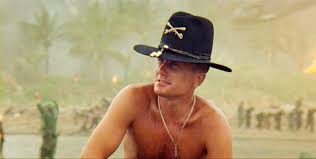
The gate area itself is modern. Instead of rows of seats there are a collection of six foot long tables with stools bolted in place and several tablets to enable you to order food and drink from where you are sitting. I find a seat at one of them facing my gate and quickly wipe down counter and chair with my newly acquired wipes. “Apocalypse Now” pops into my head and I imagine Robert Duvall saying, “I love the smell of bleach in the morning, it reminds me of victory…against Covid19.” Clearly, I have been alone too long.

I am too tired to read. I have no patience to find programming on Hulu, Netflix or any of the other streaming services I belong to. I revert to the people game my mother taught me. I look at a young family a mother father and child. The mother and father are doing all they can to keep the child entertained and wearing his mask but they are failing at both. I wonder what has brought them here to the airport. Why would any family, especially one with a young child, want to travel now? Are they returning home from overseas like I am? Have they lost their jobs and are moving to their parents home to live?

I see two morbidly obese men wearing dirty jeans, Heavy Metal T-shirts, baseball caps with sunglasses on the visor and no masks. I peg them as Trump supporters who feel like they are making a political statement while exposing us and them to disease.

This is a game without end but it eats up the time until my flight is called. When it is,  I  am among the first to board. When I take my seat, a single in business class, it hits me. I am on the final leg of my journey. Home, and all it represents, are just a few hours away. I discover that mask serve more than protecting others from the virus they spare them your tears as well.

Posted in Uncategorized | Leave a comment

God Laughs (Part 7)

Thin Man

When the plane pushes away from the gate a few moments later it is a surreal experience for me. Since March 16, I have tried to make my way out of the country. No matter how carefully thought through, every one of those plans had found its way into the circular file. It is hard to accept that the moment of truth has come and the plan has worked.  I feel the elation that comes from reaching a goal and that at long last I was heading home.  But all those high emotions are tinged with guilt.

I know I have incredibly good reasons to be headed home. I have medical issues (a mildly irregular EKG) that were scheduled to be evaluated and dealt with  months ago. My job had been eliminated at the start of the Covid 19 crisis and I have to begin, now that the crisis has eased, to look for employment. While I could do this from Brazil (we live in a virtual world) my focus and efforts would pay higher dividends from our home in Chatham.

I miss my dog. Probably far more than she misses me as she has been more than pampered for months. But, as a person who works primarily out of a home office, she has been my everyday companion for 4 years. When I was alone, she was there. As Christopher Morley said ““No one appreciates the special genius of your conversation as the dog does.” So it has been true with Rosie.

I want to hang out with my niece and nephew. They delight me in every way. They are of the age where talking on the phone, texting, or other type of communication beyond face to face,  is just not worthwhile because they, as teenagers, have far to many activities and distractions.

I can justify going home.

What I have difficulty coming to terms with is the fact that I am also leaving out of fear. As safe as our home in Rio has been, I know that the crisis in Brazil is deepening. The virus is spreading exponentially and with it the chances of catching the disease grow daily. It is far too easy to imagine, especially in the middle of a sleepless night, for me to catch the disease and be taken away to an overcrowded hospital, where no one speaks English, and due to isolation protocols, I am utterly alone. I can forgive myself this fear. I believe that anyone, should they become ill, would prefer to be in a healthcare system in which they have faith and will be communicated with in a language you understood.

What I cannot justify, is leaving Elaine behind. She has her reasons for staying. Both said and unsaid. She has told me that she feels safe in our home. I know that this goes well beyond the isolation of our house and our neighborhood. Beyond the fact we have developed a system to get food and supplies with minimal chance of exposure to the disease. Since long before I met her eight years ago, this home has been her castle, her protection from an often-hostile world, a lifeboat on a unfriendly sea. Leaving it now, when Brazil is on fire from disease, political corruption and travel with me through the belly of the beast is an act of faith she cannot muster. I understand this. Where my guilt comes from is whether I have done everything I can to convince her that coming with me is the best decision.

My father used to tell us about his Uncle Heinrich, his mother’s brother. He was a printer, and because it was an essential service, he was kept in his job even after the war had begun and most Jews had been forced from their occupations. One day, while he was at work, he found out that his wife Risa had been arrested by the SS and taken to a deportation center. He left his job, where he would have been safe, and went to where his wife was being held and voluntarily joined his wife. They were both murdered at Auschwitz. I thought of Uncle Heinrich as a hero. The type of man I would like to be.  Yet unlike him who had sacrificed his life so that his beloved wife would not be alone, I was leaving my wife behind.

The plane reached the edge of the runway and has paused awaiting the towers approval for takeoff. My self-flagellation during the planes taxiing had brought me to the core of my emotions. I will miss Elaine. While countless articles had described how difficult it was for some families to adjust to self-isolation, we had thrived. Not that we had not squabbled but those passed as quickly as a summer storm. For a couple that had lived a bi continental lifestyle for over 8 years, our being together for the last few months proved, if nothing else, that we were at our best when we were together. Leaving Brazil meant leaving her with no certainty when I would see her again. This cut me to the quick.

As the plane’s engines roared to full throttle and we launched down the runway I said a silent prayer to the ultimate Jokester. I thanked him for getting me this far safely and implored him to restrain his sense of humor when it came to Elaine and me. That he allows us to be together sooner as opposed to later and that he keeps us safe in the interim.

The plane lept into the night and as it climbed  I reached for the entertainment system. Over the last twelve hours I had spent entirely too much time inside my head on endless loops of fears and self-doubt. I needed to watch a movie, a comedy or rom com, that would distract me from those thoughts and the whistling Texan behind me.

One of the circumstances of my childhood was the lack of programming on television. There were only six channels and the amount of content was extremely limited by today’s standards. The stations filled  programming gaps with old moview from The Golden Age of Hollywood such as The Marx Brothers, Gangster films staring Jimmy Cagney or Humphrey Bogart o, r even Carmen Miranda films.  They were not serious entertainment. They were meant to distract and uplift people from the depths that the Depression had brought into their lives. They were Celluloid valium. When I see one of my favorites from this era offered, I, without hesitation select it.

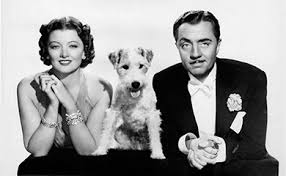
If you have never seen “The Thin Man” or any in the series, you have missed one of the great comic duo’s of all time in Myrna Loy and William Powell. Their combination of physical comedy, wise cracking one liners and, of course, Asta the wonder dog, take a very thin plot and make it as intoxicating as the gallons of liquor they manage to consume during the movie. I only wish I had a Martini so as to better appreciate the on-screen fun.

Dinner is served without the usual panache of Polaris Class Service. Instead of cocktails, followed by progressive courses and concluding with ice cream sundaes and after dinner drinks we are presented with a single tray crowded with each element individually wrapped. I am glad that United is taking hygiene so seriously even though the crowded tray makes maneuvering a bit of a challenge. The food is as delicious as airplane food can be from the bits of peach in the salad to the mushroom sauce on the Filet Mignon. I miss my sundae but the chocolate truffles are more than an adequate sweet note to end the meal.

The food and the distraction of the movie serve their purpose.  I recline my seat to flat, cover myself with a comforter, adjust my mask, tuck my pillow under my head and fall asleep.  Five hours later I wake with a full bladder and a stiff neck. I stumble to the john where I take care of pressing business and while washing my hands notice that my hair, which has not been cut in three months, is blossoming into an “Isro.” This amuses me but I quickly lose my sense of humor when on the way back to my seat I notice that “Tex” has fallen asleep without his mask.

To both my credit and my shame, I am not a person who shuns confrontation. In most circumstances I would not hesitate to tell “Tex” that he needed to place the mask on his face. But I did not trust myself to handle the situation with any delicacy or subtly. I doubted he would welcome being awakened by an angry Fro’ed Jew yelling “Put on your fucking mask, asshole.” I went to find a flight attendant instead. She should have noticed this anyway. I found her sitting on a fold down chair next to the galley reading and when she saw me, hurrying to put on her mask. I explained the situation. That United’s policy was that everyone (ahem) was required to wear masks during the entirety of the flight and that my hope was she would enforce the policy with the passenger behind me.

She promised to handle the situation. After I return to my seat I hear her waking “Tex” up, telling him that he must wear the mask even when sleeping. He is the opposite of the booming happy Texan he was upon boarding. He does not appreciate being awakened. He doesn’t appreciate the message he is being given but when the flight attendant suggests he might have to be put in restraints he gives in and agrees to wear his mask.

We still have five hours before we are schedule to land in Houston. I try to fall back to sleep and laugh at myself when I realize that I am hoping sleep will make time fly. I am just about to sleep when I hear an argument behind me. Apparently, Tex had taken his mask off and another flight attendant, this one male, is now telling him that if he refuses to comply with regulations, he will be arrested upon reaching Houston. Tex argues about the amount of money he has spent on his ticket. He mentions his high status on United and the amount of loyalty he has shown the airline and how he, of all people, should not be treated this way. He says that his rights are being violated and tells the steward of his plan to write the head of the airline.

The flight attendant does not argue with him. He is perfectly calm. He tells Tex he can do whatever he wants when he leaves the airplane but for now if he doesn’t put on the mask, he will be arrested upon arrival for disrupting a flight. Apparently, Tex puts on his mask as the steward departs shortly thereafter.

I fall asleep trying to figure out why the inoffensive act of putting on a mask to protect yourself and others seems to be such trouble for some. It is a quandary that has no answer but acts as a soporific.  I fall back to sleep.

When I wake again, the plane is touching down in Houston.

Posted in Uncategorized | Leave a comment

God Laughs (Part 6)

Polaris


Normally these lounges, especially international lounges, have a full buffet set up for their patrons. They can be pretty lush affairs with a variety of hot and cold entrees, salads, crackers and cheese, soups, desserts.  These buffets are usually greeted by the people who frequent these clubs as if they have never seen food before and don’t expect to see it again for several weeks. There is often sharp elbow play in front of particularly popular dishes and plates are almost always heaped beyond capacity. Seconds and thirds portions are common.

There is no chance for traveler gluttony today. The buffet table is tucked into a corner and covered in plastic. This makes sense. Buffets would be factories for the virus with the sharp elbow play, lack of social distancing and multiple hands touching items. It reminds me of why I don’t eat peanuts in bars any longer.

Which of course makes me look for the bar that is usually the natural accompaniment of the buffet. In many of these clubs instead of a bartender they just place top shelf bottles of spirits on the table and let travelers apply what ever amount of liquid courage required that will allow them to carry on. To be honest, despite the fact that I rarely drink when I travel (short term gain for a double hangover the next day), I feel, given the current circumstance, a little liquid courage is what is called for. It has, after all, been a frightening day, will be a frightening flight, and I have six hours to kill. There is no bar. In fact, when I inquire about alcohol from one of the intermittently masked staff, I am told that the Covid 19 policy is for no alcohol in the clubs at all. Only closed containers are to be served such as water, soda, and beer. Unfortunately, they are out of beer.

Good one God.

I ask for a Guarana (a Brazilian Soda) and a water. When they are brought to me, and the server has walked away, I quickly douse them with alcohol gel. This may seem a little excessive especially considering that most scientists believe it is difficult to get Covid from food but hands touch faces and the nose and eyes can provide egress for the Virus into you. Trust but verify.  And it is not paranoia if someone really is trying to get you. When my drinks are finally ready to be quaffed, I realize that I have another problem. How do I drink, or for that matter eat without taking off my mask ? This is something I loathe to do especially with the two other travelers not wearing their masks and the staff only intermittently doing so. I ponder my dilemma for a few moments and come to the conclusion that you have to eat, you have to drink, and that the only thing you can do with this virus is minimize the risk, not eliminate it.

I drink quickly, replace my mask and then immediately spray my hand with alcohol gel. It stings. My hands are now chapped from the amount of cleanliness, I have forced on them today.

Now what to do for the five and a half hours until my plane boards. With nearly 4 million real air miles flown I have spent more than my fair share of time waiting for flights and, over time, developed strategies for coping with boredom of long waits. I am never without a book or something to read.  Today is no different. My ipad has three books downloaded that I am currently reading but I don’t feel like reading because for the last three  months reading has been my primary source of entertainment. I  have read on average four books a week. I am burned out from reading and as importantly my current stress level will not allow me to focus on the words. Books were out.

A game my mother taught me as a child is another device I use to relieve the monotony of waiting in airports. You look at your fellow travelers and try to figure out where they are from and their backstory. When you have a lounge that only has two other people in it this is not much of a distraction.

I could nap. That certainly makes time pass far more quickly but due to the situation I find myself in, senses on overdrive, and a near continuous supply of adrenaline flooding my system, nappage is off the table.

There is no television. As a consequence I cannot treat myself to watching endless looped cycles of news from CNN .

I am left with Netflix. It is the only streaming service that works out of the country. As such the last 90 days have winnowed down my choices for new programming. I have already binged watched everything from the Crown to The Unbreakable Kimmy Schimdt, from Brooklyn 99 to the Chef Show, from The Office to Arrested Development. To compound the problem, I don’t want to watch anything that actively engages me in anyway. I do not need to think right now as I am already overthinking most things. I want programming that just entertains or distracts. After dithering for what seems like an exceptionally long time, I make a terrible decision and decide to watch the remake of “Dynasty”,  the classic ‘80’s evening soap opera. The show features a predictable and badly written script, mediocre acting, and a distinctly millennial “woke” vibe. Its chief attribute is that, similar to watching a car accident, you cannot avert your eyes. You want to see how disastrous it will become.

Between episodes I manage to eat what the menu calls a Pizza Margherita. I am not sure who translated the menu for the club, but it is not a pizza. It is a melted cheese sandwich with tomato. Not bad as a snack but definitely not a pizza. At some point I become the only person in the club. What makes it creepy is that the staff, some without masks, are staring at me. I amuse myself by thinking about how Stephen King would write this short story. Would a staff member take off a mask and reveal himself to be a clown? Would the airport suddenly be engulfed in fog? I decide that he would likely write this story as is. Being at an airport at the center of the Brazilian Pandemic is scary enough.

Time passes slowly. But it passes. After 4 episodes of Dynasty. Two pizza Margherita (they were small and I hadn’t eaten since breakfast) and 7 hand cleansings, it is finally time to board my flight. As I leave the club, I see there is a cluster of employees at the front desk engaged in “bate papo”  or jaw flapping. Half are not wearing face masks. They are paid to be a safe haven for travelers. They are actions suggest they do not care and it pisses me off.  I leave without thanking them or wishing them a “boa noite.”

My gate, 308, is a ten-minute walk from the American Express Lounge and for the majority of that walk I do not see another living soul. Stores that normally would be packed with passengers buying last minute gifts, souvenirs, and knick knacks are either closed or completely empty. The only sound is that of my footsteps and the wheels of my rollaboard. I wonder, albeit briefly, whether I am the only American fleeing tonight. I am not. When I get within, what was called spitting distance previous to the pandemic, of the gate I see that there are quite a few people who will be escaping Brazil with me this evening. I am happy that most of them seem to be wearing masks although many seem to be using them as mock turtlenecks or faux earrings as opposed to the more traditional mouth and nose coverings. It makes me wonder why people do not take this more seriously. Even if you don’t believe the virus is going to harm you why wouldn’t  you do something innocuous and simple, such as wearing a mask, that would protect your neighbors, friends, and others who may have a less robust immune system than you. Four hundred thousand are dead. You are leaving a country that has the second highest rate of infection in the world without doing any testing. You are leaving a city that has the highest infection rate in that country. Why won’t you wear a fucking mask? I really want to scream sense into these people, but I realize that is tilting at windmills and would likely only get me thrown off the flight. Instead I try to find a place, out of the flow of foot traffic, and away from clusters of people to wait for boarding. But the situation is difficult to manage between more people arriving for the flight and those who feel more comfortable pacing than standing still. So I move from one place to another trying my best to maintain social distance in a challenging system.

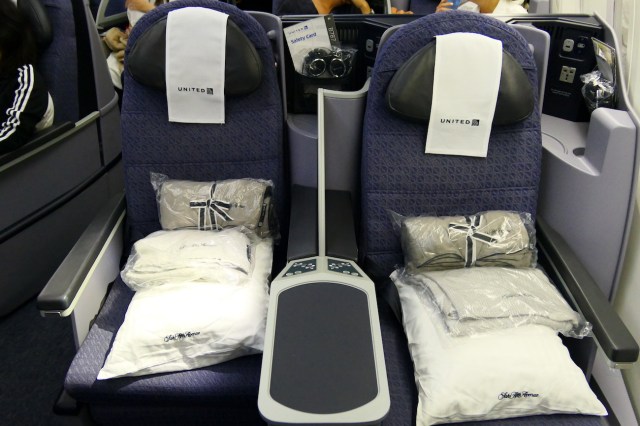
Fortunately, I win the lottery when boarding the flight. Not only have I booked a business class seat but in Brazil if you are older than 60 you are entitled to board the flight first. I am the second person on board the airplane and quickly make my way  seat, 1K. The configuration of business class on this airplane is 2 x 2 x 2. I have read in the days leading up to this trip that United Airlines in addition to requiring those traveling to wear masks they will try to accommodate social distancing by keeping adjacent seats open.

My first thought as I settle into my United Polaris Class pod is that I have done everything I can to protect myself from the disease. I am wearing a mask, in the first row so I will be exposed to less people. I am as socially distant as one can be in an aluminum tube. I have wiped my area down with alcohol gel wipes. I sit back in my seat and close my eyes when it hits me. After nearly 90 days in Brazil, five flight cancelations, endless news consumption on Brazil’s losing fight against Covid19, the sturm and drang of leaving my wife behind…not knowing when we would see each again and near constant stress for the past 12 hours, I am going home. I am overwhelmed by the moment and begin to weep.

I am blowing my nose when I hear “Excuse me.” I turn to see a petite woman in a white hooded Tyvek coverall accessorized by wrap around sunglasses, surgical shield and mask and blue latex gloves. For I moment I fear she has come to escort me off the aircraft. God the prankster once again pulling one of his jokes out of the Job handbook. But it is not that. She wants to know if I am sitting in the correct seat because she is booked into 1L and does not want to sit next to another passenger. I assure her I am and she proceeds to have a meltdown in the aisle yelling at the Flight attendants that  she has been promised that she would occupy a row by herself. I turn away as this is a fight I don’t want to get caught up in but I am secretly rooting for her as I don’t want anyone sitting next to me as well. When they find her a row by herself, I am relieved.

The relief does not last long. As I am exploring the entertainment system,  I feel a bump on the back of my pod, then hear the noise of luggage being placed in the overhead compartment directly behind me and finally the booming voice of a Texan saying to one of the flight attendants “How are y’all doing today? I would love a bourbon and the rocks when you can?” It is clear from his inflection and lack of volume moderation this would not be his first drink today. I am grateful when the masked flight attendant tells him that he is required to wear a mask at all time and that due to Covid 19 regulations no spirits will be served but if he would like a beer or wine they would be available.

He loudly apologizes for not wearing a mask and talks to himself “Where did I put that durn thang” as he struggles to find his mislaid mask. He then asks, in a muffled but still unmodulated tone “You got any American beer?” And when the flight attendant brings him his libation, he his loudly effusive in Texan “Aren’t you the prettiest thing. Y’all are so nice. Thank you so much. This probably going to be the best  beer I have had in weeks. You see me getting low you just bring me another. God bless!” I hear the flip top lid pop open, and then the sound of the beer being poured in glass and then a very loud “ahhhhh.” It is not long after that when he begins to whistle.

Couldn’t cut me break, could you God?

Posted in Uncategorized | 1 Comment

Fairy Dust by E.Z. Rothkopf

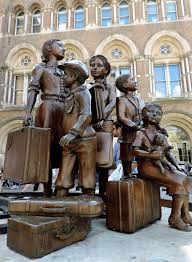
kindertransport

When we were boys of twelve he seemed a little older than the rest us.  Sooner than in any of the others in our small group, a knotty corner of his soul had begun to surface.  It wasn’t anything dramatic or startling.  But apparent to all of us were the beginnings of uncommon frugality, an unusually careful, somewhat melancholy husbanding of  resources, that rose and moved like knuckle bones under his boyish skin.


I never fully knew what kind of man he became.  Eduard Stein was raised in a cramped tenement  in a shabby, workers’ district of Vienna.  The Nazi horror scattered German Jewry abroad.  Just before his fourteenth birthday, he left Austria on a Kindertransport, organized by an international relief committee.   At the railroad station, Eduard kissed his parents good- bye and shook my hand.  His eyes remained dry.  Tears would have been wasteful.   The  relief committee brought him and others to England.  Shiploads of Jewish children arrived there and dis­appeared in the stone towns and villages like quicksilver cast upon gravel.  Shortly after the war started, I managed to get to America.  Eduard wrote me there.  He had been evacuated to the countryside to escape airraids.  He was living with two friendly spinster school teachers in a small town, C., in Lanca­shire.  The address of the their cottage was Cobble Grove.  No street listing.   I thought that was exotic. It fitted perfectly into the England of my imagination — snug villages and castles, fog, warm wool, and wet cobble stones, Little Lord Fauntleroy, Sherwood Forest, and Edgar Wallace.

To my regret, his frugal temperament leached his letters of the color I was seeking.  I wanted green country lanes and thatched roofs, unbelievably large breakfasts, African hunt trophies,  and baronial manors.  All I got was meager and bland descriptions of people and places. His prose was dominated by functionalities and numbers.  Miss Bramston is teaching me English by reading the daily newspapers with me .  My walk to school takes fifteen minutes. Free, interesting lectures are given at Cloth Hall every second Tuesday evening.  The most recent talk on English wading birds was very well attended. I have the use of a bicycle but it has no hand brakes.  My ladies give me an allowance of three shillings per week.  He steadfastly avoided giving me fragrant heather and heath. There were neither lowing sheep nor mediaeval castle ruins.

His parsimonious outlook was also apparent in his dry replies to my glowing reports about America. “ Fairy Dust, “ he would write. “Just Fairy Dust !”  His spinster guardians apparently used that quaint expression frequently.  He had become enamored with its sound and used it often as a mild English oath in an otherwise German letter.  Whenever he suspected the accuracy of my descrip­tions, he would exclaim “more Fairy Dust.” ­Eduard could not believe that suits were sold with two pairs of pants.  It smacked of crude bragging to him. “ Fairy Dust,” he’d write.  Ice-cream sandwiches appeared as adolescent fantasies to him. When I mentioned them in a letter, he promptly replied with  “Fairy Dust” in capital letters.   Truth seemed to him what was frugal, economical, and within the reach of his ex­pectations.  Exaggeration and embroidery were wasteful.  I had the feeling from his letters that he did not object to lying per se, if it were easy and needed.  He simply begrudged the ad­ditional effort that was required by invention and  self‑indul­gent imagination.

Eduard’s disbelief grew as our lives entered divergent channels and gained momentum in new directions.  I wrote him of plans to go to college.  Would Eduard advise whether I should choose anthropology or zoology as a career?  He scoffed and mocked me as pompous and unrealistic.  Doctor of Philosophy indeed!  Doctor of Vanity and Pretense!  More Fairy Dust!  He requested that I stop puf­fing.  Was I planning to enter my uncle’s grocery business ?

Eduard took a commercial course in school and was appren­ticed in a solicitor’s office.  He took bicycle trips in the Pennines, first  with his two spinster guardians and, later, with disdainfully referenced girls.  The girls, who also worked at the solicitors,  never had names and were always referred to as colleagues.  He nearly always closed his letters by assuring me “that the Nazis will get their come uppance.”  Like a mild black Amen to a prayer.   Once he wrote, “ Miss Bramston wants me to say to you, God help Hitler if a Lancashire man or woman got hold of him.”

He steadfastly refused to feed my inflamed expectations about the Blitz.   I imagined twisting con trails over his sky and Dorniers roaring low over flaming buildings in his village.  Only alerts, he wrote, or a bomb dropped harmlessly eight miles out of town in a deserted stubble field.  My fevered curiosity was grist for the mills of realism and frugality that ground in Eduard’s head.  It appeared to please him to play sober counterpoint to my blood‑bright musings.

If  there was a vulnerable chink in Eduard Stein’s armor, it was Lisa, his younger sister. She had also come to  England and lived with an English family in Bradford.  He wrote of his visits with her with warm, almost fatherly, pride.  Eduard seemed jealous.  His sister’s foster parents were too possessive, he thought.  They did not recognize his precedence.  He fussed about Lisa’s religious education and complained about the devious methods by which the Bradford family kept Lisa from visiting Eduard in C.

In those days I often imagined Eduard and Lisa, during their rare encounters. They walked towards a green Lancashire hill along a lonely hedge‑seamed path.  She holds his hand.  With his free arm Eduard draws melancholy arcs in the blue sky and speaks softly of their dear mother and father far away.  He tells her about how just and generous their father was and how warm and loving their mother.  Eduard’s face is serious and yet serene.  He was shielding his sister from the deep pain that wrenches his heart.

Deep down, I did not really believe that their meetings were like this but I wanted it to be that way.  Very likely Eduard Stein and his sister sat in a railroad station or on a park bench if it wasn’t raining.  Lisa would be chewing licorice sticks that her brother had brought her and he would discuss her school work and ask her riddles.  They would have cake together in a tea room with putty-colored walls.  Over a fly‑specked table cloth, Eduard would shower his sister with advice on how to deal with her foster parents.  Then he would walk her to the bus for the lonely trip back to Bradford.

As time went on, I began to sense a certain restlessness in Eduard’s letters.  Things were not going as well as he had hoped.  He never complained or let me know in any direct way that he was dissatisfied.  A thin gray veil seemed to have settled over his personal landscape.   The solicitors office in which he worked, the courses he took in night school, scatters of girl colleagues who were his partners at local club dances or whom he escorted to the cinema,  gradually moved more and more out of focus until they were only mentioned and never described.  It was as if his increasingly frugal writing style saved him the trouble of admitting to a small but growing feeling of frustration.  Something unstated constricted his life in C. and the home of his kindly guardians.  Before he had been almost totally preoccupied with the local scene.  Now he was slowly turning his face to the world.  It made him restless and discontented.

His letters switched abruptly from German to English and the frequency with which he mocked my reports from the American Eden increased.  Cars, suits, generous allo­wances from my relatives, and over‑stuffed furniture were dismissed as Fairy Dust.   Eduard did not treat material possessions with frivolity but yet he teased me relentlessly about my breathy adolescent assertions about the seemingly lush material setting in which I lived.  I merely described the small wonders that a small Massachusetts city held for a Viennese street boy’s eyes. He acknowledged my observations with disdain.  Sparta despising the luxuries of Athens.  I sensed he thought it wrong that I should live in a more affluent setting  because I was not as serious about life as he and because I did not husband my resources as well as he did.

Eduard Stein’s sixteenth birthday was an unusually important day for him.  According to British law he became a full fledged enemy-alien on that date.  This meant bothersome restrictions of movement (Fairy Dust ) and an unwanted abstract identity.  His thoughts turned to emigration then.  Eduard had some distant relatives who lived on Atlantic Avenue in Brooklyn and he hoped that they would be able to bring him to America.

Nothing much happened. I telephoned them twice on Eduard’s behalf.  They spoke to me with unenthusiastic,  cold voices.  Perhaps they already had more problems in their lives than they could handle.  They did not want a refugee boy who had to be fed, housed, and clothed.  The relatives on Atlantic Avenue were obsessed with the possi­bility that Eduard was or might become disabled or ill and would require perpetual care.  It seemed a very odd sort of fear to me.  But they spoke with a strong show of prudence, intoned with the taut inflections of realism.  I listened with my heart and thought of Eduard,  wandering forlorn amidst the green lanes and in the thatched villages of the distant, besieged island.

When I think back on this period, the pace of my memories seems to be slowing.  The intervals between our letters were getting longer.  Recollections crawl by like time-lapse photography.  Once, shortly after his seventeenth birthday, Eduard sent me a photograph and I was startled to see the angular face of a young adult.  He looked lean, with prominent cheek bones, and a curiously lopsided, large nose.  If Eduard had been in a Massachusetts high school,  his nickname might have been Moose.

When the  possibility for emigrating to America failed to materialize, Eduard began to write about joining the RAF. At first he described it as a clever, practical opportunity for attending college.  The RAF sponsored college training for flight officer candidates.  Eduard thought it would be advantageous to try for that.  He increased his course load in night school.  More mathematics, more physics !  He wrote with conviction about spherical geometry.  His letters were all about successful swotting, adroit handling of  test questions, and expense saved by having the RAF send him to college.  After a while, however, the glow in his letters about the advantages of free college training paled and he wrote very soberly that he wanted to fly a Spitfire. Flight Lieutenant Stein !

One day after a longish interval in our correspondence, the letter came.   Edward was in the RAF.  The censor did not allow an exact geographical address but he wrote with frugality-tempered pride that he was taking basic RAF training in the northwest of England.  The ladies at Cobble Grove and his lady colleagues at work had given him a farewell party.  There had even been a cake made with carefully saved sugar rations.  Soon he would go into advanced training.   Military service was important.  Calisthenics were making him tough and he was learning a lot.  Although it was difficult to be chosen, he hoped for pilot school because he looked forward to useful college courses.    In any case,  flying would prepare him for the world of tomorrow, he said.  A somewhat milder tone  crept into his prose. Perhaps it was wonder.  Leaving C. had brought revelations.  There were sights to be seen–free entertainments for airmen.   RAF-blue became him, he wrote.  The canteen was staffed with very attractive ladies.  A family he had met at a synagogue had invited him to their home.  He closed by wondering why I had not yet joined the military services.  Was I exempted because of my studies or did I have flat feet ?  “Fairy Dust! “ he wrote.  “Its time to get off your duff.  Get in the army.  Come to Europe, where the action is!”    He encouraged me to “get cracking” and he wished me well.  It was as close to extravagance that Eduard ever came in a letter.  It was the last letter I ever received from him.

I wrote to him several times after that.  Told him that I had been drafted, was taking training,  and would soon be coming over to rescue him.  The usual sort of young mens’ brag.  They were sent to his RAF address but I am not sure that they ever reached him. There were no answers.

I landed in France six weeks before the German attack in the Huertgen Forest.  When the Battle of the Bulge was over, I was a staff sergeant, with a Purple Heart, a Bronze Star, and two frozen toes.  Four months later, my platoon rolled through the screaming horrors of Dachau, and then went on to liberate dancing Lippizaner horses.   Six weeks after VE day I got five days compassionate leave in Vienna.  The city was a dusty, rubble-strewn wreck, haunted by hunger, guilt, and hatreds. Wandering through the barren streets of my old neighborhood,  I was racked by resentment and biting sorrow.   In Eduard’s old apartment building, I found Eduard’s aunt who had been liberated from Terezin and had returned to Vienna.  In a pale voice, she told me that Eduard’s parents had disappeared in the ovens of Auschwitz.   Eduard was dead.  Killed in the RAF.  His sister, Lisa, had written that Eduard had been in the crew of a heavy bomber.  Returning from a mission, the badly shot-up Lancaster crashed at landing and Eduard did not make it out of the wreck.

I do not remember reacting very strongly to the news.  Perhaps this was because every day of my leave I confronted half-remembered acquaintances and strangers with the burnt-out faces and glowing eyes of the K-Zetnik,  who recited the list of dead as if they were prayers.  The sheer heart-wrenching mass of these recitals may have dampened my immediate grief at Eduard’s death.  Perhaps it was because the news had reached me from fourth- or fifth-hand sources and that information about the circumstances of his death was so meager.  I drank several toasts of raw, throat-searing plum brandy to him that  night, and then, filled with murderous melancholy,  drove back to my billet.  To this day, I am sure, some Viennnese tell of their close escape from a viciously driven American jeep on a summer night in 1945.  And that was that.

Refugees are more inclined to cultivate and preserve their memories than those who have not been uprooted.   I did not have all that much to remember about Eduard.  As young boys we had been friends and schoolmates.  After we were separated, Eduard offered me skimpy glimpses of  rustic Lancashire and brutally abbreviated sketches of the town and people among whom he lived.  His letters showed the growing  power and convictions of an adult but he remained as conservative and frugal as before.  Now, in retrospect, my imagination further compensated for the penury of his descriptions.  The English town in which he lived became greener, a place of thatched cottages and sunny gardens.  His spinster guardians, the school teachers, had ruddy full faces and bright blue eyes.  They wore stout walking shoes and tweed skirts, and spoke in friendly but energetic accents.  His girl colleagues were wise with female wisdom.  They wore saucy miniskirts,  made love in the heather and bracken of summery moors, and knew how to live with human failings.

As I grew older amidst the brisk rhythms of my American world, Eduard’s C. became smaller, sunnier, and even greener and its  inhabitants lived in ever boskier harmonies .  I developed a strong yearning to visit C.  The warm, friendly people of that town would share  their memories of Eduard with me and provide me with a passport to a fading past.  Traveling in time to an imagination-embroidered place is a dangerous undertaking.   What I knew about C. had been filtered by Eduard’s frugal sensibilities.  What’s  more, he had seen the place as an outlander, who had been wrenched from his human moorings by  a political catastrophe.  Yet, my dark yearning defeated sensible caution.  Twenty years after Eduard’s death, I was invited to read a paper at an international meeting of sensory physiologists in the University of Leeds.  C. would not be far away.  I could not resist.  Alea jacta est.

In preparation for my trip, I tried to call Eduard’s relatives in Brooklyn, whom I had contacted on his behalf, twenty years earlier.  After several failed attempts, I finally managed to speak to a confused old man, with failing memory, who did not seem to remember Eduard, but gave me the sister’s address in Bradford.  I wrote to Lisa immediately.  My letter was full of questions.  What did she know about his final flight ?  Where his school-teacher guardians still alive ?  Where could I find them ?    Where was Eduard buried ?  Where ? When ? How ?  My letter was five pages long.  Two days before I left for England, the letter was returned to me — addressee unknown.

London’s unaccustomed colors, moods, and rhythms provided pleasant relief from the stable routines of my American life.  It was a sensory feast for me: tides of traffic swirling around islets of royal pomp,  the silver-gray of fading elegance mingling with the provocative vulgarity of Carnaby Street rags,  glimpses of well-used docks heaped high with Thailand teak, and Pakistani women in brightly colored pantaloons, polishing the brass of marble commercial palaces. The imminence of an excursion into the past had made me a little queasy.  The cosmopolitan glitter of London restored me.  But the malaise returned at the airport on the way to Lancashire.  Leaving the polyglot babble of the international crowds in the central terminal hall at Heathrow and entering the local departure lounge, I found myself among whispering groups of industrial and commercial men going to Leeds/Bradford.  It was as if a switch had been thrown. A dun veil fell over the day.  It constricted and threatened.  Quiet suspicions which had hatched like basilisk eggs throughout the years began to stir.

Seated in the crowded aircraft, waiting for take-off, my dread grew.  Outside, a slow steady rain pelted the greasy, black tarmac.   The cabin air was stuffy   and reeked of hair dressing and stale cigarette smoke.   Hemmed in by a mass of steaming wool suits, I gasped for air.  Fatigue came to my rescue  and I was soon asleep.             When I began to waken, I was high over the Midlands under a bright blue sky.  The ground below was hidden by an almost continuous blanket of clouds.  Here and there, a gash appeared in the dense gray layer, and allowed a glimpse of a landscape imprisoned in deep gloom.  To my sleep-addled brain, it seemed as if I was floating in a celestial vessel amidst almost unbearable luminous beauty.   My feather-light chariot rode high in the sky while the clouds below, shot through with gobs of fibrous gray, sealed off a dark and evil world beneath.  I suddenly had the feeling of some sentient presence forming along the wingtip and following the aircraft in its soaring course  through bright space.    With startling vividness I sensed Eduard just outside the cabin window enveloping me with a strong aura of familiarity and closeness. I even thought I smelled the scent of licorice, one of Eduard’s favorite confections.  The total effect was so strong that it brought me quickly to full wakefulness.  The recollection of what I had just experienced was tremendously vivid.   I shivered and my arms and legs felt thin as paper.  I had to force myself to look out the window again to prove to myself that there was really nothing out there.  Any more?

When the plane landed in Leeds, the specter of Eduard on the wing was still strongly with me.  It was as if I had met him again and found some new knowledge about him through that meeting.   Something had pinched my soul with force.  As I started towards C., I ached somewhere and was yearning for remedy. My hired car took me through a gnarled brocade of plane trees, shrouded in dung-yellow fog.  Here and there a thorny wreath of sunlight crowned the trees  and pierced the haze with spikes of light.  The road twisted through the narrow streets of villages: Bromhope, Otley, Ilkley, Addingham.   Rugged walls of blackish stone lined the curving road.

I thought the stones were coated with an unfamiliar lichen or moss, but at a stop I discovered that the walls were blackened by soot.

The fog was left behind, as the car climbed the winding road towards a low saddle set in stocky hills.  A craggy castle hung on the slope overlooking the pass.  Lancashire  spread below me bathed in sunlight.   A flock of sheep was grazing in a green meadow flecked with heather.  My heart leaped.   This was the setting that I had vainly hoped to find in Eduard’s letters long ago.

The joy died quickly as I drove into C. Power shovels had torn great holes in the street and angry lines of trucks and cars crawled around huge mounds of brown earth.  The squeezed stone facades of the buildings lining the high street had forfeited their rustic benedictions long ago and stared at me with sooty grins, toothed with the enamel signs of cheap appliance shops.  In the relentless pressure of traffic there was no respite for collection and mental refitting. I was pushed along lines of worn shopfronts and soiled sidewalks.  Gray crowds eddied past displays of peagreen orlon blankets, chromed tea kettles, and the apoplectic stains of clothing-store windows.  A pub stared sourly from its dun shell of corroded stone.  Before I knew it the traffic had carried me out of town.

I pulled the car to the side of the road and sat there watching the passing traffic.  Somewhere nearby a pump was straining to suck muddy water from a huge hole in the roadway.  Each thump  of its creaking heart flooded me with deeper melancholy. I had to move to pull myself out of this funk.  A drink would help but I knew I could not get myself to venture into any of these dark stone pubs that I had passed.  I could not deal with friendly prying questions or with suspicious eyes.  To find Cobble Grove,  the place where Eduard and his kindly English school ladies had lived!  Something would happen there.  There would be someone who had known him and who would be able to talk with me about him.  Someone whose strangeness and reserve would dissolve in reminiscences about an airman, long dead, but still remembered.  Or perhaps there was the solicitor’s office.  Perhaps someone would remember him there.  I  keenly regretted not having made advance contacts or inquiries before my departure.

Pulling back into the road, I drove back to town, looping through side streets.  My senses were keen.  I was a hunter looking for some sign of my quarry, looking for the ghost spoor, the thread to  past.   A woman was moving on the narrow sidewalk, carrying fruit in a bulging net bag.  She was walking slowly up a gentle slope, her buttocks swelling and receding under her ample skirt.   Was she one of Eduard’s girl colleagues who would remember the laughter of a summer afternoon in the Pennines long ago?  I passed her without slowing.  The surface of the landscape was too smooth.  I could gain no purchase for my curiosity.

The narrow back street funneled me to an old country highway. Nearby, a gas station stood starkly alien in its red and yellow enamel sheen amidst a small group of time-worn stone buildings.  I stopped for gas.   The pale-faced attendant,  draped in electric-blue overall that were much too large for him, grinned when he heard me speak.  “You’re a Yank, aren’t you ?”  he said.  He was too young–not even alive when Eduard walked this street.  He had never heard of Cobble Grove.  Maybe there never was such a place.  Maybe I had made it up.

I drove to the center of town and parked the car.  Perhaps there was a convenient police station where I might inquire about Eduard’s old residence?  Or may be some municipal office ?  I could even stop some place for lunch and ask there.  Cities have better guides about their  distant than their recent past.  I was curiously irritated by my inability to gain a productive grip on the situation. I felt helpless.  My parking space proved to be further from the center of the town than I had thought and the slow discovery of that fact added to my annoyance.   I walked through the gray, hard street, cautious and weary–a tiring hunter in a strange stone forest.   The police station, when I finally found it, was on  a small square with a dusty little park in the center.   The thought of telling the desk sergeant that I was looking for the house of someone who died twenty years ago made me uncomfortable, and I did not enter.  Across the street , an old man was sitting on a bench feeding a flock of cooing pigeons.  In the center of the small park was a small stone monument.  I walked slowly past the cooing birds and towards the slab.  As I neared it,  the hackles in back of my neck rose as if a grave-cold hand had touched me there.  Chiseled in the crest of the stone were large airman’s wings.  In bold, raised letters the stone announced  “In grateful memory of the men of C. who gave their lives for their country while on service in the Royal Air Force during World War II, 1939-1945.”   Below  the inscription were four columns of names.  I froze, unable to read further.  It was not Cobble Grove and the pastoral vision that I had been pursuing in my hesitant search but rather some sign of him, some remnant, some spoor.  I searched for Eduard as a splinter of a youth that I had lost and it had left a jagged edge.   This column offered, at last, a tangible link with Eduard.  Other remnants might have worked in the same way– some person who had known him, a picture, a used room, a glimpse of  his school or of the solicitor’s office in which he had worked.

I read the tablet. Sixty-two names in four columns.   I read again.  No Stein ! All there was between Wm.  Sanders  and E.M. Stoddard  was the smooth regular interval of dressed granite.  After Stoddard was J. Talbot.  There was no trace of Eduard.  I must have read ten times through those four graven columns.  Frantic !  Perhaps they were not in alphabetic order!  Perhaps they were ordered by row rather than columns.  But, no ! His name was not there.  There was no sign of Eduard.  It was as if he had never been.

I walked to the bench across from the old man’s pigeons and sat down, stunned and drained of energy. What could have happened ?  Anti-semitism in C. ?  Prejudice against foreigners with Germanic names ?  A mix-up in a Whitehall records office ?  My reaction was physical.  The visual world constricted.   I saw the old man throwing bread crumbs to his gray flock.  The rest of the square surrounded the narrow tunnel of my vision like a stone cocoon.

It must have taken fifteen minutes or more before the world came into focus again.  The old man had been watching me and now he smiled.   Encouraged,  I rose and walked over to him.  Had he ever heard of Cobble Grove?  There was a long pause.  “Ah, yes indeed!” The Grove had been  a group of four old stone buildings, standing together at the west end of town .  They had been used  as private homes, probably since before the end of the last century.   Ten years after the war, they were sold.  Some of the houses were, he thought,  still standing.  A developer had made them the centerpiece of a fashionable resort hotel.  It was a recreation of an old English coaching inn with an upscale restaurant.  “Very luxurious and very popular with the tourists,” said the old man with a wink to me.  He never asked me why I was interested in Cobble Grove.  He showed me on my map where to find it.  The hotel, he said, was now called the Inn by the Grove.

The  approach to the inn was a long,  sunken road lined with gnarled wind-twisted trees.  Was my road lined with rowan trees. Rowan trees ?  Were these rowan trees ?  I had never knowingly seen a rowan tree in my life.  Yet it seemed to me that the trees with the scarlet berries that lined the sunken road to the inn ought to be rowan trees.  Some half-digested, half-remembered tatter of superstitious knowledge from a lecture and a book demanded it.  Daylight was failing rapidly. I saw bloody rowan berries in the dark branches and my belly tightened.

A light fog had settled on the landscape but it came down no further than crowns of the trees, and hung there, forming a faintly luminous tunnel for the road. I had feared myself lost but now I could see, in the fading afternoonlight,  what seemed like hotel buildings in the distance.   As I increased my speed,  I was startled by a dense flock of blackbirds,  which had been roused from the trees by my head lamps, and swept across the road before me like a huge black rag.  Spooked, I was glad to pull into the well-lit comfort of the  hotel parking lot.

The main part of the inn was a tall techno structure framed in polished metal and faced with wide expanses of golden glass.   A purple marquee led into a large, elaborately ornamented lobby, dominated in its center by the reception counter, an altar of teak and green marble. Beyond the reception, yawned the entrance to a labyrinth of brightly lit sitting rooms.  An American bar was on my left and through the open door on my right, I could see, amidst a small forest of potted palms,   the elegantly-set tables of a restaurant awaiting the evening’s guests.  Crystal chandeliers sparkled.  All looked rich, brash, and shiny.  Eduard’s school teacher guardians would not feel entirely comfortable in the new Inn by the Grove, I thought.  Where where the stone houses of Cobblers Grove amids all this splendor?

As I crossed the lobby to the reception desk, guests were beginning to gather at the bar, and a small band of female musicians in long gowns were setting up their instruments in a corner.  I had called from downtown C. to reserve a room and the clerk greeted me with practiced courtesy.   “  I can give you a very nice room on the fifth floor overlooking the lagoon,” she said. “or perhaps  you would prefer to stay in one of the Old England stone pavilions with a view of the gardens ?”

Old England pavilions ?  Could one these have been Eduard’s home?  Where these stone pavilions the remnants of Cobblers Grove ?

My question seem to startle the clerk and she examined my face for a few moments as if she were trying to gage my motive for  asking the question.  Then she shook her head.  “Cobble Grove?   I never heard of that.   I’ve been told that these stone buildings have been here for a long time.  When  the hotel was built they preserved the old gardens and they rennovated the stone buildings and made them part of the inn.” She fixed my face with what I guess they learn in hotel school to be the open and sincere look.

“ Our tourist guests really love the stone houses.  The cottages have been done like an old English inn — you know oak beams and dear little cozy corners — but with all the best modern facilities.”  She was pushing a little.

I instantly warmed to the thought that I might sleep where Eduard had lived, but I wondered whether I would be able to find out which was the house in which the Bramston sisters had sheltered Eduard Stein.  The clerk took my hesitation for resistance.

“Perhaps you would rather stay in our very comfortable main building,” she added quickly, “some of our guest feel more at home in a modern main building.”

“The stone cottages will suit me fine,” I said.   She seemed almost surprised.

“ Then I will give you Room 23 in the Holly Cottage,” she said quickly, “I am sure you will find it very comfortable.”

“Take this gentleman’s luggage  to Holly 23,”  she called in the direction of the three youths who were standing around the bell desk. The bellhops studiedly avoided looking in her directions.  Finally, after several ignored summons, one of them peeled away from the group and came to pick up my bag.

Through a door in the rear we stepped from the dazzle of the lobby into the late afternoon gloom of an old garden.  Dense stands of flowers lined the low walls –hedge roses, daisies, and poppies.  Their colors were fading in the twilight  but their scent was strong.  These are old plantings, I thought, they might well have growing along those walls while Eduard walked in this garden.

Our path took us past the white cast-iron skeleton of a gazebo, standing surrounded by a dark wreath of miniature ornamental trees, in the center of the plantings.   The whole garden was dissolving around me in the uncertain light.  I had the strange feeling that the young bellman who was carrying my suit case was becoming ill at ease as we approached the stone house.  Although my heels crunched loudly on the gravel path behind him, he kept turning his head nervously over his shoulder, as if he were worried that I was no longer following him.   At the door he stopped and without looking directly at me, he said,

“You sure you want to stay in this spooky old place instead of the mod main hall ?”  He was working painfully hard to force a smile into his face.  “There isn’t even an elevator in this building.”

“There are only two floors.  Don’t you think we could manage .”

“I guess,”said the bellhop,  laughing nervously and ferried me through the door. It was clear that he did not think highly of my choice of accomodations.

The first floor of the building, which must have held family rooms once, had been completely gutted.  All the interior walls had been ripped out and the entire ground floor had been converted into a small banquet or meeting hall.  It now stood empty except for stacks of tables and purple chairs.

Anticipating my question, the bell hop shrugged his shoulder, “Your room is upstairs, sir!”  and turned towards a steep stairway that led to the second floor.   As I started to climb the stairs, the hair on the back of my neck rose  and  a chill swept from my shoulders to my heels.   The narrow stair case was suffused with  a sweet, spicy smell.  The scent was faint but it was unmistakably that of licorice.  My strong visceral reaction annoyed me.  This odor  was  most likely from a cleaning fluid they had used on the floor.  But licorice had been Eduard’s favorite candy.  The candy had been in short supply in war-time England and he had once even asked me whether I would send him some.


My room was standard upscale American motel with a large bath, shining in faux marble,   equipped with two sinks, a bidet, and a gold hair dryer.  The only bow to old England were two worm-eaten dark beams that were embedded in the ceiling.   My windows faced the garden.  I stuck my head out and inhaled the evening air.   Music from the band in the main building was drifting back to me.  It sent an another icy wave rolling up my back.  They were playing  one of those cheery, familiar Strauss waltzes. It might have been “Wiener Blut” or perhaps “Tales from the Vienna Woods,” but I felt unsure.    I stepped back into the room.  The familiar, comfortable modern motel interior offered some shelter from the spooky English garden.


Perhaps someone on the hotel’s staff  knew something about the history of Cobble Grove and might even be able to tell me where Eduard’s spinsters, the Bramstons,  had lived.  I did not have high hopes, but nevertheless I washed hurriedly, and quickly returned to the main building.     My dinner was served in a festively-lit dining room.   A vase with freshly-cut was at the center of my elegantly-set table.  Music drifted in from an adjacent room.  The fare was better than I had expected.  Clear bouillon with golden lumps of marrow,  an excellent entrecote with small brown potatoes, and a fine  piece of well-aged Stilton.  I managed to make my way through a bottle of Bordeaux.  I was quite mellow when I finished, and had almost forgotten what brought me to the Inn at the Grove. Small parties of other guests rose one by one, and wandered past me into the comfortable sitting room  that adjoined the dining hall.  The sitting room was decorated in luscious red and pale green.  In the center of each table was a gilded lamp shaped like a pineapple. I asked the waiter to serve my coffee and brandy there.

The other guests were mainly prosperous-looking couples who seemed to know each other.  A few bridge games had started.  I settled back in a comfortable settee and watched the tranquil scene in a bemused, slightly alcoholic haze.  Before long, a  rather fleshy, well-dressed man walked across the room to sit in a nearby chair.  His eyes had been on me for some time.  As he sat down, he winked at me and smiled,  “You’re a Yank, aren’t you ?”  There was hardly a trace of question in his voice.  “I said it to Brenda, the minute you walked into the dining room.   What brings you to our corner of Lancashire ? “   Professionally-friendly business travelers usually set my teeth on edge and I try to get away from them at the first opportunity.  He was in electric pumps.  But the bordeaux had mellowed me and my interest in Cobble Grove caused me to slide into a conversation.  I did not tell him why I had come to the hotel, but told him that I had always been interested in the English countryside. “ We don’t have many thatched cottages in America, “ I said.

We talked about C. and Lancashire.  He laughed at my surprise that there were factories amidst the rustic dells.   Dark satanic mills had not loomed in my imagined landscapes.

“ Center of the rag trade,”  he said.  Then he looked at me very intently.  “I had you all wrong, “ he continued, “ I thought you came to the Inn because of the ghost.”  I had almost expected it. “A ghost ?” I asked.

“Yes, a ghost!  Of course, educated men like you and me, are likely to be a bit skeptical, but the locals believe that one the old stone cottages of this inn is haunted.  The maitre’d was talking about it only yesterday.”   My electric pump companion looked at me speculatively.  I could see he was warming to the tale.  “You will enjoy this,”  he said, “ Clarence, that’s the maitre’d, says this ghost is no friend to the management of the inn.   It appears the spook doesn’t approve  of good living.    He haunts only the big spenders.  You got to run up a big tab to have the  ghost come to your room. He must have a tap on the cash registers.  Whenever someone who is staying in the cottage throws a big bash for themselves , they are in for it.  Order caviar, pheasant, or the bubbly, you will have little rest that night.  You will not sleep despite what the old Veuve Cliquot might have done to your brain.  The ghostly apparition  is  too much for some guests.   I heard that a few have checked out of the inn in a panic. They say that right after midnight, a rumble will start in the rafters and a mild cool wind will stir the curtains and fill the room with a sweet herbal smell — some say like licorice. Then come heavy foot steps,  and a groaning, complaining, and bitter, hollow laughter    Those who have had the experience hold that the ghost calls out something to them.  What he says isn’t very clear and there has been a lot of debate about it.  Most claim, he cries  “Fair n’ Just!  Fair n’ Just!” over, and over again in a shrill dark voice. “Fair n’ Just!”  An uncommonly frugal spirit, this ghost– cannot stand their bit of fun.  He must have been a Scot, when his body was about and thriving.  Don’t you think ?”

Posted in Uncategorized | Leave a comment

God Laughs (Part 5)

Garulos

The first place I ever visited in Brazil was Sao Paulo. It was the city closest to the port, Santos, from which my cruise was departing. It was also the home of my cousins. My grandmother’s sister’s grandchildren. For a family that was decimated by World War 2, all relatives are precious, but my cousins Lia and Roberto are incredibly special. They are both unbelievably smart, kind, and woke and they embraced as if the prodigal son returned. They could not wait to show off their city and they spent a day and a night doing just that.

I learn from them that Sao Paulo has a metropolitan area that has over 21 million inhabitants which makes it the largest in Brazil, the Americas, and the Western and Southern Hemispheres. It is also an “alpha global” city meaning that it is a center of finance and business whose actions can have a serious impact on the global economy. It is the richest city, by far, in Brazil and sees itself as the leader in commerce, arts and entertainment. My cousins show me many of the cities cultural institutions and shopping areas but also provide me with a sense of the city beyond that. I see a city of the future. Where the population is so dense that cars are only allowed to drive on designated days (if your license plate ends in even number, even number days, etc.) Where there is a thriving helicopter taxi business allowing businessmen and the wealthy to avoid the crawling traffic down below. This is both a matter of convenience and of safety as the wealthy need to do what they can to prevent kidnapping and robbery.

As we approach the city of Sao Paulo I think of this first trip and of the motto of the city that I learned during the last Presidential election in Brazil:  “I am not led, I lead.” Sadly, in respect to the Covid 19 this is true. It leads Brazil and South America in infections and deaths, even with bogus statistics that only show the tip of the viral iceberg.

The highways in Sao Paulo resemble the dioramas I recall from “The City of the Future” exhibit at the New York Worlds Fair. Multiple highways embedded within each other. The center highway is designated for cars passing through the area and has extremely limited exits. The next layer is for those who are planning to leave the highway eventually but not immediately and the outer layer is those who plan to exit locally. It is a system that if you are unaccustomed is confusing and stressful. But Marcus is an experienced driver and with a little help from Waze manages to exit off the highway and onto the approach road to Guarulhos International airport.

The airport is the largest in Brazil. Each year 40 million passengers pass through its portals. In normal times, the access roads would be crowded with cars ferrying passengers to the terminal. The din of airplanes taxing, taking off and landing would be audible even through the closed windows of an automobile. On the long approach road to the terminal we see no other cars. We hear no aircraft. It is oddly unsettling.

Normally, when you arrive at the departure level of an airport you have an exceedingly difficult time finding a spot by the curb in which you can exit your vehicle. There are traffic wardens and police officers to direct you, whistle you along or tell you to leave. Finding a space at the curb is not a problem. We are one of three cars at the terminal. The silence is deafening.

I stiffly get out of the car after our six-hour drive. Marcus gets my rollaboard out of the trunk and places it on the curb for me. As I fasten my backpack to the handles of my bag, I wonder how to say thank you to this man who has risked life and limb to bring me here. I do not know enough Portuguese to express myself adequately. I cannot give him a hug or even a handshake. Instead, I simply say “Obrigado” and hope that he can see the depth of gratitude in my eyes. I think he can because his response “Bom viagem, senhor Paul. Vá com Deus” is rich with emotion.  As he drives away, I suddenly feel very alone.

I have transited through Guarulhos airport many times in the past. Its terminals are often so packed walking requires more dodging than crossing a midtown street against the light. The terminal I enter is silent. Normally, where you would see scores of passengers standing in line to check in you see just a few groups of people milling about. It is as quiet as a cathedral.

I look for and find the entrance to passport control and make my way towards it. Halfway there I pause. This cannot be right. There is nobody in line at all. The last time I cleared customs here the line was 45 minutes long. But I am not mistaken. There is no que. As I enter the line I am greeted by two persons clad from head to toe in white Tivek suits and respirators who signal to me that wish to see my boarding pass and passport. They take a cursory glance at my documents but then place a handheld device near my forehead to take my temperature. They wave me on, apparently feverless.

There is an elaborate Disneyworld type maze set up entering passport control. It is devoid of people yet I have to make my way through all of the twists and turns to reach a passport control officer. She asks for my documents and when I hand them to her, she asks me to remove my mask. I know it is necessary but nonetheless it makes me feel uncomfortable. I have been wearing it for more than six hours and has become a part of me; my protection against an unseen enemy who is ready to attack me given any opportunity. But I comply and when she signals me to put it back on I do so quickly. She asks why I have been here so long and I tell her, with unexpected emotion, that my wife is Brazilian and we have a home here. When will I return to our home in Rio again? When will I see Elaine again? I don’t think the officer sees the flush of my lament as she hands me back my papers.

I look at my watch. It is 4:30 pm. My flight is not scheduled to board until 10:40 pm. I need to find a place where I can hunker down for the next six hours where I will have the least chance of exposure to the virus. But first I have an errand to run. Whenever I travel overseas, I try to bring back to my niece and nephew large Milka chocolate bars. They are way to old for this sort of a treat, but I persist in giving it to them as I hope it reminds them that they are never too far from their Uncle’s thoughts.

The concourse that leads to duty free is so empty that I can hear the squeak of my rubber soled shoes as they contact the floor. Most of the stores are shuttered and dark. Signs on the metal grates protecting them say they are closed due to the Virus and promise to return once the crisis is over. I doubt the posters of the sign have any idea of when that will be nor whether they will have the financial where with all to open then. Brazil, I think bitterly, is on the brink and the government seems unwilling or unable to help prevent it from going over the cliff.

Will Elaine be able to escape this mess in July? If not then, when? Will I need to come back to pull her from the morass of economic depression, disease and the subsequent social unrest that is sure to follow. These thoughts stab at my heart.

DutyFree is open. But they do not seem to be taking the pandemic very seriously. The clerk who comes to assist me in my search for chocolate and Cachaca only puts on a mask when he approaches me. The cashier never puts one on at all and I stand 2 meters away as she rings up my purchase. I hate the fact that she needs to touch my credit card, boarding pass and passport. I shiver as I collect them and the items I purchased and when I have moved out of sight from them, I  quickly douse my hands with alcohol gel.

I go in search for a “VIP Lounge” in which I can while away the next six hours in relative safety.  They are located on a balcony that overlooks the shopping area and are accessed by a set of slow-moving escalators that, today, are devoid of passengers. The first club I approach is American Airline’s Admirals Club. I have belonged for years and hoped against hope that had remained open despite the limited number of flights leaving the airport. They were shuttered and dark. I saw that around the corner there were two additional clubs. One operated by Sala that I could have paid to sit in and an American Express Club whose membership was payed for with my Platinum Card.  I went there.

The receptionist upon seeing me enter the club puts on her black mask and asked me politely in Portuguese for my boarding pass and credit card. As she played with her computer and further contaminated my documents, I surveyed the club. It was a large modern room with high ceilings and a design palette of neutral colors and grays.  Divided into several seating areas, I am delighted to see that the club had the foresight to block adjacent chairs, and couches to ensure that people maintained social distancing.  Other than me there are only two other people in the room. A middle age man who sits in a banquette near the bar area with his mask keeping his neck warm and a woman in her early 30’s, with short dark hair, gayly talking on the phone without mask or inhibition. From all the animations I have seen on television and the internet I can easily visualize the bloom of microdroplets emanating from each of my fellow travelers.

When the receptionist hands me back my papers I find a seat as far as I can from these two as possible  and then quickly visit the bathroom where I wash my hands to the full verse of “Miss Mary Had A Steamboat.”

Posted in Uncategorized | Leave a comment

God Laughs (Part 4)

A-Brazilian-Forest-Harboring-200-Million-Termite-Mounds-Spotted-696x464

A few minutes after we pass the academy I let Marcus know that after three hours my bladder has reached capacity. He pulls off into a rest area that resembles those on American Highways along with a food court with multiple options, a gift area and modern “banheiros.” The food courts are empty despite it be a time when many people would pause to eat, and I take this as a sign that Brazilians who travel by car are taking the pandemic seriously. Those hopes are quickly dashed when I walk into the bathroom and see several employees hastily put on their masks as I enter the lobby. It reminds me that no place I go for the next 24 hours is safe. That I must be on overly cautious in all situations if I am to remain unscathed by the virus during my journey. Needless to say, I hasten my visit as much as possible and spend an inordinate amount of time washing my hands.

This section of the trip is bucolic and beautiful. The road winds next to and sometimes over a wide river that looks unblemished by modern times. The countryside is a combination of farmland, copse of trees and small valleys that we would call hollows back home. It is the type of scenery that makes you wonder what it must be like to live here. The type of scenery that makes it is easy to daydream.

In my case, it is less daydream and more daymare, a runaway and frightening imagining that takes place during the day. My trip to the bathroom has frightened me, beyond reason, to the fact that I could be exposing myself to the disease. That I have willing exposed myself to a disease that has infected 6 million worldwide or roughly the population of Rio and killed over 600,000, the equivalent of the population of Boston. I am in a country that has done little or no testing yet ranks 3rd in the world in verified disease cases.  A country that has all but abandoned any pretense of control and prevention. It becomes far too easy to recall the images of the quick lime covered mass graves in Sao Paulo. From there it is not a far cry from the images of the sick, facedown on hospital beds, ventilators breathing for them, with wire and tubes leading from their body. I think about how these people are totally alone, except for masked and gowned caregivers, without distraction, left only to feel their disease and ponder whether they will recover.

It is too easy for me to imagine in one of those beds. Petrified and alone. Without Elaine. Without family. With all too fervent imagination pondering my survival. These thoughts roil my stomach and embarrass me. I feel as if I am a coward.

To calm my overactive meanderings of the mind I think about how I have equipped myself.  I have many cloth masks that Elaine has managed to gather for us, most of which fit well enough. But I know that masks only really help you if it is being worn by someone else. They are designed to protect your fellow travelers not you. I also know, because I have worn most of them, that some fit better than others and none of them are medical grade but merely make do in light of a global pandemic. I pass through one cloud of virus containing microdots and I am toast.

Part of my protection pack are 3 small containers of alcohol gel.  that I can use to cleanse my hands and, if need be, surfaces. But I know that while washing my hands, cleansing them from germs is a must, it is not a panacea. It is just a tool. A single step that will lessen the chance of getting the disease but does not 100% the eliminate the risk of getting disease.

I wonder “Have I made the correct decision to leave our home Rio?” I was relatively safe there. Behind two walls with only limited interactions with the outside world that could produce infection and disease. I remind myself that the reason I am leaving is not because I feel unsafe there, even though at times, I do, I am leaving because I need to take care of my health, which I can not do in Brazil. I need to find a way to make a living. I have a family I want to see, hold and hug. I yearn for puppy love.

While these thoughts help, I know I am caught in a vortex of negative thought. It is not productive and contains seeds of fear and indecision that, if they take root, had the potential to incapacitate me. To ease the swirl of destructive thoughts, I try to recall the virtual visit I had with my physician a couple of days before. I had made the appointment because it had been so long since I had picked up prescriptions at my pharmacy that they needed to be renewed by her. Also, I wanted her to prescribe me an anti-anxiety medication. I know me. As long as I am moving forward. Pushing towards something, I am okay. The minute I stop. When I have time to contemplate my imagination switches into overdrive and the result is exactly what was happening now, a “death” spiral of negativity and thought. Dr. Pettee understood and was only too happy to write me a script for Alprazolam. But she also wanted to know what I was doing to plan for my trip and the precautions that I was taking.  She listened carefully and then told me the only other precaution she would recommend is “not touching my face.”

I had taken her advice seriously and, in the days, leading up to my journey I had tried to practice not touching my face. It is not easy. Especially in Brazil where mosquitos and other insects find the faces of gringos especially delicious. Your first instinct is to swat at them. Beat them away. But you cannot if you are practicing not touching your face. This was compounded by the allergies I suffer from in Brazil that require me to take Claritan daily. It helps but it does not take away all the symptoms. Your nose itches and you want to rub it. Your eyes are irritated, and you know that you could get relief by quick removal of the gunk that has built up in the corner of your eye. It is maddening, and nearly impossible not to touch your face but I persisted, practicing until it almost became second nature to twitch instead of rub, blink instead of remove, and when all else failed just grin and bear it until the moment past.

It reassured me that I had a plan that was Dr. approved. But despite the precautions made, I also knew that no matter how carefully I planned, no matter the elaborate steps taken to ensure my safety, that luck and providence would play a large part of me making it through this disease free. And I knew what a practical joker god was.


HaHa God.

I knew I need to distract myself. To move my mind away from the risk I was taking onto to something that would occupy my mind and disrupt the swirl of negativity circling the drain of my consciousness. The answer appeared outside my window.

We were passing through farm and pastureland and there were large irregularly shaped conical mounds. Had they been pink they would have looked as if the earth had acne. I recall from the trip that Elaine had taken to Sao Paulo years before that these were termite mounds. I use my phone to Google “Brazil Termites” and discover that the north eastern part of Brazil is the home of almost 200 million termite mounds, averaging 8 feet high by 30 wide, they cover an area the size of Great Britain. Some of the still active mounds were started 4,000 years ago. The kicker is that this biological phenomenon, an insect culture dating back seven centuries previous to the birth of Moses, was only discovered a couple of years ago.

We live in a culture and a society where we think that we know the planet we live on yet something as gigantic as this, an insect culture that has thrived for 4 millennia and is only now being discovered. It boggles me and reminds me of Socrates’ axiom “The more you know, the more you know don’t know.” It also rings a distant bell for me. Wasn’t there a movie in the ‘70s the prophesied the world being taken over by insects: The Hellstrom Chronicle? It envisioned a post-apocalyptic world run by insects. Seeing these mounds, knowing what I know now, it seems less far fetched that it did 50 years ago.


[Part 5 06/02/20]

Posted in Uncategorized | Leave a comment

God Laughs (Part 3)

VF wedding


The highway leads us out of the city and into the industrial zones in the near suburbs. They are not pretty. They look as if they were designed by Army engineers at the end of the 2nd World War and left to rust and grime up since then. This is not entirely fair but it is what I think as I stare out the window of the car.  I really do not have anything else to do as Marcus speaks no English and I speak only a few words in Portuguese, many of them swear words that Elaine has taught me as an amusement.

Occasionally, Marcus stops to pay a toll. He is the politest toll payer I have ever known. He greets the toll takers by name and when they return his change he politely says “obrigado “and wishes them “Vá com Deus.” Pulling away from the toll area he reaches into the center console of the car and, finding a dispenser of alcohol gel, squirts a large amount onto his glove covered hand and quickly rubs it into both hands. It reassures me that he is so safety conscious. It also makes me nervous and I decide to gel, in an overabundance of caution, every time he does.

The road leads through the hills that surround Rio. They are covered in the rich vegetation of the Atlantic Forest which contain everything from trees that look as if they came from the imagination of Theodor Geisel to the more common place. Some are alight with blooms in shockingly vibrant colors and others with various hues of green. The road itself is steep, full of switchbacks and we often have to slow our journey as trucks can do no better than low gear on the incline. For awhile I am captivated by the rich variety of flora and a view but like a hypnotist swaying watch they eventually lull me into the middle space between wakefulness and sleep where one thought drifts easily from one to another with no rhyme or reason.

I think of my friend Rich, dead less than a week after a long battle with brain cancer. We had been each other’s wingman for 47 years. We were brothers who did not share DNA. It would have been he that I would have backstopped this trip. Asked him whether or not I was making the right decision to return to the United States. He would have given me his unvarnished opinion and I trusted him enough to let it sway me in whatever direction he pointed. Who would I turn to now for counsel and opinion now that as much as I might talk to him it would be unlikely that he would answer. It was he that I would call on this journey to tell him the absurd, funny, ironic or mundane parts of my journey. I would have to find a different way to share my stories, but it would be without the benefit of his wit and slightly askew sense of humor.

I wondered what his take would be on the United States to which I was returning. He and I shared the same view of the Orange Roughian who currently resided in the White House: an incompetent vulgarian who cared not a bit about the constitution, whose only desire was to turn the country into one where he and his cronies could make money without regard if it destroyed the fabric of the country. Even after having a chunk of his brain removed, he had seen the threat he posed for the human values and decency we had been taught our country represented. Rich and I never talked about Covid19. He was already in hospice by the time it had begun its rampage. But he was a businessman. He would have seen the Administration’s response for what it was: political, incompetent, and lacking any semblance of leadership. There is no doubt we would have joked, with gallows humor, about it all. There are others that I will be able to engage with about this ongoing disaster, but his voice will be missed.

We would have talked about the death of George Floyd. Rich had lived for years in Minneapolis. It had been a home and where his youngest son, Sean, had been born. The question we would have asked each other “Is why has the death of this black man in the custody of police sparked so much upheaval and uproar…far more than many others that were equally outrageous and horrifying.” I would have argued that it was a perfect storm. A President who through word and Tweet dog whistles demonstrates his racism daily which has empowered his racist supporters to come out from the woodwork of our country, like cockroaches, to say and do vile things. Combined with a pandemic, turned racial by 45 (the Chinese Virus) that not only sickened millions and killed over a hundred thousand but also infected a huge portion of the United States with cabin fever in addition to widespread incipient anxiety. Added to an underlying condition where communities of colors have felt the bitterness of not being listened to or yelled down when they say anything at all. (Colin Kapernack’s taking a knee to protest against the disparity of justice between communities of color and white and the backlash including his ban from the NFL is the easiest example.) I would have told him adding all those things together is more explosive than adding diesel fuel to ammonium nitrate. I am sure he would have agreed but he also would have added his own spin which sadly, now, I will never know.

The road emerged from the mountains and the forest onto steep hillocks of pasture lands. Here the roads still wound but less acutely and the verdant pastures were stocked with white cattle and the occasional horse or donkey. It was beautiful. It was monotonous and soon the lack of sleep from the night before caught up with me and after a few nods fell asleep.

When I wake, we are on a long straight highway that more closely resembles the interstates in the US. To my left you can see jagged mountains rising out of the plains and to my right industrial areas and pasturelands. I see a convoy of military trucks carrying armored personnel carriers and their troops heading past us in the opposite direction. My first thought is what is Brazil’s military up to? There is a lot of tension between the Bolsonaro government and the military. This has a long history. It was the military that ran the government of Brazil from 1964-1985 and since they relinquished power that have stood in the background ready to take over if they find the country slipping. Many in Brazil would welcome this as life was more predictable under the dictatorship and they have forgotten its excesses and the lack of freedom.  But as ominous the convoy looks, I soon realize that there is a far simpler solution. I can tell from what I remember from a previous trip to Sao Paulo we are approaching the Academia Militar das Agulhas Negras, the West Point of Brazil. Elaine’s father’s Alma Mater.

Jose Affonso Vierira Ferreira was a three-star general in the Army and he, like my own father, was responsible for our meeting. Our decision to take the cruise in which we met was in part because we had been both taking care of our fathers, both dying from kidney, and needed a break. We had bonded telling each other stories of our fathers and our love for him. When I had told Elaine a few weeks after we had said goodbye on the docks of Savona, that I was coming to Rio in a few short weeks, I had hoped to meet him. I wanted to meet him and let him meet the man who hoped to love and cherish his daughter. Tragically, he died just one week before I was to arrive in Brazil.

Funny God.

I was so saddened by my inability to meet him that I wrote him a posthumous letter.

Dear General

Late this afternoon, your daughter wrote to me to tell me of your passing. My hope sir is that your body which has been so tormented of late has freed your soul and that it has found a better place. A place where the vigor of your youth is close at hand…a place where you are at ease and in no pain…a place where you can soak in all the love the universe has to offer.

I am only sorry sir that we did not have a chance to meet. I know we would have much to say to each other.

I think that I would have started our conversation sharing with you the love and admiration that I have for your daughter Elaine. I would have told you that she is a bright star in a dark universe and that her intelligence, charm and beauty make her worthy of her name. That the love I have for her is real and that I will do whatever I can to take special care of her heart, to make sure she never feels alone, and that her happiness is always put before my own.

I would also have wanted to share with you something that I know you already knew; how much your daughter loves you. From the moment I met her she shared with me her joys about the times you spent together. She told me stories of your trip to the World Cup, of sharing a cabin and adventures and of your trip to America with its circuitous path. But it was not the stories that mattered, it was the glow in her eyes as she told the stories that told me all I needed to know of the very special love shared between father and daughter.

I would have complimented you sit on the daughter you raised. I know that one of your regrets in life was that you did not get to spend as much time with your daughter as you would have liked but I think that you more than made up for that with the gifts that you have given her. She is a good soul and possesses a kind heart and that was not created in a vacuum. Those are values you helped give to her. She has the love of the truth and is honest. Those are gifts you shared with her. She is thoughtful and intelligent and those are things you imparted on her. She is beautiful both inside and out and I know those are qualities you fostered in her.

Finally, I would have thanked you sir. Your daughter has been a blessing to me. She has helped me rediscover my heart and my voice. Her love supports me and sustains me. Finding her has been like finding a part of me that I never knew that I had lost. So, thank you sir for giving me the greatest gift of all…love.

Sir, I hope your soul has found its peace and its reward. You are and will be in my thoughts and my prayers.  

I salute you.


I think of the letter as we pass the gates to the academy and raise my hand to my brow.

[ Part 4: God Laughs 06/02/20…Today is also the General’s birthday. ]

Posted in Uncategorized | Leave a comment

God Laughs (Part 2)

Favela

Marcus, the driver whom we had hired to drive me to Sao Paulo, arrived promptly at 10:30. He is wearing both mask and gloves and I am grateful for how seriously he is taking the pandemic. We knew him well. He was the taxi driver who normally ferried Elaine and I to the airport and any other errand where driving our car proved problematic. We knew that for the last few months he had been unable to work driving his cab because he had some preexisting medical conditions that made catching Covid 19 a possible death sentence for him. This trip gave him a chance to earn a fair amount of money (about ½ of his monthly income) in relative safety but would provide me with a safer way to get to Sao Paulo than by plane. It was a good deal for both of us.

Saying goodbye to Elaine is among the hardest things I have ever done. I had spent 55 years of my life looking for the love only she could provide and now I was leaving her with uncertainty and loneliness on both sides of the equation. Have you ever wept with a cloth mask covering you from nose to chin collecting tears and snot, where catching breaths from sobs is made that much more difficult due to the fabric? Have you ever had to figure out how to kiss through a mask?

God ROFL.

Since March 17th I had left the confines of Jardim do Itanhanga only 3 times. And, then only to go a little bit more than a mile away to get money from the ATM machine. Getting onto Ave das Americas, a major thoroughfare near our home, I was struck by the fact that while that outside world had almost completely faded from my conscious thoughts, it had, in fact persisted. The Downtown Shopping Mall had not collapsed into a pile of rubble. Brazilian drivers still drove with the heart of Aryton Senna though not always the same skill.  The world looked as if nothing had happened, or was happening and that struck me as odd, to the point of irony, because, of course,  the world had completely changed since my quarantine had begun 3 months previously.

And then I laughed.

Not because of the ironic nature of the world but because of a sign. And not one from God. As we entered, the Yellow Line (a highway within Rio) I saw an electronic sign blaring out the message “Use Mascara”. The expression was not unknown to me. It means use masks.  I heard Elaine using it enough when we, while walking through our neighborhood, would encounter maskless people.  But I read the sign using my English brain and thought it funny that the Brazilians, ever conscious of their beauty, would inform the public to maintain beauty by applying eye makeup. It really wasn’t that funny but it reminded me that one of the more important things in life is to find humor in it. God certainly did. And it allowed me to relax despite the 6-hour car ride still ahead.

The Yellow Line takes you through many of Rio’s tourist attractions. Not Cocovado, Christ the Redeemer or even the storied beeches of Ipanema and Copocabana.  The tourist attractions I am talking about are some of the city’s most notorious favelas. These areas of the city, populated by the poor and working poor, are unregulated by the government and mostly run by drug lords. The residents live in apartments that were either built by them, or some earlier squatter out of brick and tin. They manage to steal all of their utilities including power, sewage, cable, and water. The buildings are often on top of each other, the streets narrow and where the police fear entering as they are largely run by drug lords who rule with a modern-day noblesse oblige.  In fact, the drug lords have acted far more meaningfully to contain the pandemic here than has the government. They have passed out masks, enforced social distancing rules, and other methods designed to slow the spread of the disease often ruthlessly and backed by guns.

It has not been enough. The favalados live on the money they make every day. If they do not work, they do not eat. Faced with a decision of a disease that may kill them or starvation the 1.5 million (24% of the city’s population) who live in these slums flood the city looking for ways to earn a few dollars. They take mass transportation; they line street corners selling trinkets and snacks either taking the disease with them to the rest of the city or bringing back to  the Petri dish of the favella or both.

The consequence has been, despite the good efforts of the drug lords to stem the tide of the disease, it has spread faster than gossip. It’s spread has been accelerated by a government run by a mini Trump named Bolsonaro. He is a populist who appeals to elements in the middle class and poor who remember fondly the days of the dictatorship when things were less messy than the democracy they now have. He has gone out of his way to belittle the disease including appearing (and coughing) in public without a mask. Suggesting Brasileiros are immune to the disease saying ““They never catch anything. You see some bloke jumping into the sewage, he gets out, has a dive, right? And nothing happens to him.” He has fired two health ministers during the crisis because they would not recommend hydroxychloroquine. He refuses to do testing on any mass scale because, similar to his orange idol in the United States, he believes that testing will just create more cases and you don’t want that.  He has instituted no public bail out to support  those who help those must work or die. Instead he pushes an agenda that puts the economy and business on the back of the hundreds of thousands who will get sick and die.

The only mitigating factor in the gross incompetence of the Federal Government of Brazil is similar to the United States where the power to enforce social distancing, mask wearing, self-quarantining and other disease inhabiting actions lie with the Governors of each state. Sadly, many of these men are weak and most of the states are horribly poor not even knowing if they are going to be able to make payroll on a month to month basis. Add to that political corruption scandals (e.g. The federal police raided the Governor of Rio De Janeiro’s office last week on an investigation that he had misappropriated Covid 19 funds) and you have a near perfect recipe for an epic disaster.

But it doesn’t end there. This morning, before I left the sanctuary of our home in Itanhanga, I read that on the previous day 22, 000 persons had been diagnosed with Covid 19. This is a country that does not test people for the disease except if you present yourself at the hospital. That is more casualties than occurred during Operation Market Garden in WW2 or Gettysburg. The Brazilian Health Care system was overwhelmed long before the pandemic with patients waiting for hours and sometimes days for treatment and if admitted often had to bring their own bedding with them. It is a bit better for those who have health insurance, but the disease has overwhelmed them as well with patients who show symptoms often have to “shop” for hospitals.

God would not dare to laugh at such tragedy.

We pass RIOgaleo Tom Jobim International Airport. I have always loved the name of the Airport as “The Girl from Ipanema” had been a favorite of mine long before I met my beautiful Carioca. Jobim managed the impossible. He captured the essence of Rio with word and lyrics.

Tall and tan and young and lovely
The girl from Ipanema goes walking
And when she passes, each one she passes
Goes “a-a-a-h”
When she walks she’s like a samba
When she walks, she’s like a samba
That swings so cool and sways so gentle
That when she passes, each one she passes
Goes “a-a-a-h”
Oh, but I watch her so sadly
How can I tell her I love her
Yes, I would give my heart gladly
But each day as she walks to the sea
She looks straight ahead, not at me
Tall and tan and young and lovely
The girl from Ipanema goes walking
And when she passes, I smile, but she
Doesn’t see. She just doesn’t see
No, she just doesn’t

It is the place where Elaine and I reunite when I return to Rio. Her effervescent smile and fierce embrace wiping away the weeks and occasionally months of solitude and longing. It is where I have spent endless hours in sadness and near tears waiting for an airplane to return me to the States, alone. It is where I had hoped to leave from to return to the United States with Elaine. But now it is dead. No flights departing.  Aircraft neatly lined up on the runways side by side like books on shelf speaking volumes about missed trips, stranded people, and plans destroyed.

God tee hees.

[Part Three on June 1, 2020]

Posted in Uncategorized | Leave a comment

And God Laughs…(Part 1)

IMG_0520


There is an old Yiddish expression “Mann Tracht, Un Gott Lacht” or man plans, and god laughs.

It is one of my all-time favorite adages not only because it is so liquid that it can fit any situation but because it is true. We can and do plan our lives in the flawed thinking that our plans will be carried out in the way in which we have envisioned it. Nothing happens in life the way we envision. Which may be why God keeps around. He finds our efforts amusing.

Thinking about it, Murphy, the one with the famous law,  must have been Jewish or at least spoke Yiddish. “Whatever can go wrong, will go wrong” is remarkably similar to Mann Tracht, Un Gott Lacht.” As it is corollary “Murphy was an optimist.” But we keep on trying. We may be God’s favorite comedy special although it is hard to tell because we do not know the programming on other spiritual planes, universes, etc.

Back in February, I was hit in the head with this clown size powderpuff of an idea square in the face. When Elaine, had left NJ in late February she had vowed to return by my birthday in mid-March. However, a few weeks before my birthday she tearfully explained that she could not make it back. Some of her business and professional interests had not been settled in a timely fashion. She asked instead that I come to Rio and if I did, she would whisk me away to Costa Verde for a weekend of sun and cachaca. So, I went to Rio.

God sniggered.

The Costa Verde and Paraty were every bit as lovely as Elaine had said. The scenery along the coast was magnificent. Paraty was rustic and beautiful. The cachaca cold and the food “gustoso.” We had a magnificent time. It was only on the day after my birthday that we began to hear rumblings of the deepening of the Covid 19 crisis. It had been bad. I had been nervous to travel to the point I brought my own travel sized Lysol with me, but it was while we were traveling the WHO declared the pandemic. Our first indication of how serious the Pandemic was being taken in Brazil was on the rest stops on the drive home. Most of the bathrooms had run out of soap. It was also at one of the rests stops that my phone pinged with a message from American Airlines letting me know that my flight home on March 21 had been cancelled.

God giggled.

American Airlines could not have been more polite when I called to inquire about an alternative flight home. They immediately booked me on a flight that would leave on the 27th. 5 days later they cancelled that flight too. They also did not know when they were going to resume service as the Pandemic had begun to shut down many aspects of our normal day to day life. The earliest they could book me back to the US was May 4th. I could have found another way-out Brazil at that time. Other airlines were operating but I chose to stay because at the scariest most fearful time in our lives I did not want to be separated from my wife and she was unwilling to leave Rio. I booked the flight on American for early May.

God chuckled.

After hair raising, wash producing, disinfecting provoking trip to a SuperMacado to lay in supplies Elaine and I quickly settled into a daily routine. Elaine would work her social groups in the morning, and I would go to the office to write. This was a blessing for me. I have harbored a secret desire to write for a living for long time. Sadly, the need to make money and employment made this difficult. It is not that I did not write but it was hard to do every day. Clear from the responsibilities of a job, as I had been furloughed, and nothing but free time on my hand I wrote. And I loved it…well most of it…. I hate proof reading. Domestically, it was wonderful. My wife and I, in addition to loving each other, like each other. She is courteous enough to laugh at my jokes, even when she has heard them before. I learned how to make coffee the way she liked.

Our neighborhood is a gated community. The streets empty with beautiful vistas and lovely flora and the occasional cute fauna. It made walking for exercise a joy without the stress of running into too many people. I found a trainer who would, for a relatively small amount of money, give me virtual training sessions.

We found a way to have groceries delivered to our home and the occasional meal brought in from a restaurant.

This is not to say that I did not have things pulling me at back at the states. There was Rosie the wonder dog. She was not supposed to stay at “The Farm” for an indefinite period of time. It was expensive. It also produces some expectations for her that I could not keep up with. Unlimited access to open fields and other dogs to play with whenever she felt like romping. Those things could be dealt with, but I missed her as well. She is, on most days my constant companion, and I missed her.

Also, shortly before my trip to Brazil I had an annual check-up. I was in good shape, but the EKG revealed that two of my “waves” were inverted. This was not new news. I had the same result before, and it had been checked out benignly. However, out of an abundance of caution, whatever that means, my physician advised I see a cardiologist. I had made an appointment, but it had to be postponed due to my situation and the Pandemic. But it made me nervous and like a mild acid it wore at me.

Life was good. We had a plan and we were working it. And, it was only for six weeks so I could postpone the worries I had for that long.

Then American Airlines cancelled my flight for May 4.

God Guffawed.

The pandemic was out of control in both the United States and Brazil. Both Trump and Bolsonaro are terrible leaders. In addition to lacking basic human decency where life is value more than business they lack leadership skills that help a population endure the unendurable. They promoted false cures and scoffed at basic safety measures. The result was the countries were shutting down and the airlines were following their lead. Brazil now only 9 flights a week to the United States and none of them were from Rio. Traveling to the United States meant going through San Paulo or Campinas, both of which were virus hot spots. I could choose to make the trek to these cities and expose myself to more of the virus or I could choose to wait until Rio reopened to US travel.

Elaine and I talked. Whatever decision that was made I wanted Elaine to come with me. We both find comfort and solace at this time of great discomfort and fear with each other. Being a part would make a difficult world seem far harsher. Elaine was adamant. As much as she loved our home in the US as much as she wanted to be with me, she did not want to expose herself unnecessarily to the virus. What happens when an immovable object (Elaine) meets an irresistible object (me…maybe?) You compromise. We agreed it was important for me to see the Dr. To get home for the dog and to take care of all the other things that had laid fallow for months. That I would leave on the earliest plane possible from Rio, June 4, and she would follow in early July. I purchased her ticket for her and changed my reservation.

Several weeks later I was on the American Airline site. The events of the past few months had taught me that vigilance of the site was the only way I would know if my flight was cancelled. I was not surprised by very saddened to learn it had been cancelled. A call to AA revealed that they did not expect to resume service from Rio until July at the very earliest. That I could wait or book a flight out of Sao Paulo

God cackled.

I booked a flight out of Sao Paulo. Three months away from home was enough. I needed to get home. I need to tend my medical needs. I needed to see my dogs. I needed my niece and nephew, my family. But I did not want to fly to Sao Paulo. In addition to not trusting Brazilian safety factors, the flights from Rio to Sao Paulo are usually densely packed with no requirements for masking and it would require hours more in unsafe airports. Elaine and I decided to call the cab driver, Marcus, who normally takes me to the airport and offer him the opportunity to take me to Rio. We hoped as a previously existing medical condition had kept him off the road that a fare to Sao Paulo would be appealing to him. It was. He would drive me for 2100 reals or just under $400. That is twice as expensive as airfare but worth it to me. A deal was struck.

In the weeks leading up to my scheduled departure date I started to hear words of concern from friends and acquaintances alike. “How are things going in Brazil. The news says its terrible down there.” Or “What is going on down there? Brazils has been in the news a lot lately.” Even “Are you okay? I worry about you in Brazil.” It should be noted I knew things were shit in Brazil. While I only looked at the news in passing every day as I found too much news made me way too worried my wife consumed the news like a fat man at a buffet. Daily I would hear reports of the breakdown of the Brazilian government, the internecine fighting between state and federal government over action and responsibility, President Bolsonaro’s poor imitation of Donald Trump but mostly of the daily increase in the death toll. The graphs and the news were definitely the wrong way and I was growing increasingly concerned.

When I heard rumors a few weeks before my intended departure that President Trump was considering a travel ban from Brazil claxons began sounding loudly for me. Will Robinson was not in danger but perhaps I was.

On May 24, the hammer dropped. Trump announce a travel ban from Brazil to the United States. While I was not affected as a US citizen nor Elaine as my spouse, I knew that this would further decrease flights between the country from 9 to even less. I knew that American Airlines was likely not to add the flight from Sao Paulo as they could support the route with diminished demand. My fears were correct. A call to American Airlines confirmed that while the flight was still scheduled it was likely to be cancelled.

God chortled.

After further consultation with Elaine, a log of angst, and a few tears we made the decision to seek an alternative to my American Airline flight. It was further reluctantly agreed that we need to “go while they are going was good” as any delay could produce more humor from God. United Airlines had a flight that left Sao Paulo on the 28th and connecting through Houston put me back in Chatham on the afternoon of the 29th. Even though the price for a First-Class ticket was high I decided that safety was paramount. That the further separation of Business class would provide better margins of safety and as a consequence, worth the investment.

My last few days in Rio passed far too quickly. Despite my wife’s reservation on July 7 to come to the United States, and the fact for seven years we have been living a bi-continental lifestyle, with separations that were far longer than the one we were about to experience, we both realized that her trip was only a placeholder. Should the Pandemic take a more aggressive course in Brazil, due to virulence and government misconduct, all plans would-be put-on hold until the disease ebbed. If, Rio’s airport remains closed to international flights our plans would be put off indefinitely. In other words, for the first time in our marriage and courtship our next meeting was not planned. We literally did not know when, after the next, few days, we would ever see each other again. This fact weighed heavily on us and both of us, independently, and sometimes together, would break down in tears in the uncertainty and the subsequent fear of not being in control of our destiny.

When these breakdowns would happen Elaine would seek to reassure me telling me that she knew why I had to go. I would almost believe her but guilt from leaving would keep me from being totally confident in that declaration. I would tell her that if she could not come to me, I would come back to her by her birthday. She would always reply “No my darling, you must stay safe.”

To which I would reply “I will return to you by then, I promise.” This is I said with total confidence and belief despite the fact that I knew that I no control over of my destiny in this regard. I was at the mercy of two governments whose handling of the pandemic had been incompetent at best, the virility of Covid 19, and the mercies of airlines whose schedules had yet to be set in concrete. We both knew we were launching ourselves into the unknown and the uncertainty and fear made us cling together and the days flew as if on methamphetamines.

All too quickly it was our last night together. As we spooned in bed that night, I imagined that I felt like soldiers on the eve of battle. Not only what would the next day bring and would I have the courage to persevere through the myriad of difficulties that lay on the road to home, but also on the health consequences of my decision. I was relatively safe at our home in Itanhanga although illness lay around every corner and was going to get far worse before it got better. Would traveling home make me sick? Would I catch the disease? If I did how sick would I get? Would I be a mild case or a severe case? How would feel being sick and alone? Who would comfort me? If I stayed in Rio what would happened to me if I got sick as I speak little Portuguese and the hospitals are filled to capacity? Was I leaving for the right reasons….to find work, to take care of my health issues, to take care of my dog, try to resume a normal life or was I coward running from battle and deserting my wife in the process? What kind of man leaves his wife? But didn’t you offer her the opportunity to travel with you? Didn’t you buy her a ticket to come with you? Isn’t the choice to stay hers? Should not you have yelled, screamed stamped your feet, and done anything else you could have to persuade her even though your relationship had always been based on dialogue not diatribe.?

Needless to say, despite the comforting arms of my wife, I slept little that night.

God laughed.

(Part 2: May 31)

Posted in Uncategorized | Leave a comment