On the 18th of January 1945, at Ft. Wolters, TX I raised my right hand and along with 35 other soldiers, following the US District Court Judges instructions recited:
“I hereby declare, on oath, that I absolutely and entirely renounce and abjure all allegiance and fidelity to any foreign prince, potentate, state, or sovereignty, of whom or which I have heretofore been a subject or citizen; that I will support and defend the Constitution and laws of the United States of America against all enemies, foreign and domestic; that I will bear true faith and allegiance to the same; that I will bear arms on behalf of the United States when required by the law; that I will perform noncombatant service in the Armed Forces of the United States when required by the law; that I will perform work of national importance under civilian direction when required by the law; and that I take this obligation freely, without any mental reservation or purpose of evasion; so help me God.”
As I said the last words, I felt a lump growing in my throat and tears forming in my eyes. It was embarrassing. Surrounded by a bunch of tough as nails soldiers and I, wearing the uniform of a soldier in the United States Army, was about to cry. Then I looked around. Half the uniforms in the room were balling. I guess I am was not the only one who had a sentimental side. What would have Tad said to me? “Old Shatterhand, never shed a tear” or perhaps “Apache warriors don’t cry.” Or perhaps he would have said “Son, you are now a Texan!” and then laughed so hard tears would be pouring down his face.
I also wondered what he would think of my new name. One of the options, I had been given when I chose to become a US citizen was changing my name. A number of my fellow soldiers had Americanized their names. My buddy, Franz Wolfson had Americanized and become Frank Wesley. Another guy, a tough looking kid from El Paso, Manuel Enrique Martinez, for some unknown reason had chosen Mac Gordon Lescet. Hugi Israel Flossel (the immigration people gave all Jews without a middle name Israel) was now Sam Flossel. I am fairly sure he would have approved. He was always big on inventing new names when on a new adventure.
I am quite sure that he would have approved of my next adventure. I had, after a fairly deliberative process, decided to become an officer. Everybody thinks that becoming an officer is what every soldier wants. But I did not know if it was right for me. I was kid. Only 18 years old. For fucks sake I was in 2nd grade 4 years ago. I spoke with a German accent. I was not sure men would take orders from someone like me. Nor was I sure that I wanted the responsibility of being in charge of men’s lives. A concept that had been drilled into me during at my ROTC classes at Syracuse. Officers primary responsibility is to the men under their command. I was having such a difficult time deciding that I asked my Sergeant, a battle tested (North Africa and Sicily) 24-year-old veteran from Peoria, Il. what he thought.
He told me that I was worrying about the wrong things. The men will not give a damn about your accent or your age. What they care about is if you can lead. Whether you can get the job done and make the right decisions at the right time. He then added We e got the Jerry’s on the run. After “the bulge” there is nothing stopping us until Berlin. Who knows by the time OCS is over there may be no war and you will be an officer escorting debutantes to a ball.”
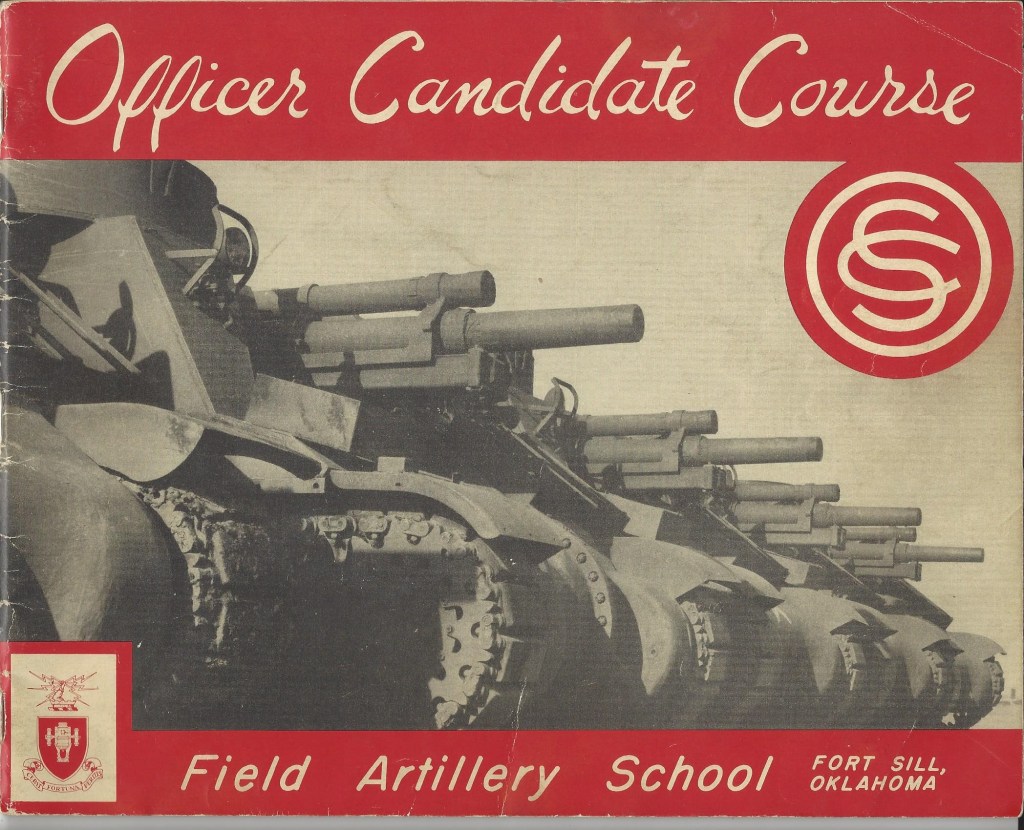
I arrived at Ft. Sill, OK to attend OCS at their Field Artillery School on a dreary day in late January. In retrospect, it seems pre-ordained that I be posted there. Not because I met the love of my life there or had some other earth-shattering experience (although that is what the school was all about.) No, it was pre-ordained because of my love of the Karl May’s books about Old Shatterhand and Winnetou. Not only had many of those books taken place in the Oklahoma territory but Ft. Sill had was the first fort built at the beginning of the Indian Wars. Generals Sheriden and Sherman had rampaged against the Kiowa, Comanche, Cheyenne and the Sioux from here. Wild Bill Hickock and Buffalo Bill Cody led scouting expositions from here. The 7th Calvary, before their adventure at Little Big Horn were stabled here. Geronimo, the famous Indian chief and Sioux warrior was buried here. Hell, the Fort even had its own tribe of Indians, The Ft. Sill Sioux.
I could easily imagine Winnetou and Old Shatterhand visiting The Fort. Hell half their adventures took place in OK. It served as a constant reminder of Tad and our boyhood games. Of an innocence lost. How I, so far, had been awarded with a happy ending and he had not. I wished more than anything that I could let him know where I was. That is the sad thing about losing your best friend. That sharing of the mundane and the extraordinary that they would understand without explanation or fanfare. The companion who would lift you up when you failed and exam or not let your head get to big when you got a commendation for a perfect bombardment.
I occasionally wondered, in the six or seven minutes that we had of free time daily, usually while waiting on lines for chow, what I would tell Tad about this place. Perhaps it would be something fanciful such as “here in the heart of Indian Country I was learning how to become a Shatterhand of my own. Not with fists, but with M3 105mm howitzers, the MI 8 inch, and 75 mm mobile gun platform. And taught the cunning of Winnetou in our tactical classes in camouflage, weapons improvisation or signaling. Or would have told him about Paul O’Brien, a 6’5” guy from Ohio who could fart longer than anybody I have ever met. Or Harold Heineman (Heine) who was so smooth with girls that he worth hanging around with just for the leftovers. I know I would have told him about Sgt William T. Holmes Jr, who woke up every morning with my name screaming my name for some offense he imagined I committed. Not that I took it personally, Sgt Holmes liked to scream at officer cadets. Probably, built up resentment from taking orders from shave tail no nothings.
I would have written him about the food. If for no other reason that he used to do the same to me. His table at home had always the best produce, sausages and meats. After all, that is one of the benefits of having a mother who runs a grocery store. Not that Tad would tease me about the food on his table and mine. He never did, directly. But there were days after we had a cabbage stew that was more cabbage than stew where he would wax poetic about the feast that he had night before…schnitzel, spaetzle, cucumber salad with cheese and apples for a finisher…and my stomach would secretly grumble and I wished I could tell him to shut up.
For someone who grew up without a lot of food and scrounged meals at Syracuse waiting tables Army food was great. Breakfast was eggs, cereal, pancakes, sausage, bacon and grits on the plate. Lunch and dinner were much the same. Lots of beef, we were in cattle country, potatoes done a thousand different ways, fresh vegetables and fruit that the Army got and civilians dreamt about. And while it was the not the Bison that Shatterhand and Winnetou often feasted on I am pretty sure Tad would have approved of the menu and maybe I could return the favor of making him jealous over food.
Sometime during the first week of April, after I had been at OCS for over 8 I saw a copy of the Oklahoman lying on a table in the mess. While the mainline headline was about how our 3rd Army was marching towards Berlin the headline that caught my eye was “Russians Force Slugs Into Vienna Suburbs.” I had spent the last two months learning the purpose and destructive power of artillery. I had no problem imagining what it would do the city I grew up in and whatever it would be to me moving forward, it would always be the place of my childhood memories. I knew the Russians would be ruthless as they had been ever since they had broken free of their border. While it had not widely reported in the press we had been told that the end of the siege of the city was only the beginning of the pain for its citizens. Rape, looting, and summary executions were all apart of the Soviet battle plan.
My knowledge of artillery and Russian tactics meant I could easily imagine, the fear, pain and destruction that was taking place in Vienna. Much worse I could see them written on the faces of people I knew and loved. My grandmother. Paul’s mother. Kids I had gone to school with. The Wurstl near our home who knew my name and let me slide when I was short a pfennig or two. D’vorah Adelstein who proposed marriage to me when we were in first grade. For weeks the images haunted my nightmares.
Then the siege ended. And slowly so did my nightmares. We were moving towards the final push at OCS. More and more of us was asked each day. Perfection was sought in all of the aspects of our new trade like gunnery, tactics, mechanics and command. It made it easier to put my imaginings of the battle of Vienna behind me and focus on getting through the next few weeks until graduation.
Then came V E day, May 8 1945. A day that I would remember less for the celebrations, I never seen so many people so happy, but for the orders to report to Captain Pikes, the Assistant Adjutant Generals office who in the company of Captain Diamond, the commander of the base CIC, order to Vienna by the fastest possible transport.
{Authors note, up until this point I have been writing a head of myself. A chapter or two ahead of publishing…I have now caught up with myself and will publish mid chapter at logical breaks.}
Granville asked the waiter to bring us more coffee. Then said , “I have two questions, no three questions, to ask you about that. First, why did you want to delay your entry into the army just to finish your sophomore year? Why not swing for the fences and get a complete educational deferment? Second, what made you think that telling your draft board, a bunch of small-town USA yokels, about an obscure Hungarian relic would get you are the deferment you were looking for? Finally, what the hell did you tell them? I not only want the details because they are important for what we are going to be doing but how. You must have told a helluva story to get these guys to “pass it up the line.”
I paused before answering him. Obviously, I knew the answers, but I had never met Granville before. I did not know how much I could trust him with the total honesty he requested. At the same time, he was my commanding officer and someone who would have to learn to trust me. If he caught me in a half truth, an omission or a lie any trust we would have developed would be replaced by suspicion and distrust. I decided to come clean.
“Sir, do I have your permission to speak freely.”
Granville eyed me with the same look he must have used in countless interrogations. The type of look that let the person being glared at know that they could see through any crap that might be thrown their way and said “Sure…and call me George…when we are alone.”
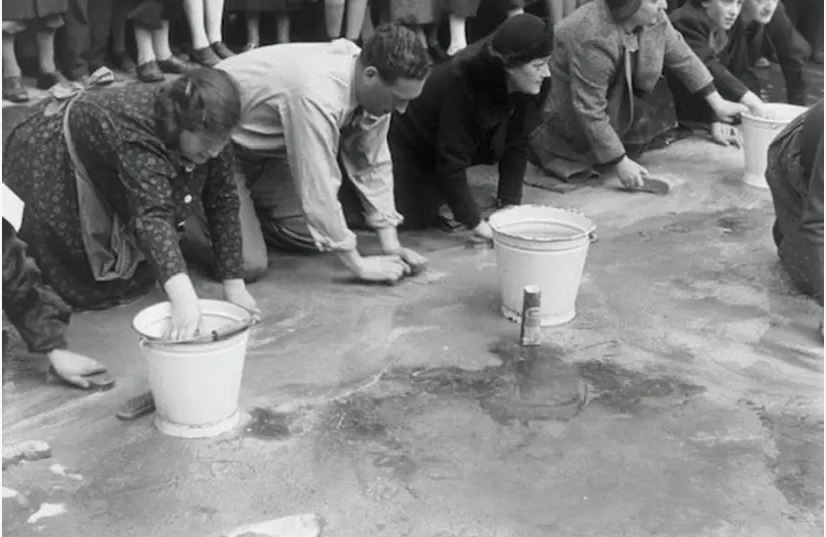
I took a deep breath. “George, I wanted to serve my country. After the Anschluss, and even before, I was beaten, harassed and even stabbed. One Hitler Youth kid even through a spear at me that hit me in the head. I still have that scar. My father was arrested on Kristallnacht, tortured and would probably be dead now except for his service in the first world war. I watched my mother being humiliated on the streets. Do you have any idea how difficult it is for a boy to see his mother forced to clean a sidewalk with a toothbrush while people spit on her and laugh? They arrested and most likely killed my best friend.” I took a breath.
“From the time I was 11 years old all I ever thought about was getting back at Hitler and the Nazi’s.”
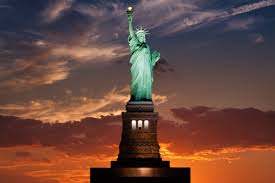
“The United States gave me everything. When I saw the Statue of Liberty for the first time it was the first time I had felt safe in my life. It gave me shelter. It allowed me to become something other than a locksmith. I could live my dreams.”
“But?”
“ I wanted to serve….the country had given me my dream and I wanted to live as much of it as I could before heading off to war…”
“And?”
“There was a bit of calculation on my part. The Vienna street kid coming out in me where you learn pretty fast that surviving today allows you to fight tomorrow. When I went before the draft board I knew, hell everyone knew, that the next step in defeating the Nazis was an invasion of Europe. The papers talked about it constantly. It was going to take a lot of troops and it was going to be hard fighting. Fighting like we had never seen. It would be a meat grinder. And fresh troops were going to be the meat. I thought if I could delay my entry into the Army for a few months then perhaps there would be less of a chance me getting caught up in the meat grinder.” I paused. “I am not proud of my….my…analysis…but it meant that by the time I finished Basic in January of ’45 the big battles had been fought and won.”
“But I also felt guilty. I figured out a way to delay my service. A lot of people were not so lucky…But this is all mixed in with I really did want to finish my sophomore year. I had worked so hard to get to college. 3.5 years before I started at Syracuse, I spoke virtually no English. I had to scrimp every penny, working every awful job imaginable, including shoveling snow off train tracks in the middle of an upstate New York winter, and survive my father’s stream of abuse about going to school to get there. I didn’t want that to be for nothing.”
“In other words, I had a lot of motivation to convince my Draft Board to give me the deferment. But I did not think I had any reason to give them other than I wanted to finish my sophomore year. And I did not think that was going to fly with them. I had a high draft number and they were not giving deferments for no reason. I felt like if I really wanted to have my deferment granted I needed something to grease the skids. I had to give them something that would not only get their attention but also that of the Army.”
“Which is when you decided to talk to them about the Crown of St. Stephen?”
“Right! But I had two things I needed to overcome. The first, was my own conscience. When I was told about the Crown, the person who gave me the information, swore me to secrecy. I took the promise seriously when I told him I would keep the secret. But I eventually concluded that promise did not cover this situation. I mean he told a 13-year-old Jewish boy at a time when the Nazi’s had conquered most of Europe. Who was he really going to tell? More importantly, the nature of the promise had implied in it the safety of the Crown. I was not going to be putting the Crown in danger by telling my draft board and there was a strong possibility that I would be doing something to save it.”
The second problem was how do I explain why what I was telling them was important. I had learned in the short time I was living in America that their knowledge of Europe and its history was minimal and mostly had to do with England. I mean the average American could not tell you the difference between a Magyar and a Romani let alone anything about the Hapsburgs. How do you convince of local businesspeople, many of them without college education, the significance of a crown of minor central European kingdom?”
I paused to see if Granville had any questions and perhaps a little bit for effect. Instead of responding, he just nodded, which I took as an invitation to continue my story.
“My birthday was drawn high when the held the draft lottery. . I knew that if I wanted that deferment, I would need to appeal to my draft board. So, I wrote them a letter asking them for a deferment. In it, I tried to explain the history of the Crown, its importance to the people of Hungary, and as a consequence to the region. I knew it was a little bit like explaining color to a blind person. American’s, as a whole don’t understand kingdoms, as a consequence what crowns means. Most American’s don’t really understand European History, let alone the history of Hungry, Austria, The Hapsburgs.”
“ I tried to keep it simple. In my letter to them, I explained that the Holy Crown of Hungary was like the Declaration of Independence, The Constitution, The Flag, The Presidency and the Ark of the Covenant all rolled into the one. That for more than 1000 years, since the Pope had given to King Stephen (later St. Stephen) that it has crowned every Hungarian King. That the crown can only be possessed by someone who is worthy of it. Not the other way around. That whoever controls the Crown controls the Hungarian people.”
“I explained that while I was a boy living in Vienna, I had been told of plans to smuggle the Crown out of Hungary should the Nazi’s try to seize it as a means to controlling Hungary. That, I was sure that the same plan was in effect should the Soviets do the same.”
“Then I explained the plan, as I remembered it. And told them, that I was providing the information to them not because I was seeking deferment of my draft because I felt it was my obligation to give it to them as I was about to enter the service for the United States. But I hoped that they would consider my deferment.”
“When I appeared before the board, there were a few questions about the Crown but really nothing more than acknowledging my letter. Then they granted me my deferment until September 1944.”
“I went back to Syracuse and forgot completely about the Crown. I was too busy trying to pass Organic Chemistry and Physics and earn enough money to live on to think about many other things”
“Then one afternoon in February, as I was leaving my ROTC class, I was approached by two men in dark suits. They identified themselves as Sergeants from Army Counterintelligence. I think their names were Magrath and English. They asked if they could speak with me about what I had written to my draft board. I was a bit nervous and asked if I was in trouble of some kind? I could not imagine what that would be, but we were at war and land mines were everywhere. They assured me I was not in trouble. That they were here for routine follow up. The Chairman of the Danbury Draft board had, as a matter of routine, forwarded my letter to the Army. The Army not knowing what to do with it sent to CIC, etc etc. Not a big deal . We should talk. They would file a report that would sit in a file. So we went down to the Rathskeller and I spent the next couple of hours going through what I had been told by Colonel Skoda and The Holy Crown. At the end, they shook my hand and wished me well.
“And” Granville asked.
“Completely, forgot about it. Finished my sophomore year in August. Got inducted into the Army. Did basic training at Ft. Wolters, Texas. Became a US Citizen. Applied for and got Officer Candidate School at Ft Sill and I was two weeks away from graduation when the CIC chief on the base called me to his office. I thought they were going to wash me out for something. Instead, he hands me a set of orders from Ft. Devins, Maryland breveting me to Lieutenant and telling me to report to Major Kubala at 5th Army Intelligence in Augsburg, Germany. Two hours later I was on a plane. 6 hours after that I was on a B17-E flying the southern route to Europe. I got to Major Kubala 36 hours later. And he sent me to you and frankly George I am confused as hell. Why the hell do you need me here? Everything I knew about the Crown was in that report.
Granville, pulled out a pack of Chesterfields and tapped out a smoke. Blowing out a billow of smoke he said “What you meant to ask. Why did the Army fly a pissant almost Lt. halfway around the world when reading a report would have sufficed?”
“That is exactly what I mean.”
“Then I guess I need to bring you up to date.”
“If you asked a Hungarian official today how they would want to write history they would probably tell you that they were a reluctant member of the Axis powers. Due to their geographic location, dead center in Europe, German troops would have to move through them to get to the Balkans and the Romanian oil fields, to the Ukraine Russia and beyond. That for them, it was either choose to be a part of the party and retain control of your government or being conquered and loose all control of your destiny. And remember, back then, late 1940, Germany had run the table. Poland, Belgium, Czechoslovakia, Denmark, Norway, Holland and France all conquered or overrun. The British asses had been kicked at Dunkirk. The Nazi’s looked invincible. Admiral Horthy and his advisors decided to join the Axis out of self-preservation. Kill or be killed.”
Granville looked over at me and no doubt saw a look of skepticism on my face. “Yeah. I know. It is quite easy now to say they were forced into it. They had no choice. But you and I both know, no matter how they had no choice, they were more than willing participants. They joined the Axis happily. From an economic point of view Italy and Germany were their two largest trading partners and with the Reich expanding looking like they were going to conquer the world it meant that Hungary would thrive. More importantly, Hungary’s leadership own views on race and politics were not dissimilar. The Magyars have always believed in their own ethnic superiority. That other ethnic groups like the Romani, Swabians, Bulgars and Jews were a tolerated necessity. From a political point of view, they were on point with each other. While not fascist, per se, they were adamantly anticommunist and gave absolute power to the Regent. So while they may not been singing out of the same hymnal it was close enough that they could sing together during the chorus.”
“But as the war progressed, the calculus of staying in power changed. We joined the war. Hitler was defeated in North Africa. Italy was invaded. The Russians held and eventually defeated Hitler at Stalingrad. When the Allies issued the Moscow Declaration in late November of 1943, essentially describing how the post war world was going to work, the Hungarians could see which way the wind was blowing and they decided that needed to negotiate their own future. A separate peace.
Granville paused and gave me a dead eyed look and said “They cover the Espionage Act of 1917 and classifications of secrets while you were at Fort Sill?”
I nodded and said “yes.”
“Good because up until now what I have told you is a matter of public knowledge, history. But this next part, is classified what I am going to share with you know is classified as Top Secret. In simple terms, you can tell no one except a person you know is cleared for Top Secret material and then only on a need to know basis. Not a girlfriend. Not a wife. No one until it is cleared. Understood?”
I nodded.
“Okay. After the Moscow declaration. The Hungarian Government under the Regent, Admiral Horthy…you understand who he is?”
“Isn’t he, in essence the King, except he is not. Something about refusing the crown. But he runs the government, sort of constitutional dictator but with a dash of regality thrown in.”
“You’re on track. The Hungarian Government began to realize that its alliance with the Axis was not going to end well. Not only, was there increasing pressure to give more power to the Broken Arrow Party…the Nazi’s of Hungary…and also implement the Nuremberg Laws and begin deporting the Jews to concentration camps and dispose of them. The Hungarians had no great love for Jews but they also realized that they played a vital part of the economy, so they were a bit reluctant to do this. But the real problem was they knew that if the Germans began to withdraw from the Soviet Union Hungary would become a battleground and the Russians would lay waste to anything in their path. Worse, it was clear from the Moscow Declaration that Hungary was likely come under Soviet influence if not control in a post war world.”
“Horthy and his government could not abide by a Communist state in Hungary. It shook them to the Magyar core. They needed a separate peace.”
“Admiral Horthy wrote in secret via his embassy in Portugal to Nicholas Roosevelt who had been the US Minister to Hungary in the early ‘30’s. Horthy knew that Roosevelt was not only the first cousin of Teddy but had access to Franklin. He wanted to negotiate an armistice with the Allied Power where he had a personal relationship and would likely be the ones running the show after the war. Roosevelt did what he was supposed to do and a back channel was set up between the government. A deal was struck. Hungary declares an armistice. They step out of the war, like the Italians, and the government remains the same. The hope was that Hitler and The German General Staff would be so busy fighting what was in essence a three front war that they would have little or no resources to deal with the Hungarians. From the allies point of view it meant, that instead of fighting their way across Hungary they would have a direct path to the Reich. Plans were made. Contingency plans were devised. Contingency plans to the contingency plans were conceived. Then things went FUBAR. “
“Somehow the Germans found out about the secret negotiations. Horthy was forced to show his hands and declared an armistice in October 1944 months before the allies were in position to back him. The Nazi’s then kidnapped his son and using that as leverage forced him to resign. Then they arrested him and sent him off to Bavaria and prison while they installed a Broken Arrow fascist regime under Ferenc Szalasi.
“Are you following me so far.”
“Sure George but I am not sure what this all has to do with me?”
“Didn’t they teach you patience in basic…Hold on. I am getting there. We had planned for this contingency. For the Hungarians, the resignation of Horthy meant that two groups, the Nazi’s and the Commies, would soon or could soon gain possession of the Crown. To them it would be like Jews letting the ark of the covenant fall into the hands of the Philistines. Or us giving over the constitution to the British. As a consequence, one of the contingency plans we had worked out before hand was moving the Crown west so that it could be protected by the US Army.”
“In November of 1944, the Crown Guard secreted the Holy Crown of Hungary, The Holy Scepter and Orb, and the Holy Right Hand of St. Stephen were placed in special chests and driven out of Budapest to a monastery in Vezspem about 100km away. They did not feel safe there, so they moved it to moved it to Kozeg. And so it went. The Russians would advance west and so would the Crown and its retinue.
We were kept up to date with the Crowns progress west by the Crown Guard as we had promised to protect it as part of our agreement with Horthy. We promised him that should things go south we would protect the Crown and return to the Hungarian people when a permanent government was established. That is, as long as it was not communist. Whenever they settled in some place, they would contact the Hungarian underground. They, in turn would inform us.
The crown finally entered Austria in mid-March. That is when the big brains back at SHAPE (Supreme Headquarters Allied Powers Europe) decided that this would be my baby. Part of it was my background being Hungarian and speaking it and German fluently. And partly because I straddle another line. Technically, I am an officer in Army CIC, but I am also a part of OSS. Having me in charge of the mission meant less interagency fighting. It was good office politics. My orders were to report to the 5th Army Interrogation Center in Augsburg, Germany and Major Kubala and wait until we heard from the Crown Guard.
And then they went dark. Whether it was because they were in Austria and trying to fly even farther below the radar or because they could not find a member of the underground now that they were in Austria I don’t know. But we didn’t hear from them all through April and we feared the worst. Either they had been captured by the Germans or even the Russians. We even played around with the idea that they were playing a fast one on us. The Hungarians trust no one who is not Magyar. Why should they trust us?
Finally, on May 4. we got word from a Catholic priest in Seeham, a small town near Salzburg that a Hungarian Crown Guard Officer named Pajtas was looking to surrender. It was what we were waiting for. I grabbed Cookie, a squad of men, and a “deuce and we made all haste to get Seeham. It was not easy. The war was all but done but the road were shit and there were checkpoints everywhere. It took us better part of the day.
When I got to the town, I found them outside a small Catholic Mission. They had placed the covered truck in the center of the courtyard and it was guarded by 6 armed members of the Crown Guard. When I asked for their commanding officer I was directed inside to the kitchen where I found Pajtas and six more members of the guard eating dinner. They did not seem impressed with me or the fact that I represented the conquering Army. Pajtas said to his men in Hungarian “Look at the little rooster strutting. He must think we are all his chickens.” His men thought it was hilarious.
Not wanting to get into a pissing match with Pajtas in front of his men I asked him outside for a smoke. After I lit his cigarette, I asked him “Do they raise capons on the farm where your father fucked cows. Because you are about to become one if you don’t start cooperating right now.”
He blanched. Then apologized. He explained that it was just army humor and not to take it personally. I said I didn’t give a flying fuck about him or his insults. That I had a job to do “Where’s the Crown?”
He pointed to the truck and said there. I began to walk to the trucks and his sentries pointed their weapons at me. Pajtas told them to be at ease and they relaxed but having armed enemy soldiers in this situation was not a good idea. Cookie, who had seen what had happened took half his squad and outflanked Pajtas’s guards. By the time we opened the flap on the back of the truck the other half of the squad had casually entered the kitchen.
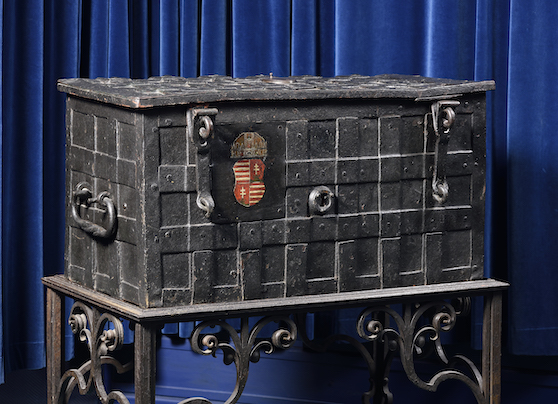
In the back of the truck there were two large ornate iron trunks that resembled small caskets that were emblazoned with the Hungarian Coat of Arms. Each of the them was also fitted with three integral locks and were secured to truck bed with chains that also had locks on them. Before I could inspect the trunks further there was a disturbance outside. Cookie had taken advantage of Pajtas’s distraction and had his men forcibly disarm the Crown Guard who lined the perimeter of the truck and those inside having dinner. The Hungarians had not been pleased.
I turned to Pajtas and I said “Major, my orders are to take possession of The Crown and take it to Augsburg Germany where there is a special facility that will allow us to keep it safe until such time it can be returned to a legitimate Hungarian Government. You and your men are considered enemy combatants and will be taken into custody and escorted to a prisoner of war facility where you will be held until such time as there is a disposition of the prisoner of war.”
Pajtas looked very pained. He knew he had no choice in the matter. That he was now a prisoner but still he pleaded with me. He told me that he and his men had sworn an oath and that they had a “sacred” duty to protect the crown from all others. He requested that he and his men be allowed to escort the Crown to Augsburg. I consented for no other reasons than that had been my plan all along. I had no way of disposing his men.
We drove through the night and finally reached the 5th Army Interrogation Center a little past dawn. I had sent word a head that our mission was accomplished, and we were heading back so the minute we entered the compound we were greeted by Major Kubala and a squad of MP’s. Pajtas and his men were taken to on base holding facility while the trunks were off loaded and taken to a small conference room in HQ. Kubala after admiring the trunks said “Great. Lets see what is inside. Give me the keys.”
To my defense I had been on the go for nearly 24 hours and been under extremely stressful conditions. I had never thought to ask Pajtas for the keys. We had him hauled back from the holding facility and demanded the keys. He gave us a self-satisfied defiant smirk and said he did not have them. After a bit of coercion administered by Kubala he admitted that hree days earlier he had met with a group of Hungarian ministers who had fled Hungary in front of the advancing Soviets. It had been decided, for the safety and protection of the Crown that the keys would be sent to trusted people who would protect the keys with their life. He said he had no idea who these people were.
It was a cluster fuck. And it got worse. Apparently, Kubala had jumped the gun and sent word to Eisenhower that the Crown was now in our possession. Eisenhower in turn had sent word to Truman. They were looking for photographs of our success and we had nothing to show them except a couple of old iron trunks. Kubala was embarrassed and angry and blamed me for his embarrassment. He ordered me to interrogate Admiral Horthy who after being liberated from the Nazi’s was being held at Augsburg. He claimed to know nothing. He imperiously claimed since he had been held in German and American prisons since September, how could he know anything. He also warned me that breaking open the trunks would be a desecration of the crown.
By this point Kubala is beyond angry not the least of which is because SHAPE had blasted him a new one. He told me that they had authorized him to “pull out all the stops” to find the keys.
At this point, Kubala took a moment lit another Chesterfield and said, “That was 10 days ago.”
“One of the first things I did was sent a message to Ft. Devens and see if we had any intelligence on the Crown of St. Stephen. The report your draft board filed along with the follow up by the two agents came up. It made it clear your pal Skoda was someone we needed to speak with, but we had a couple of problems” he said releasing a cloud of smoke.
“First, things here in Vienna as you have seen are a fucking mess. Not only is half the city rubble but the Russian’s did not play nice when they got here. They raped and looted until they got tired of it and then they did it some more. As a consequence, there is little good will towards us and our Russian allies and no cooperation.””
“Second, we have no idea what Skoda looks like. We could be talking directly to him and he could lie about who he is and we would none the wiser.”
“Which is where I come in” I said with sudden understanding.
“Yes, well actually we think you can help with both of those problems. In addition to being able to identify Skoda you are native. You speak German with a Viennese accent. We know that will help with the locals as well as your knowledge of the city. We hope that you will be able to figure out who is full of horseshit and who is steering us in the right direction.”
I wanted to tell Captain Granville that the chances of us finding Major Skoda were almost nil without Tad. He was, after all Tad’s Uncle, and after the letters from Eduard I was under no illusion that he was still alive. But I was here. There was no sense telling him the search was hopeless. It would only give Granville the wrong impression. As a consequence I said “Will find him, George.”
Granville asked the waiter to bring us more coffee. Then said “I have two questions, no three questions, to ask you about that. First, why did you want to delay your entry into the army just to finish your sophomore year? Why not swing for the fences and get a complete educational deferment? Second, what made you think that telling your draft board, a bunch of small-town USA yokels, about an obscure Hungarian relic would get you are the deferment you were looking for? Finally, what the hell did you tell them? I not only want the details because they are important for what we are going to be doing but how. You must have told a helluva story to get these guys to “pass it up the line.”
I paused before answering him. Obviously, I knew the answers, but I had never met Granville before. I did not know how much I could trust him with the total honesty he requested. At the same time, he was my commanding officer and someone who would have to learn to trust me. If he caught me in a half truth, an omission or a lie any trust we would have developed would be replaced by suspicion and distrust. I decided to come clean.
“Sir, do I have your permission to speak freely.”
Granville eyed me with the same look he must have used in countless interrogations. The type of look that let the person being glared at know that they could see through any crap that might be thrown their way and said “Sure…and call me George…when we are alone.”
I took a deep breath. “George, I wanted to serve my country. After the Anschluss, and even before, I was beaten, harassed and stab. One Hitler Youth kid even through a spear at me that hit me in the head. I still have that scar. My father was arrested on Kristallnacht, tortured and would probably be dead now except for his service in the first world war. I watched my mother being humiliated on the streets. Do you have any idea how difficult it is for a boy to see his mother forced to clean a sidewalk with a toothbrush while people spit on her and laugh? They arrested and most likely killed my best friend” I took a breath.
“From the time I was 11 years old all I ever thought about was getting back at Hitler and the Nazi’s.”
“The United States gave me everything. When I saw the Statue of Liberty for the first time it was the first time I had felt safe in my life. It gave me shelter. It allowed me to become something other than a locksmith. I could live my dreams.”
“But?”
“ I wanted to serve….the country had given me my dream and I wanted to live as much of it as I could before heading off to war…”
“And?”
“There was a bit of calculation on my part. The Vienna street kid coming out in me where you learn pretty fast that surviving today allows you to fight tomorrow. When I went before the draft board I knew, hell everyone knew, that the next step in defeating the Nazis was an invasion of Europe. The papers talked about it constantly. It was going to take a lot of troops and it was going to be hard fighting. Fighting like we had never seen. It would be a meat grinder. And fresh troops were going to be the meat. I thought if I could delay my entry into the Army for a few months then perhaps there would be less of a chance me getting caught up in the meat grinder.” I paused. “I am not proud of my….my…analysis…but it meant that by the time I finished Basic in January of ’45 the big battles had been fought and won.”
“But I also feel guilty. I figured out a way to delay my service. A lot of people were not so lucky…But this is all mixed in with I really did want to finish my sophomore year. I had worked so hard to get to college. 3.5 years before I started at Syracuse, I spoke virtually no English. I had to scrimp every penny, working every awful job imaginable, including shoveling snow off train tracks in the middle of an upstate New York winter, and survive my father’s stream of abuse about going to school to get there. I didn’t want that to be for nothing.”
“In other words, I had a lot of motivation to convince my Draft Board to give me the deferment. But I didn’t think I had any reason to give them other than I wanted to finish my sophomore year. And I didn’t think that was going to fly with them. I had a high draft number and they were giving deferments for no reason. I felt like if I really wanted to have my deferment granted I needed something to grease the skids. I had to give them something that would not only get their attention but also that of the Army.”
“Which is when you decided to talk to them about the Crown of St. Stephen?”
“Right! But I had two things I needed to overcome. The first, was my own conscience. When I was told about the Crown, the person who gave me the information, swore me to secrecy. I took the promise seriously when I told him I would keep the secret. But I eventually concluded that promise did not cover this situation. I mean he told a 13-year-old Jewish boy at a time when the Nazi’s had conquered of claim most of Europe. Who was he really going to tell? More importantly, the nature of the promise had implied in it the safety of the crown. I was not going to be putting the Crown in danger by telling my draft board and there was a strong possibility that I would be doing something to save it.”
The second problem was how do I explain why what I was telling them was important. I had learned in the short time I was living in America that their knowledge of Europe and its history was minimal and mostly had to do with England. I mean the average American could not tell you the difference between a Magyar and a Romani let alone anything about the Hapsburgs? How do you convince of local businesspeople, many of them without college education, the significance of a crown of minor central European kingdom?”
I paused to see if Granville had any questions and perhaps a little bit for effect. Instead of responding, he just nodded, which I took as an invitation to continue my story.
“My birthday was drawn high when the held the draft lottery. . I knew that if I wanted that deferment, I would need to appeal to my draft board. So, I wrote the them a letter asking them for a deferment. In it, I tried to explain the history of the Crown, its importance to the people of Hungary, and as a consequence to the region. I knew it was a little bit like explaining color to a blind person. American’s, as a whole don’t understand kingdoms, as a consequence what crowns means. Most American’s don’t really understand European History, let alone the history of Hungry, Austria, The Hapsburgs.”
“ I tired to keep it simple. In my letter to them, I explained that the Holy Crown of Hungary was like the Declaration of Independence, The Constitution, The Flag, The Presidency and the Ark of the Covenant all rolled into the one. That for more than 1000 years, since the Pope had given to King (later St. Stephen) that it has crowned every Hungarian King. That the crown can only be possessed by someone who is worthy of it. Not the other way around. That whoever controls the Crown controls the Hungarian people.”
“I explained that while I was a boy living in Vienna I had been told of plans to smuggle the Crown out of Hungary should the Nazi’s try to seize it as a means to controlling Hungary. That, I was sure that the same plan was in effect should the Soviets do the same.”
“Then I explained the plan, as I remembered it. And told them, that I was providing the information to them not because I was seeking deferment of my draft because I felt it was my obligation to give it to them as I was about to enter the service for the United States. But I hoped that they would consider my deferment.”
“When I appeared before the board, there were a few questions about the Crown but really nothing more than acknowledging my letter. Then they granted me my deferment until September 1944.”
“I went back to Syracuse and forgot completely about the Crown. I was too busy trying to pass Organic Chemistry and Physics and earn enough money to live on to think about many other things”
“Then one afternoon in February, as I was leaving my ROTC class I was approached by two men in dark suits. They identified themselves as Sergeants from Army Counter-Intelligence. I think their names were Magrath and English. They asked if they could speak with me about what I had written to my draft board. I was a bit nervous and asked if I was in trouble of some kind? I could not imagine what that would be, but we were at war and land mines were everywhere. They assured me I was not in trouble. That they were here for routine follow up. The Chairman of the Danbury Draft board had, as a matter of routine, forwarded my letter to the Army. The Army not knowing what to do with it sent to CIC, etc etc. Not a big deal . We would talk. They would file a report that would sit in a file. So we went down to the Rathskeller and I spent the next couple of hours going through what I had been told by Colonel Skoda and The Holy Crown. At the end, they shook my hand and wished me well.
“And” Granville asked.
“Completely, forgot about it. Finished my sophomore year in August. Got inducted into the Army. Did basic training at Ft. Wolters, Texas. Became a US Citizen. Applied for and got Officer Candidate School at Ft Sill and I was two weeks away from graduation when the CIC chief on the base called me to his office. I thought they were going to wash me out for something. Instead, he hands me a set of orders from Ft. Devins, Maryland breveting me to Lieutenant and telling me to report to Major Kubala at 7th Army Intelligence in Ausburg, Germany. Two hours later I was on a plane. 6 hours after that I was on a B17-E flying the southern route to Europe. I got to Major Kubala 36 hours later. And he sent me to you and frankly George I am confused as hell. Why the hell do you need me here? Everything I knew about the Crown was in that report.
Granville, pulled out a pack of Chesterfields and tapped out a smoke. Blowing out a billow of smoke he said “What you meant to ask. Why did the Army fly a pissant almost Lt. halfway around the world when reading a report would have sufficed?”
Like most people, I followed the war news very carefully. Unlike, most I used reading the newspapers, especially early on, as English lessons. It made learning easier when you had a personal interest in the subject being discussed. A guy I knew once accused me “of reading the ink” off the newspaper. He got annoyed when I asked him what that meant but when he, reluctantly, explained, I agreed with him whole heartily.
I was having one of those intimate sessions with a newspaper in late June of 1944 sitting on a bench outside Max’s grocery store on White St in Danbury when I read that the allies had begun bombing Vienna in earnest from their new airfields in Italy. My first instinct was to rush into the store and tell Max about the bombing but as I got up off the bench I realized that the bombing meant something other than taking it to the Nazi’s. I knew people in Vienna. I had relatives in Vienna. It was not just the Nazi’s getting bombed it was folks that I knew. I never did tell Max about the bombing. He would have been too joyful. He would not understand the suffering of the people like me. I didn’t tell Mama or Papa either. They knew all that it meant but for them, especially Mama with her large family, it would just have added needless worry. No doubt someone else would tell her but it would not be me adding to her burden. Or at least not that way.
The bombings went on virtually every day from June until April. Imagine a city like Washington or Boston being bombed every day. And then despite Vienna being declared an “open city” the Russian’s began their assault in early April. For two weeks some of the fiercest urban combat of the war occurred. Block by block, a city that was already in ruins became a city in rubble. Not even The Cathedral of St. Stephen was spared. A bomb penetrated its roof and caused a massive fire and damage to what had been the heart of Vienna for a thousand years
Despite knowing all of this, I was not prepared for what I saw on our ride from the Danube to the Hotel Sacher. Photographs can only show you images of the destruction. Massive piles of debris where buildings once stood. Craters where there used to be streets. Wrecked armored vehicles and tanks in parks where I used to play. But photos won’t let you know what it smells like. What was it that Kipling said “The first condition of understanding a foreign country is to smell it.” Here, the odor of decaying bodies still buried beneath the rubble, mixed with the dust of the thousands of destroyed buildings, the human waste from broken sewers and lack of sanitary facilities. It was overpowering even a month after Vienna’s surrender. It was the smell of defeat and was so overwhelming that Cookie and I had to stop and jury rig face coverings out of handkerchiefs.
We were making our way down Rotemsturmstrasse when we came across Stehpansdom. St. Stepehens Cathedral, the symbol of the city and the Austrian Empire lay in shambles. I told Cookie to stop. I wanted to look around even if it made us a few minutes late with Granville. Not only had this building been the center of Viennese life (technically by law it was the center) but tangentially, it was the reason that I was here. I walked over to the front wall. I wanted to see if a memory of childhood still existed. When I was small enough to still want to hold Papa’s hand we had walked past the Cathedral on our way to buy me new shoes. He had pointed to two iron bars embedded in the stone wall of the church. He told me that these were the official measurements in Austria put here so there was a standard and no one would cheat each other. I thought it a very strange concept at the time. But now I wanted to see if they remained. That at least one part of my childhood stayed intact. It did. They were still there. That wall, despite being black from the soot of the fire, the interior gutted, remained standing. I walked back to the jeep and told Cookie “ See that street over just to the left. That is Kartnerstrasse. Hotel Sacher will be on the right in a few blocks.”
We had been told by Major Kubala that the Hotel Sacher had been commandeered by the British shortly after VE day. The Russians who controlled the city, were none to pleased to see the “Tommies.” They wanted the city for their own despite their agreement to the Moscow accords. However, in typical, they pretended not to hear the Russian’s complaints and in classic British fashion, they had found the nicest place to stay and made themselves completely at home. As we American’s did not have an official HQ in Vienna as of yet, we were to stay with the Brits while our team looked for a permanent location.
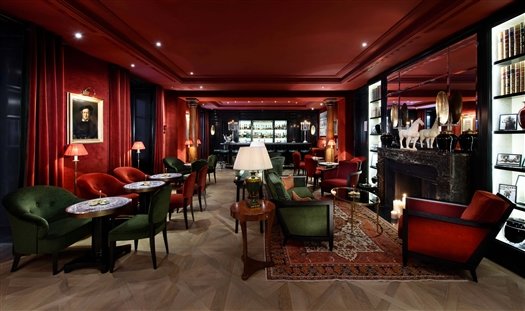
The Hotel Sacher had somehow remained untouched by time and bombs. It looked like no war had taken place outside its doors. We called Captain Granville on the house phone Cookie and I made ourselves at home in the lush lobby of tiled floors, with seating areas defined by Oriental rugs. The couches are chairs were either of chintz or red velvet and the walls of brown wood dotted by pictures and mirrors in gilded frame. “No wonder the British commandeered this place” I thought “It looks exactly like a British Men’s Club.” Not that I had ever been in one of those clubs but what I imagined they looked like from the movies and books.
Within a couple of minutes, we were approached by a surprisingly tall, skinny Captain in a Class A uniform in which he didn’t at all comfortable. This fit Kubala’s description of Granville. I had been told that up until March Granville was a sergeant in Army Counterintelligence. Held at that rank because US regulations at the time required officers be native born citizens. Granville had been born in Budapest and as a consequence was not eligible. When the demand for officers, especially those with native language skills, had become too great, regulations had been re-written. Since January all that was required to become an officer was citizenship. This change how allowed me to become commissioned. Granville, who had served with distinction in North Africa, Italy, and France had been promoted from Sgt. to Captain in one leap due to his service and depth of expertise in counterintelligence and eastern Europe.
I stood and saluted. He gave me a half hearted, war weary salute back. He looked over at Cookie who was still slouched in a chair, reading a wekk old issue of “Union Jack” , the British military newspaper, and had not bothered to stand or for that matter salute Granville. The Captain said “Hi Cookie. I see you have not changed very much. Still doing your Joe and Willie routine” referring to the two famous characters from Bill Mauldin’s cartoon. “
Still without getting up or saluting he said “Sir, yes sir.” Then he smiled and said “Just can’t get used to with those bars on your shoulders. You used to work for living.”
Granville smiled and replied, “Still do.” Then he tossed Cookie a key “Here is your billet. Why don’t you go and take advantage of the hot water and the bed and meet us back down here at 1600.”
With that Cookie got to his feet, gave us both a very lazy salute, more akin you would see in Brooklyn when they said “see ya” than in the Army and drawled “Don’t have to be asked twice for that.”
Granville gestured to a small table with two burgundy velvet chairs up against the wall and we sat down. He signaled the waiter and asked him in perfect German, albeit with a slight Hungarian accent, to bring us two coffees. Then, he pulled a file from his briefcase and said to me “May I call you Hugi.”
“I prefer Sam these days.”
He looked at me inquisitively so I added “When I got to High School in the states the name Hugi was, lets just say, not very familiar and some folks thought it particularly easy to have fun at my expense. So, when I tried out for the football team, I told everyone to call me Sam.”
“Why Sam?”
“Because Max was taken….No reason, really. It sounded American to me and it stuck.”
“I understand that. When my family immigrated to the United States my name was Gerbo Szabo. My father decided to change the last name to Granville and told us kids we needed to pick an American first name. I liked George Washington so…” He smiled and held out his hand “George.”
“Sam”
The coffee arrived on a silver tray with a sugar bowl, two small glass of water and small bowl of “schlag”, whipped cream. It was a little thing but for a moment I was overtaken by the “Vienneseness” of the moment. Less than a week ago, I was in the middle of Oklahoma, at a Fort built for the Indian Wars and now here I was back where it all began, being Viennese.
I smiled. Captain Granville had been a member of Army Counterintelligence for over 3 years. He had, no doubt interrogated many people and managed to drain them of the information they had to offer. Picking up on body language and other tells no doubt had helped in many situations. He noticed my amusement and said “Why the smile Sam?”
“Sir, just the improbability of the moment. 5 years ago I was a kid in short pants running away from this place. One year ago I was on a college campus in upstate NY bussing tables to pay for my tuition. One week ago I was in Oklahoma trying to figure out the trajectories of artillery shells. To be here, having Kafe mit Schlag because of something I heard as a kid…well its its just so absurd its funny.”
Granville nodded and said “Welcome to this mans, Army. Where the absurd is often the order of the day. But I am glad you brought up your story. I want to hear it. From the beginning. As much or little detail as you want. If we are going to be successful I need to know a little about who you are.”
…………..
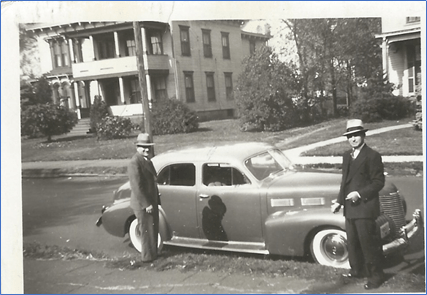
Max met us at the dock with his wife Sara. The car, I learned later, was a 1939 Buick Roadmaster and looked as if it had been designed for mobsters to drive in all those James Cagney and Humphrey Bogart movies. I was overwhelmed by it size. Sitting in the back seat on the way to our new home in Danbury Ct, I thought the interior of the car was bigger than our cabin had been on Vulcania. It made me think Uncle Max was very rich. It was something that my new Aunt Sara was happy to talk about. In halting German with a terrible American accent she proceeded to tell us how Max had come here with nothing and now he owned two stores and how luck we were to have him as a relative. That he had saved our lives and how grateful she knew we felt for being saved. I did not realize at the time but what she was doing was putting us in our place. We were the poor relatives who been saved by her and Max and we needed to show our appreciation to them in everything we did like a serf to a feudal lord.
I could tell from the way Uncle Max’s shoulder hunched that this was an uncomfortable conversation for him. I do not think he wanted us to feel any obligation at all. I thought that he was simply happy to have helped his family. But it was also patently obvious whatever Sara said went and he would not disagree with her.
When we finally got to Max’s home about 2 hours later, we were all very tired. But Sara’s housekeeper had prepared a light meal for us. We sat down at a table with dishes of food that looked quite different from what we ate in Vienna or even the meals that had been served on board ship. I was too embarrassed to ask about what each item was, so I decided to focus on the familiar cutting off slices of cheese and placing them on freshly baked white bread. The cheese tasted a little different than home but I thought it was delicious, so I kept eating more until Max said to me “Du musst Butter lieben?” You must love butter. What I thought was cheese was butter and I must have eaten a ½ lb. I felt my face turn red but replied sheepishly. “Ja.”
The next morning, Max drove us to our new home at 10 Delay St. A two-family home just a block off Main St and a few blocks from Max’s stores on White Street. Even though the building showed some wear and tear, to us it was a palace. We had the entire first floor and not only was there a kitchen large enough to eat in but it had two bedrooms (I know longer had to listen to Papa’s snoring) and its own bathroom with a shower and a tub! There was even a porch and a backyard.
Max had done more than find us a place to live. He had also found Papa a job. We learned that Danbury was called the hat capital of the world because since the mid 1800’s it’s primary industry was hat making and Papa’s experience in the abattoir and being a brush maker made him a perfect candidate for a job in the hat industry. Max had a connection at the Bieber-Goodman Felt Body Corporation and a job had been arranged for him there. Mama, was offered a job as a seamstress at the same company. For me, it was off to school but before I could go, I would needed to be tested so the proper grade level could be determined.
The next day Max took me to the high school where they gave me a series of tests. I did not understand them very well as they were all in English. When the testing was completed the woman, who administered the test told Max the results. As they were speaking in English I did not understand them but It was clear that he did not like her remarks and a brief argument ensued before we left. When we got to the car Max told me what the lady had said. That because of my English skills I was to be placed in the 2nd grade until I progressed.
When I started school the next week, I was nearly 14 years old and surrounded by kids half my age. It was humiliating. Especially as many of the teachers and adults treated me as I was mentally retarded. It made me angry but determined. I would show them. I will learn English faster than they could imagine. It took months. Endless practice and even reading a dictionary but by the end of the school year in June, I was ready to join the Sophomore class in the fall.
I also had a new name. The kids at school had never heard the name Ugi before. And it was the butt end of endless jokes. So after talking to Max, and thinking it over, I told people to call me Sam.
I wrote to Tad. I wanted him to know about my new life. I wanted to hear how he was doing. I hoped I would hear back that everything was fine and that my worries about him and the Tomahawk was just my overactive imaginations. But I never received an answer from him. Part of me wanted to rationalize his lack of response away. He had moved. He was angry at me for leaving. The Nazi’s sensors had destroyed my letter. But I knew I was only kidding myself. I knew that if he could have, he would have written. Something very bad had happened to Tad and as much as I wanted to rationalize his lack of writing I knew something was wrong and it was confirmed by a letter I received from Eduard Stein, my friend who had by sent to England as a part of Kindertransport.
Dear Ugi…Or should I say Sam.
Forgive me typing this letter. But I am doing my stenography homework by typing this letter.
My parents and Paula sent another letter not too long ago. Paula still attends school in Petach Tikwa. She likes it. My parents are also there. They like it less as they are without work. My father says he wants to go to Amerika.
The town I live in, Colne, is a small town in the north eastern Lancashire. It is not far from Manchester. I live with a good family and go to a commercial business school where I am learning stenography, accounting, typing and commercial mathematics along with English and French. I am hoping that all these skills and languages I can find a good job.
By the way, I have taken some nice car trips lately. The northern part of England is really quite beautiful. The British are lucky to have such a beautiful country.
What we think about the war is easily explained. It will be won. (With or without Americans) You can hardly see any signs of war in Colne and the surroundings. Anyway, Adolf will get beaten up some day.
It fill me with joy to hear that you are in America now and a brighter future is ahead of you. You are lucky to be with your parents.
Unfortunately, our friends back in Vienna are not so lucky. I got a letter from Erwin Riegelhaupt. He left Vienna shortly after you did and is not living in Thirsk, a town in North Yorkshire. He told me that Tad had disappeared, and that the Gestapo and the police had been looking for him. I am sorry to be the bearing of such bad tidings.
You could really answer soon and tell me all news from America. I will tell you more about Great Britain.
Now best regards to your parents and your Uncle. I hope you all the best.
Many regards,
Your friend,
Eduard.
There was nothing I could do. Tad was gone.
High School was not easy. While I could speak and read English it was still my second language. It meant that I had to spend long hours reading text books not only because it took me a little longer to read through the passages but because often I had to re read the sections that my teachers had covered in class as sometimes they spoke to quickly for me to fully understand what they had said. My favorite place to study was the kitchen table because there I could lay out the books I was studying from, notebooks and my dictionary. I tried to complete my homework and studying before Papa came home. Being in America had done little to curb his suspicion of education and this combined with his frustration with his extreme difficulty learning English and feeling less than and isolated at work , would often place him a volatile mood. Seeing me studying in the kitchen served as the detonator and he would explode with rage sweeping books off the table and telling me that education would get me no where and that I was a man now and had to contribute to the family. Sometimes, especially if he had stopped for a beer after work, I would feel the back of his hand.
So in addition to my school work, I got a job to help contribute to the family. I became a stock boy at Max’s grocery store. This was a great job for me. Not only was Max pretty accommodating as far as my schedule was concerned, and if I needed to use the back room to study in, but he would let me take home some of the fruit and vegetables that he could not sell to customers because they were bruised or damaged in some way. The money, the food, and the secret studying allowed our family to live in relative peace and it did something else. It allowed me to grow.
I am not talking physically. Although that happened as well. When I arrived in America I was only 5’4’inches tall and barely weighed 90lbs. By the time I reached my senior in High School I was 6’ and weight almost 160. Hugi, the boy in Vienna, had hoped to become a locksmith someday so he could eek out a living like his parents. No other dream was possible. But now I was Sam the American High School students who had American dreams. I wanted a life better than my parents. I wanted to follow my dreams of getting an education and perhaps even being a Dr. or a scientist.
My teachers and Uncle Max encouraged my dreams. One teacher, Mrs. Bujack took a special interest in me. She knew how expensive college was (nearly $1,000 per year) and how my family could never afford it. She it took on herself to find a way for me to get to college. She wrote to her alma mater, Syracuse University, and found out there was a special scholarship program for immigrants and helped me apply for the program. When I mentioned to college to Uncle Max he smiled and told me that his secret dream had been to get an education, but he never had the chance so if he would help when he could.
I graduated from High School on May 28, 1943. I had been in the United States 3.5 years and was 17 years old. Two weeks later I matriculated at Syracuse University. I was pretty proud of myself and wrote to Eduard about my exploits. Due to the war it took months for his reply but when it came it reminded me again of my good fortune.
The Grove, Colne Lancaster
18th October, 1943
My dear Hugi
You can well imagine how pleased I am to get your letter of 5th of July. It certainly has taken me a long time to get here. I had intended writing to you many times but I never got beyond the intending stage. I have some excuse. Some weeks ago I sat for the Matriculation examination and previous to then I have been swotting. It was pretty hard work considering that I have to work during the day time and could only swot at night. Anyhow, you can well see that I have not had much time for letter writing.
It makes me great pleasure to read that you are at University. I wish you the very best of luck. Fancy Dr. Flossel.
I am afraid I shall not be able to do more studying for the present. I am not liable for military service here, and can only be directed into war work on my attaining eighteen. I do not like the idea of working in munitions or down the mines, so I have volunteered for flying duties in the Royal Air Force. I am to have a medical examination this Thursday. They have only sent me a single ticket so perhaps they are to keep me. Personally, I think this is unlikely because usually recruits have to wait for some time after the medical before they are called up. But, one never knows.
We have not had any raids in this part of the country for ages. In Colne, we have never had any raids only alarms and we have only had practice alarms of late. We do not see much of war in this little town. Of course, we get a shock now and again. Two of my best pals have been shot down over the continent. Conveniences are getting less and less. Railway traveling is nearly as bad as walking your journey. I went to Northhampton not many months ago and I had to stand all the way. But of things like that there is nothing to complain of. I think of Tad and our other friends and realize that standing for a few hours is not too much to suffer.
You are quite right. The Nazis will be sorry before long. Especially when I get cracking in the RAF.
Please send my regards to your parents.
Your friend,
Eduard.
It also reminded me of a decision that I had to make about my upcoming appearance in front of the draft board in December when I would turn 18. I felt the obligation to serve not only because my family, my friends and I had directly suffered because of the Nazis but because now I was an American. And we were at war. I needed to do my part. At the same time, getting an education had been my dream and I was just about to complete my freshman year and I wanted to finish school.
I know I could ask for an educational deferment. But those were almost never granted long enough to get a degree. At best, I could convince them for semester, perhaps two so I could finish my sophomore year. But I knew from my friends who appeared before their boards that the best way to get approval of a temporary deferment was to give the Army something that might be useful to them. But what did Hugi/Sam Flossel, immigrant have to offer them that could possibly used as leverage for an educational deferment.
————-
“Which is when you decided to share your story about The Holy Crown of Hungary?” inquired Captain Granville. “Yes, sir.”
“We learned in school that millions of years ago, the Vienna Woods, now stand was the shore of a vast ocean. The scene must have been fantastic, with monster waves crashing into the hills, and huge fish cruising the depths where I am standing now. On the shore, dinosaurs, hunting and grazing in jungles of gigantic conifers, ferns and palms. But a new ice age made the Ocean levels drop and the shores moved towards the East, leaving only fossils from all the weird animals that had been swimming in it. The Danube, a byproduct of the glacial age, ate a hole in the hills that used to be the shore and started flowing eastward, as if searching for the ancient mother sea that had given it life . Eventually came the time of the great wanderings and the place where the river spilled out into the great plain became a crossroads of cultures and civilization. Celtic salt traders stopped here. The Tenth Roman Legion and the Gemini, marched through. The Emperor Marcus Aurelius died in Vindobona of Malaria. The Amber Road passed through the plain with long blonde haired Germanic Theones peddling the fossilized remnant of the ancient jungle to the Romans. The hight cheek boned, fur clad, Asiatic warriors came next. Bow legged and reeking from a diet rich in mare’s milk the Alans, Penchenegs, and Hun camped in the delta their ponies drinking from the Danube. s. Dr. Braunschweiger said they were bow-legged and constantly stank of fermented mare’s milk. Norman knights came through here on the way to the Holy Land, pillaging, and killing, and maybe raping. My history teacher in the Realgymnasium didn’t say much about that, but he was a very devout Catholic. You probably know about all this anyway, and of course you know about the centuries when Christian and Turkish armies were chasing each other around here, killing and bleeding”
“Hey Cookie. You are you catching this. I am giving you an education.”
Sargent Fred E. Cook or Cookie was my driver. He was sitting in a mud-covered Jeep with its windshield folded down and a large wire cutter sticking out of its hood as it were a mechanical rhinoceros. His olive drab balaclava was pulled down, its bill covered his eyes. His very large mud cake boots with leather puttees rested on the dash and he gave every impression of taking a nap, but he replied laconically with a rich Tennessee accent “Taking in every word, Lieutenant.” The last word said with a touch of irony as we both knew who was in charge of this mission. I was barely an officer. He was a combat veteran, who had managed to survive campaigns (and 2nd Lieutenants) in North Africa, Italy and France. I was not going to get a lot of crisp salutes and “Yes, sirs!” from him. But I knew that I was getting a soldier who would always have my back and who to use the words of Major Kubala who, in Salzburg, had assigned him to me. “has forgotten more about this man’s army than you will ever know. Your first instinct should be to listen to him. And your second should be to listen to your first…Understood?”
Frankly, I would have deferred to “Cookie” regardless of what Kubala had said. I am seriously over my head. And I know it. After all, less than a week ago I a cadet at class 136-45 at Officer Candidate School in Fort Sill, Oklahoma. Hell, its only been five and half years that I stood on this very spot watching the Gestapo search for my best friend and me and our “dream” vessel the Tomahawk. The world, my life, has changed so much in that time but when it comes right down to it, I am still a teenager. And that while I might be an officer because I have a gold bar on my shoulders, I was not yet a soldier.
That had been made abundantly clear to me on our journey from Salzburg. But that is getting ahead of myself. I had left Vienna in November 1939 with the absolute certainty I was never to return here. But what is it that Mama says “Der Mentsh trakht un got lakht,” man plans and god laughs. That is certainly, my story. If I had not told that story to my draft board I might not be here at all. Again, I am getting ahead of myself. Perhaps, it is best if I start at the beginning.
When Mama, Papa and I left Vienna on that cold, grey November morning it was bittersweet for me. I had abandoned my best friend whom I was convinced was being pursued by the Nazis because I had placed him the wrong place at the wrong time. Our project, our dream or fantasy or whatever you want to call it, Tomahawk, our home-built submarine and had been captured and probably burned by the Nazi’s. With its destruction and with Tad’s disappearance, the life I knew vanished. I did not know it then, but I have come to realize since whenever you say goodbye to something, even if it is a bit shitty, there is sadness for its passing.
The train we were on was packed. Since, the Anschluss, and especially since the war had begun in September everyone who could go, got. Our train was full as it made stops at the two main ports for us refugees. Trieste, for those heading to Palestine and the Far East and Genoa for those, like us, who were heading to the Americas and points west. We struggled to find seats but eventually managed to muscle an empty row that we crowded into, Papa on the aisle, Mama in the middle and me by the window. The train lurched into motion and as we began to pull out of the station I thought I saw Tad standing behind a roll of fire hoses on the platform but just as I thought I saw him we rolled past a stanchion and my view was blocked for second. When I looked again there was no one there. No doubt the apparition of a wishful heart or perhaps a guilty conscience.
Three things of significance happened on that train journey.
First, I had the best ham sandwich I have ever had in my life. We had just passed over the border into Italy and the train had stopped to allow Italian custom officials to come aboard when a group of women carrying large wicker basket began walking outside the train on the platform yelling up to the passengers in Italian “Mangiare…Mangiare…” We really do not know what that meant but Mama negotiated with one of the women and managed to buy us three sandwiches and a large bottle of mineral water pulling the money to pay for it from under her blouse. We were all very hungry. Our last meal had been 8 hours previous, a breakfast of cold coffee and stale rolls before we left of our apartment. But hunger was not something new to us. Since the Anschluss and especially since Kristallnacht we had not had enough to eat. Jew’s had limited ration books and we were forced to buy foods from “Jewish stores” which invariably had the worst quality of food. Combine that with our struggling for every Deutchmark because of Papa losing his job, meant that I was hungry most of the time. If it were not the kindness of Mrs. Saegerer and the bounty of her little grocery, I am sure we would have really gone hungry.
Hunger might have had added to the favor of the sandwich, but I will never forget that first bite into it. The crusty bread with its soft doughy interior mixing with a thick cut ham, smokey and tender combined with a farmer’s cheese and butter…butter. I wanted to savor every bite but instead wolfed it down like the hungry cub I was. It was my first meal in my new world and if this is what it tasted like then I was going to savor every moment.
The second surprise occurred just after dawn the next morning. We had spent an uncomfortable night sleeping up right in seats. I had managed a few hours sleep because I could rest my body against the side of the railway car as it rocked back and forth but I know that Mama and Papa did not. Their eyes were dewy and had dark circles under them. The train had slowed, and you could feel the train slipping from one set of rails to another when a conductor walked through the train announcing that we would be arriving in Milan in 20 minutes. A few minutes after his departure a series of bedraggled and rough looking men began walking through the cars staring at us as if we were cattle being inspected. It was unsettling especially when one of those men paused by our bench and stared at us. I was frightened. Who was this man? Why was he staring at us? Then he said “Benno, Sara and is it that little Hugi.” We looked at this apparition and for a moment we were very confused. Then Mama gasped “Markus, is that you?” Then we all saw it. This rough, unshaven, dirty and odiferous man was her first Cousin Markus Hacker.
Before the Anschuss, Makus Hacker had been a pillar of our little community. He had a good job as a printer and was a union steward at his shop. He and his wife Litzi, lived a few blocks away with their daughter Stella. Litzi, was a part of Mama’s tie making group and she and Stella were frequent visitors to our apartment. Which, if I am being honest, drove me a little crazy because when she came over Mama put me in charge of her as she was a year younger than me. As a consequence, instead of being out playing football with Tad and our friends, I was baby sitting for a little girl who wanted to be a part of all I did and would not stop asking me questions about everything. As if I were the fountain of all knowledge! It was nice being looked up to that way and she was good company but when my friends would see me with her they tease me unmercifully for being a “nanny.”
Six or seven weeks after the Anschluss Markus had been arrested and taken to the local police station. Litzi had repeatedly gone there to find out why her husband, who had never done a wrong thing in his life, was arrested. No one would tell her anything. Instead, they would call her names and mock her “If he has never done anything wrong then why is he here” and then throw her out of the police station. She and Stella would come to our apartment and she would pour her heart out to Mama while I would do my best to distract Stella by telling her silly stories. We found out later that Markus was not the only person arrested that day. The Nazi’s were employing a new tactic. Anyone they felt might be subversive or was suspicious in any way was arrested and then questioned for hours about their supposed crimes. Then they were thrown into dirty, vermin infested and overcrowded cells where there was barely enough room to sleep on the floor and where a single bucket served as a toilet. Eventually, the vast majority of those arrested, including Markus, were sent to Dachau. A few months later he was released because the Nazi’s were “appreciative”of his service during the World War. When he returned to Vienna, he was told by the authorities that he had 48 hours to leave the country or he would be arrested again.
We had heard that he fled south to Italy in the hopes of getting to Palestine. Shortly, after Kryrstalnacht Litzi decided that Vienna was no longer safe for Little Leni and sent her to live with her Aunt in Belgium. And then Litzi disappeared. No one knew where she went but occasionally, when Mama and Papa had thought I had fallen asleep, I would hear them whispering about her living “underground” which I did not understand.
Mama and Papa embraced Markus and began peppering him questions about where he had been and what he was doing on the train. He held up a hand and told them “We don’t have time. If the train officials catch me on the train, they will arrest me. Since the war began, Jews are not allowed to stay in Italy. Give me your address where you are going, and I will try to write you.”
We had no paper. No pen. So, we told him Max’s address in the United States and he said that he would remember it. Then he said, “I hate to ask you this but you do have any money you can give me? It is hard to find any work here and we get on these trains in the hopes we will see someone know and help us out with a few pfennig?” You could see the desperation in his eyes, but I didn’t know what we could do for him. We were heading to America and the Nazi’s had searched us to make sure we carried no more the forty Reichsmarks with us.
Mama surprised me when she said “Hugi, give Markus your tie.” And when I looked confused, she said in an urgent tone “Do it now.” I took off my tie and handed it to him and Mama explained. “I have sewn 20 Marks into the lining of the tie. I hope it helps you a little.” Markus’s grey eyes filled with tears and he hugged Mama, shook hands solemnly with Papa, thanking them and ran out of the railcar.
I turned to Mama. She knew what I wanted to ask. When had she sewed the money in my tie. “Shhh Hugi. I will tell you later.” About six months later we received a postcard from Markus from a small town called Viareggio on the Mediterranean Coast , not far from Livorno. He thanked us for our “loan” and told us he was heading south because he heard that you could find ships in Naples that might get him close to Palestine. We never heard from him again.
When we left the station in Genoa we were immediately greeted by a statue of Christopher Columbus. I thought it a good omen and wanted to tell Mama and Papa about it but Papa would have made fun ot it and Mama wanted us to find a place for us to stay. We had been traveling for a day, without much sleep and little ability to practice good hygiene and she felt that we needed to take care of ourselves. As a consequence, I kept my feelings about Columbus to myself as I trudged behind my parents with my suitcase.
I thought the city planners of Genoa very smart. They had located their train station directly adjacent to the port so the area was literally brimming with tourist hotels. But Papa had a specific hotel in mind and after a number of stops where he pointed to a piece of paper and a few “Wo ist” in German and a one half kilometer walk we found the Hotel Crespi which, from the weathered stone exterior look very nice, but no different the dozen or so hotels we had passed on our trip. It made me wonder why he was so insistent we find this particular hotel. The answer to my question was in the small, sparsely furnished lobby of the hotel: Mama’s cousin Hans.
Family relationships confuse me. Especially considering that Mama was one of 13 children and the daughter of woman who had 8 brothers and sisters. I could never keep who was who straight. Hans, was apparently, Mama’s mother’s brothers David son who had told Mama where Hans was staying. Which was explained to me at dinner that night after we had time to have a bath, a little rest and for Mama to remove a surprisingly large number of Marks that she had carefully sewed into various pieces of our clothing. Never too much in any one piece so if one were lost it would not break us but all artfully disguised behind pieces of lining so they could not be felt.
At dinner Hans explained that he had been staying in the hotel for the past several weeks after he had made an unsuccessful attempt to cross the frontier into France. To save money, until he could plan a more successful penetration of the border, he had been eating one meal a day and combing the refuse of grocery store’s that had thrown away food that might have been unappealing but was still edible. Not surprisingly he wolfed down his food at dinner while telling us stories of what I thought were daring exploits avoiding the Nazi’s, Italian Fascistas, and the French Border Patrol.
The next morning, we boarded the SS Vulcania bound for New York via Gibraltar and Lisbon. Our third-class stateroom, if you could call it that, was on D deck, just above the water line and was very small, even for people who lived in a one room apartment. Only about six square meters., it had no porthole just two bunks stacked over each other, a sink, and a tiny closet. Up against a bulkhead was a collapsible cot on which I was to sleep. The toilets and baths, as at our apartment in Vienna, were down the hall.
I did not care about the size of the room or how difficult it was going to be living in such small ship. Not only were we leaving the challenges and suffering we had in Vienna but we were heading to America. To a fairyland, where people like us, like Uncle Max, could make something of ourselves. A place where dreams were things that actually could come true and not be beaten out of you by a father. Where I could go to school again.
I was up on deck, watching the land fall away as the ship pulled out of the harbor thinking about new life in American and how after reading ship building text books while building Tomahawk I was looking forward to exploring the ship when it struck me. In the last three days I had not thought about Tad at all. My friend. My best friend, who in all likelihood had been arrested because of me. I had been on this great adventure. I was heading to the land where dreams come true. While he could be in some dark basement being beaten and tortured. It made me feel ashamed and a little guilty for the joy I was now feeling. But then I could hear Tad’s jocular and exuberant voice in my head “Fear not brave Winnetou. Old Shatterhand has suffered far worse.” It made me smile despite the sadness I felt. I knew that if anyone could figure out a way out of this mess, it was Tad.
Shortly after we pulled out of Genoa harbor we were hit by a storm. Rain pelted the deck and the ship rose, fell and rocked through waves topped with white foam. It was amazing! I loved standing on the deck and watched as the ship made its way through these crazy seas. Most of the other passengers, including my parents, did not think that this was as much fun as I did. That was apparent when I went to dinner that night. Not only was I alone, my parents choosing to be close to the sink, and deciding dinner optional under the circumstances, but most of the tables were empty. There were just a few seats occupied and mostly by a few boys around my age. It seems we all were immune to sea sickness and blessed with an appetite fueled by youth and deprivation. We soon formed a club “Der Seekranke Bande.” The Seasick Gang.
There was Jakob. He was 13, like me. They had lived in Leopoldstadt, the most Jewish section of Vienna and his father had owned a leather goods store until the Nazi’s had offered him the option at selling out at a fraction of the stores worth or being arrested. He chose to sell and immigrate to America where his brother lived in a place called Cleveland. Heinrich was 11. He was a scrappy type of kid who was not afraid to mix it up even with kids twice his size. Or at least that is what he told us. But I thought it was him just showing off as he was a rich kid. His father was a physician who had a thriving practice until he was arrested as a communist sympathizer and spent nearly 6 months in Dachau before being released and told to exit the country. They were heading to St. Louis where his father was going to work at The Jewish Hospital.
Over the next 9 days we explored every inch of that ship. We convinced the assistant chief engineer to give us tour of the engine room. We could not believe the size of the size of the diesel engines that propelled its screws. We met the first officer when he was taking a tour of the third class lounge during a particular violent part of the storm and impressed him enough with our ability to hold down food that he invited us to visit the bridge of the ship. It was very impressive, especially to a student of a nautical vessels like me, to see how a great big machine such as the Vulcania could all be controlled from a single location.
But, unfortunately, it was not all fun and games. There were the English classes. We all had some English while we were in school. But we had not attended any classes since they closed the schools after Krystalnacht. We were all out of practice. I felt like I had forgotten everything that I had ever learned and was starting all over again. But I tried hard. How could I go to school if I could not speak English?
Late in the afternoon, on the 10th day of our journey, December 6, 1939, our ship pulled into New York Harbor. Mama, Papa and I were on deck as the Vulcania cruised passed the Statue of Liberty backlit by the orange, yellow and pink of a setting sun. During our voyage, I had found a pamphlet in German about her laying around the third class lounge and had read it first out of boredom and then with interest. She had been a gift of the French Government to people of the United States. To help raise money for the base of this colossal statue, that would sit directly adjacent to Ellis Island, where new immigrants were welcomed to the United States a poet had written a sonnet that our English teach had asked us to memorize.
“Keep, ancient lands, your storied pomp!” cries she With silent lips. “Give me your tired, your poor, Your huddled masses yearning to breathe free, The wretched refuse of your teeming shore. Send these, the homeless, tempest-tost to me, I lift my lamp beside the golden door!
As we passed the statue, I hugged Mama and pointed to the woman with the torch and said in my best English “The Ladily.” We were home.
………….
….
“Lieutenant?”
“Yes. What?
Cookie pointed at his watch. “We gotta get going. Granville is expecting us at a place called “Sacher” in 15 minutes and I don’t know shit from shinola around here.”
Climbing into the front seat I said “Don’t worry. I do.”
Just as Mama, Papa and I were about to leave to see Aunt Pepi there was knock at the door. It was Tad. Before Mama could get a word of greeting out he said “Mrs. Flossel, I look forward to visiting you in your new Polish home after the war. My heartfelt wishes will be with you at all times. And I hope you Mr. Flossel,” he turned to my father with a rakish smile, “will see to it that Hugi behaves himself and becomes a good citizen. He needs to stop wasting his time in fantasy land and apply himself to becoming a good locksmith.”
His tone was so transparently false that under other circumstances it would have been infuriating. But in that moment, I was shocked. Not because of what he had said but what I knew Mama was about to say.
“Tad, thank you so much for those beautiful words. But you must not have heard the news. We are not going to Poland anymore.” For a moment there was a flicker of happiness on Tad’s face and then Mama added “We leave tomorrow for the United States.”
I could see the different emotions pass over Tad’s face. First, confusion followed by shock and astonishment and then with full understanding, hurt and anger. Trying to recover, he replied “Mrs. Flossel, that is wonderful news. I am so happy for you and your family. But, I see you are just going out so I will let you go.” With that he turned on his his heel and headed down the stairs.
I said “Mama and Papa give me a second with Tad.” And raced out the door after Tad with Papa yelling after me “Be back in five minutes or you will regret it every time you sit down for a month.” I caught up with Tad at the bottom of the stairs, and pulled on his shoulder to make him turn around. I could tell that he was on the verge of tears both from hurt and frustration “What the hell, Hugi, you could have said something about this.”
“Tad, I am sorry. I only found out day before yesterday. And yesterday we were so busy with getting our visa and our tickets. I didn’t have time to find you to tell you. To talk to you about it.”
“You didn’t know about applying for the Visa. Come on Hugi I am not dumb enough to believe that.”
“You knew we had applied. I told you when my Uncle Max visited. Don’t you remember.” Tad got a look of bafflement on his face trying to recall a thread of a long ago conversation. Seizing the opportunity I said “Exactly. I didn’t remember either. The chances of us getting a visa to the United States seemed so impossible. So unlikely that it was better to forget it than be tormented by the possibility.”
And then I said “Listen. We cannot talk now. I have to visit my grandmother to say goodbye. We should be done by early afternoon. I will meet you at the Tomahawk then. This is not decided yet. Are old plan could still work. I I don’t want to leave you in the lurch…”
Just then Papa yelled down “Hugi, we are leaving. Saying good bye to Tad.”
I said “ at the Tomahawk…”
Tad said, regaining some of his natural bounce “Yes…Winnetou, great chief of the Sioux nation and ran out the door.
Our walk to my grandmother’s old age home in the 13th district was long almost 7 km. Back in the good old days of a year and half ago we could have taken the tram but today, with the restrictions in place, and with our future on the line, we walked. And mostly, in silence. We were all wrapped up in our private thoughts about leaving Vienna. I know Mama was thinking about her family. She was leaving behind 4 brothers, 5 sisters, aunts, uncles and countless cousins. They had been at the core of our life in Vienna. Between birthdays, holidays, and family events they made up the core of our social life. She was leaving them all behind. Knowing that she would likely never see them again. Knowing that they were as desperate as she to leave the city, Austria and the war far behind them and knowing that most of them would not make it. She, knew of the unspeakable hardships they would have to endure. The beatings, the humiliations, the emotional torture. Had not Cousin Robert committed suicide just a few weeks ago when the suffering became too much to bear. In Vienna, the suicides had become so frequent that the German authorities had ordered that they not be reported any longer. I am sure she was worried about them and wondering why luck had fallen on her shoulders.
I could never tell what Papa was thinking. Siberia had closed him off. But I also know he was a proud man. How many times had he told me that he had managed to keep food on the table by working hard doing whatever it might be when so many others with book learning and soft hands could not? I am sure that he was feeling pride at being able to get his family out of Vienna and extra satisfaction in that they were going to America. I didn’t think he would miss much here. While he had friends I am not sure that he would miss any of them much. Except Fraulein Elka, his special friend from the “beach club” we used to go to in the Summer on the Danube inundation plain but Mama had told me never to speak of her.
My thoughts were split in two. Part of the time I was having rich storybook fantasy’s about our journey and what it would be like living in America. I had never been on a long train ride before let alone a ship. They always look so glamorous in the news reels I had seen. Lots of smiling people waving at the camera waving from decks and port holes. Dining rooms where you sat at a table and people brought you scrumptious food. Food, like we had not seen in a very long. Food that would fill by almost always empty and demanding stomach. Would our ship be like that. Did they feed you in third class or did you have to pay for it? I thought to ask Papa but he looked so lost in his thoughts I didn’t think he would appreciate my questions.
But as much time as I spent thinking about the future the reality of the present always brought me back to right now. What was I going to say to Tad.? How could justify abandoning him at the Tomahawk. We were so close to completing her. We were so close to setting sail. How could I explain that for him, The Tomahawk, had been a fantasy. An adventure. He was an Aryan. He was safe. He had nothing to hide from. But for me, it was not adventure or fantasy, the Tomahawk was about safety. It was about saving my precious Jewish ass before Herr Hitler decided to whip it a little more. Tad, knew the danger I was in. How many times had intervened when some group of Hitler youth had thought I was easy prey for their brutality and punishment details?
I could remind of the time shortly after the Anschluss where we had seen the rabbi from my shul forced to clean the sidewalk on his hands and knees with a tooth brush. I am sure he would not forget the crowd surrounding him kicking and spitting on him and taking scissors to his beard. How could he forget the woman with tight blonde curls offering him a hand up only to pull his face to her groin so she could urinate on his face. And afterwards, covered with urine and spit, beard reduced to stubble, and no doubt peppered with bruises, the rabbi muttering “Sh’ma Yisrael Adonai Eloheinu Adonai Eḥad: and then adding even Hashem’s sidewalks need to be clean.”
Or the time we were playing Shatterhand and Winnetou at the Prater when we came across of SA brownshirts who were forcing every Jew they came across to participate in a form of sadistic calisthenics. The forced participants were of all ages and sexes and if they could not keep up or fell, they were beaten. Or they would demand that they assume awkward positions and then at random shove them so hard that they could not recover their balance and fall hard. One man fell so hard that we could hear his head hit the cobblestones 200 meters away. After that he did not move, even with the SA thugs kicked him.
But with each justification for my leaving it came back to the same thing. I was leaving and Tad was staying. This was more than just leaving a friend behind. You see Tad and were both only children and since we had become friends in 1st grade we had treated each other’s like brothers. Time, age, and even becoming blood brothers like Winnetou and Shatterhand, had strengthened that into an inseparable bond. He was my brother. I was leaving him behind and I felt ashamed.
The “Philantrhopia”, the old age home run by the Jewish Community was at Lainzerstrass 172 and used to be a private home for one of the lesser Rothchilds. When he died, he willed to the community and they had turned it into a place where care could be provided to the elderly who had no children. On the outside, resembled many of the others in the neighborhood with yellow stucco walls, Dutch gabled roofs. Inside, to me, was a bit of a nightmare. The first thing that hits you as you entered is the smell. It was a combination of decay, sick, and shit and it was overwhelming. The second thing you noticed were the old people dressed in cotton pajamas and the occasional dressing gown sitting on chairs, couches or at tables staring off into space. It was as if they were in the waiting room of death awaiting their name to be called. I hated the place. It made me think too much about what happens when you get older. My grandmother had lived an independent life in her own home in the country surrounded by meadows, forests, mountains and streams. Now all she had was a little room, decorated only with a large framed photographs of her husband and several smaller frames that featured Mama and me.
She stood up from the chair in which she was seating to greet us and I ran to her and gave her a hug. Like always, I was instantly surrounded by arms and her scent that reminded me of kindness, humor, love and every good summer memory I have and provided an overwhelming sense of safety. As long as I was in Pepi’s arms nothing bad could ever happen to me. Then it hit me. I had been so wrapped up in my thoughts about Tad that I had not spent anytime thinking about what would happen to grandmother. Surely, her sisters would come and visit with her and they would bring their children but it wouldn’t be Mama. It wouldn’t be me. And then the bigger truth hit me. After I left here today, I would never see Pepi again. This would be my last hug. So I held her tight as much from never wanting to let go as not to let her see the tears that were suddenly pouring down my cheeks.
But she knew. When I finally let her go and I had managed to wipe away my tears she said “Hugi, I think America is just the place for you. All that time you played cowboys and Indians in the fields above Farafheld will make you feel right at home there. And you will be able to go back to school. You love books so much it will be so nice to be in place that will allow you to study and maybe become a Dr. some day. You would like that, yes.”
I nodded my ascent and then added “Don’t you worry about your Grandmother. I will be fine. My sister will come and visit with me and you will write me won’t you. Tell me the stories of what you are doing? Letting me know if you meet any cowboys or Indians and what you are studying in school. You promise to write me?”
I nodded again.
“Good, then don’t you see. We will never be apart.” And then she gave an especially strong hug and I tried to ignore her tears as much as she had tried to ignore mine.
I don’t remember much of the rest of the conversation. I was too wrapped up in my own miseries to pay attention to the conversation between Mama and Pepi. I know it was tough on both of them and both of them were doing their best not to show it. How do you say goodbye to a mother? Especially, when you know a pack of wolves is circling. How do you say goodbye to a daughter when all you want her to stay but know her leaving will make her safe from the wolves. Their pain must have been immeasurable and only exceeded by the love they had for each other.
What I do remember is our good bye. The unabashed tears and the long long hug that I wished could last forever. Walking out that door was by far the hardest thing I have ever done and a memory that I am sure will last with me until I have none left.
When we reached the outside and before we began our long trek home, I said “Mama and Papa I need to go say good by to Tad. We agreed to meet down by the Prater and it would be easier if I went from here than to go all the way home. I know you want us to stay together but Tad is my best friend. I need to say good bye.”
Papa grimaced. He didn’t want anything to go wrong. And me going down to the Prater all but invited things to go wrong. But, before he could say anything Mama said “ Benno, let the boy go. We all need to say good bye to our friends. What harm could it do?”
Papa considered this. I knew he wanted to say no but occasionally Mama was able to soften him and he said “Hugi, I don’t like this. But you can go but you have to promise me that you will be home before dark.”
“I promise Papa. I will be home and you don’t have to worry.” And with that I took off down Lainszerstrasse making a bee line of the inundation zone.
It took me the better part of an hour at a run/walk to get to the bridge by the inundation plain. I could have run the whole way, but I knew I had to be careful. There were too many people who would make a fuss over a Jewish boy running past them. I needed no trouble. As a precaution I tried to keep to back streets where I could run without fear of attracting attention. When I had no choice to take main streets like Tabor Strasse I walked, keeping my eyes down, but alert as not to inadvertently running into anyone.
But I came to a full stop when I reached the Trolley Stop by the Bridge where Tad and I had waited freezing all those months ago. Instead of being deserted like it normally was there was a line of Gestapo trucks and command vehicles. A squad of Black Uniform soldiers were lined up on the street at attention with their rifles slung over their shoulders, chins pointing towards the sky. Seeing them, stopped me in my tracks. Whatever reason the SS were here I didn’t want them to see me. If they saw me. They could detain me or worse. I needed to hide. But the street offered little cover and sneaking besides building or hiding behind cars was sure to draw the attention that I wanted to avoid. I was just about to turn heal and go back the way I came in the hopes of finding another way down to Tomahawk when I saw a small crowd gathered on a corner adjacent to the trolley stop. I slowly made my way over to them walking as nonchalantly as my rapidly beating heart would allow.
It was only when I was hidden at the back of the crowd that I allowed myself to shake. Why were the Gestapo here? I wanted to believe that it had nothing to do with Tad and me and the Tomahawk. I wanted to think that they were here to run exercise that were designed to keep their troops alert. Maybe some criminal had escaped and was using the dunes and the grass around the Danube to hide. . But I knew that I was just fooling myself.
That was confirmed a few moments later was when an officer emerged from one of the command vehicles and addressed his troops. When he had spoken for a few moments there was collective clicking of the heels and the troops began trotting across the bridge. The crowd in front of me muffled what he said so I asked the man in front of me what the officer had said. The man was very tall, with an angular face and a toothbrush mustache looked me at with curiosity. He replied “ He told his troops that a fisherman had reported that he had observed two young men over the last few months going to a hut by the Danube. He had wondered what they were up to so he had investigated and discovered they were making a vessel of some kind. He had reported it to the police who had informed the Gestapo. The troops job were ordered to go down to the plain, find the hut, destroy the vessel and if they could capture the young men.”
He must have seen the fear in my eyes. He placed his had on my shoulder and leaned down and whispered in my ear “I would get going if I were you.” And I did. First, casually at a normal walking pace and then when I was out of view of the troops and the crowd at a near trot. When I got far enough a way to feel safe, at least for the moment, I stopped. What about Tad? If he was at the hut working on Tomahawk there was nothing I could do for him. But if he weren’t there how could I warn him on time? I got an idea and made my way to the tram stop just before where we normally got off where we normally exited. There using a stone, and being careful that no one was around, I found along the road I scratched out a Wolf Paw with a line through the first digit on a metal station he could see as the trolley went by. Underneath it I put a large X our sign for danger.
I didn’t know if he would see it. He could be sitting on the wrong side of the tram. He could be daydreaming but I had to do something and it was the best I could do for now. When I finished I looked up at the afternoon sky. The Sioux had a trick about determining sunset. If you positioned you fingers on the horizon, each finger represents about 15 minutes. 4 fingers. I hour before I promised Papa, I would be home. But I had to find out what happened to Tad. What if the Gestapo caught him…and then it hit me hard. This was my fault. If Tad had been caught by the Gestapo it was my fault. I am the one who told him to meet there. We would not have had to meet there if it were not for me leaving for America.
Out of the corner of my eye, I saw another Gestapo troop truck barreling down the road heading for the inundation zone. I couldn’t stay here. The Gestapo didn’t need any excuses to pull in teenage boys and considering I was one of the ones they were looking for and how mad would Papa be if I got arrested now. If I didn’t come home would they leave without me My mind was a jumble of thoughts and I knew I was panicking, I couldn’t do that right now. I needed to get home.
I took a deep breath to calm myself …I began the long trek home taking the side streets and less used avenues as I had learned to do since the Anschluss. Moving, helped settle my nerves a little. I thought of all the precaution we had put in place around Tomahawk to let us know if someone was getting too close. Surely Tad would have heard people coming if was in the hut and used one of the emergency escape routes we had so carefully planned. Perhaps he had not even been in the hut. Maybe he got there just before or just after I did. Saw the commotion and left just like I did. He could be at home right now wondering where I was. Or even waiting for me outside my apartment. That must be it. I have been an idiot for worrying. Tad is far to clever to be caught.
Just before sunset, I found myself on Yppenplatz outside Tad’s mother’s grocery store. It was on my way home and I had convinced myself that this is where he would have come after leaving Tomahawk. The problem was I could not go into the store while people were shopping. Jews were not allowed to shop in Aryan stores. We had our own. And any “good” citizen could turn us in should they find us in the store. Instead, I hid in the shadows by the park which was mostly deserted because of the time of day and the late autumn cold. It was maddening., . It was that time of day when people shopped for the evening meal. Every time I thought the last customer walked out the door another two would walk in. I kept hoping when I heard the bell attached Frau Saegerer’s Grocery door ring that Tad would pop out and do something foolish and Tad like. But that did not happen. Just a steady stream of customers in and out as the dusk grew.
My time was running out. I had promised Mama and Papa I would be home by dark. I had to act. Putting on my best Aryan airs, I walked across the street and entered the Saegerer’s grocery. The store, luckily, was mostly empty. Just a single customer at the cash register paying for her groceries so I made myself inconspicuous by carefully examining the label on a can of corn. Tad’s mother seemed to know the customer, an elderly woman, who was more intent on gossiping than on paying for the few items she had selected. If this woman did not leave soon I would either have to leave the store without finding out about Tad or risk being harassed by some “good” Austrian citizen. Luckily, Frau Saegerer saw me lurking and brought her conversation with her customer to a close quickly.
When the door had rung and the customer left, Tad’s mama rushed over to me scolding “Hugi, why are you here? You know I love you, but you cannot be in here. They could close my store down for selling to Jews. I could be arrested.”
I stammered “I am so sorry Frau Saegerer. I would not have done this normally, but I am leaving for America tomorrow and I wanted to say good bye to Tad. Do you know where he is.” With those words, the emotions of the day burst through and as much as I wanted to be a man the boy emerged, and tears rolled down my cheeks. Glancing at the door, making sure she would be seen she put her around me and said “That is wonderful news Hugi. Vienna is not Vienna anymore and America…well is the best place to go. Perhaps we can come and visit when this all over. Yes?”
Unable to speak due to an unwanted lump in my throat I just nodded. She added “I have not seen Tad since I left to open the store early this morning and I don’t know where he is. But when I see him at home tonight, I will tell him you were looking for him . Okay“
“Okay.” I responded and then added “When you see him will you tell him that it is okay to come to the apartment to say good-bye.” I wanted to add, no matter how late it is but I didn’t want to alarm her.
“Now run along Hugi.” She said giving me a final hug.”before I get arrested.” And as I reached the door she added “Don’t forget to write.”
It was after dark when I reach Ottakringerstrass 48 and I was lost in my thoughts Tad and leaving Vienna as I entered. Which is why I didn’t notice Mrs. Bauer, the superintendent’s wife, who was sweeping the entryway. I bumped into her scattering the small pile of trash she had collected. She swore at me “You dirty kike son of a whore. You are alike. I should make you clean that up with your tongue. Or better yet get the SA men in here and really make you pay.”
Just then Mama’s face appeared over the bannister. “Frau Bauer, I am sure whatever Hugi did it was a mistake and he is very sorry. Aren’t you Hugi.”
“Yes, Mama.”
“Apologize to Mrs. Bauer, Hugi and come up stairs.”
“Frau Bauer, I am so sorry for bumping into you. It was my fault for not paying attention.” I was being sincere. I was embarrassed that I had been so careless.
Mrs. Bauer glowered at me for a second and then slapped me across the face so hard that it echoed through the tiled lobby. Then, while I was still shock from being struck, she spit into my face and while the garlic and tobacco scented spittle dripped down my face she said “Go on up to your cunt mother, before I call the police…if you weren’t leaving tomorrow I would…”
Mama waited for me at the door to the apartment. She was incredibly angry, her cheekbones flushed, and daggers hidden in her grey eyes. I think if it had been any other day, she would have become a battling Mama bear. But instead, she put her arms around my shoulders and guided me inside the apartment and taking a wash rag washed the spit from my face. I guess I should have told her that I was too old for her to fuss over me like this. I was not a child. But I was numb. My last day in Vienna and I had managed to get my best friend, my blood brother arrested by the Gestapo and have my face slapped and spat on inside my own apartment building. I was just about to feel sorry for myself when Papa yelled from across the room “Your late.”
Normally, I would have done battle with him. I wasn’t that late. But out of the corner of my eye, I saw the three small suitcases by the door, all we were allowed to leave Austria with, and decided today was not the day I wanted to fight with Papa. It was not worth it. Not today. Besides, you never know what might leak out in an argument and I certainly did not want him to know about Tad let alone Tomahawk. Instead, I hung my head and said “I am sorry Papa” and went and sat on the edge of my bed. Mama brought me some cold sausage and a couple of slices of slightly stale brown bread which I greedily.
When I had finished, and brushed the few errant crumbs off my sweater, I lay back on my bed and stared at the ceiling. While Mama and Papa unpacked and repacked our small valises, I listened to the sounds coming from the streets and the stairway. Hoping against hope to hear Tad calling my name from the streets, asking me to come to the window. Or the sound of foots ascending the stairs and a familiar rap at the door. But only the sounds of cars, trams and the murmurs of passing strangers came through the window. The clop clop of feet against the stairs was never followed by a knock at the door. Eventually, Papa turned off the light and the sounds of the street lessened and no footsteps were heard climbing the stairs. The silence and the dark made the questions circling my brain grow louder Where was Tad? What had become of my friend? Was he being interrogated by the Gestapo? Was he hurt or hiding? What could I have done differently…Eventually, the exertions of the day got the better of me and I fell into a listless sleep full of nightmares of wolves being chased by wolves.
The next day we began sawing the autoclave into two pieces. The diameter of the autoclave drum was about 10 centimetres smaller than the conning tower. I figured we could set it inside the tower, upside down, with the door towards the bottom. By flaring the top of the autoclave cylinder, it could be brought to fit tightly against the inside of the wall of the oil drum and sealed with rope and tar to make it watertight.
“The door of the autoclave will open inward into the boat,” I said. “We can operate it by turning the locking right from the inside.”
“Wont we get a snootful of water every time we open the door after a dive?” asked Tad. He was shaking his arms because they were smarting from pulling the hacksaw through the tough metal. “No problem,” mimicking Tad. “Word of honour. We will drill big holes in the tower above the autoclave door. The water will run out of the holes when we surface.”
It took all day to saw the autoclave cylinder down to size. When we finished, my palms were covered with ugly looking blood blisters. I spent the entirety of the Tram ride home figuring out what lie to tell Mama and Papa about my hands. I could tell them that I had a run in with some boys in the street who thought a Jewish boy like me was an easy target but Papa would have yell at me for getting into a fight so close to our departure. Maybe I could tell him that I had been forced to clean the sidewalk with a toothbrush by a squad of soldiers looking to have some fun but I rejected that idea because my knees were not scraped enough. Finally, I decided that I would tell them that I was playing football and I had fallen which is why my hands were so bloody. And, if they yelled at me for being late, I would try to guilt them into calm by saying it was my last game with my friends before we left of Poland.
Regardless of what I thought was an excellent story and plan to mitigate Mama and Papa’s anger I paused and took a deep breath before entering our apartment. I knew there was a storm coming and needed a moment to steady myself for its fury.
But when I opened the door to the apartment, there was no fury. Instead, I was surprised to see a dozen or so people gathered around Mama and Papa who sat like monarchs on their couch throne. They had a dazed expression on their faces as if something had happened to them that was beyond their ability to fully comprehend. In my experience, this could only be something extremely bad as we had never been blessed with good fortune. I was sure a disaster had occurred, and these people had gathered around them to comfort and console them.
I closed the door to the apartment with an unintentional thud and everyone turned to look at me. I ignored them. Walking to my parents I asked “What has happened Mama. Why are all these people in our apartment. My mother could see the look of fear on my face and hear the concern in my voice. She pulled me in for one of her soft but totally enveloping hugs that are normally reserved for terrible news like on the night of broken glass when the brown shirts came and took Papa away. She held me for a long time, no doubt composing herself to tell me the news then held me out at arm’s length and looking into my eyes said “Hugi, we have had wonderful news. We are going to America.”
The world seemed to hold stop for a minute. Nothing moved. There was no sound. Just a million questions banging through my head like popcorn popping. What? I do not understand. How did this happen? What happened to the quota. When do we leave? Do I want to go with them? What about the Tomahawk.? What about Tad? If go will he understand? Uncle Max makes sound so wonderful why wouldn’t I go? But you made a promise to Tad…you gave your word.” But I could find no voice for any of these questions. Instead, I asked the only one they could answer. “How did this happen?”
Papa began “After you left this morning, a messenger arrived from the United State Embassy asking me to report to the counsel in charge of immigration. I almost did not go. We were going to Poland but your Mama said “it couldn’t hurt” to go and see what they want. So, I put on my best suit and walked down there. and because of the rain and the cold regretting each step. When I get there they direct me to the immigration section and after showing my ID to one of the clerks she checks through some files and says to me like it is not big news “Ah-so Mr. Flossel here you are. You have a wife Rachel and one son, Hugi.” I nodded and she went on “Well congratulations you have all been granted entry visas into the United States.” I must have had a shocked look on my face because she says “Yes, I know it is all of sudden but that is how it happens. You wait for months even years and you hear nothing and then out of the blue it happens. But we must not spend any time on that. You have a lot to do in the next 3 days.
“3 days?”
“Yes, Mr. Flossel. The current government requirement is that you leave the country immediately upon receiving your visa. Here is a list of documents that you will need to bring with you to the United States and here is another list of documents you will need to be able to leave the country. Tomorrow you must return with photographs and then we will issue you the official visa. “And then I left. I don’t even remember walking home. “
Everyone, I could tell was immensely entertained by Papa’s story. Mama had huge grin on her face and was holding her chin up high. But I could also tell that everyone was also very jealous. Most of them, had no where to go. They had no money to go to one of the places accepting Jews like Shang Hai or Palestine and no hope of getting a Visa to any place else. Many, like the Steins, with no hope of escape for themselves had sent their children on one of the Kindertrnsports to England so they would be safe but being raised by strangers. The Steins son, Eduard, was a friend of mine. Mama, Papa and I went to the Banhof to see him off to his new home. I will never forget the tears of Mrs Stein on the way home wailing that she would ever see her only son again.
Eventually, everyone left and we were left alone. I had a thousand questions that I wanted to ask Papa. But with my first “Papa” He said “Hugi, we have many things to do tomorrow and now is the time for sleep.” Pausing, he looked me over as he had not seen before then and said “What happened to your hands.”
So much had happened since I had made up my story about the hands that I almost forgot and told him the truth. Luckily, I remembered in time and told him that I had fallen while playing soccer. Mama tsk tsks and proceeded to take me to the kitchen table where she washed my hands with her special tea, insisting on bandaging my mauled hands. As she wrapped the gauze around my hands Papa scowled and told us what we must do tomorrow. “Tomorrow we will have a busy day. We must go to the offices of the Italia Line and pick up our tickets for our ship to New York. No, Hugi I do not know the name of the ship. Once we have booked our ship we must go to the Rail office and get our tickets to travel by rail. Then we must go and present ourselves at the Jewish Commission offices and pay our exit tax and present our inventory of what we are taking with us. And, when we get home we must try to sell all that we cannot take with us.”
When father had finally paused, I asked “Papa do I really need to come with you. I would like some time to say goodbye to my friends” while thinking, do I go with Mama and Papa or stick with Tad and the Tomahawk. And if I go with Mama and Papa what do I tell Tad. How can I possibly let him down like this?
Papa’s reply was instantaneous. “No, we stick together from now on. We can’t allow ourselves to be separate with such s short period of time left.” And then added ““Be sure to wear your gloves when you go out of the house tomorrow,” it will not be a good idea to have everyone gape at your bandages and wonder what kind of terrible skin disease you have caught roaming in the filthy places in which you go all the time .And you better not forget about it or you won’t be able to said down for a week.”
That night, I lay in bed, exhausted from the work on the Tomahawk, but unable to sleep because my brain refused to shut off. America! The fairyland that Uncle Max had described. So far away from the war. Where we could live in an apartment with a real kitchen and its own bathroom. I could go back to school. Where I would not have to worry about brown shirts and bullies beating up on me all the time. Even getting there would be an adventure. A real train that sped between countries as opposed to the local ones we took to Farafheld or Sopron. Then an ocean liner. The Mediterranean. The Atlantic Ocean. Now that Britain and France were in the war anything could happen on a ship. Perhaps even a Uboat… Which made me think of Tomahawk and Tad. What was the right thing to do? Even Tad would have to see that going to America was far different than going to work at a work camp in Poland. Even he would have to see that this was better for me. But he was my friend. I had made a promise to him. What would he do now? How would he get out? What about Tomahawk. We had worked so hard on her and she would be done in a few months. On Tomahawk both of our dreams of escaping the war could be had but it would mean leaving Mama and I could picture her crying like Edouard Steins mother. And, the statue of Liberty. How grand it would be to see the statue of Liberty.
It was many hours before my mind slowed down enough for me to fall asleep and even then, my rest was interrupted by a nightmare. I was on the mud flats of the Danube outside the hut where we were constructing Tomahawk. But when I looked in the hut our submarine was no where to be found. I ran back down to the river and there I saw her floating with the current with Tad standing on deck. I called out his name, but he did not turn around. I ran down the flats calling and calling but Tad just climbed into the conning tower, slammed the hatch shut and as the Tomahawk moved to a bend in the river, it slowly sank below the waves.
The next day proved difficult. Not only was I exhausted from a sleepless night but moving around Vienna without getting on the tram, Papa did not want to tempt fate just as it seemed to be smiling at us for the first time. Our first stop was a photographic studio in the 1st district that had been recommended by the woman at the American consulate as we needed photo for our visas. This meant I had to wear a tie and jacket with long pants that were made of wool and itched. In some way, this was good because the photographer wanted us to look serious for our photos and I had no trouble letting my discomfort show.
Our next step was the consulate at Boltzmanngasse 16. It was an impressive building in the Imperial style, and I had a mix of emotions as I passed through its front gate and our papers examined by the gaudily dressed, ramrod straight Marine guards. This is my new country. This will save Mama, Papa and me. We are leaving. We will finally be safe and if only half of what Uncle Max told us is true, we can be so happy. Perhaps Papa will not be so grumpy all the time and Mama won’t have to work so hard. But then the stomachache that had bothered me all night re-asserted itself. How can I leave and abandon my Sioux warrior blood brother? Tomahawk was almost done. We had worked so hard on her. How could I abandon my ship. I know we can make it to the delta and then to Palestine. But…
“Hugi, come along” we have much to do today. We cannot have you have you daydreaming.” Papa said in harsh whispered tones as he pushed me up the steps of the consulate. Two hours later we emerged from the consulate. We were treated very nicely but there we were in a group of about 50 who were receiving Visas and there was a lot of forms and paperwork to be completed. Then an official came to us and said “Herr Floessel here are your visa’s and was handed three green paper cards with our photographs on them. We examined them like you might a piece of jewelry or a fine painting. Visas. # 2,887, 2,888, 2,889. Mama cried. Papa stood at attention like the soldier he once said and bowed his head a little when he said “Danke schon.”
I could not read the English on the card but just looking at them made me feel glorious. Old Shatterhand and Wineatou would have a new countryman. Hugi Flossel I had decided. I was going to America. But how was I going to break the news to Tad? Would he hate me for abandoning him and the Tomahawk or would he be happy for me?
I had a lot of time to think about it as we had many other chores to accomplish that day. Our next stop was in the 2nd District at the Italia Line offices. Uncle Max had paid our fares at the office in New York and now we needed to book passage on the ship that was leaving the soonest. The office was crowded with fellow refugees. Waiting for our turn was tedious especially as the office was overheated, noisy without chairs and made my pants itch. Then when we finally got to the front of the line the clerk was rude to Papa. It took him forever to find the confirmation that our tickets had been paid for in New York. He then seemed disappointed that he could not send us away. Finally when he handed us our ticket, 3rd Class on the MS Vulcania departing Genoa on November 29, he practically spat at us saying “the country would be better off without dirty Jewish scum like you.”
I thought about the clerk as we walked across town to the SudBahnhof to pick up our railway tickets. Tad did not understand what it was like to be a Jew in Vienna. He was pure Aryan. I know he hated all of this Nazi racial purity nonsense, but he could not possibly understand what it was like to live it with each day. The knowledge that at any moment anyone could spit on you, kick you, or even beat you to death and there would be no consequences. What it felt like to be an outcast in the only place you have every known. To never feel safe. Even when you are sleeping. How can I make him understand that I have to go.
The walk to the SudBahnhof took almost an hour even at the hectic pace Papa set for us. I had to scramble to keep up and Mama, who was not used to walking like Papa, who used to walk 3 miles to and from work every day, and was wearing heels, struggled to keep up. At one point of our journey, seeing the strain on Mama’s face I asked if we could please pause to get a small bite to eat or perhaps something to drink. But he said no with a dismissive “We can eat when we get to America.” It seemed to me that he thought that unless we acted quickly that this great blessing that we have been giving would drift away like dandelion dander in the wind.
The SudBahnhof looks like a palace as befitting a train station in Imperial capital. It even has statues adorning its top. But the nostalgia of the Hapsburg is quickly erased by the Nazi Flag flying over the station and the cordon of Wehrmacht troops and vehicle surrounding the building. It made it very intimidating to enter the building. We had learned over time that with no provocation at all would strike us or force us to perform menial acts like cleaning the sidewalk or demeaning acts such as licking their boots. We needed know trouble today. Without being told we huddled together as a group and kept our heads down as we passed through the line of soldiers. Inside, there was a line for Jews only. It must have stretched 300 meters and moved along at a cm per hour. While we waited in line, we were patrolled by soldiers who from time to time would demand intimidatingly for peoples papers. No one was taken away and I can only remember one man being kicked when he was too slow responding. It made for a quiet line with no complaints about how long it took and only a few whispers about destinations. Many of our que-mates were making their way to Trieste where they were going to pick up ships to Palestine or Shanghai. We heard whispers from a few that they were headed to Brazil and Argentina and as much as I wanted to mention that we had relatives there I said nothing. I did not want us to be noticed. I just wanted to get our tickets and leave this place.
After three long hours we finally made our way to the front of the line. Papa showed the clerk our steamer tickets who examined them closely. He said in bored and officious tones that the only train available for us to arrive in Genoa in time for our ship left the day after tomorrow at 7:00 AM. It would take us south through Trieste then to Milan and finally Genoa. When he told us the price of the ticket Mama gasped. It was more than a month’s rent. Turning slightly, to block the view of those in line, Papa pulled a large roll of bills from inside his shirt and paid the fare whispering to me that my bar mitzvah suit had just helped pay for our trip. .
When we left the Bahnhof the central clock read 2:50 and after we gained enough distance from the station so not to be noticed by the Wehrmacht troops, Mama and Papa had an argument. “Benno we have been at this all day long. We have not had a meal or even something to drink. The boy needs food. We need to take a little rest so we can carry on.”
Papa replied “It is nearly 3 O’clock. We need to get to the Jewish Community Headquarters before it closes. We do not have time to stop, let alone rest. We must go.” This argument did not last long. Mama saw a nearby Wurstelstand and walked without hesitation to it and ordered three sausages on rolls. Out maneuverered, but not outflanked Papa insisted that we eat while we walked. I was always eating on the run so I was used to it but Mama complained that this was bad for the digestion but kept walking none the less.
We needed to go to the Jewish Community Center to have our identity cards stamped proving that we had met all the governments requirements for leaving the country. Most important of these was paying a departure “tax..” Most of the paperwork required Papa had completed when our destination was Poland. Consequently, our only object here was to show that we had a valid Visa for America and had booked and paid for passage and of course pay the Tax. This was easily accomplished despite further diminished our supply of cash.
When we arrived home that evening, we were exhausted. We wanted nothing more than to eat dinner and fall into our beds. But we could not. We needed to sell our furniture. Not only because we needed every Deutschemark we could lay our hands on but because our landlord could make trouble for us if we did not leave the apartment empty and clean. We were so close, and we didn’t need trouble so Mama went down the hall and asked Mrs Hacker if she would put the word out that we were selling all of our furniture. She knew that the informal “telegraph” system that existed in the building would spread the word quickly and soon one piece of furniture after the other disappeared from the apartment. Papa was pleased. We were doing better than what the second-hand dealer had led Papa to expect.
By 9pm , all that was left in the main room was the stove, Mama and Papa’s big bed , my bed and the table with there chairs. A small suitcase and two rucksacks stood in the corner by the door. Even the cheap glass lampshade had been sold . Only a bare bulb dangled from the ceiling to the room.
Papa looked over at Mama , who sat in the middle of the nearly empty room , lost as shoe one a frozen lake. Her eyes were red from crying. Leaving Vienna was very difficult for her and she knew how difficult it was for me although she only knew some of the reasons. She turned to me “Sweet you, we will have to go see Pepi before we leave. Will you please come with me tomorrow?” Pepi, was Mama’s aunt who had raised her as own child. She was, in all but biology, my grandmother. In the summers, I would go and stay with her in Fahrafeld, a small town in the foothills of the alps, where she would pay the local animal herder to take me up into the mountains so I cold play Shatterhand and Winnetou while the animals grazed. And when I would return, she would always listen patiently to my stories and say “Yoy, Hugi you have such an imagination” and then give me the most wonderful hugs that made me feel safe and special. After the Anschluss she had been evicted from her home as the landlord thought a Jewess living in one of his property would cause him trouble with the Nazi’s. For a while she shuttled between her sisters but eventually, we found room for her at an old age home that was run by the Jewish Community.
I had to go. I needed to say goodbye to her. But all day long, I had been plotting in my head to go to the inundation to talk to Tad. Let him know how the world had changed. That I was leaving. “Alright !”,I said ,”Of course I’ll go tomorrow then almost under my breath “but I have to have some time to say good bye to my friends.”
I retreated into the corner, away from them, my back against the stack of suitcases. Cupped my face in my bandaged hands. Closed my eyes ever so slightly. I tried to shut out everything. It was so confusing and painful. There was no easy way out. I had been racking my brain all day. How do I tell Tad.? It was my last thought as I fell asleep without even noticing it.
Papa is a man who does not talk a lot. I do not know if he has always been this way or is just the way he is now. I know how hard he works. He does anything he can to earn us money from working in an abattoir processing corpse of dead animals to helping Jewish families move their belongings when they have been evicted from their homes. It means that he is so tired when he gets home the words that come out of his mouth are mostly no more than grunts and single syllables. Often, he goes right to sleep after dinner.
I also know that he has a hard life. He talks about the seven years he spent in a Siberian prisoner of war camp a lot. It is often an object lesson for me. “If I could spend 7 years in that hell hole there is no reason you cannot (fill in the task.) It is also the reason that Mama is not allowed to cook with onions. He has told us that for months on end it was the only food that they had to eat in the camp, and he swore when he left that he would never eat another.
But he never talks about his childhood. I have tried to ask him about it, but he is just grunts and changes the subject From the very few conversations I have had with him about his boyhood I have been told the very basic facts. He grew up a little town in Galicia. That he had a troubled relationship with his father, a livestock broker, because his father wanted him to be a scholar and Benno did not like school. When he turned 18, and started his mandatory military service he left, leaving behind a younger brother, and three sisters As far as I knew never went home again.
Truthfully, I did not think about his side of the family much. Mama had twelve brothers and sisters. Many of them lived nearby and I would see some of them almost every day. The others like my grandmother, who was really Mama’s oldest sister, we would visit from time or when the relatives who lived in Sopron came to Vienna they would visit with us. In fact, the only relative of my mother’s that I did not see very often was her younger sister Rachel, who had moved to Brazil the year before I was born. But we got wonderful letters from her about her new life in a town called Santos where apparently it was ridiculously hot, which didn’t agree with her, but where they played football all year. It sounded so wonderful there that I once asked Mama why we could not move there. It was before I knew that things cost money, and her response had been that she didn’t think she could learn Portuguese.
In other words, my hands were so full with Mama’s family that I did not have time to think of Papa’s family. Then the telegram arrived.
We were awakened at 2am on a warm June morning by a heavy knock at the door. This was before the Anschluss, 1936, so we were not frightened. . Back then the only reason people knocked on our door was an emergency like when Frau Zucker went into labor and Herr Zucker came to get Mama or when Papa’s friend was very drunk and started pounding on the door for him to come drink with him. But that morning it was not an emergency. My father opened the door and to his great surprise it was a messenger from Radio Austria with a Radiogram for him. It was shocking. We are not the type of family who gets a Radiogram.
Papa opened the message and he was so surprised with the message that he had to sit down on one of the chairs from the table where we ate. He looked as if he had seen a ghost. Mama called from the bed. “What is it Benno?” He did not respond instead he just kept muttering “Mein Gott, Mein Gott.” My mother was alarmed and clamoured out of bed and went to his side and putting her hand on his shoulder said, “What is it?” Instead of responding he simply handed her the telegram. After reading it, she said “Gott in Himmel” and promptly sat down next to him.
I was curious. I crawled out of bed and went to Papa’s side. “What does it say Papa?” I was handed the telegram. It read “June 16, 1936 2300 Oswiecim: Benno Floessel Otto Kringer Strasse 48 Wien. Will arrive 7:30 AM Friday At Train Station. Max Floessel.” I did not know what to make of the telegram. Friday morning was now. I had never heard of Max Floessel and where was Oswiecim? I had so many questions that I did not know where to begin but manage to blurt out “Who is Max Floessel?”
Papa, still in a state of shock replied “He is my younger brother. I have not seen him since I left Grodzisko in 1906.”
“But why haven’t you seen him.” I am an only child I couldn’t imagine anyone not wanting to see their brother as it is something that I had always wished I had. Papa replied “When I turned 18 I was conscripted into the Army and when I was released two years later I was too busy trying to make enough money to survive on to go home. Then in 1913, just before he turned 18 he decided he didn’t want to join the Army so he left and went to America. Then the war came. And I got captured. By the time I got back from Siberia we had lost track of each other. The only reason I knew he was still alive is from my sisters.”
“Sisters. I didn’t know you had sisters.”
He looked at me as if I were the crazy one. How could I not know that he had sisters? He was about to yell at me for being so stupid when Mama interjected “Benno, you never speak of your family. Never. How is the boy to know?”
Papa sighed and said “I have three sisters. Two live in Oswiecim and the other in a small village near Lodz. I was the oldest. And Max was the baby. Enough! Now if we are to be the Bahnhof by 7:30 to greet your Uncle we must try to get a few hours sleep.”
Uncle Max looked like an American gangster. He wore a three-piece dark blue pin stripe, a light grey fedora with a dark band that was perched on his hand at a rakish angle. Papa and him embraced with a lot of backslapping and a few tears. I had never Papa cry before and I was a little embarrassed by it but I guess when you have not seen your brother in over 30 years it is okay to have a tear or two.
Papa introduced Mama to him. After they had kissed each other on both cheeks he asked Mama what a pretty woman like her was doing with a man like his brother. I think Mama blushed. She was clearly charmed. Then it was my turn. He bent down to look me straight in the eye and then turned to my father and asked “Who is this little soldier.” Papa replied “This is Hugi. My son. Your nephew.” Max didn’t do the thing most adults do. Automatically assume that can give you a hug. Instead, he put out his hand and said “ Hugi, nice to meet you. I am your Uncle Max. I cannot wait to get to know you.” I didn’t say anything, I was shy when I was 11, but I shook his hand, but I knew instantly I liked this man who spoken German with an American accent.
The next two days were a whirlwind of activity. Max had never been to Vienna so we had to show the capital of the empire he was born into. I loved this part. Max would take me by the hand and say come on Hugi lets look at this together. Then, as we would walk around the Maria Theresa monument or whatever it was that we were looking at, he would whisper conspiratorially to me “Lets go and get some Palatschinken after this? As I have an unlimited capacity for pastries and sweets I would always agree.
On one of these expeditions into Vienna we happen to pass Winter’s department store. He said to Papa “Lets buy Hugi some clothes.” So off we went into the store and for the first time in my life I was purchased a suit and it had long pants. Up until that time I had never owned a pair.” While I was getting fitted, what an experience, I saw Max take a large roll of American dollars out of his pocket and peel off a few bills which he gave his brother and said “Here, when the time for Hugi to become a Bar Mitzvah, buy him suit so that he will be an honour to the family. Papa at first tried to push the money away but eventually accepted.
I never got that suit. Not because Papa did not save the money to buy it for me. I am sure he would have. But six weeks before my big day, on the Night of The Broken Glass, they burned our synagogue down. We could see it burn from our apartment. That is until they came and arrested my father but that is another story.
Mama and Papa also hosted a small party for Max in our apartment. All of Mama’s family was invited along with some of the ladies from Mama’s sewing group and a few neighbours. They all brough homemade cake and some of Mama’s friends helped us out by bringing plates and cups as we only had enough for ourselves. Some of the men brought along some schnapps which they used to keep keeping their coffee interesting. All of them wanted to know what life was like in America and peppered Max with questions about his life there. He was very patient with them. He told them his own story. He had arrived in America with the world on the brink of war. That he had worked hard to learn English and eventually got a job working in a grocery store. When prohibition had come along, he had opened up his own dry goods store that may have helped some powerful people skirt the law and he had been rewarded with a liquor license when prohibition had been repealed. Now, he was a US citizen owned two businesses, a home and a car and had an American wife. He told everyone that this was not him being lucky. That if you came to American and you worked hard, that life could be anyone’s.
I am not sure everyone believed him. It sounded too much like a fairy tale for most. It certainly did to me. A house, when all I had ever lived in was a one room apartment. It sounded impossible. I know it did for Papa too. Late that night, after everyone had gone and I had been put to bed, I overheard Mama and Papa having a conversation with Max. He was trying to convince them to immigrate to America. He told them he would do everything. He would find them both good jobs. An apartment or a house to live in. He told them that the schools were good where he lived. That I could get a good education. Perhaps even go to college. No matter what it would be better than breaking your back in an abattoir all day and not even be able to afford a bedroom of your own.
I got the sense that this hurt Papa’s pride. He was the older brother and clearly Max was living a better life that he was. He told Max that he was too old to leave this country and way too old to have to learn another language. “Besides” he added “They take so few people. How would we ever get a visa?”
Max was silent for a moment and said “Listen, there is a war coming. We see as far away as America And if what we read about Herr Hitler is true, it will be another pogrom. It will not be good for Jews here. As far as the quotas are concerned, I know people…people who owe me favors, people who can speed things along. .besides what harm could it be to apply. I will pay the fees and you can always say no.
By the time we saw Uncle Max off we had completed all the paperwork at the US Embassy required to apply for the Visa. They had told us there that the quota for Poles (applicants were classified by where you were born not lived) was 12,000 per year and the current wait time for a visa was 4 years. This seemed so distant in the future that it hardly worth thinking about. And it seemed we had forgotten all about our chance to go to America the minute we waved good bye to Max at the Bahnhof. Instead, we made other plans. More realistic plans. Papa and Mama to Poland and Tad and I would take Tomahawk down the Danube.
“Well, we are sitting pretty,” said Tad to me, rubbing his neck, “Just two small things and we are ready to go.” He must have noticed from my frown and quickly tried to butter over it.
“Don’t worry,” he said without looking at me, “You can rely on me. We’ll manage to get them. Word of honour! Give me a little time.”
“Sure Tad,” I said, “my parents are leaving for Poland by the end of this month. And I’ll be stranded in Vienna with a submarine that has no propeller and a conning tower that has no door. If we don’t have waterproof door we cant dive.”
You see, we did manage to build a conning tower for Tomahawk. Naturally it is the first thing you do if you are going to build a submarine. We followed a large steel oil drum that was simply perfect. And, after a lot for trouble, we fitted this drum with three small glass windows. We planned to enter and to leave the boat through the opening in the top for the tower. Unfortunately, that required a cover that could easily be opened and closed that was absolutely waterproof.
It took Tad’s pain in the neck to solve that problem. Tad often suffered from boils. They were painful and they made him irritable. The boils made him feverish and they had to be lanced. His mother would nag at him and say,” You are just like your father, eating all that junk. Id you ate less spicy food, you wouldn’t have so much trouble with your skin. Dr. Schimmel gets fatter every year with the money I pay him for your boils.”
It was in Dr. Schimmel’s surgery that Tad found the solution to the conning tower problem, although it turned out to be a little more complicated than that. He explained to me that just after the doctor had lanced his boil, he was sitting for the dressing to be put on, he noticed a shiny machine in a corner of the room. The door of this machine had a large locking wheel in its centre and that instantly reminded him of a submarine because had seen wheels just like in pictures of submarine hatches.
He asked the nurse what that machine was and this is how Tad found out about the autoclave that Dr. Schimmel used to sterilize his instruments and that’s how he got the idea.
He came to me the next day, smiling mysteriously, and then told me about the autoclave with very considerable flourish.
“There you are!” he said very smugly. “All we have to do is to cut this autoclave machine in half and bolt it inside the conning tower.”
When I asked, Tad tilted his head, wrinkled his forehead, and then guessed that the autoclave weighed 100 kilograms.
Dr. Schimmel’s office was on the third floor of a house located on a busy street corner. It was clear to me that Dr. Schimmel’s machine was beyond the reach of the Kiowa and of Raffles and, unfortunately, beyond the reach of Tad Saegerer and Hugi Flossel. I felt moved to let Tad know.
“All we have to do now,” said I, pulling his cap over his eyes, “is to put on our Siegfried invisibility helmets, attach helium balloons to the autoclave, and carry it downstairs and to the hut. Agreed?”
“Ouch,” said Tad, “you just banged my lanced boil. You got a wicked mouth, you know!”
“Perhaps,” said I, to console him a little, “perhaps , we could run Tomahawk with the tip of the conning tower out of the water. Who would pay much attention to an oil drum floating in the middle of a wide river?”
Tad’s face brightened a little and this encouraged me to continue.
“We could travel at dawn and at dusk and tie up in a hidden place on the bank during the day. The river in Hungary, after the big bend to the south, becomes very wide.” And here I mad the mistake of slipping into a sort of Indian monotone and spreading my arms wide, palms to the ceiling , like a brave with many scalps on his belt who was haranguing the palaver circle.
“The dim light of dawn and dusk is the friend of the warrior. Our enemies’ eyes are too weak to spot us on the wide waters In the papoose light of the morning and in the toothless evening light . It will be easy!”
That was too much even for Tad. I’m sure it wasn’t what I said but rather that I had usurped his role. He now made his voice hard and military.
“Out of the question!”, he snapped at me, “There will be military check points all along the way. We must always be prepared to deal with fast patrol boats . They will have orders to investigate any mysterious floating object . They will fire a burst with their machine gun on anything suspicious and sink us. We’ll never ever reach Brastislava without the capability to dive. Our exploits will have made us famous and they will have orders to hunt us.”
The thought of becoming famous alarmed me.
“I can see” , I said, “we will be stealing an autoclave before the week is up. And before that we will be heisting a small van. You can learn to drive really quickly and I will operate the small crane we will be borrowing.”
“Why are you so sarcastic?” sighed Tad. The question sounded like the beginning of a long conversation but it was never pursued.
Deus ex machina! A favourite joke of Realgymnasium XVII miserable Latin scholars! In each public comfort station in Vienna stood a coin machina that sold rubber contraceptives. Deus was supposed to be the brand name of a condom.
Our Deus ex machine was one of Mama’s cousin, Felix Nussbaum. Felix was by trade an upholster but the Nazi’s had taken over his shop in the summer of 1938. He now eked out a living by moving household belongings of Jews who had been thrown out of their apartments. Occasionally Felix supplemented his income by buying a few pieces of old furniture and selling them at a small profit. Nussbaum’s main tool of trade, had been the upholsterer’s need and waxed thread. Now it was a small four-wheeled card that he pulled through the streets with a cloth sling made of upholsterer’s tape. When Felix had an unusually big job, he sometimes hired me to help him. Deus/Nussbaum with his four-wheeled machine, found Dr.Fuchs who was leaving a thirty years of eye, ear and nose proactive to go to Shanghai via the Trans-Siberian railway. Felix had brought a few pieces of the office furniture that Fuchs had to leave behind. He asked me to help him move it.
I should have known something good was going to happen that day because I saw a chimneysweep walking by just as I was coming out of the house in the morning. And there it was! Amidst the untidy assortment trays and glassed cabinets in Dr.Fuch’s nearly empty apartment , stood an autoclave, the size of beer barrel . Crumpled on a chair in what used to be the waiting room, we found Mrs. Fuchs. Tears were streaming down her cheeks. Through the deep sobs she told us that the trip to Shanghai was off for the time being because her husband had been arrested by the Gestapo during the night.
From the tear punctuated conversation between Nussbaum and Mrs. Fuchs, I gathered that Felix was now the owner of all of the remaining medical equipment. It turned out that the autoclave’s gas heater was hopelessly broken. That was lucky because, otherwise , it would have been confiscated by the Nazi functionary who had taken charge of Fuchs’s property, and who had already taken all obviously valuable pieces of equipment.
Nussabaum listened to doctor’s wife with sympathy as long as decorum required. Then he told me that we would take the autoclave and the other equipment to the back room of Muller’s upholstery shop. The owner, an old friend of Felix’ allowed him to use the shop as a temporary storeroom.
We loaded everything on the small hand cart and tied the pieces down and began to drag the squeaking cart through the streets. It took me several blocks before I screwed up enough courage to ask.
“Uncle Felix”, I started. Promoting someone to uncle has a very soothing effect on people. “I have been looking for an autoclave for two months now. Our trade school needs one so that the plumber’s apprentices can practice installing technical equipment.” That worked wonders with Nussbaum who was an old time socialist and sympathetic with the aims of the Jewish Agency School. He fervently believed more Jews should learn crafts. The machine was obviously broken, and without hesitation, he told me that I could have the autoclave if I would cart it away.
And so it was that two days later, Tad and I were pulling a hand cart loaded with canvas covered autoclave, through the early morning streets of Vienna to the inundation area on the banks of the Danube.
I worried ! Suppose the theft of the water heaters or the sails had been reported to the authorities. What would we say if the police stopped us on the way to the hut with the autoclave or on the way back with an empty car? I had a stomach ache the whole way.
We reached the dirt road without incident but now it became clear that we had new problem. The temperature had been above freezing for several days. The wheels of the cart were leaving deep tracks in the muddy surface of the narrow trail.
“Don’t be concerned” said Tad before I got one word out of my mouth. “I know a trick to take care of this.” He took his jack knife from his pants pocket and cut a thick bundle of branches. With these he tried to obscure the tracks by sweeping over them. Winnetou often hid his horse’s hoof prints in this way but id did not work well for our small, heavily loaded cart.
I think I looked back over the trail and mumbled, ”It’s a good thing the Sioux didn’t use small hand carts on their war raids. This challenged Tad to further effort. As soon as we had dragged the autoclave into the hut , he cut more branches and started to back track along the trail, more furiously attacking the wheel marks with his crude besom. Meanwhile I was contemplating the autoclave and trying to decide how to fit it in the conning tower. If the autoclave could be cut to about one third its length, it could be set upside down in the steel drum. Perhaps its walls could be flared to make me some kind of waterproof fit.
A distant noise startled me from my thoughts. I knelt by the reed curtain at the base of the hut to listen. Definitely human voices! I scrabbled up the small overgrown rise on the land side of hut in order to getr a better view. Slowly, I raised my head. Tad was swatting in the roadway, about 200 meters away. He was holding a string that was tied to a large bundle of sticks . Towering over him was an elderly man holding a fishing pole. I could not see exactly what they were doing because of the tangle of willow branches that were in my way. Tad seems to be doing most of the talking. Finally, the old man turned and started to walk briskly from away from the hut and towards the bridge. Still dragging the bundle of sticks, Tad followed him but at a much slower pace.
I watched them until they disappeared behind the bend, all the while trying to collect my thoughts. What happened? What should I do? It seemed wisest to leave the place and wait hidden some place where I could watch the hut to see whether anyone came.
I crawled unto the stone covered embankment and then quickly ran upstream towards the bridge where Tad had been talking to the old man, I cut through the underbrush to a low hummock overgrown with high reeds. From here, I could watch both the road and the clump of willows according the hut.
For a while all was silent. The wind moaned and the water splashed hard against the bank. Then thumping feet approaching rapidly along the road. Tad was running extremely fast towards the hut. I let him pass and waited to see whether anyone was following. No one came. After a few minutes, I started back towards the riverbank and then retraced my steps to the hut. I approached very quietly, using the pigeon – toed walk that Tad had assured me was the way Indians walked when they moved silently.
Tad was standing by the side of the hut, carefully studying the dry underbrush. He was startled when I touched his shoulder and I noticed, for the first time that he squinted when frightened, as if he were expecting a slap in the face.
He recovered his composure immediately. “Hugi, I heard you coming all the way. You should have crouched when you approached me . The way you stood; I could easily have given you the Siamese killer chop in the solar plexus.”
I was too concerned about the encounter with the old man to argue. “For heaven’s sake, what happened to you on the road with that man?”
Tad laughed . “Cream puff filling!”, he said proudly. No problems at all. The old guy was fishing and he saw me with a bundle of sticks weeping the tracks away. But that dodo thought I was collecting firewood. I agreed with him right way. Before we were finished, I had the old man feeling sorry for me because my mother was working me too hard. He even gave me two marks.”
Tad flipped the coin triumphantly up in the air. “It was lucky”, said Hugi,” he did not notice the car tracks.”
“Cart tracks, hell! That old man didn’t even notice he still had goulash stain in his moustache from breakfast!”
And so it appeared to us that a threat to Tomahawk had been averted. “What’s more,” added Tad, “ I no have a brilliant idea for getting the empty cart out of where. We will load it with dry bush and sticks. Its winter. Coal is just rationed. If we meet someone on the way back, they’ll just assume that we have been collecting firewood.”
Delicious is the joy in danger just passed. We whistled and joked all the way across town.
I had a shock in store for me when I reached home. Its stopped me speechless at the kitchen door. There were two large empty spaces in the main room. The worn couch and the washstand with the cracked marble top were gone. They had been sold that morning to a neighbour, a widow, and she had insisted on them moving out right away. What was left were too yellowish rectangles of bare floorboard , which stood in sharp contrast to the remainder of the dull brown floor.
I was born in the big bed in the center of the room and I lived all of my thirteen years in this place. It had always been the same without a single change, except for the time when my infant bed had been sold and a used folding chair had been bought in its place. It upset me to look at the empty places where the familiar furniture had stood.
“Its not me who is abandoning them,” I said to myself as if in consolation, as I lay in bed. “Nothing will remain the same. Even if I did not go down the river, all will be gone. Don’t torture yourself. The change is not of your making, it will take place regardless of what Tad and I do.” Then I heard Papa coughing the dark, and my eyes flooded with stinging tears.
It heavily rained the next day. I awoke in the morning with a headache and I was sure I was running a temperature. Mama heard me sniffle and came right over to inspect her patient. She took nursing very seriously and , in her way, she was very good at it, although she was a little to energetic about it for my taste. I was confined to bed and fed bitter Lindenblossom tea and honey. I hated the musty taste of that tea. But she sat by the side of my bed and did not take her eyes off me until I swallowed every last drop of that repulsive green liquid . Then she applied lukewarm compresses to my neck. I think Mama’s theory was that unaffected parts must be treated in order to make sure they remained neutral because so far I had not complained of sore throat.
I endured het treatment methods stoically like a good Spartan boy. I might even have enjoyed them a little and, by and large, the cold was not an unpleasant interlude for me . Papa’s revelation about an earlier departure date had stunned me. We needed to get back to Tomahawk and finish our work. There was precious little time. Outside, great sheets of rain shattered themselves against the red tile of the low apartment building across the street. From time to time the wind moaned angrily in the stove pipe. I snuggled deeper under my feather-stuffed cover and listened to the fierce rain breaking against the window panes. Tomorrow we can start to work on Tomahawk again We could walk along the stone revetments so we would not leave tracks. Tad would bring the pumps and the bicycle gears down. Two or three trips should do it, if he uses his father’s big rucksack. Then I closed my eyes and clenched my jaws and tried to send Tad telepathic messages. Its all in the way that you squeeze your jaw muscles. I felt sure I got through to Tad.
Next to my bed was Hangenbauer’s Practical Physics of Diving. I had tried very hard to read it, but it was too difficult for me. I did not have the science or the math to fully understand the principals discussed. There were long words whose meanings I could only guess at. But somehow I had to find out more about diving before we got Tomahawk underway. In our friendship, I am the worrier. The one who sweats the details. Tad, on the other hand, is the imaginative one. At times, his indestructible , boundless confidence was very hard to take. He once explained to me in all seriousness that God has bestowed special abilities on him and that success was always his if he willed it hard enough. Everything has gone alright for Tad in the past , therefore everything would go alright in the future. He said he was a vessel chartered by fate. Honestly, he did! in addition he had a strong aversion to textbooks or any other printed works that smacked of school and that had kept Tad from thinking seriously about how to make Tomahawk work as a submarine.
I lay in bed and leafed idly through the crowded algebra – riddled pages of Hangenbauer. It was miraculous that my plans, and the plumbing of Tomahawk that we had already built, made as much sense to me as they did. We had been guided only by several cross-sectional drawings of a submarine that had been built during the American War of Independence by Bunshell. But I thought I knew pretty clearly what would happen when we let water through these pieces of copper tubing into the dive tanks and I knew what we had to do to pump the water out again. What really worried me was numbers. Weight , volume, displacement! I knew these were important but I did not know how to deal with them., The formulas I found were completely beyond my reach. This could be very serious and I wished that Tad would worry with me about it . may be the boat had too much volume and was too light . the two hot water tanks were probably too small and Tomahawk might not go down far enough when the tanks were flooded. Because of this I had designed two ballast boxes that we could fill with stones and attach to the outside of Tomahawk. But then these boxes might be too heavy and we would never come up again. So I though of a way to release them from the inside of the boat by twisting some threaded steel rods that were seated in the ballast boxes. Gustl, under the influence of the last of the Kuemmel had cut and threaded eight of these rods last week.
At 7:30 AM on November 13th, Tad arrived at our apartment. I could have crawled under the bed when I heard Tad ask Mama whether I was up yet and ready for our midwinter outing to the Kahlenberg.
Mama came into the room with Tad , shaking her head as she looked out od the window. A light drizzle was still falling on the city. The cobblestoned streets, still not well lighted , despite the lifting of the blackout , looked dark and cold. Mama’s doubts were clearly apparent in her voice.
“Today , you are planning to go on an outing?” she asked. “Even if Hugi were well, I wouldn’t let him go into the woods on a nasty day like this .” I am sure that Mama would have said something stronger but the fact that Tad was a gentle inhibited her. She liked Tad. She thought of him to be a warm boy , although she had complained about his alarmingly extravagant language. But she had told me several times that it was not a good idea for him and Tad to be so close. I couldn’t decide whether that was because she saw our continued friendship to be dangerous , our whether she sensed that Tad was the instigator of some secret undertaking ,some boyish foolishness that could get us into trouble. Tad came to my bedside . I grinned when I saw the rucksack on his back.
“You must have gotten the thought waves I sent you yesterday,” I said as soon as Mama had left the room.
“Naturally” replied Tad, “Let’s have a little palaver.”
The pumps looked entirely too potent and military for me to have anything to do with them in the streets of Vienna. We agreed it would be a lot safer if Tad carried them down to the inundation area by himself. If a Jew were found in possession of all that strange hardware there could be serious trouble.
“If I am stopped and questioned said Tad ,”I will say that I am trying to build a submarine.” That, he thought, would go over well even with the SS. What could be more patriotic for an Aryan boy than to build a submarine for himself so that he could emulate the exploits of Ritterkreuzwinner Commander Prien , the hero of Scapa Flow.
Despite my joy in seeing my telephatic mesaage promptly answered , I was pretty miserable. I felt weak and hot. I had the shivers and my nose was running, as Tad said, like a waterfall. It clearly was not a good idea for me to make the long trek to the fisherman’s hut. And so , to Mama’s relief , Tad left by himself for the great midwinter Kahlenberg outing at ten o’ clock. By seven o’clock that evening, he stopped by the apartment again to report that the pumps and the other gear were safely at the hut. The news had immense therapeutic value. I whistled aloud and asked for plain tea with sugar , and , privately , I resolved to go down to the river the next morning. I am sure Mama wondered what Tad whispered into my ear that brought on such remarkable improvements in my health.
Even strong resolutions go astray. I did not get to the inundation are the next day. . The delay was not due to my cold but rather all three of us Flossels being summoned to the Jewish Community Center for processing . A Jewish doctor gave all the people who were salted for the transport a thorough physical examination with an SS officer present even for the women. Each family was interviewed by two dignified Jewish functionaries assisted by a scribe who wrote detailed protocols. What I liked best was that I was given an intelligence test. My only regret was that the psychologist , a tall, blue-eyed woman, would not even give me a hint of my score. She became very mysterious when I asked her the purpose of the test. Papa was very about all this because he saw this carrying-on as a sign hat the plans for the transport to Poland were going forward as scheduled. He was clearly ready to go. Now he began to worry that something about us Flossels may have been unsatisfactory on the physical examination or the interview and that might cause us to be taken off the transport. Tad , on the other hand, tried to convince me that the intelligence test meant that they were planning to send me back to school as soon as I arrived in Poland.
It had turned very cold when we finally got down to the hut again and the ground was covered by a frozen crust. I was very pleased. At least there would be no footprints to draw attention to the willow grove that now, without its leave s, barely concealed our hut from the dirt path that paralleled the river.
The pumps worked well. Tad broke trough the thin clear ice that had formed at the edge of the river and dropped the end of the garden hose into the water. We set the pumps in reverse and began pedalling to suck water into the dive tanks. Fist with surprise and then with alarm, we watched as the boat groaned deeper into its roller cradle.
“Not a shrews on our part,” said I , ever the engineer. “First, the weight of the water might rip the tanks off the sides of the boat. Second, if these pumps don’t work in blowing out the tanks , the water inside will freeze by evening and crack the seams of the tanks wide open. Don’t you remember Professor Rosenkranz’s demonstration when we froze the filled milk bottle and it broke?
Dark prophecy! When we began to pedal again, the pumps offered no resistance. No water came out of the tanks. Tad frantically checked for leaks, rapped the valves and the pumps with the handle of his screwdriver, and then held his thumbs in his fists in the ancient Viennese appeal for good luck. I kept repeating the blow out procedure over and over again. Nothing! I was ready to bawl but then I suddenly remembered something.
Like an ass I had forgotten to close the front valves. The pumps were pushing out air there instead of forcing out the water. With a sigh of relief I got up and closed the valve on the right pump cylinder and Tad promptly followed my example on the other side. Instantly the pumps resisted. We stood on the bicycle pedals. With an obscene squish, water spurted out of the exit ports.
“Stand by for surfacing” ordered Commander Sagerer, “prepare to man the 7.5-centimetre cannon.”
It took heavy pedalling. The pumps strained and squeaked. Soon both the tanks were empty. I tapped the sides of the tanks and opened the drain valves . Empty for sure!
“Fabulous” panted Tad, leaning exhausted against the side of the boat, “It’s doing just what you said .We built ourselves a genuine submarine.”
“Yea,” said I, ”it dives and surfaces like a yo-yo inside a dry fisherman’s hut. Submarines unfortunately have to work in real wet water without drowning their crew.” Tad looked at me , shook his head , and did a very curious thing.
“Hugi, my friend,” he said , grabbing my shoulders, “what am I going to do with you? You are much too young to be such a sour ball.” And then leaned over and kissed me on my sweaty cheek.