
Recent Comments
Sharon P. on A MINOR MEMORANDUM TO MY … 34orion on 84th Anniversary of Krist… James George on 84th Anniversary of Krist… Sue on September 11, 2021 Kate on Tomahawk and Crown: Part 2: Ch…
Among The Euroweenies (Revisited)
Long ago, in a galaxy remarkably similar to the one we live in now, I read an article in Rolling Stone magazine titled “Among the Euroweenies” by P.J. O’Rourke. It was a hilarious takedown of everything in Europe that Americans find just a little strange.
The gem I remember most from that story was his observation that European phones (we had landlines then, even though we didn’t call them that—we just called them phones) sounded like dogs farting.
While the wit was more profane than Innocents Abroad by Mark Twain, it captured the essence of what it’s like for Americans to travel. We see the world through our own lenses and, being as well trained as lab rats in a maze, notice everything that is different and wonder what in the hell got into these folks to be different from us.
What in God’s great universe makes them think their ideas are better than mine?
American Lenses, Foreign Logic
In other words, we are so in love with our own shit that we can’t accept the fact that someone else might have put more brain sweat into something than we did.
(By the way, this is the same thing that happens when your boss presents his idea as the gold standard and you point out the flaws—only to be asked to leave the meeting because you are “not helping.”)
Chief among these cultural irritants, for me, is electrical outlets.
Why is it that I have to carry a separate bag devoted entirely to plug adapters? Isn’t our American plug good enough for everyone? Didn’t we invent electricity? That’s what we were taught in school. Old Ben Franklin and his kite. Edison. Tesla. All Americans.
I mean, technically Tesla was an immigrant—but his pigeon was American.
Soap, Toilets, and Other Cultural Mysteries
On this trip, I’ve been struck by a couple of things that seem a little out of kilter to this American eye.
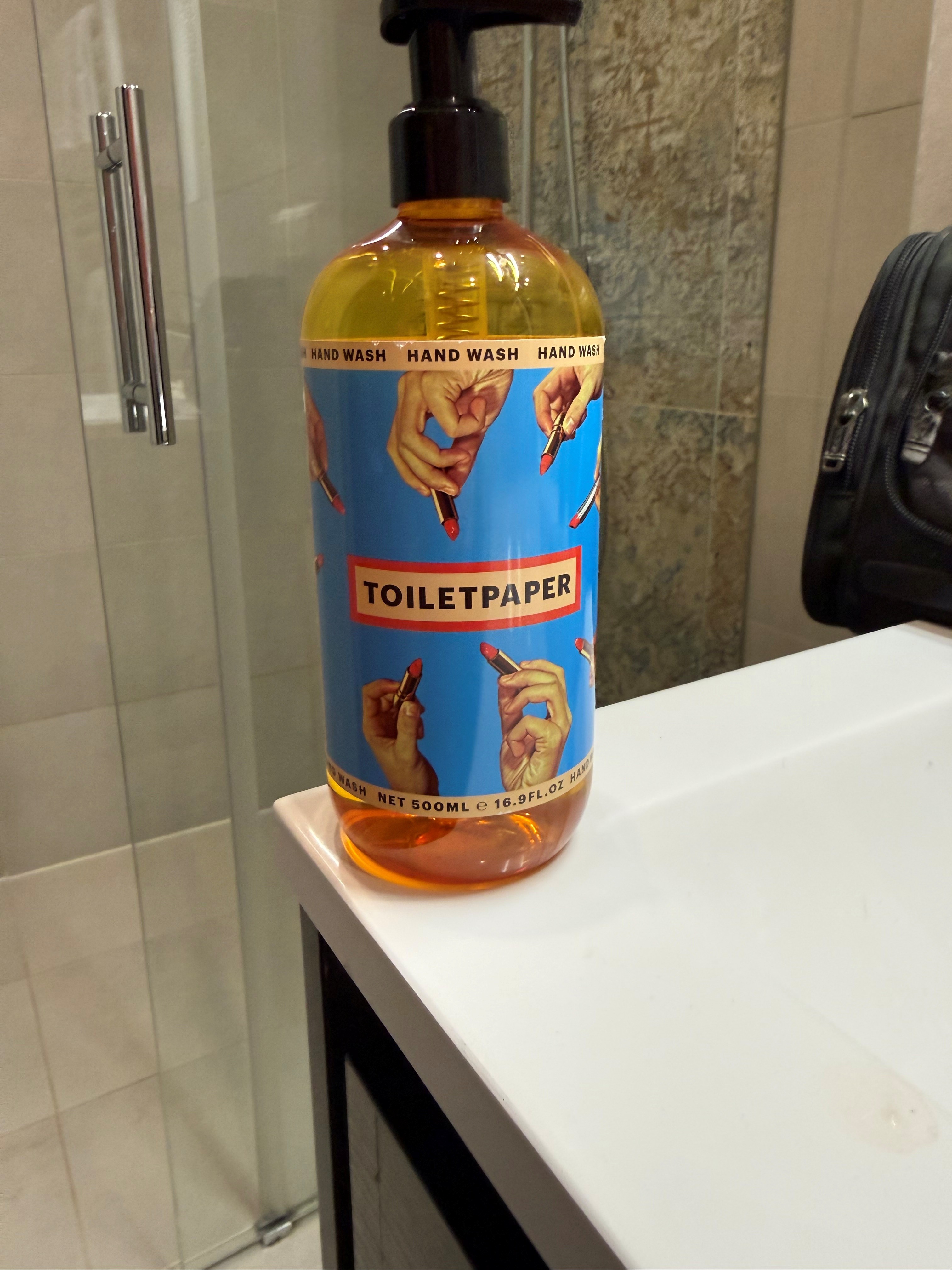
Let me start with the soap in our hotel room. The brand is called ToiletPaper. Not kidding. I have pictures. Why would anyone want to name a soap after a product used to clean your ass after defecating? Mind-boggling, the way these European minds work.
(By the way, the product works just fine. No complaints. Don’t sue me.)
The second observation is more delicate.
Toilets.
I’m not complaining about the two buttons. I like that idea. It seems smart. A little flush for things that wash away easily and a more powerful blast for things that don’t. It should be an American standard (see what I did there).
No—the toilet here at the Elaya Hotel has a viewing shelf built into it. How to put this delicately: instead of your deposit falling into a pool of water, like we have in America, it lands on a slightly angled shelf.
The only purpose I can conceive of for this shelf is the viewing of one’s shit.
Admittedly, we Americans do gaze into our toilets to see what our exertions have wrought (“I didn’t have corn last night”), but we do so through a layer of water that mercifully obscures our duty.
I think this is better for two reasons. First: smell. Maybe yours doesn’t, but mine does. Second: water magnifies. And while I like to think of myself as a big shit, I don’t really need the visual confirmation. That might be an ego thing.
A Final Word on European Showers
Finally, before I go out and sightsee, why do Europeans insist on showers that require either a master’s degree in plumbing or two solid YouTube videos to operate?
Granted, European showers are generally better than American ones—especially those with actual thermostats—but instead of leaving us to scald or freeze, they really should put up a QR code explaining how to properly use the damn things.
The Luxury of Being Confused
And yet, for all the baffling outlets, branded soap, porcelain viewing shelves, and shower controls engineered by mad geniuses, there’s something oddly comforting about being the confused one.
Travel, at its best, reminds you that the world doesn’t exist to accommodate your habits, your assumptions, or your plug adapters. It forces you—briefly, awkwardly—to laugh at yourself while standing half-dressed in a foreign bathroom, wondering which lever will release the water and which will summon the fire of hell.
And maybe that’s the real luxury of being abroad: not that things work better or worse, but that they work differently—and for a few days, you’re the one who has to adapt.
Posted in Uncategorized
Leave a comment
The Season of Memories: A Century of Remembrance

Merry Christmas, everyone.
I hope your holiday has been filled with the joy of the season.
As a Jewish family, we always celebrated Christmas. According to family lore, this tradition began with my mother’s parents. Her father was a physician, and somewhere along the way they decided to host a Christmas party for his patients and their friends. The idea, I’m told, was to lift the burden of hosting from their Christian friends and to create a place for anyone who might feel alone at that time of year.
I’ve never quite thought of it this way before, but their Christmas party was a mitzvah.
In any case, the tradition continued with my brother, sister, and me. We never had a tree—that was vetoed by my father, who grew up in a much more traditional Jewish home. But we had everything else: stockings, lots of presents, and marzipan pigs. And despite my father’s outward bah-humbugging of the holiday, it gave him immense joy to see his children swimming in a sea of wrapping paper.
More on him later.
I remember being old enough to realize that most Jewish families didn’t celebrate Christmas and asking my mother why we did. Her answer was that we weren’t celebrating the holiday itself, but what the season represents: peace on earth, goodwill toward all. A time when, no matter your background, your ethnicity, your color, or who you love, we recognize that we are all in this together. How you find peace with the universe is your business—and that is okay.
I’ve celebrated Christmas in that spirit ever since, because it makes complete sense to me. We can take one day a year to embrace each other with love and kindness.
But this year, I’m celebrating a little differently. Not because of the King of Mar-a-Lago and his disciples—I’m not going to let his lack of understanding of kindness and compassion poop in my Christmas cornflakes. It’s because, for the first time I can remember, I’m not spending the holiday with my family.
Before I go any further, let me add that I am spending it with the person who means the most to me in the world: Elaine. Last night we had a wonderful Christmas dinner, exchanged presents, and maybe even found a little mistletoe. Christmas would not be Christmas without her. She is my guiding star.
That said, my much younger sister—who I usually spend the holiday with—is in England with her family, celebrating with her ninety-six-year-old mother-in-law, who was widowed earlier this year. She is exactly where she needs to be, and I think that’s wonderful. We just miss her, my niece and nephew, and her terrific husband, Mark.
But before you get all weepy for me, stop. I’ll see my sister, her family, and—while we’re at it—our much older brother in just two days. In Vienna.
Later today, Elaine and I will head to the City of Waltzes, and to the city of my father’s birth, to celebrate the 100th anniversary of Pop’s birth. In many ways, this feels like a Christmas miracle. The three siblings have never taken a holiday together. Not even as kids. (Did I mention my sister is much younger than my brother and me?) That we’re able to make this trip and carve out the time feels both amazing and deeply special.
I share all of this because, for the next week or so, the tone and timbre of my Substack will shift—from the political to the personal. That’s not to say politics won’t peek through now and then, but for the most part, I’ll be focusing on Pop and his legacy.
So this Christmas, I’m carrying all of it with me. The family I grew up in. The family I’ve built. The absences. The reunions waiting just around the corner. The love that stretches across time and geography and somehow holds.
In Vienna, I’ll be walking streets my father once walked, marking a century of his life while feeling his presence more than his absence. If the holidays are about anything, it’s this: remembering where we come from, honoring who shaped us, and finding moments—however fleeting—when the past and present sit together in peace.
That feels like enough. And more than enough to be grateful for.
Posted in Uncategorized
Leave a comment
This Has Been A Tough Week
This has been a tough week.
I don’t need to tell you that. You’ve lived through most of it too. But let’s recap, just to be sure we’re all singing from the same Union Prayer Book.
It began with the shootings at Brown University. Two students were killed and nine injured—on the thirteenth anniversary of the Sandy Hook massacre. Whether that timing was coincidence or intent, we will never know. The alleged gunman later shot himself after murdering a former classmate and an MIT professor. It is horrific. It should not be normal. Yet it is.
This year alone, depending on which database you consult, there have been somewhere between 159 and 231 school shootings in the United States. Do you know how many there have been in the rest of the world? Three. Let that sink in.
What makes this even more troubling is the Trump administration’s handling of the case. First, they latched onto a suspect and prematurely announced an arrest—apparently so Kash Patel could look like he was “on the case.” The man turned out to be innocent. Then, when authorities identified the actual perpetrator as a Portuguese immigrant, the administration suspended the visa lottery program.
Let’s drill down on that logic. One hundred fifty-nine school shootings this year. One committed by a legal immigrant. So the response is to shut down an immigration program because it fits a preferred narrative—rather than acknowledge that we lead the world in gun violence and gun deaths and might want to address our gun laws.
It is both depressing and troubling to realize that the current administration and its supporters prefer grim fairy tales to real solutions. Even more depressing is that this surprises no one.
December 28 will mark the one-hundredth anniversary of my father’s birth. He fled to this country to escape the Nazis and antisemitism. He survived, and he thrived—but he never forgot what happened. He begged us not to forget. I’ve tried to honor that by reminding people what happens when any group is scapegoated as the source of the world’s problems.
And yet, this past year, hatred of Jews has clearly been on the rise. According to the ADL, antisemitism is at an all-time high in the United States. This is a complicated issue—too complicated to fully unpack here—but electing a president who dines with Holocaust deniers and openly embraces Christian nationalism does not help. Nor does a media culture that routinely conflates Zionism with Judaism.
Antisemitism has been around since the first circumcision. And sadly, because some people feel a need to hate, it may always be with us.
That reality makes what happened on Bondi Beach all the more disturbing. There were inspiring acts of courage—Ahmed Al Ahmed, who disarmed one of the gunmen while being shot, and Boris and Sofia Gurman, who were killed trying to disarm the other. But Bondi remains a stark reminder of how deeply antisemitism still runs. Sixteen people were killed and forty injured while celebrating Hanukkah—a holiday known as the Festival of Lights because it commemorates a story about light enduring against impossible odds.
Despite worldwide condemnation of the atrocity, it made me question whether light truly does endure. We seem to have learned very little since six million Jews were murdered during World War II. That fact alone should break our hearts.
It begs a very simple question: when the fuck are we going to learn that despising someone because of how they worship, the color of their skin, who they choose to love, or where they come from is a cancer on our humanity? If you feel the need to hate someone because they don’t conform to your worldview, perhaps it is time to realize the person you hate is yourself.
Then there were the horrific murders of Rob Reiner and his wife, Michele Singer Reiner. Every murder is a tragedy. This one is compounded by the circumstances: a troubled son alleged to be the killer, a daughter discovering the bodies. The pain their family must be experiencing is inconceivable.
But this went beyond a family tragedy. Texting with my sister that day, we both felt the same thing. This didn’t feel like a murder in someone else’s family. It felt personal.
Part of that is because Rob Reiner helped shape our zeitgeist. Stand by Me captured the magic of summer and the bonds of childhood friendship. The Princess Bride was about the fairy tales our parents and grandparents told us so we could fall asleep feeling safe. When Harry Met Sally made us believe in the power of love. A Few Good Men, The American President, and Ghosts of Mississippi were about decency and humanity triumphing over cynicism and hate.
In other words, his films made us feel better about who we were—and hopeful about who we could become.
Rob Reiner, in real life, always appealed to our better angels. Or as Lincoln said in his First Inaugural Address, we are “touched by the better angels of our nature.”
He was never quiet in his opposition to Donald Trump. He believed Trump was morally and mentally unfit. But he believed in us. He believed in the Golden Rule and in the idea that the moral arc of history bends toward justice.
When violence took Charlie Kirk—a man whose views he found abhorrent—Reiner described the murder as an absolute horror. He believed violence is unacceptable regardless of political belief.
Losing the Reiners felt like losing a member of the family. We just didn’t realize he was mishpokah until he was gone.
Which is why, when the pretender-in-chief chose to attack him after his death, it made everything even more depressing.
Donald Trump believes only in avarice and greed. And every day of his presidency, the light and luminosity of the American experiment dims a little more.
And so we’re left with a choice. We can accept this drift toward cruelty and chaos as inevitable, or we can remember that history is not something that merely happens to us—it is something we shape, moment by moment, by what we tolerate and what we refuse to normalize.
Even in dark days we need to preserve the light.
Posted in Uncategorized
Tagged American Democracy, Antisemitism, Gun Violence, politics
Leave a comment
A Tale of Two Nephews
A Tale of Two Nephews
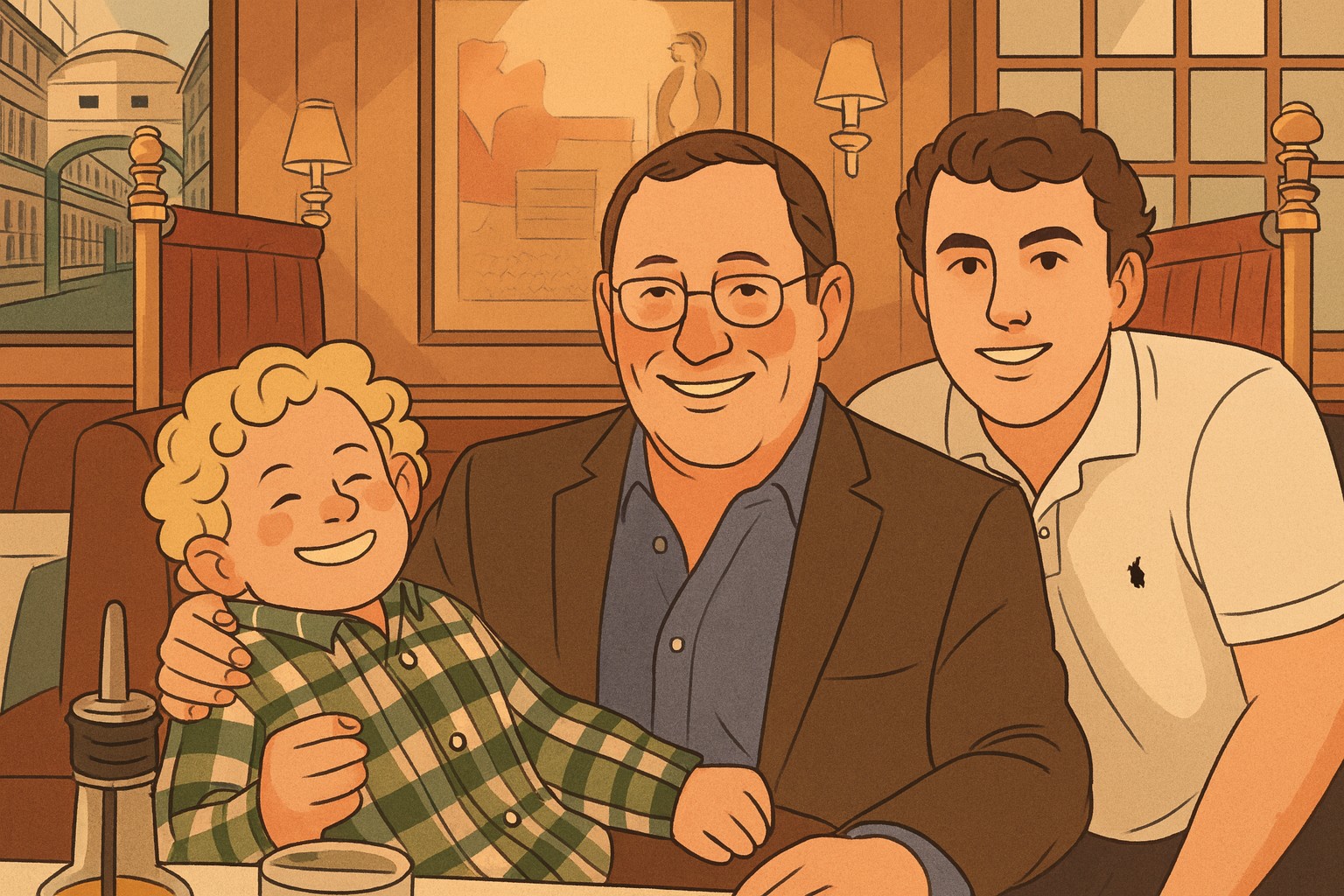
I have two nephews.
They are much alike. Both stand over six feet tall—handsome by any measure—with light complexions, rosy cheeks, dimples as deep as divots, and unruly mops of blond hair. They are athletic: one a former rower and lifelong gym rat, the other a onetime baseball player and current Peloton warrior. Both are intelligent, blessed with prodigious memories, and keenly aware that being smart is not an end in itself. They wear it lightly, never flaunting it except when necessary. And they share an excellent sense of humor—at least if laughing at their uncle’s dad jokes is the standard.
The older of the two, Sean, a finance director at one of the nation’s leading financial firms, is not technically my nephew. He is the son of my best friend, but we have been bonded since infancy. In fact, when I visited his home when he was a child, he was far more likely to hang out with his funcle than his dad. This was probably more a function of bribery than love. I bought him his first hot-fudge sundae, took him to restaurants where he could eat prodigious amounts of steak, and once treated him to a day at Yankee Stadium—seats on the rail behind home plate. After demolishing an enormous slice of chocolate cake at Ruby Foo’s, he declared it “the best day ever.”
Both his father and brother passed away during the COVID pandemic, which tightened our bond—already strong—like a pair of jeans after the holidays. We don’t talk every day, and sometimes not for weeks, but when we do the conversations are long, good-natured, and often substantive.
My other nephew, Oliver, is a sophomore at NYU. When I look at him, I see my father. The similarities in demeanor and appearance are striking. Like my dad, Oliver never takes things at face value. He wants to be sure the white sheep aren’t black on the other side. I love talking to him. He soaks up our family history like Wi-Fi in a coffee shop, and I always know he’s going to have a unique take on current events and politics.
They have met only once, at our wedding. Sean was a college student at the time, and Oliver was five. For reasons unknown, they bonded instantly, with Oliver literally wrapping himself around Sean’s leg as Sean tried to navigate the party. It was adorable.
As much as they have in common, they see the world through very different lenses.
This really hit home last week during an email exchange I had with Sean. Months earlier, Sean and I had made a bet about the tariffs imposed by the Trump administration. I argued they were ill-advised and would cause long-term economic harm. Sean believed they would ultimately level the playing field and that fair trade—not free trade—would prevail. Rather than argue endlessly, we agreed on a wager: whoever was right would buy the other a steak dinner with all the trimmings.
I decided I had won and sent him the following email:
Hi Seany.
And because I’m feeling feisty this morning—it’s 11 degrees—here’s my question of the day: Is it socialism to give farmers a $16B care package to make up for losses caused by tariffs?
Follow-up question: How long do we keep these subsidies going, considering farmers’ distribution channels have been irrevocably broken?
And have I won the bet yet?
He wrote back:
Hmmm. Don’t know enough about that. In general, farming is important for national security, but I haven’t read enough about why the subsidies do—or don’t—exist.
I do have an overarching thought on the continued push toward socialism. I think it’s because we have a generation of people who feel left out. Why are we not trying to fix the underlying issues with more housing, better education, and an improved healthcare system? Instead, we’re trying to tax our way out of it, which won’t work. You have to fix the root cause and improve spending efficiency.
A finance guy’s answer, without doubt. Also, in my opinion, completely wrong.
I responded:
First, I hope you know I was just feeling mischievous and thought no one teases Sean nearly enough.
Second, the argument that farming is subsidized because it’s important to national security—and therefore this isn’t socialism—is specious in this case. The reason farmers’ markets fell apart was:
- tariffs, and
- a lack of farmhands due to immigration shutdowns.
In other words, Trump caused the problem and now wants to subsidize his own screw-up so he doesn’t lose his base. It’s a bit like the arsonist running the fire department.
Finally, the idea that we’re trying to tax our way out of systemic problems like housing is also specious. It’s a talking point, not reality. Our relative tax rate is in the lower half of the G20. Socialism is gaining popularity because of the income gap.
In 1980, the U.S. still had what economists called a large middle class. The top 10% earned about 34% of national income, while the bottom 50% received around 20%. CEO pay averaged 30–40× the typical worker, and upward mobility still existed for many families.
By 2024, the picture is radically different. The top 10% now control roughly 48–50% of all income, while the bottom 50% receive about 13%. The top 1% alone holds roughly 32–35% of total national wealth. CEO pay has ballooned to 300–400× the average worker. In real terms, wages have barely moved, while wealth at the top has exploded.
And you have to admit—I won the bet. 😊
He chose not to reply.
But it got me thinking: how would my nephew Oliver respond?
One thing I haven’t mentioned yet is that Oliver is a self-described communist who, on a recent trip to London, made a pilgrimage to the places where Marx and Engels lived and worked while in exile. Since he’s buried in final exams, I didn’t ask him directly. Instead, I asked myself how an avowed communist might respond:
Uncle Paul, the $16B farmer bailout isn’t socialism at all. It’s a familiar feature of capitalism: privatized profit, socialized loss. Socialism isn’t when the state cleans up damage caused by market shocks or policy mistakes—it’s when production itself is collectively owned and democratically run. Writing checks to farmers after tariffs hurt them doesn’t change who owns the land, who controls distribution, or who captures long-term value. It just stabilizes the system.
To which I would reply:
I hear you. But no communist state that consolidated power has sustained genuinely free elections or broad free speech. There were moments of openness, but once the party became the state, dissent was curtailed. Opposition was framed as counter-revolutionary, and free speech became a threat rather than a safeguard.
And isn’t that exactly what happens with unfettered capitalism? A few at the top accumulate all the power and money while everyone else fights for crumbs. Communism as a theory is magnificent, but in practice it has proven no better than capitalism without guardrails.
Here’s the sad part—the part where I sound like the old guy.
Both of my nephews have wonderful intentions. Both want a better world than the one they inherited. They’re just approaching it from wildly different starting points. That may be the hallmark of our time.
So I would say this:
To Sean: The last time we saw this level of income and wealth disparity was at the end of the Gilded Age. It led to rebellion, unrest, and the rise of unions. We need to put guardrails back on capitalism quickly—or what follows will be ugly and may destroy our democracy.
To Oliver: If communism were practiced in its purest form, it might be wonderful. But it never works that way. Power corrupts, and absolute power corrupts absolutely. When people lose power to the state, it almost always ends in revolution and destruction.
No doubt—because both of them are wisenheimers, they’d ask:
“So, old man, what’s your solution?”
To which, being the Dickens I am, would simply offer them this:
It was the best of times, it was the worst of times, it was the age of wisdom, it was the age of foolishness, it was the epoch of belief, it was the epoch of incredulity, it was the season of Light, it was the season of Darkness, it was the spring of hope, it was the winter of despair, we had everything before us, we had nothing before us, we were all going direct to Heaven, we were all going direct the other way—in short, the period was so far like the present period, that some of its noisiest authorities insisted on its being received, for good or for evil, in the superlative degree of comparison only.
Because sometimes the truest answer isn’t a policy or an ideology, but the uncomfortable recognition that we are once again living inside a moment history knows all too well.
Thanksgiving Is the American Holiday—Because It Celebrates Immigrants
My father’s favorite holiday was Thanksgiving.
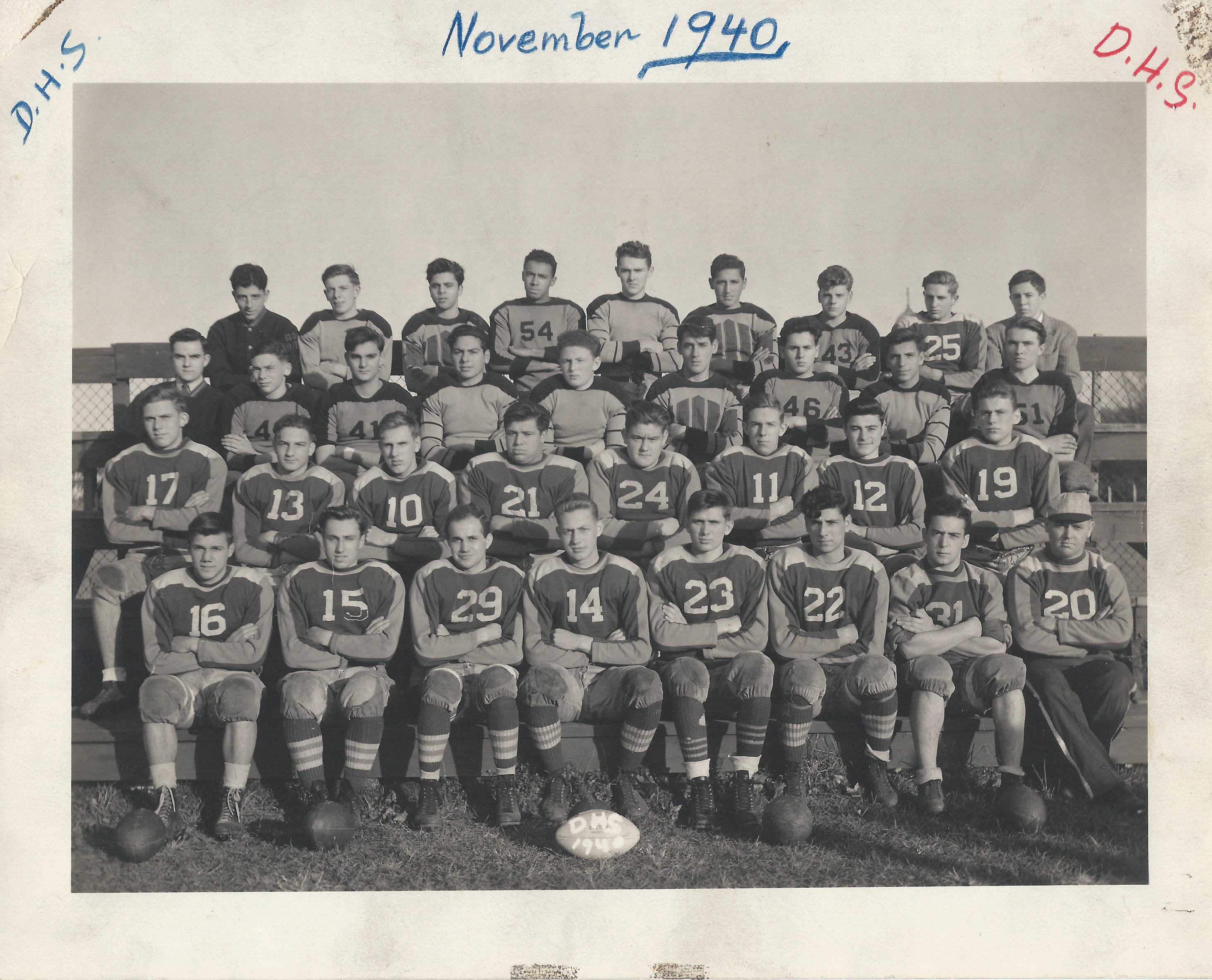
When I was a kid, I assumed this was because the food was excellent and my father enjoyed eating more than anyone I knew. He truly savored savoring. But that wasn’t why he held such a deep affection for the holiday.
He believed Thanksgiving was the ultimate American holiday. While celebrations of gratitude exist in almost every culture, our Thanksgiving—with its customs and traditions—was uniquely American. I used to think that, as an immigrant, he felt a special attachment to the holiday because this country saved his life when it opened its doors to him and allowed him to build a life he could scarcely have imagined growing up on the mean streets of Vienna.
I no longer think that fully explains it.
The events of the past year have given me a clearer understanding of what the holiday truly represents. And while my father may not have articulated it this way, I believe something deeper was at work.
Let me explain.
The original Thanksgiving story centers on the 1621 harvest celebration shared by English settlers—often called the Pilgrims—and the Wampanoag people in early colonial New England. The settlers had arrived the year before and endured a brutal winter, losing nearly half their number to illness and starvation.
In the spring of 1621, the Wampanoag, led by Massasoit and aided by Squanto, helped the settlers survive by teaching them how to grow corn, fish local waters, and hunt in the region around Plymouth Colony. That fall, after a successful harvest, the settlers held a multi-day feast to give thanks.
The gathering—about 50 English settlers and roughly 90 Wampanoag—likely featured venison, fish, corn, and other seasonal foods rather than turkey and pie. It wasn’t called “Thanksgiving” at the time, but later generations would come to see it as a symbolic moment of cooperation between Indigenous people and European settlers.
Put more plainly: a group of people, seeking freedoms and opportunities their homeland could not provide, arrived uninvited in a new land. They were utterly unprepared for its realities and died at an alarming rate. The people already living there could have turned their backs on them. Instead, they chose generosity. They shared knowledge, food, and skills—helping the newcomers survive.
Overwhelmed by that generosity, the immigrants held a celebration to express gratitude for their new home and the people who helped them endure.
Thanksgiving—at least its origin story—is a story of immigrants giving thanks for the generosity of their new country. It is also a story honoring the grace of the native people who helped them succeed.
My father arrived in the United States three months into World War II. Aside from strong intellect and a survivor’s will, he possessed few practical skills that translated to American life. He spoke no English. He had no understanding of how things worked here—illustrated memorably by eating a block of butter his first night in the country, believing it was cheese.
But the people of Danbury, Connecticut were kind to him. They helped him learn English and understand the rhythms of American life. So much so that just three and a half years later, he entered Syracuse University as a freshman.
His story was the Pilgrims’ story, told in a different era.
Perhaps one of the lessons we should take from the original Thanksgiving is that people who come to this country are much like our founders. They are pilgrims in search of a better life. We should help them find their way—because who knows? Perhaps one day there will be holidays and endless school pageants celebrating what they helped build.
I suspect our clueless leader, spending Thanksgiving with sycophants at Mar-a-Lago, will miss this meaning entirely—despite having an immigrant wife himself. Grace, kindness, and empathy do not seem to be part of his lexicon.
Still, that doesn’t absolve the rest of us.
We can remember the true meaning of this holiday. We can celebrate those who came here searching for something better—just as we pour the gravy or ask for the second slice of pie.
Happy Thanksgiving.
Posted in Uncategorized
Tagged american identity, family history, Immigration, personal essay, thanksgiving
Leave a comment
The Old Grey Lady

I went looking for the Old Grey Lady the other day. For as long as I can remember, she has been a part of my life—educating and informing me in a way few others ever did. She was known for being responsible about what she said and how she said it. Her mission was simple: “All the News That’s Fit to Print.” You could rely on her for in-depth reporting about the world around you. You didn’t have to worry about her getting the facts wrong or trying to manipulate you. — certainly more consistently than the guidance counselor who once suggested I consider accounting.
That’s why Life magazine anointed her with the sobriquet “The Old Grey Lady” on her 100th birthday. Old because she had reached a century. Grey because she was conservative (in the traditional, not political sense), sober, and rich with information. Lady because she carried herself with dignity, restraint, and respect. The kind of woman who’d raise an eyebrow at your grocery cart, but politely.
But I’ve been concerned about her for some time now. She seems to be slipping. Like many in the older demographics, her views appear to be drifting toward the Fox News side of things. She has normalized Trump’s behavior by calling lies “unsubstantiated claims,” treating political coverage like campaign events, and presenting misinformation alongside verifiable facts in the name of “balance.” A bit like a relative who dooms scrolls themselves into a PhD in everything.
That shift has forced me to reevaluate my relationship with her. I used to read her every day as my baseline understanding of what was happening in the world. I no longer do that. I now subscribe to AP, The Guardian, and The Independent. I still visit her for the crosswords, but I only read her articles when a friend shares one on social media that grabs my curiosity.
But that’s life. Things change—sometimes for the better, sometimes for the worse. Instead of getting angry or hurt, the wisest move is often to simply let go. We had a good run. You changed. I changed. Time to move on. Vaya con Dios. See you when I see you.
That go-along-to-get-along attitude evaporated the other day. A good friend asked me if I had read the Times piece titled “Did Women Ruin the Workplace?” That’s a hell of a headline. It sounds more like something Greg Gutfeld or Sean Hannity would write than anything fit for what was once a bastion of progressive thought. Whiskey Tango Foxtrot. It’s the sort of headline that makes you double‑check the URL to ensure you didn’t wander onto The Onion.
A quick Google search revealed two things. First, the “article” wasn’t really an article. It began as a podcast hosted by Ross Douthat (and yes, “Douthat” is a name that practically begs for a puns), a conservative columnist who blends Catholic moral reasoning with politics. Nothing inherently wrong with that, but it does tell you where the conversation is headed. After all, Catholic doctrine forbids abortion under any circumstance, rejects gender theory, and does not provide for women in leadership roles within the Church. Which is fine, but it does tend to give the conversation a faint whiff of incense and pre-approved conclusions.
Second, they changed the title. It is now “Did Liberal Feminism Ruin the Workplace?” The original headline could—if you’re generous—be chalked up to clickbait. The new one is worse. It assumes feminism can be neatly split into “liberal” and “conservative” camps, which is disingenuous at best and misleading at worst. It reinforces the false cognitive frame that “conservative” is good and “liberal” is bad. This despite the fact that feminism, by definition, is progressive. It challenges the status quo and demands equal rights for women in the workplace.
Then the conversation deteriorates. The contributors claim that workplaces have become “too feminized,” that traditionally masculine values—risk-taking, competition, hierarchy—are being diminished in favor of supposedly feminine traits like empathy, consensus, and safety. Really? Says who? When did risk-taking and hierarchy become exclusively male, or empathy and consensus exclusively female? Apparently taking a breath before making a decision is now considered a feminine trait. Fortune 500, take note.
If your opening argument in a conversation about feminism is a blatantly sexist premise then maybe you have started your journey on the wrong path. (Sort of like the people who want to visit Australia but end up in Austria. There is literally a desk for them at Vienna’s airport.)
Another thread in the discussion suggests that cultural changes brought by liberal feminism—emphasis on equality, anti-harassment standards, family leave—have disrupted the “old norms” of the workplace. First of all, huh? How do equality, anti-harassment, and family leave negatively affect a workplace unless you don’t believe in equality, want the right to harass, or think families are a bad idea? And second, every workplace book written in the last 25 years has praised decentralized decision-making and flatter hierarchies.
What makes the whole thing especially frustrating is the lack of data. So here are two simple facts:
1. Worker productivity has never been higher.
2. Job satisfaction is near a 40-year high. Not that the podcast bothers with any of this, of course.
Clearly, feminism has influenced the workplace—but the evidence shows it’s been a net positive.
I could go on, but why bother? The piece seems more intent on blowing smoke than addressing real issues. Here are two real ones:
• Why does a 17% pay gap between men and women still exist?
• Why do women represent nearly 30% of executive management but only 10% of CEOs?
The Old Grey Lady has lost her way. Time to put out a “Silver Alert.” “All the News That’s Fit to Print” has turned into a place where clicks matter more than content and where the appearance of balance outweighs the facts. As I said, things change. But I used to trust you. Now I can’t. Maybe one day you’ll return to your former glory. But for now, I just need to say:
“Goodbye — and good luck.”
Posted in Uncategorized
Leave a comment
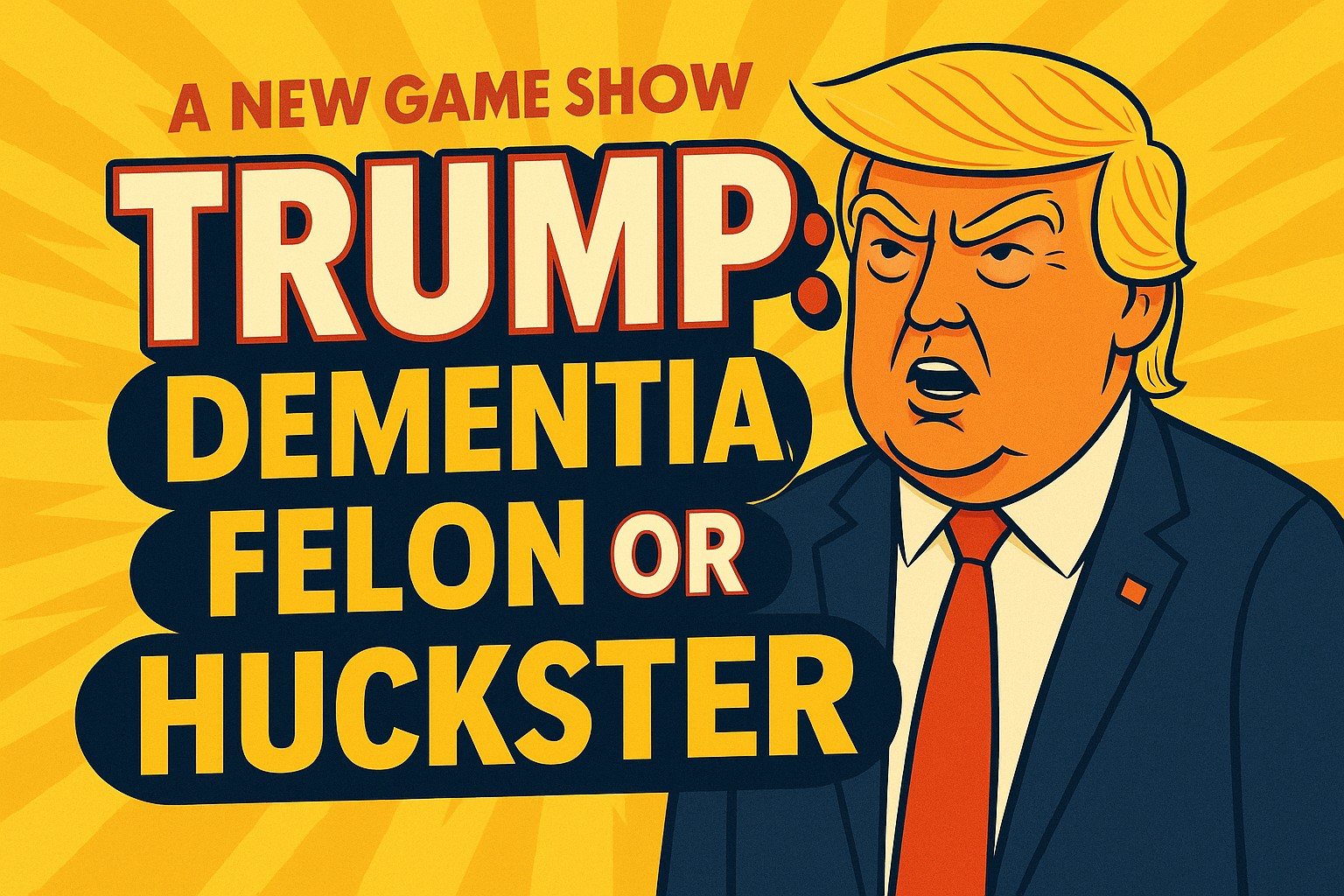
Trump: Dementia, Felon, or Huckster? The Sanity-Saving Game for Dozy Don’s Daily Circus
I used to be a news junkie. It was a habit I inherited straight from my parents. My father would practically read the ink off the New York Times every morning—not every article, maybe, but every section. It was how he warmed up for the day and ensured he knew more than most people in the room. He liked that.
My mother kept pace. She read the Times faithfully, maybe not quite with my father’s monastic focus, but she always knew what was going on in the world. And when the subject turned to books or literature, she left everyone behind. After my father died, MSNBC became her most loyal companion.
Our childhood dinners always ended with the Huntley-Brinkley Report. So of course the habit rubbed off on me. For years I read three papers a day: the Times for depth, the Wall Street Journal for business, and the New York Post for its unmistakable headlines and shameless gossip. (Huma Cuts Off Wiener!)
Then came the internet, 24-hour cable news, and a shift in my ritual. I still read papers, but online, in bigger gulps and with pickier appetites. I watched CNN while grinding away on a StairMaster, or listened to it on satellite radio during long drives. And I loved it. I loved being fully informed, able to hold my own with friends, and at least keep pace with my brother—the MSNBC contributor and Washington insider—and my sister, an editor, writer, and podcaster. Following the news genuinely brought me joy.
And then Donald Trump took a giant dump on it.
Since the start of his current term, every news cycle has been swallowed by his criminal, chaotic, grifter-in-chief circus. ICE arresting U.S. citizens because they “looked illegal” and holding them without due process. Press conferences from a newly gilded Oval Office where only word salad was on the menu. Accepting a 747 from the Qatari government and claiming he could keep it after leaving office. Even just listening to him speak felt like sandpaper on the brain. It became horrifying, and then exhausting, and finally nauseating.
I didn’t quit cold turkey. But when I did tune in, it was the way I used to watch horror movies as a kid—hands over my eyes, fingers barely parted, ready to snap them shut the second things got unbearable.
And here’s the thing: I’ve lost count of how many people have told me the same story this past year. Folks who used to devour the news now can’t even nibble at it, all because of Dozy Don.
That point hit me the other day as I was driving to meet a friend in Northern New Jersey. My audiobook, Grey Dawn by Walter Mosley, wasn’t cutting it. The podcasts I dip into now and then all had snoozers as guests. My Sirius friends Conan and Howard weren’t making me laugh. I could’ve put on music, but it didn’t feel like the right note for the mood.
I realized I missed my old friend: the news. Back when it felt objective, before it had to contort itself around a President for whom considered thought is a foreign concept and facts are whatever he tweets in bold letters.
I wanted it back. I missed it. But I also knew I couldn’t stomach it under the current circumstances. Every smirk, every insult, every trip into Trumpverse sent my blood pressure spiking. And when you’re driving two-and-a-half tons of Detroit steel at 65 mph, losing control isn’t ideal. If only there were a way to game the system…
That’s when it hit me. Not another car—an idea.
Introducing what may soon be the most popular game in America: Trump: Dementia, Felon, or Huckster.
While listening to the latest dispatch from Trumpverse, players pick which part of the President’s psyche seems to be driving the story:
- Dementia – for confusing statements, memory mix-ups, or reality-detached comments (again: not a medical diagnosis — just the public behavior).
- Felon – for anything tied to legal trouble, investigations, court drama, or Department of Justice battles (no guilt implied — it’s the vibe).
- Huckster – for salesmanship, contradictions, grifts, and hype-for-profit posturing.
The goal isn’t accuracy. It’s to be funny, fast, and savage.
Sample Questions
Q: In a CBS interview, Trump confessed to blindly signing off on pardons for his buddies. Dementia, Felon, or Huckster?
A: Tricky one. Blindly signing whatever someone hands you is a classic “Dementia” move — assuming he’s telling the truth. It might also be Huckster, since giving himself “I didn’t know what I was signing!” cover conveniently shields him when the pardons go sideways… like the drug trafficker he granted clemency who later assaulted a nanny and a three-year-old child. And of course, there’s a Felon angle here too. If pardons were being offered to campaign contributors? Well, that strays into federal-offense territory. Discuss.
Q: Trump recently demanded that the DOJ cut him a $230M “apology check” for prosecuting him on 37 federal counts, including election interference and illegal retention of classified documents. Dementia, Felon, or Huckster?
A: This is a brain pretzel. Huckster is the obvious call — big number, big grievance, big noise. After all, grand juries did indict him, and the only reason the prosecutions paused was because the Supreme Court ruled a sitting president can’t be tried. But there’s a Dementia argument too. Paranoia and persecution delusions often show up in cognitive decline. And Felon? Well, demanding money from officials who could be fired if they refuse starts to look like extortion. Again: discuss.
Q: At a rally, Trump claimed that “millions of illegal votes” were cast against him — again — and promised a “special team” to finally uncover them. Dementia, Felon, or Huckster?
A: A classic triple-threat. “Millions of illegal votes” is vintage Huckster — the kind of oversized claim you’d use to juice a crowd or hawk a miracle supplement. But the memory-loss routine (“again”) nods toward Dementia territory; repeating debunked stories as if they’re brand new fits that pattern. And Felon isn’t far behind: assembling “special teams” to chase nonexistent enemies has a history of crossing legal lines.
And that, my friends, is Trump: Dementia, Felon, or Huckster
Will it fix the current stat of journalism? No.
Will it lower your blood pressure? Probably not.
Will it at least give you a fighting chance at surviving another news cycle without screaming into a throw pillow? Possibly. Maybe. We can dream.
So go ahead: pour a drink, take a gummy, gather your friends, turn on the headlines, and let the Trump carnival wash over you. When the next wild quote drops — and it will, probably before the commercial break — you’ll be ready. Just shout “Dementia!”, “Felon!”, or “Huckster!” with conviction.
Posted in Uncategorized
Tagged American politics, civic life, commentary, culture, current events, democracy, essays, humor, media culture, modern politics, news fatigue, op-ed, opinion, political commentary, politics, satire, trump, Trump era
Leave a comment


 Blame it on Rio
Eighty-Six Years Ago, My Father Found Home
Today marks the eighty-sixth anniversary of my father’s arrival in the United States. In our family we treated the date like a small holiday. Maybe it didn’t have the sparkle of Hanukkah, Christmas, or the cluster of December birthdays in our house, but it carried its own quiet reverence. It was a day to pause, acknowledge what this country gave to my father, and—importantly for a family with a serious sweet tooth—to eat cake.
I’m fairly certain this holiday was my mother’s invention. It fit her sensibilities: an excuse to visit Segal’s Stationery for coordinated tableware and, as a lifelong history lover, a chance to remind us of the meaning behind the day. But my father never objected. It gave him an opening to tell his story.
For much of his youth he must have felt like an outsider—first in Austria, where the country of his birth stripped him of dignity, opportunity, and eventually safety. Then again in America, where he was a “stranger in a strange land,” dropped into second grade until he learned English, marked by an accent, viewed by some with suspicion. Yet here, finally, he became part of something. A citizen of a country that said he mattered. A piece of the grand American experiment that once called itself the “greatest nation on earth.”
He was home.
This nation gave him a place to live without fear, to work and dream without persecution, to build a life judged by merit rather than ancestry. He cherished that citizenship in a way those of us born here can’t fully grasp.
One memory captures it. My father always did his own taxes, a process that turned the house tense for days. When he was finally done one year, he asked my mother to sign the forms. She glanced at the total owed and casually remarked what a shame it was that they had to pay so much. He exploded—then launched into a heartfelt lecture about why citizenship here was priceless and why paying taxes was a small offering for the protection and freedom this country gave him.
Immigrants often possess a deeper patriotism than almost anyone else—born not of slogans but of gratitude. And yet, today, they are among the most vilified groups in American political life. The demonization pushed by Donald Trump and his MAGA allies contradicts everything this country claims to value.
Consider his recent attacks on Somali immigrants. Like my father, they came seeking safety—a chance to escape famine, civil war, religious persecution, and to build a future under a Constitution that promised equality and opportunity. They came searching for the same promise that brought him here: a homeland where their children could grow without fear.
Instead, they are met with rhetoric like:
“We’re going to go the wrong way if we keep taking in garbage into our country.”
“I don’t want them in our country.”
“Their country stinks, and we don’t want them in our country.”
Somalis are hardly alone. Haitians “eat their neighbors’ pets.” Mexicans are “rapists.” Muslims are “terrorists.” The only immigrants consistently praised are those who fit a narrow, preferred profile: white, Christian, and South African. The targeted cruelty echoes the very forces my father fled—a bitter irony that would have pained him deeply.
This moment is not about classic American ideals—the rule of law, equality, checks and balances. It’s about power. It’s about a man willing to wrap himself in the flag while hollowing out its meaning, twisting patriotism into a tool for dividing Americans from one another.
The country that welcomed my father no longer exists in the same form. The freedoms he defended in World War II are strained by a government increasingly flirtatious with authoritarianism, Christian Nationalism, and policies that entrench privilege rather than expand opportunity. The new arrivals—once the lifeblood of the American story—find doors closing.
Today, I’ll still celebrate his arrival. I’ll still have cake—baked from my much younger sister’s new cookbook “The Secret Life of Cookies.” But I’ll also use the day as a reminder of what we’ve lost this year, and what we must fight to restore. The work of renewing America’s promise—and honoring the gratitude my father felt every day he lived in this country—falls to us now.
Share this: