Tomahawk: Part 2: Chapter 9: Graves

I turned to the door where the voice had come from. It was Tad.

I had long ago come to accept Tad’s death as fact. His disappearance after the discovery of Tomahawk combined with the rumors Eduard Stein and others had shared along with no letters or any other type of communication made me assume his demise. It was It had become my burden. Had I been able to speak with him that morning about my emigration plans and not sent him to the Tomahawk, Tad would be alive and I would have no guilt for living my “fairyland” existence in America.

I love epic poetry. When I was learning to speak English one of my teachers had used poems such as “The Charge of the Light Brigade” by Tennyson and others to practice my English pronunciation. My assignment was first to memorize the poem and then in front of the class recite them aloud. After my performance, the teacher and the rest of the class would break down my pronunciation. It worked. It helped rid me of a strong Austrian accent although a girlfriend had once mentioned that it made me sound British. In one of these sessions, Mrs. Meskin had assigned me the “The Rime of The Ancient Mariner and while I was working through the language I remember being particularly struck by the lines

Ah! Well-a-day! What evil looks

Had I from old and young!

Instead of the cross, the Albatross

About my neck was hung

It hit me then, that Tad’s death, and my part in it,  had become my Albatross. No matter the innocence of my intentions in meeting him at Tomahawk, the result had been his undoing, and it was a burden that would never leave me.

It is strange how the mind works. Now, seeing him, my friend, alive, after thinking him dead for six years, another line from “Rime” popped into my consciousness.

The self-same moment I could pray;

And from my neck so free

The Albatross fell off, and sank

Like lead into the sea.

I stood up and faced Tad. While my emotions were roiling, I tried to appear nonplussed. I did not want to show none of my inner elation of fireworks and cheers I felt. Doing so would be a violation of an unspoken code of our friendship. Nothing needed to be said, because each was confident of the others friendship. Making a display of those emotions would somehow cheapen them. Like the game where you stare at each other until one person blinks, the person who showed overt emotions first lost.

The person standing in front of me was clearly Tad but there are only traces of the boy I once knew. I should not have been surprised by this but I am. In my minds eye  he was always 14. But his was no boy standing at attention in front of me. The person who had always conveyed a sense of lightness by telling a joke or make up a fantastic tale was not present. The man standing in front of me projected gravitas. The amusement with the world was still present in his eyes but it was darker humor, the man plans god laughs type of comedy.

I would have recognized Tad walking down the street as physically he was much the same. His smile still wry and the eyes still had the hint of mischief about them. However, the mouth was now surrounded by a Van Dyck beard that accentuated his long face and provided a puckish nuance.  The eyes were deep in their sockets and bracketed by deep furrows that belonged on a much older man. His hair, which used to be thick, dark and seemingly having a mind had been shorn almost to the scalp and revealed a thinning that foretold of an early baldness.

The biggest surprise was how tall he was or better said was not. Throughout our boyhood there had been a competition on who was the tallest. Tad usually won and teased me about it without mercy calling me shorty or shrimp even though the difference between us was often millimeters. Now I was almost a full head taller than him. And while this pleased me, in the way that competing and winning against Tad always pleased me, it also embarrassed me a little. While I had been indulging myself with fresh fruit and vegetables from Uncle Max’s store, I suspected he had suffered deprivations despite his mother’s grocery store.  

Taking this all in and trying not to let the changes in Tad effect my expression I said “Winnetou, your silent tracking skills have improved.”

“By necessity Shatterhand. When the Comanche are everywhere your skills must improve” he replied with a wink  “And you, Hugi it looks as if you mother kept feeding you despite the fact I told her it was a waste of good food.”

I guess the nature of friendship is that even after a long absence, conversations begin and end in the middle. It was as if no time, and a war, had interceded in our lives we were back to kidding and insulting each other as if we were still boys plotting to build a submarine on the flood plain. We had all lost so much during the war and realizing that Tad and our friendship managed miraculously to survive helped blunt the sorrow that I had felt since entering the wrecked city of my childhood. In fact, it made me feel downright giddy.  

My elation at seeing Tad and the joy of reclaiming of what I thought was lost was about to produce a stinging witticism to throw back at Tad, when Mrs. Saegerer said “Stop it boys. Enough witzelsucht. Give each other hug and come having coffee and cake.” And, like the good boys we once were, we did exactly as she suggested, and gave each other an awkward hug, pounding each other on the back and suppressing the tears that would have embarrassed us both.

“Gut. Now come and sit on the couch and have some coffee and cake. Hugi can tell us all about his life in America.” Where to begin. When I had told Eduard Stein of my life in America, he had called it “Fairyland.” I knew that my story could produce envy and had the ability to make people lament their own circumstances so I began with “Tad, you would have enjoyed this. When I first got to America that so highly of my intellect they placed me in the 2nd grade.”

 Two hours later, after giving them a highly edited version of my life in the United States where I emphasized the challenges and downplayed the positives, Tad and I were walking along Alszeile,  When we had left Frau Saegerer’s apartment I had excused myself for a second and gone over to where Cookie looked like he was napping in the jeep. He had raised his service cap just enough to let me know that he was awake while I explained who Tad was and how he might be able to help us find Colonel Skoda. I said we were going for a walk so we could talk things over. Cookie argued that his job was to keep me out of trouble, and he could hardly do that unless he came along. I replied by suggesting that it would appear very suspicious to anyone whom might be watching us that a reunion of two old friends were being accompanied by an armed guard. This produced a short lively conversation in which I brilliantly explained my thesis and Cookie argued his priorities. In the end, we compromised and did it Cookies’ way, which is why 50 yards behind us walked Cookie. This arrangement had produced a raised eyebrow but no comment from Tad. It also inhibited conversation. We had not said ten words to each other in the several blocks we had walked.

As we were walking past the Dornbacher Cemetery, Tad broke the silence saying “That is where I am buried” and then laughing added “I am sure you didn’t know that you were walking with a dead man.”

I laughed and said “Well you don’t look well. But I did know you were dead. When I wrote you and got no response, I wrote to Eduard Stein to see if he had hard heard anything. He told me that he had heard from Erwin Riegelhaupt that you had committed suicide by jumping off a bridge.”

Tad looked down and shared a sad smile. “Poor Erwin. He got a job working for the IKG and thought he was immune to the transports. But his name was on one of the early lists. We heard they took him to Theresienstadt but almost all of them got sent to Auschwitz and you know what happened there.” I nodded and he added “What happened to Eduard.”

“The last I heard he was okay. Joined the RAF so he would not have to be put in some sort of enemy alien camp. Which he thought was ridiculous. Why would you put a Jewish boy in a camp when the reason he came to England was to avoid the camps. Anyway, he liked living in England except they system kept him separated from his little sister and the people who were caring for her were not very keen on the two spending time together. They said they thought it would bring up bad memories but Eduard thought they were trying to have her forget her real family so she could become their daughter. He kept writing letters to the authorities about it but he said they were not willing to help him. All this was made a little harder by his family being in Palestine and his father’s inability to find work. He couldn’t ask for them to all be together as he had no way of paying for it. You know Eduard. He was determined to make money. Be someone so he was taking a lot of courses in business lot short hand and typing so he could always have a job. And when I told him I was going to University he claimed he was going to go as well. But I have not heard from him in a while. Not since February… but I have been on the move. Maybe his letters have not caught up with me.”

Then I added with a smile “So was being in Vienna so difficult without me that you had to commit suicide.”

“You think much too much of yourself” and then added “But you are right it was because of you that I had to.”

“Tomahawk.”

“Tomahawk. Before I tell you, what happened with you.”

I proceeded to tell Tad of how when I arrived at the flood plain, there were SS troops everywhere. That seeing all the activity around the area I had hid myself in the crowd trying to find out what all the activity was about. While in the crowd I had overheard that some fisherman had snooped into the hut and discovered the Tomahawk and reported it to the authorities including the fact that two “boys” were the builders. The SS was searching the area and hoping to find them and arrest them. That a man in the crowd had recognized me as one of the builders and advised me to leave the area but before I had I had scrawled the Wolfpack symbol for danger on a pole near the tram stop just before the stop we got off for the Tomahawk. How I had hoped to warn him of the danger if he already was not in the thick of it. How I had run home scared silly but had stopped at his mother’s grocery store looking for him and when he wasn’t there I had left word to contact me. That when I had not seen heard from that night or before we had left the next morning, I had felt terribly responsible but had not given up hope. That I had cried when I heard from Eduard of your suicide.

I finished by saying “There was always a part of me that didn’t believe that you had committed suicide. It did not sound like you. But…”

By the time I had finished telling my version of that day’s events and were well into the middle of the Dornbacher cemetery. Tad was leading us somewhere and I was happy to follow even though as a Cohanim, non-bar mitzvahed, I was supposed to be in a graveyard.  Tad stopped walking. And said put his hand on my shoulder and said “Hugi, you were not responsible for anything. I would have been there regardless if you had told me to meet you there or not. I wanted to finish Tomahawk and whether it was with you or someone else I was determined to escape this mess.  and there was work to do.”

We found a small bench opposite adjacent to a large mausoleum and sat down. I briefly thought of poor Cookie following us and wondered if the setting would make him feel a little uncomfortable and then forgot about it. I was sure Cookie could handle a cemetery. He might even find a place to nap. Tad said, “You know the funny thing is all this time you have been blaming yourself for my death, I have been thanking you for my life.”

“What? Why”

“Do you remember, after we had the near miss with the fisherman. The one who almost caught us working on Tomahawk. You insisted that we line the paths with cans tied together with string that would alert us to people walking on the trails near the hut?”

“Of course. You gave me shit about it for days afterward. You said I was being ridiculous and overly cautious.”

“Well, your caution saved me. That afternoon we were supposed to meet I was in the hut working on the conning tower. One of the seals didn’t look right to me and I decided that it needed to be replaced. I had just about removed it when I heard the rattle of the cans near the hut. When I looked out through one of the slats in the hat I could see a man approaching the shack. It was clear that something must have caught his attention, perhaps the clanging of the chisel and hammer I was using, because he was walking purposely towards me. I decided that caution was the better part of valor and quickly grabbing my coat, which I had taken off to work, I scampered down the hatch to the hiding place we had created underneath our workshop.”  

“The man circled the hut. When he didn’t hear anything. He called out “Hallo” a few times and then seeing the door he walked up to and banged a few times. Meanwhile, I am underneath, half buried in the sand, saying every prayer I could think of for him to just go away but it didn’t do any good because when he didn’t hear a response he walked right in. I could hear the floorboards squeak as he walked around Tomahawk muttering “Gutten Himmel, Gutten Himmel.”

“The next thing I know he is running down the stairs and practically tripping in the sand in his haste to get out of there. I knew where he was going. He was going to find someone in authority and report the Tomahawk. You remember the type. The person who was always tor report some anti-Nazi behavior just to earn a little favor and make themselves feel important. Anyway, I did not have time to think about that I needed to figure out a way to get out of there and not be seen. First, I push out one of the panels on the opposite side of the direction the man had run and then belly crawled to the cover of the nearest dune. Then I made my way to the waters edge carefully leaving as few tracks as possible and went upriver until I found a well-traveled path that led back to the road. When I had almost reached the road, I found a dune covered in tall grass that would give me a good view of Tomahawk’s hut. “

“It had only been about 15 minutes but there was already a policeman at the hut and a couple of SA men. I watched for a little while longer but when the SS men showed up and began to search the dunes, I knew it was time to leave. I walked up Handelskai in the hopes that I could cut you off. But when I got to the tram stop and saw that you had left the Wolfpack symbol with a danger sign I decided it was time to get out of there and go home. At first, I did what you did. I took back streets and alleys until I was well away from the inundation zone. When I felt like I was safe I jumped on a tram and it was there that I was screwed. When I sat down and felt like I could relax. I gave myself one of those pat downs you do to make sure you have everything with you and  I realized that I did not have my Kennkarte identity papers. They must have fallen out of my jacket pocket when I took it off to work on Tomahawk or while I hid in the dunes. Either way, the Gestapo were sure to find it. Either way I could not go home. I could not put Mama in danger nor did have any desire to personally experience any of the hospitality that the Nazi’s would likely offer me.”

“I got off the tram at the next stop. I did not know what to do. I had almost no money so I couldn’t go to a hotel or pension even if that would rent me a room. I thought about going to Aunt Hertha’s cabin in the Lobau but to get there I would have to pass through the inundation zone and I certainly did not want to go back there now. Eventually, I decided that I would go to Yppenplatz and hide in the park until there was no one around and then sneak into Mama’s store as I knew where she kept the spare key. It would be dangerous not only because the SS may want to search the store and someone might call the police if they saw me entering the store after it had closed but I figured it would be worth the risk. Not only was it better than sleeping on the street but there was food, money in the till, and I could leave Mama a note and let her know that I was alright.”

“You would be surprised how many people walk on Yppenplaz at night. It seemed like there was an endless procession of people walking down the street. When at last the street was empty, I walked up to the front of the store and reached under one of the flowerpots that sit outside the stores entrance and pulled out the key. But just before I put it into the lock a couple, who had been clearly drinking came stumbling up the street. I quickly put the key in my pocket and decided to walk around the block. I walked right by your building and I thought about calling up but didn’t because it would have called to much attention to myself. When I got back to the store the coast was finally clear and managed to get into the store. After eating some fruit and cheese, taking a few Reichsmarks from Mama’s till, and leaving her a note, I made myself a bed in the storeroom on sacks of flour. It was comfortable enough and I wanted to sleep but I could only manage cat naps. I kept worrying that I would not wake up in time so I could leave without people noticing.”

“Just before dawn, I gave up on sleep and left the store and quickly realized that I had no idea of how I was going to spend the day. Tomahawk was history. I could not go to school for fear of the authorities finding me there. I ended up wandering the streets until I had the brilliant idea of seeing you off.  I made my way to the Sudbanhof and was immediately confronted with my own stupidity. Of course the entrances were guarded. There was no way that I was going to be able to get into the building without the possibility of some guard stopping me and demanding to see me my papers. But I got lucky. Just as I was getting ready leave, I saw the guards, stop a young man with a suitcase. The man was very indignant about being stopped and was cursing out the guards. You know the type “I am a good German. Why are you stopping me? You should be stopping one of these Jews who are fleeing like rats from a sinking ship.” I saw the guards were paying so much attention to this guy they were letting people were just walking into the building without showing there Kennkarte. So while they were arguing with that poor bastard I snuck into the station.”

I didn’t know what train you were on. You never told me but you had something about leaving from Genoa. I went to the information booth to find out when the train was leaving and on what track it was too late. Your train was pulling out just as I reached the track.”

I started to laugh which perturbed Tad. He said “What so funny.”

I replied, “As the train was pulling out of the station, I was convinced I saw you, but I put it off to an overactive imagination.”

“Ha. You with an overactive imagination! You always let me do the imagining for both of us.”

I would have argued with him except I knew it was true. As boys, when we needed a fantastic, imaginative solution to our problems, I always turned to Tad. Tomahawk was his idea. At a time when getting out of Vienna was a necessity for me, the outrageous idea of building a submarine. It was beyond the pale, yet he managed to believe in it so much that we had always turned it into a reality. Mind it was always up to me to turn these flights of fantasy into reality. Tomahawk may have been his idea but it was my was my brain sweat at the library and ripped up knuckles in the fisherman’s hut that made it reality.

We had been a good team. Now I needed to ask him to team up with me again. But I was reluctant to ask. He may have been my best friend, my brother, six years ago but now, despite the closeness I felt towards him, we were really just two strangers who used to know each well. The war, and time, had changed us like heat and pressure change coal to diamonds. Who we were remained the same, but we had forever changed. And asking a stranger for a favor is far more difficult than asking a friend.

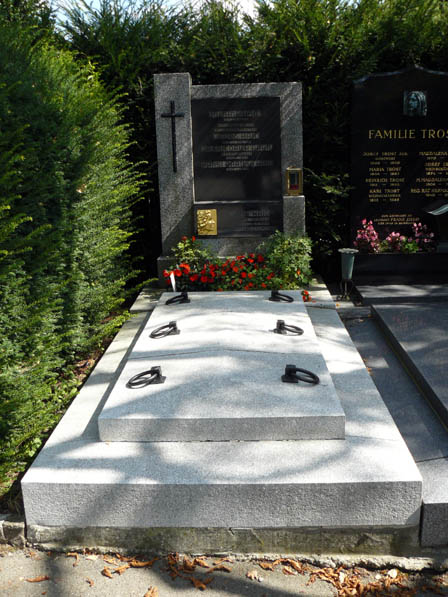
This reluctance made it far easier to ask him questions than asking him to me help me find the Crown of St. Stephen especially considering that I did not know if he could even help. Instead, I asked “So is it your imagination that got you here?” I said pointing to a gravestone that had written on it “Tad Saegerer. 1925-1940 Beloved Son.”  

He chuckled mirthlessly “I guess so.”

“Tell me what happened.”

“After you left, I wandered around all day. Always looking for some place warm and where I would not be recognized. I didn’t know whether the police or the SS were actually looking for me but I thought it safer to assume they were. It was both tedious and nerve wracking. Boring because there was really little, I could do except kill time and nerve wracking because I had to look around every corner for the authorities or someone I might know.”

“That night I returned to Mama’s store. It was the only place I felt I could be safe and perhaps get a few hours relief from being on the streets. I could tell the minute I entered the store that something had happened. While everything looked the exactly the same, little things were slightly out of place. A note Mama left me in the till explained that morning when she was about to leave the apartment the SS had knocked on her door looking for me. When they could not find me in the apartment they had gone to the store and searched it roughly. The officer in charge threatened her. He had told her that I was suspected for crimes against the state and that aiding or abetting me in anyway was a crime. If she heard from me she must notify them or they would seize her store and send her to a concentration camp.”

“She must have been very frightened.”

“She was. But her note was exceedingly kind considering the circumstances. She told me she could not believe that I could have gotten myself in this type of serious mischief. That the SS must have made some type of dreadful error. But she knew that trying to convince of that was impossible. She suggested that I take as much food as I could carry to Aunt Hertha’s cabin in the Lobau and wait there. That she would contact me there when it was safe and gave me 100 Reichsmarks to “tide me over.”

“After gathering up some food and other essentials and left immediately. I figured as long a walk as it was to the Lobau it would be better done at night when few would see me and no one would see me entering the cabin. It took me nearly 4 hours to get there but I managed to arrive in the dead of night when no one saw me enter. That night despite the cold I managed to sleep the sleep of the dead. That is, until the next morning when I heard noise coming from the outside. I went to the window and saw that several of Hertha’s neighbors, who normally occupied the cabins when it was warm had decided to live their full time. This was terrible news for me because it meant that while I had a roof over my head, I couldn’t do anything that would give the neighbors any indication that I was there. Anything could give me away. A shadow in front of the window. An errant sound. Anything that would raise their attention so they would call attention to the cabin and me that would make them investigate or worse call the authorities.”

“This was also an urgent problem. I had to take a piss. My teeth were floating. And you remember those cabins do not have indoor plumbing. There is only a privy out back. Solving the pressing problem turned out to be easy. Hertha kept a bucket near the door. She must have mopped the floor right before she left. When I had relieved myself of that burden, I began crawling around the cabin trying to find a spot that was not visible if someone decided to peep through the windows. There was not one. That is the problem with such a small cabin. The only place that offered me any sort of hiding was a small armoire. It was only about 60 cm deep by 150 cm wide but it was one time my small size really helped me out because if I pulled my legs up a little I could sit at the bottom and close the door to the cabinet. It seemed ideal. Except it really wasn’t.  Sitting in that position all day caused all sorts of cramps. And if we had not left a few paperback books from when you were stay there the boredom would have made me tear my eyes out.  

But I made it through the first day with only a stiff back and neck and legs that did not work right for hours later. It made me realize that could not live like this forever.  That I needed a bigger plan. A plan that would allow me not to live at the bottom of a cabinet for the rest of my life. But every wild idea I came up had a fatal flaw. It was maddening. The minute I would think of an idea like signing on as a mate on a Danube coal barge or sneaking across the border into Italy required identity papers of which I had none and had no clue how to get plus it would keep Gestapo from harassing Mama.”

     Tad paused for a second and asked “Do you remember Jakob Tuechler?”

“Sure, his father owned a leather goods store on Josefstaedterstrasse. He played football with us and was pretty good. Didn’t his mother die just before the Anschluss and then his father got arrested on Kristallnacht and sent to Dachau. When he committed suicide it was the talk of the neighborhood…I remember because Mama was overprotective for days afterward. “. …

“Well I am glad to see living in America did destroy your brain completely. Only he didn’t.”  

“What?”

“Yeah. The day before you left, on my way to the Tomahawk he and I bumped into each other crossing the street. I was about to blurt out something like “I thought you were dead” when he shot me a panicked look and took me by the arm and led me to coffee house. He told me that the situation for him had been hopeless. No father. No mother. He had been turned by Kindertransport. He did not have the money for a Visa or any relative to help him. The IKG could do nothing for him. He knew was only a matter of time before the Nazi’s came and put him a camp. He was at the end of his rope. Literally. He was literally ready to end it all when he heard about some other people in his situation…no family, no place to go, who did not want to be “resettled” who had decided to fake their own deaths and live “underground.”

“You mean literally.”

“No, well yes. I mean sometimes. There were people living in the sewers or in chambers adjacent to the sewers. And you know how many of the old buildings have hidden places underground. But mostly they lived a shadow life. If they could get an old birth certificate or marriage certificate, they would start a new life as an Aryan. If they couldn’t live in the shadows living in people’s attics and basements or living day to day hoping someone would take them in…Do you know what he told me they called these people?”

I shook my head.

“U-boaters.”

I let out a chortle. Tad said “I thought you would find that funny. The creator of submarine vessel Tomahawk becoming a “U-boater.”

Still laughing I said “That is not the half of it….” And broke into serious guffaws.

Tad, a little indignant over my reaction blurted “Well what is the other half.”

“The army base I became an officer is called Ft. Still. It was built during the Indian Wars and where great Sioux chiefs were imprisoned, including Geronimo. So while you were becoming a Uboater. I became Winnatou!”

We both howled with laughter.

Posted in Uncategorized | Leave a comment

Tomahawk: Part 2: Chapter 8: Apple Cake

I did not sleep well that night.

I am sure that part of it was the time difference between where I was and where I was supposed to be. Trying to fall asleep at a time when you should be having dinner proved to be challenging.  

At least a few of my tosses and turns were due to Walter. He was so different than the prim, fastidious, and somewhat haughty University student who had pridefully shown off his new rubber boots. Had he not been arrested he would dead in a camp somewhere or perhaps on kibbutz in Israel. And if not for Max where would I be. Fate, the twists and turns in our lives in which we have no more control than a leaf floating on a river, takes in all sorts of direction that we could not imagine. How could I conceive of the life I was living today while Tad and I built Tomahawk. Man plans, god laughs.  But Walters life, I could not imagine the life he had led imprisoned and tortured, exiled, wounded, captured and imprisoned and bombed and then bombed again.  It had changed him. The pressure and heat of the war had hardened him like a diamond. But it had also opened him up to the pain and suffering that others have felt because he knew what they were feeling. I had a feeling that the war and aftermath would create a generation of men like this. Hard as diamonds on the outside but filled with empathy and compassion that only sacrifice and service can create.

But most of my endless search to find the cool side of the pillow had to do with what I was going to say to Tad’s mother in the morning. No doubt that she had put things together by now. Me showing up on her doorstep, looking for Tad on the day he disappeared. What was I going to say to her about that? How do you beg a mother to forgive you for her son’s death and then turnaround and then ask her the location of her only brother. Why should she trust the person who was responsible for her son’s demise? Information, if given, that would no doubt place Col. Skoda’s life in danger as well.

 I could only imagine of all the horrible things she would say to me because I had been thinking the same about myself for the past six years. of her brother.

In my mind, I tried to write a little speech that I would give her when I saw her. But I could not find the right string of words in either German or English. When eventually I did fall asleep, I dreamt of an endless series of slaps to my face followed by doors being slammed.

“You look like something the cat dragged in.” were the words Captain Granville greeted me with when I met him for breakfast the next morning. “Did Cookie take you to some of the more interesting bars in Vienna last night?”

“No sir…George. Just trying to figure out what time zone I am in. Hard to fall asleep when your body thinks it’s time for chow back in Oklahoma.”

“Are you suure it did not have anything to do with what happened yesterday? Cookie told me about your Grandmother.”

I really did not want to talk about Pepi with Granville. It cut far too close to the quick. It would not serve the most junior of junior officers to be emotional in front of his commanding officers. To cut off the conversation I replied “Thank you sir. But we did get some good news yesterday.”

“Really, Cookie didn’t mention anything.”

“No sir, this was after I left him.” and proceeded to tell him about Walter and what he had revealed about Frau Saegerer.

“Are you going to check that out this morning?”

“Yes but….”

“But what”

“I would like to go it alone sir. I think me speaking with Mrs. Saegerer privately will produce the best results. She knows me. And it is going to be a matter of building trust with her. With Cookie around, I am not saying it would not happen, but it may her a little while longer.” Or that being slapped, spit upon or having a door slammed in my face would be humiliating by itself but in front of Cookie…

“I get what you are saying but the chessboard is a little bigger than your friends Mom. I understand the Russians were following you yesterday and Cookie spotted them while you did not. We are playing on their turf and they are not stupid. A lowly lieutenant tries to find his family day by day when he supposed to be scouting out sites for the eventual division of the city will stand out like a sore thumb. And you wouldn’t go looking for these sites alone.”

I thought for a second and then added, “I understand. But let me suggest something. Why does not Cookie come with me. My middle school is near there along with a couple of other old government buildings. They would be logical places for us to inspect and give us cover. After we inspect them, we can go to Frau Saegerer. It may not convince the Soviets of what we are doing but it may confuse them a little bit.”

“That sounds reasonable.”

“And we get to Saegerer’s Cookie should stay with the jeep.” I could see Granville about to make an objection and added “It goes with our cover story. Why would my Sergeant follow me on personal business? It would give Cookie a chance to see if we are being surveilled or not and serve as a lookout in case the Russian’s show too much interest in our activities.”  

Three hours later, two school inspections later, Cookie and I were parked in front of Dornbacher Strasse, 4. The building was typical for the area, a three story concrete structure made to look like stone in the style of the late 19th century. There was  only one shop on the ground floor. Its sign read in large letters “Paul Grosz, Kurschner Meister” and beneath that in a smaller font: Massarbeit, Umarbeitung, Repartur. Cookies said “A Furrier?”

Shaking my head “I have no idea. But this is the address that my cousin gave me. Wait here.” I hopped out of the jeep and entered the shop, a small bell attached the door announcing my entrance. It was hard to believe what I was seeing. Outside, the city was a heap of smoldering ruins, the smell of destruction and decay everywhere, but here it seemed as if the war had never happened. It was 1935 again, the Nazi’s were Germany’s problem, and the rich needed a way to keep warm and show their wealth off at the same time. Mannequins were posed around the store with postures of the fortunate class. One had her hand out as if to be kissed. Another with cigarette holder held in a way that mimed Marlene Dietrich. The most dramatic had her pelvis thrust forward with her hands on her hips as if showing off her new fur while accentuating her sexuality. All were wrapped in ankle length furs. While not an expert in such things I could see one was mink because Max’s wife Sara had a coat just like it and never failed to mention how expensive it was.  Another was clearly a fox. The mannequin in the provocative pose was clad in fur that was dark brown and short. It looked so luxurious I could not help but touch it. It may have been the softest thing I had ever felt.

“Seal.”

Startled., I turned around and saw a beautiful young woman with wavy black hair cut shoulder length and piercing dark blue eyes. For a second, I was a tongue tied   so she added in particularly good English. “Are you looking for a present for your girlfriend…or perhaps your mother?”

Overcoming my initial inability to articulate I responded in German “Verzeihen Sie mir, aber ich suchte Frau Saegerer. Ist sie verfügbar?” (Pardon me, but I was looking for Mrs. Saegerer. Is she available?) It was her turn to look a little startled.

“You speak German very well, even with a Viennese accent.” And then added a little flirtatiously “How is this possible?”

“I am from here. I grew up in the 13th district on Ottakringerstrasse.” And trying not to be distracted by this young lady’s obvious charms I repeated my question “Is Frau Saegerer in?”

“She is not here right now” and giving me a coquettish look said “But surely I can help you, Lieutenant with whatever you need. If the coats are too expensive, we have wonderful accessories. Perhaps a rabbit’s fur change purse. No…a little mink mouse or perhaps a fur muff…”

She was flirting, and under different circumstances, and without Cookie watching I might have continued our little dance a bit longer but I needed to remain on track. “I am sure they are genuinely nice. But I am really looking for Frau Saegerer. She ran a grocery store near my home, and she was truly kind to me as a boy. I wanted to make sure she was okay and thank her for her kindness. Do you know when she will be back?”

She blessed me with a little pout as if I had really disappointed her and said “I don’t know when she will be here next. She doesn’t keep regular hours.” And added with a touch of pride “She is new to the business and she mostly lets me run the shop.”

“Hmmm…. Well I guess I will just have to come back later.” I said giving her my most winning Cary Grant smile. “In the meantime, if you should see her would you please tell her that Ugi Floessel stopped by to see her and she can reach me at the Hotel Sacher.”

I turned to leave, but as I reached the door, she said “Are you really a friend of Mrs. Floessel.”

“Yes. When I lived in Vienna, her son Tad was my best friend.”

“Then I guess it is all right to tell you.”

“Tell me what?”

“That she lives upstairs. Apt 2C.” And then added “But don’t tell her I told you?”

The apartment buildings entrance was just to the left of the store but before I entered, I stopped at the jeep and let Cookie know where I was going. He was doing his Joe and Willy routine with his body askew, his feet up on the dash and his service cap pulled down over his eyes. “Okay. I will keep an eye out.” And promptly pulled his cap a little further down his face. Surprisingly, I had no doubt he would.

The brown wooden doors of the apartment building were not locked which considering the rampage of the Red Army through Vienna surprised me. Until I noticed the frame of the door had been shattered. As if it had kicked it in. Clearly this neighborhood had not been spared a visit of the Soviets extracting their particular brand of retribution but made me wonder how it was that a store full of expensive furs had managed not to be looted. I would, if I could find a tactful way, have to ask Mrs. Saegerer.

The building’s lobby was small. Just big enough for a desk where a concierge had once sat. Despite the intrusion it looked it good shape. The white tile floor clean and well maintained, the walls free from damage. Directly adjacent to the entrance there was a large, surprisingly intact mirror and I used it to make sure I was squared away. I adjusted the knot in my tie, puulled my Eisenhower jacket so it cover the top of my trousers and picked a piece of imaginary lint off my lapel. Physically I was ready but emotionally I was unsure. How would she greet me? Would she blame me for Tad’s demise? If she did would she give me the information that I needed…the reason that I had been brought to Vienna to begin with? Would she even recognize me?

Before my doubts overwhelmed me, I climbed the rounded staircase that twisted 180 degrees to the next floor two at a time in the hopes that a little exertion would help calm my nerves.  There was a sign at the top of the stairs that indicated that Apt C was to the left. I walked in that direction with my leather souls making a distinctive clicking sound as I went. When I reached the door, it had a small knocker with a lion’s head on it. I took a breath and used it.

 The sound of the clacker was surprisingly loud and echoed through the hallway. But I could hear no movement in the apartment. Perhaps I had gotten my nerves up for no reason. Then I heard “Einen Moment. Ich komme. Ich komme.” I heard the bolts of the door sliding back and the door opened.

Looking older, her once jet-black hair now streaked with grey, a set of wrinkles on her face that I did not recall and much shorter than memory served stood Tad’s mother. She looked at me in puzzlement and said in heavily accented English tinged with a element of fear “May I help you?”

I looked down at her and tried to give her a reassuring smile and said in German “Frau Saegerer, erkennen Sie mich nicht?”. Mrs Saegerer don’t you recognize me.”

She got a perturbed look on her face and said “No. Why should I….” and paused, and taken a step back from the door, placed her hand over her mouth and said “Ugi? Is that you? I cannot believe it.” Then she was hugging me. The type of hug reserved for family after a long separation. I had spent most of the night before worrying about all the ways this meeting could go wrong. Face slaps. Door slamming Spit. In all that worry I had never anticipated being greeted like the return of the prodigal son. I was more than relieved. It was if the burden that I had been carrying for the past six years had been washed away. There may have been tears shed but Army officers are not supposed to weep.

When she finished hugging me, she stepped back and while holding my hands looked me over and said “Hugi, you have grown so tall. I could barely recognize you.”

“Perhaps, you have just gotten smaller.” I said and we both laughed more out of the joy of seeing each other than actual humor.  

All this time we were standing in the doorway. Recovering from her surprise she said “Ugi. Where are my manners. Come in. Come in. Sit on the couch while I make us some coffee and you can tell me all about your new life and America.”  She escorted me to a chintz sofa that I recognized from the Saegerer’s apartment before the war. It and the coffee table were the only familiar items. And, they looked out of place as the rest of apartment was mostly Biedermeier that was so popular in Austria before the war. They matched nicely with the Persian rugs laid over wood floors. It was apparent that the apartment had been fully furnished when she moved in and she had only brought a few items of her own but it was homey and warm that stood in contrast to the war that had taken place around it. It seemed to be as good as place as any to start the conversation. I called out to Frau Saegerer in the kitchen “How long have you been living here.”

“Since last November. My cousin, owned this place, and the furrier shop downstairs. He committed suicide after his two sons were killed at the Battle of Stalingrad. I guess he felt grateful to me because I had always made sure he had good food on the table from my grocery despite the rationing. And, I don’t think there was anyone else. Anyway, he left me this place and the furrier shop. Then my store was destroyed in the bombing and there was no way to rebuild so I said “Why not” and came here to live. Its cozy don’t you think.”

She mentioned the suicide so casually. As if it were an every day occurrence But I suppose it was. Even before I left many had committed suicide because no other choice made sense. A b-product the hopelessness of war.

Before I could answer her question she emerged from the kitchen carrying a silver train with a flowered porcelain coffee pot, two matching cups and what appeared to be a homemade apple cake. The smell of coffee and cinnamon giving the apartment a scent that reminded me of my childhood. I was not surprised. This is what Viennese hostesses did. Coffee and cake before any conversation. She placed the tray on the table in front of the couch and proceeded to pour me a cup of coffee and cut me a piece of cake. The coffee was wonderfully bitter. The cake had delicious streusel on top was still warm. It was if she had anticipated my arrival and baked a cake for the occasion.  

Pouring herself a cup of coffee, she turned to me and said “Ugi, so tell me what has happened to you since you left Vienna.”

“Yes, General Shatterhand. Tell us.”

I turned to the door where the voice had come from. It was Tad.

Posted in Uncategorized | Leave a comment

Tomahawk: Part 2: Chapter 7a: Cousin Walter

{ Please note: This is a rewrite of part of previous chapter which were necessitated by new information}

I had not seen Cousin Walter since shortly after the blow torch caper as he had been, like so many other Jewish college students, been arrested and sent to Dachau. I was dying with curiosity to know how he managed to get from a concentration camp to being a NCO in the British Army.  His uniform, which looked new, gave no clues. There were no shoulder patches or insignias. . The American way would have been to barrage him with a series of very personal questions, but I decided to approach the question in a far more subtle Austrian manner. I asked with a wry smile, “What have you been up to?”

This started us both laughing and when we finally managed to contain ourselves, he told me his story. After his arrest in the spring of 1939, he had been sent to Dachau where he and the other prisoner had been stripped of everything. Issued striped prisoner pajamas and hustled into barracks that were extremely overcrowded, four or five people sleeping on bunk that would have been too small for two. Vermin were everywhere and Walter and his fellow inmates  would spend their “leisure”  hours picking each other clear of lice. The camp was also a training facility for the SS and the treatment of the guards towards them was brutal. Inmates beat to death prisoners for no other reason than sadistic amusement. Some were doused with water and forced to stand outside in freezing temperatures until they collapsed. Others were forced to have their balls kicked by a conga line of guards.

He described how many of the new inmates would arrive scared but with the resolve to endure. In others, the light would slowly fade from their eyes as their hope ebbed. These were the ones who would die from disease or even just drift away while they slept as if a wish had been granted in their dreams.  

For reasons only known by his captors they transferred him to Weimar-Buchenwald. Things were no better; it too was an SS camp but he was not there long. One morning, he was rousted out of line and told he would be freed. The condition of his release was to exit the Reich within one week. During that time he needed to make arrangements for his passage out of the country, pay all the taxes Jews were forced to pay in order to exit, and acquire any travel documents required.

He made his way back to Vienna. There he hoped he would find his mother and together they would flee the country. However, when he returned home, he found his mother had left. She had fled to Palestine. His other relatives, including Mama, Papa and me, had left, moved with no forward address, or disappeared. He was completely alone.  

He had no money. His family was gone. He had no choice but to go to the IKG and ask them for money. He hoped they would help him with the funds needed so he could join his mother in the Holy Land. They told him that their funds were limited. They could not help him get that far but could provide the paperwork and money that would get him as far as Trieste.

Trieste was teaming with refugees. They were all looking for the same thing. A way out of Europe. Anywhere that would take them. Argentina, Brazil, Shanghai, Palestine, even the United States. However, getting passage was nearly impossible. No country, with the exception of Shanghai were giving nearly enough Visas to meet the demand. All required money or connections. Walter had neither. Eventually, he managed to get day work as a stevedore and began putting away money so he could pay for passage for Palestine. He little and worked hard and he was close to achieving his goal  when his dream was crushed when the British cut of immigration to Palestine. Despondent, he kept working hard hoping that he could raise the funds needed to get to Shanghai when luck intervened. Through his work he had become friendly with one of the crews of the ships he was loading, the Adriactica. When several of the ships compliment failed to report he was invited to join the crew. He jumped at it. Maybe this ship would get him to Palestine.

After a few weeks, he decided life at sea was not for him. Not only was he constantly seasick but it turned out there was a reason that those crew members had jumped ship. The Captain was a drunk and brutal to the crew treating them more like slaves than employees. When the ship docked at Alexandria, he figured he was close enough to Palestine that he could find land transportation and jumped ship.

Instead of going to Palestine, he decided to join the British Army. AWhether this was out of desire to get back at the Nazi’s for the destruction of his life and his home or some other reason he did not say. Eventually, he became a member of the Queens Own Cameron Highlanders’s 2nd Division. With them  he fought in both Egypt and Libya and as proudly said, “I only got wounded twice.”. (I thought twice was more than enough, but I suspected he had learned the art of British understatement.) The Highlanders were placed in charge of defending the newly captured Tobruk.  Then Rommel had successfully recaptured the city. Walter and what remained of his division were captured and sent to an Italian prisoner of war camp in, Passo Corese. There they lived in tents and had to bribe the Italian guards to get enough food to live on.

Walter paused his story and said with characteristic humor. “And to think, I used to like Italian food.”

Then things got even rougher. When Italy, declared an armistice with the allies the Germans took over the camp. There was even less food that before not only because rations got cut but the guards became harder to bribe. As the Allies advanced, the Germans became nervous and decided to transfer the camp. The prisoners were placed in box cars and the train slowly made its way through Italy.

At this point in the story he paused to collect himself. When he resumed his story his eyes had a faraway look in them. As if he were reliving an event in his minds eye and could see nothing of his current surroundings. They had been on the train for a couple of days when as they traveled over a bridge near Allerona in Umbria the unthinkable happened. The Allies, unaware their POW’s were on the train bombed it. The Germans, who were guarding them fled, without unlocking their cars. Bombs fell everywhere. Some cars simply vanished in the flash and thunder of high explosive, while others rolled off the track and fell into the river below.  They could do nothing but scream in fear, pray and accept their fate.

He paused again and his eyes regained their sight of the present. “Men shit and pissed on themselves. And, afterward nobody said anything about it. Just helped them clean up and told jokes like nothing had happened. I will never understand the British stiff upper lip.”

“After the bombing, the train made its way to Stalag 18a, near Wolfsberg in Corinthia, which, before war, I would have thought a lovely place for a holiday. But 18a was not exactly a holiday camp. Bad food and bad conditions like before but instead of being confined in camp they made us work either in the fields or cutting down trees in the forest. This was good work because in either place you could easily pick up some extra food and occasionally pick up some war news.”

“Then in December, the unthinkable happened again. We got bombed by the alies. I guess they were trying to help us escape or kill a few Germans, but they killed more of us than them. Things got better after that. We knew all we had to do was grin and bear it for a little while longer. It turned out it was a little longer than we thought, we didn’t get liberated until three days after the war ended.”

“When they processed me out of the camp, they gave me orders to report to England. I told them I did not want to go back to England. I had never been in England. What was there for me? I wanted to go to Vienna and find out about my family. But you know the Limey’s. Protocol is everything. I was an anomaly. They did not know how to handle it. People needed to be consulted. Memorandums written. I tried pointing out to them that I was only 250 km from my home and that it was ridiculous for them 1500km back to London. But they sat on their hands.  Finally, after waiting around two days and the camp emptying out I decided to take things into my own hands and went to their HQ and waited for the commanding General to emerge and ambushed him. After listening to me, and my story, he ordered his aide de camp to straighten things out. Needless to say, I got VIP treatment after that. I still have to go back to England to be processed out of the Army, but they gave me seven days leave in Vienna. I have been here six.  I leave tomorrow.”

I had known Walter all my life and I had no idea what to say to him. While I had been back in the USA, “fairyland,” learning English, going to school, and working for my Uncle Max he had been living in hell.  Imprisoned in concentration camps.  Losing his family and practically anyone he had ever known. Then trapped in an Europe at war that wanted him dead only to escape an army at war. Thrown into battle. Shot up twice only to be imprisoned, again, by those he was fleeing. Then nearly blown up by people on his side, not once but twice. I was in awe of his fortitude, resilience and his good humor. It made me feel that the freshly issued uniform I was wearing was really a Halloween costume worn by a college sophomore.

I wanted to tell him how much I admired him. How proud the family would be of him. How impressed I was by him, the once roly-poly cousin, not a hard as nails veteran. He must have sensed what I was about to say by the look on my face because when I went to open my mouth, he shook his head and said “Ugi, my story is no different than thousands of other guys. All that is important is we made it…. we both did.” And then he joked. “Now look at you. Little Ugi has become Lieutenant Sam. It is too bad that you do not have any brothers or sisters so you could become “Uncle Sam.”

“Funny. And Cousin Walter has become Lord Tommy of Ottakringer.”

We both laughed and after a pause I said, “You have been here six days.”

“Yes.”

“And.”

“Have I found anyone?”

I nodded. He gave me a forlorn glance, and staring down at his empty coffee cup said “No.”

“I went everywhere. Everywhere I could remember. Most of the places I went pretended like they had never heard of the people who used to live there. When I went to Uncle Julius leather goods store his former clerk claimed that he did not know what had happened to him. Just that he had sold him the store and left. But he was so nervous. I could tell he was lying. I want to beat it out of him. But what could I do? Cousin Marie’s apartment in the 2nd district was occupied by some fat hausfrau who said she never knew who lived there before her even though some of the furniture was definitely Marie’s.”

“Eventually, I went to the IKG offices. Which were closed. But I found this “Mischling”, Christian mother and Jewish father, who told me a little about the transports and deportations. He made it sound like there was not a Jew left in Austria. How can that be, Hugi? We were 200,000. I mean I have read about the death camps and all but surely even the Nazi’s could not have killed them all?”

I shook my head in shared disbelief and said, “Let me tell you about my day” and proceeded to give him a recap of what I had found out at the “Philanthropia.” When I had finished, we shared a look with each other. One that said, we knew the truth. We had lived it. The Nazi’s were more than capable of our destruction. All we need do is look around at this broken and destroyed city to see that. Or what we did not see. Our family, our friends, our community that just seven years before had been so vibrant was now only a whisper of an echo.

There did not seem much more to say. Walter made the excuse of having to return to his barracks to prepare for his trip to London in the morning. I told him that I had to leave too. I had a meeting with my “boss” at the Hotel Sacher. “Isn’t that where you “blokes” are staying. We can walk together.”

He gave me a raised eyebrow and said “Officers only, Ugi. Us Non-com’s are billeted at pension in Leopoldstadt. But I can walk with you to Stephansplatz.  As we strolled down Graben we exchanged addresses. I told him that Mama and Papa would love to hear from him but if he wrote them please do not let them know you saw me here. I gave him a knowing look and said, “I am not supposed to be here if you know what I mean.”

When we arrived at Kartnerstrasse. We embraced and I said “It’s good to see you Walter. I am glad you…you…”

He cut me off. “Me too. I am glad to see my little cousin is all grown up. And officer at that.” He gave me a mock salute, British Style with the palm facing outward, and turned to leave but before he got two steps he stopped and asked “What was the name of your friend you used to pal around with all the time.”

“You mean Tad.”

“Yes. What was his last name again?”

“Saegerer? Why?”

“I thought so. I ran into his mother the other day. I thought her name was familiar. She runs a shop on Dornbacher Strasse in the 17th district. No wonder she was looking at me like I should know her.”

Posted in Uncategorized | Leave a comment

Tomahawk: Part 2: Chapter 7: If The Shoe Fits

I knew, generally speaking where Mitisgasse was…. between Penzing and Neu-Penzing…but I wasn’t exactly sure so we consulted a map that Cookie had somehow manage to liberate. Turned out that it was not far, about 5 km but between missteps, closed streets and cleanup crew clearing roads  it took us the better part of an hour to get there. Luckily, for our search it was  not a very large street, only about 4 blocks from LinzerStrasse to Huteldorferstrasse. Cookie suggested that the best way to canvas the street was starting from Linzerstrasse that he take the east side and I the west to see what we could find out about Frau Saegerer.

I said “That works Cookie.” And then after a pause “Do you speak any German?” I may have sounded a little condescending because his reply was “Denken Sie nicht, dass Leute aus Tennessee Deutsch sprechen?” His accent, although not Viennese, was perfect. He asked  “Don’t you think that people from Tennessee speak German?” In other words, he was calling me out. That folks from the south were a bunch of dumb hicks.

Embarrassed I said “ I am sorry Cookie. I guess I sort of assumed…”

“Don’t worry about it Ugi. I set you up. I always pile on the Tennessee accent when I meet someone. For some reason, it always makes people underestimate me.” Smiling he continued “Which I usually use to my advantage. And before you ask the next question, I was German Studies major at Vanderbilt before the War….Do you think I got here on my good looks?” and then let loose a belly chuckle that it made me forget my embarrassment.

About 45 minutes later we met back up at a café at Mitisgasse 14. Or at least that is what the sign said it was. It seemed to me that it was nothing more than a hausfrau who had set up a couple of tables outside her building in the hopes that she could earn some money. But the beer was cold which was welcome and the sausage decent. It helped soften the reality that either Cookie or I had any luck find Tad’s mother. Part of it was the reluctance of anyone people in the neighborhood to cooperate with anyone wearing a uniform of the Allies. It occurred to me while there will always be “toadies” who would do what they could to ingratiate themselves with their conquerors but perhaps it would be more difficult here. The Russian had really screwed the pooch when they had allowed their troops free range in the city, looting and raping. It was made worse by their lurking in the background. Like a predator stalking its prey they were just out of site waiting to jump. It spooked people and had spooked the folks on Mitisgasse because they had spotted as had Cookie the two Russians who were shadowing us.   

After our beers and sausages had arrived Cookie said quietly and mid bite “Did you see them?”

“Who?

“The two Russians following us.”

I was embarrassed. I had seen nobody. I wanted to look around and see who Cookie was referring to but I managed to keep my focus on the plate of sausage and fried potatoes in front of me and resisted the temptation to look around. With a mouth full of food I said “Where?”

“They were tailing you. Which is why I spotted them. Did you see the man with the black beret who was reading the newspaper at the Tabac Shop when you passed by?”

“I guess.”

“Well he and his pal, who is wearing a brown leather jacket and a flat cap tag teamed you all the way up the block. When you would go into one of the shops to talk to someone, one would keep an eye on you and the other would question whomever you had just talked to.”

“Well, what do you think we should do?” I said with perhaps a little bit more of nerves in my voice than I had hoped.

Cookie shot me a smile and said “Eat lunch.” Which is what we did with me doing everything I could to keep my head from being on a swivel. Cookie made conversation by discussing the 1939 Yankees and how they were the greatest baseball team of all time. I spent most of my time nodding. While I had adopted much of what my new country had to offer, I had not learned to appreciate baseball. I had never been to a game and barely knew how it was played. But I knew enough that midway through his diatribe on Lou Gehrig to ask “How is it that a southern boy like you, roots for a team called the Yankee’s.” He shot me a look and continued his monologue on the “Iron Horse” and why he was the greatest player ever to put on a uniform.”

Of course, I knew what he was doing. He did not want any conversation we had at the table to be of any use to the Soviets who were following us. They would no doubt check with the proprietress of the restaurant about our conversation and baseball is something that would no doubt confuse them as it did me.

When we got back to the Jeep, Cookie made quite a show of grinding the gears  and proceeding slowly down Linzerstrasse. Now we could talk without being overheard. I said “No doubt that they will have someone following us.” Cookie nodded. I paused thinking and then leaned over and said “ When you get to the next major cross street make a right. Let’s go visit my grandmother.”  Cookie didn’t say anything. He understood that part of our cover was me looking for lost relatives.

What he did not know was I had been trying to figure out a way to find my grandmother since I had been told I was heading to Vienna. Saying goodbye to her had been one of the hardest moments of my life. For Mama too. In the years that followed our departure, I had found her more than once in tears worrying about her “adopted” mother. She felt guilty about abandoning her. A “daughter” should take care of her mother. I could not come to Vienna and not try to find her or at least find out what happened to her. If not for my sake but for Mama.

The fact, that we needed a diversion right now and were in the general vicinity of the “Philanthropia” was providence.

But I was under no illusion that I would find her. The discoveries of the death camps first the Russian and then by us, had confirmed the whispers we had been hearing for years. The resettlements in the east that the Nazi’s had promised us were nothing more than an elaborate cover for a way to murder Jews. Transportees had been told, like Papa had been told, that they were going to a place where they could live freely and find work only to be placed in cattle cars and shipped to these concentration camps. There, they would be categorized based on their ability to help the Reich. The weak, sick and old were sent directly to the gas chambers.

She had said, that day we said goodbye, that America was just the place for me. And she had been right. I had taken to the United States like a fish to water. It was my “fairyland” as Eduard had said. She had said that as long as we could write we would never be apart. I had written. Mama had not even had to hetz at me. I told her all about my new life in America. How well I was doing in school. The new friends I was making and tried to leave out the parts that might make her feel badly, like the wonderful food we were eating, or the bad like when I was placed in the 4th grade. And we received a few letters back. But they were rare and stopped completely after we declared on the Germans. With the war going on and the rumors of what was going on in Vienna to the Jews running rampant, Pepi became a subject that we thought about often but rarely discussed. We had left her and no one wanted to be reminded of her fate or our culpability in it.  

The good news when we pulled up in front of the Philanthropia was neither the American bombing or the Soviet shelling had touched the place. The bad news was that it was clear that the former Rothchild palace had fallen our hard times. Outside the building there was garbage strewn everywhere. Paint was peeling from its walls and the front door looked as if it had been bashed in and then partially reattached.

On the drive from Mitisgasse I had explained to Cookie why we were coming here. He had not said much. Just nodded in understanding. Now that we were here, I half expected that he would sit in the Jeep while I went inside however he surprised me by following me to the front door of the building. When I looked at him enquiringly, he just said “You never know what is behind the door” and smiled.

Not bothering to knock, I opened the broken door and walked into the building. The formerly pristine palace for pensioners had become a squatters den. As we walked through, I could see that families and some individuals had claimed rooms and areas for their room. There were nests for sleeping, surrounded by odd bits of clothing and possessions. Occupied by dirty hallow eyed people who looked at us with a mixture of curiosity and fear on their faces. A short man with broad shoulders, high cheekbones and several days of beard on his face strode up to us and asked belligerently “What do you want here” and then added “Haven’t you done enough to us already.”

I understood him. He looked and sounded like Papa. Using my most soothing voice I responded “We don’t want anything from you. Just some information” and then reaching into my jacket pocket pulled out a pack of Lucky Strikes and asked “Would you like a cigarette?”

He looked at the open pack as if it were gold but then with suspicion. “What kind of information are you looking for?”

“Nothing serious, oldtimer. Before the war, my grandmother was a resident of the old age home here. I was hoping you would tell me what happened to the residents.”

He took a cigarette from the pack and placed it in his shirt pocket and then asked “My take one for my wife, too?” pointing to a woman who was huddled with a small child in the corner of the room.

“Naturlich.”

After he placed another cigarette in his pocket he said “I don’t know. By the time we found this place they had been gone for a long time. I heard that they were all taken away…. But old Otto should know.”

“Who is old Otto?”

“He used to be one of the caretakers here. He says that he has been living here since the place was abandoned. Come on I will take you to him.”

We followed the man back through what used to be the reception area, through the lounge and dining room and into the kitchen. It was remarkably clean all things considered but I could see roaches scurry for the corners, and it was not hard to imagine rats coming out at night. Our guide knocked on a door at the back of the kitchen and said “Otto, there are some American soldiers who want to speak with you. “

After a few seconds the door opened and a clean-shaven man, wearing clean clothes stood with the ramrod stance of a former military man. He looked me with an unblinking stare and said “How can I help you.”

“My name is Lieutenant Floessel. I understand you used to be one of the caretakers at Philanthropia. Is that correct?”

“Ja. I was in charge of the maintenance of the building.”

“What happened to all the residents?

A flicker of fear passed over his face. No doubt he was worried if we were here on some sort of official investigation. In an effort to calm his fears I said “My name is Lieutenant Flossel and this is Sgt. Cook. We are here because my grandmother, Pepi Tichler, was a resident here and I am trying to find out where she is. Can you help me?”

He sighed and told me the story of what had happened to the residents of Philanthropia.

For awhile life had gone on as before the IKG continued to fund the home and life was relatively normal. Then in the spring of 1940 the director had been told that the Nazi’s had cut back rations to the Jewish Community and that the residents of the home would have to get by on less. They went from having three meals a day to two and eventually one. Along with the food shortages there was difficulty finding medications for the residents. The combination of bad nutrition and little medicine proved too much for some of the residents. Many died. Then one morning in early 1941 several Nazi trucks and troops had arrived with an order from the IKG and the German authorities closing the Philanthropia. The residents were being moved to a different facility in Leopoldstadt.  It was chaotic. Many of the patients refusing to go and being bludgeoned with the butt of a soldier rifles or a kick to keep them moving. Otto had heard there new “home” was very overcrowded. Where once they had private and semi private rooms now they were forced to live in dormitories with dozens of others. Sick residents received little care, and many died. Eventually, in June of 1941 the Nazi’s had ordered all the elderly to board trains, cattle cars, to go to their new home, Theresienstadt. Those who were left, went willingly. They figured it could not be worse than what than where they were living.

Otto said he did not know any more than that. Unfortunately, I did.  I had heard that most of the residents of Theresienstadt, especially those who did not fit the vision of an “ideal” inmate were sent out to other camps. Mainly Auschwitz.  There, those not fit to work, like the elderly, were marched directly to the gas chambers.

Pepi, my beloved grandmother, whose arms always made me feel safe, whose kindness and love had healed wounds and silenced tears, was dead. Murdered without any humanity by the Nazi’s. This was not surprising news. With all the news, with her age I did not expect to find her alive. But the realization she had suffered so much misery only to die alone and heinously nearly overcame me. I felt my face flush and tears form in my eyes. But I manage to control it. I had no desire to let Cookie see me cry let alone this popinjay who had just told me this story.

I gave Otto what remained of my pack of Lucky’s and thanked him for sharing with me what he knew. When we got back to the jeep, Cookie placed his hand on my shoulder and said “I am sorry, Sam.”

“Me too, Cookie. Me too.”  

We returned to the Hotel Sacher even though there was arguably time left in the day. But between, the dead ends looking for Frau Saegerer, the Russian surveillance and the unhappy news about my grandmother I felt like we needed some time to regroup and re-strategize.  I needed a little time to myself. I needed time to think and to process what had happened today. When we pulled up next to the hotel I told Cookie to meet me in the lobby at 18:30 and if he could track down Granville to join us all the better and I set off down Kartnerstrasse.

I had no destination in mind. I just wanted to walk. I think better when I walk. It is as if putting my legs in gears slips the clutch on my brain and allows to drift on tangents. Probably not the most efficient way to solve problems but it got me there. When I was kid we did not come down here very often. The stores were too expensive for us. The one exception Papa made was buying me shoes. He was obsessed with buying me good shoes. It was one of the few times that he would talk about his time in Siberia. He would recount how his feet had been cold all the time because his boots were not well made and how he had vowed never to skimp on shoes again. I thought I could remember where that store was, where Graben intersected Tauchlaben. I .suddenly had the notion that buying Papa a pair of shoes where he used to by mine would please him and perhaps smooth my soul from the ruffling it took today.

When I entered Stephansplatz I made a left on Graben and walked slowly up the street. When I was kid this street was packed with shoppers darting in and out of stores and strollers, who come just for the pleasure of walking along one of Vienna’s finest shopping streets. But today, there were very few people out and about. Partially, because only a few stores were still open and partially because people were spending what money they had on necessities not frivolities. Even those that were open did not have much to display in the window.

Eventually, I made it to the end of Graben.  Directly in front of me was Perkals. The shoe store of my youth and the place of some of my favorite memories with Papa. Somehow it had managed to survive the bombings and the siege.  As I approached the store, I saw a British soldier bending at the waste to get a better look at the lower part of the window display. It made me curious. Why would a British soldier spend any time at all looking at shoe store window in Vienna? I had always heard that the British made the best shoes in the world and besides soldiers like us get issued shoes we do not buy them. But something else made this soldier stand out. I am embarrassed to say it was his ass. Not like it sounds. It is just that it looked familiar. I walked over to what I now noticed was a Sergeant and tapped him on the shoulder “Walter?”

It was Cousin Walter. The same cousin Walter whose brief case I had borrowed all those years ago to steal the blow torch of the school. The cousin Walter who had always looked like he had one too many pastries and was the poster boy for fat cheeked Austrian children was now a soldier for God and Country. I could hardly believe it what were the odds of running into your cousin on the streets of Vienna? But, while I recognized him, he did not instantly recognize me. I guess that is fair, since the last time he saw me I was about a foot shorter and barely a teenager.

When I saw that the confusion on his face would not transform into recognition anytime soon, I blurted out “Walter, it is your cousin Ugi.” Realization spread across his face like the dawn of a new day and we embraced. It must have been quite the seen for people passing by. Two Allied Soldiers embracing, pounding each other on their backs with tears pouring down their cheeks. To avoid further public spectacle, we decided to grab a cup of coffee at the Julius Meinl coffee house adjacent to the shoe store.

I had not seen Cousin Walter since shortly after the blow torch caper as he had been, like so many other Jewish college students, been arrested and sent to Dachau. I was dying with curiosity to know how he managed to get from a concentration camp to being a NCO in the British 76th Division. The American way would have been to barrage him with a series of very personal question but I decided to approach the question in a far more subtle Austrian manner and asked “So, what have you been up to?”

This started us both laughing and when we finally managed to contain ourselves, he told me his story. After his arrest, he had been sent to Dachau where he and the other prisoner had been stripped of all their possessions and forced to wear striped prisoner pajamas. The conditions were terrible. Barracks that were extremely overcrowded with four or five people sleeping on bunk that would have been too small for two. There were vermin everywhere and the detainees would spend their leisure hours picking each other clear of lice. And since the camp was also a training facility for the SS the treatment of the guards towards them was often brutal with inmates being beat to death for no other reason that for amusement.

He described how many of the new inmates would arrive scared but willing to endure but how for some, the light would slowly fade from their eyes as their hope ebbed. These were the ones who would die from disease or even just drifting away while they slept as if a wish had been granted while asleep.

For reasons only known by his captors they gad transferred him to Weimar-Buchenwald. Things were a little better, but he was not there long. One morning, he was rousted out of line and told he would be freed. The condition of his relief was to exit the Reich within one weeks’ time. He made his way back to Vienna in the hopes of seeing his mother, but she had fled to Palestine.

He had no money. His family were gone. He had no choice but to go to the IKG and ask them for money so he could join his mother in the Holy Land. They could not help him get that far but did help him with the paperwork and money that would get him as far as Trieste. But that was a dead end. The British had clamped down on immigrants to Palestine. He managed to get day work as a stevedore where he became friendly with some of the crews of the freighters he was loading. One of those crew offered him a crew job which he jumped at. But life at sea was not for him. He was seasick constantly. After a few weeks, he decided enough was enough and jumped ship in Egypt. He hoped to make it from there to Palestine but ended up joining the Army instead.

He did not share with me his Army experience, but I could tell from the ribbons on his chest that he had not been idle. But before I could ask him about that he asked me to bring him up to date about  my families journey which I gladly shared with him.

When I had finished, he said “Now look at you. Little Ugi has become Lieutenant Sam. It is too bad that you do not have any brothers or sisters so you could become “Uncle Sam.”

“Funny. And Cousin Walter has become Lord Tommy of Ottakringer.”

We both laughed and then I asked “So, what brings you to Vienna.”

He smiled and replied “I can’t say. What brings you here.”

“I can’t say.” And we both laughed.

There did not seem much more to say. We exchanged addresses, he giving me his and his mothers who had settled in Petach Tikvah, and me giving him mine and my parents in Danbury. I said “I am staying at the Hotel Sacher….isn’t that where you “blokes” are staying.”

“Aren’t you getting fancy. No, us working chaps are staying at a pension down in Leopoldstadt but I will walk with you down to Stephansplatz.” We strolled down Graben making small talk. Until we arrived at Kartnerstrasse. I said, looking Walter directly in the eye and said “I can’t not tell you what a sight you are for sore eyes. I am glad you made it.”

He responded in an equally grave tone. “You too, Ugi…I mean Sam. Whatever you are calling yourselves these days. “ Then he turned to go and before he gone two steps turned back he said  “What was the name of your friend you used to pal around with all the time.”

“You mean Tad.”

“Yes. What was his last name again.”

“Saegerer? Why?”

“I thought so. I ran into his mother the other day. I thought her name was familiar. She runs a shop on Dornbacher Strasse in the 17th district. No wonder she was looking at me like I should know her.

Posted in Uncategorized | Leave a comment

Tomahawk: Part 2: Chapter 6: You Can Never Go Home Again

Then came V E day, May 8 1945. A day that I would remember less for the celebrations, I never seen so many people so happy, but for the orders to report to Captain Pike’s, the Assistant Adjutant General, office. There, in the company of 1st Lt. Diamond who commanded the base CIC contingent, he informed me that my status at OCS was being placed on hold. I was now temporarily assigned to Army CIC.

That was just four days ago and my head was still spinning from the rapidity of how quickly my life and circumstance had changed. I should be in Southwestern Oklahoma figuring out trajectories and blowing things up. Instead I was 6,000 miles away in a wrecked city, chasing a ghost,  in the hopes of finding keys to a box that contained a 1000 year old crown. All because I wanted to finish another Semester of college. Ridiculous. It made me laugh.

“What’s so funny, Sam.”

I jumped up, nearly knocking over the small cafe table I was sitting at in the Hotel Sacher’s lobby. Saluting, I said “Good morning, Captain.”

“Sam, no need to be so…military.” Then, sitting down added “Two months ago I was a Sergeant and had been for the better part of three years. Most of us in CIC were non coms. And the few officers we had we treated them just like the rest of …as if they worked for a living. No officer, bullshit. Unless “he added smiling “Its necessary to impress, dazzle or get the job done.”

This was all counter to my programming. For the last 9 months I had military protocol drummed into me. Now my commanding office was telling me to forget about it. It didn’t feel right but he was the CO. I  said “Yes, six. George.”

Then laughing he said, “By the way that’s is an order.” Then added after scanning the crowded lobby of the hotel “Let’s go for a walk.”

We left the hotel and made a right onto to Kartnerstrasse and headed towards the burned-out blackened hulk of the State Opera House. It had not escaped the American bombs and it occurred to me as I passed this ikon of the city and the Hapsburg Empire it had represented splendiferously, it now represented in it ruin. Not just the destruction of the old order and the ascendency of the new but what happens when things begin to rot from the inside they need to be cauterized and removed.  It served as a symbol a reminder of the fate that Austria had brought on itself. Lighting a cigarette, he said “I didn’t want to speak inside. There are too many ears. Do you understand?”

I nodded.

“For the time being this is a Soviet city. And while they may have been our allies a few weeks ago, but they are no longer. We know they are going to try to backdoor us on every agreement they made with us and test our resolve and patience as they try to extend their influence over Europe. Something they have been trying to do since Peter the Great. Vienna is the tip of their spear  and they want to control this place.  They suspect that we will use it for the same purpose. Which I have no doubt we will.”

He paused, taking a drag off his cigarette and then added “We are currently negotiating with them on when to turn the city into the “open” city as promised in our agreements. They are using every second they can to delay that happening. Not because they don’t believe it will happen. It has to. We have too much fire power in Europe to enforce our agreements. Jesus, you should hear Patton on the subject. But they are fighting a delaying action. They are taking every day they can to find and activate Communist’s in this city and turn them into spies and informants. You understand what that means?”

“That there are eyes and ears everywhere.”

“Exactly. It means that we have to assume that everywhere you go, everything you do will be reported back to the Soviets. They cannot find out what we are looking for not so much because they can stop us from getting the Crown. We have it. But because it will give them an excuse to throw us out of the city and by the time, we get back in who knows if we will ever find a trace of the keys. Or for that matter they could arrest us for spying and I, for one, have no desire, to spend any time in a Soviet jail.”

It made me think of Papa. The 8 long years he spent in the Siberian prisoner of war camp. Was that they fate of all Flossel men? It chilled me.”

“Fortunately,” Granville continued “Like we discussed last night. We have the perfect excuse for being here. Two in fact.”

“The first is that we are an advance team of the US Army looking forward to the partition of the city into Zones. One for each of the major allies and perhaps France. We need to look for possible locations for HQ’s, barracks, etc. As the zones have not been decided yet we need to find multiple locations and that should allow us to roam the city without too much suspicion.”

“That being said, I have been ordered to report to Soviet HQ this morning and let them know exactly what we will be doing and give them a roster of our team. They are no doubt suspicious of our motives being here, as we would be of them…”

“Which brings me to the 2nd excuse. You. If a Russian should stop you and we are not together and there is no good military reason for you to be where you are, then tell them you are looking for relatives who remained here when you immigrated in ’39. They may grumble. They maybe suspicious but it is a lie that has the benefit of being half the truth.”

We stopped in front of the severely bomb damaged Kunsthistorisches Museum and sat down on a remarkably undamaged bench. Amazing how some things can miraculously escape the vagaries of war while others are completely destroyed. Granville continued “Because I have to go to Russian HQ today and who know how long they are going to keep me there you and Cookie will be on your own. Have you given any thought on how you are going to start your search for Col. Skoda.

Had I given it any thought? I had spent half the night before when I should have been luxuriating and sleeping on the world class mattress under the eiderdown duvet trying to figure out how to track down Tad’s Uncle. “I think the place to start if it still exists is Winter’s department store. Not only could he still be working there but even if he is not, they must have some record of where he lived when he did. In case, we should be able to get a start there. Of course, if it looks like the rest of the city, we won’t find anything. But It is not far from the hotel so we will know quickly.”

I looked over at Granville to see if he agreed with me and he nodded which I took to mean to continue. “If that is a bust, then I think the next thing to do is try to try to track down Frau Saegerer, the Colonel’s sister. And I think the place to start there is her store…I mean if it is still there…shit…if she is still alive and if the store is a bust I can try her apartment. If its still there.” pausing I added “There are just too many goddamn variables….but that is how I thought I’d start.

“Sam, let me give you a piece of advice from someone who has been doing this for a while. Well actually two. This business is just like pulling a piece of thread on a sweater. It may take a while but eventually it will all unravel. And second, expect the unexpected. You never know what is behind whatever door you choose to open. It could be a prize. It could be box of dynamite with the fuse lit. Either way it pays to be on your toes.”

45 minutes later I found myself standing in front of the building that used to contain Winters department store. Our bombing command must have thought that the store served some vital war interest, and who knows it could have, because there was almost nothing left of the building. And what was left was piled up in the middle of several deep craters. Cookie, who was sitting in the driver’s seat of our Jeep looked at the rubble and laconically said “I don’t think you are going to do a lot of shopping today.”

I replied, “Not unless you are interested in turning them to oversized foxholes.”

“No sir “he said “I had enough of them in Sicily.” I looked over and smiled at him. Cookie had changed uniforms for the day. Instead of wearing his Army greens he had changed into a Class A uniform and had shaved.

“You actually looked like a respectable soldier today, Cookie. I am impressed. What inspired this sartorial change.”

“Orders, sir. Captain Granville told me that he wanted me, us, to, look like we were sent from HQ. Not going to bivouac in some muddy field.  Well, he did not use that language exactly, but he made his point clear.” Smiling he added in his Tennessee drawl “  He also said he didn’t want me to be a bad influence on you.”

I laughed. I too was dressed to fit my role wearing my Eisenhower Jacket, khakis with a razor-sharp crease courtesy of the hotel, freshly pressed shirt and tie along with an envelope cap at the proper angel. “You know” I said “He said the same thing to me.”

“Cookie, we are not going to get a lot done here. We need to head over the 16th district, my old neighborhood, to see if we can find our target’s sister.”

Cookie put the jeep in gear, and we rolled through the now shattered city of my childhood. The grandeur of an Imperial City, the heart of an Empire for 500 years smashed to bits, because of the Austrian’s desire to rule the world once again, fueled by  the hate of one citizen upon another.  I had no sympathy for those who led Austria down this path. Nor the destruction that was caused to the city because of them. But I could also still see, in my minds eye, the city of my childhood. It had been a majestic place of gilt and domes, of palaces and cathedrals, of grand boulevards and thriving life. This war was necessary. This destruction was necessary to end the war. I was glad it was over, but at the moment that I was sad for the destruction of the city of my childhood.

As we drove down Alser Strasse, avoiding bomb craters, and rubble that had yet to be cleared from the street I said almost to myself “You know, it used to be a glorious city.”

“Yeah, I can see that” replied Cookie and then added “Must be hard to see it this way…growing up here and all.”

“Nah.” I replied trying to sound like hard ass “Sons of bitches deserved it.”

A trip that would have taken me less than hour walking before the war took nearly twice that amount of time driving today. The rubble, craters, and blocked streets made for slow going. When we finally did pull onto Yppenplatz in search of Frau Saegerer store, I was, despite all that I had seen, stunned at what was there. The park, in which I had played endless games of soccer and where Tad had saved from being beaten by the neighborhood Hitler youth, was now a smashed battlefield. From what I could tell from the blackened field and debris the Nazi’s must have placed an anti-aircraft artillery battery in the park. Either American Aircraft or Russian shelling had laid waste to the place.  Where once there was the sound of children playing nothing only  burnt earth, craters and twisted metal remained. The surrounding buildings had not been spared collateral damage. Most were just heaps of bricks and the detritus of habitation. I saw clothes, pieces of furniture, and plumbing fixtures scattered among the rubble. At the bottom of this obliteration there must have been a few unclaimed bodies as the scent of death perfumed the air.

The only building on the block that was spared obliteration was the one in which Tad’s mother had her store. While it remained intact, it was clear the store which had once done such a lively business, had ceased to exist.  The window that fronted the store was shattered. Thee charred framing made it clear that a fire had destroyed the interior. Seeing this, I felt my insides buckle, as if everything inside was about to let loose. What if Frau Saegerer, the woman who treated me so nicely and whose hugs were almost as nice as my mothers, who had fed me when I was hungry was dead? While I had known this had been a possibility up until this point it had been no more that a stray thought at a negative moment. Now, it was real, and I struggled to keep the emotion off my face. It would not serve me well to have Cookie see me cry.

I climbed out of the Jeep and walked up to the store front as much to mask my emotions as to inspect the damage. If Cookie saw what I was feeling how could I explain them to him. I am not sure that I could explain them myself. It was like with Papa and me. He was always angry at me for one reason or another. It did not matter whether I was did anything wrong or not he would yell and sometimes hit me. Sometimes he would hit me so hard that it would leave bruises, or my ears would ring for days afterward. But even though in the moment I hated him, I never stopped loving him.

It was like that with Vienna. She had cursed me. She had beaten me. And as much as I despised her for that, I could not stop loving her and the memories she stirred within me.

After I composed myself, I attempted to stop passerby’s to ask them what had happened to Frau Saegerer. It was difficult. It seemed that they wanted nothing to do with a very handsome American officer. My guess is that did not want to get involved. The Russians and their brutality had no doubt convinced that cooperating with the allies was not in their best interest. Or, if I wanted to be more generous, perhaps they were embarrassed at all the trouble they had caused. Regardless, they were not stopping at polite requests. As a consequence, I did what Army officers are supposed to do when the current strategy is not working. I changed tactics.

I saw a gentleman scurrying down the street. His head was down, and it was clear he was trying to avoid eye contact. I moved so I was directly in his path. When he attempted to move out of my way, I changed course so that if he wanted to move on it would have to be through me. I said “Herr,  entschuldigen Sie, aber ich möchte wissen, was mit Mrs. Sagererers Lebensmittelgeschäft passiert ist.” Roughly translated, what happened to the store that was here?

The man looked startled. No doubt surprised that a baby face Lieutenant spoke such good German and with a proper Viennese accent. He replied “Ich weiß nichts.” I know nothing.

Based more on instinct than knowledge I knew he was lying so I demanded in my best command voice in German “Where do you live?”

He pointed across the park and replied “Schellhammergasse 24.”

I replied “Ah so, and how long have you lived there.”

“Herr Lieutenant I have only just moved in. My apartment in the 2nd District was destroyed during the bombing. I really don’t know anything.”

He would not meet my eye. More on instinct that knowledge I knew he was lying. I called out to Cookie in German “This son of a bitch is lying to us. Lets take him back to his apartment and see how long he has really lived there.” And then adding to my bluff “Who knows maybe we can find a reason to arrest him.”

The Austrian looked back at me with the eyes of a man whose bluff has been called successfully and said “Okay, Okay. What do you want to know.”

“When did this happen to Frau Saegerer’s store?”

He said “There was a bombing raid in late March. And this place” pointing to the park where the anti-aircraft artillery had been placed “was targeted.  As you can see most of the buildings around here were destroyed. Mrs. Saegerer was lucky. Her shop was saved from the bombing but caught fire in the aftermath. She was here right after the raid. We all commiserated with her over her bad luck.”

“So she survived…”

“Yes…well at least that raid. I have not seen her since but.”

“But what”

“I don’t want to make trouble for her.  She was always genuinely nice to me. No one needs more trouble now.”

I gave him my most serious look and said in slightly exaggerated Viennese German “No one wants to harm her. Least of all me. I used to live around the corner on Ottokringerstrasse and she was kind to me to. I just want to say hello. Believe me.”

You could see an expression pass over his face on whether or not to trust me. Perhaps my charm convinced him. Or my baby face but eventually he said. “I hear she moved to the 13 District and re opened her store on Mitisgasse. We all wondered why she moved there. There were plenty of vacant shops here at this point and she had loyal customers but she moved. What can I say.”

“Do you have an address.”

“No. I am sorry. Just that it is on Mitisgasse.”

I thanked the man and he continued on his way. I climbed back in the jeep and said “Apparently, Mrs Saegerer has moved to the 13th district and we should head over and see if we can if we can find her but I need to make a quick stop first. Go up to the corner and make a right. I’ll tell you when to stop after that.”

I asked Cookie to stop in front of Ottakringerstrasse 48. I looked up the building. It looked just the same as had when I had left less that 6 years ago. I turned to Cookie “This is where I was born.  The place I grew up.” I pointed to a second floor apartment. “Up until five and half years ago…that was the only home I ever knew.”

I guess I sounded wistful or nostalgic because Cookie said smiling “I guess we can spare a few moments. Why don’t we go inside and see if they have rented your place yet?”

We got out the jeep, with Cookie slinging his M1 rifle over his shoulder, more to keep it from being stolen than for protection. We pushed open the double doors of the building and entered the darkened lobby I remember all to well. The white tile floors and the curling staircase that led to the next floor and our old apartment. It smelled the same, of cooked cabbage and fried sausage and the aroma  let loose a flood of childhood memories.

I heard a frightened voice from the shadows of the corner of the lobby call out “What do you want?”

Stepping forward I saw an old woman dressed from head to toe in black. She had a broom in her hand, and she had obviously been cleaning the lobby when we entered and frightened her. No doubt our uniforms and Cookies rifle only enhanced her fear. I stepped forward to tell her I used to live here when I saw this old woman was Frau Bauer. The superintendent’s wife, whose husband was a Brown Shirt and whose son had terrorized me on the playground and at school. Mrs Bauer who had called my parents and I every evil name and thing she could think of whenever she had a chance. Mrs Bauer, who on my last night in Vienna had spit tobacco in my face.

I stepped closer so she could see me. It made her cringe as if I were about to hit her. As much anger and resentment that I felt for this woman, I did my best to allay her fears. I said “Mrs. Bauer, don’t you recognize me. Its Hugi Floessel from upstairs”

Perhaps it was the uniform. Or maybe the fact that I had grown nearly a foot when she last saw me. Or possibly my uniform and its lieutenant bars intimidated her. But she shook her head no and seem to fold in on herself.

I moved forward one more step so she could see my face. “No Mrs. Bauer, really it’s me, Hugi.”

She said. “We were nice to that boy. We treated all the Jews in this building well. We treated them like them better than most. Like they were our family. Yes. Like our family.”

I should not have let her words get to me. But they did. “That is right Mrs. Bauer you did treat us like family. I am sure that you called all the women in your family “whores” like you used to call my mother. Or I am sure that you called your brothers and father useless pieces of shit like you called my father. I know you spit on your husband and son like you did me.”

Before I totally lost my temper, I did an about face walked out the door with Cookie on my heels. When we were seated in the jeep, he looked at me and asked “How did that make you feel?” I thought about the years of abuse her and her family had inflicted on me. Of the degradation and the constant reminders, we were less than human to her. Of the pent-up rage from not being able to stand up to her abuse to me and my family. And then I thought of what she had become, a scared, shriveled old woman, who could not look the boy she used to abuse in the eyes. I looked at Cookie and said “Pretty good.”

“Ugi?”

Laughing I said “It’s a long story.”

Posted in Uncategorized | Leave a comment

Tomahawk: Part 2: Chapter 5: Winnetou Country

On the 18th of January 1945, at Ft. Wolters, TX I raised my right hand and along with 35 other soldiers, following the US District Court Judges instructions recited:

“I hereby declare, on oath, that I absolutely and entirely renounce and abjure all allegiance and fidelity to any foreign prince, potentate, state, or sovereignty, of whom or which I have heretofore been a subject or citizen; that I will support and defend the Constitution and laws of the United States of America against all enemies, foreign and domestic; that I will bear true faith and allegiance to the same; that I will bear arms on behalf of the United States when required by the law; that I will perform noncombatant service in the Armed Forces of the United States when required by the law; that I will perform work of national importance under civilian direction when required by the law; and that I take this obligation freely, without any mental reservation or purpose of evasion; so help me God.”

As I said the last words, I felt a lump growing in my throat and tears forming in my eyes. It was embarrassing. Surrounded by a bunch of tough as nails soldiers and I, wearing the uniform of a soldier in the United States Army, was about to cry. Then I looked around. Half the uniforms in the room were balling. I guess I am was not the only one who had a sentimental side. What would have Tad said to me? “Old Shatterhand, never shed a tear” or perhaps “Apache warriors don’t cry.” Or perhaps he would have said “Son, you are now a Texan!” and then laughed so hard tears would be pouring down his face.

I also wondered what he would think of my new name. One of the options, I had been given when I chose to become a US citizen was changing my name. A number of my fellow soldiers had Americanized their names. My buddy, Franz Wolfson had Americanized and become Frank Wesley. Another guy, a tough looking kid from El Paso, Manuel Enrique Martinez, for some unknown reason had chosen Mac Gordon Lescet. Hugi Israel Flossel (the immigration people gave all Jews without a middle name Israel) was now Sam  Flossel. I am fairly sure he would have approved. He was always big on inventing new names when on a new adventure.

I am quite sure that he would have approved of my next adventure. I had, after a fairly deliberative process, decided to become an officer. Everybody thinks that becoming an officer is what every soldier wants. But I did not know if it was right for me. I was kid. Only 18 years old. For fucks sake I was in 2nd grade 4 years ago.  I spoke with a German accent. I was not sure men would take orders from someone like me. Nor was I sure that I wanted the responsibility of being in charge of men’s lives. A concept that had been drilled into me during at my ROTC classes at Syracuse. Officers primary responsibility is to the men under their command.  I was having such a difficult time deciding that I asked my Sergeant, a battle tested (North Africa and Sicily) 24-year-old veteran from Peoria, Il. what he thought.

He told me that I was worrying about the wrong things. The men will not give a damn about your accent or your age. What they care about is if you can lead. Whether you can get the job done and make the right decisions at the right time. He then added  We e got the Jerry’s on the run. After “the bulge” there is nothing stopping us until Berlin. Who knows by the time OCS is over there may be no war and you will be an officer escorting debutantes to a ball.”

I arrived at Ft. Sill, OK to attend OCS at their Field Artillery School on a dreary day in late January. In retrospect, it seems pre-ordained that I be posted there. Not because I met the love of my life there or had some other earth-shattering experience (although that is what the school was all about.) No, it was pre-ordained because of my love of the Karl May’s books about Old Shatterhand and Winnetou. Not only had many of those books taken place in the Oklahoma territory but Ft. Sill had was the first fort built at the beginning of the Indian Wars. Generals Sheriden and Sherman had rampaged against the Kiowa, Comanche, Cheyenne and the Sioux from here. Wild Bill Hickock and Buffalo Bill Cody led scouting expositions from here. The 7th Calvary, before their adventure at Little Big Horn were stabled here. Geronimo, the famous Indian chief and Sioux warrior was buried here. Hell, the Fort even had its own tribe of Indians, The Ft. Sill Sioux.

I could easily imagine Winnetou and Old Shatterhand visiting The Fort. Hell half their adventures took place in OK.  It served as a constant reminder of Tad and our boyhood games. Of an innocence lost. How I, so far, had been awarded with a happy ending and he had not. I wished more than anything that I could let him know where I was. That is the sad thing about losing your best friend. That sharing of the mundane and the extraordinary that they would understand without explanation or fanfare. The companion who would lift you up when you failed and exam or not let your head get to big when you got a commendation for a perfect bombardment.

I occasionally wondered, in the six or seven minutes that we had of free time daily, usually while waiting on lines for chow, what I would tell Tad about this place.  Perhaps it would be something fanciful such as “here in the heart of Indian Country I was learning how to become a Shatterhand of my own. Not with fists, but with M3 105mm howitzers, the MI 8 inch, and 75 mm mobile gun platform. And taught the cunning of Winnetou in our tactical classes in camouflage, weapons improvisation or signaling. Or would have told him about Paul O’Brien, a 6’5” guy from Ohio who could fart longer than anybody I have ever met. Or Harold Heineman (Heine) who was so smooth with girls that he worth hanging around with just for the leftovers. I know I would have told him about Sgt William T. Holmes Jr, who woke up every morning with my name screaming my name for some offense he imagined I committed. Not that I took it personally, Sgt Holmes liked to scream at officer cadets. Probably, built up resentment from taking orders from shave tail no nothings.

I would have written him about the food. If for no other reason that he used to do the same to me. His table at home had always the best produce, sausages and meats. After all, that is one of the benefits of having a mother who runs a grocery store. Not that Tad would tease me about the food on his table and mine.  He never did, directly. But there were days after we had a cabbage stew that was more cabbage than stew where he would wax poetic about the feast that he had night before…schnitzel, spaetzle, cucumber salad with cheese and apples for a finisher…and my stomach would secretly grumble and I wished I could tell him to shut up.  

For someone who grew up without a lot of food and scrounged meals at Syracuse waiting tables Army food was great. Breakfast was eggs, cereal, pancakes, sausage, bacon and grits on the plate. Lunch and dinner were much the same. Lots of beef, we were in cattle country, potatoes done a thousand different ways, fresh vegetables and fruit that the Army got and civilians dreamt about. And while it was the not the Bison that Shatterhand and Winnetou often feasted on I am pretty sure Tad would have approved of the menu and maybe I could return the favor of making him jealous over food.

Sometime during the first week of April, after I had been at OCS for over 8 I saw a copy of the Oklahoman lying on a table in the mess. While the mainline headline was about how our 3rd Army was marching towards Berlin the headline that caught my eye was “Russians Force Slugs Into Vienna Suburbs.” I had spent the last two months learning the purpose and destructive power of artillery. I had no problem imagining what it would do the city I grew up in and whatever it would be to me moving forward, it would always be the place of my childhood memories. I knew the Russians would be ruthless as they had been ever since they had broken free of their border. While it had not widely reported in the press we had been told that the end of the siege of the city was only the beginning of the pain for its citizens. Rape, looting, and summary executions were all apart of the Soviet battle plan.

My knowledge of artillery and Russian tactics meant I could easily imagine, the fear, pain and destruction that was taking place in Vienna.  Much worse I could see them written on the faces of people I knew and loved. My grandmother. Paul’s mother.  Kids I had gone to school with. The Wurstl near our home who knew my name and let me slide when I was short a pfennig or two. D’vorah Adelstein who proposed marriage to me when we were in first grade. For weeks the images haunted my nightmares.

Then the siege ended. And slowly so did my nightmares. We were moving towards the final push at OCS. More and more of us was asked each day. Perfection was sought in all of the aspects of our new trade like gunnery, tactics, mechanics and command. It made it easier to put my imaginings of the battle of Vienna behind me and focus on getting through the next few weeks until graduation.

Then came V E day, May 8 1945. A day that I would remember less for the celebrations, I never seen so many people so happy, but for the orders to report to Captain Pikes, the Assistant Adjutant Generals office who in the company of Captain Diamond, the commander of the base CIC, order to Vienna by the fastest possible transport.  

{Authors note, up until this point I have been writing a head of myself. A chapter or two ahead of publishing…I have now caught up with myself and will publish mid chapter at logical breaks.}

Posted in Uncategorized | 1 Comment

Tomahawk: Part 2: Chapter 4: Trunk Music

Granville asked the waiter to bring us more coffee. Then said , “I have two questions, no three questions, to ask you about that. First, why did you want to delay your entry into the army just to finish your sophomore year? Why not swing for the fences and get a complete educational deferment? Second, what made you think that telling your draft board, a bunch of small-town USA yokels, about an obscure Hungarian relic would get you are the deferment you were looking for? Finally, what the hell did you tell them? I not only want the details because they are important for what we are going to be doing but how. You must have told a helluva story to get these guys to “pass it up the line.”

I paused before answering him. Obviously, I knew the answers, but I had never met Granville before. I did not know how much I could trust him with the total honesty he requested. At the same time, he was my commanding officer and someone who would have to learn to trust me. If he caught me in a half truth, an omission or a lie any trust we would have developed would be replaced by suspicion and distrust. I decided to come clean.

“Sir, do I have your permission to speak freely.”

Granville eyed me with the same look he must have used in countless interrogations. The type of look that let the person being glared at know that they could see through any crap that might be thrown their way and said “Sure…and call me George…when we are alone.”

I took a deep breath. “George, I wanted to serve my country. After the Anschluss, and even before, I was beaten, harassed and even stabbed. One Hitler Youth kid even through a spear at me that hit me in the head. I still have that scar. My father was arrested on Kristallnacht, tortured and would probably be dead now except for his service in the first world war. I watched my mother being humiliated on the streets. Do you have any idea how difficult it is for a boy to see his mother forced to clean a sidewalk with a toothbrush while people spit on her and laugh? They arrested and most likely killed my best friend.” I took a breath.

“From the time I was 11 years old all I ever thought about was getting back at Hitler and the Nazi’s.”

“The United States gave me everything. When I saw the Statue of Liberty for the first time it was the first time I had felt safe in my life. It gave me shelter. It allowed me to become something other than a locksmith. I could live my dreams.”

“But?”

“ I wanted to serve….the country had given me my dream and I wanted to live as much of it as I could before heading off to war…”

“And?”

“There was a bit of calculation on my part. The Vienna street kid coming out in me where you learn pretty fast that surviving today allows you to fight tomorrow.  When I went before the draft board I knew, hell everyone knew, that the next step in defeating the Nazis was an invasion of Europe. The papers talked about it constantly. It was going to take a lot of troops and it was going to be hard fighting. Fighting like we had never seen. It would be a meat grinder. And fresh troops were going to be the meat. I thought if I could delay my entry into the Army for a few months then perhaps there would be less of a chance me getting caught up in the meat grinder.”  I paused. “I am not proud of my….my…analysis…but it meant that by the time I finished Basic in January of ’45 the big battles had been fought and won.”

“But I also felt guilty. I figured out a way to delay my service. A lot of people were not so lucky…But this is all mixed in with I really did want to finish my sophomore year. I had worked so hard to get to college. 3.5 years before I started at Syracuse, I spoke virtually no English. I had to scrimp every penny, working every awful job imaginable, including shoveling snow off train tracks in the middle of an upstate New York winter, and survive my father’s stream of abuse about going to school to get there. I didn’t want that to be for nothing.”

“In other words, I had a lot of motivation to convince my Draft Board to give me the deferment. But I did not think I had any reason to give them other than I wanted to finish my sophomore year. And I did not think that was going to fly with them. I had a high draft number and they were not giving deferments for no reason. I felt like if I really wanted to have my deferment granted I needed something to grease the skids. I had to give them something that would not only get their attention but also that of the Army.”

“Which is when you decided to talk to them about the Crown of St. Stephen?”

“Right! But I had two things I needed to overcome. The first, was my own conscience. When I was told about the Crown, the person who gave me the information, swore me to secrecy. I took the promise seriously when I told him I would keep the secret. But I eventually concluded that promise did not cover this situation. I mean he told a 13-year-old Jewish boy at a time when the Nazi’s had conquered most of Europe. Who was he really going to tell? More importantly, the nature of the promise had implied in it the safety of the Crown. I was not going to be putting the Crown in danger by telling my draft board and there was a strong possibility that I would be doing something to save it.”

The second problem was how do I explain why what I was telling them was important. I had learned in the short time I was living in America that their knowledge of Europe and its history was minimal and mostly had to do with England. I mean the average American could not tell you the difference between a Magyar and a Romani let alone anything about the Hapsburgs. How do you convince of local businesspeople, many of them without college education, the significance of a crown of minor central European kingdom?”

I paused to see if Granville had any questions and perhaps a little bit for effect. Instead of responding, he just nodded, which I took as an invitation to continue my story.

“My birthday was drawn high when the held the draft lottery. . I knew that if I wanted that deferment, I would need to appeal to my draft board. So, I wrote them a letter asking them for a deferment. In it, I tried to explain the history of the Crown, its importance to the people of Hungary, and as a consequence to the region. I knew it was a little bit like explaining color to a blind person. American’s, as a whole don’t understand kingdoms, as a consequence what crowns means. Most American’s don’t really understand European History, let alone the history of Hungry, Austria, The Hapsburgs.”

“ I tried to keep it simple. In my letter to them, I explained that the Holy Crown of Hungary was like the Declaration of Independence, The Constitution, The Flag, The Presidency and the Ark of the Covenant all rolled into the one. That for more than 1000 years, since the Pope had given to King Stephen (later St. Stephen) that it has crowned every Hungarian King. That the crown can only be possessed by someone who is worthy of it. Not the other way around. That whoever controls the Crown controls the Hungarian people.”

“I explained that while I was a boy living in Vienna, I had been told of plans to smuggle the Crown out of Hungary should the Nazi’s try to seize it as a means to controlling Hungary. That, I was sure that the same plan was in effect should the Soviets do the same.”

“Then I explained the plan, as I remembered it. And told them, that I was providing the information to them not because I was seeking deferment of my draft because I felt it was my obligation to give it to them as I was about to enter the service for the United States. But I hoped that they would consider my deferment.”

“When I appeared before the board, there were a few questions about the Crown but really nothing more than acknowledging my letter. Then they granted me my deferment until September 1944.”

“I went back to Syracuse and forgot completely about the Crown. I was too busy trying to pass Organic Chemistry and Physics and earn enough money to live on to think about many other things”

“Then one afternoon in February, as I was leaving my ROTC class, I was approached by two men in dark suits. They identified themselves as Sergeants from Army Counterintelligence. I think their names were Magrath and English. They asked if they could speak with me about what I had written to my draft board. I was a bit nervous and asked if I was in trouble of some kind? I could not imagine what that would be, but we were at war and land mines were everywhere. They assured me I was not in trouble. That they were here for routine follow up. The Chairman of the Danbury Draft board had, as a matter of routine, forwarded my letter to the Army. The Army not knowing what to do with it sent to CIC, etc etc. Not a big deal . We should talk. They would file a report that would sit in a file. So we went down to the Rathskeller and I spent the next couple of hours going through what I had been told by Colonel Skoda and The Holy Crown. At the end, they shook my hand and wished me well.

“And” Granville asked.

“Completely, forgot about it. Finished my sophomore year in August. Got inducted into the Army. Did basic training at Ft. Wolters, Texas. Became a US Citizen. Applied for and got Officer Candidate School at Ft Sill and I was two weeks away from graduation when the CIC chief on the base called me to his office. I thought they were going to wash me out for something. Instead, he hands me a set of orders from Ft. Devins, Maryland breveting me to Lieutenant and telling me to report to Major Kubala at 5th Army Intelligence in Augsburg, Germany. Two hours later I was on a plane. 6 hours after that I was on a B17-E flying the southern route to Europe. I got to Major Kubala 36 hours later. And he sent me to you and frankly George I am confused as hell. Why the hell do you need me here? Everything I knew about the Crown was in that report.

Granville, pulled out a pack of Chesterfields and tapped out a smoke. Blowing out a billow of smoke he said “What you meant to ask. Why did the Army fly a pissant almost Lt. halfway around the world when reading a report would have sufficed?”

“That is exactly what I mean.”

“Then I guess I need to bring you up to date.”

“If you asked a Hungarian official today how they would want to write history they would probably tell you that they were a reluctant member of the Axis powers. Due to their geographic location, dead center in Europe, German troops would have to move through them to get to the Balkans and the Romanian oil fields, to the Ukraine Russia and beyond. That for them, it was either choose to be a part of the party and retain control of your government or being conquered and loose all control of your destiny. And remember, back then, late 1940, Germany had run the table. Poland, Belgium, Czechoslovakia, Denmark, Norway, Holland and France all conquered or overrun. The British asses had been kicked at Dunkirk. The Nazi’s looked invincible. Admiral Horthy and his advisors decided to join the Axis out of self-preservation. Kill or be killed.”

Granville looked over at me and no doubt saw a look of skepticism on my face. “Yeah. I know. It is quite easy now to say they were forced into it. They had no choice. But you and I both know, no matter how they had no choice, they were more than willing participants. They joined the Axis happily. From an economic point of view Italy and Germany were their two largest trading partners and with the Reich expanding looking like they were going to conquer the world it meant that Hungary would thrive. More importantly, Hungary’s leadership own views on race and politics were not dissimilar. The Magyars have always believed in their own ethnic superiority. That other ethnic groups like the Romani, Swabians, Bulgars and Jews were a tolerated necessity. From a political point of view, they were on point with each other. While not fascist, per se, they were adamantly anticommunist and gave absolute power to the Regent. So while they may not been singing out of the same hymnal it was close enough that they could sing together during the chorus.”

“But as the war progressed, the calculus of staying in power changed. We joined the war. Hitler was defeated in North Africa. Italy was invaded. The Russians held and eventually defeated Hitler at Stalingrad. When the Allies issued the Moscow Declaration in late November of 1943, essentially describing how the post war world was going to work, the Hungarians could see which way the wind was blowing and they decided that needed to negotiate their own future. A separate peace.

Granville paused and gave me a dead eyed look and said “They cover the Espionage Act of 1917 and classifications of secrets while you were at Fort  Sill?”

I nodded and said “yes.”

“Good because up until now what I have told you is a matter of public knowledge, history.  But this next part, is classified what I am going to share with you know is classified as Top Secret. In simple terms, you can tell no one except a person you know is cleared for Top Secret material and then only on a need to know basis. Not a girlfriend. Not a wife. No one until it is cleared. Understood?”

I nodded.

“Okay. After the Moscow declaration. The Hungarian Government under the Regent, Admiral Horthy…you understand who he is?”

“Isn’t he, in essence the King, except he is not. Something about refusing the crown. But he runs the government, sort of constitutional dictator but with a dash of regality thrown in.”

“You’re on track. The Hungarian Government began to realize that its alliance with the Axis was not going to end well. Not only, was there increasing pressure to give more power to the Broken Arrow Party…the Nazi’s of Hungary…and also implement the Nuremberg Laws and begin deporting the Jews to concentration camps and dispose of them. The Hungarians had no great love for Jews but they also realized that they played a vital part of the economy, so they were a bit reluctant to do this. But the real problem was they knew that if the Germans began to withdraw from the Soviet Union Hungary would become a battleground and the Russians would lay waste to anything in their path. Worse, it was clear from the Moscow Declaration that Hungary was likely come under Soviet influence if not control in a post war world.”

“Horthy and his government could not abide by a Communist state in Hungary. It shook them to the Magyar core. They needed a separate peace.”

“Admiral Horthy wrote in secret via his embassy in Portugal to Nicholas Roosevelt who had been the US Minister to Hungary in the early ‘30’s.  Horthy knew that Roosevelt was not only the first cousin of Teddy but had access to Franklin. He wanted to negotiate an armistice with the Allied Power where he had a personal relationship and would likely be the ones running the show after the war. Roosevelt did what he was supposed to do and a back channel was set up between the government. A deal was struck. Hungary declares an armistice. They step out of the war, like the Italians, and the government remains the same. The hope was that Hitler and The German General Staff would be so busy fighting what was in essence a three front war that they would have little or no resources to deal with the Hungarians. From the allies point of view it meant, that instead of fighting their way across Hungary they would have a direct path to the Reich. Plans were made. Contingency plans were devised. Contingency plans to the contingency plans were conceived. Then things went FUBAR. “

“Somehow the Germans found out about the secret negotiations. Horthy was forced to show his hands and declared an armistice in October 1944 months before the allies were in position to back him. The Nazi’s then kidnapped his son and using that as leverage forced him to resign. Then they arrested him and sent him off to Bavaria and prison while they installed a Broken Arrow fascist regime under Ferenc Szalasi.

“Are you following me so far.”

“Sure George but I am not sure what this all has to do with me?”

“Didn’t they teach you patience in basic…Hold on. I am getting there. We had planned for this contingency. For the Hungarians, the resignation of Horthy meant that two groups, the Nazi’s and the Commies, would soon or could soon gain possession of the Crown. To them it would be like Jews letting the ark of the covenant fall into the hands of the Philistines. Or us giving over the constitution to the British. As a consequence, one of the contingency plans we had worked out before hand was moving the Crown west so that it could be protected by the US Army.”

“In November of 1944, the Crown Guard secreted the Holy Crown of Hungary, The Holy Scepter and Orb, and the Holy Right Hand of St. Stephen were placed in special chests and driven out of Budapest to a monastery in Vezspem about 100km away. They did not feel safe there, so they moved it to moved it to Kozeg. And so it went. The Russians would advance west and so would the Crown and its retinue.

We were kept up to date with the Crowns progress west by the Crown Guard as we had promised to protect it as part of our agreement with Horthy. We promised him that should things go south we would protect the Crown and return to the Hungarian people when a permanent government was established. That is, as long as it was not communist. Whenever they settled in some place, they would contact the Hungarian underground. They, in turn would inform us.

The crown finally entered Austria in mid-March. That is when the big brains back at SHAPE (Supreme Headquarters Allied Powers Europe) decided that this would be my baby. Part of it was my background being Hungarian and speaking it and German fluently. And partly because I straddle another line. Technically, I am an officer in Army CIC, but I am also a part of OSS. Having me in charge of the mission meant less interagency fighting. It was good office politics.  My orders were to report to the 5th Army Interrogation Center in Augsburg, Germany and Major Kubala and wait until we heard from the Crown Guard.

And then they went dark. Whether it was because they were in Austria and trying to fly even farther below the radar or because they could not find a member of the underground now that they were in Austria I don’t know. But we didn’t hear from them all through April and we feared the worst. Either they had been captured by the Germans or even the Russians. We even played around with the idea that they were playing a fast one on us. The Hungarians trust no one who is not Magyar. Why should they trust us?

Finally, on May 4. we got word from a Catholic priest in Seeham, a small town near Salzburg that a Hungarian Crown Guard Officer named Pajtas was looking to surrender. It was what we were waiting for. I grabbed Cookie, a squad of men, and a “deuce and we made all haste to get Seeham. It was not easy. The war was all but done but the road were shit and there were checkpoints everywhere. It took us better part of the day.

When I got to the town, I found them outside a small Catholic Mission. They had placed the covered truck in the center of the courtyard and it was guarded by 6 armed members of the Crown Guard. When I asked for their commanding officer I was directed inside to the kitchen where I found Pajtas and six more members of the guard eating dinner. They did not seem impressed with me or the fact that I represented the conquering Army. Pajtas said to his men in Hungarian “Look at the little rooster strutting. He must think we are all his chickens.” His men thought it was hilarious.

Not wanting to get into a pissing match with Pajtas in front of his men I asked him outside for a smoke. After I lit his cigarette, I asked him “Do they raise capons on the farm where your father fucked cows. Because you are about to become one if you don’t start cooperating right now.”

He blanched. Then apologized.  He explained that it was just army humor and not to take it personally. I said I didn’t give a flying fuck about him or his insults. That I had a job to do “Where’s the Crown?”

He pointed to the truck and said there. I began to walk to the trucks and his sentries pointed their weapons at me. Pajtas told them to be at ease and they relaxed but having armed enemy soldiers in this situation was not a good idea. Cookie, who had seen what had happened took half his squad and outflanked Pajtas’s guards. By the time we opened the flap on the back of the truck the other half of the squad had casually entered the kitchen.

In the back of the truck there were two large ornate iron trunks that resembled small caskets that were emblazoned with the Hungarian Coat of Arms. Each of the them was also fitted with three integral locks and were secured to truck bed with chains that also had locks on them. Before I could inspect the trunks further there was a disturbance outside. Cookie had taken advantage of Pajtas’s distraction and had his men forcibly disarm the Crown Guard who lined the perimeter of the truck and those inside having dinner. The Hungarians had not been pleased.

I turned to Pajtas and I said “Major, my orders are to take possession of The Crown and take it to Augsburg Germany where there is a special facility that will allow us to keep it safe until such time it can be returned to a legitimate Hungarian Government. You and your men are considered enemy combatants and will be taken into custody and escorted to a prisoner of war facility where you will be held until such time as there is a disposition of the prisoner of war.”

Pajtas looked very pained. He knew he had no choice in the matter. That he was now a prisoner but still he pleaded with me. He told me that he and his men had sworn an oath and that they had a “sacred” duty to protect the crown from all others. He requested that he and his men be allowed to escort the Crown to Augsburg. I consented for no other reasons than that had been my plan all along. I had no way of disposing his men.

We drove through the night and finally reached the 5th Army Interrogation Center a little past dawn. I had sent word a head that our mission was accomplished, and we were heading back so the minute we entered the compound we were greeted by Major Kubala and a squad of MP’s. Pajtas and his men were taken to on base holding facility while the trunks were off loaded and taken to a small conference room in HQ. Kubala after admiring the trunks said “Great. Lets see what is inside. Give me the keys.”

To my defense I had been on the go for nearly 24 hours and been under extremely stressful conditions. I had never thought to ask Pajtas for the keys. We had him hauled back from the holding facility and demanded the keys. He gave us a self-satisfied defiant smirk and said he did not have them. After a bit of coercion administered by Kubala he admitted that hree days earlier he had met with a group of Hungarian ministers who had fled Hungary in front of the advancing Soviets. It had been decided, for the safety and protection of the Crown that the keys would be sent to trusted people who would protect the keys with their life. He said he had no idea who these people were.

It was a cluster fuck. And it got worse. Apparently, Kubala had jumped the gun and sent word to Eisenhower that the Crown was now in our possession. Eisenhower in turn had sent word to Truman. They were looking for photographs of our success and we had nothing to show them except a couple of old iron trunks. Kubala was embarrassed and angry and blamed me for his embarrassment. He ordered me to interrogate Admiral Horthy who after being liberated from the Nazi’s was being held at Augsburg. He claimed to know nothing. He imperiously claimed since he had been held in German and American prisons since September, how could he know anything. He also warned me that breaking open the trunks would be a desecration of the crown.

By this point Kubala is beyond angry not the least of which is because SHAPE had blasted him a new one. He told me that they had authorized him to “pull out all the stops” to find the keys.

At this point, Kubala took a moment lit another Chesterfield and said, “That was 10 days ago.”

“One of the first things I did was sent a message to Ft. Devens and see if we had any intelligence on the Crown of St. Stephen. The report your draft board filed along with the follow up by the two agents came up. It made it clear your pal Skoda was someone we needed to speak with, but we had a couple of problems” he said releasing a cloud of smoke.

“First, things here in Vienna as you have seen are a fucking mess. Not only is half the city rubble but the Russian’s did not play nice when they got here. They raped and looted until they got tired of it and then they did it some more. As a consequence, there is little good will towards us and our Russian allies and no cooperation.””

“Second, we have no idea what Skoda looks like. We could be talking directly to him and he could lie about who he is and we would none the wiser.”

“Which is where I come in” I said with sudden understanding.

“Yes, well actually we think you can help with both of those problems. In addition to being able to identify Skoda you are native. You speak German with a Viennese accent. We know that will help with the locals as well as your knowledge of the city. We hope that you will be able to figure out who is full of horseshit and who is steering us in the right direction.”

I wanted to tell Captain Granville that the chances of us finding Major Skoda were almost nil without Tad. He was, after all Tad’s Uncle, and after the letters from Eduard I was under no illusion that he was still alive.  But I was here. There was no sense telling him the search was hopeless. It would only give Granville the wrong impression.  As a consequence I said “Will find him, George.”

Posted in Uncategorized | Leave a comment

Tomahawk: Part 2: Chapter 3: Sacher Tales

Granville asked the waiter to bring us more coffee. Then said “I have two questions, no three questions, to ask you about that. First, why did you want to delay your entry into the army just to finish your sophomore year? Why not swing for the fences and get a complete educational deferment? Second, what made you think that telling your draft board, a bunch of small-town USA yokels, about an obscure Hungarian relic would get you are the deferment you were looking for? Finally, what the hell did you tell them? I not only want the details because they are important for what we are going to be doing but how. You must have told a helluva story to get these guys to “pass it up the line.”

I paused before answering him. Obviously, I knew the answers, but I had never met Granville before. I did not know how much I could trust him with the total honesty he requested. At the same time, he was my commanding officer and someone who would have to learn to trust me. If he caught me in a half truth, an omission or a lie any trust we would have developed would be replaced by suspicion and distrust. I decided to come clean.

“Sir, do I have your permission to speak freely.”

Granville eyed me with the same look he must have used in countless interrogations. The type of look that let the person being glared at know that they could see through any crap that might be thrown their way and said “Sure…and call me George…when we are alone.”

I took a deep breath. “George, I wanted to serve my country. After the Anschluss, and even before, I was beaten, harassed and stab. One Hitler Youth kid even through a spear at me that hit me in the head. I still have that scar. My father was arrested on Kristallnacht, tortured and would probably be dead now except for his service in the first world war. I watched my mother being humiliated on the streets. Do you have any idea how difficult it is for a boy to see his mother forced to clean a sidewalk with a toothbrush while people spit on her and laugh? They arrested and most likely killed my best friend” I took a breath.

“From the time I was 11 years old all I ever thought about was getting back at Hitler and the Nazi’s.”

“The United States gave me everything. When I saw the Statue of Liberty for the first time it was the first time I had felt safe in my life. It gave me shelter. It allowed me to become something other than a locksmith. I could live my dreams.”

“But?”

“ I wanted to serve….the country had given me my dream and I wanted to live as much of it as I could before heading off to war…”

“And?”

“There was a bit of calculation on my part. The Vienna street kid coming out in me where you learn pretty fast that surviving today allows you to fight tomorrow.  When I went before the draft board I knew, hell everyone knew, that the next step in defeating the Nazis was an invasion of Europe. The papers talked about it constantly. It was going to take a lot of troops and it was going to be hard fighting. Fighting like we had never seen. It would be a meat grinder. And fresh troops were going to be the meat. I thought if I could delay my entry into the Army for a few months then perhaps there would be less of a chance me getting caught up in the meat grinder.”  I paused. “I am not proud of my….my…analysis…but it meant that by the time I finished Basic in January of ’45 the big battles had been fought and won.”

“But I also feel guilty. I figured out a way to delay my service. A lot of people were not so lucky…But this is all mixed in with I really did want to finish my sophomore year. I had worked so hard to get to college. 3.5 years before I started at Syracuse, I spoke virtually no English. I had to scrimp every penny, working every awful job imaginable, including shoveling snow off train tracks in the middle of an upstate New York winter, and survive my father’s stream of abuse about going to school to get there. I didn’t want that to be for nothing.”

“In other words, I had a lot of motivation to convince my Draft Board to give me the deferment. But I didn’t think I had any reason to give them other than I wanted to finish my sophomore year. And I didn’t think that was going to fly with them. I had a high draft number and they were giving deferments for no reason. I felt like if I really wanted to have my deferment granted I  needed something to grease the skids. I had to give them something that would not only get their attention but also that of the Army.”

“Which is when you decided to talk to them about the Crown of St. Stephen?”

“Right! But I had two things I needed to overcome. The first, was my own conscience. When I was told about the Crown, the person who gave me the information, swore me to secrecy. I took the promise seriously when I told him I would keep the secret. But I eventually concluded that promise did not cover this situation. I mean he told a 13-year-old Jewish boy at a time when the Nazi’s had conquered of claim most of Europe. Who was he really going to tell? More importantly, the nature of the promise had implied in it the safety of the crown. I was not going to be putting the Crown in danger by telling my draft board and there was a strong possibility that I would be doing something to save it.”

The second problem was how do I explain why what I was telling them was important. I had learned in the short time I was living in America that their knowledge of Europe and its history was minimal and mostly had to do with England. I mean the average American could not tell you the difference between a Magyar and a Romani let alone anything about the Hapsburgs? How do you convince of local businesspeople, many of them without college education, the significance of a crown of minor central European kingdom?”

I paused to see if Granville had any questions and perhaps a little bit for effect. Instead of responding, he just nodded, which I took as an invitation to continue my story.

“My birthday was drawn high when the held the draft lottery. . I knew that if I wanted that deferment, I would need to appeal to my draft board. So, I wrote the them a letter asking them for a deferment. In it, I tried to explain the history of the Crown, its importance to the people of Hungary, and as a consequence to the region. I knew it was a little bit like explaining color to a blind person. American’s, as a whole don’t understand kingdoms, as a consequence what crowns means. Most American’s don’t really understand European History, let alone the history of Hungry, Austria, The Hapsburgs.”

“ I tired to keep it simple. In my letter to them, I explained that the Holy Crown of Hungary was like the Declaration of Independence, The Constitution, The Flag, The Presidency and the Ark of the Covenant all rolled into the one. That for more than 1000 years, since the Pope had given to King (later St. Stephen) that it has crowned every Hungarian King. That the crown can only be possessed by someone who is worthy of it. Not the other way around. That whoever controls the Crown controls the Hungarian people.”

“I explained that while I was a boy living in Vienna I had been told of plans to smuggle the Crown out of Hungary should the Nazi’s try to seize it as a means to controlling Hungary. That, I was sure that the same plan was in effect should the Soviets do the same.”

“Then I explained the plan, as I remembered it. And told them, that I was providing the information to them not because I was seeking deferment of my draft because I felt it was my obligation to give it to them as I was about to enter the service for the United States. But I hoped that they would consider my deferment.”

“When I appeared before the board, there were a few questions about the Crown but really nothing more than acknowledging my letter. Then they granted me my deferment until September 1944.”

“I went back to Syracuse and forgot completely about the Crown. I was too busy trying to pass Organic Chemistry and Physics and earn enough money to live on to think about many other things”

“Then one afternoon in February, as I was leaving my ROTC class I was approached by two men in dark suits. They identified themselves as Sergeants from Army Counter-Intelligence. I think their names were Magrath and English. They asked if they could speak with me about what I had written to my draft board. I was a bit nervous and asked if I was in trouble of some kind? I could not imagine what that would be, but we were at war and land mines were everywhere. They assured me I was not in trouble. That they were here for routine follow up. The Chairman of the Danbury Draft board had, as a matter of routine, forwarded my letter to the Army. The Army not knowing what to do with it sent to CIC, etc etc. Not a big deal . We would talk. They would file a report that would sit in a file. So we went down to the Rathskeller and I spent the next couple of hours going through what I had been told by Colonel Skoda and The Holy Crown. At the end, they shook my hand and wished me well.

“And” Granville asked.

“Completely, forgot about it. Finished my sophomore year in August. Got inducted into the Army. Did basic training at Ft. Wolters, Texas. Became a US Citizen. Applied for and got Officer Candidate School at Ft Sill and I was two weeks away from graduation when the CIC chief on the base called me to his office. I thought they were going to wash me out for something. Instead, he hands me a set of orders from Ft. Devins, Maryland breveting me to Lieutenant and telling me to report to Major Kubala at 7th Army Intelligence in Ausburg, Germany. Two hours later I was on a plane. 6 hours after that I was on a B17-E flying the southern route to Europe. I got to Major Kubala 36 hours later. And he sent me to you and frankly George I am confused as hell. Why the hell do you need me here? Everything I knew about the Crown was in that report.

Granville, pulled out a pack of Chesterfields and tapped out a smoke. Blowing out a billow of smoke he said “What you meant to ask. Why did the Army fly a pissant almost Lt. halfway around the world when reading a report would have sufficed?”

“That is exactly what I mean.”

“Then I guess I need to bring you up to date.”

Posted in Uncategorized | Leave a comment

Tomahawk: Part 2: Chapter 2

Like most people, I followed the war news very carefully. Unlike, most I used reading the newspapers, especially early on,  as English lessons. It made learning easier when you had a personal interest in the subject being discussed. A guy I knew once accused me “of reading the ink” off the newspaper. He got annoyed when I asked him what that meant but when he, reluctantly, explained, I agreed with him whole heartily.

I was having one of those intimate sessions with a newspaper in late June of 1944 sitting on a bench outside Max’s grocery store on White St in Danbury when I read that the allies had begun bombing Vienna in earnest from their new airfields in Italy. My first instinct was to rush into the store and tell Max about the bombing but as I got up off the bench I realized that the bombing meant something other than taking it to the Nazi’s. I knew people in Vienna. I had relatives in Vienna. It was not just the Nazi’s getting bombed it was folks that I knew. I never did tell Max about the bombing. He would have been too joyful. He would not understand the suffering of the people like me. I didn’t tell Mama or Papa either. They knew all that it meant but for them, especially Mama with her large family, it would just have added needless worry. No doubt someone else would tell her but it would not be me adding to her burden. Or at least not that way.

The bombings went on virtually every day from June until April. Imagine a city like Washington or Boston being bombed every day. And then despite Vienna being declared an “open city” the Russian’s began their assault in early April. For two weeks some of the fiercest urban combat of the war occurred. Block by block, a city that was already in ruins became a city in rubble. Not even The Cathedral of St. Stephen was spared. A bomb penetrated its roof and caused a massive fire and damage to what had been the heart of Vienna for a thousand years

Despite knowing all of this, I was not prepared for what I saw on our ride from the Danube to the Hotel Sacher. Photographs can only show you images of the destruction. Massive piles of debris where buildings once stood. Craters where there used to be streets. Wrecked armored vehicles and tanks in parks where I used to play. But photos won’t let you know what it smells like. What was it that Kipling said “The first condition of understanding a foreign country is to smell it.” Here, the odor of decaying bodies still buried beneath the rubble, mixed with the dust of the thousands of destroyed buildings, the human waste from broken sewers and lack of sanitary facilities. It was overpowering even a month after Vienna’s surrender. It was the smell of defeat and was so overwhelming that Cookie and I had to stop and jury rig face coverings out of handkerchiefs.  

We were making our way down Rotemsturmstrasse when we came across Stehpansdom. St. Stepehens Cathedral, the symbol of the city and the Austrian Empire lay in shambles. I told Cookie to stop. I wanted to look around even if it made us a few minutes late with Granville. Not only had this building been the center of Viennese life (technically by law it was the center) but tangentially, it was the reason that I was here. I walked over to the front wall. I wanted to see if a memory of childhood still existed. When I was small enough to still want to hold Papa’s hand we had walked past the Cathedral on our way to buy me new shoes. He had pointed to two iron bars embedded in the stone wall of the church. He told me that these were the official measurements in Austria put here so there was a standard and no one would cheat each other. I thought it a very strange concept at the time. But now I wanted to see if they remained. That at least one part of my childhood stayed intact. It did. They were still there. That wall, despite being black from the soot of the fire, the interior gutted, remained standing. I walked back to the jeep and told Cookie “ See that street over just to the left. That is Kartnerstrasse. Hotel Sacher will be on the right in a few blocks.”

We had been told by Major Kubala that the Hotel Sacher had been commandeered by the British shortly after VE day. The Russians who controlled the city,  were none to pleased to see the “Tommies.” They wanted the city for their own despite their agreement to the Moscow accords. However, in typical, they pretended not to hear the Russian’s complaints and in classic British fashion, they had found the nicest place to stay and made themselves completely at home. As we American’s did not have an official HQ in Vienna as of yet, we were to stay with the Brits while our team looked for a permanent location.

The Hotel Sacher had somehow remained untouched by time and bombs. It looked like no war had taken place outside its doors. We called Captain Granville on the house phone Cookie and I made ourselves at home in the  lush lobby of tiled floors, with seating areas defined by Oriental rugs. The couches are chairs were either of chintz or red velvet and the walls of brown wood dotted by pictures and mirrors in gilded frame. “No wonder the British commandeered this place” I thought “It looks exactly like a British Men’s Club.” Not that I had ever been in one of those clubs but what I imagined they looked like from the movies and books.

Within a couple of minutes, we were approached by a surprisingly tall, skinny Captain in a Class A uniform in which he didn’t at all comfortable. This fit Kubala’s description of Granville. I had been told that up until March Granville was a sergeant in Army Counterintelligence. Held at that rank because US regulations at the time required officers be native born citizens. Granville had been born in Budapest and as a consequence was not eligible. When the demand for officers, especially those with native language skills, had become too great, regulations had been re-written. Since January all that was required to become an officer was citizenship. This change how allowed me to become commissioned.  Granville, who had served with distinction in North Africa, Italy, and France had been promoted from Sgt. to Captain in one leap due to his service and depth of expertise in counterintelligence and eastern Europe.

I stood and saluted. He gave me a half hearted, war weary salute back. He looked over at Cookie who was still slouched in a chair,  reading a wekk old issue of “Union Jack” , the British military newspaper, and had not bothered to stand or for that matter salute Granville. The Captain said “Hi Cookie. I see you have not changed very much. Still doing your Joe and Willie routine” referring to the two famous characters from Bill Mauldin’s cartoon. “

Still without getting up or saluting he said “Sir, yes sir.” Then he smiled and said “Just can’t get used to with those bars on your shoulders. You used to work for living.”

Granville smiled and replied, “Still do.” Then he tossed Cookie a key “Here is your billet. Why don’t you go and take advantage of the hot water and the bed and meet us back down here at 1600.”

With that Cookie got to his feet, gave us both a very lazy salute, more akin you would see in Brooklyn when they said “see ya”  than in the Army and drawled “Don’t have to be asked twice for that.”

Granville gestured to a small table with two burgundy velvet chairs up against the wall and we sat down. He signaled the waiter and asked him in perfect German, albeit with a slight Hungarian accent, to bring us two coffees. Then, he pulled a file from his briefcase and said to me “May I call you Hugi.”

“I prefer Sam these days.”

He looked at me inquisitively so I added “When I got to High School in the states the name Hugi was, lets just say, not very familiar and some folks thought it particularly easy to have fun at my expense. So, when I tried out for the football team, I told everyone to call me Sam.”

“Why Sam?”

“Because Max was taken….No reason, really. It sounded American to me and it stuck.”

“I understand that. When my family immigrated to the United States my name was Gerbo Szabo. My father decided to change the last name to Granville and told us kids we needed to pick an American first name. I liked George Washington so…” He smiled and held out his hand “George.”

“Sam”

The coffee arrived on a silver tray with a sugar bowl, two small glass of water and small bowl of “schlag”, whipped cream. It was a little thing but for a moment I was overtaken by the “Vienneseness” of the moment. Less than a week ago, I was in the middle of Oklahoma, at a Fort built for the Indian Wars and now here I was back where it all began, being Viennese.

I smiled. Captain Granville had been a member of Army Counterintelligence for over 3 years. He had, no doubt interrogated many people and managed to drain them of the information they had to offer. Picking up on body language and other tells no doubt had helped in many situations. He noticed my amusement and said “Why the smile Sam?”  

“Sir, just the improbability of the moment. 5 years ago I was a kid in short pants running away from this place. One year ago I was on a college campus in upstate NY bussing tables to pay for my tuition. One week ago I was in Oklahoma trying to figure out the trajectories of artillery shells. To be here, having Kafe mit Schlag because of something I heard as a kid…well its its just so absurd its funny.”

Granville nodded and said “Welcome to this mans, Army. Where the absurd is often the order of the day. But I am glad you brought up your story. I want to hear it. From the beginning. As much or little detail as you want. If we are going to be successful I need to know a little about who you are.”

…………..

Max met us at the dock with his wife Sara. The car, I learned later, was a 1939 Buick Roadmaster and looked as if it had been designed for mobsters to drive in all those James Cagney and Humphrey Bogart movies. I was overwhelmed by it size. Sitting in the back seat on the way to our new home in Danbury Ct, I thought the interior of the car was bigger than our cabin had been on Vulcania. It made me think Uncle Max was very rich. It was something that my new Aunt Sara was happy to talk about. In halting German with a terrible American accent she proceeded to tell us how Max had come here with nothing and now he owned two stores and how luck we were to have him as a relative. That he had saved our lives and how grateful she knew we felt for being saved. I did not realize at the time but what she was doing was putting us in our place. We were the poor relatives who been saved by her and Max and we needed to show our appreciation to them in everything we did like a serf to a feudal lord.

I could tell from the way Uncle Max’s shoulder hunched that this was an uncomfortable conversation for him. I do not think he wanted us to feel any obligation at all. I thought that he was simply happy to have helped his family. But it was also patently obvious whatever Sara said went and he would not disagree with her.

When we finally got to Max’s home about 2 hours later, we were all very tired. But Sara’s housekeeper had prepared a light meal for us. We sat down at a table with dishes of food that looked quite different from what we ate in Vienna or even the meals that had been served on board ship. I was too embarrassed to ask about what each item was, so I decided to focus on the familiar cutting off slices of cheese and placing them on freshly baked white bread. The cheese tasted a little different than home but I thought it was delicious, so I kept eating more until Max said to me “Du musst Butter lieben?” You must love butter. What I thought was cheese was butter and I must have eaten a ½ lb. I felt my face turn red but replied sheepishly. “Ja.”

The next morning, Max drove us to our new home at 10 Delay St. A two-family home just a  block off Main St and a few blocks from Max’s stores on White Street. Even though the building showed some wear and tear, to us it was a palace. We had the entire first floor and not only was there a kitchen large enough to eat in but it had two bedrooms (I know longer had to listen to Papa’s snoring) and its own bathroom with a shower and a tub! There was even a porch and a backyard.

Max had done more than find us a place to live. He had also found Papa a job. We learned that Danbury was called the hat capital of the world because since the mid 1800’s it’s primary industry was hat making and Papa’s experience in the abattoir and being a brush maker made him a perfect candidate for a job in the hat industry. Max had a connection at the Bieber-Goodman Felt Body Corporation and a job had been arranged for him there. Mama, was offered a job as a seamstress at the same company. For me, it was off to school but before I could go, I would needed to be tested so the proper grade level could be determined.

The next day Max took me to the high school where they gave me a series of tests. I did not understand them very well as they were all in English. When the testing was completed the woman, who administered the test told Max the results. As they were speaking in English  I did not understand them but It was clear that he did not like her remarks and a brief argument ensued before we left. When we got to the car Max told me what the lady had said. That because of my English skills I was to be placed in the 2nd grade until I progressed.

When I started school the next week, I was nearly 14 years old and surrounded by kids half my age. It was humiliating. Especially as many of the teachers and adults treated me as I was mentally retarded. It made me angry but determined. I would show them. I will learn English faster than they could imagine. It took months. Endless practice and even reading a dictionary but by the end of the school year in June, I was ready to join the Sophomore class in the fall.

I also had a new name. The kids at school had never heard the name Ugi before. And it was the butt end of endless jokes. So after talking to Max, and thinking it over, I told people to call me Sam.

I wrote to Tad. I wanted him to know about my new life. I wanted to hear how he was doing. I hoped I would hear back that everything was fine and that my worries about him and the Tomahawk was just my overactive imaginations. But I never received an answer from him. Part of me wanted to rationalize his lack of response away. He had moved. He was angry at me for leaving. The Nazi’s sensors had destroyed my letter. But I knew I was only kidding myself. I knew that if he could have, he would have written. Something very bad had happened to Tad and as much as I wanted to rationalize his lack of writing I knew something was wrong and it was confirmed by a letter I received from Eduard Stein, my friend who had by sent to England as a part of Kindertransport.

Dear Ugi…Or should I say Sam.

Forgive me typing this letter. But I am doing my stenography homework by typing this letter.

My parents and Paula sent another letter not too long ago. Paula still attends school in Petach Tikwa. She likes it. My parents are also there. They like it less as they are without work. My father says he wants to go to Amerika.

The town I live in, Colne, is a small town in the north eastern Lancashire. It is not far from Manchester. I live with a good family and go to a commercial business school where I am learning stenography, accounting, typing and commercial mathematics along with English and French. I am hoping that all these skills and languages I can find a good job.

By the way, I have taken some nice car trips lately. The northern part of England is really quite beautiful. The British are lucky to have such a beautiful country.

What we think about the war is easily explained. It will be won. (With or without Americans) You can hardly see any signs of war in Colne and the surroundings. Anyway, Adolf will get beaten up some day.

It fill me with joy to hear that you are in America now and a brighter future is ahead of you. You are lucky to be with your parents.

Unfortunately, our friends back in Vienna are not so lucky. I got a letter from Erwin Riegelhaupt. He left Vienna shortly after you did and is not living in Thirsk, a town in North Yorkshire. He told me that Tad had disappeared, and that the Gestapo and the police had been looking for him. I am sorry to be the bearing of such bad tidings.

You could really answer soon and tell me all news from America. I will tell you more about Great Britain.

Now best regards to your parents and your Uncle. I hope you all the best.

Many regards,

Your friend,

Eduard.

There was nothing I could do. Tad was gone.

High School was not easy. While I could speak and read English it was still my second language. It meant that I had to spend long hours reading text books not only because it took me a little longer to read through the passages but because often I had to re read the sections that my teachers had covered in class as sometimes they spoke to quickly for me to fully understand what they had said. My favorite place to study was the kitchen table because there I could lay out the books I was studying from, notebooks and my dictionary. I tried to complete my homework and studying before Papa came home. Being in America had done little to curb his suspicion of education and this combined with his frustration with his extreme difficulty learning English and feeling less than and isolated at work , would often place him a volatile mood. Seeing me studying in the kitchen served as the detonator and he would explode with rage sweeping books off the table and telling me that education would get me no where and that I was a man now and had to contribute to the family. Sometimes, especially if he had stopped for a beer after work, I would feel the back of his hand.

So in addition to my school work, I got a job to help contribute to the family. I became a stock boy at Max’s grocery store. This was a great job for me. Not only was Max pretty accommodating as far as my schedule was concerned, and if I needed to use the back room to study in, but he would let me take home some of the fruit and vegetables that he could not sell to customers because they were bruised or damaged in some way. The money, the food, and the secret studying allowed our family to live in relative peace and it did something else. It allowed me to grow.

I am not talking physically. Although that happened as well. When I arrived in America I was only 5’4’inches tall and barely weighed 90lbs. By the time I reached my senior in High School I was 6’ and weight almost 160. Hugi, the boy in Vienna, had hoped to become a locksmith someday so he could eek out a living like his parents. No other dream was possible. But now I was Sam the American High School students who had American dreams. I wanted a life better than my parents. I wanted to follow my dreams of getting an education and perhaps even being a Dr. or a scientist.

My teachers and Uncle Max encouraged my dreams. One teacher, Mrs. Bujack took a special interest in me. She knew how expensive college was (nearly $1,000 per year) and how my family could never afford it.  She it took on herself to find a way for me to get to college. She wrote to her alma mater, Syracuse University, and found out there was a special scholarship program for immigrants and helped me apply for the program. When I mentioned to college to Uncle Max he smiled and told me that his secret dream had been to get an education, but he never had the chance so if he would help when he could.  

I graduated from High School on May 28, 1943. I had been in the United States 3.5 years and was 17 years old. Two weeks later I matriculated at Syracuse University. I was pretty proud of myself and wrote to Eduard about my exploits. Due to the war it took months for his reply but when it came it reminded me again of my good fortune.

The Grove, Colne Lancaster

18th October,  1943

My dear Hugi

You can well imagine how pleased I am to get your letter of 5th of July. It certainly has taken me a long time to get here. I had intended writing to you many times but I never got beyond the intending stage.  I have some excuse. Some weeks ago I sat for the Matriculation examination and previous to then I have been swotting. It was pretty hard work considering that I have to work during the day time and could only swot at night. Anyhow, you can well see that I have not had much time for letter writing.

It makes me great pleasure to read that you are at University. I wish you the very best of luck. Fancy Dr. Flossel.

I am afraid I shall not be able to do more studying for the present. I am not liable for military service here, and can only be directed into war work on my attaining eighteen. I do not like the idea of working in munitions or down the mines, so I have volunteered for flying duties in the Royal Air Force. I am to have a medical examination this Thursday. They have only sent me a single ticket so perhaps they are to keep me. Personally, I think this is unlikely because usually recruits have to wait for some time after the medical before they are called up. But, one never knows.

We have not had any raids in this part of the country for ages. In Colne, we have never had any raids only alarms and we have only had practice alarms of late. We do not see much of war in this little town. Of course, we get a shock now and again. Two of my best pals have been shot down over the continent. Conveniences are getting less and less. Railway traveling is nearly as bad as walking your journey. I went to Northhampton not many months ago and I had to stand all the way. But of things like that there is nothing to complain of. I think of Tad and our other friends and realize that standing for a few hours is not too much to suffer.

You are quite right. The Nazis will be sorry before long. Especially when I get cracking in the RAF.

Please send my regards to your parents.

Your friend,

Eduard.

It also reminded me of a decision that I had to make about my upcoming appearance in front of the draft board in December when I would turn 18. I felt the obligation to serve not only because my family, my friends and I had directly suffered because of the Nazis but because now I was an American. And we were at war. I needed to do my part. At the same time, getting an education had been my dream and I was just about to complete my freshman year and I wanted to finish school.

I know I could ask for an educational deferment. But those were almost never granted long enough to get a degree. At best, I could convince them for semester, perhaps two so I could finish my sophomore year. But I knew from my friends who appeared before their boards that the best way to get approval of a temporary deferment was to give the Army something that might be useful to them. But what did Hugi/Sam Flossel, immigrant have to offer them that could possibly used as leverage for an educational deferment.

————-

“Which is when you decided to share your story about The Holy Crown of Hungary?” inquired Captain Granville. “Yes, sir.”

Posted in Uncategorized | Leave a comment

Tomahawk: Part 2: Chapter 1

 “We learned in school that millions of years ago, the Vienna Woods, now stand was the shore of a vast ocean. The scene must have been fantastic, with monster waves crashing into the hills, and huge fish cruising the depths where I am standing now. On the shore, dinosaurs, hunting and grazing in jungles of gigantic conifers, ferns and palms. But a new ice age made the Ocean levels drop and the shores moved towards the East, leaving only fossils from all the weird animals that had been swimming in it. The Danube, a byproduct of the glacial age, ate a hole in the hills that used to be the shore and started flowing eastward, as if searching  for  the ancient mother sea that had given it life . Eventually came the time of the great wanderings and the place where the river spilled out into the great plain    became  a crossroads of cultures and civilization.  Celtic salt  traders stopped  here. The Tenth Roman  Legion and  the Gemini, marched   through. The  Emperor Marcus Aurelius    died in   Vindobona of Malaria. The Amber Road passed through the plain with long blonde haired Germanic Theones  peddling the fossilized remnant of the ancient jungle to the Romans. The hight cheek boned, fur clad, Asiatic warriors came next. Bow legged and reeking from a diet rich in mare’s milk the Alans, Penchenegs, and Hun camped in the delta their ponies drinking from the Danube. s. Dr. Braunschweiger said they were bow-legged and constantly stank of fermented mare’s milk. Norman knights came through here on the way to the Holy Land, pillaging, and killing, and maybe raping. My history teacher in the Realgymnasium didn’t say much about that, but he was a very devout Catholic. You probably know about all this anyway, and of course you know about the centuries when Christian and Turkish armies were chasing each other around here, killing and bleeding”

“Hey Cookie. You are you catching this. I am giving you an education.”

Sargent Fred E. Cook or Cookie was my driver. He was sitting in a mud-covered Jeep with its windshield folded down and a large wire cutter sticking out of its hood as it were a mechanical rhinoceros. His olive drab balaclava was pulled down, its bill covered his eyes. His very large mud cake boots with leather puttees rested on the dash and he gave every impression of taking a nap, but he replied laconically with a rich Tennessee accent “Taking in every word, Lieutenant.” The last word said with a touch of irony as we both knew who was in charge of this mission. I was barely an officer. He was a combat veteran, who had managed to survive campaigns (and 2nd Lieutenants) in North Africa, Italy and France. I was not going to get a lot of crisp salutes and “Yes, sirs!” from him. But I knew that I was getting a soldier who would always have my back and who to use the words of Major Kubala who, in Salzburg, had assigned him to me. “has forgotten more about this man’s army than you will ever know. Your first instinct should be to listen to him. And your second should be to listen to your first…Understood?” 

Frankly, I would have deferred to “Cookie” regardless of what Kubala had said. I am seriously over my head. And I know it. After all, less than a week ago I a cadet at class 136-45 at Officer Candidate School in Fort Sill, Oklahoma. Hell, its only been five and half years that I stood on this very spot watching the Gestapo search for my best friend and me and our “dream” vessel the Tomahawk. The world, my life, has changed so much in that time but when it comes right down to it, I am still a teenager. And  that while I might be an officer because I have a gold bar on my shoulders, I was not yet a soldier.

That had been made abundantly clear to me on our journey from Salzburg. But that is getting ahead of myself. I had left Vienna in November 1939 with the absolute certainty I was never to return here. But what is it that Mama says “Der Mentsh trakht un got lakht,” man plans and god laughs. That is certainly, my story. If I had not told that story to my draft board I might not be here at all. Again, I am getting ahead of myself.  Perhaps, it is best if I start at the beginning.

When Mama, Papa and I left Vienna on that cold, grey November morning it was bittersweet for me. I had abandoned my best friend whom I was convinced was being pursued by the Nazis because I had placed him the wrong place at the wrong time. Our project, our dream or fantasy or whatever you want to call it, Tomahawk, our home-built submarine and had been captured and probably burned by the Nazi’s. With its destruction and with Tad’s disappearance, the life I knew vanished. I did not know it then, but I have come to realize since whenever you say goodbye to something, even if it is a bit shitty, there is sadness for its passing.

The train we were on was packed. Since, the Anschluss, and especially since the war had begun in September everyone who could go, got. Our train was full as it made stops at the two main ports for us refugees. Trieste, for those heading to Palestine and the Far East and Genoa for those, like us, who were heading to the Americas and points west. We struggled to find seats but eventually managed to muscle an empty row that we crowded into, Papa on the aisle, Mama in the middle and me by the window. The train lurched into motion and as we began to pull out of the station I thought I saw Tad standing behind a roll of fire hoses on the platform but just as I thought I saw him we rolled  past a stanchion and my view was blocked for second. When I looked again there was no one there. No doubt the apparition of a wishful heart or perhaps a guilty conscience.

Three things of significance happened on that train journey.

First, I had the best ham sandwich I have ever had in my life.  We had just passed over the border into Italy and the train had stopped to allow Italian custom officials to come aboard when a group of women carrying large wicker basket began walking outside the train on the platform yelling up to the passengers in Italian “Mangiare…Mangiare…” We really do not know what that meant but Mama negotiated with one of the women and managed to buy us three sandwiches and a large bottle of mineral water pulling the money to pay for it from under her blouse. We were all very hungry.  Our last meal had been 8 hours previous, a breakfast of cold coffee and stale rolls before we left of our apartment. But hunger was not something new to us. Since the Anschluss and especially since Kristallnacht we had not had enough to eat. Jew’s had limited ration books and we were forced to buy foods from “Jewish stores” which invariably had the worst quality of food. Combine that with our struggling for every Deutchmark because of Papa losing his job, meant that I was hungry most of the time. If it were not the kindness of Mrs. Saegerer and the bounty of her little grocery, I am sure we would have really gone hungry.

Hunger might have had added to the favor of the sandwich, but I will never forget that first bite into it. The crusty bread with its soft doughy interior mixing with a thick  cut ham, smokey and tender combined with a farmer’s cheese and butter…butter. I wanted to savor every bite but instead wolfed it down like the hungry cub I was. It was my first meal in my new world and if this is what it tasted like then I was going to savor every moment.

The second surprise occurred just after dawn the next morning. We had spent an uncomfortable night sleeping up right in seats. I had managed a few hours sleep because I could rest my body against the side of the railway car as it rocked back and forth but I know that Mama and Papa did not.  Their eyes were dewy and had dark circles under them. The train had slowed, and you could feel the train slipping from one set of rails to another when a conductor walked through the train announcing that we would be arriving in Milan in 20 minutes. A few minutes after his departure a series of bedraggled and rough looking men began walking through the cars staring at us as if we were cattle being inspected. It was unsettling especially when one of those men paused by our bench and stared at us. I was frightened. Who was this man? Why was he staring at us? Then he said “Benno, Sara and is it that little Hugi.” We looked at this apparition and for a moment we were very confused. Then Mama gasped “Markus, is that you?” Then we all saw it. This rough, unshaven, dirty and odiferous man was her first Cousin Markus Hacker.

Before the Anschuss, Makus Hacker had been a pillar of our little community. He had a good job as a printer and was a union steward at his shop. He and his wife Litzi, lived a few blocks away with their daughter Stella. Litzi, was a part of Mama’s tie making group and she and Stella were frequent visitors to our apartment. Which, if I am being honest, drove me a little crazy because when she came over Mama put me in charge of her as she was a year younger than me. As a consequence, instead of being out playing football with Tad and our friends, I was baby sitting for a little girl who wanted to be a part of all I did and would not stop asking me questions about everything.  As if I were the fountain of all knowledge! It was nice being looked up to that way and she was good company but when my friends would see me with her they tease me unmercifully for being a “nanny.”  

Six or seven weeks after the Anschluss Markus had been arrested and taken to the local police station. Litzi had repeatedly gone there to find out why her husband, who had never done a wrong thing in his life, was arrested. No one would tell her anything. Instead, they would call her names and mock her “If he has never done anything wrong then why is he here” and then  throw her out of the police station. She and Stella would come to our apartment and she would pour her heart out to Mama while I would do my best to distract Stella by telling her silly stories. We found out later that Markus was not the only person arrested that day. The Nazi’s were employing a new tactic. Anyone they felt might be subversive or was suspicious in any way was arrested and then questioned for hours about their supposed crimes. Then they were thrown into dirty, vermin infested and overcrowded cells where there was barely enough room to sleep on the floor and where a single bucket served as a toilet. Eventually, the vast majority of those arrested, including Markus, were sent to Dachau. A few months later he was released because the Nazi’s were “appreciative”of his service during the World War. When he returned to Vienna, he was told by the authorities that he had 48 hours to leave the country or he would be arrested again.

We had heard that he fled south to Italy in the hopes of getting to Palestine. Shortly, after Kryrstalnacht Litzi decided that Vienna was no longer safe for Little Leni and sent her to live with her Aunt in Belgium. And then Litzi disappeared. No one knew where she went but occasionally, when Mama and Papa had thought I had fallen asleep, I would hear them whispering about her living “underground” which I did not understand.

Mama and Papa embraced Markus and began peppering him questions about where he had been and what he was doing on the train. He held up a hand and told them “We don’t have time. If the train officials catch me on the train, they will arrest me. Since the war began, Jews are not allowed to stay in Italy. Give me your address where you are going, and I will try to write you.”

We had no paper. No pen. So, we told him Max’s address in the United States and he said that he would remember it. Then he said, “I hate to ask you this but you do have any money you can give me? It is hard to find any work here and we get on these trains in the hopes we will see someone know and help us out with a few pfennig?” You could see the desperation in his eyes, but I didn’t know what we could do for him. We were heading to America and the Nazi’s had searched us to make sure we carried no more the forty Reichsmarks with us.

Mama surprised me when she said “Hugi, give Markus your tie.” And when I looked confused, she said in an urgent tone “Do it now.” I took off my tie and handed it to him and Mama explained. “I have sewn 20 Marks into the lining of the tie. I hope it helps you a little.” Markus’s grey eyes filled with tears and he hugged Mama, shook hands solemnly with Papa, thanking them and ran out of the railcar.

I turned to Mama. She knew what I wanted to ask. When had she sewed the money in my tie. “Shhh Hugi. I will tell you later.” About six months later we received a postcard from Markus from a small town called Viareggio on the Mediterranean Coast , not far from Livorno. He thanked us for our “loan” and told us he was heading south because he heard that you could find ships in Naples that might get him close to Palestine. We never heard from him again.

When we left the station in Genoa we were immediately greeted by a statue of Christopher Columbus. I thought it a good omen and wanted to tell Mama and Papa about it but Papa would have made fun ot it and Mama wanted us to find a place for us to stay. We had been traveling for a day, without much sleep and  little ability to practice good hygiene and she felt that we needed to take care of ourselves. As a consequence, I kept my feelings about Columbus to myself as I trudged behind my parents with my suitcase.

I thought the city planners of Genoa very smart. They had located their train station directly adjacent to the port so the area was literally brimming with tourist hotels.  But Papa had a specific hotel in mind and after a number of stops where he pointed to a piece of paper and a few “Wo ist” in German and a one half kilometer walk we found the Hotel Crespi which, from the weathered stone exterior look very nice, but no different the dozen or so hotels we had passed on our trip. It made me wonder why he was so insistent we find this particular hotel. The answer to my question was in the small, sparsely furnished lobby of the hotel: Mama’s cousin Hans.

Family relationships confuse me. Especially considering that Mama was one of 13 children and the daughter of woman who had 8 brothers and sisters. I could never keep who was who straight. Hans, was apparently, Mama’s mother’s brothers David son who had told Mama where Hans was staying. Which was explained to me at dinner that night after we had time to have a bath,  a little rest and for Mama to remove a surprisingly large number of Marks that she had carefully sewed into various pieces of  our clothing. Never too much in any one piece so if one were lost it would not break us but all artfully disguised behind pieces of lining so they could not be felt.

At dinner Hans explained that he had been staying in the hotel for the past several weeks after he had made an unsuccessful attempt to cross the frontier into France. To save money, until he could plan a more successful penetration of the border, he had been eating one meal a day and combing the refuse of grocery store’s that had thrown away food that might have been unappealing but was still edible. Not surprisingly he wolfed down his food at dinner while telling us stories of what I thought were daring exploits avoiding the Nazi’s, Italian Fascistas, and the French Border Patrol.

The next morning, we boarded the SS Vulcania bound for New York via Gibraltar and Lisbon. Our third-class stateroom, if you could call it that, was on D deck, just above the water line and was very small, even for people who lived in a one room apartment. Only about six square meters., it had no porthole just two bunks stacked over each other, a sink, and a tiny closet. Up against a bulkhead was a collapsible cot on which I was to sleep. The toilets and baths, as at our apartment in Vienna, were down the hall.

I did not care about the size of the room or how difficult it was going to be living in such small ship. Not only were we leaving the challenges and suffering we had in Vienna but we were heading to America. To a fairyland, where people like us, like Uncle Max, could make something of ourselves. A place where dreams were things that actually could come true and not be beaten out of you by a father. Where I could go to school again.

I was up on deck, watching the land fall away as the ship pulled out of the harbor thinking about new life in American and how after reading ship building text books while building Tomahawk I was looking forward to exploring the ship when it struck me. In the last three days I had not thought about Tad at all. My friend. My best friend, who in all likelihood had been arrested because of me. I had been on this great adventure. I was heading to the land where dreams come true. While he could be in some dark basement being beaten and tortured. It made me feel ashamed and a little guilty for the joy I was now feeling. But then I could hear Tad’s jocular and exuberant voice in my head “Fear not brave Winnetou. Old Shatterhand has suffered far worse.” It made me smile despite the sadness I felt. I knew that if anyone could figure out a way out of this mess, it was Tad.

Shortly after we pulled out of Genoa harbor we were hit by a storm. Rain pelted the deck and the ship rose, fell and rocked through waves topped with white foam. It was amazing! I loved standing on the deck and watched as the ship made its way through these crazy seas. Most of the other passengers, including my parents, did not think that this was as much fun as I did. That was apparent when I went to dinner that night. Not only was I alone, my parents choosing to be close to the sink,  and deciding dinner optional under the circumstances,  but most of the tables were empty. There were just a few seats occupied and mostly by a few boys around my age. It seems we all were immune to sea sickness and blessed with an appetite fueled by youth and deprivation. We soon formed a club “Der Seekranke Bande.” The Seasick Gang.

There was Jakob. He was 13, like me. They had lived in Leopoldstadt, the most Jewish section of Vienna and his father had owned a leather goods store until the Nazi’s had offered him the option at selling out at a fraction of the stores worth or being arrested. He chose to sell and immigrate to America where his brother lived in a place called Cleveland. Heinrich was 11. He was a scrappy type of kid who was not afraid to mix it up even with kids twice his size. Or at least that is what he told us. But I thought it was him just showing off as he was a rich kid. His father was a physician who had a thriving practice until he was arrested as a communist sympathizer and spent nearly 6 months in Dachau before being released and told to exit the country. They were heading to St. Louis where his father was going to work at The Jewish Hospital.

Over the next 9 days we explored every inch of that ship. We convinced the assistant chief engineer to give us tour of the engine room. We could not believe the size of the size of the diesel engines that propelled its screws. We met the first officer when he was taking a tour of the third class lounge during a particular violent part of the storm and impressed him enough with our ability to hold down food that he invited us to visit the bridge of the ship. It was very impressive, especially to a student of a nautical vessels like me, to see how a great big machine such as the Vulcania could all be controlled from a single location.

But, unfortunately, it was not all fun and games. There were the English classes. We all had some English while we were in school. But we had not attended any classes since they closed the schools after Krystalnacht. We were all out of practice. I felt like I had forgotten everything that I had ever learned and was starting all over again. But I tried hard. How could I go to school if I could not speak English?

Late in the afternoon, on the 10th day of our journey, December 6, 1939, our ship pulled into New York Harbor. Mama, Papa and I were on deck as the Vulcania cruised passed the Statue of Liberty backlit by the orange, yellow and pink of a setting sun. During our voyage, I had found a pamphlet in German about her laying around the third class lounge and had read it first out of boredom and then with interest. She had been a gift of the French Government to people of the United States. To help raise money for the base of this colossal statue, that would sit directly adjacent to Ellis Island, where new immigrants were welcomed to the United States a poet had written a sonnet that our English teach had asked us to memorize.

“Keep, ancient lands, your storied pomp!” cries she
With silent lips. “Give me your tired, your poor,
Your huddled masses yearning to breathe free,
The wretched refuse of your teeming shore.
Send these, the homeless, tempest-tost to me,
I lift my lamp beside the golden door!

As we passed the statue, I hugged Mama and pointed to the woman with the torch and said in my best English “The Ladily.”  We were home.

………….

….

“Lieutenant?”

“Yes. What?

Cookie pointed at his watch. “We gotta get going. Granville is expecting us at a place called “Sacher” in 15 minutes and I don’t know shit from shinola around here.”

Climbing into the front seat I said “Don’t worry. I do.”

Posted in Uncategorized | Leave a comment