Lilacs

The sign above the gate read “Arbeit Mach Frei.”

It was May 12, 2011 and I found myself literally staring at the gates of hell. The entrance to the most notorious of all the Nazi Death Camps: Auschwitz-Birkenau.

 Being here was completely unexpected. A week previously I had been in my office on 5th Avenue, directly adjacent to Madison Square Park, when my boss, Kobe, had phoned from Israel. He and another associate from our Israel office had committed to making a presentation to IBM in Warsaw on May 11th. Now, for family reasons, he could not attend. He asked in the way bosses often make requests that are really directives, whether or not I would like to take his place. I did not need a lot of persuading. With over 3 million air miles flown and a permanently packed dop kit I was the definition of a wandering Jew. I had made a living for years getting on planes and doing business elsewhere. I loved everything about that lifestyle and Poland, while never on my bucket list, was a place that not only interested me, but I had never been.

Kobe reviewed the details with me. I would leave on May 8th for Warsaw where I would meet with my associate Ehud. We would spend two days in Warsaw preparing for our Meeting on the 11th with IBM. After that, I could spend a few days in Poland or wherever I liked as long as I was back in New York by the 16th.

I told him I would go but “My mother is not going to like you very much.” Kobe, like all good Jewish boys, had a healthy respect for Jewish mothers and asked in a mocking tone “Why, what have I done.”

“You have asked her favorite son to leave her on Mother’s Day so he can travel ¼ way around the globe…”

“And…”

“You have done it on Mother’s Day.”

“Oy.” He chuckled and in a smart-ass fashion typical of him responded “Well then you are just going to have to buy her a nicer present.” But he knew that there was more to what I said beyond the words I had uttered. He knew that a year ago my father, a very vibrant 85-year-old man, who commuted to NY and his office at Columbia University twice a week and, and regularly worked out at a gym, had fallen. Since the accident he had been unable to walk without assistance. After several attempts at rehab it had been decided to bring him home. This, in turn, had placed a tremendous burden on my 81-year-old mother.  Even with aid from home health care workers it had proved too much for her. As a consequence, for the better part of the past year, I had spent the weekend at my parents’ home in suburban New Jersey to spell my mother in her efforts as caretaker in chief.

Other than sleeping on a fold out couch in the television room, this was not a burden on me. I had just left a long-term relationship and was still in the process of figuring out where it had all gone wrong. As a consequence, I had few weekend commitments. Moreover, I liked my parents. They were funny, interesting, and wise. Spending time with them was mostly effortless.

We quickly fell into a pattern. I would drive out after rush hour on Friday nights and scrounge whatever dinner was left over. On Saturday and Sunday morning, my first job would be to get my father ready for the day which included emptying his cath bag, bringing him a bed pan and the consequent cleaning up afterward, dressing him for the day and then easing him from his bed into a wheel chair. After I gave him his New York Times, to read the ink off of, I would make Pops his breakfast: usually eggs, toast, yogurt, and green tea. While he ate, we would sit and kibitz, often for an hour or more. There was no set subject we talk about. It could by anything   from his time in the service to his years at Syracuse, from politics to computers, from old jokes to bad puns (usually made by me and greeted stoically by him. These moments were my favorite part of the week and a close relationship had grown closer. So close, we could often have a conversation without saying a word.

When he was settled for the morning, I would take my mother out to do her weekly shopping and whatever other errands she had to run.  Pharmacy, bank, post office, and supermarket were all part of the repertoire. After lunch I would take some time for myself but then either make dinner or order dinner for all of us. Clean up followed. And, then the morning process was reversed as I got Dad ready for bed and tucked him in.

Kobi knew all this. On his occasional trips to New York City we had discussed this at length over significant portions of Bourbon. He knew by asking me to leave over the weekend it placed additional burdens on my mother. But I think he also knew how much I needed to get away.

I called my parents right away to let them know about the trip. Thankfully, the old man picked up the phone as I feared the guilt my mother might place on me if it were, she to whom I broke the news. Letting Pops in on it first would allow him to break a trail for me. I let him know about the trip and that I would be leaving a little early on Sunday to catch a late afternoon flight to Warsaw. He was thrilled for me. The old man knew of my wanderlust and actively encouraged it. He took pains to try to convince me that I did not need to come out that weekend telling me “Don’t break your ass on account of us. “To which I had given my standard reply when he said this “Don’t worry about Pops. It is cracked already.” This never ceased to get a groan from him.  I then added “While I have you on the phone, what town did Grandpa from. I am going to have a day off and thought if I could, make a day trip, and visit.

“Your grandfather was a small town called Grodzisko. It is near Lvov. Too far for a day trip.”

“Hmmm. Okay. Well think about it. I have a couple of days and you have been there so any thoughts that you have would be very much appreciated. Let’s talk more this weekend about where I can go.”

The rest of the workday was putting together travel arrangements. I am a mileage whore; you need to be when you travel as much as I do on business. You learn very quickly status is everything and as I was the highest level possible in the One World Alliance, I knew that my chances for upgrade with them were good. The challenge is that they did not fly directly to Warsaw. I had to route myself through London on American and then on to Warsaw via British Airways. It would add a few hours to my trip, Heathrow is always a bit of a nightmare, but it would likely add to my comfort.

After consulting with Ehud in Israel we agreed to stay at the Intercontinental Hotel in Warsaw. It was rated high enough, was centrally located and more importantly had conference rooms available in which we could practice and refine our presentation.

When I got home that evening, I immediately began to pack two bags. One for the weekend and another for the trip to Poland. My apartment, at that time, was a basic cookie cutter NYC one-bedroom high rise apartment. You entered on a long rectangular living room/dining area with a small galley kitchen on the left and a bathroom and a modest bedroom on the right. The living space was dominated by my bookshelves. I have been collecting books since college and it would not feel like home unless they were on display as they represented more happy hours than I could possibly count.

As I skittered through the apartment collecting this and that to pack, my eyes kept falling on one volume in my library: Martin Gilbert’s chronological history “The Holocaust.” I first learned of the book in the New York Times Book review in the Summer of 1986. I thought it would be of interest to my father and mentioned it to him. After talking to him about it he had asked that I not buy they book as he would like to give it me as a present. I thought his intention was to buy me the book as soon as possible. That did not happen. When a few months had passed, and I had not received the book I asked him about it. His answer to me was abrupt, as if he wanted to change the subject “Don’t worry I have ordered it.” Several months later I still did not have the book, so I reminded him again of his promise. Again, he told me not to worry as the book had been ordered and I would get the book soon enough.

By the time the Holidays had rolled around I still had not received the book and was beginning to wonder if I ever would. On the first night of Hanukkah, I had dinner at my parents’ home. Gifts were exchanged and the proper and ooohs and ahhs registered. Literally on my way out the door, Dad handed me a gift-wrapped package that was clearly a large book. I enquired “Is this what I think it is?”

He looked at me, without meeting my eye or acknowledging my questions and responded in a choked voice “Don’t open it until you get home.” Baffled by his request, as I knew what the present was, I hugged him goodbye. When I embraced my mother in a good night hug, she whispered “He has had the book for months. It has just taken him that long to write the inscription.”

I did not open the present immediately when I arrived home, my mother’s message making me leary.  Instead, I put it on the coffee table in the living room and left it there. I knew whatever the inscription, it was likely to be highly emotional and I needed time to screw up my courage.  

After a medicinal bong hit to steady my nerves, I unwrapped the gift. It was what I thought. The Hardcover edition of “The Holocaust.” No surprise there.  But the inscription. That was a shock. My father who rarely opened up about the War and the loss he felt had written:

Murdered 1939-1945

               Your Grandmother’s brothers:

                              Vienna: Heinrich Hess and Risa

                              Hungary: Alfred Hess, his wife, and children

                                             Rudolf Hess his wife and children

                                             Helene Hess

                              Slovakia: Hans Hess and his wife

               Your Grandfather’s sisters:

                              Poland: The three Rothkopf sisters, their husbands children, grandchildren one (it was actually two) of whom had the unspeakable misfortune of living in the village of Auschwitz.

               Your Great Grandmother’s Sisters

                              Belgium: Minna Hader and her daughters Maluina, and Grete and her grandchildren Bertie, and Jackie.

                              Vienna: Josephine (Pepi) Tuchler, who raised your grandmother.

               Your Great Grandmother brother:

                              Vienna: Jakob Tuchler and Gisella

Scores of cousins and friends

I remember them with love and sorrow.

Do Not Forget Them!

          Chanukah, 1986

Every time I have read those words since, I weep but, that night, I wailed.

The book became a catalyst in my life. It inspired me to go with my father to Israel, a place neither of us had never been, and where both had long desired to visit. That trip had, created a closeness an intimacy with my father I had not known while growing up. It was on that trip I began to call him by his Hebrew name and he mine. It became our way, in the years to come, for us to recognize our special bond.  

That evening, on the brink of my trip to Poland, I stopped my packing and pulled the volume from the shelves and reread the inscription once again. As always, it struck a deep resonant chord. It also clarified for me what I should do while in Poland and spent the next few hours researching.

I knew there had been a number of camps in Poland. Chelmo, Sobibor, Treblinka, Majdankek and Auschwitz-Birkenau. After re-reading the Gilbert book inscription I knew I  was going to visit one of them . My hope was that using the Shoah database from Yad Vashem, the Israeli Holocaust memorial, I could discover where my relatives had been murdered. Sadly, while many of them were in the database there was no indication in which camp they had perished.

My next thought was that I should make my decision based on distance from Warsaw. Treblinka was the closest. Only 1.5 hours from Warsaw but the more I thought about it the idea of visiting a place just because it was closer did not seem to be the best way to decide. I went back to my father’s description and it all became clear. I needed to visit Auschwitz. Not only was it the largest of the camps and the likely murder site of most of our relatives but it is where the Rothkopf sisters, my great aunts, had lived and likely died.

Before I went to bed that evening, I emailed the concierge at the Intercontinental Hotel in Warsaw asking how I could arrange for a driver and tour guide at Auschwitz Birkenau. When I awoke the next morning, the hotel had written, saying they could arrange everything but needed to make decisions about what type of car I wanted to use and the length of the tour at the camp. By the end of day, choices made, credit card provided, I had a confirmed reservation for May 12.

I couldn’t wait to tell my father about my plans but, unfortunately, I got a very late start leaving the city that evening and did not arrive at my parents home until after my father had gone to bed.

The next morning, when brought Dad his breakfast, he asked about my trip. I told him that I would leave for Poland the following afternoon and arrive late Monday morning in Warsaw. On Monday Udi and I would likely site see as we would be jet lagged. Tuesday, we planned to spend most of the day in a conference room prepping for our meeting on Wednesday. After our meeting Wednesday Udi would head back to Israel but I was going to stay and extra and go to Auschwitz on Thursday.

I honestly thought this would make the old man proud. That his son was taking the initiative to drive 4 hours to pay his respect to his relatives who had been murdered. I had even thought he might ask me to say a prayer for the dead for him. I was not expecting it when he inquired “Why the fuck do you want to do that?”

Surprised and caught on my back foot I stammered “Because I can. Because I want to pay respect to our relatives who were murdered. Because I may never get to Poland again and honestly because I thought it would make you proud that I would take the initiative to do this.”

I guess he could see the hurt and confused expression on my face because his tone became more conciliatory. “It isn’t that I don’t think the idea of going to that place is admirable. I do. I really do. But why would you want to expose yourself to that kind of pain and heartache. It will rip you up.”

I thought I understood. A father wants to protect his children from undue pain and suffering. It is part of the job description. I replied as gently as I could “Pops…remember the inscription you wrote in the Martin Gilbert …You told me never to forget.  I promised you I never would. I thought that as long as I was near, I could pay my respect. So, they are not forgotten. To say the Kaddish for them. “

“This is not something that you need to do to remember them. I know you will not forget them. And we said our prayers for them at Yad Vashem. There is no need to add to the pain we already feel. They would not want it. I do not want it.”

I was taken back by his response. I thought he would understand completely. And perhaps he understood the tsores I would experience at Auschwitz better than I did. No doubt he was trying to protect me. It gave me pause and I hung my head in thought for a moment and said, “This is something that I feel I have to do….”

“I cannot talk you out of it?”

“No.”

The next morning was Mother’s Day I rose early and went out into our back yard to harvest a few sprigs of Lilacs. This was a long-standing tradition that had originated in the first home I remember, 34 Orion Road in Berkley Heights. My grandfather had given my parents a housewarming present of several lilac bushes. They always seemed to bloom around Mother’s Day and Dad would always pick a few stems, place them in a small vase on the breakfast tray we would bring to Mom so she could enjoy breakfast in bed. When we moved to Summit, one of the first things my father purchased was a new lilac bush and it, like the one at the old house, had bloomed like clockwork around Mother’s Day. To me, the delicate purple and lavender petals, and their heady, sweet scent became synonymous with the day and with the spring. Lilacs were renewal and a warm embrace encased in a floral wrapper.

 Mom did not like to have her rest disturbed so before I left, I prepared her breakfast of Enterman’s coffee cake and coffee and left it on a tray on the kitchen counter along with the lilac blooms and a card from me.

Just before my flight departed, I executed another long-standing tradition. I called my father from the Admirals Club to let him know I was on my way. He would always ask “Where are you?” and when I would tell him I was at “The Admirals Club” he would laugh and say, “of course you are…”  That day, after our normal exchange and a few other pleasantries he added “I don’t think you should go to Auschwitz. It is pain you do not need. It will just bring you tears and heartache. Please. I am begging you not to go.”

There is an immutable law of psychology. Whenever a parent begs a child not to do something their resolve to do that thing is increased logarithmically. My response was pre-ordained. “Pops, I have to go.”

4 days later I found myself in a Mercedes C200 speeding through the Polish countryside on my way to Auschwitz-Birkenau.

The trip, up to that point, had been a joy. Warsaw, which was largely destroyed during the war, and rebuilt by the Soviets afterward was vibrant and modern. However, they also showed respect for the past by maintaining the warehouses and bunkers of the Jewish Ghetto Uprising even projecting the faces at night of those who perished in that fight. The food was amazing and just to my taste (go figure considering my heritage,) the people friendly and with a large percentage of English speakers which made getting around far easier. Our meetings had been successful, and we felt the expense and time required was money well spent. However, jet lag, time change, hard work and perhaps a little too much Polish vodka the night before combined with an early wakeup call had left me exhausted. I found that it was difficult to keep my eyes open despite the gorgeous spring enhanced farmland and forests of Western Poland in which we were driving.

In the back seat, I found myself in the twilight between wakefulness and sleep. That place where thoughts flow effortlessly one after another and until one circles and sticks. I found myself thinking about the email that I received from my father the night before. It read.

Daniel Ben Zacharai:

I know you think you are doing a mitzvah going to the camp. It is admirable and I love you for it. But it is unnecessary. No one needs that pain. The dead do require it for them to be remembered.

With Love

Poppa

 (Zacharai Ben Mordecai)

I was still having trouble processing why he was so adamantly opposed to me visiting the Camp. It was not like he had not visited a camp before. I knew that my mother and he had visited Dachau on a long-ago trip to Germany. Had Dachau been that bad? Was Auschwitz that different to him? And what about the day we had spent at Yad Vashem together? There, in the Hall of Remembrance, where the ashes of the murdered had been brought and interred, we had prayed and wept together separately. Why was going to Auschwitz any different?

On the flight from London to Warsaw I had re-read Night by Elie Weisel and a quote had stood out to me. “To forget the dead would be akin to killing them a second time.” Didn’t Pops know I was going so that our kin’s sacrifice would not be forgotten? That they, the murdered, would not be forgotten?

As often as I went to put my arms around what made my trip to the Camp so off putting to my father, was as many times as I could not grasp it. And it hurt. Hurt, because not only did I not understand it but like most sons, I sought the approval of my father. His understanding of why I had undertaken this trip, was important to me. It gave me no pleasure to defy him, but it was something that I had to do. And perhaps he knew that. Perhaps because he knew me as well as he did, he knew the toll it would take on me? But a 54-year-old man knows how to protect himself emotionally. Doesn’t he. But perhaps, he did understand. Perhaps he saw himself in me and knowing us he was just trying too spare me a difficult day.

Unable to sleep, and lost in my thoughts, I gazed out the window of the car at the beautiful Polish farmland seeing nothing and registering little. We drove on.

The parking lot of the Auschwitz Birkenau Memorial and State Museum looks remarkably similar to a medium sized national monument in the United States. A moderate sized area for cars with bus parking closest to the entrance to the facility. The visitor center, located at the far end of the parking lot, looked like it was designed by the same people who designed visitor centers on highways as State visitor centers on Interstates. It rattled me that a place where the most heinous crime of the 20th century took place would look so familiar to me.

At the center, I went to the information window and inquired about the private guide that I had arranged with the help of the concierge at the Intercontinental Hotel. I have never been a person who liked group tours. I had found that too often people lingered in the places I want to speed through or sped through the places I wanted to linger. Often there were people in the group who insisted on asking questions when, at least in my opinion, none were necessary. More importantly, I knew that this was likely to be a very emotional journey for me. One where the tears would come easily, and I did not want to be shamed by or share my sorrows with anyone. They checked a list on the computer and finding my name told me to wait in the lobby for my guide.

Her name was Anna. Petite with dark hair cut in a pageboy style she spoke English with only the barest hint of an accent. After exchanging introductions and pleasantries she asked me what had brought me here today. I managed to explain our family history including how two of my great Aunts had the misfortune of living in the nearby town without choking up completely. She nodded her head with understanding. This was not her first tour with children of survivors. She shared with me that if, during the tour, I needed a moment by myself that she would back away. That was completely normal for this place and not to be shy asking for it. She explained the tour. We would begin in the Museum because at this time of day it was not too crowded. Then we would go through the original camp, Auschwitz 1, then to Auschwitz 2/Birkenau and finally end with the crematoria and memorial.

The first thing I noticed as we approached the entrance of the Memorial were the colors. Everything is sepia toned, shades of brown on brown. This struck me as right. My images of the camp were not in color. It was a black and white place where the heinous acts committed here bled all color from the landscape, never to return.

The second thing I noticed was the sign “Arbeit Mach Frei.” The horrifically awful cynical words “Work Sets You Free” where for the majority who saw this sign it meant “We will work you and starve you until all hope is driven from you and you die.” As I  contemplated the mentality and evilness of the people who could create such a cynically evil sign, and my relatives who may have interpreted the sign with hope, as opposed to their epitaph, I broke down and cried for the first of many sobs that day. Anna, noticing, stepped away and gave me time to gather myself.

A museum, in my past experience, was a place you go to revel in the glory of man. The Louvre celebrates the glory that is the art of man. The Museum of Natural History celebrates the evolution of the world and of man. The Chicago Museum of Science and Industry celebrates man’s quest for knowledge and desire to improve the world. The Auschwitz Museum was not about the glory of man. Instead, it documented his descent into the evil and the vile.

One of the first things you see when you enter the museum is a map that shows how diabolical the Nazi’s were in the creation of the camp. Oswiecim, the Polish town that was to become known by its German name, Auschwitz , was a market town with multiple rail heads that allowed the Nazi’s to easily transport Jews from virtually everywhere in Europe quickly and efficiently, much like a manufacturer would import parts from multiple locations for final assembly. Its efficiency was horrifying enough but it made me think of my Aunt’s, who had grown up in a shtetl a few kilometers from here but moved to Oswiecim when they married. How they must have thought they had improved their lot when they moved here only to be living in a town that was going to become synonymous with Nazi extermination of Jews. A place where they would ultimately be murdered.

There was an exhibit of luggage confiscated by the SS. Each bag had the surname and address from whom it was seized. I struggled to scan them to see if I could find a familiar name: Tuchler, Hess, Hacker. I could not but I took a photo to show my Dad. Perhaps he could see a name of someone he knew.

Another display was of collected personal items that had been seized. Hair, shaving and toothbrushes that left me wondering whether my grandfather had made any of them.

There was a room full of collected shoes. Another of glasses and yet another of prosthesis. I found it beyond disturbing that the Nazi’s would give someone something as intimate as another’s artificial limb.

There were photographs of Jews entering the camp, being separated at the trail head and at work. There were photographs of individual inmates. I paused at each one. Looking for a tell-tale sign that we were kin and to take a photograph, that if I could ever muster the courage, show my father.

The last place we visited in the museum were the original crematoria built for the camp. They were small and if you had not been told of their past would have mistaken them for bread or pizza ovens. Their ordinariness was horrifying. As was the fact, that they were too inefficient for the Nazi’s final solution.

The museum exited onto a group of two-story brick buildings that Anna explained where the first transportees were housed and later were dormitories for the SS guard. But I heard little of what she said. I was still reeling from the exhibits and photographs in the museum and could not focus on her words. I asked her for moment and walked away so that I could have space to be alone with my emotions. There were people milling and as I had no desire to be around anyone, I walked down a small path adjacent to one of the barracks until I reached its end.

I had been looking down, staring at my feet for most of my walk, but when I reached the end of the path I looked up and saw something that shocked me. A hedge of blossoming, pale violet, lilacs. I was stunned to see color in an environment that I had always thought of in black and white and sepia tones. It was more than that. Here was a bloom that to me was synonymous with motherhood and all it engendered in a place that was the embodiment of evil.

How could something like that grow here? I stood, mesmerized by the lilacs. How long had they been here? Were they here when the camp was operating. Would the inmates have seen this dash of beauty and if they did would it give them hope or be a depressing taunt to their painful black and white lives. Would seeing the lilacs given them hope at a time when all you had left was hope.

Or was the hedge new. Had it been planted as a symbol of renewal and rebirth?

I knew I was overthinking this. I knew that I was just trying to distract myself from all that I had just seen. I also knew the distraction was working. Looking at and smelling the lilacs, had taken me away from the dark place the museum had left me to a place of beauty, warmth, and hope. They allowed me to go on.

The entrance of Auschwitz 2/ Birkenau is famous. It has appeared in countless movies including Schindler’s List. It has a large gate in which a train could pass and ends on a long wide earthen road that for all intents and purposes is a railway siding. At the end of the road you can see a thicket of woods with the remains of several structures, the crematoriums. Anna explains to me that this is where the trains carrying the condemned from all over Europe unloaded the human cargo. The SS would then separate the shipment, husband from wives, parents from children, friends from friends. She tells me that the lucky are told to go for processing. Women on the left, men on the right. The others are told to proceed to down the road to delousing, where they would receive showers.

It is impossible to imagine the human suffering that this small piece of land has seen. Anna provides context. She tells me that approx. 1.3 million people, or the population of Dallas had passed through these gates. Of these, 1.1 million, or the population of San Jose CA, would perish. When I think about the magnitude of suffering, I find myself being overwhelmed but I think of the lilacs. The hope amongst the despair, and it makes it easier to place one foot in front of the other.

As we move into the men’s camp, I see a group of teenagers, several of them shrouded in the Israeli Flag. They are singing the Hatikvah, the national anthem of Israel. Their tone is defiant, almost provocative as if to say, “don’t’ ever try to fuck with us again or we will bring the wrath of god down on you. I look an Anna inquiringly and she responds “Israel sends teen groups here all the time. They don’t want them to forget what it is that was lost and what it is they will be fighting for.” I nod in understanding. They are the lilacs. The flowers born of destruction.

We come upon a hut. One of only a few remaining in what used to be a sea of barracks. Anna tells me that the vast majority of the structures were destroyed shortly after the Russians liberated the camp in January 1945. It was a cold winter and they were living off the land. The huts were sacrificed for their wood and the warmth the fires they produced would provide. As we walk into one of these huts, she informs me that the German’s had modified the design of prefabricated horse stalls so they quickly could erect these structures. We step in. There is a long center aisle, on either of side are three rows of shelves, one stacked on top of another. Every 6 feet or so there is a vertical support that serves to separate the “bunks” from one another. Anna tells me that on each “shelf” 3 or 4 prisoners would sleep. But I know. I have seen the images. But now it is no longer a photograph.

We walk to the building directly adjacent to the prisoner hut. Anna tells me it is the latrine. We walk in. It is lined on one side with concrete slabs with 6’ circular staggered holes cut into them: 4 holes per meter of shelf. She explains that the prisoners were only given a few minutes time each morning to do their business and I find the idea of dozens of men squatting over the holes defecating unimaginable. But what she says next brings me up completely short. She tells me that one of the most coveted jobs in the camp, despite the risk of disease, especially in the winter, was cleaning out the latrine. It kept the prisoner from the brutal work outside the camp. Working, hip deep in the waste kept them warm when outside it was bitterly cold.

The thought of this, the baseness of it, makes me feel sick.

We leave the camp and begin the long walk from the rail head to the crematorium. Anna explains that the unfortunate who were selected for the gas chamber would have walked this walk hustled along by a phalanx of SS guards. They would have been told that they were going to be deloused and showered, which no doubt they would have welcomed after weeks confined to an overcrowded cattle car. I wonder how many knew they were walking to their death but went anyway. Could they smell the bodies burning?

There is not much left of the crematorium. Only piles of rubble and twisted reinforced concrete. Anna explains that the Soviet troops who liberated the camp upon learning of the purpose of the ovens, blew them up. That now they have been left to nature, to fade away with time. To prevent, man aiding in this disintegration it has been cordoned off by a yellow rope that surrounds its perimeter. I tell Anna that I need a moment. When she turns her back and I see that no one is looking I step over the rope and into the rubble. I look for and find a rock and a small piece of concrete that was once part of the building. When I step back over the rope, I tell Anna that I am ready to move on. If she suspects anything about my illegal excursion, she says nothing for which I am grateful.

Located between the sites of the two crematoriums, sits the Auschwitz Monument on a wide cobbled platform. At its base, encased in stone, are train tracks that are symbols of how the prisoners were brought to their slaughter. Up a few stairs, in the center of the monument is a modern sculpture that is supposed to resemble the faces of those who perished at the camp but to me looks like a mash up of Easter Island sculptures surrounded by geometric shapes. Evenly distributed in front of the statue are 20 granite slabs with a bronze top that has an inscription in each of the major languages of Europe. The inscription in English reads:

FOR EVER LET THIS PLACE BE A CRY OF DESPAIR AND A WARNING TO HUMANITY, WHERE THE NAZIS MURDERED ABOUT ONE AND A HALF MILLION MEN, WOMEN AND CHILDREN MAINLY JEWS FROM VARIOUS COUNTRIES OF EUROPE. AUSCHWITZ-BIRKENAU 1940-1945

It is in front of the English slab that I pause, and I ask Anna for a few moments for myself. When she has drifted away, I pull from my pocket a sheath of papers. I had thought long and hard about how I wanted to memorialize and honor my relatives. To let them know, they are not forgotten.

I place the stone I had collected from the Crematorium site, on top of the plaque honoring the Jewish tradition of letting the dead know they are remembered.

I recite a poem by Elie Wisel, from his book Night.

Never shall I forget that night, the first night in camp, that turned my life into one long night seven times sealed.
Never shall I forget that smoke.
Never shall I forget the small faces of the children whose bodies I saw transformed into smoke under a silent sky.
Never shall I forget those flames that consumed my faith forever.
Never shall I forget the nocturnal silence that deprived me for all eternity of the desire to live.
Never shall I forget those moments that murdered my God and my soul and turned my dreams to ashes.
Never shall I forget those things, even were I condemned to live as long as God Himself.
Never.”

I had told Dad that one of the reasons that I felt like I needed to come to Auschwitz was because someone needed to say the Kaddish for our relatives who were murdered. They deserved, at the very least a prayer said by their family. As my Hebrew skills are at best minimal, I recite a transliteration of the Kaddish.

Yitgaddal veyitqaddash shmeh rabba. Beʻalma di vra khir’uteh. Veyamlikh malkhuteh, beḥayekhonuvyomekhon uvḥaye dekhol bet Yisrael, beʻagala uvizman qariv. Veʼimru: Amen.
Yehe shmeh rabba mevarakh leʻalam ulʻalme ʻalmaya.
Yitbarakh veyishtabbaḥ veyitpaar veyitromam veyitnasse veyithaddar veyitʻalleh veyithallal shmeh dequdsha berikh hu.
Leʻella min kol birkhata veshirata tushbeḥata veneḥemata daamiran beʻalma. Veʼimru: Amen.
Titqabbal tzelotehon uvaʻutehon d’khol bet Yisrael qodam avuhon di bishmayya. Veʼimru: Amen.
Yehe shelama rabba min shemayya, vehayyim ʻalainu v’al kol Yisrael. Veʼimru: Amen.
O’seh shalom bimromav, hu yaʻase shalom ʻalenu, v’ʻal kol Yisra’el. Veʼimru: Amen

It seemed wrong to me to say a single Kaddish for so many. They were individuals. The essence of the meaning of the Jewish tradition “Save a life, Save the world” is that each individual is a world onto themselves and each needs to be celebrated and mourned.  I have created a list of those of our family who have died:

 Heinrich Hess

 Risa Hess

Alfred Hess, his wife, and children

Rudolf Hess, his wife, and children

Helene Hess

Hans Hess

Rivka Rothkopf and her sisters, husbands, and children

Minna Hader,

Maulina Hader

Grete Hader and her grandchildren

Josephine Tuchler

Jackob Tuchler

Gisella Tuchler.

For each one them, individually, I say the Kaddish in English, because I want to say words for them I understand and feel.

May His great name be exalted and sanctified. In the world which He created according to His will! May He establish His kingdom during your lifetime and during your days and during the lifetimes of all the House of Israel, speedily and very soon! And say, Amen.
May His great name be blessed forever, and to all eternity!
Blessed and praised, glorified and exalted, extolled and honored, adored and lauded be the name of the Holy One, blessed be He, above and beyond all the blessings, hymns, praises and consolations that are uttered in the world! And say, Amen.
May the prayers and supplications of all Israel be accepted by their Father who is in Heaven; And say, Amen.
May there be abundant peace from heaven, and life upon us and upon all Israel; And say, Amen.
May He who makes peace in His high places grant peace upon us and upon all Israel; And say, Amen

Then I say one more. For those we had forgotten to remember and those we will never know because sadly, time, and faded memories have erased them.

By the time, I have finished, I am hoarse, and emotionally spent. I tell Anna that I am done, and she walks me back to the parking lot. I thank her and tell her how much I have appreciated her guidance and consideration. As we drive away, I catch one final glimpse of the lilacs.

Three days later I am back at my parent’s home. I find my father in his room, sitting in his wheelchair at the card table he uses for a desk, reading the New York Times. He does not see me, as his back is turned, so I give him a hug from behind. Hugging me back, he says “Your back. How was your trip.”

Instead of telling of the horrors I have seen and the overwhelming emotions that I have felt as I fear recounting those things would only upset us both, I say “There were lilacs.”

He looks puzzled for a moment and then because we have played this game many times before, he nods his head in understanding. He knows without me saying what I have found there. It was, after all the reason he did not want me to go. He knows I have no desire to upset him or myself, so it is better to fixate on something immaterial and a little odd. A distraction. He replies with understanding.  “Really?”

“Beautiful ones Dad. Light lavender almost white blossoms. They smelled beautiful.”

It is then I reach into my pocket and pull out the small piece of concrete that I have illegally liberated from Auschwitz and place it on the table telling him “I brought you a present.”

He looks down on this unremarkable object and instantly understands what it is and what it represents. He looks up at me with understanding and emotion in his eyes. We look at each other. Neither of us wishing to speak as it would unleash the underlying emotions that we both wish to keep buried. I know he is grateful for what I have done, and he knows how grateful I am that he managed to survive.

After a moment, he reaches across the table and takes it into his hand and then places it into his pocket and says, “Thank you.”


Posted in Uncategorized | Leave a comment

A MINOR MEMORANDUM TO MY CHILDREN

                       ON THE EIGHTY-FITH ANNIVERSARY OF KRYSTALLNACHT,

                                                    NOVEMBER 9 AND 10, 1938

I don’t intend to make this a big deal literary effort or a weepy emotional debauch.  I simply want to tell you what I remember about Krystallnacht. So you should remember as well. And if there are to be others like us, so you can tell them. Nothing big! Just a small and portable lesson about the planet we live on and the hazards of being a little different.

Krystallnacht did not start for me until November 10, 1938. I knew that von Rath had been shot by Gruenspan but I knew nothing about what was happening all over Germany during the night of the ninth.  I was 12 years (12 10/12 ths )old and I was asleep.

I was still lying in my bed, at about seven on the morning of November 10, when there was loud knocking on our door. I heard my father and mother (your grandparents ) talking to some people. Several stormtroopers (SA) had come to arrest Jewish men.  The entrance to our apartment was through the kitchen and all this was taking place in the kitchen.  After a few minutes I heard one of the Brownshirts ask whether there were any other male Jews in the apartment. Grandma said only my little boy.  I dont think they believed her because they came into our mainroom, where my bed was.  I closed my eyes and pretended I was asleep.  They came to my bed and they looked at me and they must have decided either that I was too young, or that I looked too fierce to mess around with since there were only six of them. So they took just grandpa with them and they left. 

As we later found out, they took grandpa to the local police station.  From there they marched him and others to the Rossauer Kaserne, a military barracks.  He was lucky because he had a roof over his head.  Many other Jewish men were taken to a large soccer stadium and did not have a roof over their head.

Grandpa had been fired from his regular job as a bristle processor a couple months before.  He was earning some money by helping a carter hauling the furniture of Jews that had been kicked out of their apartments. The cart was  pulled by one brown horse.  Grandpa had a job scheduled for that morning. 

Grandma sent me to help the carter in grandpa’s place. May- be grandma was a tough Hungarian cookie who did not want the Rothkopf’s reputation as men of their word sullied, or maybe we needed the money, or perhaps she wanted me out of her hair so that she and Aunt Mitzi ( who lived in the next apartment and whose son Walter and friend Albert were already on the way to Dachau) could weep in peace.   

I don’t remember exactly where I met the carter but it was  at his client’s apartment near the Jewish section of Vienna. We loaded the wagon with furniture.   I sat next to the driver on the high bench behind the horse.  Then the brown horse slowly pulled us through the streets towards the place where we had to make our delivery.

Groups of people were standing in front of the broken windows of Jewish stores, gawking while Brownshirts were putting their owners through their paces — handing over business papers, washing the sidewalk with lye, licking Aryan employees shoes clean. Anything that would keep the cultured Viennese crowds amused.  We passed a narrow street that led to one of Vienna’s larger synagogue.  The alley was jammed with jeering onlookers.  Stormtroopers were throwing furniture and Torah scrolls through the big main door into the street.  One side of the roof (I couldnt see the other and you know what a sceptic I am ) was afire.  I remember very vividly the twists of whitish-yellow smoke that were curling up the slope of blue tiles.

Farther on we passed another synagogue that was fully ablaze.  The police had made people stand back from it.  I suppose they feared for their safety.  A fire truck was parked down the street. The firemen were leaning against their equipment, talking and smoking cigarettes. Everywhere there were clusters of people, in a holiday mood, gathering around smashed Jewish stores. Little groups of Jews, both men and women, were being led along the sidewalk flanked by squads of SA men.  The Jews were made to do all sorts of menial chores.  Someone told me later, that one elderly Jew asked to go to the toilet.  They made him go in a bucket and then forced him to eat his feces.

By now I was beginning to figure out what was going on. I sat high on my horsey throne (just like the Duke of Edinburgh when he drives his high-stepping pair, except that I didn’t wear an apron ).  Whenever we passed a sidewalk event or other happening, I pulled down the wings of my nostrils (I thought I looked more Christian that way), staring straight ahead, but watching the Nazi street theatre out of the corners of my eyes. The driver, who was also Jewish, was a hard old soul.  I dont remember him saying a single word to me, all day, about what was going on.  Maybe he thought I was too young to hear about such things.

I dont remember much more detail.  I got paid.  The trolley I went home on was crowded.  I kept staring out the window so that people wouldn’t notice the handsome Jewishness of my face.  Beyond the rattling trolley panes, the peculiar happenings of November 10, 1938 were still in progress here and there, even as the day’s light was fading.

When I got home, grandma and Mitzi were still weeping.  They had just come back from the police station but grandpa and the other Jews were no longer there.

Grandpa came home ten days later.  He had spent that time in a room with 500 other people and one water faucet.  They did a lot of military drill ( was this the beginning of the Hagganah ?) and exercises — push-ups, deep kneebends, and the like.  Some who didn’t do so well got beaten up. He never told me whether they did anything to him.  But then I wouldn’t tell you either.  Grandpa was lucky.  A lot of the Jewish men who were arrested on the 9th and 10th of November were sent to the concentration camp at Dachau.

Not one single synagogue was left intact in all of Vienna.  That really screwed me up because I was nearly thirteen. You need to have a Torah to become a Bar Mitzwah and you need to have a table on which to lay the scroll while you read. And how was I to get a fountain pen now?

The dead, of course, are dead.  They are mourned by those who remember. Tears dry. Bruises heal. Razed synagogues become  parking lots.  Injured dignity heals although slowly.  What hurts most to this day is impotent compassion for those who were swept away. 

In order to have faith in our quality as human beings, we need to remember! And thats why I am writing you this note. 

Posted in Uncategorized | 1 Comment

The Green Flash: Chapter 1

Well the first days are the hardest days, don’t you worry any more
‘Cause when life looks like easy street, there is danger at your door
Think this through with me, let me know your mind
Woah-oh, what I want to know, is are you kind.

Uncle John’s Band, The Grateful Dead.

I am lying on my bed at the Ritz Carlton reading. .

They have upgraded my room  to “Luxury Fire Lanai Ocean View “ from the standard garden view guest room I had reserved. There is no explanation for the switch, my “BonVoy” status was another victim of Covid. I suspect Liam may be behind it. He knows that this trip is stretching my finances and he has a soft spot for his uncle. Whatever the reason I am grateful. Not because it is a bigger room. It isn’t. But I do have a view of the ocean and a fire pit and can easily imagine sitting there at night, fire crackling in the pit, glass full of bourbon in hand staring out at the Pacific hoping to catch a pod of whales breaching.

I am an inveterate reader. The type of person that always has a couple of books going at one time and another couple on his nightstand or in this day and age my Kindle ap waiting to be started.  Thank God for the Audible, Kindle and Apple books app on  my phone and iPad during the pandemic. I don’t know if I could have managed the last seventeen months of the pandemic without a constant source of new reading material. Being transported into the universes of an author’s imagination allowed me to forget that for most of this time I have been alone. “Travels with Charlie” by John Steinbeck was one of my favorites. Not only is Steinbeck’s prose brilliant but took me on an adventure of rediscovering the country after the authors felt he had lost his connection to it. Something I could relate to acutely. Not only because of my isolation but because the country under Trump and his acolytes no longer resembles the country in which I was raised.

The point is that is no surprise I am reading. Nor that I am doing it from my bed as opposed to the by the pool or on the beach. I am tired and right now I am very content with being hugged by my down comforter and enjoying the view of the Pacific in air-conditioned comfort. .

It is not even a huge surprise what I am reading. One of the habits I developed over years of nearly constant travel is to always have a book about my destination handy. It didn’t matter whether it was nonfiction or fiction. Reading a story about a place or learning a bit of its history allowed me to connect to it in new ways. more deeply. I especially like reading mythology probably because it is a wonderful cocktail of fact and storytelling. Which is why I chose: Hawaiian Legends: The Legends and Myths of the Hawaii: The Fables and Folklore of a Strange People by King David Kalakaua.

He is an engaging writer despite the fact his style is rooted in the middle 19th century. He reads like Dickens might had he been born in Maui not London. What has been surprising to me are the effort  Kalakaua takes  to connect ancient Hawaiians to biblical times. As proof he points out that the origin humans in the Hawaiian mythology, Ku and Hina, were created from dust and had life “blown into them” just like Adam and Eve. Hawaiians circumcise their males as do Jews and Muslims. . He says it is supported by anthropological research pointing to the physical similarities between semitic and Polynesians peoples.

I think King David Kalakaua is trying too hard to make a connection. Perhaps it has something to do with his name although I suspect it has more to do with the missionaries who flocked to the islands in the early part of the 19th century. No doubt they helped the natives “see the light” by equating their myths to those in the bible. Adoption and inclusion of native culture into Christian mythology has been a hallmark of evangelism since Peter.

The person I would love to talk to about this is my dad. He was an intellectual, a scientist and a professor. He loved breaking down theories down to their basic premises and then examining those microscopically to see if you could find a flaw. A colleague of his once described as a man who upon seeing a herd of white sheep would proclaim “lets drive around to see them from a different angle to make sure they are not black on the other side.”  We have had these types of conversations a lot over the years as he and I were eager travel companions. I remember arguing with him in Israel about whether or not the rock, in the Mosque of the Dome of the Rock, was the actual place Abraham took Isaac to be sacrificed. In Alaska we talked about how the indigenous people arrived in the new world. Was it a “land bridge” or by sea? In his native Vienna we discussed the barbarian hordes. Sadly when we were in Hawaii together, we never discussed this. We talked about other things.  

I cannot have this conversation with Dad now because he has been gone for five years. Even after all this time it is hard for me to say he is dead. This is not because I can’t accept his passing. I can. I was holding his hand when he left. Watching someone transition from this world’s existence to whatever may lay beyond creates a kind of post traumatic shock that is hard to shake. It provides a finality but experiencing the razors edge difference where life can exist one second and then be gone the next makes you think, or perhaps hope, that the difference between the two states is perception. What are my symptoms of my PTSD?.  Most of the time it is just ghost memories, like his love of mythology and hotels that have “enough” towels.  But on occasion, especially since my days of Covid isolation, they have taken on more corporeal manifestations. They are no less maddening, hurtful, nostalgic, painful or scary. They are just more real and leave a more indelible mark on my state of mind. Instead of conversations there are monologues with most of the talking taking place on my side.

It occurs to me as much as unimpressed with Hawaii when we visited the last time there is no doubt that he would have liked this room. Dad judged hotels by their showers and the quantity and quality of their towels. The Ritz would have gotten the Dabuk seal approval.  Not only does it have six programmable shower heads with various levels of massage, but water temperature is also set by thermostat not successive approximation. My shower had been a sybaritic delight. After eighteen hours of travel among the unvaccinated I had felt the need to clean down to the molecular level. As I lay down on the California King bed with its snow white down comforter I think “Pretty good Dad..” And I can almost hear him mocking me with “Lets see if it is still this good tomorrow.”

The ghost of my father reminds me to call my mother. My friend Des once called me a “Mamas” boy which when he saw the look of horror on my face, he quickly added reassuringly “So am I.” I am really not though. Mom does not really control my life. Well not much. For years, or at least since Dad went away,  I have been her primary care giver. I am the one who takes her to the store, the Dr, to visit family and friends. She lives alone and with little to serve as distraction she tends to worry about all nature of things from Donald Trump to whether her printer is running of ink. I assuage her fears when I can. Letting her know that I have reached the hotel successfully is a worry I can take off her plate. Okay. It also makes me feel loved to know that my well-being is an integral part of hers.

I look at my watch. It’s almost 4pm here so it is nearly 10pm back east and if I don’t call her now, I know she won’t be able to go to sleep. I touch her speed dial on my phone and after a pause of a couple seconds her phone begins to ring. And ring. And ring. Eventually, I realize she is not going to answer. This doesn’t worry me too much. It has happened a lot recently. It just means she is doing something else.

I hang up and a wave of fatigue sweeps over me like a band of rain in thunderstorm. I place my glasses on the night table, tuck a pillow under my neck and close my eyes. I fall asleep without even thinking about it.

Posted in Uncategorized | Leave a comment

The Green Flash

Introduction

Hawaii smells as heaven should.

Perhaps it felt that way as for the last fifteen hours or so I had been on airplane wearing KN95 mask and after smelling your own breath for that long anything would smell heavenly. But I don’t have halitosis and for the past sixteen month most of the breathing I had done outside my own home had been filtered the same way. Hawaii smells as heaven should.

This despite the fact that I was just outside the main terminal at Maui’s Kahului International Airport. Logic would suggest it should smell like jet fuel and car exhaust. But perhaps logic is not a word that applies much to Hawaii. Maybe. Everyone says that Hawaii is magical. Perhaps they are right. Or perhaps it was just old sensory memory. I have been to Maui before although it seemed like a lifetime ago. But what didn’t. The pandemic had drawn a line in everyone’s life. Our life before and our life after. But what did it matter if it was real or my imagination. My brain didn’t care.

I inhaled it as a sommelier would savor a vintage wine of note: deeply, with utter satisfaction The first note I caught was of the ocean. Caught on the trade winds that caressed the island it was briny, fresh and having been purified by the thousand of miles of Pacific that separated it from anything else. There were hints of the floral. Maybe Jasmine or Hibiscus,  which wafted in an out and were so elusive that every time I thought I could identify what scent it was it would drift away just like so many things these days.

I was not in hurry to go anywhere. And, after spending the majority of the last year and a half indoors and the last sixteen hours locked in a metal tube, I was not anxious to get into a cab. I saw a white metal bench, directly adjacent to the taxi cue that was bathed in sunlight and decided that I would sit there for a moment and let the day come to me. The sun was bright, despite my Maui Jim sunglasses and my Red Sox travel cap so I closed my eyes and soaked in the sun like it was an essential nutrient for my spirit. Perhaps it was.

A gust of wind brought a new scent. I could not identify it but it was deeply herbaceous and made me wonder what it might be like for someone with no sense of smell to be here on this island. Covid had robbed so many of their sense of smell in the last eighteen months and that horrified me.   My memory is often triggered by his sense of smell. I once broke up with a woman when I found out she had no sense of smell whatsoever. I know. Probably a little shallow of me. Especially these days when so many have lost their sense of smell due to Covid. But don’t judge me by what is happening now. This was then. You remember. When the world was a little simpler. But I digress.  At the time  I could not see a future with someone whom I could not share the gloriousness of the scent of fresh baked bread, newly pressed sheets, or lilacs in bloom. Scent transports me. Reminds me of people and moments in time. Not just brief flashes of memories but often fully cinematic experiences where I can replay full scenes word for word, minute by minute.

It doesn’t need to be perfume. Or even pleasant.  When my brother and I were young our father who worked only a couple of miles from where we lived would take us to pick up our mother who traveled each day to her job as an editor in the city by bus. When we would see our Mom stepping off the boss we run to her and invariably just as we would reach her the bus would depart belching black diesel smoke.  To this day, the smell of diesel bus exhaust reminds me of those precious mother’s hugs that would cure anything when you were young.

Patchouli reminds me of the first time I made love. It was the essential oil Brigitte Conlin wore the night I lost my virginity.

A whiff of Kenzo L’eau Par instantly brings  me back to the dazzling evening I met my wife.

This day, the smell of Hawaii brought me back fourteen years, to the last time I had been here. I had convinced my parents to accompany my girlfriend and I to Maui. Dad had just turned eighty and Mom was in her mid-seventies and despite having well used passports had never been to what Cook named the Sandwich Isles. (This always amused me due to my impolitic love of puns.) The trip had been wonderful. My frequent flying had managed to get us all upgraded to first class for the entire journey. We had rented a large modern townhome on a golf course in Kapalua with an unobstructed view of the Pacific and as, it turned out, of the sunsetting into the Pacific. After a day of activities, and before dinner, we would gather on our deck and have a glass of wine or cocktail and watch the sun’s descent into the sea.

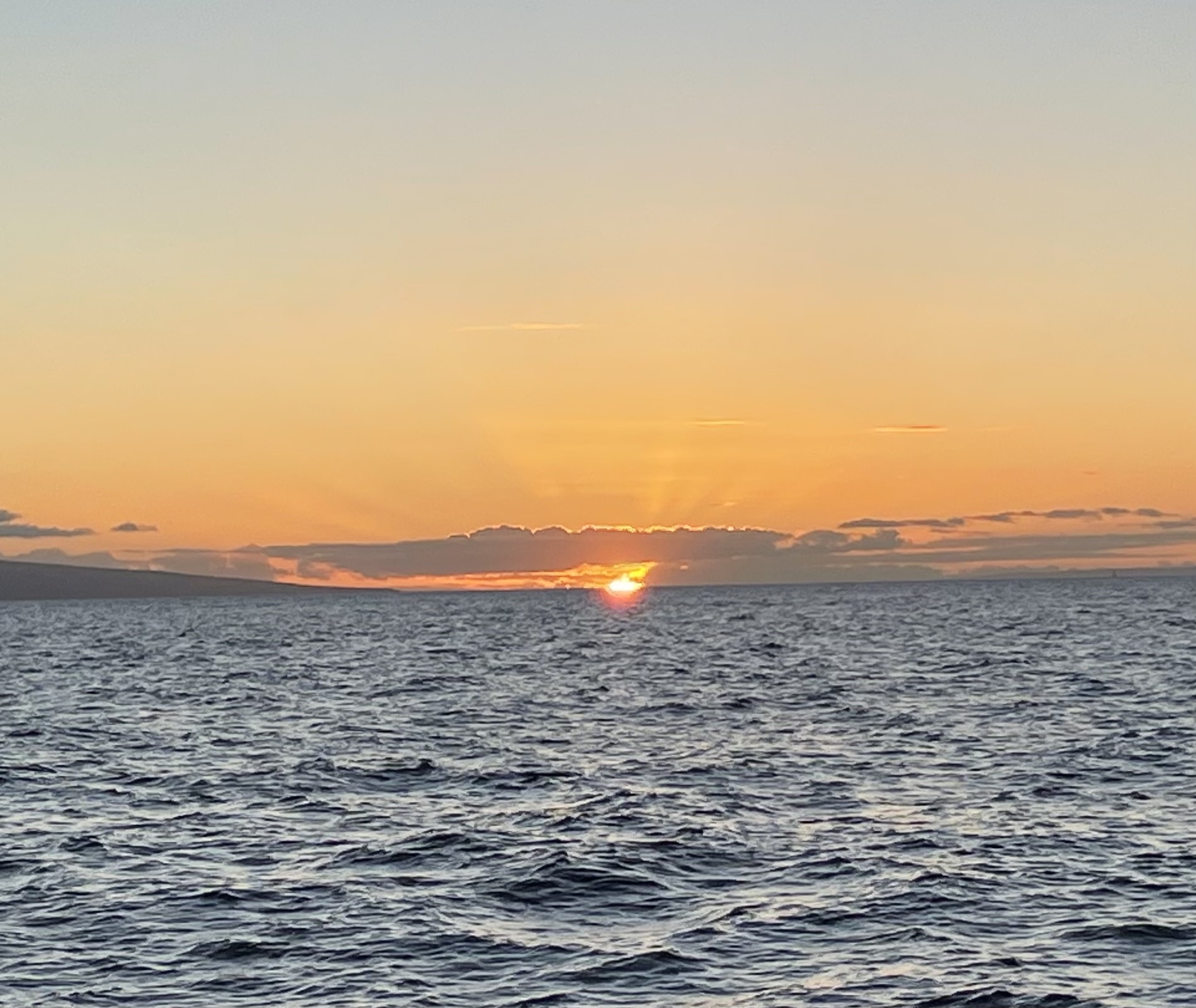
One night, just before the sun plunged into the sea with the western horizon a glow in orange and yellow above a navy sea, I remember asking my father, the scientist and skeptic, about and urban legend popular wherever the suns end it day by a plunge into the sea. I asked. “Do you think the green flash is real or is it just something that tourist boards make up to get the rubes to gather in one place so the locals can sell them trinkets.”  

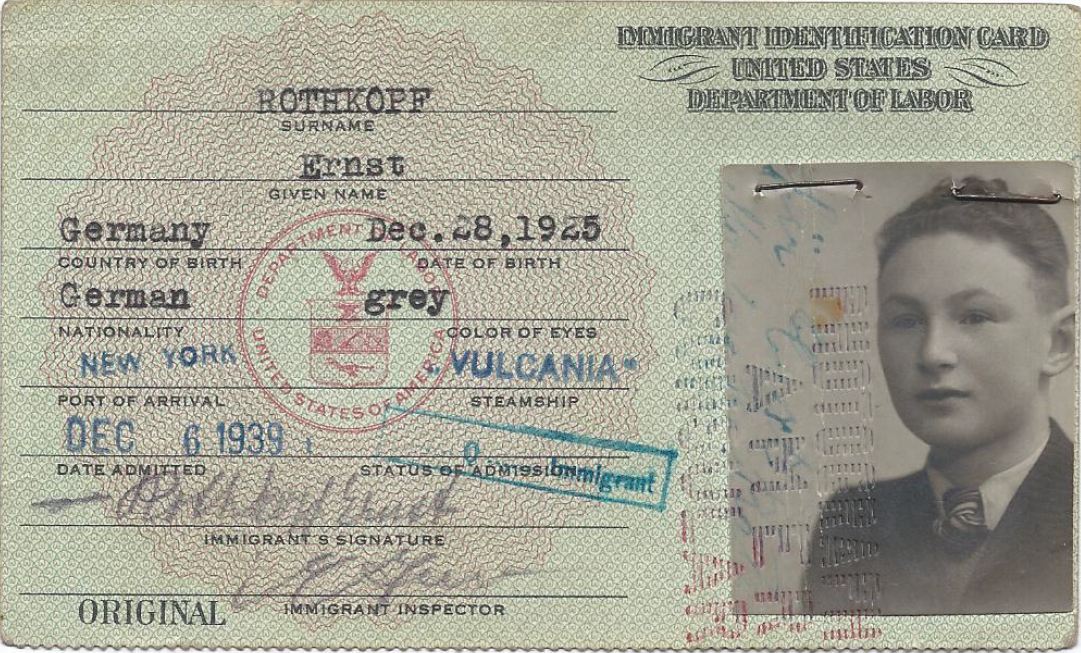
Dad is Viennese. Fleeing the Nazi’s, he had immigrated to the United States at fourteen.  He had never lost his accent.  As a consequence he sounded like central casting had placed him in the role of a scientist. Mind you, it was not something that I could hear. Unless it was a word like snorkel (schnorkel)  and the occasional “w” would come “v.” I thought he sounded like Dad but my friends could hear it so …He replied with his feint but distinct German accent “Wat is dis green flash.”

I said “I don’t know. Whenever I go somewhere like California or Key West, or anywhere they consider watching the sun setting a sacred obligation, I hear them talk about a green flash. Supposedly, it happens just as the sun dips below the horizon. I was just wondering if there is any science to it or it is a myth people made up.”

Being the scientist he was, a man trained to wonder whether the other side of white sheep were black, he said “Vell, vhy don’t ve vatch and see.” We spent the next few minutes in silence with only the quiet rustle of palms, and the occasional mewing of a seagull breaking the spell and watched the sun end its daily journey without apparent flash.

He said “Did you see a flash?”

“No.”

“Hmm. Neither did I.”

“So…”

“Vell’ he said with a twinkle of mischief “You know I cannot confirm it until I can observe the phenomenon but then again I cannot conclude that it doesn’t exist. There is not enough data so perhaps we should make sure to watch the sunset each night to see what we can observed. ” And we had both laughed. In fact, it had become a long-standing joke between us. Whenever I talked to him from California or anyplace where I could see a sunset he would ask “Did you see the flash.”

As I never did, I would invariably reply. “No.” To which he would respond “I guess you will just have to collect more data” and we both would laugh at our private joke.

It reminded me. I had not called my mother yet to let them know that I had arrived safely. I know. It seems a little age inappropriate for a middle-aged man to call his parents to let him know he arrived safely after a journey. My excuse is that it made them feel better. The truth is that it made me feel better. For the longest time, they were the only ones who truly cared where I was and was I safe. I pulled my iPhone and was punching in their number when  I heard “Uncle Danny, Uncle Danny.”

It was my nephew Liam.  6’4”,   and despite his twenty-eight a boyish face with rosy cheeks, dimples, and a beard that only needed to be shaved twice a week. Covid protocols be damned we gave each other a hug. . Not the back tapping, no body contact hugs of relatives at holidays and birthday celebrations but the full body contact, boa constrictor hugs suitable for the return of prodigal son, winning lotto or other life changing events. There were tears. Our journey over the last few years called for them as did the fact that it had been eighteen months since I had seen him last. During that time the world and our universe had been altered beyond easy recognition. 

He smiled down at me. If you did not know him like I did you would think it cherubic. But I knew what lay beyond that smile. Here was a man who over the last few years he had to make decisions and sacrifices that I had not had to make until I was well into middle age. He had gone through gauntlets that even cruel fiction writers would not have imagined for their protagonists. He had done so without an utterance of self-pity. No wo-is-me for him. He had faced each crisis as it came head on and while not always maintaining his composure, who could,  had gotten up every time he was knocked down. His resolve unbroken, ready to face whatever the next crisis was head on and often with a sense of humor.

Even though he was my nephew through convention, not blood, I had loved him since birth. However, in  the last two years I had grown to admire him as a person. I could not have been prouder of him if he were my own son.

I was not surprised to see him. I had arranged my flight to arrive at the same time as his. But somewhere along my fifteen-hour journey I had decided that I would make a quick exit at the airport and meet up with him and the rest of our fellow travel companions later that day. But, Hawaii had distracted me and made me forget my plan. And instead of getting a few more hours on my own, to build up my strength for what was to come, here he was.  

“It’s good to see you shrimpy.”

This elicited a big grin. I had been calling him that since he was a toddler and following me around the house on one of my frequent visits to his parents’ home. It was actually a simplification of my original sobriquet for him, “shrimp toast.” I don’t remember how I came up with that. It is not even an item that I usually included in my Chinese takeout order.  I just liked how it sounded and he loved having a nickname back then and when, as a teenager he began to sky above me,  it became ironic, and we both loved it even more.

“You too Uncle Danny.”

“Where is everybody else.”

“At the carousel waiting for the luggage. I saw you out here so I thought I would say hello.”

“You didn’t pack…” I said letting my voice trail off.

He laughed “God no…in a rollaboard. Couldn’t trust them to the luggage handlers.”

Smiling I said “And who said you were not bright boy. Listen, I am desperate to get to the hotel. I smell like a skunk and have some phone calls to make. Can I catch up with everyone at the hotel. Maybe cocktails and dinner?”

Waving his hand in front of his nose as if he had smelled something awful, he said “Yeah. Maybe that is a good idea. Let me talk to Emma and the others and I will text you “

“Okay.” I said grabbing my rollaboard and backpack and began walking to the taxi cue. I had only gone a few steps when I hear a shout “Uncle Danny, I am glad that you are here.” It is Liam’s brother, Duke. He is standing near the exit of baggage claim, and he is waving at me.

I grace him with the half smile the forlorn show to others when we want them to believe they are doing fine and yell back. “Where else could I be?”

I hate lines. Doesn’t everyone? My father once told me the reason he became a psychologist was the line to become a zoologist was too long. One of the only positives about the pandemic is that it has made lines more manageable, people no longer crowd together, and of course there are less people. The tax que is proof that. There is just me and a family of three, two teenage girls and a Mom, online. The girls are wearing, from what I can infer from the social media posts of nieces and nephews, typical travel outfits for their age group:  pajama bottoms, Good Mythical Morning T-Shirts and Ugg Slippers. Each has a black North Face backpack and burnt orange hard shell roll-a-board. They seem underwhelmed by their surroundings and very put out for having to wait for a cab. They barely look up from their iPhones.  Their mother, a petite woman wearing faded, low rise,boot leg jeans, a white embroidered peasant to, is doing her best to navigate the line with a large rolling suitcase and a dark blue Tumi backpack that is working double duty as purse and briefcase. She is very attractive.  Not in the glamourous way they depict in fashion magazines, all cheek bones and facial angles.  Instead it is the type of beauty that gets better with age. It looks like a face you could spend a lifetime staring at and never get tired of the view. She catches me looking at her and I blush when she smiles at me and gives me the smallest of head nods hello. In my embarrassment at being caught out I look down. When I raise my head, they are gone, and my cab is pulling in.

I put on my red KN95 mask and get into the cab, a late model  silver-grey Honda Odyssey. We drive out of the airport past a Krispy Kreme, Costco and Target and Safeway. It strikes me how “all-America” Hawaii is.. This was “paradise.” Yet, it looked like middle America. That was never my idea of paradise. In fact I spent most of my life trying to avoid anything that even hinted at being a part of the normal. I wanted to be a little different. Not that there was anything wrong with living a check list life of middle America. If that made you happy, I had no beef with that. But I didn’t think it was for me. Yet here I was, in Paradise, surrounded by the trappings of middle-class life. Perhaps I had made a mistake in my journey. Perhaps this was the way paradise should look.

I had read in the run up to this trip one of the biggest problems on the islands these days was housing. Not for the wealthy and the rich. There was an abundance of domiciles for them. However, for those who made the made the illusion of paradise work, the angels who tended bar, waited tables, who cleaned, collected garbage and sang soothing songs to the paradise seekers there was little affordable housing. They were forced to live far away from where they work, in developments that were built on the cheap.

Was it ironic of just sad that those who visit paradise live a better life than those who make it possible for them to be here? Why was I not surprised. It is the heritage of these islands since the time of Captain Cook. When he “discovered” the island he was reportedly greeted by surfing Hawaiians, many bare-chested women, greeting him the “aloha spirit” which according to an article I read “is the coordination of mind and heart within each person. It brings each person to the self. Each person must think and emote good feelings to others. It means mutual regard and affection and extends warmth in caring with no obligation in return.” Cook and his crew had little or no appreciation for the spirit in which they were greeted. Eventually the Hawaiians caught on and after a particularly egregious offense where the crew on orders from Cook, attempted to desecrate a burial ground and seize the king, the Captain was murdered and it a fit of irony, cooked.

After Cook came the bible thumping missionaries from New England. Often newlyweds, as missionaries were required to be married, packed eight to a tiny cabin, they  endured  a six-month journey around the horn and almost all arrived pregnant. Those logistics I have always found intriguing. What must it have been like for them. They had left a land caught in a mini-ice age. A place where literally one of the main exports was ice (Queen Victoria’s favorite ice came from Wenham Lake north of Boston) and arrived in a tropical paradise where the average temperature was in the 70’s.  Of course they set out immediately to spoil it. Nakedness was the first to go as it offended Christian morality and within fairly short order acquired most of the land rights from the natives who had little understanding of property ownership, deposed the King and established a “republic” and in the process wiped out much of the native population with the diseases they generously shared with the natives who had no immunity.

It reminds me of the book I have tucked away in my bag. “The Curse of Lono” by Hunter S. Thompson. I brought it with the intention to read as an homage to my friend Conor, Liam’s Dad. He loved Thompson and before cosplay was cosplay would don Hawaiian shirt, aviators and smoke cigarettes out of a holder when we were in partying mood. Since we were here to honor him, I thought it righteous addition to my luggage. I hadn’t opened the book yet out of fear of the emotions it might evoke but thinking of Cook reminded me of Lono. The Hawaiians had thought Cook was Lono. And one of the reasons that had for clubbing, stabbing and then roasting him was he was not who they thought he was. Always a disappointment when someone you know is not who you thought they were. But sadly most people are not who you think they are. They are projections of either your hopes, or fears, or both. Which really is not a problem until you realize that your impression of them is not real. As Dr. Thompson might have said “When the going gets weird, the weird get going.”

One of the symptoms of my Covid isolation is the amount of time I get caught up in thought loops within my own head. With little or no interruptions from human contact and other interruptions, my mind tends to wander like a meandering river. It is at best a badly designed time portal where time could either pass very quickly or seem hardly to move at all. It would be great if I had some control over it. But it seems to have a will of its own. In  this case, time had accelerated. The cane fields had melted away and replaced by the Hawaii of brochure, poster and Instagram posts. On my left was the Pacific glittering like a thousand diamonds and to my right steep, verdant, volcanic mountains. A sign tells me that Kapalua, my destination, is only eight miles away. 

I am headed to the Ritz Carlton, Kapalua. It is a wonderful if not magnificent hotel. Some even consider it one of the best hotels in the US. Why not? Located on a promontory overlooking the Pacific, the islands of Lanai and Molokai guests can see Humpback whales breaching from their rooms. Combine this with two championship golf courses, world class tennis facility, multiple pools, its own wildlife preserve, six dining facilities, a luxurious spa, and rooms that inspired you to remodel your bathrooms when you got home. Don’t get me wrong, I am a hedonist at heart and love the luxuriating that this type of resort has to offer. But considering what the pandemic had done to my business, it had all but evaporated, this was not the budget option I was originally seeking. I wanted to  find a small apartment on Airbnb or budget hotel but my vote was not considered.

Even if I had the capital the purpose of this trip was not a vacation. I had not come to Hawaii to spoil myself.  How could I?  The world was on fire. Despite the vaccine tens of thousands in  the US  were catching Covid every day, hundreds were dying.  It is not that I didn’t get why after sixteen months of lockdown why folks would feel the need to let loose and enjoy life in the best way they could. I did. I felt that as  deeply as anyone, but survivors guilt can be a bitch. It makes you feel guilty for enjoying what providence had blessed you with instead of savoring the things in life that had been denied us since March 13, 2021.

But six hundred thousand people were dead in the United States alone. . Thirty-three million had suffered through the disease only to face an uncertain health in the future. My conscience had a hard time justifying me being pampered and luxuriating when so many were still suffering and sacrificing.

I thought of my friend Alice Liddel . A pulmonologist, she had been on the front lines of the Covid epidemic. Endless shifts in ICU’s trying to save people’s lives. She had tried to describe to me what it felt like to know she was doing everything she could to save someone’s lives and knowing there was little or nothing she could do to save them. How it was made more difficult because her patients were dying alone because Covid protocols meant no visitors. The dying only had her and the other health care workers to comfort them as they suffered and then died. This would happen dozens of times a day with not enough comfort to go around. It ate at her soul like acid on metal. There was no respite for her. No comfort from her family as she could not risk infecting  her small children or husband. In war, soldiers who had been in battle were sent to rest camps where they could reset and decompress. Health care workers had none of that. They had no respite for a year and half. Shouldn’t they be here. Not me.  

I know. I should feel grateful for having the means and the ability to be here in paradise. And I did. But I could not shake the guilt. Nor the sadness.

Ironically, it was the sadness that brought me here. Sadness at the loss of my best friend Conor. He had perished six months into the pandemic. Not of Covid. Brain cancer had taken him. In his last days, he asked Liam and I to  take his ashes to Hawaii to be dispersed. The islands had been his idea of Nirvana and he joked the only way he knew he would get to heaven is if he would scatter his ashes there. At the time it had made me laugh in the sad way when a joke cuts too  close to the bone. When he died it had become our mission to grant his final wish.

And if I was being truly honest with myself, my reluctance at staying at the Ritz,  while certainly influenced by the pandemic and my feelings surrounding it had more to do with who had chosen the hotel and was to join us there: Delilah Peterson Kennedy. Delilah was Conor’s former wife, Liam’s mother, and self-made millionaire if that term applies to people who get large insurance payouts when their ex-husband, whom they helped kill, die.

We had once been great friends. Great friends. I had introduced her to her Conor. I had been there for the birth of both her children. I had taken weeks off from work when in the late stages of her pregnancy with Liam she was ordered to bed to care for her and baby “Duke” her first born. I had spent holidays in her home and spoiled her children with gifts, and experiences. And despite the fact we didn’t not share the same world view, she being a Fox News Republican, and I a MSNBC democrat, I had always tried to treat with respect and like a sister. Which is not to say that we did not have our disagreements. We did. One or two that had even escalated to the point of silence and benign neglect. Eventually, we would forgive each other. Perhaps not forget but forgive. That is, until a few years ago when a fuller picture of who and what she was revealed when after 32 years of marriage she had left Conor for a man that she had met online.

It was not that she was divorcing Conor that angered me. Shit happens. People grow apart over time. My buddy was not easy and had never been an angel. C’est la vi and all that. But as it turned out, she was not interested in merely divorcing him. Her goal was to destroy him. And in the end, she did. As irrational as it sounds, I blame her for the cancer that claimed him. After that, bridges burned, crops scorched, and prisoners executed. The idea of spending even a little time with her filled me with disgust and revulsion.  

None the less, I had to be here. That is what friends did. Or, at least that is what I believed. What friends do is show up. Always. Regardless of circumstance or sacrifice. You showed up. Explanations were not necessary. Excuses were not given. Sometimes you didn’t even wait for the invitation. You showed up. I had when Conor got sick. I was there when he was dying.  Now that it was time for the final goodbye, you showed up even if it meant being with a person whom loathsome was nicest world you could use to describe them.

Even if it meant spending time with a murderer and destroyer of universes.

Why was she running the show? She was, I had learned from bitter experience,  a master manipulator who when she didn’t get her way became an agent of destruction. Liam  didn’t have a chance against her. I never questioned why she was coming along on this trip. I knew. But I did ask Liam when he was letting her do all the planning and his response was “She wanted to” and “You know her Uncle Danny. It is just easier to go with it. Besides it is a great hotel. The type Dad loved. You know that.”  I didn’t have the courage to tell him that it was too expensive for me. It was off brand and embarrassing. So I shut up and do what friends do. I showed up.

Posted in Uncategorized | Leave a comment

84th Anniversary of Kristalnacht

Today is the 84th Anniversary of Kristalnacht.

We swore to never forget yet in recent days not only in the USA but around the world we seemed not to recall that lack of vigilance will make history repeat itself. .

Below is the memorandum my father wrote to his children so we would never forget. I share it with you so you will never let it happen again.

A MINOR MEMORANDUM TO MY CHILDREN

ON THE FIFTIETH ANNIVERSARY OF KRYSTALLNACHT,

NOVEMBER 9 AND 10, 1938

I don’t intend to make this a big deal literary effort or a weepy emotional debauch. I simply want to tell you what I remember about Krystallnacht. So you should remember as well. And if there are to be others like us, so you can tell them. Nothing big! Just a small and portable lesson about the planet we live on and the hazards of being a little different.

Krystallnacht did not start for me until November 10, 1938. I knew that von Rath had been shot by Gruenspan but I knew nothing about what was happening all over Germany during the night of the ninth. I was 12 years (12 10/12 ths )old and I was asleep.

I was still lying in my bed, at about seven on the morning of November 10, when there was loud knocking on our door. I heard my father and mother (your grandparents ) talking to some people. Several stormtroopers (SA) had come to arrest Jewish men. The entrance to our apartment was through the kitchen and all this was taking place in the kitchen. After a few minutes I heard one of the Brownshirts ask whether there were any other male Jews in the apartment. Grandma said only my little boy. I dont think they believed her because they came into our mainroom, where my bed was. I closed my eyes and pretended I was asleep. They came to my bed and they looked at me and they must have decided either that I was too young, or that I looked too fierce to mess around with since there were only six of them. So they took just grandpa with them and they left.

As we later found out, they took grandpa to the local police station. From there they marched him and others to the Rossauer Kaserne, a military barracks. He was lucky because he had a roof over his head. Many other Jewish men were taken to a large soccer stadium and did not have a roof over their head.

Grandpa had been fired from his regular job as a bristle processor a couple months before. He was earning some money by helping a carter hauling the furniture of Jews that had been kicked out of their apartments. The cart was pulled by one brown horse. Grandpa had a job scheduled for that morning.

Grandma sent me to help the carter in grandpa’s place. May- be grandma was a tough Hungarian cookie who did not want the Rothkopf’s reputation as men of their word sullied, or maybe we needed the money, or perhaps she wanted me out of her hair so that she and Aunt Mitzi ( who lived in the next apartment and whose son Walter and friend Albert were already on the way to Dachau) could weep in peace.

I don’t remember exactly where I met the carter but it was at his client’s apartment near the Jewish section of Vienna. We loaded the wagon with furniture. I sat next to the driver on the high bench behind the horse. Then the brown horse slowly pulled us through the streets towards the place where we had to make our delivery.

Groups of people were standing in front of the broken windows of Jewish stores, gawking while Brownshirts were putting their owners through their paces — handing over business papers, washing the sidewalk with lye, licking Aryan employees shoes clean. Anything that would keep the cultured Viennese crowds amused. We passed a narrow street that led to one of Vienna’s larger synagogue. The alley was jammed with jeering onlookers. Stormtroopers were throwing furniture and Torah scrolls through the big main door into the street. One side of the roof (I couldnt see the other and you know what a sceptic I am ) was afire. I remember very vividly the twists of whitish-yellow smoke that were curling up the slope of blue tiles.

Farther on we passed another synagogue that was fully ablaze. The police had made people stand back from it. I suppose they feared for their safety. A fire truck was parked down the street. The firemen were leaning against their equipment, talking and smoking cigarettes. Everywhere there were clusters of people, in a holiday mood, gathering around smashed Jewish stores. Little groups of Jews, both men and women, were being led along the sidewalk flanked by squads of SA men. The Jews were made to do all sorts of menial chores. Someone told me later, that one elderly Jew asked to go to the toilet. They made him go in a bucket and then forced him to eat his feces.

By now I was beginning to figure out what was going on. I sat high on my horsey throne (just like the Duke of Edinburgh when he drives his high-stepping pair, except that I didn’t wear an apron ). Whenever we passed a sidewalk event or other happening, I pulled down the wings of my nostrils (I thought I looked more Christian that way), staring straight ahead, but watching the Nazi street theatre out of the corners of my eyes. The driver, who was also Jewish, was a hard old soul. I dont remember him saying a single word to me, all day, about what was going on. Maybe he thought I was too young to hear about such things.

I dont remember much more detail. I got paid. The trolley I went home on was crowded. I kept staring out the window so that people wouldn’t notice the handsome Jewishness of my face. Beyond the rattling trolley panes, the peculiar happenings of November 10, 1938 were still in progress here and there, even as the day’s light was fading.

When I got home, grandma and Mitzi were still weeping. They had just come back from the police station but grandpa and the other Jews were no longer there.

Grandpa came home ten days later. He had spent that time in a room with 500 other people and one water faucet. They did a lot of military drill ( was this the beginning of the Hagganah ?) and exercises — push-ups, deep kneebends, and the like. Some who didn’t do so well got beaten up. He never told me whether they did anything to him. But then I wouldn’t tell you either. Grandpa was lucky. A lot of the Jewish men who were arrested on the 9th and 10th of November were sent to the concentration camp at Dachau.

Not one single synagogue was left intact in all of Vienna. That really screwed me up because I was nearly thirteen. You need to have a Torah to become a Bar Mitzwah and you need to have a table on which to lay the scroll while you read. And how was I to get a fountain pen now?

The dead, of course, are dead. They are mourned by those who remember. Tears dry. Bruises heal. Razed synagogues become parking lots. Injured dignity heals although slowly. What hurts most to this day is impotent compassion for those who were swept away.

In order to have faith in our quality as human beings, we need to remember! And thats why I am writing you this note.

Posted in Uncategorized | 2 Comments

I Am A Conservative

I am a conservative.

By definition that means a person who supports an emphasis on traditions and relies on the individual to maintain society.

A conservative is someone who supports a woman’s right to choose what to do with their own bodies without government interference, but because like or not the right to an abortion is a traditional value as it has been settle law for over fifty years.

A conservative would never force a ten-year-old rape victim maintain a pregnancy that would destroy her life and likely kill her nor prosecute a Dr. for assisting in the termination of that pregnancy. That is, the definition of governmental overreach.

A conservative is someone who supports a person’s right to love whom they choose. Government should not entangle themselves in people’s emotional lives. That is private and no one’s business but their own. It is also a traditional value. Homosexuality, queerness, bi-sexuality, interracial and inter-religious  (to name just a few brands of love) relationships have been around since Homo Sapiens first encountered Cro Magnon. The government should not tell us who we can love.

A conservative supports the constitution of the United States. They believe in country over party. They don’t believe lies never had any basis in truth and were rejected by sixty courts of law. A conservative would never support a person or group of persons who attempt to overthrow the government or interfere with the constitutionally mandated duties of congress.

A conservative does not believe that the United States has a national religion. They believe in the constitutionally mandated and traditional value of “make no law respecting an establishment of a religion or prohibiting the free exercise thereof.” A conservative would never say that we are a Judeo-Christian, Christian, or any other sort of religious country. We are by tradition and law a country that embraces all religions and eschews anything that does not separate church/synagogue/mosque/temple/pagan alter from state.

A conservative understands that the second amendment in its originalist form gives the right of gun ownership only for maintaining a “well regulated militia.” It is not so anyone, mentally undone, untrained, and not competent can legally buy a weapon of war and enough ammunition to keep at bay an entire police force while innocent children are being slaughtered on a wholesale basis. A conservative understands the hypocrisy of crying the right to life for a fetus yet not respecting the right to life of those faced with gun violence.

A conservative understands that there is a difference between an enterprise and an individual. Enterprises are run based on the needs of the few for profit. A country is based on the needs of the individual. Respecting the individual over corporations means a respect for privacy and the environment. That if corporations appropriate these rights, they not respecting traditional values or individual rights and should be sanctioned.

Winston Churchill once famously said “If You Are Not a Liberal When You Are Young, You Have No Heart, and If You Are Not a Conservative When Old, You Have No Brain.” (He was likely not the first to say this)  He was right. At least by my contemporary definition of conservative.

Posted in Uncategorized | Leave a comment

Lowenzahn Wein

It is 11:45 and we are in hotel room in Baden.

It is an unremarkable room in that it resembles most mid priced hotel rooms in Europe: It has very simple modern wood furniture, two twin beds that are placed directly adjacent to each other, a small table with chairs for writing postcards, a euro styled television and a frigio bar. There are no pieces of art on the wall. The door is open to a small balcony that overlooks a typically beautiful Austrian park with its well manicured lawns that you can not walk on and immaculately planted flower beds that seem always to be in season. This afternoon an ompah band entertained us with an hour and a half concert of Austrian classics and Broadway show tunes and this evening we had dinner at the Grand Casino that directly abuts the park.

It is quiet. The only sound coming through the open door is the sound of a passing car its tires crackling against the wet pavement. The smell of hydrangea’s and lilacs are wafting in through the open door. My father is restless in his bed. Instead of the steady stream of snoring that I normally would hear I hear nothing except the occasional rustle of his duvet as he tries to find a comfortable position. Sleep is eluding me as well. My stomach is still shaky, my mind still buzzing with the events of the day.

I was very happy to leave Sopron this morning. It was a perfect morning for drive with soft sunlight, a feint breeze and mild temperatures and I knew the Austrian countryside would be beautiful. But it is more than that.  My father has been very sick in this hotel. Whatever the gastrointestinal illness that first manifested itself in Vienna really took root here. He spent most of his time here asleep or in the toilet. The room despites its open windows has taken on the smell of a sick room and the bathroom lacking any ventilation whatsoever has a fetid evil smell somewhere between third world slit trench and an unclean litter box. I am convinced that the nausea and uncomfortable feeling that I have in my gut are from this place and that as soon as this place is in my rear view mirror the sooner that I will begin to feel better.

After I load our Opel Astra with our luggage I go in search of my father. I find him in the most unlikely of places doing the most unlikely of things. He is in the dining room eating breakfast.  I am not eager for breakfast this morning and for some reason I decide to watch him for a little while as he makes his way through the breakfast buffet. He is wearing a decidedly dad clothes, a light blue shirt of which he has so many and that he has worn for so many years that I secretly call it Ernie blue, twill pants that he has in a variety of khaki colors including the brown that he is wearing today, and dark brown half boots that he has had in some variety for as long as I can remember. It is an outfit that is neither in style nor out of style, practical and I decide that is as good a metaphor for my father as I can think of.

He is also not moving well this morning. His shoulders are stooped and he is bending forward at the hips. Instead of lifting his feet he is shuffling them a little bit more than normal. He is walking old today and I don’t like it. My pops shouldn’t be walking old. He should be standing straight up and walking tall like he is in my memories. These are things that we can fix through better exercise and stretching that he finds boring but will give him a better quality of life and I vow silently when we get back to the states that I will work with him on stomach exercises, and back exercises that should help him to regain his posture.  I know that the likelihood of my father doing these exercises in the way that they are supposed to be done and in the numbers required to really help straighten him out are slim but I also know that I have to try. I don’t want my Pops looking or feeling old. It implies too many things that I would prefer not to think about.

When I finally make it to the table I find my father fully engaged in breakfast. Not only has he picked up some picked some yogurt, cheese and breads from the buffet but he has ordered some scrambled eggs from the waiter. I am impressed but not surprised.  Impressed that my father’s recovery from this bug that had laid him low just a couple of days ago had progressed to the point where he would eat a substantial breakfast before getting into a car with no assurances on when the next rest stop would be. Not surprised because my father has always been a big eater. In fact, the thing that made him seek out medical help when he developed lymphoma was that he could not eat an entire sausage so I am happy that he is eating.

The waiter comes and asks me in Hungarian what I would like for breakfast. At least that is what I think that he has said as I don’t understand a word he is saying. I reply in the only words in Hungarian that I can speak with any sort of confidence “Coca Cola.” My father looks at me and asks “Don’t you feel well?” knowing that drinking soda, let alone Coke is not something that I regularly engage in.

I respond “No, no I am fine. I am just not that hungry and my stomach is a little queasy so I don’t want to push it. I don’t want to tell him that this morning that I was forced to take two Immodium and had nearly thrown up for the first time in nearly 20 years. I don’t want to tell him given my druthers I would be in bed asleep.  I don’t want our trip together to be about me being sick. I don’t want my father to feel like he has to take care of me. This is our chance to explore together and I don’t want to be the one who, excuse the expression, craps it up.

We leave Sopron on a route that takes us directly past the house my grandmother was born in. As we pass it I am filled with memories of her. How she always made me feel loved and complete. I thought about her hugs and how they made me feel safe. I think about how she smelled. I could picture her smiling at me and shaking her head in the way that she did sometimes. I think about that this is where it began for her and as a consequence for both my Dad and me. So as I drive by I wave and say “Good-bye Grandma.” I looked over and see my father staring at the red house as we drive by and I wonder what he is thinking. My memories of her are when she was older and life had taken its toll… From when she was a stranger in a strange land.  His memories of her are from this place and from a time where life had not extracted so much. And even though my grandmother has been dead almost 30 years I miss her and I wonder what it must be like for him to be without his mother for so long. Her funeral is the only time in my life I have ever heard him sob.

I know better than to ask him about his thoughts. He will only crack wise or make a joke. So instead I concentrate on my driving and leave him to his thoughts and for a while we drive on in silence.

We cross the Hungarian/Austrian border with barely an acknowledgement from the Guards of either country. Apparently, we do not look worthy of them wasting their time on and just like I do when I clear customs or enter a country anywhere, I feel like I have gotten away with something. It is a nice feeling and soon the car is speeding down A2 at 140km hours.

As on the trip to Sopron, my father is the navigator. He is blessed with a great sense of direction and the map reading skills the army teaches its officers. He has also been to this part of the world many times. So I have faith that he will get us to our destination of Fahrafeld. Still I think that our decision to take B and C roads instead of just the A’s has more to do with happenstance than planning just as I have no doubts that more than a couple of times we made decisions that took us farther away from our destination rather than closer.

It is sunny and warm and our windows are open and the smell of flowers and freshly cultivated fields fill the compartment of the car. Whether it is because of our stomach problems or the fact that my father and I have spoken more in the last three days than we have in years we are not talking very much. Instead we pass the time looking beyond our windows. We pass through vineyards with their meticulously kept vines greening and in bloom. .There are small farms that look dainty by American standards, with freshly cultivated tracks and farmers atop green tractors often wearing brightly covered overalls.  There are fields densly packed with yellow bright yellow flowers.  We pass through small towns that look like they belong more in n gauge train set than in real life.

At one point I comment to my father that everything looks familiar enough to be comforting but just different enough that we could be in an episode of the Outer Limits. But he is lost in some thoughts beyond the reaches of the car and does not respond so I drive on.  

We are in the hills now and the scenery has changed from farms and fields to meadows and trees. Not to far from Pottenstein which is the nearest town of any size close to Fahrafeld my father yells at  me “Turn right, turn right here” in the same tone he used to use when he was teaching me to drive. I do my best not to let his tone of  voice get the better of me but for a few minutes I am one pissed off 17 year old whose father is doing him no favor by teaching him how to drive. I slam on the breaks and still manage to make the turn a little faster than I probably should have.

My father realizes that the tone of voice that he used is not appropriate and as he has done so often in the past when this is the case, changes the subject. He says “ I know where we are now. You see that building up there on the hill, that is horticultural research station for the University of Vienna. I remember it from the last time we were here.”

He says this with satisfaction and there is also an element of excitement that I have not heard in his voice on this trip. So I ask him “Are you excited about going to Fahrafeld and he replies in a manner that is typical of him “I don’t know if you would exactly call it excited….”

I can tell that what is to follow is a discourse on the appropriate word for how he feels and I turn down the volume. I realize that this discussion is just a way for my father to mask his feelings. For whatever reason traveling to this place has brought more emotion to the surface than all of the other things we have done on this trip. More than seeing his best friend in the hospital; more than visiting the graveyards of his relatives; more than visiting the house his mother was born in. As he talks in the background I wonder why he feels so emotionally connected to this place. All I can remember him telling me about Fahrafeld  is that he used to go there to visit his Aunt in summer and it is the place he learned to love buttermilk a beverage that to this day he claims is the best drink in the world to relieve the heat of a summer day.

So after he has finished talking I say in my best smart ass way “You know I didn’t listen a lot to you as a kid, tell me about you and this place.”

So he reminds me that when my grandmother was very young her mother died. That her father who already had 12 children had a hard time running a household with that many kids and no wife so that some of the kids were parceled out to other relatives as was the custom at the time. Little Jeni, age 4, was sent to Fahrafeld to live with her Aunt Pepi her mothers sister. She lived their until she was 14 when she sent away to a technical school so that she could learn how to be a seamstress. My grandmother always thought of her Aunt as her mother so it was natural that when my father got too old to spend summer’s in the city that she would take him to her to spend the summer. He said that he would arrive by train in the early summer and not leave again until school was about to begin.  . He tells me that his Aunt Pepi was the only grandmother he ever knew and says this is a such a wistful voice and I know that I can not press further so once again we drive in silence for a while.

We come to a T-intersection and my father tells me to take a right. I look at the sign and it says Rt 212. When I suggest the irony of the Rt, 212 being the NYC area code, to my father and he just nods his full attention on the road ahead and trying to find Pepi’s house. The road is of the type that German performance cars were made for. It is narrow, winding, and well maintained. It is also quite picturesque. Along the drivers side of the road is a fast moving stream about 5 meters wide that you can see the occasional fly fisherman and fields full of wildflowers and what appear to be Dandelions. On the right side are small cottages, the Austrian version of a cape, in brightly colored hues and a mountain dense with trees.

After about 5 minutes we pass a white rectangular sign with the word Fahrafeld written on it.  Almost immediately upon passing into the town the road becomes canopied by trees on either side. The houses become more frequent and my father, who is normally calm to the point of stoic, is visibly agigtated and keeps telling me to slow down. I look in my rear view mirror and see that a long line of traffic has built up behind us and tell my father that I really can’t slow down much more. This news is greeted with a harrumph and visible annoyance. The town itself is beautiful with small cottages and what can only be described as chalet’s in various bright colors densely populating the right hand side of the road. On the stream side it appears that they have created a small park with paved paths and flower beds. The town does not last long. A couple of minutes at most and before too long we see the same white rectangular sign with Fahrafeld written on it only this time there is a red slash going through it.

My father who was agitated before is now quite upset and  I can tell by the way he tells me to “turn the car around” that he is royally pissed off. I see a picnic area on the right hand side of the road and I pull into it hoping to use it as a jug handle to turn around. I don’t want to drive with my father this annoyed. I don’t want to have an argument with him and I know that in his current state the 17 year old in me could come out at any moment so I pull the car over and park. He barks “What are you doing?” and I respond that the scene in front of us….a grassy meadow dotted with dandelions, a farmhouse with a red roof surrounded by trees, framed by a mountain in the background…is lovely and I want to take a photograph. I take my time and probably more photographs than I should but the result is what I had hoped for as my father is visibly calmer when I re-enter the car.

I try to go slower as we go back through town but the road is a very busy one and before too long there is once again a long line of traffic behind us. When I see in the middle of this village a place to pull over I seize the opportunity.  My father is looking around and tells me in a very disappointed tone that he thinks that we may have come all this way for nothing as he can’t spot his Aunts house and that he is afraid that it might have been torn down. I can tell that he’s upset and wish that I could find the words to comfort him but I can’t so I remain silent.

He says you see that over there. I nod. He says that is a war memorial and lists the names of the dead from this town. One of the kids I use to play with as a kids name is listed there. As I pull back onto the road, I think about how bizarre a world we live in. How two childhood friends could end up on either side of a war and one makes it and the other does not. It reminds me of how random life is and as always I am disturbed by this.

I am broken out of my thoughts by my father yelling at me to pull over. Luckily, just beyond a small bridge passing over the stream,  I spot a place to pull the car off the road and park.. My father points at a light blue house with a red tile roof and only windows facing the street and says “That is your Aunt Pepi’s house….they have clearly renovated it but that is clearly her house.” His tone of voice which just minutes earlier had been harsh and upset is now that of relief and delight and I can tell that seeing this house has transformed him in a way that I can’t imagine.

We both get out of the car and study the house from the distance. My father is wearing his signature Ray Ban Aviator sunglasses so it is hard to figure out what is going on inside of him but there is a whisper of a smile on his face so whatever is going on I suspect is a good thing.  As I pull my camera from the backseat so that I can take photographs of the house my father turns and walks towards the bridge. My fathers steps are small and deliberate, probably  the result of the long drive, and it upsets me to realize that he is walking just like the octogenarian he is.  I snap a few photos and when I finish my father  is turning the corner onto the bridge and disappears from sight.

I hurry to catch up with him but when I turn the corner my father is no where to be found. Instead I see a 10 year old boy standing in the middle of the bridge, surveying the scenery, as if he were a Prince and this was his own private kingdom.

The boy finished with surveying his property walked over to the rail and scoops up a hand full of small rocks that lay near by and begins to toss them one by one into the rushing stream below. I stare at the boy not quite sure of what to make of this transformation. He is wearing a dark blue polo shirt with khaki shorts and brown ankle height shoes that laced all the way up. Not too different from what my father was wearing this morning but dated as if you would see the clothes in a black and white photographs whose edges were curled and worn.

I walk up to him and lean across the rail. Below the water is running rapidly over smooth rocks and the babble of the water is loud but soothing. For some reason I am nervous to speak, as if by saying something aloud will make this apparition disappear. So for a while the boy and I just stand, our faces warm in the spring sun, and watch the water disappear under the bridge. Finally, the desire to talk to this boy who will be my father is greater than my fear of his disappearance and I ask “What is the name of this river.”

He replies “It called the Triesting” and then points and says “Look over there by the rock in the center of the stream. Do you see the trout?” I look to where he is pointing and I see what appear to be two golden trout, nearly camouflaged by their background and the glint of the sun off the water. We watch as they make their way upstream and out of sight. Eventually I ask him “Do you ever go fishing here?”

He replies, in the gushing way that 10 years old speak when they are particularly excited about something, “I don’t have a fishing poll and neither do my friends so we can’t really fish here but” he says pointing to place just beyond a field of tall grass and dandelions “over there is another smaller stream. My buddies and I sometimes go over there where the water doesn’t move so fast and you can straddle the brook, and we make a noose out of wire. We wait until we see a fish and then we dip the lasso in the water and just at the right moment  we pull on the noose and we catch ourselves a fish.” He looks up at me his chin sticking in the air and proudly adds “You don’t think it can be done, but it can.”

I have no doubt that it can be done because if this little boy says it can, it can. Instead I think about how tempting those fish must of have been to him and his friends. I imagine the serious conversations and the plotting he and his buddies must have had to devise a plan to catch the fish and the arguments and eureka moments that must of occurred while they perfected their device and how to use it. I can only imagine how proud they must have been when they caught their first fish and I wonder who they showed first and what they said to them.

And then I too am struck by a memory. I am very young and my father, brother and I are going for a walk through the woods together. It is very green and the forest so lush that it blocks out most of the sunlight but the path is clear and we eventually make our way to a wide but very narrow stream. My father helps my brother and I take our shoes and socks off and we wade into the cold water. Picking up some stones my father begins to make a small U shaped structure with the open end in the direction of the oncoming water. He tells my brother and I that these are minnow traps and says that the fish come with the flow of water and can’t make it back out due to the current.

I am broken out of my reverie by the ten year old asking “Do you want to go for a walk?” I nod and we begin down to walk a dirt path that I would have sworn was paved just a few minutes ago. He points ahead of us and says “That’s the canal.” And sure enough just a head of is a slow moving span of water that I don’t recall seeing on our drive into town. Nonetheless we walk along it for a short while until we reach a wooden dock. The boy takes off his shoes and then unwraps a piece of cloth that is wrapped around his foot like a bandage, and dips his feet into the water.

I ask, pointing to what was wrapped around his feet, “What are those?” He replies unabashedly that his Aunt Pepi made them for him. That he didn’t have any socks so this is what he put around his feet to protect them from rubbing against the leather of his shoes. I nod not quite comprehending what it must have been like to grow up without socks. When I was a kid they always seem to be disappearing into my shoes.

I take my off my sneakers and we both dangle our feet in the cold water of the canal, and we bask in the sun like two turtles on a log. Accoss the canal the breeze slowly moves the grass in the meadow. I ask him “What do you all day?”

He tells me that sometimes he helps the local shepherd take the animals from the village up to the meadow. I must of looked confused because he explains that “His Aunt Pepi had an arrangement with the local shepherd to take him along when he would take the animals of the town up to the pasture  . In the morning the shepherd, who was some young guy from the village, would  pick up the local livestock and take them up to a place where they could graze. Then sometime in the late afternoon they would walk back into town with the animals and drop them off one by one at people’s houses.

I think about what a practical solution this was for everyone. How folks around there were not farmers but they had livestock to supply the with basics like milk, meat and fabric but none of them had enough to warrant having a shepherd of their own so theirs was communal. How practical too for my father’s aunt. She must of have been in her 70’s back then and having a 10 year old running around and underfoot must have been quite a challenge so she invented a day camp for him…very different from my day camp experience…but camp none the less.

Thinking about my own favorite experiences at camp I asked him “What did you do for lunch.” He tells me that his Aunt would put together what ever she had in her larder for him. Perhaps a hunk of cheese, maybe a piece of salami and some bread and if was really lucky a piece of hard candy and she would wrap it all in a handkerchief for him to carry. The idea of lunch wrapped in a handkerchief seems so foreign to me but this was time and a place before lunch boxes or paper bags and I think about the mountain of little conveniences that separate the past from the present.

I ask him what he does when they get to the pasture and the little boy tells me proudly that a lot of the time he helps the shepherd take care of the animals. I imagine this little boy herding cows, sheep, and goats….running after them, keeping them from wandering off  and from harm, watching for predators, making friends with the animals. I think about how different that this must have been from his life in a fourth floor walk up in Vienna, where he slept in the kitchen, and the bathroom was not in the apartment but down the hall. How different it must have been walking the peaceful paths of Fahrafeld from the streets of Vienna ever more dangerous with burgeoning anti-Semitism. I  know longer wondered why my father, the city kid, ever considered becoming a Zoologist, or is so kind to animals or when he is a jovial mood says in his retirement he would to raise goats.

I remark that even with all the things that he  helps the shepherd with that there must be a lot time that there is nothing for him to do and I ask him what he does  then. He tells me that he goes off exploring in the woods. That he goes and finds new paths and new places to see in the forest. That he goes looking for birds and animals and that sometimes if his friends have come with them they play the cowboys and Indians that  he has no doubt read about in books he loves. I smile at him and ask “Do you ever get lost?” He replies with the confidence of every ten year old “Never!”

And I think about the countless hours I have spent with my father in the woods. The hikes we have taken…the animals, birds and plants that he has pointed out for me. I remembered  when I was ten and my father, brother and I were hiking in Humboldt National Forest and we had gone far from camp and I told my Dad that I thought we were lost and he had told me in absolute confidence not to worry. I believed him then but now know where that confidence has come from.

I also remember the father’s day five years previous at Skilak Lake when I left my father behind to climb a trail. I wonder what the ten year old I am now sitting with now thought then. I realize how painful  it must have been for him not to be able to take that walk and the funk I felt in the Alaskan woods return for a moment.

The boy says “You want to walk over to the train station.” I nod in agreement and walk down the dusty path our shoes dangling from our hands. I ask “ Do you come here by train.”

“Yes. When it gets warm in the city my mother brings me out. We sit in the back of the train, in third class and it is not so bad unless its really hot and gets really stuffy back there.”

“Can’t you open a window?”

“No, Muti won’t let me. She is frightened that the sparks from coal fire in the engine will light her hair on fire.”

I smile at him and say “Does she stay here all summer with you?”

He shakes his head and says “No. She has to work so she just comes sometimes for a few days. And you want to know a secret? I think I may have some psychic abilities! Sometimes when I hear the train whistle blowing in the distance I try to concentrate really hard on whether or not she is on the train and if I think that she is I will run down to the station to greet her and I almost never wrong!”

I think about the first summer I spent at camp and how I missed my mother and have no trouble imagining how tender and sweet those reunions must have been. How it must have been pretty lonely for both mother and child to be without each other without phone or perhaps even mail to comfort them. I also wonder about this boy’s talk of psychic ability. My father, the scientist, has never talked this way yet I find it very believable.

It is February 1979 and I am in Syracuse, New York.  The night before a snow storm had rattled my windows all evening but it isn’t the storm that has gotten me up so early. It was quiet now a thick layer of white snow lay every where silencing the normally busy apartment complex where I live. I am up because during the night I have an amazingly realistice dream that  has disturbed me. My grandmother Jenny visited me in my sleep and told me that the art deco garnet ring that was my grandfather’s,  and was given to me my dad,  which had been lost since my return from Christmas break, is underneath the front seat of my car. In a stupor and still in my pajamas I walk through the snow drifts to where my orange VW bug is parked and proceed to look where my grandmother has told me to despite the fact that I have looked there before. The ring is exactly where she said it would be. I am surprised and stunned but most delighted that I will not have to tell my father that I have lost my grandfahers ring. I put it on and walk back into the house.

I am sitting on my couch, drinking my first cup of coffee and admiring my ring finger when the phone rings. It is my brother. He is calling to tells me that sometime during the night my grandmother has passed away.

We stop just shy of the train station. It is a simple structure of dark hewn wood with a small home next to it. I have no troubles imagining a steam engine pulling into the station  nor the warm embraces of a mother and son.

We turn around and walk back the way we came and I ask the little boy what he does at night. He tells me that because of the mountains in the west it gets dark pretty early around here so that he usually just goes home and has a simple meal with Aunt Pepi and goes to sleep on a horsehair mattress that she has set up for him. Knowing the curiosity of the boy and of his love of books, I ask him if he reads before he goes to sleep. He says he sometimes does but it is hard becomes his Aunt’s house is without electricity and is only lit by oil lamps.

In the distance I hear the sound of bicycle bell ringing. “Tring Tring Tring Tring”. The ten year old looks up at me and says “It is the ice cream man! Aunt Pepi gave me a some money in case he came today. Would you hold these for me” and with that he hands me his shoes and goes tearing down the path and over the bridge to main road. I watch as a man riding a rickety bicycle with a brown wood case hanging in front of the handle bars  comes to stop in front of the boy. They talk for a little bit and then the man opens up the case and after a few seconds his hand emerges with an ice cream cone that he hands to the boy. The boy walks slowly back constantly licking at the cone so by the time he reaches me it is almost gone. He offers me a bite and when I decline he pops the rest of the cone into his mouth and I hand him back his shoes.

We walk slowly towards the bridge. Along the way I stop and turn around. I want to take a photograph of the train station, as the light is hitting it well. I begin to frame the picture in my lens when I hear from behind me “Bastards!” I spin and look and the ten year old is no where to be found. Instead my father has returned. He points to a telephone poll and shuffles away. I approach where Dad was pointing, and see scrawled on the side of the pole a freshly drawn swastika.

We are back in the car on the outskits of Baden. We have not talked much in the 45 minutes since we left Fahrafeld, both of us lost in our thoughts and reflections. Finally my father says “I hope you don’t mind but I don’t feel like visiting cemeteries today.” I reply that I don’t much feel like visiting cemeteries either but that I can’t remember who is  buried here. He tells me that Pepi’s husband is interred here.  I pause before I ask him the next question not knowing if this is a question to far, and then I say quietly “What happened to Pepi?

He replies “By the time we left in 1939 Pepi was too old to take care of herself anymore so she moved to an old age home in Vienna”his  voice trails off a little bit and finishes with “We had to leave her there.” I say nothing more. I know what the Nazi’s did to old and infirm jews. They were the first to go into the ovens. 

Outside our hotel windows we can hear the sounds of a group of people walking along the street. They are a little drunk and speaking too loudly and although I can not understand a word they are saying I can tell that they have had a good time this evening. I roll over and turn off the light and for a while just lay on back and hear the party goes recede into the distance.

I hear my father roll over and he says ““You know Paul, it really got to me today at Fahrafeld. It is gone for good….never to come back.” I can think of nothing to say to comfort him or the ten year old boy I had met early that day so I just rub his back until we both fall asleep.

Posted in Uncategorized | Leave a comment

The Green Flash

Five years previously, I was in my car driving my mother to a radiation treatment for her lung cancer when my phone rang. As you can imagine the mood in my car was less than light. I guess some people put on a false front when facing treatment for a disease that has a huge chance in causing your demise, but Mom was not one of them. It is not like she was overly morose or weepy. She was tense and brittle  anticipating her treatment and when I saw that it was Delilah on the phone I thought speaking with her would be a good way to ease the tension. To move Mom’s and my thoughts from disease and death to something lighter and distracting. I answered the phone on speaker. I had barely gotten out “Hi D “ and had not warned that my mother was in the car when she laid into me. Apparently, she had just gotten off the phone with Conor Jr.,  then a sophomore at MIT,  with whom she had just had a knock down drag out fight and for a reason I could not fathom at the time, blamed me for argument.  He had, she said told her that her listening to Fox News was rotting her brain and that her political opinion was racist and woefully ignorant. That her view of Christianity, steeped in the megachurch evangelical community in which she had immersed herself were both heretical to the true precepts of Jesus and hypocritical. That she preached love and understanding but practiced hate and intolerance. She screamed into the phone “You did this to him. You and your New York point of view have stolen his values from him.”

On my back heals from a verbal assault I didn’t see coming and knowing full well what New York point of view meant when dealt by a viewer of Fox News I elegantly responded, “What the fuck do you mean by that.”

“You and your liberal ideas that you put into his head. All those Jewish ideas he gets from the New York Times and other anti-Christian media. It has turned my son against me. I never should have left him into our house.”

I guess I could have been a good Christian and turned the other cheek. But as she pointed out I am Jewish, a son of a holocaust survivor and someone who has had to fight against insipient antisemitism most of my life. (They called me matzoh king of the Jews in High School) her triggered nothing but anger and rage.

“Who the fuck do you think you are calling me on  the phone and accusing me of corrupting your son and blaming Jews for corrupting his values. Are you insane? You spent every day with him for twenty years and suddenly I am the problem and Jews are to blame. You talk to him every day and I maybe speak with him once the month and his opinions and thoughts are my fault. Perhaps it would be more useful for you to take a look in the mirror than call and yelling at me while I am taking my mother to radiation therapy.”

“I don’t need to look in a mirror. I know where he got these anti-Christian ideas from. Whenever you would come to visit I would spend weeks trying to deprogram him and Finn from your ideas. I told Conor I never liked having you in our home.”

I flashed red. Not necessarily a great thing to have happen when you are driving a car. But this was too much. I always thought I was the welcome addition to their house. Uncle Daniel. The guy who took care of Delilah when she couldn’t get out of bed for fear of losing her baby. The Uncle who bought the kids their first hot fudge Sundae. The man who got took them to Yankee Stadium with tickets behind home plate on the rail. The guy who whenever he came to visit would take the family to Morton’s or Chops or some other fancy restaurant for an opulent meal not just for fun but to teach them what to do when they went to fine restaurants. The link to their roots who reveled in telling the boys stories about their grandfather because they needed to know, and I wanted them to know, about their legacy. Now this woman, whom I had introduced to her husband is telling me that I was never welcome in her home.?”

“You know what Delilah. You don’t have to worry about that anymore. I will never set foot in you home again. “ And then  I had the good sense to hang up. There was silence in the car for a few miles and then my sweet, Ferragamo wearing loafer, never leave the house without putting on lipstick mother said “What a cunt.”

I called Conor later that day and told him what had happened. I said “This is all kind of fucked up. I don’t need to tell you why. You get it. And she can be as mad as me she wants even if it is stupid and fucked up. But man, I can never stay in your house again. Never. Not because of animosity or anger. But because if she has been harboring all this hate for me for years, and saying nothing, how can I feel welcome when I know somewhere lurking beneath the surface is this hostility. Can’t do it.”

He replied, “I will take care of it.”

Later that day, I got a call from Delilah. I didn’t answer it. I let it go to voicemail. Her message was a tnon apologies,  apologies.  She said that she was sorry for the tenor of the conversation but that she meant what she had said. As she didn’t ask for forgiveness, I saw no reason to speak with her. My relationship with Conor didn’t change except I never set foot in his house again. My relationship with his boys Conor Jr (Con) and Finn continued through emails, texts, and the occasional visit I never saw Delilah again.

That is until four years ago at my wedding.  

In 2012, I was in desperate need of a break. I had spent most of my free time over the previous two years being a caregiver for my father. In 2010, he had fallen and injured himself so badly that he could no longer walk. A pattern of hospital, rehab center, home had developed where I became the child that helped both parents cope driving them to Dr’s appointments, or taking Mom to the hospitals and rehabilitation centers, or just sitting with my father and talking. It was traumatic. Not only dealing with the inevitability of your parent’s mortality on a daily basis but dealing with the indignities that they were forced to deal with wiping your old man’s ass or changing his catheter. And even though Dad’s constant refrain was “Don’t break your ass over me” and my always reply “Don’t worry it is already cracked” It ground me down like a knife that had been sharpened too many times and could no longer keep an edge.

Then the Costa Concordia hit a rock and sank off the cost of Italy killing 34 passengers. It made great video footage and all the news outlets covered it extensively. I had never been on a cruise before. Never had any desire but for some reason I decided to check the Costa website. I thought that due to the tragedy that their cruises might be bargained price and afford me a champagne vacation for beer prices. I was right. An 18 day cruise from Santos, Brazil to Savona Italy all inclusive with a balcony stateroom was less that $1,500. I booked it on the spot hoping that it would restore me and give me the opportunity to find a little bit of the joy that had been knocked from me over the last couple of years.

I was not expecting to find a wife. But I did. On the third night of the cruise I was seated next to a stunning Brazilian lawyer named Nadine and by the time we said our farewells at the end of our cruise I knew that I had found my great love. An intercontinental romance had commenced punctuated by the deaths of both of our fathers and long flights between Rio and New York City and culminated 9 months later in a proposal of and acceptance of marriage.

We decided to get married that summer, in my parents’ backyard,  among a select group of family and friends. I asked  Conor to be my best man and for the boys to be there for their “Uncle’s” big day. I knew, of course, that this meant that Delilah would have to attend. At that point it had been almost five years since we had talked. I figured the scar tissue over the wound had healed enough at that point those whatever uncomfortable feelings we had for each other had faded into whisper. And by and large I was correct. She, besides being a little bossy with Nadine, she was helpful and thoughtful. And the good will produced by that wedding allowed was enough to allow me to be here in their new home.

I am not saying that the animosity had subsided. A bell once wrong cannot be un-rung. But it was enough to reduce it to a minor case of tinnitus.

“Nothing Del” I said “Your husband and I were just discussing whether or not the green flash exists or whether or not it is myth invented by hippies and drug dealers to get us to stare at the setting sun. What do you think?”

She made no move to embrace me. Perhaps it was the oversized glass of red wine in her hand. Or perhaps some other unspoken reason. It didn’t really matter but it made for an awkward moment that was only relieved when she took a seat on one of the deck chairs on the side of Conor farthest from me. Her welcome, or lack thereof, made me realize that Conor’s insistence that I stay with them, was his idea and not embraced by Delilah. I was thinking how awkward this was going to be over the next few days when she said “People around here talk about the Green Flash all the time. You always see people walking out to the pier at sunset to watch it. Our neighbor Phyllis, she and her husband sit have cocktails every night on their deck and watch for it. “

“But have you ever seen it?”

“Well, no but….”

“That is what I was telling Conor. It is hooh-hah designed by some chamber of commerce to get people to come to the beach and spend money at their stores and restaurant” I said with what I hoped was more than a touch of snark to my voice.

I could tell from the nearly invisible smile on my buddies face that he had heard my comments the way they were intended. I was throwing a verbal hand grenade into the room and seeing what would happen. Or said another way, just adding a little spice to the conversation to make it more lively and fun. It was an element of my sense of humor. An element I might add that was shared by Conor and had been honed in us by Conor’s Dad who loved to inject a bit of contrarianism or fit of fantasy in a conversation for fun. I had forgotten than in this regard (and dare I say many others) Delilah lacked a sense of humor.

She replied with earnestness “Well, it just has to be true. Phyllis would not make it up. She has lived here all her life and she says she had seen it. So I believe her.”

Conor chuckled. I may have too. Which I could see instantly was a very bad idea as Delilah’s face turned stormy. Rule one should be “never tease your hostess.” Especially if she doesn’t particularly like you, has little or no sense of humor, and you get her husband to join in. Her voice tinged with ice said “Well, why don’t we just sit and watch and perhaps then  you will see that you have been wrong.”

Posted in Uncategorized | Leave a comment

The Green Flash

Chapter 1:

“The green flash should happen at any moment.”

The speaker of that line was my best friend, if people still use that phrase,  for the past 45 years, Conor Sean Kennedy. We were on the deck of his apartment in Manhattan Beach watching the sun make its terminal plunge into the Pacific. This view, the nightly reverence for the final moments of the day was still new to him and in he was showing it off in the proud way a friend might show off a new car. The intention was not to rub your nose in how wonderful his life was but to share delight (excuse the pun) in where his life had taken him. He had reached a new pinnacle in his life and he was savoring it.

I understood. After all isn’t that what best friends are for. To share in and celebrate each other’s successes. I also knew that it was all new to him. This view, the apartment, the city and state still had a new car smell to it. They were all just weeks old.  A month before he and his wife had been empty nesters in a McMansion in a suburb of Atlanta. Running a second phase start up in the tech sector (I was never quite sure of what they did) that was struggling to find traction when out of the blue a former colleague had invited him to join Lloyds of London and head up their west coast business. The job carried with it the stink of prestige,  a huge salary and overall package that could make him a wealthy man in just a few years

When he had first told me about the job, I knew he would take it even though that decision was less obvious to him. He had invested so much time in his startup that he was reluctant to leave despite the business having seriously drained his bank balances. He had a streak of stubborn in him, always had, that made him believe that given a little more runway, a little more money, his foray into entrepreneurship would make him wealth as Mark Cuban. But the boy loved prestige. It was baked into him from our days of growing up in a tory suburb of New York City. His father had been a President of a small securities firm and the life he had was that of entitlement and privilege, two things that don’t necessarily greenhouse entrepreneurs. Working for the most well-known company in his industry was something that appealed to his ego. I am not criticizing. All of us have egos and while Finn’s was more developed than most, I think most would of us would feel boosted by landing one of the top jobs in our profession.

I also so knew from our near daily phone calls that he missed the perks that came with corporate life:  big salary, ridiculous expense account and worldwide first-class travel. All things he used to have and had lost when after a series corporate merger he had lost in the adult version of musical chairs and was forced out of his company of 20 years. He had received a great package and ventured out to set the world on fire with his business and investing acumen. Not only because he felt he had the skillset for it but also, as he once put it “to prove something to those motherfuckers.” He had not failed in that goal. He had survived. But he hadn’t succeeded either. In addition to the inner sense of failure you get when you don’t achieve as much as you had hoped  to.

If our high school yearbook had a category “most likely to move to California” Conor would have won in a runaway. He was blonde, handsome, glib, charming and with a near constant horniness that sabotaged any effort he would make towards more serious relationships. He also worshipped the sun, the beach and the water in the way an acolyte would a deity. He loved nothing more than going to the beach,  slathering on Coppertone dark tanning oil (despite his Irish pale skin) and spend his days body surfing, and admiring bikini upholstery.

The chance to live in California, by the beach, and live the life he always dreamed of I knew would be irresistible.

I felt, like he did, that it was his destiny to be here.

“Bullshit”

“What is bullshit.”

“The green flash is bullshit. It is in the same category as green sparks from wintergreen lifesavers chewed in the dark. A modern fairytale. Doesn’t exist. A myth created so people feel justified in watching the sunset into the ocean.”

“I have seen it.”

“Sure you have…show me a picture.”

“I am sure I can find one on the internet.”

“Yeah, and everything on the internet is certainly true.”

At this point, we were both chuckling. He with the deep belly laugh that he had inherited from his father and my own laugh come from that deep inside place where real amusement grows. Our exchange was a summation of our relationship where neither one of us took each other so seriously that we would accept without question what the other said. In fact, it was more likely to be the contrary, where we would find a way to poke a hole in the balloon of our pretension. Not of meanness, but to remind us that we each knew each other to well to try to bullshit each other. Or at least that is what I thought.

Besides busting balls is what men  do to show affection.

“What are you two boys laughing at?” Conor and I both turned to see Delilah standing at the sliding glass doors that separated their apartment for the deck. I immediately stood up to greet her. She had not been at home when I arrived an hour ago, which if I were to be honest, I was grateful for despite the fact that she and I had once been great friends.

I had met Delilah shortly after I had graduated from Syracuse. We had both been accepted in IBM’s legendary sales training program. The program and job were everything that I could have hoped for back then. A salary that was way above what my peers were receiving in their first jobs, training that would be useful regardless of what path I took in life….the ability to sell people on  ideas and concepts is useful whether you’re a rabbi or a lawyer and at the time, the largest part of the job was sitting in a classroom learning the IBM selling technique and memorizing the FAB (features-advantages-benefits) of the product. It provided a lot of time to daydream which I was particularly adept at especially when it came to contemplating the few women who were my class. By the nature of the selection process, which while enlightened for the day, still had a long way to go as far as rooting out sexism, the females in our class were selected not only for their businessmen acumen, they were aggressive and smart, but for their looks. In both areas, Del was top of the class. Tall and slim with the Nordic features and flouncy shag cut hair that seem to define that era’s “it” girls, I thought I could sense a “wildness” underneath the modestly cut, shoulder padded, business suit with matching Pirate blouse with built in oversized bow tie.

 I made it a mini mission to take her out a date. I was not particularly slick in my attempts. That was not my most developed skill set. But what I lacked in style I made it with sincerity which is why I was almost always thrown in the friend zone.  I kept asking her stupid questions about material we had in class or ridiculous questions about the future of the technology we were using (Fax machines were in their infancy and the first home PC’s were still a few years away.)  Delilah knew  what I was up to or at least that is what she told me later and eventually we agreed to go out for drinks after work.  Thinking back on  it after all these years, I can still recall the exact moment that I knew that there was not going to be a love or for that matter a lust connection. We were talking about where we grew up and our backgrounds when she brought up the subject of “how she had been saved” and how here “personal relationship” with Christ was the single most important thing in her life.  I am not against religion. I am not against Christianity, per se. However, I am the son of a Holocaust survivor and had a strong defense against any who proselytized too fervent a belief in God. In this case with Delilah, it poured ice water  on any lusty notions I was erecting. Eliminating the sexual tension allowed for a relaxed evening of conversation and backgammon (we still played board games back then). At some point it struck me that this woman was just Conor’s cup of tea. This was more an intellectual leap of faith than some magical check list. I thought, instead of knowing that the two of them would click.

Turned out my hunch was correct. I introduced the two of them and soon they were a couple, and we were often a troika. No not that way, not my thing, but in most other things. Barbara became a regular at the beach house Rich and I had rented in Spring Lake New Jersey, and we would spend weekends as sun worshippers and party hounds.  When Rich’s father died of lung cancer, and he fell apart, she and  helped him up. When he developed a taste for cocaine that he could not control she led him it was she and I that helped him confront his addiction and move beyond it. When they fought or hurt each other’s feelings I was the one each turned to as mediator and confidant. While likely not the healthiest of ways to manage relationships it worked as in relatively short order they were engaged and married.

When Conor’s job transferred him to Saudi Arabia our relationship did not weaken. It just changed. I would send them the latest videotapes ( pre streaming technology that required an advance degree to master recording the correct shows) and exchanged frequent letters (things people used to send each other before email, Zoom and texts) When they would get leave I and whomever I was dating at the time would meet them. We had raucous and    which at its conclusion l uttered words I had a o introduced the two of them and been there for every major point in their relationships from their wedding to the birth of children. At one point where I had even taken two weeks off from work to come live with them when she was confined to bed in the last few months of her pregnancy with their second son, Liam. I became an honorary Uncle to the boys with frequent visits and sharing with them experiences that I hoped would sweeten their lives like taken them for their first hot fudges sundaes or arranging for front row seats at Yankee Stadium.

It was all good until it went bad.

Posted in Uncategorized | Leave a comment

Daniel’s River

Dawn was breaking over the Hudson. The giant grey brown snake that slithers between the Upper West Side of Manhattan and the Palisades of New Jersey was shedding its night skin and transforming itself into the golden beast of opportunity and new hope each dawn offered.  Off in the distance he could see the palisades being framed in the startling yellow of the new day, revealing a mosaic of houses, cars and trees on the far shore. In the foreground, were the twisted girders of the old ferry docks where trains from New Jersey used to be transferred to New York before the tunnels had been built.  The original owners had left them to rot and the city when it had decided to rehab the waterfront many years later had left them as their wreckage had become a landmark and at this hour of morning a beautiful piece of modern art. Other than the clink clank sound of the occasional car running across a seam in the nearby West Side Highway it was quiet enough to hear the lapping of the river against the shore.

Daniel sat on a bench that was on a small bluff just above the river. It was surrounded by freshly planted indigenous grasses that the Parks Department thought more beautiful and easier to maintain than a traditional lawn. He could not agree more. When he had discovered the place almost a year before he had been drawn to it because of its dichotomy of being both in the city and of nature at the same time. It is where he went when he was seeking refuge from the city he both loved and hated. It is where he went when he was seeking refuge from himself.

This morning he had come for both reasons.

Last night he had only been asleep for a short time when a recurring nightmare had awakened him screaming in a terror that was just beyond his grasp. Mia, his girlfriend of many years had barely stirred in the bed next to him yet he was breathless and his heart was pounding. Knowing that he would not fall asleep soon he got him from the bed, put on the sweats he just taken off and made his way to the living room and the comfortable chair he liked to work in. But instead of writing as he often did at times likes these he just gazed in the darkness and tried to make sense of why this dream that had been dormant for so long had suddenly reawakened.

In the dream his father and he were walking along a pathway made of yellow white rock that he knew to be Jerusalem Stone. The day was bright and the reflection off the white stone made him squint in spite of the dark sunglasses he was wearing. The path was leading them to what looked like the entrance to a cave underneath a grassy hillock. The opening in the hill was surrounded by small pillars made of the same stone that lined the pathway. Daniel knew where they were.  They were at Yad Vashem, the hand of god, the holocaust museum in Jerusalem and were walking up to memorial that been created to honor and commemorate the 1.5 innocent children who were murdered by the Nazi’s. Daniel froze in his tracks. He did not want to enter the structure. He was afraid. But his father called to him urging him on telling him they had to go in. They needed to honor the children who would never know a future. He told his father to go on ahead of him but he would have none of that.  Instead his father grabbed his hand and pulled him inside the mouth of the cave.

It took his eyes awhile to adjust to the sudden darkness of the room after the blinding light of the Jerusalem afternoon. When his vision had adjusted enough to see it appeared that he was standing in the middle of the firmament surrounded by a universe of stars. As he could see more clearly he realized that they were not stars at all, but memorial candles, the traditional way Jews honor the dead, reflected infinitely in a series of mirror that had been cleverly placed by the designers. His father pulled at his arm and began to walk him through the memorial. In the background he could hear a voice slowly calling out the name of the dead. “Uziel Spiegel, Age 2.5, Auschwitz, Yitzah Diamansky, Age 1, Treblinka,  Rachel Hess, Age 4, Bergen Belsen.”

They had paused for a second to listen to the names and to stare at the infinite candles when they heard “Baby Boy Damroche, never born, Lenox Hill Hospital.” Daniel’s heart stopped. How had they known? He turned to explain but his father dropped his hand and pushed his way past people to get to the exit. Daniel ran after him. The light blinded him when he got outside but he could see that his father had made his way over to a stone bench that overlooked the memorial. He was hunched over, head in hands and Daniel could tell by the convulsions of his back that he was crying. Daniel walked over to him and knelt in front of him and said “Pops, I can explain….”

When his father looked up his face was flush and there were tear tracks his cheeks.  “How could you Daniel…how could you dishonor those who died…how could you deny our family its legacy…how could you have forgotten….how could my son do this to his family.”

Daniel got up from the big chair and made his way to the kitchen. He knew that he wasn’t going back to sleep tonight. He was far too restless and did not want to re-experience the dream again so coffee seemed to be the right answer for now. Cup in hand he returned to his chair and his thoughts.

It was hard to believe that it had been over 15 years

It is a bright August day and Daniel and his wife are at an apartment that they have rented at the Jersey Shore for the summer. The window was open to catch the breeze coming off the ocean. The sounds of the beach is coming through the window: Waves breaking, radios playing, people laughing, airplanes flying overhead towing signs. They are arguing which is not unusual. They have known each other a long time and they have turned into one of those couples who communicate via sparring. However this is not like the arguments they normally have. It is far more heated. Both of them are doing their best imitations of heavyweight fighters and are literally going toe to toe.

Daniel’s wife has just told him that she is pregnant. They have been married for less than a year practicing birth control and she is with child. He is freaking out not only because it is too soon but because he has realized almost from the beginning that their marriage was a mistake. Daniel is not behaving well. He is feeling very betrayed as if this pregnancy was something that she had planned secretly behind his back. He demands that she tell  him how this could have happened.  She responds by lying to him  and saying that these things sometimes  just happen knowing full well that she had stopped taking the pill months before.

Daniel paces around the room. He tells her that he doesn’t feel ready to have a family yet. That they don’t have enough money in the bank, that they are too much debt, they have not been married long enough. He doesn’t tell her, because he lacks the intestinal fortitude, that he knows this marriage is not going to last and that the last thing he really wants to do is bring a child into a marriage that will not survive.

She tells him that she wants to have this child. That she is ready for the burden. That money doesn’t matter. That debt does not matter. That our marriage may be young but we have known each other forever. This child will make our marriage stronger.

Daniel continues to pace and preach sturm and drang. He tells her that he doesn’t think that having a child will help their relationship. The stress that this child would produce would blow them apart. He repeats over and over again his feeling of  betrayal and how he feels that she had decided this whole thing on her own and is presenting it to him as if it were a fait d’acompli. Daniel feels that his world is about to get very small and he is scared.

She counter punches with what Daniel has reminded her all too often. How much he wants to make his father a grandfather. How he wants to have a son for him to begin to rebuild our family all but wiped out in the camps. How he has often imagined what it would be like to place a baby in his father’s arms and tell him his name: Marcus….his fathers fathers name. It would be the greatest gift that he could give his father and this child would be the beginning of that dream.

Daniel says he knows what she has said is true but still he doesn’t know if it is enough.  He lets her know that he worries that if he brings a child into this world this way the resentment he would feel would last a lifetime. That he fears that those feelings would affect how he feel about the child and about her. Daniel argues with passion about this even though he has a feeling in the pit of his stomach that they may be making a decision he will regret. She senses his fear and asks “Do you think that you will ever get over the resentment.” Daniel tell her no, he doesn’t think he will.

It is September and Daniel is walking down E 76th St. in Manhattan. The air is crisp and you can sense that before too long the trees will begin to turn color. The summer seems far away.

No one except Daniels wife knows where he is. His boss believes that he is having a medical procedure done today and will not be in. His parents believe he is traveling for business. He is on my way to Lenox Hill Hospital to meet his wife.  Daniel has bullied his wife into having an abortion.

When they meet at the front entrance they go inside and take the elevator up the clinic. They hold hands and wait for their name to be called. Eventually, a nurse comes to take her down the hall for the procedure and they hug before he watches her disappear behind the double doors that lead to the surgery.

The waiting room is mostly empty. Those who are there do their best to avoid looking at each other. There is no doubt in Daniels mind that no one here feels good at about what we are doing. He does his best to try and convince himself that they are doing the right thing. They are not ready for children. They don’t have enough money. They don’t own a home…They don’t whether the marriage will last…..He goes through the litany of reasons over and over again….But as he sits in the quiet of the waiting room where no one looks at each other he is beset with doubts as well…Are they taking a life…Is this a sin against God…Is this his only chance to have a child… is she okay…Will she ever be able to have baby…Can they find any happiness after this.

The nurse calls Daniels and takes him to his wife. She is lying in a bed in the recovery room, her face pale, her eyes closed. She looks uncomfortable. He strokes her cheek with the back of palm and says “Hey, how are you?” She says she is fine but wants to sleep a while and so he sits next to her while she dozes. He leans over to kiss her on the cheek. She holds him next to her and whispers in his ear “It was a boy.”

Outside the windows of his apartment the streets begin to stir. He can hear the bass notes of the bus passing by and the whine and crash of a garbage truck collecting its stock and trade. Pretty soon it will be dawn and the new day begun. Daniel knows that he needs to write down the emotions that he is feeling. That he needs to examine what he is feeling so that do not force themselves out in other ways that would be far more destructive. He needs to figure out these feelings so that he could move on.

He picks up the computer and lets it power on. As it is in perpetual stand-by mode it boots quickly. Daniel opens the file named bbbanks for baby boy Banks. It contains photographs that have been taken of the newest addition to the Damroche clan,  Zachary Arron Banks born just a week ago. BZ Bee, as Daniel has taken to calling him is the first male born into the family in nearly 50 years and the look on his fathers face when he held his grandson for the first time –a look of love combined with awe shaped with the satisfaction of finally fulfilling a long held goal- almost drove him from the room. He stayed and watched as his big bear of father was turned into a cooing machine by this 7lb 1oz miracle. It brought back to him all the things that could have been and never were but then again those thoughts were never farther away than the sounds of children playing. But he was pretty sure that the birth of his nephew alone would cause his nightmare to reappear after an absence of so many years.

The first picture in the file was a close up of the baby’s face while being held by his sister. The baby’s cap was a little askance but you could clearly see the Damroche family features on his face, the serious brow, the strong nose, and cupid like lips. In other baby Zack was a pre-shrunk version of his father. He smiled but the picture also brought back memories of yet another time in his life.

It was early February 2002 and Daniel had been watching the sun set over lower Manhattan and New Jersey from his offices his 27th Floor office at Sports.com. The sky was alight in pink, purples and grays and he could tell by the thin white strips of clouds in the sky that it was both cold and windy outside. He looked south and saw the empty sky where the towers used to be. Just a few months before he had watched as that nightmare had unfolded. He had heard the first jet as it flew over head. He had seen the second jet slam into the south tower. He had watched with unbelieving eyes the collapse of the first and then the second tower. Then the nightmare of a walk home in a city so quiet you could hear your fellow refugees’ foot steps. He remembered walking through Central Park and seeing clusters of people sitting on the grass in a circle around a radio while fighter jets screamed across the sky. He recalled that someone had placed a single rose on the “Imagine” mosaic in Strawberry Fields.

Like most New Yorkers let alone most Americans that day had really rocked him. Ground that was once solid now quivered. Values once closely held were now re-examined more closely and the conviction that tomorrow was another day replaced with the certainty that none of us is owed anything beyond the present.

It was not unusual for Daniel to awaken at 3AM and be unable to fall asleep as his mind raced. “What was he doing with his life? What thing of value had he contributed to anyone but himself? What would be left of him after he was gone? Would he die alone? Is there something after this?  Would anyone ever care he existed? What is it we truly leave behind when we go? Aren’t children the only real contribution most of make to society? Would Mia ever relent and have children…..” These sessions of self doubt, insignificance, and fear would usually result with him climbing out of bed at 5:30 in the morning and heading for the gym for a run before work. His eyes had developed deep circles and the feeling of warmth and safety that he usually felt at home had morphed into a sense of being shut in and trapped.

Tonight those emotions were front and center. Daniel could not bear the thoughts of walking through the dark, cold and brownstone lined streets of the upper west side. They seemed so noir and foreboding. The idea of an evening in his apartment alone eating take out food and watching the Discovery Channel made him feel like a character in a Dickens’s or an O’Henry story….a person who had no life and no legacy…An individual in every worse sense of that word. It made him yearn for a family of his own.

Daniel sat down at his desk and picked up the phone and dialed his sister Marisol’s phone number. 10 years his junior she was the sibling that he never knew that he wanted and while he was a kid he had done almost everything in the world that he could to do to torment her. But that had all changed when he had returned home from college. The baby 8 year old he had left behind had been transformed in a wonderful and charming young lady. Their relationship changed. She became one his best friends and he tried to do all that he could to spoil her and make up for the years that he had tormented her.

Luckily she was home and even more fortunate she had no dinner plans. Oliver, her husband, was away on a business trip and the plans she had made had fallen through. The hard part was picking a place to eat. She was a foodie in the truest sense of the word while he was jaded after many years of expense account meals. The good news is that they were both in the mood for the same time of place. They wanted a restaurant that had both warmth and style, where the food tended to be simple and real not precious. They want a place that had a conviviality that was palpable from the moment you walked in the door. They eventually decided on a restaurant called Tonic. Located on a side street in Chelsea, it was a converted turn of the century saloon that had two distinct areas. The dining room which offered elegant dining in 19th century style including, high ceilings,  gas lamps and huge sprays of flowers and the lovingly restored saloon with brass fixtures, dark wood banquets, and a white tile floor. The food served was best described as comfort food. It was the only place Daniel had ever ordered Pot Roast from the menu.

His glasses fogged the minute he walked into the restaurant. After he had wiped them off he could see that he and Marisol were not the only ones who didn’t want to be at home tonight. The bar was tightly packed with a mixture of neighborhood people and business folk. As he searched for his sister he could hear people laughing and see men and women conduct the mating dance that was quite particular to bars in New York City. He was happy to see it. For months after 9-11 people had hunkered down and nested and while that might be good for other parts of the country it was oddly unsettling in the city that never sleeps. He thought “Pretty soon people will stop being so nice to each other and the city can get back to normal.”  The thought made him smile. Only in New York would someone wish for a return to what some people might mistake for rudeness but he had always thought of as being the direct and honest expression of feelings.

He made his way through the crowd at the bar and saw that Marisol was waiting for him at Maitre Ds Podium. She was chatting up the hostess, no doubt trying to get them a choice table. He walked up to her and they hugged and it was all he could do to keep himself from crying. The emotion had snuck up on him but he was not completely surprised by it. The last few months had made him reexamine his life and as a consequence his emotions were never too far from the surface. But it was also more than that. It was seeing his sister and realizing not for the first time how well she lived up to the meaning of her name “sunlit sea.” She made him feel like he was a part of something bigger than himself and that he was valued and loved and no matter what road he decided to follow with his life she would be with him unconditionally.

Marisol’s work on the hostess paid off. They were given one of the few old style dark wood banquets that lined one wall of the tavern part of the restaurant. The table of the banquet was rough hewn wood that you used to see in bars in college towns with initials scratched in them. These had no messages scrawled into them but the texture and look of the wood brought him back to far more innocent and simple time in his life and he was grateful for it.

“Danny, you are the beverage maven. What should we be drinking this evening.”

“Are you thinking of having wine?”

“Doesn’t go with the Mac and Cheese I am planning on having tonight.”

“Ok. Hmmm. It’s cold out. This place makes me feel like we are back in the days of Tammany Hall and we are going to have food that is solidly all American so it has to be Bourbon.”

“Mamma  bourbon” replied Marisol doing her best impression of Homer Simpson. “Now what kind?”

This made Daniel smile. He knew when he was being played. Marisol had been adept at manipulating the men of her family practically from the time she sprung from the womb. He could remember observing her interact with their father after he had returned from college and saw how she wrapped him around her finger by just always asking him questions and listening as if he was the anointed one. She was doing that to him now and he really didn’t care. He loved the fact that she sensed that he needed tender loving care and was providing it to him without him having to ask.

“Why don’t we have some Bookers Noe. It is bottled at full strength, 120 proof, so you have to be careful to mix in a decent amount of water, but it is a single cask whiskey and the distiller is the great grandson of Jack Daniels himself so it is wonderfully warm and chewey.”

When their drinks arrived Daniel toasted his sister “To my sister, and my friend, thanks for coming out with me tonight. I needed to be with someone and I can’t think of a person that I would rather be with than you.”

They clinked glasses, sipped their bourbon, and made small talk as the brown liquid slowly worked its magic. They ordered dinner and another round of drinks when Danny saw that Marisol was looking at him a little oddly. “What.”

“You are my brother and I love you and I am a little drunk so I can say this.”

“What.”

“You look like shit. You have been circles under your eyes. You are slouching. You look grey and you don’t have any spark. You look like shit and I want to know why.”

So Daniel explained about the sleepless nights. The questions that had been plaguing him since the Twin Towers had fallen. How each night he lay in bed tossing and turning trying to figure how to navigate this river of life…that he was looking for meaning and finding little and how lost that made him feel. Worse than that he thought he knew at least some of the answers to the questions but felt powerless to reach them.

“Like what…”

“Like having a family. Like having children. These late night sessions have reminded me that all I have wanted all my life is a home…a wife to adore and be adored by…children to love and cherish. I am 44 fucking years old and the only thing of value in life just seems beyond my reach.”

“What about Mia?”

“What about her?”

“Does she want a family…does she want to have children.”

“That is such a complicated answer I don’t know even know where to begin. A good part of the time I don’t even know is she wants to have a relationship. Not because she doesn’t love me. I know that she does but because she has so many walls that she puts up and every time I think that I have scaled the last one she seems to erect another that is higher and more difficult to climb. It is as if I have to constantly prove my devotion and love even though I provide mine unconditionally.”

“But does she want to have a family?

“I don’t know. It is hard enough to get her to commit to the relationship….she says that she is open to anything but that she has serious reservations about having children. She says that she is probably too old to have them….probably too old to change her life style around to accommodate children.”

“What did you say to her when she said that to you?”

“I asked her if she didn’t feel like there was something missing from her life because she didn’t have children. And she replied that she had lots of nieces and nephews, that she was godmother to more, and that she felt that was enough. And then I asked doesn’t it feel like something is missing from her life and she no.”

“So she really did give you an answer then didn’t she?”

“Yeah, she did but she also held the door open for me to change her mind.”

“Do you think that you will.”

“What?”

“Change her mind?”

Daniel thought for a second, then took a sip of his Bourbon, looked Marisol in the eyes and said “No.” They were quiet for a while… Daniel trying to figure out what to do with the understandings that this conversation had produced, and Marisol trying to figure out what to say to both comfort and guide her brother.

“Marisol can I ask you a question that I have never asked because I thought it was rude and intrusive but I have always wondered about it and I need to know the answer tonight more than ever.”

When she nodded her head he asked “Are you and Oliver going to have Babies.”

She smiled and replied “We are trying Danny. You never know what is going to happen but we are trying.”

Daniel looked down at the the table trying to hide the emotions that were just under the surface.  “Can I be there favorite Uncle….the one who takes them to cool places and spoils them rotten. The one they call when they are getting on with Mom and Dad. The one whose Christmas present they always want to open up first but save for last because they know it is going to be so much fun. If I never have babies, and even I do can I treat yours like they are my own?”

Marisol watched the tears rolling his face and said “Danny my children will your children.”

Daniel blinked back the tears that the recollection of that evening had produced. Marisol had proven good to her word. When his niece Emily had been born she had made sure that Daniel was a part of her life and a very special bond had been created between them. Anyone who had heard  him speak of his niece, or saw them together, knew that their relationship was special. He wondered what shape his relationship with baby Zach would take. He knew it would be good but would it be as special as it was Emily?

He heard the sound of a comforter rustling in the other room. It was followed by the pad of footsteps out of the bedroom and into bathroom. After a flush the foot steps returned, followed by the sound of the bed creaking and the comforter being moved again. Mia had not even noticed that he wasn’t in bed and that made him both sad and angry.  Angry because it hurt his ego and pride that not being in bed would go without notice. He knew that if the shoe had been on the other foot that he would have gone looking for her. People had different styles and personalities and that was fine but he really thought of it as being more symbolic of a bigger truth.

It was the bigger truth that made him sad. Would she miss him if he wasn’t around any longer? His suspicion for sometime had been that he was not really her partner. Partners are missed and there loss mourned. But he wasn’t her partner and despite his efforts to create the relationship of equals he sought he was beginning to see that this would never be. He had often mused that he was more like an accessory.  One that generally spiced up the outfit, made it complete, and presented a good image to the outside world but an accessory none the less.  And what happened to accessories when they are lost or lose their charm? They are either put into a drawer never to be seen again or there loss mourned until a ready replacement found.

He had no desire to live a sad, angry, and replaceable life. It was not in his nature. He was determined to find a path that led him to peace and happiness, no matter how fleeting they may be. No matter if that path to them was lined with loneliness and heartbreak. He felt he owed to himself. He also felt he owed to his relatives who not had a chance at a life, whose life had been cut short because of anger and hate to live a life of joy and renewal.

He thought he owed himself and his family love. Did he love Mia? He knew that on many levels he did. She was a kind decent woman moreover she had a heart that was generally in the right place. But was that enough? Her desire to live a life without the burden of children had demonstrated certain selfishness about her that he had not seen before. Not the petty type of egocentricity that children demonstrate when they don’t want to share their toys but a self centeredness that resided far closer to the soul and while not evil was insidious none the less.

The blare of a fire engine’s siren broke his concentration. He put the computer on the table next to him and went to the window to see if he could see what was happening. The fire engine had stopped in front of the building across the street, its flashing red lights reflecting off the windows in the pre-dawn light. The firemen were rushing off the truck into the apartment house. His first thought was that he hoped that everyone was okay. That there were no injuries and the firefighters could leave this place without harm. His second thought was that his three year old niece would think this as neat as can be and he would have to remember her all about it when he called her later that day.

As he sat back down in his chair, he ruminated on the thought that the first person that he wanted to tell about the excitement outside his window was Emily. It reminded him of a conversation that he had with mother many years before

.

It was just after lunch and he was in office. The door was closed and Daniel had been quietly crying for a few moments. Normally he did not indulge in feeling sorry for himself. To him it was a waste of time. What was, was. Your job in life was to press on, to find a way out of whatever mess you happen to be in, and run and catch happiness if you could. He also knew that he was human. He realized that there were times that no matter how disciplined one was in searching for the bright side that one found darkness instead. When those moments happened he knew that the best way to get beyond it was to experience it for a while and then use the anger and frustration that these feeling are sure to generate to climb above it.

This day had been one of those days where no matter how hard he had tried he could not seem to find the sunlight.  He had a conversation with his soon to be ex-wife over their property settlement. They did not really have a lot of things to split but he thought he had taken great care to be fair to divide up their possessions in a way that gave them both what they had wanted. However she had not seen that way.  She had wanted a number of items that she had loved but were keepsakes from his family. He knew that she was really negotiating for something else that she really wanted but had lost his temper anyway. Not as much because of what she had said but more because of what they had become. They were once a couple who had cared if not loved each other immensely. Now they were arguing over petty things and doing so in petty ways.

What frustrated him more and scared him more was the fact that he had no idea how he gotten here. How could something like love that seemed so simple to other people be so difficult to him? Why he couldn’t find the one thing in life that he really wanted: a soul mate? What was it about him that kept him from finding the dreams he was looking for? Did he even understand what love was? Was he somehow missing the point?

Each question, each piece of self doubt seemed to drive him deeper and deeper into despair. He knew that this could not continue. That this darkness would take him to places he did not want to visit and more immediately he needed to get back to work unless he wanted to turn his life into a true nightmare. Daniel wondered who he could talk to help him through to the other side. He picked up the phone and dialed the only number he could think to dial at the time.

“Hello.”

“Hi Mom.”

“Hey baby, how are you?”

“I am having a bad day Mom. I feel like some one has unscrewed the top of my skull and poured dirt inside my head and started stirring it was a dirty stick. I am just so frustrated that everything I seem to touch right now is turning to shit.”

“What do you think set you off.”

“Well, Abby and I are trying to figure out the property settlement. It turns out she wants one of Aunt Helene’s paintings and she also wants some of Grandma’s furniture. She claims that she needs them to start a new life but I think she is really trying for something else even though I can’t figure out quite what she wants.”

“So why is that so frustrating to you Danny. You have never been that into things per se.”

“It is not the things. Even though those our families things if it was just them I would let her have them in an instant. It’s really more what has become of her and me. I mean for Christ sakes we used to love each other and now we are finding over things that are just not that important to either one of us. “

“So what is frustrating you.”

“I am frustrated because I never want to get myself in this mess again and this whole incident just serves as a reminder of that. I am frustrated because I have no idea what love is and I am frightened that if I don’t find out that I will just keep reliving this nightmare.”

Danny started to cry and his mother waited for his sobbing to stop. When he caught his breath he said “Mom, do you know what love is. I mean can you help me figure out what it is”

There is a long pause on the other end of the phone. “Danny I don’t know if I can help you much. I don’t really know any really good definitions of love. What I can tell you is something’s my father once said to me that while not defining love at least allows you to know when you are in the right ball park”

“Okay”

“The first test of love he said was if you were walking down the street and you saw something that caught your eye, not even something big, but just something that amused you, who would be the first person you would want to tell? The person that you most often want to share these things with is the person whom you love. The second test of love, is who makes you smile on the inside…like you have a secret that no one else knows…who whenever you think of them you can help but smile. The third test is who are the first person you think of in the morning, and the last person at night. Whoever that person is that is the person you love. And the final test is this. Imagine yourself with only a few minutes left in life, whose hand you want to be holding because that is the person whom you love.”

“Didn’t Grandpa die holding Grandma’s hand?”

“Yes….he did…

“So he lived what he preached.”

“Yes. And you don’t have to ask the next question. You know the answer….

“So with two such fine examples how did I manage to fuck it up so badly.”

“You didn’t fuck up Daniel. You just made a mistake and now are the time to accept it and move on.”

“I know but sometimes the mountain just seems so steep and the mountain top is no where in sight…

“You will find your way Daniel. You will find the energy to get to the mountaintop.”

“Thanks Mom…”

“That is why I am here. I love you…”

Daniel sat in the big chair in his living room the memory of the conversation lingering like the morning mist over water. That conversation had been a turn around point for him and the tests that his mother had given him that day had at least helped him to build a framework.   He thought about the checklists and then he thought about Mia  and suddenly the apartment seemed too small. He grabbed his keys and was out the door.

There was a light breeze coming off the river. The air smelled sweet today with only hint of brine. Birds still clattered in the trees near his bench and the clump-clump of the cars on the Westside Highway had become more frequent.  On the path near his bench a woman elegantly attired in a Puma jogging suit and  wearing in-line skates flew by  being pulled by her German Shepherd Dog. He smiled to himself, amused by sight but amazed about how effortlessly some people seem to live their lives.

The deep bass tones of a ships horn came from the river. He turned to see a black and blue tug pushing a barge downstream, its progress slowed by the incoming tide. He stared at the boat and the slow but steady progress on its path downriver. Daniel smirked. He knew that boat. It was not the fastest ship on the river and even though it was headed in the right direction, he suspected that it spent a lot of its time pushing against the current. He was pretty sure that the boat had sounded its horn not out of warning but out of frustration about not making as much progress as he ought to and he knew that the ship would eventually make port no matter what its struggle.

Daniel got up to leave just as the woman on her blades and her dog came flying by. There was a look of fear on her face and he realized that as together as this woman’s life had seemed from a distance she was not in control. The dog was running her and she absolutely no idea where she was going.  He looked out at the river and could see while it hadn’t gotten far at least the tug had made some progress and he knew that despite the struggles that lay ahead for him, he too would make it to port.

Posted in Uncategorized | Tagged | Leave a comment