Spending time stretching, lifting weights, pumping out miles on the elliptical and climbing monuments on the stair master, sightseeing Lululemon six or seven days a week is what I do. Exercise helps me stay centered and on track. Rid my mind of the unwanted baggage of the day and the space sort my thoughts. My metabolism also demands I go to the gym. Without it my daily ration of food would resemble Gandhi’s during a hunger strike.
All that ended with Covid. My gym closed. Even if had been open I doubt I would have gone. Working out wearing a mask is not as much fun as it sounds. Consequently, to help me maintain a modicum of sanity, I had become a walker. First, around the cobbled streets and hilly jungle lanes of Brazil and more recently around the hills and trails adjacent to our home in New Jersey. The latter always accompanied by Fenway, my caramel colored, fleece coated Australian Cobberdog.
To help settle my mind after my struggles with the ghosts of Covid last night and this morning, I have stopped by the front desk to see if they have a trail map for the property. I They do. Valeria from Moldova (it says so on her name tag) the very friendly front desk clerk goes and fetches one for me. While I wait, I notice a large carved dark wood panel behind the front desk. It depicts a Polynesian woman with an exceptionally large head featuring an oversized smiling mouth, flaring nostrils, eyes that are series of concentric arcs, furrowed brow and hair depicted as waves. I am intrigued when Valeria returns with my map. I ask what the image depicts.
They must get this question a lot because instead of answering me she hands me a card. It says:
“The wood panel is of the ancient Hawaiian Goddess Pahulu. Her brand of sorcery was known to have been practiced through dreams. In King David’s book he says that in ancient times she ruled Lanai, Molokai, and Maui before Pele in the days when Kane and Kanaloa came to Hawaii. Molokai was supposed to be the strongest center of her sorcery and legend has it that all of Molokai’s sorcerers are descended from her.
“There is much to be learned about Pahulu through stories from Native Hawaiians, but for now, leave it up to Pahulu to meet you in your dreams and tell you about her sorcery!”
I thanked her for kindnesses and after studying the map I decided on a five-mile round trip hike through the jungle to what the make indicates is a tiny beach. To start I make my way towards the golf course where the mapped hiking route begins. The wood carving behind the front desk has intrigued me. How clever the ancient Hawaiians were. The god of dreams a sorceress. Are all dreams that come true magical? And dreams that don’t come true cursed. But what about the nightmare we have been living this past year? Life without dimension with characters who rivaled those of our worst nightmares. Was that Pahulu’s sorcery or just our bad choices?
I reach the trail head. It is, at least for now, easy. A paved path that begins a gentle descent towards a dense growth of trees. I think of my dad and the hikes he used to take us on as children. He said it was so we would appreciate nature, but his real motive was to get us out of Mom’s hair. He used to ask Levi and I to sing to him a song we had learned at our day camp, Camp Riverbend. “The Happy Wanderer. “
I love to go a-wandering, Along the mountain track, And as I go, I love to sing, My knapsack on my back.
Chorus: Val-deri, Val-dera, Val-deri, Val-dera-ha-ha-ha-ha-ha Val-deri,Val-dera. My knapsack on my back
My parents’ attic is full of ghosts.
Or so I think when shortly after my mother death I enter the attic of my parent’ house where they have lived for over a half century. We have decided as a family to sell the place we call home as none of us have the money or the resources required to keep it. As I live the closest, have no family present as Nadine is still in Brazil, and have little better to do as my work has been killed by Covid, I have been volunteered to organize and pack the home. I do much of this alone. Not that my sister and brother-in- law have not put in their hours. They have. But as working in a mask is a challenge and a bother we have chosen to work on different “shifts.” My brother has not come at all but has made it clear he wants his share of whatever treasures the house contains.
The attic is a sea of sealed boxes, ancient steamer trunks and luggage from the by days gone by. When travelers had a good leather suitcase, and you didn’t mind the weight because there was always a porter around to assist you with your baggage. I know before I start that this is going to be an intense genealogical expedition. Both of my parents were only children which means any family photo, ephemera, of keep sake passed to them. There has been no division between other children or relatives. Second, my mother was raised in a New York City apartment where every inch of space was scrutinized for use. If you kept it, it had value to you. Finally, Mom by training was a librarian and had a family diagnosed case of ADHD. Everything had to be catalogued and put in its place so she could feel comfortable.
The attic lacked air conditioning, and, in the summer, it could do double duty as a sauna. As I could not work there my method was to take each box, steamer trunk, etc and bring it down to my parents’ adjacent and air-conditioned bedroom. There I could work through the collections without the danger of becoming one of those grizzly discoveries you read about on the internet. The first box I chose was an unlabeled cardboard bankers’ box that I selected because it seemed unlikely to contain emotional bombshells and it was closest to the entry. I was wrong. It contained every letter, report and note that my brother and I sent from Camp Forest Grove during the two summers we spent there when we were pre-teens. Included in this treasure chest was a note I sent to her that read:
“Dear Mom
When I left for camp, you promised to write to me every day. Yesterday, at mail call, I did not get a letter from you.
What is wrong? “
It brought back in a flash every bit of mother love I had ever felt in my life and breaks me down into heaving silent tears. My mother, in her final years, had often been difficult, demanding, and a constant draw on my time and emotions. There were times when it got to be too much for me and I had responded by being less than kind, cranky and snarky. More than once, to my everlasting chagrin, harsh words had been exchanged. Now, what I wanted more than anything, was one of her hugs and to apologize to her for any unkind, uncaring, less than loving thing that I had ever said or done to her.
As I begin to recover from my emotional breakdown the phone rings. It is Conor. I do not want to speak with him. He is an emotional vampire these days. That is not a judgement. Were I in his position I would be too. But at this moment my emotional reserves are running on fumes. How could I explain to my buddy why it was that I was emotional basket case when I had not even told him that mom had died.
I am back at Conor’s and Delilah’s place in Manhattan Beach. This is a new apartment. They have upgraded. They are now in an even nicer, larger apartment, closer to the beach. As Conor told the story, when he had rented the previous apartment, the landlord failed to disclose that the building next door was going through a down to the studs renovation that was expected to last over a year. The construction sounds along with a boisterous build crew made working and living in their apartment impossible. Conor had managed to convince his landlord, after threatening a lawsuit, to release them from their lease. And as he told me “The new place is more expensive, but we are closer to the beach, and we have better downstairs neighbors.”
It turns out that the downstairs neighbors were three members from the world champion USA women’s soccer team. Delilah had adopted them, without their permission, as in loco parentis. According to her, she helped them cope with being away from home and provided the motherly advice they desperately needed. According to Con she was doing this to avoid finding a job or doing anything useful. And, when I meet the young women, it became apparent to me that they thought of her as just another hanger on albeit a useful one who helped them get errands done.
For Conor they represented something far different.
He had always been attracted to tall, strong, athletic women. His first real love, and the woman I always thought he should have stayed with, Shoshana Dukes, had been a tall, willowy blonde. She possessed a quirky sense of humor and had played goalie on our state champion’s women soccer team. I think that even though it was a high school romance it would have lasted except for Conor’s penchant of putting his penis into other woman’s vaginas. It had destroyed every one of his relationships until he met Delilah. He had by his own admission two problems with sex. The first was getting women to play “slap and tickle” with was a game he was good at. You know the expression “He could charm the pants off of you.” That described Conor perfectly. And you know how operant conditioning paradigms work. If you want to continue a behavior, you reward it. Can you think of a better reward than an orgasm? I can’t. The second problem was an over-the-top libido. I like sex. A lot. But I did not need to have sex every day. He did. He had told me on more than one occasion that if he did not have sex every day, he didn’t feel good. It made him edgy and mean.
I never asked how Delilah put an end to his fucking around. Assuming, naively, that he had stopped stepping out. I just thought that she too had a similar sex drive which she all but confirmed one day when she emerged from the bedroom one afternoon when Conor had been a particular pain in the ass and said ““I just gave him a blowjob. That should put him a better mood.” To say the least, and double entendre intended, I could not believe what was coming out of her mouth, but it made me assume that she had her ways of soothing the monkey on his crotch.
One of the features of the new apartment was a shared firepit. It sat in a small, recessed area between the front of the building and the street. Around it was a circle of Adirondack type chairs that had a view of “The Strand,” a walking path that paralleled the beach. It was a natural place for the tenants to gather, unwind from the day with a glass of wine or a cocktail and of course look for the green flash. My first evening staying with them Conor and Delilah insisted that we sit at the firepit and enjoy a cocktail and as Delilah put it meet the “girls.” Even though I had been a seller, constantly introducing myself to people throughout my business life, I tend to be reticent, just shy of shy, in my personal life. And this situation, joining a group of world class athletes, unwinding from their day made me the new kid at school who is asked to sit at the cool kid’s table. I was uncomfortable to say the least, but they were lovely young women. Poised, articulate, and no doubt skilled at making people feel at ease in their presence they made me feel as if I belonged in their “circle.”
Del had developed a deep relationship with these future gold medalists. She was the one who asked them about their training, inquired about their significant others, and even volunteered to run some errands for them to help alleviate the time crunch training was placing on them. When they began talking about an upcoming trip for a tournament in Europe, Del shared that she and Con had lived in Europe for “many years” and began to tell them in detail all the things the young ladies should be aware of. I could hear Con’s eyes roll from where I was sitting. One of his pet peeves with his wife was she always brought up their time living in Europe almost as much and as often as a person who attended Harvard name drops that institution into a conversation. Con considered their time in England past the statute of limitations of conversations. They had not been there for almost a quarter century. It no longer defined him and could not understand why she felt like she needed to speak out about it all the time.
Con’s eyes were not the only ones to roll. As I looked across the firepit I could see that these three women, who undoubtedly traveled the globe far more extensively than Del, share a glance with each other. No doubt they had heard this conversation before and because they were nice young woman did not have the kindness required to Del that they had heard this all before. I also noticed something else. One of the young women, Alison, a willowy, blonde center full back, exchanged a glance with Con. I had seen that sort of glance before. You hung around Con enough in his single days and you were sure to. Usually, it was with a woman he had made love to and for whatever reason was not public knowledge. The look suggested intimacy. Perhaps not sexually but certainly emotionally and while I had long since ceded my role as Con’s moral guiderail, I found it disturbing. He did not have women friends. He had fuck buddies. Was he having an affair with this woman young enough to be his daughter? I didn’t know what to think. My inner frat boy, the most testosterone-soaked elements of my brain wanted to say “Bravo! Well done. But the truer part of me, my inner boy scout, who believed in his marriage vows and knew the destruction infidelity wrought wanted to shake him and say “Dude, what are you doing?”
After dinner, he and I had returned to the firepit to sip a couple of ounces of Blanton’s Bourbon, stare at the flames and talk. At that time of year, March, it gets chilly, and I can remember how grateful I was for the fire and the bourbon and for the full moon that was casting its rays on the Pacific. Con and I talked all the time, but we were also comfortable enough with each other not to say anything. Sometimes silence says more than words. We had been quiet for some time, enjoying the bourbon, the moon, and the fire when I asked, “What is going on with you with that Alison girl.”
Conor answered with feigned innocence. “What do you mean?”
“Don’t be an asshole.”
“Don’t be ridiculous. She is just a neighbor.”
“Yeah. Right.”
“No. Seriously, she and I are friends. Sometimes she comes out here and we talk but that is about it.”
“Listen, buddy. I don’t care if your friends, friends with benefits, or rip each other’s clothes off every time Del turns her back. Ain’t none of my business. But if I can see something other people can as well, then one day it will bite you on the ass and it will cause you more trouble than you can imagine.”
“I am telling you it is nothing more than a friendship.”
I let it drop. I had said what a friend should say and beyond that it was none of my business. I had long since gotten past the point of judging other people’s relationships or making sanctimonious moral judgements about what they do. We all manage relationships differently. Consider Nadine and me. What people see is two people who spend much of their time apart. You can practically hear the judgement when people hear of how we manage our marriage. Long distance relationships don’t work. Doesn’t it concern you that you spend so much time apart? They don’t see the value in the time we spend communicating every day through emails, Skypes, and texts and as we see it communication that most married people don’t have. But at the end of the day what other people think doesn’t matter. Their judgement is only valuable to them because our relationship works for us.
The question, more for my own files than for anyone else’s, was, did I believe him? He had a history of running a flirtation right up to the edge of where an infidelity would occur and then running away.
We had been in Riga for the wedding of a mutual friend who was marrying a Latvian woman. We were not traveling solo. Con was accompanied by his fiancé Deliliah, and I had brought along my girlfriend Eliza. The night before the wedding the men took out the groom for one final night on the town. No city could be better suited for a bachelor party. For years, Riga had been a place where Russian soldiers from neighboring Soviet bloc countries had flocked to “entertain” themselves. It had a reputation of having the best strip clubs in the world. Our goal for the evening was to conduct an unscientific but thorough study of these clubs to determine whether Riga’s reputation was well earned. At the first club we went to, the bride’s brother stood up and gave a little speech. First, this night would never be mentioned again so that anything that happened or was said would be “vanish into the mists of amnesia and vodka.” And, to aide in our forgetfulness we were each given a half liter flask of vodka that we were instructed to drink “like Russian soldiers.”
At the time I was working for Rolling Stone Magazine as its associate publisher. My habit was to carry my business cards with me because who knew whom you were going to meet. (Axel Foley, Rolling Stone Magazine) As chance would have it that evening Prince was giving a midnight concert at the local stadium. Why midnight I never quite figured out. Our bachelor party had started at around 7pm and by the time 10pm rolled around we were so drunk that standing required intense concentration. It was then that Con had spied two particularly gorgeous women standing at the bar and decided that we needed to talk to them. When I protested, suggesting that they may be paid professionals, he insisted they were not and told me I needed to be his wingman. He introduced himself as an American concert promoter and that I was the publisher of Rolling Stone magazine and offered to buy the women a drink. They accepted and two drinks later, and I am not sure how it happened, we were walking out the door with these women headed to the Prince concert. Conor had convinced these comely young professional women my business card could gain us entrance. But first we would be stopping at our new friends’ apartment for a little pre-game and by pregame, I mean we would be employing these women in their chosen profession.
I did not want any part of this and told Con as much as we were leaving the club. He told me, in his best “Con man” tone not to worry. That he had no intention of going through with things he was just having a little fun and following his lead. We found a taxi right outside the club and proceeded to the young women’s apartment. Con asked the young women to climb out of the cab while we paid the fare. The minute, they stepped out he slammed the car door shut and yelled at the drive “Brauc, Brauc” or drive, drive in Latvian. I can remember looking back at the young woman looking at us in the fleeing cab in utter bewilderment. Somehow, we managed to convey to the driver to take us to a McDonalds near our hotel where we proceeded to choke down Big Tasty with Cheese, milk shakes and fries while laughing so hard at our exploits that Con, who like me was so drunk we thought we were sober, kept falling out of the booth.
I don’t remember the walk back to our hotel. I do remember doing a face plant into my pillow and falling into one of those fitful drunk sleeps where you are either too hot or too cold and no matter how much water you drink you can’t quench your thirst. I was awakened the next morning by Eliza accompanied by a furious Delilah. The wedding for which we had flown 4,000 miles to attend was due to begin shortly and not only did I need to get my ass out of bed to get ready but needed to convince Con to get his ass out of bed as well. He was telling D that he wouldn’t get up until I got up. I managed to extricate myself from bed and my tongue from the roof of my mouth and padded over to Con’s room in boxers. Con had not gotten his clothes from the night before and was laying on top of the bed fully dressed with his mouth agape and emitting loud belly snores. I shook him awake and said “Con, c’mon move your butt. We gotta go to a wedding.” When he opened his eyes and saw me, we exchanged a glance that brought back all the previous night’s exploits. Both of us began to chuckle, which grew into laughs and then guffaws leaving both Eliza and Del bewildered as to the source of our mirth.
As I lay in bed that night, waiting for sleep to come I wondered, was Con just being Con and pulling a “Riga” on this young woman or was it something more. Should I push him on it or let him come to me and discuss if he felt the need? Was it my responsibility to him as a friend to let him know the hard lessons I had learned from infidelity, or do I let him choose his own path and seek my advice should he want it? I fell asleep without deciding.
Route 78 between Newark and the Short Hills Mall is not scenic. Mostly shopping malls, light industry, and sound barriers. But with every mile passed, my anticipation grows. When I was I kid growing up and I did something that my mother thought was special she would proclaim me “Hero of the western World” as if I were a hero returning from battle. I feel that way now. I had, against all odds, by plane and taxi, through pandemic and ignorance, at great risk to myself, managed to travel 6,000 miles from Rio De Janiero to Summit, New Jersey in less than forty-eight hours from when Mom called and told me she needed me. I was unduly proud of myself and thought of the videos I had seen on Facebook, Twitter and YouTube and families who had been reunited after being separated by Covid. The bear hugs. The joyous tears mixed with laughter born of relief. I knew I would not get a hug as Covid protocols were to self-isolate for fourteen days, after travel but I knew Mom would be happy to see me through closed glass doors. A tear would be shed. I would be her “hero of the western world” yet again. I can’t wait to knock at her door.
We leave the highway and enter Summit via River Road. Years ago, my mother told me that the reason she and Dad had fallen in love with Summit was because of the trees that blanket the town. I understand that. It is the reason Nadine and I decided to move to Summit when we married. As she put it at the time, with only a little twinkle in her “You know my darling, I like green. I grew up in the jungle.” A tear trickles down my cheek. I had no idea the emotional release I would feel when I reached this place. It is home. I have made it home A place where you have always felt safe, where nothing bad could happen to you. It makes me even more anxious to see my mother and the last few miles of the trip seem to take longer than the entirety of my trip.
We turn off the main road into the neighborhood my parents have called home for the past half century. It looks the same despite some recent McMansioning and I feel some of the tensions I have been carrying in my neck and shoulders release. I have made it. The prodigal son has returned!
That feeling of well-being is short lived. In front of our home is a blue and gold truck of the Summit First Aid Squad. Its lights are flashing. In our driveway is a black Ford Explorer with a police department logo shadowed on its door. Its lights are flashing as well. I throw a hundred-dollar bill at my driver, grab my bag, and launch myself out of the cab. I fly across the lawn to get to the front door, I am intercepted by a man wearing a white paper hazmat suit, N95 mask, and plastic face shield. He does not touch me but tells me to stop. I tell him he needs to get out my way. II have traveled six thousand miles to be here and I refuse to be blocked.
The man say’s “Danny, I can’t let you in.” He takes off his mask and pulls down the hood of his hazmat suit. H
He is a high school classmate of mine, Daniel McMahon. He has been a paramedic for the First Aid Squad since High School. He says “Danny, everything is under control. Your sister called us. Your mom was having some breathing difficulties and was coughing up blood. She let us know she had been exposed to Covid which is why we are using protocols. “
He pauses for a second and then adds “We have checked her. She is having trouble breathing and he Oxygen level is about 88%. Anything below 90% we are required to transport to a medical facility so we are taking her to Overlook Hospital.”
“Can I see her?”
“It’s probably better if you wait right here. They are getting her ready for transport and it is a little hectic. When she comes out will give you a chance to speak with her.”
Five minutes later a gurney emerged from the front door of the house. Mom is in a seated position with an oxygen mask over her face, her black Ferragamo purse clutched tightly to her chest. She is agitated and simultaneously giving directions to the EMS workers guiding her gurney “watch the door frame,” “Be careful of the flowerpots on the stairs” and telling them how unnecessary this is. “ I can walk you know. I am not an invalid.” It was Mom. Fussy, fiercely independent, and elegant. She had even managed to put on lipstick before getting on the gurney.
I walked over to her and said in as calm a voice as I could muster, “Hi Mom.”
“Danny! Can you tell these people they are being silly? I don’t need to go to the hospital. “
“I know Mom, but they say your oxygen levels are down. They must figure out why and the best place to do that is at the hospital. “
Before she could reply she broke out in a coughing fit, mucus filled and racking. It was hard to hear and even harder not to step away from the gurney to avoid exposure to the infection. I said “Mom, we can’t take care of you here. Honestly, the hospital is the best place for you. I will meet you there. Okay? “
The coughing had left her breathless, so she just nodded and waved as they rolled her onto the ambulance.
Daniel, who had been standing next to me, during my interaction with Mom said in a kind tone. “You know you cannot see her at the hospital. Covid protocols. No visitors in the hospital.”
I nodded. “I knew but I didn’t know. Don’t they make exceptions for frightened old women?”
“The hospital will call you and let you know what her condition is.”
“Daniel, nothing you can do for an old classmate.”
“I am sorry. There is nothing I can do except put in a word with the admitting physician to give you a call sooner as opposed to later.”
“When will that be?”
“Hard to say. It depends on how soon they can make a diagnosis and when a Doc or nurse has time to get to the phone…” He must have seen the horror on my face because he quickly added “It is chaos down there Paul. Everything is in triage mode but trust me they will do everything they can for your mom.”
I suddenly didn’t feel so well. My head buzzed and I felt my knees turn to rubber. I sat down on the front steps of our home and put my head between my hands. I had promised my mother that I would never leave her alone and I had left her alone, she had gotten sick and now she would be alone. Daniel put a hand on my shoulder and asked, “You okay.”
“Yeah. Fine. I am fine. A little overwhelming after traveling for almost two days.”
He nodded and said “Give me your phone number. I will give it to the hospital, and they will call you when they know something.” He handed me his phone and I punched my digits into his contacts list. He reached for his phone but I held and said “Daniel, take good care of my mom.” He nodded and I let go.
A minute later the ambulance pulled away followed by the police cruiser sirens blaring. I wanted to scream, rant, rave, and call god ugly names. What kind of sick joke was it to have a man spend thirty hours traveling only to make it home after incredible difficult journey only to see his mother carted away to the hospital. My grandmother Jenny, a survivor of the holocaust was fond of saying ““Mann Tracht, Un Gott Lacht” which she would tell us in her sweet Hungarian accent. “Man plans, and god laughs.” I didn’t think much of God’s sense of humor. I wanted to find a nice dark place, curl up into a fetal position and suck my thumb.
I was so deep in despair that I didn’t notice when my sister Lotte pulled into the driveway. I only notice her when she is standing in front of me and says, “Welcome home, brother.”
She sits down on the other side of the stoop from me, leaning up against its iron railing and says, “I take it the first aid squad has been here.”
I nod my head and reply “Come and gone. They were taking Mom out on a gurney when I got here.”
“How did she look?”
“Not great. She had a full oxygen mask and she looked very angry. She kept telling the EMS crew what to do and being a bit bossy. She also begged me not to let them take her to the hospital.”
“Did you think about it?”
“Of course. But the guy who was the head of this crew is someone I knew from high school.”
“Naturally.”
“And he said that her blood oxygen levels were in the eighties, and she was spitting up blood. He had to take her.”
Lotte said “Yeah. She sounded like hell when she called me this morning.”
“She called you.”
“Yeah. Called and said did I think it was problem when she coughed, she got a little blood in her tissue. And she sounded completely out of breath. I volunteered to call her pulmonologist and she said had tried yesterday and had not heard back. I told her that then we had to call the First Aid Squad. She argued with me, but I said “Mom, you can’t breathe. You are spitting blood. Your Dr. isn’t returning your calls. What else are we supposed to do? “
“And.”
“She agreed. Reluctantly. And asked me to call. I told her I would and that I would try to get there before they came. But if not, I would meet her at the hospital.”
“That is not going to happen.”
“What do you mean that is not going to happen?”
I explained about the new hospital protocols. Visitors were no longer welcome at the hospital. She would be evaluated and that someone on the staff would give us a call and let us know what was up.
My sister is a fierce defender of those she loves. I saw that fierceness rise in her eyes noe. How dare anyone keep her from her mother. How dare anyone not let us see her and be there for her. But as quickly as that anger grew, I saw it float away like a shout in the wind. These were crazy times. None of the normal rules applied. It didn’t make it any easier to accept but it sucked the wind out of your anger.
For a few moments we sat there quietly on the steps of our home for the past fifty years. A place where we had always felt safe and slept better than anywhere else. A place of family joy and unconditional love. The home my father had chosen to spend his final days so the last sight of this world would be of the trees and garden of the haven he had created with my mother. We knew in that moment that those days were coming to a close and the pain of that realization kept us silent.
After a few moments of silence Lotte said “Was she wearing lipstick.”
I smiled. A family joke. Mom never left the house without lipstick on. I say “Of course.”
“Then there is hope.”
Lotte drove me home and for safety’s sake I sat in the back of her silver blue BMW X4 with the window open. We didn’t hug. We didn’t hold each other close as we both would have liked. I was still under Covid protocols and had no desire to contaminate my sister and her family. Having a sick mom was enough. Instead, we fist bumped. It was the emotional equivalent of putting out a forest fire with a garden hose.
It was good to be home. But it was an empty space. So empty that you could practically hear my thoughts echo. Wife in Brazil. Fenway Rose, my Australian Cobberdog, still at the farm where I had left for a week four months ago. I was alone. Alone with nothing but my worries and fears over my mom. I tried to push them away but going through my normal routine on returning from a trip. Clothes went into the washer. Toiletries placed in the bathroom. The suitcase placed into storage and a long hot shower to dissolve away the remnants of my journey. Finished, there was nothing left to do but wait.
Time was on a different scale that afternoon. Seconds were minutes. Minutes were hours and hours were days. I tried to busy myself with minor chores, but the house was immaculately clean as Zita had come weekly in my absence. Not because the apartment needed to be cleaned but because I knew if she did not work, she would not be able to feed her family. My focus was not strong enough to read a book. I did not have the emotional capacity to even get into a good Facebook argument with someone. I called Nadine several times, but we had little to say to each other as both of us were caught up in our own emotions about my mother. Nadine’s mother had passed long before I had met her. When she had met Mom, she had instantly adopted her as a surrogate. The thought of losing her was like losing her mother all over again. For my part, I found it very difficult to talk about Nadine’s suffering when I felt mine were paramount. I did not have the emotional flexibility to be able deal with both.
The phone finally did ring shortly after six that evening. Much to my surprise it was a physician I knew, Dr. Alice Liddell. She had treated Mom two years previously when, after valve replacement surgery, she developed a lung infection. I had liked her from the beginning. She had a way of being a matter of fact while still being gentle and kind. Most physicians don’t have this gift. After she had saved Mom after her surgery, I was so grateful that I bought her a pair of Wonder Woman Converse All Stars as I had noticed they were her favorite shoes.. A friendship had developed. It was reassuring to hear her voice on the other end of the line.
She got right to the point “Daniel, I have some very difficult news for you. Your Mom has tested positive for Covid.”
“We figured…”
“Because of the way she was presenting and my experience with her in the past I had them run some blood work and took an X-Ray of her lungs.” She paused and then in a softer voice said, “Did your mom tell you she had leukemia.”
“Yes. But she told us it was mild and didn’t need treatment. Just something lurking in the background they may get worse or may just stay the same. It was a wait and see nothing to worry about diagnosis.”
“That’s right. It is not severe. We would not treat it under normal circumstances. Even then, considering her age, we may not choose to treat it all.”
“Okay…”
“But I am far more concerned about what we found on her X-Ray.” She paused again and then said in a very gently tone “I am sorry Daniel, while I cannot be 100% sure without a biopsy, it appears that her lung cancer has returned. That is what has been causing her to spit up blood.”
This news caught me completely off guard. I was expecting her to be diagnosed with Covid. It had seemed almost a foregone conclusion. But for her lung cancer to come back after ten years was not even close to being on my radar. Stunned, I said “Can it be treated?”
There was a long moment of silence on the phone, and she spoke. “In a normal world, a world without Covid, I would say yes. We could try chemo or radiation or even surgery.”
“But this is not a normal world.”
“Right. And more importantly it is not your mom’s biggest problem right now. She has Covid. She is having difficulty breathing. When she came in this afternoon her blood oxygen was in the low eighties. We have gotten them up to the low nineties by using high volume Oxygen, but her lungs are full of disease and that is just exacerbating her cancer. Normally, my course of treatment would be to put her on a ventilator to give lungs a chance to heal and rest…”
She paused, no doubt hoping that I would finish her thought. She knew I could have. I followed the news like some follow the stock market. I knew there were not enough ventilators to support all who had Covid. Hospitals and physicians were forced to triage their patients. Deciding who had the best chance of survival. Who would benefit most from the gift of life these machines would give them? Mom’s age would have counted against her having access to one of these precious machines to begin with but with the additional diagnosis of cancer and leukemia her opportunity for a vent dropped to zero. I could have told Alice that I knew all that, but I did not have that type of generosity. Instead, I remained silent and let her words inform me.
“Danny, we can’t give Mom a vent. There just aren’t enough. We must give them to patients who have fewer issues, are younger…” Another pause. “Patients we think can survive.”
“You are saying Mom is going to die.”
“No. I am saying that her prognosis is grave. That we will do what we can do to make her comfortable. We will keep her on high volume O2. We will sedate her. I have seen nursing home patients come with far worse symptoms and walk out of here a week later. Who knows? I don’t want to give you false hope but also don’t want you to think all is lost.”
“When can I see her?”
“Danny, you can’t. The hospital has a no visitor policy.”
“Even for patients in my mother’s condition.” I say with undisguised anger. My Mom is dying. I need to be there for her. They need to let me in.
Alice replies gently “No. Not even for people in your mom’s condition or should I say especially for patients similar to your mom.” and added in an even kinder tones “Covid had forced us to do unimaginable things including this. It is horrible for everyone. For the patient. For their families and for us who are trying to care for them. You don’t have any…”
She stops in mid-sentence sensing she was about to go too far. She doesn’t want to put her burdens over mine. But I know what she is going to say. I have seen enough Dr’s interviewed on the news. For them, telling patients there is nothing that can do to save them. Telling them that can’t even have the comfort of those they love nearby in the final hours. Explaining to families they cannot be with their loved ones is as cruel to the caregivers as it is to the families except, they go through it day after day. And they have been doing it for months.
I know all this. Under other circumstances I would be sympathetic. But it is my mother who is lying in that room all alone. It is she who is scared. It is she that no matter how kindly Dr. Liddell is presenting it, is dying. I promised her she wouldn’t be alone and now, perhaps when she needs me more than anything, I cannot do a goddamn thing for her. All I can think of is “I promised her she would never be alone. I promised. In that moment, the fatigue of the trip, the frustration of the moment, and the realization we were at the end of times for mom struck me like walking into a wall and I began to sob. First soft welps, then deep heaving snot blowing back arching can’t catch your breath sobs. I tried to stop. I was conscious that Dr. Liddell, no matter how sympathetic she was to me, and my situation did not need or want to hear my despair. But I couldn’t. I tried to apologize for my breakdown, but Alice would not let me. In her kindness he told me to take a moment. She would wait. was to tell me it was alright and to take a moment.
When I finally found the ability to control myself. I said “Dr. Liddell, I can’t let my mother be alone. Is there nothing we can do? Is there a release I can sign? An administrator I can call. What have other people done? “Pausing I then add “Help.”
“There is no one to call. There is no release you can sign. But what other people have done and what we can do for Mom, is put an iPad in her room. If you have a subscription to Zoom or another video conferencing channel you can, and your family can spend time with Mom. You can make sure she is getting the care she needs. I know it is not the same as being there, but it is the best we can do….”
At 11pm I am sitting in my car waiting in the very empty parking structure at Overlook Hospital. Dr Liddell’s had agreed to meet so I could give her an iPad for Mom’s room. I find parking garages creepy. In movies people always seem to find themselves in trouble in them. Not having slept in forty hours, and the energetic thunderstorm outside don’t help make me feel more comfortable. I am waiting thirty minutes before a tiny figure appears out of the gloom. One of the things that had always struck me about Dr. Liddell when we had met in the past was her dynamism. She was a ball of positive energy which made you feel that with her on the case anything could be accomplished. This is not the Alice I see now. This is an altered woman. Every step towards the car is an effort. She is hunched over as if she was carrying a heavy backpack. When she is closer and I can see her eyes beyond her protective googles and N95 respirator. They are dim. As if the light had gone out of them, surrounded by fatigue lines that could not be concealed by makeup. No doubt she had better things to do than get an iPad from a patient’s sons. But she had made the effort for me. It is an incredible act of kindness.
I say “Thank you. I cannot tell you how much this means to me and to my family. It is a debt I can never repay but will always be grateful for.”
“No need to thank me. I am only sorry I can’t do more for Mom.” She takes a deep breath and lets a long sigh. I can tell she is not looking forward to going back inside. As if reading my mind, she says “I have been on duty for the past thirty-six hours and I have twelve more to go. The ICU is full. We have converted the entire psych floor for ventilator patients. And I need to see them all.”
She is on the verge. This is what the disease and the deniers have done to our caregivers. Turned them into the walking wounded. Talk about heroes of the western world. I am ashamed I even considered myself in that class earlier in the day. I say, “I know I can’t give you a hug now but when this is all over, I promise you that I will give you one that will make a python proud.” She laughs, waves and heads back to her personal hell.
On the ride home, I think about Tex and his fellow Covid deniers including Trump. How they lack the imagination, the empathy, or the emotional intelligence to understand what their litany of excuses for not wearing a mask or wishful thinking that this was no worse that the flu had done. Why couldn’t they see they were murdering people? Last moments that should be full of succor and love are spent alone and in fear. Families left inconsolable unable to have a final embrace or kiss. Condemning care givers to a hell of dying patients, they can do nothing to help. I want to scream at them to wake up. To beat sense into them but I am impotent to cure this new social disease and instead pound my steering wheel in frustration.
At home I am greeted by an angry email from my brother Levi. Lotte and I had been in constant contact through text and emails since we had parted company earlier that day. I had left it to her to communicate with our older brother. It is not that I do not love my brother. I do. But there had always been a sibling rivalry between us we were hard pressed to put behind us. It had been exacerbated by his lack of presence during our father’s and mother’s illnesses over the years. He had left the heavy lifting to Lotte and me and when confronted with it had gaslighted us by saying perhaps we “were doing too much.” But before I had left to give Alice the iPad, I sent an email to the whole family letting them know Mom’s situation and how to access Zoom. I wanted to in the gentlest of ways encourage everyone to spend time with Mom before the inevitable.
This was the subject of Levi’s tirade. If I was inclined to be charitable, I would say the tone of his email and the outrage it expressed was sourced from the grief and horror of the situation in which we found ourselves. But I was not so inclined, nor did I have the bandwidth to process his grief and anger with my own. It pissed me off that he felt that he should be included in all medical decisions. Mom had given me her medical power of attorney because she trusted me, not him, to make those decisions for her. I did not have time nor the inclination to herd cats when we needed to make immediate decisions. What angered me the most is that I was including him in all the decision making which is why I sent the email. Instead of being grateful for what it is that I was doing, he was telling me I was doing it wrong.
Poor Nadine she had to listen to me rant, rave and curse my older brother. I was the one who showed up, I was the one who was here, he had done nothing but drive from the backseat and second guess. She calmed me. “My darling just remember this when your mother needed someone to help her, she did not call Levi who lives in Manhattan. She begged for you to travel home from Brazil. Levi did not volunteer to care for her. He only offered to be critical of your handling of things. He will not change. Ignore him. Let Levi be as angry as he wants. Louise trusted you to make the right decisions. She is the only person whose opinion matters.”
My anger is marginally relieved by a medicinal dose of Blanton’s Bourbon. Exhausted, I make my way to bed. Propped up by pillows I log onto to Zoom hoping to see Mom before I stumble into sleep. No such luck. The hospital has not set up her Zoom yet. I try to remain awake until they do but my emotional and physical exhaustion are stronger than my will and I fall asleep without realizing it.
I am awakened by the dawn. I have forgotten to drop the shades and close the curtains and outside my windows the sparrows’ chicks who are nested in the eaves of my townhouse are chirping for their morning meal. My watch tells me that it is 5:23. I glance at my iPad, and I am overjoyed to see that someone has activated the device in Mom’s room. I suspect that have placed it on one of those rolling tables on which patients’ dinners tray are placed as I can only see the top of her shoulders and head. Her pallor is a purplish grey and her lips, now devoid of lipstick, blue. Her mouth hangs open as if her jaw muscles no longer work and she has a large bore canula in her nose. The only reason I can tell she is alive is there is vital signs monitor in the background that show her respiration rate and heart beat.
I take my iPad with me to the kitchen and keep Mom in view as I make my morning pot of coffee. Coffee had always been one of my mom’s things. Each day began with a cup, often taken back to her room to savor in private. As kids, we had been instructed never to talk to her before she had downed her morning fix. I think of this and how she used to reheat morning coffee in a pot for her afternoon jolt before she got a microwave. As I watch I am surprised by, but grateful for, the lack of coughing. No doubt they have pumped a lot of drugs into her like morphine to suppress the coughing reflex. I go to the refrigerator to get a splash of milk for my coffee and when I return to the screen, I see that mom’s eyes are now open. They are unfocused and they are scanning the room with bewilderment and a touch of fear.
I say in the jolliest voice I can muster “Hi Mom. How are you feeling.” She looks at the screen and I wave. She looks at the camera intently and for a second, I sense she cannot comprehend the screen with my face and the sound emanating from it. I see comprehension sweep over her features and she mumbles something that I cannot decipher.
“Mom, what did you say? I could not hear you.”
She looks at me with annoyance, the face she used when she was displeased with something we had said or done. She, swallows, and then says in a marginally louder voice “I said, get me out of here.”
There is nothing more I would like to do. I know how much she hates hospitals. I know how much she struggles when she is not in control. I also know that on some level she knows she is never leaving this place. This tears me apart. And I try not to cry when I lie and say “I will Mom. Just as soon as you get better. I promise but right now you need to get better, okay.”
My words seem to mollify a little. Or perhaps it is just the drugs. Her focus shifts to somewhere beyond the iPad. She mouths words that I cannot hear and for a moment I think she is talking to a nurse or aide. But none appear and she continues to speak, stopping occasionally to let the person she is imagining a conversation with respond. I hear her mention my father’s name and it sounds as if she is having a great conversation with him. While I can hear none of the words, the dialogue comforts her. I hope he is telling her not to be afraid. She is loved. She will be missed.
Eventually, the conversation ends, and Mom closes her eyes and appears to fall asleep. I take the opportunity to walk to my desk. My plan is to watch her as I answer emails and straighten my desk, which is unfamiliar after months of absence. I never get the chance. As I walk to my desk the sound of an alarm comes blaring through the device’s speakers. I open the iPad and can see that it is her vitals monitor that is squealing.
Mom’s heart has stopped. Mine is broken.
It is now full daylight. The sounds of birds singing their morning odes have been replaced by the sound of the resort coming to life.
Like Maui I tried to be a good son. But while he was successful in his effort to make the days longer for his mother, I am haunted by my failure. The months of isolation have only served to make me more comfortable with my ghosts, not quiet them. Which is why I call her every day. I know she is no longer here. That doesn’t mean she is not listening. And calling is what dutiful sons do even when you know your mother won’t answer. And perhaps, just perhaps, one day she will answer and let me know I am forgiven for leaving her alone.
Route 78 between Newark and the Short Hills Mall is not scenic. Mostly shopping malls, light industry, and sound barriers. But with every mile passed, my anticipation grows. When I was I kid growing up and I did something that my mother thought was special she would proclaim me “Hero of the western World” as if I were a hero returning from battle. I feel that way now. I had, against all odds, by plane and taxi, through pandemic and ignorance, at great risk to myself, managed to travel 6,000 miles from Rio De Janiero to Summit, New Jersey in less than forty-eight hours from when Mom called and told me she needed me. I was unduly proud of myself and thought of the videos I had seen on Facebook, Twitter and YouTube and families who had been reunited after being separated by Covid. The bear hugs. The joyous tears mixed with laughter born of relief. I knew I would not get a hug as Covid protocols were to self-isolate for fourteen days, after travel but I knew Mom would be happy to see me through closed glass doors. A tear would be shed. I would be her “hero of the western world” yet again. I can’t wait to knock at her door.
We leave the highway and enter Summit via River Road. Years ago, my mother told me that the reason she and Dad had fallen in love with Summit was because of the trees that blanket the town. I understand that. It is the reason Nadine and I decided to move to Summit when we married. As she put it at the time, with only a little twinkle in her “You know my darling, I like green. I grew up in the jungle.” A tear trickles down my cheek. I had no idea the emotional release I would feel when I reached this place. It is home. I have made it home A place where you have always felt safe, where nothing bad could happen to you. It makes me even more anxious to see my mother and the last few miles of the trip seem to take longer than the entirety of my trip.
We turn off the main road into the neighborhood my parents have called home for the past half century. It looks the same despite some recent McMansioning and I feel some of the tensions I have been carrying in my neck and shoulders release. I have made it. The prodigal son has returned!
That feeling of well-being is short lived. In front of our home is a blue and gold truck of the Summit First Aid Squad. Its lights are flashing. In our driveway is a black Ford Explorer with a police department logo shadowed on its door. Its lights are flashing as well. I throw a hundred-dollar bill at my driver, grab my bag, and launch myself out of the cab. I fly across the lawn to get to the front door, I am intercepted by a man wearing a white paper hazmat suit, N95 mask, and plastic face shield. He does not touch me but tells me to stop. I tell him he needs to get out my way. II have traveled six thousand miles to be here and I refuse to be blocked.
The man say’s “Danny, I can’t let you in.” He takes off his mask and pulls down the hood of his hazmat suit. H
He is a high school classmate of mine, Daniel McMahon. He has been a paramedic for the First Aid Squad since High School. He says “Danny, everything is under control. Your sister called us. Your mom was having some breathing difficulties and was coughing up blood. She let us know she had been exposed to Covid which is why we are using protocols. “
He pauses for a second and then adds “We have checked her. She is having trouble breathing and he Oxygen level is about 88%. Anything below 90% we are required to transport to a medical facility so we are taking her to Overlook Hospital.”
“Can I see her?”
“It’s probably better if you wait right here. They are getting her ready for transport and it is a little hectic. When she comes out will give you a chance to speak with her.”
Five minutes later a gurney emerged from the front door of the house. Mom is in a seated position with an oxygen mask over her face, her black Ferragamo purse clutched tightly to her chest. She is agitated and simultaneously giving directions to the EMS workers guiding her gurney “watch the door frame,” “Be careful of the flowerpots on the stairs” and telling them how unnecessary this is. “ I can walk you know. I am not an invalid.” It was Mom. Fussy, fiercely independent, and elegant. She had even managed to put on lipstick before getting on the gurney.
I walked over to her and said in as calm a voice as I could muster, “Hi Mom.”
“Danny! Can you tell these people they are being silly? I don’t need to go to the hospital. “
“I know Mom, but they say your oxygen levels are down. They must figure out why and the best place to do that is at the hospital. “
Before she could reply she broke out in a coughing fit, mucus filled and racking. It was hard to hear and even harder not to step away from the gurney to avoid exposure to the infection. I said “Mom, we can’t take care of you here. Honestly, the hospital is the best place for you. I will meet you there. Okay? “
The coughing had left her breathless, so she just nodded and waved as they rolled her onto the ambulance.
Daniel, who had been standing next to me, during my interaction with Mom said in a kind tone. “You know you cannot see her at the hospital. Covid protocols. No visitors in the hospital.”
I nodded. “I knew but I didn’t know. Don’t they make exceptions for frightened old women?”
“The hospital will call you and let you know what her condition is.”
“Daniel, nothing you can do for an old classmate.”
“I am sorry. There is nothing I can do except put in a word with the admitting physician to give you a call sooner as opposed to later.”
“When will that be?”
“Hard to say. It depends on how soon they can make a diagnosis and when a Doc or nurse has time to get to the phone…” He must have seen the horror on my face because he quickly added “It is chaos down there Paul. Everything is in triage mode but trust me they will do everything they can for your mom.”
I suddenly didn’t feel so well. My head buzzed and I felt my knees turn to rubber. I sat down on the front steps of our home and put my head between my hands. I had promised my mother that I would never leave her alone and I had left her alone, she had gotten sick and now she would be alone. Daniel put a hand on my shoulder and asked, “You okay.”
“Yeah. Fine. I am fine. A little overwhelming after traveling for almost two days.”
He nodded and said “Give me your phone number. I will give it to the hospital, and they will call you when they know something.” He handed me his phone and I punched my digits into his contacts list. He reached for his phone but I held and said “Daniel, take good care of my mom.” He nodded and I let go.
A minute later the ambulance pulled away followed by the police cruiser sirens blaring. I wanted to scream, rant, rave, and call god ugly names. What kind of sick joke was it to have a man spend thirty hours traveling only to make it home after incredible difficult journey only to see his mother carted away to the hospital. My grandmother Jenny, a survivor of the holocaust was fond of saying ““Mann Tracht, Un Gott Lacht” which she would tell us in her sweet Hungarian accent. “Man plans, and god laughs.” I didn’t think much of God’s sense of humor. I wanted to find a nice dark place, curl up into a fetal position and suck my thumb.
I was so deep in despair that I didn’t notice when my sister Lotte pulled into the driveway. I only notice her when she is standing in front of me and says, “Welcome home, brother.”
She sits down on the other side of the stoop from me, leaning up against its iron railing and says, “I take it the first aid squad has been here.”
I nod my head and reply “Come and gone. They were taking Mom out on a gurney when I got here.”
“How did she look?”
“Not great. She had a full oxygen mask and she looked very angry. She kept telling the EMS crew what to do and being a bit bossy. She also begged me not to let them take her to the hospital.”
“Did you think about it?”
“Of course. But the guy who was the head of this crew is someone I knew from high school.”
“Naturally.”
“And he said that her blood oxygen levels were in the eighties, and she was spitting up blood. He had to take her.”
Lotte said “Yeah. She sounded like hell when she called me this morning.”
“She called you.”
“Yeah. Called and said did I think it was problem when she coughed, she got a little blood in her tissue. And she sounded completely out of breath. I volunteered to call her pulmonologist and she said had tried yesterday and had not heard back. I told her that then we had to call the First Aid Squad. She argued with me, but I said “Mom, you can’t breathe. You are spitting blood. Your Dr. isn’t returning your calls. What else are we supposed to do? “
“And.”
“She agreed. Reluctantly. And asked me to call. I told her I would and that I would try to get there before they came. But if not, I would meet her at the hospital.”
“That is not going to happen.”
“What do you mean that is not going to happen?”
I explained about the new hospital protocols. Visitors were no longer welcome at the hospital. She would be evaluated and that someone on the staff would give us a call and let us know what was up.
My sister is a fierce defender of those she loves. I saw that fierceness rise in her eyes noe. How dare anyone keep her from her mother. How dare anyone not let us see her and be there for her. But as quickly as that anger grew, I saw it float away like a shout in the wind. These were crazy times. None of the normal rules applied. It didn’t make it any easier to accept but it sucked the wind out of your anger.
For a few moments we sat there quietly on the steps of our home for the past fifty years. A place where we had always felt safe and slept better than anywhere else. A place of family joy and unconditional love. The home my father had chosen to spend his final days so the last sight of this world would be of the trees and garden of the haven he had created with my mother. We knew in that moment that those days were coming to a close and the pain of that realization kept us silent.
After a few moments of silence Lotte said “Was she wearing lipstick.”
I smiled. A family joke. Mom never left the house without lipstick on. I say “Of course.”
“Then there is hope.”
Lotte drove me home and for safety’s sake I sat in the back of her silver blue BMW X4 with the window open. We didn’t hug. We didn’t hold each other close as we both would have liked. I was still under Covid protocols and had no desire to contaminate my sister and her family. Having a sick mom was enough. Instead, we fist bumped. It was the emotional equivalent of putting out a forest fire with a garden hose.
It was good to be home. But it was an empty space. So empty that you could practically hear my thoughts echo. Wife in Brazil. Fenway Rose, my Australian Cobberdog, still at the farm where I had left for a week four months ago. I was alone. Alone with nothing but my worries and fears over my mom. I tried to push them away but going through my normal routine on returning from a trip. Clothes went into the washer. Toiletries placed in the bathroom. The suitcase placed into storage and a long hot shower to dissolve away the remnants of my journey. Finished, there was nothing left to do but wait.
Time was on a different scale that afternoon. Seconds were minutes. Minutes were hours and hours were days. I tried to busy myself with minor chores, but the house was immaculately clean as Zita had come weekly in my absence. Not because the apartment needed to be cleaned but because I knew if she did not work, she would not be able to feed her family. My focus was not strong enough to read a book. I did not have the emotional capacity to even get into a good Facebook argument with someone. I called Nadine several times, but we had little to say to each other as both of us were caught up in our own emotions about my mother. Nadine’s mother had passed long before I had met her. When she had met Mom, she had instantly adopted her as a surrogate. The thought of losing her was like losing her mother all over again. For my part, I found it very difficult to talk about Nadine’s suffering when I felt mine were paramount. I did not have the emotional flexibility to be able deal with both.
The phone finally did ring shortly after six that evening. Much to my surprise it was a physician I knew, Dr. Alice Liddell. She had treated Mom two years previously when, after valve replacement surgery, she developed a lung infection. I had liked her from the beginning. She had a way of being a matter of fact while still being gentle and kind. Most physicians don’t have this gift. After she had saved Mom after her surgery, I was so grateful that I bought her a pair of Wonder Woman Converse All Stars as I had noticed they were her favorite shoes.. A friendship had developed. It was reassuring to hear her voice on the other end of the line.
She got right to the point “Daniel, I have some very difficult news for you. Your Mom has tested positive for Covid.”
“We figured…”
“Because of the way she was presenting and my experience with her in the past I had them run some blood work and took an X-Ray of her lungs.” She paused and then in a softer voice said, “Did your mom tell you she had leukemia.”
“Yes. But she told us it was mild and didn’t need treatment. Just something lurking in the background they may get worse or may just stay the same. It was a wait and see nothing to worry about diagnosis.”
“That’s right. It is not severe. We would not treat it under normal circumstances. Even then, considering her age, we may not choose to treat it all.”
“Okay…”
“But I am far more concerned about what we found on her X-Ray.” She paused again and then said in a very gently tone “I am sorry Daniel, while I cannot be 100% sure without a biopsy, it appears that her lung cancer has returned. That is what has been causing her to spit up blood.”
This news caught me completely off guard. I was expecting her to be diagnosed with Covid. It had seemed almost a foregone conclusion. But for her lung cancer to come back after ten years was not even close to being on my radar. Stunned, I said “Can it be treated?”
There was a long moment of silence on the phone, and she spoke. “In a normal world, a world without Covid, I would say yes. We could try chemo or radiation or even surgery.”
“But this is not a normal world.”
“Right. And more importantly it is not your mom’s biggest problem right now. She has Covid. She is having difficulty breathing. When she came in this afternoon her blood oxygen was in the low eighties. We have gotten them up to the low nineties by using high volume Oxygen, but her lungs are full of disease and that is just exacerbating her cancer. Normally, my course of treatment would be to put her on a ventilator to give lungs a chance to heal and rest…”
She paused, no doubt hoping that I would finish her thought. She knew I could have. I followed the news like some follow the stock market. I knew there were not enough ventilators to support all who had Covid. Hospitals and physicians were forced to triage their patients. Deciding who had the best chance of survival. Who would benefit most from the gift of life these machines would give them? Mom’s age would have counted against her having access to one of these precious machines to begin with but with the additional diagnosis of cancer and leukemia her opportunity for a vent dropped to zero. I could have told Alice that I knew all that, but I did not have that type of generosity. Instead, I remained silent and let her words inform me.
“Danny, we can’t give Mom a vent. There just aren’t enough. We must give them to patients who have fewer issues, are younger…” Another pause. “Patients we think can survive.”
“You are saying Mom is going to die.”
“No. I am saying that her prognosis is grave. That we will do what we can do to make her comfortable. We will keep her on high volume O2. We will sedate her. I have seen nursing home patients come with far worse symptoms and walk out of here a week later. Who knows? I don’t want to give you false hope but also don’t want you to think all is lost.”
“When can I see her?”
“Danny, you can’t. The hospital has a no visitor policy.”
“Even for patients in my mother’s condition.” I say with undisguised anger. My Mom is dying. I need to be there for her. They need to let me in.
Alice replies gently “No. Not even for people in your mom’s condition or should I say especially for patients similar to your mom.” and added in an even kinder tones “Covid had forced us to do unimaginable things including this. It is horrible for everyone. For the patient. For their families and for us who are trying to care for them. You don’t have any…”
She stops in mid-sentence sensing she was about to go too far. She doesn’t want to put her burdens over mine. But I know what she is going to say. I have seen enough Dr’s interviewed on the news. For them, telling patients there is nothing that can do to save them. Telling them that can’t even have the comfort of those they love nearby in the final hours. Explaining to families they cannot be with their loved ones is as cruel to the caregivers as it is to the families except, they go through it day after day. And they have been doing it for months.
I know all this. Under other circumstances I would be sympathetic. But it is my mother who is lying in that room all alone. It is she who is scared. It is she that no matter how kindly Dr. Liddell is presenting it, is dying. I promised her she wouldn’t be alone and now, perhaps when she needs me more than anything, I cannot do a goddamn thing for her. All I can think of is “I promised her she would never be alone. I promised. In that moment, the fatigue of the trip, the frustration of the moment, and the realization we were at the end of times for mom struck me like walking into a wall and I began to sob. First soft welps, then deep heaving snot blowing back arching can’t catch your breath sobs. I tried to stop. I was conscious that Dr. Liddell, no matter how sympathetic she was to me, and my situation did not need or want to hear my despair. But I couldn’t. I tried to apologize for my breakdown, but Alice would not let me. In her kindness he told me to take a moment. She would wait. was to tell me it was alright and to take a moment.
When I finally found the ability to control myself. I said “Dr. Liddell, I can’t let my mother be alone. Is there nothing we can do? Is there a release I can sign? An administrator I can call. What have other people done? “Pausing I then add “Help.”
“There is no one to call. There is no release you can sign. But what other people have done and what we can do for Mom, is put an iPad in her room. If you have a subscription to Zoom or another video conferencing channel you can, and your family can spend time with Mom. You can make sure she is getting the care she needs. I know it is not the same as being there, but it is the best we can do….”
At 11pm I am sitting in my car waiting in the very empty parking structure at Overlook Hospital. Dr Liddell’s had agreed to meet so I could give her an iPad for Mom’s room. I find parking garages creepy. In movies people always seem to find themselves in trouble in them. Not having slept in forty hours, and the energetic thunderstorm outside don’t help make me feel more comfortable. I am waiting thirty minutes before a tiny figure appears out of the gloom. One of the things that had always struck me about Dr. Liddell when we had met in the past was her dynamism. She was a ball of positive energy which made you feel that with her on the case anything could be accomplished. This is not the Alice I see now. This is an altered woman. Every step towards the car is an effort. She is hunched over as if she was carrying a heavy backpack. When she is closer and I can see her eyes beyond her protective googles and N95 respirator. They are dim. As if the light had gone out of them, surrounded by fatigue lines that could not be concealed by makeup. No doubt she had better things to do than get an iPad from a patient’s sons. But she had made the effort for me. It is an incredible act of kindness.
I say “Thank you. I cannot tell you how much this means to me and to my family. It is a debt I can never repay but will always be grateful for.”
“No need to thank me. I am only sorry I can’t do more for Mom.” She takes a deep breath and lets a long sigh. I can tell she is not looking forward to going back inside. As if reading my mind, she says “I have been on duty for the past thirty-six hours and I have twelve more to go. The ICU is full. We have converted the entire psych floor for ventilator patients. And I need to see them all.”
She is on the verge. This is what the disease and the deniers have done to our caregivers. Turned them into the walking wounded. Talk about heroes of the western world. I am ashamed I even considered myself in that class earlier in the day. I say, “I know I can’t give you a hug now but when this is all over, I promise you that I will give you one that will make a python proud.” She laughs, waves and heads back to her personal hell.
On the ride home, I think about Tex and his fellow Covid deniers including Trump. How they lack the imagination, the empathy, or the emotional intelligence to understand what their litany of excuses for not wearing a mask or wishful thinking that this was no worse that the flu had done. Why couldn’t they see they were murdering people? Last moments that should be full of succor and love are spent alone and in fear. Families left inconsolable unable to have a final embrace or kiss. Condemning care givers to a hell of dying patients, they can do nothing to help. I want to scream at them to wake up. To beat sense into them but I am impotent to cure this new social disease and instead pound my steering wheel in frustration.
At home I am greeted by an angry email from my brother Levi. Lotte and I had been in constant contact through text and emails since we had parted company earlier that day. I had left it to her to communicate with our older brother. It is not that I do not love my brother. I do. But there had always been a sibling rivalry between us we were hard pressed to put behind us. It had been exacerbated by his lack of presence during our father’s and mother’s illnesses over the years. He had left the heavy lifting to Lotte and me and when confronted with it had gaslighted us by saying perhaps we “were doing too much.” But before I had left to give Alice the iPad, I sent an email to the whole family letting them know Mom’s situation and how to access Zoom. I wanted to in the gentlest of ways encourage everyone to spend time with Mom before the inevitable.
This was the subject of Levi’s tirade. If I was inclined to be charitable, I would say the tone of his email and the outrage it expressed was sourced from the grief and horror of the situation in which we found ourselves. But I was not so inclined, nor did I have the bandwidth to process his grief and anger with my own. It pissed me off that he felt that he should be included in all medical decisions. Mom had given me her medical power of attorney because she trusted me, not him, to make those decisions for her. I did not have time nor the inclination to herd cats when we needed to make immediate decisions. What angered me the most is that I was including him in all the decision making which is why I sent the email. Instead of being grateful for what it is that I was doing, he was telling me I was doing it wrong.
Poor Nadine she had to listen to me rant, rave and curse my older brother. I was the one who showed up, I was the one who was here, he had done nothing but drive from the backseat and second guess. She calmed me. “My darling just remember this when your mother needed someone to help her, she did not call Levi who lives in Manhattan. She begged for you to travel home from Brazil. Levi did not volunteer to care for her. He only offered to be critical of your handling of things. He will not change. Ignore him. Let Levi be as angry as he wants. Louise trusted you to make the right decisions. She is the only person whose opinion matters.”
My anger is marginally relieved by a medicinal dose of Blanton’s Bourbon. Exhausted, I make my way to bed. Propped up by pillows I log onto to Zoom hoping to see Mom before I stumble into sleep. No such luck. The hospital has not set up her Zoom yet. I try to remain awake until they do but my emotional and physical exhaustion are stronger than my will and I fall asleep without realizing it.
I am awakened by the dawn. I have forgotten to drop the shades and close the curtains and outside my windows the sparrows’ chicks who are nested in the eaves of my townhouse are chirping for their morning meal. My watch tells me that it is 5:23. I glance at my iPad, and I am overjoyed to see that someone has activated the device in Mom’s room. I suspect that have placed it on one of those rolling tables on which patients’ dinners tray are placed as I can only see the top of her shoulders and head. Her pallor is a purplish grey and her lips, now devoid of lipstick, blue. Her mouth hangs open as if her jaw muscles no longer work and she has a large bore canula in her nose. The only reason I can tell she is alive is there is vital signs monitor in the background that show her respiration rate and heart beat.
I take my iPad with me to the kitchen and keep Mom in view as I make my morning pot of coffee. Coffee had always been one of my mom’s things. Each day began with a cup, often taken back to her room to savor in private. As kids, we had been instructed never to talk to her before she had downed her morning fix. I think of this and how she used to reheat morning coffee in a pot for her afternoon jolt before she got a microwave. As I watch I am surprised by, but grateful for, the lack of coughing. No doubt they have pumped a lot of drugs into her like morphine to suppress the coughing reflex. I go to the refrigerator to get a splash of milk for my coffee and when I return to the screen, I see that mom’s eyes are now open. They are unfocused and they are scanning the room with bewilderment and a touch of fear.
I say in the jolliest voice I can muster “Hi Mom. How are you feeling.” She looks at the screen and I wave. She looks at the camera intently and for a second, I sense she cannot comprehend the screen with my face and the sound emanating from it. I see comprehension sweep over her features and she mumbles something that I cannot decipher.
“Mom, what did you say? I could not hear you.”
She looks at me with annoyance, the face she used when she was displeased with something we had said or done. She, swallows, and then says in a marginally louder voice “I said, get me out of here.”
There is nothing more I would like to do. I know how much she hates hospitals. I know how much she struggles when she is not in control. I also know that on some level she knows she is never leaving this place. This tears me apart. And I try not to cry when I lie and say “I will Mom. Just as soon as you get better. I promise but right now you need to get better, okay.”
My words seem to mollify a little. Or perhaps it is just the drugs. Her focus shifts to somewhere beyond the iPad. She mouths words that I cannot hear and for a moment I think she is talking to a nurse or aide. But none appear and she continues to speak, stopping occasionally to let the person she is imagining a conversation with respond. I hear her mention my father’s name and it sounds as if she is having a great conversation with him. While I can hear none of the words, the dialogue comforts her. I hope he is telling her not to be afraid. She is loved. She will be missed.
Eventually, the conversation ends, and Mom closes her eyes and appears to fall asleep. I take the opportunity to walk to my desk. My plan is to watch her as I answer emails and straighten my desk, which is unfamiliar after months of absence. I never get the chance. As I walk to my desk the sound of an alarm comes blaring through the device’s speakers. I open the iPad and can see that it is her vitals monitor that is squealing.
Mom’s heart has stopped. Mine is broken.
It is now full daylight. The sounds of birds singing their morning odes have been replaced by the sound of the resort coming to life.
Like Maui I tried to be a good son. But while he was successful in his effort to make the days longer for his mother, I am haunted by my failure. The months of isolation have only served to make me more comfortable with my ghosts, not quiet them. Which is why I call her every day. I know she is no longer here. That doesn’t mean she is not listening. And calling is what dutiful sons do even when you know your mother won’t answer. And perhaps, just perhaps, one day she will answer and let me know I am forgiven for leaving her alone.
Zita was great at taking care of Mom. Most of her work had dried up due to the pandemic so she put her heart and soul into taking care of our mother. A strong affection had developed between the two. Not that there had not been a little friction. Due to school closures, spotty day care and her husband’s work schedule there had been a number of occasions where she was forced to bring her four-year-old daughter, Maria, with her. This had not pleased Mom. It was not that she was anti children but with all that was going on in the world she saw kids as walking Petry dishes full of disease and pestilence. Long-distance negotiations were conducted amongst sturm and drang on both sides, and a compromise reached. Marie could come but would be restricted to the finished basement Mom never entered.
It was late May, and I was sitting at my desk in the small office Nadine, and I shared on the first floor of our home. It had old school dark wood and glass paneled bookcases on one wall, two large windows opposite them and desks for each of us on the remaining walls so we sat back-to-back albeit six feet apart. I was deep into writing. Or better said, deep into the idea of writing. There was a Toucan visiting a mango tree just outside the wall to our home. The difference between wildlife in New Jersey and here never ceased to amaze me and make me grateful for where I was. However, I was not thinking about that. I was wondering whether they sold Fruit Loops in Brazil. And if they did, was Sam the Toucan still their mascot? Deep thoughts for the writer.
My phone chirped and I saw it was Mom, I didn’t think much of it. She called me when she could not figure out how to change the font on her computer or to walk her through resetting the Wi-Fi router. Over the last few months, I fielded a number of these calls. It was all part of what the media was calling the new normal. I clicked the answer symbol on my phone and before I could even say hello I heard through my phone’s speaker Mom shouting, panic in her voice “You need to come home right now. I don’t care what it costs. I will pay for it. But you must come to my home. Now!”
Stunned by her tone, her demand and lack of introduction I replied “Hold on. Hold on. What is going on? Why are you so upset?”
“Zita has Covid. She just called. She won’t be coming in and she exposed me. You need to come home. I can’t be here by myself. What if I get sick? What will I do.” she said in a fearful voice. .
“Okay. Okay. I get it. And I will see what I can do about getting a flight, but I don’t think they have resumed flights from Rio to the US yet. Let me call Zita and find out what is going on, but you always wore a mask when she was there, right?”
“Yes.”
“And you maintained a safe distance when you could.”
“Yes. But that little girl of hers was always taking off her mask.”
“Okay. But Mom, I don’t think you would have caught Covid from her. I know her, she was very careful around you. Let me call her. Find out what is going on. Then I will call the airlines and call you back. We will figure this out. You are not going to get sick. I promise. Okay?”
“Okay. But enough of this nonsense of you staying in Brazil. Book a flight home today.” And she hung up.
My mother’s panicked tone was completely out of character. She had not loved that my trip back to the United States kept getting postponed. But she understood. You couldn’t watch MSNBC all day long and not understand. Besides, between my sister and I we had arranged a very comfortable, if lonely, life for her in the time of Covid. I knew from talking to her she was grateful for that especially considering that old age homes had seen horrific death tolls. But I also knew what was scaring her. Mom was among the most vulnerable for Covid. A decade ago, she had undergone treatment for lung cancer. They had caught it early and between chemo and radiation therapy she had been cancer free ever since. But they had warned her that her lungs were irrevocably altered and were now especially vulnerable to disease.
I called Zita. She was sick. Very sick. She could barely speak to me as she had difficulty breathing.. She told me that the only reason she was not in the hospital is there were no beds available. She had caught the disease in a side job she had picked up at a grocery store packing groceries for delivery. One of her coworkers had contracted the disease and generously shared it with her and a dozen others. She was now sleeping in the basement of their home while her husband and daughter lived upstairs and left meals for her at the top of the basement stairs. I felt so bad for her I didn’t have the heart to tell her how angry I was at her. I knew she had taken on the side job to help feed her family, but she didn’t give me heads up about it which would have allowed me to decide about Mom’s care. Now my mother was in danger of catching the disease because of it and I couldn’t forgive her for that. I did not trust myself to say anything. I just hung up the phone.
I called American Airlines. All flights to Brazil were suspended. They suggested that I call United Airlines. They thought they were still operating out Sao Paulo but were not sure. United did have two flights a week from Sao Paulo to Houston. Their next flight left tomorrow. Was I interested in reserving a seat?” I told them I would call them back.
I found Nadine sitting on the couch in our living room. It is the most stunning room of our house with floor to ceiling glass doors it allowed the outside in. It had a granite floor with oriental rugs, a bar and even a sunken section for listening to music. It is where my wife loved to read the ink off “O Globo” Rio’s largest newspaper Today she in a half lotus position, Alice, our Siamese cat, in her lap, reading glasses halfway down her nose, with the front section held in front of her like a shield. I sat on the love seat opposite her without saying anything. She looked up and I must have looked very troubled because when she looked up, she immediately said “What’s wrong?” I told her.
“What do you want to do, my darling.”
“I don’t know. It is a Siberian dilemma. Do you know what that is?”
She shook her head. “It is when the only choices you have are bad and worse.” I paused hoping she would volunteer the solution I had already settled on. She didn’t. I continued If I go, I leave you by yourself. If I don’t go and my mother gets sick, I will never forgive myself. She can’t be alone.” Nadine got up, much to the dismay of the cat, who meowed in displeasure at being displaced. She sat next to me and held my hand. “Do not worry about me my darling. I am fine here. You must go.”
I looked at my feet. They were tan and clad in a pair of yellow and green Havianna’s. I had rarely worn anything else on my feet in months. In the moment, I wondered what it would be like to wear shoes again. Funny, the things you think about when you are in crisis mode. I looked up and asked, knowing the answer before the words left my mouth “Come with me?”
“You must go my darling, but I cannot leave. I have too much to do here. Who would take care of our home? Who would take care of Romeow? I promise I will come when there are direct flights to the US from Rio.”
I looked at her with distressed eyes. She grabbed both of my hands and holding my gaze said. “Va com Deus, meu amor. Trust me I will be fine.”
Twenty-six hours later I found myself in the nearly empty international terminal of São Paulo/Guarulhos International Airport. A year earlier this hall would have transited a hundred thousand people in a single day. Today it was so empty you could hear a mouse fart.
I had taken a cab from our home in Rio De Janiero because flights were crowded, difficult to book and considering the state of pandemic precautions put in place by the Bolosonaro (Trump of the tropics) government not safe. . Marcus, a driver that Nadine frequently used, had agreed to drive me the two hundred and seventy miles for twenty-five-hundred Reals, or five hundred dollars. Getting into that cab, saying goodbye to Nadine is among the most difficult things I have ever done. I was leaving the person I cherished and loved above all others with no expectation of when or even if I would see her again. That type of goodbye belonged in movies. Not in my life. I managed to put on a brave face through our final embrace. I told her all the lies that one tells someone you love when the future is uncertain. It won’t be long. I will see you before you know it. You are tired of me anyway. We have Zoom. We were both remarkably stoic. Until we were out of sight of each other and then I let the tears flow.
The ride from to Sao Paulo took just under six hours and took place mostly in silence. Both Marcus and I were double masked to protect each other but kept the windows open despite the heat. . Three months into the pandemic wearing a mask is a part of daily life but it makes conversation difficult. Besides my Portuguese is limited as was his English. The view out the window helped make up for the silence. The countryside, once you leave the factories and favellas of Rio behind, is remarkable. First through the mountains of the Serra Do Mar, the tallest along the entire Atlantic seaboard, then the lush Paraiba Valley home to Brazil’s original coffee industry.
At one point, we pass a desiccated field that is studded with two-meter-tall termite mounds. I have read that before there were people in Brazil there were termites. So many in fact scientists have recently discovered an ancient Termite city in the northeast of the country that is as large as Great Britain. It is so large to see it all they had to use satellite imaging. It is hard to imagine a world run by terminates, unless you are science fiction author, but they did here. And then they didn’t. Evolution is relentless. Nothing is permanent. Everything has its time.
When we get to the city of Sao Jose dos Campos, Marcus pulls off the highway to refuel the car and give both of us the opportunity for a bio break. We pass a hospital. I don’t catch its name. But I can see they have sent up tents in the parking lot and there is a long line of masked people waiting to be seen by a physician. It terrifies me. It reminds me of the sleepless hours I had early in the pandemic. I was marooned in a country where I did not speak the language and. It seemed that all Globo and CNN broadcast were scenes from hospitals where people were dying, separated from the comfort family provides. What if I got sick and had to go to the hospital? Nadine would not be there to translate what the Dr’s and nurses were saying to me. I would be in a permanent state of fear and confusion. I would not know if I was getting better or worse. There would be no encouraging words to hear. It would be just the hot winds of my imagination blowing on the embers of fear. Flames of panic would no doubt erupt. And what if I got worse? What if they could not stop the spread of the disease? What if I became terminal? Who would be there to comfort me? Who would let me know that I was loved. The idea of facing eternity alone terrified me.
I must have whimpered audibly at this point as Marcus said “Senhor Paul, tudo bem?” I reply Tudo bom, I am fine. “
As we get back on the highway It is easy to imagine the terror my mother is feeling right now. With her addiction to MSNBC, she has seen the same news reports I have. She is also doubly vunerable as an octogenarian and lung cancer survivor. If she catches the disease, it would be a miracle for her to survive. And now she is alone. Which is my fault. This is not gratuitous self-pity. Or a messiah conflict. I had freely taken on the responsibility of her care. I had promised her she would never be alone. Yet even though it was beyond my control, I had abrogated that responsibility. I know in my heart of hearts that I could have made it home sooner. It would have required a long circuitous route and exposed me to the disease at every turn. But it could have been done.
I have broken a promise to her. I told her she would not be alone. And I left her alone. And because I left it to others to care for her, she has been exposed to an illness that could kill her. Her fear, her panic is on me.
I settled into a banquette near the bar. It is isolated and separated from other areas by plexiglass partitions. I call Mom. She answers on the second ring. Not with hello but with “Where are you?” I tell her I have made it to Sao Paulo and that the flight is leaving on time. That with any luck at all I should be back in New Jersey by 1pm tomorrow and she should not worry. I consider telling her how odd it is at the airport when it is devoid of people, but I decide that will only invoke fear. instead, I share how pretty a drive it was to get here. She is not listening and seems distracted. This is unlike her. She is usually very present and engaged. I assume that it is her mom’s nerves working overtime. Worried about me and the journey I have undertaken. I assure her all is well and tell her I will call her when I reach Houston.
Just as I am about to board the flight my phone rings. I answer without looking at the screen assuming it is Nadine, Lotte or my mother. It isn’t. It is Marcus. He asks me in English “You leave now?” I reply “Sim. Yes. The plane is leaving.” He has been waiting in the parking lot of the airport not wanting to leave me stranded should be flight be cancelled. It is an act of kindness I will never forget.
As the flight is boarding that due to Covid protocols they will strictly enforce boarding by row number. That we must maintain our distance and masks must be always worn except when eating or drinking. That violations of these rules can result in a fine and or being put on the FAA no fly list. I look around. I can see that most of the people are taking the pandemic very seriously. There is even one woman who, in addition to wearing a mask and a shield is wearing a white disposable hazmat suit. I think that this is a little over the top, but I understand. What I find harder to understand is the few who insist on wearing their masks without them covering their noses or worse around their chin. They piss me off. I know they know how to wear a mask. Their disregard for other people’s safety is a political statement. A symbolic middle figure to those wearing their masks correctly. That they are a supporter of Brazilian President Jair Bolsonaro who has famously said Brazilians don’t need to worry about the virus because they are tough…. They can even swim through sewage and not get sick. Or, they believe in Bolsonaro’s mentor, Donald Trump who not only refuses to wear a mask but suggests that drinking bleach, taking an animal anti-fungal drug, or exposing yourself to massive doses of ultra-violet light will rid of you of the disease. These men disgust me and are for all intent and purposes mass murderers.
I settled into my seat in first class. Nadine and I decided that it was worth a couple of hundred extra dollars for the additional separation from other passengers. I do this despite knowing that airplanes in flights are safer than anywhere else from disease transmission as they cycle the entire air supply every three minutes through HEPA filters. I rationalize that eliminating as much risk as I can from this trip is important as arriving home ill would defeat the purpose of coming home to take care of my mother. I also don’t hate the extra comfort. It is not a normal first-class service. Instead of cocktails, followed by progressive courses and concluding with ice cream sundaes and after dinner drinks, we are presented with a single tray crowded with each element individually wrapped. I am glad that United is taking hygiene so seriously even though the crowded tray makes maneuvering a bit of a challenge. The food is as delicious as airplane food can be from the bits of peach in the salad to the mushroom sauce on the Filet Mignon. I miss my sundae, but the chocolate truffles are more than an adequate sweet note to end the meal.
I recline my seat to almost horizontal. I am very tired from the long drive and the sleepless night leading up to it. I am hoping that sleep will overcome me quickly. But of course, it does not. My thoughts turn to Nadine. I cannot justify leaving her behind. She has her reasons for staying. Both said and unsaid. She has told me that she feels safe in our home. I know that this goes well beyond the isolation of our house and our neighborhood. Beyond the fact we have developed a system to get food and supplies with minimal chance of exposure to the disease. Since long before I met her eight years ago, this home has been her castle, her protection from an often-hostile world, a lifeboat on an unfriendly sea. Leaving it now, when Brazil is on fire from disease, political corruption, and travel with me through the belly of the beast is an act of faith she cannot muster. I understand this. My guilt remains. Will she be, okay? What kind of a person leaves his wife to face the pandemic alone.
When eventually I do fall asleep it only to be awakened a few hours later by the flight attendant yelling at the man seating behind me. She is telling him to put on his mask. That he can do whatever he wants when he leaves the airplane but for now if he doesn’t put on the mask, he will be arrested upon arrival for disrupting a flight. My fellow passenger puts on his mask as the steward departs shortly thereafter. I expend some mental energy trying to figure out why the inoffensive act of putting on a mask to protect yourself and others is such trouble for some. Why does kindness seem to be in such short supply these days when it should be just the opposite. Why is it that the Trumps and Bolsonaro’s of the world seem more plentiful than the Marcu’s. It is a quandary that has no answer but acts as a soporific. I fall back to sleep.
Shortly before 7am, thirty minutes behind schedule, my flight lands in Houston. There is no playing of the Star-Spangled Banner. They didn’t put Bruce Springsteen’s “Born In The USA” on the PA system. There are no fire trucks creating an arc of water to taxi under. There is not even the cheering you occasionally hear when a plane lands after a particularly difficult flight. However, for me it is a deeply emotional moment. One of the few moments in my life that despite the erosion of time on memory, I will never forget. After three months of being marooned I am home.
For 91 days I have wondered whether I would ever make it back. I have been a castaway on a desert island wondering whether I would ever escape. The island I escaped from could not have been more welcoming. It was beautiful if not spectacular. I was as safe as any place can be in a pandemic. I have been with Nadine, the one person required for me to be whole. But I was stranded. As well fed as I had been, it did not have the flavors of home that comfort and cajole. Worse, I knew that my mother had been by herself, I had failed in my obligation to her and promises I had made to myself.
An announcement is made about deboarding the aircraft. We are told that Custom’s and Border Patrol have instituted measures to help ensure social distancing. Only six rows will be allowed off the airplane at a time and only those rows who are called may claim their luggage and other belongings from overhead bins. Deplaning will start with the business class section and work its way from front to back. We are reminded that masks are required on board the aircraft and while in the terminals of George Bush International Airport.
My section is the first to be called on to deplane. This is good news for me as our late arrival is making me doubt my ability to catch my connecting flight to Newark which departs in just over one hour. I collect my bag from the overhead bin and follow the passenger who had been chastised by the flight attendant off the plane. Normally, when an international flight arrives there is a mad dash of passengers to immigration. Nobody, even those, like me, who use Global Entry Kiosks to enter, wants to be caught in the long lines that are the hallmark of entering the country. There is no need to rush today with only 20 of us exiting at the same time. But I do. I am late. I cannot miss this connection as the next flight does not leave for six hours.
When I reach the kiosks, I begin the familiar process. First, I slip my passport into the reader and remember just in time to lower my mask so the device can take my picture. I place my fingers on a touch plate so it can read my fingerprints. When they are accepted, I prepare to go through the standard series of questions such as purchases made abroad, have you visited a farm, what flight you were on, etc. But the machine asks me none of those questions, just printing out the standard form to hand to the CBP officer. I am not sure why things have changed but I am grateful as it speeds my journey.
I leave immigration and follow the signs to security. During normal times, even with TSA Pre, this is a choke point due to long lines and the extra scrutiny given to international travelers. Today, it is empty. The maze leading up to the identification check point has been reconfigured into a single line and it has no one in it. This fills me with hope as a quick glance at my watch tells me I have only forty-five minutes before they shut the doors to my flight. I place my bags, computer, iPad, jacket, shoes, and belt on the conveyor belt. I am scanned without a beep, but my bags need to be run through twice to ensure my CPAP machine is not an instrument of mass destruction. Normally, I would not be annoyed at this inconvenience, it just the TSA doing their job, but today I am impatient. I need to make that flight.
As I leave security and begin the journey to my gate at a jog, I see my mask averse seat mate once more. He is having a booming argument with some of the security people. Apparently, he did not hear the announcement or get the email which had been sent to all passengers on our flight ordinance that all people at George Bush International Airport are required to wear masks at all times. Nor did he listen to the post landing announcement on the plane. He is arguing loudly that he does not need to wear a mask. I shake my head. I will never understand why people cannot do the simplest least intrusive thing to protect themselves and others. Whether they remembered the golden rule. An axiom that connects virtually every faith practiced by man. It is a concept taught in Sunday schools, public schools and by teachers and parents alike. I have no doubt, that if I asked “Tex” what the Golden Rule was he would have no problem reciting its words. Why then does he have such trouble living it? Doesn’t he understand that he has been in Brazil a country that has the second largest infection rate in the world without doing any significant testing and he could be infected or a carrier and not know it? Unmasked carriers had spread the infection and brought our country and the world to its knees.? Wearing a mask is an act of kindness to your neighbor and your community and would help prevent needless disease and death. His not wearing a mask would encourage others not to wear a mask and that could result in him or someone he cares for getting the disease.
My mother could be a victim of someone like him. Someone who chose not to wear a mask because it offended them in some unknown way and now my mother may be sick. It enrages me. It is more than just people not wearing masks. They are just a symbol of a different type of virus that is running rampant through the cultures of both Brazil and the United States, if not the world. The mental defect that allows science and facts to be discounted by unproven theories and conjectures. The social disease where memes are given equal weight to historical fact. The infection that allows people to express vileness and hatred with a sense of impunity. My anger doubles my pace.
My father used to love the quote by Dorothy Parker who when asked to use the word horticulture in sentence quipped “You can lead a whore to culture, but you cannot make her think.”
It is not easy to run with a backpack, roll-a-board, and mask but I make it to the gate, sweaty and out of breath with about five minutes to spare. I take my seat, a single in business class, and it hits me. I am on the final leg of my journey. Home, and all it represents, is just a few hours away. It is only after they close the door that I realize in all my rush and rage against ignorance I have forgotten to call my mother. Idiot.
Frequent flyers are familiar with a phenomenon. When a plane’s doors are sealed a large percentage of passengers either doze off or feel very sleepy. It is a biological response to a sudden drop in oxygen levels. I have never needed an excuse to nap. It is one of my favorite activities and no more so than on airplanes where snoozing cuts perceived travel time. Combine this phenomenon with additional factors such as length of travel, lack of sleep and stress and is a near certainty that my chin will assume a resting position against my chest. I am asleep before the plane leaves the gate and do not wake up until the flight is on final approach to Newark.
When the cabin door is opened, and we are given permission to deplane, it is as if I am shot from a rifle. I move at speed walker pace down the concourse C at Newark. I pay no notice to the closed shops, restaurants nor even to the very few people have made a choice not to wear a mask. I am focused only on getting to baggage claim where my brother has arranged for a well-regarded car service to pick me up and take me home in as safe and as Covid free environment as possible. I scramble past security and negotiate my bags down two sets of escalators to baggage claim. It is empty. None of the carousels turn. No patient passengers waiting for bags. Most importantly no car service person holding a sign with my name on it.
I surveyed the whole area. I walk down to the carousel where the bags from my flight will be deposited. Still no one. I am annoyed and angry. I almost never ask my brother for favors and the one time I do he drops the ball like a little league outfielder. As I survey baggage claim for my driver, I consider calling my brother Levi and asking him what is up with his car service or digging through my phone to find the number of the service and finding out about my ride. I reject both ideas. Home is only 15 miles away by the time I resolve the issue I can be at Moms front door. I dash to the taxi rank.
The hack at the head of the cue reluctantly ends his phone conversation when I approach the taxicab. I see that his mask is dangling off one ear. I ask him, probably too firmly, to please put on his mask. He shoots me the stink eye. I feel bad for my tone but not my message. As we pull away from the curve, I apologize to him, telling him that I have been traveling for the past twenty-four hours and am tired. It is not an excuse, but an explanation and I hope he understands. He tells me he understands. I let him know that we will be making two stops. That we are going to make a brief stop at my mothers’ home as she is elderly and has not seen me in four months. I explain that I want to wave at her before I go into the fourteen-day isolation the CDC is recommending for international travelers. That it will only last a minute or two and I hope that he understands. Then we will proceed to our destination which is only a few minutes from there.
Route 78 between Newark and the Short Hills Mall is not scenic. Mostly shopping malls, light industry, and sound barriers. But with every mile passed, my anticipation grows. When I was I kid growing up and I did something that my mother thought was special she would proclaim me “Hero of the western World” as if I were a hero returning from battle. I feel that way now. I had, against all odds, by plane and taxi, through pandemic and ignorance, at great risk to myself, managed to travel 6,000 miles from Rio De Janiero to Summit, New Jersey in less than forty-eight hours from when Mom called and told me she needed me. I was unduly proud of myself and thought of the videos I had seen on Facebook, Twitter and YouTube and families who had been reunited after being separated by Covid. The bear hugs. The joyous tears mixed with laughter born of relief. I knew I would not get a hug as Covid protocols were to self-isolate for fourteen days, after travel but I knew Mom would be happy to see me through closed glass doors. A tear would be shed. I would be her “hero of the western world” yet again. I can’t wait to knock at her door.
According to legend, the god Maui not only created the island paradise we call Hawaii, but he also made the days longer.
The story goes that he found his mother Hina, who was normally cheerful, sad, and upset one day. Being a dutiful son, he asked what was bothering her. She told him that she was sad because the days were too short and because of that her clothes would not dry, and the crops did not grow fast enough. Maui decides he needs to do something to make his mother happy and sets out to capture the sun. He cuts down palm trees and using their fiber creates a strong rope and then in the dark of night climbs to the top of Haleakala where the sun makes his home. When the sun rises, Maui lassos the sun’s legs. The sun fought mightily against the rope, but it held. Trapped, the sun asks Maui why he had done this. Maui explained he was there because Hina was unhappy. The days were too short. She could not dry her clothes and the crops were not growing fast enough. If the sun promised to travel more slowly, he would let him go. The sun promised and that is why Hawaii has days that are long and full of sun.
I am sitting in one of the dark green faux rattan chairs around my fire pit when I recall this legend from King David’s book. I have been here for the better part of an hour. Sleeping has never been one of my great strengths and being six hours different than my normal circadian rhythms has not helped. I guess I could have stayed in bed and read or checked my Facebook feed and hoped that I would fall back asleep again. But I am too restless for that. Besides, how often does one get to embrace the new day over the Pacific? In the last few moments, the fuchsia, ginger, and saffron fingers of dawn have appeared on the horizon. It is a sight to see and at this moment I am grateful for my restive mind.
Beyond the birth of a day, I realize why I have been reminded of Maui and Hina. For the last hour, I have been getting the occasional waft of a rich fruity scent that has a hint of musk to it. It is oddly familiar to me and like a familiar object whose name lurks just beyond your grasp. It bothers me that I cannot identify it. With sudden clarity, I know it is jasmine. A fragrance that reminds me of my mother’s hugs as it is the dominant aroma of her favorite perfume, Coco.
I have not spoken to my mother yet. I could call her now, but I suspect she won’t answer. She is likely away from her phone. Besides dawn is a magical time. A time when the darkness of past days is cancelled, and you are embraced by the promise of the possibility of a new day. Isn’t that why birds chirp, peep and tweet the loudest then? I listen. I can hear the cooing of doves, the screaming screech of the native Alala who the Indigenous people of Hawaii consider a deity. There are other bird songs I cannot identify. They all join in an overture to the new day. I savor it as the world is flooded with light.
It is early June 2020. I am in a Bob’s Hamburgers restaurant off Brazil’s Highway 116, the road that connects Rio to Sao Paulo. For the past three hours I have been in the back seat of a cab that I have hired to drive me from our home in Barra De Tijuca to Guarulhos Airport in Sao Paulo. The drive has not been unpleasant despite the fact that I am wearing a surgical mask, suffering from the near ninety-degree weather as we are not using air conditioning. Neither Marcus, my driver, nor I totally trust the fact we are Covid free. We stopped here because the restaurant is attached to an Ipiranga service station, and we can fill the cab’s tank as both Marcus and I can empty ours.
Having taken care of the pressing business, I have paused in the waiting area of this dusty service station to consider whether or not I want to get something to eat. Bob’s Burger in Brazil are as ubiquitous as bikinis on a beach in Rio. The original fast food burger place in Brazil they are everywhere from standalone restaurants to kiosks in malls to sharing space at a service area. When I first came to Brazil, I thought it was hilarious as Fox had just launched an animated show called “Bob’s Burgers.” Nadine did not think it nearly as amusing as I did but she insisted their burgers were better than McDonalds and to prove her point took me out to lunch there. She ordered Bob’s Grand Picanha 200g as well as shakes and fries. To my surprise the burgers were good and the shakes excellent. Which is why I pause now. Who knew when I would be able to eat again?
Before I make up my mind, I notice a television is playing in the seating area of the eatery. It is tuned to Globo News. On screen is a “live” helicopter shot of a graveyard in Sao Paolo, the fourth largest city in the world and the largest city in the Americas, where a bulldozer is ripping into the earth excavating mass graves. The health care system here has fallen apart. Thousands are dying every day, and the death industry cannot keep up. It is a scene from some bad apocalyptic movie, not real life. How did our hero get here? It is a good question. One that I have pondered mightily over the last few months.
It started, at least a little, in anger. When Nadine had returned to Brazil at the end of January, she had promised to return to the US in time for us to celebrate my birthday on March 14. However, the number of issues she had to deal with in Rio De Janiero had seemed to multiply faster than rabbits when she arrived at our home there. One of the apartments she owned had lost a tenant and now needed to be repaired and updated before it could be offered to rent. Our home’s roof had developed a leak and could only be repaired under her supervision along with many other things. As a result, she pleaded I come to her, as opposed to returning to the USA as she had promised. Would I please come to Brazil for my birthday. She would take us away to Paraty, a seaside resort famous for its party lifestyle and Cachaca, for a few days of celebration and fun.
Normally, I would have been happy to go but anger born from frustration had been my initial response. While I understood that life has a way of throwing you curve balls, a lesson that would hit home with a vengeance in just a few weeks, I also lived by the axiom “Say what you do, do what you say.” You keep your promises and Nadine had promised to return to the US. Now she was asking me to drop everything and come to Brazil. That was not so easy. I had a job. While working remotely or taking PTO was not a huge issue and could be managed it was an inconvenience. Fenway, our three-year-old Australian Cobberdog, would need to be boarded, which was an expense, but it too could be managed. But the biggest issue was my mother.
For the past eight years, since my father’s departure, she had lived by herself in their four bedroom, 3 and ½ bath split level colonial we had considered “home” for the past fifty years. She was independent in the sense she had no physical limitation that impaired her mobility or mental impairment despite her ninety years. She spent her days doing the work she had done all her life: the writing and editing of books. However, she no longer drove. She was challenged with various maintenance issues in the house. She was lonely and needed assistance nearly every day.
Which is why, when Nadine and I married shortly after Dad’s departure, we moved from my apartment in New York City to a townhome a couple of miles away from her. Someone had to take care of Mom. My sister had the desire but not the bandwidth as she had a career, two children and a husband to manage. My brother? Well let’s just say his priorities were elsewhere.
Part of my acceptance of my new role came from a promise made to my mother years earlier. My father had been hospitalized with what was later diagnosed with kidney failure. The physician treating him was a kind man who believed that telling best way path to compassion in telling patients and their families the whole truth about their diagnosis. I agree with that philosophy. Ripping off the band aid fast is a way to get beyond the pain to a place where more reasonable decisions can be made. In this case, we had been told that Dad’s kidneys would never function properly again, dialysis was likely to be a part of his life for as long as he lived as transplants were not given to octogenarians, and this would likely be a cause of death.
The drive home from the hospital was awful. The NJ Turnpike was moving at the pace of an arthritic tortoise, and we were driving into the afternoon sun on an early August day. The air conditioning was working overtime and losing the battle. Difficult thoughts comingled with uncomfortable surroundings produced a silence as thick as London fog. Each lost in our thoughts. Each contemplating what life would be like without Pops. Suddenly, Mom began to sob. Apologizing for her tears as if they were something to be ashamed of, she told me that she was frightened. That she had never been alone. She had gone directly from her father’s house to my father’s house. Being alone terrified her. Moved by her tears, and prompted by a few of my own, I had promised that no matter what I would make sure that she was never alone. Some might consider this a foolish pledge made in despair of the moment. They are probably right. But I have a problem that arises from the fact that I have read far too many fairytales or took my childhood socialization training far too seriously. That is, once I have made a promise, made a commitment I have an extraordinarily difficult time breaking it. You say what you mean and do what you say. You show up.
There is a scene from the movie Blindside, the movie where Sandra Bullock and her white affluent family adopt a very large African American young man. Michael Oher. In it he undergoes some psychological testing, and it is determined that he has an overwhelming need to protect and defend his family and those that he loves. I had seen the movie with my girlfriend and after the movie she had told me that the Michael Ohrer character in the movie had reminded her of me. Being a wise ass, moderately sized Jewish man, I asked, “Is it because I am a large Black man?” She may have punched me in the arm and said “No, you are singularly the most loyal man I have ever met.”
It was a wonderfully nice thing for her to say to me. And no doubt there are elements of truth in what she said but If for any reason that this narrative has given you the idea that I am beatific in any way, to use a Jersey expression, forget about it. I am a very flawed human being. I have no desire to list all my faults. It would take too long, and no doubt be boring to anyone not paid to listen to my confessions. I believe life is a journey of successive approximation. You try. You do your best. If you succeed, god’s speed. If you fail, pick yourself up, learn from your mistakes, make corrections, move on.
My promise meant to me that I needed to be there for her. When minor household things such as the printer ink running low, a light bulb needed changing, or her computer became funky I was available for immediate twenty-four-hour service. I was also her companion. Most days, I would do a ten- or fifteen-minute drop in to make sure she was doing fine and remind her she was not alone. She would have preferred I ate dinner with her every day. She would have preferred I didn’t leave, and it became a major article of tension with us. “Why don’t you stay a little longer,” “Don’t you want to have dinner with me?”
Eventually we set up a routine. When I was working from home, I would pop in every day just before lunch and have a cup of coffee with her before returning to my desk or going to the gym. Saturday morning, I would take her to King’s Supermarket and let her shop for her weekly groceries and then carry her supplies to the kitchen for her organization. Sundays we would have dinner together. Either Chinese food (1 egg roll, General Tso’s Chicken) or Smash Burgers. If she had to go the Dr. I took her. Shopping? I was here bag carrier and driver.
Getting someone to check in on Mom and take care of her immediate needs was not an issue. My sister Lotte would be happy to step in for a few days. She appreciated the burden I had taken on and was happy to give me a break. What made me hesitate is my own guilt leaving her alone. I, more than anyone else, knew how lonely she could get. How frightening it was to her. But isn’t the first rule of caregiving taking care of yourself?
I left for Brazil on March 8th, 2020. I would spend the next week with Nadine in Brazil and return on March 17th. Yes, the news was full of stories about the coronavirus. Trump had just declared under control and not to worry about it. Not that I believed him, but doctors were providing details about their frustration with treating the “novel Corona virus” and were sharing what they knew about how to prevent getting the disease including quarantining. The business press and who what and financial pundits discussing what an epidemic would do to the economy. It was all just background news to me. I was not particularly concerned. How bad could this be? I remember thinking how crazy the woman sitting next to me on the first leg of my trip to Miami was for wearing a surgical mask.
March 10th found us in Paraty, a small coastal city one hundred and twenty-five miles south of Rio. It is also 175 miles from Sao Paulo. Given the relatively short distance from both cities, the beautiful coastal location, and archipelagos, and its famous for Cachaca, (Brazilian moonshine made at nearby sugar plantations), and an old city that retains the look of the colonial period, it is a place people go to forget the outside world. A place to party and relax and to enjoy your life. Nadine had chosen a wonderful place to celebrate my birthday. I can’t really say the same about the hotel she chose. It was two stars at best and at best resembled a no-tell motel done in Brazilian colonial style. Our room lay on the second floor facing a courtyard and while it had adequate air conditioning, emphasis on adequate, it did not have a television and their Wi-Fi had the speed of a dial up connection during a thunderstorm. Under normal circumstances, this would have been ideal. What could be better than to be in a beautiful vacation hideaway with little or no access to the outside world allowing you to fully enjoy your holiday bubble.
On March 11, when the WHO declared Covid a global pandemic we were on a chartered boat exploring the coast, drinking cachaca and feeding hungry monkeys outside the café where we ate dinner. It was not until we got back to our room and managed to attach ourselves to the cup and string internet that we got word of the declaration. I was not overwhelmingly alarmed. I assumed life would go on as before albeit with more intense screening for the disease and people would be more cautious. What concerned me more was Mom would not be so nonchalant. She spent a good deal of her day in her kitchen watching MSNBC and indulging in her favorite passions: hating Donald Trump. I had no doubt they were spinning the story as anti-Trump for no other reason than his response to the looming threat had the competence of a second grader working on quantum mechanics equation. As a rule, I called Mom everyday while I was traveling using Skype as the overseas charges for cell phone usage would plunge small nations into a debt crisis. As we had such spotty internet, I had not called her in the last couple of days but knowing she would be in full panic mode I called use cell service.
She picked up on the second ring. “Daniel?”
“Hi Mom. Greetings from Paraty!”
Normally my mother is an exceptionally gracious lady. She would have asked how my trip was going, whether the weather was good, how was the food and other questions that demonstrated her interest in my trip. This time she did not. She demanded, “When are you coming home?”
“You know this mom. My flight is scheduled to leave on the 16th. I will be home the morning of the 17th.”
“Can you come home now?”
“What is up Mom? I will be home in a couple of days.”
“Have you been keeping up with the news? Do you know what is going on?” she asked in an accusatorial tone.
“Somewhat. The internet here is lousy and we don’t have a television. But I have caught snippets. It seems your beloved President is starting to take this thing seriously.”
“Daniel, MSNBC is saying that the President is considering shutting down travel from overseas and locking down the country. You need to come home.”
I didn’t say anything for a second. It was all too easy for me to imagine Mom’s panic. I was her primary care giver. She could not get food or anything else without me. If I were caught overseas who would help her? She would be on her own. Something I had promised her I would never let happen. I replied “Mom, let me see what I can do, and I will get back to you in a little while.”
When I hung up the phone, I told Nadine what was going on at home and how my mother was in full blown panic. To my beloved wife’s credit, she said with no prompting “Then my darling you must go home.” I called American Airline. I was not the only anxious American who wanted to go home. All the flights from Rio before my travel dates were completely booked. We tried flying out of Sao Paulo. They too were fully booked. Connecting flights, the same. When I asked the agent about what she had heard about flights being cancelled she said as far as they knew flights would be operating normally. She said not to worry. Easy for her to say. She didn’t have a nearly ninety-year-old mother who was getting worked up by cable news.
Frustrated in my efforts to rebook my flights but knowing that I had done all I could do I called Mom back and shared the news with her. She was not happy. I knew this was not directed at me. It was directed at the situation. She was scared. But it was hard not to take this personally. A son’s guilt. I told her that I would continue to try to get an earlier flight but not to worry I would see her on the 16th. I promised.
How could I know what was coming? No one knew. But late at night I am still plagued by that promise. I should have called other airlines. I could have tried begging the airlines and explained my situation. Could have. Should have. Would have. The most worthless expressions in the English language.
From then on, I left my cell data on. I did not care what it cost. Things were getting serious, and I needed to get home. It is hard to enjoy yourself on holiday when your phone is constantly beeping with updates and the world as you know it is ending. It affected our behavior. We started avoiding crowds of any sort. We began to choose restaurants not only by cuisine but by whether they were crowded or better yet had an outdoor seating option.
On March 13th, our last night in Paraty, after weeks of downplaying the pandemic Donald Trump declared Covid 19 a national emergency. The fact that the man who had downplayed Covid as no worse than the flu virus was now taking it seriously was alarming. When I called, Mom would barely say hello to me before asking “Have you had any luck getting on an earlier flight” and when I would respond in the negative, she inquired “And your flight on the 15th is still leaving on time.” And when I reassured her that it was, she would tell me “Good. Make sure you are on that flight.” It made me desperate to leave. The only way I could sleep at night was knowing on the fifteenth I would be headed home and a liberal dose of Cachaca.
On March 14, my birthday, we headed home to Rio. We were happy to leave. The last few days of the trip had not been the relaxing time we had hoped for. We were wrapped up in the terror of catching Covid and my desperate attempt to leave the country. Not that leaving the country was a completely comfortable feeling. I would be leaving my wife behind amid a pandemic. What kind of a husband does that? When I brought up these feelings with Nadine, she was both honest and gentle with me. She told me that she was frightened. Frightened she would catch the disease. Frightened that she would have to face it alone. Fearful she would never see me again. But she knew I must go. That my mother could not take care of herself and that her needs and fears were small compared to hers. She said “My love, you do not have a choice. You must go. I understand.”
Her understanding made me feel horrible.
About halfway through our journey, close to Angara del Reis, the home of one of Brazil’s nuclear power stations, we stopped at a roadside cantina for a bio break. The place had an open-air architecture that might have been popular in the fifties with a hint of decrepitude covered in faded blue paint. It was not a pleasant experience. The place was crowded, and we were unprotected. The men’s room was dark and dingy and when I went to wash my hands there was no soap or paper towels to dry my hands. For some reason, the whole thing reminded me of a scene from a Hunter Thompson tome. I was living in a Ralph Steadman drawing. Things were getting very weird and scary. I had just shaken my hands dry when my phone buzzed. It was a text from American Airlines. My flight had been cancelled. I showed Nadine. She hugged me and said “Oh Daniel. Do you want to call them now.”
I didn’t. I knew the call would be difficult and have long holds. I replied, “Let’s wait until we get home.”
We made one more stop before arriving home. The Guanabara Super Mercado, a huge supermarket off Avenue of the Americas in Barra de Tijuca, the section of Rio where I home is located. We had decided on the latter part of our journey that we needed to provision up. Who knew how long this pandemic would last and neither of us had much appetite, excuse the pun, for going out, so we might as well stop now. It was a madhouse from a parking lot where drivers cut people off for parking spaces to tug of wars over rolls of toilet tissue and fist fights, not hyperbole, over a case of Itaipava beer. But that is not what bothered us the most. It was being amongst a crowd of people, maskless, in a place where there was no separation and where you could almost see the Covid virus doing pirouettes in the air above us. We left there with a profound desire not to do that again. Little did I realize that it would be a year in a half before I stepped foot in a grocery store again.
When I finally called American Airlines late that afternoon, I was placed on hold for nearly an hour. As someone who has flown over three million miles with them and had access to a special phone line for their customers, this was quite a change, albeit understandable. The agent I eventually spoke to have the tone of someone who had been run through a ringer. I had no doubt that she had dealt with dozens of customers who were now stranded and desperate to go home whom she had no ability to accommodate. I had no doubt she had suffered abuse by many of them. Therefore, I tried to treat her with as much kindness as I could. Even when she told me that American Airlines had cancelled all flights to and from Rio until March 25 and that I was now booked on that flight. She also warned me that flight was provisional. She could not guarantee there would be no further delays.
When I hung up the phone with her, I called United and Delta, the two other US carriers who service Rio. The story there was the same. No flights for at least two weeks and even then, no guarantee. I was frustrated, angry with myself for putting myself in this mess. I should have seen it coming. But mostly I was feeling guilty. What about Mom?
I called my sister. I started off by telling her I knew that it was impossible for her to give Mom the daily care she needed. Which led to a dialogue about how could I say that? She was fully capable of handling it. I told her that she already had too much on her plate with a couple of teenagers, two cats, a dog, and a husband to be responsible for and that as magnificent as she was it would burn her out. Moreover, who knew how long this craziness would last? It would be better to get ahead of the curve than to be behind it. A nursing home was discussed and rejected not only because they were already breeding grounds for the disease and were causing a large number of deaths, but Mom hated them. Even when she was weak and recovering from surgery, she would ask every day to be set free. I could not blame her. To me they were dormitories of death.
We eventually hit upon a couple of ideas. The first was to ask Mom’s cleaning woman, Zita, a recent immigrant from Portugal, who was also cleaned my apartment, if she could stop in three times a week and bring whatever necessities Mom might need. She was capable and, in the past, she had provided when Mom needed it.
I called Zita. She, like so many immigrants, was willing to take on the extra duties for the additional cash it would bring in to help finance her American dream. Especially considering that most of her clientele had abandoned her during the pandemic, preferring to do their household chores now they were home full time.
I rang Mom. She was not happy that my flight was now delayed for ten days. “Why didn’t you get an earlier flight. I told you to get an earlier flight.” I could not convince her that I tried and there were no flights to be found. But I also understood. She was vulnerable, and the whole world was burning down around her. It was scary. Me being nearby would lessen that fear. And I wanted to be there for her, but I couldn’t. Her anger, my guilt. Neither of those emotions did either one of us any good but in these circumstances, they were immutable laws of the universe.
I did not leave the country on March 25th. Nor on April 4th. Or May 1, the world had shut down. Like a global game of musical chairs, you were stuck wherever you were when the music stopped. Nadine and I had it better than 99% of people who were living in the Covid world. Our home in Barra was in a gated community with a twelve-foot wall around it. We had help coming in three days a week. Now this may seem like we were putting people at unnecessary risk and to be fair we were. But Nadine’s housekeeper, Fatima, and her groundskeeper, Antionio, depended on the money we paid them to survive. And we paid them extra so they would not have to take public transportation. I am not saying we were saints for this. Sainthood would paying them and not asking them to come to work. They shopped, cleaned, cooked, and maintained for us and for that we felt truly fortunate to be in the situation we were in.
Things were going as well as could be expected in New Jersey. In addition to Zita coming three times a week to clean and check in on Mom we had established an Instacart “reservation” for her. Once a week she would get a delivery of her normal order of prepared meals and anything else she needed and could be found at Kings Market. If there were a special need, Milano cookies, a pint of Ben and Jerry’s or household items like paper towels or Listerine wipes either Julia or I would add them to the order. Every night at 5pm her time I would call her on Facebook Messenger and have a video chat with her. It was not as good as me being there for her or for me, but it did give us the opportunity to see each other face to face and have a conversation about what was going on in her life. For her, it was mostly Donald Trump focused. She had a passionate dislike for the man, who could blame her, but his handling of Covid and his refusal to accept basic medical thinking sent her over the edge. Her end of the phone calls were often long rants on Trumps failings, missteps, and incompetence. I did not mind. It meant she was engaged and well. For my part, I would often read her, she an editor of great note, paragraphs from a novel I was writing about my father’s war experiences.
In an odd way, these daily sessions made us closer than ever before despite the fact I was six thousand miles, not two, away from her. I am not saying it relieved the guilt or the pressure to get home. It did not. Every call would end with “have you heard any more about getting a flight home” or “I wish you were here” but our situation forced us to talk in way that we didn’t when we were in closer proximity.
I was on US 78 W on my way to my the Sloan Kettering oncology facility in Basking Ridge N.J. Sitting in the passenger seat was my mother who had been diagnosed with lung cancer several months earlier. We were on our way to the third out of twelve radiation treatments. Her prognosis was good. They had caught it early, but the diagnosis was sobering and, as you can imagine, the mood in my car was tight lipped and somber. Going to a place where they promise that they are going to hurt you, make no promises of future well being and where you are among the sick and dying is sobering.
Some people put on a false front when facing treatment for a disease that has a huge chance of causing your demise. Mom was not one of them. She was not overly morose or weepy. Just tense and as brittle as a decades old pressed flower. I had tried my jolly elf routine and it had been as successful as telling an Italian joke at a Knights of Columbus meeting. A very loud silence permeated the car which kept us imprisoned in our fears and thoughts. We were both startled into the present when my phone blared through the car speakers. It was Del. A welcome distraction from the somber mood in the car. I answered the phone on speaker. I had barely gotten out “Hi D “ let alone warned her we were on speaker and Mom was sitting next me when she began cursing me out. Apparently, she had just gotten off the phone with Duke, then a sophomore at MIT, with whom she had just had a knock down drag out fight and for a reason I could not fathom at the time, blamed me for the argument. He had told her in a way sophomore in college often lecture their parents that listening to Fox News was rotting her brain. Her political opinion was racist and woefully ignorant. That her view of Christianity, steeped in the megachurch evangelical community in which she had immersed herself were both heretical to the true precepts of Jesus and hypocritical. That she preached love and understanding but practiced hate and intolerance. She screamed into the phone “You did this to him. You and your New York liberal elitist point of view. You have stolen his values from him.”
It stung like a slap to the face on a cold day. A smack that came with no warning. A blow that produced instant anger that would never be regretted. How else should I have felt? New York Liberal elite was transparent code. She might as well call me a dirty Jew. it would have meant the same thing. Back on heals from a verbal assault I didn’t see coming I parried with a brilliant retort. I said “What the fuck do you mean by that.”
“You and your liberal ideas that you put into his head. All those Jewish ideas he gets from the New York Times and other anti-Christian media. It has turned my son against me. I never should have let you into our house.”
I guess I could have followed Jesus’s advice and turned the other cheek. But as she pointed out I am Jewish, a son of a holocaust survivor and someone who has a well-tuned knee jerk reaction to antisemitism. I reacted. Not in a patient understanding manner but as man who has just been told that a twenty plus year relationship has been nothing more than a charade.
“Who the fuck do you think you are calling me on the phone and accusing me of corrupting your son. What kind of antisemitic racist bullshit is it blaming Jews for corrupting his values. Your fucking savior was a Jew. Have you your fucking god damn mind? Perhaps one of the reasons your son has turned against you is you spouting this kind ugliness to him. You spent every day with him for twenty years and suddenly I am the problem and Jews are to blame. Clearly, it’s us because of course it can’t be you. You talk to him every day and I maybe speak with him once a month and his opinions and thoughts are my fault. Perhaps it would be more useful for you to take a look in the mirror than call and yelling at me while I am taking my mother to radiation therapy.”
“I don’t need to look in a mirror. I know where he got these anti-Christian ideas from. Whenever you came to visit, I would spend weeks trying to deprogram him and Liam from your ideas. I told Conor I never liked having you in our home.”
I had always done my best to be the best uncle, the best guest, the best friend I could be. Never once in the twenty-five years I had known Del, not once during a single visit had she raised a red flag about my behavior. I always thought I was the welcome addition to their house. Uncle Danny. The guy who took care of Delilah when she couldn’t get out of bed for fear of losing her baby. The Uncle who bought the kids their first hot fudge sundae. The man who got took them to Yankee Stadium with tickets behind home plate and on the rail. The guy who whenever he came to visit would take the family to Morton’s or Chops or some other fancy restaurant for an opulent meal not just for fun but to teach them what to do when they went to fine restaurants. The link to their roots who reveled in telling the boys stories about their grandfather because they needed to know about their legacy. Now this woman, whom I had introduced to her husband is telling me that I was never welcome in her home.?
The slap had turned to a kick to the balls. Every circuit was blown. The years of happy memories had been irretrievably altered. Oddly, instead of intensifying my emotions, her comments turned them cold. “You know what Delilah. You don’t have to worry about it anymore. I will never set foot in your home again. “ and pushed the end button on my phone. There was silence in the car for a few miles and then my sweet, Ferragamo loafer wearing, never leave the house without putting on lipstick mother said, “What a cunt.”
Late that afternoon, after I dropped Mom at home, and was stuck in traffic on the Lincoln Tunnel helix I called Conor. I started with “Louise called your wife a cunt today.” It got his attention. I told him what happened and said “I love you man, but I will never stay in your house again. Never. Not because of animosity or anger. But because if she has been harboring all this hate for me for years, and saying nothing, how can I feel welcome when I know somewhere lurking beneath the surface is this hostility, this antisemitism bullshit. Can’t do it.”
Conor had a tone of voice when he was super angry. It was a low registered growl where he enunciated every consonant and diphthong. He used it now and replied, “I will take care of it.”
“Nothing to take care of. It is what it is. Del just told me today who I am to her and revealed who she is and I heard her.”
“I will take care of it.”
“Whatever. Do you want you want to do but I said what I meant and will do as I say” echoing one of Conor’s father’s favorite axioms.
Later that day, I got a call from Delilah. I didn’t answer it. I had no desire to talk with her and let it go to voicemail. The message, when I finally listened to it a couple of days later when curiosity had gotten the best of me, was a non-apology, apology. She was sorry for the tenor of the conversation but that she meant what she had said. As she didn’t ask for forgiveness, I saw no reason to give it, let alone speak with her. But to be honest, even if she had asked, I am not sure at that time I could have given it. My relationship with Conor remained the same, except our friendship would be conducted over the phone or on his occasional trips to the city. True to my word, I never set foot in their home again and probably never would have seen her again if I had not fallen in love and married.
In 2012, I was in desperate need of a break. I had spent most of my free time over the previous two years being a caregiver for my father. In 2010, he fell and injured himself so badly that he could no longer walk. A pattern of hospital, rehab center, home developed where I became the child that helped both parents cope. I drove them to Dr’s appointments or drove Mom to the hospitals and rehabilitation centers when Dad was sent there. Or, just sitting with my father in his hospital rooms and bedroom and talking. It was traumatic. It was debilitating. The daily contemplation of the inevitability of your parent’s mortality, dealing with the indignities of old age such as wiping your old man’s ass or changing his catheter took a physical and psychic toll. And even though Dad’s constant refrain was “Don’t break your ass over me” and my always reply “Don’t worry it is already cracked” I found it impossible to take time for myself. They called. I came. Not trying to being a hero, just a son who was trying to do his best to repay the debt they never asked me to pay. Sons, like friends, show up. It was always on duty and the caregiving for my father had ground me down like a knife that had been sharpened too many times.
Then the Costa Concordia hit a rock and sank off the cost of Italy killing 34 passengers. While for many the sinking of the ship reinforced the idea that cruises were not an ideal vacation, for me, who had never been on a cruise, sparked a different thought. Don’t judge me. I thought that due to the tragedy that their cruises might be bargained price and afford me a champagne vacation for beer prices. I was right. An eighteen-day cruise from Santos, Brazil to Savona Italy, all-inclusive with a balcony stateroom was less than $1,500. I booked it on the spot. I hoped it would re-expand my world beyond my work, my apartment and my parents’ home. I hoped being on a cruise, without good internet and expensive phone service would allow me to recharge and get strong for the imminent and inevitable conclusion of Pop’s story. And perhaps, if I was lucky, I might find a little joy.
I did not expect to find a wife. But I did. On the third night of the cruise, I was seated next to a stunning Brazilian lawyer named Nadine Silva-Campos and by the time we said our farewells at the end of our cruise I knew that I had found my great love. An intercontinental romance commenced. Nine months later, punctuated by the deaths of both of our fathers and long flights between Rio and New York City, we were engaged.
We decided to get married that summer, in my parents’ backyard, among a small group of family and friends. I asked Conor to be my best man and for the boys to be there for their “Uncle’s” big day. I knew, of course, that this meant that Delilah would have to attend. At that point it had been almost five years since we had talked. I figured the wound had scarred over at that point those whatever uncomfortable feelings we had for each other had faded to skin tone. By and large I was correct. She was helpful and thoughtful. Mostly. Nadine told me later that she found her a little bossy. This was echoed by Mom who told me that Del had told her that she had arranged the buffet incorrectly and had set out to do it her way. If you are trying to make a good impression on someone in their own home, it is probably bad form to tell them they are too feeble to lay out a table properly. It is especially bad form if that person, like Mom, has a touch of obsessive-compulsive disorder and knows exactly how she likes things arranged. Or if that person already thinks you a cunt.
I am not saying that the animosity had subsided, but it was enough to broker peace. I would not and could not forget what lay beneath Del’s church lady facade. A bell once rung cannot be un-rung. But it was enough to allow me to step back into their new home in California with only slightly uncomfortable feelings.
“Nothing Del” I said “Your husband and I were just discussing whether the green flash exists or whether or not it is myth invented by hippies and drug dealers to get us to stare at the setting sun. What do you think?”
She made no move to embrace me. Perhaps it was the oversized glass of red wine in her hand. Or perhaps like me our truce would only go so far. It didn’t really matter but it made for an awkward moment that was only relieved when she took a seat on the deck chairs on the far side of Conor farthest from me. Her welcome, or lack thereof, made me realize that Conor’s insistence that I stay with them was his idea and not embraced by Delilah. I was thinking how awkward this was going to be over the next few days when she said “People around here talk about the Green Flash all the time. You always see people walking out to the pier at sunset to watch it. Our neighbor Phyllis, she and her husband have cocktails every night on their deck and watch for it. “
“But have you ever seen it?”
“Well, no but….”
“That is what I was telling Conor. It is hooh-hah designed by some chamber of commerce to get people to come to the beach and spend money at their stores and restaurant” I said with what I hoped was more than a touch of snark to my voice.
I could tell from the nearly invisible smile on my buddy’s face that he had heard my comments the way they were intended. I was throwing a verbal hand grenade into the room and seeing what would happen. Or said another way, just adding a little spice to the conversation to make it livelier and fun. It is an element of my sense of humor. An element, I might add, that was shared by Conor and had been honed by Conor’s Dad who loved to inject a bit of contrarianism or fit of fantasy in a conversation for fun. All good, except I had forgotten Delilah lacked a sense of humor.
She replied with earnestness “Well, it just has to be true. Phyllis would not make it up. She has lived here all her life and she claims to have seen it. So I believe her.”
Conor chuckled. I may have too. Which I could see instantly was a very bad idea as Delilah’s face turned stormy. Pro tip: “never tease your hostess.” Especially if she doesn’t particularly like you, has little or no sense of humor, and you get her husband to join in. Her voice tinged with ice said “Well, why don’t we just sit and watch and perhaps then you will see that you have been wrong.”
Properly chastised, I turned my attention to the red orange globe that radiated a finger above the Pacific. It was splendiferous. Marmalade skies meeting a blue green ocean. In our silence you could hear waves breaking on the beach 200 yards away along with the occasional screech of a gull and the rustle of a flag on the neighbor’s flagpole. Watching the sunset, when I have had the opportunity, has always been one of those timeless moments reminding me not only of the inevitability that everyday must end, that we must suffer the darkness before we greet a new day. Watching the end of the day has been a ritual of man since we achieved sentience. And the green flash. How long had we been looking for that? It is not that I did not believe in the flash. It was more that I didn’t need to see it to appreciate the moment. The green flash was, if it existed, was gilt on the already gilded.
There was no green flash that evening. That is, neither Delilah, Conor nor I saw it. The sun slipped beneath the waves with no expressions of its departure at all. I couldn’t resist. I said, “Anyone see the flash?”
Conor said with a smile “I must have blinked.” Delilah, did not think I was funny and said with little enthusiasm “Lets go to dinner.”
We ate that night at The Strand House restaurant. It may not be my favorite restaurant in Manhattan Beach, but with its location at the end of Manhattan Beach Blvd. on the last hill before you reach the Pacific and with its large plate glass windows overlooking the world’s largest Ocean its view cannot be denied. They also made an excellent Manhattan which, due to my ironic sense of humor, I always drank when I am there.
When the waiter brought us our refreshments, I say “Dude, can you imagine what you father would be saying to us right now.” Conor’s father, Big Con to his closest friends, had been an oversized presence in both our lives. He was suave, always dressed elegantly even on weekend and wickedly funny in the way you didn’t always know he was joking. My mother once described him as “one of the handsomest men” she had ever seen. The president of an Investment company he had mentored me in the finer things in life extolling such things as how to make the perfect Martini ( over vodka so cold you could chip a tooth you whisper the words Noily Pratt) or at one legendary meal at the Brompton Grill in London introducing me to vintage Port. Despite the fact we would argue about politics all the time (He thought Nixon a great President, I thought he was a crook.) he embraced me if not as a member of the family as a member of his clan.
He was also a man of quiet faith and inner certitude they don’t mint any longer. On his way to work he would stop for a few moments of prayer and reflection at Trinity Church in lower Manhattan. He remained faithful, as far as I know, to his wife until the day he died even though she was a hopeless, degenerate alcoholic. Elizabeth O’Neil Kennedy had been a beautiful debutante, charming and witty when Big Con had met her. Somewhere along line she had fallen in love with the bottle (yes, I understand that the alcoholism is a disease, but I didn’t know that at the time) It meant that for most of their lives Big Con, despite being a legendary tippler (code for functioning alcoholic) he had both mother and father to Con and his two siblings Leonard and Kathryn. It was he who did his best to set his children on the right path in life let alone make it to school.
It was Big Con who had made sure that Con had put his nose to the grindstone in our senior year in High School so his grades would be sufficient to get him into his alma mater, Union College in upstate New York. He was also responsible for convincing Conor to embark on a career in insurance. It was, after all, the de facto family business. Big Con’s father had been a successful broker so it stood to reason that Con, despite his aspirations of being a psychologist, would undertake a career in the same industry as father and grandfather.
Big Con had been diagnosed with terminal lung cancer just two years after we had graduated from college. A disease that we all felt was brought on by having the company he had built over the last quarter of a century stolen from him. It was an awful time. How could it not be? A vibrant larger than life young man, he was barely in his fifties, being eaten away disease that was slowly eroding his life force. He had refused all pain medication and had managed his pain with vodka and gritted teeth. My most vivid memories of those times were seeing this man I admired laying on a couch in his kitchen racked by pain and soothed by alcohol with his wife in her normal alcohol induced dementia screaming down from the stairs at him. ”You bastard. How could you do this to me. Leave me alone like this” as if she was the aggrieved party in his demise.
Big Con had become mythical in Conor’s family from the tales we would tell Duke and Liam. Some apocryphal, some unvarnished truth. But what really stuck was an exchange my friend would have with his boys. They would tell him that he was “the best dad” and he would always respond “No, I had the best dad.” Thoughts of him when we were together were never distant. Waiting for our drinks I say to Con. “He would have loved this place. Not just the beach. But the attitude. It is so different than most California beach communities. It is like the difference between Belmar and Spring Lake in New Jersey. People come here to live. There is a community and some age to the place. It is shut off from the rest of the area. Self-contained. I can see him walking down the street. Dressed in blazer and grey slacks and tassled loafters window shopping and just enjoying the scene.”
Conor smiled and said “Here is to Big Con.” We clinked glasses.
I added “He would have been proud of you too. Running the west coast of the United States for Mercer’s. He would have gotten a kick out of that. What was that joke he used to tell about Mercer’s. The one with the guy trying to pick up a girl at a bar.”
Con smiled “A famous actor walks into a bar. He is a handsome brute with muscle bulging through his shirt and with a glow of confidence from knowing he will be recognized walks up to the prettiest woman in the place and says “You know the studio thinks that I am a perfect physical specimen even my dick is insured by Mercer’s for one million dollars. The woman snaps back “Really, how did you spend the money.”
Conor and I howled with laughter. Probably more than the joke was worth but more from the moment of celebration and remembrance of all the jokes that his father had told us. He was a prodigious storyteller. But I notice that Delilah is not laughing at all and is eyeing me with a glint of disapproval. The joke does not align with her fundamental Christian values, and it is yet another example of why she mostly disapproves of me. I don’t care. I have not cared since she shared her true feelings about me in that fateful phone call. But I am a guest in her home, and I try to be respectful of people even when they don’t reciprocate them.
I change the subject and ask “Delilah, new coast, new home. How are you going to be spending your days with Conor out making the world safe for insurance?” The appetizers arrive and we are all temporarily quiet as our starters are placed in front of us. I exchanged a quick glance with Conor. His look tells me that the question I ask is a good one. He wants to hear the answer as well. Her not working or contributing to the finances of the household has been a major bone of contention since little Con’s birth. It had become a sniping point and fodder for passive aggressive behavior between them ever since.
Del picked at her Caesar Salad, never raising her eyes from her plate and said “I have not figured that out yet. We have not even unpacked yet. And Duke is moving out here next month to start his doctorate at Cal Tech so I am going to have him get set up. So right now I have my hands full. I’ll figure out the rest when the time comes.” When Con saw that she would not meet his look, he said with more than a touch of irony “Don’t forget Del that idle hands are the devils workshop.”
It was an asshole thing to say. Couples should not argue in front of other people. It is unseemly, impolite, and make those who experience it want to either crawl underneath the table or referee neither of which is a good option. But that was Conor’s way. He was not easy on Delilah. He would often confront her about things that bothered him in front of other people and even his children. To my shame, I never confronted him about this. Partly because I had learned over time that couples had their own ways of navigating their relationship. My parents had loved arguing with each other, something that I despised seeing, but when as an adult I had confronted them on it my father had looked me in the eye and said “We have been married for forty-three years. How long have you been married?” I had met couples who never had sex with each other but had beaucoup sex outside the relationship but stayed together not because of inertia but because they loved each other enough that they found ways to make the marriage work for them. Those things did not fit my idea of what I wanted from a marriage but who the only opinions that matter in a relationship are those in it. If it worked for them who I am to judge.
Later, I would wonder whether I should have said something to Con about his behavior. Perhaps things would have been different. Perhaps not.
I also knew what was going to happen next. I had seen it enough in their relationship. Delilah would adopt a saccharine sweet persona where she would coo and fawn over Con. He would respond with kindness and solicitude. And they would become a Facebook ready image of the happy couple.
That is exactly what happened. The boil of resentment lanced they proceeded to coo at each other for the rest of our meal. They talked about the life they were going to build for themselves in California. Their need for a second car and how Conor wanted a Lexus and the ever-thrifty Delilah thought it would be best if they bought a Honda. There was an apartment to decorate and golf clubs to investigate. Honestly, it was boring and a little unsettling to me. Dull because how others set up their domestic arrangements doesn’t interest me very much. Have at it. Call me when you are done. Unsettling because the ease they had moved from eye daggers to puppy dog love was so fast it left me dizzy.
Dinner concluded with a shared dessert of all thing’s donuts: Tahitian vanilla bean, apple crumble, chocolate crunch, spiced blackberry, caramel with fleur de sel. Very California to have a beginning of day sweet at the end of the day. To accompany our dessert, I ordered a bottle of Dolce by Far Niente and while not Chateau Y’Quem one of my favorite after dinner wines. I toasted them by saying “Dolce means sweet in an Italian and Far Niente meeting means without a care. May your new life in California be sweet and without a care.”
Little did I realize then how those words would boomerang on me.
We didn’t quite stumble back to their apartment. But we weren’t walking a straight line either. We were in that marshmallow state where you have had just the right amount of liquor, your belly is full of good food and you are in the presence of people that you care about. Conor was all for continuing our imbibing when we got home but I was still on east coast time and had reached my personal limit on alcohol, so I begged off and went to bed.
Robin Williams famously said, “I love Jack Daniels, but Jack Daniels does not love me.” I remember that every time I wake in the middle night after an evening of imbibement. Inevitably, I wake up. Inevitably, I cannot fall back to sleep. That night, when I woke, it was even more difficult than usual falling back to sleep. Part of it was how uncomfortable I felt being in Delilah’s home. While there was a truce between us, there was also an underlying tension. It went beyond her barely disguised animosity for me. There was something else gnawing at the edge of my awareness but for the life of me I could not figure out what that was. In my eyes, Conor and Del had reached a pinnacle point in their lives. A beautiful new home on the beach in one of the nicest communities in California. A great job that not only provided a significant income but prestige as well. A marriage that produced two fine young men and while not perfect seemed, at least from the outside, to work.
I awake to the sound of distant drums and muffled cheering. I suspect that somewhere on the Ritz’s property a group of native Hawaiians are giving some mainlanders a highly sanitized introduction to their culture. Perhaps a hula demonstration or Luau. I have no desire to get up and join them. It is too corny and I am too tired for any socializing tonight. But I am still wrestling with what brought us here in the first place. Not only the death of Conor but the circumstances that led up to it, how I had missed so much and the role I had played when everything went tits up.
They have upgraded my room to “Luxury Fire Lanai Ocean View “ from the garden view guest room I had reserved. There is no explanation for the switch, my “BonVoy” status was another victim of Covid. I suspect Liam may be behind it. He knows that this trip is stretching my finances, and he has a soft spot for his uncle. Whatever the reason I am grateful. Not because it is a bigger room. It isn’t. But I do have a view of the ocean and a fire pit and can easily imagine sitting there at night, fire crackling in the pit, glass full of bourbon in hand staring out at the Pacific hoping to catch a pod of whales breaching.
I am an inveterate reader. The type of person that always has a couple of books going at one time and another couple on his nightstand or in this day and age my Kindle ap waiting to be started. Thank God for the Audible, Kindle and Apple books app on my phone and iPad during the pandemic. I don’t know if I could have managed the last seventeen months of the pandemic without a constant source of new reading material. Far more than the streaming services that had defined so much of the Covid isolation experience for many, the printed word for me was supreme. It exercise my imagination far more and allowed me into the authors universe using my own eyes, not those of an intermediary. With books I may have been alone but I was never by myself.
Make no mistake. I had been alone. My only companions other my dog and books were two dimensional and locked behind a screen.. It was “Travels with Charlie” without the truck and Steinbeck’s prose. Just like him the feeling of isolation from a world that I no longer fully understood. Confronting people like the Trumpinista’s who know longer behaved in rational, fact based world and killed millions with their ignorance and conceit.
The point is that is no surprise I am reading. Nor that I am doing it from my bed as opposed to the by the pool or on the beach. I am tired and content with snuggling only with my down comforter and enjoying the view of the Pacific in air-conditioned comfort. .
It is not even a huge surprise what I am reading. One of the habits I developed over years of nearly constant travel is to always have a book about my destination handy. It didn’t matter whether it was nonfiction or fiction. Reading a story about a place or learning a bit of its history allowed me to connect to it in new ways. more deeply. I especially like reading mythology probably because it is a wonderful cocktail of fact and storytelling. Which is why I chose: Hawaiian Legends: The Legends and Myths of the Hawaii: The Fables and Folklore of a Strange People by King David Kalakaua.
He is an engaging writer despite his prose is rooted in the middle 19th century. He reads like Dickens might have had he been born in Maui not London. What is surprising about this book is the effort Kalakaua takes to connect ancient Hawaiians to biblical times. He points out that the origin humans in the Hawaiian mythology, Ku and Hina, were created from dust and had life “blown into them” just like Adam and Eve. Hawaiians circumcise their males as do Jews and Muslims . He says it is supported by anthropological research pointing to the physical similarities between semitic and Polynesians peoples.
I think King David Kalakaua is trying too hard to make a connection. Perhaps it has something to do with his name although I suspect it has more to do with the missionaries who flocked to the islands in the early part of the 19th century. No doubt they helped the natives “see the light” by equating their myths to those in the bible. Adoption and inclusion of native culture into Christian mythology has been a hallmark of evangelism since Peter.
The person I would love to talk to about this is my dad. He was an intellectual, a scientist and a professor. He loved breaking down theories down to their basic premises and then examining those microscopically to see if you could find a flaw. A colleague of his once described as a man who upon seeing a herd of white sheep would proclaim “lets drive around to see them from a different angle to make sure they are not black on the other side.” We have had these types of conversations a lot over the years as he and I were eager travel companions. I remember arguing with him in Israel about whether the rock, as in the Mosque of the Dome of the Rock, was the actual place Abraham took Isaac to be sacrificed. In Alaska we talked about how the indigenous people arrived in the new world. Was it a “land bridge” or by sea? In his native Vienna we discussed the barbarian hordes. Sadly, when we were in Hawaii together, we never discussed this. We talked about other things. Like green flashes.
Dad has been gone for five years. Even after all this time it is hard for me to say he is dead. This is not because I can’t accept his passing. I can. I do. I was holding his hand when he left. Watching someone transition from this world’s existence to whatever may lay beyond creates a kind of post traumatic shock that is hard to shake. It provides a finality but experiencing the razors edge difference where life can exist one second and then be gone the next makes you think, or perhaps hope, that the difference between the two states is perception. What are my symptoms of my PTSD?. Most of the time it is just ghost memories, like his love of mythology and hotels that have “enough” towels. But on occasion, especially since my days of Covid isolation, they have taken on more corporeal manifestations. They are no less maddening, hurtful, nostalgic, painful or scary. They are just more real and leave an indelible mark on my state of mind. Instead of conversations there are monologues with most of the talking taking place on my side.
It occurs to me as unimpressed as he had been with Hawaii when we visited the last time there is no doubt that he would have liked this room. Dad judged hotels by their showers and the quantity and quality of their towels. The Ritz would have gotten the Dabuk (our last name) seal approval. Not only does it have six programmable shower heads with various levels of massage, but water temperature is set by thermostat not successive approximation. My shower had been a sybaritic delight. After eighteen hours of travel among the unvaccinated I had felt the need to clean down to the molecular level. As I lay down on the California King bed with its snow white down comforter I think “Pretty good Dad..” And I can almost hear him mocking me with “Lets see if it is still this good tomorrow.”
The ghost of my father reminds me to call my mother. My friend Des once called me a “Mamas boy” When he saw the look of horror on my face, he quickly added “So am I.” I am really not though. Mom does not really control my life. Well not much. For years, or at least since Dad went away, I have been her primary care giver. I am the one who takes her to the store, the Dr, to visit family and friends. She lives alone and with little to serve as distraction she tends to worry about all nature of things from Donald Trump to whether her printer is running of ink. I assuage her fears when I can. Letting her know that I have reached the hotel successfully is a worry I can take off her plate. Okay. It also makes me feel loved to know that my well-being is an integral part of hers.
I look at my watch. It’s almost 4pm here so it is nearly 10pm back east and if I don’t call her now, I know she won’t be able to go to sleep. I touch her name on the speed dial of my phone and, after a pause of a couple seconds, her phone begins to ring. And ring. And ring. Eventually, I reach the conclusion she is not going to answer. This doesn’t worry me too much. It has happened a lot recently. It just means she is doing something else.
I hang up and a wave of fatigue sweeps over me. I place my glasses on the night table, tuck a pillow under my neck and close my eyes. I fall asleep without even thinking about it.
“The green flash should happen at any moment.”
The speaker of that line was my best friend, Conor Sean Kennedy. We are on the deck of his apartment in Manhattan Beach, California watching the sun make its nightly plunge into the Pacific. This view, the nightly reverence for the final moments of the day, are still new to him having recently moved from Atlanta, and he was showing it off in the way one might show off a new car. The intention was not to rub your nose in how wonderful his life was but to share delight (excuse the pun) in where his life had taken him. He had reached a new pinnacle, and he was savoring it.
I understood. After all, isn’t that what best friends are for. To share in and celebrate each other’s successes. I knew that it was all new to him. This view, the apartment, the city and state still had a new car smell to it. They were all just weeks old. A month before he and his wife had been empty nesters in a McMansion in a suburb of Atlanta. He had been running a second phase start up in the fin tech sector (I was never quite sure of what they did) that was struggling to find traction when out of the blue a former colleague had invited him to join Mercers, the largest insurance brokerage house in the USA and head up their west coast business. The job carried with it the stink of prestige, a huge salary and overall package that could make him a wealthy man in just a few years.
When he first told me about the job, I knew he would take it even though that decision was less obvious to him. He had invested so much time and ego in his startup that he was reluctant to leave despite the business having seriously drained his bank balances. He had a streak of stubborn in him, always had, that made him believe that given a little more runway, a little more money, his foray into entrepreneurship would make him as wealthy Mark Cuban. But the boy loved prestige. It was baked into him from our days of growing up in a tory suburb of New York City. His father had been a President of a small insurance firm and the life he had grown up in was that of entitlement and privilege. Two things that don’t necessarily greenhouse entrepreneurs. Working for the most well-known company in his industry was something that appealed to his sense of self. I am not criticizing. All of us have egos and while Conor’s was more developed than most, I think most of us would feel boosted by landing one of the top jobs in our profession.
I also knew from our almost daily phone calls that he missed the perks that came with corporate life: big salary, ridiculous expense account and worldwide first-class travel. All the things he used to have and had lost when, after a series of corporate mergers, he had lost the adult version of musical chairs and was forced out of the company he had been with for 20 years. He had received a great package and he ventured out to set the world on fire with his business and investing acumen. Not only because he felt he had the skillset for it but also, as he once put it “to prove something to those motherfuckers.” He had not failed in that goal. He had survived. But he hadn’t succeeded either. His years in the wilderness of entrepreneurship had fueled his competitive fire to prove something to those who had set him adrift. The new job would go a long way to settling that score.
If our high school yearbook had a category “most likely to move to California” Conor would have won in a runaway. He was blonde, handsome, glib, charming and with a near constant horniness that sabotaged any effort he would make towards more serious relationships. He also worshipped the sun, the beach, and the water in the way an acolyte would a deity. He loved nothing more than going to the beach, slathering on Coppertone dark tanning oil (despite his Irish pale skin) and dreamed of spending his days body surfing, and admiring bikini upholstery.
The chance to live in California, by the beach, and live the life he always dreamed of I knew would be irresistible.
I felt, like he did, that it was his destiny to be here.
“Bullshit”
“What is bullshit.”
“The green flash is bullshit. It is in the same category as green sparks from wintergreen lifesavers chewed in the dark. A modern fairytale. Doesn’t exist. A myth created so people feel justified in watching the sun set into the ocean.”
“I have seen it.”
“Sure you have…show me a picture.”
“I am sure I can find one on the internet.”
“Yeah, and everything on the internet is certainly true.”
At this point, we were both chuckling. He with the deep belly laugh that he had inherited from his father and my own laugh come from that deep inside place where real amusement grows. Our exchange was a summation of our relationship where neither one of us took each other so seriously that we would accept without question what the other said. In fact, it was more likely to be the contrary, where we would find a way to poke a hole in the balloon of our pretension. Not out of meanness, but to remind us that we each knew each other too well to try to bullshit each other. Or at least that is what I thought.
Besides busting balls is what men of our generation do to show affection.
“What are you two boys laughing at?” Conor and I both turned to see Delilah standing at the sliding glass doors that separated their apartment for the deck. I immediately stand up to greet her. She had not been at home when I arrived an hour ago, which, if I were to be honest, I was grateful. Once we had been great friends but that ended years ago.
Delilah and I met shortly after I had graduated from Syracuse. We were both in IBM’s legendary sales training program. It was everything a recent college graduate could hope for then. A salary way above what our peers were receiving in their first jobs, training that would be useful regardless of what path we took in life. Initially, the largest part of the job was sitting in a classroom learning the IBM selling technique and memorizing the FAB (features-advantages-benefits) of the products we sold. For a borderline ADHD guy like me It provided a lot of time to daydream, a skill which I was particularly adept at especially when it came to contemplating the few women who were my class. The selection process, which while enlightened for the day, still had a long way to go as far as rooting out sexism. The women in our class were selected not only for their businessmen acumen, they were all aggressive and smart, but for their looks. In both areas, Del was top of the class. Tall and slim with the Nordic features and flouncy shag cut hair that seem to define that era, I imagined I could sense a “wildness” underneath the modestly cut, shoulder padded, business suit with matching pirate blouse that was the women’s business uniform of the day.
I made it a mini mission to take her out on a date. I was not particularly slick in my attempts. Asking women out was not my most developed skill set. But what I lacked in style I made it with sincerity. This allowed me to have a lot of women as friends but very few who were more than that. My ploy was asking her stupid questions about material we had in class or ridiculous questions about the future of the technology we were using (Fax machines were in their infancy and the first home PC’s were still a few years away.) Delilah knew what I was up to or at least that is what she told me later. Eventually I wore her down and she agreed to go out for drinks.
We went to a backgammon bar near our office and played a few games while quaffing overpriced beer. I still recall the exact moment that I knew that there was not going to be a love or for that matter a lust connection. I had just won two games in row, and we were getting to know each other. Telling our origins stories. Where we had grown up. What kind of mischief we had gotten into to college when she told me “how she had been saved” and about her “personal relationship” with Christ. I am not against religion. I am not against Christianity, per se. However, I am the son of a Holocaust survivor and had a strong animosity against any who proselytized too fervent a belief in God. Most of the “born agains” I had met were condescending (my god’s better than your god”, sanctimonious (Jesus wouldn’t want me to do that) and hypocrites ( I know it is wrong, but Jesus will forgive me.) With Delilah, it poured ice water on any lusty notions I was erecting. Eliminating the sexual tension allowed for a relaxed evening of conversation and backgammon. At some point it struck me that this woman was just Conor’s cup of tea. This was more an emotional leap of faith than some magical check list. I felt, instead of knowing that the two of them would click.
My hunch was spot on. The two hit it off practically on introduction and within weeks were a “couple.” Delilah became a regular at the beach house Conor and I had rented in Spring Lake New Jersey where we would party and sun ourselves into submission on weekends. Con all but moved into Del’s apartment. When Conor’s father died of lung cancer, and he fell apart, she and I helped him up. When he developed a taste for cocaine that he could not control we helped him confront his addiction and move beyond it. When they fought or hurt each other’s feelings I was the one each turned to as mediator and confidant. While likely not the healthiest of ways to manage relationship, it worked forthem. And for me. We became a family of sorts.
They were engaged twelve months after being introduced and married just six months after that.
When Conor’s job transferred him to the UAE, they married and Del quit her job and followed him. I would send them the latest videotapes ( pre streaming technology that required an advance degree to master recording the correct shows) and exchanged frequent letters (things people used to send each other before email, Zoom and texts) When they would get leave, I and whomever I was dating at the time would meet them at some foreign destination and party and play until we needed IV’s and oxygen to recover. When they returned to the states a few years later and started their family I became Uncle Danny. As Con put it at the time, no doubt quoting someone else, “There are three types of families. Those we are born into. Those who are born to us. And those we let in.”
As I had during their courtship I often served as a counselor to both and a mediator when necessary. For example, when their oldest son, Conor Jr or Duke, was born Delilah unilaterally decided not to go back to work. It created a crisis in the family. Con hated the idea of shouldering the financial burden by himself. He told me that one of the reasons he had married Delilah was because she would be a financial partner as well as domestic. This changed everything. He resented it immensely. Delilah felt that the price of day care combined with the separation from her oldest child was too heavy a cost for the family. I understood both points of view and had conversations with both that eventually led to an understanding between the two of them. Con would become the primary breadwinner in the family and Delilah would manage the business of the family. With the twenty-twenty hindsight of chroniclers this was the original sin of their family. Mine as well. For them it buried a resentment buried so deep that when it emerged years later it had mutated from a benign disagreement to a cancer that would end them.
My sin? I thought that I was kind in helping them. I wasn’t. Instead of helping them develop a tool set that would allow them to confront their issues as they developed, I had given them a work around that was not only unsustainable but allowed resentments to fester and grow. I am not self-flagellating. My intentions were good. Even nice. But looking back on it, I had provided them with not a cure, but a palliative, to the challenges of their marriage.
Life went on for the Kennedy’s. They seemed to be living the American dream. Con got promoted and transferred first to Chicago, then Atlanta. Along the way, their second child, Liam was born. And Uncle Danny was along for the ride. When Delilah was ordered to bed rest before Liam was born, I used a weeks’ vacation to help around the house. I devoted myself to being the best uncle I could be. When I discovered that the boys had never had a hot fudge sundae, I threatened Con and Del with calling children’s protection services, and immediately took them out to Cold Stone Creamery to remedy the situation. As they got older, there were expensive dinners and trips to Yankee Stadium. I shared with Duke a love of books and learning. With Liam a sense of play, fun and humor.
Looking back I was there for every major point in their relationship. A family member, friend, confidant, godfather and consigliere.
It is my nephew, Liam. 6’4”, and despite his twenty-eight years a boyish face with rosy cheeks, dimples, and a beard that only needed to be shaved twice a week. Covid protocols be damned we gave each other a hug. Not the back tapping, no body contact hugs of relatives at holidays and birthday celebrations but the full body contact, boa constrictor hug suitable for the return of prodigal son, winning lotto or other life changing events. There were tears. Our journey over the last few years called for them, as did the fact that it had been eighteen months since I had seen him last. During that time, the world and our universe had been altered beyond recognition.
He smiled down at me. If you did not know him as I did you would think him cherubic. But I knew what lay beyond that smile. Here was a man who over the last few years had to make decisions and sacrifices that I had not had to make until I was well into middle age. He had gone through gauntlets that even cruel fiction writers would not have imagined for their protagonists. He had done so without an utterance of self-pity. No wo-is-me for him. He had faced each crisis as it came head on and while not always maintaining his composure, who could, he had gotten up every time he was knocked down. His resolve unbroken, ready to face whatever the next crisis was head on and often with a sense of humor.
I was not surprised to see him. I had arranged my flight to arrive at the same time as his. But somewhere along my fifteen-hour journey I had decided that I would make a quick exit at the airport and meet up with him and the rest of our fellow travelers later that day. But Hawaii had distracted me and made me forget my plan. And instead of getting a few more hours on my own, to build up my strength for what was to come, here he was.
“It’s good to see you shrimpy.”
This elicited a big grin. I had been calling him that since he was a toddler and following me around the house on one of my frequent visits to his parents’ home. It was a simplification of my original sobriquet for him, “shrimp toast.” I don’t remember how I came up with that. It is not even an item that I usually included in my Chinese takeout order. I just liked how it sounded and he loved having a nickname back then and when, as a teenager, he began to sky above me, it became ironic, and we both loved it even more.
“You too Uncle Danny.”
“Where is everybody else.”
“At the carousel waiting for the luggage. I saw you out here so I thought I would say hello.”
“You didn’t pack…” I said letting my voice trail off.
He laughed “God no…in a rollaboard. Couldn’t trust them to the luggage handlers.”
Smiling I said “And who said you were not bright boy. Listen, I am desperate to get to the hotel. I smell like a skunk and have some phone calls to make. Can I catch up with everyone at the hotel? Cocktails and dinner?”
Waving his hand in front of his nose as if he had smelled something awful, he said “Yeah. That is a good idea. Let me talk to Hadley and the others and I’ll text you “
“Okay.” I said, grabbing my rollaboard and backpack and began walking to the taxi queue. I had only gone a few steps when I hear a shout “Uncle Danny, I am glad that you are here.” It is Liam’s brother, Duke. He is standing near the exit of baggage claim, and he is waving at me.
I grace him with the half smile the forlorn show to others when we want them to believe they are doing fine and yell back. “Where else could I be?”
I hate lines. Doesn’t everyone? My father once told me the reason he became a psychologist was the line to become a zoologist was too long. One of the only positives about the pandemic is that it has made lines more manageable, people no longer crowd together, and of course there are less people. The taxi que is proof of that. There is just me and a family of three, two teenage girls and a mom, in line. The girls are wearing, from what I can infer from the social media posts of nieces and nephews, typical travel outfits for their age group: pajama bottoms, Good Mythical Morning T-Shirts and Ugg Slippers. Each has a black North Face backpack and burnt orange hard shell roll-a-board. They seem underwhelmed by their surroundings and very put out for having to wait for a cab. They barely look up from their iPhones. Their mother, a petite woman wearing faded, low rise, boot leg jeans, a white embroidered peasant top, is doing her best to navigate the line with a large rolling suitcase and a dark blue Tumi backpack that is working double duty as purse and briefcase. She is attractive. Not in the glamourous way they depict in fashion magazines, all cheek bones and facial angles. Instead, it is the type of beauty that gets better with age. It looks like a face you could spend a lifetime staring at and never get tired of the view. She catches me looking at her and I blush when she smiles at me and gives me the smallest of head nods hello. In my embarrassment at being caught out I look down. When I raise my head, they are gone, and my cab is pulling in.
I put on my red KN95 mask and climbed into the cab, a late model silver-grey Honda Odyssey. We drove out of the airport past Krispy Kreme, Costco and Target and Safeway. It strikes me how “all-America” Hawaii is. This was “paradise.” Yet, it looked like middle America. That was never my idea of paradise. In fact, I spent most of my life trying to avoid anything that even hinted at being a part of the normal. I wanted to be a little different. Not that there was anything wrong with living a check list life of middle America. If that made you happy, I had no beef with that. But I didn’t think it was for me. Yet here I was, in Paradise, surrounded by the trappings of middle-class life. Perhaps I had made a mistake in my journey. This was the way paradise should look.
We pass a cookie cutter town home development that is set in the middle of a sugar cane field. So close to the airport it cannot be for tourists. This is where the people who work in the resorts live. I had read in the run up to this trip one of the biggest problems on the islands these days was housing. Not for the wealthy and the rich. There was an abundance of domiciles for them. However, for those who made the made the illusion of paradise, the angels who tended bars, waited tables, who cleaned, collected garbage, and sang soothing songs to the paradise seekers there was little affordable housing. They were forced to live far away from where they work, in developments that were built on the cheap.
Was it ironic or just sad that those who visit paradise live a better life than those who make it possible for them to be here? Why was I not surprised? It is the heritage of these islands since the time of Captain Cook. When he “discovered” the island he was greeted by surfing Hawaiians, many bare-chested women, greeting him with the “aloha spirit” which according to an article I read “is the coordination of mind and heart within each person. It brings each person to the self. Each person must think and emote good feelings to others. It means mutual regard and affection and extends warmth in caring with no obligation in return.” Cook and his crew had little or no appreciation for the spirit in which they were greeted. Eventually the Hawaiians caught on and after a particularly egregious offense where the crew on orders from Cook, attempted to desecrate a burial ground and seize the king, the captain was murdered and in an abundance of irony, became an entrée for the chiefs that evening.
After Cook came the bible thumping missionaries from New England. Often newlyweds, as missionaries were required to be married, packed eight to a tiny cabin, they endured a six-month journey around Cape Horn, the most dangerous passage in the world for sailors, and almost all arrived pregnant. I have always found those logistics intriguing. (Did they schedule private time, surrender their modesty and was it just one Puritan orgy.) Hawaii must have been a huge shock for them. They had left a land caught in a mini-ice age. A place where one of the main exports was ice (Queen Victoria’s favorite ice came from Wenham Lake north of Boston) and arrived in a tropical paradise where the average temperature was in the 70’s. Of course, they set out immediately to spoil it. Nakedness was the first to go as it offended Christian morality and within short order acquired most of the land rights from the natives who had little understanding of property ownership, deposed the King and established a “republic” and in the process wiped out much of the native population with the diseases they generously shared with the natives who had no immunity.
It reminds me of the book I have tucked away in my bag. “The Curse of Lono” by Hunter S. Thompson. I brought it with the intention to read as an homage to my friend Conor, Liam’s Dad. He loved Thompson and before cosplay was cosplay would don Hawaiian shirt, aviators, and smoke cigarettes out of a holder when we were in partying mood. Since we were here to honor him, I thought it righteous addition to my luggage. I hadn’t opened the book yet out of fear of the emotions it might evoke but thinking of Cook reminded me of Lono. The Hawaiians had thought Cook was Lono. And one of the reasons that had for clubbing, stabbing, and then roasting him was he was not who they thought he was. Always a disappointment when someone you know is not who you thought they were. But sadly, most people are not who you think they are. They are projections of either your hopes, or fears, or both. Which really is not a problem until you realize that your impression of them is not real. As Dr. Thompson said, “When the going gets weird, the weird get going.”
One of the symptoms of my year spent entirely by myself due to Covid isolation is the amount of time I get caught up in thought loops. With little or no interruptions from human contact and other interruptions, my mind tends to wander like my ancestors in the desert. It is at best a badly designed time portal where time could either pass very quickly or seem hardly to move at all. It would be great if I had some control over it. But it has a will of its own. In this case, time had accelerated. The cane fields had melted away and been replaced by the Hawaii of brochure, poster, and Instagram posts. On my left was the Pacific glittering like a thousand diamonds and to my right steep, verdant, volcanic mountains. A sign tells me that Kapalua, my destination, is only eight miles away.
I am headed to the Ritz Carlton, Kapalua. It is a wonderful if not magnificent hotel. Some even consider it one of the best hotels in the US. Why not? Located on a promontory overlooking the Pacific and the islands of Lanai and Molokai, guests can see Humpback whales breaching from their rooms. Combine this with two championship golf courses, world class tennis facility, multiple pools, its own wildlife preserve, six dining facilities, a luxurious spa, and rooms that inspire you to remodel your bathrooms when you got home, and you get the full luxury Hawaiian holiday experience. Don’t get me wrong, I am a hedonist at heart and love the wallowing that this type of resort has to offer. But considering what the pandemic had done to my business, it had all but evaporated, this was not the budget option I was originally seeking. I wanted to find a small apartment on Airbnb or budget hotel, but my vote was not considered.
Even if I had the capital the purpose of this trip was not a vacation. I had not come to Hawaii to spoil myself. How could I? The world was on fire. Despite the vaccine tens of thousands in the US were catching Covid every day, hundreds were dying. It is not that I didn’t get why after sixteen months of lockdown why folks would feel the need to let loose and enjoy life in the best way they could. I did. I felt that as deeply as anyone, but survivors’ guilt can be a bitch. It makes you feel guilty for enjoying what providence had blessed you with instead of savoring the things in life that had been denied us since March 13, 2021.
But six hundred thousand people were dead in the United States alone. Thirty-three million had suffered through the disease only to face an uncertain health in the future. My conscience had a hard time justifying me being pampered and luxuriating when so many were still suffering and sacrificing.
I thought of my friend Alice Liddel. A pulmonologist, she had been on the front lines of the Covid epidemic. Endless shifts in ICU’s trying to save people’s lives. She had tried to describe to me what it felt like to know she was doing everything she could to save someone’s lives and knowing there was little or nothing she could do to save them. How it was made more difficult because her patients were dying alone because Covid protocols meant no visitors. The dying only had her and the other health care workers to comfort them as they suffered and then died. This would happen dozens of times a day with not enough comfort to go around. It ate at her soul like acid on metal. There was no respite for her. No comfort from her family as she could not risk infecting her small children or husband. In war, soldiers who had been in battle were sent to rest camps where they could reset and decompress. Health care workers had none of that. They had no respite for a year and half. Shouldn’t they be here? Not me.
I know. I should feel grateful for having the means and the ability to be here in paradise. And I did. But I could not shake the guilt. Nor the sadness.
Ironically, it was the sadness that brought me here. Sadness at the loss of my best friend Conor. He had perished six months into the pandemic. Not of Covid. Brain cancer had taken him. In his last days, he asked Liam and I to take his ashes to Hawaii to be dispersed. The islands had been his idea of Nirvana, and he joked the only way he knew he would get to heaven was if he would scatter his ashes there. At the time it had made me laugh in the sad way when a joke cuts too close to the bone. When he died it had become our mission to grant his final wish.
And if I was being truly honest with myself, my reluctance to stay at the Ritz, while certainly influenced by the pandemic and my feelings surrounding it, had more to do with who had chosen the hotel and was to join us there: Delilah Peterson Kennedy. Delilah was Conor’s former wife, Liam’s mother, and self-made millionaire if that term applies to people who get large insurance payouts when their ex-husband, whom they helped kill, die.
We had once been great friends. Great friends. I had introduced her to her Conor. I was best man at their wedding. Had been there for the birth of both her children. I had taken weeks off from work when in the late stages of her pregnancy with Liam she was ordered to bed to care for her and baby “Duke” her first born. I had spent holidays in her home and spoiled her children with gifts, and experiences. And despite the fact we didn’t not share the same world view, she is being a Fox News Republican, and I a MSNBC democrat, I had always tried to treat with respect and like a sister. Which is not to say that we did not have our disagreements. We did. One or two that had even escalated to the point of silence and benign neglect. Eventually, we would forgive each other. Perhaps not forget but forgive. That is, until a few years ago when a fuller picture of who and what she was revealed when after 32 years of marriage she had left Conor for a man that she had met online.
It was not that she was divorcing Conor that angered me. Shit happens. People grow apart over time. My buddy was not easy and had never been an angel. C’est la vie and all that. But as it turned out, she was not interested in merely divorcing him. Her goal was to destroy him. And in the end, she did. As irrational as it sounds, I blame her for the cancer that claimed him. After that, bridges burned, crops scorched, and prisoners executed. The idea of spending even a little time with her filled me with disgust and revulsion.
None the less, I had to be here. That is what friends did. Or at least that is what I believed. What friends do is show up. Always. Regardless of circumstance or sacrifice. You showed up. Explanations were not necessary. Excuses were not given. Sometimes you didn’t even wait for the invitation. You showed up. I had when Conor got sick. I was there when he was dying. Now that it was time for the final goodbye, you showed up even if it meant being with a person where loathsome was the nicest word you could use to describe them.
Even if it meant spending time with a murderer and destroyer of universes.
Why was she running the show? She was, I had learned from bitter experience, a master manipulator who when she didn’t get her way became an agent of destruction. Liam didn’t have a chance against her. I never questioned why she was coming along on this trip. I knew. But I did ask Liam when he was letting her do all the planning and his response was “She wanted to” and “You know her Uncle Danny. It is just easier to go with it. Besides, it is a great hotel. The type Dad loved. You know that.” I didn’t have the courage to tell him that it was too expensive for me. It was off brand and embarrassing.
So, I shut up and do what friends do. I showed up.
It felt that way because for the last fifteen hours I had been on an airplane wearing a KN95 mask and after smelling my own breath for that long anything would smell heavenly. But I don’t have halitosis and for the past sixteen months most of the breathing I had done outside my own home had been filtered the same way.
Hawaii just smells good.
This even though I was just outside the main terminal at Maui’s Kahului International Airport. Logic would suggest it should smell like jet fuel and car exhaust. But logic is not a word that applies much to Hawaii. Maybe. Everyone says that Hawaii is magical. They are right. Or perhaps it was just old sensory memory. I have been to Maui before although it seems like a lifetime ago. But what didn’t. The pandemic had drawn a line in everyone’s life. Our life before and our life after. But what did it matter if it was real or my imagination? My brain didn’t care. I was where I needed to be, the world smelled new again and I was open to what it might bring me.
I took a deep breath. Inhaled it as a sommelier would savor a vintage wine of note: deeply, with utter satisfaction The first note I caught was of the ocean. Caught on the trade winds that caressed the island. It was briny and fresh purified by the thousands of miles of Pacific that separated it from the world we live in. There were hints of the floral. Jasmine or Hibiscus. Their scent wafting in and out. Elusive like so many things these days.
I was not in hurry to go anywhere. And, after spending much of the last year and a half indoors and the last sixteen hours locked in a metal tube, I was not anxious to get into a cab. I saw a white metal bench, directly adjacent to the taxi queue that was bathed in sunlight, and it looked to be an ideal place to sit for a moment and let the day come to me. I made my way to it and sat down and soaked it in the sun like it was an essential nutrient for my spirit. Perhaps it was.
A gust of wind brought a new scent. I could not identify it, but it was deeply herbaceous and made me wonder what it might be like for someone with no sense of smell to be here on this island. Covid had robbed so many of their sense of smell in the last eighteen months and that horrified me. My memory is often triggered by his sense of smell. I once broke up with a woman when I found out she had no sense of smell whatsoever. I know. A little shallow of me. Especially these days when so many have lost their sense of smell due to Covid. But don’t judge me by what is happening now. That was then. When the world was a little simpler. But I digress. At the time I could not see a future with someone whom I could not share the gloriousness of the scent of fresh baked bread, newly pressed sheets, or lilacs in bloom. Scent transports me. Reminds me of people and moments in time. Not just brief flashes of memories but often fully cinematic experiences where I can replay full scenes word for word, minute by minute.
It doesn’t need to be perfume. Or even pleasant. When my brother and I were young our father who worked only a couple of miles from where we lived would take us to pick up our mother who traveled each day to her job as an editor in the city by bus. When we would see our mom stepping off the bus, we would run to her and invariably just as we would reach her the bus would depart belching black diesel smoke. To this day, the smell of diesel bus exhaust reminds me of those precious mother’s hugs the cure all to life’s miseries in those days.
Patchouli reminds me of the first time I made love. It was the essential oil Brigitte Conlin wore the night I lost my virginity.
A whiff of Kenzo L’eau Par instantly brings me back to the fateful and dazzling evening I met my wife, Nadine.
Today, the smell of Hawaii brought me back fourteen years, to the last time I had been here. I had convinced my parents to accompany my girlfriend and I to Maui. Dad had just turned eighty and Mom was in her mid-seventies and despite having well used passports they had never been to what Cook named the Sandwich Isles. (This always amused me due to my impolitic love of puns.) The trip was wonderful. My frequent flying had managed to get us all upgraded to first class for the entire journey. We had rented a large modern townhome on a golf course in Kapalua with an unobstructed view of the Pacific and as, it turned out, of the sunsetting into the Pacific. After a day of activities, and before dinner, we would gather on our deck and have a glass of wine or cocktail and watch the sun’s descent into the sea.
One night, just before the sun plunged into the sea with a glow in orange and yellow above a navy sea, I asked my father, the scientist and skeptic, about an urban legend popular wherever people gather to watch the setting sun. I said, “Do you think the green flash is real or is it just something that tourist boards make up to get the rubes to gather in one place so the locals can sell them trinkets.”
Dad is Viennese. Fleeing the Nazi’s, he had immigrated to the United States at fourteen. He had never lost his accent. As a consequence, he sounded like central casting had placed him in the role of a scientist. Mind you, it was not something that I could hear. Unless it was a word like snorkel (schnorkel) and the occasional “w” would come “v.” I thought he sounded like Dad but my friends could hear it so …He replied with his feint but distinct German accent “Wat is dis green flash.”
I said “I don’t know. Whenever I go somewhere like California or Key West, or anywhere they consider watching the sun setting a sacred obligation, I hear them talk about a green flash. Supposedly, it happens just as the sun dips below the horizon. I was just wondering if there is any science to it or it is a myth people made up.”
Being the scientist he was, a man trained to wonder whether the other side of white sheep were black, he said “Vell, vhy don’t ve vatch and see.” We spent the next few minutes in silence with only the quiet rustle of palms, and the occasional mewing of a seagull breaking the spell and watching the sun end its daily journey without an apparent flash.
He said, “Did you see a flash?”
“No.”
“Hmm. Neither did I.”
“So…”
“Vell’ he said with a twinkle of mischief “You know I cannot confirm it until I can observe the phenomenon but then again, I cannot conclude that it doesn’t exist. There is not enough data so perhaps we should make sure to watch the sunset each night to see what we can observed.” We both laughed. In fact, it had become a long-standing joke between us. Whenever I talked to him from California or anyplace where I could see a sunset he would ask “Did you see the flash.”
As I never did, I would invariably reply. “No.” To which he would respond “I guess you will just have to collect more data” and we both would laugh at our own private joke.
It reminded me. I had not called my mother yet to let her know that I had arrived safely. I know. It seems a little age inappropriate for a middle-aged man to call his parent to let him know he arrived safely after a journey. My rationalization is that it made her feel better. The truth is that it made me feel better too. For the longest time, she was the only one who genuinely cared where I was and was safe. Reaching for my iPhone I am dialing her number when I hear “Uncle Danny, Uncle Danny!”
Lazar Baum was the eldest, and apparently went West, probably during the Gold Rush of 1848. He was never heard of again. The Family Book of 1964 suggests that he could have been scalped by Indians, or perhaps went on to Australia He does not appear in US census records.
A
braham (Abbe) Baum was born in 1827 and married Goldie Webster in 1853; together they had ten children. He died in 1902. The following is some of his story, as it appeared in the 1964 Family Book:
After California, Abbe Baum returned to New York City. He married in 1853 and bought a house at 41 East Broadway. Alas, so much of this tale is missing! The Baums were middle-class folk living in a fast-growing community. Abbe was a well-known figure in the old East Side ghetto Where virtually all the Jews resided. East Broadway was the main thoroughfare, and the center of population was around Essex and Rivington Streets. Abbe had to earn a living. He abandoned his early vocation of miniature hand painting. Nor did he follow his sacred scribal tasks for long. He started to deal in real estate.
Many of the family legends about Abbe Baum's real estate deals are highly amusing. At one time, so it is said, he could have bought the land now occupied by Carnegie Hall. Instead, he purchased the other offering: Jersey Heights! Another story is that he owned some of the property which is now the site of R. H. Macy & Co. He is said to have boasted about making a $500 profit on this deal. (Such vision!) However, he managed to bring up a large family and send most of his children to college. The majority of them became professionals. Although he didn't accumulate a fortune of gold in California, or oil in Pennsylvania, he must have met with a fair measure of success. His sons and daughters worked to help pay their own way, especially their education, and they later supported the household. Many of his friends became immensely wealthy, so it must be concluded that he didn't have the acquisitive nature or business acumen of his contemporaries. In the census of 1870, he declared his assets at $110,000, so he was far from poor.
If life in the old ghetto was difficult and forbidding, there were brave spirits who very early.
Hamidrash' (House of Study). But on June 4, 1852, a new synagogue was opened, which was to be known as the Beth Hamidrash Hagadol, or Great Synagogue. In a historical document of this place of worship, there is the following statement: "The first Russian American Congregation was founded June 4, 1852, by the following members: Benjamin Schlesinger, Judah Middleman, Abraham Benjamin, Abraham Joseph Ash, Israel Cohen, Abbe Baum, Joshua Rothstein, Samuel Isaacs, lsidor Raphael, Wolf Cohen and Jack Levy. Several non-Russian Jews who were dissatisfied with the reform movement of their congregations joined the orthodox Russian congregation. Of these members, only Abbe Baum and Samuel Isaacs survive." (1900)
According to an article which appeared in a publication of the American Jewish Historical Society, the first place of worship (1852) was in the garret of No. 83 Bayard Street. The synagogue moved to Pearl Street, corner of Center Street, and in 1855 it purchased a Welsh chapel at 78 Allen Street. In 1855, after other moves and membership splits, the synagogue found a permanent home at 172 Norfolk Street. This synagogue still exists. Abbe Baum's name is not mentioned again in the annals of the synagogue so we can assume that after he moved 'uptown', he severed his official ties.
The year 1852 was also the date of the founding of the Jews' Hospital on West 28th Street, later renamed Mount Sinai Hospital. At that time there were 12,000 Jews living in New York. The hospital was established by the Sephardic (Jews of Spanish origin) and German Jews living in the city and was housed in a brownstone house which was rented for nine months at a cost of $125.
Abbe Baum did not remain on the East Side. He was one of the first to move uptown, then 42nd Street. My mother used to tell us about her trips to that neighborhood on Passover to secure fresh milk from the cattle on some remaining farms. We do know that the Baums had a house at 183rd Street and Southern Boulevard near the Bronx Zoo. I believe it was called West Farms-Tremont. This was a white stone structure with Southern-style colonial architecture. It was always known as The White House'. As children we frequently visited our grandparents there. This required taking the Third Avenue elevated train which burned sooty, soft coal. Its terminus was at 177th Street. There, Grandpa's horse-driven carriage called for us, or we walked across the open country fields, the streets not yet even laid out, to Southern Boulevard. There were few Jews in the Bronx at that time. Whenever Grandpa wanted a minyan (ten men) for prayer for Sabbath or holidays, he had to walk to Lebanon Hospital on East 149th Street to find a few of his co-religionists.
(Since both Lawrence Crohn (b. 1892) in the Family Book of 1964 and Esther Crohn (b. 1882) in her memoirs remember the house on 183rd Street in the Bronx so vividly, Abbe Baum and his family probably didn’t live there before 1870, when they moved to Park Avenue (probably developed between 1890-1910). It is more likely that from 42nd Steet they moved to Harlem, where there was already a Jewish presence, and from there to Park Avenue. According to an article written by Burrill Crohn (the discoverer of Crohn’s disease), it was in 1892. EK.)
Abbe Baum and family lived in Harlem for a long period. Most of the children, after my mother Leah, were born either in the Bronx or in Harlem. The youngest child, David, was born at 1021 Park Avenue at 85th Street, which later became the home of Reginald de Koven, composer of 'Robin Hood' and other American musical classics. New York's population was then around one million with approximately 65,000 Jews.
According to Corsicana cemetery records, he married Bettie Shwarts (who is also buried there) and she was the mother of his six children. The fact that their son David's middle name was Lasker might have been the cause of the confusion as to Bettie's maiden name. There are no Laskers mentioned in the Corsicana cemetery records.
Bettie (Shwarts) Baum was born in Texas in 1859. Her father, Aron, had immigrated directly to Galveston, then moved to Brenham and later to Corsicana. He married Caroline Zander of New York on October 30, 1856. The family was well-established and wealthy; Aron was a founder of the Corsicana Hebrew Cemetery.
Bettie died at the age of 31.
A
melia Baum (Zeman) had a brilliant mind and a sparkling personality: she was outspoken, outgoing and outstanding. She married Nathan Zeman (Zemansky) and survived him by many years.
Later, Amelia moved to Manhattan from Brooklyn where her grandnieces and nephews loved to visit her - she would describe the New York City of her childhood and sing the songs of a bygone era which she remembered word for word. Her stories fascinated us, and one of them was particularly memorable. When her father was a small boy in Poland, she told us, the village got news that the French Army was coming. All the village's young men were at the front, for this was 1812, so the boys and old men, armed with pickaxes, went to the town's border to defend it. But Napoleon and his army never arrived; they were on their way to Moscow.
Another wonderful true story was about her childhood in New York, where she attended a school that overlooked the old Tombs Prison. The children were told to stay home from School whenever a prisoner was going to be hung in the prison yard. We used to love to hear her talk about the day that Central Park was officially opened (1869). She kept us spellbound.
She was a great 'mixer'. Her grandson, Fred, * recalls their four-month Grand Tour of Europe: she talked with all and sundry, but especially with men in uniform - any kind of uniform. She loved them!
*Father’s memories of this trip were not so golden and included having to lace up her corset! But see p. 75, an amazing woman.
A
melia Baum married Nathan Zeman (Zemansky) and they had three handsome, personable sons: Joseph, Victor and David.
Amelia was Nathan Zeman’s second wife. According to her great-grandchild, Amelia’s three children* were born before she and Nathan were married, since they had to wait until Nathan’s first wife had passed away. A real 1800s soap opera.
*Until she married NZ, their surname was Baum. These were still in books in which DB signed himself as DB.
Joseph Zeman, like his mother, was good looking and had a colorful, fascinating personality with an innate love of adventure. He was outstanding in every form of athletics, especially horsemanship. A founding member of US Cavalry C, the Brooklyn counterpart of Manhattan's exclusive Cavalry A, he served in Puerto Rico during the Spanish-American War, where he contracted typhoid fever. During World War One he bought and operated four-masted schooners, one of which he named the Amelia Zeman. His business ventures were varied, and one of them nearly made him a millionaire. He and a Frenchman owned the patent rights for neon lights. But the Fire Department set up obstacles, and Joe sold his share of the rights six months before the patent was implemented.
Another 'nearly made it' story is equally amusing. Joe had a beautiful lady friend (not unusual for him) who had been on the stage. One evening she told Joe she needed $5000, because the producer of a new play had offered her the lead, provided she raised that sum to help get the play 'off the ground'. Joe read the script but wasn’t a bit impressed. He refused to give her the $5000. The play's title was Rain*.
*FDZ liked to enumerate the missed fortunes including the Fl land before the RR was built. See p.78 Abraham & Straus!
Joe later went into the molasses business and for a few years was associated with George Roseman, Naomi Crohn's husband, in Philadelphia. He was a devoted son, attentive and generous. He bought his mother a Renault to bring pleasure to her aging years and helped his nephew Frederic through college and medical school.
He married Miss Benedict, and they had a son, Oscar Benedict, who became a New York securities broker and analyst. Joe is said to have spent his last years in Hawaii*. Although Oscar apparently married and had two children, we have no further information on them. It is this Joseph who vanished with some family money, not Joseph Beatman as is wrongly said on p.80.
THE SAGA OF AN AMERICAN JEWISH FAMILY
Victor Zeman, like his brothers, was very handsome and charming. As a child, he was very close to Burrill Crohn and Cecil Ruskay. He was the astute businessman of the family; a wholesale dress manufacturer, he was a partner in Charles Solomon & Company, and was the proud owner of a Rolls Royce. Victor left the mercantile field to become a broker on Wall Street, and in 1929 his fortune collapsed. He was only nineteen when he married Rosalie Abraham, aged seventeen, a veritable fashion plate who is remembered as a stunning woman.
Victor's only child Mary Ann was an exquisite young woman. She married Colin Melhado, scion of an old Portuguese Jewish family which had settled in Jamaica in the late 1700s. Victor and Rosalie moved to Jamaica to join Mary Ann in the early 1950s. He was known as 'Bumpy' by his children and grandchildren. (Our Claim to Sephardim).
Mary Ann and Colin had two daughters, Rosemary and Coleen. Rosemary and her husband Gerald Richardson divide their time between England and Florida. While we have a detailed tree, we unfortunately lack biographical information.
David Zeman was Nathan and Amelia's youngest son. He spent most of his spare
time reading poetry and the classics. He was very artistic, a lover of rare antiques
and objets d'art. He loved Walter Pater, which says it all, but was the intellectual of the sons. He attended Columbia University for two years, then married Rachel (Ratie) Samuels. They lived in Brooklyn until his death from Lou Gehrig’s disease. He ran a business that made “ladies shirtwaists” at 12th St / Broadway: Zeman Bros
David and his brother Joe (Zeman Bros) opened a factory which produced shirt waists, dresses and infants' wear, and was one of the first to use an electric cutting machine. One 'black Friday' they lost their best customer. Here's how it happened: Joe was an outstanding athlete and had helped found the exclusive Crescent Athletic Club in Brooklyn. He was the only Jewish member. One of his customers, whose name was Larry Abraham, asked Joe to help him join the Club, but Joe replied that this was impossible because of his religion. Furious, he withdrew his account from Zeman Brothers. Larry Abraham was the Abraham of Abraham & Straus!
David was a member of and later became active in Temple Israel (later known as Union Temple) of Brooklyn. He was a close friend of Rabbi Nathan Krass of the Central Synagogue in Manhattan. Krass married my parents later chief Rabbi at Emanuel (NYC). Ratie was born in Port Jervis where she attended the Dutch Reform Sunday School, since the town had no Jewish community. In Brooklyn, Ratie was active in communal affairs and was one of the first presidents of the Council of Jewish Women. They had three children: Frederic, Dorothy and Evelyn (The baby). David was ill with Lou Gehrig’s disease for a longish time and died when still young. His death meant FDZ, DVZ & E all went to college in NYC for mother’s sake.
Frederic Zeman* was a prominent doctor. His academic achievements and medical testimonials are impressive. But first there was Freddy, our cousin: a powerfully built man with an animated visage and a contagious smile and lots of thick grey hair. He had the Baum warmth and geniality. Like his parents, he loved fine books, porcelain and the graphic arts. He had a lovely home, where he kept, among other beautiful objects, a large jade collection.
He obtained his BA from Columbia College in 1913 and his MD from Columbia's
College of Physicians and Surgeons in 1917. He was elected as a member of Phi Beta Kappa
and Alpha Omega Alpha (the science honor society). He was an attending staff member of New York's Mount Sinai Hospital where he has interned as well as Bellevue.
Frederic took an active interest in geriatrics, the medical and social study of the elderly. He lectured frequently and published many articles. He was a contributor to the Gerontology section in an edition of Collier's Encyclopedia. He was Chief of Medical Services at The Jewish Home and Hospital for the Aged, (The Home for Aged and Infirm Hebrews) which has been in existence for more than 125 years, where he founded The Zeman Center for Instruction in the Care of the Aged and was a highly regarded executive member of the National Committee on Aging.
Fred enjoyed recounting the story of his first surgical operation. in 1912, while travelling in Germany with his grandmother, they met the Cantor of a synagogue in Hanover. The Cantor was also a mohel, and Fred was invited to witness a circumcision. This was his first encounter with surgery. Circumcision and geriatrics - poles apart!
Fred married Edythe Madeleine Arnold who had coincidentally briefly been Dr. Burrill Crohn's secretary. She was a member of the Board of the Jewish Family Services for many years and was extremely active in community affairs. She was also on the Board of Cancer Care, Inc. and the Yorkville Neighborhood Center at the YMHA in New York. They had one daughter, Carol.
Carol (Zeman) Rothkopf received a master’s degree in Contemporary British Literature from Columbia University. She has been an editor and a writer and is currently finishing A Flawless Friendship: Selected Letters of Siegfried Sassoon and Edmund Blunden (2012). She has been the editor of the Grolier Club Gazette (a journal for book collectors and supporters of the book arts in New York) for the past five years. Her husband Ernst is Dodge Professor of Telecommunications and Education at Columbia University. He was head of Learning and Instructional Research Laboratory at Bell Telephone Laboratories in Murray Hill, New Jersey from 1958 to 1984. Carol and Ernst Rothkopf have three children: David, Paul and Marissa.
David Rothkopf received his BA from Columbia University (the fourth generation of his family to attend Columbia) and attended its graduate school of journalism. He founded the New York City Stage Company, an Off-Broadway repertory company. He was Under Secretary of
Commerce in the Clinton Administration, President and Publisher of Foreign Policy and now heads his own company, The Rothkopf Group. He and his wife Jane were divorced in 1999. They have two children, Joanna (b.1989) who is married to Brad Becker-Parton and have a son Julius (b 2023) and Laura (b 1991) and is married to Aaron Nemo . David married Adrean Scheide in 2001. They divorced in 2015.He is married to Carla Dirlikov Canales, an opera singer, a US State Department cultural envoy, and a professor of practice at the Fletcher School of Law and Diplomacy at Tufts University.
Paul Rothkopf is a graduate of Syracuse University. He was a digital pioneer founding The Sporting News Online in 1996 and working for several other companies within the industry. He currently runs his own consulting business, The Pi Collective. Paul married Elaine Vieira Ferreira in 2013 and they split their time between Chatham, N.J. and Rio De Janiero, Brazil.
Marissa (Rothkopf) Bates is a freelance writer. She has a BA from Mount Holyoke College and an MA from Cambridge University. (See Newsweek, New York Times Etc.) Her husband Mark Bates also attended Cambridge University where he earned his MA degree. He is vice president of Marsh Private Client Services. They have two children Cate (2002) and Oliver (2006)
Dorothy (Zeman) Luther married in 1930, never divorced but also never used a married name. She received her BS and MS in Nutrition from Teachers College, Columbia University, although her first job (1937-1941) put her in charge of tenant selection for nascent public housing in New York City. Only later did she work in nutrition, her chosen field. For the next 23 years she was second in command at the Bureau of School Luncheons for Public and Parochial Schools in greater New York. The Bureau was responsible for 150,000 luncheons daily in 650 schools. Dorothy supervised the purchase, preparation and distribution of these meals, which meant being there at 5:30am to oversee the loading. In later years she worked at an antique shop, The House of Hite. She travelled widely, visiting Europe, South America, Central America and North Africa. She was married to Holton Luther.
Evelyn (Zeman) Beatman was the youngest of David and Ratie's children. She attended Teachers College where she received her BS in Fine Arts. She too taught for a year in Millicent Baum's school. Evelyn inherited her father's artistic sense, designing clothes and decorating homes. After her marriage, she and Joseph lived in Hartford, Connecticut, where she raised Norwegian elk hounds. Their dogs won ribbons on several occasions. The Beatmans moved to 360E 55 (Murqie’s home) during World War II. While Joseph helped to train dogs for the navy. In due course (peace) he returned to the family business – dealing in scraps metal and became wealthy. It was a “telephone” business that could be run from NYC, Hartford, or suburban ET where he settled after his 2nd marriage. He famously disliked children. So, I didn’t see much of him growing up and he had no interest in my children.
THE DECENDENTS OF VICTOR ZEMAN
Memoir Notes At the same season the Dalton School had a series of Christmas festivals.
Note: There were then no minorities in the school. It was white, middle - upper class mainly protestant and the parents, by self- definition were eager to have their children learn under a more flexible system than they had known. More on set up later (and a bow in the late 1930s to emigres from Europe and China - notably the author Lin Yutang's three daughters and the Yangs Fleeing Japanese rule or threatened rule (check).
In any case the indisputable highlight of the year was the Christians pageant - a series of tableaux with narration of the Christmas story - the nativity. In the third grade, I somehow made it to the exalted role of the Angle Gabriel and got to spread my Golden Oilcloth wings under haloed head over Mary while someone narrated. Scary and exciting for me - clearly have not gotten over it yet! Since boys were still in the school up to 8th grade - three of the oldest were, of course, the three Wise men (bearing gifts they travel so far...). In my memory the Virgin Mary was almost always played by some soppy do-gooder and do-weller and/or one of the three theater teachers’ pets, Mrs. Geiger was the teacher and one of her pets, Marian Seldes, did in fact go on to a career as an actress (Imitating her once at a dinner at Goucher). I dramatically moved my head, and my string of pearls popped all over (pearls-faux of course - standard schoolgirl were in 1948-49).
The Christmas tableaux were followed, I think, by the singing of Christmas carols and as you might imagine by now, our music teacher, Miss Hinteye later Mrs. Portes maintained the Dalton tradition by having us learn some carols that remains fairly obscurely "Adeste Fidelis" - in Latin of course, assorted in French (names/words elude me) and Se On but it was a joyful noise.
Either as a part of this mega event or on a separate event, we had the candle service - each of as being gives lit candles to put on the theater stage while some adult put lit candles in every window of the school that faced 89th St. Hard to imagine any of that being allowed now but it went off without a hitch back then. It was fun and I do recall my parents enjoying hearing me sing carols at home which were so clear of them.
Marissa's neighbor, Hilary, a Dalton grad of a later date says the pageant was banished when student body was more mixed.
I believe the pageant is now a footnote to Dalton history as not quite ecumenical enough; not "growing up Episcopalian" was fine with me.
The founder and the principal of the school was a woman named Helen Parkhurst who had become convinced kids could learn more better in a more open environment than was then prevalent. On each floor, every morning, there was a mini assembly with the customary announcements, reading from obscure (to as) oriental texts, and so on. We were mixed ages in home rooms run by a teacher from which we went forth to different classrooms for instruction in different things - math, biology, English, History etc.
We never sat in rows facing the teacher but in circle around him/her or at table facing the board.
Beginning in high school we wore "Smocks" over clothing - Dalton blue - long sleeved garments that buttoned on the left shoulder, this to discourage competition on the clothing front. It also helped set us apart from the lower classes in the school.
The Dalton plan as it was known involved monthly assignments in each course, broken down by weeks and for which cents were earned from the teacher that were then filled in on a cardboard Y graph like sheet by course, filling in the graph was a major preoccupation and when complete led to delight within the teacher's initials at the top of the bar. Incompleteness was not desirable.
While most subjects were treated as they were elsewhere - differences occurred in biology where seniors in small groups were rotated through the nursery to learn how to care for infants (usually these of the teachers) so we none of us later quaked at making formula, changing diapers etc.
Does anyone make formula now, in history, it seems to me there was much more breadth than in other schools.
In history it seems to me there was much more breadth than in other schools. Miss Parkhurst had a penchant for Asian history – a large stone Buddha sat rather terrifyingly on the second floor where her office was and had a supremely able teacher in Miss Seeger (Pete's cousin, I believe), the author of the pageant of Chinese history, etc. A lovely woman named Mrs. Mukherjee (Amer, M. to Indian) taught Greek - Roman history. Of course, there were "festivals" for such courses, including a medieval festival for Europe with a "market" etc. Miss Seeger's roommate was Dora Mabel Downes, a formidable English woman, and teacher of everything from grammar to T.S. Eliot one's reward in its. She seems, I recall, to have moved from middle school to high school with us - to our eternal benefit.
But this leaves out Helen Parkhurst. She seemed to me as a child terrifying; 10-feet tall, 300lbs etc. I never really know her and by the time I was in middle school, she was a footnote to history having somehow run through the money from the crane's (paper - hence Dalton, MA) tuition whereupon the school went bankrupt only to be saved by a coalition of bankers and businessmen including Buttenweiser and Paul Mazur (my friend's Nancy’s father) and others. Charlotte Durham was brought in as headmistress and was still in charge when I graduated after 13 years at the school - receiving my diploma first at graduation became longest tenure to date!
Miss Durham later hired me as a student teacher of English for a year while I was in graduate school, but we never became friends. I think she lacked humor but that may not have been in the curriculum at Connecticut College for women in her days. She was number one guidance/advisor on college choices/applications/test and in my view chooses badly for me, “a small school because you would be last at a big state school.” Hence Goucher Pech. Most famously, when she was prepping the class of 47 for the actual graduation ceremony, she said, "Now girls, when you dress remember, don't fall into the rogue pots." Quaint what's a rogue pot, moppa?
A number of things have not been stressed so will now be underlined; I lived on 89th St. between Madison fifth and I went to school on 84th St. between Lexington Park. My favorite 5 and 10 store was at 86th third. My favorite lunch/soda place was Schrafft's at the SE corner of 88th Madison Ave. Most of the friends I played with/visited were in this small universe. The furthest afield I went to was to Margie and Louis’ house of books - in various locations and/near Madison in the 50s. There were movies on 86th St. bet Lex, third and a trans-lux, news reel theatre (which later showed full - length films at the corner of 85th Madison). In this village were stationers, drug stores, grocery shops that sold things like undergarments, chitting supplies, and florist. While most of the shopkeepers knew me by name (kept right on calling me Carol after I was married - shocking my mother).
There was a landing library called Wamrath's ( one of a chain) bet 85th- 86th on the side of mad - to which I went to get away from "good" books. Next door, almost, was Meyerowitz, opticians whence my first classes in the 8th grade onwards.
Did this quite small universe enhance my natural timidity, food for thought? It was a fairly stable universe and not especially threatening, especially given the care my parents expanded one way or the other. Father, for example, after the end of WW II warned me against walking on the park side of the fifth as there were supposedly hoodlums who jumped off the walls to attack the innocent.
I was never to take taxis at night alone and etc. I think but don't exactly recall going to the metropolitan Museum with friends (once we were old enough to be allowed in) the Guggenheim when it was still in a private house - about where the big museum is now; and the thrill at 12 of being allowed to go to the Frick without an adult.
A Few penser a l'escalier:
We were taught French from Kindergarten onward - starting with games of lotto! The first teacher was a tall, gaunt women named Mlle Frey; our first French teacher was Mune de Gallaix who, I recall, liked to talk about sex- how deprived of men French women were because of World War I and such sage advice as "take a cold shower" if one had urges with "men". My conversational French reflects this approach, although I can/could read it easily, even translate well enough to get pass the exam in French for admission to the Graduate School of Arts and Science at Columbia.
From the grad school my view (almost entirely favorable) at Daltons began to undergo a change as my pupils as an asst. were becoming representative of a much wealthier class than ours had been. They - or same - moored a sense of entitlement. One, for example, got quite ticked with me for recognizing her paper as a verbatim plagiarism from the Columbia Encyclopedia. She was CBS - Chief Paley's daughter (step daughter). A probably more representative student of that era was Alger Hiss's son - a sweet, shy, very bright boy who I think ended up at the New Yorker (and no doubt haunted by his father's history). Anyways back in my time, someone had a bright idea that classes should shipped for week(s) to a camp - like place called Buck's Rock (outside of Danbury). What were they thinking of? We were scarcely candidate for "fresh air" but it was here Nancy Mazur (Salk in) took me under her wings away from Snarky, Suzanne Susan Jacoby and Marjorie Rosenblatt who were "mean" to me. Years later Susan apologized to me. Marjorie transformed away to a more ordinary school. My mother, a holder of grudges, never forgave Suzanne! Even when she, then husband of E and I had dinner together. And (S'S) her mother a much divorced pretty creature and world class hypochondria was a patient of fathers.
Of Bruck's Rocks I remember little but I believe the concept died the death without too much lamentation. Most of us, anyways, had experiences that were vaster, more summer - Y, Paul is always enraged when he is reminded me of that I was shipped off to camp at age of 6. Robinson Crusoe it was called in - Mom. It still exists. My memories of it and my two summers there are rather quaint. We wore a kind of uniform - white shirts, blue shorts, had to take naps every day, presumably taught how to swim. Can recall having to write a letter home every week - and once asking if I was to have a baby bro or sister – anxiety? Or wishful thinking.
A change for the vastly better was made when I was 6 and sent (until I was almost 13) to camp Killoleet in Hancock, VT. It also still exists. I really liked it there - a very low-pressure place run by Miss Bartlett, a shop teacher from Dalton and Toni Taylor (an ed at Red Book LHJ or the like) - her "partner". The counselors were to pare from Dalton nice. No uniform. We did tough work for the Red Cross certifying our increasing skills i.e. swimming and boating. One interlude in the infirmary being treated for poison or sumac treatment involved soaking old fashioned sanitary "pads" with aulomine and laying them on the afflicted pants - rather mortifying: learned to play Baseball, to ride ponies then horses there, climbed Mount Mansfield (highest in MT in VT! - With horrible peanut butter sandwiches as sustenance) visited tiny Hancock and secondhand clothes store and had happy hours making things in shop out of wood and thin and nicest of all singing around campfires and eating Marshmallows. Camp had a library with books for all ages and I recall reading the life Of the Three Soong sisters (Mrs. Chiang Kai - wife of the director of Bank of China and #3 - think they all ended up at one point at Oak knoll in summit). Sad to say can recall names of only a few fellow campers - among them Richard Rodgers, Jody Joiner, a nice someone named patsy Marth, and one summer Ellen Blume from my class at Dalton - a funny, brilliant, talented girl - later painted "Icon" to sell at Bergdorf Goodman - and also moved to California and out of sight. Her mother was German-born beauty and think was seen by Ellen and her sister Mary, as a tough act to follow). Ellen once entertained me by drawing a picture of a poor man who lost his hair to a terrible fever - surely have demonstrated how it is done with an eraser and how they when cured, grows his hair back then.
Speaking of fever, fear of polio was very intense and of greatest anxiety in the summer, we had to lie naked in the sun (presume but cannot remember that boy campers lied this elsewhere but really, we, girls were concerned, and the next summer allowed to wear bathing suits when sopping up rays.
In the winter, there were camp recensions- a day/afternoon in the city - with films shown of our summer adventures. Suspect there were also "recruiting" parties.
All the end of camp Killoleet each summer, we were each given a piece of wood with a candle affixed to it, then lit, and put in the lake while singing "a golden day is dying among the purple hills, the lark that sang at dawning in dusky woods is still...."
A good place run by decent people (including at one point John Seeger, taught at Dalton?).
In those prehistoric times letters were the chief way to communicate (telephones were reserved for emergencies). We were required to write once a week - not a particularly strenuous activity. Remember particularly that Margie sent especially engaging letters - one especially illustrating a dress (not forte) colored cucumber green. She and Louis visited camp at least once. Recall Louis finding Vermont in so cold that the water froze in the pitcher in his room. Margie sent candy for the 4th of July - to share of course. The last return from the camp featured my mother as a just - hatched car driver - leaving the camp road to make an L - shaped turn. She forgot to straighten the wheel and we rolled gently on our side. Father was strong enough to ride the car and forbid me from saying anything. In fact, mother drove very little, given low opportunities but I do remember her at the wheel in the traffic in downtown Indianapolis - At some point when I had a license, we took the wheel in three hours alternating shifts on long trips, but it was really only comfortable when father drove (which of course he did daily at home in NYC).
He rented/leased his cars and one - a true Temon - left us stranded so totally that we spent the night in the car in a garage/service station in sands point, Idaho enroute back from Canada. All of this diversion from early youth incomplete without mentioning that (a) I really did not like being relegated to the back seat and (b) was often complimented on not getting "car sick"- a disorder more common than now. Bear in mind also cars in pre ac days; Windows operated on cranks; there were no radio early on, but father later always ruined into pop music that I can recall, etc. Very primitive by today’s standards but remember that when Eliot Pinson brought a car in the 1960's with a-c, we thought he was being affected, although we soon followed suit. In earlier days, can door lock froze up in the winter and I would be sent to boiling water to pour over these locks, not quiet Frontier leaving but probably typical NY scene back when one could park on the street.
Cars must have been easier to break into as remember parents coming home from a trip apologizing those gifts for me had been stolen off seat while they ate a final on-the-road meal at the Tiptoe Inn (86th St. Broadway) a Jewish delicatessen. No sirens went off in the car! No Sirens!
One of the most memorable trips home from camp was being picked up by neighbors (on the 89th St.), Harry and Jean Heiman and their twin daughters; Joan and Jill, to go to Lake Placid.
Curiously remember their big beef dinners but more importantly being there with them - thus Sept 1, 1939, when World War II began. Impossible to explain to kids but a great depressed silence descended on the holiday, adults being hushed and serious.
To return quickly to Paul's concern about shipping a six – year - old off for six weeks in camp - indeed a camp where she knew no one, there were reasons, of course, such as the extreme discomfort of NYC in summer (from which my mother particularly suffered) and clearly, I would not be put on the street like kids in less blessed neighborhoods. I did not like being away particularly (but no one asked me) and especially disliked the departure assemblage at grand central station with my mother urging me not to fuss. The trip to Sturbridge must have been grim but cannot remember anything but sitting in shifting train with people/kids I did not know.
I attribute being freed from that 2 - year detour by a great error. We were told to pack off belongings at the end of the camp for Homecoming and me, with infinite care, just put a bottle of ink unwrapped in the trunk. Recall buying the ink at the camp "store" to feel grow up - but was, of course, reduce to recall size by discovery of the mess in the trunk. End of the camp Robinson Crusoe.
Actually was (in my view even now) luckier than many contemporaries who went to camps based on competitiveness - teams/colors assigned from day one. Some of the survivors loved it but I readily thank my parents for sparing me that!
On "Downtown Abbey" the other night, it came to me that our maid(s) dressed exactly as the serving maids did at the Abbey - Life copying art - not the lower orders copying what they had learned from above. It adds to the shows strange appeal that, it is getting closer in time to a world, I can dimly recall.
One of the health rituals of the day was the first visit to the dentist. Strangely both my parents took me to the Dr. Henry Horvath (whom I came subsequently to love) - a friend of father's.
I had apparently worked myself into a high state of anxiety - slid out of the chair and ran into the waiting room. Cajolery did not get me back. What terrorized me? The machinery? "The Open Wide...." Who knows? Another health ritual was inescapable as that time - a tonsilled to my - in - hospital with anesthesia and a hospital stay at the time. Was treated very "modernly" by my parents but not by a surgeon who epitomizes for me now as he did them - EVIL. A sadist who got his jollies by wielding his knife (or also as I later learned, allowing his son to run around the house with scissors - in training as a mass murderer). Recall little of the episode asking the wizard if I could have chocolate, ice cream, after the surgery and the kind of cackled and who said, "of course, if you really want it." Need I add that it did not stay down and brought on uncharming bloody mess up with it? So much for that SOB, Dr. Kramer (whose name just dislodged itself from my attic), the staff otherwise were kind surely in parts due to affection for father - an “attending" at Mount Sinai, Nurses then dressed like nurse, not as for a day at the beach which I still prefer and the caps.
Saving the "best" of the era for the last – Dr. Alfred Fischer - a pediatrician, I have long suspected because it was a farty, unvarying, and tolerable specialty for someone who did not like to talk about to his patents and can't be said to have really given co- thinker's damn about us little ones. Dimly recall his father had been a pediatrician before him. He married a quite beautiful woman - and they had 2 children - one of whom Ellen I met years later at a dinner, the Builes gave at the university club. She was pretty like her fish like (to us) like Pa. At some point I swore I would not go back to him, so my parents came up with a nice alternative curiously. Dr. F.S associate in the practice by then and peace was resorted until I said, "I am too old for all this..." and father, Arthur Davids (Ob, Gyn.) and Arthur Bendick x-ray expert were recruited. Arthur B and his wife became quite good friend to my folks - he had served in France in WW I where he wed Marcelle, his wife. She had a kind of Gallic charm. I was always riveted by a small, stuffed white dog she had at the door of her living room. It had once been real.... the BS also had a cottage - Y kind of place at outside of etc - rustic - KY, varnished wood, etc. but we seem always to have gone there for a few days in summer. It hurts to think about them now because after they moved to CA, AB drove his car into his garage and did not stop - so he is never far from me when I came home in the car.
Arthur was the Jr, x- ray md to Dr. Jaches, the much older father of my early friend Hallie at Dalton. He died of leukemia. Then said to have been a hazard of his specialty. Hallie stayed with us during this bad time but was so good I can still recall it with awe. Not so forbearing when they skipped her grade - think she lived near up NJ, but neither side made a move stupid in retrospect.
Sickness was much more a part of our daily lives back then; or so it seems to me now. Rich people – like Mazur took Nancy & Peter to Florida for a month in winter because Nancy’s older brother Peter supposedly had some weakness (lungs) cannot imagine this in the post-antibiotic, vitamin – crazed world of today. Penicillin, first, changed the game (My father, while bowled over by its “magic” advised us/anyone not to take shots in case of an allergic reaction while pills could be stopped, and one hazard avoided). Anyway, up to that time, if you got sick – fever, cough, runny nose etc. you went to bed – took your meds, slept are of bad ways, listened to soap operas etc. Once as I got better, a repeated treat was a cup of ice cream brought home from Schrafft’s to me by my mother. (The longest disquisition on refrigeration in prehistory is for another day – for this moment it is sufficient to point out again that my father could recall the switch from oil – to gas light to – much later electricity in his home in Brooklyn. He never got over a health respect for electrical wires – not under carpets, not used if covering frayed, etc.)
Among many things that are different now than they were on the way back – food preservation is prime. You might guess from my mother bringing me ice cream from Schrafft’s when I was sick that iceboxes (as they were still erroneously called) were primitive by today’s standards. The most advanced ones were capable of making one or two trays of ice cubes – slowly.
The first fridge (derived from the trade name Frigidaire I think) I remember was not very big – certainly not floor to ceiling and had a coil (of refrigerant?) on top. The interior was similarly small by today’s standards and could hold only a few days food at a time. As a result, my mother called the grocer every day with her list, as well as the butcher – and they delivered. (Note: the grocery was at the corner across the street but still a bit more stylish than what most people did which was to buy and carry home on a daily basis (as Margie did) Seldes billed mother, Margie paid cash every time she shopped. Supermarkets were still in the future.
The refrigerators with which I grew up were replaced one after the other with increasingly more capacious ones but as late as my wedding you still could not store very many (bird’s Eye) frozen foods in the ice cube compartment – by now as I recall accessed by a separate door.
At the Mazur’s farm on the other hand fairly capacious, separate freezers were already in place by the mid – forties – so between raising a small herd of cattle, butchering and freezing – the Mazur’s had on hand what seemed like an awesome amount of beef – and unaffected by wartime beef and meat rationing. I seem to remember being given a gift of meat to take home at, say, the end of summer. Nancy and I also prepared fruits (peaches, for example) for freezing – which seemed very advanced to me at the time, although it was probably far more widespread than I guessed.
In the city at least, and with gas rationing for cars during the war, it is obvious that the idea, let alone the reality, of super market shopping for a week’s groceries was remote, I am still occasionally amazed that I can buy everything from pot holders to over the – counter pharmaceuticals – and meat and food and frozen everything in one place (and now I can do it by having the goodies delivered to my house).
In retrospect, the technology for larger (& longer) refrigerators might have been developed faster were it not for the greater technological needs of the “war effort.” Alone more look back is needed though. Elsie and millions like her had true ice boxes. The top compartment held a great block of ice, which was brought up several flights of stairs by a very strong man who had a cloth over his shoulder and carried the ice block in a large pincer like tool. As I reached the ice dripped away into pan under the icebox and emptying it without spilling it all was a challenge of its own.
The kind of refrigerators we used to have been not “self-defrosting” either and made emptying the “fridge” for its weekly clean out a big and sometimes messy job too. (My mother used to say during the early days of our marriage when we moved a lot that we moved every time the refrigerator needed defrosting!)
Memories of the Zemans – (Addenda) Frederic D. Zeman
My father was an extraordinary man - a true intellectual with all-encompassing curiosity and tireless ambitions to educate himself - in sum, not all an extraordinary physician but a man of broad interests, curiosity, and relentless drive to learn. As late as his last year he decided to learn a new language Gaelic, I think - indeed. One of his insomnia cures was to count to 100 in as many languages as he knew which definitely included German, French, Italian, Spanish, some Latin, when I took Angelo - Saxon for my graduate degree at Columbia. He would sneak off with my textbook and read a lesson ahead to guide me and to teach himself! There was no getting ahead of him.
A true bookman, he was a founder of the Friends of the New York Academy of Medicine Library with Dr. Saul Jarcho, fascinated by the history of science, especially medicine, he wrote a number of articles on the branch of history, including a memorable one on Queen Elizabeth’s Jewish doctor who was, as I recall, murdered as traitor.
Most of father's papers on these topics went to the Academy library then under the guidance of his great friend, Gertrude Annas (another set is, I think, at the Jewish Home and Hospital for aged).
His personal library at home, built with my mother, was far more eclectic than this suggests and include such now all - but forgotten as Walter Edmonds and Marsh complete run of the WPA guides, a Jewish Encyclopedia, the Britannica and constantly growing collection of books on his early favorite hobby: geology, and of course, history - notably of Europe and the Americas.
Consequently, he could "hold his own" to almost any group. Add to this, a great sense of humor, not a joke maker, simply a very quick and witty man (who despised puns!)
An example: when he and mother came to Champaign when DJR was born, the infant in the midst of our meal set up a hue and cry (to put in mildly) and father said, he would go and talk to him, which he did. DJR quieted down and father returned to the table saying, "he told me a great joke...." Earlier, when we were once travelling to the Estes Park, Colorado along a nasty, twisty road, he distracted my mother and me by describing her hyper compulsive mode of travel, the abundant use of tissue paper when packing, the inflatable ironing board, etc. far funnier in the telling than retelling, but it served to distract us from the darkness and roar of the river beside the road. Add this kind of talent to his medical wisdom and generous use of this time with his patients; it is not surprising that when he died, a patient called to say they did not know where to run for anything approaching his kind of care.
It is of course, noteworthy in this day of visits to MDs that last precisely 8.5 metered minutes that father saw patients in his office without a clock ticking in the room. More astonishing in this day and age, he paid house calls, which until his last years of practice involved driving his car from place to place. He allowed himself to be called out at night as well and so never got into "casual" clothes until he could put on his pajamas and go to sleep.
He did not like the trend of being dressed for "summer sports" in the city and scolded me rather severely for sending him one of my co-workers who arrived wearing shorts - a shirt - and sneakers. Perhaps he thought it lowered the "tone" of his office - otherwise a very subdued place III East 88th St.
Father was always well-dressed - 3-piece suits, Sulka neckties, suspenders, spotless shirts (some, I recall, with detachable stiff collars, cuff links, and well - polished shoes, overcoats, hats, if needed an umbrella- never a raincoat that I remember). In his finicky dressing, he was matched and then some by mother, who saw to it that his wardrobe was always in perfect order. This involved daily pick - ups by the dry cleaners to press his suits those were the days. She did have a world class hissy fit when a patient sent him from Goldwater's in Phoenix a pair of boxer shorts with red ants printed on them. Not a slang user herself she did get "ants in your pants" and threw that Xmas gift from a GP (grateful patient) in the trash quickly.
Linking the Samuels branch of the family, father loved popular music (even polkas, which he said cheered him as he drove around with the radio on) and sang well, as well as being a good dancers and able to do a respectable limitation of a 'soft shoe' routine. Always overweight, he was nevertheless notably ' light on his feet'. He did not especially share my mother's passion for Wagner or classical music in general - having a riff on not knowing the difference between Manon and Mignon, in college and I believe even medical school he acted in plays with some of the enthusiasm we only heard when he sang - notably ' to me + D + P while he was having a lyric that went " Krambamboli das is der lied..."
He had associated intellectual snobberies, including a belief that people who did not "get" the jokes in New Yorker cartoons were generally dullards.
A frustrated naval architect (not a many earner esp. involved years of apprenticeship) he especially enjoy talking to Donald Morris - another historian Manqué while he was at Naval academy and for the same years thereafter and to the widow of a friend (who have been killed in a convertible top down- that flipped on a western road - leading to a ban on such vehicles in the family) of his who worked for worldwide shipping line.
My mother thought that the Zeman clan that she knew looked down on her for not having a college degree, which is probably not so as she was fairly awe-inspiring in other ways. They may all, like FDZ, been intellectual snobs but as the first born and only male, was made much of for all kinds of reasons including his brains and wit. None of them, save perhaps his mother Ratie, were likely to compete in a beauty contest.
Dorothy, the next sibling after FDZ, was no beauty and increasingly overweight. It is my impression that she did not got along very well with her mother Ratie and moved out as soon as she could decently do so she once told me that she thought of her mother as a complainer (how not given her husband's long illness which entailed having a care giver in her house 24 hours a day for him and his early death leaving her with three children- albeit almost 'grown up") in 1928 or 1929 DVZ suddenly married a man named Luther Holt and they set sail on their wedding trip, which ended at the port in England from which DVZ promptly set sail for home. It must be family lore, but Luther was likely "gay." FDZ, years later could still get worked up recalling that DVZ had made him tell their mother of the separation. DVZ went on to work at a charitable institution called Lavenberg House before going to work as chief of school lunches in NYC. I scarcely saw her during the first ten or so years of my life but on those occasions recall my father addressing her as "Sis."
A further not totally happy recollection of the siblings is that when Evelyn was dying of Leukemia, she begged my mother to keep DVZ away from her as much as possible because of her "business" while DVZ always seemed to her baby sister.
Evelyn also got out of Brooklyn rather speedily by marring Joseph Beatman and moving to West Hartford (Asylum Avenue) where I gather, she became part of the public of that town and in due course, started to raise and train dogs like my "famous first cousin" Marco Polo, one of the first Norwegian Elkhounds in the U.S. In time they switched to a Welsh corgi whom I did not like so well, definitely not as much as their most famous admirer, Queen Elizabeth II. Two footnotes to this:
1) Hartford is the first place I ever travelled alone by train - not quite Paddington but surely the conductors had been told me where to put me off.
2) Years after Evelyn died, DVZ told me that she had an affair with Golf Pro in Palm Springs, CA hoped to divorce Joe to marry him. DVZ's fevered romantic dream or nor, Evelyn had by then had rather crooked her nose improved by plastic surgery and may well have been a bit more inclined to kick over the traces. There was a child between Dorothy and Evelyn who must have died very young as it was scarcely spoken of.
Cannot recall much interaction between my parents and the Beatman until they moved to 360 E, 55th (Margie’s and Louis’s bldg. too) during World War II. Until her illness, my memory of father and Evelyn's interactions is of a kind of jocularity.
I personally never took to Joe so cannot see what she saw in him except as a kind of "get out of Dodge" vehicle. But it was in Hartford on what seems to have been regular visits that Grandma Ratie died of a heart attack in 1936. I can recall telling my father how sorry I was – hoping, I suppose, to sound like a grown up 6.
It was I who was home alone one night in June 1948 when Evelyn called to talk to father because she was concerned that she had turned “yellow". I told her he would call as soon as he could, doubtless with his evergreen refrain or “Take two aspirins and call me in the morning...." which of course we found funny but did not suffice. She was buried the September week when I had met EZR (he came to NYC to sit with me as I could not go out).
Dorothy lived on until 1991 having held a number of jobs after retiring from the school lunch program. The most important job was a kind of sales persons/receptionist at an antique shop called the House of Hite, located NE corner 57th St. 3rd floor, run by a very generous (gay) man, Dick Logan, who took very good care of her until his own decline and death from HIV in the early 1980s. She also traveled a fair amount.
After Margie Cohn was struck and killed by a dustman's truck in London in summer of 1984 DVZ never went out alone again. We set her up with the newly founded Elder care that saw to her needs very well until her health began to fail seriously in the late 1980s and she went (ironically) to the Jewish Home and Hospital for the aged where her brother was still generously remembered. Her irritability did not diminish and when Marissa and I would go to visit her she would occasionally send me from the room so they could talk privately! Her lifelong absorption with cockery and skill as needlewoman formed a bond between them beyond family.
The Droll Summary The droll summary is, of course, only a fraction of the whole, although it does extend into the twenty first century. Turn to David Zeman’s wife, my grandmother, Rachel (Ratie) Samuels Zeman. She had two brothers, Maurice and Sydney [EN 1881-1947], and three sisters as well: Birdy (Bertha) Katz, Flora and Stella (who was only ten years older than my father and who to his irritation, he was told to take to dances). I have scarcely any memories of Maurice who was married to a woman named Lulu whom I met memorably once at Sydney’s Masonic funeral. But I do know that Maurice worked for a big food company, Seaman Brothers, and had a son named William who followed in his footsteps to what became White Rose Foods. I dimly recall meeting Wiliam but have warm memories of his first wife, Doris Salinger (J.D.’s older sister) whom he later divorced. I recall liking her because she talked to me like a grown up long before I was. After Sydney’s funeral, Lulu advised me to have lots of children, which she had not (a heart murmur, she said) and her William had only a son by his second marriage, but I have lost track of them completely.
Sydney Samuels saw himself as the family historians and traced the Samuels’s history in America to the late eighteenth century. His notebook was lost. Alas! His wife Maud was a shadow and I only remember him as a rather amiable salesman type and being the only person, I ever knew who wore spats over his shoes. When Maud died, Sydney brought my mother a chased silver cream pitcher which my mother later said must have held Maud’s ashes.
Curiously, I have very few memories of the Samuels brothers and suspect that they may not have had much contact with us after Ratie died in 1936 – don’t know when Maurice died and Sydney, as I noted was around but not much in the picture.
Ratie’s sisters on the other hand were around at least in my lifetime until they removed to Port Jervis. Birtie (Birdy) [1886] married in Port Jervis to Lawrence Katz and moved to Honesdale, PA and bore him a son Lawrence. The family business was pajama making, hence, the big laugh when one spoke of “the katz pajama.”
Flora (the eldest of the two remaining sisters) and Stella lived in the East 80s as I recall where my grandmother sometimes gave me lunch of hamburger, peas, mashed potatoes and chocolates, pudding or a Charlotte Russe from Cushman’s Bakery (about which I can do an entire Proustite number, the paper cups, the lady fingers, the creamy filling). My grandmother knew my taste and catered to them.
While Stella was still working at the New York City Board of Education and after my grandmother’s death, moved with Flora to 76th and Columbus Avenue – an apartment whose most memorable feature to me was the wedding photograph of their mother Dora in a lavish somewhat hoop-skirted dress. Stella entertained me by allowing me to do her nails. A treat! Meanwhile, she finally was able to retire from her job with a full pension (having literally counted the days) and the New York. Samuel’s sisters moved to Honesdale, PA (near Port Jervis where they had lived as children), and where their sister Bertha/Birdie (really a tiny bird like creature) had married. Honesdale is near where the Samuels had lived as children in Port Jervis before moving to New York. My father was singularly sarcastic about the cousins _ William and Lawrence Katz, the later, an idiot, in his snobbish view. Their descendants live on, I expect, but nobody kept track that I know of.
From a genetic point of view, it is worth noting that Flora lived into her deep 80s and Birdie and Stella into their late 90s with Stella the last to go. My grandmother on the other hand died in late 60s of heart disease brought on, I suspect, by terrible problems – her husband’s death is her late 40s from ALS, and on-going money problems, being not much helped by her husband’s brothers and the need to put her children through college. I never knew this until much later as my parents were not much for family history and my memories of grandma Zeman are of her as rather Jolly and singing such ditties to me as “Here Comes Cookie Again” (The curious will find the lyrics as I just did via Google – “Looke looke here comes cookie, I am so delighted…”)
Not a surprise to recall too, that the Samuels – Zemans were Broadway mad and as I recall went to “shows” often when one could still do that without beggaring oneself and loved vaudeville too. Stella and Flora took me to the Paramount Theatre, and I like to imagine that with them I once saw Gene Krupa and Benny Goodman on that stage. One imagines Honesdale as a bit flat after the bright lights, but it seemed to suit them. After Flora died, Stella needed an apartment (up a steep flight of stairs that she explained to me. She “ski plowed” up and down for safety). Her landlord was a lawyer whom I think of as a shyster but, in fact, was only a semi – crook who had Stella sign a will leaving him the accumulated GE shares (bought by a surprisingly prescient Sydney when issued), her savings account, and all artifacts including the “famous” picture of her mother as a bride. We were given some postcards albums by him, but we had done little for her except visit once with Dorothy and Dick Logan. Dorothy was enraged – after all hadn’t, she sent Stella chocolate – covered marshmallows from time to time – wasn’t she the nearest surviving relative etc. But we had no grounds for a suit and the landlord had graciously allowed us to have her buried with the family in Brooklyn.
That said, Stella had lived long enough to attend with Flora, my wedding, David and Paul’s bat mitzvahs (staying at a hotel in Summit under Dorothy’s watchful eye), and to meet Marissa who charmed her, or course. And while she lived, David, Paul and Marissa received birthday cards with dimes stuck in slots – along with greetings. Not exactly GE shares but well – intentioned.
All told, I have only the most pleasant memories of these Samules sisters. They seemed to have just liked me, enjoyed our occasional days together and were singularly undemanding – not for them curtseying, memorizing appropriate German poems (from the Staats Zeitung! Vicle MAC), or anything but being their indulged child for a day, how nice it was.
A part of Samuels’s family story that was never made clear was the move from NYC to Port Jervis and back again. One guess (from Dorothy?) was that they wanted the benefits of country living up to the time when it was necessary to find Jewish husbands for their daughters. Perhaps but I am not entirely persuaded, especially considering that only one of the four girls of this generation married in the city. Flora, it may be guessed, was reserved to be her mother’s companion and Stella seems never encountered or attracted a suitable spouse. This left Rachel and a brand-new branch of the family tree.
But first another branch – the Bernheimer – Arnolds
My mother’s mother, Carrie Bernheimer Arnold, residence and her birth in the United States also occurred around the time of the Civil war.[EN: 1868] Thekla Trautman, Carrie’s mother lived in Philadelphia where she was introduced and married Gabriel Bernheimer, 9/10/1822-July 4, 1887]- a German immigrant, who travelled in the Indian territories selling tobacco and whiskey (almost incredible, I think, but true). His letters to Thekla are in the Rare Book and Manuscript Library at Columbia University. They are written in a challenging copperplate script in German. He died of a ruptured appendix on visit to his family Schmieheim (have a book with photo of cemetery in Schmieheim) leaving Thekla an apparently a distraught widow, to return with the young Carrie to Philadelphia. Carrie was farmed out to a leader of the then young (1876) Ethical Culture Society in New York City (a German offshoot founded in NY as beyond Reform Judaism) for an unknown length of time, of course she did return to Philadelphia, I assume to live with and take care of her mother. The Trautman clan, like so much else, was not discussed, although it is, I believe, large and my mother thought for example, the CBS newsman, Robert Traut, was a cousin.
I am guessing but I suspect the German Jews of Philadelphia were clannish in the extreme (as I found the Baltimore variety to be in the late 1940s and early 1950s). That is the Germans looked down on the Russian and other “uncouth” types. It is likely that Carrie Bernheimer was already considered on the edge of spinsterhood when Sigfried Arnold appeared on the scene. He came from Munich and his birth surname was Guttman (His family owned a large linen goods store rights outside the Munich city gates). Linens with Carrie’s initials are from the ancestral store and MRB has some still. Siegfried’s brother had come to the United States and settled in Chicago where he changed his name to Arnold and suggested Sigfried to do the same. Both brothers had escaped conscription in the Kaiser’s army and avoided travelling in Germany for fear of arrest. (Once I was told, Sigfried locked himself in the train bathroom while they traversed Germany!)
So, while there is not legitimate stew of Arnolds to seek out, there are Guttmans galore and Bernheimers too – a few of whom survived Hitler as French citizens. One, a physician visited Margie in 1981. He lived in Paris and must, I guess, have been about my age. Margie had been in love with his uncle, Max, for years and all his letters (up to his death in a concentration camp) were still saved and hidden on her death. One imagines Margie and Max did not marry because of cousinship concerns.
Before turning to my parents, a return to New York in the late 1890s when my grandfather David Zeman went to Columbia College but dropped out to marry “Ratie” (Rachel), As Kroll’s summary shows, David Zeman’s father Nathan Zeman had three children by Amelia Baum (1850-1929), but could not give them his name until his wife died, which was before David Zeman married Rachel Samules. The three Zeman brothers; David, Victor and Joseph [1874] went on to found a ladies shirtwaist manufacturing business (on Broadway in the teens or twenties streets). But I must digress to say that my father’s sister, Dorothy, maintained variously that the original Zemans came from what was the Czechoslovakia (Habsburg Galicia is more likely) and that they were Sephardim. Possible but never established. The forests are not full of Zemans that are Jewish, although apparently, they abound as Catholic especially in the Midwest.
All that is an aside as the Zeman brothers seemed to have prospered. David owned a brownstone on Stuyvesant place in Brooklyn’s now not - so salubrious Bedford – Stuyvesant area. It was newly settled in 1980s. My father did remember the gaslight coming to that house and less happily, his long subway rides to and from Columbia (which he attended although accepted at Harvard -a result of his father’s long decline). It did give hi ample time for homework. It is believed that my father got some financial help from his Uncle Joe, but Joe was considered, as droll supposes, a bit of scoundrel who invested badly in Florida real estate, missed the boat on neon lights as an investment and missed the opportunity at investing in the Broadway play “Rain.” Joe was married before he vanished to Hawaii [EN From what I can glean from Ancestry.com, he left for 1936 with his wife Alyce, thirty years his junior, on the SS Pershing and appeared in the 1950 census living in Los Angeles ] and had a son named Oscar Benedict, who was a securities analyst and had two children.
Victor Zeman (d. 1954) who was apparently as successful at dress manufacturing and stock brokerage (until 1929) as he was handsome married to Rosaline Abraham (d. 1964). Their only child Marry Ann m. Colin Melhado, the descendant of Portuguese Jews who settled in Jamaica in the 1700s and remained there. One of their two daughters, my contemporary, Rosemary, was married three times and when last heard from, to Gerald Richardson. The descendants of the Makhado’s are innumerable at this point, although I was amused to learn that William Bradford Warren IV (a past president of the Grolier etc.) was proud that his Baltimore grandmother was a Melhado – proving yet again that if you dig long enough, everyone is related to everyone else.
My grandfather David Zeman (1868-1913) was Amelia and Nathan’s youngest son. All three sons born to Amelia and Nathan out of wedlock because Nathan did not/could not divorce his wife. When she died, the three Baum boys finally became Zemans. Apparently, a dandy (from his photographs), he was a book lover (including the rather purple prose of Walter Pater) and “appreciator” of art, and these traits were carried forward by my father. He and Ratie had three children. The eldest, my father, was named Frederic Dewitt but changed his middle name to David after his father died. He married my mother Madeleine Edythe Arnold (1895-1981) in 1928 by which time he was a well-established physician in New York City. He was first in practice with Dr Leopold Stieglitz, the brother of the new famous photographer Alfred Stieglitz (n. b. Steeglitz not Stie) and brother in – law of the even more famous Georgia O’Keeffe (Leopold himself was rather elegant and to me off-putting man – trained in Germany when that was the thing to do – wearer of a goatee; and lover of a woman, I think Josie Marks. She did double duty as his secretary). As another aside it should be noted that my mother had worked for a while for Dr Burrill Crohn (Crohn’s Disease) so was in a funny way a “relative of the Baum – Crohn – Webster clan” even before she married my father – really a snob, I suppose – never talked about the Baum’s connection (Dorothy and my mother told be about them) and did not attend a huge clan reunion in the 1940s (to which I went with my mother and Baum - Zeman Aunts, Evelyn and Dorothy).
That said, the author of We Remember: The Baum – Crohn – Webster Family 1842 – 2000 reports that Father had “the Baum warmth and geniality” – loved books and arts, received his B.A in 1913 and his M.D from Columbia’s College of Physicians and Surgeons in 1917 followed by the Army Medical Corps and so onto my David, Paul, and Marissa in the “We Remember” with various types and errors thrown in for good measure.
Back to Brooklyn and father’s sisters: Dororthy Virginia Zeman (1895-1991) took a B.S. and M.A. in Nutrition from Teachers College, Columbia. An early job in NY (1937-1941) was tenant selection for public housing in New York City and then she was second – in – command of the Bureau of School Lunches for the public elementary schools in New York – said to have been responsible for 150,000 lunches in 650 schools, from 1937 until her removal to the Jewish Home and fire escape and hospital in 1988/9. She lived in a “studio” with kitchen – apartment at the 350 East 54th St. The money she saved by staying, put, went into travel. I have scarcely any memories of her before about 1942. She and my father were not close, although he called her “Sis.” He remained permanently provoked that she married a man named Holton Luther in 1929 or 1930 (they never divorced) and came back from their wedding trip, sea voyage which was manifestly a disaster (He was almost certainly “gay”) and she asked my father to tell their mother Ratie (with whom she did not get along very well) the news. In any event, after Dorothy retired from the school system, she went to work for a food company exhibiting at the world’s fair of 1964-65. When that ended, she got a job as a cashier at Lord and Taylor’s restaurant (having lied about her age). (Food fetish. It should be noted that Dorothy’s nightly dinner was hamburger and potatoes, told me scornfully that she got her vitamin C from the lemon in her breakfast Tea. Ah! For a degree in Nutrition). In her 80s she went to work – doing who knows exactly what at the House of the Hite run by an antique dealer, her friend Dick Logan, very gay and kind and generous man. The shop was at the second floor of the northeast corner of the third Avenue and 57th St. I do recall Dorothy’s well written price tags she made but do not know what she did at the reception desk. By the late 1980s, Dick was dying of AIDS a relatively unspoken disease then and rather than share the news with Dorothy, who was truly a second mother to him, abruptly fired her. He told me, she was, of course, puzzled and devastated just as she had been when Stella Samuels died leaving not so much as a tea cosy to her, the only surviving child of her sister Ratie.
Dorothy was a bit of puzzle, a big, not really pretty woman, loved to cook certain things (her sublime lemon pie), was fond of the Rothkopf young (e.g., gave David ballet lessons), but just only got on with my father, mother, her sister and me because everyone tippy toed around everyone else. She was given a “dictum” e.g., you must never use soap and water on a salad bowl, which made my mother hiss, and once on a Christmas day made my mother cry (don’t know who said what to whom). She accused me after the fact of not having been good enough to my mother. Really?!) But when my father had his first heart attack, DVZ blurted out, “why doesn’t he just die?”
Dorothy had, of course been the middle child and sadly the middle child before the one who died in infancy (never spoken off) and ten years older than Evelyn (1905-1948). Evelyn was pretty but had panache and a kind of esprit. Soon after her graduation from Teachers College, she married Joseph Beatman of Hartford, who gradually made a young fortune in scrap metals. He did not like children, so they raised dogs – first Norwegian elkhounds and then corgis. (Hence my first “cousin” Marco Polo the elkhound). I was allowed to visit them – my famous solo train trip to Hartford at 6 – 7 or 8 – and to play, supervised, with whatever dogs they had or whenever Janet Glotzer (can that be?) was not over to play with me. Eventually the Beatmans moved to New York into the same building – 360 East 55th Street – where Margie and Louis Cohen lived.
My mother definitely liked Evelyn best of the sisters and was undone when Evelyn died of Leukaemia in the summer of 1948, simultaneously with my meeting your father EZR. (Joe subsequently “flirted” with his sister – in – law Dorothy and, after she was widowed in 1953, with Margie. He was indirectly the cause of another disappointment for DVZ as he married Frances, a social worker at the Jewish Family Service, whom I truly did not like either – but when Joe died, DVZ did not get books and lusterware of Evelyn’s that she thought rightly hers, the books – certainly the Andrew Lang’s – having been her father David’s.
My mother claim that she kept this ill-assorted group together cannot be disputed. She gave the holiday/birthday/special event parties calm although, not without murmurs of disconnect. My favourite being when my mother put on a genuine feast for Flora and Stella – all cooked by her, by now a very good cook. Stella, never a homemaker or Queen of tact said to mother, “where did you get this food from?”
Before turning to the Bernheimer – Arnold connection, a few more pieces of background on the Zemans. As I mentioned, they had a tremendous delight in popular music, saw Broadway shows regularly, knew the lyrics of Lord knows, how many songs. They were easy to get along with on a superficial level and could be extremely funny (ha-ha funny). They loved food and up to a point were enthusiastic travellers. When David and Ratie’s family was still young, they summered near the Jersey shore on an inlet – a remarkable journey by two ferries (Brooklyn to Manhattan to NJ) and then by primitive auto perhaps. As with much else, there are photos in the attic to embellish all this but it was not much spoken of that I can recall.
As far as I know, neither the Samuels nor the heritage, the Zeman children, Fred, Dorothy and Evelyn – went to a reform Sunday school and were “confirmed.” Yiddish was absolutely a foreign language, Hebrew perhaps only a little less so. Years and years later when my father died, his funeral service at Campbell’s was led by the ultra – reformed Jewish Rabi Perelman of Temple Emanu – El who barely or not at all could say “Bar Mitzvah” as we asked, although that was the last time Father saw Paul – a scant three days before he died – a source of strange joy to the Rothkopf’s of Summit! My mother was speechless at Rabbi P’s ineptitude and almost laughed.
Many years earlier, Carrie Bernheimer, and Sigfried Arnold had two daughters, Madeleine Edythe (1895) and Marguerite Thekla (1897). Madeleine, my mother was a beauty from earlier childhood, which forever intimidated (and sometimes angered) her baby sister Margie, who weighed only about two pounds at birth and was cross – eyed until she had that corrected surgically when she was in her early 20s. If it is possible to reconstruct family life about which nothing was ever said directly, Madeleine was like her mother – stylish, compulsive, careful, determinedly self – educating, and sociable. Margie inherited her considerable artistic skills – both in school writing and design from her father whose occupation at home was painting near miniatures under a magnifying glass with a fine enamel’s hairbrush. All of the surviving examples of his work are comic some were copied from German humour magazines. Sigfried was a cotton broker and so travelled much in south – a pretty sad place in post-civil war years. Letters and cards to his daughters when he travelled were filled with humorous drawings. I particularly remember one of a black boy (then known as a pick - aninny), sitting on a club eating water - melon and spitting out the seeds.
By 1900, the Arnolds (with, I believe, Grandma Thekla Bernheimer) had moved to New York City to an apartment in Hortense Court – a building still standing on 96 (7th?) Street on the north side of the street between Madison and the fifth avenues. North of the street was not yet built up and my mother bought fresh vegetables at a marker where Mount Sinai Hospital was later built.
The apartment must have been reasonably large with at least three and possibly four bedrooms, a dining room, salon, kitchen, at least two bathrooms and probably a maid’s room. In my imagination, it is filled rather dark furnishings but nothing in the later homes of Madeleine and Margie really bears that out. I do know they had at least one Tiffany lamp with “multi-coloured” glass shade that the sisters got rid of when they moved out after their parents died – making me wonder what else later – to – be precise went. They did keep photographs and linens from the Munich store, as well as German books. “The piano,” which my mother disliked playing, also went in the big clean – out.
Before that, of course, they went to school – one of which, Miss Sach’s they attended till they were 17 or 18, forming along the way lifelong friendships and acquiring a pretty through grounding in literature and the arts (but no classical languages at science). The family were always patrons as in attendees of the Metropolitans Opera, (in MMA, I saw an early crowd photography taken there, including what I swear was Grandma Carrie.
Interestingly there was none of or little of popular culture as at the Zemans. It is not that they (the Arnolds) were necessarily culture snobs, but musical comedy and vaudeville were not in. My mother had a crush instead on the violinist Frits Kreisler and Margie collected among other things photographic cartes de vsiste of opera singers like Adelina Patti.
There must have been a streak of obsessive – compulsiveness in my grandmother and strongly in her daughter Madeleine but Margie slightly less so. Linen closets for example had towels folded in a certain way and aligned so a plumb line would not waver.
Every lingerie drawer had bags to hold garments and ribbons to hold other things in their place. Lovely flannel like covers went over it all. Sounds over the top but bear in mind that the city was sootier than it is now. Shelf-edging special hangers, shoe trees, velveteen – covered pillows for other show tips etc. were de rigour. It was one of Margie’s earliest paying jobs to make such accoutrements for women’s homes. She was fantastic needle woman and never could believe my impatient klutziness (separating silk threads – the mere though makes me quake), as Dorothy Zeman, a demon tapestry worker, found me also a disappointment. My mother’s triumph was to teach me how to knit (but it wasn’t easy for either of us). Meanwhile Margie could make lampshades and taught herself to upholster and make slip covers.
It came as a big surprise to me when Margie told me she had a such fierce night fears or “anxiety attacks” that they had to call in a physician to give her a shot to calm her down. Unusually, I understand, it was Dr Leopold Stieglitz and even om at least one occasion, the revered Dr A. A. Berg, who with his brother left money for the Berg Rare Book Library. (Later, it was A. A. Berg who took care of my grandmother Arnold when she had intestinal cancer).
Unlike the Zeman sisters, the Arnold sisters had no “higher” education. Margie, apparently, went to the Parsons and mother to secretarial school, although it was never clear aside from her stint at Dr Burrill office how much she really worked.
There were after all the trips to Europe every other year from time that they were very young to visit family and take assorted tours as family. The result was to make them extremely skilled linguists in German, French and to a lesser degree Italian. They knew the museums, opera houses, restaurants and landmarks very well by the time they were adults.
Famously (in Family Lore), at the outset of World War I, they were forced to flee via Rotterdam where they sorted their steamer trunks for some four years and found them unscathed at the end. Unimaginable now, I suspect.
There is a blank in my knowledge of the sisters’ lives in the early 1920s. My mother had met my father at Mt. Sinai (where she volunteered) in 1920 or thereabouts. He met her mother, Carrie, at least once before she died and found her “formidable” but as we know; my parents did not until June 14, 1928. The Ceremony was small, M&M’s apt (by now in the East 70s off Madison) and by the standards of the day, informal. (Remember, too, Prohibition was the law then).
Besides there was not a lot of money to throw at a wedding as my grandfather Arnold’s partner in the cotton factoring business was apparently somewhat crooked in his dealings with M&M and my father was not just getting established as a practitioner (and already on the staff of the Jewish Home and Hospital for the aged, and an adjunct at Mt. Sinai). They did manage a rather splendid wedding trip across Canada by train to Banff and Lake Lousie – to which impressive locales in Canadian Rockies they took me years later – by auto!
Margie sent my parents a telegram to Banff telling them that she had met a new and fascinating man, Captain Louis Henry Cohn, at a bridge party. A widower, the captain had born in 1888 in Brooklyn to a French mother (from Alsace originally) and American father. He grew up in Cleveland and worked at who knows what until he joined the Foreign Legion at the outset of world War I (later switching to regular French army and serving on general Margin’s staff). They did not marry until 1930 but he was clearly a hero to Margie – tall, handsome, a veteran who had lived in Paris until Annie, his wealthy first wife died, and was a certified Francophile. His ambition was to go into the book business. The House of Books, ltd came into being in October 1930 just as the Great Depression became deeper and deeper and they scarcely hung on – but that is another story.
When I was born and given the middle name Louise, Louis claimed it was a tribute to him. Not quite, especially as my parents view of him was always fraught. Father maintained that Louis’ best days were past (in the war) and that for all his Frenchified elegance he had boorish and unhealthy tendencies. In our Democratic household, the fact that he was a republican (even on the party’s city committee at one point), and did not switch his alliance until 1940, was decidedly not a plus. Years later, I heard that he was unkind and abusive to Margie – and occasionally walked out on her. In addition, he was a big eater, smoker (Gauloises), and drinker, thirteen heart attacks between 1940 ( the Scuttling of the French fleet at Toulon) and 1953 when he died, did little to alter his habits (which, of course, I scarcely knew then as he doted on me so I did not see all this clearly). The Cohn’s relative poverty and the sluggishness of the book business at first was mitigated in 1940s when Louis’ wife’s son (by her first marriage) died, leaving his estate to Louis. Now they (Cohns) became viveurs eating in tiptop restaurants (Brussels among others), travelling to Europe by ship in 1948, and so on. Even helping my family pay for my college. But that is truly getting ahead of the story.
My parents’ first apartment was at 38 East 85th Street. Mother was helping father set up his office at 111 Est. 88th Street when she went into labour with me. I was born at Park East hospital (on East 7th? St. later an apartment house) on 16 September 1929. Motherhood was a trifle different then as my mother was allowed to stay in the hospital for two weeks and had a baby nurse and cook – housekeeper – (Elsie Loch) to care for her and all of us.
A Motherly Missive
My first home was 38 East 85th Street (still standing the last time I looked). Have scarcely any memories of the apartment as we moved to 17 East 89th Street (Apt. 3C) in 32(?). Although I was exceedingly young, I had started at The Dalton School to which Elsie Loch (our housekeeper, my nanny, meine leibe Elsie) walked me (89th between Park & Lex) and from which she brough me home. Legend has it that for my first weeks at school, I would not take off my hat and coat (ready for flight), which did not keep the doorman at 38 E. 85 from calling me “The Little Scholar” (As the twig is bent?). Perhaps as importantly, when I first went to school, I spoke only German (resulting in an early report card averting that “Carol is beginning to mix English with her German). This linguistic flight was prompted, I believe, that my parents thought it was easier to learn a second language when very young. Neither of my parents was German – born but both spoke the language fluently (my mother because her father had been born in Germany and probably because it was a natural second language for her mother, came, born in Philadelphia to Thekla & Bernheimer, both German – born – and my father took German or Columbia College – when this was still considered a language of science and (culture untainted by later history). Leaving that aside for the moment, suffice it to say that I still think I know German – oh hilarity – and all but flunked in college. Not to mention my in-laws to be for whom my infantile Platt Deutsch was not quite the thing although your Pa thought I had a remarkable “verstand.”
Language hurdles aside, we moved to 89th Street “between Madison and fifth” – as my mother liked to say in 1932 or 1933. The apartment had seven rooms and three baths – a Depression era steal rent wise; I imagine. Anyway, it grieves me to this day that my parents bought it when it went to coop and sold it in the 1960s for Ca $30,000 and moved to 1036 Park Avenue. A strange early memory of the treat that I was given when the Madison Avenue trolley tracks were being torn up! As this shows, they would have made a big racket for little me!
Aside the large size of master bedroom, my bedroom, dining room, living room, kitchen – a sign of the times was the maid’s room, which had room for a single bed & bureau, a small window to a bathroom with ludicrous bathtubs in which ever – larger Elsie could scarcely have sat comfortably – if at all. It was used at our wedding to store bags of ice.
Anyway, before the war – life was comfortable and elegant. My mother called the grocer (Seldes) with her list, and they delivered. I have no memory of her ever carrying a bag of groceries. (This annoyed Margie – a perennial bag carrier – as can be imagined). Even the linen merchant (handkerchiefs, lingerie) came to the house with his wares. Needless to add, knife sharpness came to the space between 17 East and other buildings forming a dark interior square – as did the occasional hurdy gurdy players to whom I was permitted to throw carefully newspaper wrapped pennies from the window. I loved the sound of the Hurdy Gurdies.
Back to elegance, my parents had breakfast in bed on trays that had foldable legs. I had breakfast on a small table in my room. Father, of course, went to work, mother to board meetings, lunch with friends, and I of course, to school. The Elsie of that era prepared dinner which was eaten quite good style in the dining room with the uniformed maid serving – no bowls on the table. Candles lit, etc. I was not allowed to participate until I was at least six and then at first only with oil cloth under my chair for when I (invariably) dropped titbits. My participation was presumably designed to groom me for the adult world of adult conversations and eating nicely.
Sundays Margie to Louis came to supper – maid’s night off – of cold cuts, cheese etc. It was obviously far more relaxed, although in earlier days Louis was still violently anti – Roosevelt and huge fights were waged between him and my father. (LHC came round in 1940). I dimly recall being allowed to talk a bit and of being told allowed what “SOB” meant but never to use the expression (as LHC had). In the 1930s there were all family gatherings including grandma Ratie Samuels Zeman, great aunts Flora and Stella and Evelyn (Zeman) + Joe Beatman on a rare pre-war visit from Hartford where they lived. I have no recollection of seeing Dorothy (Zeman) until much later, but it is a fair guess as I have said earlier that she & mother did not get along very well and her hours at work may have interfered. These all – family events must have a focus – a birthday or Xmas but I don’t recall it exactly. After grandma Zeman died in 1936 they were much fewer and further between.
My mother’s gift for elegant parties was reserved for dinner parties and, of course, Christmas – her holiday – an annual triumph. We always had a ceiling – scratching Christmas tree with multi-coloured lights, German tree ornaments, and tinsel and angel hair. Before we opened our presents, mother put on a recording of “O, Tannenbaum.” The menu was fairly well fixed as well; champagne cocktails, beet ring filled with crabmeat (EZR’s favourite), followed by goose (or duck), red cabbage, potatoes, and some kind of Christmassy torte, fruits and nuts. The table was set perfectly (viz “Downtown Abbey”) and somehow there were women waiting in the kitchen and serving – on the holiday! (Remember it was the depression). This altered ever so slightly and gradually as time passed and the family shrank and grew – but mother always had a tree albeit increasingly small, the house always smelled wonderfully of pine and good food – and everyone dressed in their best – including latterly Paul and David in blue blazers! All this changed, of course, when the celebration moved to NJ and EZR forbade the Tree! – But the tradition of dressing up and gift exchanging went on – and the by then three older women – mother, Margie and Dorothy came and went by limo in their minks and sealskin coats. They scarcely spoke to one another – ah family! But all of us remember being hugged by women in deliciously scented fur, as well as we do their taking up their positions in different corners of the living room! But from stollen for Xmas morning breakfast to Buche de Noel, some traditions totter on.
But you’re Jewish, someone will say, German Jews, I must reply and almost fully “assimilated” in the vocabulary of sociologists- Americans, first, last and foremost. It was not until I went to “Sunday” School at Temple Emanu-El than I saw a menorah, then learned the blessing, and sometimes observed the tradition. (During the same “Sunday” school years, my mother gave several Seders – correct down to the last mitzvah but that was in retrospect – intended as a bow to heritage rather than through religious conviction. Indeed, when it came time for me to be “confirmed” note the reformed word, not Bar Mitzvah, my parents permitted me not to have a party (which in my view were vulgar and unseemly – the young social critic). Instead, we went to Scarsdale and had lunch with Dr Bill Harris, classmate of my father at Columbia and his girlfriend. Much better!
Be it noted that our origins – German – was never in doubt. German Jewish philanthropies were supported, e.g., Mount Sinai Hospital for the aged etc.
One knew that people with names like Buttenweiser, Sulzberger, and Lebenthal were ok but people with “skys” and “Jeck” were not quite ok. This just was how it was, and it was not until I went to college in Baltimore that it was spelled out for me by my “college mother” – a surrogate for each Jewish student because Jews had no opportunities to join sororities (they were banned entirely a few years later). My “mother,” Myra Good, was of course, of German origin and a fierce discriminator between the origins of Jews of German, Russian, Polish descent etc. When I started dating EZR, she inquired about his background minutely – Austrian being ok as German speaking to begin with. In Baltimore, the Goods took me to their German Jewish temple for the high Holy days. The hope of the house, Henry, was at Penn then in a German Jewish fraternity filled with bros from Baltimore. The seals were pretty tight and seemed to cut across the country as in Cincinnati, Birmingham etc.
I want really at this point to say a heartfelt “oy” but cannot quite leave the subject just yet.
The Zemans went to a temple – Sunday school in Brooklyn – without much of an impact. It seems to have been on a par with grand ME’s bowling league. My grandmother Arnold was virtually a founding member of the Ethical Culture Society as she had been formed out at NY when her father died, so in due course my mother took course in Judaism.
And while my mother was not enamoured of German relatives – she despised Hitler and rigorously assisted some of her Bernheimer relatives to come to the U.S in 1930s. They settled in Vermont as I recall and one son, horribly died in the battle of the Bulge under Patton. I met him once – a sweet guy. His mom and dad not so much as when seen they would say, “Bei uns war alles besser.” Probably as true as it was ungracious.
I can remember listening to the thriller on my radio but without much understanding – I was young! – And it really was not until the war was over that I and I guess countless other understood the Holocaust in all its ghast.
An aside here on my “wires” to the world: a wind – up alarm clock, a radio, my father and mother’s phonograph (which father liked to replace regularly with better models, which MAC thought techless as they kept their original 1930 radio forever). In other words – no TV (until DJR born), no computer, no phone or the like (as DJR says all those wires in the world and more are in the 1 phone). Instead, the radio was my companion – on which at age 10, I heard about the bombing at Pearl Harbor (father thought I was delirious when I told him as I had pneumonia) or alternatively listened to soap operas when sick and home from school – and later to popular music (all my mother’s bane). Small wonder the constant stimulator of today’s folk strikes me as a tad excessive (Just as my father scolded adult mother – wife – me for talking about the Ed Sullivan show in say, 1958). I did spend hours in high school to the point that I was given my own phone and number so father’s patients could reach him at SA – 2 – 7743! Which they did - around the clock. There was even one of our telephone extensions next to the dining room table – just in case. To E’s astonishment FDZ never took off his suit before nine to go to the bed. Scarcely surprising then to recall that he made house calls until his last day, save for several hours daily, see ambulatory patients in his office hours (111 East 88 St.)
What did we electronically deprived children do? We read & read and read, and we sledded in the park, roller skated. We took the usual lesson.
I had been given my own phonograph- wind up device in a kind of a box. Legend has it that at an early age I put two goldfish I had on the phonograph to give them a ride. Needless to say, I think someone made this story up and I am well and truly fed up with this bit of apocrypha.
What is true I have vivid memories (as David and Paul may) of hearing my father singing vigorously and well a song called “Krambombuli” when he shaved. [EN: It is a German student song and whose tune is being used to support troops in Ukraine] In a recent Google search I find there is a drink to go with it. My search revealed that it dated to Gdansk and is a drinking song. A cheerful song with which to begin the day.
One the earliest recordings I had was “The music goes round and round and comes out here.” Which I find dates to 1935 and what the adults in my family would have perceived as a hugely funny commentary on my photograph.
Another record was “Yes, We Have No Bananas.” More hilarity and also at “Bei Mir bist Du Schon.” which seems to have from a Yiddish musical comedy dating to well before the Andrew Sister’s version of the 1940’s. There follows a long history of listening to popular music on the radio, juke boxes and at dances. Or, hearing it played from sheet music by nimble fingered pianists like Dolph Mazur. Over time I must have had a decent record collection especially musical comedy.
The other less intellectual Zemans!
My mother tried to counteract all this by sending me on Saturday mornings to the Young People’s Concert of the Philharmonic at Carnegie Hall. Of course, we heard “Peter and the Wolf” but surely were taught lessons so thoroughly absorbed I cannot evoke them singly save that. I am a music lover up to just post Presley – no rap, no thank you. Curious how lyrics stick in the brain and with appropriate prompting whole songs come back and operettas but not much that is terribly worthy as my mother may have hoped. But I once told her that Itzhak Perlman’s violin playing made me cry (almost unconsciously) and she confessed that Fritz Keisler’s playing had the same effect on her.
Meanwhile the star at “Krambambuli” listened to the radio in his car going from patient to patient but somewhere along the way learned whole chunks of Gilbert and Sullivan, and inevitably show tunes of which a favorite he broadly hinted was Mary Martin singing, “My heart belongs to Daddy” (in “Leave it to me,” 1938 and then “Love thy Neighbor” a 1940 movie or God Bless Wikipedia (which see for bawdy lyrics).
Swimming in the gene Pool Thinking about this topic suggested by DJR, it is amazing who little I really know but on the something-is-better-than-nothing theory here goes.
Unsurprisingly the least information exists about the Rothkopf's two sisters were killed in the Holocaust [Editor’s note: There were three sisters. One may have survived and raised a family on Long Island. Max may have found out about this after he stopped talking to us.] They never left Grodzisko [EN: Two of the sisters married cattle brokers and settled in a market town not from Grodzisko called Oswiecim in Polish and Auschwitz by the Germans. The other, who may have survived was a haberdasher and may have employed Marcus at some point before the first world war.], presumably married there, had children, made a living as a farmer of some sort. Max, the younger of the two brothers Rothkopf of the grandfather generation, somehow got educated enough to read and write, know Hebrew enough to participate at temple, and got "the hell out of Dodge" before world war I [EN: He arrived on August 1, 1913 on the SS Patricia ]and settled in the metro NYC area where he met his wife-to-be, Sarah, and at some point moved to Danbury, CT where he established the Italian Importing Co. presumably for olive oil but almost certainly a cover for liquor in the prohibition era. This brought him into contact with some dubious types, but a native toughness protected him, and he prospered, building a house that Sarah contrived to fill with excesses of large dark velvet couches, drapes etc. Quite hideous, I thought, and it always smelled to me like chicken soup and brisket was being slowly cooked on the stove. Unappetizing in the extreme as was Sarah who was stupendously impressed with herself for a native-born (Oyster Bay, she claimed) English speaker as contrasted with her husband, brother-in-law et al, who spoke with accents. No issue from this marriage (thank God) as Sarah was almost certainly certifiably crazy and Max for all his money-making skills had his own problems - including such things as being phobic about driving across bridges. [ EN: It is almost certain that Sarah was infertile as according to 23 and me Max almost certainly had an illegitimate daughter with one of the workers in his liquor store. Speculation, is this is what Sarah held over Max for the rest of his life]
Sarah was evil, purely and simply. When she had nothing better to rave about, she would accuse Max of infidelity (with hindsight, I say, I hope so). She yearned to be all sorts of things she was not and would pull in facts to support her self-esteem, importance, from all over the place - thus when she heard FDZ was “attending" at Mt. Sinai, she offered up a sister (Dorothy?) a nurse there.
It will never be forgotten that she and Max arrived the night before David's Bar Mitzvah with a doll for Marissa bigger than that toddler she then was. She was in an absolute rage that she and Max were not staying at the house with us and could not believe no other family members were doing so. The Summit Hotel for all. She and Max must have had a huge fight before the Bar Mitzvah, but they did attend with Max doing responses too loudly. Her theme throughout was addressed to EZR was “You would not be here if it weren't for Max," which was true, of course, as he pulled strings (we were told) with same congressperson to get them in from Austria at the 11th hour in December 6, 1939. [EN: Max returned to Europe in 1936 and saw all of his siblings. My speculation is that he begged them all to come to the US. As a citizen he could sponsor them. However, the immigration quota for Poles was 12,000 per year and the waiting time was years. Marcus no doubt applied for the visa after his visit. There is no record of any other help from Max, but it is true without his sponsorship they would not have received a green card.]. In any case, they left after the ceremony - a relief to the rest of us - including Max's sainted sister-in-law, EZR's mom, Jenni.
My personal "war" with Sarah had started years earlier when E and I went to the "store" to invite them to our wedding. She immediately went ballistic - how could you get married on a Thursday, do you expect us to close the shop to come? Ranting for a long time from behind a barricade of liquor bottle mixes - repeatedly reminding EZR what he owned her (& Max). It was awful but I always remember the extraordinary kindness of Jenni and especially Markus - who knew full well what Sarah was. Vividly recall grandpa R going out to buy some ice cream to cheer me up (actually, alas, gave me a stomachache). Anyways, we were spared having the Max - cs at the wedding which really suited us all very well. How to explain her with her dirty diamonds, Mamie Eisenhower bangs, ugliness of looks and behavior.
Grandpa R did not come to the U.S with Max but perhaps stayed behind to help with the farm. He had, I suspect, no schooling - was illiterate (not unique then) but made up for it with a kind of native intelligence and shrewdness. He was conscripted in the Austrian army [EN; At the beginning of WW1 Marcus was 26 years old. He had no doubt about being conscripted when he turned 18 as military service was mandatory. However, it is unlikely that he was conscripted in the early stages of the war. I believe it is far more likely that he took his brother Max’s place who would have been nineteen at the start of the war], was taken captive by the Russians and imprisoned until 1919 [EN. 1921]subsisting chiefly according to his story, on onions. He returned to Vienna by a circuitous route out of Vladivostok through the Suez Canal to London (where I believe he almost stayed)[ EN Not sure of the origin of this story. I do know that he landed in Trieste, not London, and returned to Vienna. He may have made it to London at another time but that is lost in the ether.] and at last back to Vienna where in due course he found work in a bristle factory and was briefly married to a woman name Ema (hence Ernst) who died untimely. He met Grandma Jenni, impregnated her and they were somehow married in June 1925 - making EZR "legitimate" [EN: EZR birthdate was 12/28/25]
While EZR was almost from the first seen as very clever, a neat prodigy, the economic and then the political stresses of the time were heavily burdens EZR's early addiction to reading (if not equally to school work) apparently occasionally enraged his father who would come home from work (where I believe he often had to stand in water) [EN: Marcus worked in an abattoir, a slaughter house that was four miles away from where they lived. When the Nazi’s arrived he was no longer allowed to take the tram and had to walk each way everyday.] and (according to E's cousin Lizzi) would take his hand and sweep E's books onto the floor.
Conditions in the third floor walk-up Ottakringerstrasse 48 were cramped to put it mildly. Bathroom for 3rd floor tenants were communal at the end of the hall. A honeypot was kept in the kitchen for overnight issues. One large room with stove top, icebox, a curtained off bed for M & J and two chairs pushed together for EZ to sleep on. At one-point EZ was so malnourished he had to be put in the hospital (shared a bed with a relative who had typhoid fever) - but clearly recovered and always had a very healthy respect for food.
I believe they had been trying for some time to get out of Austria when EZ had the excellent idea of immigrating to Israel for which he had developed a passion, his father would have none of it, decreeing "when we go, we all go together." They did it but it was a close-ness thing, up to and including the fact that Jews were prohibited from attending school in E's last year in Vienna. [EN: No Jewish children were allowed to go to High School. The Nazi’s had told all the Jews in Austria, get out or bear the consequences. EZR and his friends who had no school went from embassy to embassy whenever they heard of visa applications being offered. EZR was also a Zionist (Zaki ben Mordecai) and applied to them for an immigration to Israel to be a Kibutznik. He was ready to go when his father put a kibosh on it. In 1987 when he and I went to Israel together he told me that one his life regrets was not being a kibbutzim. From then on whenever I wanted to touch his soul, I called him Zaki.]
All this overlooks the sainted Jenni Hess Rothkopf who said truly and often "Gott was wir haben durchgemacht in meinem leben." [EN: God what we've been through in my life.] An understatement actually as she was the child of Leopold Hess's third wife (thus one of total 13] along with her beloved sister Sidi and three brothers [EN: Karl who died during WW1, Heinrich who was murdered in camp, Ede who survived the war but whose wife was murdered] They were born in a town in Hungary set aside for Jews called Sopron. Jenni did go to school, could read and write, and was taught some skills at a "technical" school in Vienna. When her mother followed her father into the hereafter, Jenni was sent to live with some members of this very large family in Vienna where in due course she got some kind of needle work job and obviously, met Marcus. [ EN: CZR has this completely wrong. Jeni was sent off because her mother could not afford to care for all five of her children. She went to live with Rosa’s sister Josephine (Pepi) who lived in Farafheld and EZR always considered his grandmother. She went to the orphan’s school when she became old enough to learn a skill. Moved back to Sopron during WW1 and lived there until Rosa’s death in 1920. Following that she moved to Vienna to live with her half-brother Robert. (Her sister Sidi married and moved to Säo Paulo - had twin sons and then grandchildren who Paul and Marissa have met on visit to Brazil).
Sad aside: EZ offered Jenni a trip to Brazil for a reunion with Sidi with whom she had been corresponding by then for about a half-century. J said, "No, I could not bear to be separated from her again" - which, for me, just about sums up the whole damnable history (including the chapter about the Horthy revolution in Hungary, which she recalled vividly).
When they moved to the U.S (8 Delay St. Danbury - the downstairs half) with two bedrooms, a living room, kitchen and large bathroom, she must have wondered at the change in her life. But it was not EZ street (aside from the pun). J went to work at a dress factory and zealously to night school to learn English. As soon as EZ finished high school, he went to the summer session at Syracuse, then the Army, UCONN, Marriage etc. So, her beloved son was not much more than a visitor there (upon, when she could, she would lavish great care - even ironing his pajamas, as I recall).
Offsetting the presence of the evil Sarah (now as Guide to All things American) was the fact that her cousin Mizzi and husband Alfred moved into the top floor of 8 Delay Street. In due course, came her Mizzi is Walter Kurth, a little older than Dad, but who had been a guiding light in Vienna. Walter and his wife, tiredly moved to a suburb of Chicago where they become quite rapidly Americanized, joining a bridge club, buying a dryer that played "How dry I am" at the appropriate time and in the fullness of real time had a daughter, who in her turn married an African-American of whom little or I guess, known was said.[EN: The daughter, Sylvia Billups, lives in Florida, has a son and is a diehard Cleveland Browns fan.]
Aside, Walter was a victim of Hitler in many ways - not least that he put a period to Walter's ambition to become a doctor. Instead he joined (if memory serves) the British Army and at war's end went back to Vienna to get married to Trudy (a gentile) - and as we have seen, came to the USA, his mother Mitzi and step father (Albert) moved out of Illinois to be near Walter and Trudy - a sort of sunset moment (although personally found Walter a truly nice person - wise and witty, at least from what I could see, utterly accepting of what life dealt him, which clearly was not how it seemed in his youth when he was going to become a physician and EZR and lucky, some kind of scientist).[ EN: Walter was arrested on Kristallnacht and was sent to Dachau. He was pardoned and told to get out of Greater Germany. He went back to Vienna to collect his mother who had already fled. He eventually made it to Italy and from there, somehow to Egypt, where he enlisted in the British Army. I believe he was then captured by the German’s and lived in a number of Stalags eventually ending up in the Italian Alps. There he met Trudy and according to family lore happened to run into EZR who recognized his bottom. We have pictures of that meeting]
Looking back at EZ's parents I see stoicism and sturdiness. Jenni did piecework at the dress factory until she was well up in her 60s, not least because it brought in some money (social security and pension eligibility) but also a way out of the house and provided the sociability of the workplace. Markus, on the other hand, retired happily right on schedule and aside from a short-lived job as a parking lot cleaner (the lot was next door to 8 Delay St.) could usually be found pottering in their behind they have garden, sitting on the porch, or by the radio in the kitchen and staring out of the back door thinking about God knows what. JFK's assassination hit him very hard. Literally wept over it - perhaps because it was a sign that America was not quite paradise.
When Jenni finally retired, she kept herself diverted (unto her last day) with two soap operas she followed daily for years and reading paperbound romances in German.
It seems to me looking back that their happiest hours were visiting us at our various locales - Champaign - Urbana, Denver, Poestenkill, and the first Berkeley Heights - Jersey address while there were not exactly my dreams of visitors. Jenni was really helpful and within her limits a good cook (she did not like housekeeping) her standards Wiener Schnitzel, fried potatoes, and a really good cucumber salad - may still bring a tear to the then young was who ate them. As long as he was able, Markus pottered in our gardens too - once cutting back my Mother’s Day lilac to such a degree it had a real struggle to come back the next year.
After Markus died in July 1966 quite suddenly of some kind of respiratory disorder (he had smoked cigarettes from boyhood, I think), we asked Jenni to move down either with us or near us. She did not want that, although she continued her extended visits. Sarah, for once usefully benevolent found her an apt, in a kind of 'seniors' development near a lake in Danbury - quite an improvement over 8 Delay Street, except that she was lonely - dass allien sein isx furchtbahc - despite friendships of a sort with some neighbors.
Her feet always troubled her, and she had very bad varicose veins in her legs (which my father forecast would kill her - as indeed a thrombosis took her silently one night - (10 Feb 1979) apparently enroute to the loo as she was found on the floor of her apartment. At her funeral service Sarah, ever entrancing, screamed out "Jenni, O Jenni."
My mother hearing of J's death like something out of a Greek melodrama said, un-self - "I will be next" - she was despite my protest.
A brand of warfare broke out because every time on a visit to Danbury would place the traditional stones on his parents’ gravestones, Max or Sarah would sweep them off, leading E finally to glue them in place!
It seems to me in retrospect that Markus was an amazing survivor, suggesting that a lot of fresh air, low to no cal. diet and exercise (without it being so-called) are as beneficial as advertised. His only real vice was tobacco, and the one shot of schnapps a day surely did no harm. Jenni, similarly, aside from being a little overweight, was the inadvertent beneficiary of what is today touted as ideal - leaving aside the difficulties of speaking a second language learned at night school in her 90s and all that went with being "a stranger in a strange land." The Rs marriage most assuredly was no valentine, but they stood together through dreadful and decent times. They absolutely doted on David and Paul, and then Jenni, alone D & P and Marissa. Grandpa R loved it when he could still take DJR out in the stroller (this chiefly in Denver and to a local bakery where I was told he had a "flirt" with the lady behind the counter.
It should be added that Jenni, unlike my mother, liked little kids and was always able to lend a hand as once in Denver when the washing machine broke down leaving me with few clean diapers for DJR, J scraped and then baled them clean (Disposables were still undreamt of or at least marketed).
Jenni was not (nor wad Markus for that matter) an especially "up" kind of person (nor why would one expect them to be) but Jenni surpassed herself the day before Marissa was born by telling me of women who died in childbirth that she personally had seen in their caskets.
Aside from Max, Markus had no family in the U.S but a fair number of Jenni's relatives did come, aside the Kurths, the most notable were Benno F Lini Hacker, parents of Elisabeth (Lizzi) Cook, while D & P did not enjoy the Hackers' baby-sitting once we took a long overdue vacation, their story is quite remarkable.
Benno, (a cheerful man, a gambler, may be a bit of boozer) worked for a relative with a furniture store in Vienna before being carried off to a concentration camp from which he escaped and somehow attached himself in some capacity to the British army in Italy (thus mysteriously being able to wave (take with the Rs on their train enroute to Genoa).[EN: Similarly to Walter he was paroled from Dachau and told to leave Greater German.] Lizzi had been sent (age 12-13) to stay with a family in Brussels and with them walked across Europe to Spain and embarkation to Jamaica where were interned until the end of the war, gradually making their way to NYC where Lizzi met and married Alfred (Freddy) Cook, a Dutch émigré and together they produced three girls - Lizzi's mother, Lini, spent the war in Vienna using borrowed papers proclaiming her to be gentile - and, according to her telling, sleeping somewhere different every night, including in the 'red light' district (now a haven for antiquarians booksellers as I recall).
My first visit to Vienna was in 19 - was not the gilded and glitzy city of today. The Viennese we saw including family and Markus's purported "mistress" were in a fury still at the four - part occupational of the city that had lasted well into the 1950s and fearing such outrages as peasant Russian soldiers washing their feet in bidets etc. They did not seem to "get" the connection between Hitler and what came after. All now seemingly truly forgotten as the fountains burble schlagobers to a 3/4-time melody.
It remains only to note that E's best friend in his youth, Paul Grosz, also stayed in Vienna during the war as was only half Jewish. Then, aside from continuing on with his father's fur business, Paul ascended to become a leader of the Viennese Jewish community. He married Henni (who had somehow gotten to Israel and back after serving in the Israeli army). Their daughter (husband, child) shares the parental home on the Obersteinergasse in Dobling (Vienna) and as I recall has a career in computing. Their son became a "real" Jew, moved to Israel, married some kind of a Rothschild connection and became so ultra-orthodox as to send his mother, Henni, off into fits. She especially hated how her then little granddaughters were totally covered by clothing - long sleeves, stockings etc. Paul did not seem as upset by this, but it was hard to tell as Parkinson's disease finally overtook him. Amazingly though E & Paul remain friends to the end (2009/2012) - calling on one another's birthday, visiting when possible, and only occasionally writing to each other.
--------------------------------------------
Further recollections:
E only learned of Max's death when he went to pick a headstone for his mother and the mason asked him if he was related to Max . . . [EN: Max died in April 1979, Jenni in February]
By the time he went to check that the stone for his mother had been put in place, he saw that Sarah had been buried as well. He called me singing, "The witch is dead, the wicked witch is dead." He learned somehow that she had become obviously demented, drove her car through the garage and had to spend her last days at a home for the aged.
It should be noted that she had long believed that she had been destined for a career as a lawyer and spent some of her last years as a head of the Danbury Taxpayers Association - a kind of early incarnation of the Tea Party. Strangers who knew us and had some family in Danbury sometimes asked if we were related - yes but, thank God, not in the gene pool!
----------------------------------------------
Sometime in this century, I saw one of those horrible stories on the TV about a family of say eight being killed in a ghastly accident with only one baby surviving. I asked EZR how she could live on knowing that she was the only one who had escaped, and he replied, "She will always believe herself to be a survivor" - as he himself must have done - having come out of Austria, surviving the Army in wartime unscathed, and paying as little as possible attention to his health (save for exercising) as possible. This despite the fact that he had a pretty severe of psoriasis most of his adult life, was increasingly deaf (a family disorder on the Hess side), lost the sight to one eye in a butchered cataract operation, and latterly was diagnosed with non-Hodgkin’s lymphoma (1999-2000) and then with the one set of renal failure. At one low point in the lymphoma treatment, he said to me, "Am I going to die?" And I replied, "of course not" and he didn't go on to teach, research and write (chiefly on learning) for almost another decade. He got himself to TC/Columbia graduations somehow to 2009, I recall, he despised any hint of weakness or dependency which made his last years of confinement particularly difficult. He also carried on a kind of running war with the medical profession (including my father) as he felt himself to be a scientist and they, largely practitioners of an art - thus he stayed informed about his afflictions by use of computer searches and was accordingly disposed to feel he & the MDs were on equal footing.
They were not, of course, but his judgment was often sound. After he fell in the bedroom in the middle of the night in 2010 and could not get up, even with my help, EMS came and took him to Overlook where he was poked, prodded, X rayed, tested and treated. It was concluded that his fall was related to his known condition-spinal stenosis-and he should have surgery to repair his upper spine. Shortly thereafter, a neurosurgeon appeared, and surgery was scheduled and performed. The surgeon, Dr. Knightly, assured Me that within six months he would be walking as easily as a young man. This turned out to be one of the great medical mis-prognostications. When at the end of six months, E visited Dr. K’s office it could be a year because of his age, but it would happen. It did not. And E spent the rest of his life calling Knightly all kind of things like Kingly (sneering) and regretting that he had not followed his own usually cautions inclinations. (If all surgeons think they are demigods, neurosurgeons do not think in such half measures-and, considering their line of work how else could they not and function at all.)
Aside here: After the fall in 2010 and various related and not clearly related problems, E was hospitalized at Overlook in Summit, for rehab in what I shall always call Berkely Hardware…a horrible place, and the Kessler Institute, a great facility that ultimately felt they could do more for him. Finally, he was at Runnells, a Union County facility, until it was decided being at home was the best therapy. Then, after his kidney failure diagnosis, he cycled between the third floor of our home and the dialysis facility in Cranford .
E’s belief in his own judgement over physicians, bolstered by the Knightly misadventure, played a role in his decision in late June 2012 to stop dialysis. Dialysis involved not only tubes and fresh “liquids” but being schlepped by ambulance to dialysis center and home again,-which might take half a day depending the availability of ambulances and the willingness of nurses to nag for drivers to come on his behalf. He tried not to look at the other patients being treated- a truly bleak and disheartening scene. Mostly he went by himself and tried to sleep through the porceedure. Towards the end, he was sometimes so exhausted by the time he got home that the aides and I could hardly get him to eat. But he never really complained except to protest when the ambulance drivers bounced him up and down the stairs from the bedroom and back again. Almost to the end he read the NY Times and watched CNN and other TV. A survivor indeed until he decided not to be after one too many trips to the hospital and dialysis.
He lived by what I think he perceived as a Hemingway-esque code of manliness.
It is best exemplified by his determination not to “spoil” a trip we took to London and Paris in the early 2000s. He discovered a sore on his great toes while we were still in London but flatly refused to go to an ER in the hospital near our hotel in Bloomsbury. On to Paris, more swelling, soaking but still adamant about going to the hospital. When we got home it looked discolored, but he would not go to the doctor until next AM. Once there he was operated on immediately and the gangrenous great too removed. An ounce of prevention might - well never mind. This story really indicative of a strong belief in being a survivor.
In terms of his education, the early parts were pretty well messed up and he taught himself a lot of things so that when he got to Danbury, they did know quite what to make of him as his English was learned at double features (as two movies for the price of one were once offered) and he clearly had genuine math skills. (There is the almost apocryphal story of having a teacher call him to do a problem on the blackboard to which he responded silently doing the sum in his head. Just as the teacher was about to lunge at him with the answer, he said it aloud. The teacher was flummoxed of course.)
Finally settled in high school, he seems to have done well but had what now seems exceptionally little guidance. According to his telling, he applied to Syracuse because he liked the color of their catalogue, noting later that by the criterion he could have applied to Harvard. By starting in August, he got the best part of (?) Years completed when he was drafted into the army. He was deployed in the European Theater of Operations seeing actions with the 88th infantry division with the north artillery of Rome and as far as Trieste (where the bitter fighting between Communists and non-Communist mobs left a lasting impression - about the danger of mobs. Once when in NYC opposite the Waldorf, where Pres. Nixon was staying, D, P, I and E were threading our way opposite on Park through a demi-mob of anti Nixonians. E alarmed enough to pull us away from the glass-fronted banks/stores - for fear of our being shoved into the glass. [ EN: EZR finished his freshman year in college by the time of his 18th birthday in December of 1944. He applied for a deferment to complete his sophomore year and entered the Army in September 1944. He completed basic training in January 1945 and from there the story gets fuzzy. He may or may not have been involved in the recovery of the Crown of St. Stephen from May-July 1945. He graduated OCS August 4, 1945 and was sent to Italy in late November 1945]
He completed his service in 1947 and went back to Syracuse to finish work for his B.S degree (1948). He went directly from Syracuse to University of Connecticut at Storrs to work towards his degree in Psychology, chiefly under David Zeaman & Albert Liebermann. In those far-off times Storrs was not getting started - or rather becoming more than a school. Quonset huts were abundant, dorms and classrooms not so much. The simplest way to describe the kind of psychology E studied is to stress how un-Freudian/Jungian it was. Stimulus - response theory and more scientific/mathematics based proofs were the more rigorous order of the day, summed up forthrightly as Experimental Psychology. A highlight for E at Storrs was having his own rat lab - his own experimental animals which gave him the feeling that he was truly contributing directly to science.
It was at Syracuse that rather surprisingly joined a fraternity, Tau Epsilon Phi, and made a great many friends - chief among them Norty Speck, the son of a suit manufacturer in NY who helped clothe E. Norty went on to work at Dixie and gradually disappeared from our lives despite having been best man at our wedding.
When he got his PhD in 1952, the job market for experimental psychologists (perhaps also from less “Ivy” Ed schools) was not good - which was too bad as E & I were to be married at the end of August. At almost the last moment the Air Research Development Command of the U.S Air Force came through with a job in Belleville Illinois but almost immediately changed that to Chanute Air Force Base outside of Champaign Urbana, Illinois. On the way after a two day "honeymoon" in Bermuda, we went to the Annual American Psychological Association meeting in Washington, DC to meet E's boss-to-be, Wilbur Ray, a nice enough man who I recall as a kind of professional government employee/Psychologist (Had a terrifically nice wife, Dorothy - together you felt you could put them down anywhere & they would warmly "fit in".)
Aside - one night in Belleville revealed that the excitement downtown was a jewelry store with a lit display that went round and round. But the food on the Air Force base was great, esp. the doughnuts. Moving almost without needing to unpack to Champaign, we discovered the existence of one - movie theater, one (terrible gooey sweet - sauced) Chinese restaurants, and sidewalks that surely were rolled up at night, which we could tell as we moved from one furnished place to another (More of my giant career firsts elsewhere). He commuted at least ten miles to work at Chanute Air Force Base each day and years later told me he had disliked his job so much he would have quit if he had not become the breadwinner. Fellow psychologists are not to his standard as I recall (one who had written his doctoral dissertation on learning to typewrite) but we did acquire a great many friends through my work and best of all in 1955 became parents of David!
No sooner had this highlight of our lives Illinois taken place than E was transferred in May 1956 to ARDC (Air Research and Development Command) at Denver, specifically Lowry AFB (Air Force Base) at Aurora, then outside the city. It was a technical training center therefore close to E's interests. While most of his fellow civilians lived in Aurora, E found a house for us on what was then almost the edge of Denver, so he had once again a car commute. (Denver then, not now, was still a “frontier" itself, no smog, gorgeous views of the Rockies, etc.) E was content at Lowry - and productive, including in 1957 becoming a father again - to Paul.
Perfection until "Engine" Charlie Wilson uttered the immortal words, "Basic research is the bunk." As Secretary of Defense under Eisenhower he was heeded by the Budget-minded and E had once again to look for a job, which he got at Rensselaer Polytechnic Institute in Troy, NY on the strength of his professor at UCONN of Dave Zeaman's link to George Bousfield (...of UCONN) at RPI. Just as Denver was then on the fringes of paradise, RPI and Troy barely recovered from the Depression. RPI was the distinguished school, and it did provide E with a professorship and students - and the lowest annual salary upon which we ever subsisted. One of E's entertainments was measuring a fissure in his building (Proud Hall?) that was visibly growing - leading him to expect the buildings collapse imminently. He was also not best pleased to find a bar in the men's room or to watch the overhead lights in his lecture hall shimmy (they crashed one night, thankfully not on a student or the professor).
Our home there was in Poestenkill, outside Troy, so once again E's home and work were separate, requiring daily car commutes. No memorable students (they were at RPI to learn to be engineers after all) and no great inducement to hang around if something better could be found.
Cannot remember how it happened but, in the summer of 1958, E was invited to apply for a job at Bell Telephone Laboratories in Murray Hill, N.J. He got the job, and our entire lives underwent a change for the better. The labs were then and until 1984 (and the Judge's Greene injudicious decision to break up the telephone system) was a major center of innovative science (the being the most often cited example then).
There was always some perplexity about why BTL would support basic psychological research - but the answer was quite simple - the aim was to improve and expand training of telephone personnel who numbered what amounted to a large size university system in "enrollment," halcyon days in a totally inspiring environment. E liked being able to go down the hall and walk into, say, a physicist’s office and talk; indeed, the caliber of the men and women at the labs then was high and easily on a par with any good university. E got a staff, a lab of his own (Human Learning - Property Learning and Instructional Development) and was for years highly productive (never forgetting that it was here that he coined the word "mathemagenic" as in mathemagenic behaviors or behaviors that conduce to learning). By the end of these highly productive years E must have published nearly eighty percent of his "learned papers" in highly respected Journals, traveled to and spoken to learned (mainly psychological) associations and societies all over the world (save Africa), was an adjunct prof at NYU and Rutgers, participated in such excursions as "programmed instruction" and continued to make his kind of psychology as rigorously scientific as possible. Except in his unabashed adoration of Marissa who "joined" the home team in March 1967 to universal delight, it is impossible to summarize just over a quarter of a century's labors in psychology without reference to the published work, but lists exist for the curious. And, even to this day I am seen as a little more worthy because I was married to a man who was so long at BTL. Way, way back when he first accepted the job at BTL, my father was especially chuffed because his lawyer and best friend's son-in-law already worked there. E was now Ok!
Note: He could walk from home to work - an ideal set up at last. This ended abruptly in 1984 with the Judge's decision and one of the first things higher management curtailed was "soft science" research.
His appointment as Dodge Professor of Telecommunications and Education is a "chair" in the psychology department at Teachers College, Columbia University was, in fact, a happy outcome of a bad situation because E now had students - and students who were working for MAs and PhDs as TC was a postgraduate institution. Because the students and Professor R met only after normal day school hours (many students were already teachers looking to improve their situations) the academic life turned out to be less collegial than E hoped - and had experienced at BTL. But at TC he also had a lab where he could continue actual learning research with real students and degree candidates - and, in due course, a number of PhDs that he had guided (this disappointment with those who fell by the wayside, quit, and was palpable). While collegiality and conviviality were not great, the NJ - NY commute made this final job perhaps the most tiring, leading to only a few days a week in situ. When he reluctantly accepted Emeritus Status in 2005, he continued to see dawdling PhD students of his and, of course, to pursue his own research. He never stopped working in reality.
When he was not working as a scientist, he wrote poetry and fiction - notably his endlessly reworked saga of the adventures of Hughie and Tad who built a raft to escape Vienna in wartime by going down the Danube. Alas, only one of his poems was ever accepted by Bernard Stone as a Turret Books broadside for publication. The Danube saga survives only in revisions - one of which did get the heroes as far as the Black Sea after innumerable adventures. E also liked to draw and paint at which he became quite good. Not quite but almost a Renaissance man. [EN: The basis of PDR’s book Tomahawk and Crown was the Hugie and Tad tale embellished to lean into EZR’s real part in the recovery of the Crown of St. Stephen that he only revealed after he had stopped dialysis. And then, reluctantly claiming that it was classified which in fact it was]
As an all - rounder, he was something of an athlete beginning as a competitive runner in high school; second string at Syracuse football (in wartime as he always pointed out); good amateur tennis player, and a scuba diver (with PDR) and snorkeler mainly in warm Caribbean waters.
While he enjoyed music, his success was blighted at the outset when a gymnasium (Viennese school) teacher said he could stand with the chorus but must not sing. In the same vein, his mother was told she should not waste money on violin lessons.
An undervalued talent was an ability to sleep anywhere anyhow which he attributed to time spent next to artillery and a hereditary disorder he called "the Hungarian disease."
Addena EZR
Smoking:
In his 20s - 30s E smoked Craven A cigarettes, which came in a cardboard box unlike such run of the mill cigarettes as Camels and were, if memory serves, harder to find at ordinary shops and were more expensive.
At some point he gave up cigarettes and switched to small cigars called Schimmelpenninck that also came in a small looking container of beige tin.
When he gave these up, he smoked the occasional pipe - rather professionally or Sherlock Holmes like - but it required a fair amount of equipment and fussing and pipes faded from use rather quickly as I recall, to be replaced by the rare small cigar. Besides, smoking was increasingly under attack and restricted to certain areas. The "smokes" he seemed to like/want the most were after dinners and when all else failed he would take one of my or someone's cigarette but almost immediately said the equivalent of "ban" - just as well for me when I stopped smoking and especially pleasing to Marissa who had long waged as an anti-smoking campaign (refusing, for example, to come in the kitchen when smoking was in progress).
In any event, E's choice of tobacco products seemed always to be consciously image-related - a bit more "le" end out of the ordinary.
In a similar vein, he was an early investor in Burberry trench raincoats of which he ultimately owned, successively, three. And there were escorts on his tie rack and Clark shoes in his closet. Curiously, the Viennese upper classes fancied such British things, so the trend is possibly clear.
His enthusiasms for Arab Jalabas were quite simple - they were comfortable at home wear and could be put on/off in one swoop.
--------------------------------------------
Marissa remarked that it was strange that E never used his training as an animal experimentalist with our cats. But he did - starting with a cat we were asked to keep one summer in Champaign - Urbana who E trained to respond to the command "Find Ulysses" by placing a piece of bologna on the top of the book on the shelf with other books. Cannot now recall if that cat managed to do this ever without the "bait" but he did very well in the bologna - inspired hunt.



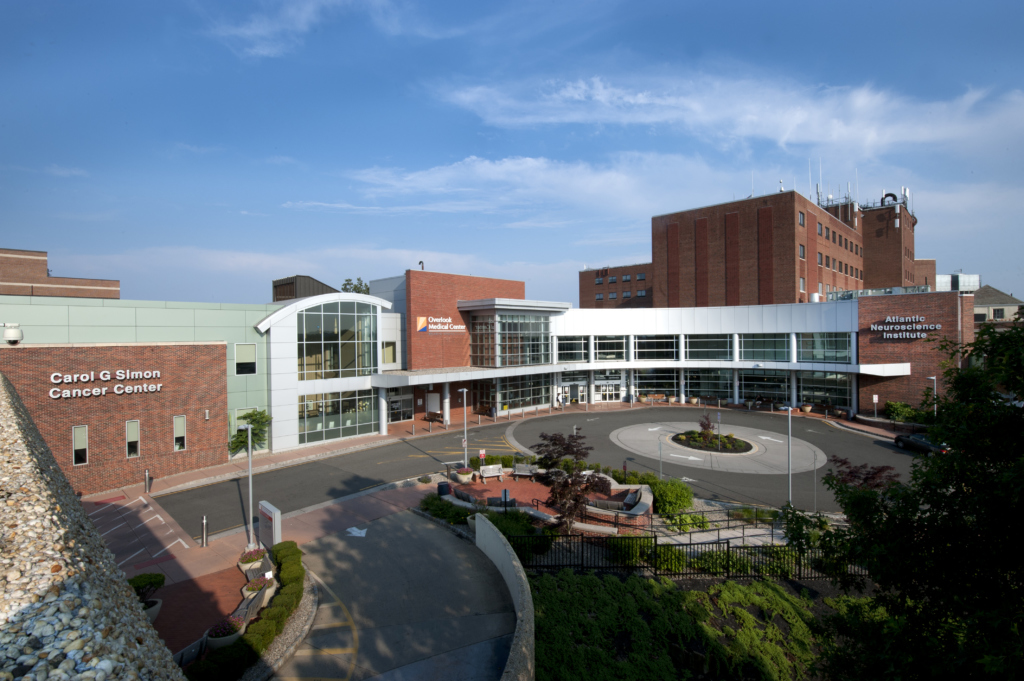





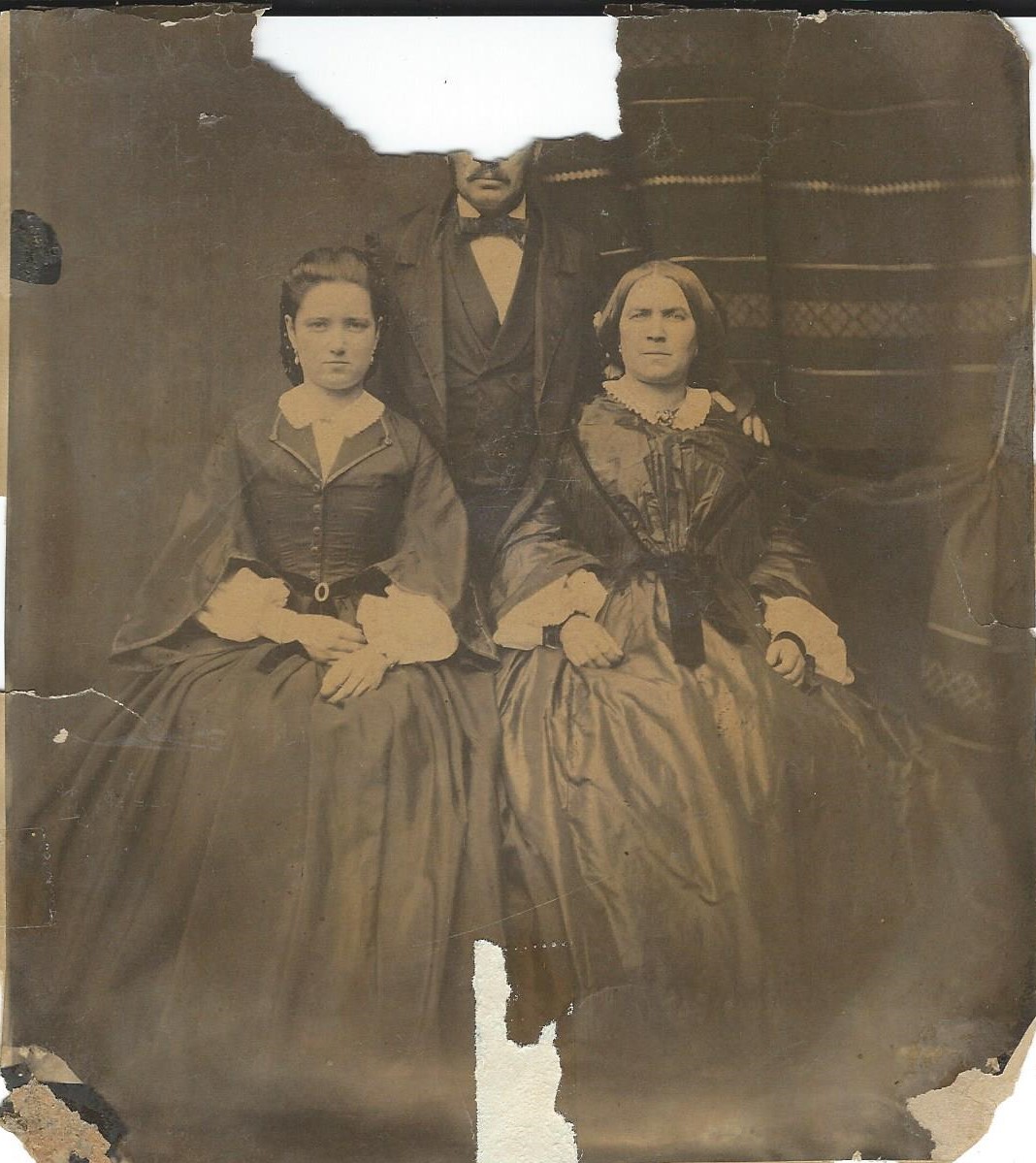
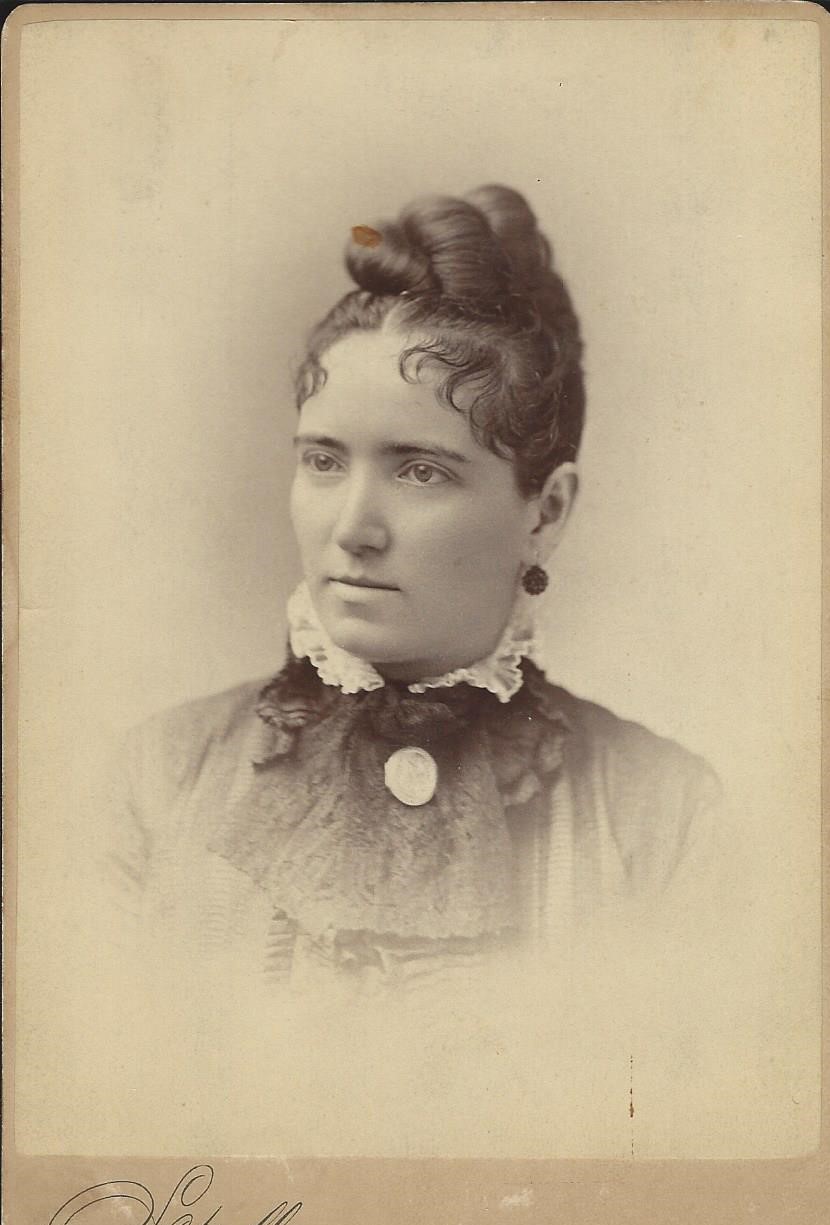
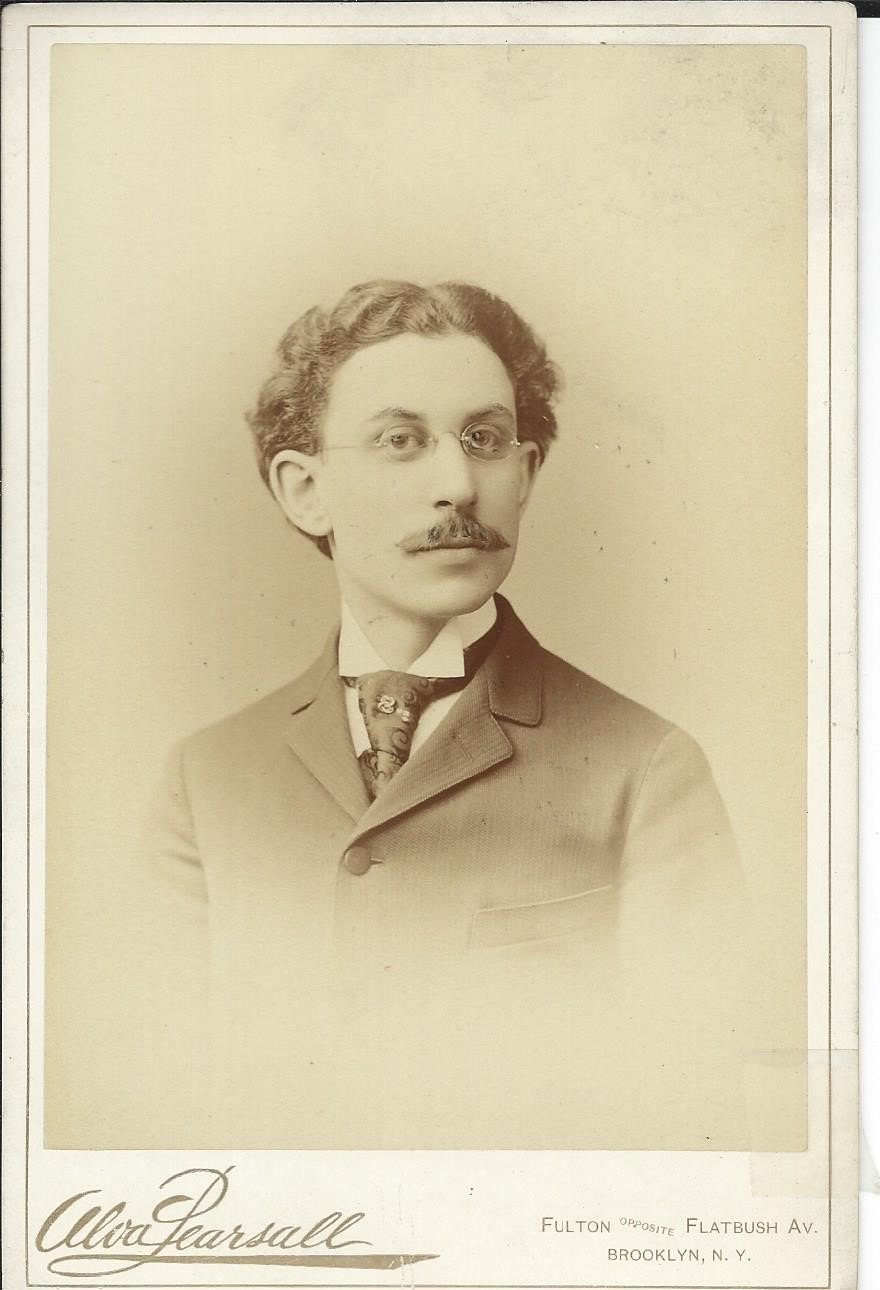
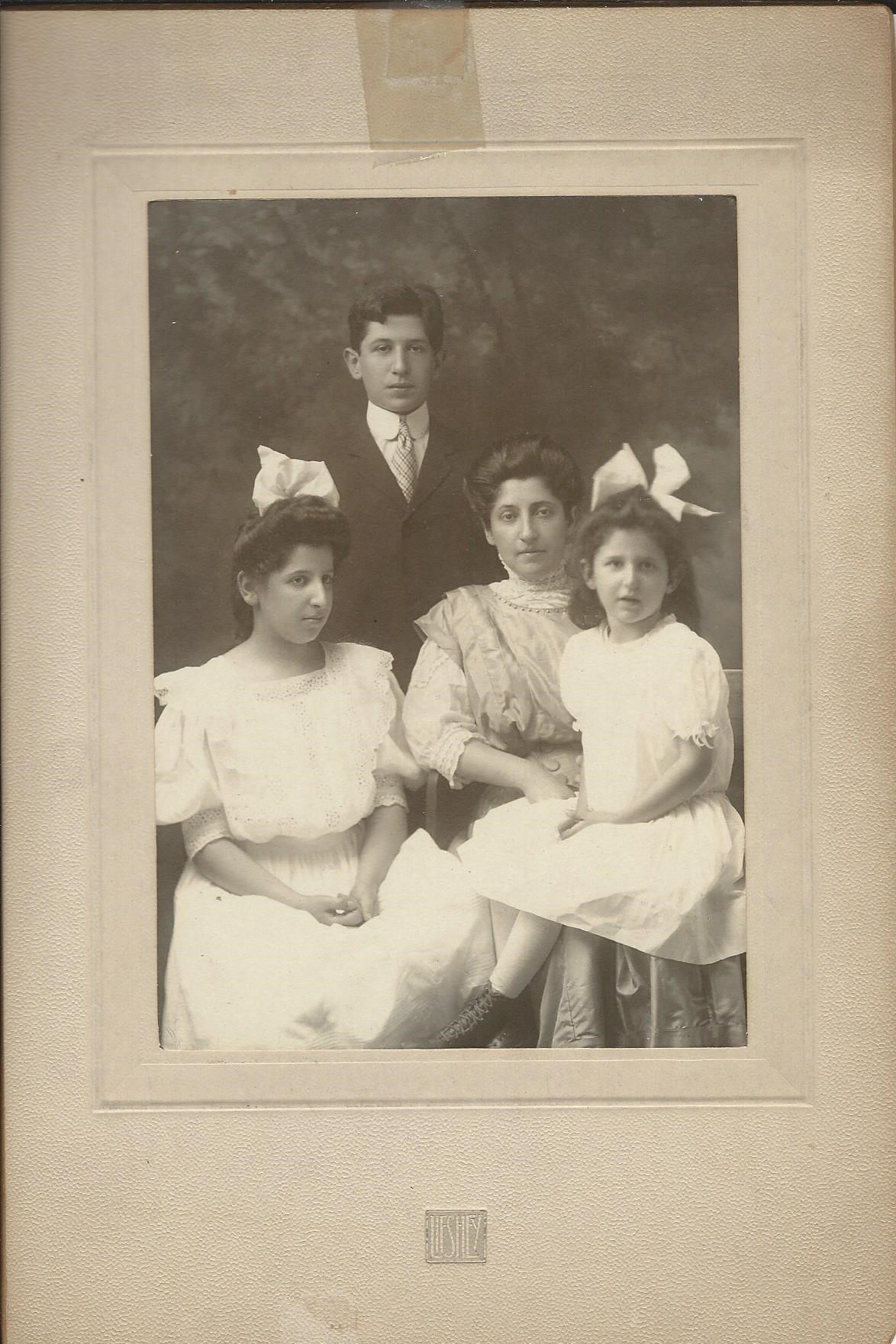
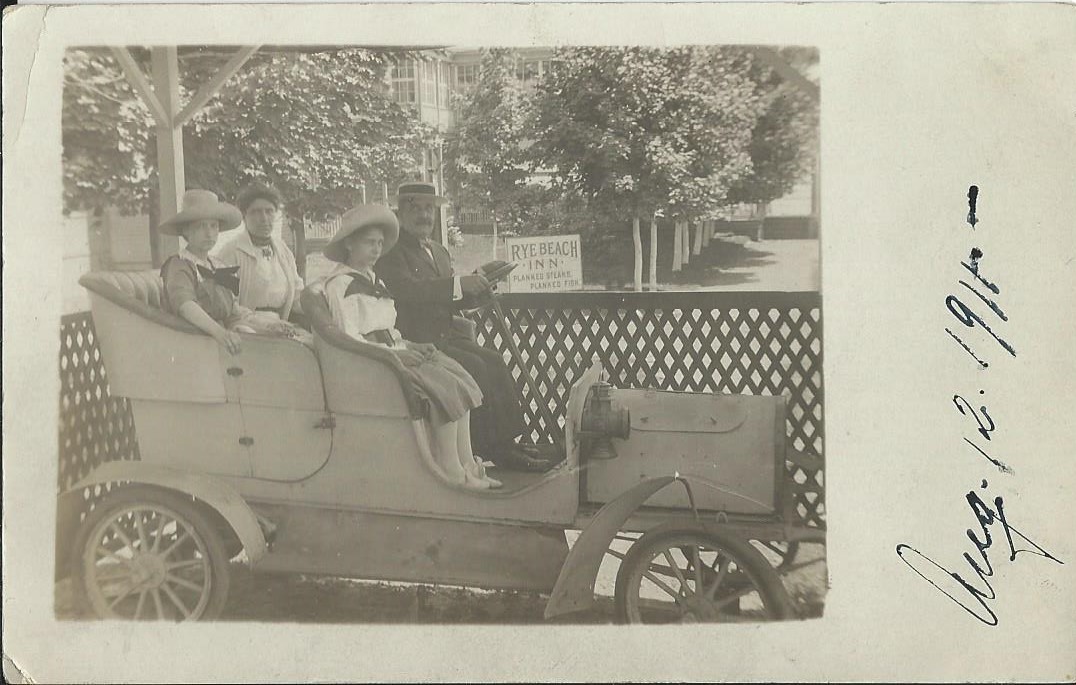
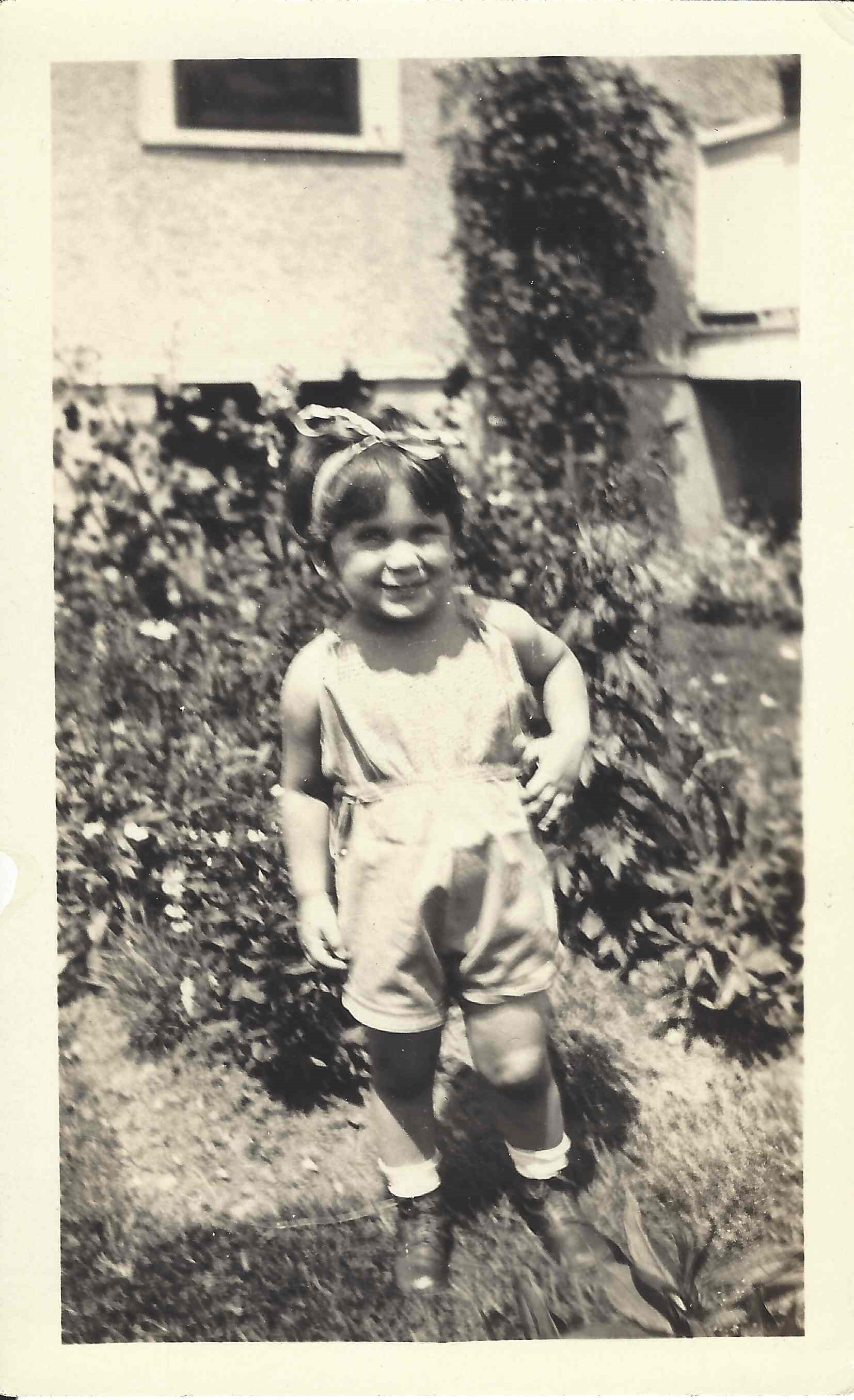
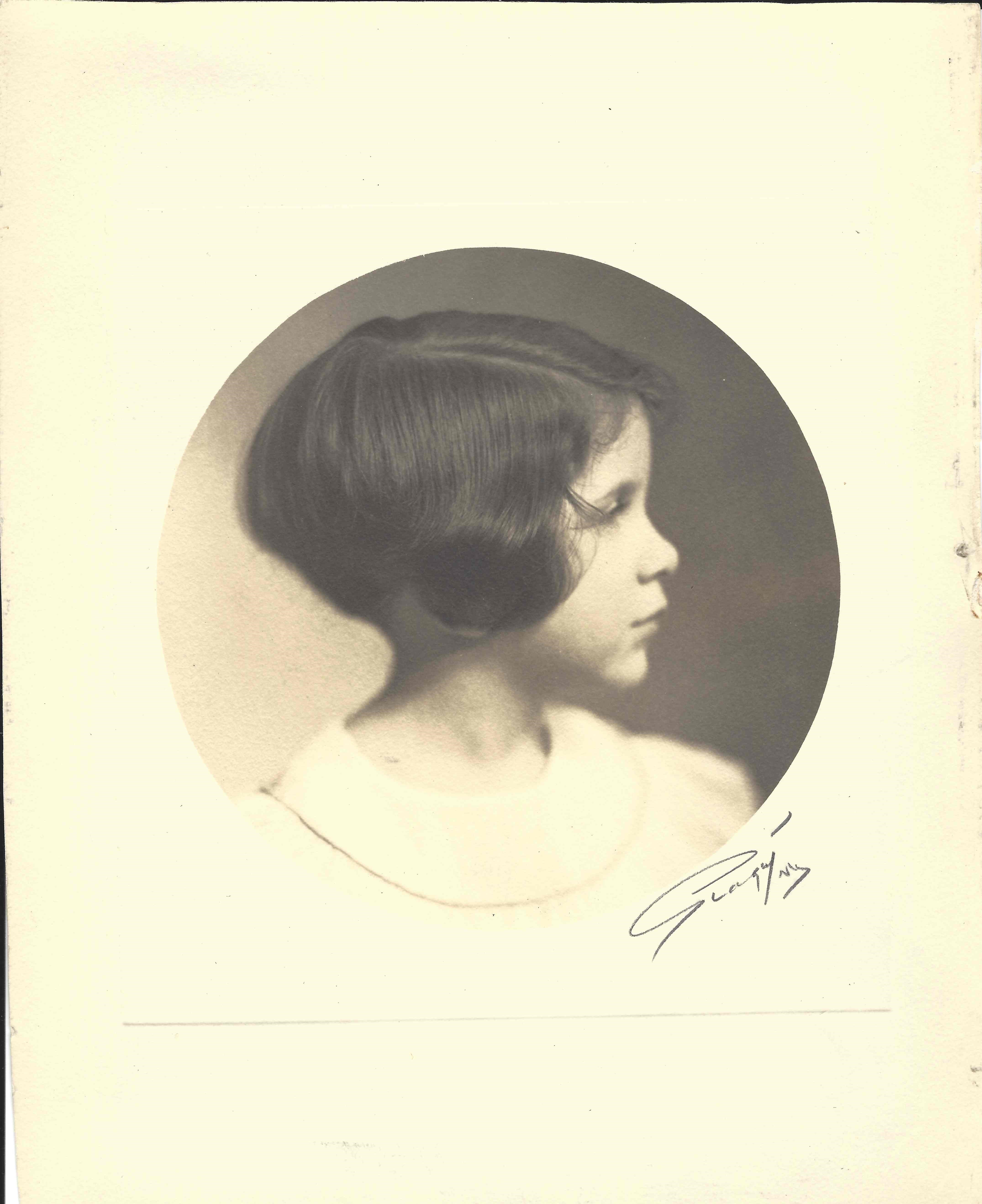
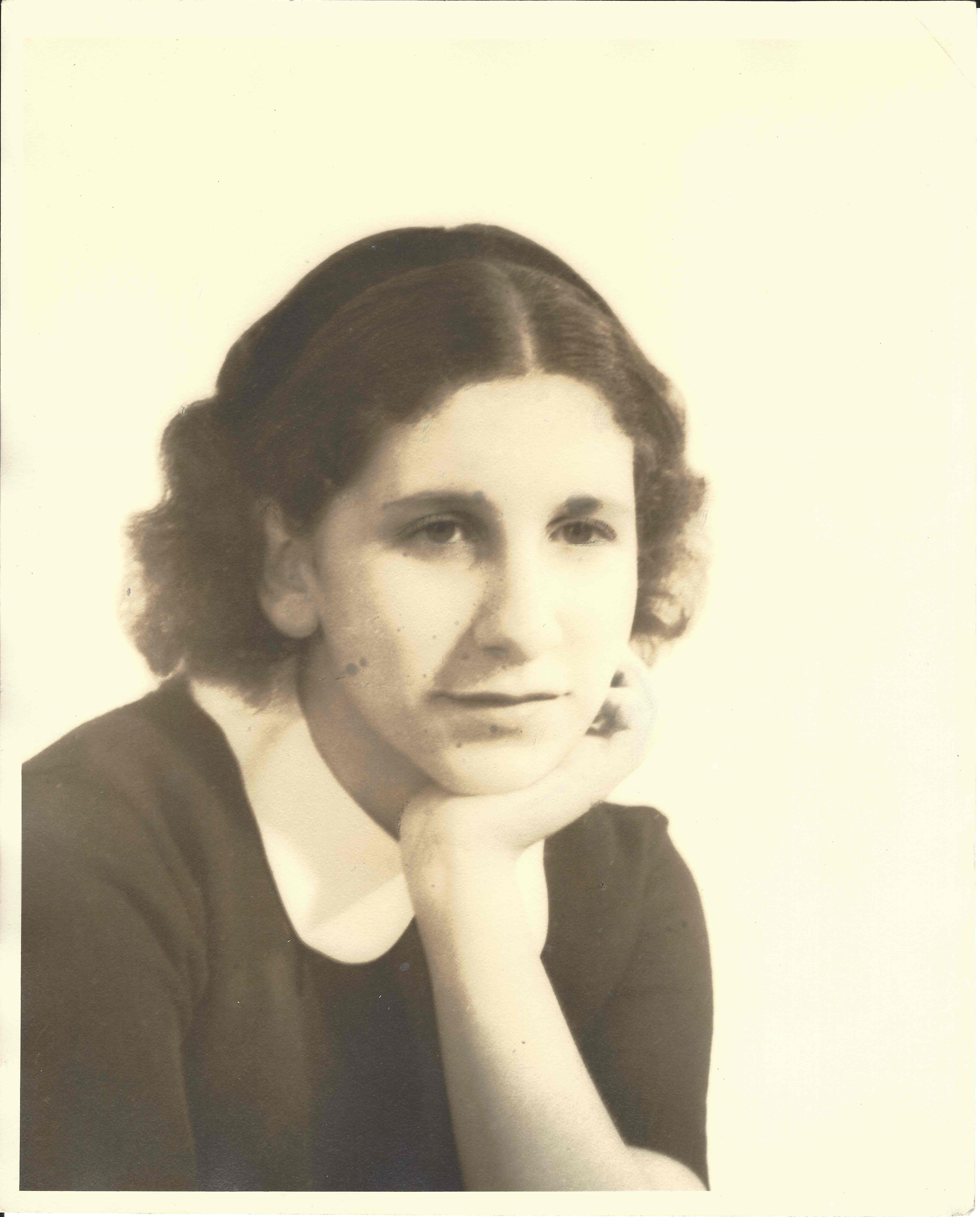


 Blame it on Rio