
I am a nerd.
Not proud or ashamed of it. It is just who I am — both professionally and personally.
And, dear reader, I am sorry to say that this post is going to get a little nerdy. So if that is not your bag, go back and read my earlier post this week. It’s geeky. But amusing geeky. (9) “Revolutionary Thoughts Between Sets: Rereading Washington’s Farewell.”
Personally, I’m a sucker for history (just finished Genghis Khan and the Making of the Modern World), science fiction (read Project Hail Mary immediately), and word origins. The other day I fell down a rabbit hole over kefir and discovered it likely means “that which makes one feel good.” Which delighted me — because it does.
Professionally, I’ve spent three decades (holy shit, Batman) in the digital realm. I bought my first computer — an Apple IIc — in 1984. I marveled at my 28.8k modem. I was such an early AOL adopter that my screen name was “kopf.” I helped launch The Sporting News Online and now run two internet startups in the social entrepreneur space.
I say all this as a partial explanation for why an article on MSNow by Senator Ron Wyden titled “Section 230 Is the Best Protection We Have from Trump’s Censorship” caught my attention because that dog don’t hunt. Let me explain.
For the non-nerds: Section 230 is part of the 1996 Communications Decency Act, folded into the broader Telecommunications Act. Its purpose? To regulate indecent material on a then-new thing called “the internet.”
For perspective, in 1996, getting online required a CD-ROM from the back of a magazine, Netscape Navigator, and surrendering your landline. Only about 20% of Americans had cell phones. Roughly 10% had email. The internet was in swaddling clothes — and occasionally soiled them.
Section 230 made platforms immune from liability for user content. At the time, it made sense. Without it, lawmakers argued, companies would censor aggressively or drown in lawsuits. The law encouraged moderation without punishment, protected free speech, and helped ignite the modern internet economy.
In 1996, that logic held.
The law made sense in 1996. Who knew what we were going to get when we unwrapped the internet package? But to argue, thirty years later, that the logic of the law is still valid ignores all that we have learned. It belies the fact that 30 years ago, accessing the internet required 60 lbs. of equipment, an electrical outlet, and a phone line, while today all you need is 8 oz. of silicon and glass — and strategic intent.
It is like arguing that we don’t need the FAA because the Wright Brothers flew without the need for regulation.
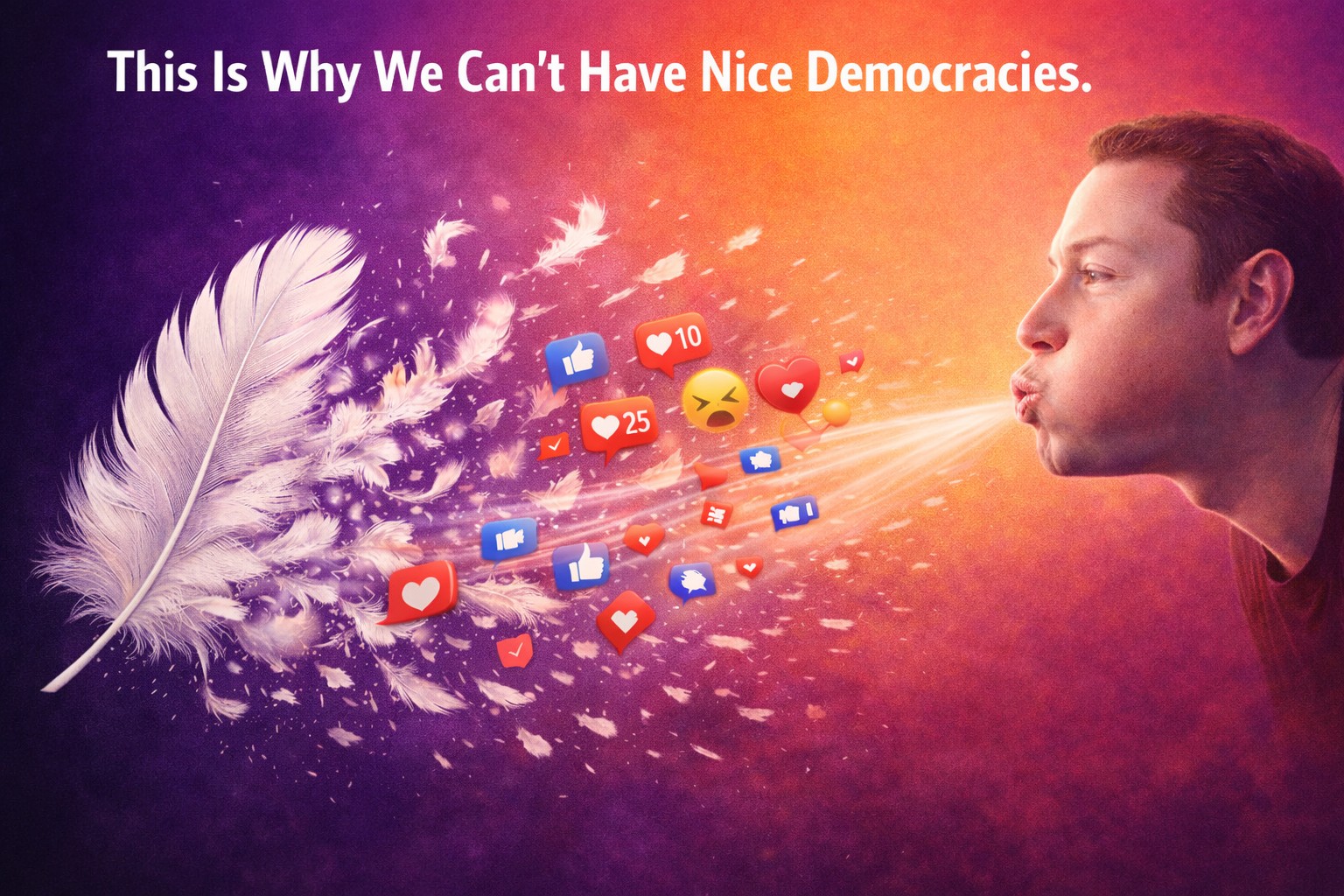
It also runs contrary to old wisdom taught to Jewish kids in Sunday school for hundreds of years called “The Pillow of Feathers.”
A man went around his town spreading terrible rumors about his rabbi. He questioned his integrity, mocked his decisions, and hinted at wrongdoing. The gossip spread quickly. People repeated it. Trust eroded.
Later, the man began to feel guilty. Perhaps the rumors weren’t true. Perhaps he had exaggerated. Perhaps he had simply been angry.
He went to the rabbi and said, “Rabbi, I have wronged you. I have spoken badly about you. Please forgive me. Tell me what I must do to make it right.”
The rabbi thought for a moment and said, “Take a feather pillow. Cut it open. Scatter the feathers to the wind. Then return to me.”
The man did as he was told. He cut open the pillow in the town square. Feathers flew everywhere — down streets, over rooftops, into gardens, carried by the breeze.
He returned to the rabbi and said, “It is done.”
The rabbi said, “Now go and gather every feather.”
The man protested. “That’s impossible. The wind has taken them. They could be anywhere.”
The rabbi replied, “So it is with your words. Once released, they scatter. You cannot retrieve them. Even if you regret them, even if you apologize, they have already flown.”
Social media is today’s town square. Posts are feathers, and the algorithms that amplify — based on reaction, not veracity — to increase profits for their corporate masters are the wind. The harm created by the propagation of rumors, unverified information, and outright lies can never be undone.
Donald Trump’s singular achievement has been his understanding of how to manipulate social media to his advantage. In 2016, he exploited algorithmic and platform dynamics that favored sensational, emotional, and provocative content to overwhelm the rational and the true. In other words, Section 230 was operating in a system where algorithms could bury fact and allow fiction to masquerade as truth.
It is one reason that when social channels were briefly pressured to take greater responsibility for content, Trump launched Truth Social. He wanted to shout louder without interference from reason.
And the platforms hated it because it cost them money. They had to hire trust-and-safety teams, deploy expensive moderation tools, and build complex compliance and legal infrastructure. Which is why, at every signal, some social media networks have bent the knee to Donald Trump. Because truth be damned, free speech be damned — profit is far more important than truth, justice, and the American way.
(And if you really want to go full pocket-protector nerd: Would Clark Kent ever work in social media? Discuss.)
The damage that Section 230 has caused has been enormous. Not only did it single-handedly decimate the legacy media business by giving platforms an unfair advantage in what they could publish, but it also became a breeding ground for hate speech and misinformation — and gave America early-onset ADHD. People no longer read the news; they skim it.
We would not have a president who speaks in Twitter bites and gets his facts from rumors posted on the internet were it not for 230, which helped produce an administration that treats actual science like memes and has caused generational damage to our health and well-being. It has caused irreparable damage to confidence in our voting systems by amplifying complete lies about voter fraud, despite the fact that endless audits and investigations have shown virtually no fraud.
I could go on, but you get the idea. Section 230, which seemed like a good idea a generation and a half ago, is showing its age.
Which leads me to my modest suggestion. We should go Brazilian. (Relax. Legislatively.)
Brazil allows platforms intermediary protections but empowers courts and election authorities to compel rapid removal of demonstrably false information, especially during elections. It’s not perfect. No system is. But it acknowledges a simple truth: when the wind is hurricane-force, you don’t just blame the feathers.
It’s not perfect. But it is far better than what we do now and reflects where the internet is today compared to when the law was enacted — at a time when only 10% of Americans had email accounts.
Call me a nerd, but when the system keeps crashing democracy, you don’t blame the users — you debug the code.


 Blame it on Rio