
My father’s favorite holiday was Thanksgiving.
When I was a kid, I assumed this was because the food was excellent and my father enjoyed eating more than anyone I knew. He truly savored savoring. But that wasn’t why he held such a deep affection for the holiday.
He believed Thanksgiving was the ultimate American holiday. While celebrations of gratitude exist in almost every culture, our Thanksgiving—with its customs and traditions—was uniquely American. I used to think that, as an immigrant, he felt a special attachment to the holiday because this country saved his life when it opened its doors to him and allowed him to build a life he could scarcely have imagined growing up on the mean streets of Vienna.
I no longer think that fully explains it.
The events of the past year have given me a clearer understanding of what the holiday truly represents. And while my father may not have articulated it this way, I believe something deeper was at work.
Let me explain.
The original Thanksgiving story centers on the 1621 harvest celebration shared by English settlers—often called the Pilgrims—and the Wampanoag people in early colonial New England. The settlers had arrived the year before and endured a brutal winter, losing nearly half their number to illness and starvation.
In the spring of 1621, the Wampanoag, led by Massasoit and aided by Squanto, helped the settlers survive by teaching them how to grow corn, fish local waters, and hunt in the region around Plymouth Colony. That fall, after a successful harvest, the settlers held a multi-day feast to give thanks.
The gathering—about 50 English settlers and roughly 90 Wampanoag—likely featured venison, fish, corn, and other seasonal foods rather than turkey and pie. It wasn’t called “Thanksgiving” at the time, but later generations would come to see it as a symbolic moment of cooperation between Indigenous people and European settlers.
Put more plainly: a group of people, seeking freedoms and opportunities their homeland could not provide, arrived uninvited in a new land. They were utterly unprepared for its realities and died at an alarming rate. The people already living there could have turned their backs on them. Instead, they chose generosity. They shared knowledge, food, and skills—helping the newcomers survive.
Overwhelmed by that generosity, the immigrants held a celebration to express gratitude for their new home and the people who helped them endure.
Thanksgiving—at least its origin story—is a story of immigrants giving thanks for the generosity of their new country. It is also a story honoring the grace of the native people who helped them succeed.
My father arrived in the United States three months into World War II. Aside from strong intellect and a survivor’s will, he possessed few practical skills that translated to American life. He spoke no English. He had no understanding of how things worked here—illustrated memorably by eating a block of butter his first night in the country, believing it was cheese.
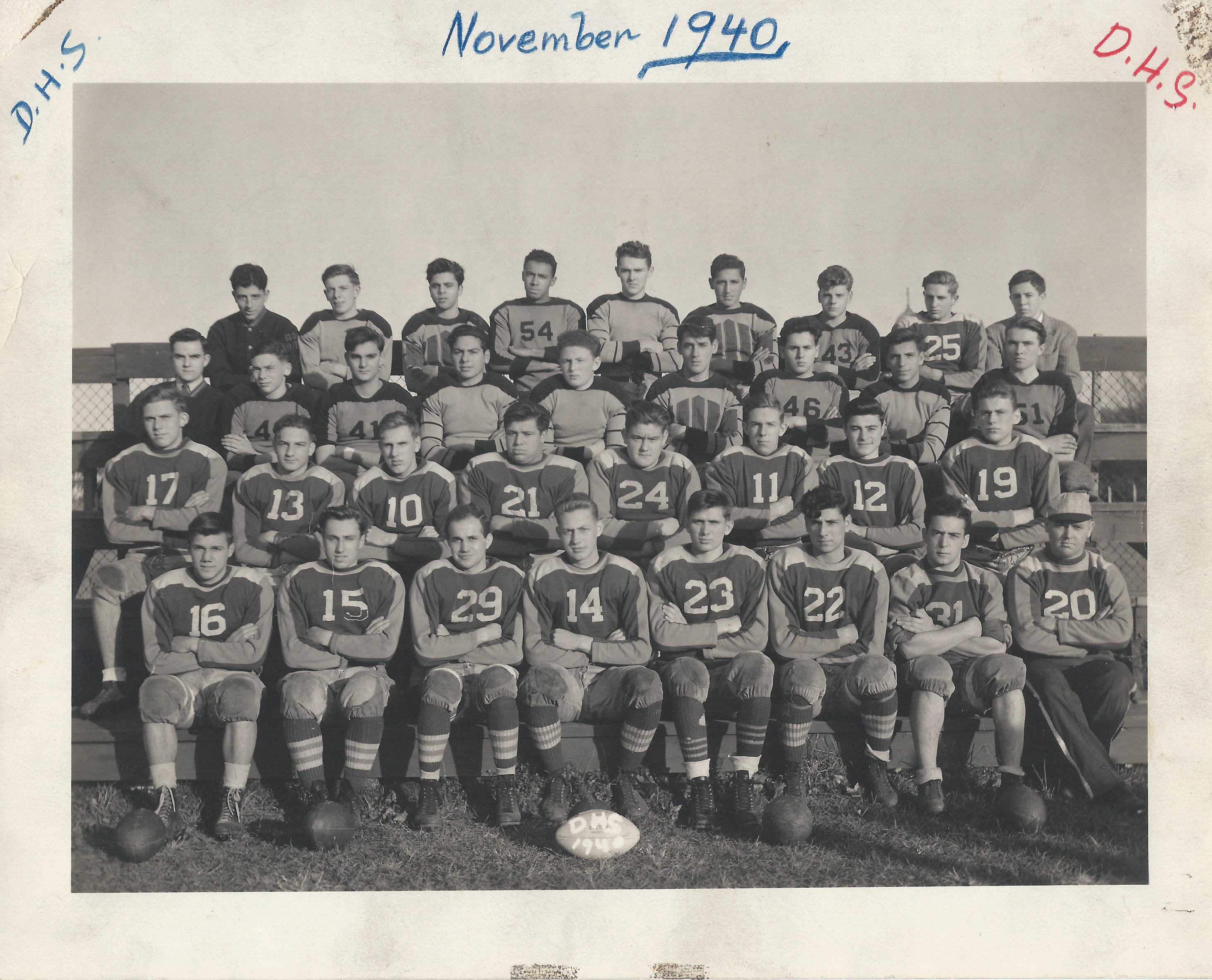
But the people of Danbury, Connecticut were kind to him. They helped him learn English and understand the rhythms of American life. So much so that just three and a half years later, he entered Syracuse University as a freshman.
His story was the Pilgrims’ story, told in a different era.
Perhaps one of the lessons we should take from the original Thanksgiving is that people who come to this country are much like our founders. They are pilgrims in search of a better life. We should help them find their way—because who knows? Perhaps one day there will be holidays and endless school pageants celebrating what they helped build.
I suspect our clueless leader, spending Thanksgiving with sycophants at Mar-a-Lago, will miss this meaning entirely—despite having an immigrant wife himself. Grace, kindness, and empathy do not seem to be part of his lexicon.
Still, that doesn’t absolve the rest of us.
We can remember the true meaning of this holiday. We can celebrate those who came here searching for something better—just as we pour the gravy or ask for the second slice of pie.
Happy Thanksgiving.


 Blame it on Rio