
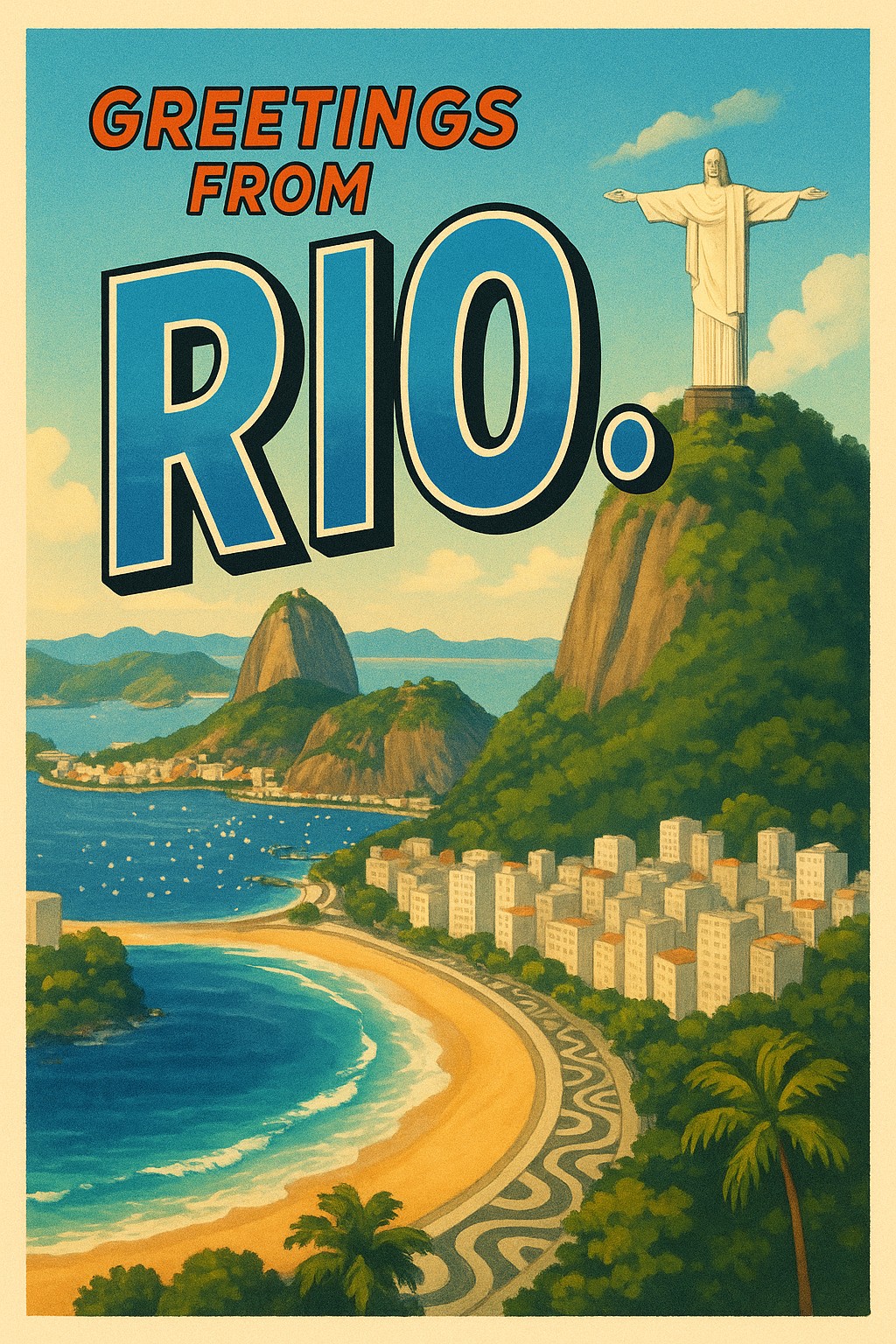
One of the most amazing discoveries while packing up our mother’s home was a stash of letters I had sent her from Camp Skoglund when I was ten. My favorite find was a letter I wrote on the one day I didn’t receive one from her. In it, I accused her of breaking her promise to write me every day. Reading it now laid me out. Why, for God’s sake, had my mother kept that ungrateful little missive for fifty years?
Ironically, finding it made me want to write her a letter to tell her what I had uncovered in her attic. You see, my mother taught all of us the art of the note. She never insisted that we put pen to paper (remember when people used pens?), but instead led by example. When she went on vacation, she sent us postcards that were clever and witty. When we were away at college or gone for any length of time, she sent us letters.
I remember when I was living in England with my buddy Rich. A note arrived from her describing an August day in New Jersey, which she called “positively Swiss” because the summer heat had finally broken. Rich and I were so charmed by that phrase that we talked about it even decades later.
Writing was imprinted onto our DNA. My brother David has published nine books and was the editor of Foreign Policy for years. My sister, whose cookbook The Secret Life of Chocolate Chip Cookies is now available for preorder and will be released on September 16 (our mother’s 96th birthday), teaches journalism to college students. Then there’s me—the black sheep—with just one novel and a blog to my name.
Still, I did follow her example. I wrote to her whenever I traveled (and with nearly 3.5 million American Airlines miles under my belt, that was often). Sometimes I sent postcards, though I never managed to make them as witty as hers. Occasionally I wrote longer letters, as when I was in Paris, alone at the Café de Flore, imagining what it must have been like for the Lost Generation she so admired. Later in her life, I sent her a daily email to let her know what I was up to or to share something that had caught my fancy.
I miss her. She has been gone nearly five and a half years, and I still sometimes pick up the phone to call her (she’s still on my favorites list) or start an email to her. Especially these days. She hated Donald Trump the way evangelical Christians hate Satan—and for the very same reason. She was convinced he was the devil incarnate. In her later years, she would sit watching MSNBC and curse at him with words that seemed to defy her Ferragamo loafers, “never leave the house without lipstick,” grandmother-of-four image.
This morning, as I walked through our neighborhood in Barra da Tijuca, admiring the newly bloomed orchids (Mom loved gardening), I began to wonder what note I might send her now, along with pictures of those opulent flowers:
—
Dear Mom,
It is a positively Swiss day here in Rio. The sun is shining, the temperatures are in the low 70s, and purple, white, and pink orchids are emerging from their long winter’s nap. Outside our home, a tree is giving birth to jackfruit. I’m not sure I’ll ever get used to watermelon-sized fruit growing on a tree. It feels as though we’ve landed on another planet.
Last night we went to a reception for Elaine’s grandniece, celebrating her graduation from medical school. The ceremony was a curious blend of pep rally (students had cheering sections with balloons, banners, and chants), religious ritual (each graduate was blessed as they received their diplomas), and academia—complete with long-winded speeches about the future. To be fair, perhaps the speeches were less boring for those who understood Portuguese.
My favorite part of the evening was talking with the grandfather of the new doctor. He’s a Harvard-educated, reformed lawyer who spent his career in banking. You’d appreciate this: the first words I said to him were, “I’m so sorry for our President.” He laughed and immediately accepted me as a kindred spirit.
I told him I admired Brazil’s judicial system, especially the foresight of creating a separate court solely dedicated to electoral matters. Elections are the bedrock of democracy, and making sure they don’t get bogged down in an overburdened legal system allows for swift resolutions. If the U.S. had such a system—and had convicted Trump for interfering with the election, as Brazil may soon do with Bolsonaro for insurrection—we might not be in our current pickle.
He agreed, though sadly, saying it pained him to see the world’s greatest democracy sink so low, led by a man who makes policy decisions based on personal slights and greed. I told him I admired how Lula has handled Trump’s bullying, especially when he said: “No gringo is going to give me orders… Trump is not the emperor of the world.”
I asked him, as a former banker, how the tariffs might affect Brazil’s economy. He assured me Brazil would weather them easily. The government has already pledged to buy up excess honey and distribute it to schoolchildren. Beef producers have shifted focus domestically, lowering prices for citizens in this land of enthusiastic carnivores. And China is buying all the soy that once went to the U.S. (“Soy what?” I quipped, and he laughed.)
“What about coffee?” I asked. He smiled proudly: “The world loves Brazilian coffee. If we don’t sell it to the U.S., someone else will. The only thing a tariff on coffee will do is make Americans’ trips to Starbucks a wallet-breaker.”
Mom, that conversation reminded me why I love Brazil. Brazilians love the United States. They love us gringos. They want to be friends and they want to be friendly. But if we refuse to treat them with respect, they will be sad—then they’ll move on and find others who will.
Love you to the moon…
pdr


 Blame it on Rio