
The official motto of my alma mater, Summit Junior High School (now Lawton C. Johnson Summit Middle School), is “Knowledge is Power.”
Summit High School’s motto is “Creating the Future and Honoring the Past.” It emphasizes personal growth and preparing students for citizenship, learning, and employment in a changing world.
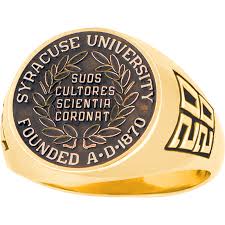
Syracuse University, where I earned my bachelor’s degree, uses the Latin motto “Suos Cultores Scientia Coronat”, which translates to “Knowledge crowns those who seek her.”
Each of these institutions did their best to indoctrinate me into the idea that knowledge is a good thing. That understanding our history can help us make fewer mistakes and achieve better outcomes in the future. That having a foundation in science and the scientific method enables critical thinking and more informed decision-making for my family, my friends, and my community. That reading—whether fiction or nonfiction—can build empathy, spark imagination, and fuel dreams.
It’s probably unfair to place all the blame on these schools. My parents were just as complicit. It was my mother who taught me to read and, in doing so, transformed books into magical portals to other times, places, and lives. And it was my father, a research scientist, who trained us to “turn over rocks” to see what lay beneath. His own unquenchable curiosity shaped my lifelong habit of asking “why,” “where,” “how,” and “who.”
Together, they ruined me. They doomed me to a life of never being satisfied with what I know. I’m addicted to discovery—constantly adding books to my library (both metaphorically and literally) and turning over metaphorical rocks in search of insight.
Last summer, this curiosity led me to I Know Why the Caged Bird Sings by Maya Angelou. I can’t recall what prompted me to finally read it, but I remember the power of her poem “Still I Rise,” which begins:
You may write me down in history
With your bitter, twisted lies,
You may trod me in the very dirt
But still, like dust, I’ll rise.
That poem made me wonder who this woman was and how she had found her voice. Her memoir gave me a glimpse into what it was like to grow up in the Jim Crow South during the Depression. Its themes of racism, resilience, self-empowerment, and oppression moved and horrified me. How could a country—the so-called greatest democracy in the world—allow such things to happen?
That question led me to Isabel Wilkerson’s The Warmth of Other Suns: The Epic Story of America’s Great Migration. It chronicles the racial violence, economic inequality, and desire for freedom that drove nearly seven million African Americans to leave the South in search of better lives.
Both books made me angry. Of course, I was angry about the racism and injustice. But I was also angry because—despite having taken AP U.S. History, multiple American history courses in college, and owning three shelves of U.S. history books—I had never heard of the Great Migration in any depth. I knew about the Jim Crow South in broad strokes—the Klan, lynchings, and the civil rights movement. But I didn’t understand its magnitude or the long-lasting impact of that era.
Why was my knowledge so incomplete?
Some of it, surely, was timing. I was educated in the 1970s, when African American studies were still emerging. Some of it was geography. Summit, NJ, was an affluent, predominantly white town, with an African American population under 5%. There wasn’t much institutional incentive to teach the darker sides of American history.
And some of it was my own fault—for not asking the very questions my schools and parents trained me to ask.
But it also underscored why the U.S. Department of Education was created. Since its inception in 1979, the department has:
- Integrated African American history into K-12 and adult education
- Endorsed academic programs in Black Studies
- Funded and supported HBCUs
The cynics among us might argue that this is exactly why some politicians—like the current President—want to dismantle it. Maybe it’s because many of his supporters would rather we learn only the whitewashed version of history. Maybe that’s why he dismissed Juneteenth as “too many nonworking holidays.” Maybe that’s why he promotes lies like “ivermectin works,” “it was the biggest crowd ever,” and “white genocide in South Africa.”
Because knowledge is power. And truth threatens propaganda.
So if you want to understand why Juneteenth matters—not just for African Americans but for all Americans—read Heather Cox Richardson’s excellent Substack piece on it: June 18, 2025 – Wednesday.
In the meantime, remember: Knowledge crowns those who seek her. And it’s up to us to seek it which yet another reason Donald Trump will never be a king.


 Blame it on Rio