
Brazil’s democracy is among the youngest in the world.
After decades of a repressive dictatorship, supported in part by the U.S., Brazil adopted its current constitution in 1988. It did not hold its first presidential election until 1989. Despite its relatively young experiment in democracy, there are a number of things that the “Verde e Amarelo” (Green and Yellow) gets right—things from which the red, white, and blue could learn a thing or two.
The U.S. Constitution is a short, concise document with only seven articles and twenty-seven amendments. It focuses on broad principles and allows the courts to interpret the rest. The Brazilian Constitution, on the other hand, is lengthy and highly detailed, with over 250 articles covering not only government structures but also social policies, economic regulations, and environmental protections. Less interpretation is needed, as it is black-letter law. You may argue that the founders of Brazil’s constitution went overboard, but at least their courts aren’t constantly tied up with constitutional questions, with the Supreme Court making rulings based on who last loaded the bench.
Speaking of the Supremes, in the U.S., justices of the highest court receive lifetime appointments. So does Brazil—with one key difference: mandatory retirement at age 75. This would mean that, in our case, Clarence Thomas and Samuel Alito would need to retire, which would be beneficial—except for the current makeup of Congress and the occupant of the Oval Office.
Another judicial innovation in Brazil is its separate electoral court system. This body has absolute authority over all election issues. It consists of seven Supreme Court justices, two justices from the Superior Court of Justice, and two presidentially appointed justices. In practical terms, this means that all disputes and issues arising from elections are decided swiftly and decisively. For example, former President Jair Bolsonaro (2019-2023), sometimes called “The Trump of the Tropics,” was convicted of abuse of political power and misuse of government communication channels (sound familiar?) and is now banned from running for office until 2030. (I wish that sounded familiar.)
Speaking of elections, voting is mandatory. If you do not vote, a penalty is assessed on your income tax. In practical terms, this means that about 80% of Brazilians voted in the last presidential election, compared to just over 60% in 2024. Considering that the difference between Trump and Harris was a point and a half, this could have made all the difference between the chaos of today and the relative sanity of just a few months ago.
Brazil also elects its president directly. The candidate who wins the popular vote wins the election. Full stop. End of sentence. In our case, this means that George W. Bush and Donald Trump would never have served a first term as president. Imagine the alternate universe we’d be living in if that were the case.
The Brazilian Constitution also goes out of its way to protect the social rights of its citizens, including:
· Right to Health — Universal and free healthcare, access to medicines, and vaccination programs. In other words, they believe healthcare is not just for the privileged and the rich.
· Right to Education — Free public education at primary and secondary levels; compulsory schooling for children aged 4 to 17. Public universities are also free, and the constitution mandates funding for research and technology.
· Right to Housing
· Right to Work and Fair Wages — Minimum wage sufficient to cover basic needs, protections for overtime pay, vacations, maternity/paternity leave, severance, protection against arbitrary dismissal, and the right to unionize and strike.
· Right to Social Security and Welfare — Includes pensions, disability benefits, unemployment insurance, and financial aid for the poor. Elderly and disabled citizens in extreme poverty receive financial assistance.
· Right to Food
· Right to Culture — Supports cultural diversity and protects Indigenous and Afro-Brazilian heritage.
· Right to Leisure — The state must promote sports and recreation as part of quality of life.
· Right to Environmental Protection
· Right to Transport
And if you’re thinking, “The U.S. can’t afford that; it would bankrupt us all,” consider this: Brazil’s economy grew by 3.5% last year, and its budget deficit was just 0.36% of GDP. Meanwhile, the U.S. grew by 2.8%, and its debt was 6.4% of GDP. Perhaps if the U.S. implemented an effective minimum tax on multinationals earning over $140 billion or taxed billionaires at the same rate as secretaries, our budget deficits would be lower, and we could afford a social safety net as robust as Brazil’s.
Another element of the Brazilian Constitution that I admire is its free speech carve-outs. Speech that promotes discrimination based on ethnicity, race, religion, national origin, or sexual orientation is illegal. Fake news that threatens democracy, public health, or election integrity is illegal. Social media platforms can be held liable for spreading misinformation. Publicly insulting or desecrating religious beliefs, symbols, or places of worship is punishable under Brazilian law.
Americans pride themselves on free speech, as we should, but even in our Constitution, it is not an absolute right. If we want to address the destructive effects of misinformation, we should take a close look at Brazil’s laws and recognize the wisdom behind them.
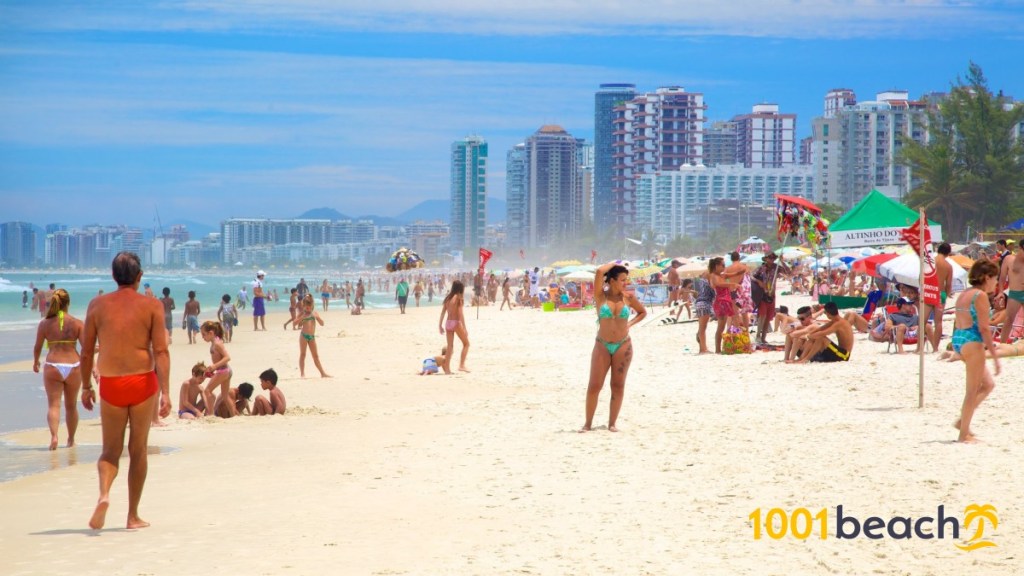
But my favorite example of Brazilian democracy is what they call “democracia da praia” (the democracy of the beach). By law, there is no private ownership of beaches—they belong to the Navy, ensuring that everyone has equal access. Whether in Copacabana, Ipanema, Leblon, or Barra da Tijuca (where we live), the beach is a great social equalizer.
On the same stretch of sand, you might find wealthy executives, residents of favelas, street vendors, tourists, and surfers. People organize themselves not by wealth but by which team they love (Viva Botafogo!), what sports they play (surfing, volleyball, etc.), or which kiosk they like for drinking beer and playing cards. And from what this gringo can tell, everyone wears the same thing—men, regardless of age or body type, wear sungas (Speedos), while women, no matter their age or body type, wear bikinis with minimal fabric. There is democracy in semi-nakedness.
This beach democracy has birthed amazing things, including:
· Frescobol — A fast-paced paddle game where cooperation, not competition, is key.
· Footvolley — Volleyball played with soccer rules, a testament to Brazil’s dominance in the sport.
· Bossa Nova music — Made world-famous by “Garota de Ipanema” (The Girl from Ipanema).
· Havaianas flip-flops — Brazil may not have invented flip-flops, but they perfected them.
· The Brazilian bikini — Originally from France, but perfected on Rio’s beaches.
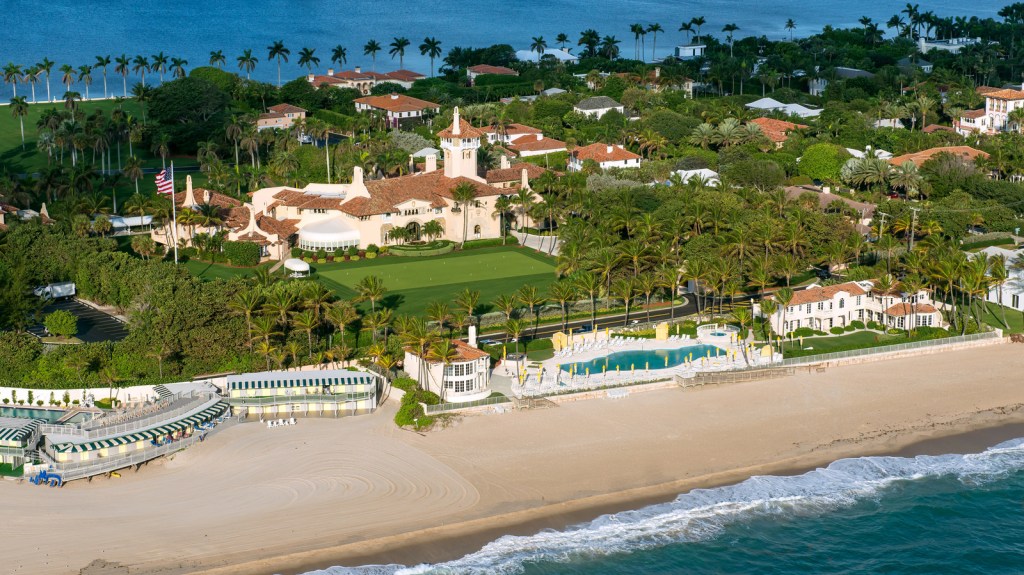
Compare that to the “democracy” of private beaches—like Mar-a-Lago or Jeffrey Epstein’s island. Whatever music that is created there, it sure isn’t Bossa Nova. It makes you wonder what kind of democracy is being promoted there it sure as hell does not promote harmony and cooperation like Frescobol but turns it into a zero-sum game where the rich win and everyone else suffers. Those private beeches make a mockery of a government for and by the people and it turns into a government bought and paid for by the rich and the powerful. And the only flip-flops created there are coming from ambitious politicians anxious to suck at the teat of power who are there to bend the knee.
Personally, I prefer the democracy of the beach to the democracy of the wealthy, entitled, and powerful. But you be you.


 Blame it on Rio